Please fill out the following form to submit a Request for Quote to any of the following companies listed on
Get Your Company Listed on this Power Page
Introduction
The importance of inductors and their use with a list of suppliers and manufacturers
You will learn:
What is an Inductor?
How Inductors Work
Types of Inductors
How Inductors are Made
And much more ...
Chapter 1: What is an Inductor?
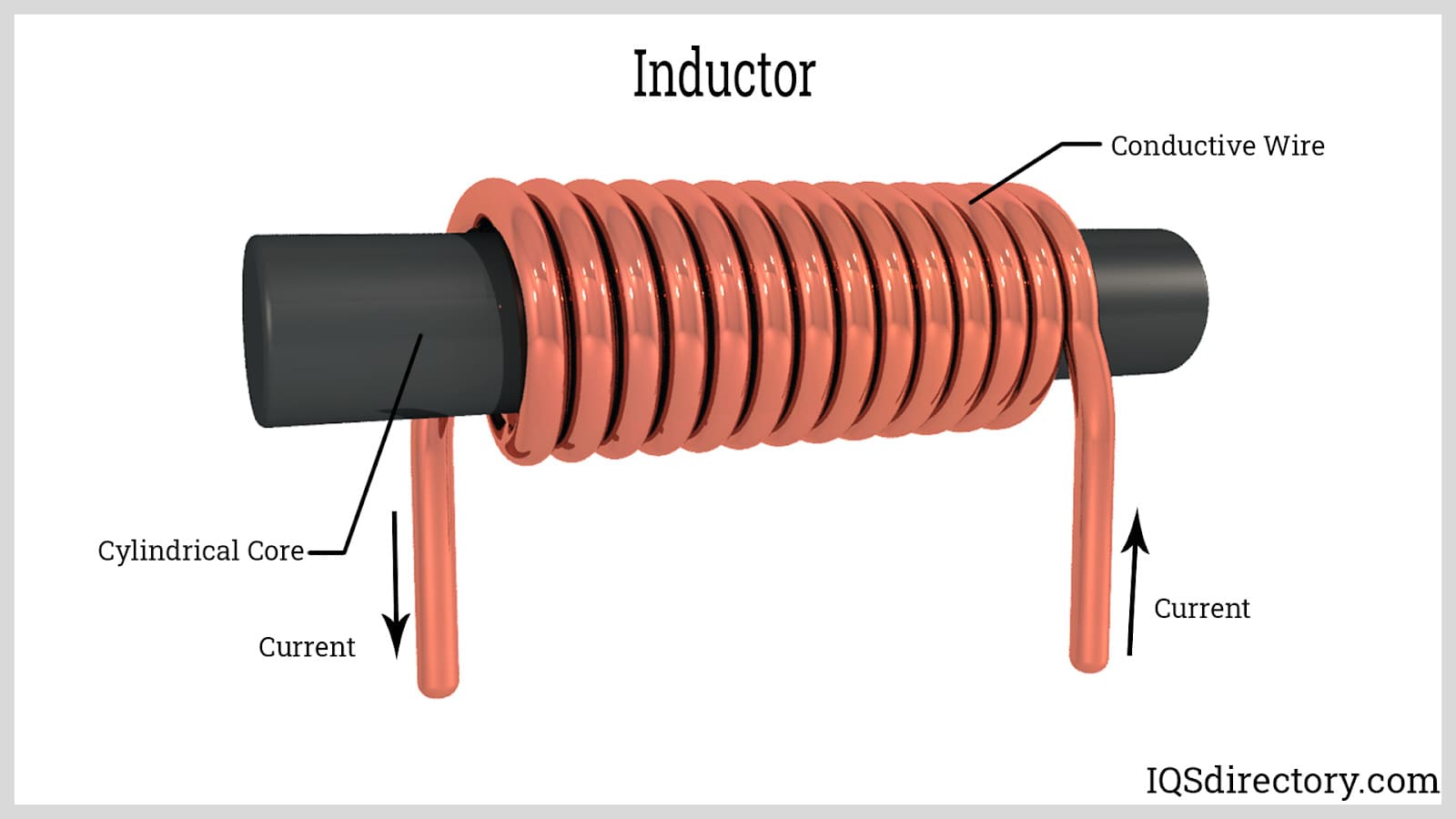
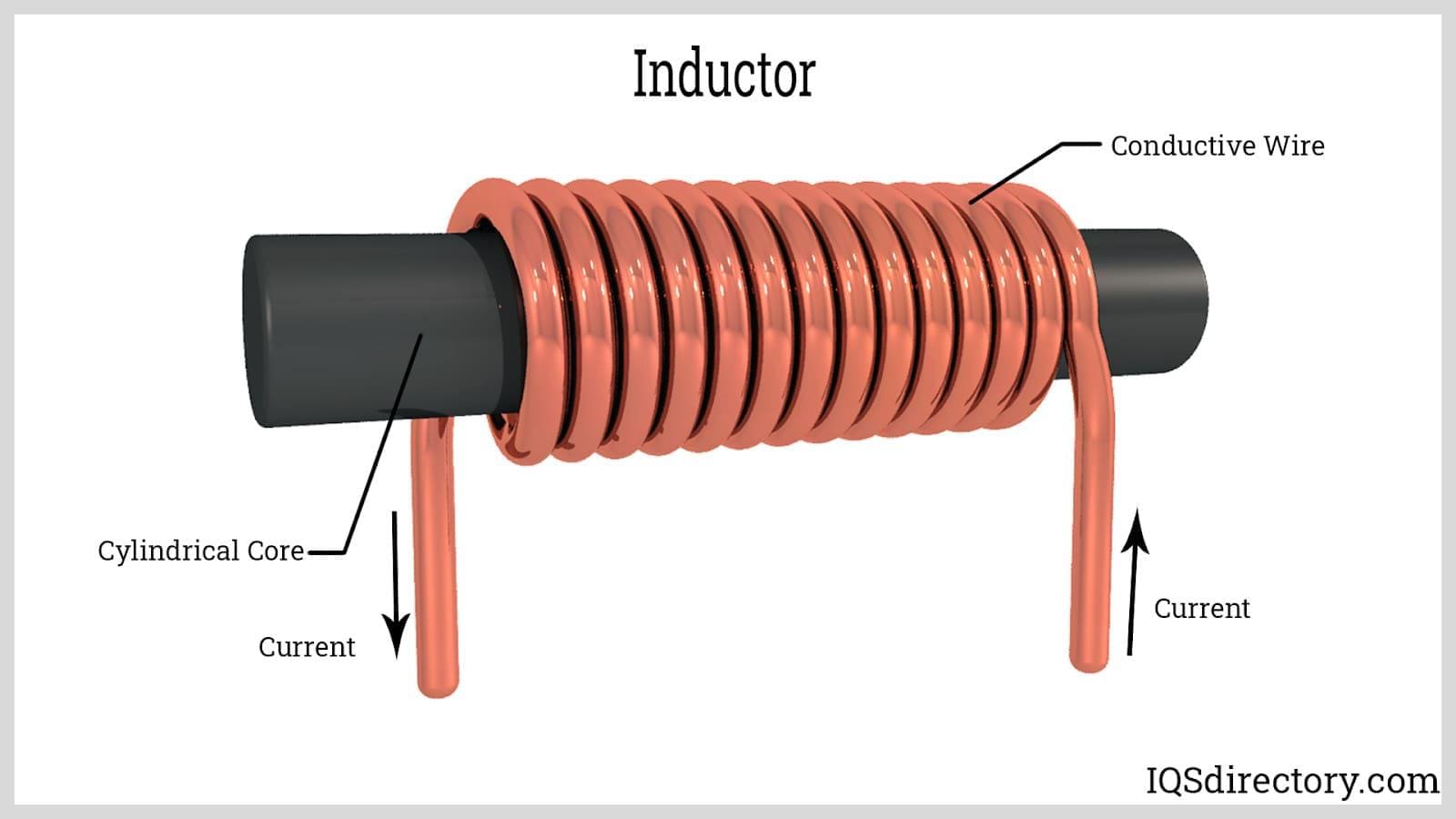
An inductor is an electrical component in a circuit that stores energy in the form of a magnetic field. It is a passive electrical component that consists of a coil of wire wound around a core, taking advantage of the relationship between electrical current and magnetic fields. The simple structure of inductors belies their importance to the performance of electrical circuits. Although they may seem inconsequential, inductors serve an important function in electrical circuits by controlling current flow, filtering signals, and supporting energy conversion in power electronics. They achieve a strong magnetic field using a coiled wire, making them essential in applications such as transformers, chokes, RF circuits, and switch-mode power supplies.
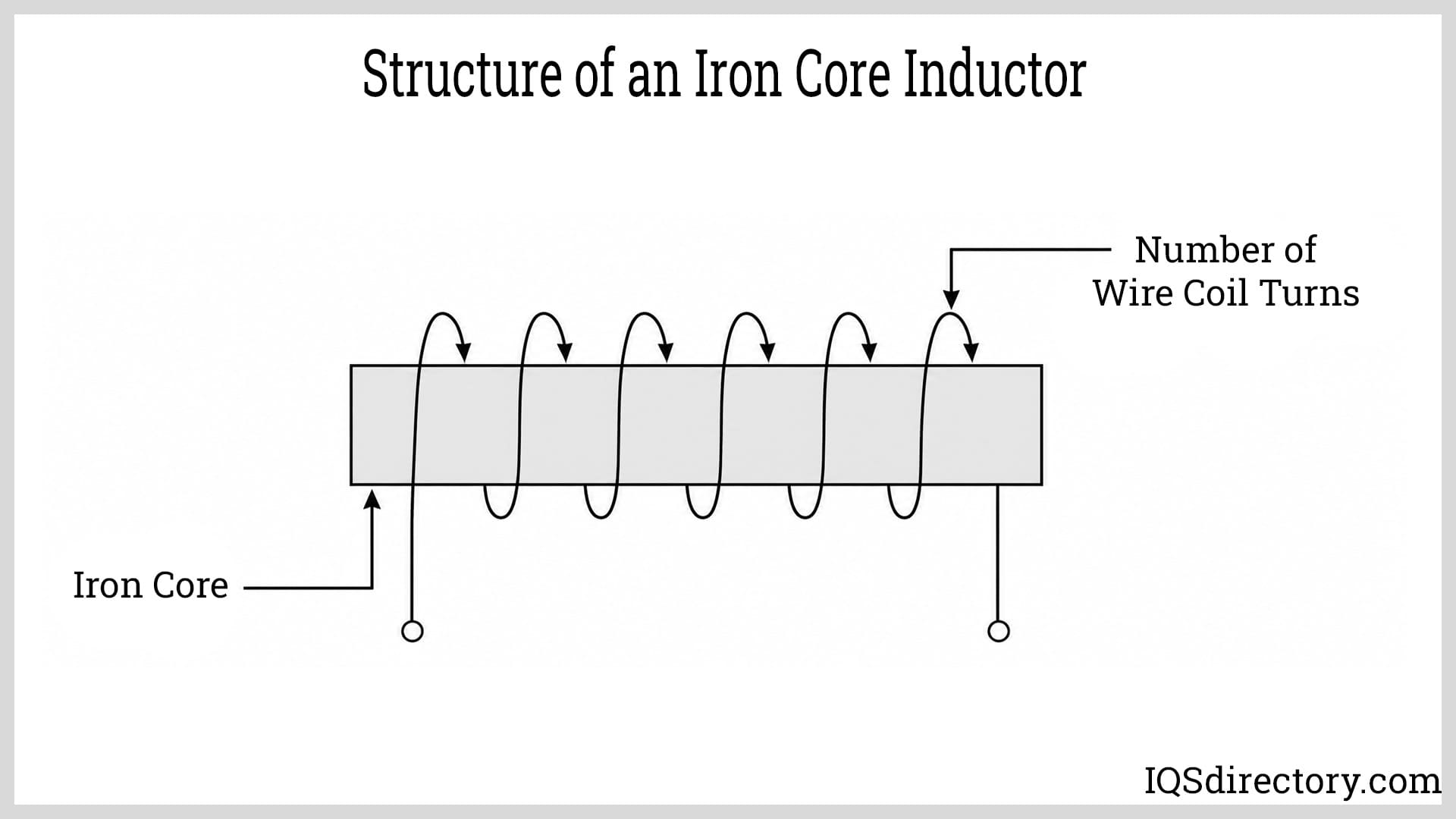
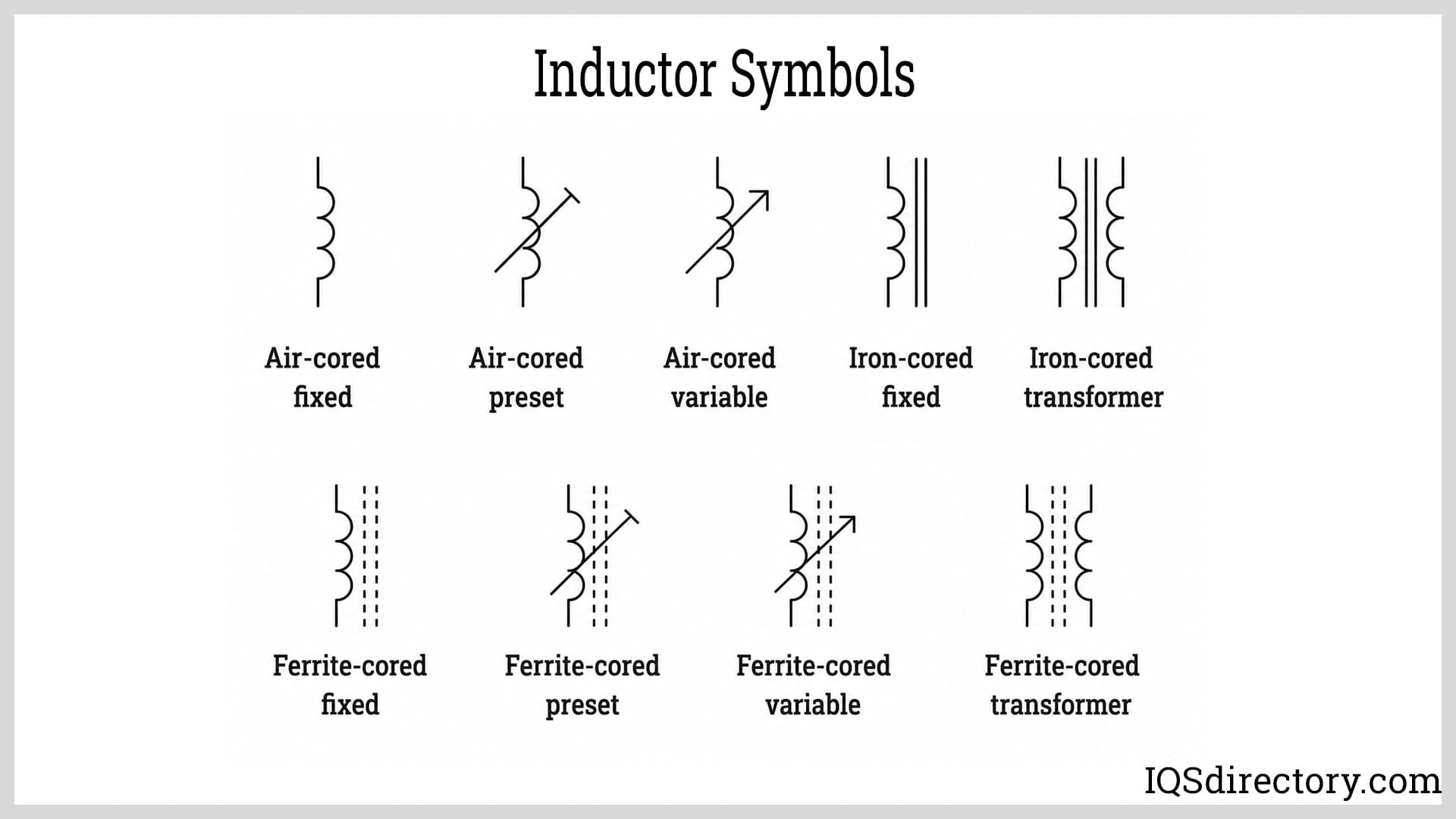
The cores of inductors can be straight cylindrical rods, loops or rings. The result of the structure is concentrated magnetic flux. Inductors are categorized by their types of cores, function, windings, shape, and structure. Hollow cores or free air cores, solid iron cores, and soft ferrite cores are examples of the different types of cores. Each type is identified by an inductor symbol that includes lines, arrows, or dashes. Inductors without a metal core or any core are identified by the same symbol as those used for metal core inductors but without additional lines or dashes. In practice, engineers also evaluate inductors by inductance value, current rating, DC resistance (DCR), saturation current, self-resonant frequency, and tolerance to ensure the component matches the needs of the circuit design.
Unlike a capacitor that opposes a change in voltage across its plates, an inductor opposes the rate of change of current due to the buildup of energy in its magnetic field. Inductors resist changes in current but allow the passing of a steady state of direct current (DC). The ability to resist changes in the flow of current produces magnetic flux in a constant proportionality is referred to as inductance. The level of inductance, represented by the letter “L” with units identified as Henry (H), measure electrical inductance for self-inductance and mutual inductance. One Henry induces an electromotive force (EMF) of one volt when current changes at a rate of 1 ampere per second. Because of this behavior, inductors are widely used for EMI suppression, low-pass filtering, energy storage, and smoothing ripple in electronic and industrial power applications.
Chapter 2: How Inductors Work
Of the many forms of electrical components, inductors are one of the simplest. When an inductor appears in a circuit diagram, it is represented as a wavy line that can be positioned vertically or horizontally, like this . In order to understand how an inductor benefits an electrical circuit, this unique shape can be helpful.
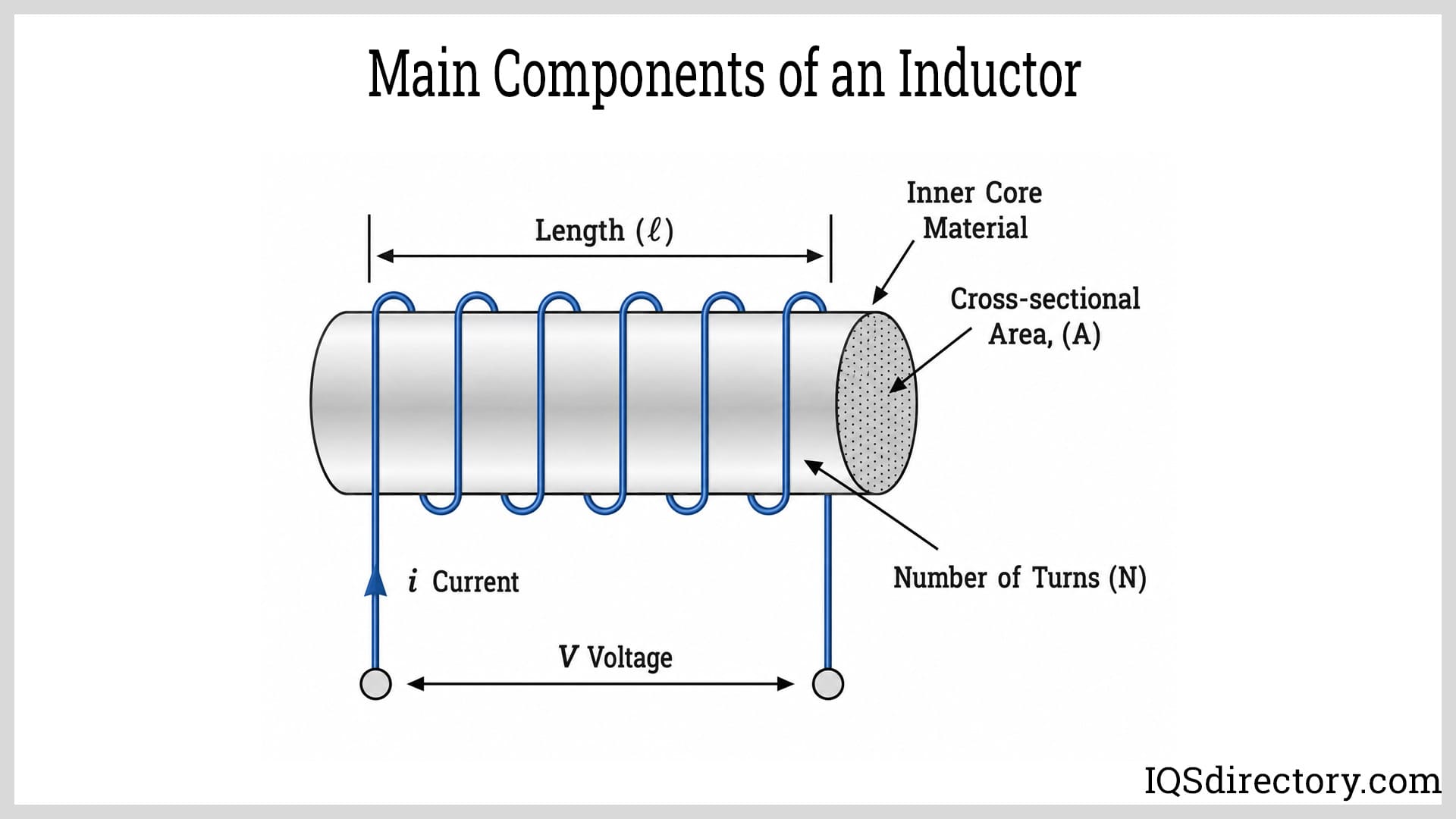
When current begins to flow through a coil, the coil builds a magnetic field. As the field builds, the coil impedes the flow until the field is fully built. Once the field is complete, current can flow normally through a wire. When a switch is opened, the magnetic field releases the current such that it can flow evenly. Although inductors are very common in circuits, there are a range of factors that determine inductance. Wire turns, coil area, coil length, spacing between the turns, the cross-sectional area, and core material are a few of those factors.
The core of an inductor has the central area (A) with turns of wire per unit length (l). The number of turns determines the amount of magnetic flux (Φ). The flux linkage, NΦ, and the current (i) that flows through the coil produce an induced magnetic flux that flows in the opposite direction of the incoming current flow. Any changes in the magnetic flux linkage produces voltage in the coil. A varying magnetic field induces voltage that is proportional to the rate of change, which produces a positive value or increase in emf and a negative value that indicates a decline in emf. The relationship between the flux and current is presented as NΦ = Li.
Chokes and Inductors
Many technologies depend on chokes or inductors to alter and filter electrical current. Engineers and designers understand the difference between chokes and inductors and place them appropriately in various devices and machinery. The use of a choke or inductor depends on the requirements of an application.
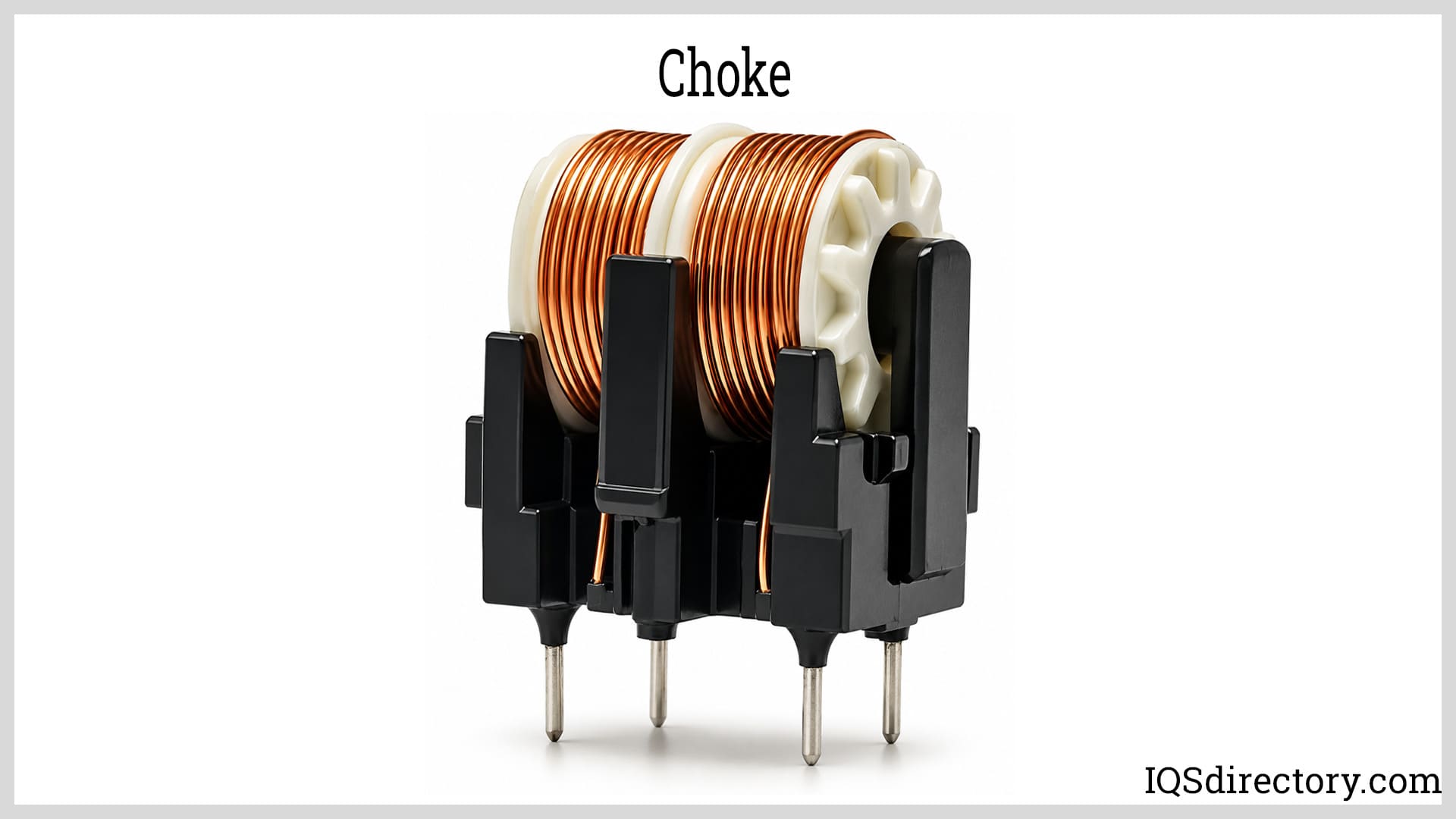
Chokes are a unique form of inductor that differs from other inductors in regard to applications, function, and design. The function of chokes is to cut off or restrict high frequency alternating current (AC) and permit the passage of DC current through its conductor. In essence, they eliminate AC and allow the DC current to load a component or resistor. Chokes prevent damage to insulation by providing a gradual rise and fall of current. They break down voltage and allow transient voltage across fluorescent tubes.
The structure of a choke includes insulated wire wound around a magnetic core, which is the basic form. Other forms have doughnut shaped ferrite beads strung on a wire. The term choke comes from the component’s blockage or obstruction of high frequencies while allowing low frequencies to pass. Two forms of chokes are audio and radio frequency chokes with audio designed to block audio while radio blocks radio frequencies.
While the purpose of a choke is to block frequencies, the functions of inductors cover a broader range of applications, such as filtering, proximity sensing, step-up and step-down processes, motor shaft rotation, and energizing computer circuits. Although all chokes are inductors, not all inductors are chokes. As the name choke implies, chokes are designed to cut off or stop high frequencies. The primary function of inductors is to store electrical energy as a magnetic field using a magnetic core wrapped with wire. Inductors are one of the most used and essential electronic components.
Inductor Applications
Inductors provide the ability to apply input voltage or zero volts to it and have the output current change smoothly. This makes it possible to have a power supply with switches rather than one that is regulated by adjustable resistance. All of this is provided without the need for additional energy.
The Q factor or quality factor is a representation of the efficiency of an inductor or how well it stores and releases energy. A high Q factor indicates that less energy is lost, and performance is at its peak. The ability of inductors to store energy and control current has made them a vital part of electronic circuits. Their use includes electronics, signal processing, communications, and sensing. Engineers and designers use the unique characteristics of inductors to achieve desired circuit behavior.
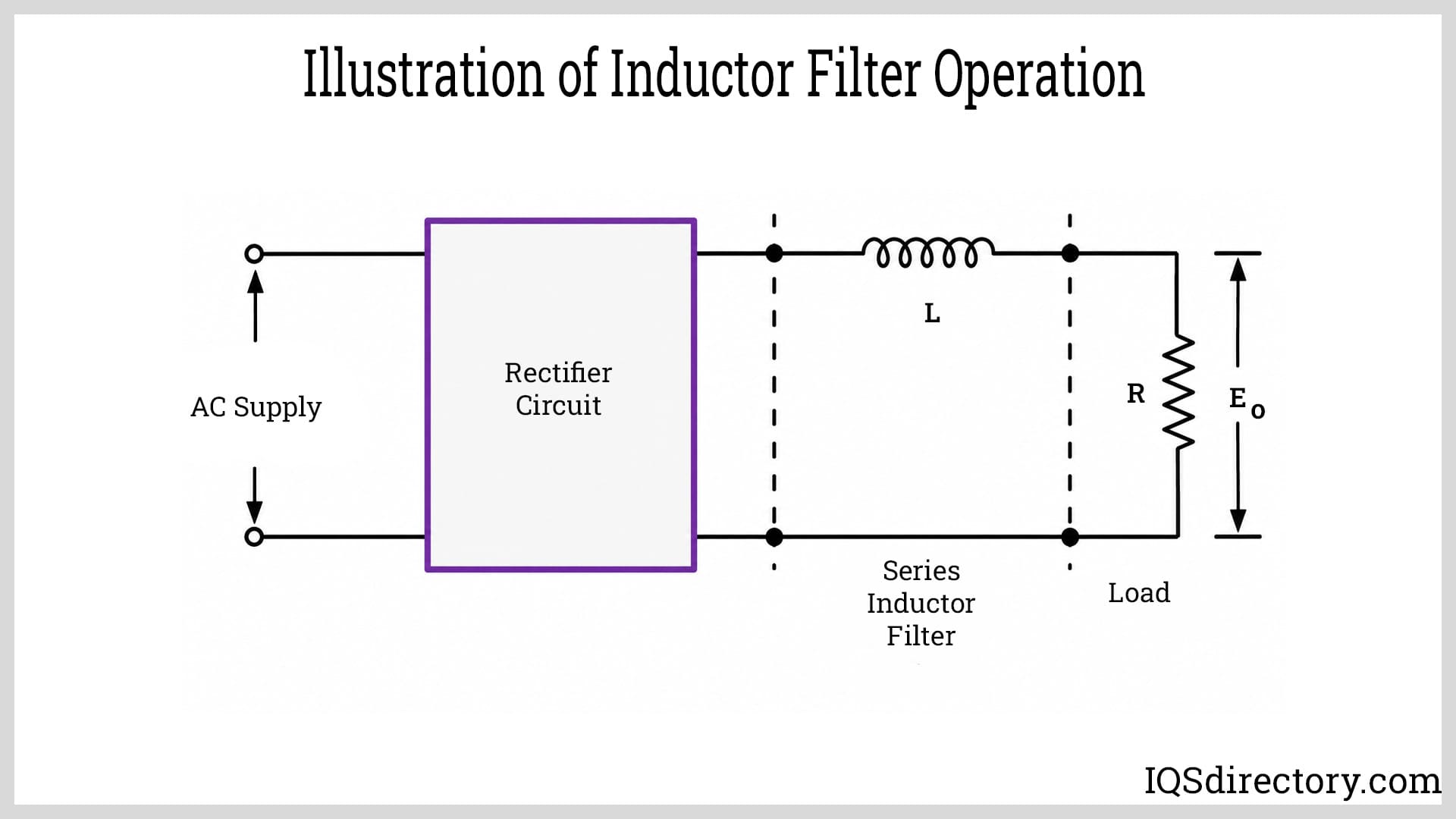
Filtering – For an inductor to provide a filtering function, it is combined with capacitors. The combination cuts or passes frequency bands of an electrical signal. Capacitors block DC currents but pass AC current at high frequencies while inductors pass DC currents but pass less AC currents at high frequencies. Inductor filters are used in power supplies and audio circuits to remove noise or ripple DC signals.
Inductor filters are a specific type of frequency filter that excels at maintaining signal integrity by blocking noise and allowing acceptable signals to pass through with minimal decrease. The magnetic field in an inductor obstructs changes in current, which makes inductors highly effective at blocking high frequency signals. The principle behind inductor filtering makes it possible to target specific frequency ranges.
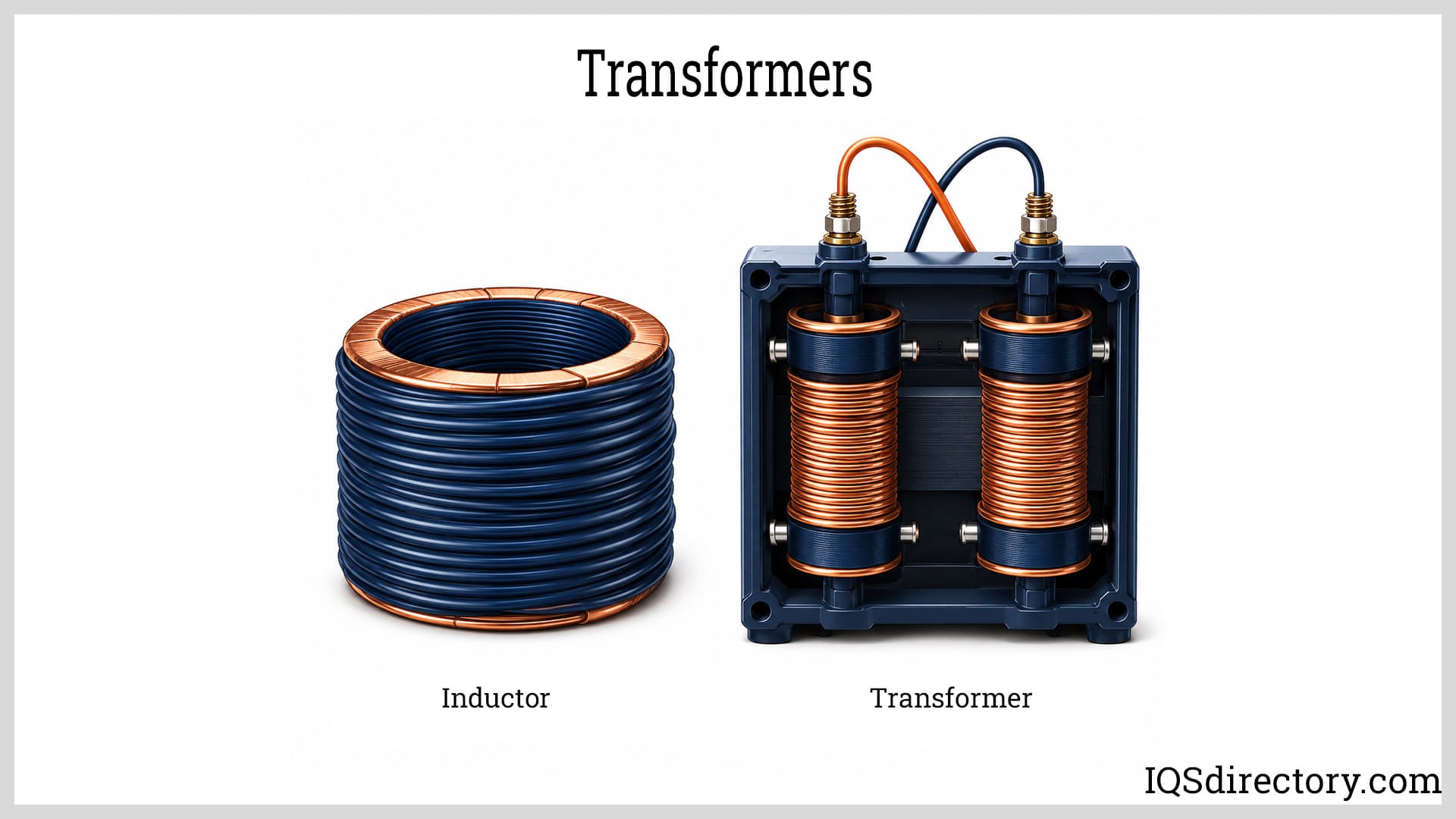
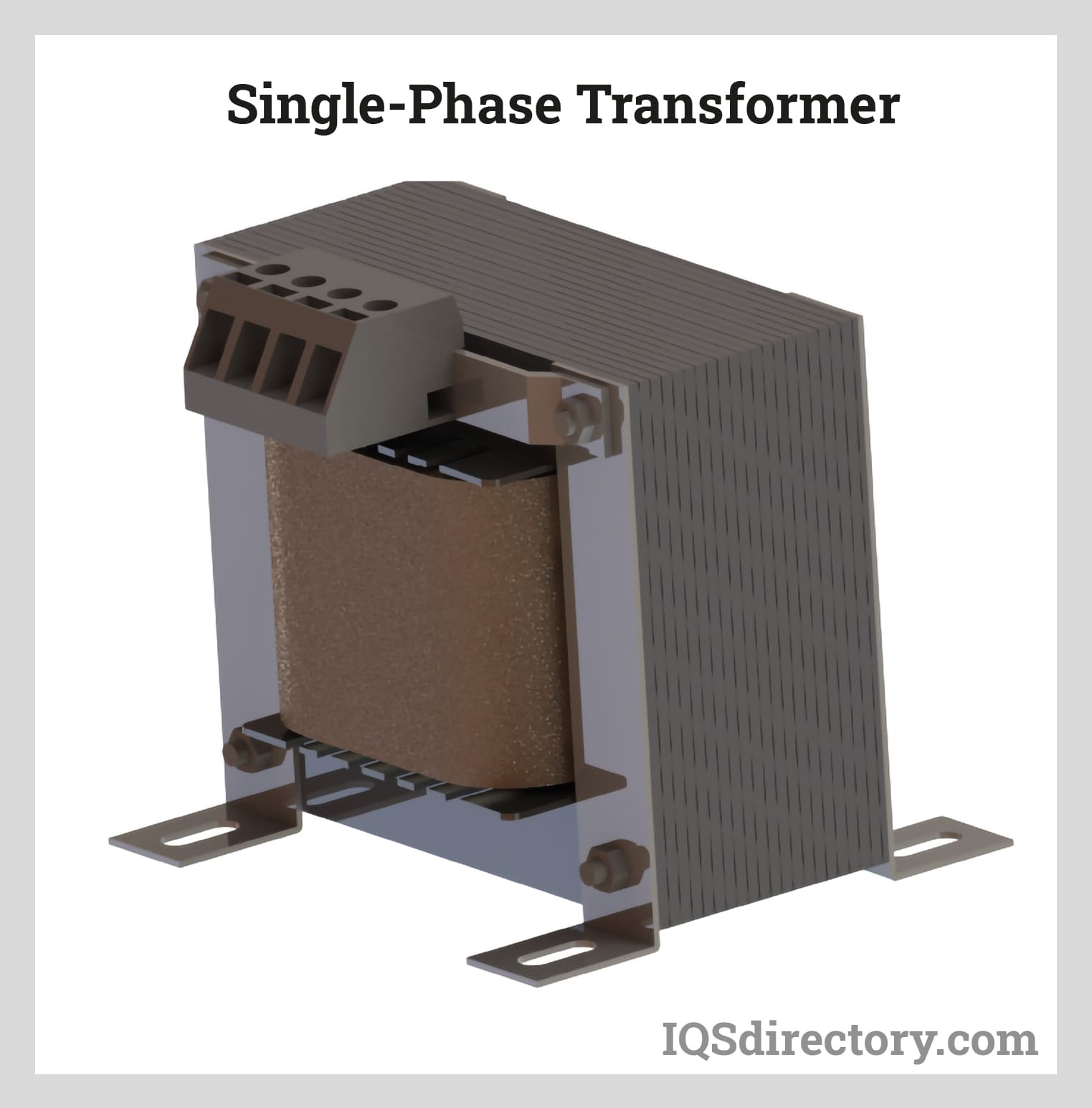
Transformers – Transformers have a similar structure as inductors but with two sets of coils, primary and secondary, that share a magnetic core to transfer energy from one circuit to another. Transformers do not save energy but transfer it from one coil to the other coil. The primary coil creates a fluctuating magnetic field that induces voltage in the secondary coil to change voltage levels. The windings in the primary and secondary coils determine the amount of voltage that is stepped up or stepped down.
In transformers, inductors are used for filtering of current and energy storage in the power supply. The basic structure of a transformer is two inductors sharing a magnetic core using AC current to induce magnetic flux. Although inductors oppose changes in current and store magnetic energy, transformers use the stored energy to scale voltage up or down.
It is important to understand that inductors and transformers are two different forms of passive electrical devices. While inductors work with AC and DC currents, transformers work with AC current, exclusively. The similarities between the two is in regard to their wire windings and keeping circuits apart. Typically, iron core inductors are used for power transformers due to their core losses at high frequencies. They are ideal for the low frequency and high current of power transformers.
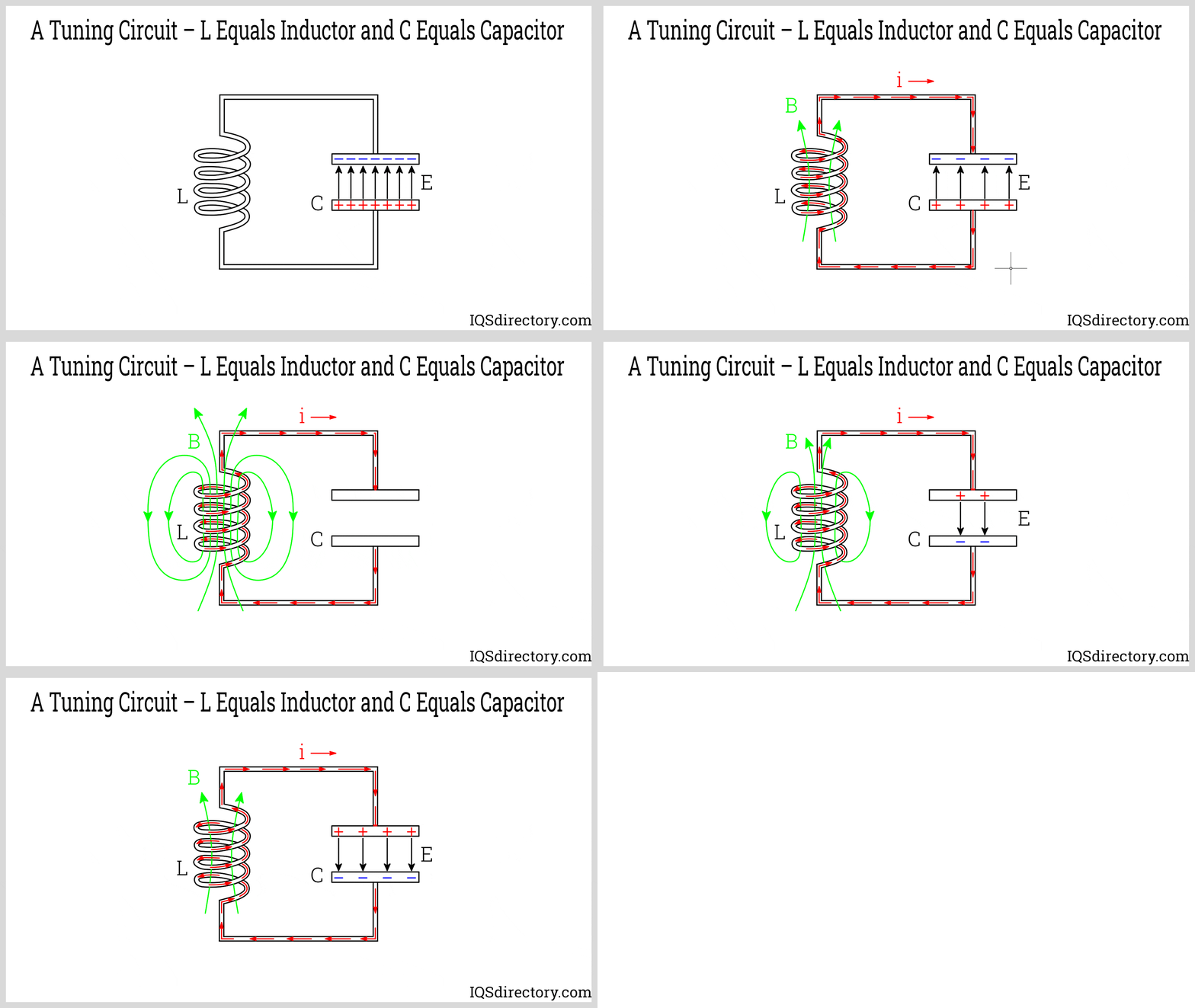
Tuning Circuits – Working with capacitors, inductors are designed to select frequencies from radio receivers and transmitters. Combined with a capacitor that oscillates at a set frequency, an inductor helps to isolate desired signals. They act as energy storage components, alternating magnetic field energy with a capacitor’s electric field to maintain oscillation.
Variable inductors are used in radios to change the resonant frequency and assist in selecting a station. Capacitors and inductors work together to ensure circuit resonances at a desired frequency, rejecting all other frequencies. They are essential components of oscillators and timing circuits by controlling oscillation frequency and timing intervals, which enables precision timing and signal generation.
The frequency of a tuning circuit at which a capacitive reactance is equal to inductive reactance is referred to as resonant frequency. Electrical devices use capacitors in parallel or series with inductors to modify frequencies and select from multiple channels of frequency. Only matching signals are amplified.
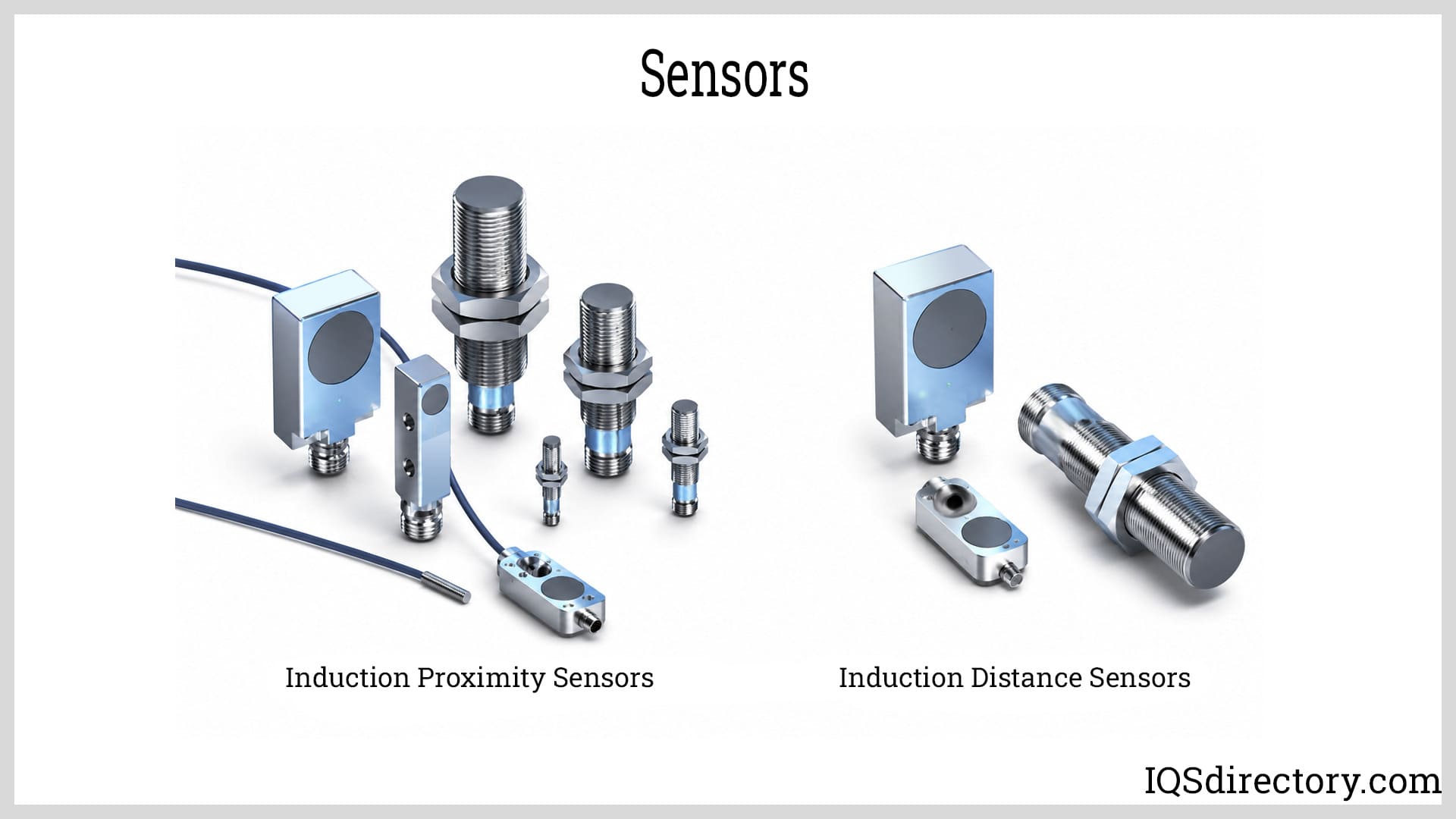
Sensors – Inductive sensors use changes in inductance to detect the presence or position of objects. They are contactless sensors that can sense ferrous or non-ferrous materials and have a sensing range of up to 100 mm (9.937 in). The sensing range of an inductive sensor is the distance from the face of the sensor to the maximum distance the sensor can detect metal. Inductive proximity sensors detect the presence of metallic objects and generate a switching signal. Inductive distance sensors measure the distance to objects through changes in the induced voltage.
The coil for an inductive sensor is part of an LC oscillator. As current flows through the oscillating circuit, an electromagnetic field is created on the surface of the sensor. When metal objects come near the sensor, eddy currents drain energy from the oscillator that triggers a switch in the sensor. The change in the level provides an analog output in relation to the distance of the object from the sensor.
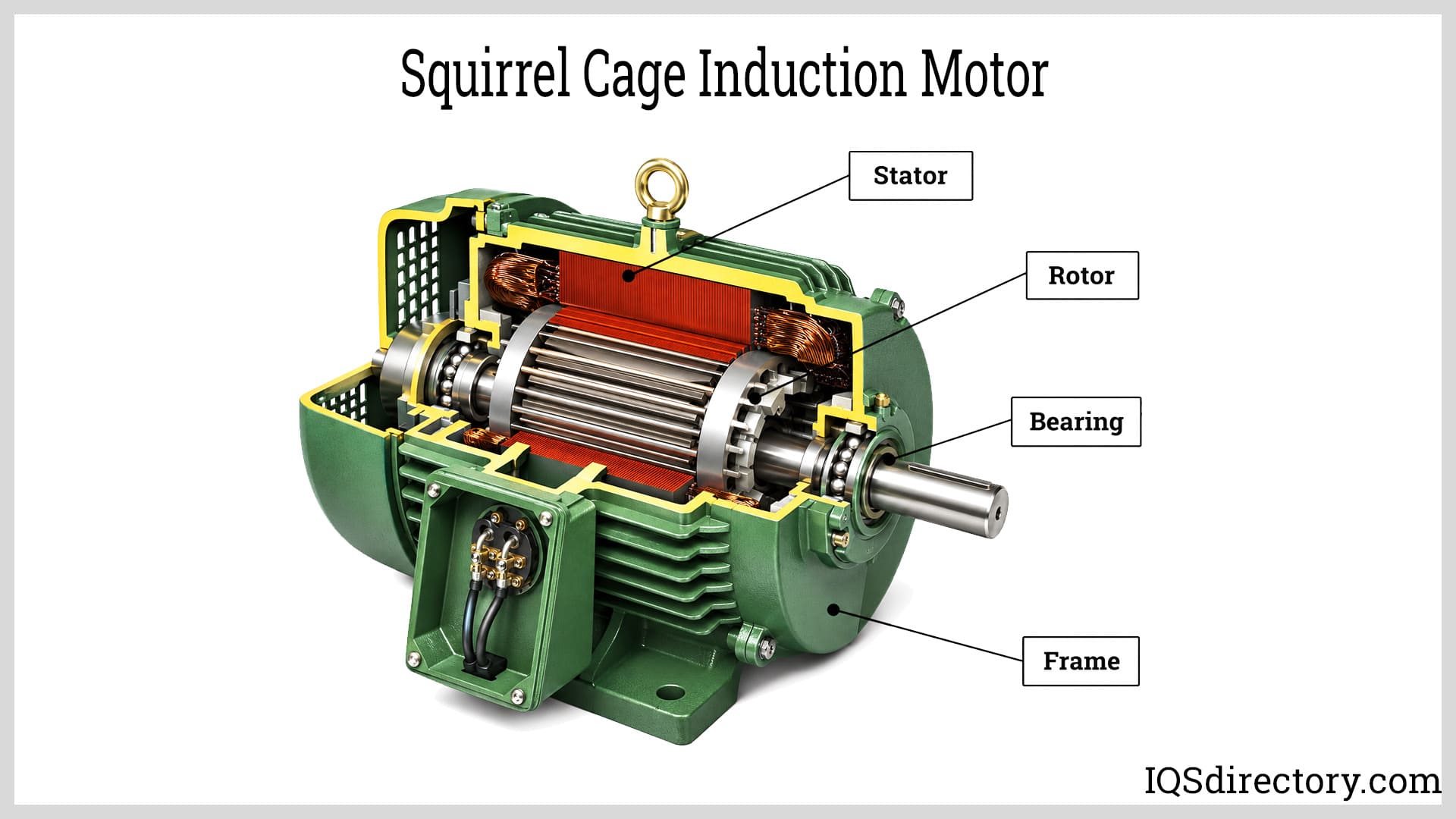
Induction Motors – Induction motors, or synchronous motors, work on the principle of electromagnetic induction where the current to produce torque is generated by the magnetic field of the stator winding. The two main parts of an induction motor are the stator and rotor with the stator being the fixed part of the motor while the rotor, inside the stator, rotates. Induction motor types include squirrel cage, wound rotor, single phase and three phase.
The operation of induction motors is based on Faraday’s law of electromagnetic induction and Lenz’s law. AC voltage creates a rotating magnetic field (RMF) around the stator that rotates at a speed determined by the AC supply and the number of poles in the motor. The RMF passes through the air gap and cuts the rotor conductors, which induces an EMF in the rotor conductor. The induced currents produce a magnetic field that interacts with the stator’s magnetic field. The interaction between the two fields generates torque that causes the rotor to turn.
Induction motors cover a wide range of applications that use rotating machines. They are efficient, economical, and require minimal maintenance. Lathes, mills, and conveyor belts depend on induction motors as well as elevators, escalators, and cooling systems. Certain types of electric cars use three phase induction systems due to their exceptional performance, cost, and low upkeep.
Power Supplies – Inductors are especially important in power supplies, where they manage current flow, store energy, and filter signal frequencies. In DC power supplies, inductors smooth current flow and filter noise, which helps devices receive a stable output. Power supplies convert power into the type and requirements of a device. During the switching of power supplies, inductors store energy during the switching cycle to help maintain steady output. Although less common, in linear power supplies, inductors smooth out voltage to provide cleaner DC output. At the input stage of a power supply, inductors reduce EMI interference during input and output.
As with many of the applications for inductors, power supplies depend on inductors to store energy and help maintain current flow. They have become an essential part of power supplies due to their filtering and regulating properties. Although they are used in different types of power supplies, they are often found in switch mode power supplies (SMPS) for the management of voltage conversion and to smooth current ripples. Their resistance to current changes guarantees stable DC power.
Energy Storage – Inductors store energy in the form of a magnetic field. As energy is supplied to an inductor, the strength of its magnetic field increases. As current decreases, the magnetic field releases its energy. All types of electric wires generate a magnetic field. What makes the magnetic field of an inductor unique is in regard to how wires are wound around the core of an inductor. The magnetic field for straight wire is weak and unable to store energy. The wire for inductors has the same type of magnetic field as straight wire. What makes it stronger is its winding, which has a magnetic field around the wire and one for the total winding. This strong magnetic field is able to store energy until the energy is released to supply a circuit.
The amount of energy that an inductor coil can store is dependent on its inductance, which is determined by the number of turns in the coil, the geometry of the coil, and the type of core material. The amount of stored energy is proportional to the square of the current and the inductance. In power converters and inverters, inductors smooth current fluctuations and reduce voltage ripple by their storing of energy, which is released as needed.
As is indicated by the provided information, inductors take many forms and are an essential component in all forms of electrical devices. Understanding inductors and their use is an important part of designing power supplies, motors, and other forms of electrical devices. During the design phase of new electronics, engineers and designers carefully select the type of inductor that will be of the most use and have the best performance to control and filter current flow.
Chapter 3: Types of Inductor Cores
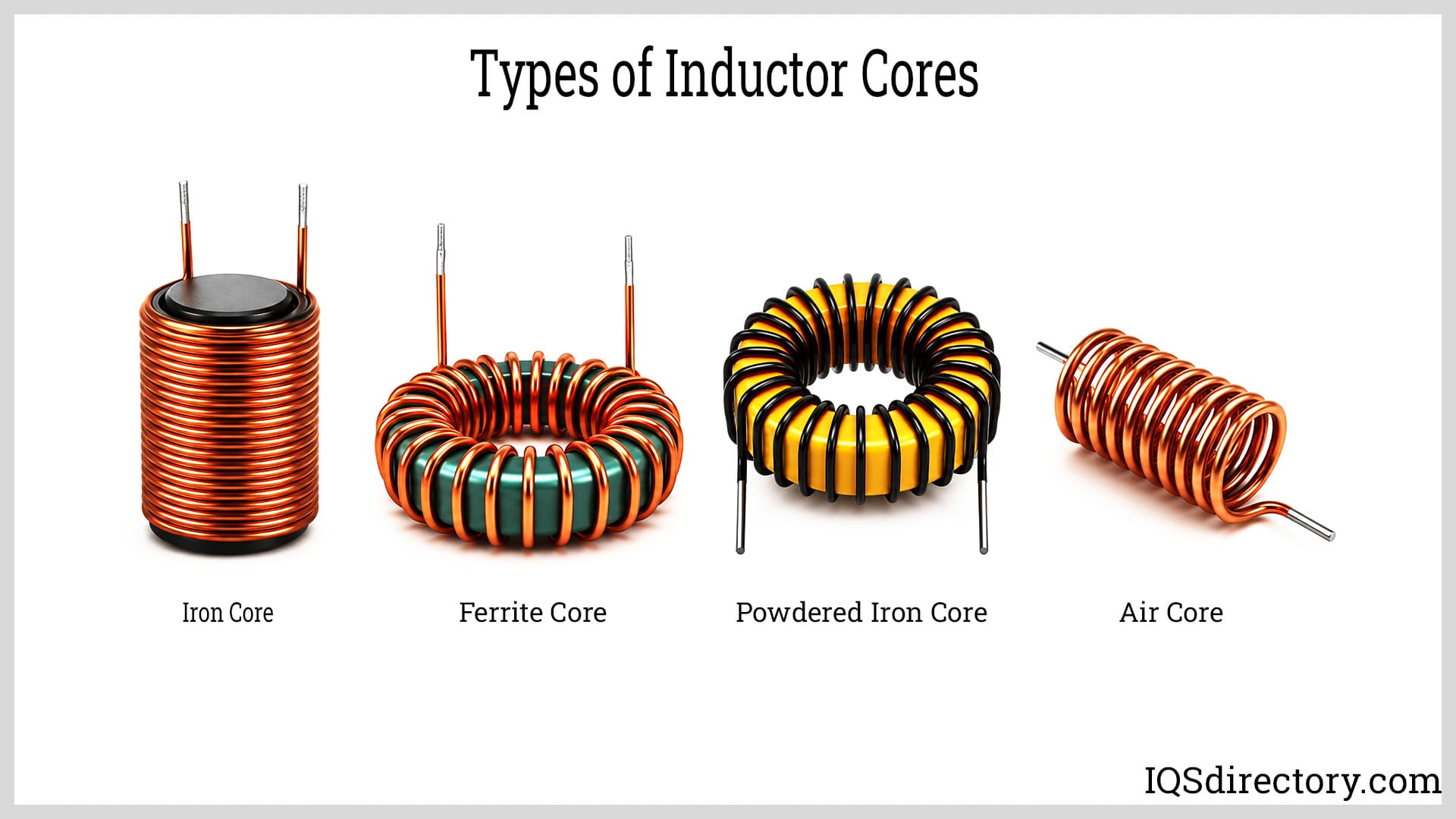
When discussing the types of inductors, there are various factors that are used to categorize them. One of the aspects is the type of materials used to construct the core, which can take the form of various metals. In some instances, an inductor will not have a core, referred to as an air core.
Iron Core
Iron cores increase inductance and have higher magnetic permeability than air cores. Although they are used for high power inductors, they have limited high frequency capacity. Iron cores are ideal for low space inductors due to their high inductance value, when compared to air core conductors.
The size and cost of iron core inductors make them the perfect choice for loudspeaker crossover designs. Iron cores consist of iron or laminated iron. They increase the strength of the magnetic field and allow designers to achieve a desired inductance with fewer windings and smaller wire gauges. Unfortunately, at higher frequencies, iron core inductors can experience losses of clarity, which is one of the reasons they are best suited for frequencies below 200 Hz.
Laminated Core
The purpose of a laminated core is to protect the core from being damaged, a factor that reduces maintenance. Laminated cores are capable of providing steady current even with a high amount of voltage, which cuts down on power waste. The structure of a laminated core consists of thin steel sheets that are stacked to form the core. The stacked design prevents eddy currents and lowers energy loss.
Due to being an unwound inductor, laminated inductor cores are smaller, have high sintering density, and acceptable mechanical strength. They are widely used in transformers as a means of minimizing conductivity that leads to eddy currents. The metal plates increase resistance, which leads to a reduction in current flow, loss of efficiency, and heat.
Air Core
Although most air cores are wound without a core, other forms have plastic, ceramic, or other forms of non-conductive material. As with all inductors, the inductance of an air core is dependent on the number of turns in its coil, the diameter of the wires, and dimensions of the coil. In most cases, the wire is made of copper with stripped ends, non-stripped ends, tinned ends or bare ends. The orientation of the leg includes radial, opposed, axial, and, in special cases, unique orientation.
Unlike inductors with metal cores, air core inductors do not experience magnetic saturation, which makes them suitable for high frequency signal applications or conditions where low loss is important. The fact that air cores do not experience core losses is the reason that they function well in high frequency applications. The low resistance of air core inductors gives them a high Q factor, which represents the efficiency of an inductor. The lack of a core enables air core inductors to handle high currents and intense magnetic fields without losing inductance. Since air core inductors do not produce EMI interference, they can fit easily into sensitive electronic circuits and RF applications.
Air core inductors are larger than typical metal core inductors and do not produce high inductance values. The many turns of an air core inductor are necessary to achieve the same level of inductance as a metal core inductor. This is due an air core inductor's low electrical conductivity that leads to low magnetic permeability and lower inductance.
Iron Powder Core
Iron powder core inductors have compressed iron powder as their cores. They are manufactured by compressing insulated oxide iron particles in the desired shape of the core. Iron powder cores have low permeability but can support higher current without saturation, which is softer and prevents inductance from dropping. Of the possible shapes of cores, iron powder cores are mainly available in toroidal shapes.
Since pressed iron powder cores are formed at lower temperatures, they can be formed over wire windings without damaging copper wire or insulation. The process allows core material to fill all the gaps in an inductor’s core. The saturation flux density of iron combined with a distributed air gap produces a core with permeability of less than 100 with high energy storage abilities. Iron powder cores are produced to tight tolerances with temperature stability and the ability to tolerate stress.
Ferrite Core
Ferrite cores are made from a ceramic compound that consists of iron oxide combined with manganese, zinc, or nickel. The ferrite in the compound improves the magnetic coupling and minimizes conductive losses. Ferrite has high magnetic permeability and low electrical conductivity. In inductors, the material efficiently controls magnetic flux and prevents the circulation of currents inside the core, which reduces core heat in high frequency circuits.
The use of ferrite cores is due to their high efficiency when storing current, especially in MHz and high KHz ranges. Like other core materials, ferrite cores are able to filter high frequency signals in power and signal applications. Compared to iron cores, ferrite cores have lower eddy current losses and are more effective at suppressing EMI interference. This factor makes them ideal for applications where switching transients and harmonics are common.
When compared to iron inductor cores, ferrite cores have exceptional performance in high frequency ranges with minimal eddy current loss due to low conductivity. The use of ferrite cores in inductors is due to their lightweight and resistance to corrosion. Iron cores are able to handle currents at low frequencies and have higher saturation flux density than ferrite cores, making them ideal for power transformers in 50 Hz to 60 Hz systems.
Gapped Core
Gapped cores are used to limit a core’s magnetic flux density to below the saturation level. Although this can be completed by reducing the number of turns in an inductor, it can also be achieved by adding an air gap in the core, which makes it possible to increase the number of turns. The introduction of the air gap makes it possible to control the inductance and current saturation parameters. In addition, the storage capacity of an inductor increases and makes it less susceptible to changes in the core’s magnetic properties.
Ceramic Core
The approach to the construction of ceramic core inductors is different from metal and air core inductors in that their core is made of ceramic, a non-conductive material. Since ceramic cores are non-conductive and non-magnetic, they provide improved mechanical stability and a marginal increase in inductance compared to air core inductors. A benefit of ceramic cores is their ability to maintain the shape of their coils and spacing, which ensures consistent inductance under varying temperature and humidity conditions.
Eddy current and hysteresis losses are very low with ceramic cores while thermal and mechanical stability are excellent. Since ceramic cores have minimal core loss, they are used in high frequency applications. As is true of air cores, ceramic cores are compact and easy to install.
The type of core in an inductor is a major factor in determining an inductor’s inductance, which is provided by the core’s high permeability, strong magnetic field, compactness, and energy storage. The correct selection of a core concentrates the magnetic field, reduces EMI interference, and allows for precision control of current filtering. Inductor manufacturers work with their customers to choose the right materials for an inductor core to ensure the viability of a client’s electronics.
Chapter 4: Types of Inductors by Construction
Although the core is a major factor in determining the type of inductor, several other factors define the different types of inductors, which vary in size, shape, capacity, and efficiency. Inductors are an essential part of electronics and are becoming more and more important with the development of the many varieties of modern electronics. The typical inductor consists of copper wire wound into a coil around a core that is magnetic or non-magnetic. Inductors are categorized by their core, shape, and use.
Toroidal Inductor
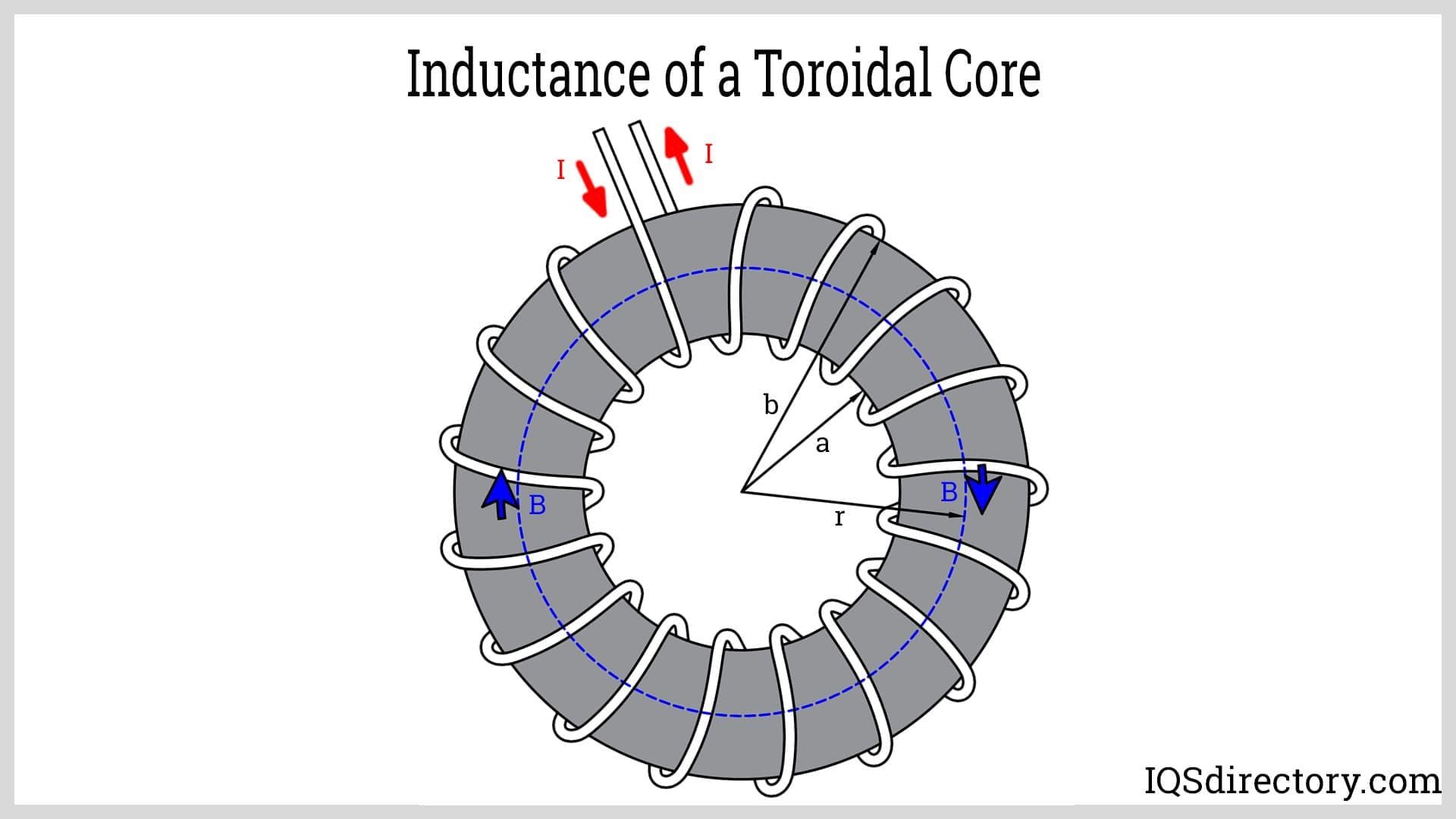
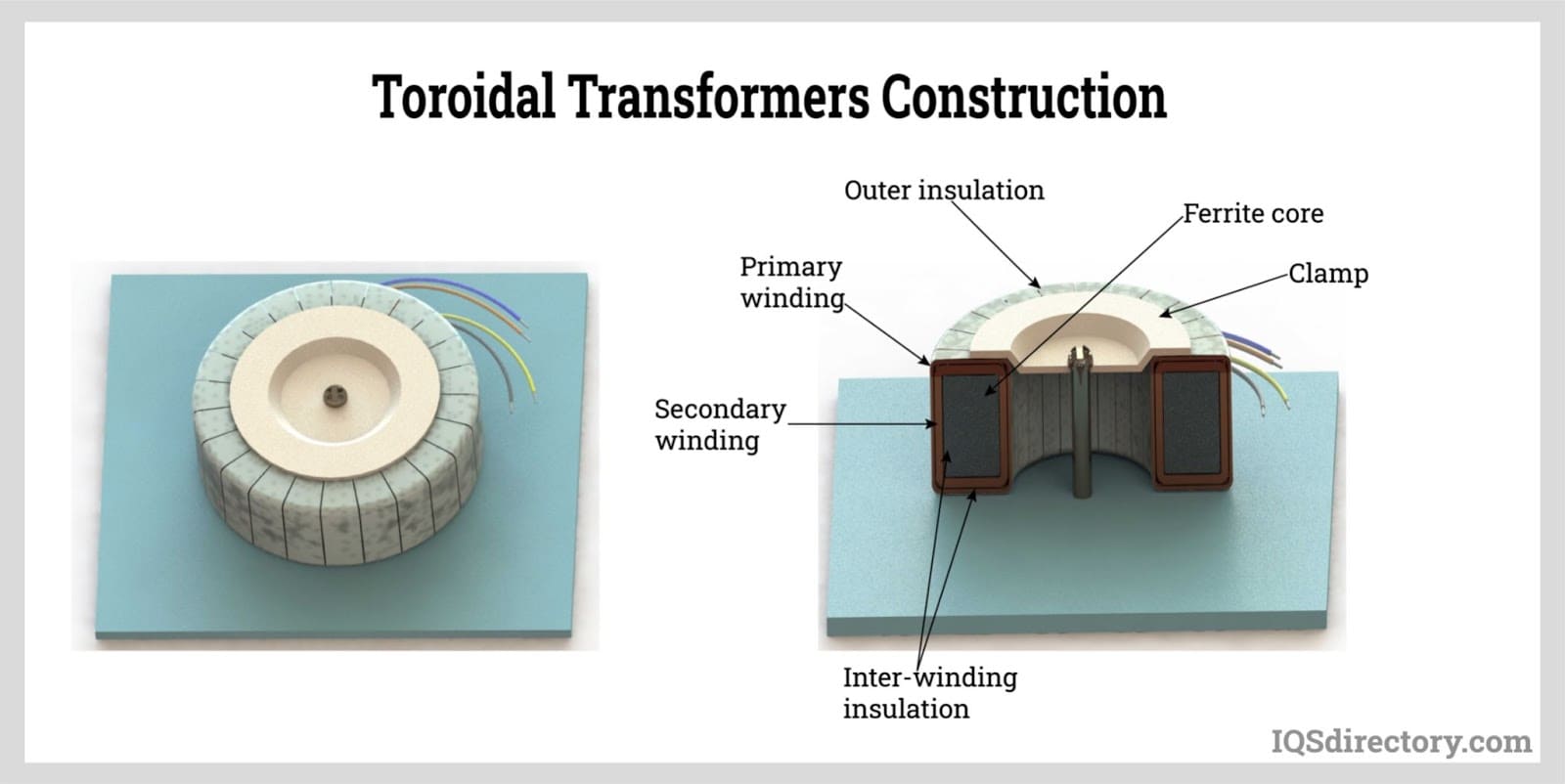
Toroidal inductors have a ring shape that is commonly found in electronics. The term toroidal is in regard to objects that are shaped like a torus or toroid, a hollow, donut shape with tightly wound wires. The materials used to produce a toroid are either ferrite or powdered iron. The use of the toroidal shape provides a high degree of inductance and low EMI emissions. Magnetic flux is contained within the core, which makes better use of space and offers enhanced performance.
The low EMI emissions of toroidal inductors enables them to be used in sensitive electronics. Toroidal inductors' low resistance makes them more efficient at storing and releasing energy, enabling them to be used for power supplies and audio amplifiers. They have a uniform magnetic field and low level of magnetic hysteresis that leads to consistent performance over a wide range of frequencies regardless of the temperature.
Although there are many advantages to toroidal inductors, there are some disadvantages, the most important of which is their cost. The manufacturing process for toroidal inductors involves costly materials, difficult windings, and problems regarding welding due to their shape.
Surface Mount Device (SMD) Inductors
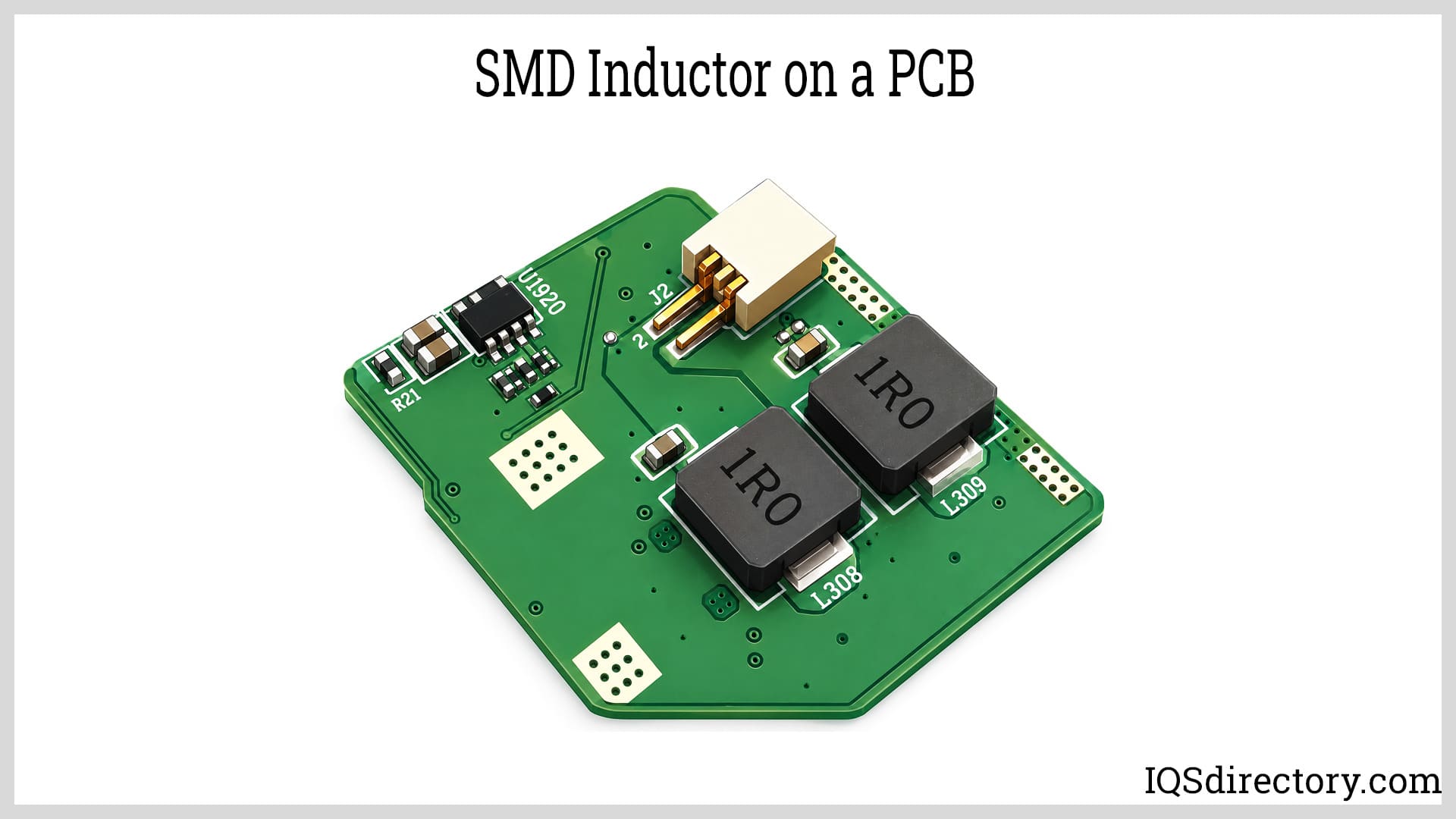
SMD inductors are constructed of thin, flat wire wound around a ferrite or powdered iron core. A completed SMD is coated to ensure its longevity and durability. The compact design makes them ideal for electronics designed for use in applications with limited space. They mount easily on printed circuit boards and are available in many different sizes, values, and shapes, which enables them to be used in a variety of applications.
The engineering and design of SMDs makes them exceptionally reliable and highly durable enabling them to endure extreme conditions, such as high temperatures, vibrations, and impacts or shock. The low profile of SMDs makes it possible to use them in PCBs that normally use through hole inductors.
SMD inductors are classified according to their type of wire winding, layers, braided type, and chip inductors. As with other forms of inductors, the wire wound type of SMD has high inductance, exceptional precision, and low loss, but is difficult to miniaturize. Multilayer SMD inductors are smaller with a magnetic shield, mechanical strength, and heat resistance, but have low inductance and Q value. The popularity of SMD inductors is their ability to easily integrate with modern electronics due to their suitability for low power applications.
Bobbin Inductors
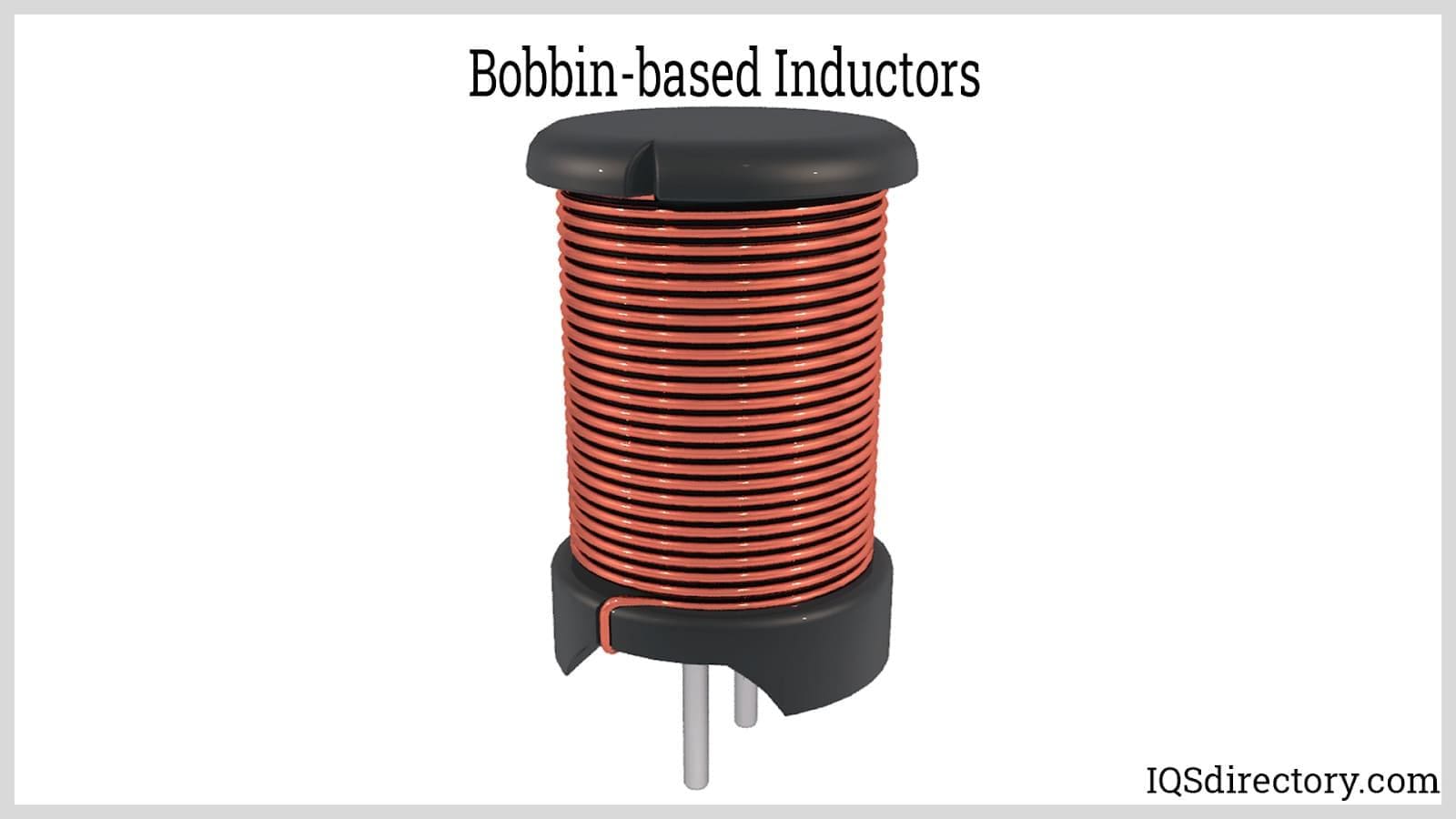
Bobbin inductors, known as drum core, spool, and tubular inductors, have a bobbin-like form as their core with wire wrapped around the bobbin shape. The bobbin provides support for the winding and helps maintain the shape of a bobbin inductor. As with traditional core inductors, the core of bobbin type inductors enables them to have stable inductance and protects them against the effects of vibrations. The pins or leads on a bobbin inductor make it easy to solder the inductor to a PCB.
The types of bobbin inductors include through hole, SMD, shielded, and unshielded. The through the hole type of bobbin inductor is connected to PCBs by being passed through holes in the surface of a PCB.
The terms bobbin inductor and bobbin-based inductor are normally used interchangeably but, actually, refer to different concepts regarding inductors. The term bobbin-based is a descriptor for the construction of an inductor where the bobbin and wire are separate components. Bobbin core inductors refer to the core shape that has a bobbin, central winding and flanges. In most cases, bobbin-based inductors have bobbin core inductors as their magnetic foundation where the bobbin core helps achieve high mechanical strength, stable inductance, and improved thermal performance.
The combination of the two designs helps manufacturers create inductors that are compact, efficient, and ideal for 21st century electronic circuits. The wide use of bobbin inductors is due to their availability in miniature sizes for use in power adaptors, consumer products, and small DC-DC converters.
Foil Inductor
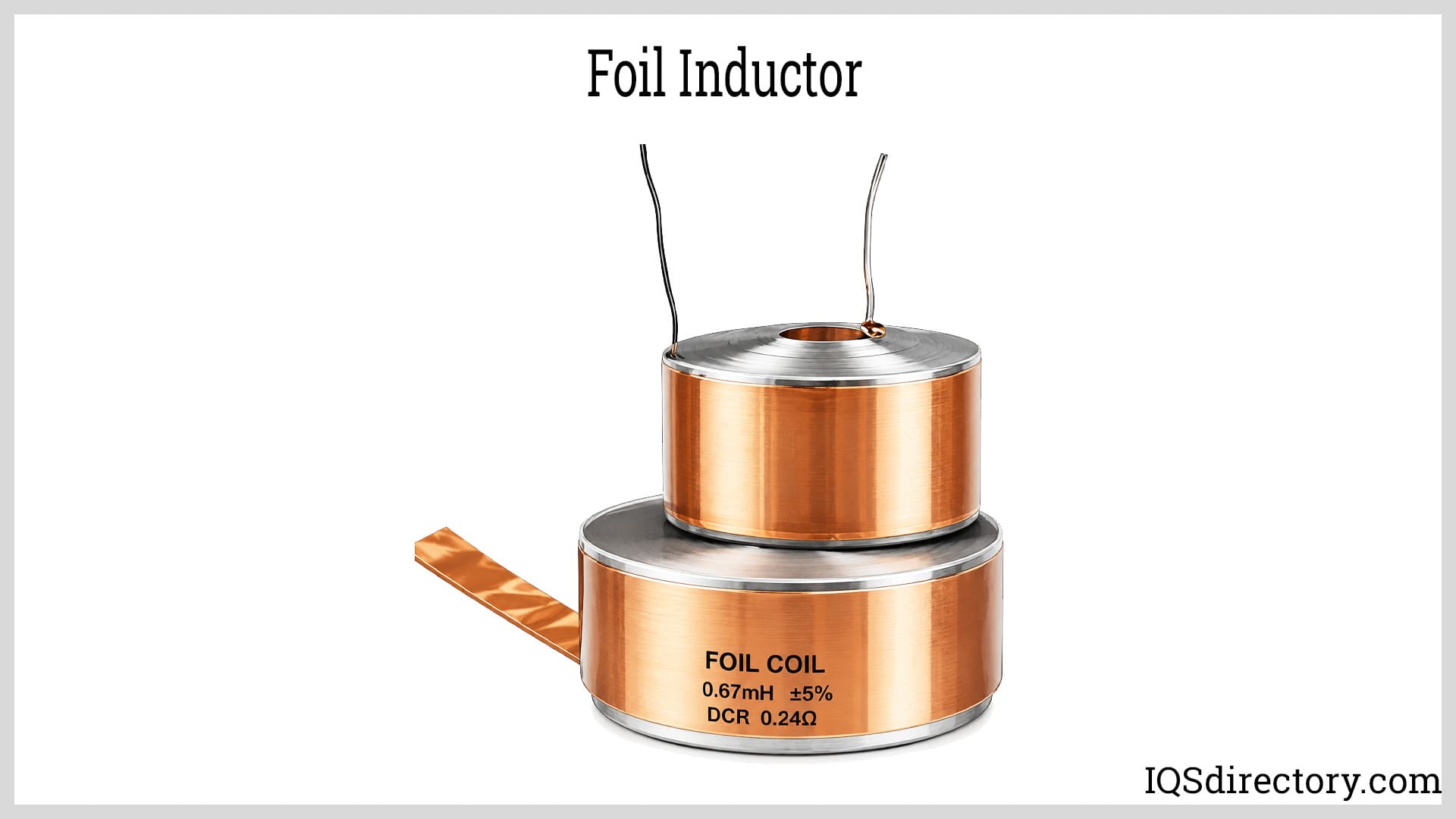
Foil inductors are copper foil separated by a thin insulation layer, such as poly film or waxed paper. They are used in a wide range of applications but are mainly found in loudspeakers and other audio systems. Foil inductors are made with high winding tension with the foil conductors fused in place to provide an exceptionally stable mechanical structure. The superior thermal dissipation of foil inductors enables them to endure long periods of high output power when sound volume has to fill large areas.
Coupled Inductor
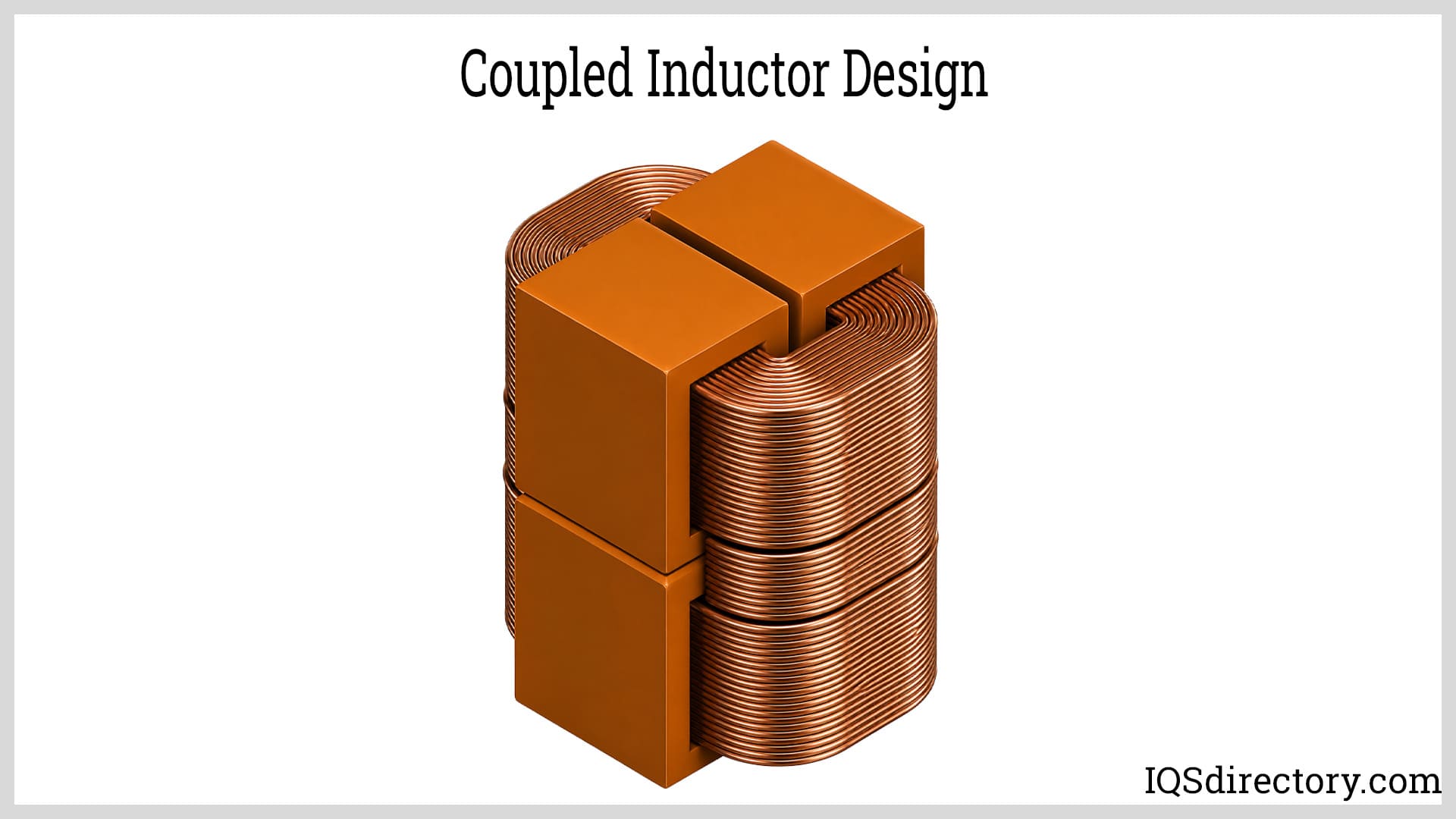
Coupled inductors have two or more wires wrapped around a common core with windings that have equal or unequal turn ratios. In many instances, coupled inductors and transformers are presumed to be the same. What differentiates them is the applications for which they are used. The effectiveness of both is dependent on their core and energy transfer. The properties of the core material and the arrangement of the windings determine a coupled winding's efficacy.
The multiple windings of a coupled inductor require an air gap in the core in order to support the multiple windings. The gapped core makes it possible to balance the efficiency of a ferromagnetic core. The air gap improves linearity and reduces the hysteresis effect. In addition, the gap in the core is able to store a greater amount of energy, which is helpful in power supply design.
Unlike a transformer that increases or decreases AC current, referred to as step up or step down, coupled inductors perform the same task as other inductors, which is the storage of energy. The common core of the windings allows the windings to be magnetically linked and transfer energy between them. Coupled inductors are commonly used in DC-DC converters to change circuit size and control current ripple.
Axial Inductor
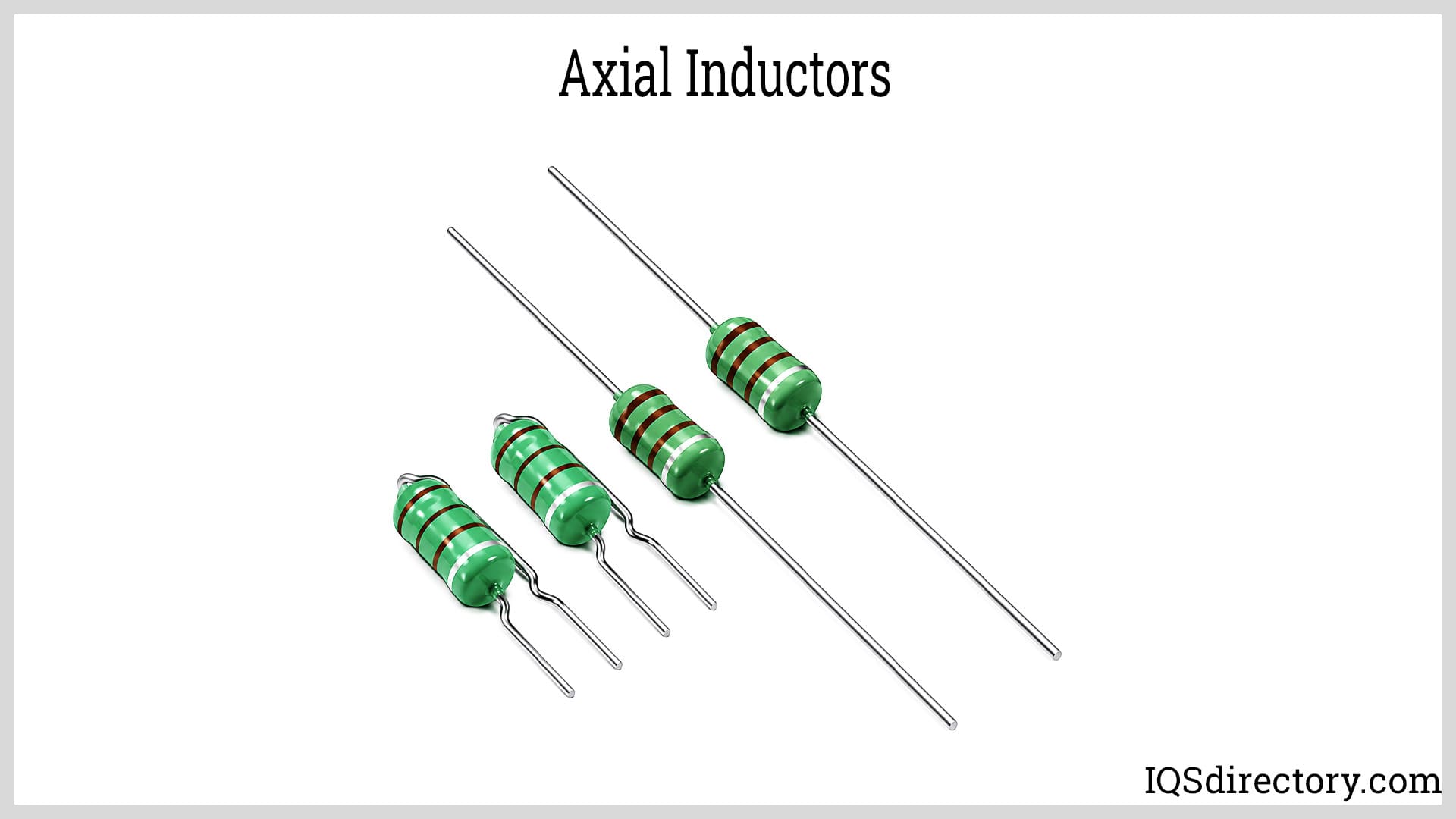
Axial inductors resemble resistors. Wires are wound around the core axially, which causes the magnetic field to be parallel to the shaft. This type of winding is unlike traditional windings where the magnetic field runs perpendicular to the shaft. The result of this winding method is a low-profile design for the inductor. Axial inductors have a long strip structure with pins extending from both ends. This design is the reason that axial inductors are easy to install.
The common uses for axial inductors include power supply filtering, signal filtering, and radio frequency interference (RFI) suppression. The leads for axial inductors can be led out from the same side of the inductor, which makes it possible for SMD placement on a circuit board. Axial inductors are used for high frequency filtering and circuits.
Film Inductor
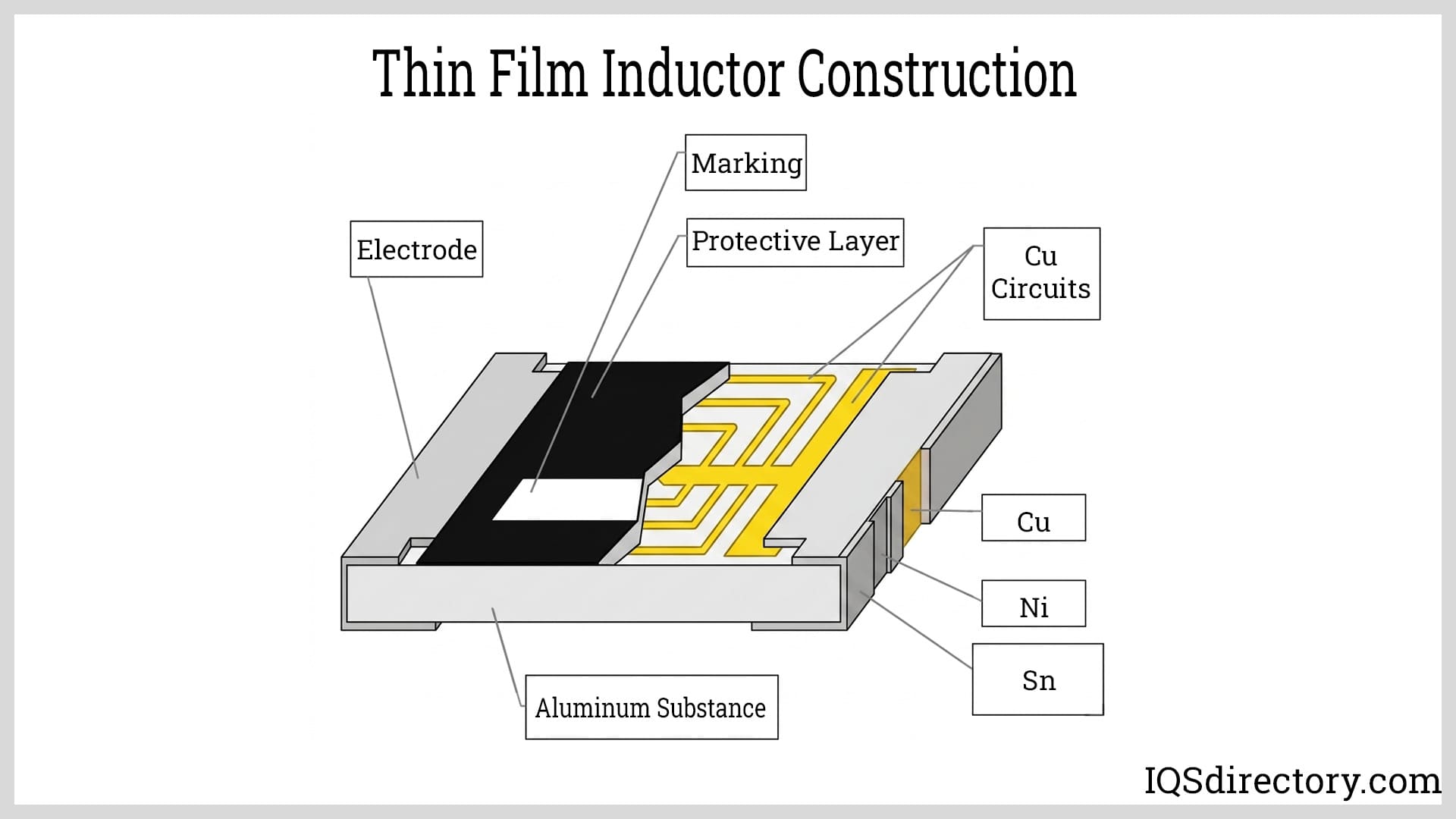
Film inductors have been developed due to the need for electronics to be lighter weight and thinner. They are an essential part of cell phones, computers, digital cameras, and video phones. Thin film inductors transform three-dimensional magnetic core inductors into two-dimensional planar inductors that are smaller, thinner, and versatile.
The manufacture of thin film inductors includes the placement of thin metallic film, in a spiral pattern, on a non-conductive substrate, such as glass or ceramic. The three methods used in the process are chemical vapor deposition (CVD), physical vapor deposition (PVD), and atomic layer deposition (ALD), which vary in regard to the placement of the layers of metallic film on the substrate.
The wide use of film inductors, aside from their size, is their low power consumption, low cost, and exceptional performance. Film inductors are a crucial part of semiconductor manufacturing due to their precision and low power consumption. As with axial inductors, film inductors are commonly surface mounted.
The seven inductor constructions described above are a sampling of the types available from manufacturers, who work closely with their clients to design and produce the type of inductor that best fits an application. Electronics engineers and designers create the types of inductors that maximize the performance and quality of their products.
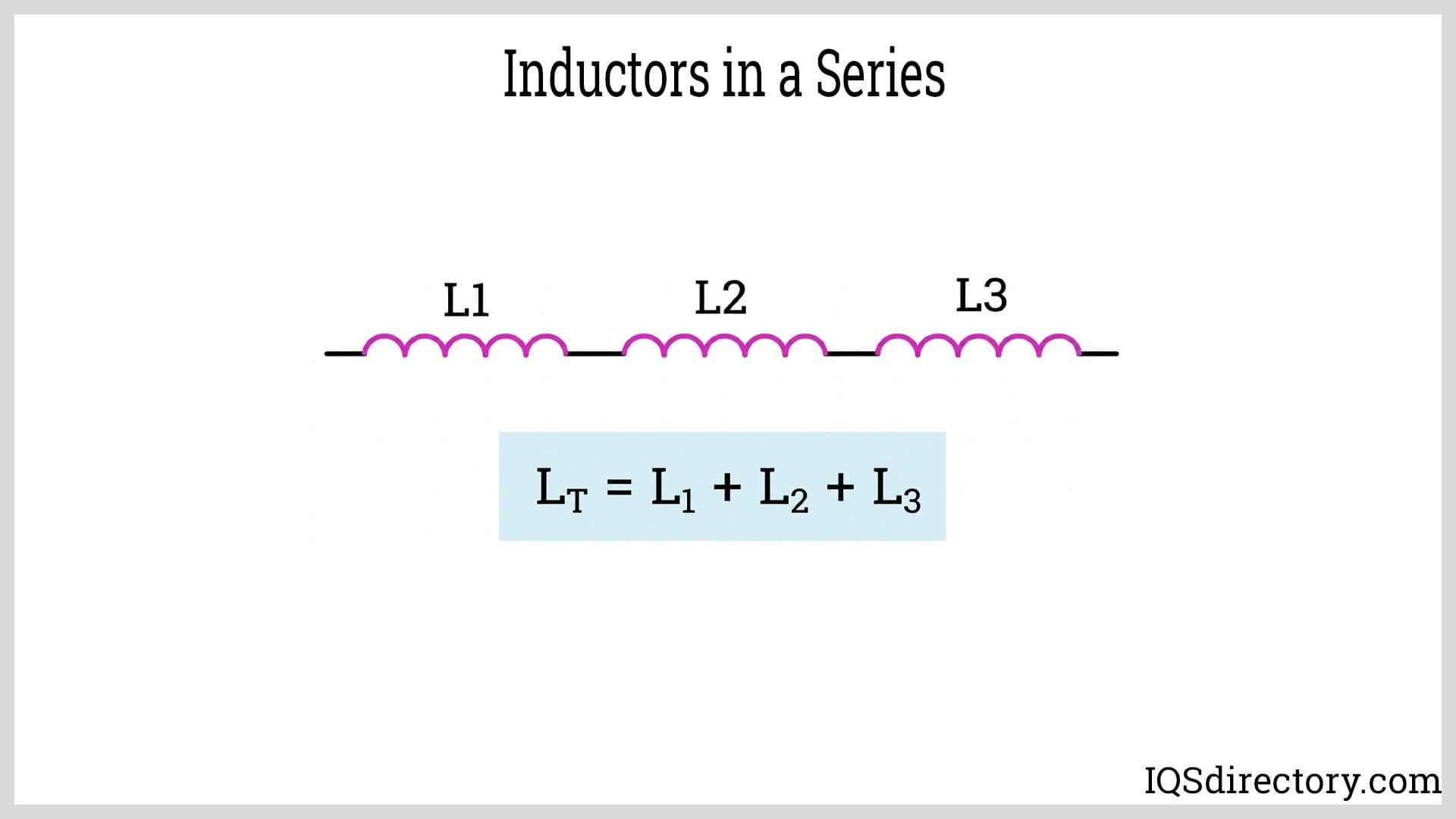
Inductors in a Series
Inductors in a series consist of a set of inductors that are connected from end to end in a daisy chain alignment allowing a single path for current flow. Although the current flow remains the same throughout the series, there is voltage drop as the current passes through each inductor. Inductors connected in this manner have a stronger impact than a single inductor. A significant feature of inductors connected in a series is a substantial increase in the number of turns.
When inductors are connected in a series, the voltage drop is additive, creating a higher voltage. This rate of change means higher inductance. As a result of the connecting the inductors, there is a significant increase in inductance.
Series inductors are used to limit surge currents, such as starting a motor, and suppress high frequency signals. In buck converters, inductors in a series, with the load, smooth the pulsed current from the switching transistor. Inductors in a series appear in power lines, USB interfaces, and sensor inputs.
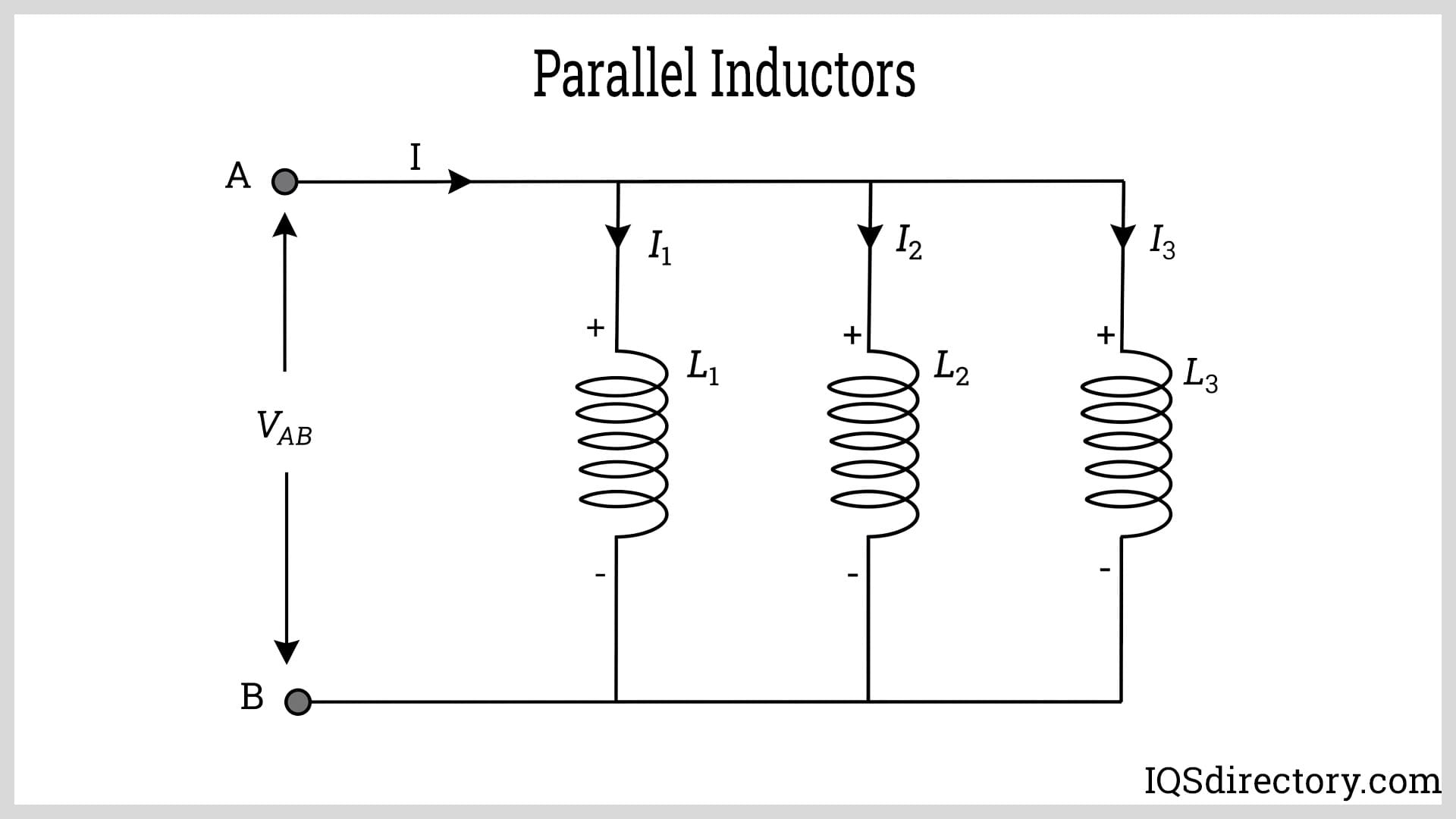
Parallel Inductors
Parallel inductors, also, include multiple inductors positioned together, but not in a series. Inductors in parallel have their terminals connected such that all of the connected inductors have a common voltage. Unlike inductors in a series, where the sum of the inductors is added, current through parallel inductors is a fraction of the total current. Voltage across each parallel inductor is equal.
Any change in the current results in less voltage drop. With parallel inductors, there is less voltage drop for change in current because current divides between the branches of the parallel inductor. The configuration allows voltage to remain the same while the current is inversely proportional to the inductance of each inductor.
The varied uses for parallel inductors include oscillator circuits with variable resonant frequencies. Like series inductors and all inductors, parallel inductors filter and block frequencies. Due to parallel inductors having the same voltage across each inductor, they can be used as voltage regulators. In motors, parallel inductors are used to prevent current spikes.
Leading Manufacturers and Suppliers
Chapter 5: Inductors by Type of Wire
The essential components of an inductor are its wire and core, which work together to create the magnetic field that stores energy. In combination, the wire and core generate and release electrical energy for the operation of electronics. Although the first type of wire that comes to mind when discussing inductors is copper wire, there are other types that provide unique features and benefits.
Copper Wire
Coiled copper wire is the most common form of inductor, regardless of shape, size, and inductance. The wide use of copper wire is due to its high electrical conductivity and thermal properties. Design factors include coil geometry, wire gauge, and number of turns, each of which influence inductance. These factors determine the performance of an inductor and require careful balancing to achieve operational efficiency. Copper wire can have a conductivity value as high as 58.2x10⁶ S/m, making it the perfect choice for minimizing energy loss.
Aluminum Wire
The low conductivity of aluminum restricts its use in inductors. When appropriate, aluminum wire is used to decrease the wait of an application and lower cost. In some instances, it is used in conjunction with copper wire to make use of aluminum's light weight. Aside from aluminum’s weight, there are other aspects of aluminum wire that make it an optimal choice for inductors. For example, it conforms easily to the shape of windings, which reduces mechanical stress.
In addition, aluminum has a higher capacity for storing heat than copper. Its light weight necessitates a higher number of windings, a factor that makes it unsuitable for applications with space restrictions. When aluminum is exposed to air, it quickly oxidizes, requiring several layers of protection.
Magnet Wire
Magnet wire is insulated aluminum or copper wire that is known as enamel wire or winding wire. It is used for coils, transformers, and inductors. The enamel coating on magnet wire is for thermal protection and helps reduce short circuits. The main characteristic of magnet wire is its thin insulation layer, which allows for maximum copper density that can reach 90% in windings. It has high temperature stability and can endure winding stress. The insulating layer on magnet wire is necessary to prevent the wire from creating shorts.
The types of magnet wire are determined by their insulation with temperatures for insulations varying from 100°C (212°F) for enamel insulation up to 240°C (465.8°F) for polyimide insulation. There are many types of magnet wire with all types including uniform insulation, dielectric strength, insulation resistance, mechanical stress resistance, and longevity. The critical factor in regard to choosing magnet wire is the conditions under which it will be used.
Superconducting Wire
The main feature of superconducting wire is that it does not have any electrical resistance as the temperature drops below zero. This aspect of superconducting wire is critical to applications that require current flow at very low temperatures. Since superconducting wire does not heat up as current passes through it, it is unaffected by changes in temperature. This characteristic enables it to provide energy to MRI machines and powerful magnetic fields.
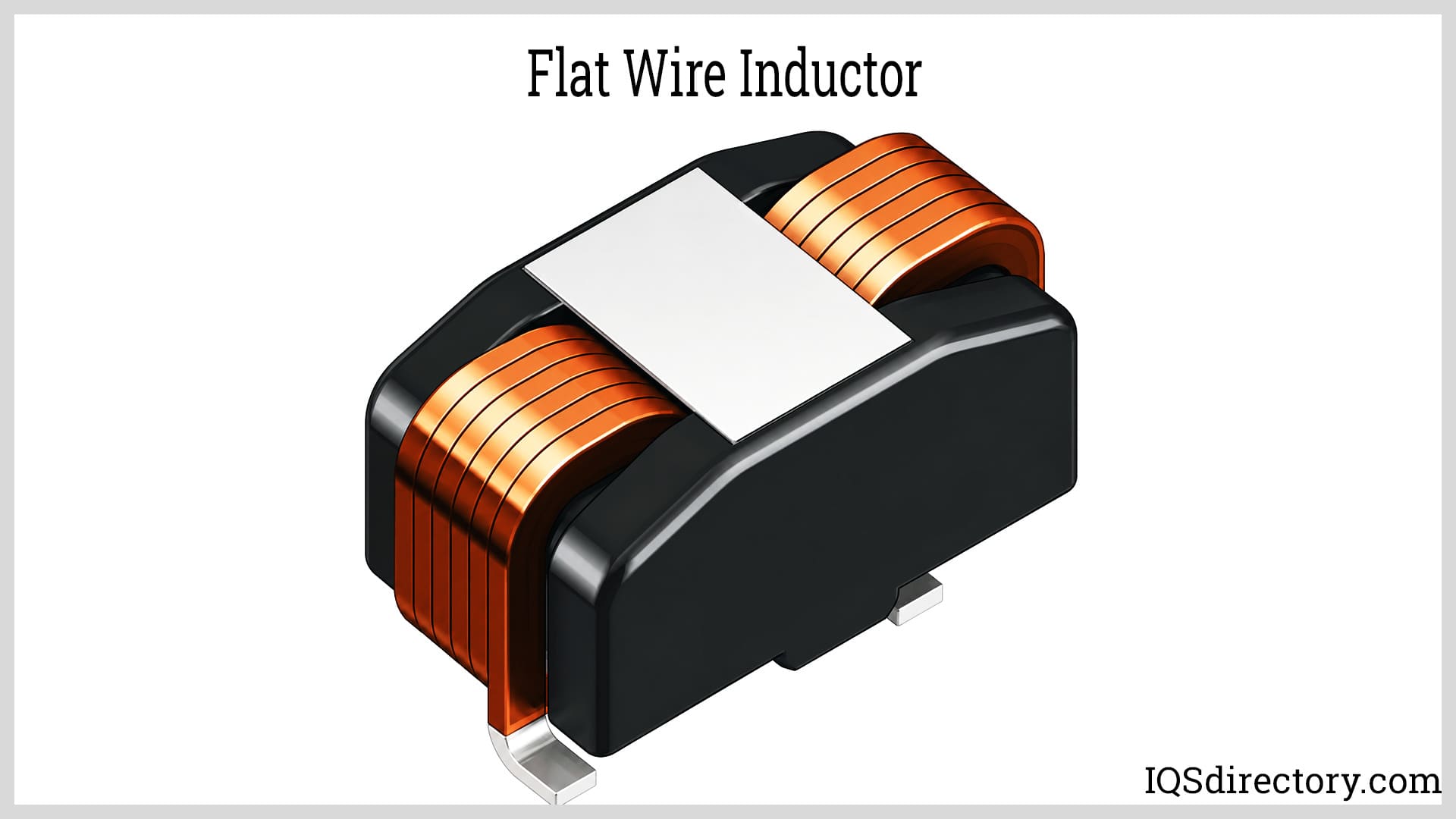
Flat Wire
Flat wire has a rectangular cross section that makes it a versatile choice. As with all forms of wire, flat wire is made from copper, aluminum or stainless steel. It has a wide flat profile that allows it to fit into small spaces and be adjusted to meet the requirements of design parameters. One of the common uses for flat wire is in heating elements.
The process for manufacturing flat wire involves flattening round wire by passing it through rolling mills to change the thickness of the wire to 0.0005 in (0.0127 mm) with a width up to 0.125 in (3.175 mm). Although these measurements are common, many manufacturers offer wider and thicker wires. Flat wire has exceptional heat dissipation and excellent flexibility, which are the reasons it is commonly used in inductors in electronics and medical devices.
Flat wire configurations allow for a closer coupling with magnetic fields, which leads to higher inductance. This aspect of flat wire inductors makes them ideal for high frequency applications. In addition, they can handle higher current levels without overheating due to the increased surface area of the wire.
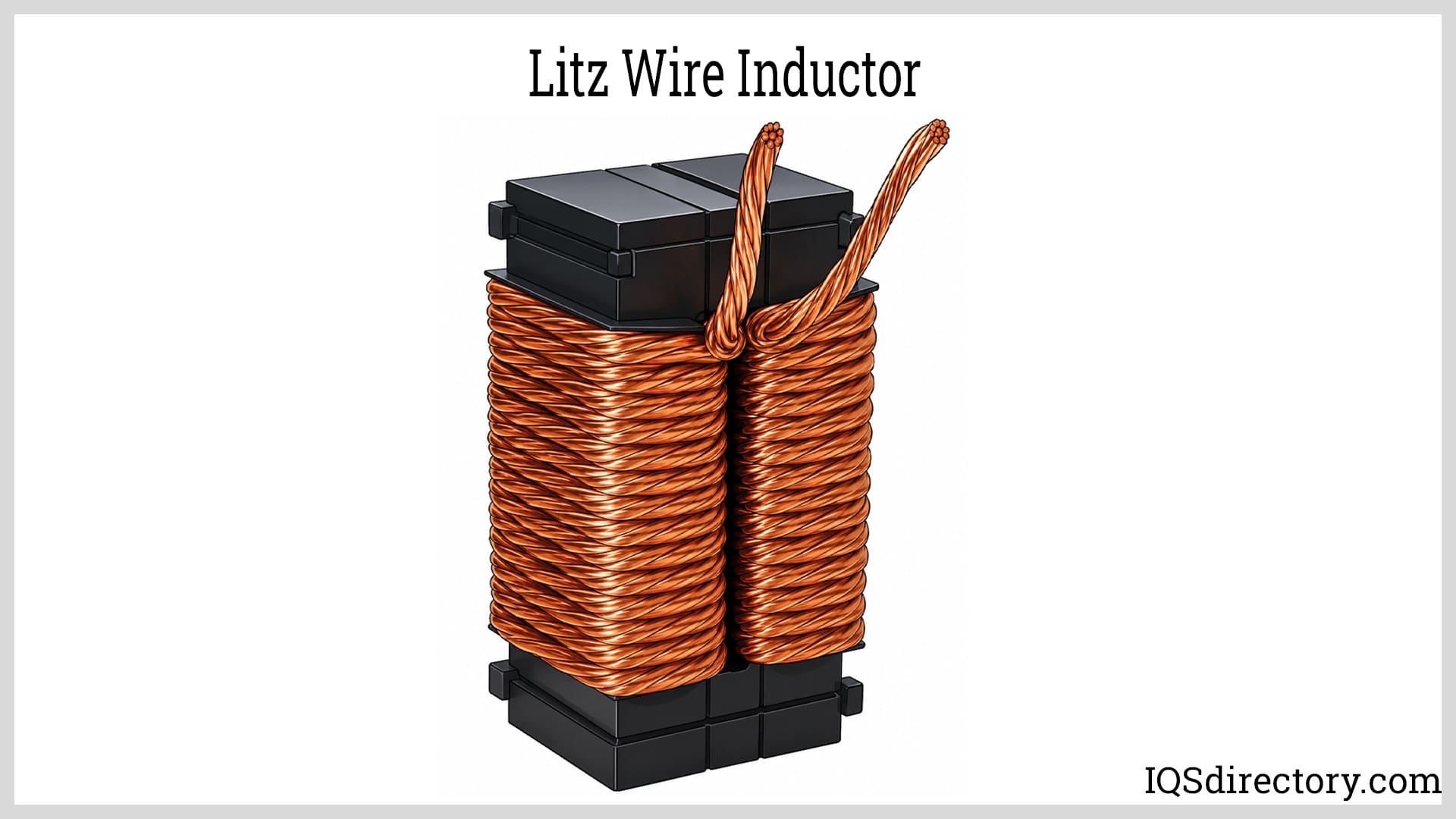
Litz Wire
Litz wire is a multistrand wire that is made from insulated magnet wires that are braided together. The term Litz comes from the German word litzendraht, meaning woven wire. The winding of the wires reduces field resistance and allows current to flow easily. Litz wire removes hot spots, reduces AC power loss, and minimizes eddy current losses.
There are eight different types of Litz, numbered Type 1 Litz wire to Type 8 Litz wire. Each of the types has a different structure in regard to insulation, method of manufacturing, and the shape of the wire. Type 1 Litz wire is the simplest form with external insulation and being formed by a single twist. As the types progress from type 1, they become more complex by being formed into specialized shapes or having specialized cores added. The various types are used for high frequency applications due to Litz wire’s ability to improve efficiency.
The strands of Litz wire are 28 AWG up to 48 AWG. In inductors, Litz wire is used in high Q inductors where the control of parasitic effects and heat is necessary. The range of AWG gauges of Litz wire makes it possible to customize its use. Litz wire makes it possible to have an inductor that requires less copper wire and lowers the cost, weight, and volume of an inductor. In addition, the use of Litz wire reduces the current proximity effect.
Chapter 6: Types of Inductors by Application
The term inductor covers a wide range of electronic applications, each of which requires an inductor with a different structure and capabilities. It is this factor that determines the number of windings, type of core, and the shape of an inductor with small inductors required for modern electronics while more dynamic and larger inductors are necessary for industrial equipment and machinery. Various types of sensitive equipment require inductors that are very small but provide the same functions as larger more powerful inductors.
The need to control and filter current has led to the development of inductors that can fit all of the requirements of modern electronics. Although the physical aspect of inductors, such as the core, windings, wire, and shape, can be used to categorize inductors, they are further classified by how they are used. Designers and engineers use the unique properties of inductors to achieve the parameters required by a circuit.
Radio Frequency (RF) Inductors
RF inductors are high frequency circuit inductors that perform high frequency choking, filtering, impedance matching, and circuit tuning. They are used in wireless devices, testing equipment, and GPS. RF inductors have high inductance stability, flat inductance curves, and very tight tolerances. The types of RF inductors include ceramic, wire wound, and film. Unlike power inductors, RF inductors are designed for minimal power loss and high signal integrity at high frequencies. They are designed for maintaining signal clarity without distortions. The frequency range for RF inductors is in the megahertz and gigahertz range. They have air or ceramic cores.
Power Inductors
Power inductors are the most common form of inductor. They perform the traditional functions of an inductor, such as storing energy and handling and stabilizing current flow. Power inductors prevent voltage spikes, smooth DC output, and efficiently facilitate power conversion. They are used in DC-DC converters, SMPs, and motor drives. In a circuit, power inductors are used to step-up or step-down to convert voltage to the required level. Power inductors are mainly used in a circuit referred to as a switching regulator.
Filter Inductor or Choke
A filter inductor or choke is a type of inductor that is designed differently. Chokes are designed to cut off or restrict AC current while permitting DC current to pass. Their purpose is to allow only DC current to load resistors or other load components. They protect insulation from rises in current by gradually raising or lowering the current. Chokes break down voltage and allow transient voltage across fluorescent tubes by keeping gas voltage from exceeding acceptable system levels.
Audio Frequency (AF) Inductors
AF inductors block high frequencies while allowing low frequencies to pass. In networks of speakers, AF inductors direct low frequencies to woofers. They are a crucial component used for dividing audio signals and separating frequency bands for different drivers. AF inductors protect drivers by allowing only the correct frequency to be received by a driver. In tone control circuits, AF inductors, with capacitors and resistors, adjust bass, midrange, and treble frequencies in amplifiers and mixing consoles.
Sensing Inductors
Sensing inductors detect or measure metallic objects using a magnetic field that interacts with conductive materials. They are able to sense ferrous metals and can detect non-ferrous metals, which decreases a sensing inductor’s sensing range. As with other inductors, sensing inductors generate an electromagnetic field around their core. When a metal enters the field, eddy currents from the metal reduce the amplitude of the oscillation of the magnetic field and trigger a signal.
Pulse Inductors
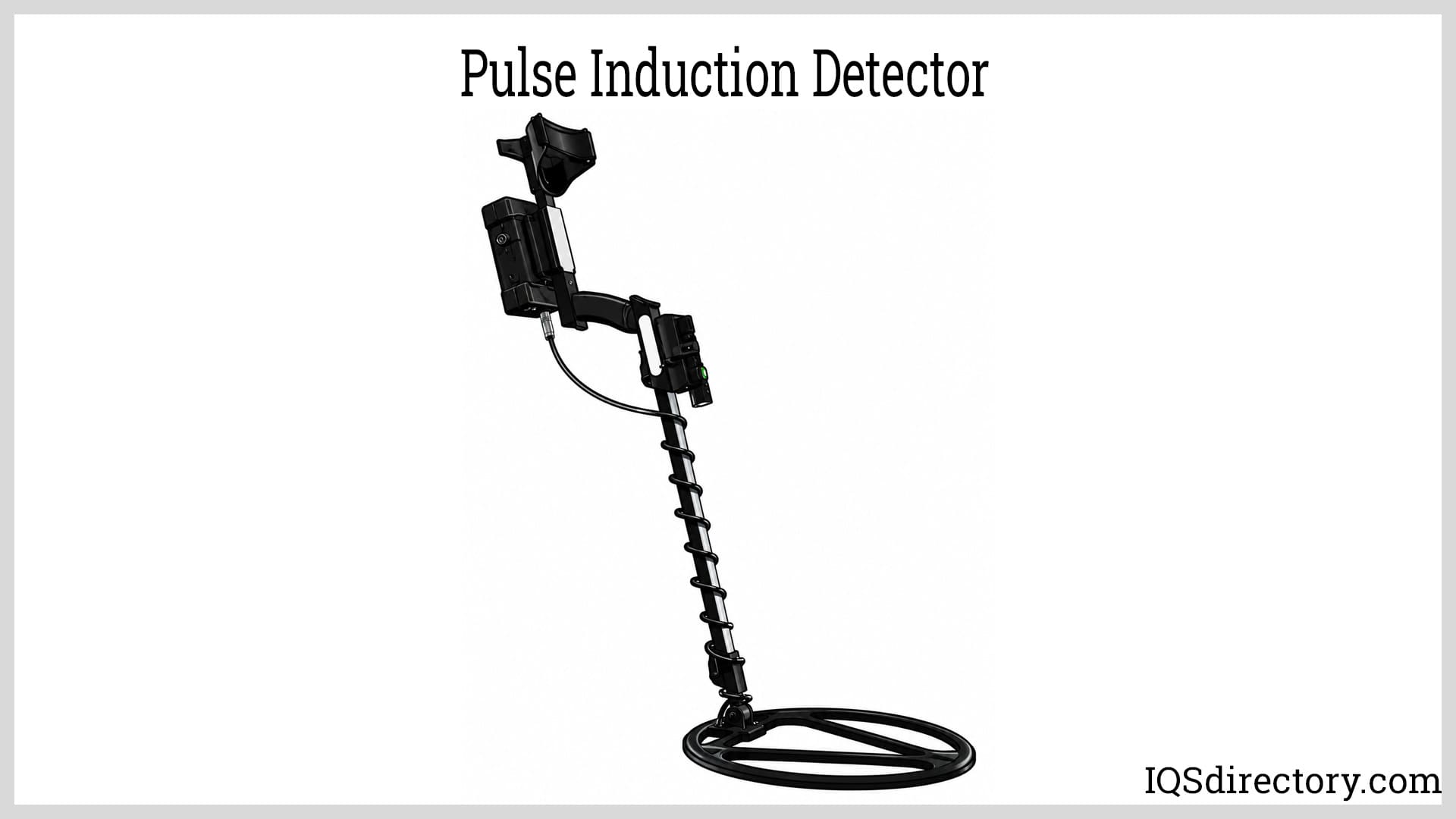
Pulse inductors are another form of metal detector that produce an electromagnetic field that collapses and creates spikes in voltage to detect metals. They are referred to as pulse inductors due their sending of short pulses to the inductor’s coil to create the magnetic field. The target metal will continue to be magnetized for a short period after each pulse. The coil in the inductor detects the decaying magnetism of the target metal. Pulse inductors are capable of detecting metals in complex, undulating ground and is the reason they are used to search for gold.
Variable Inductors
Variable inductors change inductance by adjusting the position of the core using a structure that allows repositioning of the core or placement of tappings. They have a hollow bobbin cylinder core that can be moved to change the inductor value, or taps placed along the winding. With a ferrite core, inductance is increased by moving the core material. When the core is made of brass, inductance is reduced by moving the core to the middle of the winding.
The basic concept of variable inductors is to allow the user to control inductance. The two types of variable inductors are slug tuned and tapped, which allows electrical contact at multiple points. Tapped inductors have many turns with several tappings, which is a conducting wire placed out of the coil making it possible to have different mutual inductance.
Slug tuned inductors have a modifiable ferrite core that can be moved in or out of the winding causing the inductance value to increase or decrease. The structure is the same as any typical ferrite core inductor with the difference being the modifiable core. When the slug moves into the winding, the inductance value increases and tuned circuit resonant frequency decreases. The opposite happens when the slug is moved out of the winding.
Variable inductors are used in highly sensitive conditions where fixed inductors may be unable to align with the application. It is for this reason that they are used in power factor (PF) correction panels that require adjustments in inductance values. In addition, variable inductors are found in mid-power-based applications to control the o/p current of high frequency resonant circuits.
Chapter 7: Factors to Consider When Choosing an Inductor
Although inductors are a simple component consisting of insulated wire wound around a core, they become more complex as the parts of an inductor are changed. The proper size, weight, temperature, frequency, and voltage have to be considered in order to meet the needs of an application. Selecting the right inductor necessitates an understanding of the electrical characteristics of an inductor contained in its data sheet.
Permeability
The permeability of a magnetic core varies in accordance with an inductor’s core material with air core permeability being a constant value equal to 1. The concentration of magnetic flux depends on the size and permeability of the core. Magnetic permeability is the ability of a core to react to magnetic flux. In turn, it determines the amount of magnetic flux that can pass through an inductor with an applied electromagnetic field. The permeability of the core of an inductor determines its magnetic flux density.
Inductance
Inductance, denoted by “L” and measured in Henries (H), millihenrys (mH), or microhenrys (µH), quantifies the behavior of an inductor and its ability to resist changes in current flow. It is the capacity of an inductor to store induced electric energy in a magnetic field. The inductance range of a design is not constant and changes with frequency increases. It is typically tested between 100 kHz and 500 kHz, which is the operating range for most DC/DC converters. Inductance is an electromotive force that resists sudden changes in current.
Resistance
Resistance in an inductor is due to the wire used in the coil that acts as a resistor. It is the property of coils to resist changes in AC current and is like the opposition to DC current. AC resistance, known as impedance, is associated with DC circuits. In order to distinguish DC resistance from AC resistance, the term reactance is used. The value of resistance is measured in Ohms and is symbolized by the letter “X”.
An inductor’s resistance to current results in heat dissipation that affects the efficiency of an inductor and leads to losses. In order to avoid losses, the area of the wire in the core is increased by using thicker wire or flat wire.
Core Losses
The magnetic efficiency for core-based inductors can be ameliorated by using a ferromagnetic material where the relative permeability of the core can range between 50 and 20000. Core losses come from changes in the magnetic energy in the core, caused by changes in the core material. As the structure expands and contracts, aspects of the structure get stuck in a crystal structure. When the crystals in the core rotate, heat in the core dissipates.
Ripple Current
Ripple current is the amount of current changes during a switching cycle. Typically, inductor ripple currents are between 30% and 40% of the root mean square current (RMSC).
Rated Current
Rated current is the DC current that is necessary to increase an inductor’s temperature by a specified amount. Although temperature rise is not a standard value, it is normally between 20K and 40K. Rated current is the ambient temperature on an inductor’s data sheet and the required value for an application. When the ambient temperature is higher, designers use inductors with self-heating temperatures.
Saturation
Saturation is the current rating an inductor can support before inductance drops. The percentage of drop is unique to each type of inductor with values that vary between 20% and 50%, a factor that makes comparing inductors difficult. Data sheets typically show inductance changes in relation to DC current in the form of a curve. DC saturation depends on the temperature, an inductor’s magnetic material, and the structure of its core. Ferrite cores are most common, which have a hard saturation curve. It is essential that an inductor not operate beyond its drop point.
Self-Resonant Frequency and Impedance
In an inductor, the self-resonant frequency is the lowest frequency at which an inductor resonates with its self-capacitance. At the resonant frequency, the impedance is at its peak, and inductance is zero. Beyond the resonant frequency, an inductor has decreasing impedance and does not function properly.
Conclusion
Inductors are a coil of wire that serves as a passive electrical component for the storage of energy using a magnetic field created when current flows through an inductor.
The structure of inductors is rather simple. It includes a core, made of a variety of materials, and copper insulated wire that is wound around the core. Although cores are a typical aspect of inductors, some designs do not include a physical core, which are referred to as air inductors.
The symbol for an inductor in a circuit program is a series of lines that loop or coil, which resembles a wired coil. Added to the looped line are straight lines, arrows, dashes, and other symbols to indicate the type of inductor.
A function of inductors is to create inductance, the resistance to change in electrical current flow. It is represented by the letter “L”, a reference to Lenz’s Law. The amount of magnetic energy an inductor can store is measured in Henry (H), the amount of electrical inductance. A Henry is the amount of self-inductance in a closed circuit.
The many types of inductors are categorized by their shape, core material, capabilities, and the applications for which they are designed. The cores of inductors are made of ferrite, iron, thin metal sheets, or other materials and vary in accordance with the use of an inductor.
Leading Manufacturers and Suppliers
Related Posts
Electric Coils
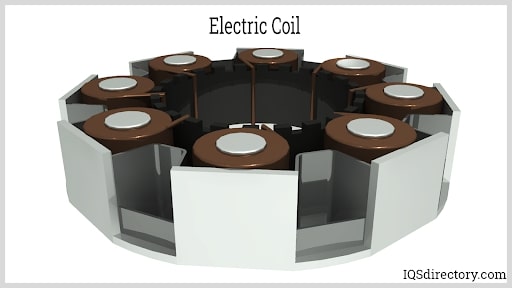
An electric coil, or electromagnetic coil, is an electrical conductor that contains a series of conductive wires wrapped around a ferromagnetic core that is cylindrical, toroidal, or disk-like. Electric coils are one of the simplest forms of electronic components and provide...
Inductor and Inductor Coils
Inductors are passive two terminal components of an electric or electronic circuit that are capable of storing energy in magnetic form. They oppose sudden changes in current and they are also called coils or chokes...
Solenoid Coils
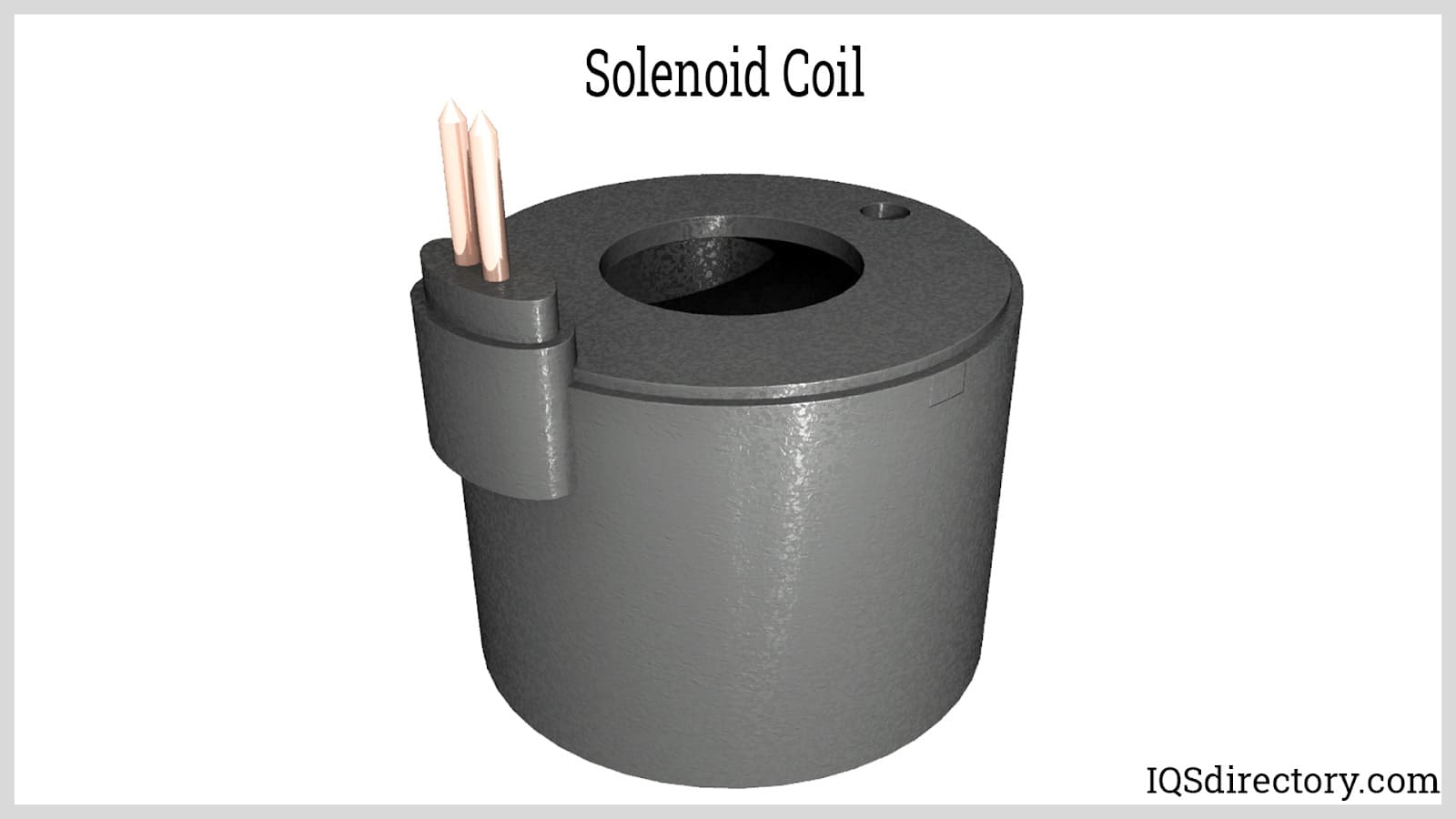
A solenoid coil is a common electrical component that uses a wire that is tightly wrapped around a core, usually made of metal, to generate an electromagnetic field. When an electrical current is passed through the coil, the electromagnetic field that is created provides energy for linear motion...
Voice Coils
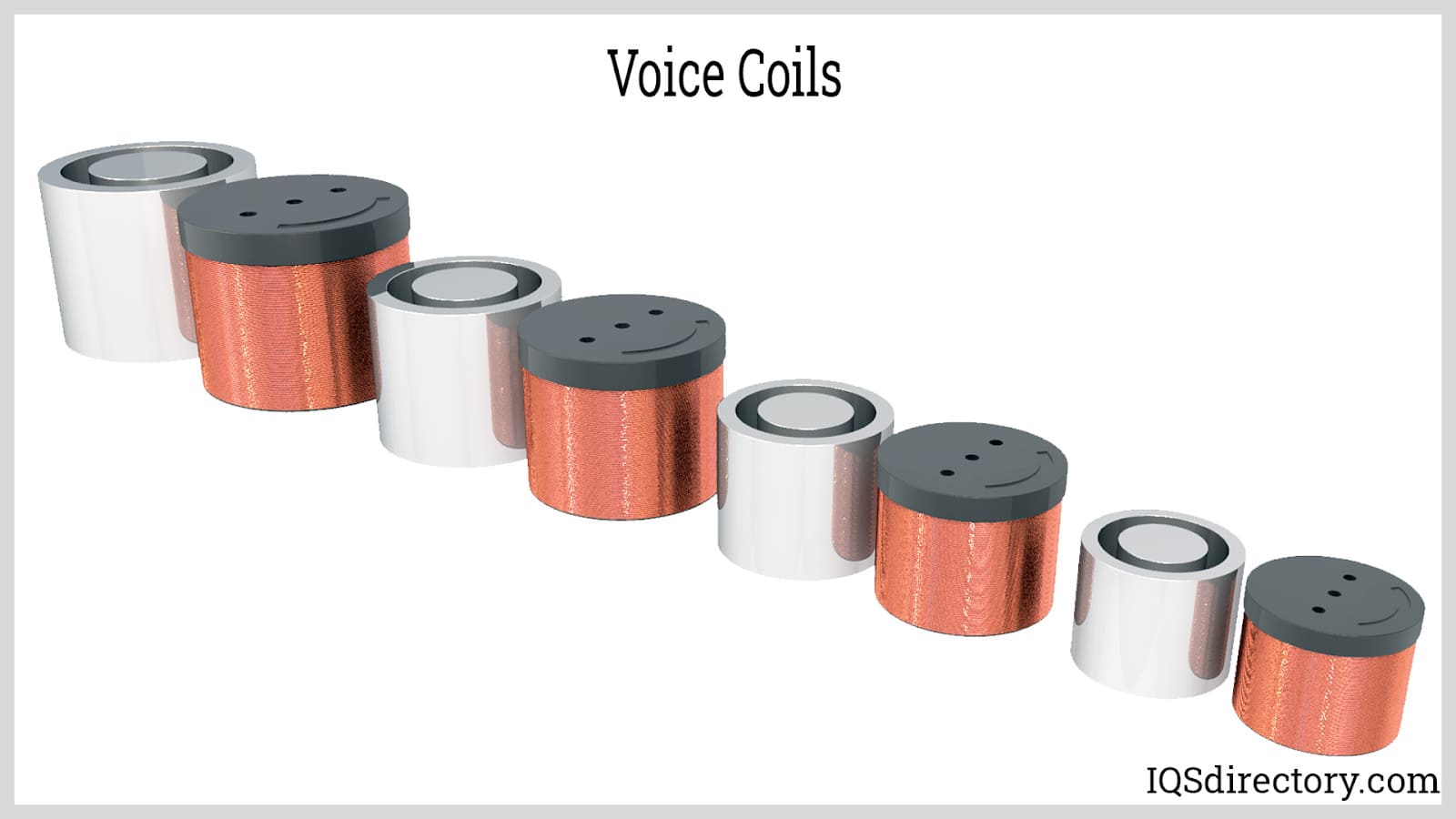
A voice coil is a winding of a wire, usually copper, aluminum, or copper-clad aluminum that is wrapped around a former (often called a bobbin) and then attached to the apex of a speaker cone...
AC DC Power Supply
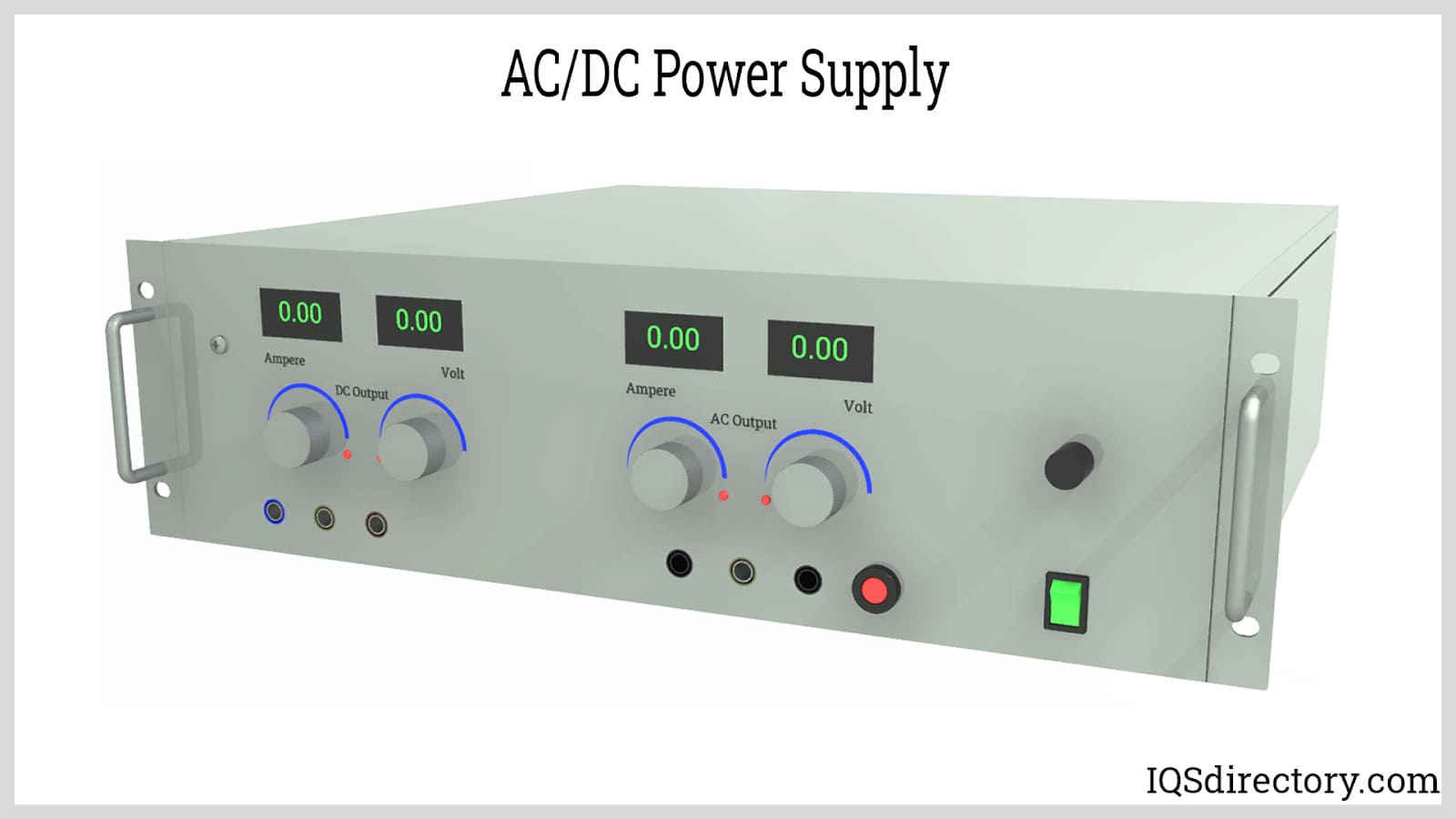
Power supplies are electrical circuits and devices that are designed to convert mains power or electricity from any electric source to specific values of voltage and current for the target device...
AC Power Cord
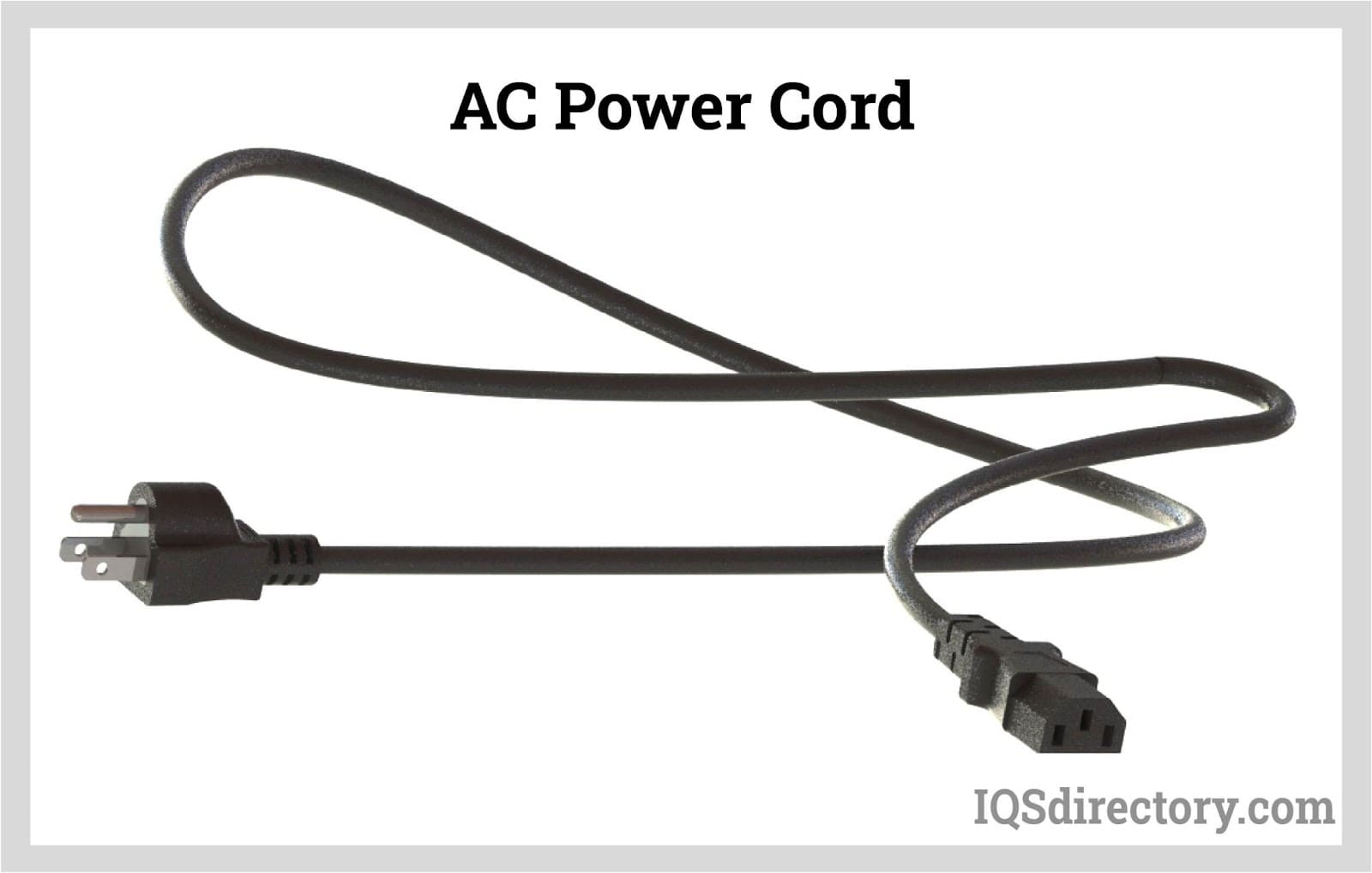
An AC power cord is a detachable way of providing an alternating current of electric energy from a mains power supply to an electrical appliance or equipment. Serving industries like...
AC Power Supplies
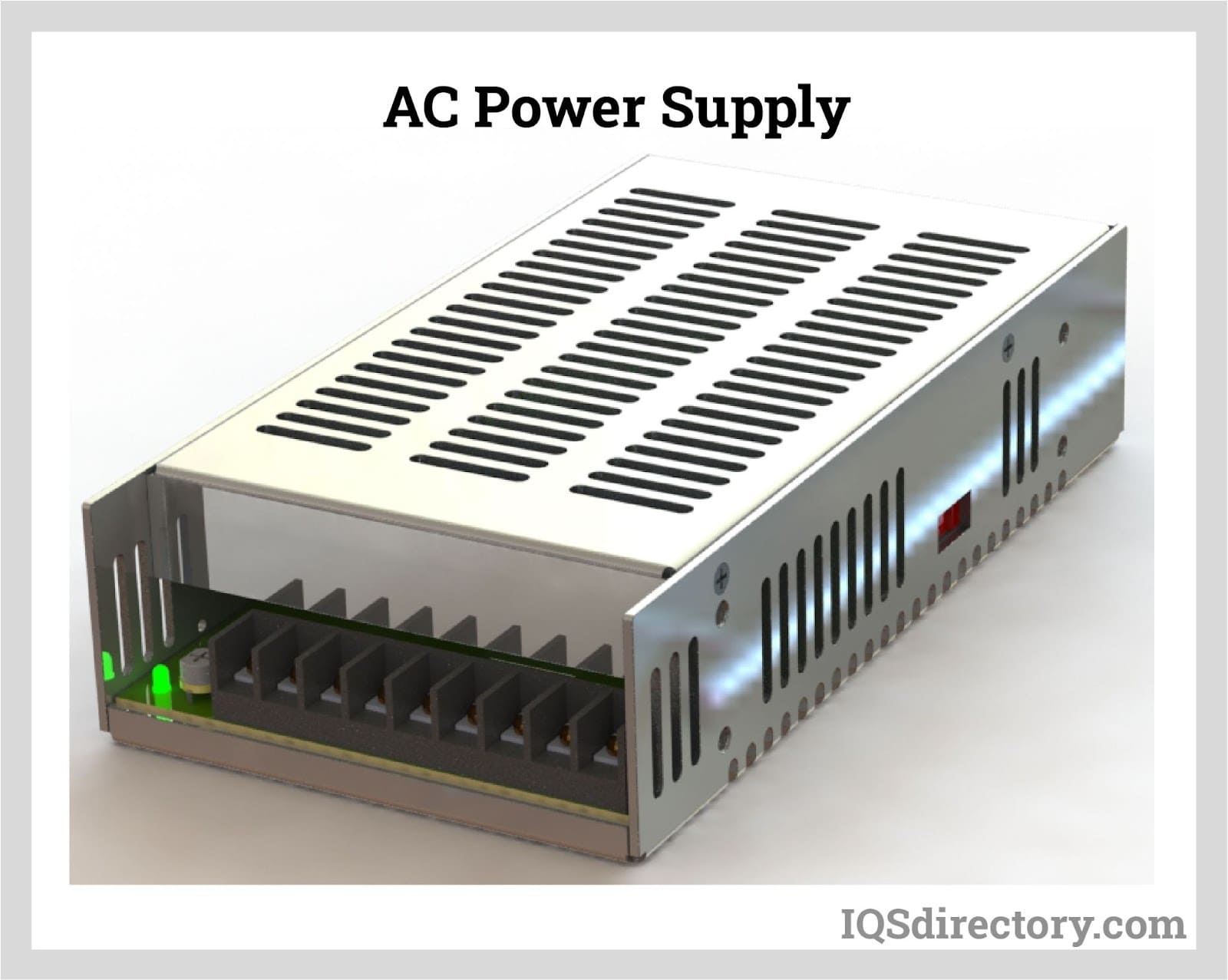
An AC power supply is a type of power supply used to supply alternating current (AC) power to a load. The power input may be in an AC or DC form. The power supplied from wall outlets (mains supply) and...
DC DC Power Supply
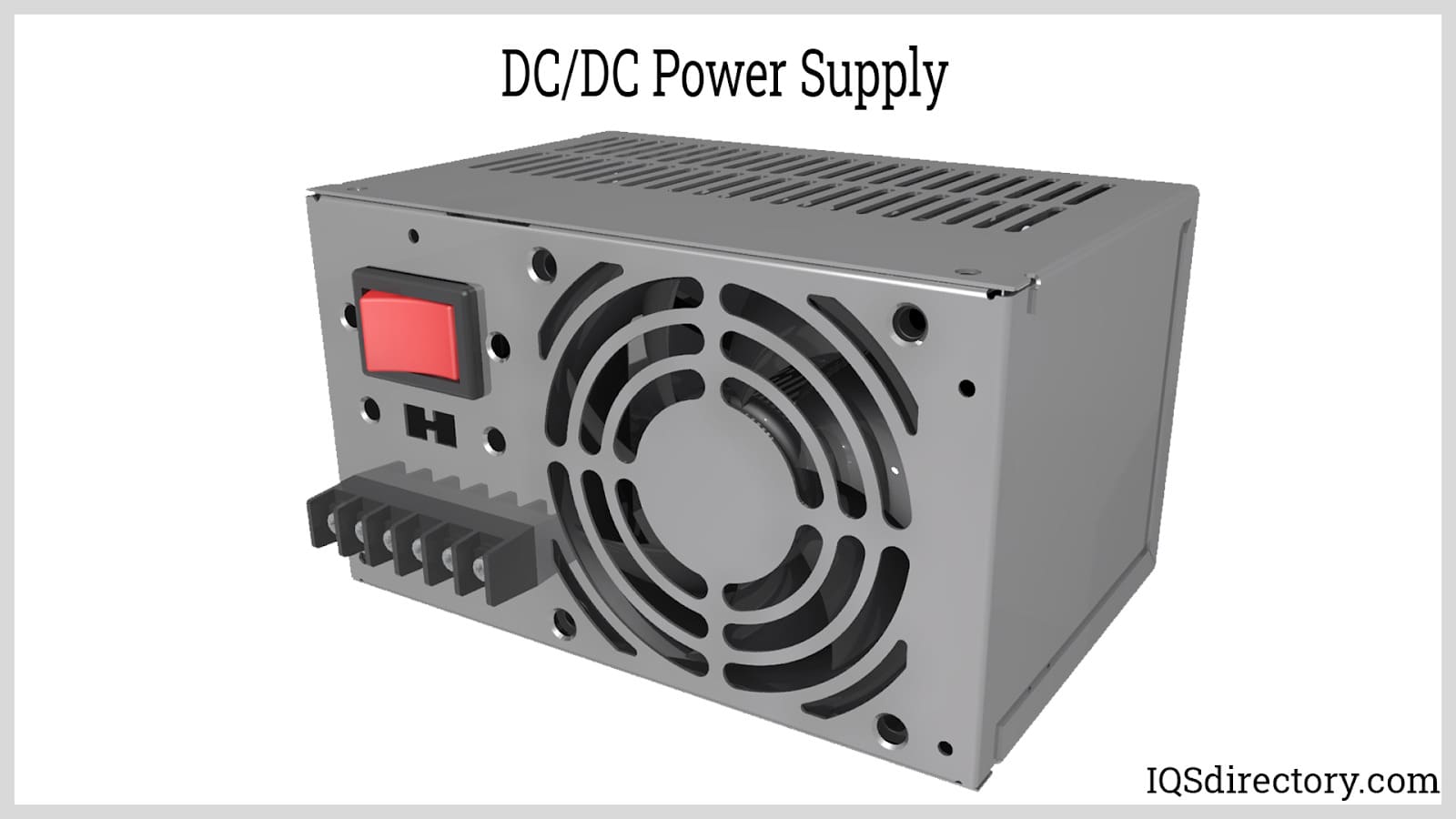
A DC DC power supply (also known as DC DC Converter) is a kind of DC power supply that uses DC voltage as input instead of AC/DC power supplies that rely on AC mains supply voltage as an input...
DC Power Supply
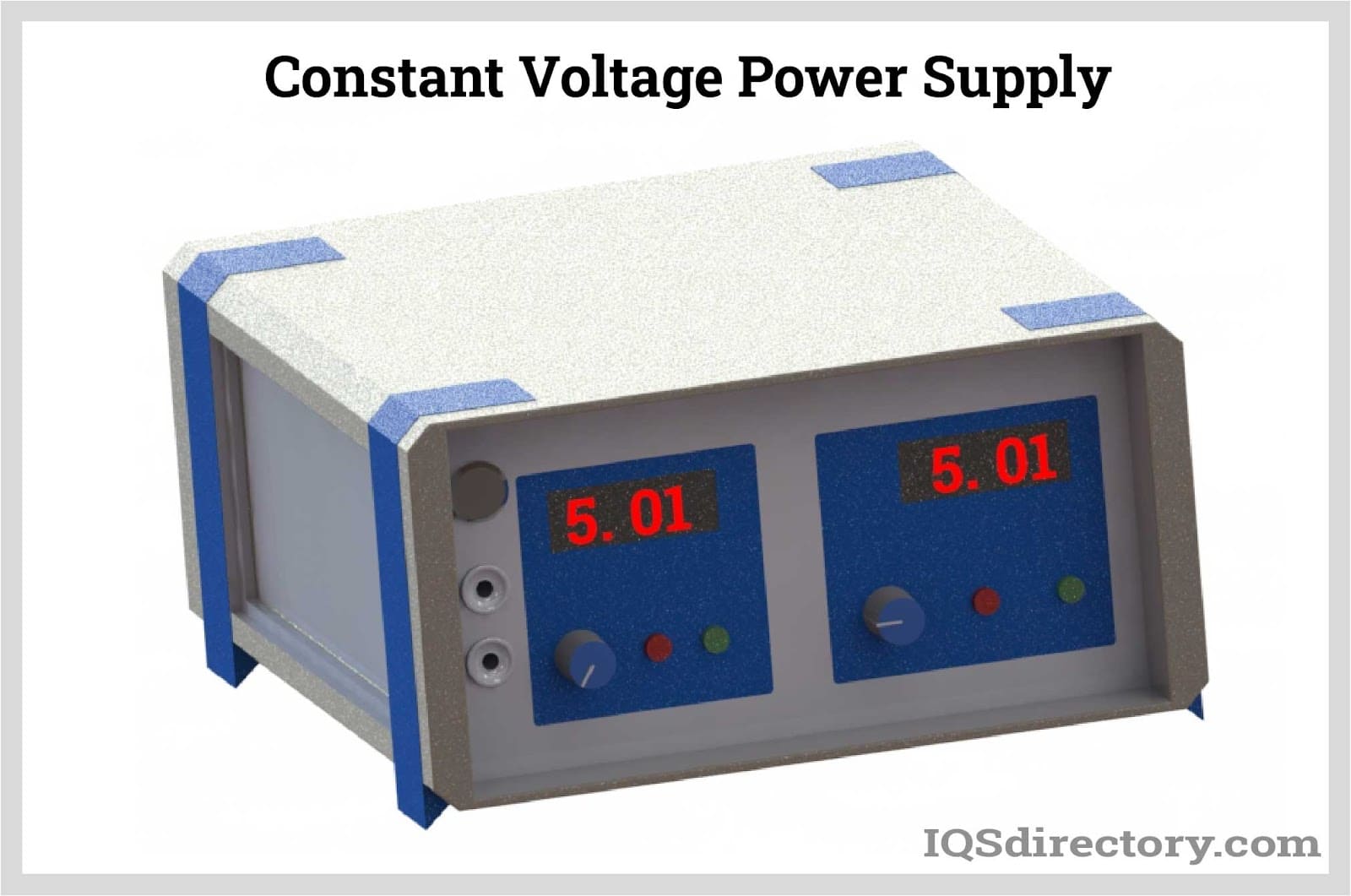
A DC power supply is a type of power supply that gives direct current (DC) voltage to power a device. Because DC power supply is commonly used on an engineer‘s or technician‘s bench for a ton of power tests...
Electric Transformers
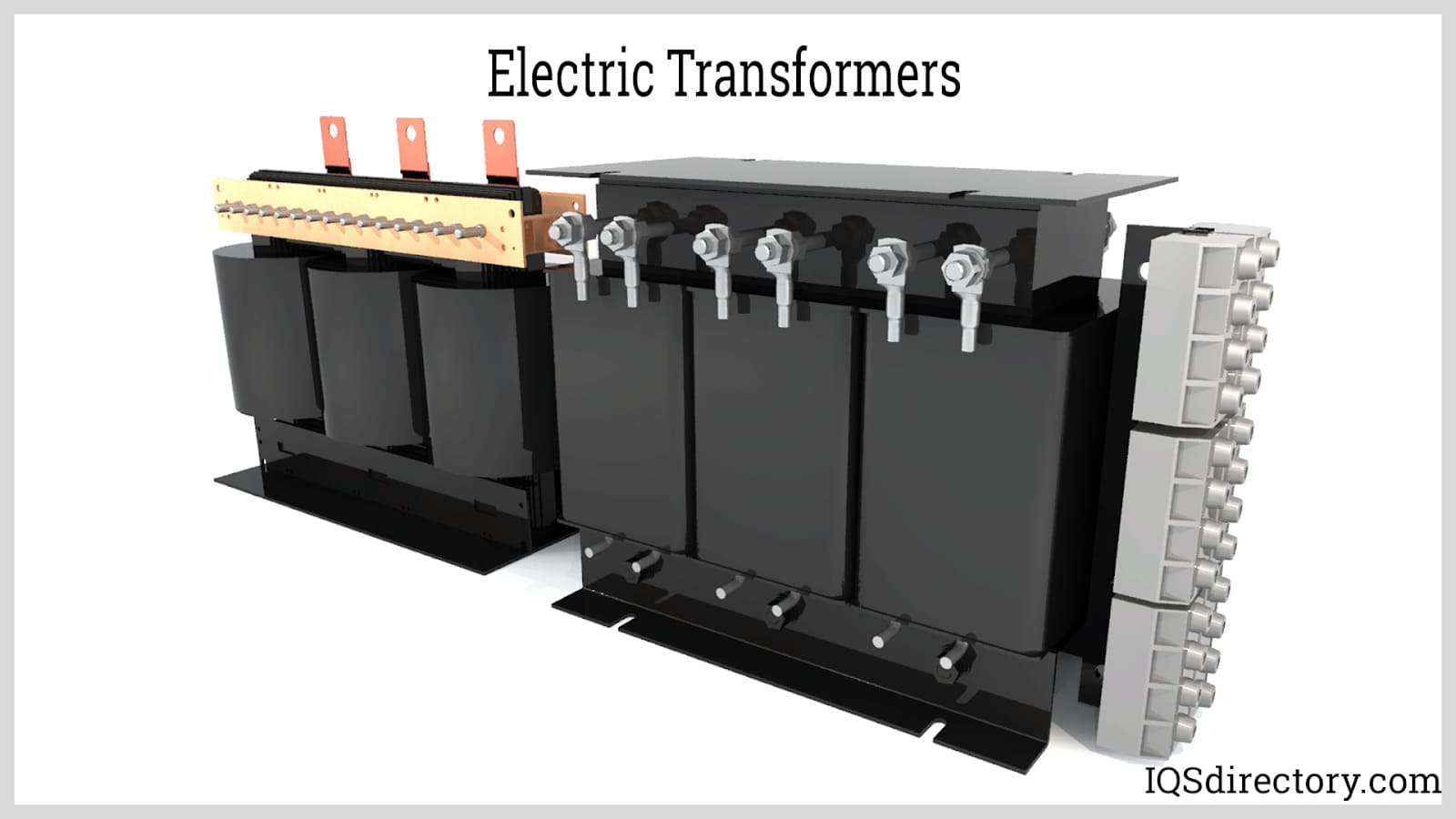
Electric transformers are static electrical machines that transform electric power from one circuit to the other without changing the frequency. An electrical transformer can increase or decrease the voltage with...
Electrical Plugs
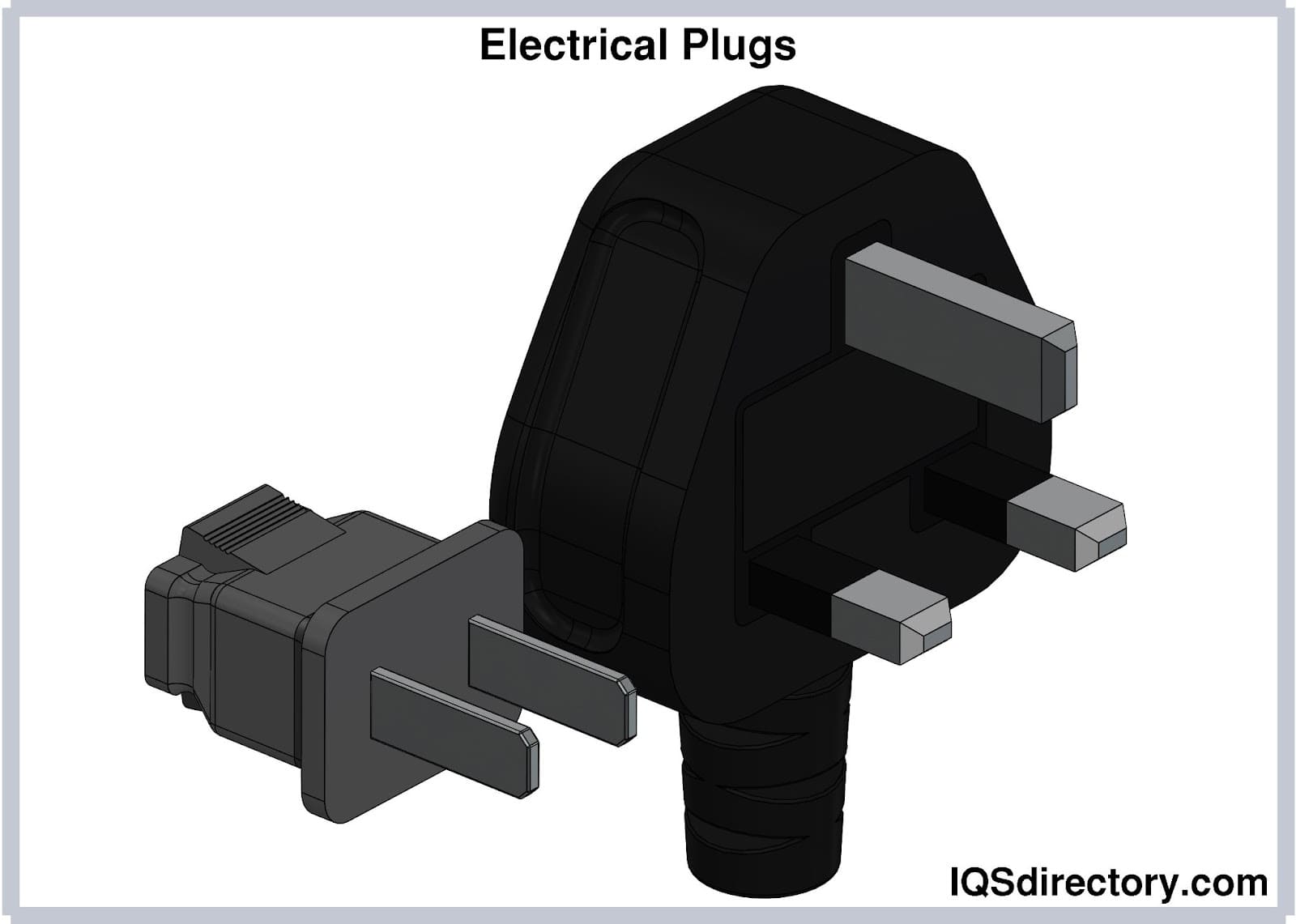
Electrical plugs, commonly known as power plugs, are devices responsible for supplying and drawing current from a receptacle to the circuitry of an electrical appliance...
EMI Filters
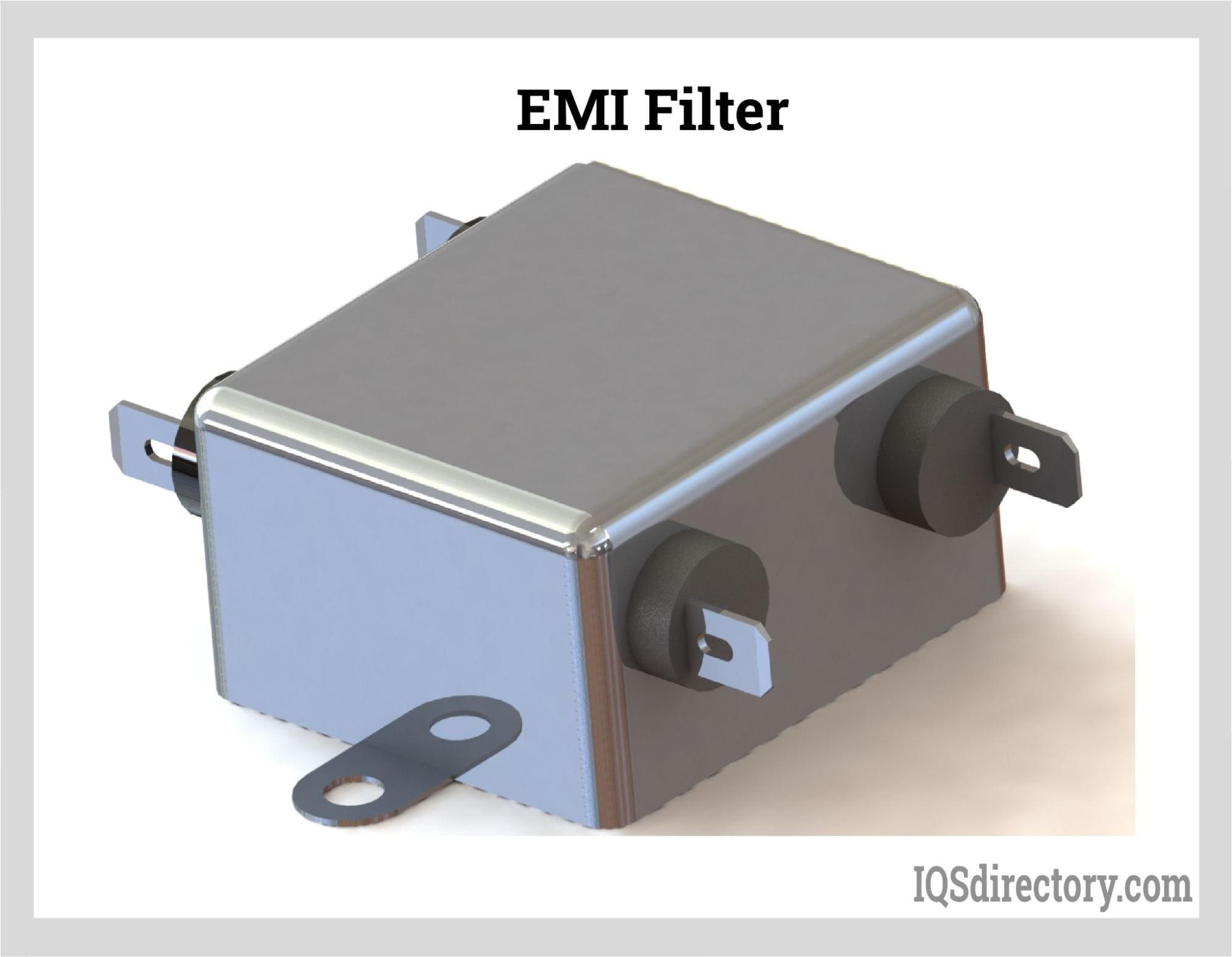
An electromagnetic interference or EMI Filter is an electrical device or circuit that filters specific unwanted frequencies in power lines or offending frequencies that are detrimental to a system. They receive AC or main power...
High Voltage Power Supply
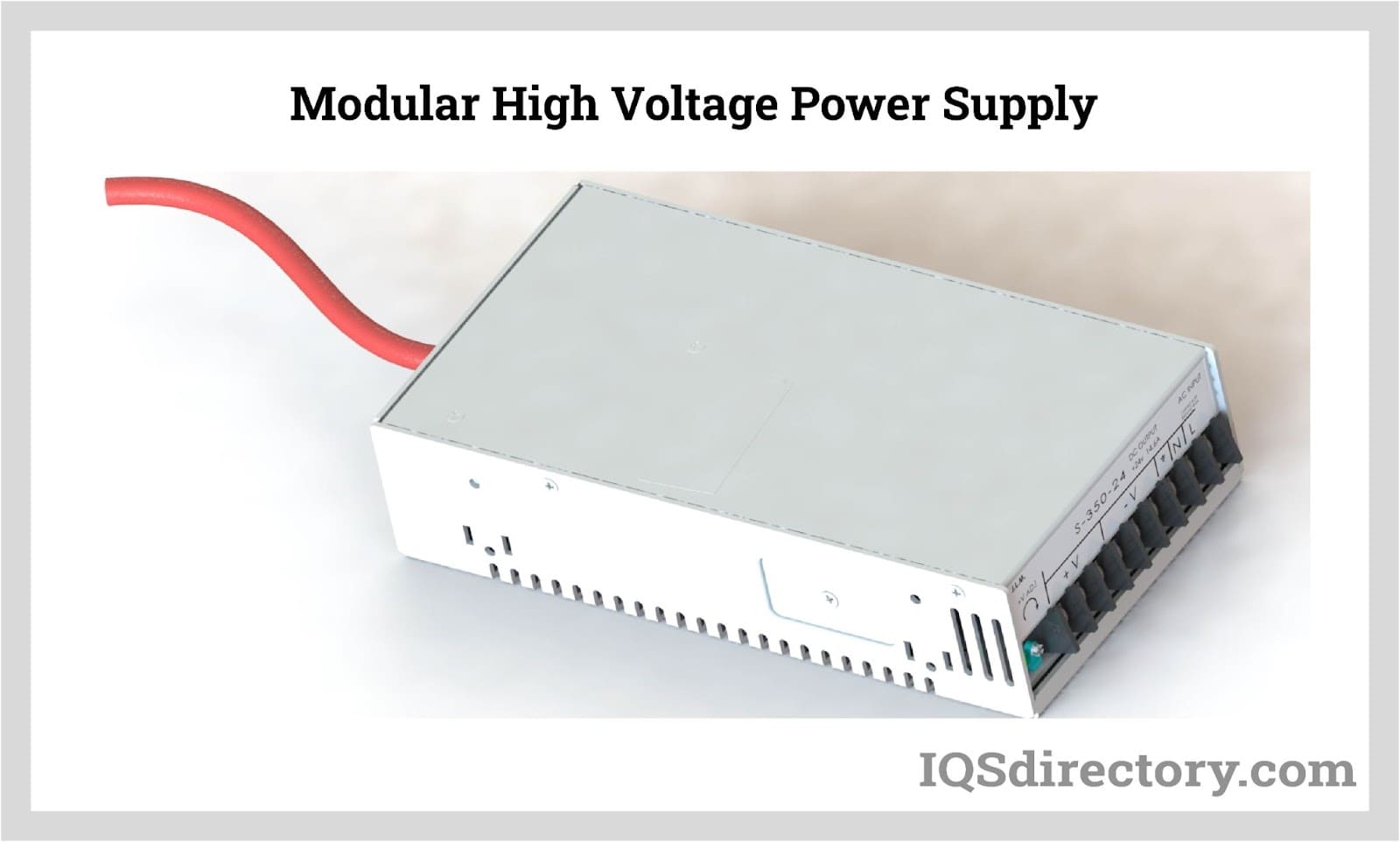
By definition a power supply is a device that is designed to supply electric power to an electrical load. An electrical load refers to an electrical device that uses up electric power. Such a device can be anything from...
Isolation Transformers
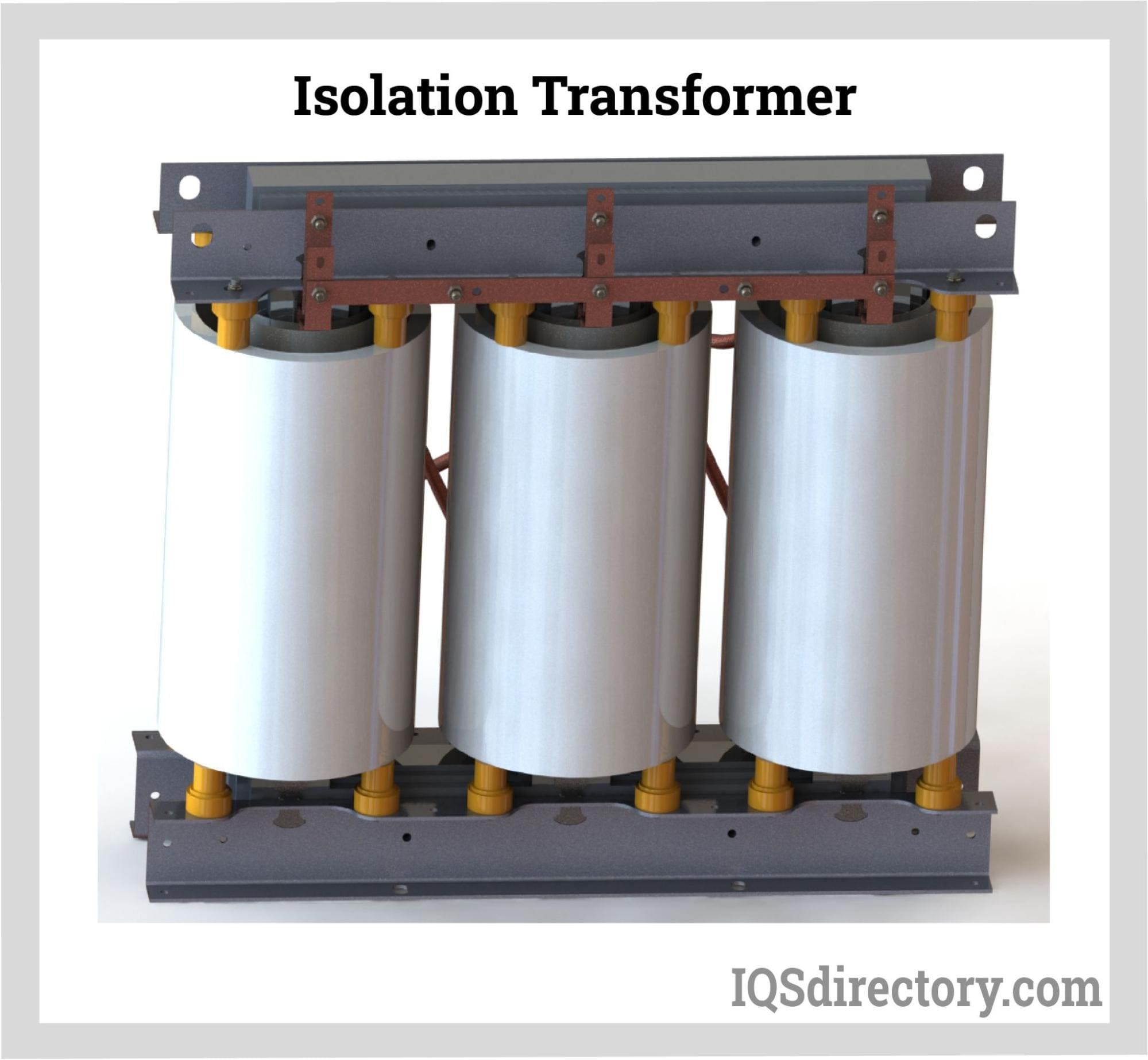
An isolation transformer, just like typical transformers, is a non-moving device that transmits electrical energy from one circuit to another without requiring any physical contact. It works on the idea of magnetic...
NEMA Connectors
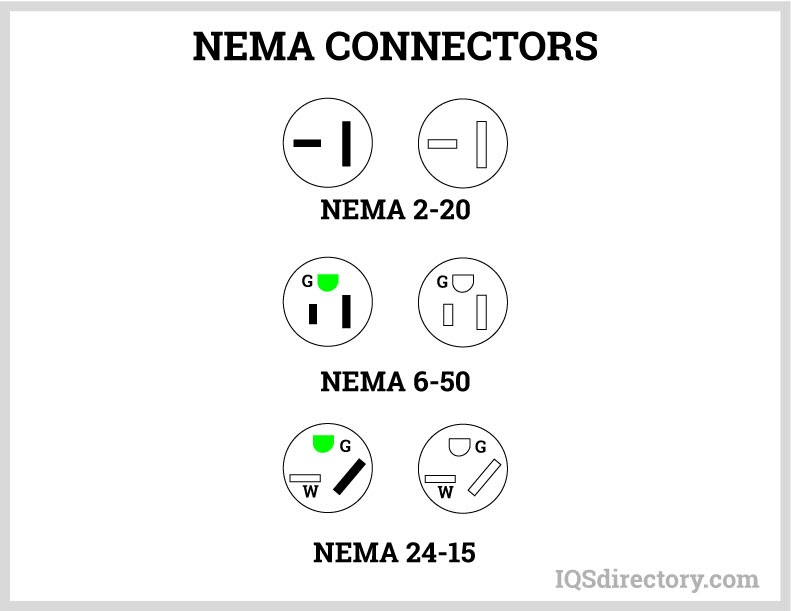
A NEMA connector is a method for connecting electronic devices to power outlets. They can carry alternating current (AC) or direct current (DC). AC current is the typical current found in homes, offices, stores, or businesses...
Power Cords
A power cord is an electrical component used for connecting appliances to an electrical utility or power supply. It is made from an insulated electrical cable with one or both ends molded with connectors...
Power Transformer
Power transformers are electrical instruments used in transmitting electrical power from one circuit to another without changing the frequency. They operate by the principle of electromagnetic induction. They are used in transmitting electrical power between...
Programmable Power Supplies
A programmable power supply is a method for controlling output voltage using an analog or digitally controlled signal using a keypad or rotary switch from the front panel of the power supply...
Three-Phase Transformers
An electrical transformer is a passive machine that transfers electrical energy from one circuit to another using a magnetic flux to induce an electromotive force. Transformers are used to increase (step-up) or decrease (step-down) voltages without changing the frequency of the electric current...
Toroidal Transformers
A toroidal transformer is a type of electrical transformer constructed with a torus or donut-shaped core. Its primary and secondary windings are wound across the entire surface of the torus core separated by an insulating material...
Types of Electric Transformers
Electronically operated equipment depends on power transformers to convert electrical currents into voltage. Current transformers store and transport energy through power lines and grids...
Types of Power Cords
Thomas Edison developed the power distribution system in 1882. He wrapped a copper rod in jute, a soft shiny fiber from plants, as an insulator. The jute wrapped copper rod was placed in a pipe with a bituminous compound...
 . In order to understand how an inductor benefits an electrical circuit, this unique shape can be helpful.