AC Power Cord
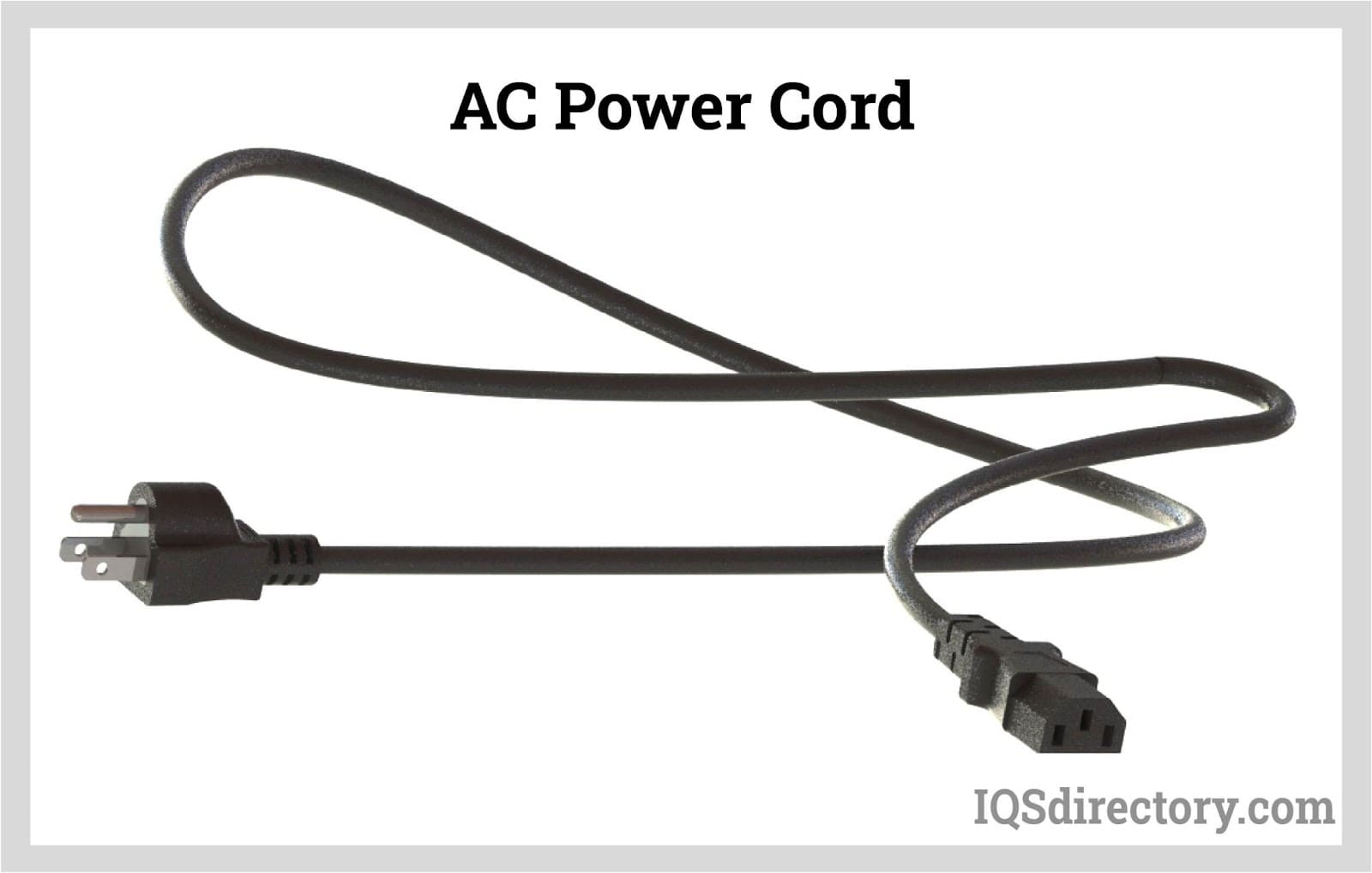
An AC power cord delivers alternating current from a mains supply to devices...
Looking to find and compare electrical plug and power cord manufacturers? See our Power Cords Directory to request free quotes. Connect directly with vetted suppliers for NEMA plugs, international adapters, replacement plugs, and custom molded connectors.
This article takes an in-depth look at electrical plug types, safety standards, and international configurations:
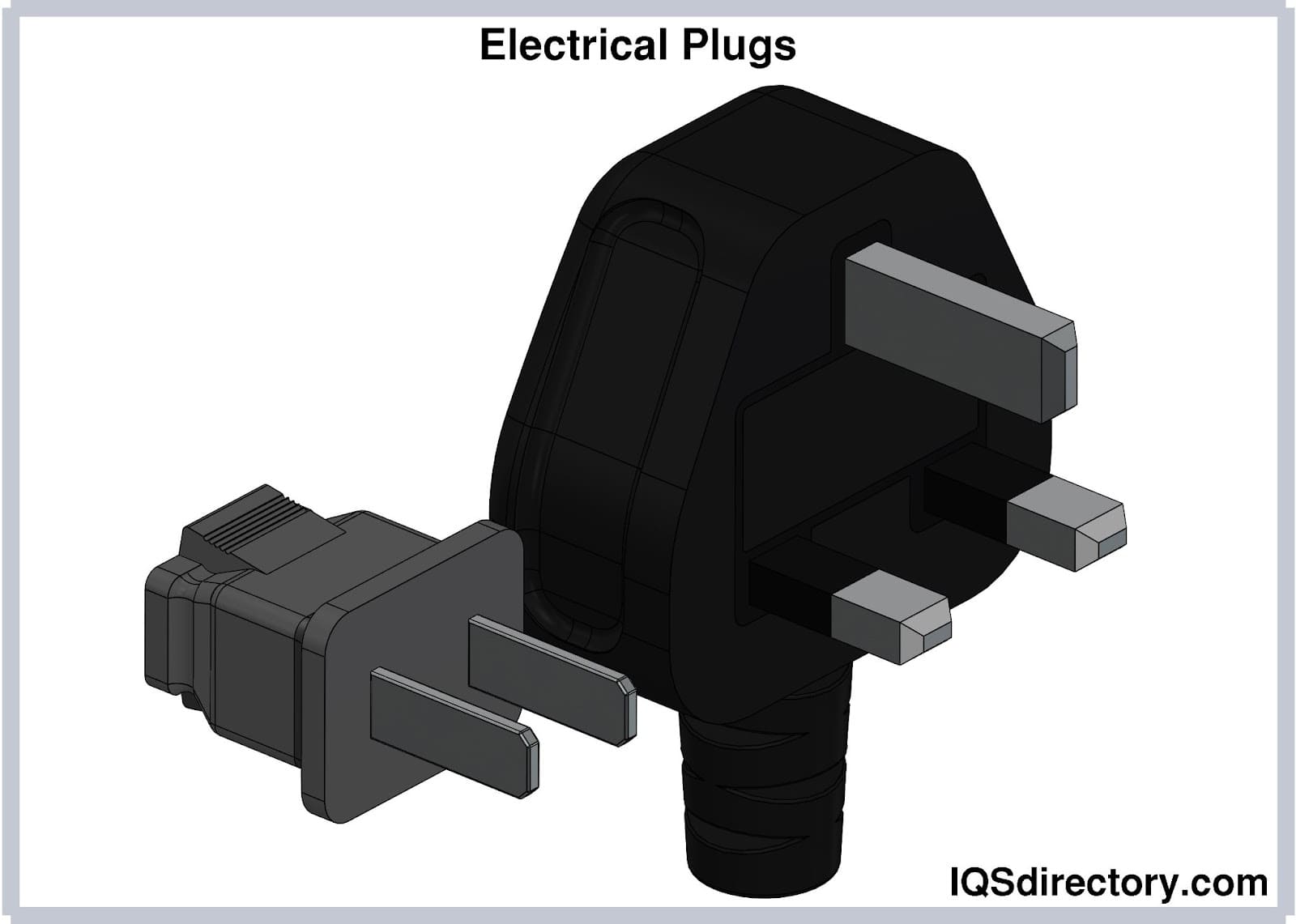
Electrical plugs, commonly known as power plugs, are essential components for facilitating the flow of electrical current from a receptacle to an appliance's internal circuits. In most electrical systems, a plug works together with a matching outlet, socket, or wall receptacle to create a safe, reliable connection for powering devices and equipment.
Typically composed of prongs or pins housed within a durable plastic frame or casing, these plugs are designed to fit securely into outlet sockets or receptacles. This ensures proper contact, helps maintain electrical conductivity, and supports safe operation across a wide range of applications, from household electronics to heavy-duty industrial machinery.
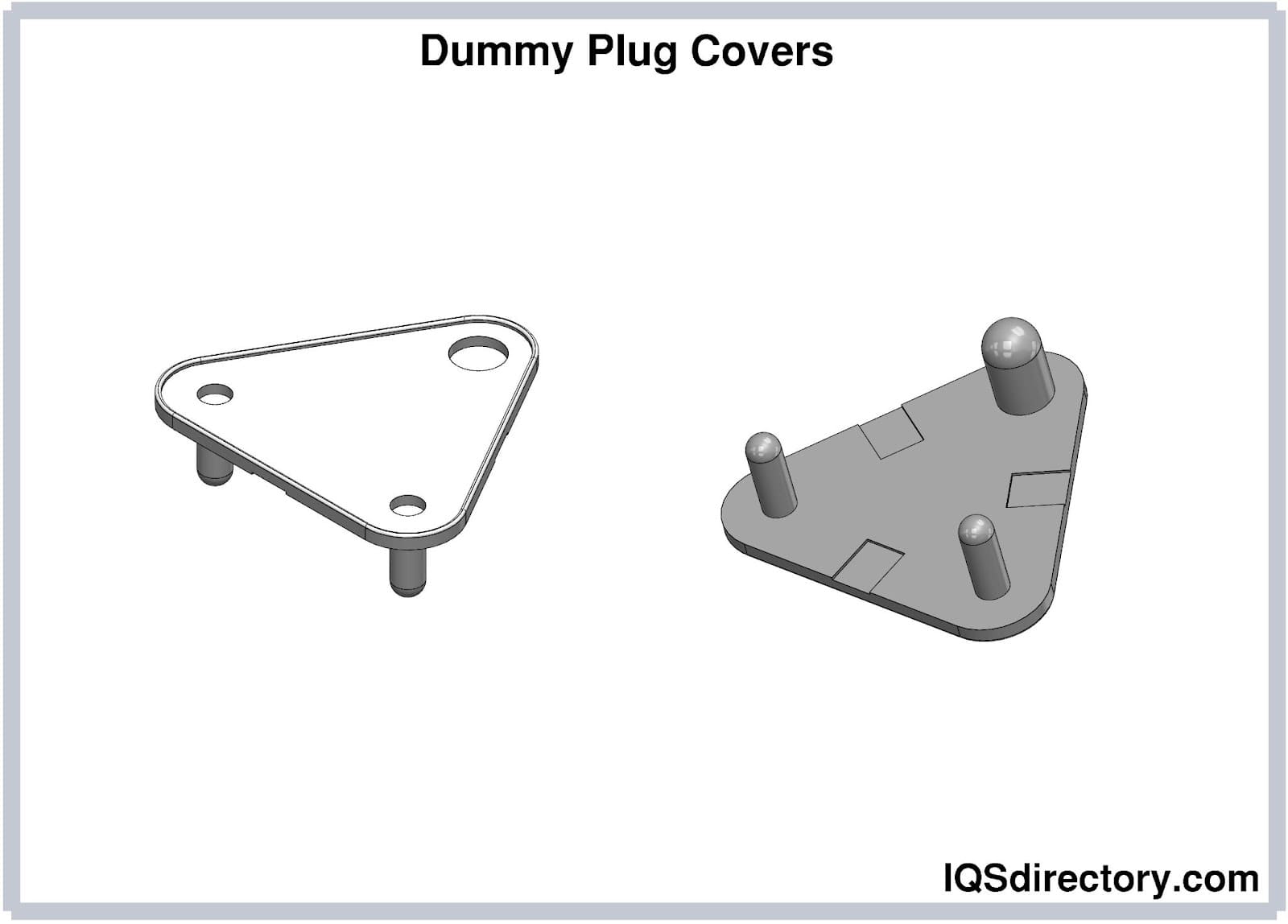
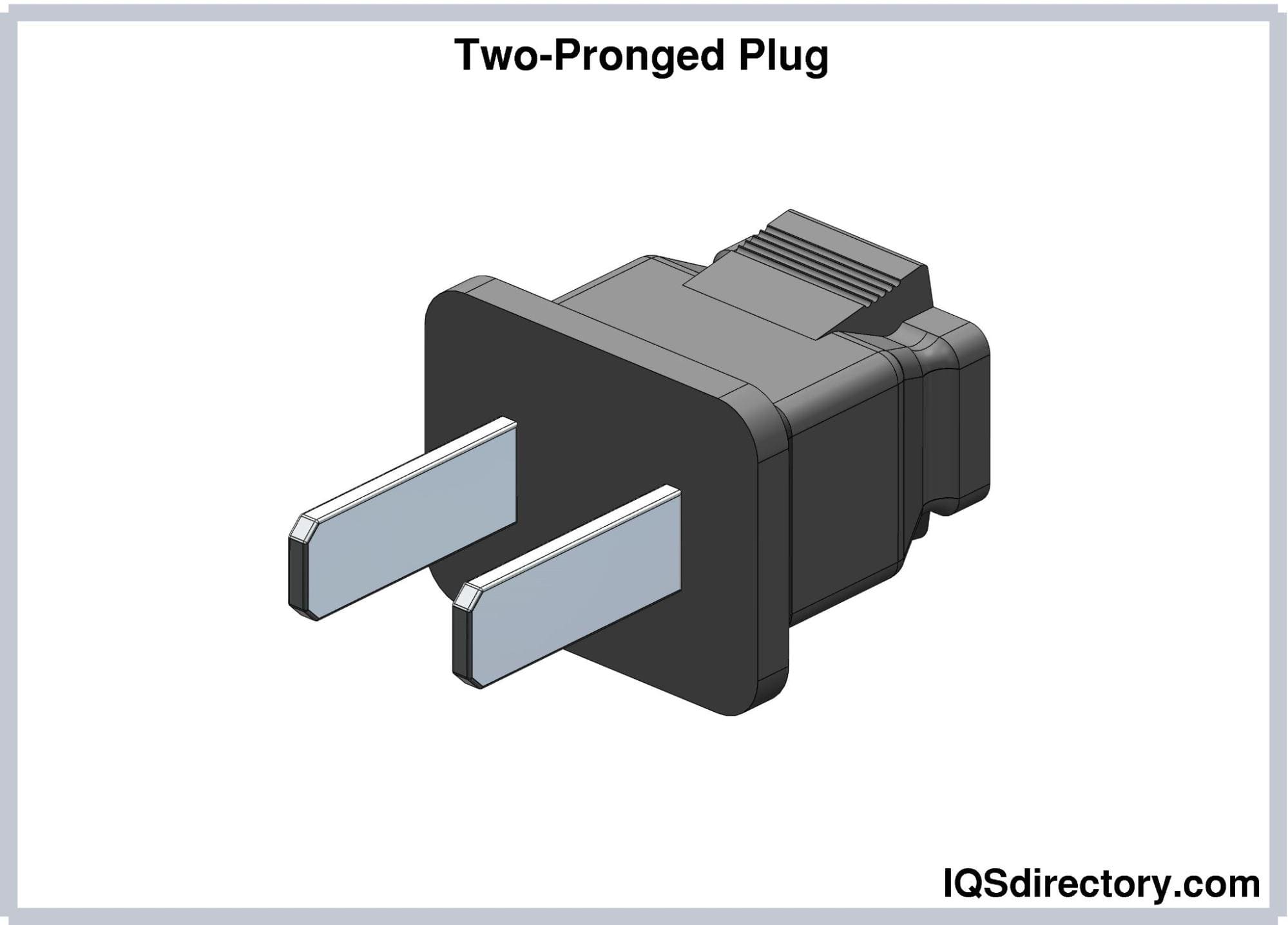
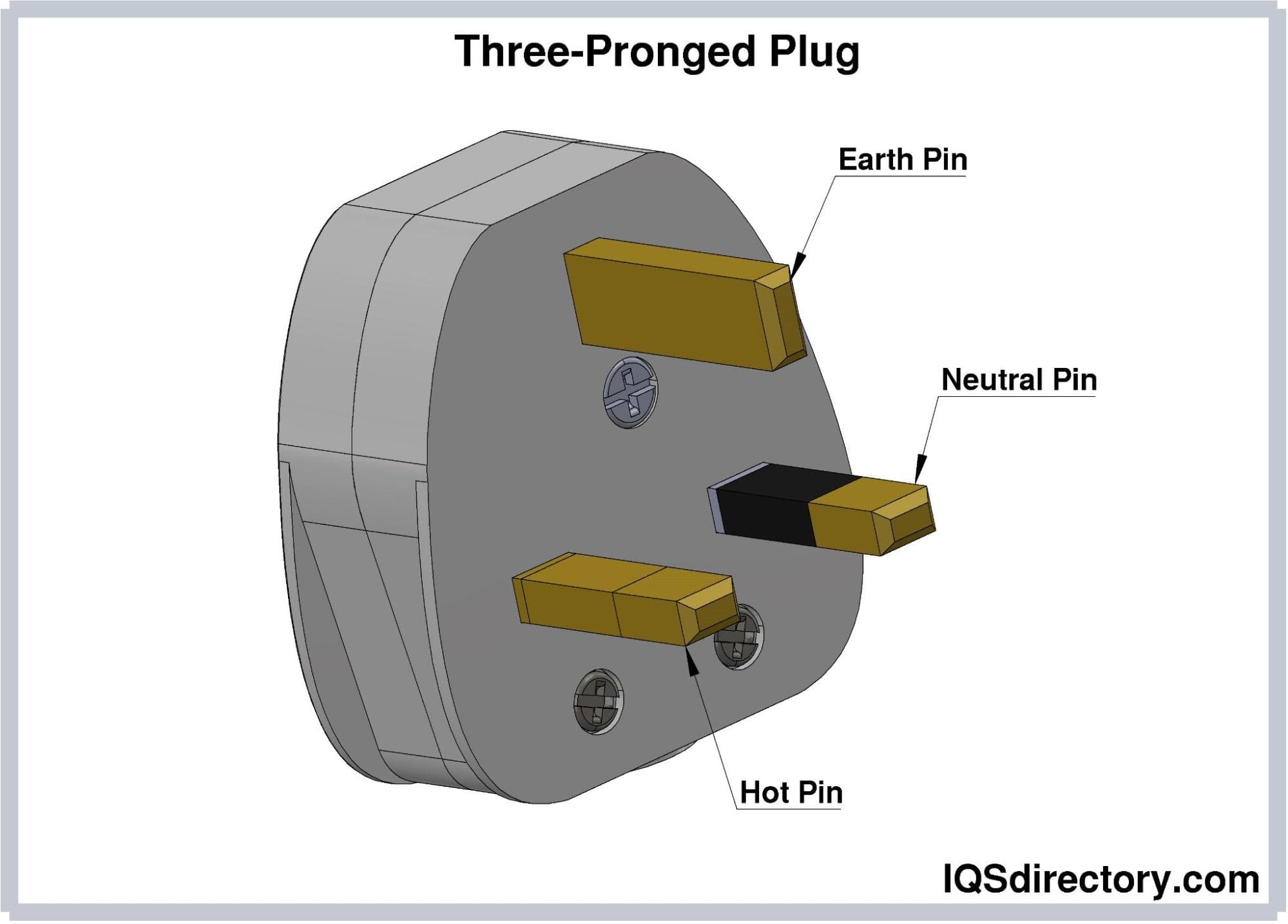
Electrical plugs feature either two or three prongs depending on earthing safety requirements and power draw.
| Feature | Two-Pronged Plug (Ungrounded) | Three-Pronged Plug (Grounded) |
|---|---|---|
| Pin Configuration | 1 Hot pin + 1 Neutral pin | 1 Hot pin + 1 Neutral pin + 1 Ground pin |
| Safety Pathway | No dedicated earth ground wire | Ground pin diverts fault current safely to earth |
| Shock & Surge Risk | Higher risk during insulation breakdown | Protects user and circuit from short circuits |
| Best For | Double-insulated, low-wattage devices (lamps, chargers) | Metal-cased, high-power appliances (refrigerators, CNC machinery) |
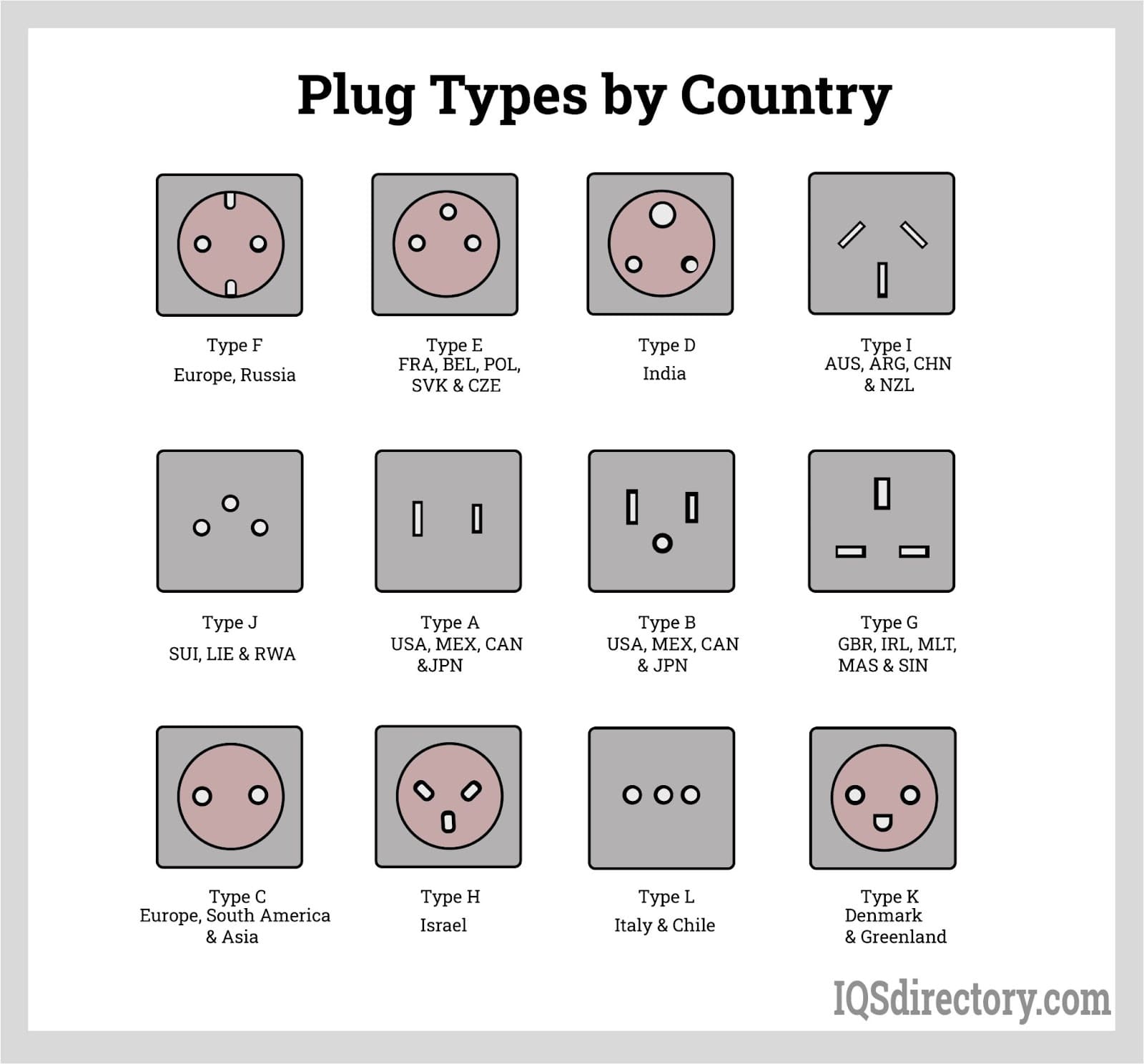
The International Electrotechnical Commission (IEC 60083) recognizes fifteen standard plug types designated by letter codes.
| Type Designation | Standard Specs | Voltage / Current | Grounding Method | Primary Regions |
|---|---|---|---|---|
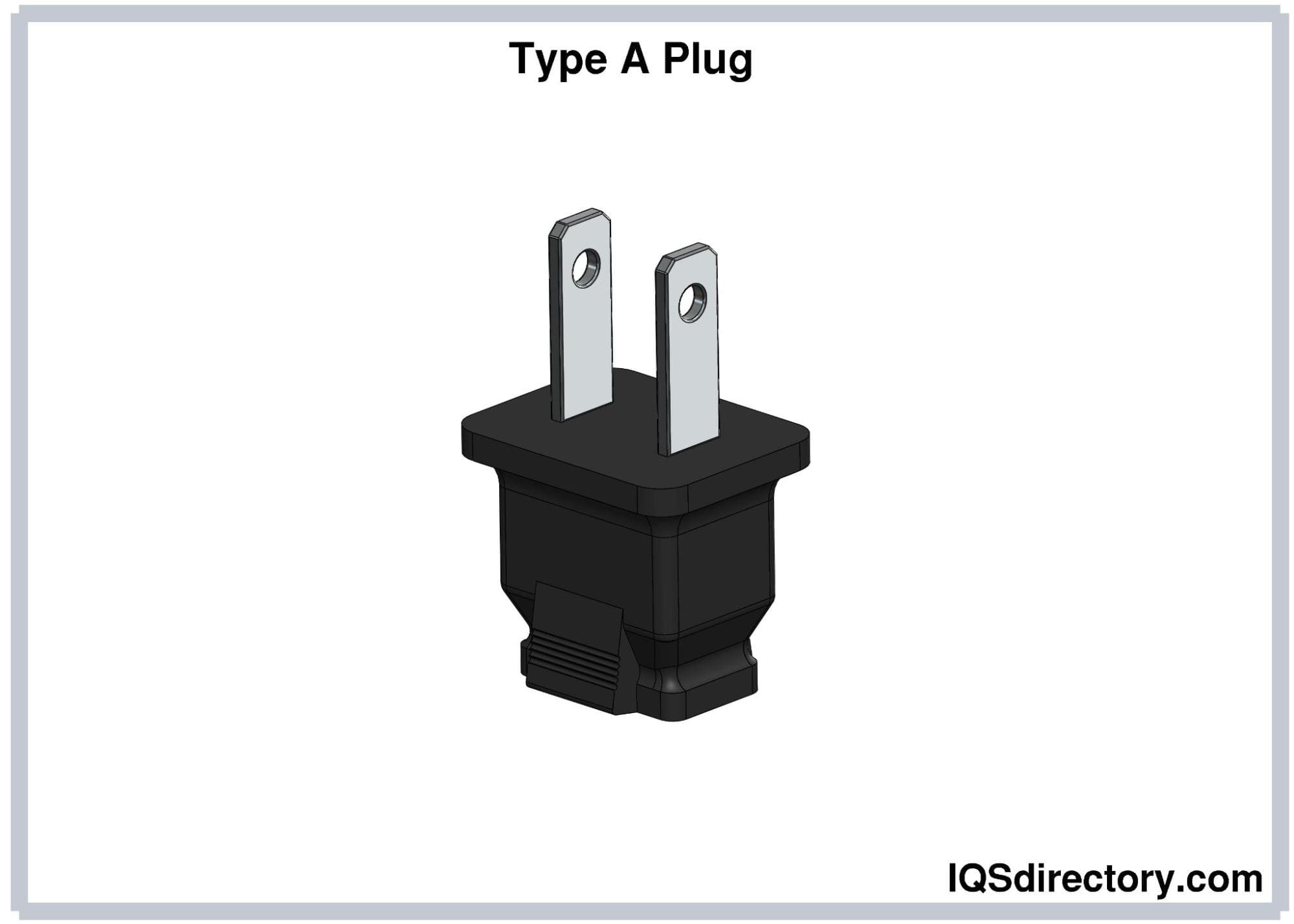
| Type A (NEMA 1-15) | 2 flat parallel pins | 125V / 15A | Ungrounded (Polarized option) | North & Central America, Japan, Mexico |
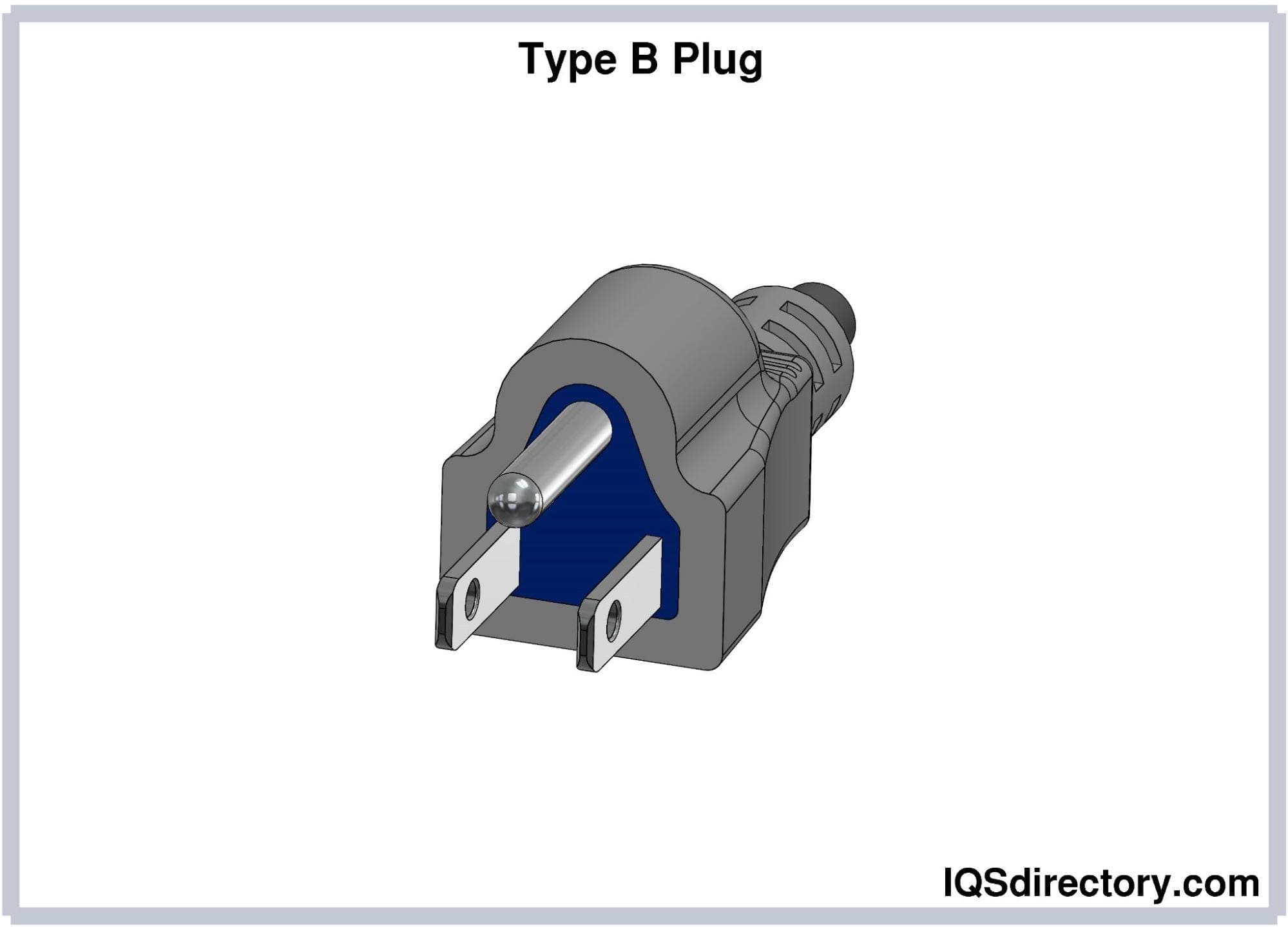
| Type B (NEMA 5-15) | 2 flat pins + round ground pin | 125V / 15A | Grounded | North America, Canada, Mexico |
| Type C (CEE 7/16 Europlug) | 2 round pins (4mm diameter) | 2.5A / 250V | Ungrounded | Europe, Asia, South America |
| Type E / F (Schuko CEE 7/4, 7/5, 7/7) | 2 round 4.8mm pins + earth clips/socket | 16A / 250V | Grounded (Side clips or socket hole) | Germany, France, Europe, Russia |
| Type G (BS 1363) | 3 rectangular prongs + internal fuse | 13A / 250V | Grounded + Fused | United Kingdom, Ireland, Singapore, HK |
| Type I (AS/NZS 3112) | V-shaped flat pins + vertical earth | 10A / 15A / 250V | Grounded | Australia, New Zealand, China, Argentina |

An electrical plug enables safe electrical current transfer from a power outlet to an appliance’s internal circuits, ensuring connectivity and device operation.
Two-pronged plugs lack grounding and are suitable for low-power devices, while three-pronged plugs add a grounding pin for safe current diversion, reducing shock and fire risks for high-wattage and sensitive equipment.
The International Electrotechnical Commission (IEC) recognizes fifteen different mains plug types worldwide, each with unique pin shapes, sizes, and grounding mechanisms to suit national electrical codes.
Type A (NEMA 1-15) and Type B (NEMA 5-15) are the most common plug types in the United States. Type A is ungrounded with two flat pins, while Type B includes a grounding pin for enhanced safety.
Travelers should verify both plug type and voltage compatibility. Using the correct plug or adapter prevents equipment damage and safety hazards when using devices abroad.
Type C plugs are ungrounded and primarily used for low-power devices across Europe, Asia, and Africa. They should not be used with high-power appliances requiring earth protection.
Plug adapters reconfigure prongs to match foreign sockets without altering voltage. Cheater plugs (3-to-2 prong adapters) bypass grounding and should be used with extreme caution. Replacement plugs substitute worn connectors by wiring conductors directly to replacement terminal screws.
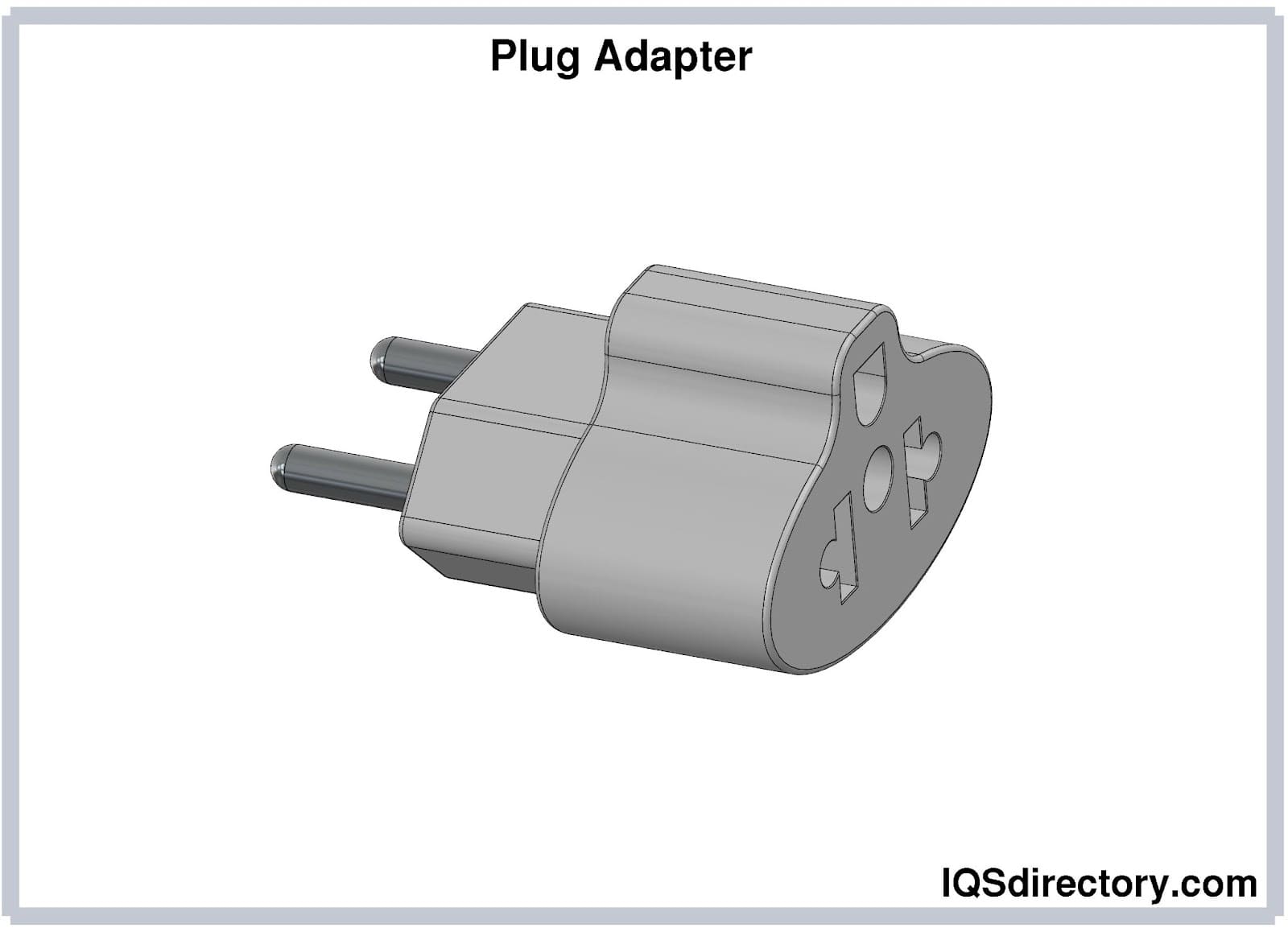
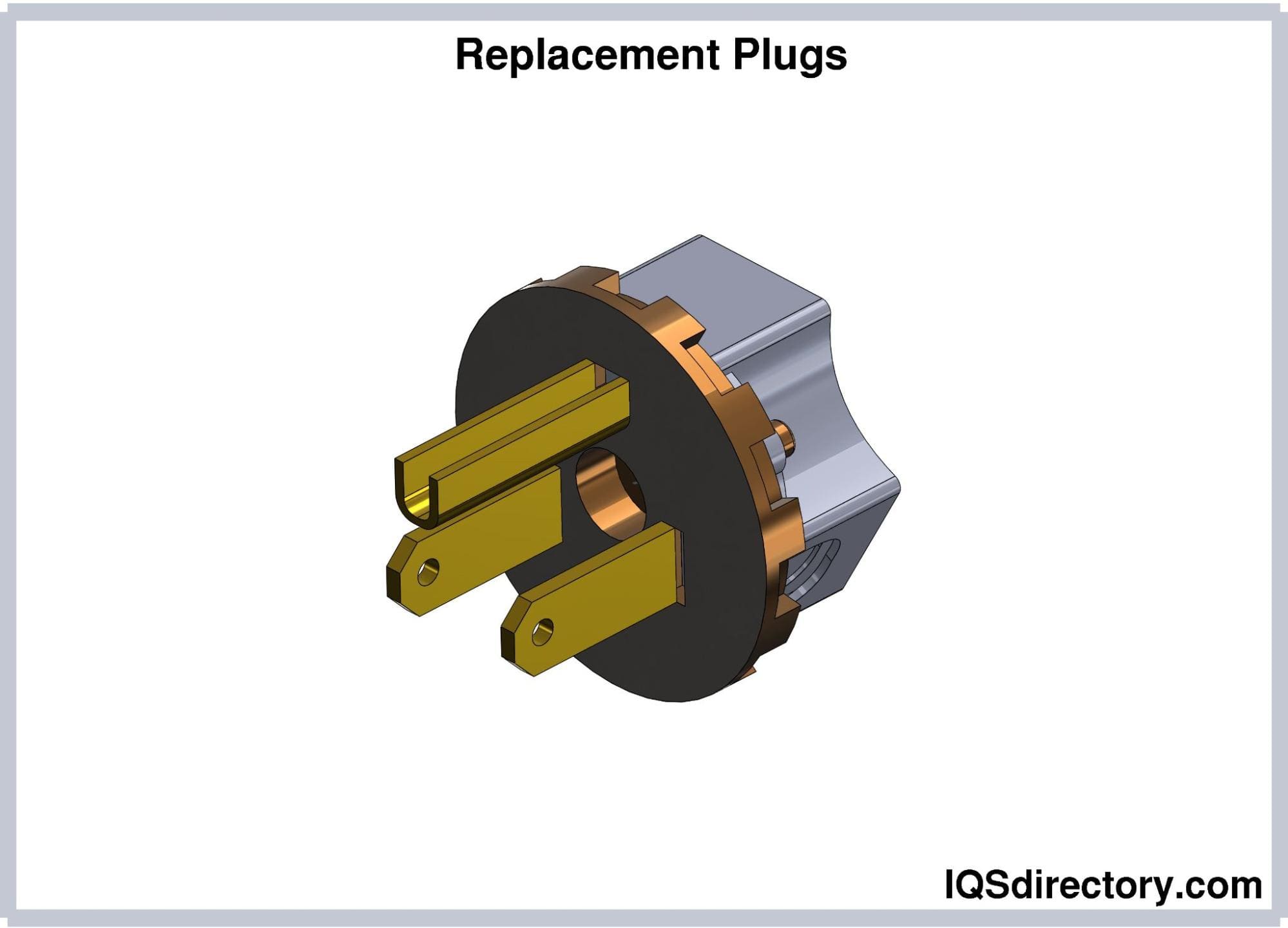
Electrical plugs transfer power from outlets to devices. Selecting the proper plug involves evaluating grounding needs, voltage/current ratings, and compliance with regional standards (such as NEMA in North America or CEE 7 / BS 1363 in Europe).
An AC power cord delivers alternating current from a mains supply to devices...
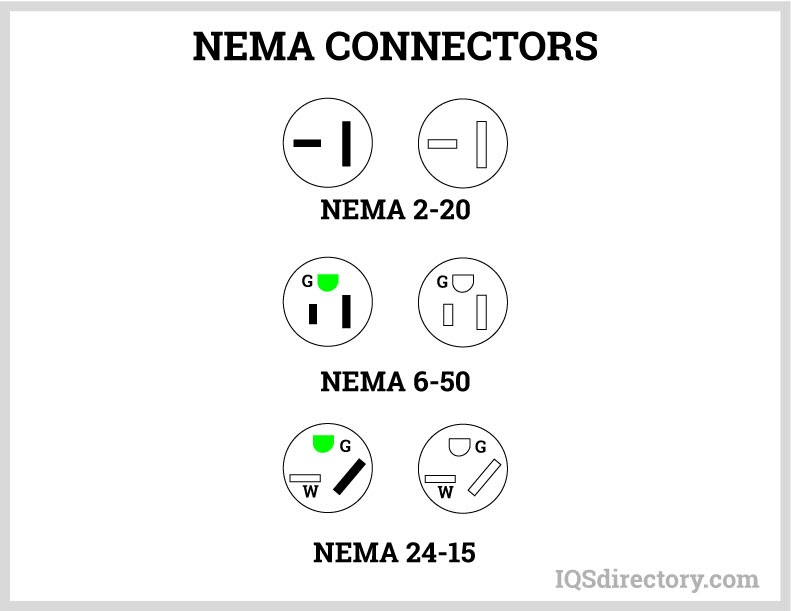
A NEMA connector standardizes connections for electronic devices across outlets...
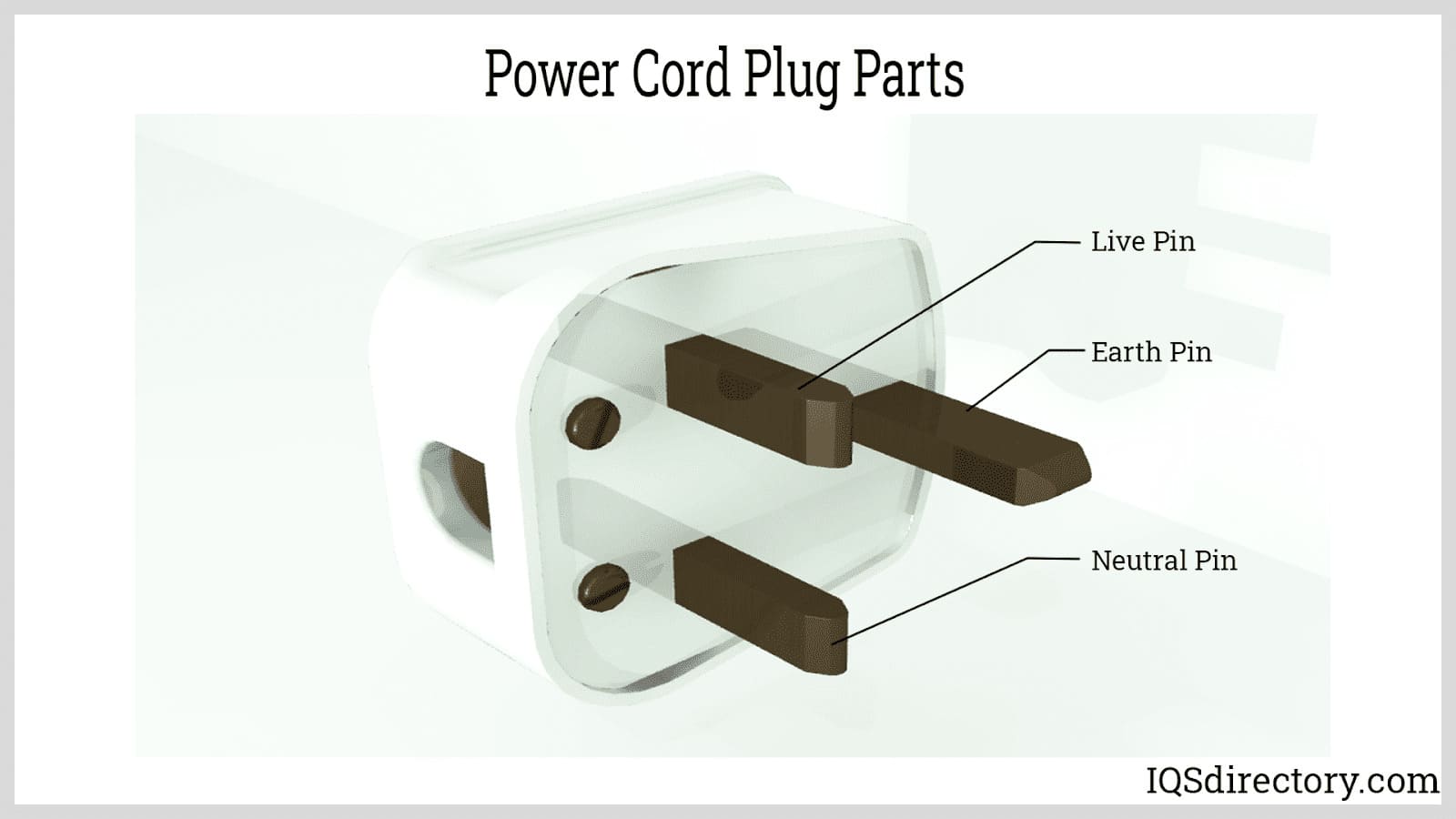
A power cord connects appliances to electrical utilities using insulated cables and molded plugs...