Pressure Switches
A pressure switch is a pressure control device that monitors fluid, air, gas, or hydraulic pressure and reacts by opening or closing an electrical circuit at a defined setpoint. In practical use, a pressure switch helps start or stop pumps, compressors, blowers, and process equipment, trigger alarms, and support automated system control. Whether the design is electromechanical or electronic, the goal is the same: dependable pressure monitoring, repeatable switching, and safer operation in pressurized systems.
Pressure Switches FAQs
What does a pressure switch do?
A pressure switch monitors pressure changes and opens or closes an electrical circuit when a preset pressure setpoint is reached. That switching action can start equipment, stop a process, activate an alarm, or protect a pneumatic, hydraulic, gas, water, or air system from unsafe operating conditions.
What is the difference between mechanical and electronic pressure switches?
Mechanical pressure switches use direct mechanical movement and switching contacts, often without requiring external power for the switching function, while electronic pressure switches use sensors and electronics to deliver higher precision, programmable setpoints, digital displays, and analog or digital outputs for automated control systems.
Where are pressure switches commonly used?
Pressure switches are widely used in industrial machinery, HVAC equipment, air compressors, pump systems, water wells, hydraulic power units, pneumatic controls, and process lines where stable pressure, safety shutdowns, and over-pressure protection are needed.
What materials are pressure switches made from?
Pressure switches are commonly made from brass, stainless steel, and engineered plastics such as acetal. For corrosive media, washdown service, and demanding chemical applications, manufacturers may specify materials such as Hastelloy, Monel, or Alloy 20 to improve corrosion resistance and service life.
What industries rely on pressure switches?
Manufacturing, utilities, automotive, aerospace, water treatment, wastewater processing, food processing, chemical handling, and energy systems all rely on pressure switches to regulate pressure, protect equipment, and maintain dependable operating conditions.
What standards apply to pressure switches in the U.S.?
In the United States, pressure switches are often selected with reference to NEMA enclosure and performance expectations, while UL, CE, IP, and application-specific certifications may also be required depending on the installation, environment, and customer specifications.
What factors should be considered when selecting a pressure switch?
When selecting a pressure switch, buyers usually compare setpoint accuracy, repeatability, operating temperature range, vibration resistance, pressure range, electrical rating, media compatibility, enclosure design, and total cost of ownership. A supplier that understands the application can help match the switch to the process and reduce downtime.
Advantages of Pressure Switches
Pressure switches deliver dependable pressure monitoring in systems that handle liquids, gases, compressed air, water, and hydraulic media. They help automate equipment, improve process safety, reduce unnecessary cycling, and support over-pressure or low-pressure protection. Because they are available in mechanical and electronic designs, pressure switches can be matched to everything from simple pump control to advanced industrial automation, even in environments with vibration, temperature swings, washdown exposure, or corrosive media.
The History of Pressure Switches
The study of pressure measurement dates back to the late 16th century, beginning with Galileo’s pioneering work. In 1594, he secured a patent for a water pump that utilized pressure to facilitate irrigation. This early exploration of pressure principles laid the groundwork for future developments. In 1644, the Italian physicist Evangelista Torricelli constructed a sealed vacuum tube containing mercury. By submerging one end of the tube in a basin of mercury, he observed that the liquid consistently fell to a height of precisely 760 mm, leaving an empty space at the top. While he could not fully explain the phenomenon, he named this void a vacuum, bringing the world closer to understanding pressure mechanics. Just four years later, Blaise Pascal identified the force responsible—the weight of the air above—and coined the term "pressure" to define it. The 17th century saw further experimentation with air pressure, as scientists and engineers explored its ability to move objects and influence physical elements. In 1661, the Anglo-Irish chemist Robert Boyle conducted experiments using "J"-shaped tubes to examine the relationship between pressure and trapped gas. His work led to Boyle’s Law, which established that pressure and volume have an inverse relationship when temperature and the quantity of gas remain constant.
Developments in the 1800s
Building upon these scientific principles, inventors in the 19th century began creating practical applications for pressure measurement, leading to the development of pressure switches. In 1843, French scientist Lucien Vidie introduced the aneroid barometer, which utilized a spring balance to measure atmospheric pressure. This instrument mechanically amplified changes in pressure through an indicator system. Six years later, Eugene Bourdon patented the Bourdon tube pressure gauge, which became the first widely recognized mechanical pressure measurement device—a design still in use today. The integration of the Bourdon tube with a mercury switch facilitated the creation of one of the earliest pressure switches, laying the foundation for electromechanical pressure switches. These early devices relied on sensing elements like the Bourdon tube to activate a switch in response to pressure changes.
While the Bourdon tube pressure switch was a groundbreaking invention, it had its limitations. As a tracing-type sensing element, the Bourdon tube had a shorter operational lifespan and struggled with environmental factors such as pump ripple, surge pressure, vibration, and ambient temperature fluctuations. Efforts to improve performance by using higher-quality materials proved costly, prompting engineers to seek alternative pressure switch designs.
Advancements in the 1900s
By 1930, engineers began incorporating transduction mechanisms into pressure sensing devices, transforming mechanical movements into electrical signals. This innovation led to the development of the first pressure transducers. In 1938, researchers at the Massachusetts Institute of Technology and the California Institute of Technology independently worked on bonded strain gauges. E.E. Simmons of Caltech won the race to secure a patent, marking a significant advancement in solid-state pressure switches. Decades later, in 1980, Barksdale Inc. introduced the first widely available solid-state pressure switches, featuring bonded strain gauge sensors combined with triac switches.
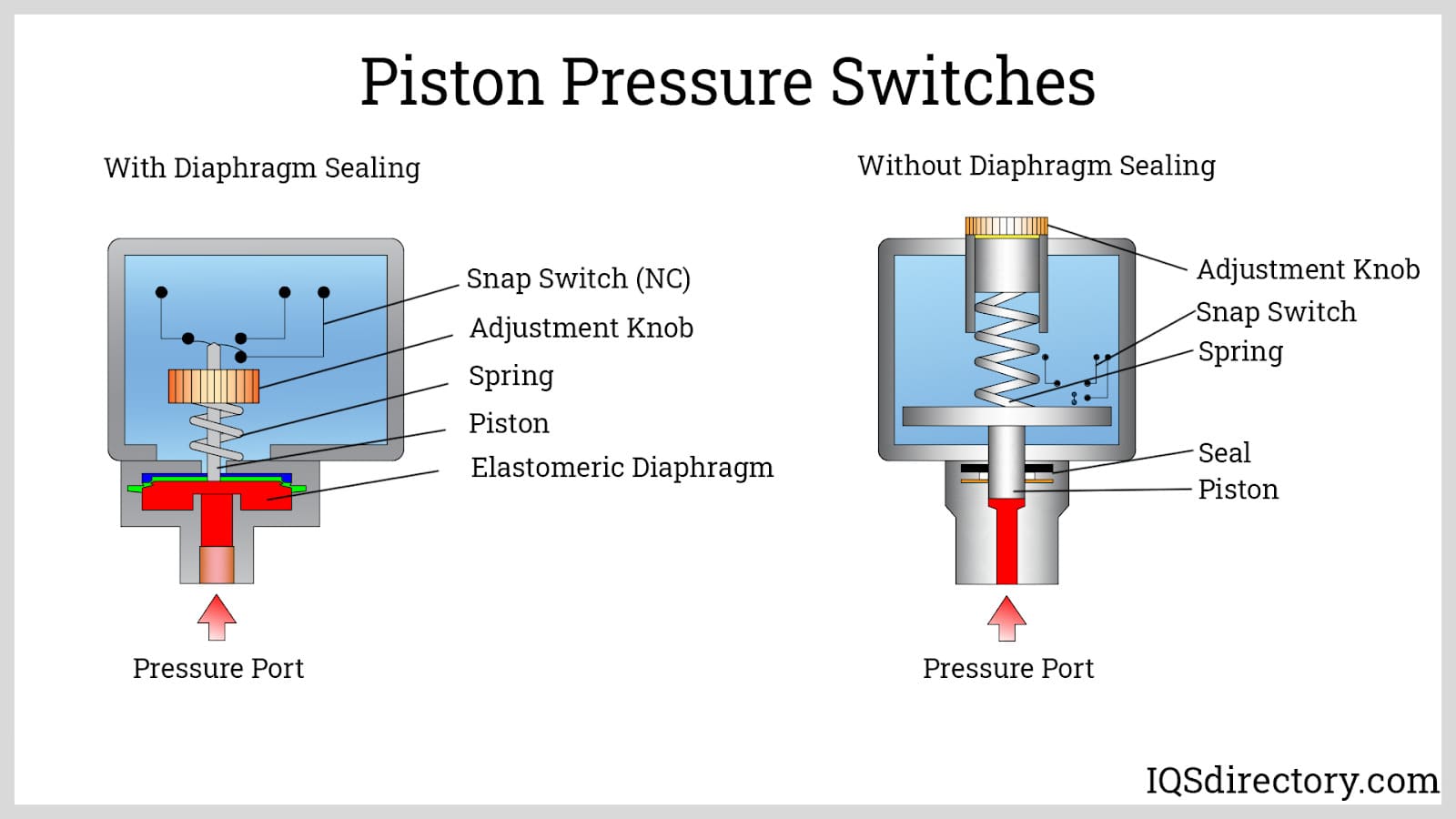
Meanwhile, in 1956, Roy Dunlap recognized a need for a reliable pressure switch to prevent oil tank overflows. Seeking assistance, he collaborated with Ben Brown, a physics professor at the University of Kansas. Together, they designed the Static “O” Ring® pressure switch, which featured a force-balanced, piston-actuated assembly sealed by a flexible diaphragm and a static o-ring. This design minimized wear and tear, ensuring long-term durability. Dunlap soon established a company to manufacture and distribute these switches, which later evolved into SOR Inc.
Modern-Day Pressure Switches
Today, solid-state pressure sensors and electronic pressure switches are widely used because they offer features such as digital displays, analog and digital outputs, programmable switch points, and compact integration with PLCs and control panels. These capabilities support precise pressure monitoring, data visibility, and responsive process control across modern industrial applications.
Even with the growth of electronic controls, mechanical pressure switches still have an important place in industry. Because many electromechanical designs operate through direct mechanical contact, they are often chosen for backup shutdown duties, simple control loops, and rugged field service. Their straightforward construction, lower initial cost, and dependable operation make them a practical option for many pump, compressor, furnace, hydraulic, and utility systems.
Pressure Switch Design
-
Production Process
Manufacturers build pressure switches around either a mechanical sensing element with a snap-action switch or an electronic sensing platform with configurable outputs and a programming interface. Mechanical designs are commonly factory-set or field-adjustable, while electronic designs may include user-programmable setpoints, deadband settings, logic functions, and LED or LCD displays for setup and diagnostics.
Switch Materials
The key wetted components in a pressure switch are the sensing element and the process connection, both of which must be constructed from materials suited to the specific application. Pressure switch materials vary widely, depending on the intended environment and media, and may include acetal, brass, stainless steelThe main wetted parts of a pressure switch are the sensing element and the process connection, and both must be compatible with the media being measured. Depending on the service conditions, manufacturers may specify acetal, brass, stainless steel, Alloy 20, Hastelloy, Monel, or other corrosion-resistant materials to balance durability, pressure rating, and chemical resistance.
Switch Considerations and Customization
Designers evaluate accuracy, repeatability, cycle life, actuation pressure, deadband, setpoint adjustability, electrical load, enclosure protection, and media compatibility when configuring a pressure switch. The best design balances durability, responsive switching, and ease of use while matching the pressure range and duty cycle of the application.
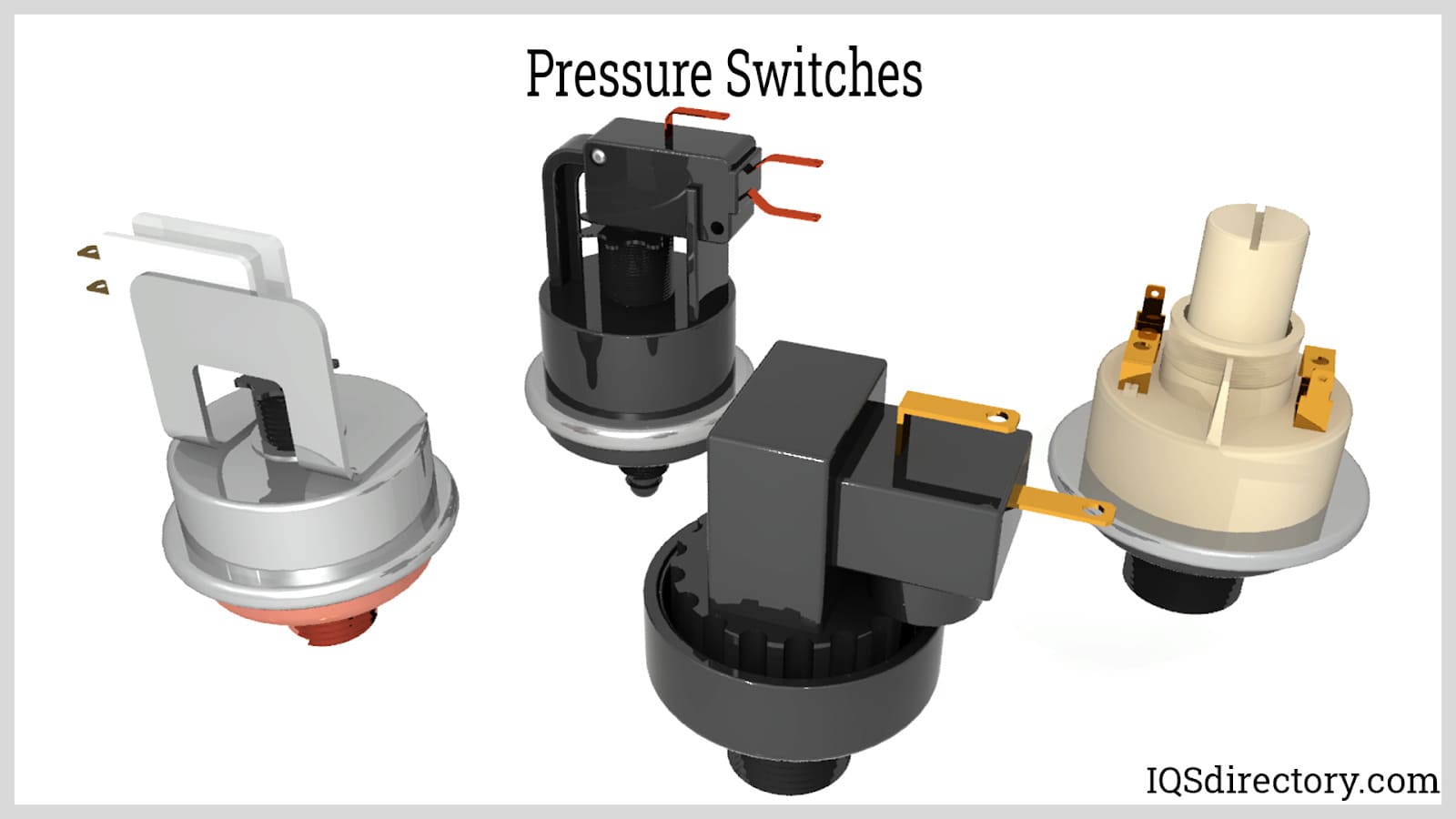
Pressure switch, a mechanical or electronic switching device that responds when fluid, air, or gas pressure reaches a defined threshold.
Pressure Switch Images, Diagrams and Visual Concepts
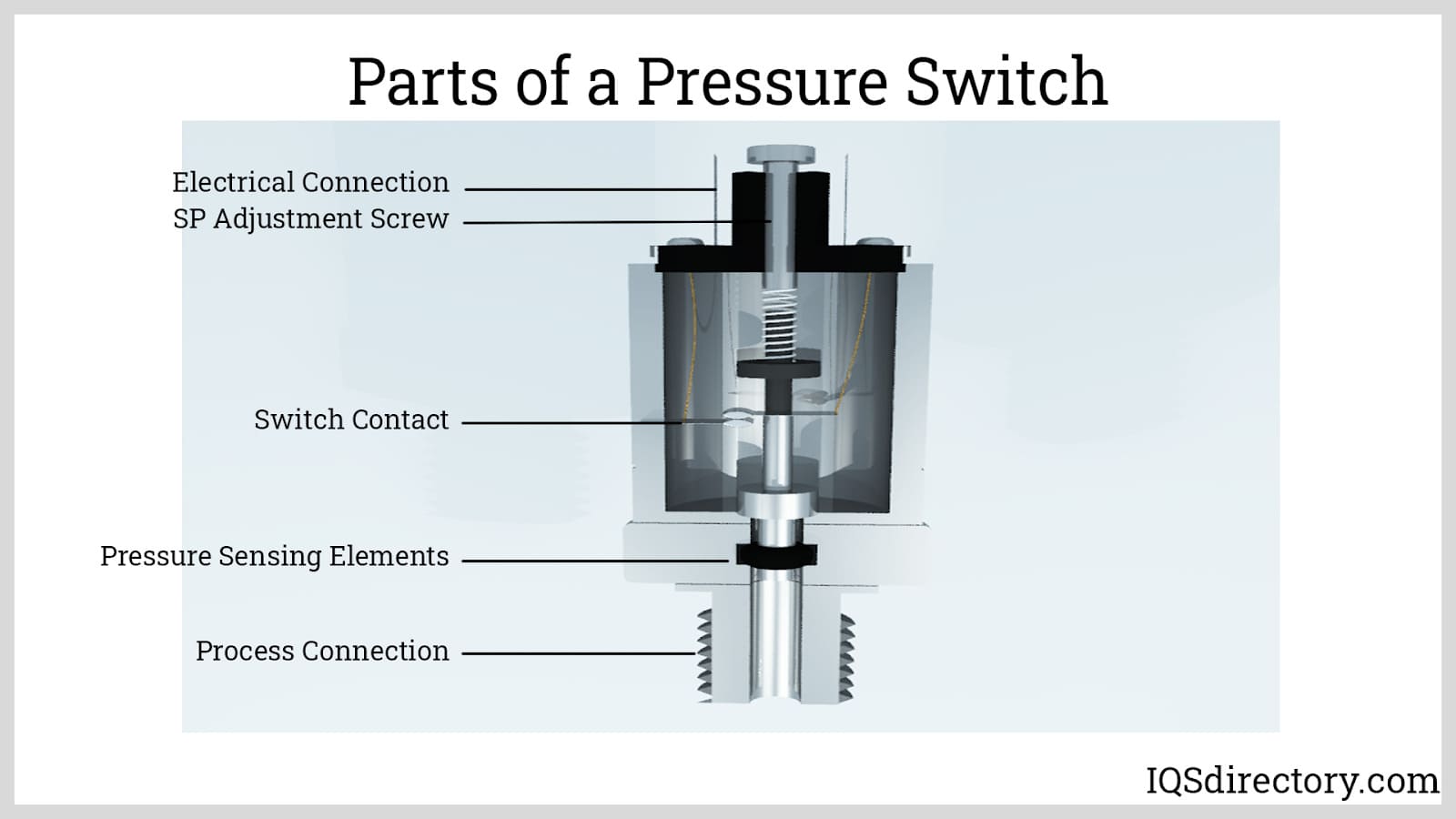
 A typical pressure switch has one side exposed to process pressure and another side referenced to atmospheric pressure or an internal reference, allowing the sensing element to move and actuate the switch.
 As pressure changes inside the device, the piston moves axially and triggers the electrical switching action at the calibrated setpoint.
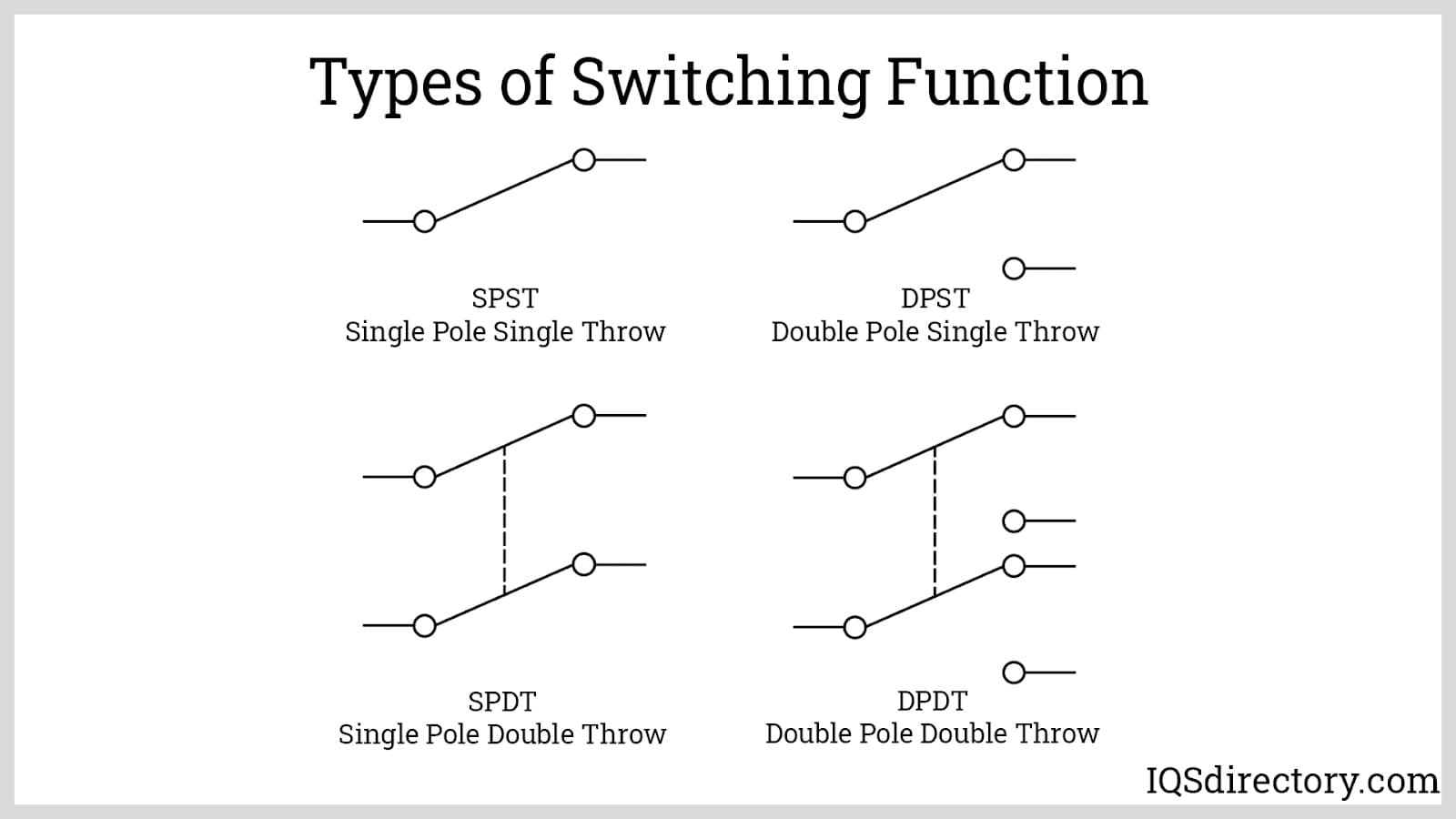
 Switching functions are often described by poles and throws, which identify how many circuits the switch can control and how many contact positions it can make.
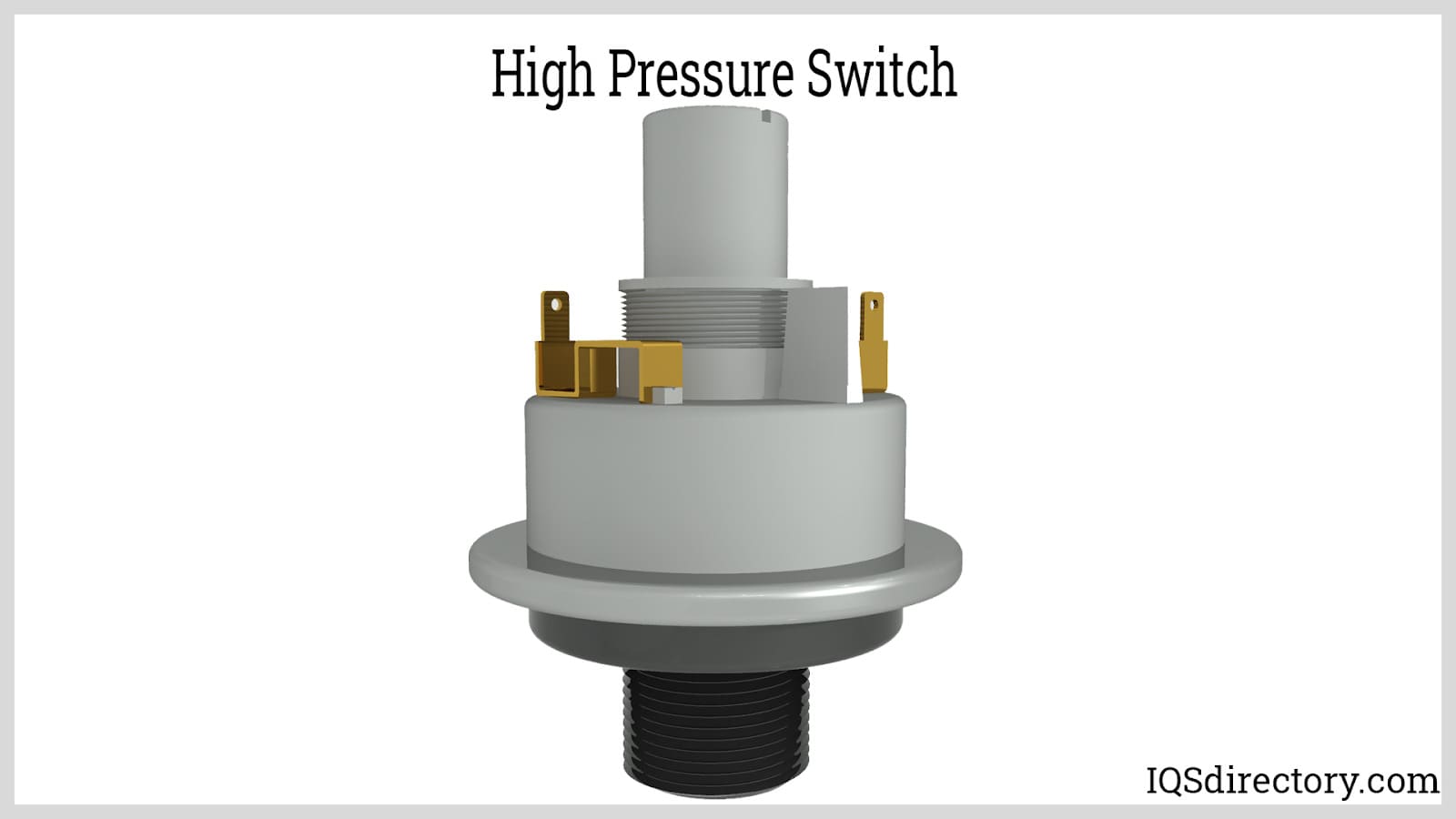
 High pressure switches are built for elevated pressure ranges and are designed for durability, pressure containment, and dependable switching performance.
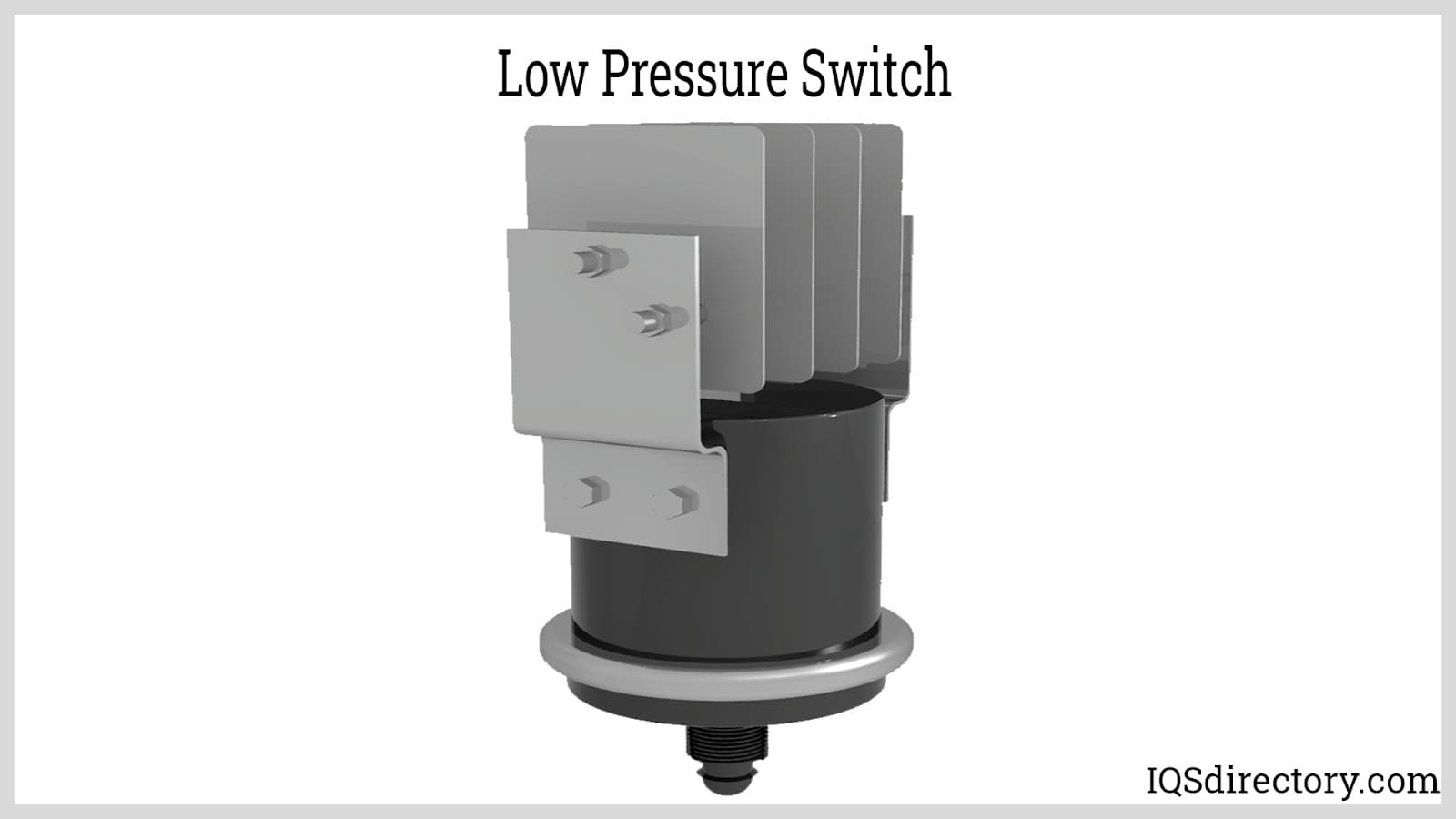
 Low pressure switches are tuned to respond to small pressure changes or lower operating ranges where sensitive control is required.
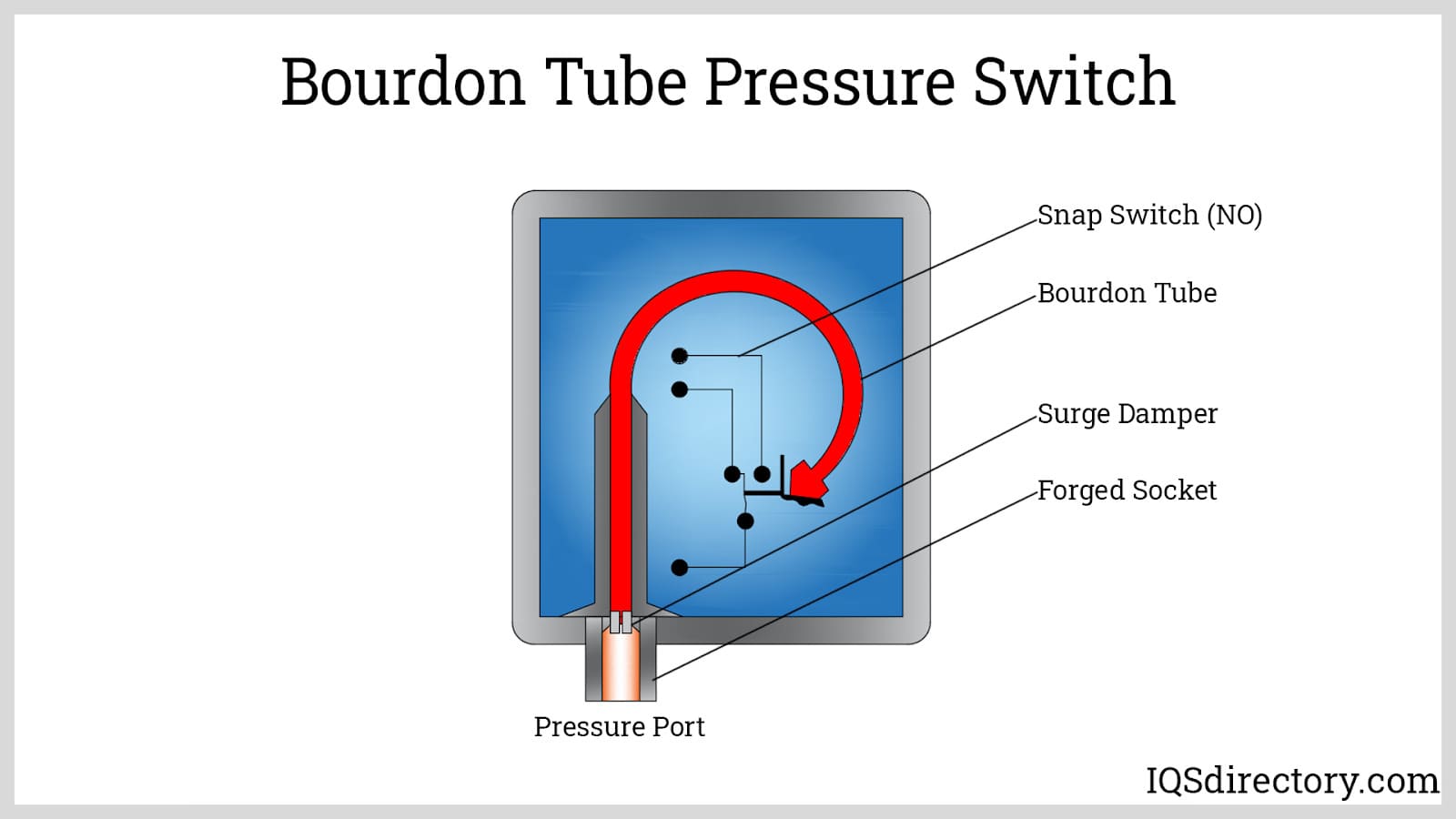
 A Bourdon tube pressure switch uses a flexible metallic tube that tends to straighten as internal pressure rises, causing motion that actuates the switch mechanism.
 A diaphragm pressure switch uses a metal or elastomeric diaphragm attached to the wetted section of the switch to sense pressure changes and trigger switching action.
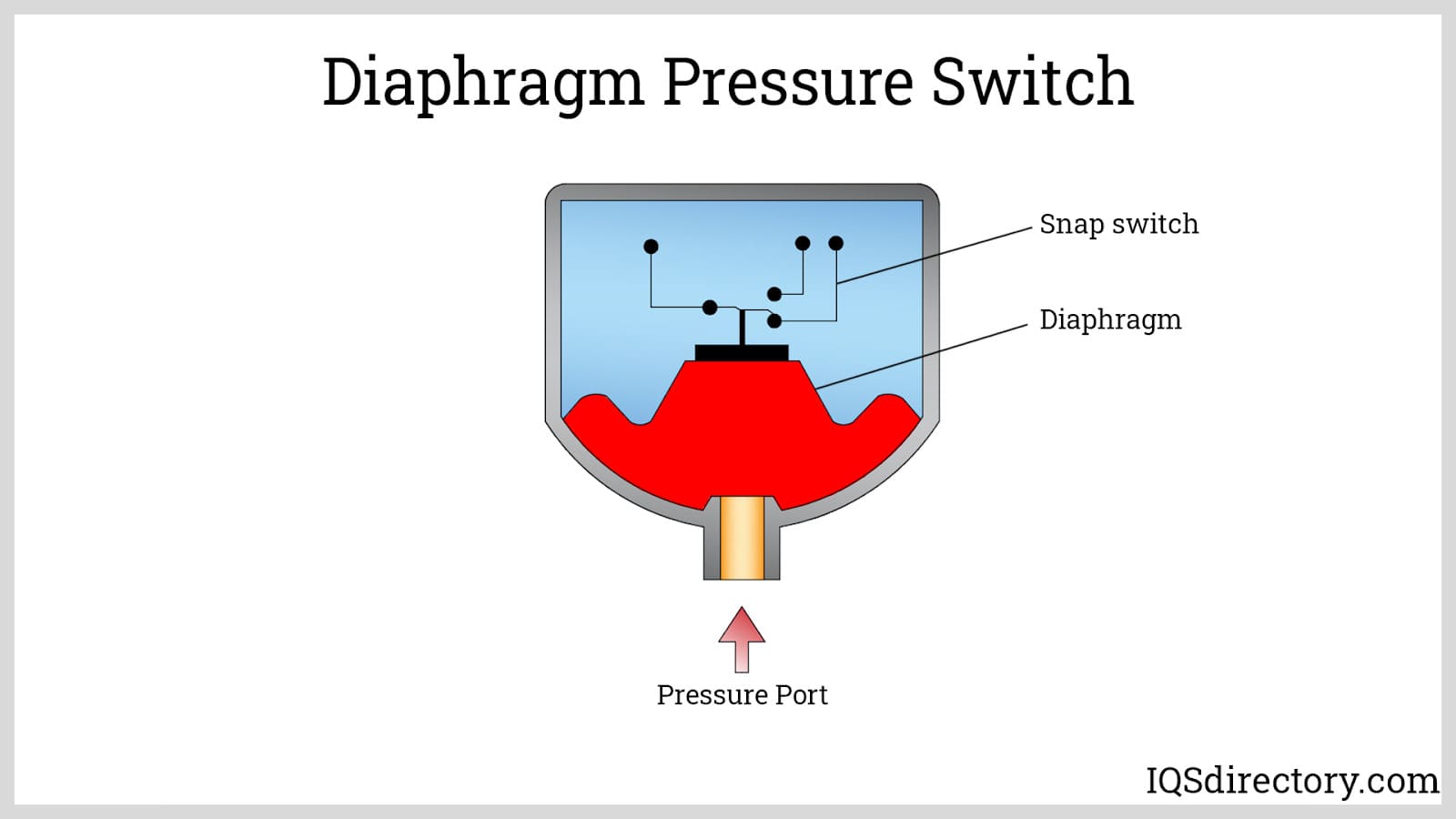 Diaphragm pressure switches consists of a metal membrane joined or welded directly to the wetted part of the pressure switch.
Pressure Switch Types
-
Adjustable Pressure Switches
Designed for field adjustment, these pressure switches let users change setpoints on site for flexible control in changing operating conditions.
Air Compressor Switches
Air compressor switches regulate compressor cut-in and cut-out pressure so the system maintains the required air pressure without excessive cycling.
Air Pressure Switches
Air pressure switches monitor and control pneumatic system pressure, helping maintain stable airflow and dependable operation.
Displacer Level Switches
Displacer level switches help control liquid levels in tanks, pits, and sumps and are often chosen where field adjustment and straightforward level control are needed.
High Pressure Switches
High pressure switches are engineered for demanding pressure ranges and are used where reliable actuation at elevated psig levels is required.
Low Pressure Switches
Low pressure switches respond to small pressure variations and are often used for sensitive control, monitoring, and alarm functions.
Oil Pressure Switches
Oil pressure switches monitor lubrication or hydraulic oil pressure and can signal low-pressure conditions, control circuits, or help protect rotating equipment and engines.
Solid State Pressure Switches
Solid-state pressure switches use electronic sensing elements to provide accurate switching, remote signaling, and integration with control systems or programmable controllers.
Ultrasonic Pressure Switches
Ultrasonic pressure or level-related sensing devices are often used around lubrication and storage systems to detect leaks or abnormal conditions before equipment damage occurs.
Water Pressure Switches
Water pressure switches work with pumps and water systems to maintain target pressure by switching equipment on or off at predefined setpoints.
Well Pump Pressure Switches
Used in water well systems, these switches automatically start or stop the pump in response to changing water pressure so service pressure stays within the desired range.
Pneumatic Pressure Switches
Also referred to as air or gas pressure switchesAlso referred to as air or gas pressure switches, these devices respond to changes in gas pressure to maintain stable operation. A common example is the air compressor switch, which signals the compressor when pressure drops below the cut-in point or rises to the cut-out point.
Hydraulic Pressure Switches
Hydraulic pressure switches are activated by liquid pressure and are used in water, oil, and hydraulic systems where pressure monitoring, control, or alarm functions are required.
- Well pump and water pressure switchesWell pump and water pressure switches regulate water flow by starting the pump when pressure falls below the setpoint and stopping it when the target pressure is restored.
- Oil pressure switchesOil pressure switches are widely used in automotive engines and industrial equipment to monitor lubrication pressure and signal low-pressure conditions that can damage components.
- Ultrasonic level switchesUltrasonic level switches are often used in liquid storage tanks because they operate without moving parts and are less affected by sediment buildup or routine pressure and temperature changes.
- Displacer level switchesDisplacer level switches maintain liquid levels in sumps and tanks by responding at a defined setpoint, offering a practical and adjustable control solution.
-
Furnace Pressure Switches
Designed to monitor fuel supply or fresh air intake, these switches help maintain safe and efficient furnace operation.
Differential Pressure Switch
Used to regulate pressure differences between a cavity and an open atmosphere, these switches play a important role in systems like airplane cabins, where pressure must be balanced relative to external conditions. Differential pressure is measured in psi using a differential pressure gauge.
Vacuum Switches
Responsible for maintaining pressure between two closed cavities, these switches activate based on negative pressure changes within a system.
Diaphragm Pressure Switches
Pressure-sensitive mats generate an electrical signal when force is applied. Depending on the design, they may provide a single output or multiple signals for machine guarding, automatic door activation, security systems, or attendance and motion monitoring.
Pressure Sensitive Mats
Mats designed to generate an electrical signal when force is applied. Depending on the design, they may provide a single output or multiple signals. Common applications include interlock systems in hazardous machinery areas, automatic door activation, and security or attendance tracking through movement detection.
Pressure Switch Applications
Pressure switches are widely used for alarm functions, shutdown protection, equipment activation, and pressure regulation in pneumatic and hydraulic systems. They are valuable wherever flow control, low-pressure monitoring, or over-pressure protection is needed. Utilities, chemical plants, manufacturing operations, automotive systems, appliances, and building systems all rely on pressure switches to support safer and more stable operation.
These switches contribute to the safe and reliable operation of an extensive range of equipment, including https://www.iqsdirectory.com/air-compressors/, pressurized vessels, furnaces, industrial heating systems, blowers, generators, cars, off-road equipment, compressorsThese switches are used with air compressors, pressure vessels, furnaces, heating systems, blowers, generators, vehicles, turbines, wastewater equipment, process skids, pumps, control panels, and pipelines. In battery and closed-system applications, pressure switches can stop charging or shut down a process when internal pressure rises too far. Many facilities prefer them for direct pressure monitoring because they help control the process at the source and can respond quickly when abnormal pressure conditions appear.
Features of Pressure Switches
Pressure switches are built to sense rising or falling liquid or gas pressure and respond at a calibrated setpoint. Depending on the design, they may actuate an internal electrical switch, trigger a relay, open or close a solenoid valve, or send a signal to a controller. Many models also include pressure indication, digital programming, or remote output options for process automation.
Mechanical and electromechanical pressure switches place the sensing mechanism in direct relationship with the pressurized media and are available with fixed or adjustable setpoints. Electronic pressure switches use pressure sensors and electronics to provide higher resolution, user programming, multiple switch points, and output signals suited to PLCs, alarms, HMIs, and modern control architectures.
Standards and Specifications for Pressure Switches
In the United States, the National Electrical Manufacturers Association (NEMA) is a major reference point for enclosure and product expectations for pressure switches. NEMA ratings help buyers compare construction, environmental suitability, and operating characteristics so they can select a switch that matches the installation conditions and performance requirements.
In Europe and many export markets, buyers often review IP ratings and CE marking when evaluating pressure switches for environmental protection and regulatory alignment. UL recognition or other safety ratings may also be relevant depending on the application. Verifying testing, enclosure suitability, and certification details helps confirm that a pressure switch fits the intended service.
Many industries also require additional customer, plant, or sector-specific approvals before a pressure switch can be installed. Confirming those requirements early helps avoid procurement delays and supports reliable performance in the target environment.
Things to Consider When Purchasing Pressure Switches
When comparing pressure switches, buyers usually review cost, accuracy, repeatability, pressure range, process media, operating temperature, vibration tolerance, and electrical characteristics. It is also smart to confirm whether the application needs a fixed setpoint, adjustable setpoint, manual reset, differential setting, special enclosure, or corrosion-resistant wetted parts.
A good purchasing decision balances performance needs with service conditions. Pressure range, deadband, cycle frequency, installation space, wiring method, and compatibility with the fluid or gas all influence long-term reliability. Matching the switch to the actual operating environment helps reduce false trips, premature wear, and maintenance issues.
The manufacturer or supplier also matters. A knowledgeable source can review the application, verify certifications, recommend the right sensing technology, and help customize the switch for harsh environments, unusual media, or demanding control requirements.
Pressure Switch Accessories
Accessories such as audible alarms, delay relays, solid-state relays, mounting hardware, and protective seals can improve how a pressure switch performs in the field and how easily it integrates into a larger control system.
A diaphragm seal is commonly installed between the pressure switch and the process vessel to isolate the sensing element from corrosive, dirty, hot, or sanitary media. This added barrier can improve service life and help maintain measurement stability in demanding applications.
A snubber protects a pressure switch from rapid pressure spikes and pulsation. By damping shock and surge, it helps improve reading stability, reduce wear on the sensing element, and extend switch life in dynamic pressure systems.
Pressure Switch Terms
-
Accuracy
The allowable deviation from the switch setpoint, expressed in psi or as a percentage, that indicates how closely the switch performs to its specified actuation point.
Actuation Point/Setpoint
The specific pressure level at which the snap-action switch or sensing circuit changes state by opening or closing the electrical circuit.
Actuation Value/Deadband
The difference between the actuation point and the re-actuation point in a pressure-actuated switch, defining the operating band between switching cycles.
Adjustable Range/Working Pressure
The range of pressure values a switch is designed to handle during normal service without failure or unacceptable performance loss.
Ambient Pressure
The surrounding pressure around the device that can influence calibration, sensing behavior, and overall switch operation.
Differential
The mechanical motion lost as a switch element reverses direction during operation, which can affect precision and response.
Differential Pressure
The difference between a reference pressure and the actual measured pressure, often used when monitoring system performance or comparing two pressure conditions.
Electrical Switching Element
A component that responds to the pressure sensing element by opening or closing an electrical circuit.
Flow Meter
A device that measures the amount of fluid or gas moving through a system for flow monitoring and control.
Hysteresis
The difference between a switch’s response to rising pressure and falling pressure, which affects consistency and repeatability.
Pressure Gauge
An instrument that measures pressure within a closed system for visual indication and monitoring.
Pressure Sensing Element
The component that moves in response to pressure changes and initiates the switch mechanism.
Pressure Transducers
A device that converts pressure into an electrical signal for monitoring, indication, or control.
Repeatability
The ability of a pressure switch to actuate at the same setpoints repeatedly over many cycles.
Solenoid Valves
A valve operated by an electromagnetic solenoid that controls fluid or gas flow within a system.
Snap-Action Switch
A mechanism that rapidly shifts contacts from one position to another for fast circuit opening or closing.
Variable Pressure
The changing pressure levels that cause the pressure switch to actuate during operation.