Liquid Filters
Liquid filters are engineered to eliminate impurities from liquids, promoting purity, process consistency, and fluid safety in a wide range of industrial, commercial, municipal, and residential applications. These systems channel liquid through semi-permeable or porous materials that separate suspended solids, fine particulates, sediment, and selected chemical contaminants while allowing the purified liquid to pass through. Across water treatment, wastewater handling, coolant cleanup, chemical processing, food production, and high-purity manufacturing, the underlying goal is the same: achieve cleaner fluid streams, improve performance, and protect downstream equipment.
Note: The word "filter" often refers to the housing or container of a filtration unit. The "filter media" is the actual porous material—such as a mat, granular bed, membrane, chemical adsorbent, or barrier layer—that performs the filtration process. Understanding that difference helps buyers evaluate liquid filters more accurately, because housing design affects pressure, flow rate, and service life, while media selection determines particle retention, contaminant reduction, and compatibility.
Liquid Filters FAQ
What is the main purpose of a liquid filter?
A liquid filter removes impurities and particulate matter from liquids by passing them through porous media. This process supports purity, safety, flow reliability, and product quality across industrial, commercial, and residential applications.
What materials are used to construct liquid filter housings?
Liquid filter housings are commonly made from steel, stainless steel, aluminum, or thermoplastics. These materials provide the strength and durability needed to handle high pressures, temperature changes, corrosion concerns, and chemical exposure.
What types of media are used in liquid filtration?
Common filter media include sand, gravel, activated carbon, activated alumina, and synthetic membranes made from cotton, polyester, nylon, polypropylene, and other engineered materials. Each media type offers different levels of particle capture, chemical resistance, flow characteristics, and purification efficiency.
How does reverse osmosis work in liquid filtration?
Reverse osmosis uses pressure to push liquid through a semipermeable membrane, separating dissolved impurities, salts, and other unwanted substances while delivering purified water. It is widely used when applications call for higher-purity output and consistent water quality.
What is the difference between a filter and filter media?
The term “filter” refers to the overall housing or unit, while the “filter media” is the porous material that performs the actual filtration by trapping contaminants and allowing clean liquid to pass through. That distinction makes it easier to compare filter assemblies and replacement elements.
What makes liquid filters important in industrial facilities?
In industrial facilities, liquid filters help maintain clean water and process fluids for manufacturing, washing, cooling, and transfer systems. That improves product quality, protects equipment, reduces fouling, and supports uptime.
How do filter cakes form during filtration?
During operation, solid particles accumulate on the filter media to form a “filter cake.” This layer can sometimes improve separation efficiency, and in many systems it can be removed, cleaned, or reused, supporting material recovery and lower waste handling costs.
The History of Liquid Filters
- Beginning of Liquid Filters
- The pursuit of clean water began in ancient civilizations such as Egypt and India. Historical records from these societies describe using sand, charcoal, cloth, and boiling to purify water for safer consumption and better taste. Egyptians also used alum to clarify water, helping separate suspended matter and improve visual clarity. These early practices show that long before modern filtration equipment existed, people understood the value of removing visible contaminants from water.
- Advancements came with Hippocrates around 500 BCE, who advocated sieving water to remove sediments, leading to the development of the "Hippocratic Sleeve." For nearly a thousand years after, progress remained gradual, but the basic idea of forcing liquid through a barrier endured. By the 17th century, renewed experiments in water filtration, porous materials, and sand filters reignited innovation in liquid filter technology.
- Early filtration mainly targeted visible impurities, odor reduction, and taste improvement, with less emphasis on microscopic contamination or full purification. In the 17th century, Dutch scientist Antonie van Leeuwenhoek discovered microorganisms in water, linking water quality more closely to public health and changing how people thought about fluid cleanliness. Even so, it would take much longer before the connection between waterborne disease and filtration system design was widely applied.
- This growing understanding spurred advancements in filter design, including the use of charcoal, wool, ceramics, sponge materials, and later more engineered porous structures capable of capturing finer contaminants. Over time, the goals of liquid filtration expanded beyond appearance and taste to include health protection, process reliability, and consistent fluid quality.
- Liquid Filters in the 19th and 20th Centuries
- The mid-19th century marked a turning point as scientists identified diseases like Cholera as waterborne, motivating the development of larger water treatment and distribution systems modeled in part after earlier public works. These systems increasingly incorporated rapid sand filtration and chlorination to improve public water quality. In 1865, Swiss scientist Jacques-Louis Soret's discovery of ozone contributed to ozonation as an alternative disinfection approach. Over the next two centuries, innovations such as cartridge filtration, membrane separation, reverse osmosis, and specialized filters transformed the broader filtration industry.
- The 20th century saw further growth with new desalination methods, expanded industrial filtration needs, and the rise of more specialized filter media. Ion exchangers were introduced to remove salts and dissolved ions from water, and research in the 1950s produced semipermeable membranes for desalination and higher-grade purification. By the 1970s, as performance improved and costs declined, these advanced methods became more accessible for municipalities, manufacturers, and laboratories.
Advantages of Liquid Filters
Liquid filters are widely used in industrial facilities, commercial buildings, utilities, and homes because they improve fluid quality in ways that affect safety, consistency, and cost control. In manufacturing environments, cleaner water and process liquids can help raise product quality, reduce maintenance, and limit wear on pumps, valves, nozzles, seals, and heat exchangers. In food processing, pharmaceutical work, chemical production, metalworking, and industrial water treatment, the right liquid filtration system helps control particulate contamination and supports smoother operation. In homes, systems such as reverse osmosis filters and carbon-based water filter systems provide cleaner drinking water with dependable day-to-day performance. Buyers often value liquid filters for their versatility, serviceability, and economical operation.
Liquid Filter Design
- Filter Housing Material
- Liquid filter housings are commonly made from durable materials such as steel, stainless steel, aluminum, and thermoplastics. These materials are used in cartridges, holders, bowls, frames, and pressure-rated assemblies that contribute to the system's strength and longevity. Housing selection affects corrosion resistance, pressure containment, cleanability, and fluid compatibility.
- Filter Media Material
- The filtration media is the core functional component, available in materials like sand, gravel, activated alumina, activated carbon, and membranes made from cotton, polyester, nylon, polypropylene, and other engineered fibers. Membrane types include thin film composite, cellulose triacetate, and polyethersulfone, each offering distinct resistance to heat, fouling, and chemicals as well as specialized retention properties. Media selection is often driven by particle size, solids loading, fluid chemistry, and the desired balance between flow rate and filtration efficiency.
- Design and Customization
- When designing liquid filters, manufacturers assess the particle size to be removed, required filtration efficiency, operating pressure, temperature, viscosity, flow demand, and the specific properties of the fluid. This careful evaluation allows for filters that capture particles as small as 0.001 µm and can be custom-designed for virtually any application or industry requirement. Choosing a liquid filter usually depends on the contaminants present, required outlet quality, maintenance intervals, and duty cycle.
Features of Liquid Filters
Liquid filters, similar to strainers, utilize various purification methods including mechanical filtration, distillation, adsorption, ion exchange, reverse osmosis, and ozonation. Each method addresses a different contamination profile, so engineers often evaluate liquid filtration equipment by micron rating, pressure drop, contaminant type, cleaning requirements, and process goals.
- Mechanical Liquid Filtration
- This process physically separates suspended solids from liquids using different filter media in tanks or cartridges. Tank filters often use layered media to capture larger and smaller contaminants in sequence, while cartridge filters apply surface and depth filtration to remove particles at defined micron levels. Mechanical liquid filtration is widely used when facilities need dependable particulate control and improved water clarity.
- Adsorption
- Adsorption filtration uses physical and chemical interactions to bind contaminants onto the surface of adsorptive media, such as activated carbon. It is often selected for odor control, taste improvement, organic compound reduction, and polishing steps after larger particles have already been removed.
- Reverse Osmosis
- Reverse osmosis involves pushing water through a semipermeable membrane under pressure, separating dissolved impurities and delivering purified water for a variety of applications. It is a common choice when buyers need lower dissolved solids and a higher-purity water stream.
- Ozonation
- Ozonation introduces ozone—a molecule made of three oxygen atoms—into water to disinfect and resolve issues like odor and color, offering a chemical-free alternative to traditional water treatment methods such as chlorination. In some systems, it works as a complementary treatment step before or after physical liquid filtration.
- Distillation
- Distillation is a traditional process that uses evaporation and condensation to separate contaminants from water, effectively eliminating many biological and inorganic impurities. However, its slower operation and energy demand have reduced its popularity where higher throughput is preferred.
- What Makes Liquid Filters Unique?
- Many liquid filters form filter cakes, which are solids that accumulate on the filter media during operation. These filter cakes, found in systems like cartridge, bag, and pressure filters, are often easy to remove, clean, and sometimes reuse, supporting material recovery and reducing waste. In some industrial applications, the filter cake becomes a useful byproduct by concentrating solids for handling or disposal.
Liquid Filter Images, Diagrams and Visual Concepts
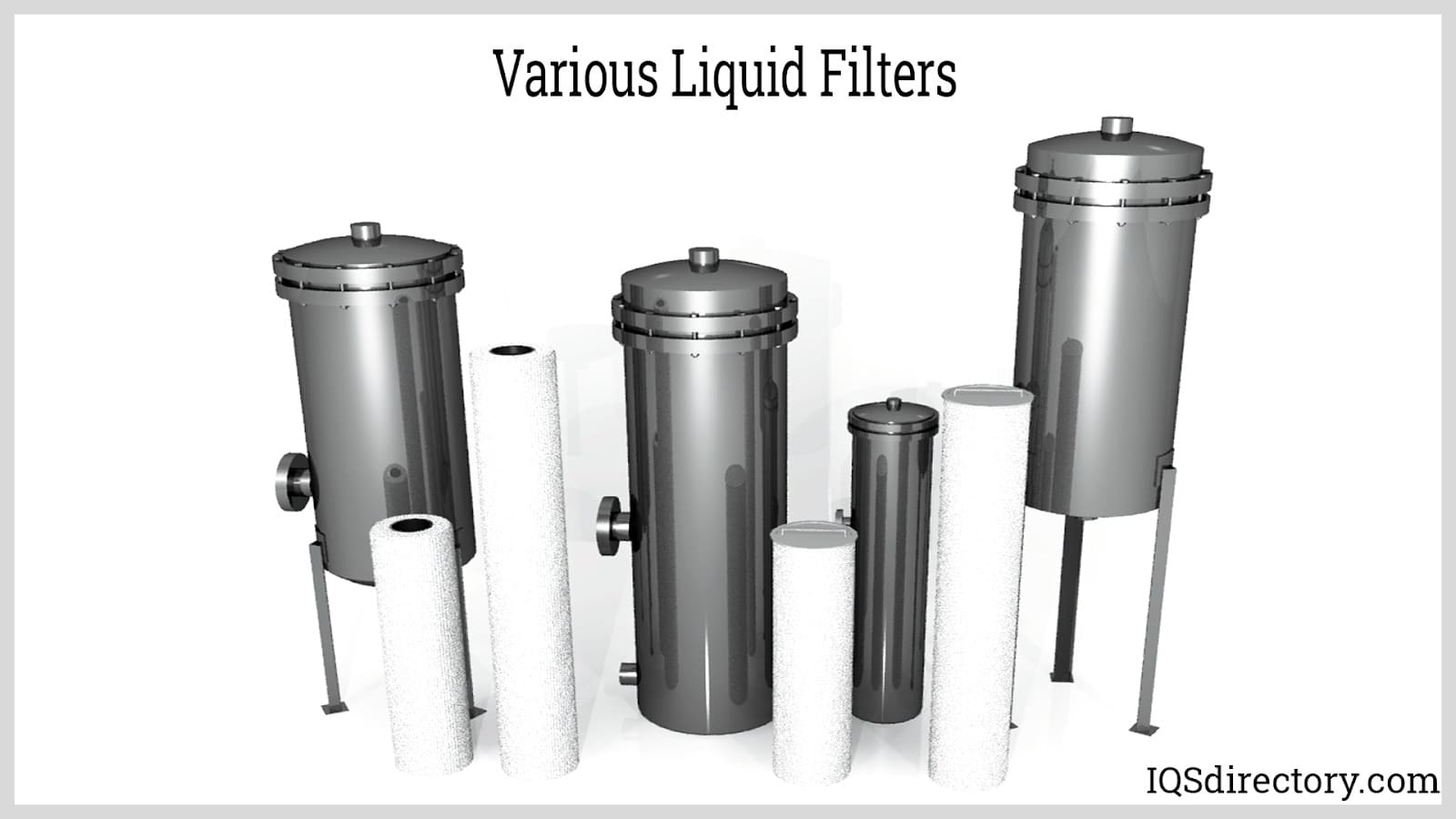 Liquid filters isolate suspended solids from fluid streams, supporting cleaner liquids, better flow performance, and equipment protection.
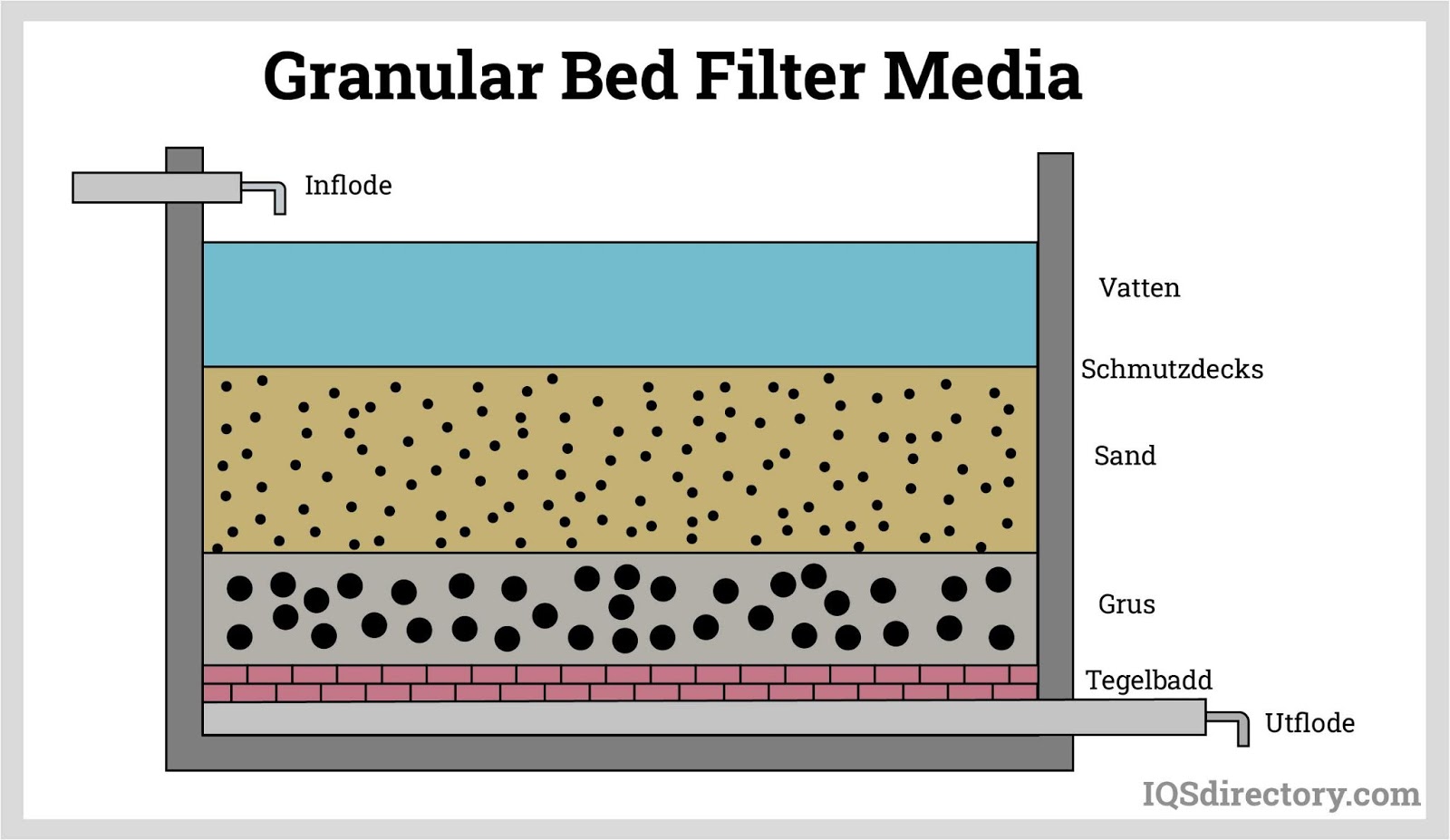 Granular filter beds consist of layers of coarse and fine materials like sand, anthracite, and gravel that trap impurities at different depths.
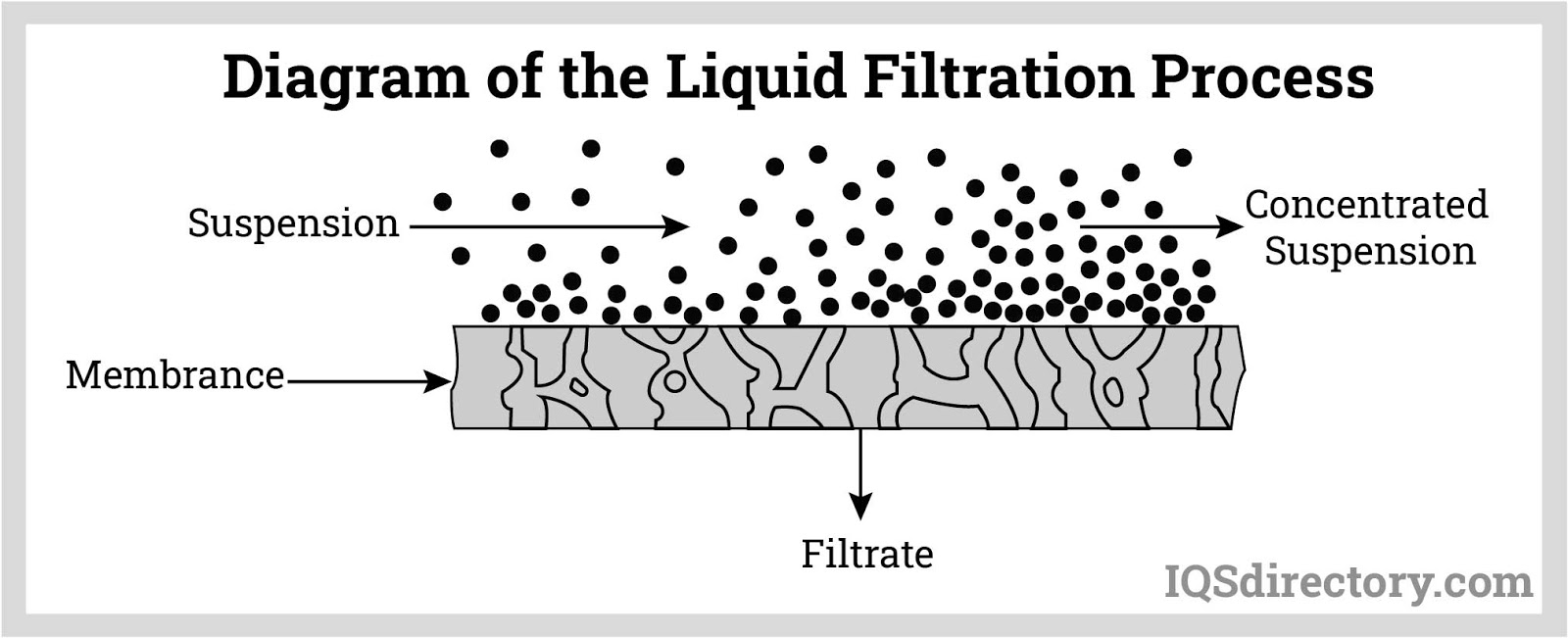 The liquid filtration process removes suspended particles and other impurities so the output is cleaner and better suited for downstream use or treatment.
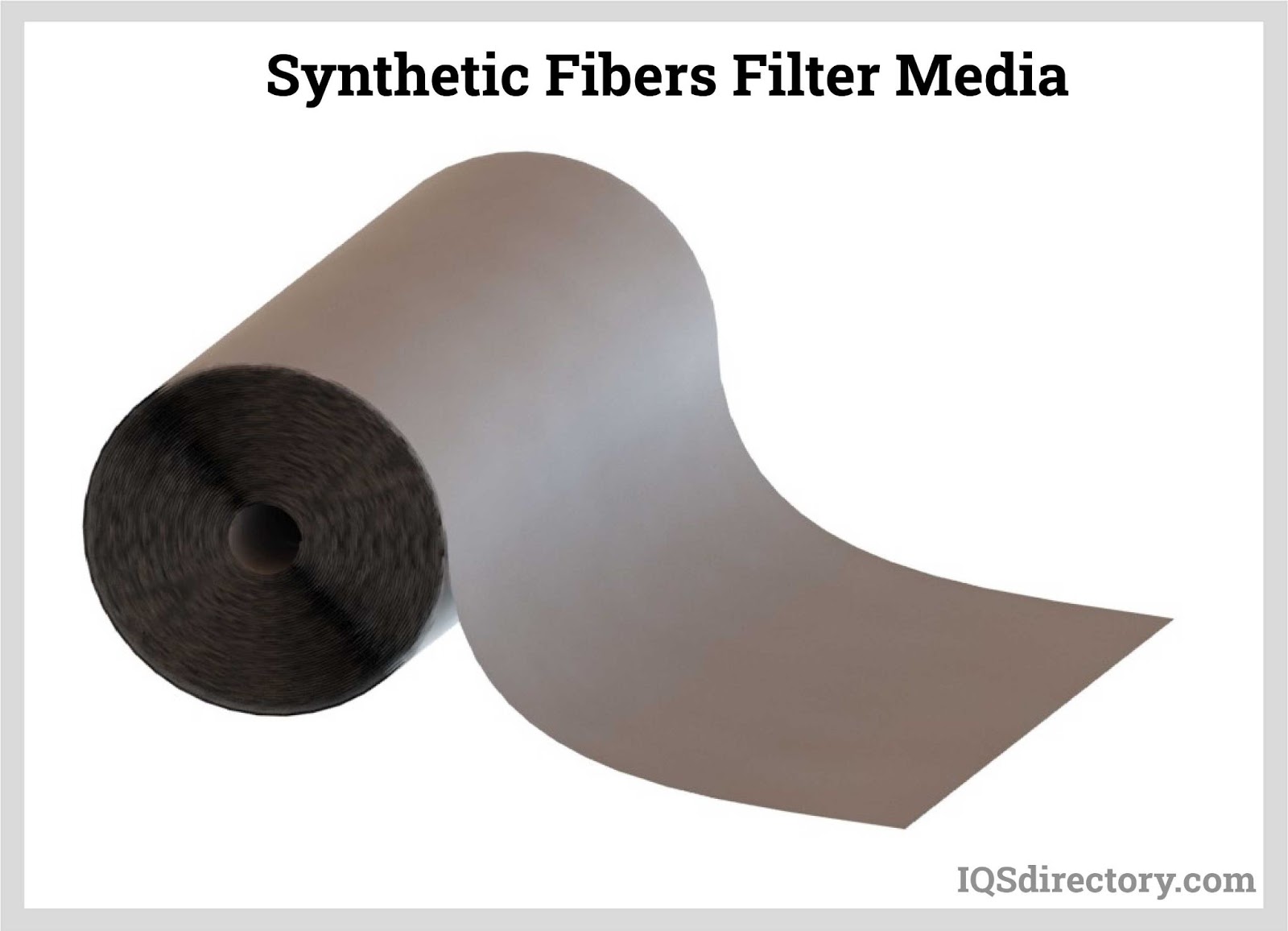 Synthetic fibers used in filter media include polyester, nylon, polypropylene, and fluoropolymers in monofilament and multifilament forms.
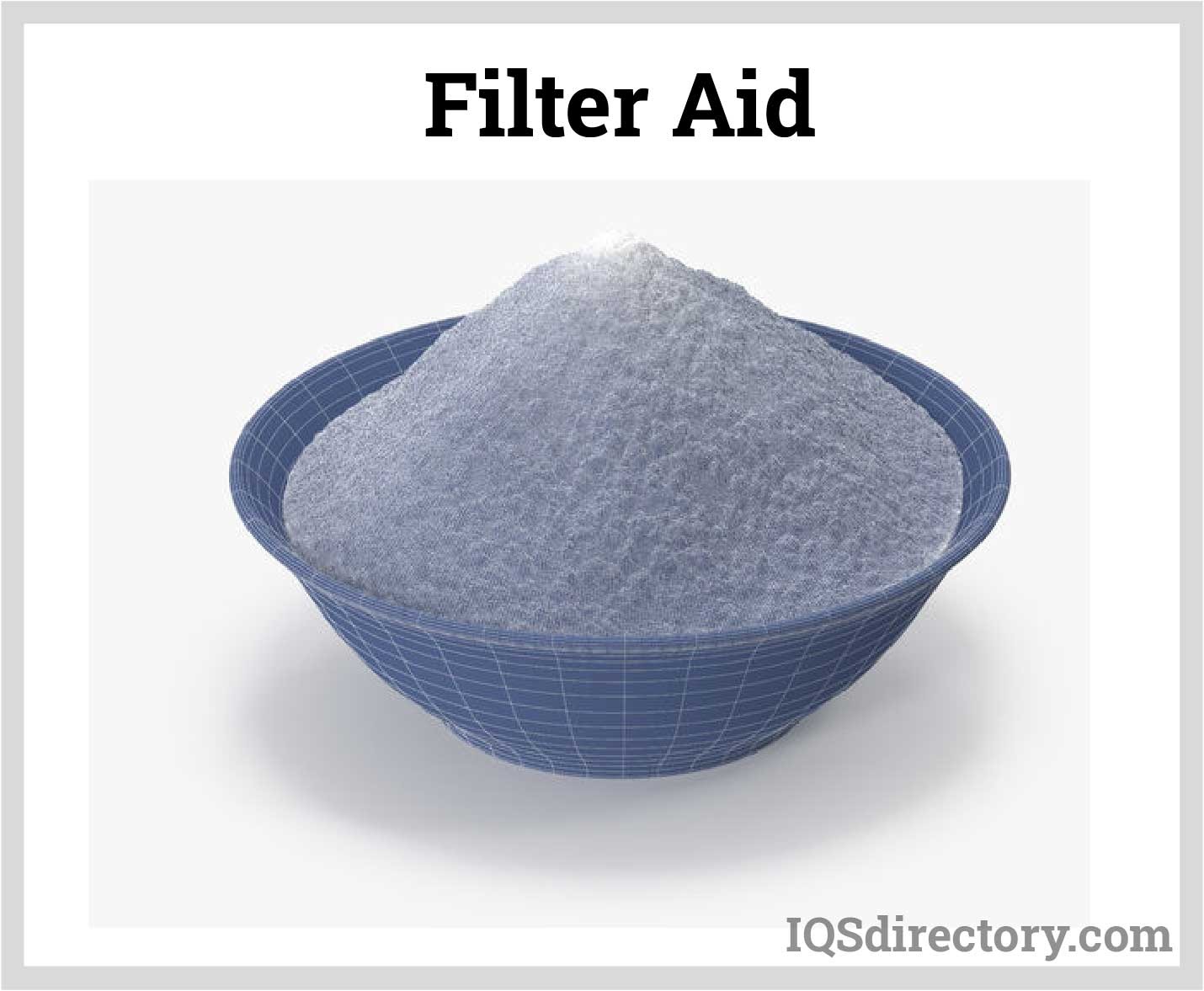 Filter aids are solid, inert materials that enhance filtration efficiency through pre-treatment or precoating, helping improve clarity and flow.
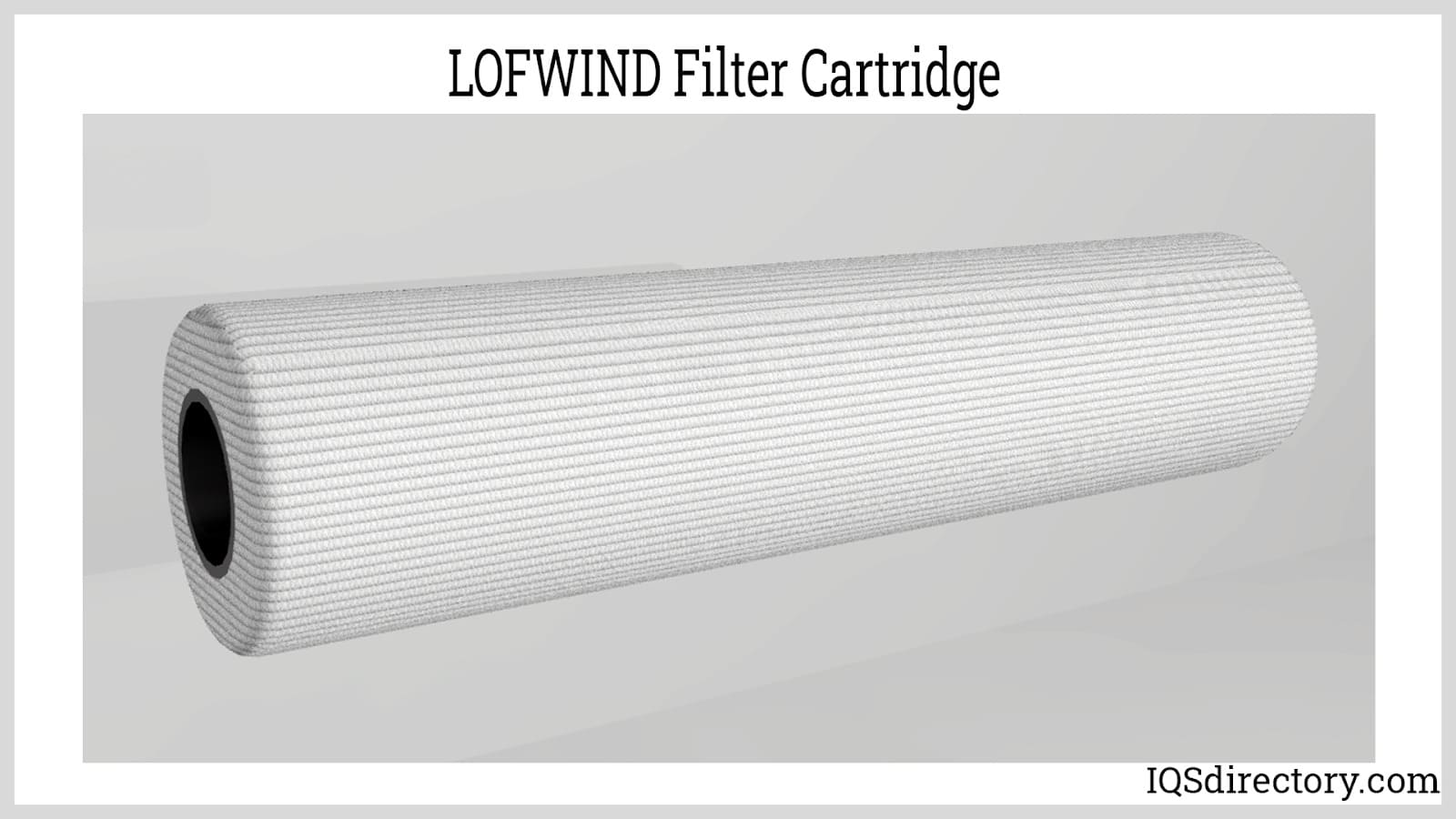 A cartridge filter encases the filtration medium and directs flow from the exterior to the interior, trapping contaminants as liquid moves through the media.
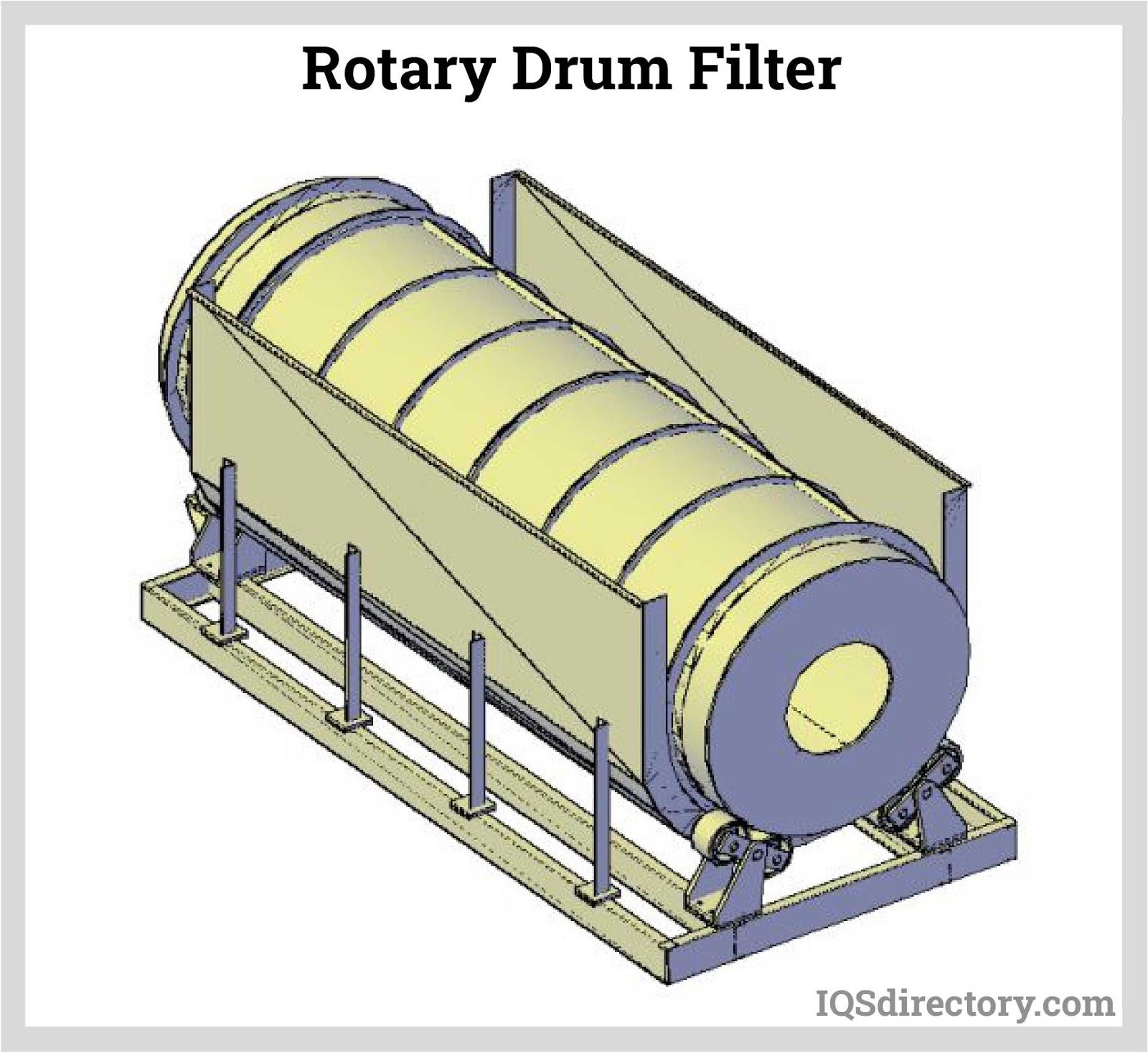 Rotary drum filters use a rotating mechanism and pressure differential to draw liquid through the media while retaining solids on the drum surface.
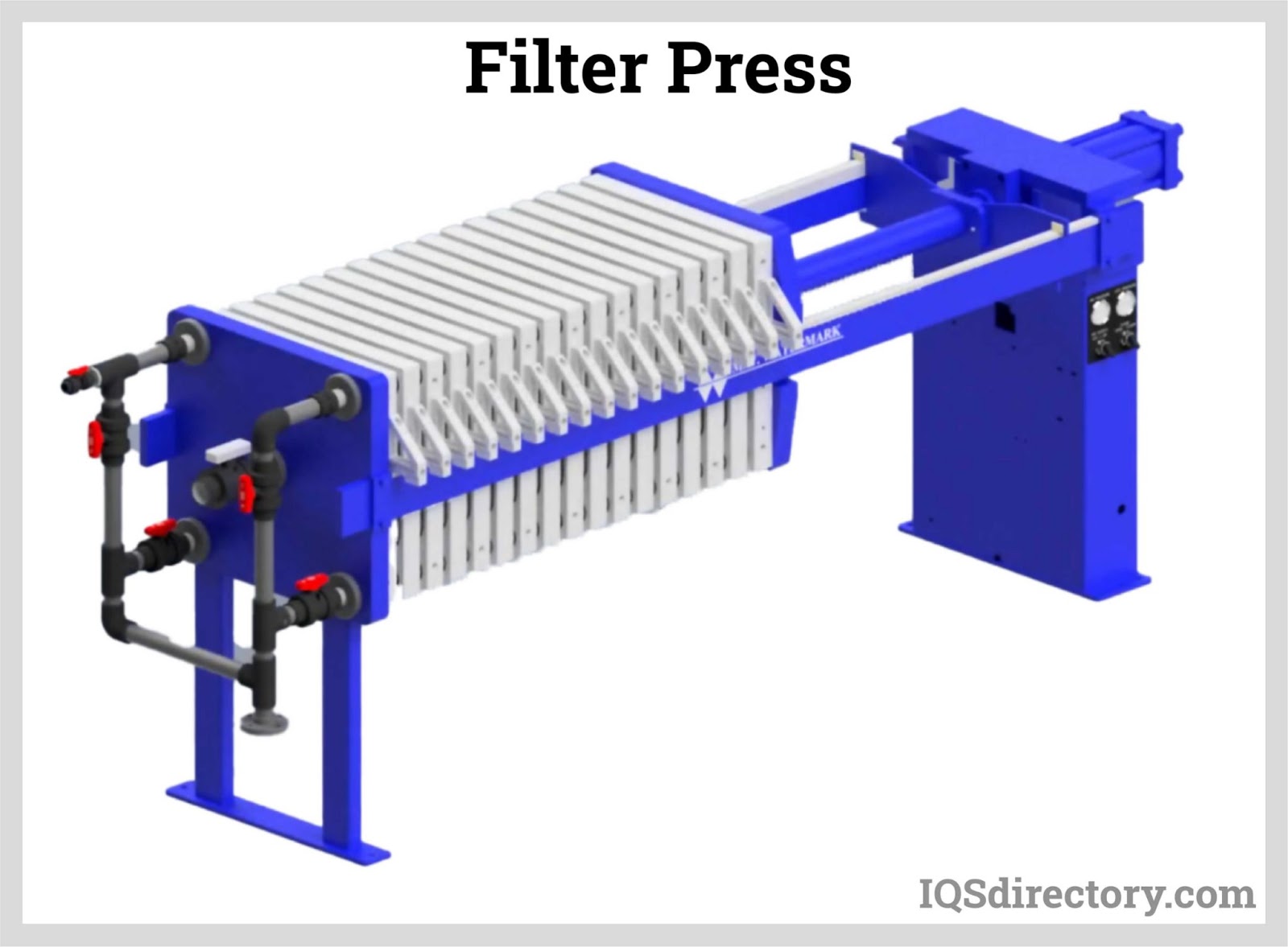 Filter presses process slurry by forcing it against filter plates under high pressure, resulting in de-watered solids and clarified liquid streams.
Types of Liquid Filters
- Biodiesel Filters
- These filters are used to maintain the cleanliness and efficiency of biodiesel, a renewable alternative to conventional diesel fuel. By removing particulates, water, and process contamination, biodiesel filters help protect engines and storage systems.
- Carbon Filters
- Carbon filters utilize solid carbon media to adsorb and remove dissolved substances from water, making them popular where odor, taste, and polishing performance matter.
- Coolant Filtration
- Coolant filtration systems remove contaminants from chemical coolants, helping preserve machinery and engines by reducing abrasive solids and extending fluid service life.
- Filter Media
- Filter media are the materials that liquids pass through to separate out particles and pollutants, forming the backbone of effective filtration. Media choice often determines retention level, compatibility, and replacement frequency.
- Fuel Filters
- Fuel filters safeguard engines by filtering out particulates, sediments, and water from fuel, improving engine longevity and reliability.
- Gas Filters
- Gas filters remove debris and dissolved impurities from gasoline to help ensure consistent fuel quality and protect engine components.
- Hydraulic Filters
- Hydraulic filters are designed to eliminate contaminants from hydraulic fluids, preventing premature wear, avoiding system failures, and extending equipment life in pressure-driven fluid power systems.
- Industrial Water Filters
- These filters are applied in industrial settings to treat water by removing impurities so the water meets process and safety expectations.
- Liquid Filtration
- Liquid filtration involves the systematic removal of organic and synthetic impurities from liquid streams in process environments. It can include pretreatment, polishing, recovery, or final-stage purification depending on the application.
- Reverse Osmosis Water Filters
- Reverse osmosis filters use pressure and semipermeable membranes to eliminate particulate and dissolved impurities from water, delivering high-purity water.
- Strainers
- Strainers serve as primary filtration devices, capturing larger particles to prevent blockages and protect downstream components.
- T-Type Filters
- T-Type filters feature inlet and outlet ports on one end, allowing for efficient filtration with a straight-line flow path. Their layout can simplify installation and service.
- Water Filter Systems
- Water filter systems are comprehensive units designed to convert contaminated water into a purified supply for drinking, processing, washing, and equipment protection.
Types of Filter Assemblies
- High Flow Filter
- High flow filters are ideal for environments with elevated levels of particulates, water, or acidity, while lower-flow filters are more suitable for applications with fewer contaminants or tighter residence-time needs. Buyers comparing high flow liquid filters often focus on throughput and pressure drop.
- Vacuum Filter
- Vacuum filters use a vacuum system to accelerate liquid movement through the filter media, increasing flow rates and improving filtration efficiency. They are often selected for slurry separation and dewatering.
- Bag Filter
- Bag filters, though commonly used for air filtration, are also adapted for liquid processing. Constructed from woven or felted materials like cotton, polypropylene, polyester, or nylon, they can be used with or without a housing. Their range of sizes and materials makes them suitable for applications such as aquariums, pools, wastewater treatment, chemical transfer, and general industrial liquid filtration.
- Pleated Filter
- Pleated filters have uniformly folded media shaped into geometric patterns, increasing available surface area and allowing integration with a variety of filtration systems, including cartridge filters. That added surface area can help improve dirt-holding capacity and service life.