Carrying Cases
Carrying cases play a major role in modern storage, protection, and transport. From commercial equipment and industrial tools to consumer electronics and medical devices, the right carrying case helps goods move from one location to another without damage, contamination, or costly disruption. When a case underperforms, the result can be broken components, lost productivity, and avoidable replacement costs. With standard and custom carrying case options available for nearly every application, buyers can now match protection, portability, and presentation to the exact demands of the product being moved.
These cases are available in a wide range of sizes, shapes, and material constructions. While many carrying cases are rectangular for efficient stacking and shipping, others include molded recesses, compartments, divided interiors, or fitted pockets that stabilize delicate contents. Some even take the form of tubes with sealed end caps, hinged shells, or cylindrical bodies for long and narrow products. Carrying cases may be flame resistant, waterproof, static dissipative, shock absorbing, or built to help shield contents from dust, corrosion, and electromagnetic interference. Buyers comparing hard versus soft cases, wheeled versus hand-carried models, or compartmented versus open interiors can choose designs based on payload, travel conditions, handling frequency, and storage needs.
Far more than simple boxes or bags, custom carrying cases are engineered protective packaging solutions that improve safety, organization, and long-term durability. A well-designed case can secure fragile instruments, sensitive electronics, field service tools, hazardous materials, trade show displays, or bulky gear with equal effectiveness. The best case design depends on weight, dimensions, environmental exposure, handling conditions, branding needs, and whether the user values rugged transit protection, attractive presentation, or both. For buyers researching carrying case manufacturers, custom foam inserts, waterproof transport cases, or molded plastic enclosures, selecting the proper size, shape, and material helps ensure that every item arrives clean, stable, and ready for use.
Carrying Cases FAQ
What are carrying cases used for?
Carrying cases are designed to protect, organize, store, and transport items safely. They are used for tools, electronics, medical equipment, documents, musical instruments, presentation kits, and more, keeping contents secure from impact, moisture, dust, vibration, or static damage during storage and transit.
What materials are carrying cases made from?
Carrying cases can be made from plastics, aluminum, wood, metals, fabric, nylon, polyester, PVC, neoprene, or leather. Each material offers a different blend of durability, water resistance, weight, appearance, portability, and cost depending on the application.
What is the difference between hard and soft carrying cases?
Hard carrying cases are rigid and commonly molded from plastic, aluminum, laminated wood, or metal for stronger impact protection, while soft cases are made from fabrics or vinyl-based materials that provide flexibility, lighter weight, and convenient portability.
What types of custom features can carrying cases include?
Custom carrying cases can include foam inserts, compartments, wheels, recessed handles, locking systems, dividers, panel mounts, telescoping handles, and branding details. Interiors can be tailored to fit exact parts or equipment for improved organization and protection.
How are plastic carrying cases manufactured?
Plastic cases are commonly produced using blow molding, injection molding, or rotary molding. These processes form durable, lightweight shells that can later be assembled with hinges, latches, handles, wheels, foam interiors, or other custom features.
What are ATA shipping cases?
ATA shipping cases are transport cases designed around airline and repeated-transit performance standards. They are typically rugged, mobile, and customizable, often using reinforced shells, aluminum framing, and foam interiors for safer shipment by air or road.
What industries rely on carrying cases?
Industries such as medical, military, electronics, construction, entertainment, field service, and trade shows rely on carrying cases to protect, organize, and transport sensitive equipment, instruments, tools, samples, and promotional materials.
Bagging and Boxing Up History
The history of carrying cases begins with the simple satchel, a handled sack that served as one of the earliest commercial carrying solutions. In 1826, Godillot of Paris advanced the concept by patenting a bag with a hinged iron frame. That design, later known as the carpet bag, helped launch the modern luggage category. As travel, shipping, and trade evolved, buyers needed stronger, more dependable containers that could protect clothing, tools, papers, and valuables during longer and more demanding journeys.
By the 1850s, the briefcase appeared as a rectangular case created specifically for business papers and professional use. Around the same period, curved-top steamer trunks made of wood and iron became popular for rail and ship travel during the Industrial Revolution. Their coated exteriors improved weather resistance, while their large interiors made them practical for garments and personal goods. In many ways, these early travel cases laid the groundwork for today’s protective shipping containers, display cases, and hard-shell transport products.
Louis Vuitton later refined the luggage concept with slatted trunks covered in canvas and arranged with interior drawers. Their flat-top design made stacking easier during transport, which was a practical advantage as much as a visual one. This shift from simple containment to organized, purpose-built storage still shapes the way modern carrying case manufacturers think about customization, internal layout, and user convenience.
At first, many large trunks were handled by porters or household staff. As independent travel expanded by stagecoach and then by automobile, people began looking for lighter bags that were easier to lift, carry, and store. By the late 19th century, leather luggage had become more common, and the first advertisement for a "suit case" appeared in 1897. That moment marked a turning point from bulky trunks toward more portable personal transport cases.
The 20th century brought another wave of change. By the 1930s, commercial air travel was growing, which increased demand for lighter yet durable cases that could withstand repeated loading and unloading. In 1950, Germany’s Rimowa company introduced the first aircraft aluminum case, a design that influenced decades of premium hard-case manufacturing. Today, aluminum transport products, custom metal cases, and similar enclosures remain popular for buyers who want a balance of lightweight construction and rugged performance, as showcased on IQS Directory.
The 1960s introduced wheeled trolleys that made baggage easier to maneuver through terminals and stations. Then, in 1972, Bernard Sadow obtained the first U.S. patent for rolling luggage. That innovation quickly changed buyer expectations, and within a short time multiple companies were producing cases with integrated wheels and pull handles. The influence of rolling luggage is still visible in modern road cases, ATA cases, medical equipment cases, and trade show transport systems.
Innovation continued into the new millennium. In 2000, Rimowa launched polycarbonate luggage that combined lighter weight with strong impact resistance. Four years later, Samsonite introduced The Spinner, a wheeled suitcase designed for multi-directional movement. The progression from satchels to modern molded and wheeled cases shows how carrying case design has continuously adapted to changing travel habits, industrial shipping needs, and the growing demand for portable protective packaging.
Uses for Carrying Cases
Carrying cases serve a broad range of storage and transport purposes across both commercial and personal settings. Papers stay dry, clean, and organized in plastic cases, briefcases, or portfolios. Musical instruments, electronic equipment, medical devices, laboratory items, and chemicals can be protected from impact, moisture, and temperature swings inside waterproof cases with fitted foam interiors. These inserts are often precision cut to match the dimensions of the item, which reduces shifting and improves shock absorption during handling and shipment. Anti-static foam adds more protection for electronic products by limiting static discharge that could damage components during storage or transport. Manufacturers specializing in these interiors and protective packaging solutions can be found on IQS Directory.
Small items such as sewing notions, beads, fasteners, connectors, and craft accessories are easier to store in cases with segmented compartments and organized trays. Plastic carrying cases make these items simple to sort, carry, and retrieve. Hobbyists, mechanics, technicians, field crews, and contractors also rely on form-fitted carrying cases to keep tool kits organized and protected between jobs. Specialized cases are available for computers, archery equipment, fishing gear, golf clubs, cameras, cosmetics, and art supplies. Firearms require locking, specially designed gun cases for secure transport, protective storage, and better control over handling conditions.
Many carrying cases do double duty as both shipping and presentation solutions, such as serving as display cases for trade shows and sales presentations. Heavy duty, rolling cases for speakers, lighting, and sound equipment help entertainers and production crews move gear from venue to venue with fewer setup problems. Sturdy rolling cases for speakers, lighting, and audio systems improve portability while helping protect expensive components from impact and vibration. In medical and emergency response settings, rugged cases make it easier to transport diagnostic tools, mobile equipment, and supplies into remote, outdoor, or demanding locations. Road cases, a well-known type of carrying case, are built for repeated transit and help keep sensitive equipment intact, organized, and ready for operation.
Carrying Case Images, Diagrams and Visual Concepts
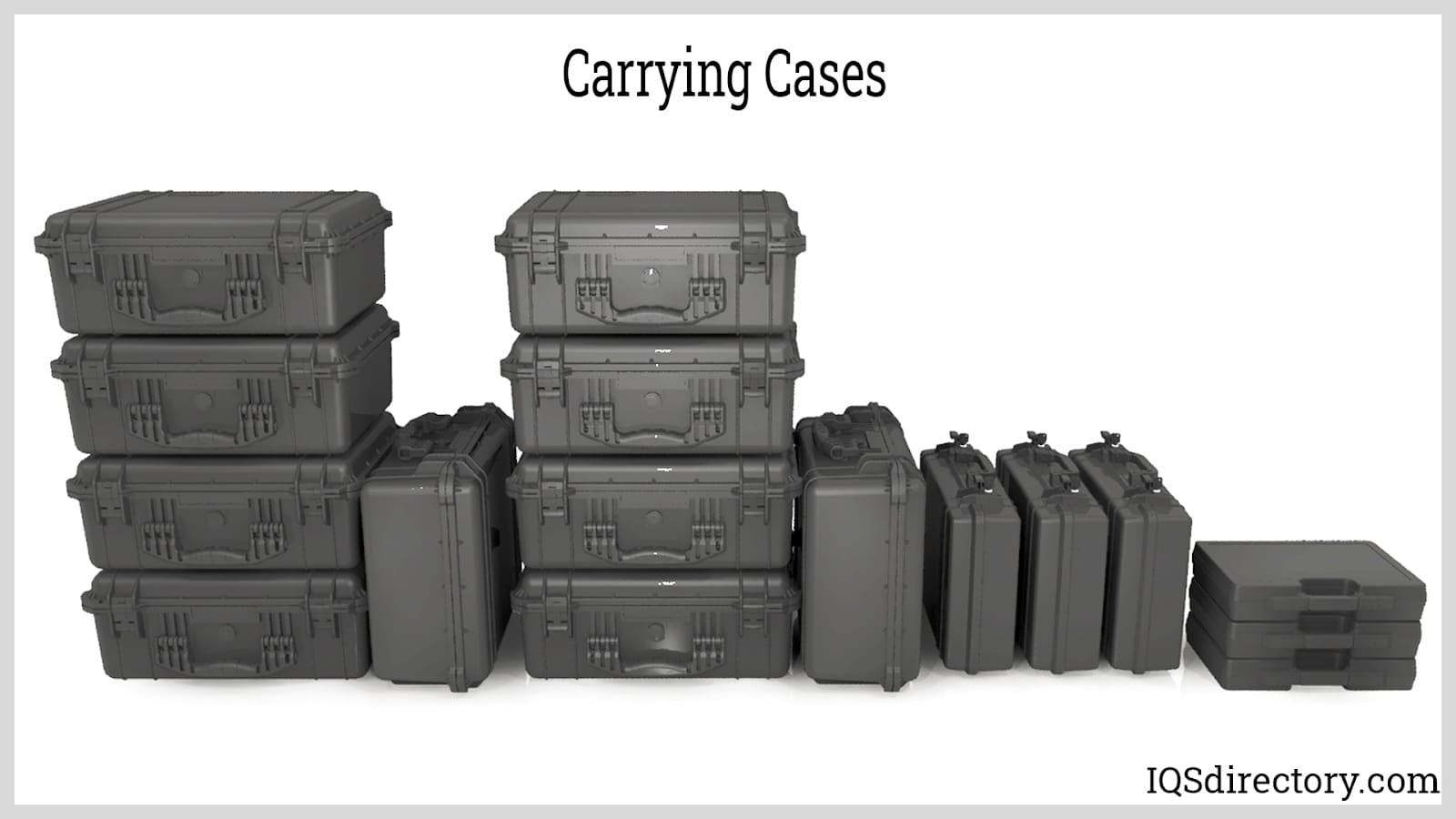
Carrying cases help organize, store, and transport a collection of similar or dissimilar items while improving protection during shipping, travel, or everyday handling.
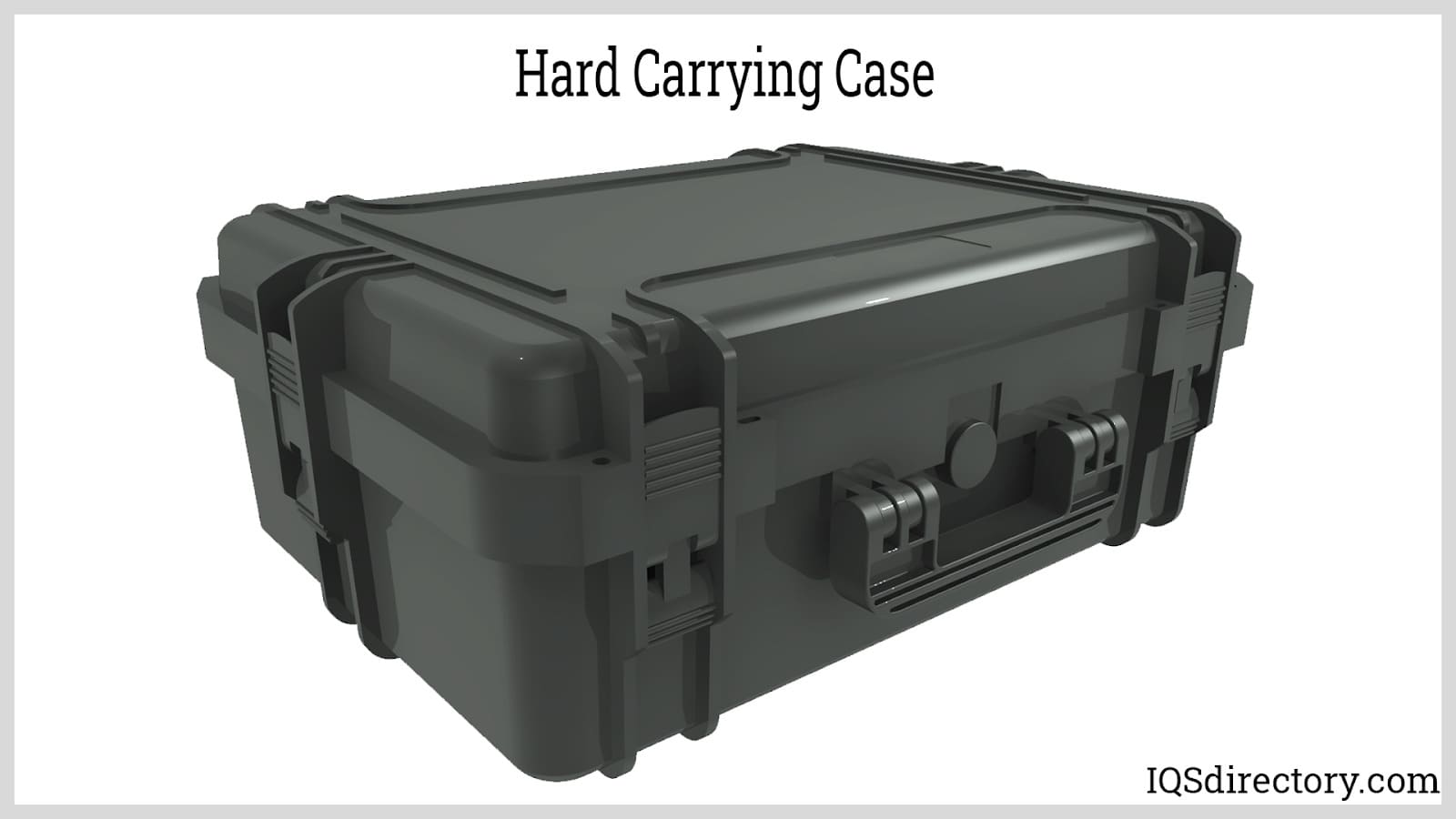
A hard case is a type of carrying case made from molded plastic, aluminum, laminated wood, or metal, offering strong durability and a higher level of impact protection for valuable contents.
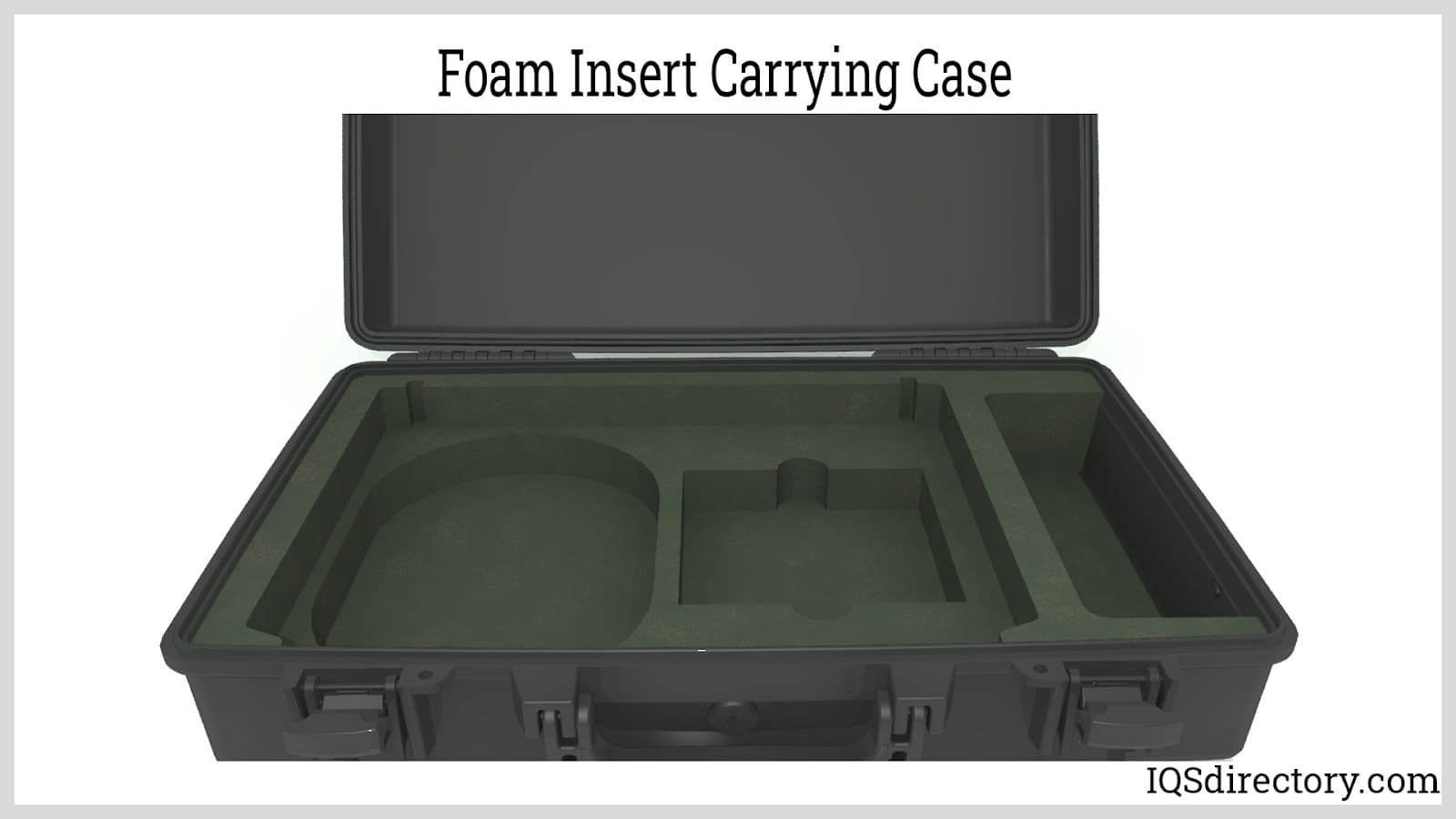
Foam insert carrying cases use soft interior material cut to the exact profile of the item, helping reduce movement, cushion against shock, and improve organization inside the case.
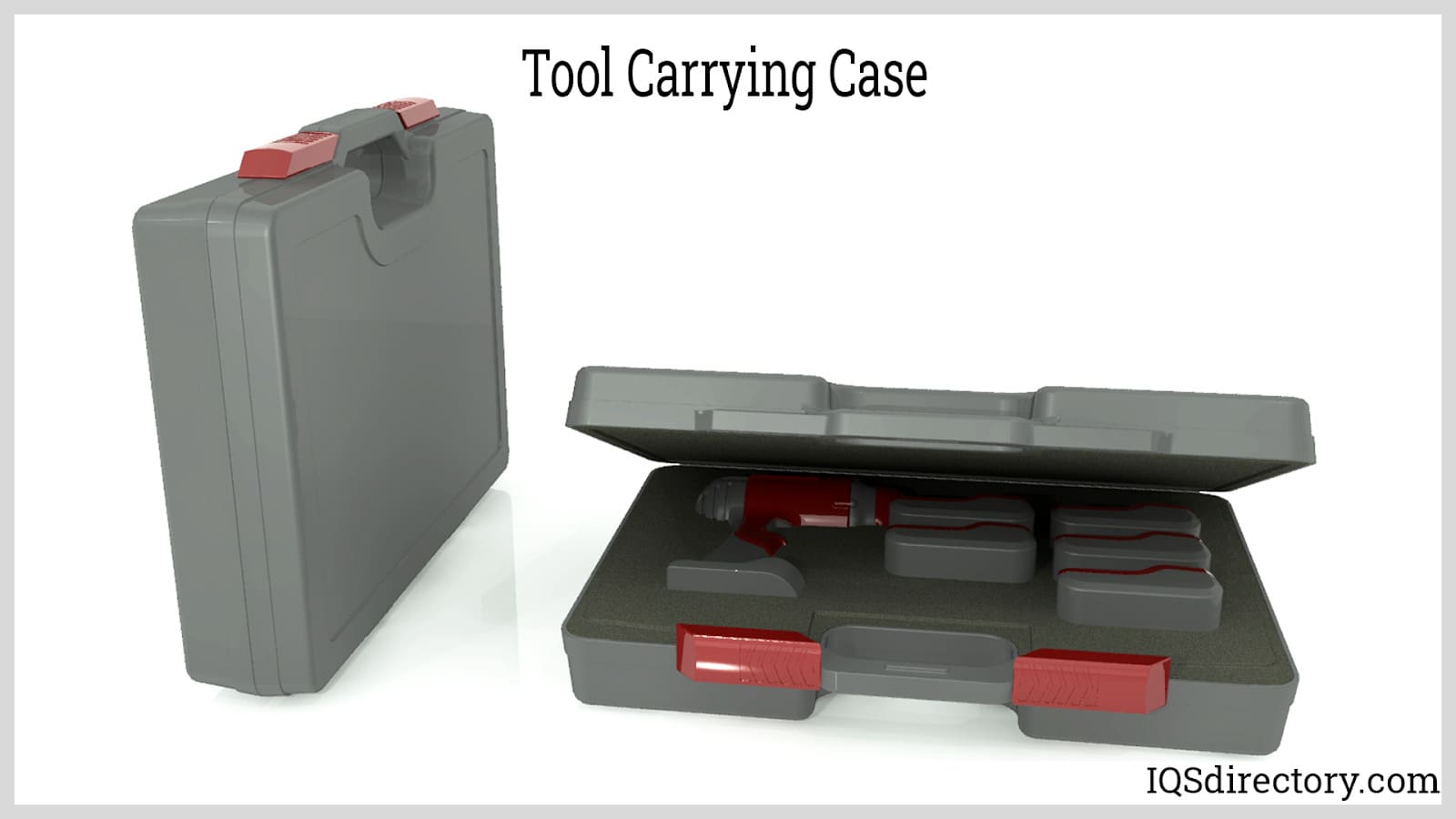
Tool carrying cases can be standard or custom designed in nearly any size or configuration to protect contents from dust, moisture, salt spray, rough handling, and occasional immersion.
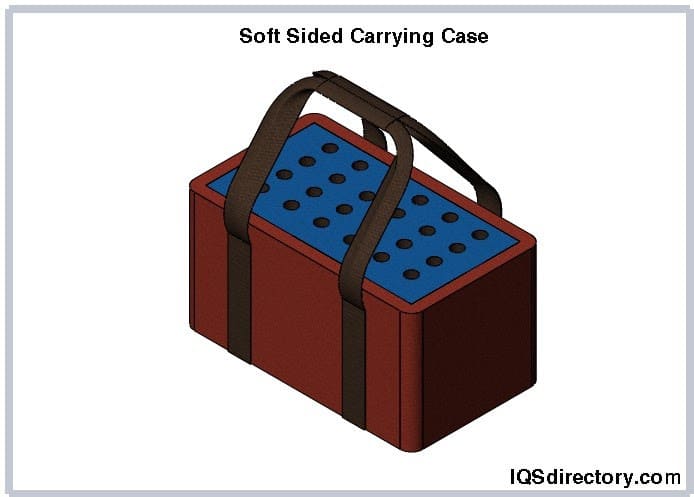
Soft sided cases are commonly made from fabrics, canvas, or vinyl-based materials, giving the case flexibility, lighter weight, and dependable resistance to dust and water exposure.
Hard Carrying Cases
Hard carrying cases are widely used when buyers need stronger structural protection for valuable, fragile, heavy, or high-use items. Their rigid shells make them a popular choice for industrial shipping, field service work, electronics, tools, instrumentation, and repeated travel applications.
Shipping Containers
The Air Transport Association (ATA) defines recognized shipping standards for containers used in repeated airline transit, with ATA300 serving as a widely referenced benchmark. These containers are grouped into categories based on expected service conditions and durability requirements. ATA cases are built for demanding use and are often made from plywood with an ABS or polypropylene laminate shell, aluminum framing, and reinforced steel corners. Many include wheels, recessed hardware, fold-away handles, and custom foam interiors so contents remain stable during shipment by road or air.
Trade Show Cases
Trade show cases are often built to ATA-style durability levels because they must ship, store, and display products repeatedly. Once opened, some designs convert into desks, counters, tables, or display racks. Interiors may include shelves, bins, pegboards, drawers, or merchandising accessories, allowing one case to function as both protective packaging and a portable sales environment.
Aluminum Cases
Aluminum cases are available as stock products and as custom-manufactured enclosures tailored to specific dimensions and load requirements. They can be produced in shallow, deep, wide, or long formats while maintaining a favorable balance between lighter weight and heavy-duty performance. These cases range from small attaché-style units to larger transport containers for machine parts, precision instruments, tools, and accessories. Some aluminum cases collapse for easier storage when empty. Their combination of strength, appearance, and lower weight makes them popular transit cases for air shipment, mobile service work, and professional presentation use.
Hard Plastic Protective Cases
Hard plastic protective cases are a versatile option for many applications because they can be durable, lightweight, corrosion resistant, and cost effective. These cases can be produced through blow molding, injection molding, or rotary molding, which gives manufacturers flexibility to create many shell shapes, wall thicknesses, and custom design details.
Blow Molding
In blow molding, a hollow plastic preform known as a parison is clamped into a mold and heated until flexible. Air is introduced so the material expands against the mold walls, creating the shell shape. After cooling, the part is trimmed and prepared for assembly. Blow-molded carrying cases are often used where lighter weight, good impact performance, and efficient production are desired.
Injection Molding
Injection molding forces molten plastic into a precision mold or die. Once cooled, the formed part is removed and can be assembled with hinges, locks, latches, handles, or exterior hardware. Foam interiors can also be added, including pick-and-pluck foam that allows users to customize the inside layout around tools, instruments, or electronic products.
Rotary Molding
Rotary molding, or roto-molding, combines controlled heat with rotating molds to distribute material evenly and create durable hollow parts. The process supports larger case bodies, intricate shapes, and dependable wall thickness, making it a useful method for heavier-duty plastic carrying cases and equipment housings.
Molded Plastic Cases
Molded plastic cases offer flexibility in layout and function. They may include drawers, bins, hinged lids, telescoping trays, or fixed and adjustable compartments that help users sort tools, samples, components, and accessories more efficiently.
Military Use Cases
Plastic, wood, and metal cases made for military applications must meet demanding government and field-use requirements. These rugged transport cases are used for munitions, medical kits, radio equipment, sonar systems, food supplies, tools, and confidential materials. Their performance depends on dependable closures, weather resistance, strong structural design, and interiors that hold contents securely through repeated handling.
Soft Carrying Cases
Soft carrying cases offer a flexible and portable way to transport items that do not always require a rigid shell. These cases are commonly sewn or heat-fused and may include multiple interior and exterior pockets, dividers, straps, or accessory compartments. Some are reinforced with wood, plastic, or metal frames, while others remain lightweight and freestanding. Closures can include zippers, snaps, hook-and-loop fasteners, or locking flaps depending on the level of protection and convenience required.
Neoprene Cases
Neoprene is a flexible, water-resistant material often used for cases that hold electronics, cameras, and portable accessories. It can serve as a shock-absorbing and anti-static barrier while remaining easy to carry. Though it is often black, neoprene can be laminated with colored fabrics for a different look or branded finish.
Nylon Cases
Nylon is a durable and economical material for soft carrying cases. Offered in many colors and textures, it is widely used for tote bags, tool carriers, equipment bags, and accessory cases. Nylon products can be customized with logos or company names through embroidery, printing, or stamping, which makes them popular for service organizations, team kits, and promotional use.
Polyester Cases
Polyester offers a lower-cost alternative to nylon while supporting many of the same case styles. Although it is not always as durable, it remains a practical option for lighter-duty carrying cases used in retail, promotions, travel, and everyday storage.
PVC Cases
PVC (polyvinyl chloride) can be woven, laminated, heat sealed, or embossed to create custom plastic cases with a broad range of textures and finishes. PVC fabrics are often laminated onto fiberboard to add stiffness, making them a practical lower-cost alternative to leather in selected applications where appearance and structure both matter.
Leather Cases
Leather remains a classic material for carrying cases because of its appearance, durability, and professional feel. It generally costs more and needs more upkeep than plastic or metal, so it is often chosen for executive briefcases, premium sample cases, and upscale luggage where presentation matters alongside function.
Other Carrying Case Types
Catalog Cases
Catalog cases are widely used by business professionals and trade show exhibitors. Their multiple compartments help organize literature, files, sales sheets, swatches, and presentation materials so users can access information quickly during meetings and events.
Graphic Cases
Graphic cases are designed for maps, blueprints, posters, and oversized printed materials. Their purpose is to reduce bending, abrasion, and edge damage while keeping large-format documents easier to move and store.
Hazardous Materials Cases (HAZMAT)
HAZMAT cases are built to transport potentially harmful substances such as gases, explosives, or corrosive materials under controlled conditions. These specialized cases are designed around stricter containment and safety requirements to help reduce risk during handling, storage, and shipment.
Instrument Cases
Instrument cases protect precision tools, measuring devices, and delicate equipment during movement and storage. They are commonly used in industrial, laboratory, field service, and technical settings where fragile instruments need controlled protection.
Panel Mount Cases
Panel mount cases are configured to hold mounted panels used to separate and organize field service or technical equipment. They help improve accessibility, reduce clutter, and keep frequently used components arranged in a practical layout.
Rack Mount Cases
Rack mount cases include internal racks or shelves that allow equipment to be stacked, secured, and accessed more easily. They are commonly used for networking gear, audio systems, testing devices, and other technical components that benefit from structured transport and setup.
Sample Cases
Sample cases are used to transport and display product samples at retail rollouts, trade shows, conferences, and sales presentations. They help businesses protect products while also supporting organized demonstrations that highlight features, finishes, or construction quality.
Tool Cases
Tool cases are designed to hold, organize, and protect hand tools, specialty tools, kits, and accessories. Their durable construction and organized interiors make them useful for mechanics, technicians, installers, field crews, and serious hobbyists.
Carrying Case Manufacturers
With so many plastics manufacturers, metal fabricators, industrial sewing shops, and custom case builders in the market, finding a carrying case supplier is usually a matter of matching design capability to application. A strong manufacturer can help evaluate material options, hardware, foam interiors, closure systems, portability features, and branding details while keeping the case aligned with the way it will actually be used.
When comparing manufacturers, buyers should work with one that understands the project scope, usage environment, and performance expectations. For heavy-duty cases, durability, hardware quality, wall strength, and interior protection all deserve close attention. Options such as recessed handles, wheels, locks, hinges, panel mounts, or branded labels should be discussed early so pricing, lead time, and production details remain clear from the start.
Timely delivery is another major factor when selecting a manufacturer. The right supplier should combine quality materials, dependable workmanship, responsive communication, and awareness of environmental and community impact. For a convenient list of carrying case manufacturers offering a variety of designs and options, you can refer back to the top of this page.
Carrying Case Terms
Acrylonitrile-Butadiene-Styrene (ABS)
A durable thermoplastic used in industrial applications and commonly selected as an outer laminate or structural material for shipping and protective carrying cases.
Angle
An aluminum corner covering used on shipping cases to reinforce edges and reduce damage during handling and transit.
Anti-Static Foam
A non-conductive foam, often made from polyfoam or polyethylene, used to cushion magnetic media, electronics, and other static-sensitive equipment inside a carrying case.
Base
The bottom section of a carrying case that supports the load when the case is placed on a flat surface.
Blocking
The use of wood or foam inside a case to secure and support items, improving interior fit and reducing movement during transport.
Casters
Rotating wheels mounted in a frame that make it easier to move heavy carrying cases, furniture, or equipment.
Cavity Cut-Out
A recessed space beneath or around an encased item, often used for cables, manuals, chargers, or related accessories.
Coupler
A device or attachment used to connect multiple cases together for handling, shipping, or storage efficiency.
Cubed Foam
Also known as "diced foam," this insert material is made of lightly attached one-inch cubes that can be removed to create custom cavities for tools, instruments, or electronic devices.
Electrostatic Discharge
The release of electrical energy that can occur when two objects come into contact and separate, a known concern when transporting sensitive electronic equipment.
Embossing
A process that uses heat and pressure to create a raised design, mark, or logo on the surface of a case.
F-B
An abbreviation for "front to back," commonly used to describe the depth of a carrying case.
Foil Embossing
A decorative finishing method that combines embossing with foil application to create a raised metallic design.
Foil Stamping
A method in which foil is pressed onto the surface of a case to transfer a design, logo, or decorative outline.
G-factor
A measurement used to evaluate durability, especially an item’s ability to withstand impact, vibration, or shock.
Hand Slot
A precisely cut opening in the foam interior that makes it easier to remove an encased item safely.
L-R
An abbreviation for "left to right," generally used to describe case width.
Load Capacity
The maximum weight a case can support and transport without harming its structure, hardware, or intended function.
Neoprene
A synthetic rubber valued for flexibility and resistance to chemicals, temperature variation, and demanding service conditions.
Polyethylene (PE)
A lightweight, durable plastic that resists stains and performs well against many chemicals, fluids, and temperature changes.
Polymer
A compound built from many linked molecular units, forming the basis of many plastics, elastomers, and rubber-like materials used in carrying case production.
Polypropylene (PP)
A durable polymer that can function as both a fiber and a plastic, often selected when buyers want a stronger material than polyethylene.
Skid
Damage that occurs when a case is dragged, scraped, or mishandled during transport.
Skid Runners
Protective attachments added to a case to reduce wear and help prevent damage caused by skidding or dragging.
More Custom Carrying Case Information
More Carrying Case Manufacturers