Pressure Switches
A pressure switch is a device that senses changes in fluid pressure and responds by making or disrupting electrical contact to trigger an alarm or switch equipment on or off. Pressure switches are calibrated to actuate at a certain pressure threshold, the setpoint, and are designed to make/break contact on either rising or falling pressure. Although pressure switches have a variety of methods used to detect pressure, they can be primarily categorized as either electromechanical or electronic.
Quick Links to Pressure Switches Information
Advantages of Pressure Switches
Pressure switches are excellent and necessary devices in a wide range of applications for a number of reasons. First and foremost, they make processes involving pressurized fluids safe and dependable. They are also quite user friendly and easy to operate. This is particularly true of electronic pressure switches. In addition, pressure switches are serviceable for a wide range of applications with widely different pressure levels, system sizes, environments, and requirements.
The History of Pressure Switches
The practice of pressure measurement as a whole began in the late 16th century, with Galileo. In 1594, he obtained a patent for a water pump that used pressure in order to irrigate the land. Then, in 1644, Italian physicist Evangelista Torricelli created a sort of hermetically sealed vacuum tube containing mercury. It was one meter long and he filled it with mercury by placing the open bottom end in a basin of mercury. Every time he filled the tube, it would fall precisely 760 mm, leaving space open at the top. Though he wasn't sure of the cause, he named it a vacuum, bringing the world one step closer to understanding pressure switching. Just four years later, Blaise Pascal pinpointed the source of this force—the weight of the air above. He dubbed this force the name we know it by today, “pressure.” Throughout the rest of the 1600s, several different scientists and engineers conducted experiments involving air pressure and how it can move items and elements. For instance, in 1661, Anglo-Irish chemist Robert Boyle studied the relationship between pressure and trapped gas using "J" shaped tubes that were closed at one end. After his experiment, he concluded that x PV = K (P: Pressure, V: Volume, K: Constant). In other words, if one knows the volume of a gas at a given pressure, they can calculate the pressure if the volume is changed, assuming that the temperature and the amount of gas remains constant.
- In the 1800's
- Scientists used these building blocks to invent and develop pressure switches, starting in the 1800s. In 1843, French scientist Lucien Vidie invented and assembled the first aneroid barometer, which used a spring balance to measure atmospheric pressure. While under pressure, the spring extension would mechanically amplify on an indicator system. Based on Vidie’s methods, Eugene Bourdon patented the Bourdon tube pressure gauge in 1849. This was the first well-known mechanical pressure measurement device, and it is still used today. The Bourdon tube was then combined with a mercury switch, facilitating the creation of one the first pressure switches. From this originated the basic concept of all electromechanical pressure switches, which use a sensing element like the Bourdon tube and a switch.
- While the Bourdon tube pressure switch was a revolutionary invention, it was not without its drawbacks. Due to the tube being a tracing type sensing element, they experience shorter service life. Additionally, the design did not perform well in applications with pump ripple or surge pressure, vibration, or ambient temperature changes. These influences could be lessened by using a higher quality tube, however they are expensive to manufacture. This led others to seek out a better pressure switch design.
- In the 1900's
- In 1956, Roy Dunlap became aware of some oil workers that needed an accurate pressure switch to prevent their oil tanks from overflowing. For help, Roy contacted Ben Brown, a physics professor at the University of Kansas, and together they created the Static “O” Ring® pressure switch. The design’s sensing element used a force balanced piston-actuated assembly sealed by a flexible diaphragm and a static o-ring. Fluid pressure against the diaphragm counteracts the force of the range spring, moving the piston shaft only a few thousandths of an inch to directly actuate the electrical snap-action switching mechanism. Their simple design worked flawlessly, and because the o-ring was static, wear and tear was virtually eliminated. Roy started manufacturing and selling Static “O” Ring® pressure switches and changed the company name to Static “O” Ring®, which later became SOR Inc.
- Mechanical pressure switches were the only type available until 1930, when engineers began experimenting with transduction mechanisms with sensing device movements as part of an electrical quantity. These were the first pressure transducers. Then, in 1938, engineers at the Massachusetts Institute of Technology and California Institute of Technology independently developed bonded strain gauges. They raced to the finish line, and E.E. Simmons of Caltech was the first to apply for a patent. The development of strain gauges was an important step in the right direction for solid-state pressure switches, which were widely introduced in 1980 by Barksdale Inc. At the time, they featured a bonded strain gauge sensor combined with a triac switch.
- In the Current Times
- Today, solid-state pressure sensors are very popular and feature: digital displays, digital and analog outputs, full programmability and between one and upwards of four switch points.
- Although the enhanced features of electronic pressure switches might lead one to believe that mechanical pressure switches serve no purpose, this could not be further from the truth. Electronic pressure switches require a power source to operate and if power to the device is lost, it will no longer actuate when fluid pressure reaches the setpoint. This could result in monetary damages or harm to human life. On the other hand, electromechanical pressure switches do not require power to operate and are simply acting as a pair of contacts to make or break a circuit. Many industries use pressure switches as a redundant safety measure, so if power is lost to the primary instrument (such as a pressure transmitter) the pressure switch will still be there as a backup to actuate when the setpoint is reached. Their lower instrument cost and lack of power supply give mechanical pressure switches a much lower cost of ownership than their electronic counterparts and is one of the many reasons they are still in use today.
Pressure Switch Design
- Production Process
- Manufacturers generally assemble pressure switches with either some sort of mechanical sensing element and snap-action switch or an electronic output signal and programming interface. In the case of the former, they also calibrate the device to a predetermined setpoint or the setpoint requested by the customer; mechanical pressure switches can either have a fixed or adjustable setpoint. In the case of the latter, they also either factory program the system with predetermined switch points or install a programming interface that allows the user to program and adjust these switch points themselves and/or program a logic system that adjusts switch points and output signals intuitively. Programming interfaces feature integrated buttons and a LED or LCD digital display for ease of use.
- Switch Materials
- In a pressure switch, the primary wetted parts are the sensing element and the process connection. Construction materials for pressure switches vary depending on the applications, but can include acetal, brass, polycarbonate, plated steel, glass reinforced polyester, polyvinyl chloride (PVC), cast aluminum, bronze, neoprene or stainless steel. Exotic materials such as Alloy 20, Hastelloy and Monel are often used in harsh applications with corrosive chemicals.
- Switch Considerations and Customization
- When manufacturing pressure switches, manufacturers must consider a number of factors, including: required level of accuracy/sensitivity, cycle rates, adjustability and pressure(s) at which the switch must actuate. Pressure switches are always set to at least one point of pressure, or actuation point, to which it will automatically respond. Some switches are factory-set and cannot be changed, but there are also a variety of adjustable pressure switches available, which allow the user to adjust the actuation point or points. Many pressure switches work with several points of pressure, and are therefore able to act as more complex regulators of pressure systems.
- The goal of the manufacturer is to make a pressure that is long lasting, durable, sufficiently accurate and easy to use. To do so, they can customize your pressure sensitivity, the speed at which the switch cycles, the number of cycles it performs before getting fatigued, its number of actuation points and the pressure range at which it works best. Also, depending on the application, pressure switch manufacturers can set a pressure switch to automatically open or close to interrupt or to initiate the flow or current involved.
Pressure Switch Images, Diagrams and Visual Concepts
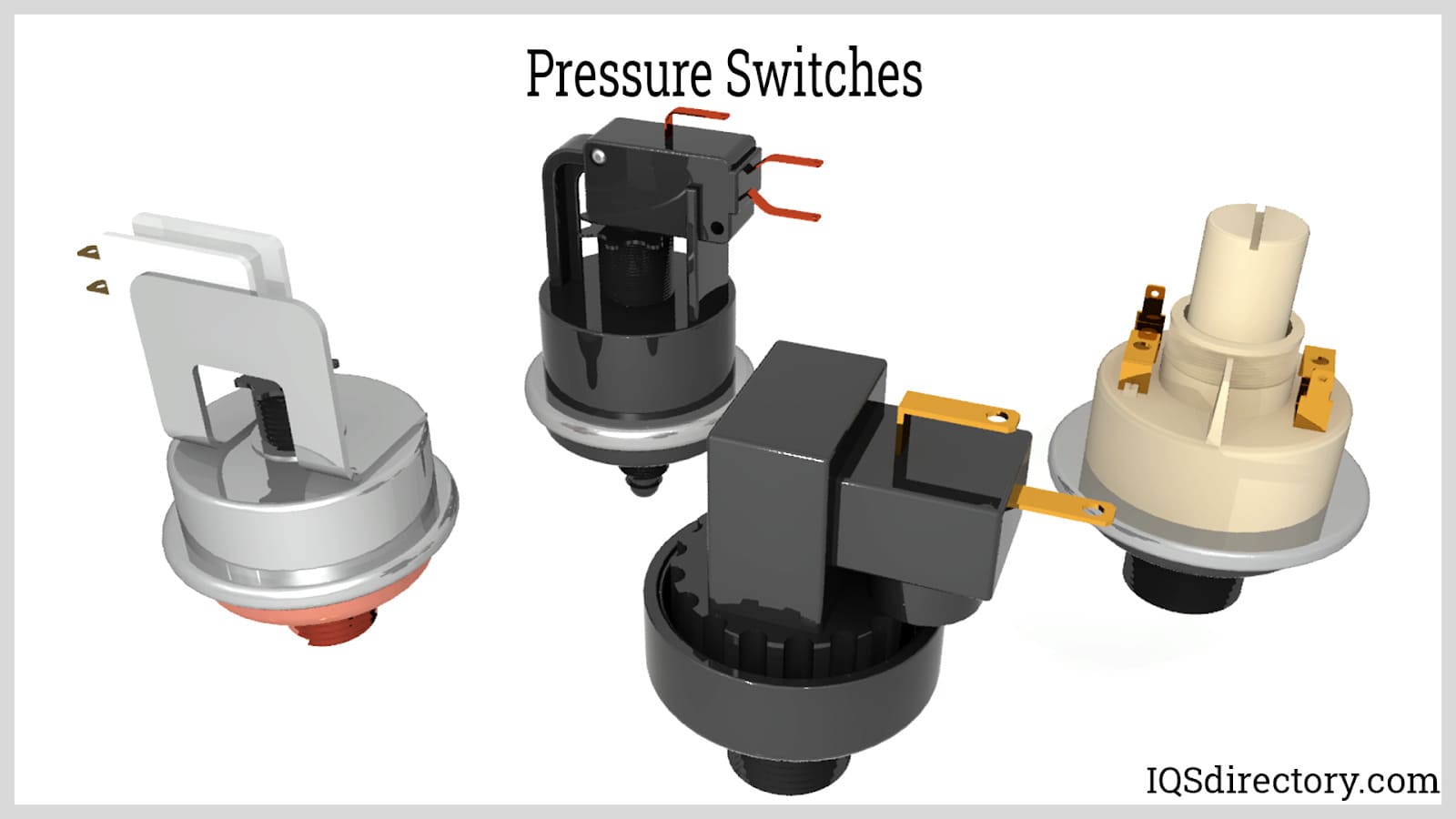 Pressure switch, a mechanical or electronic device activated by the pressure of fluids, air, or gas when reaches a threshold.
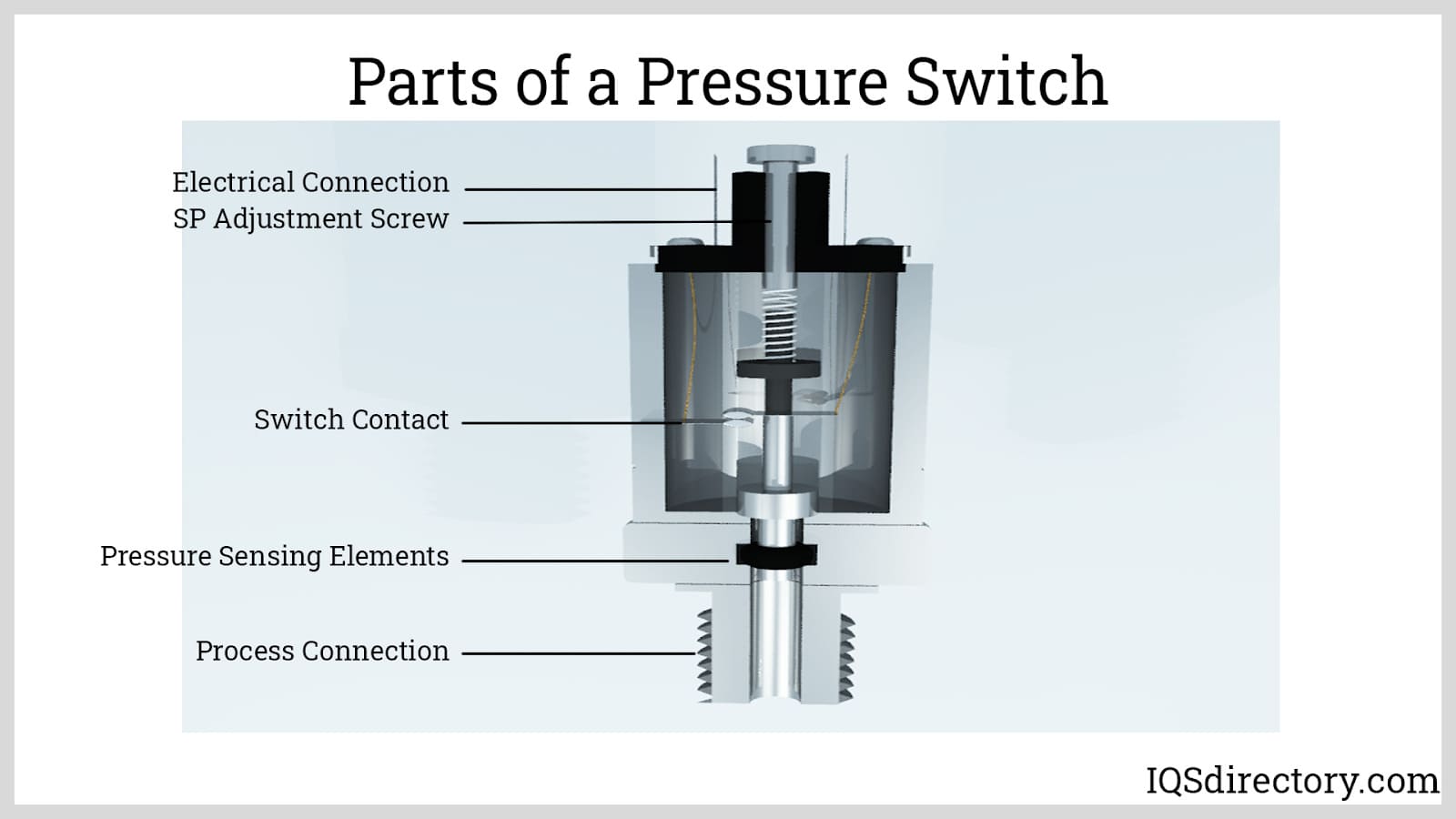 The different parts of pressure switches shows one side is subject ot fluid pressure and the other is subject to atmospheric pressure.
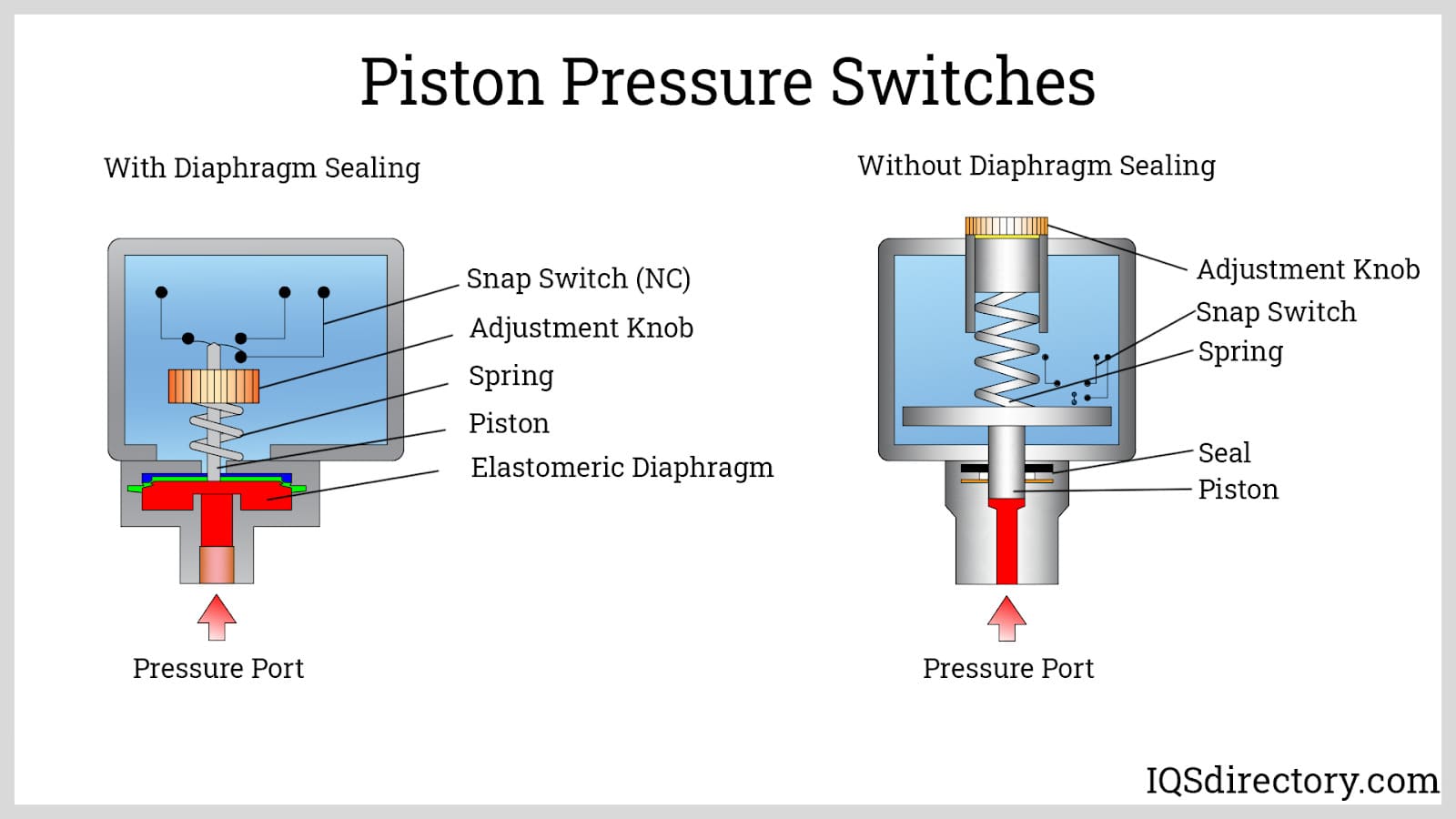 As the fluid pressure changes, causes the piston to move axially, which activates the switch.
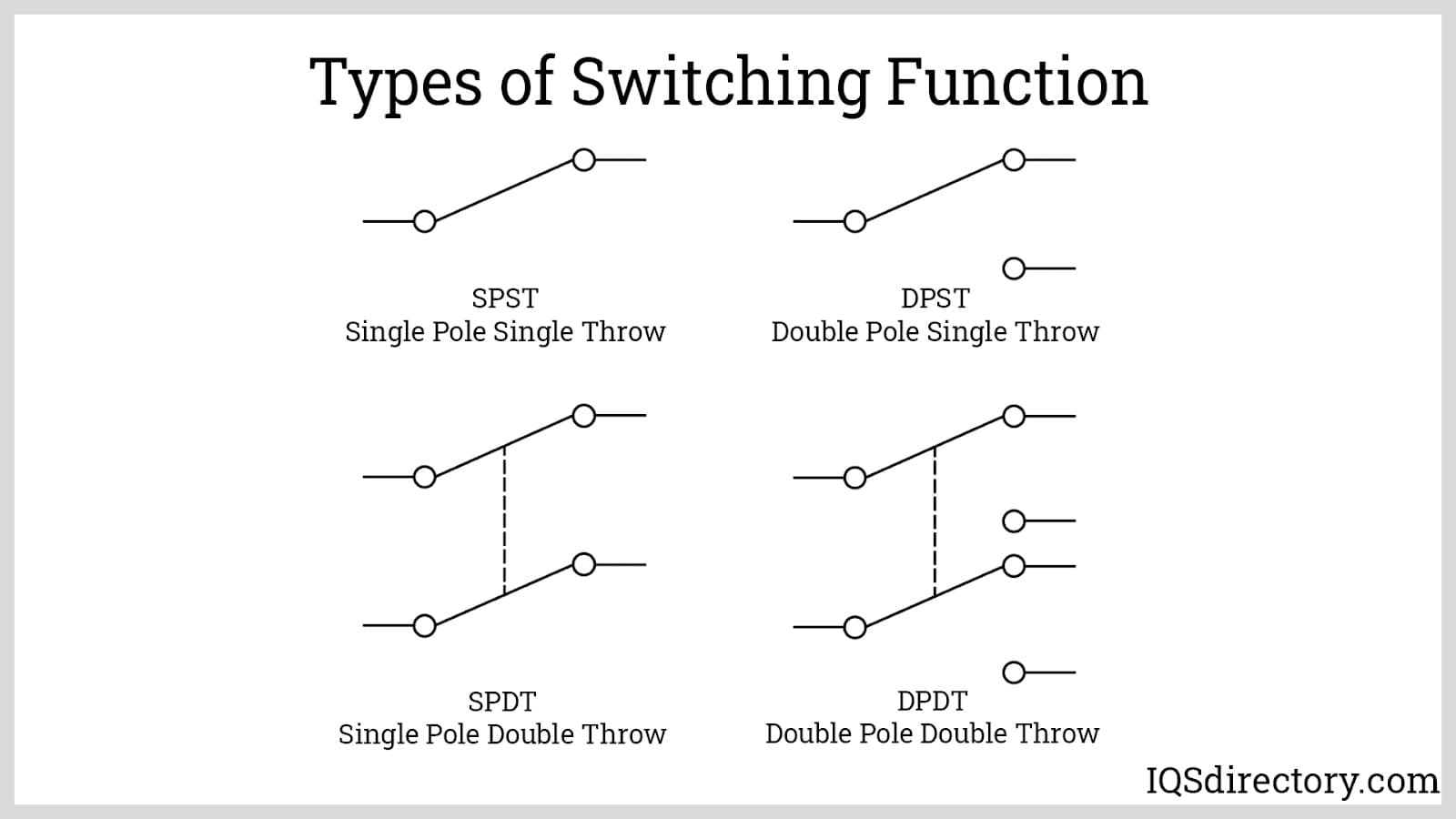 Switches can be characterized according to the number of poles which refers to the number of circuits a switch can control and throws, the number of connections the switch can make.
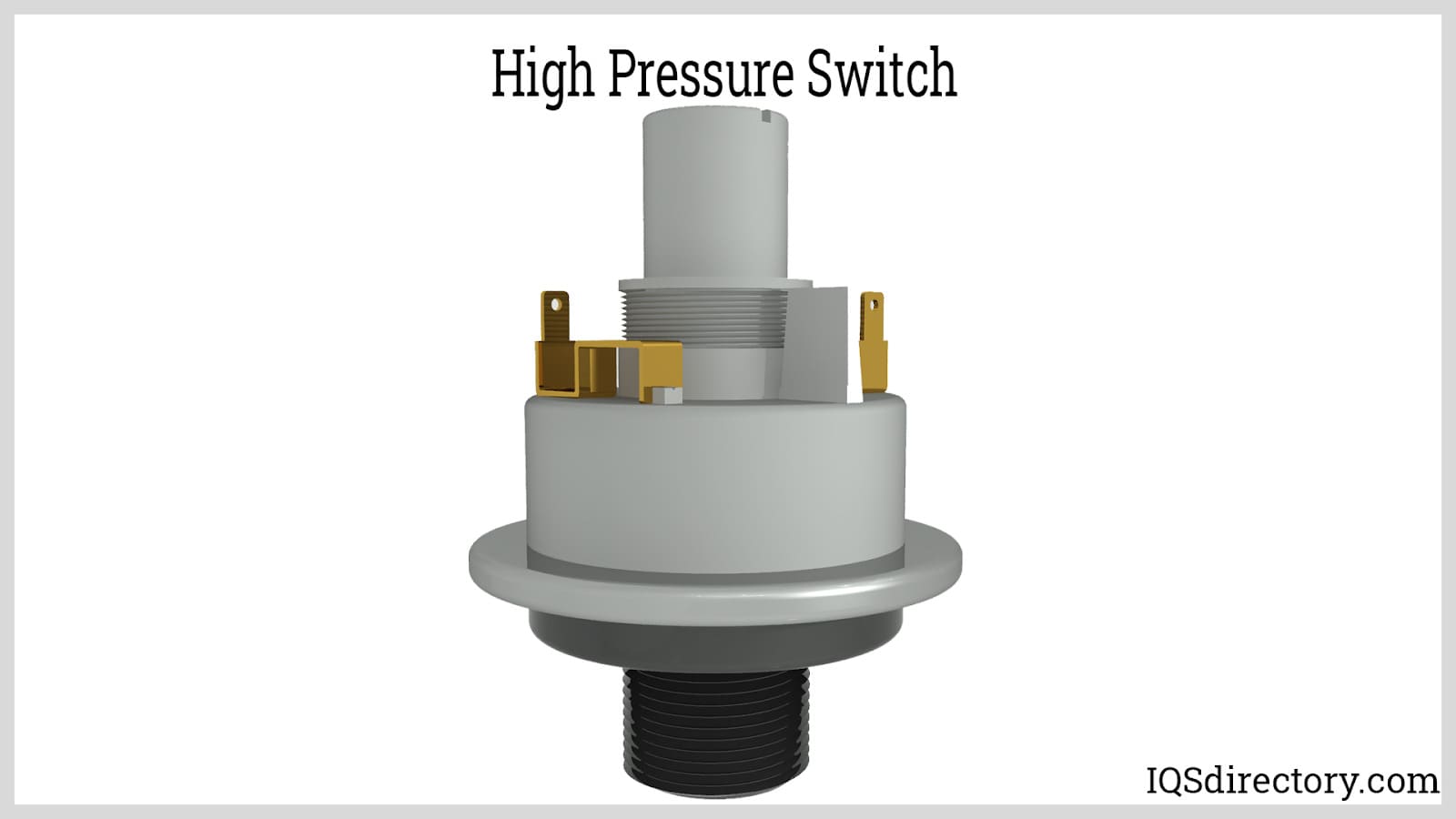 High pressure switches have high pressure-proof pressure limits with high durability and tensile strength.
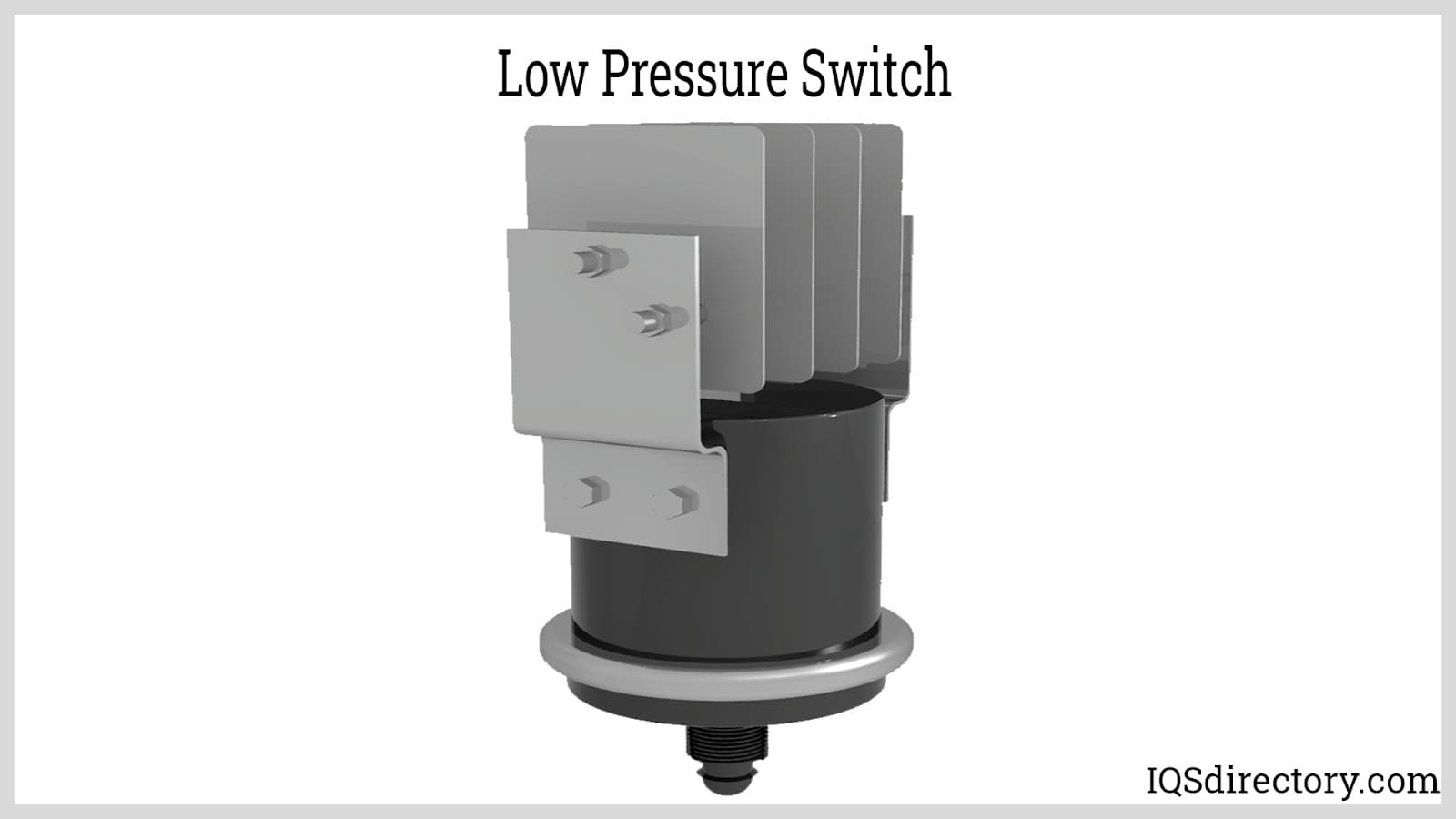 Low pressure switches are designed to respond to reduced or small fluctuations in pressure.
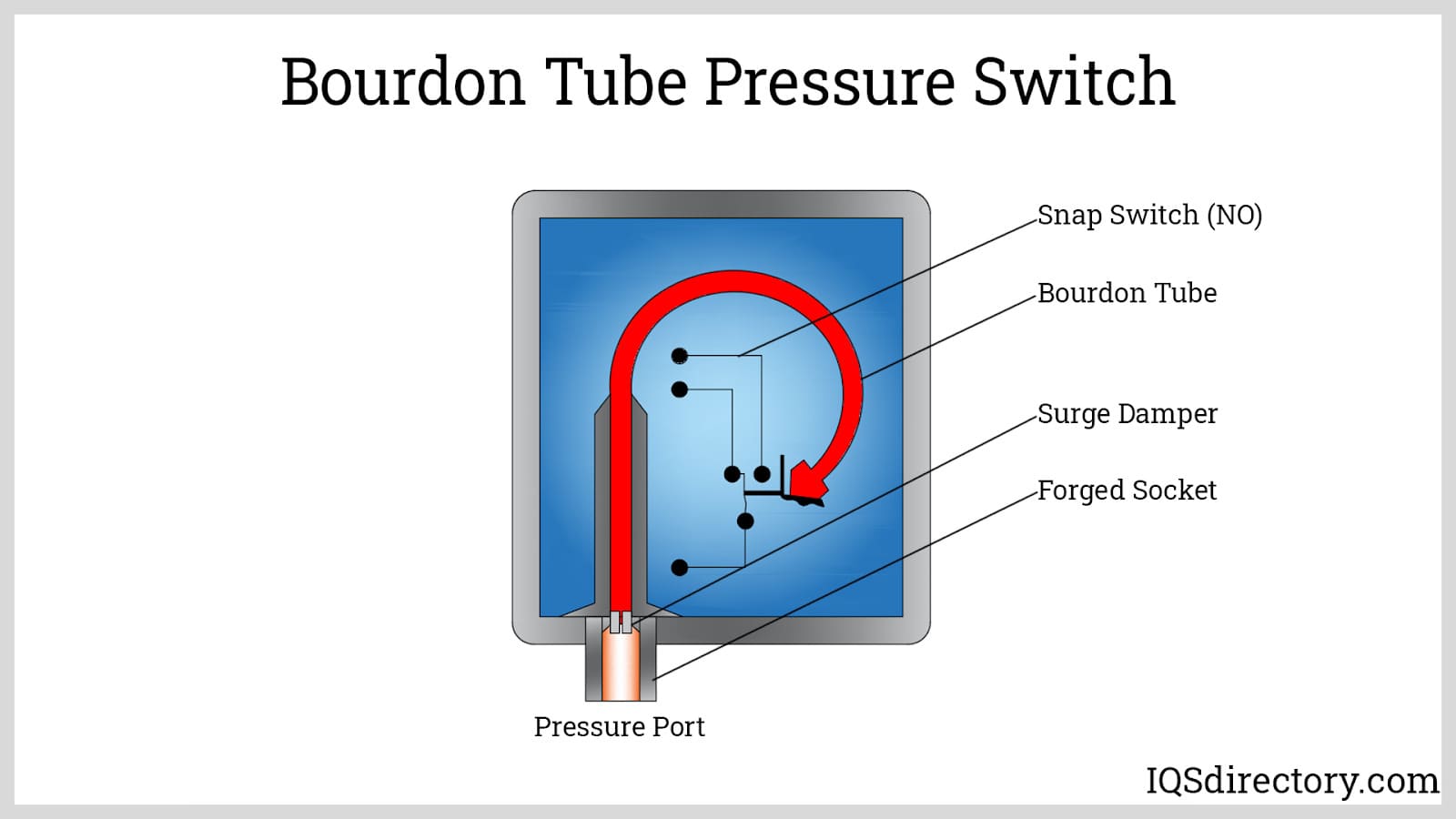 Bourdon tube pressure switch includes a flexible metallic or elastomeric tube as the pressures increases in the tube it straightens which actuate the switch.
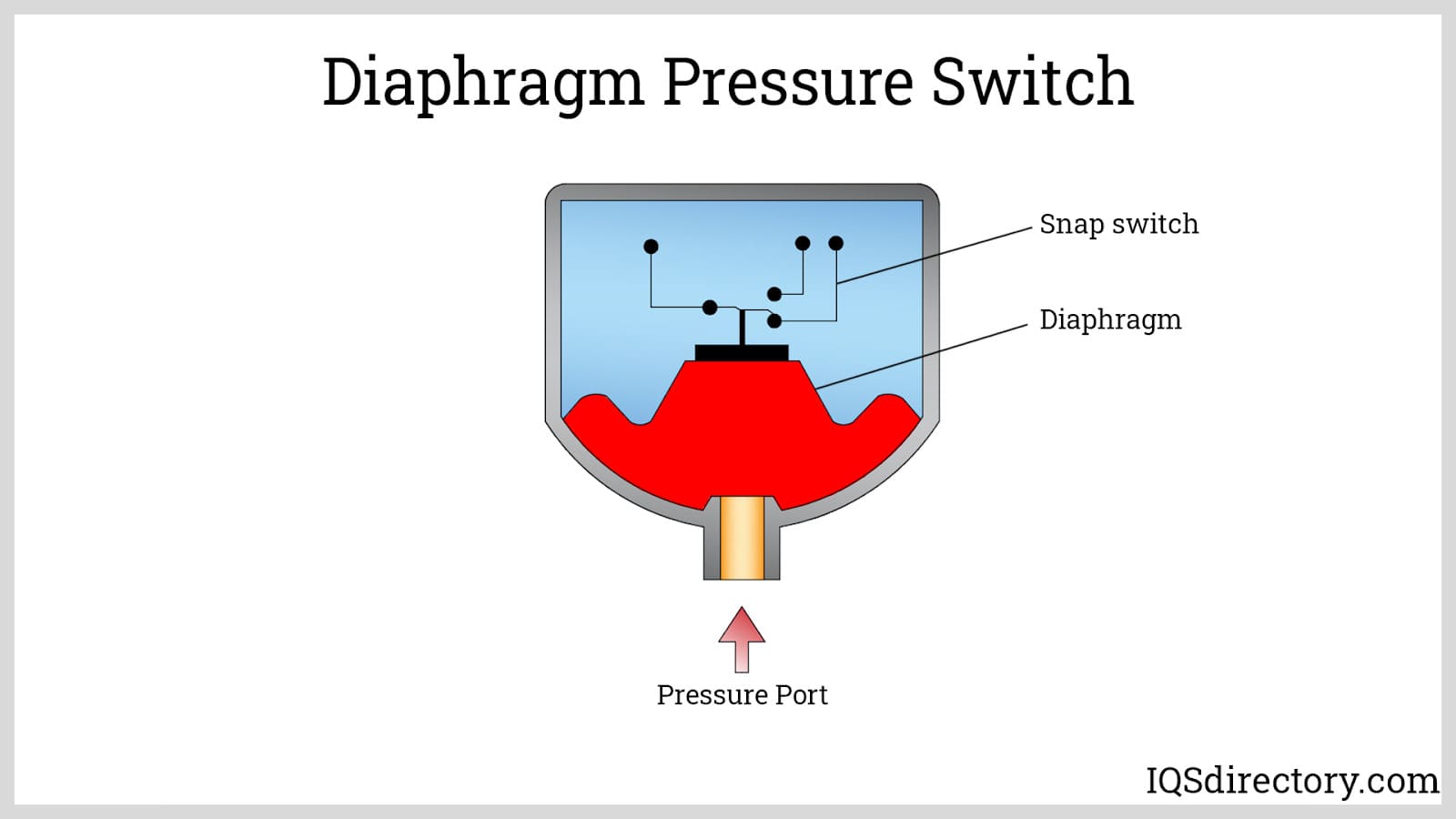 Diaphragm pressure switches consists of a metal membrane joined or welded directly to the wetted part of the pressure switch.
Pressure Switch Types
- Adjustable Pressure Switches
- Field adjustable, meaning that the set points can be adjusted at the place of operation.
- Air Compressor Switch
- Controls pressure on air compressors.
- Air Pressure Switches
- Control air flow and pressure in response to pneumatic pressures.
- Displacer Level Switches
- Able to control the level in a sump of virtually any liquid. Their setpoints can be easily and quickly adjusted in the field.
- High Pressure Switches
- Have extremely high proof pressure limits so that they can function in pressure systems that reach high pounds per square inch (psig).
- Low Pressure Switches
- Respond and actuate in situations of minute, small or reduced pressure.
- Oil Pressure Switches
- Measure or regulate the amount of or pressure of oil through volume, velocity or mass.
- Solid State Pressure Switches
- Have pressure sensors and send signals and information to a remote controller and regulate pressure.
- Ultrasonic Pressure Switches
- Used in lubrication storage vessels for rotating equipment and will alert the operator if there is a risk of damage due to pressure leaks.
- Water Pressure Switches
- Measure and/or regulate water pressure in correlation with pumps, according to a set point.
- Well Pump Pressure Switches
- Control the water well pump through turning the pump on and off in response to rises or drops in pressure.
- Pneumatic Pressure Switch
- Also known as air pressure switches or gas pressure switches, are designed to sense and respond to gas pressure.
- A common air pressure switch variety is the air compressor switch. Air compressor pressure switches signal to the compressor when more pressure is needed, when optimal pressure has been reached, and also when there is inadequate air supply for the suction stage.
- Hydraulic Pressure Switch
- Operate in response to liquid pressure. Examples of hydraulic pressure switches include well pump pressure switches, water pressure switches, oil pressure switches, ultrasonic level switches and displacer level switches.
- Both well pump pressure switches and water pressure switches regulate water pressure by actuating a flow of water when pressure drops below a certain level and stopping the flow when the system reaches its optimal pressure. Oil pressure switches are used in cars to monitor the engine's oil pressure and to signal when the oil pressure has gotten critically low.
- Ultrasonic level switches are ideal for use in tanks that store mass quantities of liquid, since they are unaffected by large changes in pressure and temperature; they also have no moving parts and therefore have no problems with sediment. Displacer level switches maintain the level of liquids in a sump based on a set point. Displacer level switches are low cost, simple to operate, easy to adjust and reliable.
- Furnace Pressure Switch
- Different sorts of furnace pressure switches either monitor for an adequate supply of fuel or monitor the furnace's supply of fresh air.
- Differential Pressure Switch
- Help regulate differential pressure between a cavity and an open atmosphere, such as the pressure between an airplane cabin and the outside atmosphere. Note: Differential pressure is pressure measured relative to the pressure in the surrounding atmosphere. This pressure is measured in psi by a differential pressure gauge.
- Vacuum Switch
- Help regulate the pressure between two closed cavities by responding to changes in negative pressure.
- Diaphragm Pressure Switch
- Mechanical switches that use an elastomeric diaphragm to react to changes in the pressure level, and actuate either a mechanical switch or a valve, such as a solenoid valve.
- Pressure Sensitive Mat
- Mat that provides a contact signal when you apply force to it. Pressure sensitive mats can provide either just one signal or several. They are used as a part of an interlock system in potentially dangerous machine operating areas, as a means to open electrically operated doors or to detect entrance into a space (for security, attendance count, etc.).
Pressure Switch Applications
Pressure switches are specifically designed for alarm, shutdown, activation and pressure control of pneumatic and hydraulic processes and equipment, and thus work well in any instance in which regulation of flow or over-pressurization protection is required. Utility plants, chemical manufacturers, public buildings, process manufacturing, automotive and home appliance industries all use pressure switches extensively to regulate fluid pressure and to provide safety measures for high pressure applications.
Pressure switches are important for the safe and successful operation of a wide range of applications, such as: filters, pressurized vessels, furnaces, industrial heating systems, blowers, generators, cars, off-road equipment, compressors, turbines, space stations, wastewater applications, process equipment, pumps, panels and pipelines. Some batteries use pressure switches to prevent overcharging by switching off the charger when the internal cell pressure reaches a certain level. Pressure switches are especially useful in industrial facilities for over-pressurization protection because they are a safe and cost-effective alternative to safety relief valves. Relief valves sometimes leak pressure during operation, wasting energy and in some cases causing a safety hazard, whereas use of pressure switches allows regulation of pressure at the source. Pressure switches can also accurately detect pressure problems and automatically shut down the process before the danger increases.
Features of Pressure Switches
Pressure switches can sense changes in gas and/or liquid pressure. Pressure switches sense pressure in a variety of ways. Some switches use a pressure sensor that reacts to changes in the pressure level, and actuates either a mechanical switch or a valve. Others work in conjunction with a pressure transducer, also known as a pressure transmitter, and a display meter. In the case of the former, mechanical (electromechanical) pressure switches, the actuated switch will move to be in direct contact with the fluid. To assist its movements, the switch also has a pre-set or user adjustable switch point. The latter, known as electronic pressure switches or solid-state pressure switches, usually make use of a piezoresistive pressure sensor that measures the pressure level and converts the level into an electrical signal.
Standards and Specifications for Pressure Switches
A major contributor to pressure switch standard literature in the United States is NEMA, or the National Electrical Manufacturers Association. NEMA releases standard ratings that offer insights about: safety, performance, construction, composition, tolerances, etc. It’s definitely a good idea to seek a manufacturer that uses verified NEMA ratings for their products. In Europe, it’s more common to work with IP (Ingress Protection) and/or CE (Conformité Européene). It may also be in your best interest to look for a switch with a UL safety rating that matches your application. No matter, it’s important that you make sure your pressure switch has been tested and verified for safety and performance. The standards mentioned above provide you a good way of knowing that. Often, your industry also requires certain certifications. Before you agree to work with a pressure switch manufacturer or supplier, make sure you know those requirements, and that the supplier can meet them.
Things to Consider When Purchasing Pressure Switches
Some things to consider and evaluate when looking for a pressure switch are cost, accuracy, repeatability, and the material to be handled. Also important are operating temperature and capacity to operate with vibration and shock. In addition to these technical considerations, you must also make sure to partner with the right manufacturer. Who is the right manufacturer? The right manufacturer is the one who will listen carefully to your requirements and requests, and make sure to do everything to deliver you the best product and experience possible. Find a contract manufacturer or supplier like that by browsing towards the top of this page, where we have our top picks listed.
Pressure Switch Accessories
Accessories in which you may be interested include: audible alarms, delay relays and solid-state relays.
One of the most popular accessories for pressure switches are diaphragm seals. Diaphragm seals are connected between the pressure switch and the vessel containing the fluid being measured. The diaphragm seal acts as a barrier that isolates the pressure switch’s sensing element from the process fluid. In addition to providing protection from the process fluid, a diaphragm seal allows the pressure switch to be removed from service for maintenance or replacement without needing to shut down the process.
Another common pressure switch accessory are Snubbers. When a pressure switch is subjected to pressure surges, it can give unreliable measurements, reduce the cycle life, or damage the sensing element. Snubbers are added to pressure switches for the purpose of suppressing pulsation or sudden spikes in pressure.
Pressure Switch Terms
- Accuracy
- A limit of how much deviation from the switch set point is allowed, measured in points per square inch or as a percentage.
- Actuation Point/Setpoint
- The exact pressure that actuates the snap-action switch to either open or close the circuit.
- Actuation Value/Deadband
- In a pressure actuated switch, the differentiation between the actuation point and the re-actuation point.
- Adjustable Range/Working Pressure
- The range of pressure a switch encounters under normal conditions.
- Ambient Pressure
- Pressure that surrounds a pressure switch.
- Differential
- While a switch element reverses itself, the amount of mechanical motion that is lost.
- Differential Pressure
- The difference between a reference point and the actual pressure value.
- Electrical Switching Element
- A device that will open or close an electrical circuit when prompted by the pressure sensing element.
- Flow Meter
- A device that measures the quantity of product flowing through it.
- Hysteresis
- The difference of a switch’s response to increasing and decreasing pressure.
- Pressure Gauge
- A device which measures the pressure built up in a closed system.
- Pressure Sensing Element
- The part of the element that is moved when pressure is changed.
- Pressure Transducer
- A device that converts pressure into an electrical signal.
- Repeatability
- The measured consistency and accuracy of a pressure switch to operate at its setpoints.
- Solenoid Valve
- A valve that uses a solenoid to control the valve.
- Snap-Action Switch
- A fast transfer of contacts from one site to another. They can quickly open or close a circuit.
- Variable Pressure
- The changing pressure that activates the pressure switch.