Operators must follow lockout and emergency shutdown procedures, avoid overfeeding, and understand the machine’s safety controls before use. Only trained personnel should operate or service a shredder, and routine inspection, maintenance, and manufacturer guidelines should always be followed.
The History of Shredding Services
The idea of destroying unwanted or sensitive material dates back almost as far as recorded communication itself. Long before mechanical shredders existed, damaged or confidential documents were simply torn by hand. As early societies developed paper-like writing surfaces such as papyrus, the need to discard mistakes, drafts, and private records created the first version of document destruction. What began as a manual task eventually evolved into a specialized industrial process built around privacy, waste reduction, and material recovery.
In the early twentieth century, the first purpose-built paper shredding equipment began to appear. Abbot Augustus Low, an American inventor known for an extensive range of patents, designed a waste paper receptacle that could assist in paper destruction and collection. Although his concept was innovative, it never reached mass production. The broader market for shredding equipment had not yet matured, and the full value of mechanical document destruction had not become mainstream.
That changed in 1935, when German engineer Adolf Ehinger created the first machine-operated shredder using a hand-crank mechanism inspired by a pasta maker. What started as a way to destroy sensitive anti-government documents soon developed into a commercial product. His later electrically powered designs helped introduce shredders to government offices and organizations that required better confidentiality. In 1959, the first cross-cut shredder further advanced document security by producing smaller, less readable particles that were harder to reconstruct.
During the Cold War, shredding gained a larger role in intelligence, defense, and administrative operations. Agencies responsible for classified information needed dependable destruction methods that could keep pace with rising volumes of paper records. As industrial production expanded and environmental concerns grew, shredding also moved beyond document security. Companies began using shredders to reduce scrap, process packaging waste, handle production offcuts, and prepare recyclable materials for secondary use.
In the digital era, the shredding market expanded once again. Secure destruction of hard drives, media, and electronic devices became part of data protection strategy, while industries handling industrial, biological, and medical waste looked for safe, controlled size-reduction systems. Today’s industrial shredders are the result of that evolution. They are built not only for paper, but also for plastics, metals, tires, pallets, biomass, and countless other materials. For buyers comparing shredder types, the history of shredding shows how the industry moved from simple disposal to a much broader role in security, recycling, compliance, and operational efficiency.
Benefits of Industrial Shredders
Industrial shredders deliver value well beyond simple waste disposal. They help organizations reduce material size, improve storage efficiency, protect sensitive information, and streamline recycling programs. In manufacturing environments, shredders reduce production scrap and packaging waste so material can be handled more easily. In document destruction settings, they support confidentiality and chain-of-custody goals. In recycling operations, they prepare mixed material for downstream separation and reprocessing.
Businesses in healthcare, logistics, retail, finance, construction, and industrial production benefit from dependable shredding solutions because they save time and reduce manual handling. Instead of allowing waste to accumulate, a properly matched shredder helps maintain cleaner work areas, lower disposal volume, and simplify transport. This can improve labor efficiency and support regulatory compliance, especially where privacy laws, waste handling requirements, or sustainability goals shape purchasing decisions.
Modern industrial shredders are also valued for versatility. Depending on design, they can reduce wood, paper, textiles, plastics, scrap metal, pallets, electronic waste, and biomass. Some buyers prioritize throughput and horsepower, while others focus on output size, noise level, mobility, cutter configuration, or maintenance access. Search behavior often reflects these needs: buyers may look for terms such as industrial shredder for recycling, shredder for plastic waste, metal shredding equipment, mobile document destruction, or high-torque dual-shaft shredder. The best equipment supports both production goals and long-term waste management planning.
In practical terms, shredding technology helps turn difficult waste streams into manageable resources. Material that once required expensive hauling can often be sorted, compacted, reused, or sold into a recycling market. That combination of secure destruction, material recovery, and operational savings is one reason industrial shredders continue to play an important role across commercial and industrial settings.
How Industrial Shredders Work
Industrial shredders operate on the same basic principle as smaller office shredders, but with far more power, larger feed openings, and heavier cutting components. Material enters through the hopper or feed area, where rotating shafts, cutters, or hammers draw it inward and break it down. Depending on the machine, the output may be strips, chips, granules, or irregular fragments sized for screening, separation, baling, melting, pulping, or disposal. Some systems rely on low-speed, high-torque cutting for dense items, while others use high-speed impact for rapid size reduction. The right design depends on factors such as feedstock type, contamination level, desired particle size, throughput targets, and whether the system will operate as a stand-alone shredder or part of a complete recycling line. For buyers asking what size industrial shredder is needed, how a dual-shaft shredder compares with a hammermill, or what shredder works best for tires, cardboard, scrap metal, or plastic waste, the answer usually starts with the material itself and the final output required.
Shredders Images, Diagrams and Visual Concepts
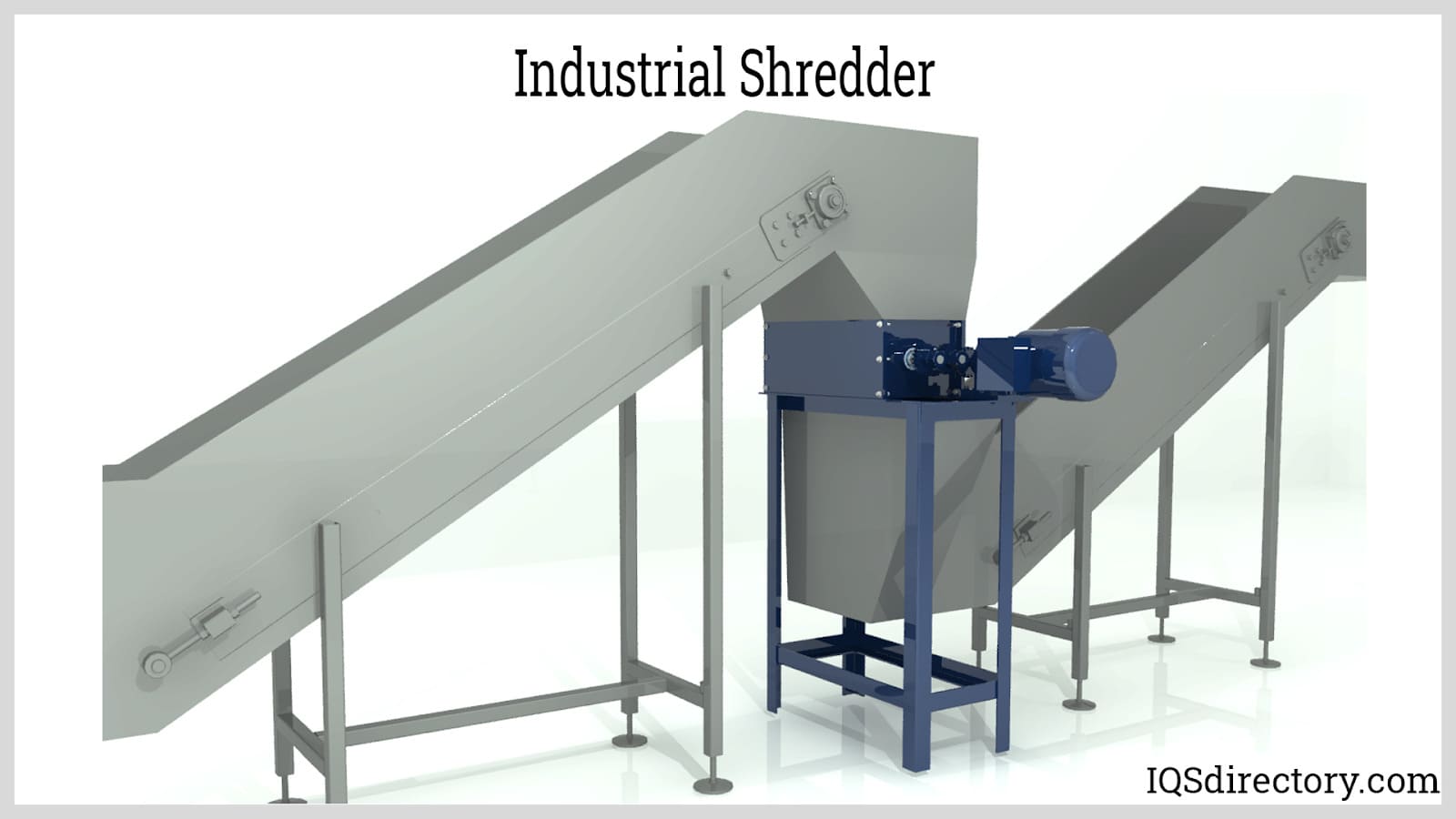 Equipment designed for shredding dense and light materials for recycling, secure destruction, or size reduction before sorting and disposal.
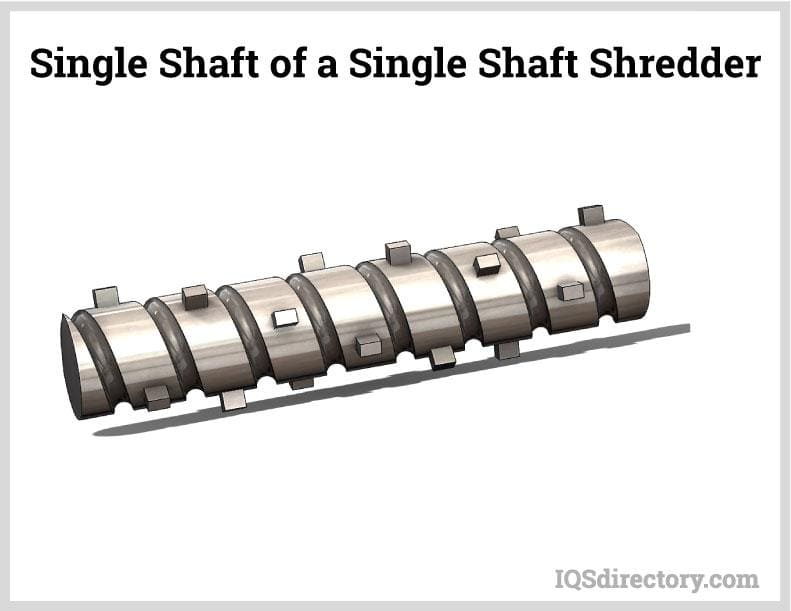 A single shaft rotates at a controlled RPM and reduces materials to a more uniform output size, often around one to two inches.
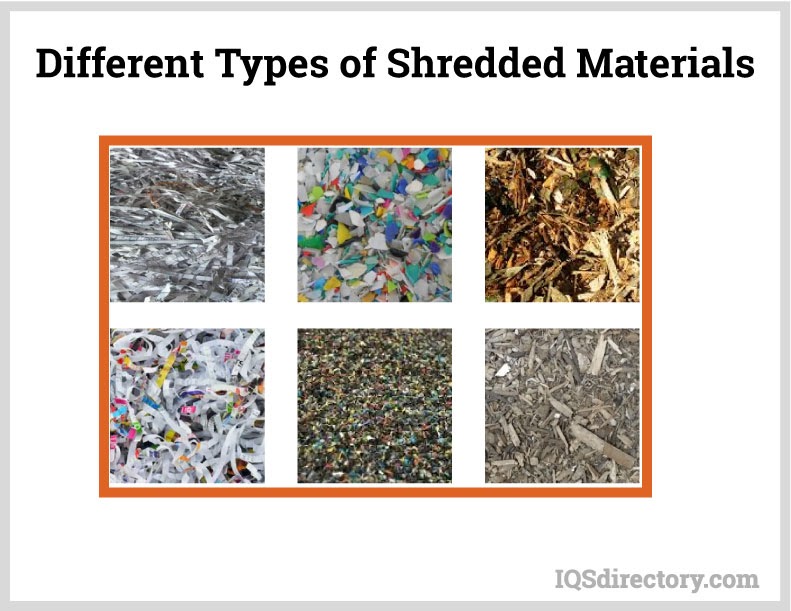 Examples of the many material types that can be reduced by industrial shredding equipment.
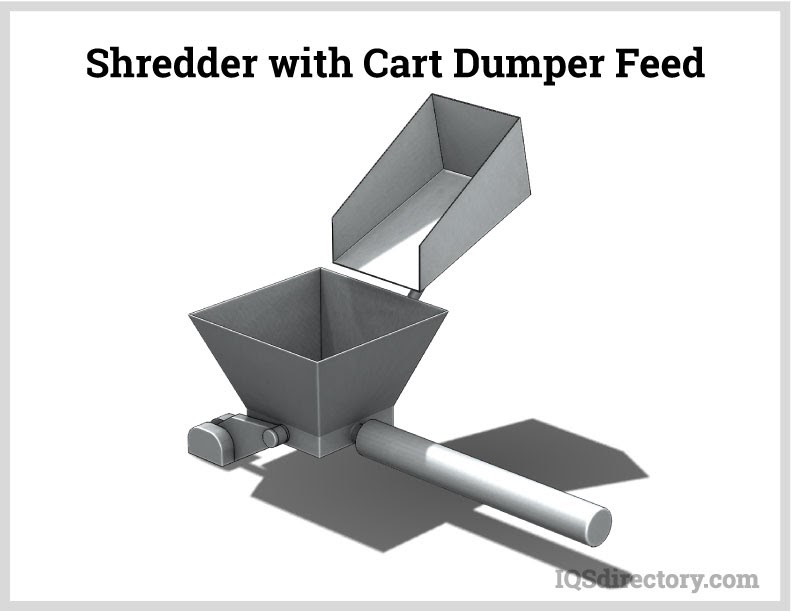 Material is loaded into the shredder through a feed system designed to support steady, efficient processing.
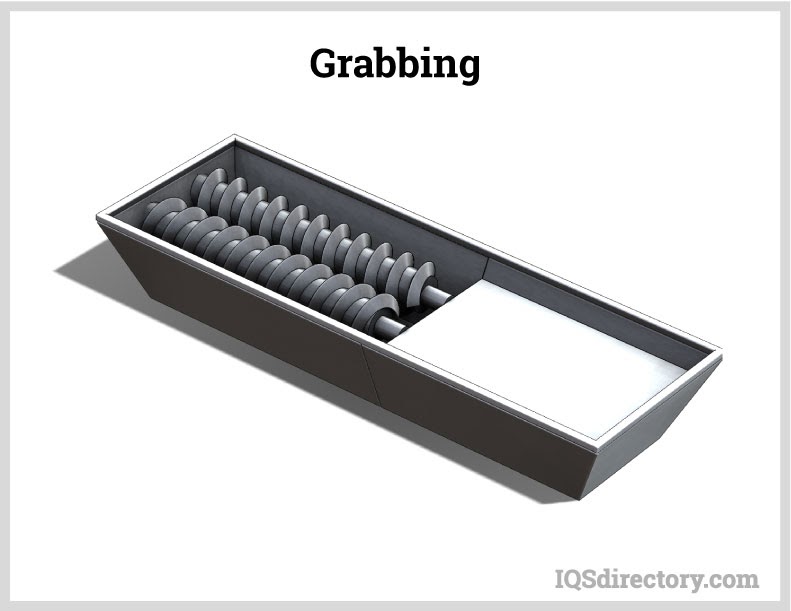 The cutting mechanism grabs incoming material and pushes it through rotating knives or blades for progressive size reduction.
 Screens are selected to match the material and output requirements, helping separate contaminants and control particle size.
Types of Shredders
Industrial shredders are available in a wide range of designs because no single machine is ideal for every waste stream. A facility that shreds confidential paper will have very different requirements from a processor handling tires, scrap metal, pallets, or mixed municipal waste. Some shredders are built for secure destruction, some for bulk material reduction, and others for preparing recyclable feedstock for additional processing. When comparing shredders, buyers often look at shaft configuration, cutter style, drive system, horsepower, feed opening, throughput, contamination tolerance, and expected maintenance intervals.
Manufacturing plants may need rugged equipment for continuous operation, while municipal and recycling operations often need systems that can handle inconsistent material and contamination. Specialized shredders can condense bulky waste, reduce transport costs, and make downstream separation easier. Although shredder categories vary, the goal remains the same: efficient, controlled material reduction matched to the application. Looking for the best shredder for cardboard recycling, plastic scrap, hard drives, metal, or tires usually means matching the machine design to the specific material characteristics and business goals.
- Automobile Shredders
- A specific category of hammermill shredder, automobile shredders are large enough to process whole vehicles and reduce them into compact, recyclable fractions. These systems are widely used in scrap yards and metal recovery facilities where fast throughput and downstream ferrous and nonferrous separation matter.
- Cardboard Shredders
- Cardboard shredders support packaging waste disposal, warehouse waste reduction, and recycling operations. Because cardboard is used so heavily in shipping and fulfillment, these machines help businesses cut bulk, create reusable void-fill material, and improve handling of used boxes and corrugated packaging.
- Chipper Shredders
- Chippers cut wood and similar materials into chips for reuse or disposal. They are often used for branches, pallets, crates, particle board, and bulky wood waste. The resulting chips may be used for mulch, composting, fuel applications, animal bedding, playground surfacing, or general landscape material.
- Document Shredders
- Document shredders are built to destroy confidential paper records and support information security. They are common in offices, records centers, healthcare environments, financial institutions, and businesses that need reliable paper destruction and controlled disposal practices.
- Granulation Machines
- Granulators reduce smaller materials such as plastic trim, bottles, and molded scrap into flakes or granules. They are commonly used in plastics processing and recycling systems that require a consistent regrind for reuse or secondary processing.
- Hammermill Shredders
- Hammermill shredders are available in horizontal and vertical arrangements and use high-speed rotors with heavy hammers to crush or fracture material. These machines can generate tremendous force and are often selected for demanding size-reduction work involving scrap, metal-bearing products, or other dense feedstock.
- Hard Drive Shredders
- Hard drive shredders physically destroy storage media so data cannot be recovered. They are used where digital data destruction must go beyond deleting files or drilling holes. Businesses seeking strong chain-of-custody practices often pair hard drive destruction with paper or media shredding services.
- Hydraulic Drive Shredders
- Hydraulic-drive shredders use a hydraulic pump powered by an electric motor or diesel engine. They offer strong torque, smooth reversal under load, and dependable performance when processing dense, irregular, or difficult material streams.
- Industrial Grinders
- Industrial grinders rely on attrition, compression, or tearing to reduce material into smaller pieces. They are often used when a facility needs a rough first-stage reduction before screening, shredding, or final recycling preparation.
- Industrial Shredders
- Industrial shredders are large-capacity machines built for high-volume destruction and material reduction. They are used in recycling, waste handling, manufacturing, and secure disposal applications where consistent throughput and rugged performance are required.
- Medium-Speed Shredders
- Medium-speed shredders use drum-style cutter arrangements and typically work against a fixed bed knife. They are a practical choice for plastics, wood waste, electronic scrap, and selected nonferrous materials when controlled size reduction is the goal.
- Metal Shredders
- Metal shredders process drums, cables, tubing, sheet metal, and other heavy scrap. They help separate metal from non-metal components and prepare recyclable fractions for smelting or resale. Because a large share of stainless steel production depends on recycled scrap, metal shredding remains a major part of the recycling economy.
- Mobile Shredders
- Mobile shredders are designed for portability and on-site service. They are used when material must be destroyed at the customer location, whether for document destruction, temporary waste processing, or operations that need flexible equipment deployment.
- Paper Shredders
- Paper shredders remain among the most familiar shredding machines. They range from small office units to industrial systems used by records centers, distribution facilities, and paper recycling operations that handle high volumes of confidential or post-consumer paper.
- Plastic Shredders
- Plastic shredders cut discarded plastic into smaller pieces before washing, granulating, melting, or reprocessing. They are widely used for bottles, drums, film, rigid plastic parts, injection molding scrap, and other plastic waste streams.
- Shear Type Shredders
- Shear-type shredders operate with low speed and high torque using counter-rotating shafts fitted with hooked knives. They are well suited for tires, baled aluminum, paper, and bulky materials that need strong pulling action and controlled tearing rather than high-speed impact.
- Tire Shredders
- Tire shredders are commonly found in scrap yards, rubber recycling plants, and waste processing centers. They use heavy-duty, high-torque mechanisms to reduce dense rubber from tires, tubes, and similar products into chips or crumb-ready feedstock.
- Tube Grinders
- Tube grinders are used mainly for wood and organic material. These systems use hammermill-style action to tear bulky feedstock into smaller pieces before pulling it below the tub floor and through grates that help regulate output size.
Shredding Location
- Off Site Shredding
- Off-site shredding is one of the most common service models in the shredding industry. Recycling plants and secure destruction providers often collect material and transport it to a dedicated processing facility where equipment capacity, downstream separation, and workflow can be optimized. This method is frequently used for tires, wood, plastics, old vehicles, cardboard, scrap metals, and high-volume document destruction.
Remote document shredding follows a similar model. Sensitive files are picked up, logged, transported, and destroyed according to established procedures. Some providers also offer mobile service, with industrial shredders installed inside modified trucks that can process thousands of pounds per hour. This arrangement appeals to medical offices, financial institutions, schools, legal firms, and government users that prefer immediate destruction and tighter control of confidential material. For very large industrial waste streams, however, a fixed off-site facility may still offer better scale and efficiency.
- On Site Shredding
- On-site shredding is often the better fit for facilities that generate substantial waste or require immediate processing as part of daily operations. Manufacturing plants, distribution centers, and recycling yards may install a shredder directly into the workflow so scrap, packaging, rejects, and bulk waste can be reduced without waiting for pickup.
These systems may be manually loaded or equipped with hoppers, conveyors, dumpers, or automated feeding mechanisms. A qualified shredding provider will typically assess the material type, volume, available floor space, safety requirements, and output goals before recommending a solution. Many systems do more than shred; they can compact, separate, and package material for easier transport or resale. Buyers comparing on-site and off-site shredding often weigh convenience, security, processing volume, labor requirements, and long-term operating cost.
Environmental Benefits
Industrial shredders support circular manufacturing and recycling by turning bulky, irregular waste into a form that is easier to sort, move, and reuse. Size reduction helps recover value from paper, plastic, metal, rubber, wood, and mixed refuse while reducing landfill volume and improving transport efficiency. For companies focused on sustainability, cost control, and waste diversion, shredding is often the first step in a broader recycling strategy.
What is from recycled refuse?
- Paper Products
- Paper waste is commonly shredded into strips, particles, or pulp-ready feedstock before being sent to mills for recycling. Recovered fiber can become new paper, packaging, insulation, or building materials. Cardboard follows a similar path and may also be turned into packing fill or processed sheet stock. At a smaller scale, shredded paper may be reused for animal bedding, mulch, or protective packaging.
- Glass Bottles
- Glass is valued because it can be recycled repeatedly without losing much of its original quality. Recovered glass can be made into new containers, tile, aggregate, and selected construction materials, making it one of the more durable recycled feedstocks in the waste stream.
- Plastic Products
- Plastic drums, bottles, bumpers, bins, and pipes are often reduced through shredders and granulators before washing, sorting, and thermal reprocessing. This allows manufacturers to reuse plastic content in new molded products and reduce reliance on virgin resin.
- Rubber From Tires
- Used tires can be cleaned, separated, and shredded into chips or crumb rubber for new applications. Recovered rubber is used in athletic surfaces, road materials, molded products, playground systems, and a variety of industrial and construction uses.
- Municipal Waste as a Fuel
- Processed municipal solid waste can be converted into refuse-derived fuel for selected energy applications. By reducing and preparing waste streams for controlled reuse, shredding helps support alternative fuel strategies and new approaches to resource recovery.
Standards and Safety for Shredders
Improper shredder use can lead to severe injury, equipment damage, and costly downtime, which is why safe operation is a major part of equipment selection and training. Anyone working around a shredder should understand feed procedures, emergency stop locations, safe clearance practices, and lockout requirements before operation begins. Although every machine has model-specific safeguards, disciplined operating habits remain one of the best protections against accidents.
When selecting a shredder, buyers should take a broad view of the application. Beyond comparing price, it helps to evaluate build quality, cutter design, service access, throughput, power requirements, noise, maintenance demands, and the manufacturer’s support experience. Seeing multiple machines in operation and reviewing how they handle real-world material can reveal far more than a product sheet alone.
Shredders have moved far beyond manually torn paper and simple office use. Modern businesses need practical systems for secure destruction, bulk waste handling, and efficient material recovery. Across industries, buyers often search for terms like industrial shredder safety, shredder maintenance checklist, best shredder for high-volume recycling, or how to choose a shredder for manufacturing waste. Those questions all point to the same truth: the right equipment should match the material, the operating environment, and the safety expectations of the facility using it.
General safety guidance is useful, but it does not replace the owner’s manual or the manufacturer’s operating instructions. Safe, productive shredding depends on trained people, realistic loading practices, timely maintenance, and a machine sized appropriately for the job.
- Qualified Individuals
- Shredders, from compact office units to large industrial systems, should only be operated by trained personnel. Even when machines include guards, sensors, and shutoff features, safe results depend on knowledgeable operators who understand correct loading, shutdown, and emergency procedures.
- Know the Safety Features
- Operators should know where the emergency stop is located, how the machine reacts under overload, and what warning systems or interlocks are built into the unit. Overfeeding can cause jams and unpredictable machine behavior, so regular inspection and proper operating discipline matter. Maintenance should be handled by qualified service professionals.
- Consider Unit Size
- With so many shredder options available, selecting the right unit depends on material type, daily volume, available space, and long-term operating goals. Small mobile units may work well for lower-volume service, while large dual-shaft or hammermill systems are better suited for continuous industrial use.
No two shredders are exactly alike, and machine quality varies by manufacturer. The best choice is the one engineered for the specific feedstock, contamination level, output requirement, and workload of your operation. A shredder that performs well in one facility may not suit another, which is why careful comparison is so important during the buying process.
Shredder Terms
- Automotive Shredder Residue (ASR)
- The leftover material from a shredded automobile after the ferrous metals have been removed, often referred to as "fluff."
- Balers
- Machines that compress shredded materials into dense, rectangular bundles for easier handling, storage, and transportation.
- Bales
- Compact bundles of processed material, typically secured for stacking, shipping, or resale.
- Banding
- Wire, nylon, or similar strapping material wrapped around bales to hold them together.
- Burden Depth
- The thickness of material spread across a conveyor during processing or sorting.
- Cross-Cut
- A shredding pattern that cuts material in two directions to create smaller and more secure particles.
- Destruction Chamber
- The enclosed area inside an industrial shredder where cutting, tearing, crushing, or size reduction takes place.
- Downstream Separation
- The process of sorting shredded output after it leaves the machine using conveyors, screens, magnets, eddy current separators, air systems, or trommels.
- Eddy Current Separator
- A device that separates nonferrous metals from other materials by generating a changing magnetic field that repels conductive metal particles.
- Feed Width
- The size of the opening through which material enters the shredder.
- Ferrous
- Metals that contain iron, including most types of steel.
- Grapplers
- Heavy-duty tools used to grab, move, and position scrap, waste, and loose material in industrial processing environments.
- Granulator
- A shredder designed to reduce relatively small materials, especially plastics, into flakes or granules.
- Hydraulic
- A system powered by pressurized fluid to create controlled movement and torque.
- Material Burden
- The amount of material present on a conveyor or in a processing stream that requires handling or sorting.
- Metal Shears
- A cutting method or machine that slices sheet metal or similar material using opposing blades.
- Non-Ferrous
- Metals that do not contain iron, such as aluminum, brass, and copper.
- Pallet Shredders
- Heavy-duty shredders used to break down pallets and other dense materials such as rigid plastic, rubber, cardboard, and bulky packaging waste.
- Shredder Drive
- The motor and power transmission system that drives the shredder, commonly configured as electric or hydraulic.
- Slurry
- A fluid mixture that contains suspended solid particles.
- Speed
- The rate at which a shredder processes material, often measured in feet per minute or by throughput over time.
- Strip-Cut
- A shredding style that produces long, narrow strips rather than cross-cut particles.
- Throat
- The feed opening of a shredder, sized to accommodate the material being inserted.
- Unshreddables
- Objects that exceed the shredder’s design limits because they are too large, too dense, or otherwise unsuitable for processing.
- Used Shredders
- Pre-owned shredders that can offer an economical alternative for buyers seeking proven equipment at a lower upfront cost.
- Waste Capacity
- The maximum amount of processed material that a shredder’s bin, bag, or collection area can hold before emptying.
- Waste Shredders
- Industrial machines used to process large volumes of refuse in manufacturing, recycling, municipal, and commercial waste handling environments.