Forklifts
Forklifts are industrial vehicles used primarily for lifting, moving, and loading heavy products, materials, and packaged pallets in applications like warehouse storage, shipping, receiving, order fulfillment, and distribution. These machines typically feature a power-operated, forked platform at the front, designed to be inserted under loads and raised to transport them to the desired location. In modern material handling, forklifts help businesses move inventory faster, reduce manual strain, improve warehouse flow, and support safer handling of palletized goods, containers, crates, and bulky materials.
Sometimes referred to as forklift trucks or simply lift trucks, these terms are often used interchangeably. Technically, "lift truck" is more precise, as not all machines of this type have forks for lifting. However, since the vast majority of lift trucks are equipped with forks, the term "forklift" is commonly used and will be employed throughout this article. Whether buyers are comparing electric forklift models, internal combustion forklifts, narrow aisle equipment, or rough terrain units, the goal remains the same: dependable lifting performance, strong load control, and efficient movement of materials in demanding commercial environments.
Forklifts – Common Questions
What is a forklift used for?
A forklift is an industrial vehicle designed to lift, move, and transport heavy materials or palletized goods in warehouses, distribution centers, and construction sites, improving handling efficiency and safety. It is also widely used for shipping, receiving, inventory movement, dock work, and vertical storage applications.
How do forklifts use hydraulic power?
Forklifts rely on hydraulic systems based on Pascal’s Law, where pressure applied to an incompressible fluid like oil transfers force to lift and move loads efficiently through interconnected cylinders and pistons. This hydraulic action powers mast lift, tilt functions, steering support, and smooth load positioning.
What are the main parts of a forklift?
Key forklift parts include the frame, power source, mast, carriage, forks, counterweight, and operator cab. Each component works together to lift, stabilize, and maneuver loads safely in industrial environments while supporting visibility, balance, and lifting control.
What are the different classes of forklifts?
There are seven forklift classes, ranging from electric motor riders and narrow-aisle trucks to rough terrain forklifts. Each class is designed for specific environments, power sources, tire types, maneuvering requirements, and lifting capacities.
Where are forklifts commonly used?
Forklifts are widely used in warehouses, manufacturing plants, construction sites, shipping docks, lumber yards, and distribution facilities, where they improve material handling, reduce injury risks, and maximize storage efficiency in indoor and outdoor spaces.
What safety precautions should forklift operators follow?
Operators should inspect the forklift before use, avoid exceeding load capacity, maintain clear visibility, travel at controlled speeds, and follow safe turning, lifting, and braking practices. Training and certification are required to help prevent workplace accidents and load instability.
How do I choose the right forklift for my facility?
Selecting the right forklift depends on lift height, load weight, aisle width, terrain, tire type, duty cycle, and operating environment. Indoor warehouses may prefer electric narrow-aisle models, while outdoor facilities and jobsites often use internal combustion or rough terrain forklifts.
The History of Forklifts
The discovery of hydraulic power, the scientific basis for forklifts, dates back to the mid-seventeenth century (1647-1648) and the work of French scientist Blaise Pascal. Pascal observed that pressure exerted on an enclosed, incompressible liquid spreads equally throughout the liquid. As a result, liquid will escape from any existing outlets with the same pressure applied to it inside the container. This principle, known as Pascal's Law, forms the foundation of hydraulic systems and later became one of the engineering ideas that made modern forklift lifting systems practical, repeatable, and powerful.
However, forklifts, as we know them today, did not emerge until much later, after the Industrial Revolution. The invention of forklifts was driven by practical necessity during World War I. Faced with labor shortages, a few American companies developed mechanized lifting trucks around 1917 to aid their operations. Initially, these machines were simply tractors with attachments, but they began to attract interest from customers. Clark, one of the companies involved, began selling these machines, originally called "Tructractors," and other companies started placing orders. In 1923, Yale & Towne enhanced the design by adding forks and a mast that could lift higher than the truck itself. As a result, Yale is credited with inventing the first true forklift, setting the stage for modern pallet handling and warehouse logistics.
The introduction of standardized pallets in the 1930s played a significant role in increasing forklift production. World War II further accelerated forklift development, as armies around the world sought efficient ways to transport massive amounts of material. Once pallets, skids, and organized warehousing became more common, forklifts moved from specialty equipment to everyday industrial machinery, supporting bulk storage, faster truck loading, and smoother movement of supplies through factories and depots.
In the decades following 1945, forklifts continued to evolve and grow in popularity. The 1950s saw major improvements, including battery-powered forklifts, designs optimized for maneuverability in tight spaces, greater vertical lifting capacity, and safety cages to protect operators. Further advancements throughout the 1960s to 1980s focused on electronic controls and balancing improvements. Today, with global demand remaining high, forklifts are a backbone of manufacturing, warehousing, e-commerce fulfillment, construction support, and industrial distribution, giving buyers a wide selection of electric, propane, diesel, and specialty material handling solutions.
Forklift Design
As mentioned earlier, hydraulic systems are the primary source of lifting power in most forklifts, although some modern machines use electric actuator-controlled lifts. These forklifts utilize the pressure transfer described in Pascal’s Law to power nearly all aspects of their moving and lifting operations. Hydraulic power has been integrated into forklifts since shortly after their invention, dating back to the early days following World War I. This design allows lift trucks to raise heavy loads with dependable force, deliver controlled mast travel, and handle repetitive cycles that are common in warehouse and production environments.
Since hydraulic principles apply only to incompressible fluids, forklifts operate using incompressible substances like oil. Specifically, forklifts rely on the power generated by moving oil, which is forcefully transferred from one "container" to another through tubing or a connecting system. The initial "container" is typically a reservoir (called a "sump") located in the vehicle's frame or base. A pump, usually consisting of twin rotating gears, expels oil from the reservoir (opposite the direction of their rotation) and directs it to a control valve. The control valve then redirects the oil to a specific set of sealed tubes or cylinders, which are often linked to pistons responsible for movement. Forklifts typically have two separate pump and cylinder sets: one for steering and one for moving and lifting. As oil flows into the cylinder under pressure, the cylinder moves. While energy is lost as heat in this system (due to resistance in the various connections), this energy loss does not interfere with the hydraulic system’s overall function, which is why forklifts remain so dependable for repeated heavy lifting.
One significant advantage of hydraulic systems is the ease with which their power can be modified. This is made possible by the mechanical engineering principle of "trading force for distance." When the size of one "container" in a hydraulic system changes (in this case, the cylinder/piston combination), the force in the overall system is proportionally adjusted. For example, if a "container" on the receiving end of the hydraulic system is three times larger than the original, it will multiply the force transmitted to it by three. By adjusting the size of different hydraulic components, forklifts can achieve various combinations of lifting and moving power. That flexibility helps manufacturers design models for light warehouse work, high-capacity industrial loads, narrow aisle use, and specialized material handling applications.
Forklift Images, Diagrams and Visual Concepts
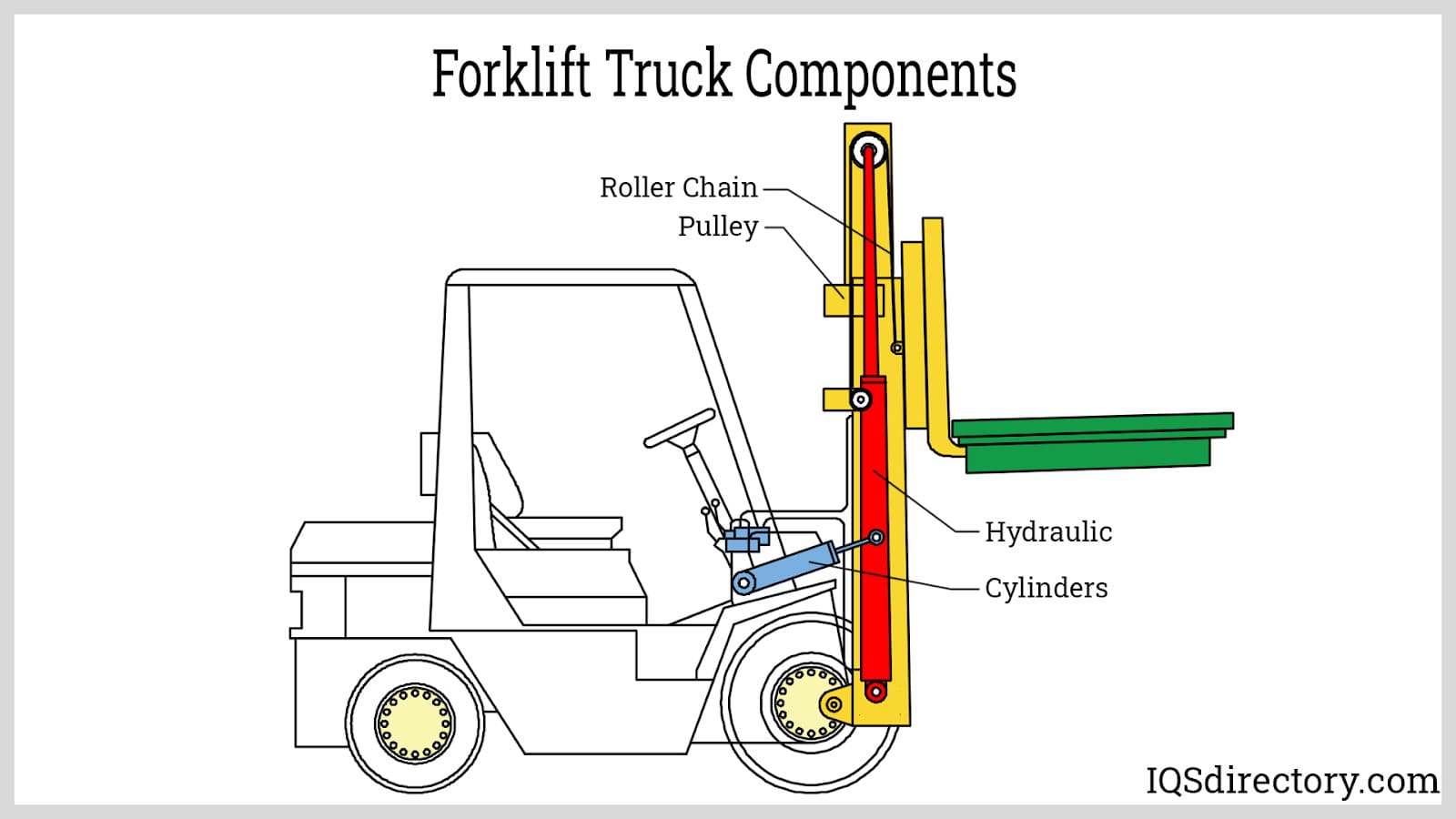 Forklift truck, an electrical or gas powered industrial equipment with a metal fork platform attached to its front to lift heavy loads.
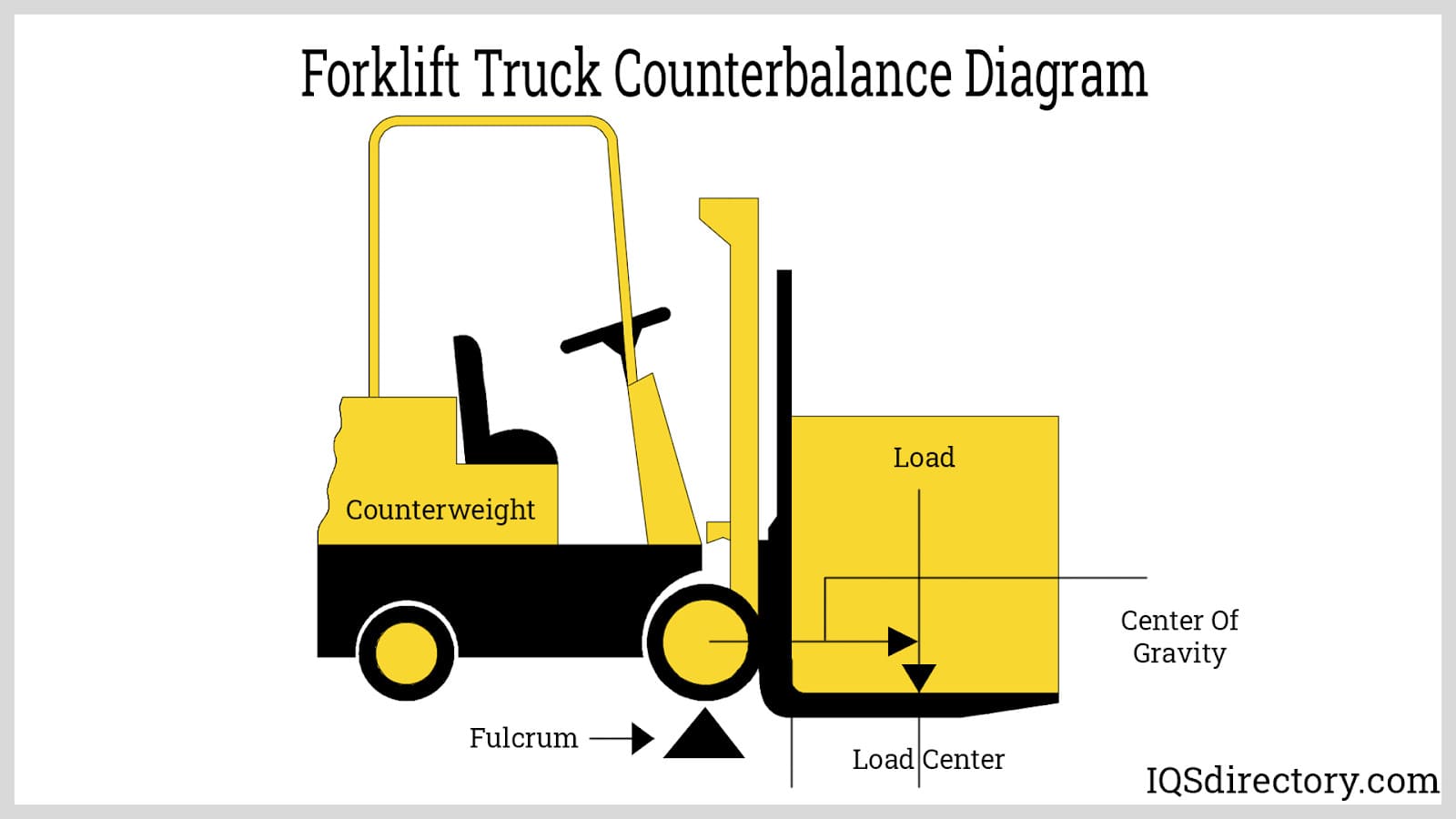 Counterweight is attached to the rear of the forklift to counterbalance the lifted load.
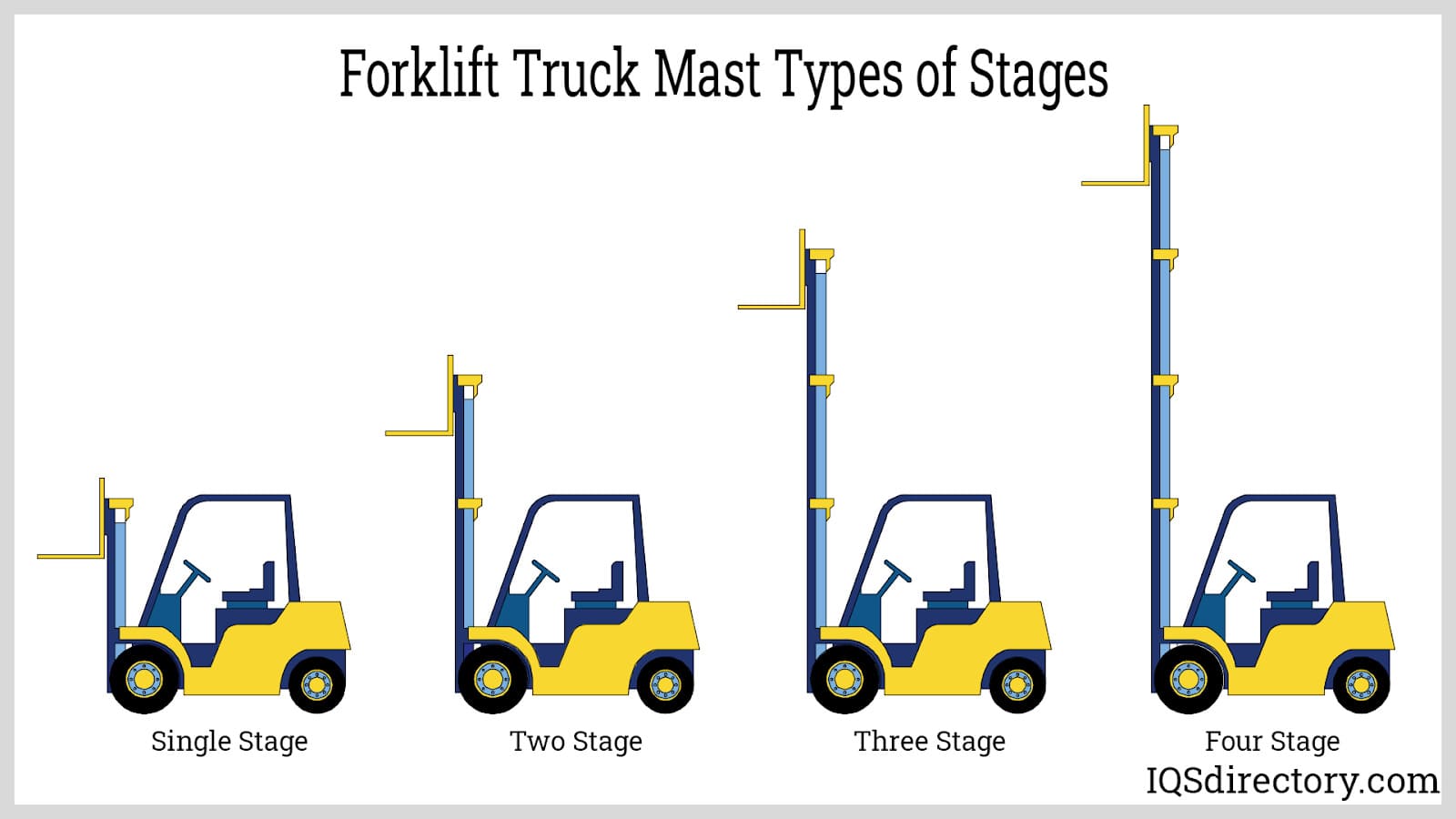 The mast of a forklift truck, is the vertical assembly that raises and lowers loads and includes interlocking rails for lateral stability with rollers or bushings as guides.
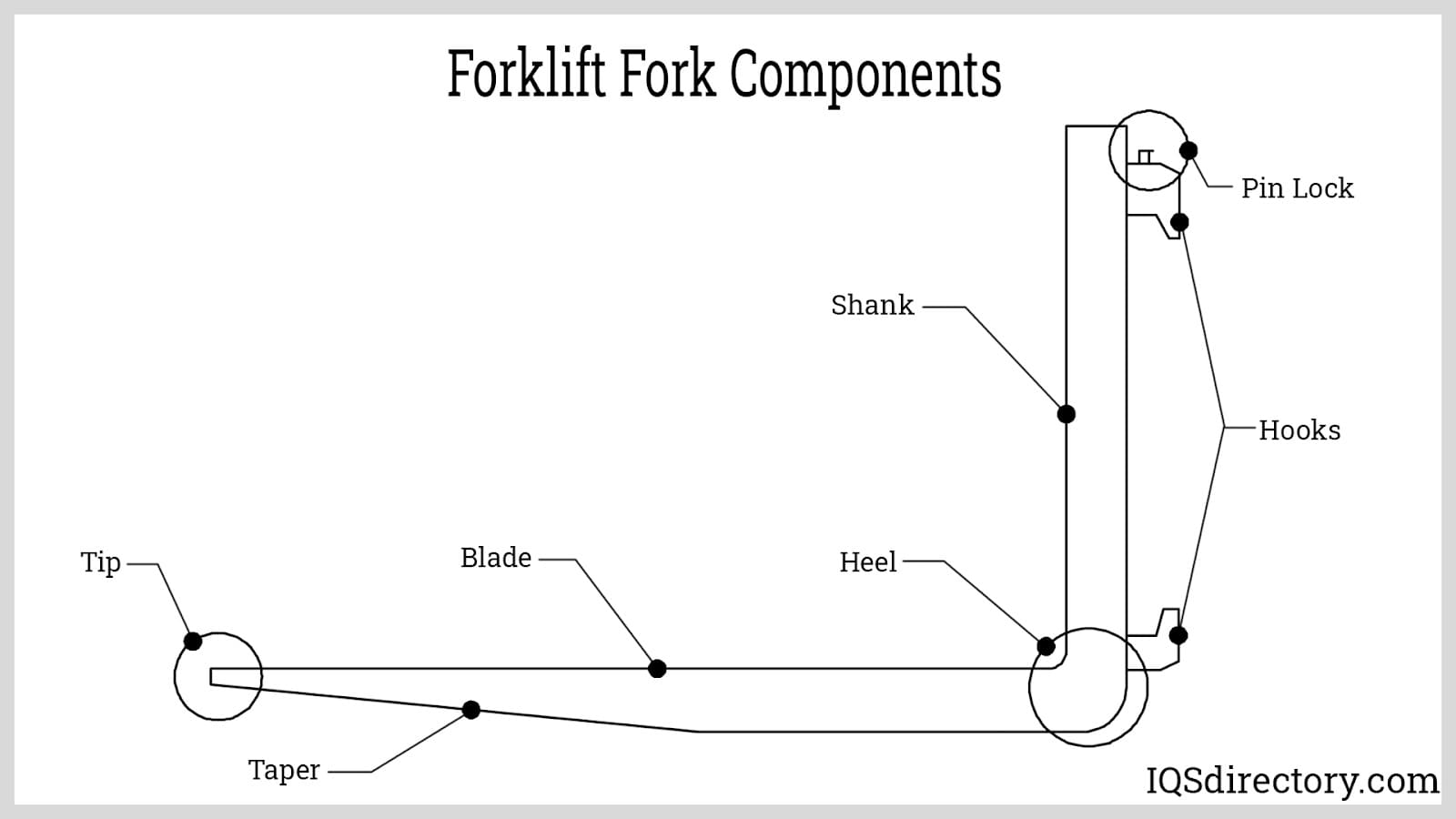 The forks make contact with the load, the dimensions and conditions of the forks guarantees the safe operation and prevents possible damage.
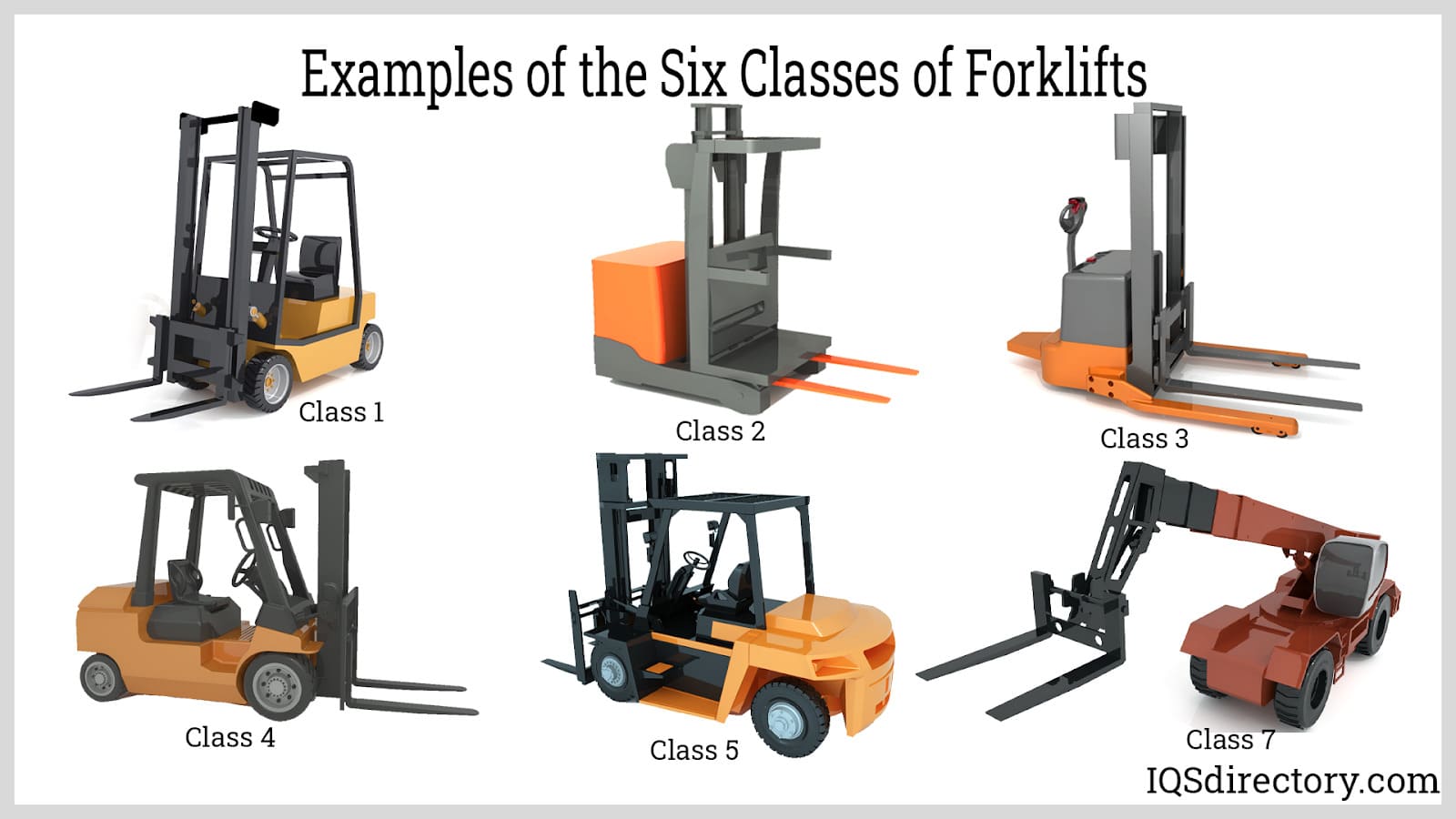 Forklift trucks are grouped according to their size, weight limit, operational terrain, and power supply, which each classification requires operators to be certified.
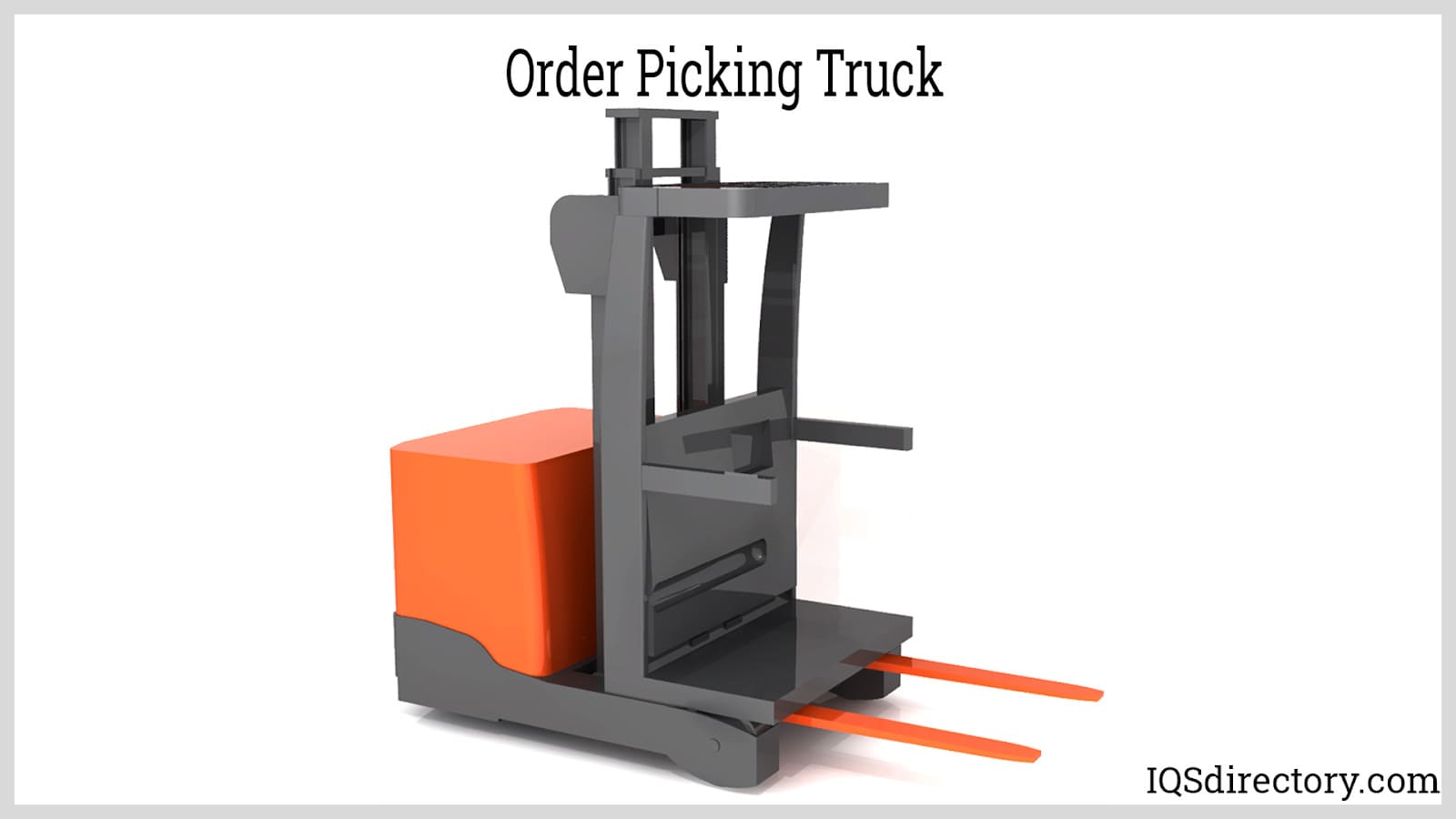 A stand up forklift truck where the operator frequently leaves to load and unload items.
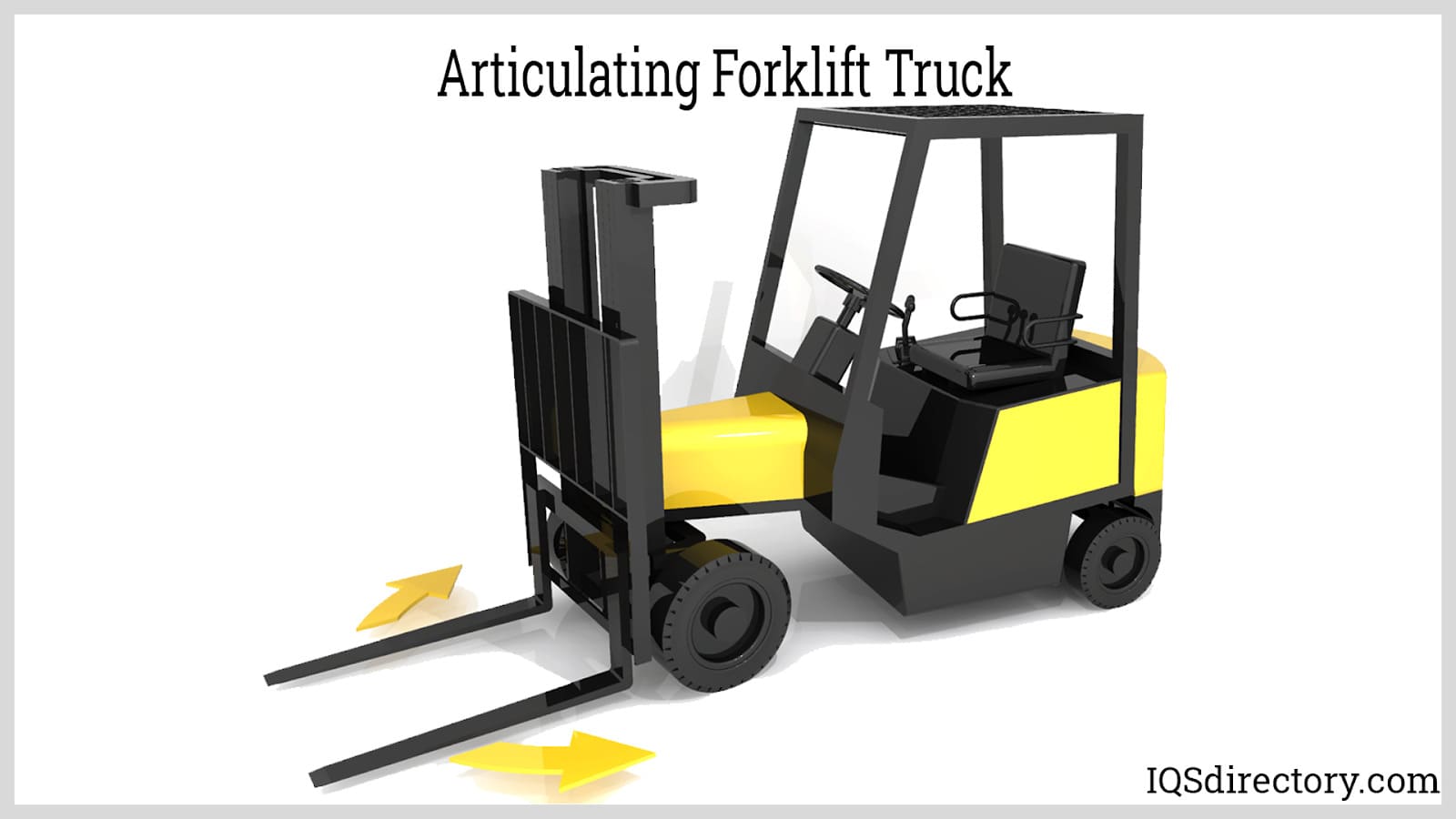 Forklift trucks are designed to safely and efficiently lift heavy loads.
Types of Forklifts
Manufacturers categorize forklifts based on design and capacity, with key factors including the type of engine, tires, and counterbalance method. Counterbalancing, which uses strategically placed weights to prevent the forklift from tipping under heavy loads, is a more efficient solution compared to placing supports directly under the load. Buyers comparing forklift types often look at lift capacity, turning radius, mast height, duty cycle, power source, operator comfort, indoor versus outdoor suitability, and the type of loads being moved.
Major Classes of Forklifts
Forklifts are classified into seven distinct classes:
Electric Motor Riders (Class 1)
These rider trucks, either stand-up or seated, are powered by an electric motor. They are typically counterbalanced with either cushion or pneumatic wheels. They are commonly selected for indoor warehouse work where clean operation, lower emissions, quieter performance, and efficient battery-powered material movement are priorities.
Electric Motor Narrow Aisle (Class 2)
Electric motor vehicles designed for narrow aisles or stock picking functions. They may feature additional options such as extended reach or swing masts. These forklifts are often chosen when facilities want to maximize cubic storage space and improve picking productivity in high-density racking systems.
Electric Hand Riders (Class 3)
These vehicles, operated by a walk-behind or standing rider controller, are also powered by electric motors. Common applications include automated pallet lift trucks and high-lift models, often with an offset design. They are a practical choice for shorter transport distances, stockroom work, and tight warehouse areas where compact equipment improves maneuverability.
Internal Combustion Forklifts with Cushion Tires (Class 4)
Equipped with internal combustion engines, these vehicles feature cabs with seated controls for the operator and are typically fitted with cushion tires. They are well suited to smooth indoor floors and applications that demand solid lifting performance, fast travel speeds, and strong throughput.
Internal Combustion Forklifts with Pneumatic Tires (Class 5)
These forklifts, similar to Class 4, feature internal combustion engines and cabs with seated controls. However, they are equipped with pneumatic tires and are commonly counterbalanced for stability. Their tire design gives them better traction outdoors, making them useful for yards, loading areas, and mixed-surface applications.
Electric and Internal Combustion Engine Tractors (Class 6)
These tractors are designed for towing applications, utilizing either electric or internal combustion engines. They are often used to move trailers, carts, and materials through large facilities where pulling efficiency matters more than fork lifting functions.
Rough Terrain Forklifts (Class 7)
Built for challenging outdoor environments such as construction sites, these forklifts are equipped with large tires and extended reach capabilities to handle rough and uneven terrain. They are often selected for lumber, masonry, pipe, and jobsite support where ground conditions are more demanding than a warehouse floor.
Each forklift class is designed to meet specific operational needs, making them better suited for particular applications. For instance, rough terrain forklifts excel in construction sites where large tires and enhanced reach are needed, while narrow aisle forklifts are better for maximizing warehouse storage density. Asking questions like "Which forklift is best for warehouse aisles?" or "What forklift works outdoors on uneven ground?" helps narrow the right equipment category more quickly.
Parts of a Forklift
Forklifts come in various types designed for different applications, but most share a common set of essential components. These include the frame, power source, mast, carriage (with forks and load backrest), counterweight, and the operator's station. Understanding these parts helps buyers compare forklift designs, maintenance needs, and performance features before choosing equipment for a warehouse, dock, plant, or outdoor jobsite.
Frame
The frame serves as the base of the forklift, providing structural support and housing critical systems like cooling. Frames often allow for tilting and rotating, improving maneuverability. In addition to its structural role, the frame helps dissipate heat generated by the forklift’s hydraulic system. A strong frame is especially important in high-duty material handling, where the truck must remain stable under repeated loads and frequent directional changes.
Power Source
Forklifts are powered by either internal combustion engines or https://www.iqsdirectory.com/electric-motors/. Common fuels include gasoline, compressed natural gas, diesel, liquid propane, and batteries. Internal combustion engines are typically housed underneath the operator’s seat, except for propane engines, which are usually mounted externally. A newer development in forklift technology involves hybrid power systems, combining diesel with lithium-ion batteries. When comparing forklift power options, many buyers weigh indoor air quality, refueling or charging speed, runtime, maintenance demands, and total operating cost.
Cab Enclosure
Most forklifts feature an enclosed operator’s cab, where the driver controls the vehicle using a steering wheel and other controls. In these vehicles, the steering wheel typically controls the rear wheels for improved precision, and some models may have knobs to facilitate quicker turns. Most cabs have an overhead guard to protect the operator from falling objects. There are also stand-up forklifts where the operator remains standing while driving. Operator ergonomics, visibility, and ease of control matter because they affect productivity, comfort, and safer maneuvering throughout long shifts.
Mast
The mast is the vertical component that allows the lifting and lowering of the forklift’s carriage and forks. It operates hydraulically and consists of connected rails with channels called "stages." Forklifts commonly use three-stage masts, with each additional stage providing greater lifting power. Masts are critical for reaching high shelves, which is a common task in warehouse operations. Buyers often compare collapsed height, maximum lift height, and free lift when choosing a mast for racking systems or loading operations.
Carriage
The carriage connects the mast to the forklift’s lifting attachments, such as forks. It is typically mounted at the front of the forklift, but side-loaders use a different setup where the lifting mechanism is positioned on the side. The carriage can be moved horizontally or tilted using controls in the cab, allowing it to handle different types of loads efficiently. For heavy-duty applications, reinforced stabilizing bars may be used to ensure stability during lifting. This area is also where many attachments can be fitted for more specialized handling tasks.
Forks (Tynes)
Forks are one of the most recognizable parts of a forklift. These elongated attachments are designed to carry loads by inserting them underneath. Forks vary depending on their intended use. For example, pallet truck forks are tailored to fit standard pallet designs, while double-extended forks are used for deep-reach applications. Forks can be adjusted in angle using the tilt cylinder to accommodate different load types. Safety rails may also be installed to prevent loads from slipping off. Proper fork dimensions and condition are a major part of safe operation and load security.
Load Back Rest
The load back rest is the rear portion of the lifting platform, mounted to the carriage, which helps stabilize the load during transport. It reduces the chance of material shifting backward toward the mast and supports better handling of stacked or irregular loads.
Counterweight
Counterweights balance the forklift by offsetting the weight of the load. Typically located at the rear of the forklift, they ensure stability. In electric forklifts, the battery often functions as the counterweight. This balance is one reason load capacity ratings must be followed carefully, since exceeding them can reduce stability and increase the risk of tipping.
Wheels
Forklift wheels come in two main types: pneumatic tires and cushion tires. Pneumatic tires resemble regular automobile tires and are filled with air, providing load vibration padding and increased traction. These tires are suited for outdoor environments. Cushion tires are solid rubber and require no inflation, making them more durable and easier to maintain. They are generally used for indoor environments with hard, flat surfaces but can also be used outdoors in smooth conditions. Stabilizing outriggers can be added to both types of wheels for extra support. Tire choice affects traction, ride quality, floor wear, and overall forklift suitability for the work environment.
Safety Features
Safety features such as flashing lights or audible sirens help alert nearby workers to the forklift's movements, reducing the risk of accidents. Other safety features may be less visible, such as the relief valve, which detects excessive cylinder pressure and prevents damage by releasing pressure and draining oil back into the reservoir. Additional safety-focused design details may include overhead guards, load backrests, visibility improvements, warning labels, and stability systems that support safer lifting and travel.
These components work together to ensure forklifts are effective, reliable, and safe for various applications. For buyers, understanding these features also makes it easier to evaluate maintenance priorities, operator training needs, and overall suitability for specific material handling tasks.
Where Forklifts are Used
Forklifts and pallet trucks are essential across many industries that handle heavy goods or large quantities of materials. Their use improves storage efficiency, reduces injury risks, and shortens stocking times. These machines are invaluable in various environments, including indoor and outdoor settings, where they can be tailored to meet specific operational needs. Forklifts are especially useful in storerooms, construction sites, and loading docks, where mechanical power significantly enhances efficiency. They also help maximize vertical storage space by allowing loads to be stacked as high as the forklift can reach. Common applications include warehouses, manufacturing plants, shipping terminals, retail distribution centers, food and beverage storage, building material yards, and industrial production facilities.
Other Types of Forklifts
In addition to the standard forklifts, there are numerous other types, each designed for specific tasks and applications:
Side-loaders
Used for heavy-duty applications, these forklifts are designed to handle loads from the side, making them ideal for long or bulky items. They are especially useful for materials such as lumber, pipe, panels, and bar stock that are difficult to manage with a front-loading truck.
Reach trucks / Order Picker Trucks
These warehouse forklifts are designed to reach high shelves, making them perfect for accessing products or equipment stored at great heights. They are a strong fit for high-bay warehousing and order fulfillment environments where storage density and picking access matter.
Pallet Trucks
A specialized lift truck designed specifically for lifting and transporting loaded pallets, these trucks are common in warehouses and distribution centers. They are widely used for short-distance pallet movement, truck unloading, stock replenishment, and efficient movement through receiving and shipping areas.
Indoor Walkie Forklifts
Electric forklifts designed for indoor use on smooth concrete floors. These compact forklifts are ideal for tight spaces. They are often chosen for stockrooms, compact storage rooms, and warehouses where lower noise and tight turning ability are valuable.
How to Use a Forklift
Forklifts are incredibly valuable in various commercial settings, but they come with significant safety risks. Improper use can lead to accidents, collisions, or even tipping over, potentially causing serious injury or equipment damage. Therefore, maintaining forklift safety in environments such as manufacturing or construction is very important. The following overview highlights sound forklift safety practices, though operators must undergo thorough training and certification before being allowed to operate forklifts in the workplace. Buyers and supervisors often search for guidance such as "how to operate a forklift safely" or "what should be checked before using a forklift," and the answer starts with preparation, load awareness, and operator training.
Forklift Safety
The foundation of forklift safety starts with preparation. Before turning on the engine, operators should inspect key components like fluid levels, hydraulic tubing (hoses and connectors), tires, and forks for any wear or damage. Once the engine is started, operators should test other critical systems, including controls (e.g., tilt lever, lift lever), warning lights, and alarms. When entering the forklift, always use the appropriate handholds and carefully slide or pull yourself into the vehicle—avoid jumping or stepping into it. During operation, keep the load stable, travel at controlled speeds, maintain a clear line of sight, and never exceed the truck’s rated capacity. On ramps, near dock edges, and around pedestrians, extra care is needed because visibility, stopping distance, and balance can change quickly.