Foam Fabrication
Foam fabricating involves manufacturing lightweight, adaptable cellular materials from polymers such as polyurethane, polyethylene, polystyrene, rubber, and specialty plastics. During production, the base material is expanded with gas or air while molten or reactive, then cured into a structure filled with tiny cells. Those trapped pockets give fabricated foam its familiar sponge-like appearance while also delivering cushioning, insulation, vibration control, buoyancy, sealing performance, and custom protective packaging value across industrial and consumer applications.
- Looking for custom foam inserts for packaging, medical devices, or electronics?
- Comparing open-cell vs. closed-cell foam for insulation, cushioning, or sealing?
- Need die cut foam, water jet cutting, laminated foam, or adhesive-backed parts?
- Trying to choose a foam fabricator for automotive, construction, acoustical, or shipping applications?
Foam Fabrication FAQ
What is foam fabrication?
Foam fabrication is the process of converting polymer-based foam into finished parts and products through cutting, molding, laminating, bonding, contouring, and assembly. The resulting material combines low weight with cushioning, insulation, sealing, and impact protection depending on the formulation.
What are the main benefits of foam fabrication?
Foam fabrication offers benefits such as lightweight performance, custom part design, thermal and acoustic insulation, vibration damping, and efficient material use. These qualities make fabricated foam a strong option for construction, automotive, packaging, medical, filtration, and consumer product applications.
What industries use fabricated foam?
Fabricated foam is used in construction, automotive manufacturing, aerospace, medical products, electronics packaging, shipping and logistics, furniture, bedding, filtration, and acoustical applications. Its adaptability makes it a go-to material across industrial and consumer markets.
What is the difference between open-cell and closed-cell foam?
Open-cell foam has interconnected cells that allow airflow, which makes it soft, compressible, and well suited for sound absorption and cushioning. Closed-cell foam has sealed cells, giving it stronger moisture resistance, higher compressive strength, and better thermal insulation for protective, sealing, and construction uses.
How is foam cut and shaped during fabrication?
Foam can be cut and shaped through die cutting, water jet cutting, hot wire cutting, laser cutting, contour cutting, and lamination. Each process supports different tolerances, part geometries, and production volumes for packaging inserts, insulation parts, seals, pads, and automotive components.
Is foam fabrication cost-effective for large projects?
Yes. Foam fabrication is often cost-effective at scale because lightweight materials cut shipping expense, many parts can be nested efficiently, and scrap can sometimes be rebonded or reused in secondary products. That makes foam attractive for large industrial, packaging, and conversion projects.
Can fabricated foam be recycled?
Yes, many foam scrap streams can be rebonded into carpet padding, cushions, underlayment, and filler products. Recycling requires sorting, clean collection, and practical end markets, but it can reduce waste and improve material recovery compared with disposal alone.
History of Foam Fabricating
Foam fabrication spans a vast array of technologies and products, making its historical development a topic that could easily fill an entire textbook. The origins of polymeric foam science and manufacturing date back to the 1920s and 1930s, when the Talalay and Dunlop processes were pioneered for producing latex foam. These early breakthroughs laid the groundwork for an industry that would rapidly expand alongside advancements in chemistry and materials science.
From this foundation, the history of foam fabrication closely parallels the broader evolution of chemical engineering over the following decades. The discoveries made during and after World War I introduced new substances and chemical principles that gradually found their way into industrial applications, shaping the development of various foam materials.
A major milestone arrived in 1947 when researchers at Dow Chemical Company’s industrial labs invented foamed polystyrene, commonly recognized today as Styrofoam. Other modern foams emerged from independent research efforts conducted by numerous scientists and corporations, each developing unique formulations and fabrication techniques. As a result, different types of foam evolved simultaneously, each with distinct properties tailored to specific applications.
Today, foam fabrication reflects nearly a century of accumulated knowledge, experimentation, and innovation contributed by countless engineers and material scientists. The fundamental principles governing foam production continue to advance, influenced by both scientific discovery and practical manufacturing requirements. Recent developments, such as Nano cellular polymer foams, demonstrate how the field is still evolving, with new breakthroughs pushing the boundaries of what foam materials can achieve.
Benefits of Foam Fabrication
Given the sheer variety of foam types and applications, defining the benefits of foam fabrication as a single process is challenging. Some foams are remarkably strong, while others prioritize flexibility and pliability. Certain formulations are brittle yet highly resistant to pressure, whereas others maintain a soft composition while exhibiting exceptional tear resistance. If there is one overarching advantage to foam fabrication, it is the wide range of customization available to meet precise performance, fit, durability, and cost targets across different end uses.
- Lightweight Advantage
- Foam-based products consistently weigh less than many solid-material alternatives, which makes them valuable when shipping cost, fuel efficiency, ergonomics, and handling speed matter. Protective packaging, automotive interiors, aerospace components, sporting goods, and consumer products all benefit from foam’s low-density structure. Lower weight can also simplify warehousing, assembly, and freight planning without sacrificing cushioning or insulation performance.
- Cost Effective Benefit
- Foam fabrication supports efficient production from rolls, sheets, buns, and molded parts, with costs often becoming more attractive as volumes rise. Material nesting, die cutting, lamination, and automated conversion can reduce labor and waste, especially in repeat programs. Experienced foam fabricators also look for ways to reuse trim, improve yield, and match the material grade to the application so buyers are not paying for performance they do not need.
- Versatility of Foam
- A company may start by sourcing foam for one job, then quickly discover related needs in packaging, sealing, gasketing, insulation, vibration control, cushioning, or sound management. Working with an experienced foam fabricator can simplify future sourcing because the same partner may be able to convert multiple materials and recommend better options as your product line evolves. That kind of versatility helps buyers move faster when they need prototypes, replacement parts, or production-ready foam components.
- General Insulation of Foam
- Foam’s insulating properties vary by density, cell structure, polymer chemistry, and thickness, yet many grades perform very well in thermal control, sound absorption, and vibration damping. That combination makes fabricated foam attractive for building envelopes, HVAC systems, machinery enclosures, transportation interiors, and equipment protection. Buyers comparing materials often look at R-value, compressive strength, moisture resistance, recovery, and acoustic behavior to decide which foam best fits the environment.
Applications of Foam Fabricating
Foam serves a wide range of functions across industrial and consumer markets, from everyday comfort products to highly engineered converted parts. Because fabricators can tune density, firmness, cell structure, thickness, and surface treatments, foam can be adapted for sealing, shock absorption, thermal barriers, acoustical control, filtration media, flotation, and custom packaging. Buyers often begin with a simple question like, “What foam do I need for my application?” and then narrow the choice by temperature range, exposure conditions, compression needs, and product life.
- Uses in Construction
- Rigid foams and sprayed polyurethane foam provide effective insulation, air sealing, and moisture management for walls, roofs, panels, and building envelopes. Their ability to fill gaps and reduce thermal bridging can improve energy efficiency while supporting code-driven performance goals. In commercial and residential construction, fabricated foam is also used in expansion joints, gasketing, pipe insulation, door seals, and architectural composite panels.
- Household Applications
- Foam appears in a wide variety of household products, including sponges, filters, floor pads, weather seals, chair cushions, mattresses, and appliance insulation. These products benefit from foam’s absorbency, resilience, softness, and long-term usability. Even simple residential applications often depend on carefully selected foam grades to balance comfort, cleanup, durability, and cost.
- Automotive Foam
- Custom foam components play a major role in automotive manufacturing by improving ride comfort, cabin quietness, sealing, and occupant protection. Noise, vibration, and harshness (NVH) pads, gaskets, seals, headliners, seating components, and pillar fillers all rely on foam conversion. Automotive buyers often evaluate compression set, temperature resistance, flame performance, and dimensional consistency when sourcing these parts.
- Medical Foam
- Foam is widely used in medical applications, from surgical sponges and wound care products to positioning aids, orthopedic inserts, prosthetic padding, and device packaging. Depending on the grade, medical foam can provide cushioning, pressure distribution, fluid management, and patient comfort. For regulated environments, buyers also review cleanliness, biocompatibility, lot control, and converting consistency.
- Fabricating Foam for Shipping
- Foam plays a major role in shipping and logistics by absorbing shock, reducing vibration, and protecting fragile products during storage and transit. Fabricated packaging solutions include end caps, custom inserts, case liners, corner protectors, and returnable transit packaging. Need foam packaging for electronics, instruments, or glass products? The right density and thickness can help control movement while reducing damage claims.
- Acoustic Applications
- Many foam materials perform well in acoustical management, where they absorb, diffuse, or dampen sound energy to improve noise control. Acoustic foam is used in recording spaces, offices, theaters, machine enclosures, generator rooms, and manufacturing facilities. Selection depends on frequency range, wall geometry, facing materials, and whether the goal is sound absorption, echo reduction, or vibration isolation.
- Bedding
- Memory foam mattresses, toppers, and pillows show how foam fabrication can improve ergonomics, support, and pressure distribution. Different firmness levels, contour cuts, and laminated constructions allow manufacturers to tune comfort for residential, hospitality, healthcare, and specialty bedding products. Buyers often compare resilience, density, airflow, and recovery when selecting bedding foam.
- Uses in Furniture
- Polymeric foams are a foundation of modern furniture cushioning and upholstery, where support, softness, resilience, and long-term recovery all matter. Sofas, task chairs, auditorium seating, and hospitality furniture rely on foam grades chosen for repeated use and occupant comfort. Fabricators may contour, laminate, or adhesive-bond multiple layers to achieve the required feel and performance.
- Using Foam for Filtration
- Open-cell foams are widely used in filtration systems because their porous structure supports airflow while capturing particulates and contaminants. They are found in HVAC assemblies, appliance filters, industrial air handling, liquid filtration systems, and specialty clean-air applications. In these uses, pore size, airflow, dust loading, cleanability, and chemical compatibility influence the material choice.
- Absorption Applications
- Foam’s ability to absorb liquids, spread impact energy, and cushion contact makes it useful in many absorption-related applications. Kitchen sponges, bath mats, industrial spill pads, protective liners, and shock-absorbing components all rely on foam structures designed around the fluid or impact profile involved. For industrial settings, buyers may also consider chemical resistance, saturation behavior, and disposal requirements.
- Seals
- Foam-based seals use compressibility and recovery to create dependable barriers in equipment housings, doors, enclosures, appliances, vehicles, and consumer products. Depending on the grade, foam seals can help block air, dust, moisture, vibration, and thermal leakage. Gasketing buyers usually compare compression set, adhesion options, tolerance control, and outdoor durability before choosing a material.
Fabricated Foam Images, Diagrams and Visual Concepts
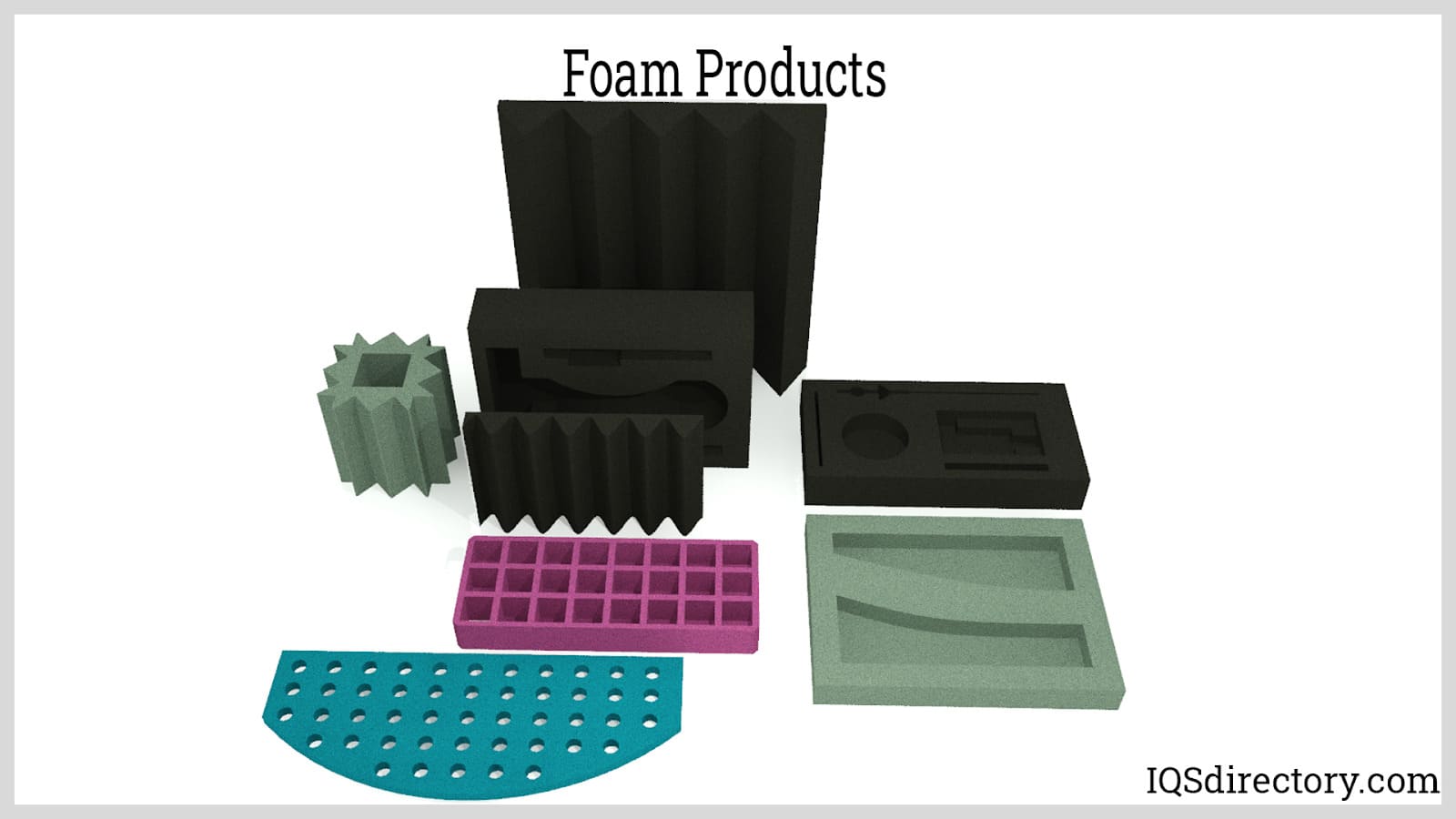 Products made by polyurethane foam allowing for flexibility, low density, and high force absorption.
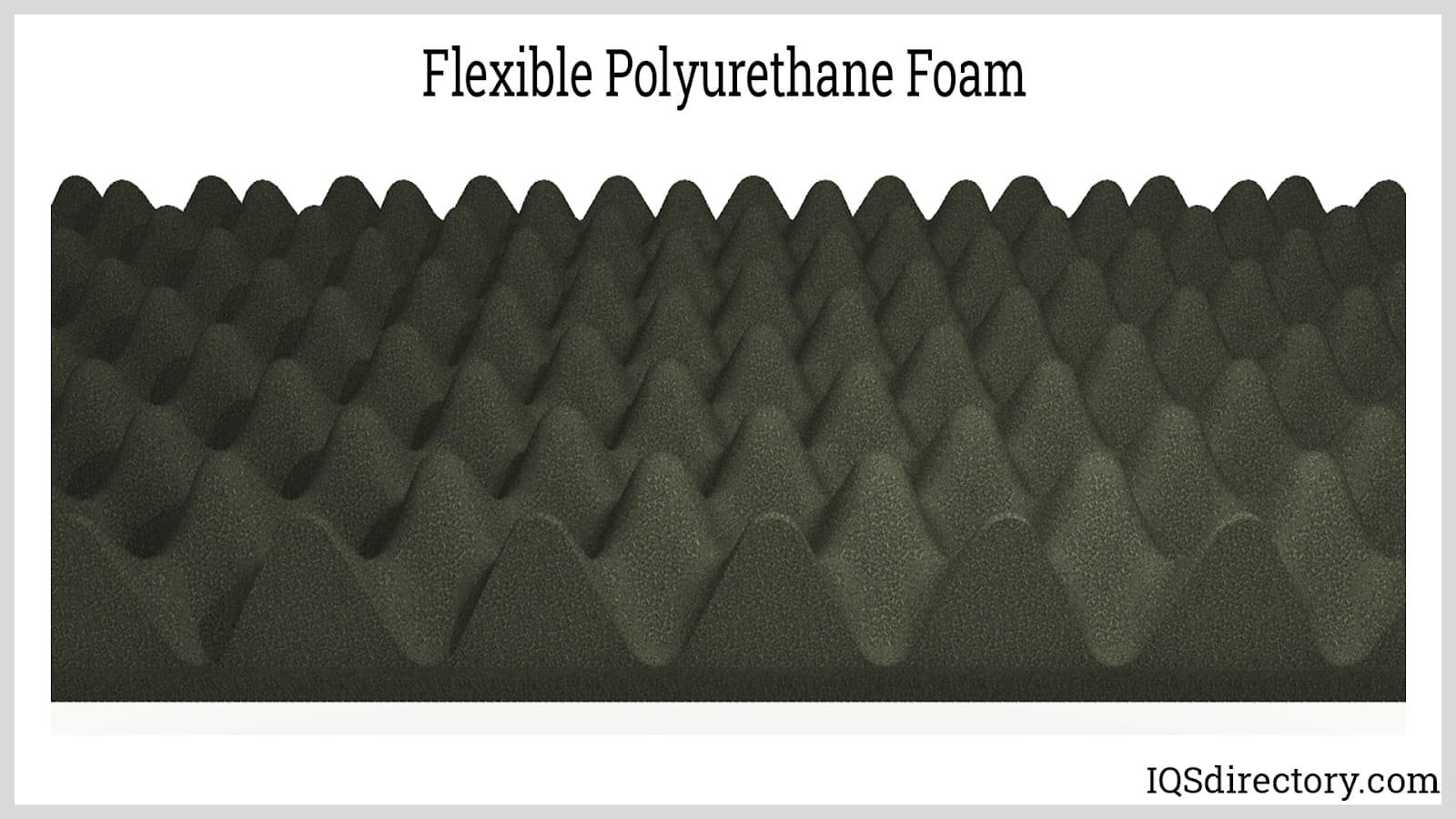 Flexible polyurethane foams can be made from either polyether or polyester polyols and have lower bulk densities, higher sag factors, and permeable structures.
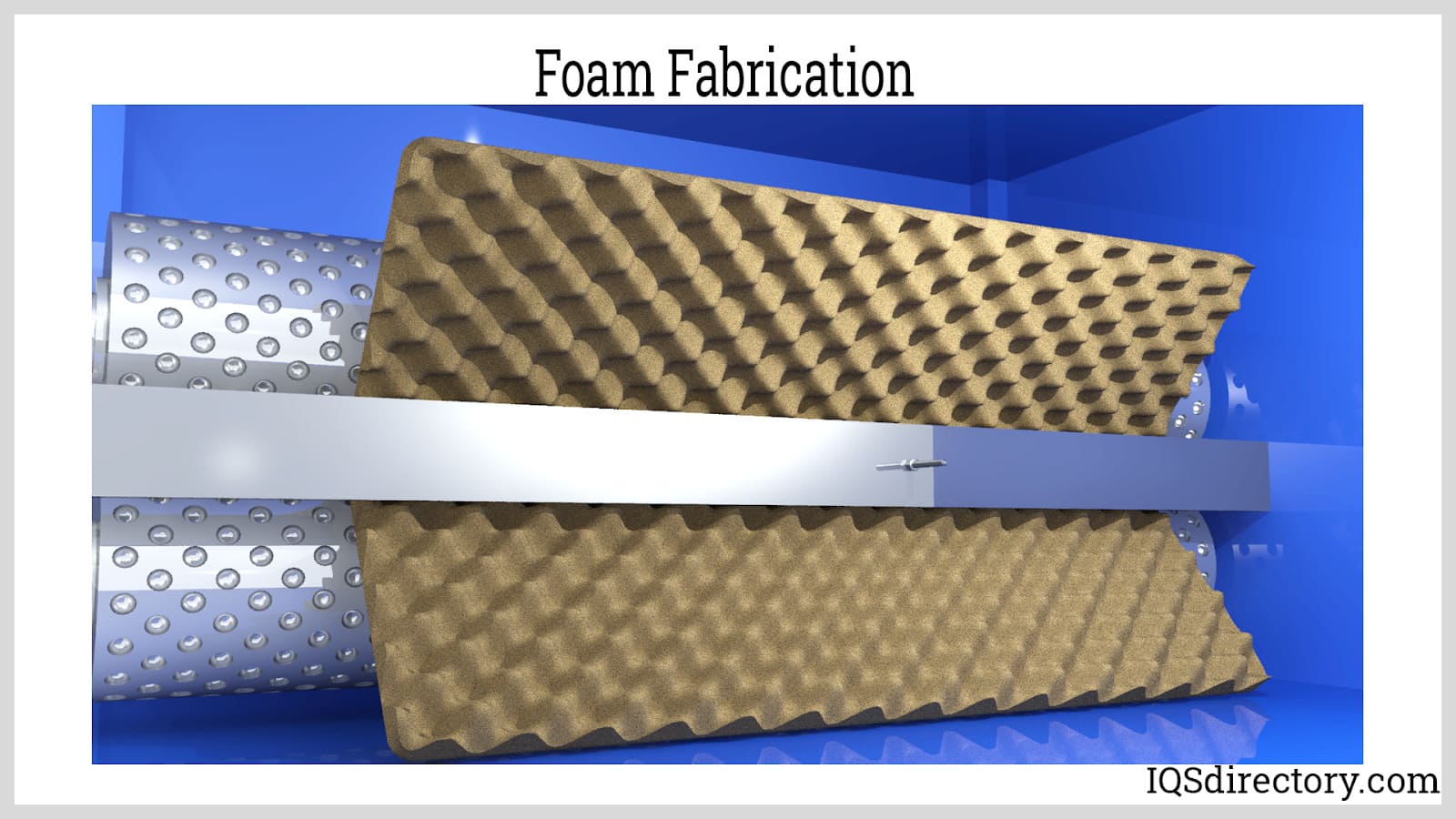 Polyurethane foams are used for packaging materials, furniture, thermal insulations, car seats, and mattresses.
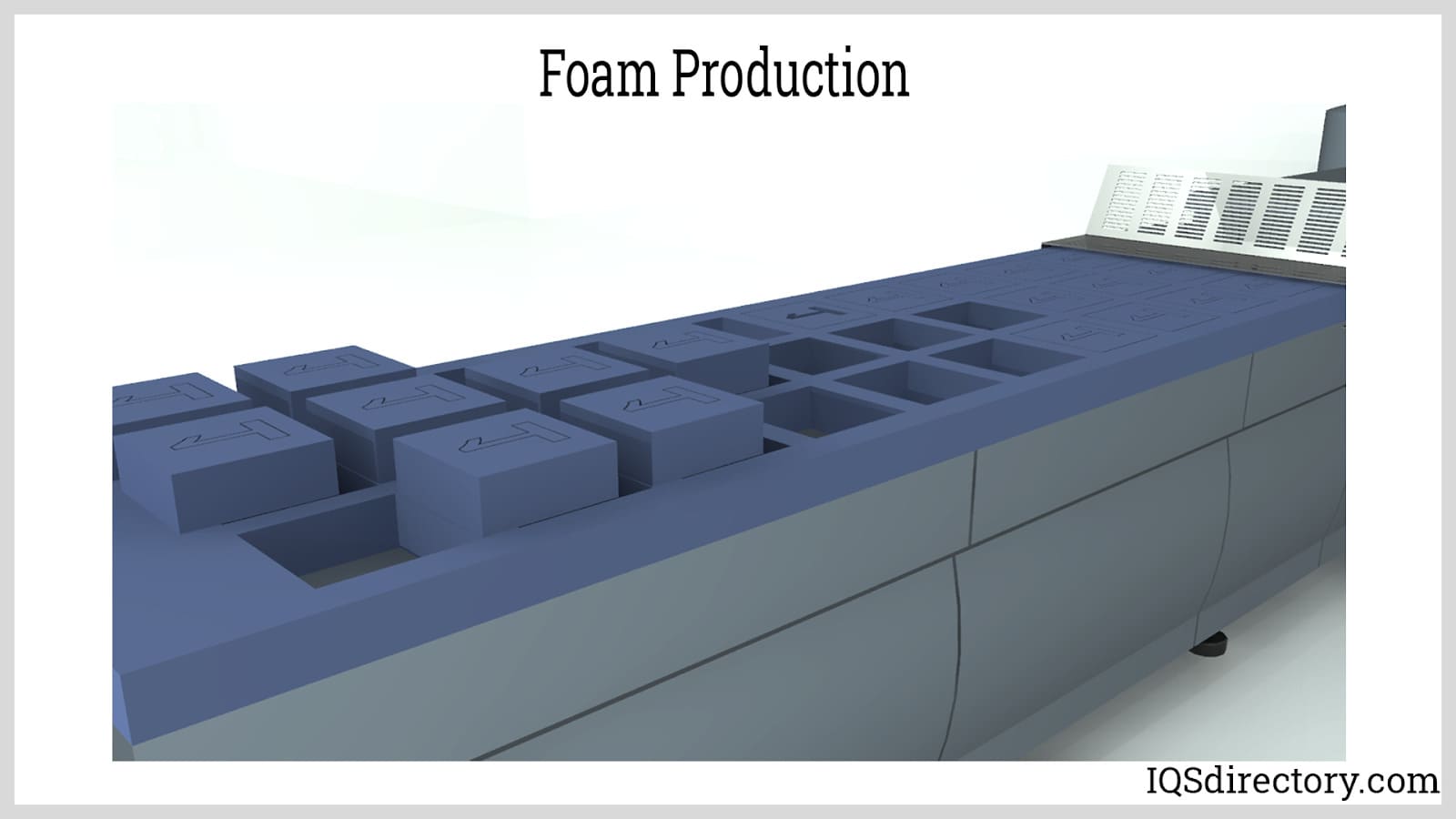 The production process can be divided into the polymer system preparation and the foam production process.
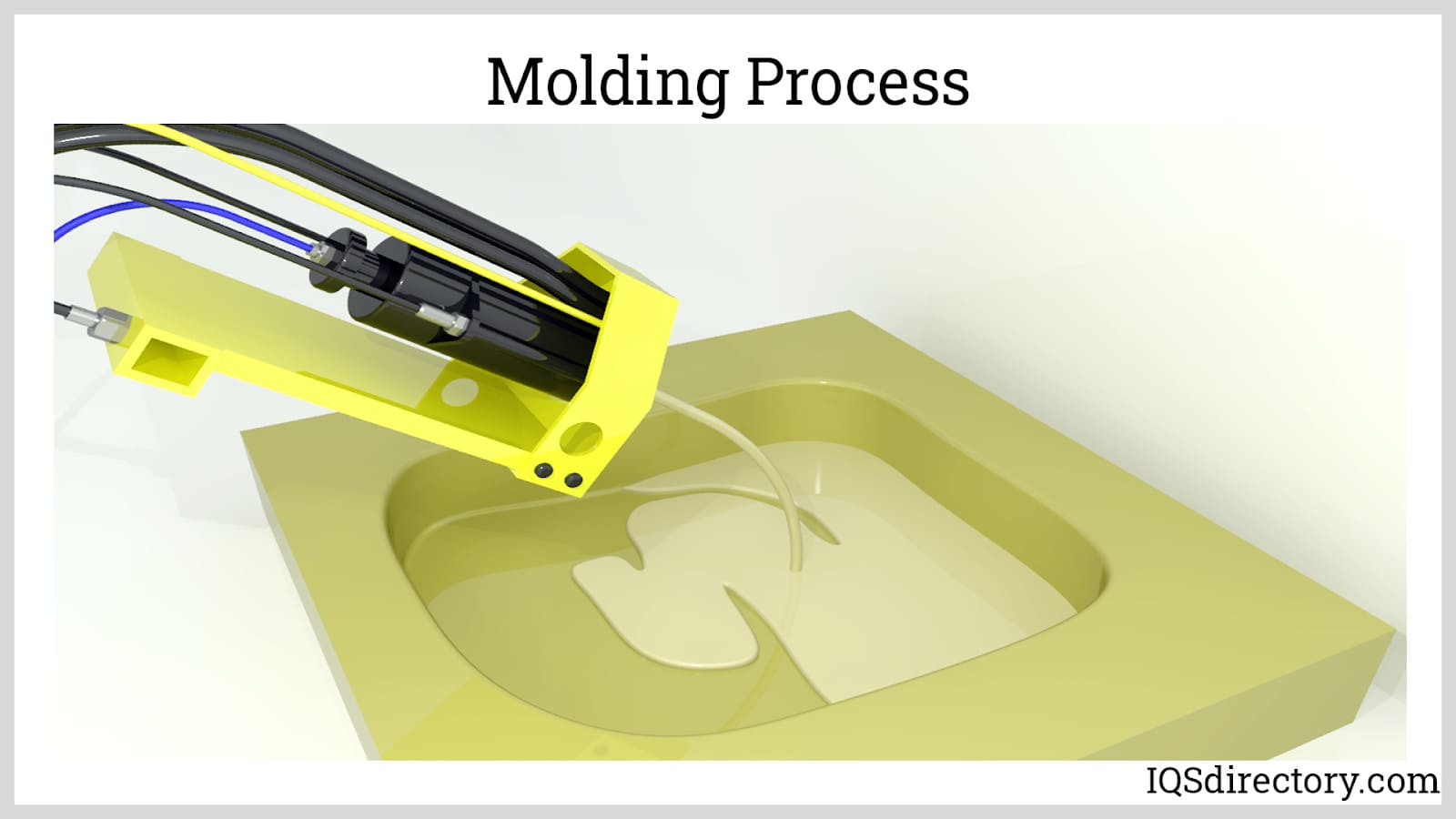 Molding foam process involves pouring or injecting the components through a mixing head and into a preheated mold, where the components react inside the mold causing the foam to rise.
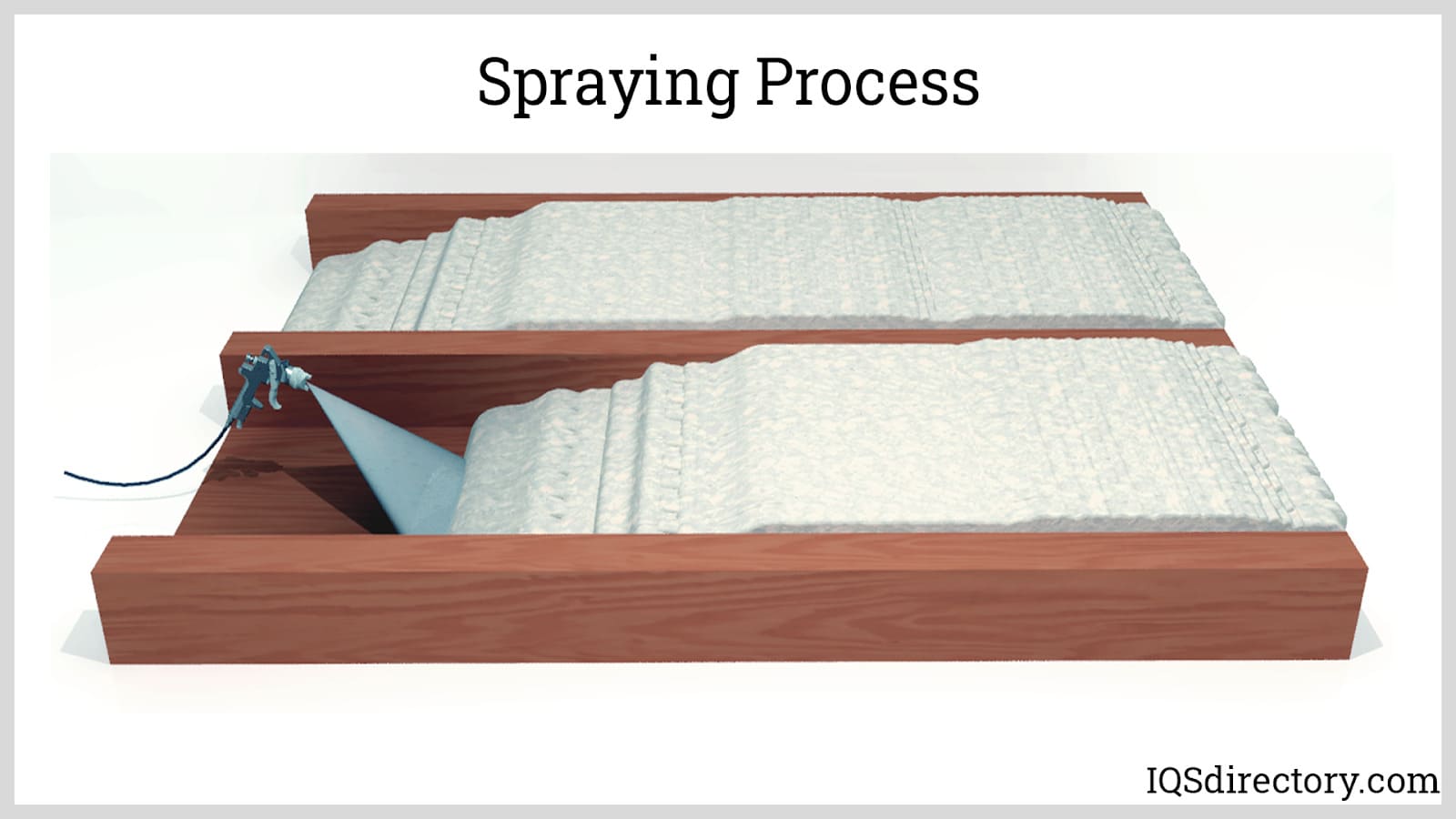 Spraying polyurethane projects and impinges the blended polymer system on a surface or inside the cavity.
Types of Fabricated Foam
When exploring fabricated foam, you will encounter many overlapping classifications based on polymer type, cell structure, density, firmness, manufacturing method, and post-conversion treatment. Some buyers start with a known material such as polyurethane or polyethylene, while others search by the job the foam needs to do. Asking whether you need cushioning, insulation, flotation, sealing, acoustical control, or moisture resistance can make material selection much easier.
- Closed-Cell Foam
- This higher-density foam consists of sealed cells that are physically separated from one another. Closed-cell foam offers strong compressive performance, low water absorption, and dependable thermal insulation, which makes it useful for gasketing, protective packaging, flotation, outdoor components, and building applications. Spray foam is one familiar example, but many sheet and roll materials also fall into this category for converted industrial parts.
- Open-Cell Foam
- Unlike closed-cell foam, open-cell foam consists of interconnected cells that allow air to move through the structure. This creates a lightweight, soft, and highly flexible material with strong sound absorption properties. Open-cell foams are commonly used for foam padding products, foam cushions, and acoustic treatments, where softness, airflow, and echo control are priorities.
- Polyethylene Foam
- One of the most widely used foam materials, polyethylene foam provides shock absorption, vibration damping, insulation, and dependable recovery. As a closed-cell extruded plastic foam, it offers predictable impact protection and moisture resistance, making it a popular choice for custom packaging, case inserts, tray liners, and protective transit components. Products ranging from electronics and furniture to sporting goods and temperature-sensitive items often use polyethylene foam for safe handling and shipment. Specialized grades such as Ethafoam are known for durable cushioning and bracing in returnable packaging and material handling.
- Cross-linked Polyethylene
- This fine-celled, resilient foam is known for its smooth surface, clean appearance, and strong physical durability. XLPE foam offers impact protection, moisture resistance, chemical resistance, and thermal insulation, which makes it a popular option in medical devices, industrial components, consumer products, and premium packaging applications where appearance matters along with performance.
- Flexible Polyurethane Foam
- A highly versatile category that includes both polyether and polyester foams, flexible polyurethane foam is widely used because of its resilience, comfort, and conversion flexibility. It is a foundational material for bedding, furniture, automotive interiors, acoustical products, and packaging solutions. Fabricators can slit, contour, laminate, and bond these foams into parts with very different firmness and support profiles.
- Foam for Acoustics
- Primarily composed of flexible polyurethane foam, acoustic foam is engineered to absorb and manage sound. Depending on the cut pattern, density, and installation method, it can reduce echo, control reverberation, or improve sound quality in studios, offices, theaters, equipment rooms, and home entertainment spaces.
- Adhesive-Backed Foam
-
Designed to provide secure placement and even pressure distribution, adhesive-backed foam is used in medical products, gasketing, mounting pads, weather seals, and protective cushioning. Pressure-sensitive adhesive options allow the foam to be applied quickly to metal, plastic, glass, and painted surfaces while maintaining the performance of the foam itself.
- Bonded Foam
- Formed by binding together shredded foam particles, bonded foam is an economical solution for carpet cushioning, underlayment, gym mats, padding, and support applications. Its durability and favorable cost profile make it a popular choice where recycled content and dense cushioning are both useful.
- Cushion Foam
- This broad category includes foams designed for padding in athletic gear, medical supports, furniture, protective equipment, and impact-absorbing applications. Cushion foams are selected for comfort, resilience, shock absorption, and recovery across a wide range of industries.
- Flexible Foam
- Often referring to polyurethane foams used in bedding and furniture, flexible foam combines softness, resilience, airflow, and recoverability. This foam type appears in mattresses, seating cushions, orthopedic supports, and ergonomic products where repeated compression is expected.
- Molded Foam
- A structured cellular foam that retains the precise shape of its mold after production, molded foam is used in applications that require repeatable geometry and controlled dimensions. Automotive components, headrests, seating systems, medical supports, and ergonomic products often rely on molded foam technology for custom-shaped parts.
- Foam Used in Packaging
- This general term covers many foam types used for shipping, handling, storage, and product protection. Packaging foams help protect fragile items by cushioning impact, limiting vibration, and controlling movement in transit. They can be fabricated into inserts, end caps, corner blocks, liners, pouches, and returnable dunnage systems.
- Plastic Foam
- Characterized by a high strength-to-weight ratio, plastic foams feature tiny gas bubbles dispersed within a polymer matrix. These materials balance low weight with durability and can be used for insulation, flotation, structural cores, protective enclosures, and converted industrial components.
- PVC Foam
- A rot-resistant, self-extinguishing closed-cell foam with low moisture absorption, PVC foam bonds well to many materials using standard adhesive techniques. Its structural stability and flame-performance characteristics make it useful in marine, automotive, transportation, and industrial applications.
- Rigid Foam
- Composed of tightly packed cells, rigid foam offers strong thermal insulation, dimensional stability, and moisture resistance. Its structural behavior makes it useful for construction insulation panels, flotation products, lightweight composite assemblies, and engineered core materials.
- Microcellular Foam
- Manufactured with microscopic cell structures, microcellular foam offers strong compression behavior and refined mechanical properties. It is used where performance needs to be tuned carefully, including automotive parts, protective padding, footwear, and high-precision industrial components.
- Nanocellular Foam
- An emerging area of foam technology, nanocellular foams feature cell sizes measured in nanometers rather than micrometers or millimeters. These ultra-fine foams show promise for high strength-to-weight performance, thermal insulation, and weight reduction in aerospace, biomedical, electronics, and advanced engineering applications.
Process and Materials of Foam Fabrication
Foam can be created from many materials, including plastics, elastomers, and rubber-based compounds. In many processes, foam production begins with blending reactive or thermoplastic ingredients and then introducing a blowing or gassing mechanism that expands the material into a cellular structure. Once the foam is formed into buns, sheets, rolls, or molded parts, fabricators can refine it through cutting, laminating, skiving, thermoforming, adhesive bonding, and other conversion processes tailored to the application.
Several foam cutting techniques allow precise conversion of foam materials into finished parts. One of the most widely used methods is die cutting, where foam strips, blocks, or sheets are stamped into repeatable shapes using a press or rotary die. For applications requiring greater precision, water jet cutting employs a fine stream of water under ultra-high pressure to achieve close tolerances that traditional die cutting may not match. Hot wire cutting, another specialized method, uses a heated wire to create smooth, straight cuts, making it useful for shaping foam into clean and uniform sections.
In addition to cutting, various foam forming techniques are used to turn bulk material into application-specific shapes. Thermoforming heats and reshapes foam into desired contours, while compression and felting-style processes can turn softer materials into denser, more compact structures. Laminating, heat sealing, and adhesive assembly can also be used to build multi-layer parts with specialized performance.
Once foam is initially produced through chemical processing or extrusion, it can be shaped into countless forms. Many production lines create buns, slabs, sheets, or rolls that are then cut, laminated, or machined into final parts. Common conversion methods include the following:
- Water Jet Cutting
- Ultra-high-pressure jets of water slice through foam materials with remarkable efficiency and accuracy. This method excels in creating precise cuts but is somewhat limited in the complexity of shapes it can produce.
- Die Cut Foam
- A specialized cutting instrument, typically incorporated into a press or rotary system, cuts foam into specific shapes. Die cutting is a cost-effective and straightforward approach, making it a popular choice for high-volume production.
- Hot Wire Foam Cutting
- By passing foam through a heated wire, this method enables smooth, clean cuts with excellent accuracy. While well-suited for detailed shaping, hot wire cutting becomes less efficient at larger scales.
- Laser Foam Cutting
- A high-intensity laser, often controlled by advanced programming, precisely cuts foam into intricate designs. This method allows for highly complex shapes and fine details, making it ideal for specialized applications.
- Other Foam Cutting Options
- Beyond these primary techniques, foam fabrication encompasses a broad spectrum of custom cutting and post-processing methods. The sheer variety of approaches allows for extensive customization in foam shaping, with nearly as many cutting and forming techniques as there are base foam materials.
- More advanced foam products may also involve various unique approaches to combining or layering foam via adhesives, heat treatments, lamination, and other joining techniques.
Machinery Used for Foam Fabricating
The wide variety of foam types and end uses makes it difficult to define one universal equipment list for foam fabrication. Flexible polyurethane, cross-linked polyethylene, PVC, rubber foam, and specialty technical foams may each require different production and conversion equipment. After initial formation, those materials may move through slitters, die presses, laminators, water jet systems, contour cutters, adhesive stations, CNC equipment, and inspection processes depending on the finished part.
Because foam fabricators often specialize in particular materials and converting methods, buyers should evaluate vendors carefully. Discussing the application, operating environment, tolerances, packaging method, and annual volume helps identify a supplier with the right capabilities. The best foam fabricator for a project is usually the one whose equipment, material knowledge, and quality controls line up with the product requirements.
Things to Consider When Choosing Foam Fabrication
There are several factors to consider when choosing a foam fabricator. Because foam conversion supports so many products and industries, the best supplier is usually the one that fits your material, tolerance, performance, and production needs rather than a company that is just broadly capable. Buyers often compare these points before requesting samples, prototypes, or production quotes.
- Equipped for the Right Foam Type
- One of the first factors is ensuring that the manufacturer is equipped to convert the exact foam type required for your project. Some companies handle a broad range of sheet, roll, and molded foams, while others focus on a narrower set of materials or processes. Verifying that a fabricator can meet your density, thickness, adhesive, tolerance, and compliance requirements helps avoid delays and supports reliable part performance.
- Familiar With Your Usage
- Beyond having the necessary equipment, a strong foam fabricator should also have experience with applications similar to yours. A supplier familiar with your industry, test standards, and product expectations can often recommend smarter material options, simplify production, and reduce waste. The more specialized your application is, the more helpful it is to work with a team that understands the end use.
- Transparency With the Consumer
- Given the many variables in foam fabrication, transparency from the manufacturer is highly valuable. Clear communication about production methods, costs, lead times, testing, and logistics helps prevent surprises that can affect schedule and budget. When a fabricator shares details about sourcing, prototyping, inspection, and quality control, buyers can plan with more confidence.
- Versatility in Foam Fabrication
- While specialized fabricators can offer deep expertise, it is often beneficial to work with a manufacturer capable of supporting multiple foam-related projects. A versatile supplier can simplify procurement by handling packaging inserts, seals, pads, insulation parts, and laminated assemblies under one roof. That flexibility can save time as product needs change and new programs come online.
New Foam Fabrication for Structural Support
For centuries, concrete, wood, and steel have been common structural materials in construction. Advances in composite engineering, however, have introduced new options such as fiber-reinforced polymer composites (FRP). These systems combine engineered resins, reinforcing fibers, and a foam core to create lightweight structures with impressive stiffness, corrosion resistance, and design flexibility.
FRP structures have been used for decades in marine engineering, renewable energy, aerospace, and transportation, where weight reduction and durability matter. Today, the same technology is gaining attention in architectural and civil projects because foam-cored composite structures can deliver strength with lower weight and reduced maintenance demands.
One advantage of FRP is its ability to form customized profiles and shapes, giving architects and engineers more design freedom. The material can also offer corrosion resistance, favorable durability, and lower weight than many traditional alternatives. In the right application, that mix of properties can support efficient installation and long service life.
Because of these advantages, FRP structures may require less maintenance over time, which can lower lifecycle costs for buildings and infrastructure. Foam-based FRP cores can also support moisture management, durability, and lightweight construction goals in the right design. As with any engineered system, performance depends on the application, loading conditions, and project specifications.
As foam fabrication and composite engineering continue to advance, FRP structures are likely to become more common in modern construction, infrastructure, marine assemblies, transportation equipment, and specialized industrial applications.
Handling Foam Waste
Foam fabrication processes can generate notable amounts of scrap material. Waste is commonly created during startup and shutdown, line changeovers, die cutting, trimming, and contouring, especially when blocks or sheets are converted into finished parts. A second major waste stream comes from foam products that have reached the end of their service life in packaging, furniture, automotive, medical, and consumer applications.
To reduce waste, shredded foam is often rebonded and repurposed into secondary products such as carpet padding, underlayment, pillow fill, and cushioning materials. Many manufacturers now focus on recovery and recycling programs instead of simple disposal because reuse can capture more value from scrap. Material segregation, clean collection, and logistics planning all play a role in making those programs work.
Recycling gives manufacturers a way to recover value from foam waste that might otherwise be discarded. The process still involves challenges, including collection, contamination control, densification, and transportation economics, especially for low-density materials. As sorting and processing technologies improve, more foam streams are becoming practical candidates for reuse and closed-loop or secondary-market programs.
Alternatives to Foam
Because foam serves many different functions, alternative materials vary widely by application. For insulation, buyers may compare foam with fiberglass, mineral wool, or cellulose-based products. In bedding and cushioning, natural fibers, textiles, springs, and specialty fills can be used instead of foam. For shipping protection, alternatives may include bubble wrap, corrugated structures, molded pulp, paper cushioning, or engineered cardboard inserts.
Even with those substitutes available, foam remains a preferred choice in many industries because it is versatile, cost-efficient, and easy to fabricate into precise shapes. The best material for any job depends on performance requirements, environmental exposure, lifecycle goals, and budget. Rather than choosing between “foam” and “non-foam” in the abstract, buyers usually get better results by comparing materials around the exact demands of the application.
Foam Fabricating Terms
- Additive
- A material used to modify the properties, processing, or final application of a base polymer. The amount of additive is typically measured in parts per hundred of the total resin within the polymer formulation.
- Air Flow
- The volume of air passing through a two-foot by two-foot by one-foot foam sample under a five-inch water pressure differential, expressed in cubic feet per minute.
- Air Traps
- Voids found in molded foam parts caused by air pockets trapped during mold fill-out. These air traps are characterized by smooth, shiny surfaces.
- Amine
- A category of compounds that serve as catalysts in polyurethane foam reactions.
- Anti-Static Flexible Polyurethane Foam
A foam containing electrically conductive material designed to prevent static electricity buildup or facilitate static discharge, primarily used for packaging electronic components.
- Auxiliary Blowing Agent (ABA)
- An additive that enhances the primary blowing agent, typically water, in foam production. It can contribute to the creation of softer or lighter foam.
- Ball Rebound
- A test method measuring the surface resilience of flexible polyurethane foam by dropping a steel ball of a specified weight from a set height onto the foam. The ball rebound value is expressed as a percentage of the original drop height.
- Basal Cells
- Large, irregular cells located just beneath the surface of a molded foam part.
- Blowing
- The foaming process in polyurethane production, where toluene diisocyanate reacts with water to generate carbon dioxide, expanding the material.
- Bonding
- The process of combining two or more components into a composite. Foam is often bonded to other foam grades or polyester fiber.
- Buffed
- A shaping or contouring method where foam is refined using abrasives to achieve the desired form.
- Bun
- A section of foam cut from continuously produced slab stock.
- Cells
- Hollow spaces within polyurethane foam, enclosed by polymer membranes or a polymer skeleton, created during the blowing process.
- CFC-Free Foams
- Flexible polyurethane foams manufactured without chlorofluorocarbons as auxiliary blowing agents.
- Cold Molding
- A production technique for high-resiliency foam where the pouring process occurs at or near room temperature, without additional heat application.
- Combustion Modifying Additive
- An additive that will decrease the ability of flexible polyurethane foam to ignite or make it burn more slowly.
- Compression Force Deflection (CFD)
- Also known as compression load deflection (CLD), this measures the foam’s load-bearing capacity.
- Compression Molding Foam
- A forming and fabricating process used for thermoplastics and rubber. Compression molding is a preferred technique for creating regular and contoured 3D foam parts with or without intricate details.
- Convoluting
- A specialized cutting process that creates a foam sheet with a dimpled texture.
- Clickability
- The ability of flexible polyurethane foam to return to its original shape after being compressed during die cutting.
- Closed Pour
- A molding process where the mold lid is locked in place, and the foaming mixture is injected through ports in the lid.
- Contour Cutting
- The cutting of foam blocks into specific patterns using specialized saws, producing custom foam parts.
- Core
- The inner portion of a foam piece, distinct from the outer skin.
- Crushing
- A mechanical or vacuum-assisted process used to open the closed cells in high-resilience slab stock or molded foam.
- Dead Foam
- A type of foam with low resiliency that does not quickly return to its original shape after being compressed.
- Deformation
- A process in which foam is permanently or temporarily reshaped through compression or heat exposure.
- Die Cutting
- A method similar to stamping, where foam parts are cut to precise shapes. This is ideal for large production runs requiring consistent sizing.
- Drilling
- The process of boring holes into foam to improve air circulation, facilitate tufted designs, or enhance softness.
- Elastomers
- Polymers that exhibit rubber-like elasticity, resisting deformation and returning to their original shape.
- Flame Lamination
- Also called "flame bonding," this technique bonds foam to fabric, film, or other materials by briefly melting the foam’s surface with a flame before pressing it onto the material.
- High Resilience (HR) Foam
- A polyurethane foam made with polymer or graft polyols. Its non-uniform cell structure improves comfort, support, resilience, and bounce compared to conventional foams.
- Hot Wire Cutting
- A cutting method using heated wires instead of saw blades, often used for shaping intricate foam components.
- Isocyanate
- A shorthand term for diisocyanates, one of the two main chemical ingredients in polyurethane foam production.
- Laminating
- The process of bonding multiple foam layers to form a composite. This can be achieved through adhesives or heat-based techniques like flame lamination.
- Peeling
- A method used to cut thin sheets from a foam cylinder.
- Skin
- The denser outer surface of foam, typically formed due to faster cooling compared to the core.
- Slab Stock
- A type of flexible polyurethane foam created through continuous pouring of liquid mixtures onto a conveyor system, forming a long, continuous loaf.
- Slitting
- A cutting process used to create foam sheets from a rectangular foam block.
- Voids
- Unintentional hollow spaces within foam structures, often resulting from improper mold filling or inadequate material flow.
- Thermoforming Foam
- A process used to shape thermoplastic foam, which has a sponge-like consistency and can be formed in solid or liquid states through frothing and cooling of a molten polymer.
More Foam Fabricating Information