Cooling Towers
A cooling tower is a heat rejection system that removes unwanted heat from water or other fluids used in industrial plants, manufacturing lines, HVAC installations, and power generation. Most towers rely on evaporative cooling, where a small portion of circulating water evaporates and carries heat into the air. The cooled water then returns to condensers, chillers, molds, compressors, or other equipment, helping operators control temperature, protect uptime, and support stable process performance.
Cooling tower performance is shaped by wet bulb temperature, approach, range, airflow, water loading, and fill efficiency. Because the entering air sets the practical cooling limit, engineers size towers around real operating conditions, not guesses. Psychrometric testing, water distribution, drift control, and fan performance all influence how efficiently a tower can reject heat, conserve water, and deliver dependable long-term service.
Cooling Towers FAQs
What is the main purpose of a cooling tower?
Its job is to reject unwanted heat so process or condenser water can be reused at a lower temperature in industrial, power, and HVAC systems.
How does evaporative cooling work in a cooling tower?
Warm water is spread across fill while air passes through the tower. A small portion evaporates, carrying heat away and cooling the remaining water.
What are the main types of cooling towers used in industry?
Common categories include natural draft and mechanical draft towers, plus cross-flow, counter-flow, open circuit, and closed-loop designs.
What factors affect the efficiency of a cooling tower?
Wet bulb temperature, fill design, airflow, water distribution, approach, range, drift control, and water quality all affect performance.
How are cooling towers used in HVAC systems?
HVAC towers reject heat from water-cooled chillers and condensers used in hospitals, airports, hotels, offices, and central plant systems.
What maintenance is required for cooling towers?
Regular cleaning, water treatment, blowdown control, inspections, and mechanical service help limit scale, fouling, corrosion, and microbial growth.
What safety standards apply to cooling towers?
Operators commonly follow environmental rules, fire protection guidance, site codes, and water-treatment practices suited to the application and location.
How long do cooling tower systems typically last?
Service life varies by design, water chemistry, operating conditions, and maintenance, but many well-maintained systems remain productive for decades.
A Brief History of Cooling Towers
Evaporative cooling has roots in ancient water storage and passive cooling methods, but modern cooling towers emerged during the industrial era as steam systems and condensers created steady demand for reusable cooling water. Nineteenth-century patents marked the shift from simple cooling methods to engineered heat rejection equipment.
By the early 1900s, inventors had refined cooling tower operation with better spray systems, improved fans, stronger circulating equipment, reliable electric motors, and durable plastics and structural materials. Those advances helped turn early evaporative devices into the packaged and field-erected towers used across industry today.
Applications of Cooling Towers
Industrial plants use cooling towers anywhere continuous heat removal is needed, including steel mills, food processing, chemical plants, refineries, pulp and paper operations, plastics production, and power generation. In these settings, the tower supports recirculating water loops, reduces freshwater demand, and helps heat exchange systems hold stable operating temperatures.
In commercial and institutional buildings, cooling towers work with water-cooled chillers and condensers to serve hospitals, airports, data-adjacent campuses, hotels, offices, and manufacturing sites. They are usually installed outdoors where airflow, service access, and sound control can be managed more effectively.
How Cooling Towers Work
During operation, warm water is pumped to the top of the tower and distributed across fill while air moves through the unit. As a small share of the water evaporates, heat leaves the system and the remaining water cools. That cooled water then returns to the process loop, condenser, or chiller for reuse.
No tower is completely closed to loss. Evaporation, drift, blowdown, and occasional leakage reduce water volume, so make-up water and water treatment are used to maintain level, chemistry, and reliable heat transfer.
Main Components of Cooling Towers
- Fill Material
- Provides the main heat-transfer surface. Film fill or splash fill spreads hot water into thin layers or droplets so more area contacts the cooling air. Common materials include PVC, polypropylene, and stainless steel.
- Water Distribution Deck (or Wet Deck)
- A nozzle or gravity-fed deck distributes hot water across the fill. Even coverage prevents dry spots and supports stable outlet water temperature.
- Air Inlet and Air Outlet
- Air enters through louvers or side openings and exits through the fan stack or discharge area. Cross-flow towers move air horizontally through falling water, while counter-flow towers move air upward against it.
- Intake Louvers
- Louvers guide incoming air, reduce splash-out, and help limit debris or sunlight entering the wet section.
- Drift Eliminators
- Drift eliminators capture entrained droplets before discharge, reducing water loss, chemical carryover, and visible mist.
- Cool Water Basin
- The basin collects cooled water for recirculation and often supports level control, sump connections, or strainers.
- Mechanical Components and Instrumentation
- Fans, pumps, and motor drives such as gearboxes and driveshafts move air and water through the tower. Sensors and controls monitor temperature, vibration, bearing condition, make-up water, and blowdown so operators can manage efficiency and maintenance.
- Casing or Shell
- The casing encloses the process and supports internal components. It may be made from treated wood, aluminum, hot dip galvanized steel, ceramic, or reinforced plastics such as glass fiber composites, depending on corrosion exposure, wind load, and service conditions.
Cooling Tower Design and Customization Considerations
Cooling tower design is usually defined by airflow path, draft method, materials of construction, footprint, sound limits, and water quality needs. Engineers compare counter-flow and cross-flow layouts, factory-assembled versus field-erected construction, and open versus closed-loop operation based on load profile, available space, climate, and operating budget. Buyers often ask which design can handle a given process heat load with the best mix of efficiency, service access, and life-cycle value.
Natural draft towers use buoyancy instead of fan power to move air. Their tall shell creates an updraft that suits very large circulation rates, especially in utility and power generation settings where space and civil construction are available.
Mechanical draft towers use powered fans for controlled airflow and predictable performance. They are common in industrial plants, refrigeration systems, and commercial HVAC because they fit tighter footprints and can be tuned for changing seasonal loads.
The round or bottle shape is often selected for industrial process cooling because it delivers strong thermal performance in a compact package. Rectangular towers are common in building services and central plant applications where modular layout or easier cell-by-cell expansion is preferred.
Beyond basic design, user-specific considerations such as chemical resistance, low noise, winter safeguards, corrosion protection, easy cleaning access, or local plume and drift expectations also shape tower selection.
- Wood towers were once common, but constant moisture can accelerate decay and raise fire concerns, so they are used less often today.
- Fiber-reinforced polyester and hot-dip galvanized steel towers offer long service life and strong structural performance, though steel can add weight, cost, and installation complexity.
- Plastic towers are lightweight, corrosion-resistant, and easier to transport or customize for many packaged and field-installed systems.
In sensitive environments such as schools, hospitals, offices, or residential zones, noise can shape equipment choice. Low-noise fans, improved fan stacks, vibration control, and thoughtful placement help the installation meet neighborhood and workplace expectations.
Cooling Tower Safety and Maintenance Considerations
Cooling towers operate in warm, wet conditions that can encourage biofilm, scale, corrosion, and microbial growth if water treatment is neglected. Routine inspection, basin cleaning, biocide programs, filtration, and Legionella risk management help protect equipment and occupants. Operators also monitor conductivity, pH, dissolved solids, and make-up water quality to keep heat transfer surfaces cleaner and performance steadier.
EPA rules affecting industrial process cooling towers make emissions control and responsible water management part of good operating practice.
Fire and safety standards such as NFPA 214 address tower materials, fill combustibility, and construction details for both field-erected and factory-assembled systems.
Choosing a Cooling Tower Manufacturer
The cooling tower market includes many regional builders and a smaller group of large global manufacturers. Buyers typically compare thermal performance, fan energy use, water consumption, spare-parts availability, delivery timelines, and long-term service costs.
When evaluating a supplier, ask whether the company engineers and manufactures the tower directly, how quickly it can provide replacement parts, and what field service, commissioning, inspections, and warranty support it offers. Another common question is whether the supplier can match the tower to your condenser load, water chemistry, sound limit, and site constraints instead of offering a generic unit.
A practical first step is reviewing the manufacturer directory linked at the top of this page to compare product categories and service capabilities.
A properly selected and maintained system can deliver many years of dependable heat rejection. For application-specific performance, many buyers work with designers listed on IQS Directory to size the tower, refine water distribution, and match the unit to plant demand, climate, and maintenance goals.
Cooling Tower Images, Diagrams and Visual Concepts
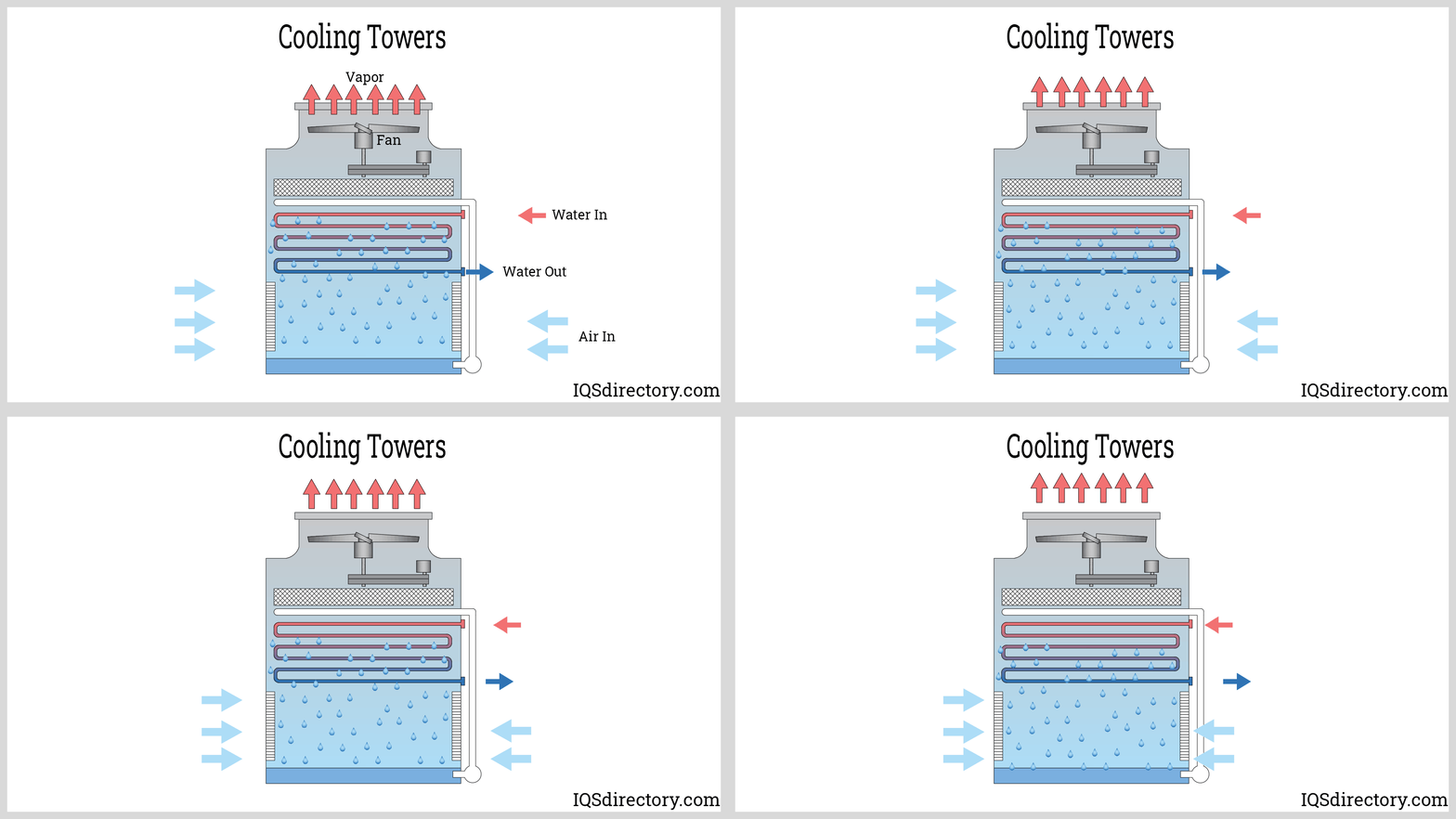 Diagram showing how a cooling tower transfers heat from water to air through evaporation.
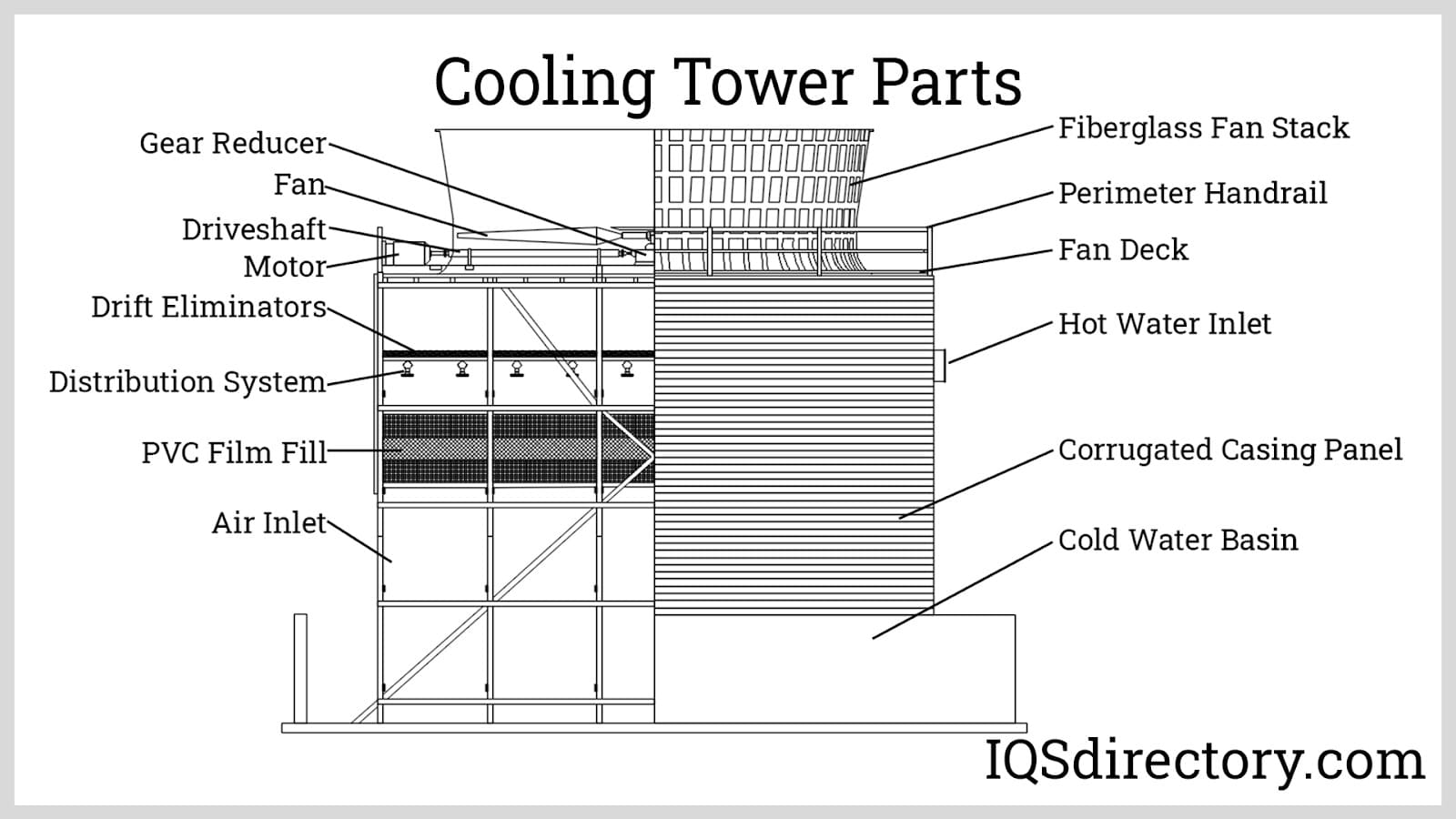 Cooling tower parts include structural, mechanical, and electrical components that support heat rejection.
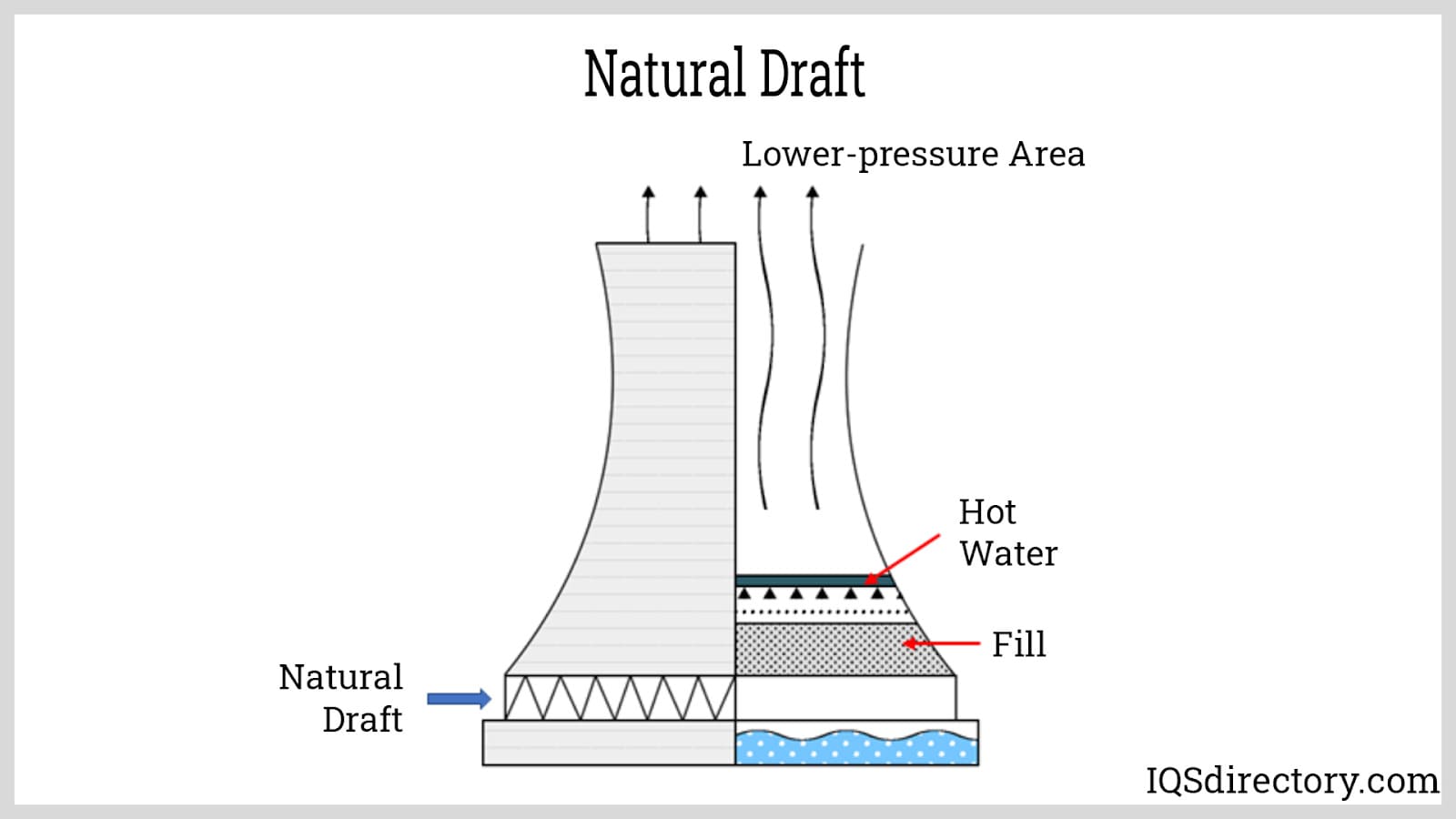 Natural draft cooling towers move air without fan power by using buoyancy inside the tower shell.
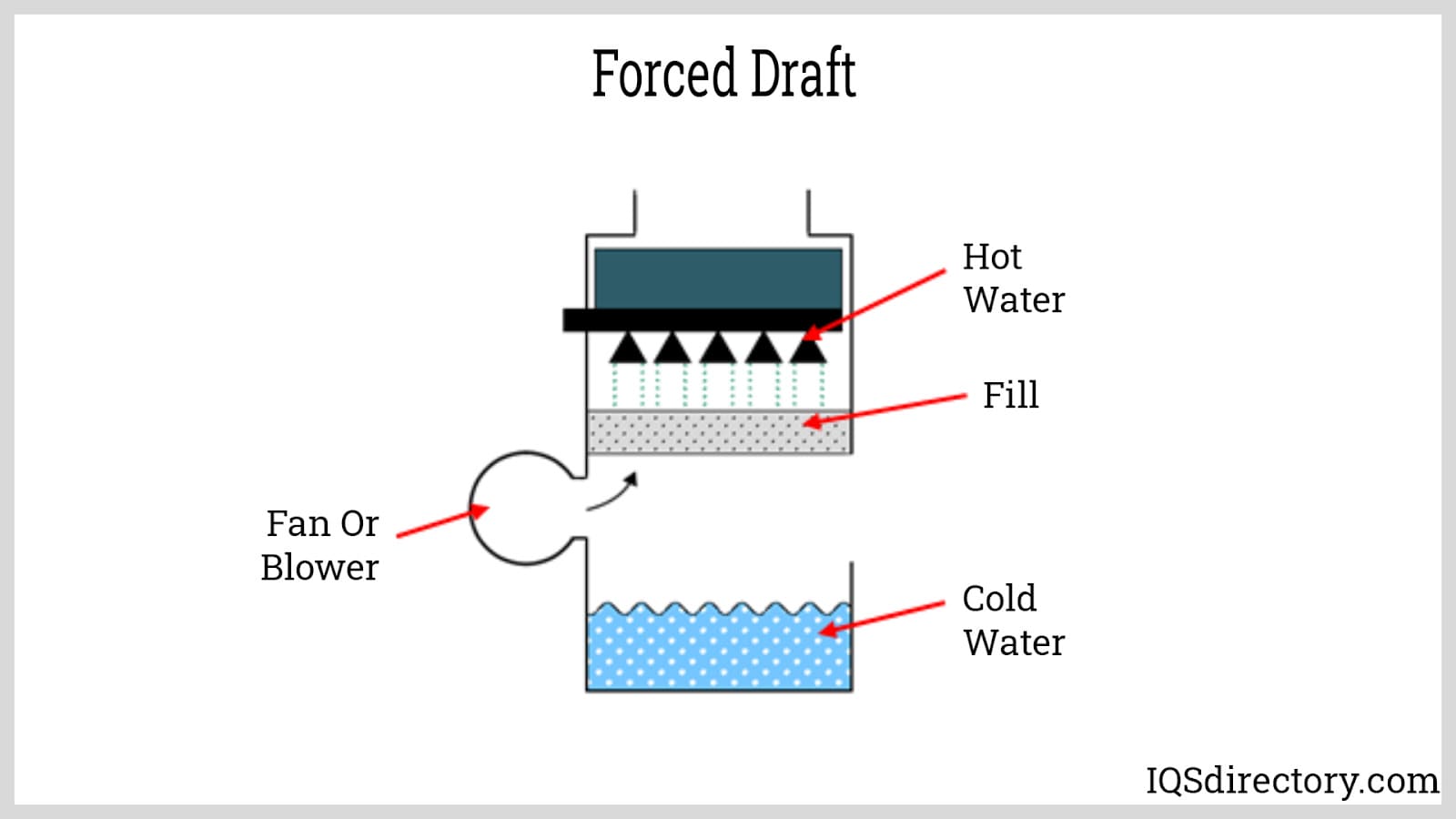 Forced draft towers use fans or blowers to push air into the cooling section.
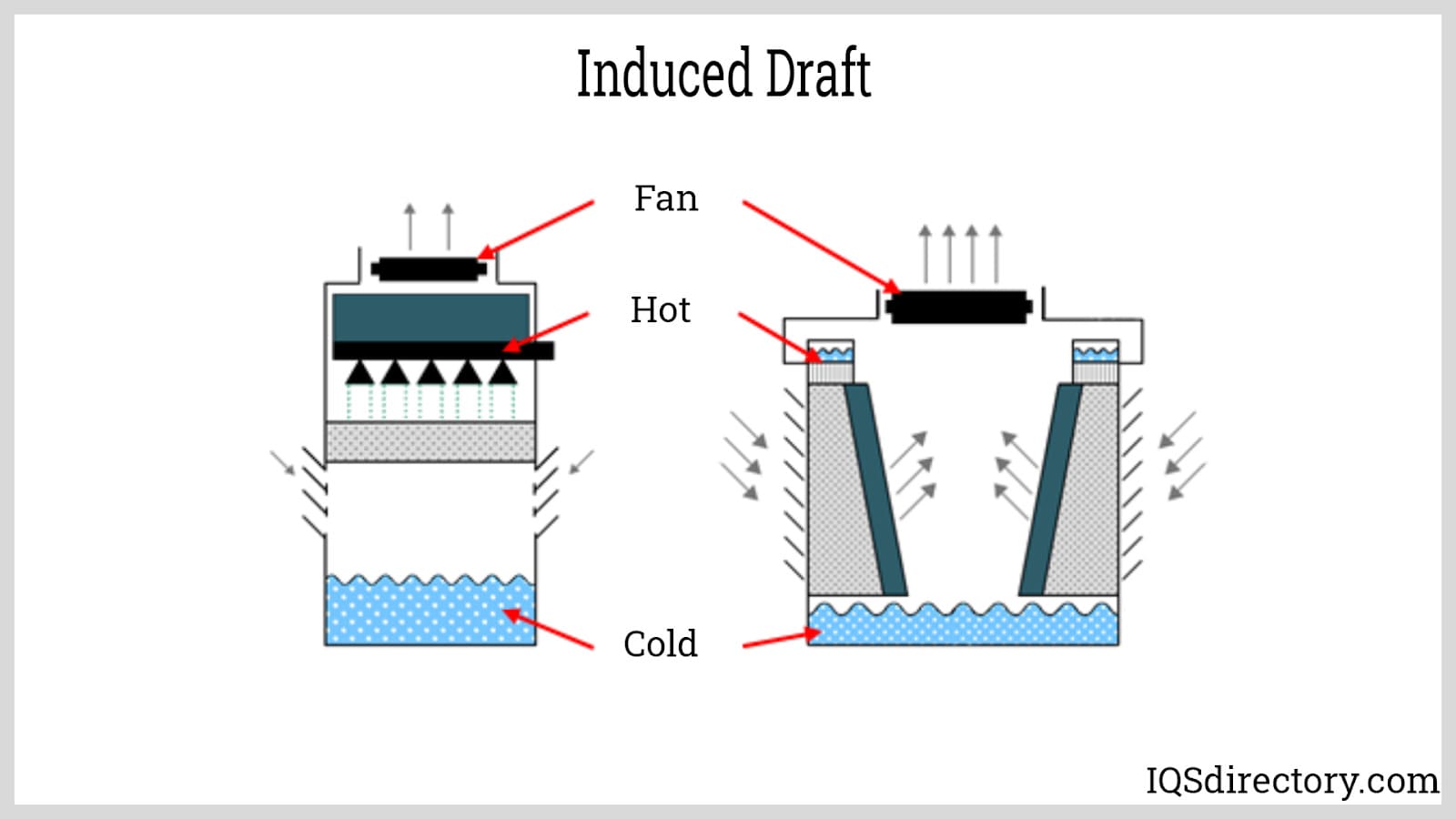 Induced draft towers use top-mounted fans to pull air through the tower.
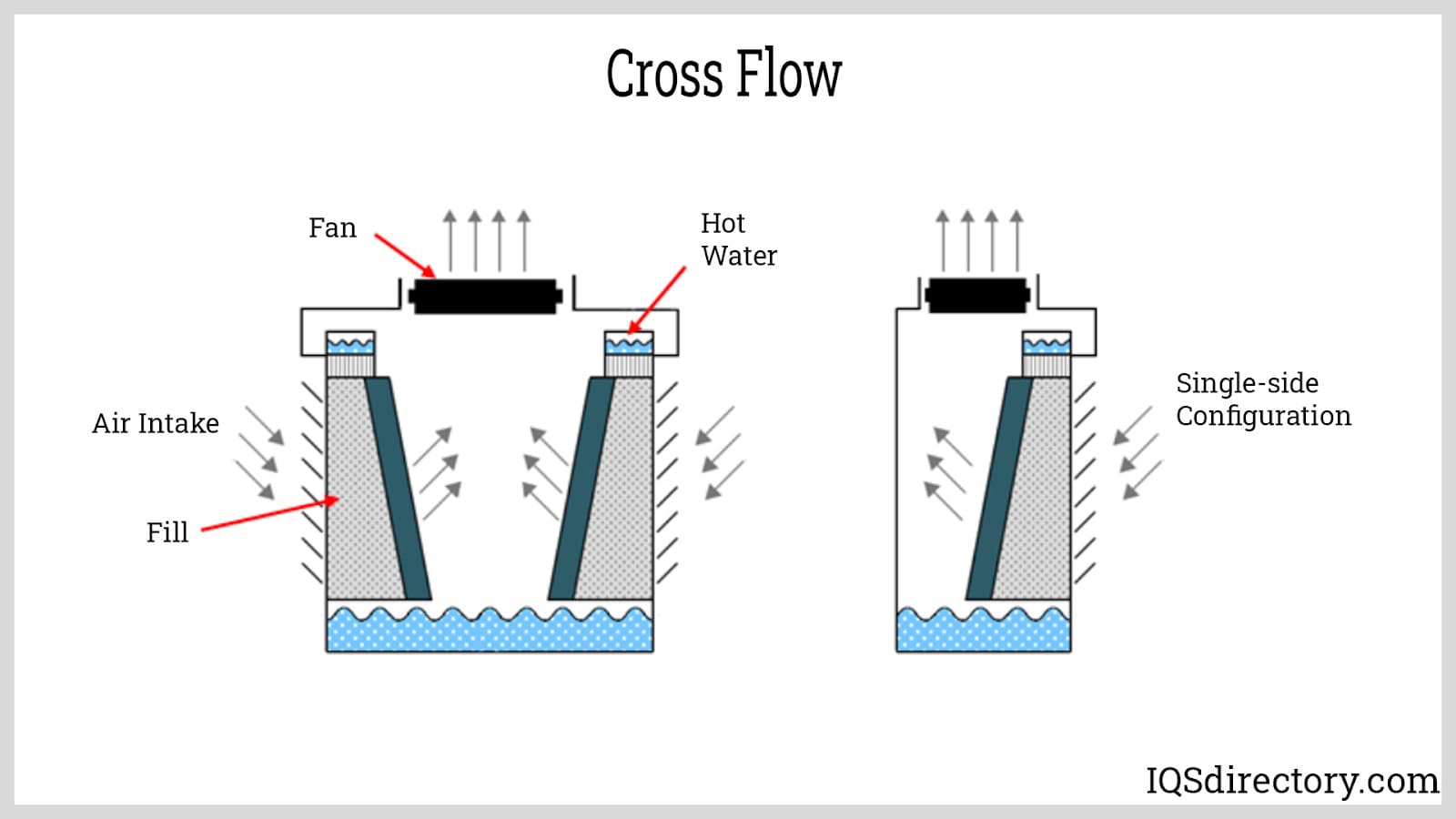 In cross-flow towers, air moves horizontally through fill while water falls downward.
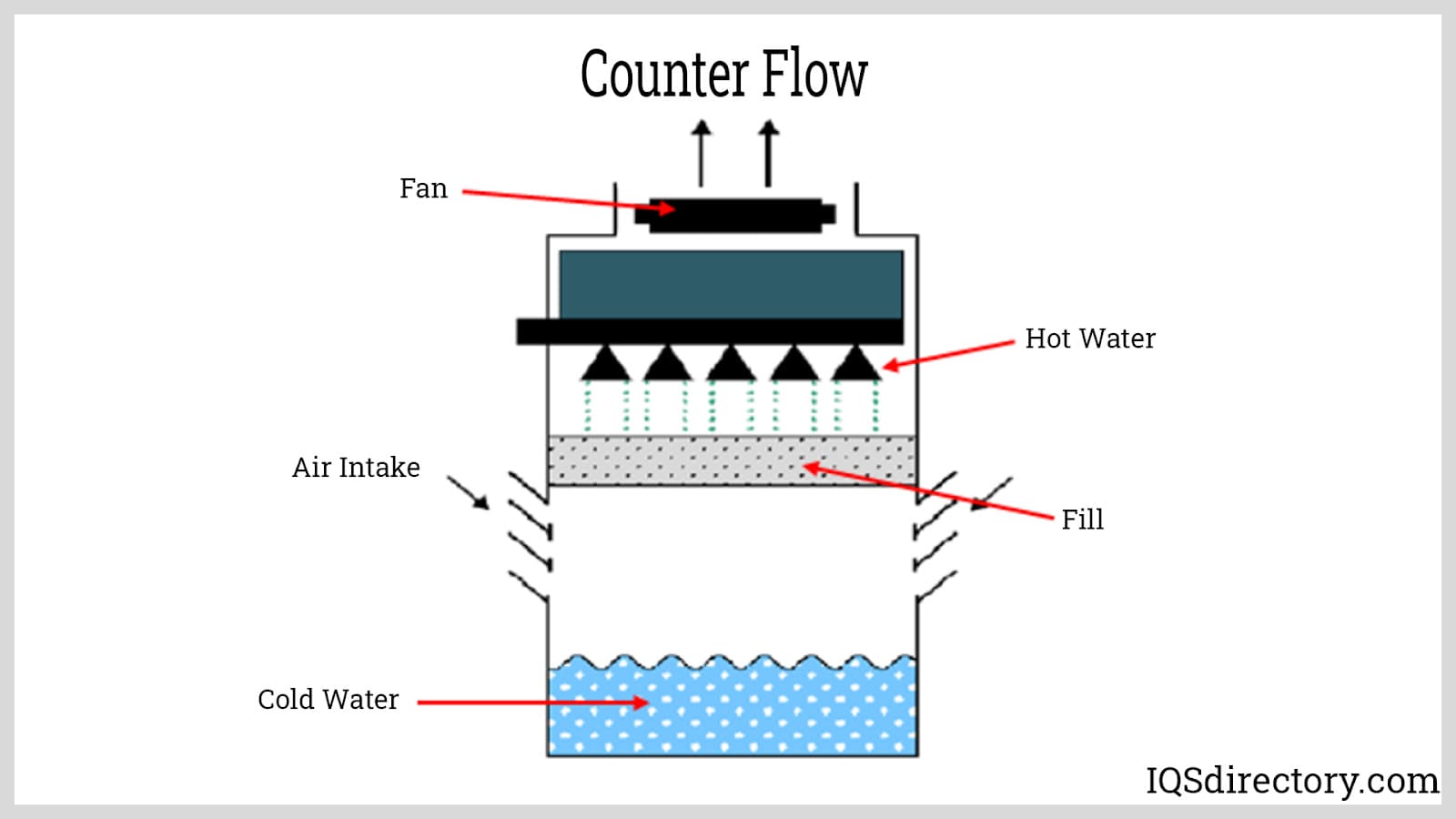 In counter-flow towers, air moves upward against falling water for compact, efficient heat exchange.
Cooling Tower Types
-
Air Conditioner Cooling Towers
Used with central air conditioning systems to reject heat from condensers serving large buildings.
Ceramic Cooling Towers
Selected when appearance and weather resistance matter, though they are less common than fiberglass or steel units.
Chillers Cooling Towers
Paired with chiller systems to reject condenser heat and improve cooling plant efficiency.
Closed Loop Cooling Towers
Keep the process fluid isolated from ambient air, reducing fouling and contamination.
Cooling Tower Design
Covers airflow pattern, draft method, materials, footprint, sound level, and water-treatment needs.
Cooling Tower Manufacturers
Companies that design, build, distribute, or service cooling tower equipment and related components.
Cooling Tower Systems
Complete heat rejection assemblies that cool recirculating water for reuse in process or HVAC loops.
Counterflow Cooling Towers
Move air upward against falling water for compact footprints and strong thermal performance.
Cross Flow Cooling Towers
Move air horizontally through falling water and are often easier to inspect and maintain.
Disinfection Cooling Towers
Used where treated water quality and microbial control are part of the operating plan.
Evaporative Cooling Towers
Cool water by evaporating a small portion of it into a moving airstream.
Fiberglass Cooling Towers
Known for corrosion resistance, light weight, and suitability for harsh or wet environments.
HVAC Cooling Towers
Serve water-cooled chillers and condenser systems in commercial and industrial buildings.
Hyperbolic Cooling Towers
Large natural draft structures used where very high water circulation rates are required.
Industrial Cooling Towers
Built for manufacturing, processing, utility, and heavy-duty plant cooling loads.
Mechanical Draft Cooling Towers
Use fans to push or pull air through the tower for controlled performance.
Natural Draft Cooling Towers
Use buoyancy and tower height rather than fan power to move air.
Open Circuit Cooling Towers
Bring water into direct contact with air for efficient evaporative heat rejection.
Water Cooling Towers
General-purpose towers that remove heat from recirculating water in many applications.
Cooling Tower Terms
-
Air Conditioner Cooling Towers
Used with central air conditioning systems to reject heat from condensers serving large buildings.
Ceramic Cooling Towers
Selected when appearance and weather resistance matter, though they are less common than fiberglass or steel units.
Chillers Cooling Towers>
Paired with chiller systems to reject condenser heat and improve cooling plant efficiency.
Closed Loop Cooling Towers
Keep the process fluid isolated from ambient air, reducing fouling and contamination.
Cooling Tower Design
Covers airflow pattern, draft method, materials, footprint, sound level, and water-treatment needs.
Cooling Tower Manufacturers
Companies that design, build, distribute, or service cooling tower equipment and related components.
Cooling Tower Systems
Complete heat rejection assemblies that cool recirculating water for reuse in process or HVAC loops.
Counterflow Cooling Towers
Move air upward against falling water for compact footprints and strong thermal performance.
Cross Flow Cooling Towers
Move air horizontally through falling water and are often easier to inspect and maintain.
Disinfection Cooling Towers
Used where treated water quality and microbial control are part of the operating plan.
Evaporative Cooling Towers
Cool water by evaporating a small portion of it into a moving airstream.
Fiberglass Cooling Towers
Known for corrosion resistance, light weight, and suitability for harsh or wet environments.
HVAC Cooling Towers
Serve water-cooled chillers and condenser systems in commercial and industrial buildings.
Hyperbolic Cooling Towers
Large natural draft structures used where very high water circulation rates are required.
Industrial Cooling Towers
Built for manufacturing, processing, utility, and heavy-duty plant cooling loads.
Mechanical Draft Cooling Towers
Use fans to push or pull air through the tower for controlled performance.
Natural Draft Cooling Towers
Use buoyancy and tower height rather than fan power to move air.
Open Circuit Cooling Towers
Bring water into direct contact with air for efficient evaporative heat rejection.
Water Cooling Towers
General-purpose towers that remove heat from recirculating water in many applications.