Fiberglass Fabrication
Fiberglass fabrication combines fine glass fibers with thermoset resins to produce lightweight, high-strength composite parts for industrial and commercial use. Manufacturers turn fiberglass reinforced plastic into panels, tanks, pipes, housings, structural shapes, and custom molded components that need corrosion resistance, dimensional stability, weather durability, electrical insulation, and dependable long-term performance in demanding environments.
Fiberglass Fabrication FAQ
What is fiberglass fabrication used for?
Fiberglass fabrication is used to manufacture strong, lightweight composite products by combining glass fibers with resin systems. These fiberglass parts are widely used in construction, automotive, marine, HVAC, water treatment, and industrial processing applications where corrosion resistance, electrical insulation, durability, and a favorable strength-to-weight ratio matter.
How is fiberglass made during the molding process?
Fiberglass is made by melting glass and drawing it through fine openings to create continuous fibers or chopped strands. Those fibers are woven, layered, or sprayed with resin, then cured with heat, pressure, or vacuum methods to form durable panels, pipes, tanks, enclosures, and molded fiberglass components through open, closed, or centrifugal molding processes.
What are the main types of fiberglass materials?
Fiberglass materials are commonly categorized as E-glass, A-glass, E-CR-glass, C-glass, D-glass, R-glass, and S-glass. Each option offers a different mix of tensile strength, chemical resistance, dielectric performance, weight, and durability, which helps fabricators match the composite to the application, operating environment, and end-use demands.
What resins are commonly used in fiberglass fabrication?
Polyester and epoxy resins are the most common resin systems used in fiberglass fabrication. Polyester resin is cost-effective and corrosion-resistant for many standard FRP applications, while epoxy resin delivers stronger bonding, added durability, and better performance in high-load, weight-sensitive, or precision composite parts.
Why is fiberglass preferred over aluminum in some applications?
Fiberglass is often selected over aluminum because it is lighter, corrosion-resistant, non-conductive, and easier to shape into custom molded or structural forms. It also provides thermal and electrical insulation, resists many chemicals and weather conditions, and can be pigmented throughout the material instead of relying on surface coatings alone.
What industries commonly use fiberglass products?
Fiberglass products are widely used in construction, automotive, marine, HVAC, telecommunications, medical, and industrial markets. Their combination of strength, insulation value, corrosion resistance, low maintenance, and fabrication flexibility makes them suitable for both structural fiberglass components and protective enclosures.
What factors should be considered when choosing a fiberglass fabricator?
When choosing a fiberglass fabricator, look at experience with your application, molding capabilities, production volume, scheduling flexibility, finishing options, and quality control standards. Buyers often ask: can this manufacturer handle custom fiberglass parts, meet delivery timelines, and scale production without sacrificing consistency or performance?
The History of Fiberglass Fabrication
The earliest form of fiberglass differed from the fiberglass composites used today. Modern fiberglass usually refers to glass fiber reinforced plastic, but the original use of the term was tied to mass-produced glass wool used primarily for insulation and thermal control.
In 1932, Games Slayter developed a process for mass-producing glass fiber and used it to create glass wool marketed as 'fiberglas.' That development helped establish glass fiber as a commercially practical material for insulation and later composite manufacturing.
The modern fiberglass plastic composite appeared a few years later, in 1936, when DuPont combined fiberglass with resin. Replacing the gas-filled structure of glass wool with plastic reduced insulation performance but greatly increased structural strength, opening the door to fiberglass use in construction, industrial products, and molded parts.
By 1942, peroxide curing and polyester resin systems similar to those used in modern fiberglass fabrication were being applied in production. Since then, advances in plastics, reinforcements, curing methods, and fabrication equipment have expanded the range of fiberglass products, finishes, and performance grades available to manufacturers and buyers.
Today, fiberglass most often refers to glass fiber composite materials made with glass reinforcement and resin matrices, though the term can still include related glass fiber materials such as lower-density glass wool used for insulation. In industrial sourcing, fiberglass usually means FRP or GRP products built for strength, corrosion resistance, and service life.
Fiberglass Fabrication Process
Fiberglass molding is one of the most widely used processes for manufacturing fiberglass reinforced plastic components. Production starts by melting glass and drawing it through fine openings to create continuous fibers. Those fibers are formed into mat, cloth, or reinforcement layers, then combined with resin and cured through heat, pressure, or related molding methods. This approach is used to make a wide variety of products, including panels, racing shells, circuit board substrates, machinery supports, housings, and many other industrial and commercial parts.
Fiberglass works well in these applications because it tolerates temperature swings, resists water absorption, offers a strong strength-to-weight ratio, handles many chemicals, and performs well as an electrical insulator. One familiar example is corrugated fiberglass used in building construction. This material is commonly produced as layered fiberglass sheets and panels, which are widely used for roofing, siding, skylights, and greenhouse structures.
There are three main fiberglass fabrication methods used across the industry: open molding, closed molding, and centrifugal molding.
Open Molding: In this method, a gel coat is applied and cured in a one-piece mold. Layers of fiberglass reinforcement and resin are then built up in the mold and allowed to cure. Open molding is often used for larger parts, prototypes, and lower-volume production, though it can generate more emissions than enclosed methods.
Closed Molding: This method uses a two-part mold, often beginning with a gel coat. Chopped or laminated glass reinforcement is placed in the mold, which is then sealed so catalyzed resin can be injected under pressure or vacuum-assisted flow. Closed molding supports cleaner processing, better repeatability, and improved surface control.
Centrifugal Molding: This process is used for cylindrical fiberglass products such as tanks, ducts, and pipes. A rotating cylindrical mold receives gel coat, resin, and short fiber layers until the target wall thickness is reached, producing round composite parts with consistent structure.
Once a fiberglass part has been formed in the mold, the next steps usually include demolding, inspection, trimming, and finishing. Depending on the part geometry and production method, demolding may be done mechanically, manually, or with compressed air assistance to protect the surface and maintain dimensional accuracy.
After demolding, the fiberglass structure is trimmed or cut to final dimensions using specialized tools and cutting systems. Some shops rely on automated equipment guided by software and precision fixtures, while others use manual trimming and finishing tools for short runs, repairs, prototypes, or custom fiberglass fabrication work.
Some fiberglass products receive additional coatings, liners, surface treatments, or finishing operations after trimming to meet appearance, chemical exposure, abrasion, or service requirements. In many cases, however, fiberglass can be engineered during fabrication to deliver the needed properties with minimal secondary processing.
In addition to fiberglass enclosures such as tanks and boxes , fiberglass reinforced plastics are also used to produce fiberglass pipes and rods, all of which serve important roles across construction, utilities, processing, transportation, and industrial manufacturing.
Material Types for Glass Fabrication
Fiberglass and resin combinations are available in many forms to produce products with different strength levels, surface finishes, chemical resistance, weight profiles, and electrical properties. In most cases, fiberglass is grouped into seven main glass types, then paired with resin systems such as epoxy or polyester to create the final FRP or GRP material.
To identify the right fiberglass material, buyers and fabricators typically compare the base glass fiber, the resin system, the reinforcement style, and the intended service environment. Those variables shape the final product’s strength, stiffness, corrosion resistance, dielectric behavior, finish quality, and fabrication cost.
Glass Classifications
Fiberglass is traditionally assigned one of seven classifications based on composition and performance characteristics:
E-Glass: The standard and most widely used glass-reinforced plastic fiberglass for general industrial and commercial applications.
A-Glass: A specialty glass formulation with a lower boron oxide content, used where that chemistry is preferred.
E-CR-Glass: A fiberglass grade engineered for strong acid and corrosion resistance in harsher service environments.
C-Glass: A fiberglass type often used for glass staple fibers and applications that benefit from corrosion-resistant characteristics.
D-Glass: A fiberglass material known for a relatively high dielectric constant in electrical or electronic uses.
R-Glass: A fiberglass formulation developed for stronger mechanical performance and demanding structural applications.
S-Glass: A high-tensile-strength fiberglass used where added performance and durability are needed.
Resins
The resin paired with fiberglass has a major effect on the finished product’s durability, chemical resistance, strength, finish quality, and fabrication method. Most fiberglass products use thermosetting resins, with polyester and epoxy remaining the most common choices for molded and structural composite parts.
Polyester Resin: A cost-effective and widely used resin for fiberglass fabrication that offers very good corrosion resistance and reliable performance in many FRP applications.
Epoxy Resin: A higher-performance resin used when applications call for stronger bonding, added durability, and better strength-to-weight performance, though it generally costs more than polyester resin.
Other Fiberglass Types
Beyond the main glass classifications, fiberglass products are often described by the application, product family, or performance need they are designed to serve:
Fiberglass Pipe: FRP piping made for corrosion resistance, long service life, and reliable performance in industrial fluid-handling systems.
Fibercast Pipe: A family of fiberglass pipe products developed for chemical processing and fluid-handling applications.
Fiberglass Reinforced Plastic (GRP): A plastic composite strengthened with extruded or layered glass fibers; this is often what buyers mean when they refer to fiberglass in manufacturing.
Structural Fiberglass: Heavy-duty fiberglass components used in construction, processing equipment, platforms, supports, and other industrial structures.
Fiberglass Fabrication Images, Diagrams and Visual Concepts
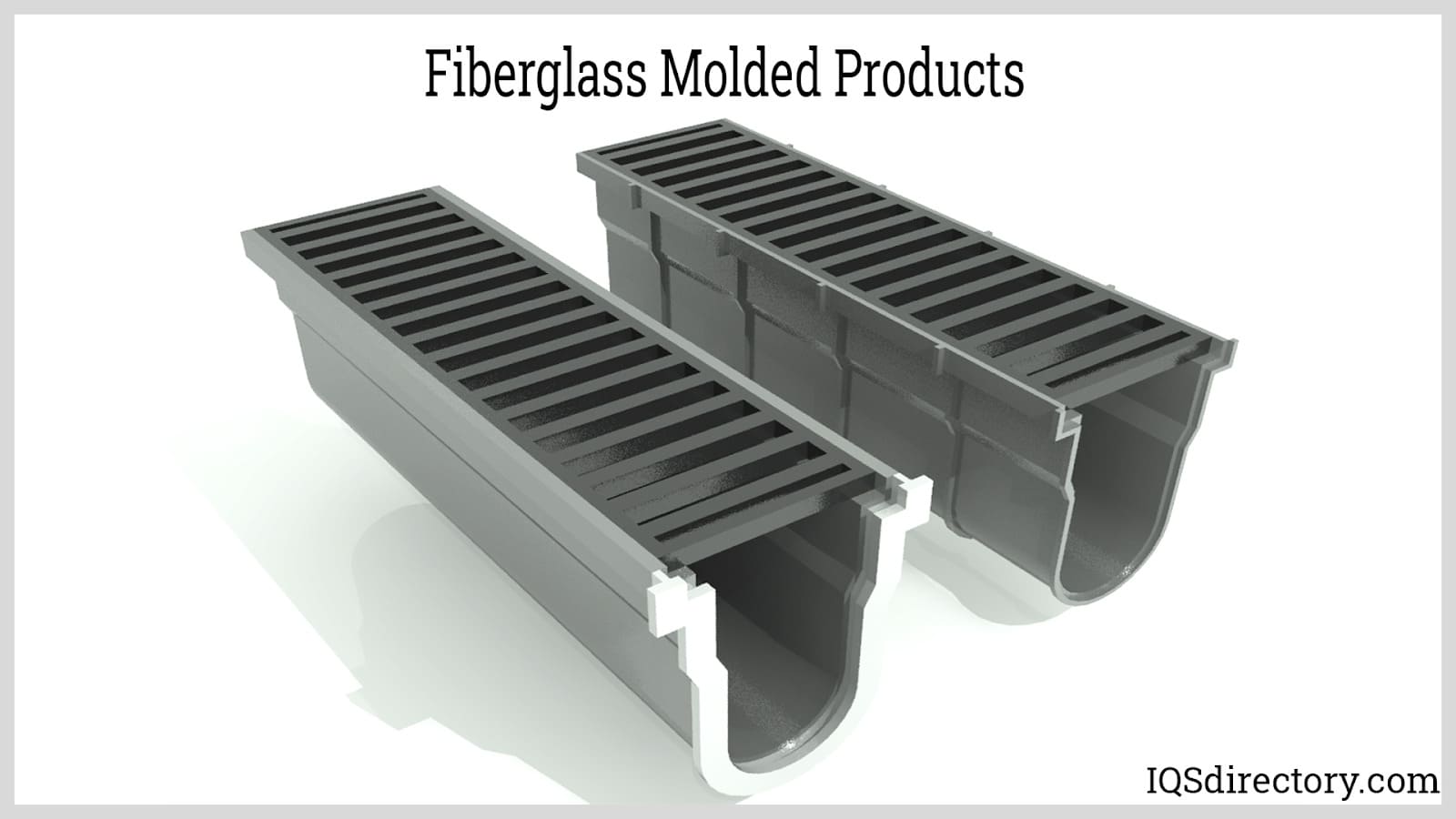 Fiberglass molding, a method for forming complex and intricate parts using fiberglass resin for reasons such as cost of the materials, ease of production, durability, and replicability.
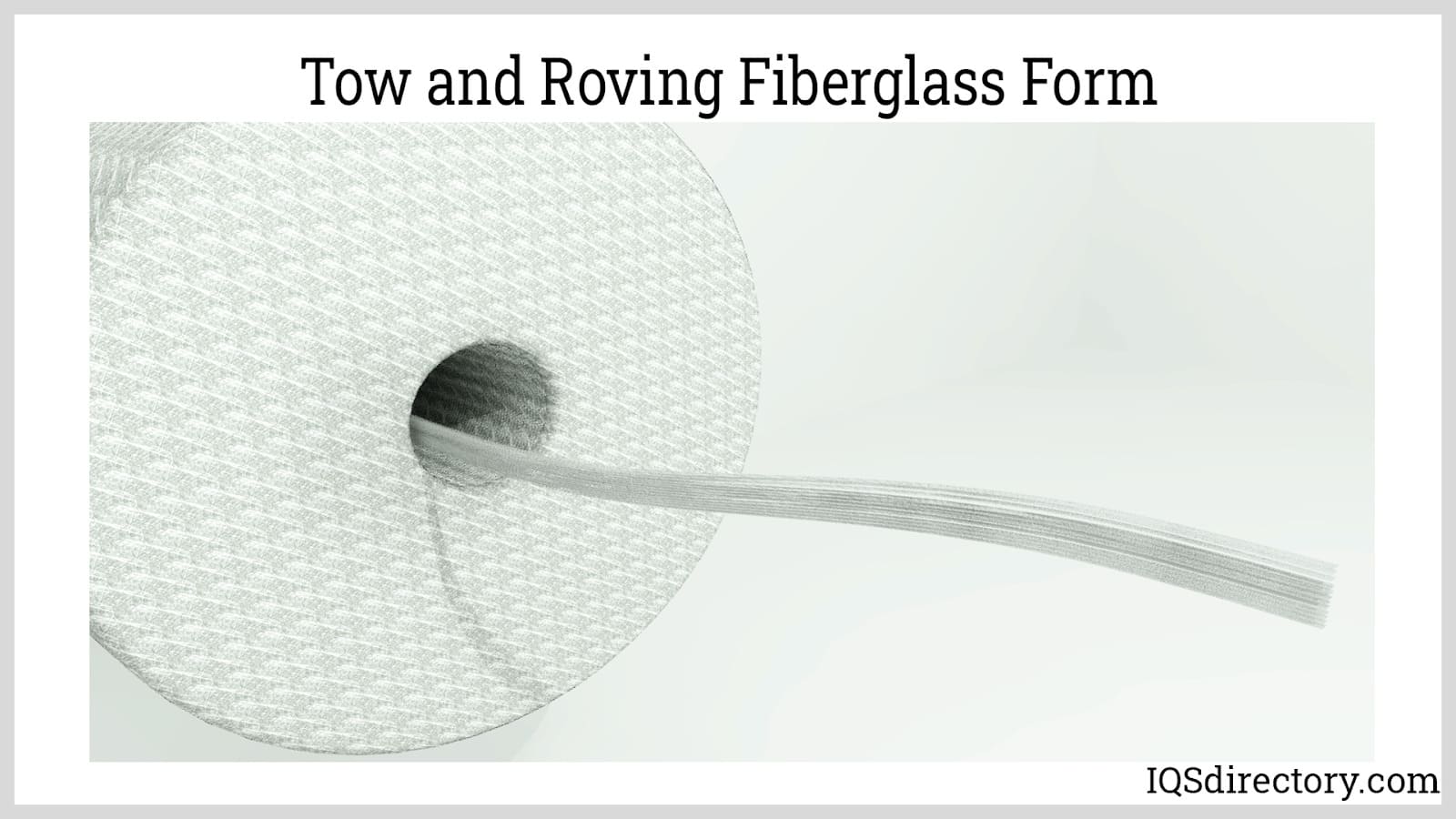 Tow and roving fiberglass, the form that has the highest properties of all fiberglass.
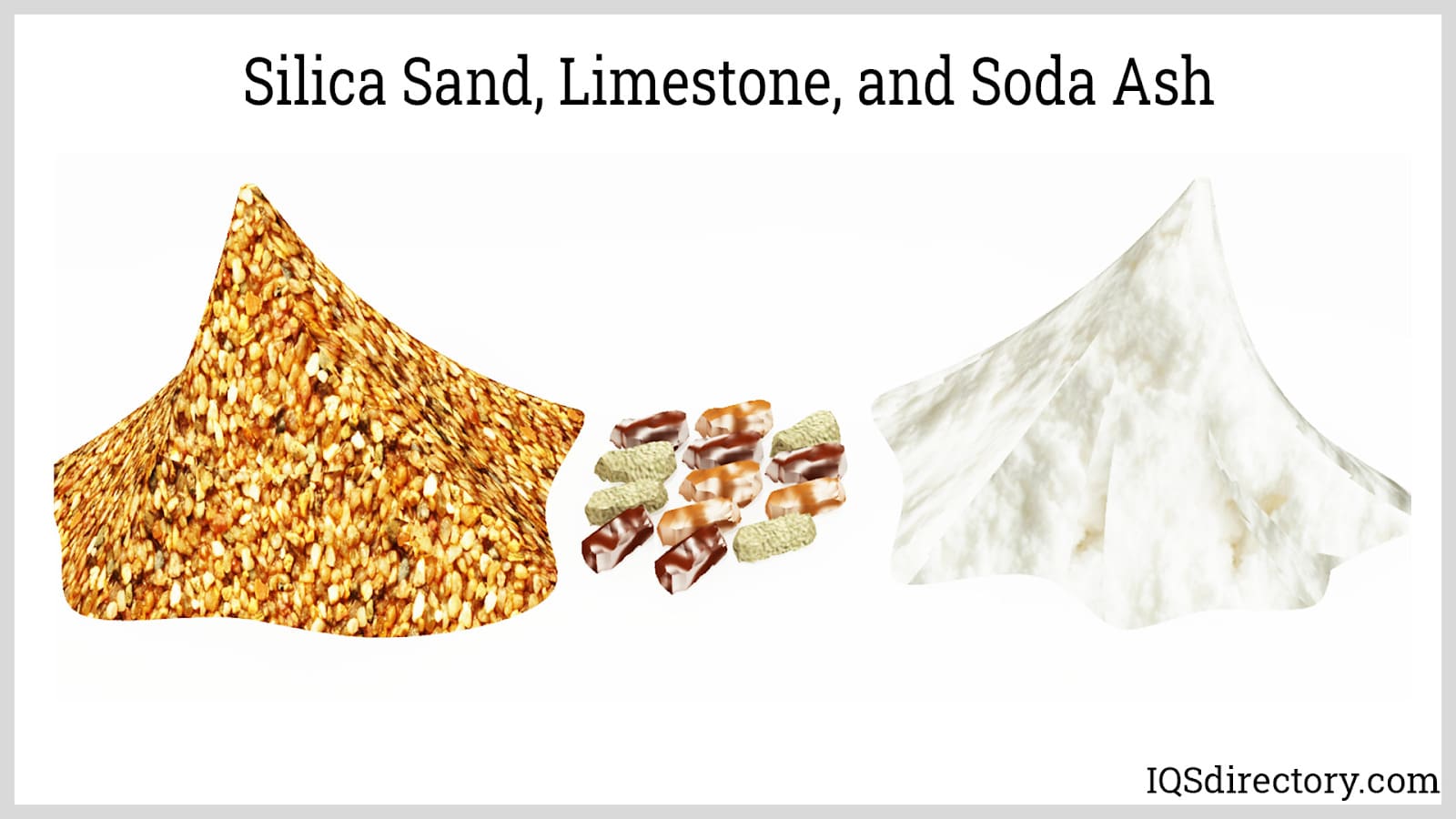 The ingredients for fiberglass include silica sand, limestone, and soda ash, which is carefully measured and mixed to form the batch.
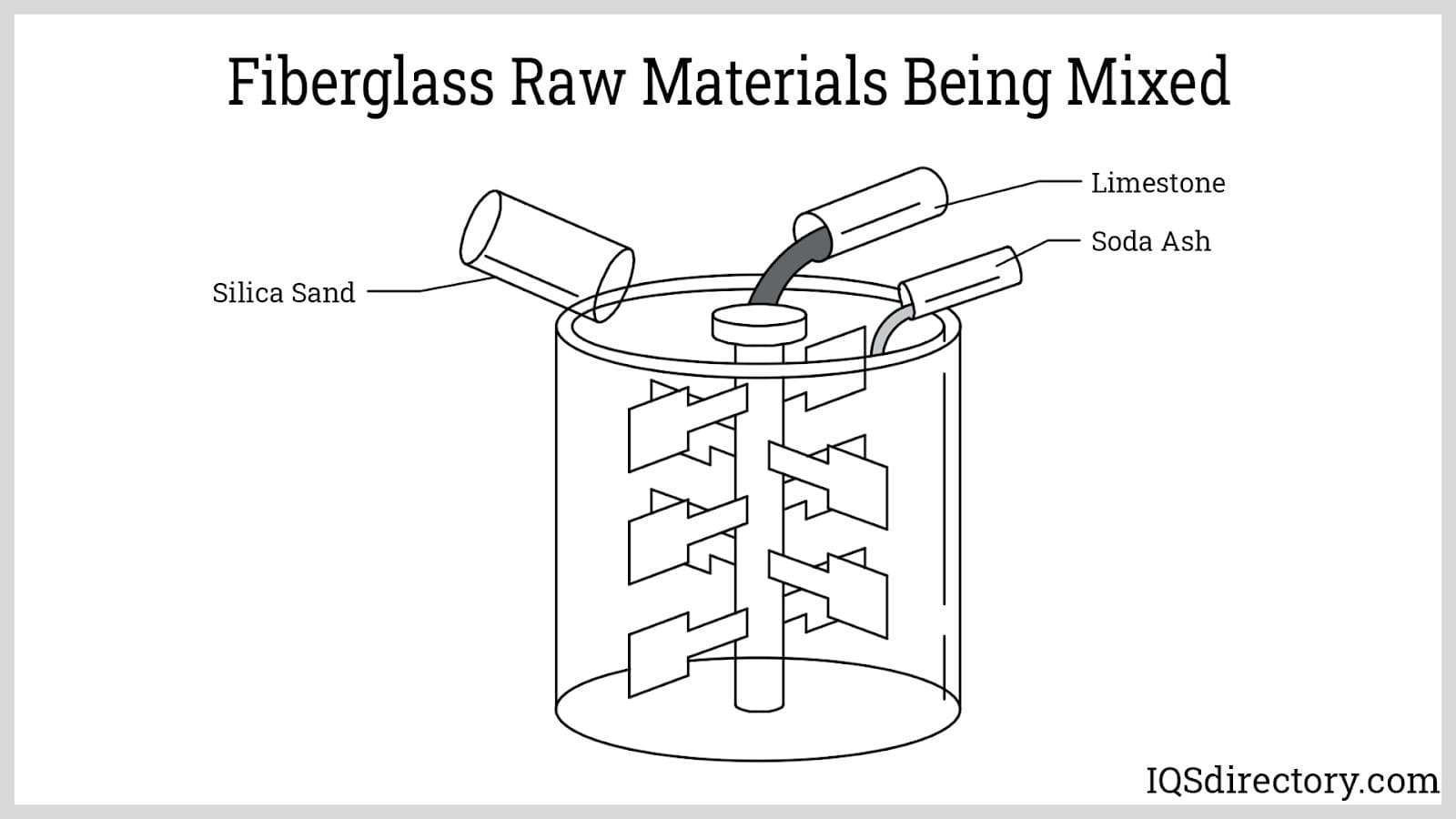 The process for melting the material to create fiberglass.
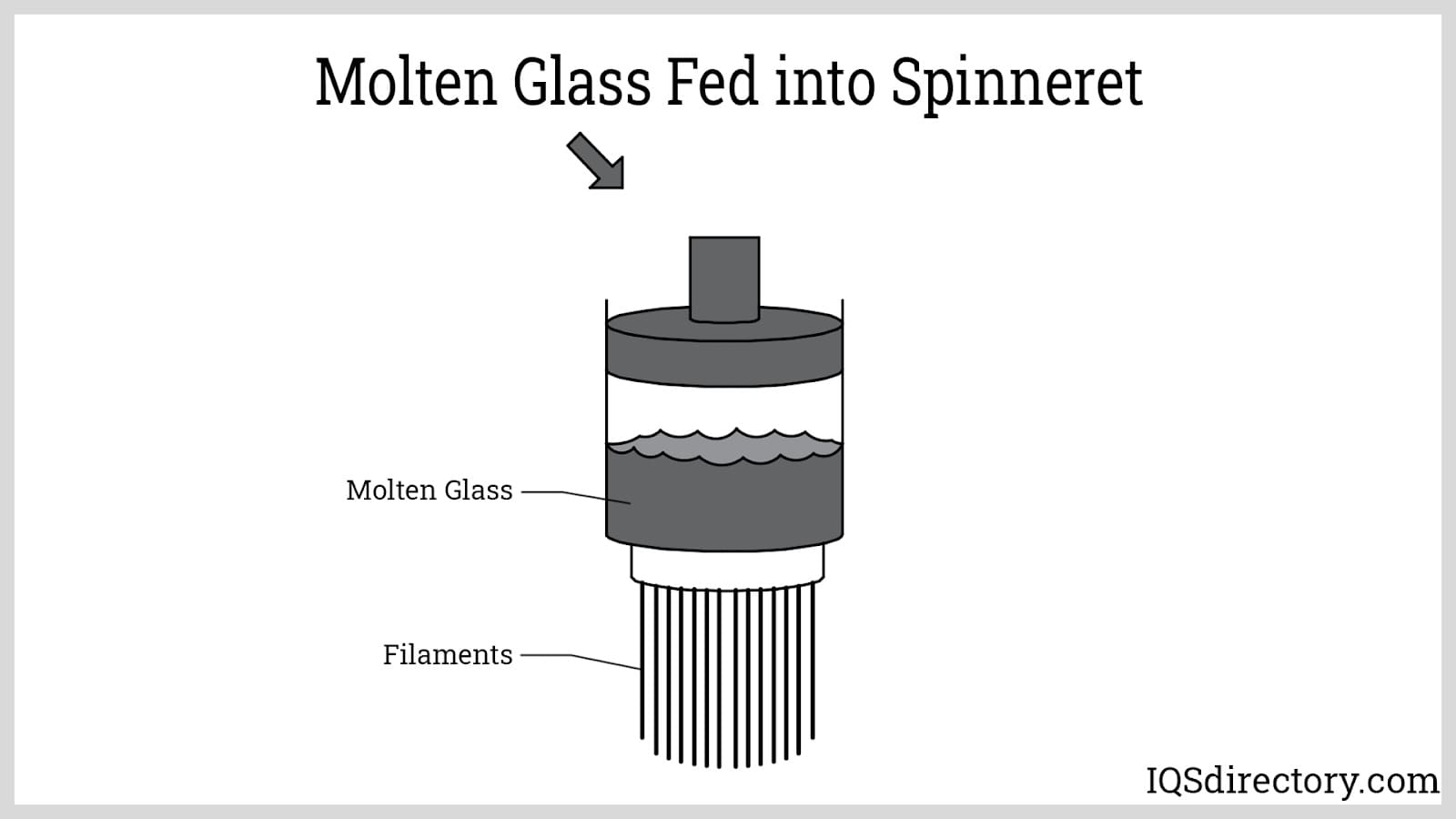
The molten glass is passed through fine filaments which creates the fiberglass.
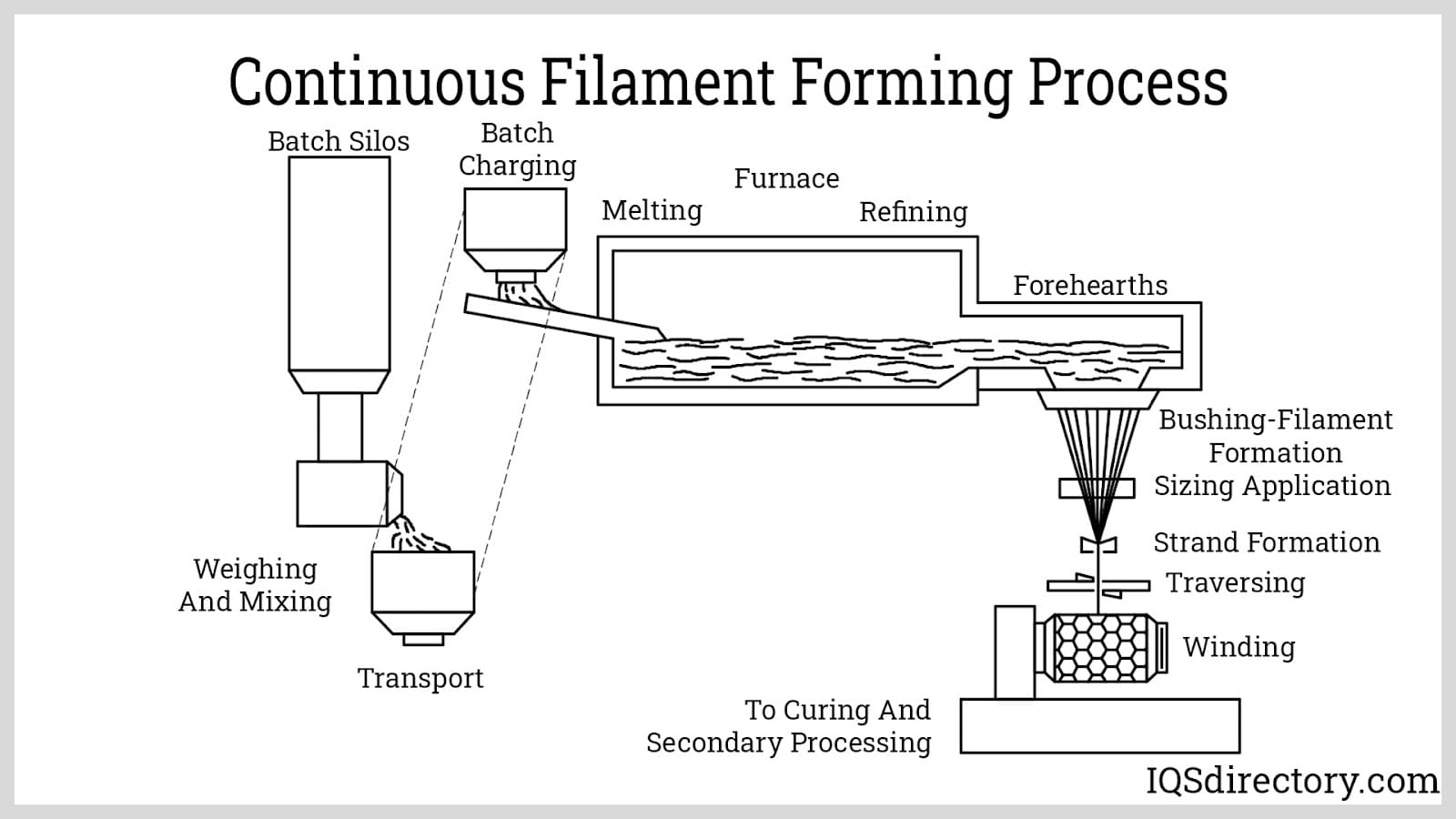 This process can yield a long and continuous fiber, fiberglass filaments are produced through this process.
Types of Fiberglass Fabrication
-
Corrugated Fiberglass Products
Fiberglass reinforced plastic sheets with a ridged or corrugated profile, usually built for roofing, siding, skylights, greenhouse panels, and other weather-exposed building applications.
Square or rectangular fiberglass storage and transport containers made from fiberglass reinforced plastic for durable, corrosion-resistant service.
Fiberglass Enclosures
Fiberglass-based tanks, cabinets, or storage units used in industries such as food processing, chemicals, water treatment, and utilities where corrosion resistance and durability are valuable.
Manufacturers that specialize in producing fiberglass reinforced plastic products, custom molded composite parts, structural fiberglass shapes, insulation products, and related fabrication services.
A grid-style fiberglass product made from intersecting members and widely used for industrial flooring, catwalks, platforms, walkways, and corrosive environments.
A fabrication process that forms fiberglass products by open, closed, or centrifugal molding, shaping the composite in a mold to create consistent parts and complex geometries.
Flat fiberglass reinforced plastic sheets and panels used in construction, clean rooms, industrial interiors, wall systems, and other applications that call for lightweight, durable surfaces.
Fiberglass reinforced plastic pipes used in process piping, wastewater, drainage, ventilation, and other systems that benefit from corrosion resistance and reduced maintenance.
Products made from glass fibers and resin systems for use across industrial, commercial, construction, marine, utility, and transportation markets.
Fiberglass Reinforced Plastics
Plastic materials strengthened with extruded or embedded glass fibers through composite fabrication processes, improving strength, durability, and performance compared with unreinforced plastic alone.
Long, narrow fiberglass structural members used for support, reinforcement, spacing, electrical insulation, and other construction or industrial purposes.
Flat fiberglass sheets made from glass filaments and resin systems for commercial, industrial, and building applications where durability and moisture resistance are useful.
Fiberglass Storage Boxes
Durable, weather-resistant fiberglass storage boxes used for equipment, tools, liquids, fishing tackle, pool components, and other protected storage needs.
Fiberglass tanks manufactured in a range of sizes for storing liquids, gases, or process materials in food, chemical, wastewater, and industrial facilities.
Fiberglass Applications and Industries
Fiberglass is a highly versatile composite material used across a broad range of industries. It can replace metals or unreinforced plastics in many structural, protective, and insulating roles, especially when buyers need corrosion resistance, lower weight, easier fabrication, and long-term outdoor durability.
Construction
In construction, fiberglass is used both as an insulating material and as a structural or semi-structural component. Builders and engineers use fiberglass panels, sheets, grating, ladders, architectural shapes, and enclosure systems where moisture resistance, low maintenance, and durability are priorities.
Vehicle Manufacturing
Because of its favorable strength-to-weight ratio, fiberglass is widely used in vehicle manufacturing for boats, cars, trailers, aircraft components, recreational vehicles, and specialty transportation equipment. It helps reduce weight while still delivering durability, corrosion resistance, and design flexibility.
HVAC
In HVAC applications, fiberglass is widely used for insulation boards, duct liners, panels, seals, and spray-applied coatings. It supports thermal control, sound attenuation, and durable system performance in commercial and industrial environments.
Sporting Equipment
Fiberglass is also popular in sporting goods because it combines strength, durability, and lighter weight. It is used in protective equipment, poles, hockey sticks, bows, paddles, and other products that must perform under repeated stress.
Storage Tanks
Fiberglass is commonly used for storage tanks that hold chemicals, wastewater, septic contents, and other materials because it resists corrosion, moisture, and many harsh operating environments. For buyers comparing tank materials, fiberglass often stands out for low maintenance and long service life.
Piping
Fiberglass pipe offers advantages over many metal and plastic piping systems in applications that need corrosion resistance, lower weight, smooth interior flow characteristics, and easier handling during installation. It is often selected for industrial processing, wastewater, marine, and utility systems.
Medicine
In medical settings, fiberglass is used in orthopedic products and selected equipment because it provides useful strength with relatively low weight. The material is also valued where dimensional stability and durability matter.
Telecommunications
In telecommunications, fiberglass is used where low RF interference and limited signal attenuation are helpful, such as antenna shrouds, equipment covers, and housings. It allows protection and concealment without the same reflective issues associated with many metals.
Fabrication Machinery
Fiberglass fabricators use a wide range of industrial equipment, but two machine categories are especially important in many operations:
Fiberglass Molds
Each fiberglass molding method requires a mold designed for that process and part geometry. Depending on the shop’s capabilities, a fabricator may use simple one-piece molds, matched molds, vacuum-assisted tooling, or rotational setups to support production volume, finish quality, and dimensional consistency.
Fiberglass Cutting Systems
No matter which molding process is used, fiberglass parts often need trimming, cutting, drilling, or edge finishing to meet final specifications. Specialized fiberglass cutting systems range from manual saws and routers to automated CNC equipment for faster, more repeatable production.
Choosing a Custom Fiberglass Manufacturer
Choosing the right fiberglass fabricator for a one-time custom part, ongoing production run, or repair project can be difficult. Instead of looking only for the lowest price, buyers usually get better results by matching the fabricator’s processes, materials, quality standards, and production capacity to the actual requirements of the job.
Specific Application
A fabricator that already understands your application or a similar end use can often move faster and provide better guidance on materials, tooling, tolerances, and finishing options. References from customers with comparable needs can also help verify performance and reliability.
Manufacturing Scheduling
Be clear about your production schedule when evaluating a manufacturer. If your demand for fiberglass parts changes over time, choose a supplier that can adapt to fluctuating order patterns, rush projects, or planned growth without creating delays.
Volume Requirements
If your project involves high volumes, confirm that the manufacturer has the labor, tooling, floor space, and process capacity to support current demand and future expansion. Volume requirements can affect lead times, pricing, tooling choices, and the most practical molding method.
Product Versatility
A strong fiberglass manufacturer focuses on delivering the right custom fabrication solution rather than simply the cheapest option. Product range, finishing services, shipping capabilities, packaging support, and overall flexibility all matter when you are comparing long-term suppliers.
Variations and Alternatives to Fiberglass
Many materials can replace fiberglass in selected applications, but aluminum is one of the most common alternatives because it shares several performance traits. Both materials can be used in structural products, fabricated parts, and outdoor environments, yet fiberglass often offers advantages in insulation, corrosion resistance, color integration, and fabrication flexibility.
Fiberglass often proves to be superior to many other materials, especially aluminum, the primary alternative. Pultruded fiberglass shapes offer several advantages over aluminum extrusions. Fiberglass has exceptional resistance to a wide range of chemicals, while aluminum is more susceptible to corrosion. Pultruded fiberglass is approximately 70% the weight of aluminum shapes, yet maintains the same density, offering a more lightweight option without sacrificing strength. Furthermore, fiberglass is non-conductive with high dielectric capability, whereas aluminum conducts electricity. This makes fiberglass an excellent choice for insulation purposes, offering significantly lower thermal conductivity than aluminum.
Unlike aluminum, which often relies on finishing, anodizing, or paint for appearance and color protection, fiberglass can be pigmented directly in the resin system. That allows consistent color throughout the part and helps reduce the need for secondary finishing steps.
Pultruded fiberglass is easier to fabricate in the field using common carpenter tools, while aluminum often requires torches or welding for assembly. Additionally, fiberglass shapes are reinforced with a glass mat that evenly distributes the load of an impact, whereas aluminum is more prone to deformation. These advantages make fiberglass-reinforced plastic an excellent construction material for a variety of products.
Lighter Weight
Fiberglass typically weighs substantially less than aluminum while still providing a strong and durable structural profile. That lower weight can simplify installation, reduce handling effort, and improve transportation efficiency for many composite products.
Non-Reflective Properties
Fiberglass’s non-reflective properties make it useful in applications where reduced interference with light, radio waves, or other transmissions is preferred. That can be especially valuable in telecommunications, radar-related environments, and selected architectural or utility installations.
Even Distribution of Force
Fiberglass is also known for distributing force across the material in a useful way, which can support performance in many structural and protective applications, though the right design still depends on the specific load conditions and service environment.
Easy Fabrication
Compared with aluminum and many other materials, fiberglass is relatively easy to fabricate, customize, and finish. Manufacturers can add pigment, coatings, reinforcements, and other adjustments to tailor the composite for appearance, performance, and installation requirements.
Superior Insulation
Fiberglass is also a strong insulating material, making it a common choice for construction, HVAC, electrical, and industrial applications that need thermal resistance or electrical isolation. Its insulating performance is one reason fiberglass remains widely specified across many markets.
Fiberglass Fabrication Terms
-
Aspect Ratio
The ratio of diameter to length; in composites, it often describes the proportions of a fiber or filler within the composite matrix.
Bondable
The ability to be fastened or joined with an adhesive bond. Fiberglass is considered bondable because the resin-and-glass composite can form durable adhesive joints.
Catenary
The condition or process of keeping parallel fibers under equal tension. It can also describe fibers maintained at uniform tension during handling or processing.
Chopped Strand Mat
A fiberglass reinforcement made from short sections of continuous roving arranged randomly and held together with a binder for layup and molding applications.
Composite
A material such as fiberglass reinforced plastic that combines two or more distinct substances to produce structural or functional properties not available from each material on its own.
Compression
The process of compacting or densifying a material. In fiberglass laminates, compression presses layers together to reduce thickness and build a tighter structure.
Continuous Roving
Parallel, sizing-coated filaments gathered into one or more strands and wound into cylindrical packages for later processing.
Cupola
Also called a dome, a cupola is a cup-shaped fiberglass structure often used on rooftops, churches, and other architectural applications.
Epoxy
A widely used surface coating that forms a tight, adhesive layer and generally shows little shrinkage during application.
Fiber
A filamentary material whose length is at least one hundred times its diameter; the term can also describe individual thread-like components of a woven or composite material.
Fiberglass Reinforcement
A common reinforcing material used to increase the strength and durability of plastic products.
Filament
The smallest practical unit of fibrous material, created by spinning or drawing material into a long, continuous form.
Filament Wound Tubing
Tubing produced from finely spun fibers arranged in a controlled, uniform structure.
Filler
An inorganic additive, often particulate, placed in a composite matrix to improve properties such as shrink control, surface finish, stability, and water resistance.
Glass
A broad class of materials with varying optical and mechanical properties. Glass is typically hard and brittle, and glass fibers combined with resin form the basis of fiberglass products.
Glass to Resin Ratio
The proportion of glass reinforcement to resin in a fiberglass product. In many designs, more glass content supports greater strength and durability.
Laminate
A thin fiberglass sheet or plate produced through compression, sometimes built from multiple layers bonded together.
Polymer
A natural or synthetic high-molecular-weight compound made of repeating molecular units.
Resin
A translucent yellow, brown, or clear semi-solid or solid substance of plant origin and, more broadly in manufacturing, a base material widely used in plastics, adhesives, inks, coatings, and composite systems.
More Fiberglass Fabrication Information