Chillers
Liquid chillers rapidly cool large volumes of refrigerant to efficiently extract heat from air or other liquids, then circulate the cooled fluid or air as required. In industrial cooling systems, liquid chillers are used to maintain process temperatures, protect sensitive equipment, improve production consistency, and support stable operating conditions in manufacturing plants, laboratories, medical facilities, food processing lines, and commercial HVAC environments.
Chillers FAQs
What is the main function of a liquid chiller?
A liquid chiller removes heat from air or other liquids by circulating refrigerant through a sealed system. The cooled fluid or air is then circulated to maintain stable temperatures for industrial processes, machinery, laboratory systems, and facility cooling. This dependable temperature control helps reduce overheating, downtime, and product variation.
How do industrial chillers work?
Industrial chillers rely on a continuous refrigeration cycle. The refrigerant absorbs heat, moves it away from the target process, and releases it through a condenser. This cycle supports efficient thermal management, stable process temperatures, and consistent cooling performance in demanding industrial environments.
What are the main components of a chiller system?
A typical chiller includes a compressor, condenser, evaporator, expansion valve, controls, and refrigerant. These components work together to absorb heat, compress and condense the refrigerant, and regulate cooling flow for stable operation, efficient heat transfer, and dependable temperature control.
What are the benefits of using chillers in manufacturing?
Chillers improve efficiency by providing rapid, consistent cooling for machinery, tools, molds, and materials. They help prevent overheating, reduce energy waste, limit process interruptions, and support product quality, making them highly valuable in manufacturing, plastics processing, machining, and other industrial operations.
What is the difference between air-cooled and water-cooled chillers?
Air-cooled chillers use ambient air to condense refrigerant, while water-cooled chillers use water circulated through cooling towers or a condenser water loop. Air-cooled models are easier to install and maintain, while water-cooled systems often deliver stronger efficiency in larger facilities with higher cooling loads.
How do glycol chillers benefit food and beverage applications?
Glycol chillers use a glycol-water mixture to achieve low temperatures ideal for cooling beverages and food products. They help maintain flavor, clarity, freshness, and production consistency while supporting sanitation goals and food safety requirements in breweries, wineries, dairies, and other processing environments.
What factors should be considered when selecting a chiller?
Choosing a chiller involves evaluating cooling capacity, refrigerant type, power source, ambient conditions, installation space, operating hours, fluid type, and process demands. Proper selection supports energy efficiency, safety compliance, reliable performance, and compatibility with existing piping, controls, and facility infrastructure.
Why are modern chillers important for industrial facilities?
Modern chillers provide precise temperature regulation that supports process stability, energy savings, equipment longevity, and better uptime. They serve manufacturing, medicine, food production, laboratories, and power generation by preventing overheating, improving reliability, and helping facilities meet tighter performance and safety expectations.
A History of Chillers
Chiller technology shares its origins with air conditioning, as both rely on the same fundamental principles of heat transfer. In the 18th century, scientists such as Benjamin Franklin explored how liquid refrigerants could be used to cool air and other liquids, laying the groundwork for modern cooling systems. Those early studies showed that certain fluids could absorb and move heat efficiently, which later became the basis for refrigeration equipment, industrial chillers, and large-scale process cooling systems used across modern industry.
The breakthrough in mechanical air conditioning came in 1902 when Willis Carrier developed the first self-contained system. He discovered that heating air reduces relative humidity, allowing it to absorb moisture, while cooling air extracts heat and humidity, creating a more controlled environment. This two-step approach shaped the future of chiller design by making consistent temperature and humidity control possible for factories, printing facilities, laboratories, and other demanding applications.
As demand for efficient cooling solutions grew, scientists sought more effective refrigerants. In 1931, they identified Freon as a superior alternative to water or air alone due to its enhanced cooling properties. By 1938, Trane introduced a fully enclosed refrigerant-based system with a compressor, condenser, and evaporator—components still integral to today’s industrial chillers. By the 1950s, industries such as plastics manufacturing were using chillers to improve cycle times, product quality, and overall throughput.
By the late 20th century, chiller technology had become essential across a broad range of industries, from glass manufacturing to power generation. These systems supported industrial expansion, more dependable utility infrastructure, better process control, and safer operation of heat-sensitive equipment. Today, chillers remain a central part of commercial and industrial cooling, helping organizations manage heat loads, protect capital equipment, and maintain production stability.
Benefits of Using Chillers
While some operations may function without liquid chillers, these systems provide major advantages in efficiency, space utilization, temperature control, equipment protection, and operating cost management. For buyers comparing cooling systems, a properly sized industrial chiller can often improve uptime and product consistency while reducing waste.
Cooling Speed of Chillers
Industrial chillers excel at quickly lowering the temperature of large volumes of materials, fluids, or equipment surfaces, outperforming many alternative cooling methods in both speed and consistency. Faster cooling can shorten production cycles, stabilize sensitive processes, and help facilities keep pace with demanding throughput goals.
Space Saving of Chillers
Unlike ice or chemical-based cooling systems, chillers require less storage space and operate with stronger efficiency over time. Their compact or modular designs allow businesses to dedicate a controlled area for cooling without disrupting workflow, and many systems can be integrated into existing production lines or mechanical rooms with minimal loss of usable floor space.
Predictable Cooling Temperature in Chillers
Other cooling methods can create uneven temperature distribution, leading to product inconsistencies, hot spots, dimensional variation, or material damage. Industrial chillers maintain stable and uniform cooling, which helps protect product integrity and supports repeatable manufacturing results for plastics, food, chemicals, medical systems, and precision machinery.
Chiller Cost Savings
Compared to alternative cooling solutions, chillers can offer a more cost-effective approach by reducing waste, improving energy efficiency, minimizing emergency downtime, and lowering ongoing maintenance expenses. When evaluating lifecycle value rather than just purchase price, many businesses find that efficient chillers deliver stronger long-term return on investment.
How Chillers Work
Modern liquid chillers rely on a continuous cycle of heat transfer, driven by the movement of liquid refrigerant through a sealed system. As refrigerant circulates, it absorbs heat from air, water, machinery, or process fluid, transports that heat away, and then safely releases the excess heat through the condenser. This controlled refrigeration cycle allows facilities to maintain efficient cooling while supporting stable process conditions and predictable thermal performance.
To sustain this cycle, chillers must keep refrigerant contained within durable pipes and mechanisms capable of withstanding high temperatures and pressure. Specialized refrigerants like Freon enhance efficiency due to their unique thermal properties—they boil at lower temperatures than water while freezing at higher temperatures than ice. This operating range supports effective heat exchange and faster cooling of air or water, though refrigerant choice must always match the application, performance target, and environmental requirements.
Parts of a Chiller
While chiller designs vary, all systems share essential components that work together to regulate temperature efficiently. Understanding these parts can make it easier to compare industrial chillers, process chillers, HVAC chillers, and custom cooling systems when evaluating equipment for purchase.
Chiller Condenser
The condenser rapidly cools heated refrigerant, converting it back into a liquid so the cooling cycle can continue. Depending on the chiller type, condensers may be air-cooled, water-cooled, or evaporation-cooled, with each design affecting installation needs, operating efficiency, and overall system performance.
Compressor in a Chiller
By applying extreme pressure, the compressor prepares the refrigerant to absorb heat effectively. The type of compressor varies based on chiller design. For example, screw chillers use twin rotary screws to maintain continuous, high-speed operation with a smoother, more consistent flow than many other compression methods, making them popular where dependable industrial cooling is required.
Chiller Evaporator
This component cools liquid by allowing highly pressurized refrigerant to undergo a phase change. As the refrigerant transitions, it reaches very low temperatures, draws heat from the surrounding liquid, and makes efficient process cooling possible for manufacturing equipment, laboratory systems, and chilled water applications.
Chiller Refrigerant
Different chillers utilize various refrigerants, often blended for optimal performance. Due to environmental regulations, refrigerants are carefully controlled to prevent leaks and ensure safe operation. Chiller maintenance may involve topping off or replacing refrigerants to maintain efficiency, compliance, and dependable cooling capacity.
Expansion Valve of a Chiller
Regulating the refrigerant flow, the expansion valve responds to both actual and target temperatures. In industrial chillers, this valve can increase refrigerant flow as cooling demand rises, helping the system react to process changes and maintain stable operating temperatures with better precision.
Vents and Cooling Towers
Efficient heat dissipation is essential for all cooling systems. Industrial chillers, handling large liquid volumes measured in tons, often incorporate external cooling towers to expel excess heat, maintain system balance, and support reliable operation under heavy thermal loads.
Chiller Images, Diagrams and Visual Concepts
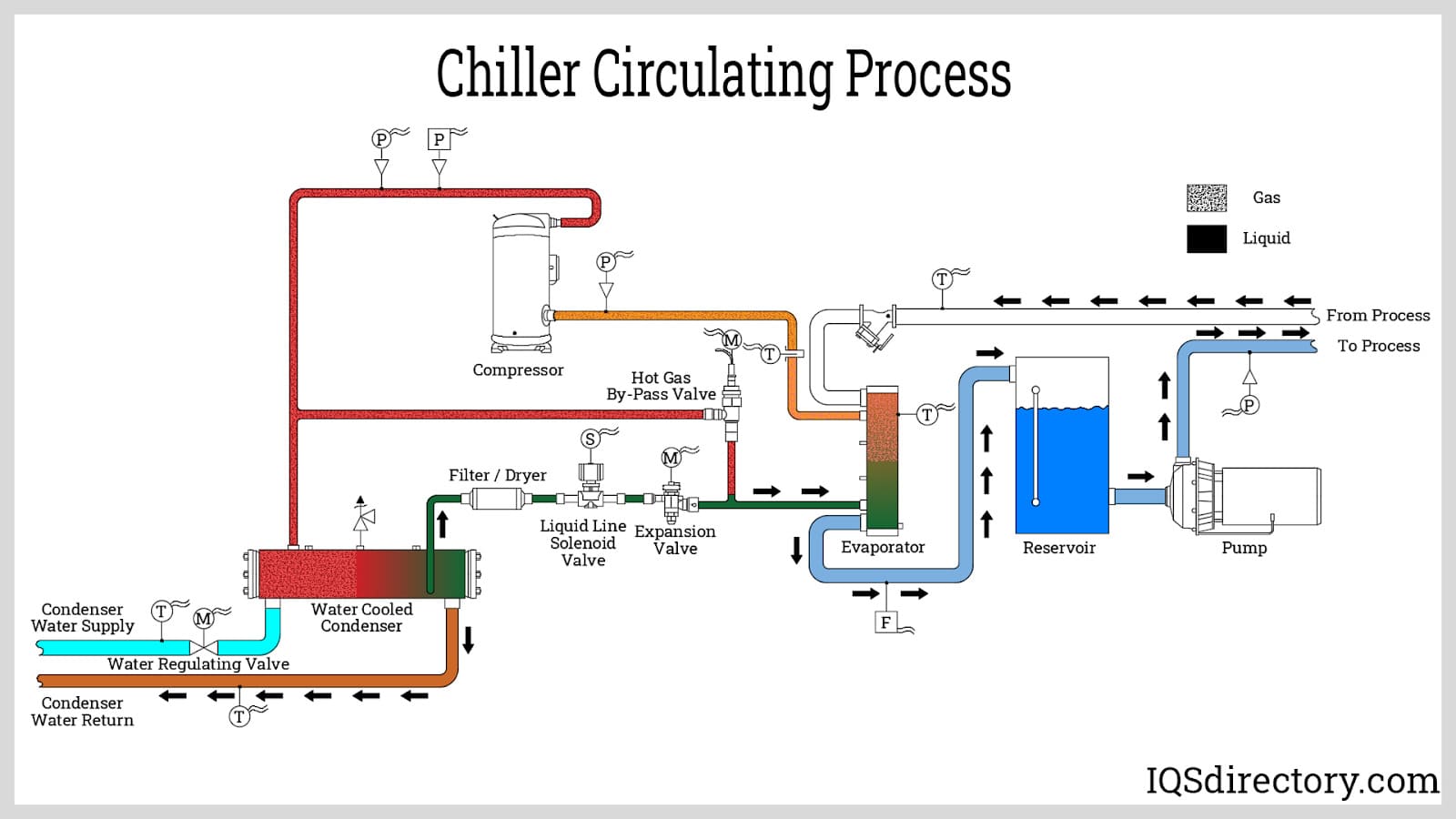
Chillers remove heat by circulating a heat-absorbing refrigerant through a series of components that capture, move, and release thermal energy away from the process.
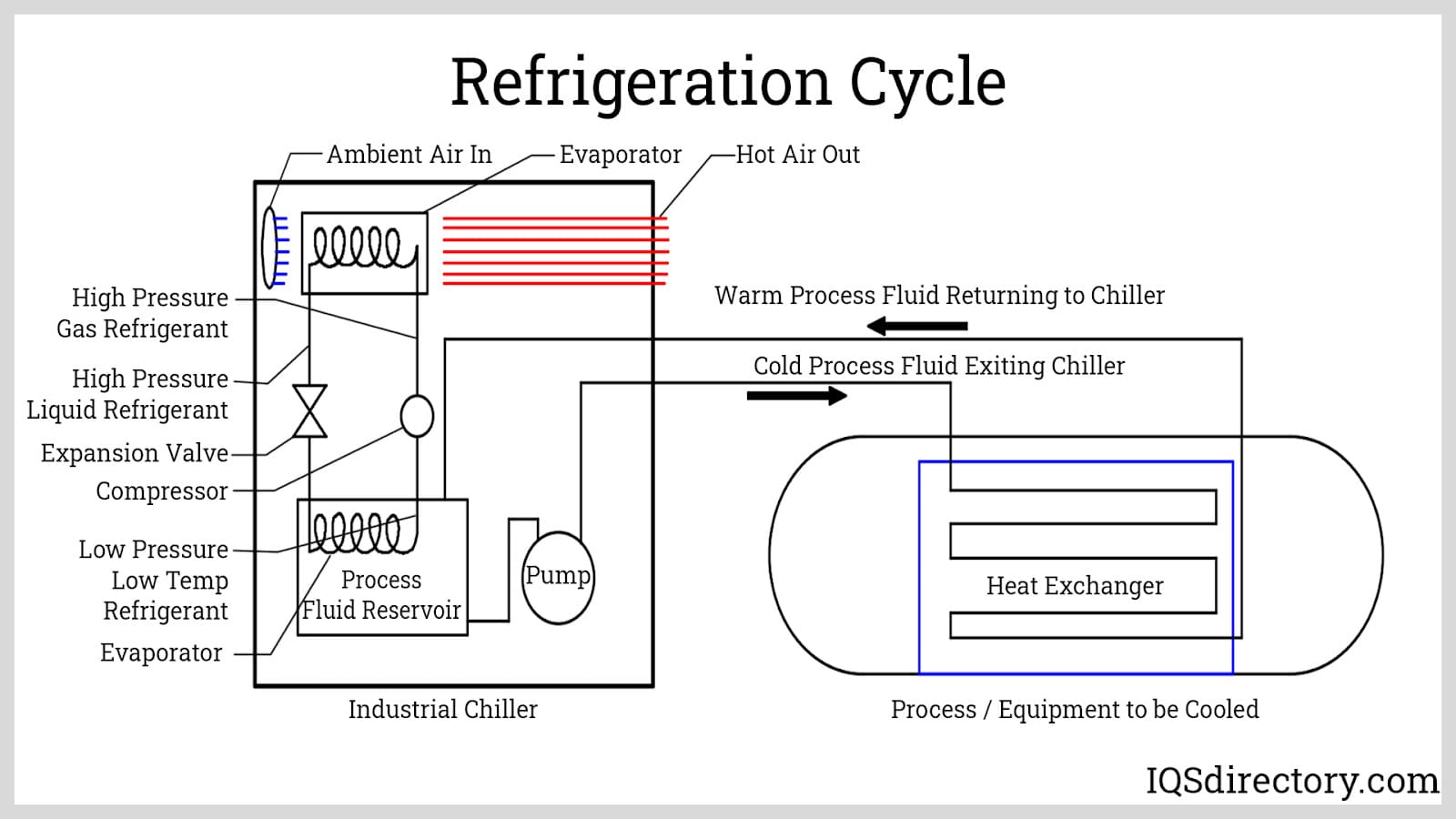
All chillers are designed to transform refrigerant from a liquid to a vapor and back to a liquid, and while in vapor form the refrigerant removes heat from the target process or fluid loop.
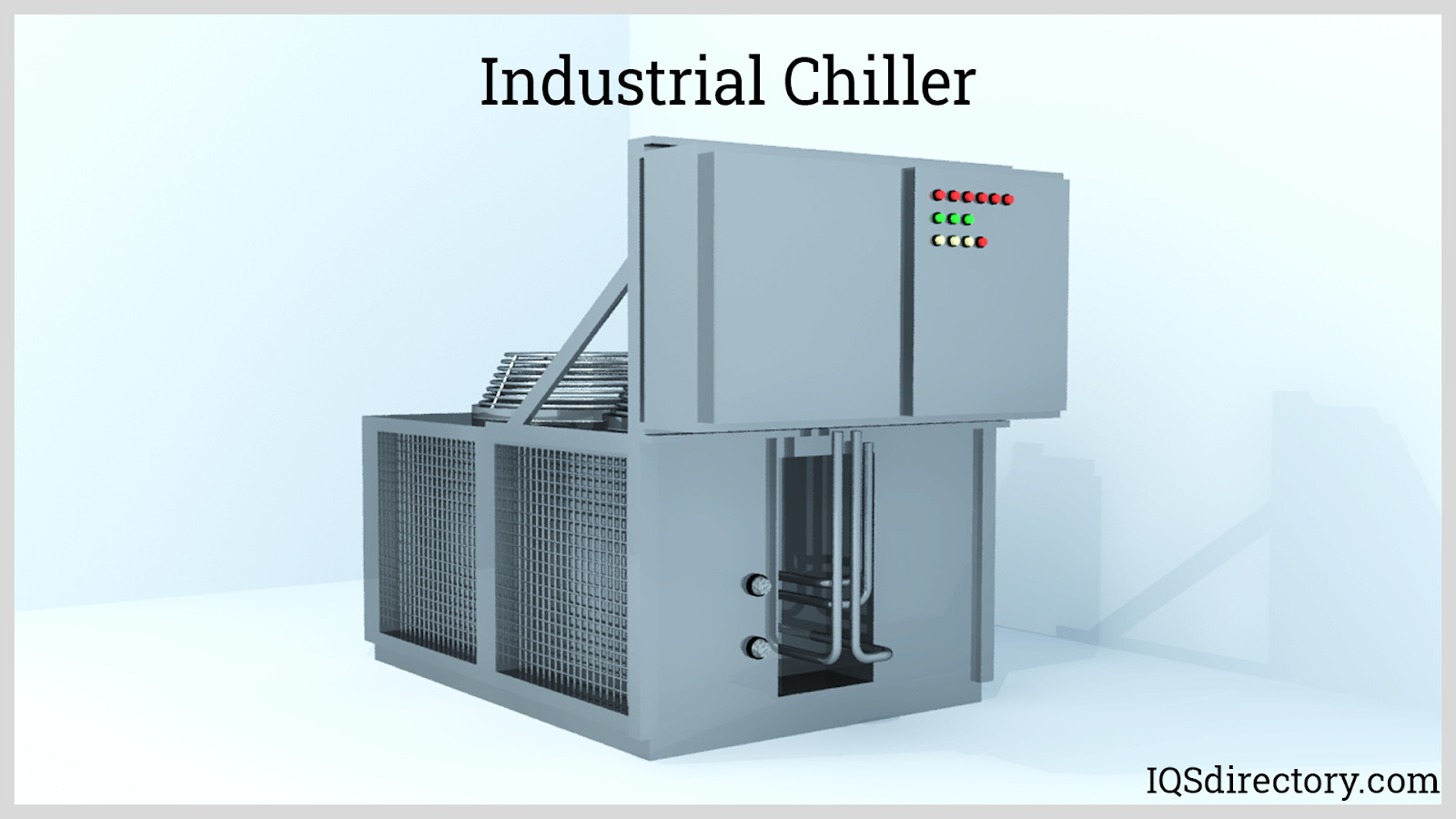
Industrial chillers circulate cooled liquid through equipment in order to maintain process efficiency, temperature stability, productivity, and equipment protection.
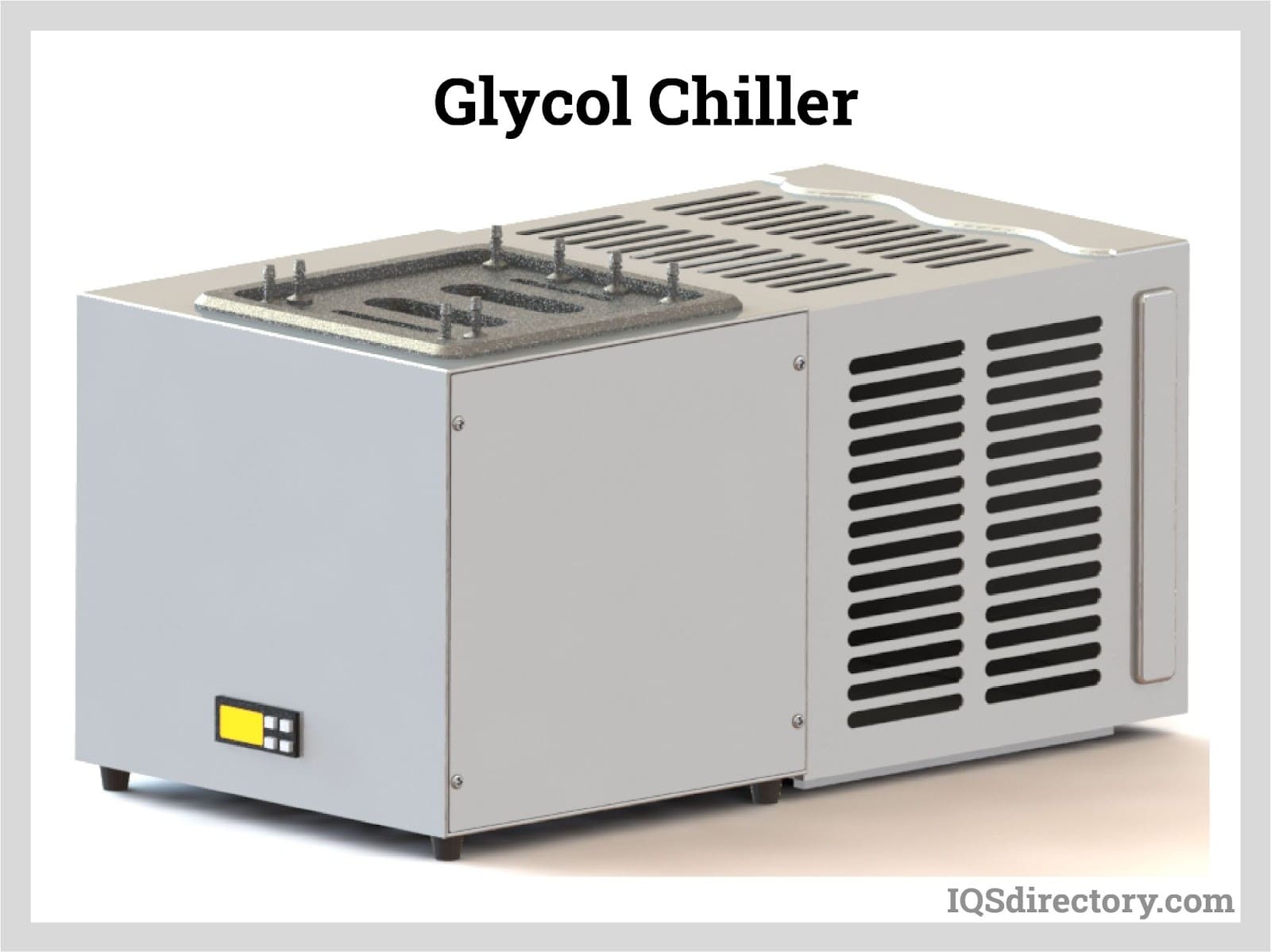
Glycol chillers use a percentage of glycol mixed with water to create low temperatures suitable for beverage cooling, food processing, and other applications that demand dependable fluid cooling.
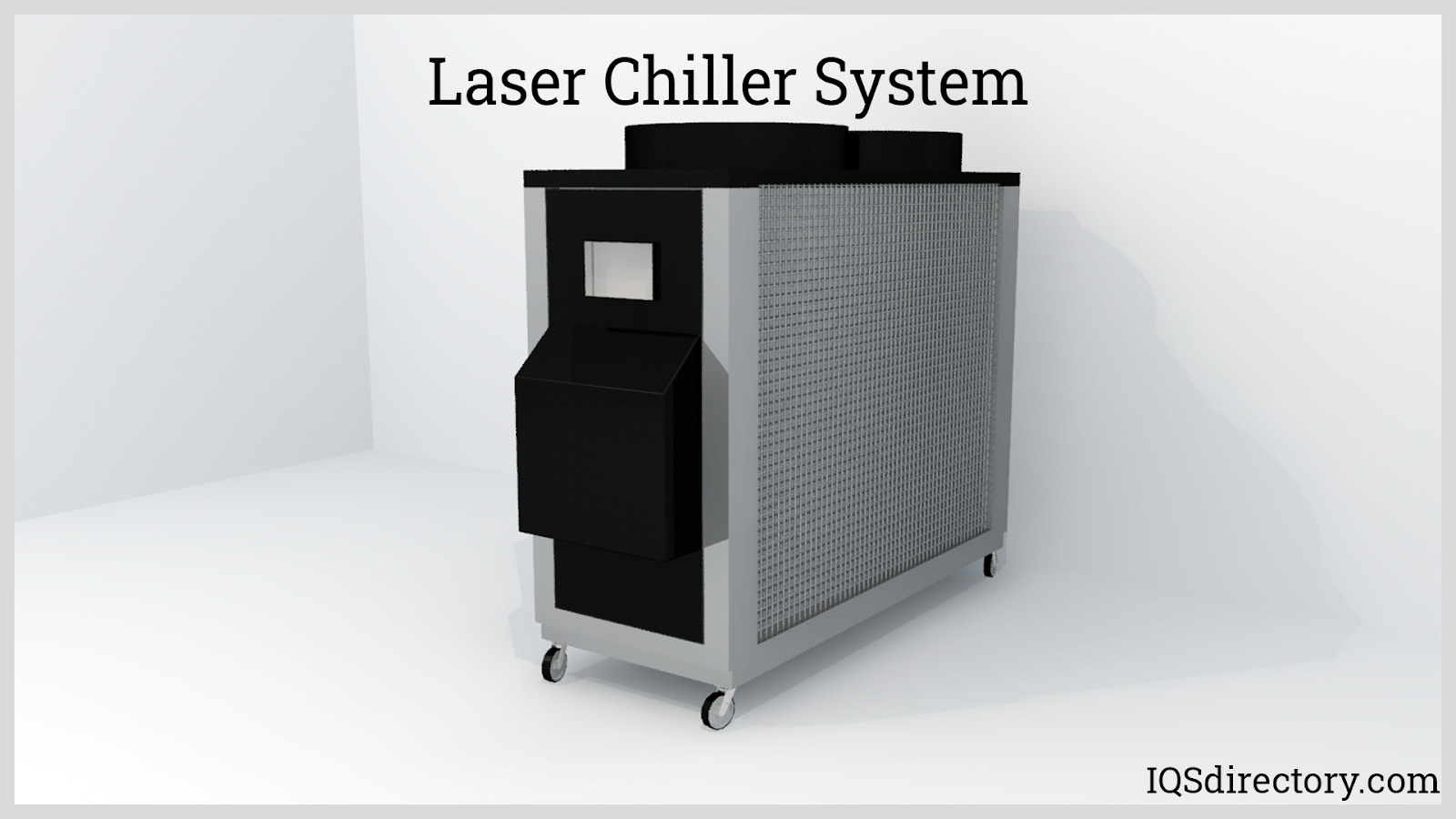
Laser coolers use specialized cooling processes to remove heat from laser systems and temperature-sensitive components so performance remains stable and overheating is reduced.
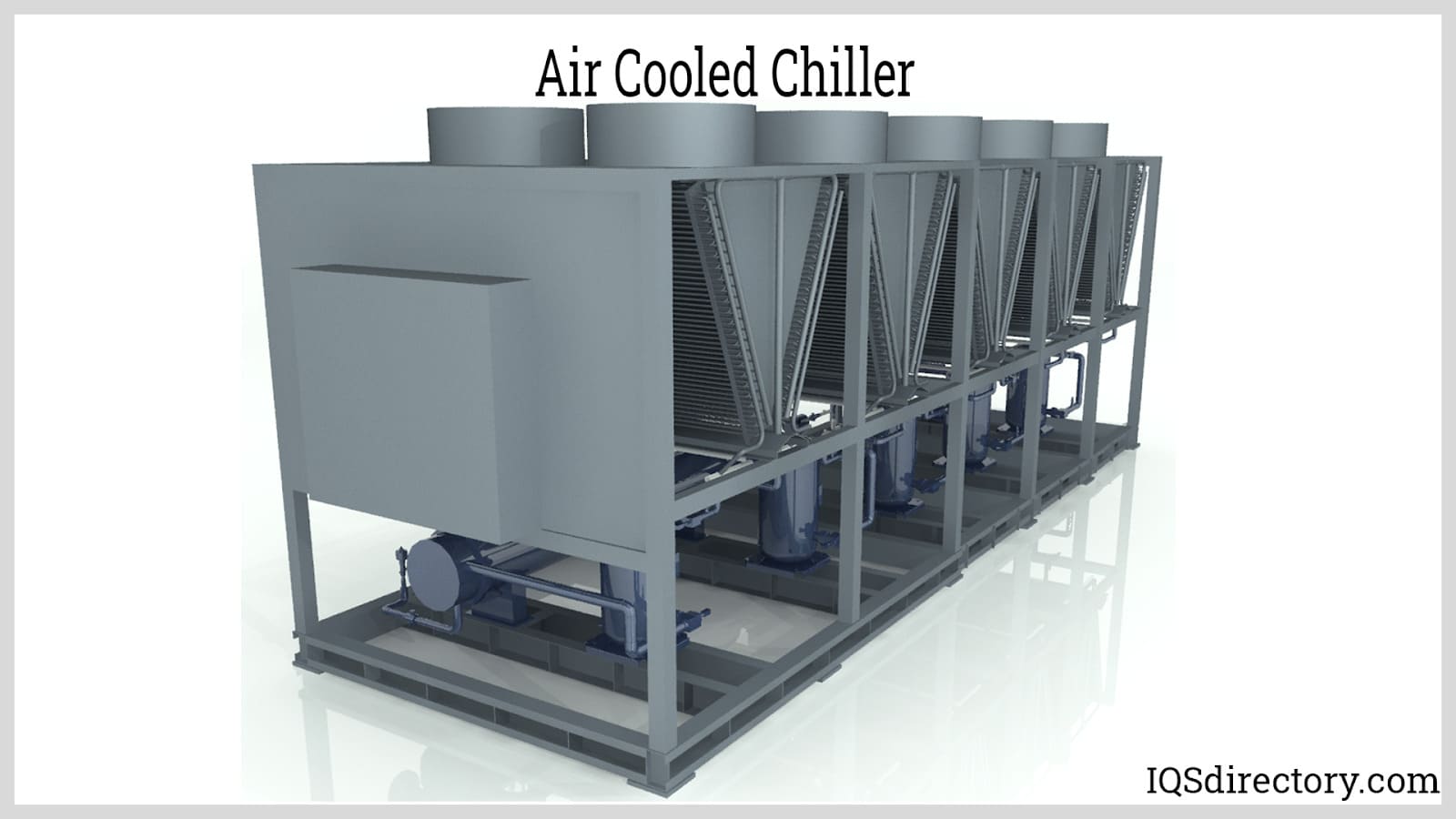
Air cooled chillers use fluid circuits that work in tandem with air handling systems and rely on fans to reject heat outdoors rather than depending on cooling towers.
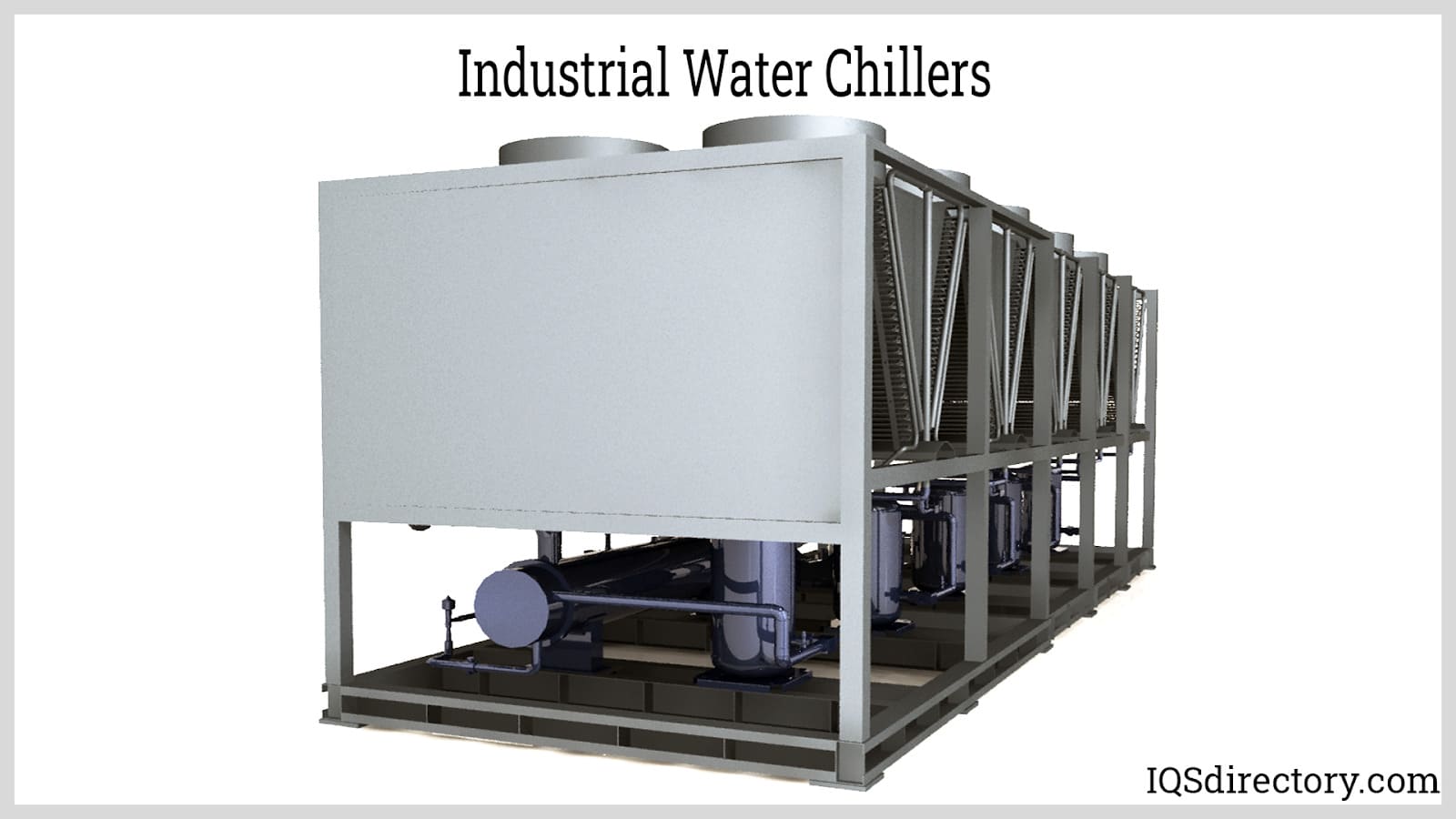
Water chillers use water as a secondary refrigerant and circulate it through piping systems to support process cooling, building cooling, and equipment temperature control.
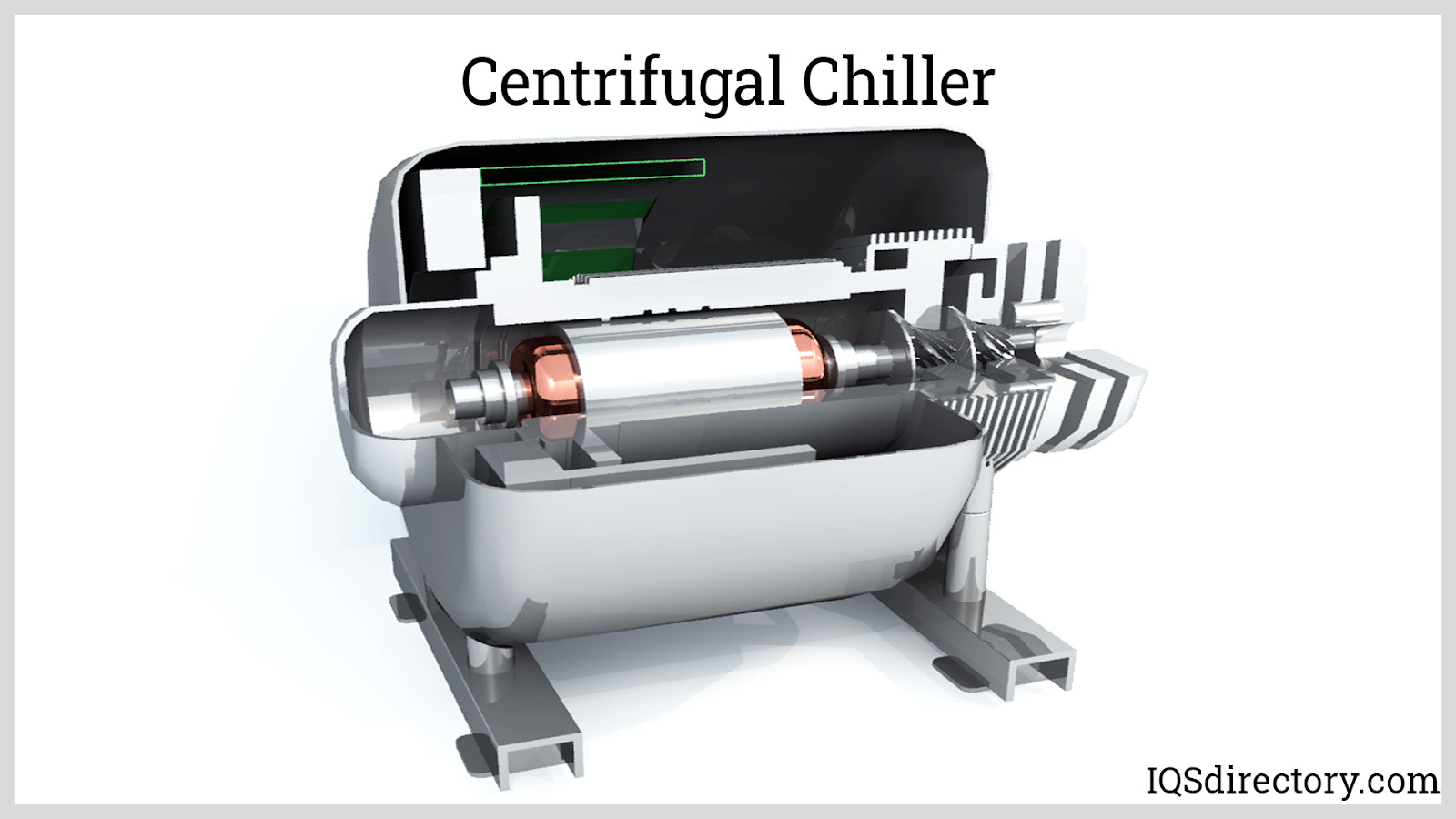
Centrifugal chillers use compression to convert kinetic energy into static energy, increasing refrigerant pressure and temperature as part of a high-capacity cooling cycle.
Chiller Types
Absorption Chillers
Unlike traditional chillers that rely on electricity for compression, absorption chillers use heat from combustion or hot water to drive the cooling process. While they follow the same general cooling sequence, the compression stage operates through a chemical absorption process rather than a mechanical compressor, making them attractive in applications where waste heat or steam is available.
During compression, chilled water flows into the system and absorbs heat within a heat exchanger. The refrigerant, combined with a chemical absorbent, passes through the exchanger before moving to the next stage. Heated water or a fuel source such as natural gas enters the generator to sustain the cycle. Because of their design, absorption chillers often require large cooling towers and are commonly evaluated for large industrial and institutional cooling loads.
Air Cooled Chillers
Air-cooled chillers use ambient air to condense the refrigerant during the cooling cycle, eliminating the need for water in the condensing process. As one of the most widely used chiller types, they offer dependable cooling for a broad range of applications and are often favored where simple installation, easier maintenance, and water conservation are important buying factors.
Blast Chillers
Blast chillers are specialized refrigeration units designed to rapidly cool food, preserve freshness, and reduce bacterial growth. Commonly used in catering, commercial kitchens, and food service operations, these chillers lower food temperatures much faster than standard refrigeration so businesses can improve food safety compliance and protect product quality.
Brewery Chillers
Brewery chillers play an important role in beer production, particularly during fermentation and cold crashing. These systems circulate glycol at approximately 28°F to maintain beer at about 33°F, supporting flavor development, clarity, repeatability, and temperature consistency throughout the brewing cycle.
Central Chilled Water Units
Central chilled water units are integral to large-scale air conditioning systems, using air handling units equipped with chilled water coils to regulate temperature. By distributing cooled water throughout a facility, these systems provide efficient climate control for commercial and industrial buildings with large cooling demands.
Centrifugal Chillers
Centrifugal chillers utilize a high-speed centrifugal compressor to drive the refrigeration cycle, making them well suited for large-scale cooling applications. Their design supports strong cooling capacity with relatively efficient energy use, so they are often considered for major commercial and industrial systems.
Chiller Systems
Chiller systems integrate multiple components to provide cooling for industrial processes or facility-wide temperature control. As complete systems, they are designed to improve efficiency, maintain stable process temperatures, and deliver dependable performance across a wide range of cooling loads.
Cooling Systems
Cooling systems are designed to remove excess heat from an area, machine, or process, maintaining temperatures that support equipment health, production quality, and environmental comfort. Chillers are a major part of this broader cooling category.
Dedicated-Process Chillers
Engineered for continuous, year-round operation, dedicated-process chillers provide precise, capacity-matched cooling for specialized applications. They are especially useful in medical, laboratory, and industrial settings where stable temperature and flow conditions support sensitive equipment and repeatable results.
Evaporative Cooled Chillers
Though less common, evaporative-cooled chillers are among the most efficient liquid cooling solutions. By maintaining condensing temperatures between 85°F and 105°F, these chillers can maximize energy efficiency while still delivering powerful cooling performance for large applications.
Fluid Chillers
Fluid chillers utilize a secondary cooling fluid to regulate temperatures in industrial processes. By circulating a controlled coolant, they improve thermal management and support applications that require dependable temperature stability and repeatable process control.
Glycol Chillers
Glycol chillers are refrigeration systems that circulate a glycol-water solution to cool various equipment and processes. Named for their use of glycol, a food-grade antifreeze, these chillers are widely used in the food and beverage industry, where precise and consistent temperatures support product quality, sanitation, and safe storage.
HVAC Chillers
HVAC chillers provide large-scale cooling for industrial and commercial environments. Often installed outdoors, these systems are available in centralized and modular designs, allowing facilities to tailor their cooling strategy for building comfort, energy use, and future expansion.
Industrial Chillers
Industrial chillers are specialized refrigeration systems designed to cool liquids in manufacturing and processing environments. By regulating temperatures with precision, these chillers support a wide range of applications, from plastics production to chemical processing, while helping facilities improve productivity, product quality, and energy management.
Lab Chillers
Lab chillers are specialized refrigeration systems designed to maintain precise temperatures for laboratory equipment and sensitive materials. With a variety of models available, they support controlled testing environments, protect heat-sensitive instrumentation, and help maintain process accuracy.
Liquid Chillers
Liquid chillers are refrigeration systems that remove heat from various liquids and maintain a stable temperature for industrial processes, cooling systems, and equipment. These systems are widely used wherever consistent liquid cooling helps preserve product quality, maintain tolerances, and support operational efficiency.
Laser Chillers
Laser chillers are used to dissipate the heat generated by lasers and their components. By maintaining a consistent cooling flow, they help prevent overheating, protect sensitive electronics, and allow the laser system to perform at a higher level for longer periods.
Liquid Coolers
Liquid coolers are recirculating chiller systems that operate within a closed-loop, continuously cycling the same refrigerant to maintain precise cooling. These systems support efficient temperature control while minimizing waste and are useful where dependable liquid cooling is required.
Machine Tool Chillers
Machine tool chillers regulate the temperature of coolant used in the cutting zone, supporting precision and efficiency in machining operations. By recirculating coolant within a closed-loop system, these chillers help prevent overheating, extend tool life, and improve cut quality and dimensional accuracy.
Medical Chillers
Designed for demanding applications, medical chillers feature high-pressure pumping, precise temperature stability, and advanced microprocessor controls. These self-contained systems provide dependable cooling for sensitive medical equipment such as MRI machines, CT scanners, and laser systems, where thermal stability supports safe and consistent operation.
Portable Chillers
Portable chillers are self-contained cooling units designed for small-scale or dedicated applications. Their compact design allows flexible placement and easier relocation, making them a practical option for targeted process cooling, mobile setups, and facilities with changing equipment layouts.
Process Chillers
Process chillers are specialized cooling systems designed to regulate temperatures in industrial manufacturing and laboratory applications. Unlike HVAC chillers, which focus on air conditioning, process chillers cool materials and machinery, often handling large volumes of refrigerant at a time. Their robust evaporators, compressors, and condensers are built for durability and efficiency in demanding industrial environments where uptime and temperature consistency matter.
Recirculating Chillers
Recirculating chillers continuously circulate coolant within a closed-loop system, maintaining high efficiency while reducing water waste. By reusing the same coolant, these systems support consistent temperature control for precision cooling applications in laboratories, industrial processes, and medical settings.
Screw Chillers
Screw chillers utilize a rotary screw compressor to drive the refrigeration cycle, offering reliable and efficient cooling. Known for smooth operation and continuous high-speed performance, these chillers are often selected for applications requiring powerful, steady temperature regulation over long operating periods.
Water Chillers
Water chillers are self-contained units that integrate a compressor, condenser, and chiller with internal piping and controls. These systems follow the standard refrigeration cycle but cool water instead of air, circulating it through external piping systems. Water chillers can include air- or water-cooled condensers and must be designed to fit existing structures for efficient long-term performance.
Vapor Compressors
Vapor compressors operate using a mechanical compression system to vaporize liquid refrigerant for cooling. This method efficiently moves high volumes of refrigerant through the evaporator, compressor, and condenser, allowing for rapid temperature reduction. They are often useful in smaller operations or spaces where storing larger quantities of coolant is impractical.
Industry Uses for Chillers
The effectiveness of a chiller depends on the specific needs of each industry. Manufacturing facilities, for example, rely heavily on process chillers to prevent machinery from overheating. Selecting the right chiller requires careful evaluation of available space, power supply, operating conditions, and process demands. Some chillers cycle on only when needed, while others must operate continuously as part of a building or production system.
Many industries integrate chillers into their daily operations to improve efficiency, safety, reliability, and quality control.
Uses in Manufacturing
Manufacturers, particularly in the plastics industry, depend on industrial-grade process chillers to remove excess heat from materials during production. Without chillers, many operations would require frequent pauses for air cooling, reducing efficiency, lengthening cycle times, and increasing the risk of inconsistent product quality.
Uses in Food and Beverage
Strict regulations govern the storage and production of consumable goods. Chillers provide stable, uniform cooling to preserve ingredients and finished products. Process chillers can rapidly cool large quantities without compromising moisture content or damaging ingredients, helping facilities protect product quality, consistency, and food safety.
Power Generation Industry Uses
Power plants generate immense amounts of heat while producing electricity. Process chillers play an important role in dissipating excess heat, allowing plants to maximize energy output within limited space. Without efficient cooling systems, power generation equipment would face greater thermal stress and reduced reliability.
Chillers in Medicine
In the medical field, chillers support both equipment and storage needs. MRI machines and other advanced imaging devices produce significant heat during operation, requiring precise cooling to prevent overheating. Liquid chillers also help maintain safe storage conditions for temperature-sensitive medical materials, pharmaceuticals, and laboratory supplies.
How to Custom Design Chillers
Every business has unique requirements when it comes to chiller technology. As with any large equipment, space considerations play a major role in system design. Chillers that connect to piping for water cooling or temperature regulation must be integrated into the broader infrastructure. Factors such as coolant volume, power source, chiller size, and the selection of compressor and evaporator types can all be tailored to fit a specific process or facility layout.
Planning for future demand is also important when designing a custom chiller system. Modular liquid chillers offer flexibility, allowing businesses to expand or relocate cooling systems as operations grow. Larger stationary models provide strong cooling capacity and may cycle on and off based on demand. The best custom chiller balances present performance needs with long-term adaptability, energy efficiency, and serviceability.
Standards and Specifications for Safety With Chillers
The use of chiller technology is often regulated by local and federal laws, particularly in industries such as food, beverage, and medicine, where precise cooling is tied to product safety and process control. Inconsistent temperature management can lead to contamination, spoilage, material loss, and equipment problems. Refrigerant leaks can also create health and environmental hazards, which is why installation, service, and maintenance are commonly handled by licensed professionals.
When selecting and installing a chiller system, several factors must be considered. The foremost concern is cooling capacity, which is measured in tons—where one ton is equivalent to 12,000 Btu/h. Chiller capacities range from small portable chillers to large-scale, multi-unit plants capable of handling thousands of tons of cooling demand, so proper load calculation matters during equipment selection.
Another important decision is the choice of refrigerant, which depends on the required temperature range and application needs. Common refrigerants include water, ammonia, carbon dioxide, sulfur dioxide, alcohol, brine, and methane. Fluorocarbons, especially chlorofluorocarbons, were once common but have been phased back because of ozone concerns and changing environmental standards.
Additional specifications to evaluate include condenser and evaporator flow rates, power source, cooling efficiency, system location, compressor type, and compressor horsepower. Most modern chillers also include local and/or remote control panels with temperature and pressure indicators, emergency alarms, and automated safety functions. When configured correctly, chiller systems provide dependable cooling for a wide range of industrial and process applications.
Things to Consider When Purchasing a Chiller
Chiller Expense and Your Bottom Line
Chillers represent a significant investment for any manufacturing or industrial facility, and cooling operations often consume a substantial amount of energy. However, advances in chiller technology continue to improve energy efficiency, reducing operating costs, lowering thermal waste, and making equipment upgrades more attractive for buyers focused on long-term value.
Many businesses underestimate the financial benefits of upgrading to a modern chiller system. One San Francisco company, for example, saved over $1.3 million annually after replacing outdated absorption chillers with new electric chillers. Upgrading the chilled water distribution system also reduced maintenance costs by more than $100,000 per year, helping shorten payback time and improve operating efficiency.
While initial installation costs may appear high, focusing only on upfront savings can create larger expenses later. Businesses that take a long-range view of chiller investment can often redirect utility savings toward production improvements, equipment upgrades, and stronger profitability. A well-planned chiller upgrade can create lasting operational and financial advantages.
Finding the Right Chiller Manufacturer
Selecting the right chiller manufacturer helps ensure long-term reliability, service support, and efficient performance. A strong manufacturer should have broad knowledge of industrial temperature control, proven experience with refrigerant handling, and a record of building cooling systems that match real operating conditions.
Industry Knowledge
A reliable chiller manufacturer understands the cooling requirements of different industries. For example, suppliers serving medical, laboratory, plastics, food processing, or HVAC markets should understand the temperature tolerances, flow requirements, cleanliness standards, and uptime expectations specific to those applications.
Working Relationship With a Chiller Manufacturer
Chiller manufacturers should act as long-term partners, offering guidance and recommendations for custom configurations that match a business’s cooling demands. A strong working relationship helps buyers get better equipment sizing, stronger support after installation, and a system that continues to perform as production needs evolve.
Chiller Terms
Ambient
The surrounding environment, including temperature, pressure, and humidity, that interacts with a system or component.
Brine
A mineralized water solution containing sodium chloride, metallic elements, and/or organic contaminants.
British Thermal Units (BTU)
A unit of heat measurement representing the energy required to raise the temperature of one pound of water by one degree Fahrenheit.
Capillary Tube
A narrow tube between the condenser and evaporator that regulates refrigerant flow.
Central Chilling System
A self-contained chiller system consisting of multiple units and compressors but lacking a pump tank set.
Chlorofluorocarbon (CFC)
A refrigerant gas composed of chlorine, fluorine, and carbon. CFCs have been largely phased out due to their ozone-depleting effects.
Coefficient of Performance (COP)
A measure of a refrigeration system’s efficiency, calculated by dividing cooling output by heat input, expressed in BTU/hr.
Compressor
A device that increases refrigerant pressure, converting vaporized refrigerant into a high-pressure gas suitable for liquefaction in the condenser.
Condenser
A component that removes heat from the refrigerant, transforming high-pressure gas back into a liquid using forced air, water coils, or other cooling methods.
Control Center
The main control unit where the refrigeration system is operated and maintained.
Coolant
A liquid used to absorb and remove heat.
Energy Efficiency Rating (EER)
A measurement of a cooling system’s efficiency, calculated by dividing the system’s BTU output by its wattage.
Evaporator
A component where refrigerant absorbs heat, boils, and transitions into a vapor to facilitate cooling.
Expansion Valve
A device located between the evaporator and condenser that regulates refrigerant flow into the evaporator, controlling its temperature.
Filter Drier
A component that removes moisture and contaminants from vaporized refrigerants.
Heat Exchanger
A system that transfers heat from one fluid to another without mixing them.
Hydrochlorofluorocarbon (HCFC)
A refrigerant composed of chlorine, fluorine, carbon, and hydrogen. HCFCs have lower ozone depletion potential than CFCs.
Hydrofluorocarbon (HFC)
A chlorine-free refrigerant that replaces CFCs and HCFCs, with no impact on the ozone layer.
Laser Cooling
A method that uses light to cool atoms to extremely low temperatures.
Ozone
A molecule composed of three oxygen atoms that absorbs ultraviolet radiation in the stratosphere but can contribute to smog and respiratory issues at ground level.
Ozone Depletion Potential (ODP)
A measurement of a substance’s impact on the ozone layer compared to CFC-11, which has an ODP of 1.
Ozone Layer
A protective layer in the stratosphere, located 12-30 miles above sea level, that absorbs harmful ultraviolet radiation.
Receiver
A storage vessel for condensed liquid refrigerant.
Refrigerants
Liquids that generate cooling effects through evaporation.
Refrigeration Ton
A unit equal to 12,000 BTUs, representing the cooling capacity of a chiller.
Sight Glass
A viewing window in a refrigeration system that allows operators to observe the refrigerant flow and system operation.
Solenoid Valve
A mechanism that controls refrigerant flow, particularly into the expansion valve.
Total Equivalent Warming Impact (TEWI)
The total amount of carbon dioxide emissions a refrigeration system produces throughout its operational lifetime.