Quick Release Couplings
Quick release couplings are mechanical connectors that enable fast and easy connection or disconnection of fluid transfer lines while minimizing downtime and fluid leakage. These connectors allow fluids to start or stop flowing through tubing at any moment. Simply put, they join two or more components securely to form a leak-proof connection.
Each complete quick release coupling set consists of two parts: a male and a female connector. The male connector inserts into the female connector, creating a tight, secure seal. Quick connectors or quick disconnects also refer to these couplings or fittings. Unlike traditional threaded or flanged connections that require tools like wrenches, quick connect fittings allow for tool-free connection and disconnection.
Quick release couplings are also commonly known as:
Quick Release Couplings FAQs
What are quick release couplings used for?
Quick release couplings are used to rapidly connect or disconnect fluid lines in hydraulic, pneumatic, and chemical systems. They reduce downtime, prevent leaks, and improve safety in industries like manufacturing, firefighting, and agriculture.
How do quick release couplings prevent fluid leaks?
They use tight seals between the male and female connectors, often equipped with internal valves that automatically close when disconnected. This design minimizes fluid loss and prevents air from entering the system during connection changes.
What materials are quick release couplings made from?
Common materials include brass, stainless steel, aluminum, and nickel-plated metals for durability, as well as plastics for corrosion resistance and lighter weight. The material depends on the fluid type and system pressure requirements.
What are the main types of quick release couplings?
Key types include dry break, hydraulic, pneumatic, non-spill, and threaded couplings. Each serves specific purposes, such as preventing contamination, handling high pressure, or allowing one-handed operation for faster connections.
Where are quick release couplings commonly used?
They are found in hydraulic machinery, air compressors, boat plumbing, firefighting hoses, and construction equipment. Many Midwest and Southern U.S. manufacturers use them for efficient fluid transfer and maintenance operations.
What should be considered when selecting quick release couplers?
Consider pressure rating, fluid type, material compatibility, and connection design. Always match couplings from the same manufacturer and confirm the PSI rating meets or exceeds system requirements for safety and performance.
How should quick release couplings be maintained?
When not in use, apply dust caps and plugs to prevent contamination. Inspect seals regularly, follow safety guidelines, and avoid mixing brands that may have incompatible pressure or thread standards.
Quick links to Quick Release Couplings Information
Benefits of Quick Release Couplings
The main benefit of quick release couplings is their ability to rapidly connect and disconnect lines at any time. Traditional hose connections often use threaded fittings, which require twisting and can cause hoses to kink or tangle. Quick release couplings eliminate these issues, saving time and simplifying the connection process compared to standard hoses.
Quick release couplings are essential in emergency response situations where speed is critical. Their user-friendly design allows for quick attachment and removal, making them ideal for first responders and other time-sensitive applications.
Designs for Quick Release Couplings
- Coupling Materials
- Most quick release couplings are made from metals like brass, nickel-plated brass, aluminum, copper, bronze, carbon steel, or stainless steel. Plastic couplings are also frequently used due to their resistance to corrosion and lower cost. These couplings handle a range of fluids, including air, hydraulic fluids, steam, water, oil, fuel, chemicals, gases, and solids. Sizes vary from 1/8 inch up to ten inches in diameter, and they typically withstand high pressure and temperature. Material selection depends on the intended project and the type of fluid passing through the coupling.
- Connectors of Couplings
- A release coupling joins two or more components to prevent leaks or drops in pressure. In a coupling, the male tip is known as the connector. Quick couplings work by joining the female end to the male end (connector) of a hose or tool. Often, at least one end contains a valve, which opens when connected to allow fluid flow. When disconnected, a spring closes the valve to stop fluid loss and block air from entering, shutting the system down almost instantly.
- Ways Couplings Disconnect
- Quick disconnect couplings can be connected or removed by operating an interlock mechanism, such as a nut. These couplings are always operated by hand for safety, as unexpected issues may arise that machines cannot handle. Some installations require quick disconnects to be secured with wire for added safety. Many quick disconnect fittings are designed for one-handed, tool-free use, though some still require wrenches.
- A quick release fitting or quick disconnect fitting refers to a component connecting two pipes or hoses without built-in valves or seals. A key difference is that couplings can rotate while in use, but fittings typically cannot.
Quick Release Coupling Images, Diagrams and Visual Concepts
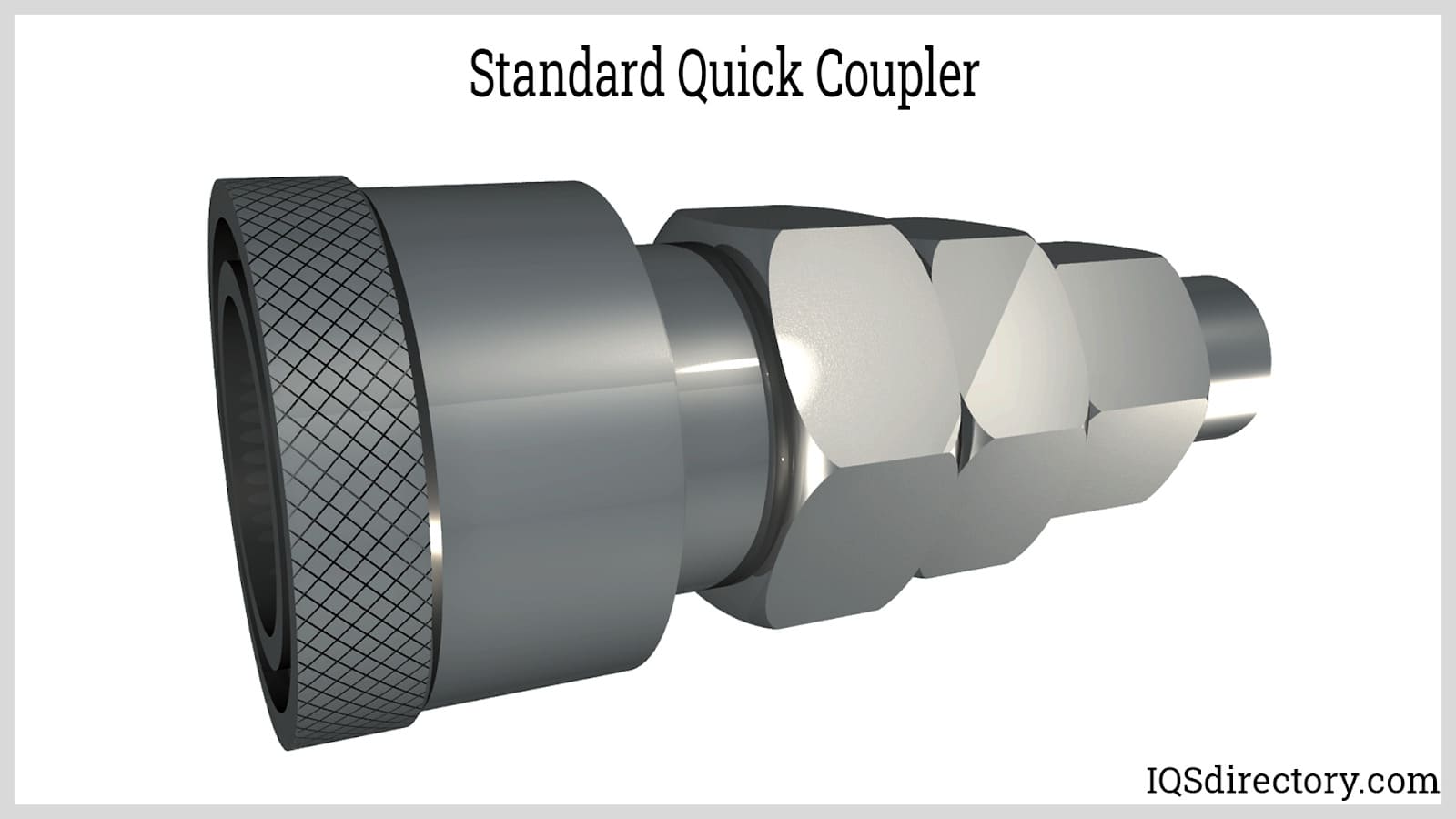 Quick disconnect couplings are fittings that allow air and fluid lines to be connected and disconnected quickly and easily.
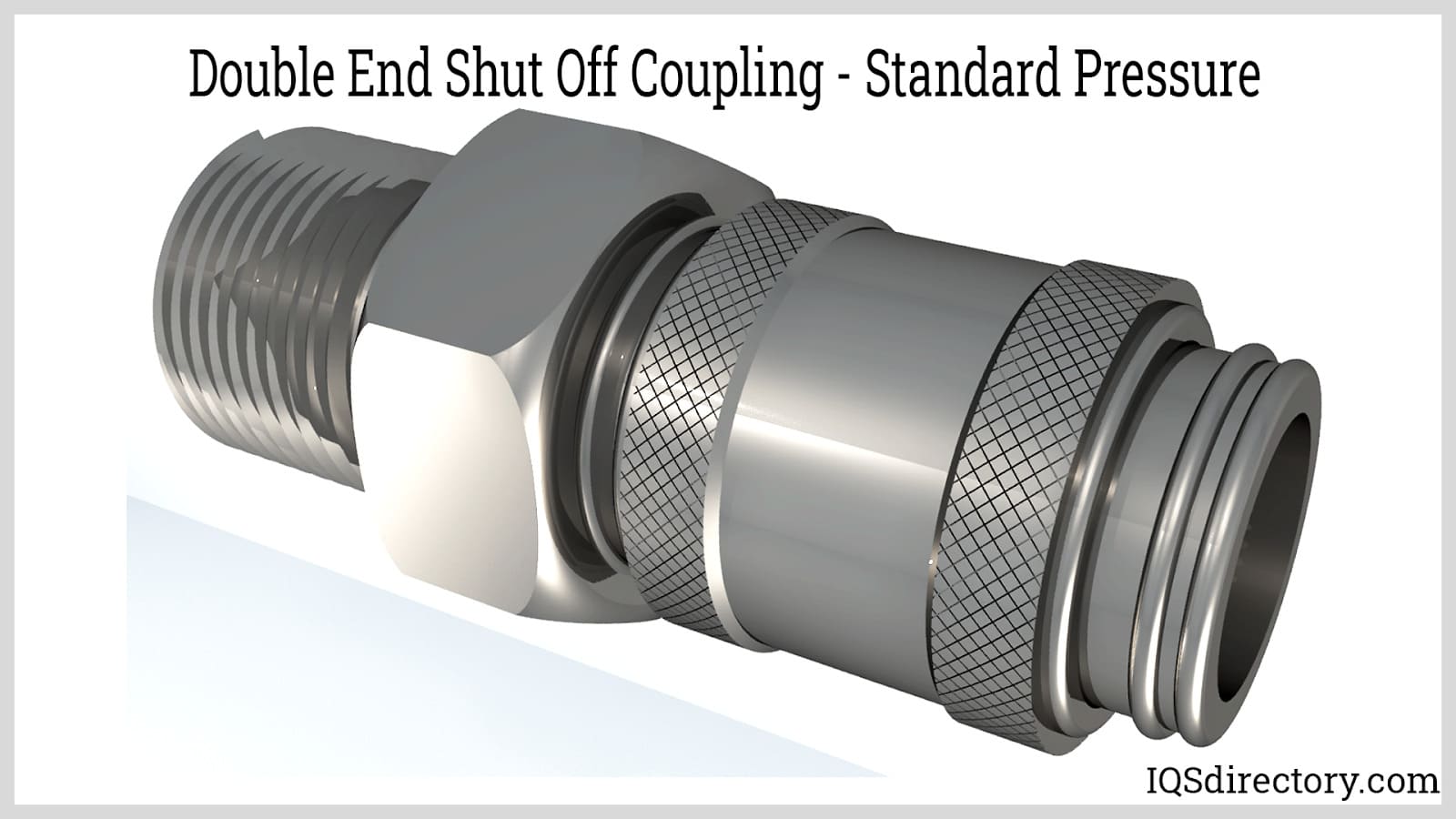 A double end shut off coupling instantly seals both the plug and socket when disconnected.
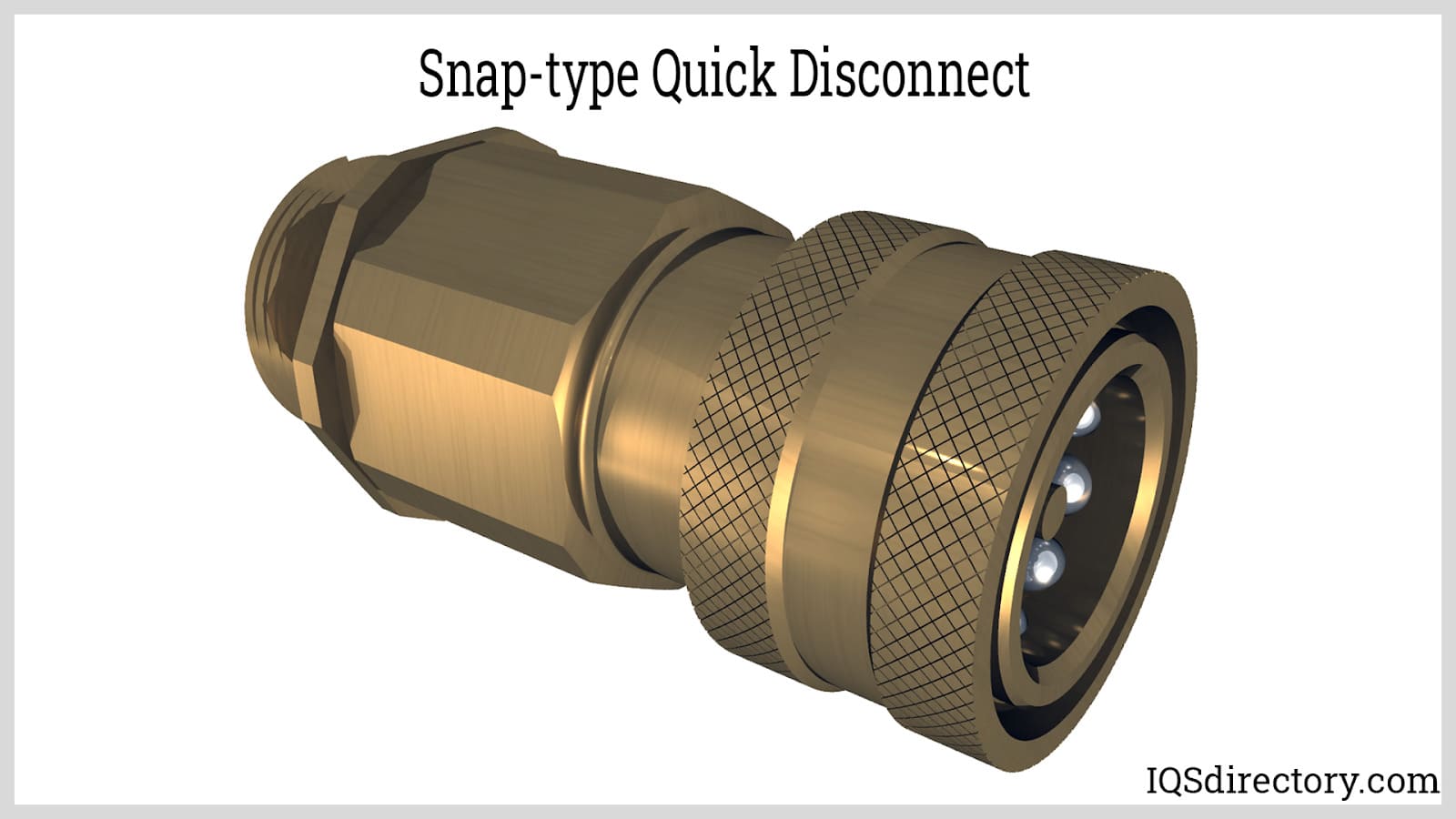 Snap-type quick disconnects automatically lock both halves together when pushed into place.
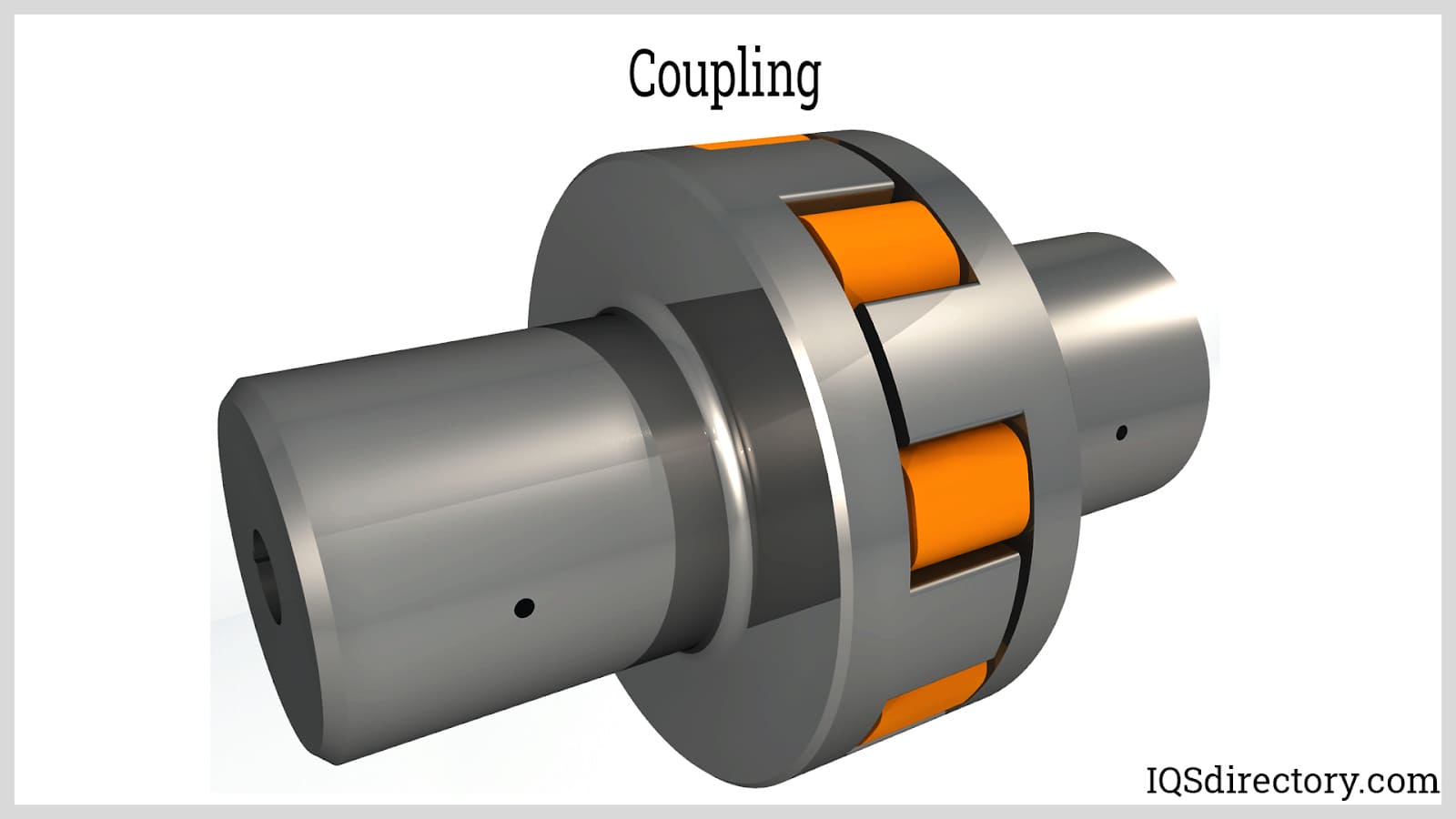 Couplings connect two rotating components, allowing for some end movement while keeping them joined.
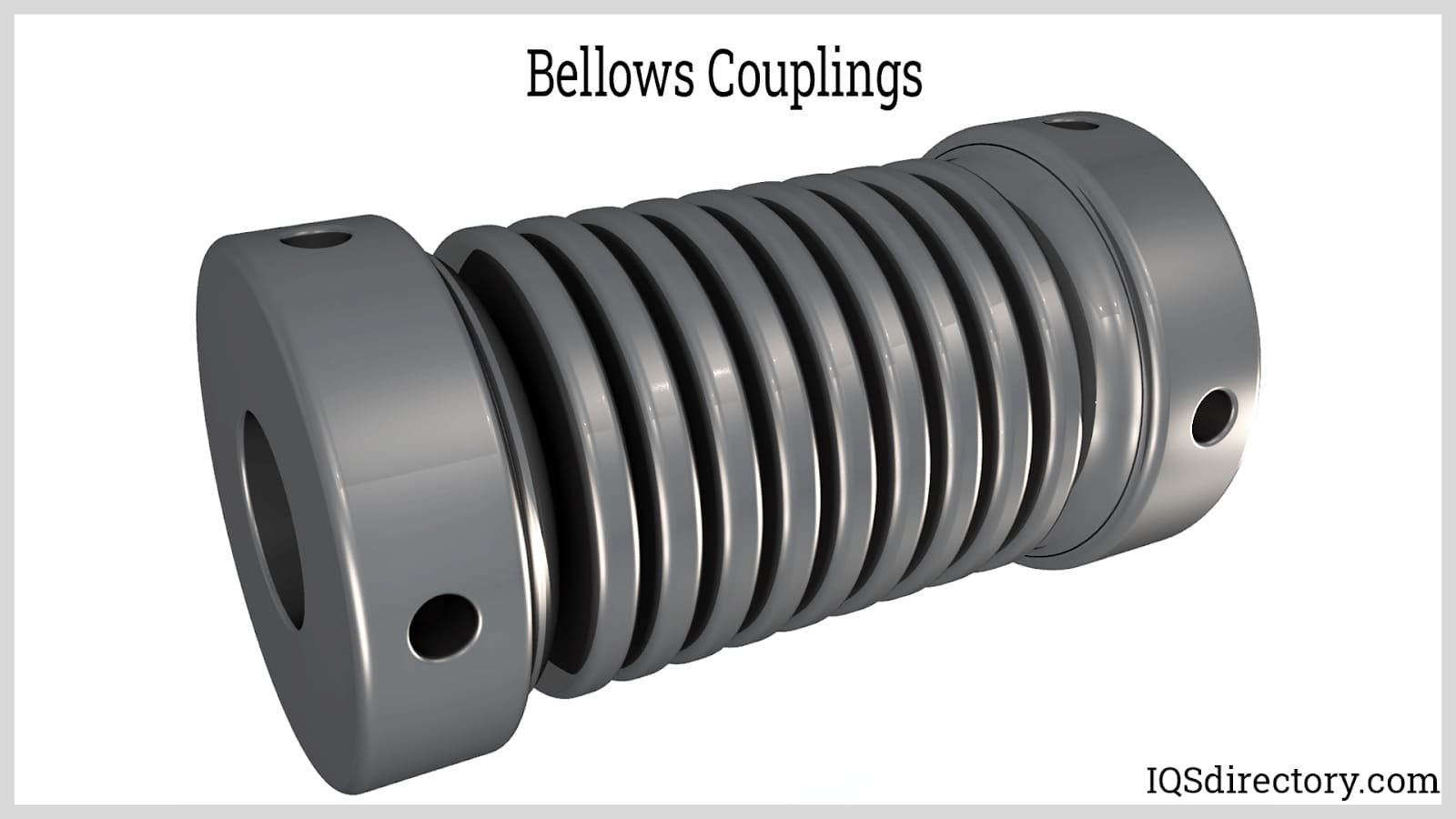 Bellows couplings feature twin coupling elements that accurately transmit speed, torque, and angular position.
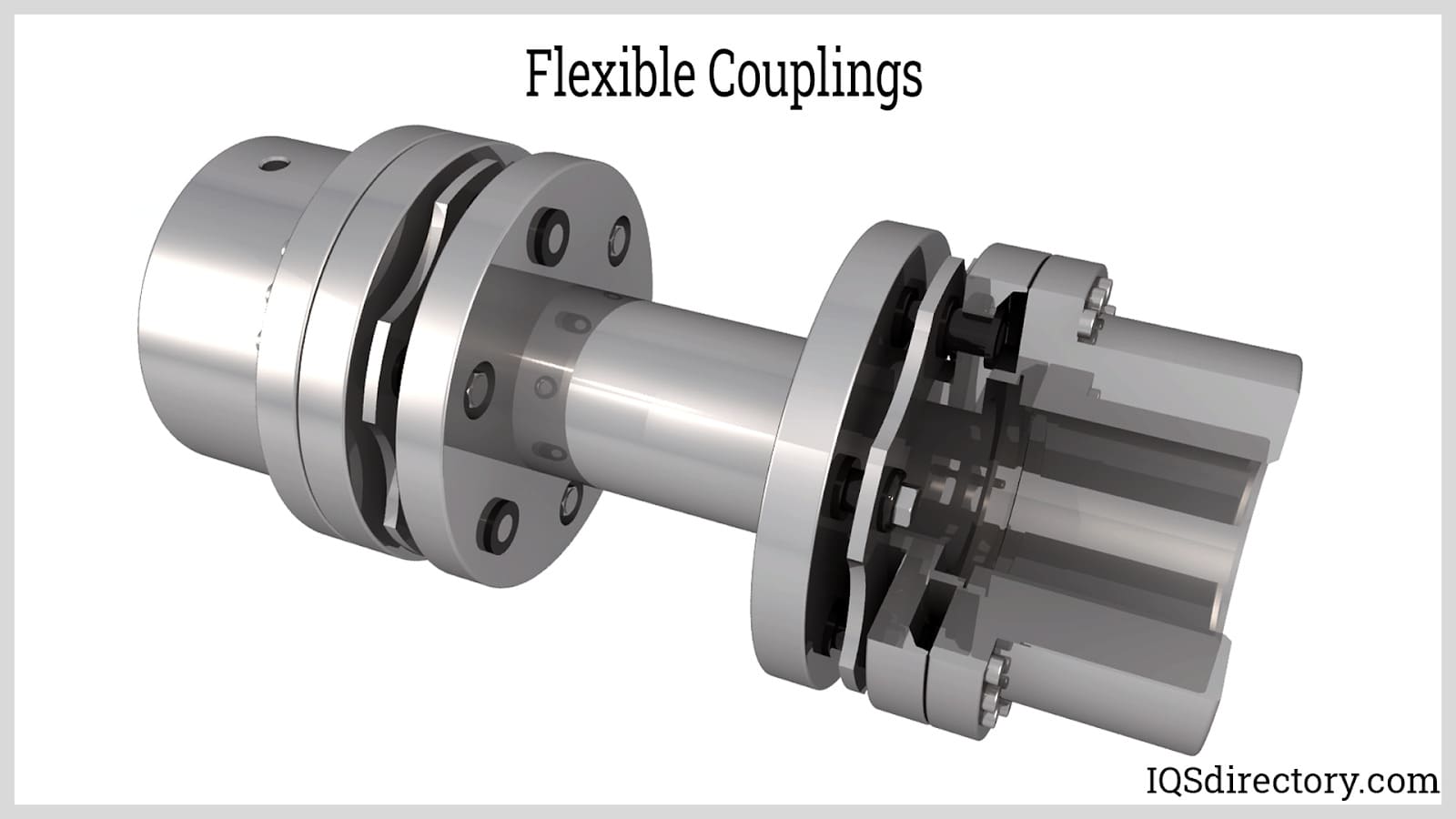 Flexible couplings compensate for temperature changes in joined components and allow shafts to move without interference.
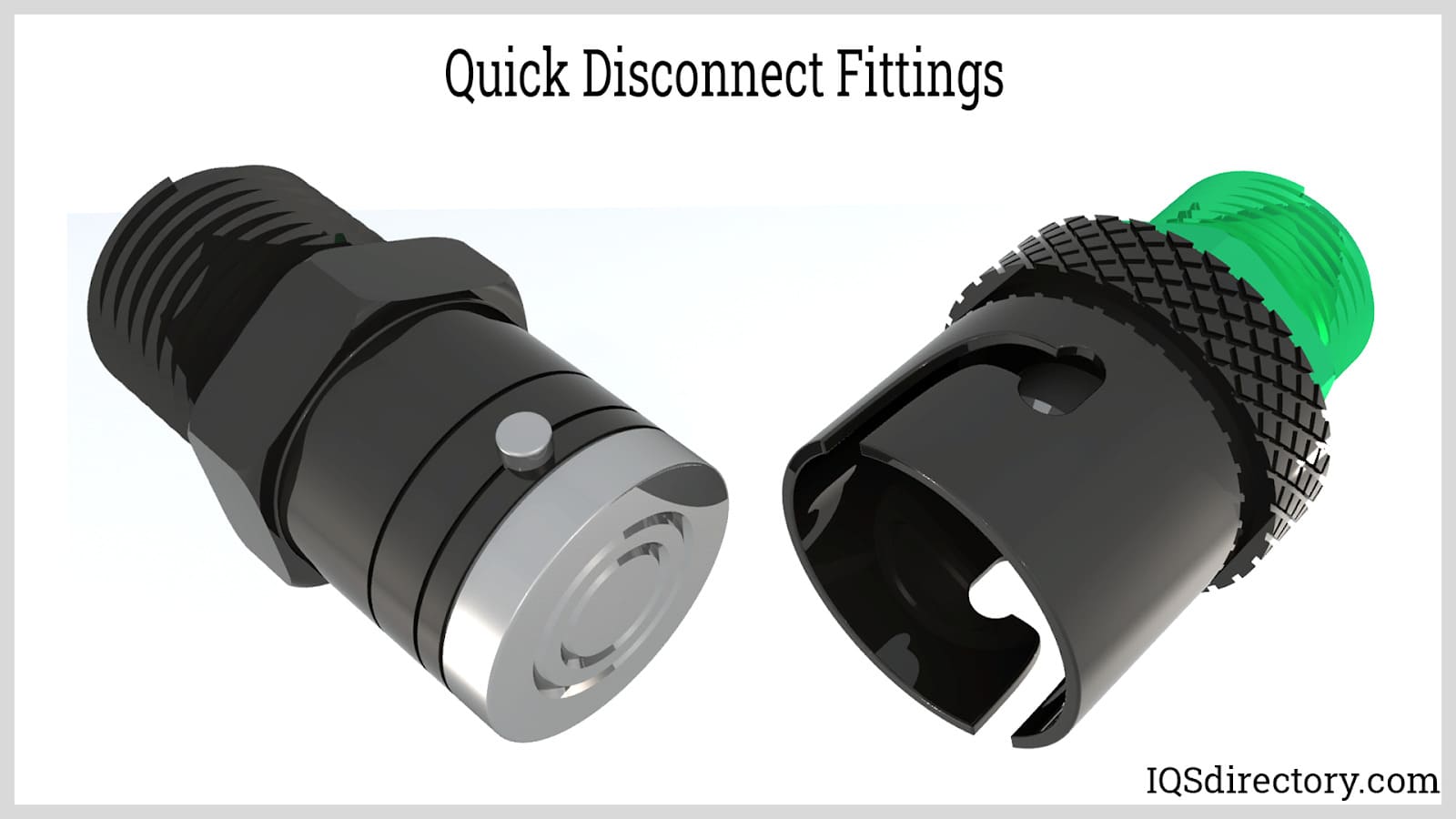 Quick disconnect fittings enable fast and easy connections and disconnections for fluid lines.
Quick Release Coupling Types
- Air Conditioner Couplings
- Designed for use in refrigeration and cooling systems, air conditioner couplings resist vibration and minimize refrigerant leaks during disconnection.
- Ball Connectors
- Feature several balls on the male or female parts that retract when a button is pressed. When the two halves are joined and the button is released, the balls project to lock the connection in place.
- Connect-Under-Pressure Couplings
- Include a valve to relieve back pressure, making it easier to connect hydraulic lines under pressure.
- Double Shut-Off Quick-Release Couplings
- Contain shut-off valves in both the male and female halves.
- Dry Break Couplings
- These sliding, sleeve-style quick disconnects are used in hydraulic systems, allowing connections with minimal air entry and little or no fluid spillage.
- High Flow Couplings
- Used in applications that require high volume fluid transfer. They are made from materials such as polypropylene (PP), polysulfone, brass, and stainless steel.
- Hydraulic Quick Disconnects
- Quick disconnects designed specifically for use in liquid hydraulic systems.
- Hydraulic Couplings
- Often include shut-off valves to prevent fluid leakage and minimize air entry during connection or disconnection.
- Non Spill Couplings
- Offer resistance to a wide range of media. Non spill couplings feature shut-off valves, color-coding for different media lines, olefinic overmolding for durability and grip, and seals and springs selected for required chemical resistance.
- Non-Valved Quick-Action Couplings
- Do not have shut off valves in either half.
- Pneumatic Couplings
- Also called “single shut off (SSO) couplings,” these are typically used to connect pneumatic tools and air hoses, but may also be used for gases and low pressure liquids.
- Poppet Couplings
- Utilize a valve that stops fluid flow when disconnected. The poppet-style quick disconnect is widely used in hydraulic applications.
- Plain Connectors
- The simplest and most cost-effective option, using a ball-bearing sleeve lock to join male and female parts.
- Push-and-Pull Quick Disconnect Couplings
- Feature a sleeve on the female half, which is pulled back to insert the male tip and locks into place when released. Disconnection requires pulling back the sleeve again to remove the male half.
- Quick Action Couplings
- Commonly used to join or separate hydraulic lines, eliminating the need for tools or specialized equipment.
- Quick Connect Couplings
- Made of two mating halves—a male plug and a female coupling—which connect by inserting the male into the female opening. Designed to prevent leaks and often include shut-off valves.
- Quick Connectors
- Connect two or more pipes, hoses, or tubes to prevent leaks or drops in pressure.
- Quick Coupling
- Connects two pipes or hoses, or a combination, via male and female halves. The male plug is inserted into the female opening for a secure connection.
- Quick Disconnect Couplers
- Mechanical devices that allow fast connection and disconnection of air and fluid lines, equipped with seals and valves to prevent spillage.
- Quick Disconnect Couplings
- Join two hoses, pipes, or a combination, enabling connections without leaks or pressure loss. Used for transporting water, air, gas, hydraulic fluid, and chemicals.
- Quick Disconnect Fittings
- Non-mechanical connectors that join pipes and hoses together without internal valves or seals.
- Quick Disconnect
- Enables fast, tool-free connection of pipes and hoses without leaks or pressure loss, often operable with one hand.
- Single Shut Off Quick-Action Couplings
- Feature a shut off valve in either the male or female half only.
- Single-Poppet Connectors
- Use a single seal to close off liquid flow, suitable for applications where minor fluid spillage is acceptable.
- Double-Poppet Couplings
- Have two seals that close both sides, trapping only a small amount of fluid. Although more complex, double-poppet couplings prevent the need for draining or cleaning spilled fluid.
- Sleeve and Poppet Coupling
- Prevents fluid loss entirely and blocks air from entering the system during connection and disconnection.
- Sliding Seal Couplers
- Have flush seals on both male and female ends, minimizing the entry of dirt and bacteria. Used with hazardous chemicals to reduce spillage.
- Other Quick Release Couplings
- Other types include double rotating ball, sliding seal, and stapler couplers.
- Threaded Couplings
- Ideal for high pressure and high flow applications. The male half is screwed into the female half to connect, and unscrewed to disconnect.
Applications for Quick Release Couplings
Quick release couplings are widely used to connect pipes, tubes, or hoses for fluid transfer in various industries. They are common in industrial manufacturing facilities, where they help connect equipment and machinery. They are also found in boat and camper plumbing systems, enabling easy and efficient cleaning and maintenance for toilets and showers, from drain to waste systems.
These fittings are essential in industries that require efficient fluid transfer and quick disconnection, such as gas handling, firefighting hoses, agricultural sprayers, automotive systems, chemical processing, food production, and construction.
Quick couplings also enhance safety. For instance, aircraft fuel tanks use dry disconnect couplings on hoses to reduce fuel spillage, minimizing the risk of fire and exposure to hazardous fumes for operators.
Quick release couplings are vital in many industrial, commercial, and consumer systems including:
- Hydraulic Quick Release Couplings
- Used in hydraulic systems to connect and disconnect fluid lines without fluid loss or air entry. Hydraulic systems use pressurized fluid to transmit power—commonly in heavy machinery. These couplings provide durability, strength, and help maintain system pressure. Some hydraulic systems require quick disconnects for efficient operation or safety, allowing fast, hand-operated connections without interrupting system pressure. Hydraulic quick couplings are crucial for reliable and safe hydraulic system performance.
- Air Coupling Applications
- Used for air-related tasks. Air quick couplers connect air compressors to pneumatic tools. Since leaking air is rarely dangerous, the seals on these couplings are less strict than in fluid systems. Air couplers allow hoses to connect quickly and prevent air loss or pressure drops in compressed air systems.
- Hazardous Material Uses
- Breakaway Couplers minimize product loss and safety risks by staying open during normal use and closing quickly under excessive force. Commonly used in hazardous material transfer, these couplings only separate when force is applied, protecting the system and allowing easy reassembly without tools.
- Dry Disconnect Couplings are used in sanitary or hazardous environments to provide drip-free connections. They feature internal mechanical locks to prevent accidental release. Before separation, the valves close and are sealed by discs in both halves, ensuring safe handling of corrosive, toxic, or harmful products.
- No Leak Performance Couplings
- Flat Face Couplings are designed for leak-free connections. Their flat mating faces can be cleaned before connecting, making them ideal for reducing contamination in hydraulic systems.
- Emergency First Response Couplings
- Quick release couplings are used in emergency decontamination shelters for disaster response or infectious disease outbreaks. These portable shelters often have soft fabric walls and aluminum frames with waterjets supplied via quick release couplings for rapid setup.
- In emergency oxygen supply situations, quick release couplings allow fast connection of oxygen lines, saving valuable time in critical patient care scenarios.
- Other Quick Release Coupling Applications
- Different coupling variations suit specific needs, with the market dominated by three main standards:
-
- Industrial-Type Based on Military Specification
- ARO-Type Mainly for Fluid Applications
- Automotive-Type Including Inflation and Pneumatic Tools
- When properly selected for the application, quick release couplings provide significant benefits. They are available in a variety of connection designs to meet diverse requirements.
Things to Consider When Purchasing Quick Release Couplers
IQS Directory offers a comprehensive directory of quick release coupling manufacturers and suppliers. Use the listing to compare top manufacturers, review product details, and view previews of available products. Companies can design, engineer, and manufacture quick release couplings tailored to your business’s requirements.
Our website provides a fast quote request form to connect with quick release coupling companies. Company profiles include website links, locations, phone numbers, product videos, and detailed product information. Customer reviews and product news articles are also available. Whether you need hydraulic quick release, quick hose couplings, or quick connect couplings, this resource is ideal for your needs.
Proper Care of Quick Release Couplings
To avoid contamination when couplings are not in use, apply caps and plugs. Always design a fail-safe mode to ensure hoses or couplings do not pose risks if issues occur. Be aware that couplings from different manufacturers may not be fully compatible. If mixing brands, never exceed the lowest pressure rating between the two couplings.
Proper installation and use should prevent problems. Always consult the safety guidelines provided by the coupling manufacturer. Both the selector and user of the coupling should have access to the appropriate safety guide. Confirm that the coupling is suitable for the fluids used, especially if they are toxic or flammable.
Quick Release Coupling Terms
- Air Inclusion
- Ambient air that is introduced into a system during the connection of quick disconnect coupling halves.
- Brinelling
- Grooves or indentations formed in the shoulder of a male half, caused by the locking balls of the female body.
- Breakaway Clamp
- A device that secures the sleeve of the quick disconnect coupling, allowing movement of the body either forward or backward depending on the sleeve’s design.
- Connector
- A device used to join two or more components. In quick disconnect couplings, the male tip is commonly called the connector.
- Connect-Under-Pressure Rating
- The rating that indicates a coupling’s ability to be connected when pressure is present on one or both sides of the hose.
- Coupler
- A component that joins multiple pieces. In quick disconnects, female ends are often called couplers.
- Double-Acting Sleeve
- A sleeve that enables both pull-to-disconnect and push-to-connect actions.
- Dust Cap
- A removable cover that protects the male tip from contaminants when not connected to the female body.
- Dust Plug
- A removable cover that protects the female body from contaminants when not connected to the male nipple.
- Female Body
- The receiving half of the coupling, containing an opening and locking balls to secure the male end.
- Flow Checking
- Also known as “ball checking,” “lock-up,” or “check-off”; refers to the closure of the male half’s valve during rapid flow, such as quickly lowering heavy equipment.
- Inside Diameter (ID)
- The measurement from one inner surface of a coupling to the opposite inner surface. Matching inside diameters ensures consistent flow rates between connectors and hoses.
- Interchange
- The differences in design between internal locking mechanisms and external nose shapes among couplers.
- Locking Balls
- Small spherical elements in the female body that extend or retract to allow or prevent the insertion or removal of the male nipple.
- Male Tip
- The nipple-shaped half of the coupling, inserted into the female body and held in place by locking balls.
- National Taper Pipe Thread (NPT)
- A standardized threading design for pipe fittings in the United States.
- Pivot Joint
- A connector assembly capable of rotating in multiple directions.
- Poppet Valve
- A precision-machined, self-aligning valve that offers higher flow rates than ball valves. Poppet valves use elastomers for sealing during disconnect and to prevent low-pressure leaks.
- Pounds Per Square Inch (PSI)
- A pressure measurement unit. The maximum PSI rating for quick disconnect couplings must meet or exceed that of other system components for safe operation.
- Spillage
- Loss of fluid or air from a system due to disconnecting a coupling.