Plastic Tubing
Plastic tubing encompasses a wide range of tubes and pipes made from plastic materials. These tubing products are manufactured in many diameters, wall thicknesses, and material grades to support everything from light-duty fluid transfer to demanding industrial, medical, and chemical-processing applications.
Its adaptability has made plastic tubing valuable across numerous industries, including medical, aerospace, beverage, agriculture, fuel handling, water treatment, packaging, laboratory systems, and general manufacturing. Depending on the material selected, plastic tubing can offer flexibility, transparency, abrasion resistance, chemical compatibility, corrosion resistance, or temperature performance that suits a very specific operating environment.
Plastic Tubing FAQ
What is plastic tubing used for?
Plastic tubing is used to transport fluids, gases, or solids across industries such as medical, aerospace, water management, agriculture, food processing, and industrial manufacturing. Its flexibility, corrosion resistance, low weight, and cost efficiency make it useful in applications ranging from IV lines and laboratory systems to irrigation, drainage, fuel handling, and pneumatic equipment.
How is plastic tubing manufactured?
Plastic tubing is commonly produced through pultrusion or extrusion. Pultrusion pulls reinforcing fibers through a die to create strong, fiber-oriented tubing, while extrusion melts and pushes plastic through a die to form continuous tubing with a consistent profile. The best method depends on the required strength, material properties, shape, and production volume.
What materials are commonly used for plastic tubing?
Common materials include PVC, polyethylene, polypropylene, nylon, polycarbonate, acrylic, silicone, PTFE, fiberglass, latex, and CPVC. Each material offers different advantages such as flexibility, optical clarity, impact resistance, chemical resistance, heat tolerance, or durability, so the right choice depends on the intended application and service environment.
What factors should be considered when selecting plastic tubing?
Key design factors include strength, diameter, wall thickness, flexibility, corrosion resistance, pressure handling, temperature range, fitting compatibility, and load capacity. Buyers also often consider clarity, color, length, stretchability, and overall performance characteristics to make sure the tubing performs safely and efficiently in the finished system.
What are the advantages of using plastic tubing over metal?
Plastic tubing often provides greater flexibility, corrosion resistance, lighter weight, and lower installed cost than many metal alternatives. It can also be produced in clear, rigid, flexible, medical-grade, or high-performance forms, making it a practical option for both industrial and commercial applications that require easier handling and material-specific performance.
How should plastic tubing be maintained?
Maintenance involves regular inspection for cracks, leaks, abrasion, discoloration, brittleness, or other wear based on the application. Some tubing may also require cleaning, periodic replacement, or closer monitoring in high-pressure, high-temperature, medical, or chemical environments to maintain safe and reliable performance.
Are there specific standards for plastic tubing in certain industries?
Yes. Medical, food, beverage, fuel, laboratory, and industrial sectors may all follow specific safety, material, and performance standards for plastic tubing. Working with a knowledgeable manufacturer can help ensure the selected tubing meets the compliance, cleanliness, and documentation requirements of the intended application.
Applications of Plastic Tubing
The uses for plastic tubing are vast, but they typically revolve around transferring fluids, gases, or certain solids from one location to another. In some systems, tubing is selected for smooth and efficient flow, while in others it is chosen for insulation, flexibility, visibility, chemical handling, drainage, or protection of wires and components.
Plastic tubing is often preferred over alternatives like steel due to several key factors. First, it can be designed to be more flexible than other types of tubes and pipes. Second, plastic offers a broad selection of material choices, enabling manufacturers to produce tubing that can handle extreme industrial conditions, including high temperatures and pressures, as well as everyday applications. Additionally, plastic tubing is generally more cost-effective than comparable options and may provide corrosion resistance, lower weight, easier installation, and broader customization options.
Plastic tubing is utilized across nearly every industry that requires the conveyance of materials. It's a go-to solution for any process that involves moving fluids, gases, or solids from one place to another. Some of the key industries that rely on plastic tubing include:
- Medicine and Pharmaceuticals: Used for intravenous drug delivery, blood transfusions, catheters, laboratory sampling, and numerous other medical applications where cleanliness, consistency, and material compatibility matter.
- Aerospace Engineering: Employed in fuel systems, hydraulics, fluid transfer lines, and other performance-driven applications, with similar uses in automobiles and mechanical devices.
- Water Management: Essential for plumbing, water treatment, irrigation, drainage systems, and flow-control applications where corrosion resistance and long service life are beneficial.
- Agriculture: Used extensively on farms for transferring liquids, bulk solids, nutrients, and other materials in irrigation, chemical application, and general farm operations.
- Fuel: Integral to piping systems for liquid and gaseous fuels, such as gasoline, natural gas, and butane, where material compatibility and dependable performance are major selection factors.
History of Plastic Tubing
The history of plastic tubing closely mirrors the broader history of plastic itself. As new polymer chemistries and manufacturing methods developed, tubing applications expanded from basic uses into highly specialized industrial, medical, and engineered systems.
While pinpointing the exact inventor of the first plastic tubes is difficult, the creation of parkesine in 1856 marks the birth of the first man-made plastic. Over the next century, various forms and applications of plastics were developed, with chemical breakthroughs during World War I fueling a surge in usage and innovation by the 1940s and 1950s. As new technologies emerged, plastic tubes began to replace older materials in many industries. For example, plastic catheters for intravenous delivery were first used in medicine in 1945. Since then, advances in extrusion, resin engineering, and material testing have made plastic tubing more reliable, more specialized, and more widely used than ever before.
Today, plastic tubing is an essential and widely used component in virtually every industry and field across the globe. From simple transfer lines to high-performance custom tubing systems, it remains a practical solution because manufacturers can tailor material properties to very different operating demands.
Plastic Tubing Production Methods
There are two primary methods for manufacturing plastic tubes, each with its own advantages and drawbacks. These methods are plastic pultrusion, where material is pulled through a die, and plastic extrusion, where material is pushed through a die. Understanding the difference between these methods can help buyers and engineers choose tubing that matches the mechanical and performance needs of the final application.
Pultrusion is a process where fibers are pulled through a shaped die while resin is simultaneously injected, resulting in plastic tubing with fibers oriented along the tube's length. This gives the tubing exceptional strength for bending and pulling applications. However, this orientation of fibers makes pultruded plastic tubing less suitable for applications that involve torque or crushing forces, as it doesn't offer the same level of strength in those areas. Pultruded tubing is therefore often considered when reinforcement and linear strength are more important than multi-directional impact performance.
Extrusion, in contrast, allows for a much wider range of material properties and can be performed at high speeds with high production volumes, while keeping costs relatively low. The extrusion process involves melting raw plastic and forcing it through a shaped die, creating a consistent cross-section or profile. This makes extrusion a popular method for producing flexible tubing, rigid tubing, clear tubing, custom profiles, and other high-volume plastic tubing products used across many industries.
Materials Used to Produce Plastic Tubing
Plastic tubing can be made from a wide range of materials, each offering unique properties suited to specific applications. Below are some common materials used for manufacturing plastic tubing. The right tubing material often depends on whether the application calls for flexibility, clarity, temperature resistance, chemical compatibility, strength, or ease of fabrication.
Acrylic
Acrylic tubing is well-known for its excellent optical clarity, making it ideal for applications where visibility inside the tube is essential. It is commonly used in lighting, aquariums, storage, displays, and industrial settings. Acrylic tubing is typically created through a casting process and offers durability and versatility where a rigid, clear tube is preferred.
Cast Acrylic
A highly durable thermoplastic with glass-like properties, cast acrylic tubing is stable in various environments and offers resistance to wear and corrosion. It is lightweight and shatter-resistant, which makes it a useful option when buyers want visual clarity without the fragility of glass.
PVC
PVC tubing is valued for its corrosion resistance, flexibility, flame retardancy, and immunity to heat shrinking. It provides excellent physical and electrical properties and is commonly used in plumbing, electrical, construction, drainage, and general fluid-handling applications where economical and versatile tubing is needed.
Latex
Latex tubing is known for its ability to return to its original shape after being stretched. It maintains flexibility in low temperatures and has high holding strength, making it suitable for applications requiring elasticity, repeated motion, or flexible sealing performance.
CPVC
CPVC is similar to PVC but with enhanced resistance to corrosion at higher temperatures, making it suitable for hot water piping and other demanding applications where standard PVC may not offer enough thermal performance.
Fiberglass
Fiberglass tubing is used in high-temperature applications and in areas requiring abrasion resistance. It is naturally RF transparent and non-conductive, making it ideal for radome and communication applications where electrical conductivity is a concern, as well as for certain reinforced structural uses.
Nylon
Nylon tubing is strong and abrasion-resistant, making it ideal for high-pressure and high-temperature applications. It resists corrosion from chemical solutions and is highly versatile for use in hydraulic hoses, vacuum lines, fuel lines, and other demanding tubing systems where wear resistance and toughness are beneficial.
Polycarbonate
Polycarbonate tubing offers a strong, lightweight solution that balances transparency and durability. It is commonly used in industrial and medical applications due to its flame and impact resistance, with customizable thickness options available for protective, structural, or visual tubing applications.
Polyethylene
Polyethylene tubing, is widely valued for its light weight, chemical resistance, toughness, and usefulness in fluid transfer and general industrial applications. It is commonly used where flexibility, moisture resistance, and economical production are important, and it is available in forms suited to both standard and specialized tubing needs.
Polystyrene
Polystyrene tubing is lightweight, flexible, and durable. It is often used for transferring fluids and gases and has excellent resistance to vapor and moisture. It can handle a variety of chemical compounds, making it useful in selected packaging, laboratory, and general transfer applications.
Silicone
Silicone tubing, which is rubber-like, is non-toxic, versatile, and resistant to extreme temperatures. It is widely used in medical applications due to its cleanliness and inertness, but it is also useful in food processing, laboratory environments, and other systems where flexibility and temperature tolerance are important.
Vinyl
Vinyl tubing is versatile, offering chemical resistance, low weight, high strength, non-toxicity, and transparency. It is used in a wide range of applications across various industries, including fluid transfer, drainage, laboratory work, food handling, packaging equipment, and general-purpose industrial systems where flexibility and visibility are both useful.
Polypropylene
Polypropylene tubing can be produced in an optically clear form and offers a higher melting point than polyethylene, making it suitable for more demanding applications. It is often selected when users need dependable chemical resistance, dimensional stability, and tubing that can perform in environments involving higher temperatures or more aggressive process conditions.
HDPE or High Density Polyethylene
HDPE tubing is popular in industrial and infrastructure applications due to its high strength-to-density ratio and resistance to shattering, corrosion, and failure compared to materials like steel and PVC. It is commonly used where durability, outdoor performance, moisture resistance, and long service life are important considerations for the application.
PTFE
Also known as Teflon tubing, PTFE is highly flexible, with excellent resistance to corrosive liquids and gases. It has a broad temperature range and is used in laboratories, chemical processes, and high-temperature environments. PTFE tubing is often chosen when purity, chemical compatibility, low friction, and dependable performance in harsh conditions are top priorities.
XLPE High-Density Cross-Linked Polyethylene
XLPE tubing is used in chemical applications where standard HDPE is insufficient. It offers enhanced properties for demanding environments, including improved resistance to heat, stress, and chemical exposure, which makes it a practical option for more challenging industrial tubing systems.
Plastic Tubing Design Factors
When selecting the ideal tubing for an application, several design factors must be taken into account. These may affect not only fit and function, but also safety, service life, maintenance requirements, and total operating cost. Buyers often compare tubing materials and sizes by reviewing both physical dimensions and real-world performance requirements. These include, but are not limited to:
- Strength
- Diameters
- Wall thickness
- Flexibility
- Cost
- Fittings
- Load capacity
- Color
- Length
- Performance characteristics
- Stretchability
- Corrosion resistance
- Coatings
Microbial properties
Toxicity concerns
Maintenance requirements
Characteristics of Plastic Tubing
Plastic tubing is a versatile product used in a wide range of applications, from fluid transfer and drainage to insulation, medical devices, laboratory systems, food handling, pneumatic controls, and general industrial processing. Often, its effectiveness depends not only on the tubing itself but also on the fittings, connectors, valves, and devices connected to it, since system performance is shaped by the full assembly rather than by one component alone.
In certain cases, like drainage systems, the tubing serves the purpose of providing a clear path for fluid flow. For instance, a corrugated tube placed correctly in a yard can help prevent puddles, erosion, or flooding in basements without requiring additional components. In other applications, however, tubing may need to handle pressure, temperature changes, chemical exposure, repeated flexing, or visibility requirements, which is why the material, wall thickness, inner diameter, and overall construction matter so much during selection.
The characteristics of plastic tubing can also vary greatly depending on the material used and the production method employed. Flexible vinyl tubing, rigid acrylic tubing, medical-grade tubing, heat shrink tubing, corrugated tubing, and custom extruded tubing all perform differently, so buyers often compare durability, clarity, flexibility, chemical resistance, abrasion resistance, pressure capability, and compatibility with specific fittings before making a final decision.
Advantages of Plastic Tubing
The versatility of plastic is what makes plastic tubing so valuable across numerous industries. It can be engineered to be as rigid and strong as metal tubing or as flexible as needed, while also being capable of withstanding demanding temperatures, pressures, moisture, and corrosive environments when the proper material and manufacturing method are used. Plastic tubing can also offer advantages such as lighter weight, lower cost, easier installation, transparency, electrical insulation, corrosion resistance, and design flexibility for custom applications. Ultimately, the effectiveness of plastic tubing depends on the expertise of the manufacturer you choose. When it is produced to match the application, plastic tubing can provide efficient, durable, and cost-conscious solutions for fluid transfer, protective sleeving, cable management, medical uses, and many other industrial or commercial requirements.
Plastic Tubing Accessories
Plastic tubing is seldom effective on its own without the proper fixtures and connectors to ensure secure, reliable seals. When considering plastic tubing for a particular application, it's important to factor in the necessary fittings and how they will integrate with the tubing. In many systems, the success of the installation depends just as much on the accessory components as it does on the tubing material, especially where pressure, vibration, repeated assembly, or leak prevention are involved.
Some accessories you might need to take into account include:
- Fittings
- Valves
- Connectors
- Couplings
- Inserts
- Joints
Proper Care of Plastic Tubing
When maintaining plastic tubing, it's important to keep the properties of the materials in mind at all times. Regularly check for signs of corrosion, cracks, tears, discoloration, brittleness, kinks, abrasion, and leaks based on your application needs. While many types of plastic tubing are designed with fail-safes in place, others may be more prone to shattering, splitting, or sudden failure under the wrong conditions. For these, stay especially vigilant and address any issues promptly to prevent further damage, downtime, fluid loss, or safety problems.
If you're unsure how to properly care for a specific type of plastic tubing, it's a good idea to consult with your engineers or manufacturer for advice. This can help prevent costly or hazardous mistakes in the future and can also improve tubing life, system reliability, and maintenance planning. Many users benefit from asking practical questions such as how often tubing should be inspected, what chemicals should be avoided, or whether a given material can handle repeated cleaning, sterilization, or outdoor exposure.
Plastic Tubing Compliance and Standards
Various industries have specific recommendations or strict regulations regarding the materials and specifications for plastic tubing used in certain applications. For instance, surgical tubing and drinking straws must adhere to safety and non-toxicity standards. Fuel piping systems require tubing that is both reliable and secure, while industrial tubing must be designed to withstand the particular environmental challenges of that industry. Depending on the end use, buyers may also need to consider material traceability, chemical resistance, cleanliness, flame performance, pressure capability, and compatibility with food, medical, laboratory, or electrical requirements.
Given the wide range of uses for plastic tubing, there is no one-size-fits-all standard. It's important to research the standards and compliance requirements for your specific application beforehand. Alternatively, partnering with a plastic tubing manufacturer who is knowledgeable about compliance can ensure the correct standards are met for your needs. If you are evaluating suppliers, it may also help to ask what testing, certifications, quality control procedures, and documentation they can provide for recurring production runs or custom tubing projects.
Choosing the Right Plastic Tubing Manufacturer
With the wide variety of plastic tubing options and applications available, it's important that your manufacturer meets your specific needs rather than adhering to an idealized standard. The right plastic tubing manufacturer should understand your application, recommend suitable materials, maintain dimensional consistency, communicate clearly about lead times and tolerances, and provide dependable support for custom tubing, production volumes, and accessory compatibility. Whether you need flexible tubing, rigid tubing, clear tubing, medical tubing, or specialty extrusions, the best supplier is one that can match product performance to your operating environment, budget, and long-term expectations.
Ideally, you should choose a manufacturer with experience in producing plastic tubing for your particular industry or a similar application. Whether the end use involves fluid transfer, chemical handling, laboratory processes, food processing, packaging lines, medical devices, electrical insulation, pneumatic systems, or general industrial supply, application knowledge often leads to better material guidance and more dependable production results. If you're dealing with a highly specialized or unique application and can't find a manufacturer with directly relevant experience, look for one with a solid track record in custom plastic tubing production, precision tolerances, consistent extrusion quality, and the ability to recommend material options that align with temperature range, flexibility, pressure resistance, transparency, and overall performance goals.
For industries with strict compliance requirements, it's even more important to select a manufacturer carefully. A reputable contract manufacturer can help support compliance if you're not familiar with the specific standards, testing expectations, documentation practices, or performance requirements tied to your application. This may include tubing for medical, pharmaceutical, food-grade, cleanroom, laboratory, or specialty industrial environments where traceability, resin selection, dimensional consistency, cleanliness, and lot control may influence the purchasing decision. If you are comparing plastic tubing manufacturers, ask how they handle quality assurance, inspection, material certifications, custom runs, and repeatability from one order to the next.
In addition to specific experience, prioritize manufacturers who have strong customer feedback, offer ample references, communicate effectively, and provide transparent pricing and cost breakdowns. Many buyers also look for responsive engineering support, short lead times, prototyping ability, custom color matching, secondary fabrication options, and a clear understanding of how tubing size, wall thickness, flexibility, and resin choice affect product life and field performance. If you are wondering how to choose plastic tubing for a demanding process, start by comparing suppliers that can explain the tradeoffs between common materials, production methods, and fitting compatibility instead of simply quoting a part number.
Plastic Tubing Images, Diagrams and Visual Concepts
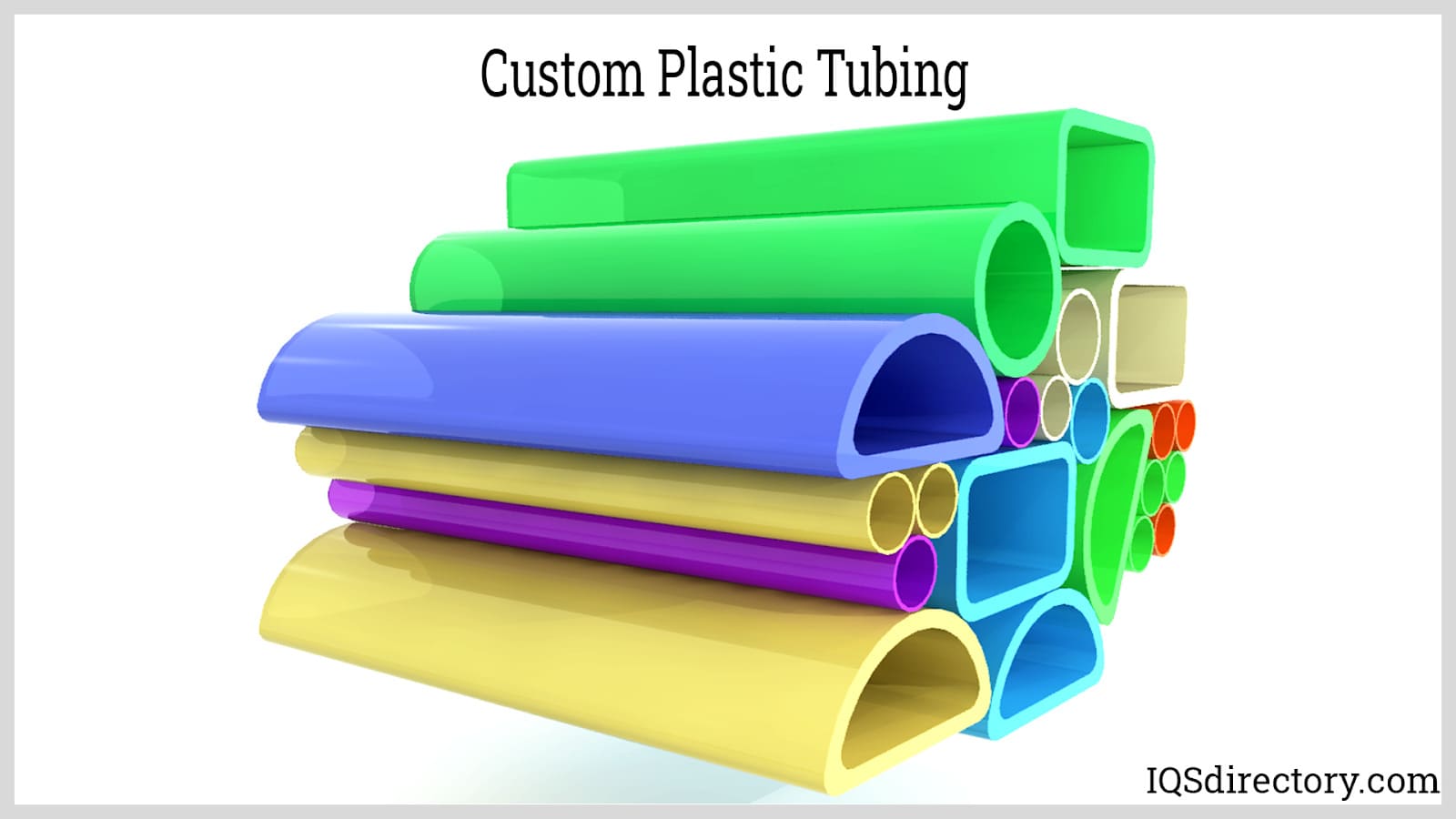
Plastic tubing can be made into many different forms and can serve a variety of purposes, from lightweight fluid lines and flexible transfer tubing to rigid clear tubes, protective sleeves, and custom extruded profiles used in industrial, commercial, laboratory, and medical applications.

The flexibility of the plastic tube is determined by the material used in manufacturing, and different materials offer different levels of bend radius, resilience, kink resistance, and recovery. Softer compounds may be preferred for routing around equipment or fitting into tight spaces, while harder materials may be selected for structural stability and longer wear life.
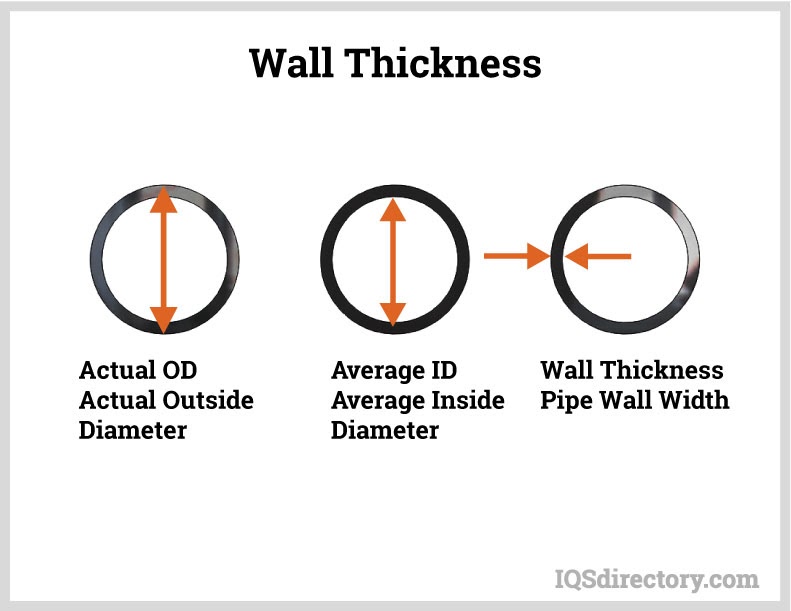
Determining the wall thickness of the plastic tube influences what the tube can be used for, including pressure handling, durability, weight, transparency, bend performance, and resistance to collapse. Buyers often compare tubing by inside diameter, outside diameter, and wall thickness together because each dimension affects flow, fit, and service life.
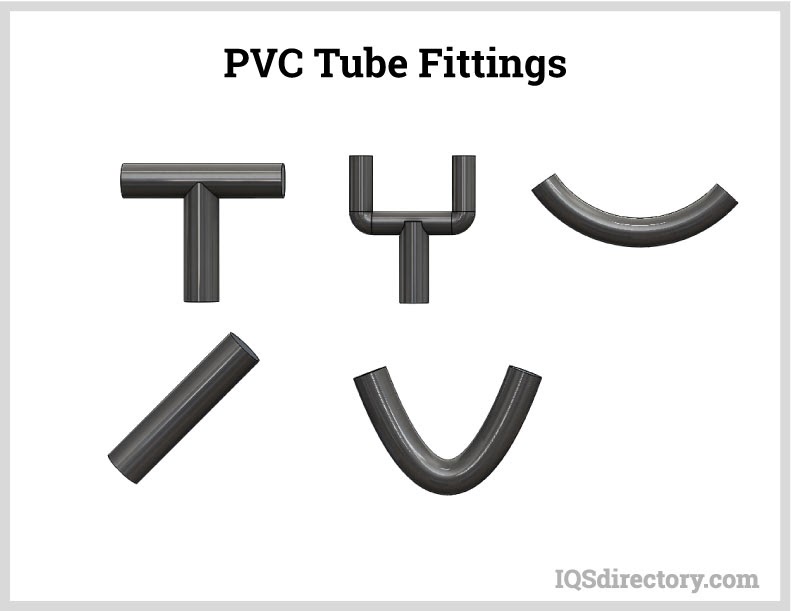
There are a variety of fittings including compression, push to connect, quick turn, threaded, barbed, socket, and flanged styles. The type of fitting is determined by the usage of the tube, the operating pressure, the material being transferred, the need for removability, and the level of sealing reliability required for the application.
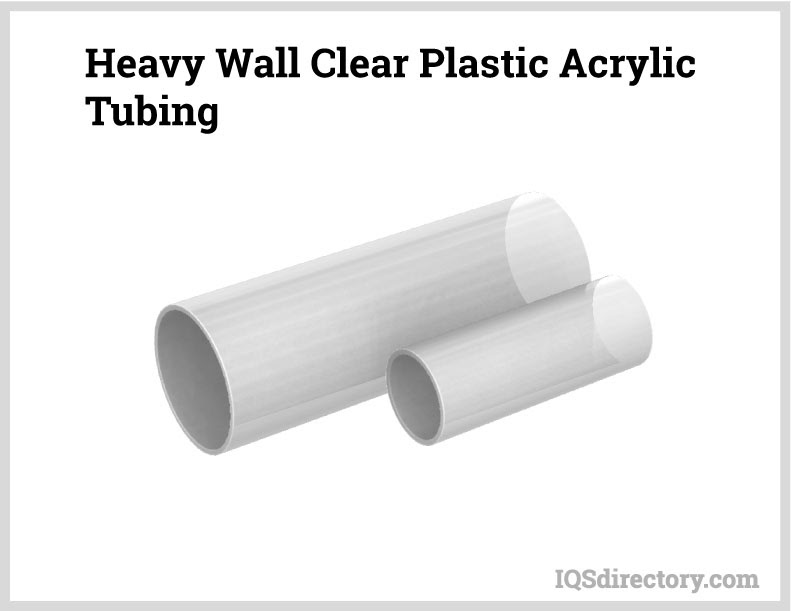
Plastic tubing does not have the same durability as steel; however, plastic is able to withstand daily wear in many applications while offering advantages such as lower weight, corrosion resistance, chemical compatibility, electrical insulation, and easier fabrication for custom tubing assemblies.
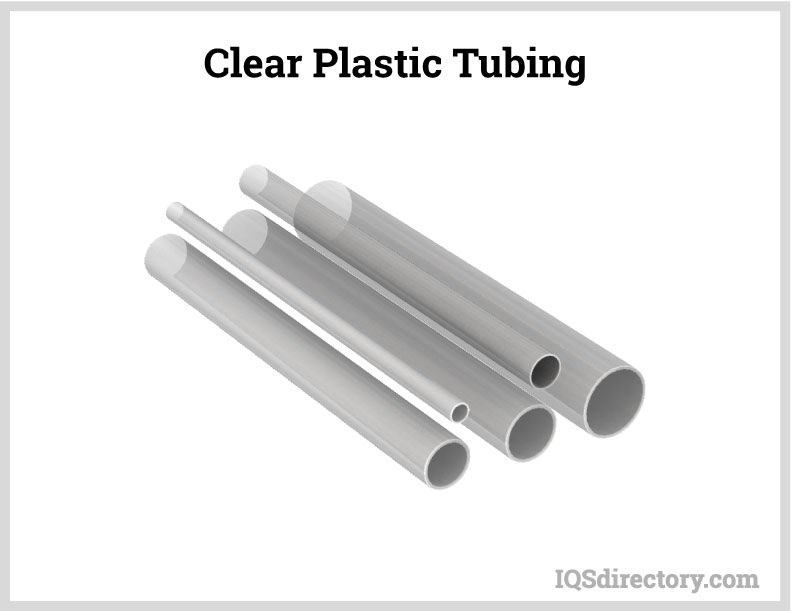
Produced with the same clarity as glass without being fragile, clear plastic tubing can provide greater strength, lower breakage risk, and dependable visibility for monitoring flow, contents, bubbles, or contamination during operation, inspection, or maintenance.
Plastic Tubing Types
The versatility of plastic tubing has led to a wide array of types and categories, each with distinct functions. Some overlap in design or purpose, while others stand out as unique forms of plastic tubing. Here are some common types of plastic tubing you may encounter, especially when comparing tubing materials, end uses, dimensions, and performance characteristics for a specific system or manufacturing process:
Corrugated Tubes
These tubes feature ridges and valleys running perpendicular to the length of the tube, offering increased strength, routing flexibility, and crush resistance but reduced internal flow smoothness compared to smooth-bore tubing. Made from materials like nylon, polyurethane, polyethylene, PVC, and other low-density plastics, corrugated tubing can be customized in various sizes, with 10mm being a standard. It's often used in medical applications, such as anesthesia and respiratory ventilators, but it is also used for wire protection, cable management, drainage, equipment routing, and applications where flexibility and external protection matter more than maximum flow efficiency. Depending on the design, it can be either disposable or reusable.
Clear Plastic Tubing
This refers to any plastic tubing made from transparent materials, allowing visibility of the contents inside. Clear tubing is commonly chosen when users need to inspect flow, confirm fill levels, watch for air bubbles, or verify cleanliness without opening the system. It is often found in beverage handling, laboratory work, aquariums, packaging equipment, water lines, and many light-duty industrial processes.
Heat Shrinkable Tubes
These are designed to shrink when heated, forming a tightly fitting protective covering that provides insulation, bundling, abrasion resistance, strain relief, and environmental protection. Heat shrink tubing is often selected for wire management, electronics, cable assemblies, splices, and components that benefit from a secure outer sleeve with clean installation and dependable fit.
Medical Tubing
Plastic tubing used in medical applications, such as catheters, IV lines, and other surgical equipment. Medical tubing often requires tight tolerances, clean manufacturing conditions, biocompatible materials, flexibility, kink resistance, and dependable consistency because the tubing may be used in patient care, diagnostics, fluid management, or single-use disposable products.
Plastic Pipes
Typically rigid plastic tubes, these are often defined by their inner diameter and used in plumbing and various other industrial applications. Compared to flexible tubing, plastic pipe is generally selected where structural support, fixed routing, pressure retention, and permanent installation are more important than bendability. It is commonly used for water handling, drainage, process systems, and plant utility lines.
Pultruded
Any tubing created through the pultrusion process, where materials are pulled through a die to form a specific shape. Pultruded tubing is often valued for uniform cross-sections, reinforced construction, and repeatable dimensional control in applications where stiffness, shape retention, and predictable performance are required.
Square Plastic Tubing
Tubing designed with a square cross-section, as opposed to the typical circular shape. This profile may be used for structural applications, product displays, frames, guards, guides, and assemblies where flat surfaces, nesting ability, or a distinct geometric shape offer installation or design advantages.
Surgical Tubes
These are specialized plastic tubes used for medical procedures, including those for intravenous lines and surgical applications. Depending on the design, surgical tubing may need to provide flexibility, softness, sterilization compatibility, chemical resistance, or very specific dimensional control to perform reliably in healthcare and procedural environments.
Hard Plastic Tubes
Rigid and inflexible tubes, though not as stiff as pipes, made from materials like acrylic and polycarbonate. These tubes are resistant to kinks and abrasions, providing strength and durability in various applications. They are often selected when users need dimensional stability, optical clarity, impact resistance, or a cleaner appearance than flexible tubing can provide.
Small Diameter Tubes
Plastic tubing with diameters less than 3mm, often smaller than 1mm, and typically used in medical applications. While flexible and relatively delicate, these tubes are valuable in situations where precision flow paths, compact routing, micro-fluid handling, or space-saving designs are needed. Small diameter tubing is also used in instruments, diagnostics, electronics, and other precision assemblies where larger tubing would not be practical..
Mini Tubes
These small plastic tubes, made from materials such as polycarbonate, polypropylene, polyethylene, polystyrene, and PVC, are used in a variety of industries, including electronics, medical products, and swab sticks. Mini tubes can be custom-made for clients or purchased in bulk, making them useful for OEM production, disposable components, packaging inserts, sample handling, and niche product assemblies where compact dimensions and material consistency are important.
Rigid Plastic Tubing
This type of tubing is stiff and unbendable, used in applications requiring strength and stability without the need for flexibility. Buyers often choose rigid plastic tubing for displays, protective housings, flow viewing, structural supports, sleeves, guides, and applications where straight runs and shape retention are priorities.
Centrifuge Tubes
Custom-made tubes for use in laboratory centrifuges, typically made from high-purity resins or polypropylene. These tubes must be precise to withstand high-speed spinning in laboratories, and they are often evaluated for dimensional accuracy, chemical resistance, clarity, sealing performance, and consistency across production lots.
Vinyl Tubing
Hollow channels primarily or entirely made from vinyl plastic, a material derived from the vinyl group of chemicals, known for its durability and flexibility in various applications. Vinyl tubing is frequently selected for low-pressure fluid transfer, drainage, visibility, and general-purpose use because it is widely available, easy to cut, and offered in many sizes and wall thicknesses.
Plastic Tubing Terms
Crazing
Small surface cracks that appear on plastic tubing, usually close to the surface. Crazing may affect appearance first, but in some cases it can also indicate material stress, environmental exposure, incompatibility with chemicals, or the early stages of longer-term performance problems.
Brew Tube
A specialized type of tubing used primarily in beer and coffee brewing, designed for the unique needs of these processes. Brew tubing is often selected for taste neutrality, sanitation, flexibility, and dependable fluid handling in beverage transfer systems.
Ductility
The ability of plastic tubing to withstand strain before breaking or failing. Ductility can influence how tubing performs during bending, installation, stretching, and repeated motion, especially in flexible routing applications.
Expansion
A process where the diameter of a plastic tube increases while its wall thickness decreases. This technique is commonly used to create heat shrinkable tubing and other specialty forms where the tubing must later recover to a smaller size when heat is applied.
Extrusion
A process in which solid plastic resin is melted and pushed through a heating chamber by a screw to form plastic products. In tubing manufacturing, extrusion is one of the most common production methods because it supports continuous output, repeatable dimensions, and a wide range of thermoplastic materials.
Fish Eyes
Small, irregular masses found in transparent plastic tubing, caused by incomplete blending during the manufacturing process. These defects may reduce visual clarity and can signal issues with material preparation, melt consistency, or process control.
Flaring
A method of increasing the diameter of a plastic tube by applying mechanical pressure from the inside. Flaring may be used to prepare tubing ends for joining, fitting attachment, or specialty connection requirements.
Jacket
The outer layer of a dual-wall heat shrinkable tube. This outside layer helps provide physical protection, insulation, and a finished surface around the inner layer and covered component.
Latex
A polymer solution, often referred to as rubber, consisting of water and polymer. In tubing contexts, latex may be associated with elasticity and flexibility, though material selection depends heavily on the intended use environment and compatibility requirements.
Liner
The inner part of a dual-wall heat shrinkable tube. The liner can contribute sealing performance, adhesion, environmental protection, or an added barrier between the covered part and the outside environment.
Polymerization
A chemical process, often catalyzed, where simple molecules combine to form more complex, chain-like compounds (polymers). This process is the foundation of many plastic materials used to manufacture tubing with different levels of clarity, hardness, chemical resistance, and flexibility.
Polystyrene
A transparent, flammable plastic that is known for its excellent electrical and thermal insulating properties, high strength, and impact resistance. In tubing and related products, polystyrene may be considered when rigidity, low cost, and clarity are useful, though application conditions still determine whether it is the right choice.
Polyurethane
A versatile class of thermoplastic polymers that offer good resistance to solvents and abrasion and can be found in either solid or foam forms. Polyurethane tubing is frequently selected when users need flexibility combined with wear resistance, making it popular in pneumatic lines, automation equipment, and moving systems.
Pultrusion
A manufacturing process that creates reinforced plastic shapes with consistent cross-sections by pulling resin-wetted reinforcing fibers through a heated steel die. The result is often a strong, dimensionally stable product suited to applications where uniformity and reinforcement are desired.
Plexiglass Tubes
Transparent thermoplastic, also known as acrylic, often used as an alternative to glass due to its high optical clarity, strength, light transmission properties, and affordability. Plexiglass tubes are commonly used in displays, guards, lighting, visual flow applications, and decorative or structural designs where a clear rigid tube is preferred..
Shore Hardness
A scale used to measure the hardness of materials, with the "A" scale being used for plastic tubing. Higher numbers indicate harder materials. Shore hardness can help buyers compare tubing flexibility and surface feel when evaluating options for sealing, routing, and wear resistance.
Strain Relief
A technique in which plastic tubing is used to cover an object, reducing stress on the object by adding extra support and stiffness. This can help protect wires, cables, joints, and small components from repeated bending or pull forces during use.
Stress Cracks
Small cracks, typically found in clusters, which occur in plastic tubing due to mechanical stress. Stress cracking may also be influenced by environmental conditions, repeated bending, chemical exposure, or improper material selection for the operating environment.
Thermoset
A type of material that becomes permanently hardened after undergoing a chemical reaction and cannot be reshaped even when reheated. Thermoset materials are typically associated with permanent structural change and heat-set performance characteristics rather than repeated remelting.
VW 1
A flame-resistance designation commonly referenced for tubing and insulating materials used in electrical applications. Buyers looking at heat shrink tubing or wire protection products may review VW 1 ratings when comparing products for flame performance and electrical system use.
More Plastic Tubing Information