Plastic Containers Industry Information
Plastic Containers
Plastics are a product of the modern age. The history of plastic as outlined on this site is a story of inventiveness and industrialism. The advent of plastic storage along with mass production helped create America’s post-war economic boom. Plastic containers are one of the most important and useful items made from this revolutionary material.
Plastic containers are enclosures of plastic that are designed to contain something. Varieties of plastic containers distinguish themselves from each other by virtue of their size, shape, function or application. Plastic containers like plastic boxes are easily conceptualized in the abstract, but confining them to a universal, practical description is impossible; there are just too many kinds of plastic containers.
Quick links to Plastic Containers Information
The History of Plastic
From its beginning, the innovations of plastic have been fueled by commercial interest. Manufacturing for consumer production continues to be a main driver of the many forms plastic has taken.
Early interest in plastic first arose in the 19th century as a substitute for scarce materials such as shell, bone and ivory. Natural cellulose found in plants and trees was one of the first uses: heated and chemical additives created a new substance that was durable and adaptable.
Charles Goodyear discovered by accident in 1839 how sulfur reacted with raw rubber in a process known as vulcanization to create a more durable form. Celluloid was created in 1870 by John Hyatt. In 1909 another chemist, Leo Baekeland, formulated the compound for Bakelite. Together with the synthesis of nylon in the 1930’s, these successes helped ignite an era of commercial experimentation and opened up a new world of plastic materials.
Advantages and Disadvantages of Plastic Containers
Plastic containers can be manufactured to meet almost any requirement of designers and customers. Plastic is both lightweight and durable, and is capable of delivering a variety of color, texture and shapes.
Formulations of container plastic can create desirable properties for food safety, waterproof containers, sterile storage, heat-resistance, and cohesion in a microwave oven.
Another benefit of plastic is its affordability, primarily due to its ease of mass production. The adaptable material is even stepping into sustainability through new biodegradable products. These and other advances answer concerns about toxicity such as for BPA emissions.
Applications of Plastic
By one definition, plastic is any material which can be shaped or molded, which includes such things as fiberglass. There is an almost unlimited variety of chemically-made plastic products--everything from a food-grade plastic bottle to Lego toys to car bumpers to bubble gum. Plastic is used in the fields of electronics, plumbing, construction, and even the medical industry.
Plastic can be made chemically inert and rendered food-safe, as is the case in many packaging materials. Durable, chemical-resistant plastic storage containers can be manufactured for water, juice, bleach, gasoline, soap, alcohol or even acid.
Plastics manufacturing has introduced a huge variety of lightweight, strong, flexible products. Plastic can be used for food bins and bulk containers, shaped into ropes and filament, made into glues and paints, or processed into sheets and pipes and plastic bottles. Plastic has partially replaced older materials such as leather, horn, stone, wood, metal, and glass.
Containers are one of the most useful applications of plastic processing, and today an enormous selection is available. Plastic food packaging and food grade containers are available in virtually any shape, color or size.
Industries that Use Plastic Containers
Consumers are only one segment of the plastic container market. Usage of plastic containers is ubiquitous across the business sector. Most industries use plastic containers in one form or another, even if only for packaging and storage.
Industries in nations of every level of economic development rely heavily on plastic containers. From North America to sub-Saharan Africa, plastic water bottles and other plastic containers litter city streets and rural routes. In wealthy countries and in countries gripped by scarcity, plastic containers are easy to come by. Indeed, in both extremes they have become essential for life; the market for portable water containers is enormous in countries without municipal water sources, and in western countries only a minority (however substantial) of food containers are not made of plastic. It would be difficult, for example, to find commercially packaged peanut butter in glass jars anywhere in the United States. Also, industrial manufacturers and distributors of all varieties rely on plastic containers in their day-to-day operations. Warehouses often store and transport materials in plastic totes or bins, and factories use plastic tubs to collect products when they emerge from production machinery. Landscaping companies, municipalities and consumers make use of plastic catch basins to control the flow of rainwater and to prevent pollution of water sources. Even the containers used to recycle other plastic containers are made of plastic. Plastic is chosen over competing container materials because of its durability, versatility, pliability and because of the low cost of manufacturing it.
Whether in construction, plumbing, medical or financial fields, plastic storage and containment are a basic staple of commercial administration. Plastic containers offer an almost unlimited number of uses. Virtually every business utilizes some crates, boxes, jars, or other kind of plastic container.
Making Plastics
Plastic is lightweight, strong and relatively low-cost. The material offers excellent electrical and thermal insulation. Plastic is corrosion resistant, and can even be made sufficiently transparent for optical devices.
Plastic Composition
Plastics are composed of synthetic and semi-synthetic organic polymers, mostly sourced from petrochemicals, but renewable sources such as corn and cotton are increasing. In fact the first useful plastics were natural products such as rubber.
Chemists are able to combine monomers in different relationships to create an incredible variety of products. Plastic containers of various dimensions can be made to withstand very different pressures and temperatures.
Except for the limited exception of silicone, plastics are most often based on the carbon atom. Though the chemistry of plastic is complex, the underlying concept is based on chains of molecules linked together. These chains are called polymers, which is why so many names of specific plastics begin with “poly": polyethylene, polystyrene, and polypropylene, etc. All of these types of polymers can be found by talking to the companies listed on IQS Directory.
Most plastics are refined and processed hydrocarbons. There are some exceptions, such as biodegradable containers made from processed corn, but the overwhelming majority of plastics are derivatives of petrochemicals. These plastic varieties begin their lives in reservoirs of crude oil and natural gas. After a series of refinement and development processes, these raw materials can be converted into styrene, ethylene glycol, vinyl chloride and many others – the main ingredients of thermoplastics. Thermoplastics, under the right conditions, can be shaped and molded into useful products (thermosets, another kind of refined plastic, are less commonly manufactured and cannot be remolded once set). There are many processes by which plastics are molded. The processes relevant to the creation of plastic containers are injection molding and blow molding. In both processes, raw plastic material (stock) is placed in a conveyance channel where a long screw forces it toward a mold. The friction and pressure caused by the turning screw, combined with heat from heating elements along the channel, liquefies the stock. In injection molding, the molten plastic is forced into a mold designed to give the plastic a certain shape. In blow molding, the molten plastic enters the mold in the same way but is then shaped further by compressed air which is forced into the mold cavity; this causes the plastic to expand and become hollow in predetermined places. In some cases, a combination of injection and blow molding is necessary to form complex shapes. At the end of the process, the plastic cools and hardens and is ejected from the mold.
Additives and Plastics
Additives are chemicals or other substances mixed with plastic to enhance performance or obtain a specific look/feel. Inorganic fillers like carbon are used to strengthen plastic. For high temperature processing, thermal stabilizers are added; another additive called a plasticizer makes the substance more pliable. Fire retardant additives prevent ignition; UV stabilizers retard sunlight degradation. Other additives affect coloring, matting and various presentation effects. The malleability of plastic allows secure integration with very different substances, such as stainless steel or glass.
Plastic Container Production
The nature of plastic poses a unique set of challenges to a plastics engineer. To work with chemicals that exist in a semi-liquid state, with properties that exhibit flow, can be quite difficult to quantify. Knowledge and experience—and experimental testing—are needed to analyze and formulate suitable manufacturing specifications of a desired product. Because the material is so adaptable, plastic can be processed in many ways. Specifically, a plastic storage container can be manufactured by one of several processes.
Injection molding is one of the most common means of plastic container production: it consists of molten plastic being ‘injected’ into hard molds for formation. Extrusion follows the same principle of melting/cooling into shape.
There are many variations of this technique. Rotational and blow molding are other common methods of processing plastic for specific characteristics. Combinations of methods are also used.
Chemical Characteristics and Features of Plastic
One important classification of plastic is whether it is a Thermoset or Thermoplastic. Some plastics, like Bisphenol A (BPA), can be formulated as either type. BPA and BPA products are very common in the consumer market.
A Thermoset plastic polymer can be melted into a shape only one time; the substance is irreversibly altered by heating. BPA products may fall into this category. Common applications are housing insulation, bathtubs, plywood and computer equipment. Thermoset plastic is valued for its strength and versatility, and can be scaled to produce a small or large plastic container.
Thermoplastics are also plastic polymers which soften with heat, but this type returns to its original state when cooled. A great variety of plastic containers are made of thermoplastics: packaging and film, siding, floor and wall coverings are examples. This plastic type is highly versatile and is used for both small and large plastic storage containers and their lids. BPA plastics may be of this type too.
Many food grade containers use thermoplastic materials including High-density polyethylene (HDPE), or the less rigid low-density polyethylene (LDPE). Polyvinyl chloride (PVC) is another common thermoplastic. BPA manufacturers have faced scrutiny for BPA emissions. There is a great deal of caution due to environmental concerns about BPA, but the very ubiquity of the product makes BPA exposure almost impossible to avoid.
Plastic Container Images, Diagrams and Visual Concepts
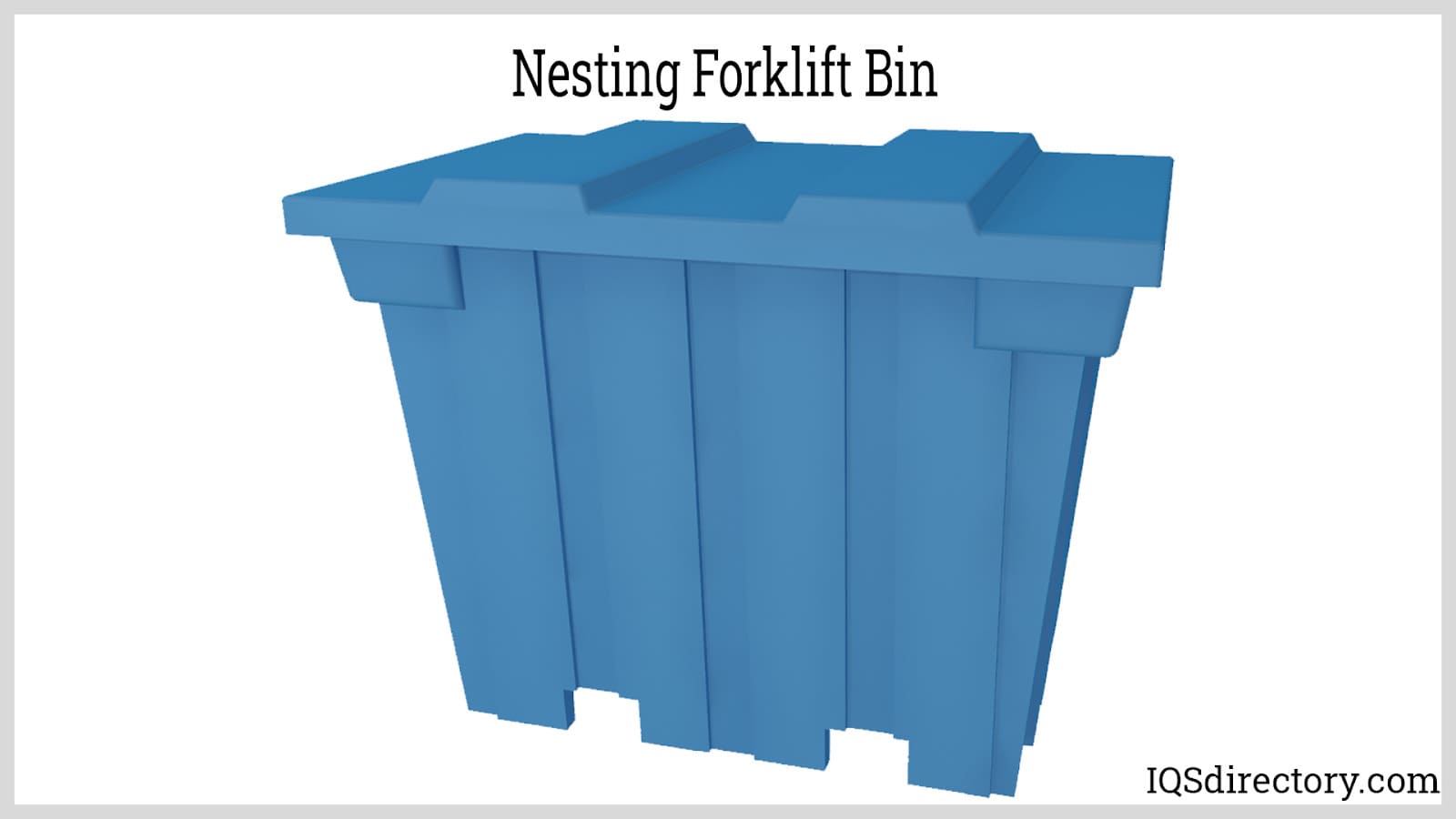
Plastic containers are storage units fabricated from various forms of polymers produced from crude oil or natural gas.
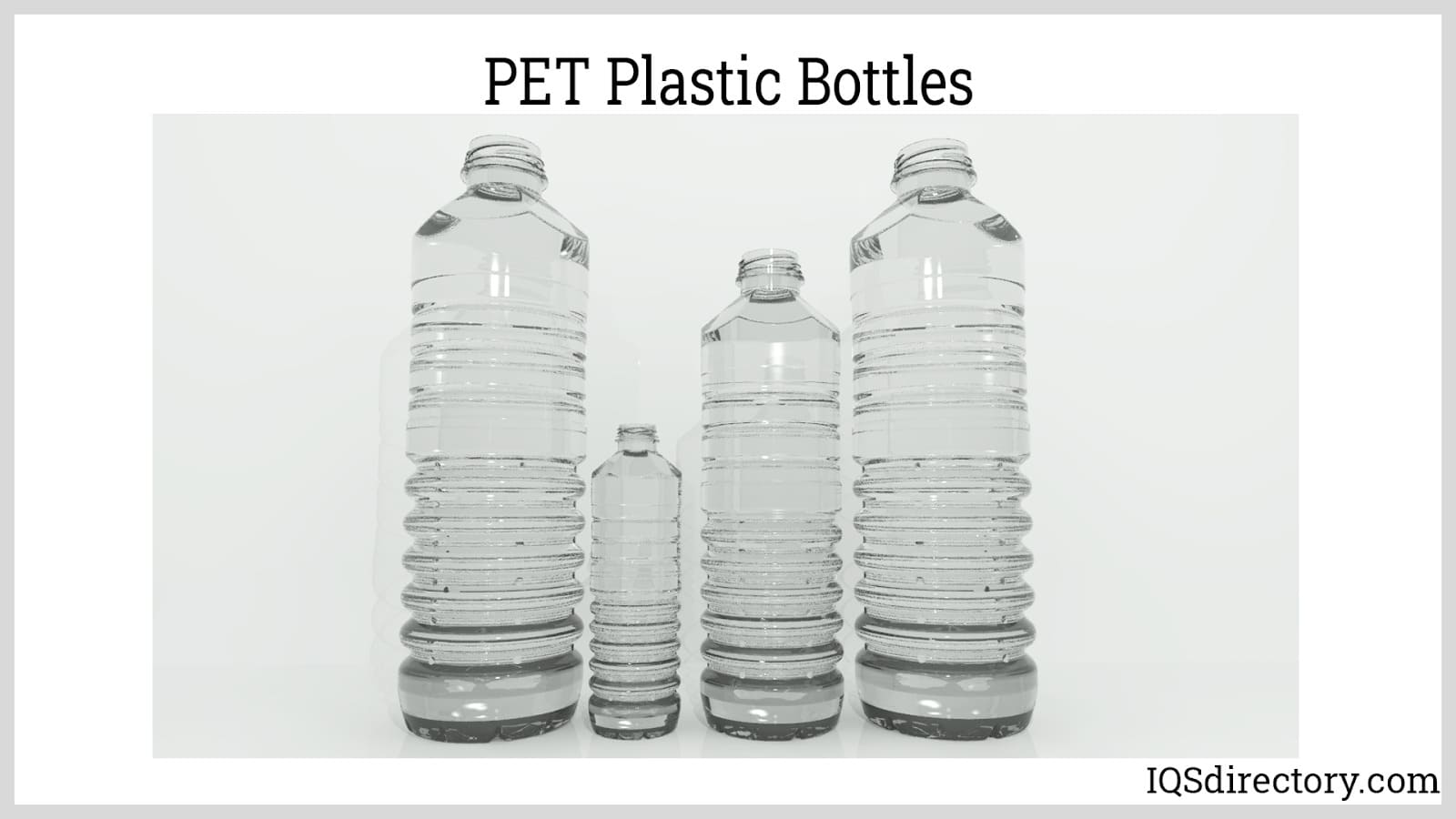
Polyethylene Terephthalate (PET) is the most used plastic material for plastic containers and is known for its low permeability to carbon dioxide.
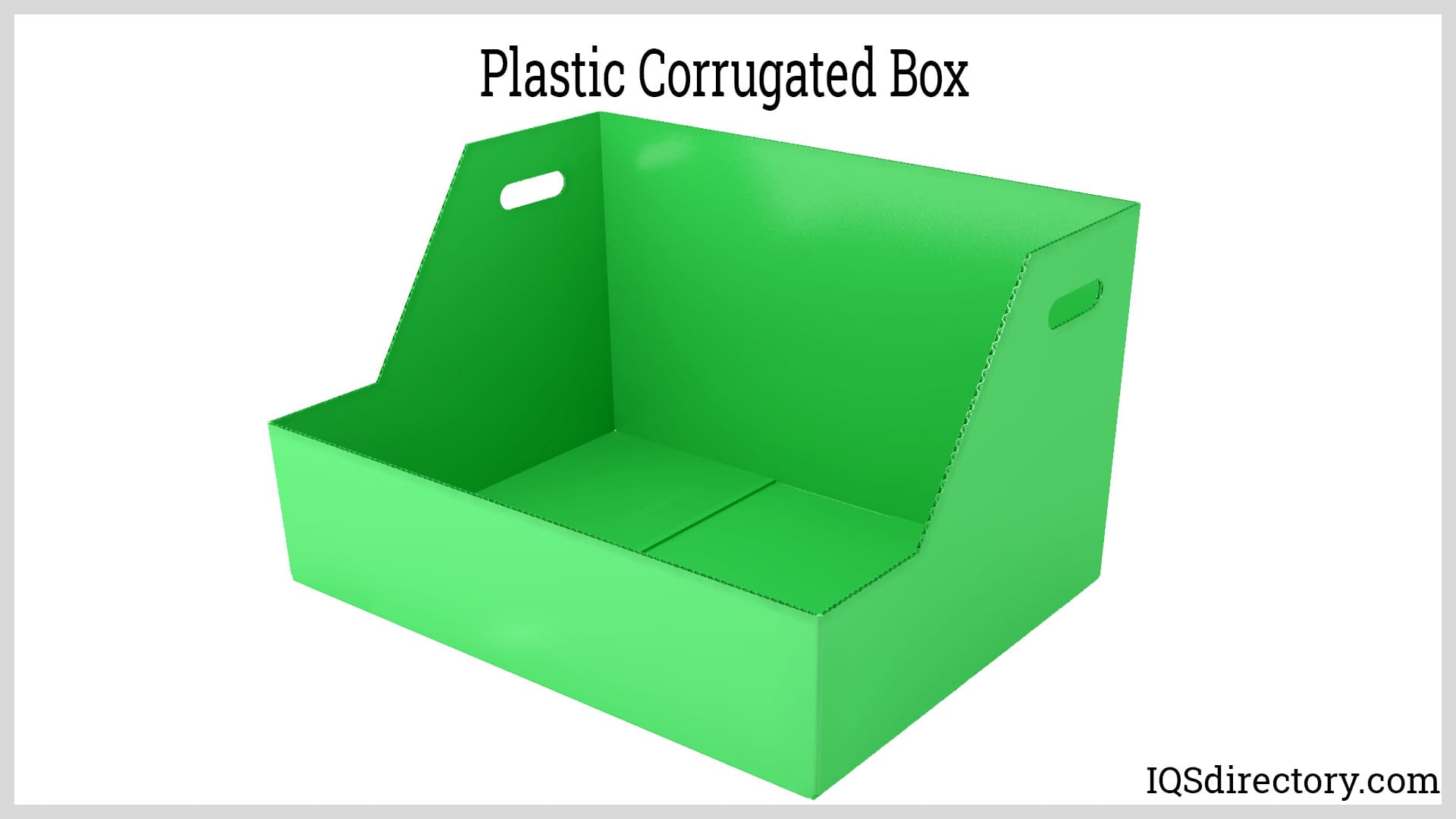
A disposable container with three layers of material consisting of an inner, outer, and middle layer on its sides.
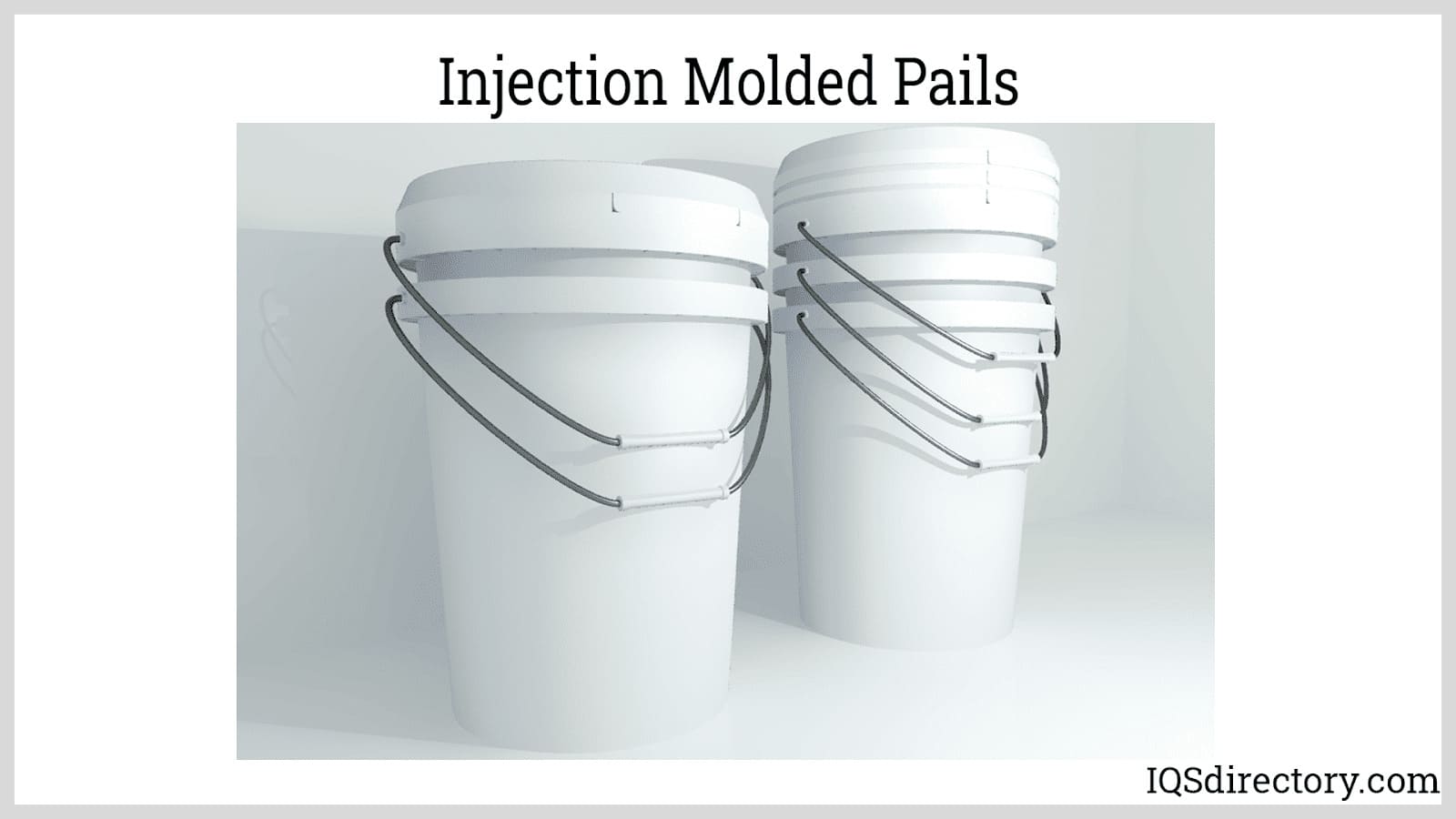
Injection molding is limited to producing containers that are open on one side.
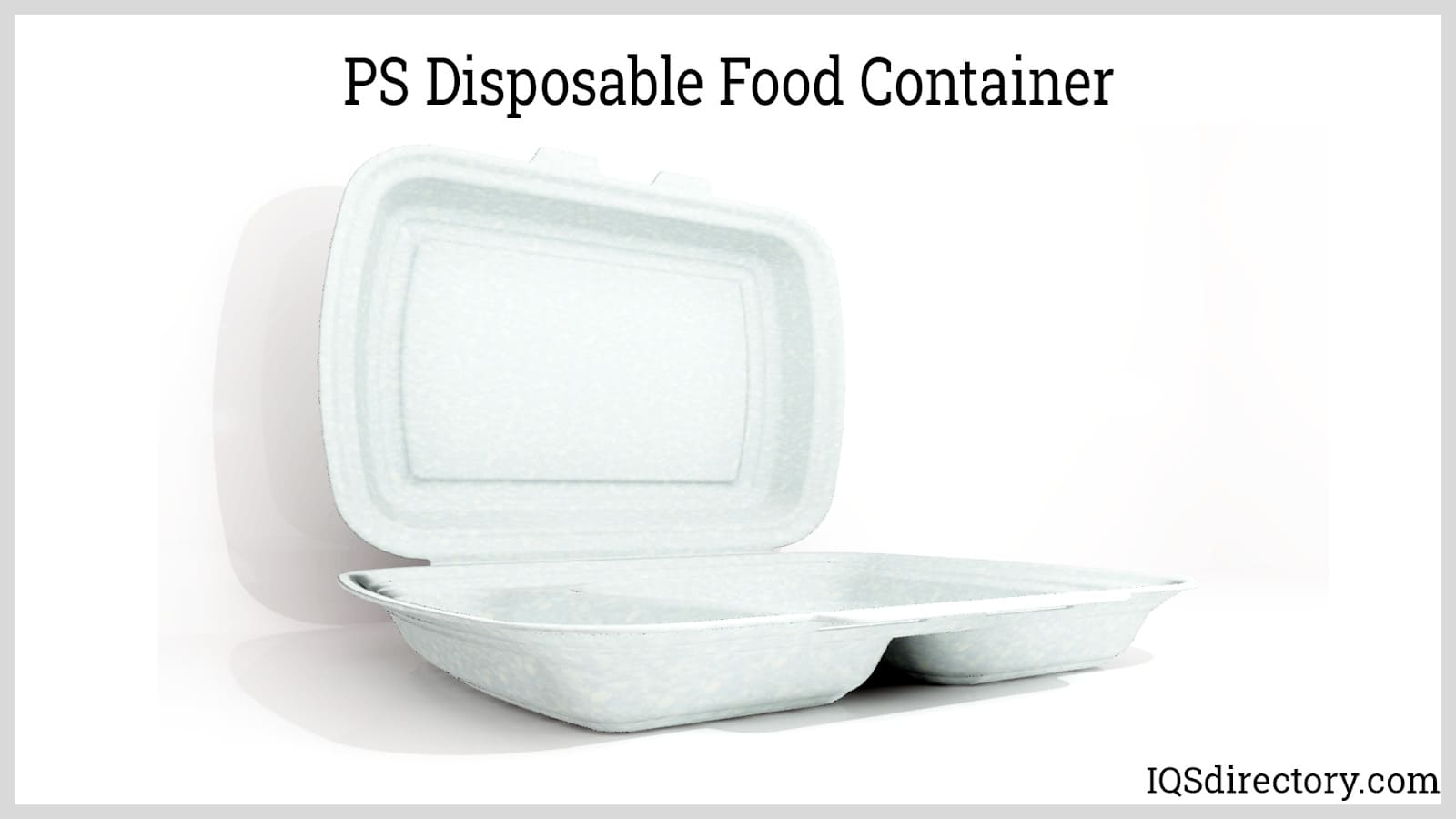
Polystyrene is a versatile plastic modified by copolymerization and the addition of additives, made to be flexible, rigid, or cellular (foam) plastic forms.
Plastic Container Types
Attached Lid Containers
Containers with lids that are attached, usually by hinges, for product protection and to prevent loss of lid.
Bottom-Hinged Containers
Have an opening on top and bottom. The bottom opening usually locks and unlocks for easy product removal.
Bulk Containers
Containers to hold, move and ship large quantities of product together.
Catch Basins
Cisterns located at the ends of gutters.
Drum Containers
Hold bulk products, food, liquor, wine, water, parts and various other materials, available in various sizes.
Holding Tanks
Built similarly to a septic tank to contain wastewater until it can be removed for treatment and disposal.
Hopper Containers
For short-term storage, designed so stored material can be easily discarded.
Lockers
Used for safe, private storage of items like clothes or valuables, used mainly in changing rooms, available in various sizes and styles.
Nestable Containers
Containers that can fit together or inside one another for easy storage.
Neutralization Tanks
Containers to collect and neutralize acidic and basic waste water for safe removal.
Open Head Containers
Have a cover or top that is removable.
Overpack Containers
For damaged drums and other leaking containers, usually containing hazardous material.
Packaging Containers
Usually commercial in nature, sometimes custom designed for ease of use and presentation depending on the product contained.
Plastic Bins
Storage boxes made out of various plastic materials.
Plastic Bottles
Small containers used for the transportation, storage and distribution of products in small quantities
Plastic Boxes
Storage containers made from plastic materials.
Plastic Buckets
Smaller, round plastic containers used for storage, distribution and many other applications.
Plastic Crates
Storage and distribution containers of variable size and construction.
Plastic Food Containers
Usually made of polypropylene and come in a variety of shapes and sizes to accommodate different quantities of food.
Plastic Jars
Small plastic containers usually used for the distribution of consumer products in small quantities.
Plastic Shipping Containers
Any plastic containers used for shipping products.
Plastic Storage Containers
Stackable containers used to store various goods.
Plastic Totes
Can be plastic baskets, usually with handles, to hold or carry products/materials.
Plastic Tubs
Storage or distribution containers that are used in commercial and industrial applications.
Reusable Containers
Containers that can be reprocessed for repeated uses.
Stackable Containers
Containers that stack easily without causing damage to one another or the product, and sometimes may “lock" with surrounding containers.
Tank Containers
Containers used for storage and transport and to dispense liquids usually in bulk or heavy quantities.
Tighthead Containers
Have attached, non-removable covers or tops. Tooling boxes are plastic cases with small compartments to store punches and dies, available in various sizes and capacities.
Customization of Plastic Containers
Containers made of plastic can be customized to most any size, shape, or color. Durability, transparency and even temperature resistance can be engineered to produce specialized boxes, jars and plastic bottles. In the consumer market, plastic containers can be made ‘food-safe’ and sterile, and even waterproof or suitable for microwave heating.
Improving Usage of Plastic Containers
A longer-term concern with plastic is increasing brittleness. Some materials offer more resistance, but most plastics have the tendency to become brittle and thus prone to breakage.
Check periodically for cracks or wear. Keep in mind that a plastic container can gradually lose its capacity to safely do the intended job.
Microwaving will hurt the lifespan of plastic: if practical, move food from your container to a microwave-safe dish to heat. Otherwise reduce microwave time if possible.
One last microwave tip: Never microwave your plastic lids. Doing so will reliably warp your lid into twisted non-functionality.
Standards and Specifications for Plastic Containers
Plastic materials are regulated for food safety, handling, and packaging. Federal, state and other like associations issue regulatory requirements for manufacturers. The following are major organizations which promulgate standards for products or components made from plastic.
FDA
The Food and Drug Administration (FDA) regulates materials which may be used in conjunction with food products.
USDA
The US Department of Agriculture (USDA) Food/Safety & Inspection Service policies practices of the agricultural food industry. USDA rules for approval of materials are met by a certification of compliance.
UL
Underwriters Laboratories (UL) is independent and a nonprofit organization. "Listing" is the most widely known UL service: this means product samples have been evaluated and held in compliance with UL Standards.
3A-DAIRY
To display the official symbol of 3A-Dairy on a storage container, manufacturers can only use one of the 3A Dairy formally approved plastic materials.
NSF
NSF International provides standards for direct and/or indirect drinkable water additives. Manufacturers providing equipment that shows the symbol of the NSF are declaring they have applied for approval of the device by the NSF.
USP CLASS VI
The US Pharmacopeia (USP) establishes legal, recognized product standards for articles related to health in America, including plastic materials that are used for making pharmaceutical containers.
ASTM
The American Society for Testing & Materials (ASTM) offers forums for users and producers and consumers to discuss establishing agreeable standards.
CANADA AG
Agriculture and Agrifood and Health Canada are counterparts to the USDA and the FDA respectively. Unlike FDA and USDA policies currently in place, materials may not be self-certified by a manufacturer that does not have prior Agency review with approval.
Proper Care of Plastic Containers
Plastic containers are generally made to be durable and safe, yet it’s helpful to know a few facts about basic care of the product.
It is generally safe to hand wash a plastic container, because tap water doesn’t get hot enough to warp the material. Heat is destructive to plastic, but different formulations vary in their ability to withstand higher temperatures. Vinyl and film are especially sensitive to heat and warp easily.
Different solvents--including water--are best suited for specific types of plastic materials. Care should be taken so only substances suitable for the material come into contact with your container.
Physical handling should be appropriate for the container's use and desired appearance, keeping in mind that even harder plastics tend to scratch easily.
If you use a dishwasher, put plastic containers on the bottom rack. Always be aware that extreme heat is fatal to a plastic container’s well-being.
Sometimes plastic containers will acquire ugly, stubborn stains that regular washing cannot clean. One solution is to blend warm water and baking soda into a paste, and leave the mixture overnight in your stained container.
Odors are another possible issue, but rinsing with vinegar for a few minutes will remove most problematic scents.
How to Choose the Right Plastic Container Manufacturer
Plastics are in high demand, with a large continuing market for plastic storage containers of all kinds. A strong relationship with a competent plastic manufacturer is an important business asset. If you are a purchaser, you understand the importance of securing high quality products in a timely and cost efficient manner.
There are hundreds of commercial plastic containers. Make sure you find a company that meets your basic requirements. Even a good manufacturer may not be the best one for your purposes—the right manufacturer is one that suits your specific needs.
Ask whether a prospective company offers containers in the needed shape, and if they can handle extra processing you might need, such as folding or stamping.
If seeking a custom design, you want to ensure your chosen manufacturer has the knowledge and expertise to help develop your concept into an innovative, cost effective solution. Can they provide additional services you require, such as project design, packaging, and implementation?
Location of the manufacturer is often a deciding factor. Also, pricing is an important consideration.
Make sure your chosen manufacturer conforms to a regulatory standard that you need.
Reputation of a firm is an important guide to its performance. Look for a manufacturer who lists high on credibility factors, and has a solid track record of delivery.
Plastic Container Terms
Blow Mold
To make hollow objects by extruding plastic into a chamber that is blown outward to take the shape of the plastic container mold cavity.
British Thermal Unit (BTU)
The amount of heat necessary to heat one pound of water one degree Fahrenheit.
Coextrusion
A manufacturing process in which plastic containers are blow-molded with walls containing two or more layers of different materials. This manufacturing process often uses recycled plastic materials.
Extrusion
The most common of the plastic container processing techniques, covering a vast range of applications in which plastic resins are melted, heated and pumped for plastic container processing.
HazMat
Hazardous materials. The Environmental Protection Agency has standards for plastics regarding the ability to handle various HazMat substances.
High Density Polyethylene (HDPE) Colored (Pigmented)
Often used for bleach, liquid detergents, motor oil and other household and automotive products. These plastic containers commonly bear the number "2" in the recycling triangle symbol on the bottom of many plastic storage containers.
High Density Polyethylene (HDPE) Natural (Non-pigmented)
Commonly used for plastic containers and plastic storage containers used to hold liquid dairy products, juice and other household products. These plastic containers usually bear the number "2" in the recycling triangle at the bottom of the plastic storage container.
High Density Polyethylene (HDPE) Wide
Natural and pigmented, these plastic containers are often used to store butter and other food products as plastic storage tubs, some medicine bottles and 5-gallon plastic buckets. These plastic containers usually display the number "2" in the recycling triangle symbol at the bottom of the plastic storage container.
Injection Mold
Under pressure, heated plastic granules are “injected" into a mold, where the molten plastic hardens into the designated plastic container shape.
In-line Fluorinated
A term that describes the chemical modification of the interior of HDPE plastic containers caused by fluorine gas as they are blown. This chemical reaction forms an inner barrier that withstands solvent-based chemicals, making the plastic containers suitable for the packaging of janitorial, industrial and consumer products.
ISO Container
Intermodal plastic shipping containers used to transport freight and designed for shipping and transportation by more than just one mode like ship and rail. Plastic shipping container sizes vary but typical sizes of these plastic containers are 20 feet and 40 feet; the standard width of ISO plastic containers is 8 feet, and the standard heights for ISO plastic containers are 8 feet 6 inches and 9 feet 6 inches.
Low Density Polyethylene (LDPE)
Used for plastic shrink-wrap, plastic bags, garment bags, dry cleaning bags and squeezable plastic food bottles.
Monomer
A comparatively simple compound that can react to form a polymer. The core element in plastic containers.
Polyethylene Terephthalate (PET) Slim
Color and clear, these plastic containers are used to contain cosmetics, water, salad dressings and cleaners. These plastic containers usually bear the number "1" in the recycling triangle at the bottom of the plastic storage container.
Polymer
A compound, natural or synthetic, whose structure can be represented by a repeated small unit. Synthetic polymers are formed by condensation polymerization of monomers; some polymers are rubber, some plastics.
Polypropylene (PP)
Often used in plastic food containers designed for margarine and yogurt plastic containers, caps for plastic containers, and wrapping to replace cellophane on plastic storage containers like medicine bottles.
Polystyrene (PS)
Used for plastic containers such as egg cartons, fast food trays, disposable plastic silverware, cups and compact disc jackets.
Polyvinyl Chloride (PVC)
Used in plastic containers like food wrap, vegetable oil bottles and blister packaging.
Recycling
The cycle of actions by which discarded materials are collected, sorted, processed and transformed back into raw materials and then used in the production of new plastic containers.
Resin
Most resins are polymers, a class of solid or semi-solid organic products of natural or synthetic origin, of high molecular weight with no definite melting point.
Rigid Plastic Containers
Any formed plastic container or molded plastic container that retains its shape when full or empty. This classification of plastic containers does not include plastic storage bottles.
Rotational Molding
Hollow plastic container molds filled with powdered resin that swings the entire plastic container mold into a furnace that melts the powder, making it stick to the plastic container mold as it cools. The plastic container mold slowly rotates and water is used to cool the plastic container mold while the plastic hardens into a hollow part.
Tare Weight
Weight of plastic containers when they are empty.
Thermoforming
A process of heating a thermoplastic sheet to an effective temperature and then forming it into a completed plastic container shape by means of heat or force.
More Plastic Containers Information
Plastic Container Informational Video