Injection Molded Plastics
Injection molding is a high-efficiency manufacturing process used to create plastic parts by injecting molten material into a precision mold. The process starts when resin pellets or feedstock enter a heated barrel, where they are melted, blended, and prepared for controlled flow. Once the material reaches the proper temperature and viscosity, it is injected into the mold cavity under pressure. It then cools, solidifies, and takes on the exact geometry of the tool, producing a finished component with repeatable dimensions and a clean surface finish.
This manufacturing method is especially valuable for companies that need consistent, high-volume production of identical plastic components. Because the process delivers excellent repeatability, tight tolerances, and dependable cycle control, it is widely selected for programs where dimensional accuracy, production speed, and part-to-part consistency directly affect product quality and downstream assembly performance.
One of the biggest advantages of injection molded plastics is the ability to produce complex parts with detailed geometries that would be difficult, slow, or costly to make by hand. Modern mold design, CAD modeling, and process simulation allow engineers to refine wall thickness, gating, material flow, and part geometry before production begins. That level of planning supports accurate molding, reliable repeatability, lower scrap rates, and molded parts that perform well in demanding commercial, industrial, and consumer applications.
The speed, scalability, and cost efficiency of plastic injection molding make it a preferred manufacturing solution across automotive, medical, packaging, electronics, furniture, appliance, and consumer product sectors. Buyers often search for molded plastic parts that combine durability, lightweight performance, chemical resistance, and economical production, and injection molding answers that demand by supporting both simple commodity products and sophisticated engineered components.
Common products created through injection molding include flutes, one-piece chairs, storage containers, wire spools, bottle caps, pocket combs, plastic cups, protective housings, packaging components, medical device parts, and countless other everyday and industrial items. Whether buyers are comparing custom injection molding services, evaluating molded plastic materials, or researching high-volume plastic part production, this process remains one of the most widely used methods in modern manufacturing.
Injection Molded Plastics FAQs
What is the injection molding process?
Injection molding is a manufacturing process where molten plastic is injected into a mold cavity, cooled, and solidified into a precise shape. It’s widely used for producing high volumes of identical parts with excellent consistency, predictable cycle times, and tight dimensional tolerances.
What are the main advantages of injection molding?
Injection molding offers fast production, low defect rates, repeatable quality, and strong design flexibility. It is well suited for mass production of complex plastic components, helping manufacturers reduce waste, control costs, and maintain dependable quality across long production runs.
Which materials are commonly used in injection molding?
Common materials include thermoplastics such as polyethylene, polypropylene, nylon, polystyrene, and other engineered resins, as well as thermosets and elastomers. Each material offers different advantages in strength, flexibility, heat resistance, chemical resistance, appearance, and recyclability.
What are some common products made with injection molding?
Injection molding is used to produce items such as bottle caps, storage containers, plastic cups, flutes, furniture components, housings, medical parts, and packaging products. It serves industries including automotive, healthcare, industrial manufacturing, food packaging, and consumer goods.
How has injection molding evolved over time?
Developed in 1872 by John Wesley Hyatt, injection molding advanced dramatically after the introduction of the screw injection machine in 1946. Modern equipment supports precise process control, automated material handling, color blending, and the use of recycled materials for improved quality and efficiency.
What are some specialized types of injection molding?
Specialized methods include gas-assist molding, insert molding, overmolding, double-shot molding, rapid injection molding, and reaction injection molding. These techniques support multi-material designs, lightweight parts, faster development cycles, and performance upgrades for specialized applications.
What design factors are critical in injection molding?
Wall thickness, cavity precision, venting, gate placement, and material flow all play a major role in part quality. Properly engineered molds support even filling, stable cooling, reduced warpage, and dependable structural performance in the finished molded component.
Why is injection molding popular among U.S. manufacturers?
Manufacturers across the U.S. rely on injection molding for scalability, cost efficiency, precision, and reliable repeatability. It supports high-volume production of durable plastic parts used in automotive, industrial, packaging, electronics, and consumer product markets.
The History of Injection Molding
- The Origins of Injection Molding
- The injection molding process was first developed by John Wesley Hyatt and his brother Isaiah in 1872. Their early machine was a much simpler version of the advanced injection molding systems used today. Operating somewhat like a large hypodermic device, it used a plunger to push plastic through a heated barrel and into a hand-ground steel mold. The process could only produce relatively simple items such as buttons, combs, and collar stays, yet it introduced the manufacturing concept that would later transform plastics production.
- The Evolution of the Molding Process
-
Following its introduction, injection molding continued to develop as chemists and manufacturers improved materials and processing methods. A major step forward came in 1903 when German chemists Arthur Eichengrun and Theodore Becker developed soluble forms of cellulose acetate, a less flammable alternative to cellulose nitrate. The new material improved transport, handling, and processing, helping broaden the commercial potential of molded plastic products.
In 1919, Arthur Eichengrun patented a refined version of the injection molding process that moved the industry closer to the first modern injection molding machine. The pace of innovation increased during World War II, when manufacturers needed economical ways to mass-produce goods. In 1946, American inventor James Watson Hendry introduced the first screw injection machine, giving operators much better control over injection rate, mixing, and process consistency. That breakthrough improved molded part quality, lowered production errors, and helped shape the modern plastic manufacturing industry.
- Hendry’s screw injection machine also made it possible to mix raw materials more effectively before injection. That opened the door to improved color distribution, better use of recycled plastics, and more uniform material properties throughout the molded part. As tooling, controls, automation, and resin technology continued to advance, injection molding became a leading manufacturing process for industries that depend on precision, productivity, and consistent plastic part performance.
Injection Molded Plastic Types
- Custom Injection Molding
- A specialized injection molding process in which the mold is designed and built specifically for the customer’s application, part geometry, material requirements, and production goals rather than relying on stock tooling or generic molds.
- Double-Shot Molding
- A two-step process where one color or material is injected first and a second color or material is added after the initial component has hardened. This method supports multi-material and multi-color molded products in a single manufacturing cycle.
- Gas-Assist Injection Molding
- An advanced molding process where inert gas, such as nitrogen, is introduced into the molten plastic during injection. The gas helps push material into the mold cavities, reducing cycle time, part weight, warpage, and residual stress while improving dimensional stability and overall part uniformity.
- Injection Blow Molding
- A manufacturing method that starts with injection of plastic into a mold to form a preform tube. The preform is then transferred to a second mold and inflated into a hollow component. This process is widely used for bottles and other thin-walled plastic containers.
- Injection Molding
- A high-efficiency process in which molten plastic is injected into a mold cavity to produce plastic parts and products with repeatable dimensions, dependable quality, and strong production efficiency.
- Injection Moulders
- The machines, tools, and dies used to shape molten plastic into finished parts through the injection molding process, including presses, screws, molds, heating systems, and part ejection mechanisms.
- Injection Molded Cases
- Rugged plastic carrying cases designed to transport and protect delicate or valuable equipment from impact, moisture, dust, and other environmental hazards while maintaining long service life.
- Injection Molded Parts
- Plastic components produced through injection molding, ranging from small, intricate pieces to large structural elements used across industrial, commercial, medical, automotive, and consumer applications.
- Insert Molding
- A technique where plastic is injected around an insert such as metal or another material, creating one integrated piece. This process can improve product strength, simplify assembly, and add functionality to the finished component.
- Molded Plastic Pieces
- Plastic components formed by heating material until it becomes moldable and then pressing or injecting it into tooling, producing precise dimensions, uniform quality, and efficient repeat production.
- Plastic Injection Mold Processes
- A group of manufacturing methods used to produce plastic parts of varying complexity, from simple shapes to highly engineered components with complex geometries and precise tolerance requirements.
- Plastic Molding
- One of the most widely used part manufacturing methods, allowing mass production of durable plastic components with reliable quality, repeatability, and broad design flexibility.
- Push-Pull Molding
- A molding technique that incorporates multiple layers of material with different orientations, resulting in more uniform mechanical properties than single-direction molded parts in certain applications.
- Prototype Injection Molding
- A method used to produce small batches of injection molded parts for prototype development, allowing engineers and buyers to validate design, fit, function, and manufacturability before full-scale production.
- Rapid Injection Molding
- A fast and cost-efficient process used for prototyping and low-volume production, helping manufacturers shorten lead times, test market demand, and move designs toward production more quickly.
- Reaction Injection Molding
- A specialized technique used for producing large, complex polyurethane plastic and rigid foam parts in smaller quantities, offering an economical option for low-volume applications and large-format molded products.
- Thermoplastic Injection Molding
- The most common injection molding method for processing thermoplastics, allowing production of parts with a broad range of complexities, from simple forms to highly detailed, tight-tolerance components.
Materials and Properties of the Injection Molding Process
- Materials Utilized In the Injection Molding Process
- The injection molding process supports a vast range of custom plastic materials, and the material selected depends on the function, environment, and performance targets of the finished product. Engineers evaluate strength, impact resistance, chemical exposure, heat performance, appearance, and service life when narrowing down the most suitable resin for a specific molded part.
- Injection molding materials generally fall into one of three primary categories: thermoplastics, thermosets, or elastomers. Material and mechanical engineers compare these categories by looking at strength, stiffness, flexibility, heat tolerance, recyclability, and long-term product requirements before making a final production choice.
- Commonly used plastics in injection molding include nylon, polyethylene, polystyrene, epoxy, and phenolic. Each material offers different processing and performance benefits depending on the needs of the finished component. For buyers researching resin choices, part durability, or molded product performance, understanding the material is just as important as understanding the molding process itself. For those interested in exploring polyethylene plastic producers, IQS Directory provides a comprehensive list of manufacturers.
- Manufacturers are able to produce an enormous variety of shapes and sizes with injection molding, from large automotive bumpers to precise medical and electronic components. If a mold can be engineered for a part, the process can often be used to produce it by melting the chosen material, injecting it into the cavity, and allowing it to cool into the final form. That versatility is one reason buyers frequently compare injection molding when evaluating repeat production of durable plastic parts.
- The Properties of Materials Used In the Process
- As noted above, plastics used in injection molding are generally grouped into thermoplastics, thermosets, and elastomers, each with different molecular structures and different performance characteristics during molding and end use.
- Thermoplastics, such as polyethylene, consist of high-molecular-weight polymer chains joined through intermolecular forces. This structure allows them to be heated into a molten state using comparatively modest energy input. After cooling, they can often be reheated and reshaped, making them attractive for applications where recyclability, reprocessing, and material efficiency matter.
- Thermosets, by contrast, go through a one-time curing process in which they change from liquid to solid and form an irreversible polymer network. Once cured, thermosets cannot be remelted or reshaped. That behavior gives materials such as epoxy outstanding durability, heat resistance, and chemical resistance, making them useful in parts that must hold their shape and performance in demanding service conditions.
- Elastomers, which include materials like nylon, exist in a state of viscoelasticity, combining some of the flexibility of a fluid with the resilience of a solid. Their ability to deform under stress and then recover their original shape makes them useful for applications that require durability, cushioning, sealing, and repeated flexing.
- Because each material category offers different processing benefits and end-use properties, injection molding remains one of the most flexible manufacturing methods in modern industry. Whether the goal is a rigid structural part, a heat-resistant molded component, or a flexible impact-resistant product, the range of available plastics gives engineers and buyers broad freedom when matching material performance to application needs.
Injection Molding Process
The plastic injection molding process begins with raw material in pellet form. These pellets move through a hopper into a heated barrel, where a reciprocating screw pushes them forward. As the pellets travel through the barrel, they are exposed to rising temperatures and mechanical shear, which melt the resin and prepare it for injection. At this stage, colorants, fillers, or additives may also be introduced to tailor the finished product’s appearance, texture, strength, or other physical properties.
Once the plastic reaches the desired consistency, it passes through a check valve and accumulates at the front of the screw. The screw is designed to meter the exact amount of material needed to fill the mold cavity. When the shot is ready, the screw pushes the molten plastic into the injection mold, where it flows through runners and gates into the part geometry. Most molds include vents that allow trapped air to escape, which helps reduce defects. Cooling liquid circulates around the mold chamber to remove heat and shorten cycle time. Depending on the part size, wall thickness, and geometry, this stage can last from a few seconds to several minutes.
As the plastic solidifies, the screw retracts to prepare for the next production cycle and gather new material for the following shot. Cooling lines, typically filled with water or another coolant, run along the mold walls to support rapid, even cooling. After the part hardens, ejector pins release the completed component from the mold, where it can move to trimming, inspection, assembly, packaging, or other downstream manufacturing steps.
- How the Injection Molding Process Can Be Customized
- The injection molding process can be adapted in several ways to improve efficiency, quality, and process control. One widely used customization option is robotic molding, which uses robotic arms, sensors, and inspection systems to handle parts and identify defects. This automation supports stable quality, faster part handling, and more consistent production in high-output manufacturing environments.
- Another customization method involves adjusting insert molding materials and tooling choices to influence material flow and production output. For example, switching from steel inserts to resin inserts may improve flow characteristics in some setups. Even so, faster flow can also raise the chance of defects if the tool and process are not tuned correctly, so these changes should be evaluated carefully by an experienced engineer or tooling specialist.
- Drawbacks of the Injection Molding Process
- Despite its many advantages, the injection molding process also has limits. One drawback is that it is primarily suited for producing plastic components. Manufacturers that need metal or other non-plastic parts typically use alternative processes such as die casting, machining, stamping, or CNC manufacturing depending on the application.
- The process also requires a meaningful upfront investment. Designing and building a mold can be expensive and time-consuming, especially for complex parts or tight-tolerance applications. Once tooling is completed, however, injection molding becomes highly cost-efficient for larger production runs because of fast cycle times, repeatable quality, and lower material waste. That cost structure is why buyers often choose injection molding when projected part volumes are high enough to justify tooling development.
Important Design Elements to Consider for Injection Molding
One of the most important design factors in custom injection molding is wall thickness. This variable has a direct effect on part filling, cooling, shrinkage, structural performance, and final part quality. The mold cavity must be engineered to guide molten material through the part with balanced pressure and predictable flow. If wall thickness or cavity dimensions are not designed correctly, manufacturers may see incomplete fills, weak sections, sink marks, warpage, or other defects that affect both appearance and performance. Buyers researching injection molded parts often ask: how does wall thickness affect cost, quality, and cycle time? In practice, balanced wall design helps improve all three.
Injection Molding Images, Diagrams and Visual Concepts
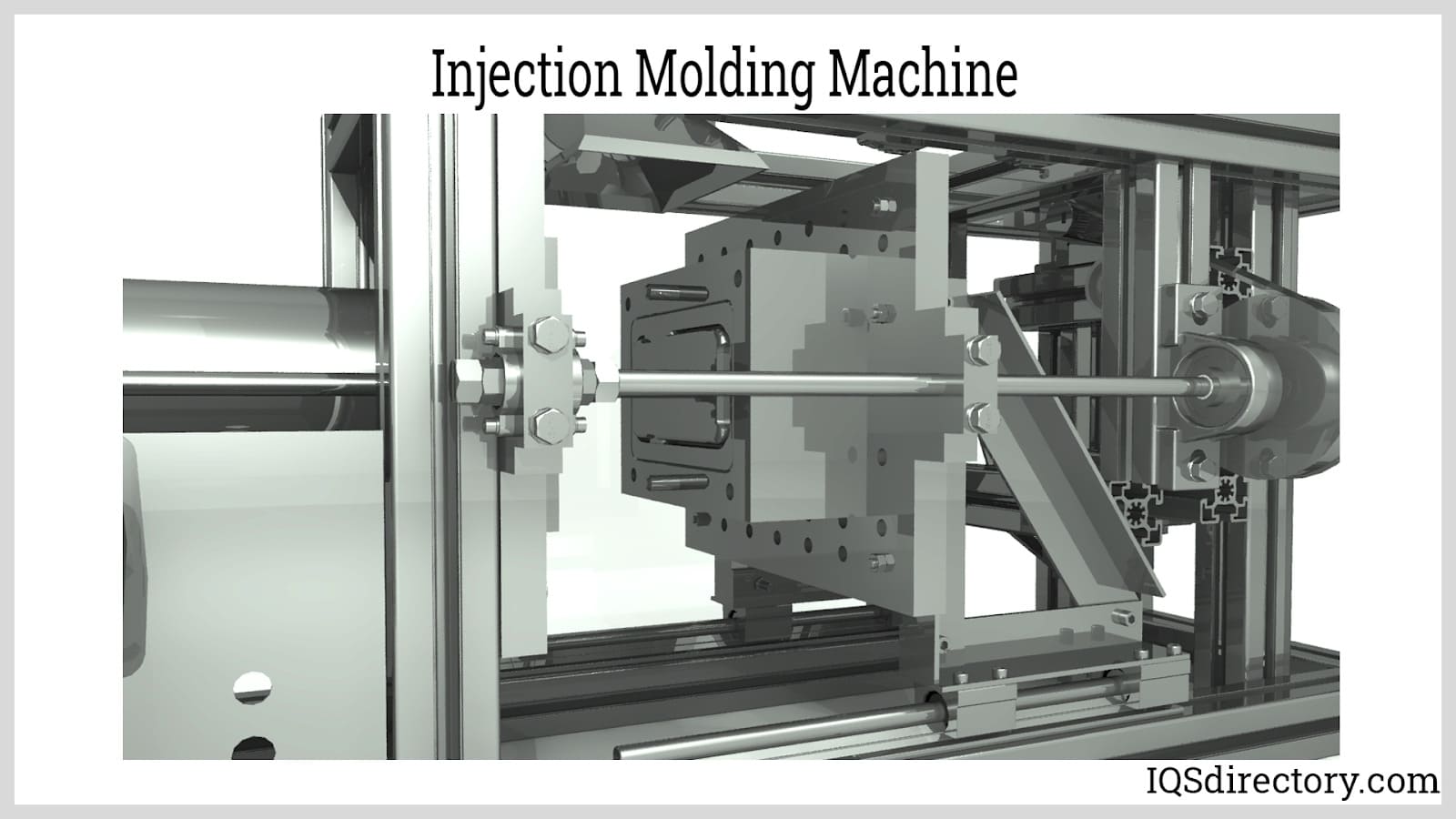 An injection molding machine used to mold plastic in to different products.
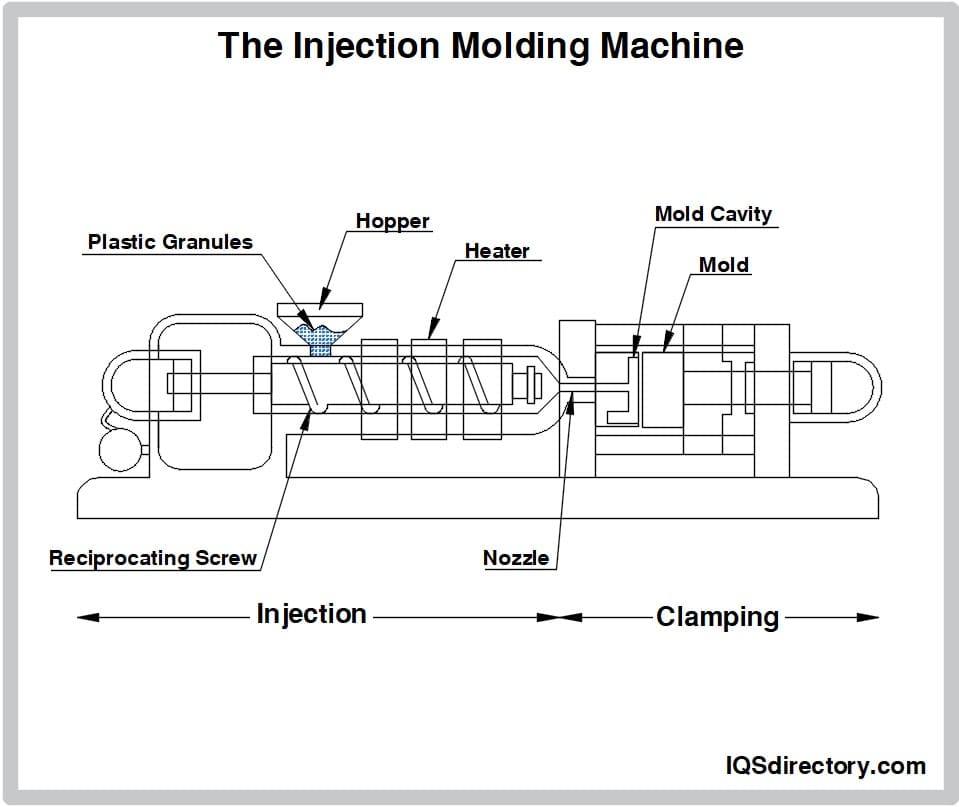 An injection molding machine diagram and the different parts necessary for injection molding.
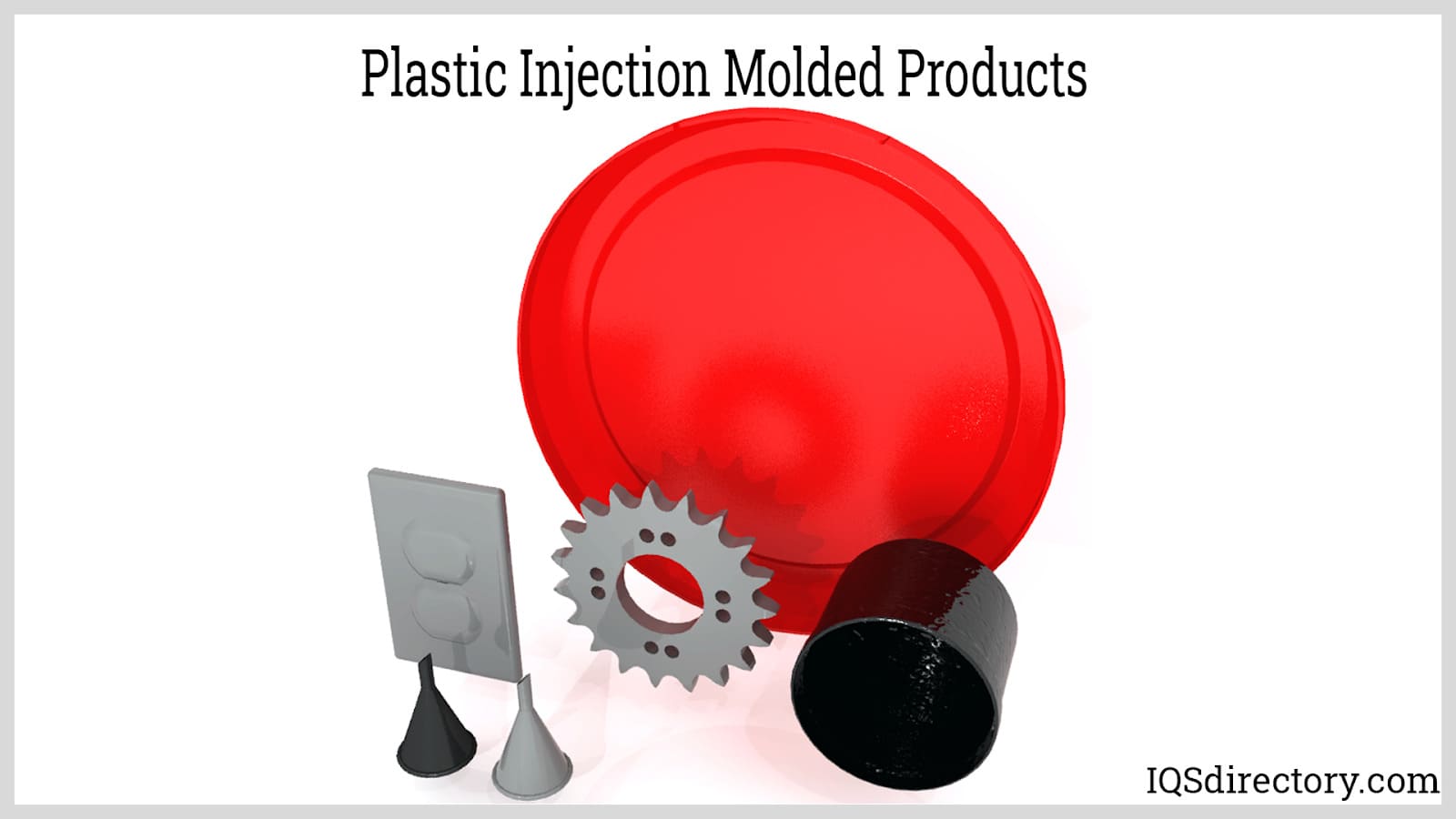 Examples of different products made from plastic injection molding.
 A reactive molding process that utilizes low viscosity liquid thermoset polymers.
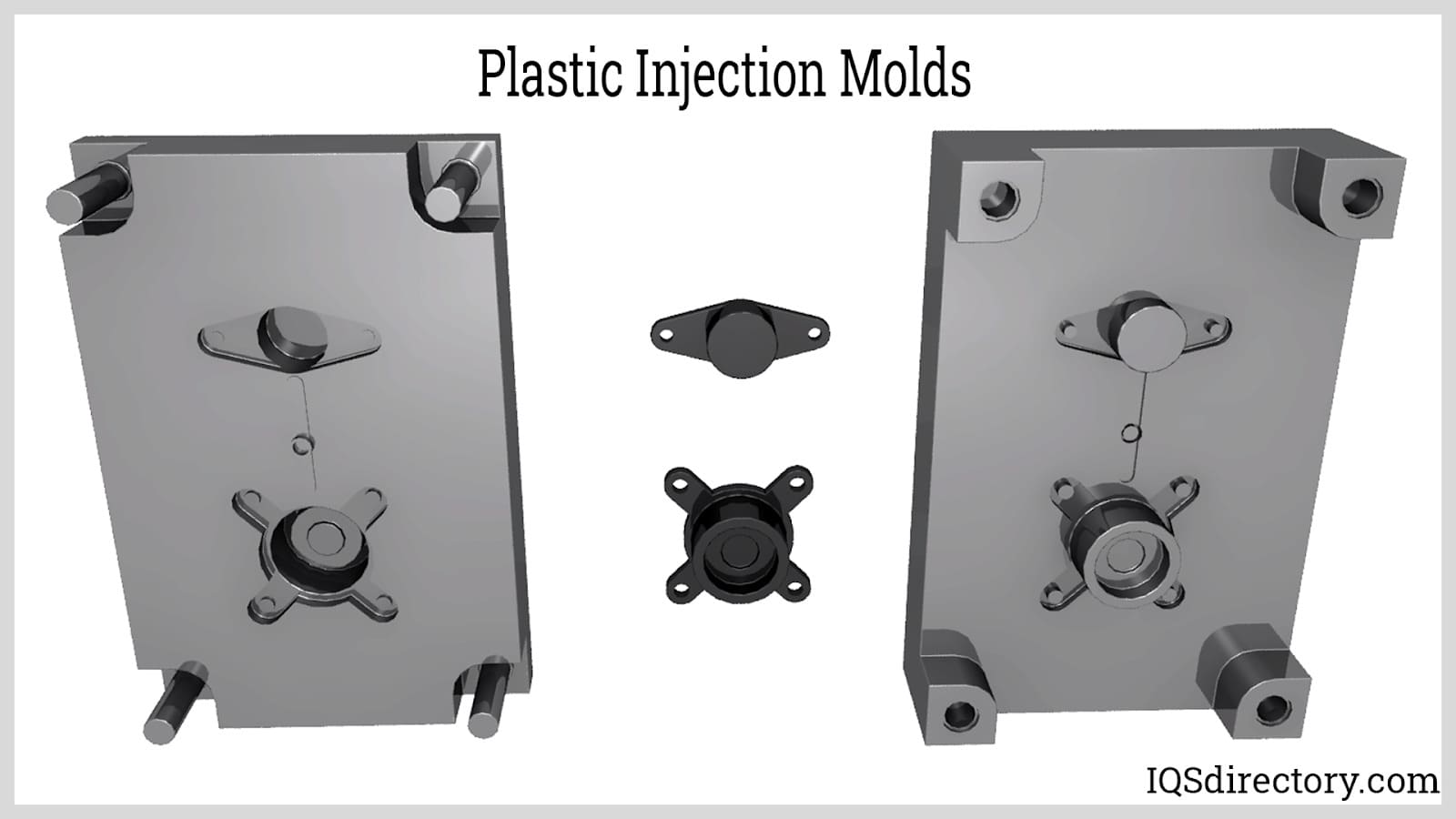 Plastic injection molds shapes the molten plastic into the final form of the plastic.
The Types of Equipment Used for the Injection Molding Process
Custom injection molding depends on several major pieces of tooling and process equipment to maintain precision, production speed, and consistent part quality. Common components include the injection ram, the screw-type plunger used for controlled flow and mixing, insert molding tools for integrating multiple materials or inserts, process heating units that maintain resin temperature, and a hopper that feeds plastic pellets into the machine. Buyers comparing equipment capabilities often look at process control, shot size, clamping force, automation options, and the machine’s ability to run the material required for the application.
Injection molding presses are classified by tonnage, which reflects clamping force and helps determine what size and type of parts the machine can produce. Press sizes range from small units rated at about 1 ton to industrial machines exceeding 10,000 tons. That wide range allows manufacturers to produce everything from intricate, precision-molded components to large structural plastic parts. When evaluating a molding partner, buyers often search for the right press tonnage, mold size capacity, and machine range for their project.
How to Choose the Right Molding Manufacturer
With many injection molding manufacturers in the market, choosing the right supplier can be challenging. A company may be highly capable overall, yet still not be the best fit for every molded part, material, or production schedule. Finding the right partner means reviewing the factors that influence part quality, tooling support, production flexibility, communication, and long-term scalability. Buyers often begin with simple search-style questions: Which injection molding company handles my resin? Can this supplier support prototype-to-production work? Does the manufacturer specialize in custom plastic parts for my industry?
One of the main considerations is the range of press sizes a manufacturer offers. Access to multiple press sizes gives the supplier greater flexibility when working with different part dimensions, materials, and production volumes. A manufacturer with a broader machine range can often offer more material choices, color options, tooling compatibility, and capacity planning while reducing the need to split work between several vendors.
Another major factor is the manufacturer’s ability to scale production. If part demand increases, the supplier should be able to expand output without sacrificing quality or lead time. Facilities with available capacity, process automation, robust quality systems, and adaptable production lines are generally better positioned to support growing orders, seasonal demand swings, and long-term programs.
For a comprehensive list of manufacturers, refer to the directory at the top of this page.
Injection Molded Plastic Terms
- Backing Plate
- A structural plate that provides support for the mold cavity block, guide pins, bushings, and other components within the mold assembly.
- Cavity
- The internal space within a mold where molten material is injected and shaped into the desired part.
- Charge
- The precise amount of material required to completely fill a mold during a single injection molding cycle.
- Cooling Channels
- Internal passages within the mold through which a cooling medium, such as water or oil, flows to regulate mold temperature, support uniform cooling, and minimize part defects.
- High Density Polyethylene (HDPE)
- A durable plastic commonly used for packaging short-shelf-life products, including milk, juice, water, and laundry detergent bottles. Unpigmented HDPE bottles are translucent and known for their excellent stiffness.
- Hydraulic Units
- Power systems that use pressurized fluid to drive machine movements and deliver the force needed for clamping, injection, and mold action during the molding cycle.
- Linear Low Density Polyethylene (LLDPE)
- A tough and flexible plastic primarily used in film applications such as grocery bags, garbage bags, and landfill liners. LLDPE is valued for its toughness and adaptability in selected molding applications.
- Mold
- A precisely engineered assembly of steel plates containing cavities where molten plastic resin is injected and shaped into the final part.
- Monomer
- A simple molecular compound that serves as the building block for forming long-chain polymers through chemical reactions.
- Melt Index
- A standardized test used to measure how easily molten plastic flows under specified conditions, offering insight into processing behavior and material selection.
- Melting Point (Tm)
- The temperature at which the crystalline regions of a polymer move from solid to molten state, making the material ready for processing.
- Melt Viscosity
- A measure of a material's resistance to flow in its molten state. Higher temperatures often lower viscosity and make the resin easier to process.
- Polymer
- A molecular structure made of repeating units called monomers linked together in chains, creating the material properties used in plastic manufacturing.
- Polypropylene (PP)
- A strong and lightweight plastic with one of the lowest densities among common packaging materials. Because of its relatively high melting point, polypropylene is often used for hot-fill liquid applications and food storage containers.
- Polystyrene (PS)
- A versatile plastic available in both rigid and foamed forms. General-purpose polystyrene is clear, hard, and brittle, with a relatively low melting point that makes it useful for many packaging and disposable applications.
- Resin
- A class of solid or semi-solid organic substances, natural or synthetic, characterized by high molecular weight and an undefined melting point. Most resins used in molding are polymers.
- Thermoplastics
- A category of materials that can be repeatedly melted and solidified without major degradation. Thermoplastics can also be blended through melt-mixing to tune material properties for different applications.
- Thermosets
- Materials that go through an irreversible chemical curing process when heated, forming a rigid, heat-resistant structure. Unlike thermoplastics, thermosets do not melt when reheated.
- Toggle Unit
- A mechanical system made of linked levers used to move and apply pressure to the mold during the injection molding process, supporting precise and repeatable part formation.
- Overmolding
- A specialized injection molding process that places one material over another, combining two materials into a single component. This two-step approach can improve grip, shock absorption, durability, and structural performance.