Electric Motors
An electric motor is a device that transforms electrical energy into mechanical energy. It takes electrical power from a battery, inverter, generator, or the utility grid and converts that input into useful rotary motion through a shaft. That output drives machinery, tools, pumps, conveyors, compressors, appliances, and automated equipment in both commercial and industrial settings.
Once a scientific novelty, electric motors are now built into nearly every part of modern life, from power tools and elevators to HVAC equipment, robotics, medical devices, toothbrushes, and toys. Even gasoline-powered vehicles rely on electric motors for windows, cooling fans, wipers, seat adjustment systems, and onboard accessories, showing how deeply electric motor technology supports everyday operation.
Electric motors remain central to manufacturing, transportation, building systems, and consumer products. Without them, production lines, pumps, fans, machine tools, and automated handling systems would stop. As electric vehicles, energy-efficient machinery, and smart factories continue to expand, the demand for well-matched, dependable motors will grow as well. Understanding electric motors helps buyers, engineers, and maintenance teams choose the right motor for performance, efficiency, and long service life.
While all electric motors share the same purpose of converting electrical energy into mechanical output, the way they perform that conversion varies by design, control method, torque requirements, speed range, and power source. There are four main types of electric motors based on how they convert energy: servo motors, synchronous motors, induction motors, and electrostatic motors, also known as capacitor motors. Buyers often begin by asking practical questions such as which motor type fits a given load, how much starting torque is needed, or whether variable speed control is required.
Electric Motors FAQ
What is the basic function of an electric motor?
An electric motor converts electrical energy into mechanical energy, producing motion through a rotating shaft. This process relies on the interaction between electric current and magnetic fields to create force and rotation. In practical use, that motion powers fans, pumps, machine tools, conveyors, compressors, mixers, and many other pieces of equipment.
Who invented the first electric motor?
The first electric motor with stator and rotor components was built in 1827 by Ányos Jedlik. Earlier demonstrations were made by Michael Faraday in 1821 and Peter Barlow in 1822. Thomas Davenport later patented the first commercial motor in 1837, helping move electric motor development from laboratory experiments toward real industrial use.
What is the difference between AC and DC motors?
AC motors use alternating current and can operate in single or three-phase forms, while DC motors rely on direct current and allow adjustable speed and torque. AC motors are commonly selected for plant equipment and building systems, while DC motors are often chosen where speed control, compact size, or battery power matters. Phase converters and drives can adapt one power source to operate another type of motor.
What are brushed and brushless motors?
Brushed motors use mechanical brushes and commutators to deliver current to the rotor, making them economical and simple to use but generally less efficient and more maintenance-intensive. Brushless motors use electronic controllers and sensors for commutation, which can improve efficiency, reduce wear, and support longer service life in demanding motion control and automation applications.
Why are bearings important in electric motors?
Bearings support the rotor and allow it to spin smoothly on its axis. Faulty or worn bearings can cause unusual noise, vibration, heat buildup, shaft misalignment, and premature motor failure. For that reason, bearing condition is one of the first things maintenance teams inspect when troubleshooting electric motor performance.
What factors should be considered when selecting an electric motor?
Key factors include power supply compatibility, horsepower, torque, RPM, voltage, current ratings, duty cycle, enclosure type, mounting style, and operating environment. Oversized motors waste energy, while undersized motors underperform and may overheat. Buyers should also consider startup demands, continuous versus intermittent operation, exposure to dust or moisture, and whether a variable frequency drive or controller will be used.
What are common causes of electric motor failure?
Failures may result from damaged coils, worn commutator brushes in DC motors, faulty bearings, improper lubrication, overheating, misalignment, contamination, or electrical issues such as power surges and voltage imbalance. Proper inspections, installation practices, motor protection, and preventive maintenance can help extend motor life and reduce downtime.
The History of Electric Motors
In 1821, Michael Faraday demonstrated the use of electrical power from a battery to make a wire rotate around a magnet in a pool of mercury. A similar experiment was carried out in 1822 by Peter Barlow, who used a star-shaped wheel known as the Barlow Wheel, dipping its tips into mercury as it turned. These demonstrations were simple, but they showed that electricity and magnetism could be turned into motion.
In 1827, Hungarian scientist and priest Ányos Jedlik created what he called an "electromagnetic self-rotor," the first electric motor with components of a stator and rotor, much like the motors we recognize today. That step moved electric motor design closer to the practical machine architecture still used in AC motors, DC motors, brushless motors, and many specialty motor assemblies.
In 1837, Thomas Davenport was granted the first patent for an electric motor intended for commercial use. While Davenport's design was ahead of its time, it wasn't until long after his patent expired that reliable batteries, distribution systems, and electrical grids were developed to power his motor economically. As electrical infrastructure improved, so did the business case for electric motor manufacturing and industrial adoption.
By the late 19th century, with efficient electric power sources now available, electric motors played a major role in industrial growth. These early inventors laid the groundwork for later improvements in efficiency, power density, insulation systems, motor controls, and application-specific motor design. Today's electric motor market reflects that long evolution, from laboratory demonstration to highly engineered motion systems used worldwide.
Principles of Electricity
To effectively use electric motors, it is helpful to understand the basic principles of electricity, current flow, and magnetic force. This foundation makes it easier to compare motor types, evaluate motor specifications, and understand why one motor design may perform better than another in a given application.
Electricity involves the movement of electrons from one atom to another within a conducting medium such as a wire. Early scientists thought of electricity as a fluid moving through pipes, and that analogy still helps technicians, electricians, and engineers understand voltage, current, and resistance when working with motors, controls, and power distribution equipment.
In this analogy, electrical charge represents the quantity of electrical fluid, voltage indicates electrical pressure, and current measures flow rate. Because electric motors depend on current interacting with magnetic fields, these ideas are directly tied to motor starting behavior, torque production, efficiency, and heat generation. Buyers researching electric motor sizing often start here because these principles influence nearly every performance rating on a motor nameplate.
In 1820, Hans Christian Ørsted discovered that an electric current creates a magnetic field. Building on this, André-Marie Ampère formulated Ampere's Law, which states that when two wires are placed in parallel and an electrical current flows through one, a current is induced in the other. These discoveries helped explain the electromagnetic behavior at the heart of electric motor operation.
To help remember this concept, John Ambrose Fleming created the left-hand rule: using the left hand, point the thumb upward to show the direction of motion for the motor, the forefinger forward to show the direction of current, and the middle finger sideways to indicate the direction of the magnetic field. This simple rule remains useful for visualizing how force is created inside a motor assembly.
This interaction between electricity and magnetism allows an electric current to physically move a magnet, and vice versa. That electromagnetic relationship is the basis for torque production in countless designs, from industrial AC motors and permanent magnet motors to compact precision motors used in electronics and automation.
Electric Motor Design
From the earliest experimental motors, which were essentially magnets spinning inside wire loops, many innovations and variations have emerged. One of the most important distinctions between types of electric motors is whether they are designed to operate on direct current (DC) or alternating current (AC). This difference affects control strategy, startup characteristics, maintenance demands, and typical end-use applications.
A phase converter can be used to convert AC power into DC power for a DC motor, enabling it to run indirectly using an AC power source. Similarly, there are phase converters and electronic drives that change DC power into AC power, allowing AC motors to operate. In many industrial systems, variable frequency drives are used to improve speed control, energy efficiency, soft starting, and process control.
Motors also differ in size, enclosure style, insulation class, number of stator and rotor magnetic poles, rotational speed, and voltage and current ratings. Motors with a mechanical power output of less than one horsepower (746 watts) are referred to as fractional horsepower motors (FHP motors). Additionally, motors with adjustable RPM rates are classified as variable speed motors, making them attractive for pumps, fans, conveyors, and process equipment that do not always run at full output.
Electrostatic motors stand apart from other types, operating on the principle of attraction and repulsion between electric charges. These motors are typically used in small-scale applications like micro-mechanical systems (MEMS), where miniature motion and precise control matter more than high horsepower output.
This overview is not exhaustive, but it shows the wide variety of electric motors available from manufacturers. A useful way to evaluate options is to ask whether the application needs constant speed, precise positioning, high starting torque, battery operation, low maintenance, or tight energy-use targets, because those needs often point to one motor category over another.
Electric Motors Images, Diagrams and Visual Concepts
 Electric motors function by changing electrical power into mechanical power that can be used to drive equipment, machinery, and motion systems.
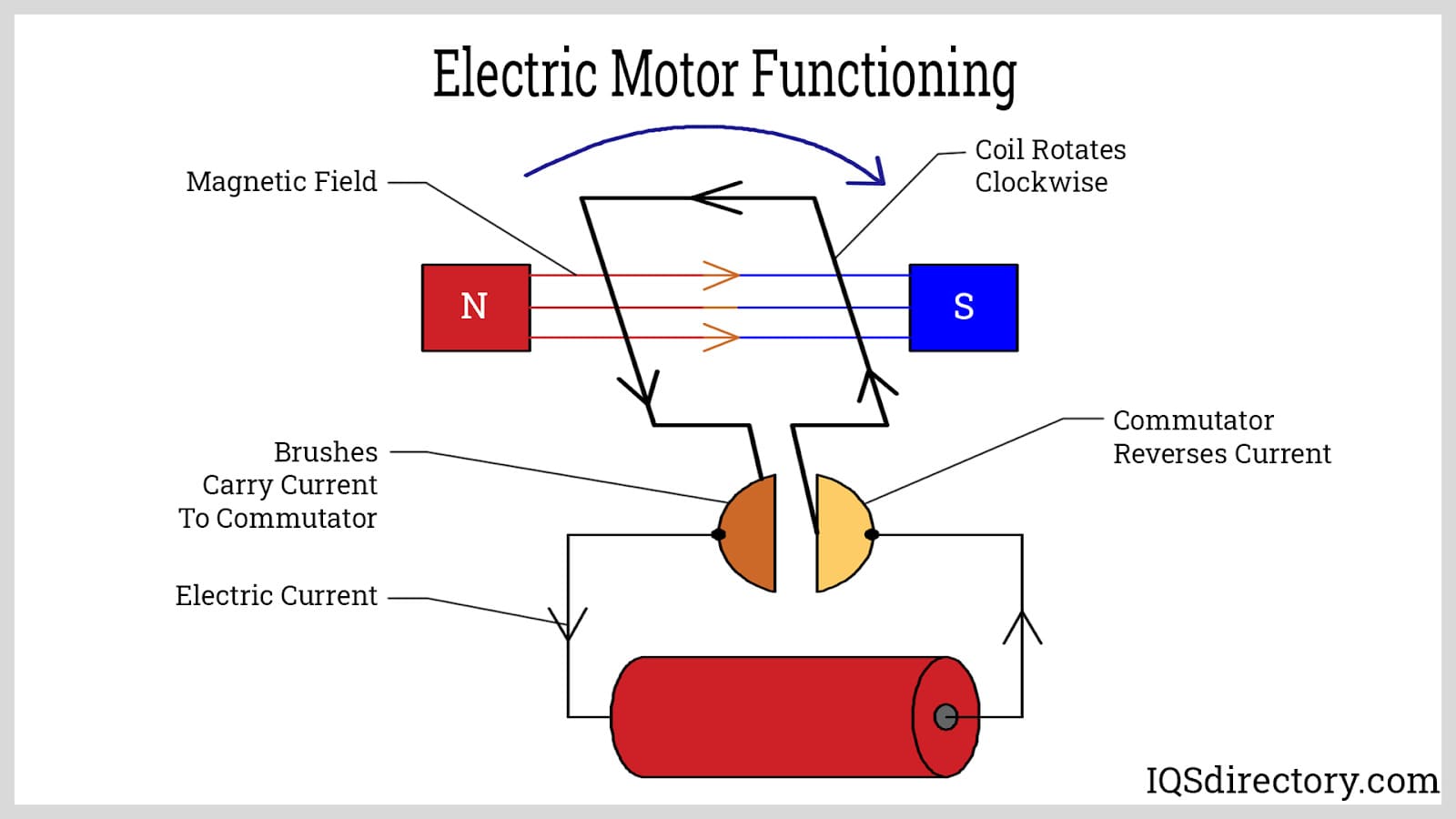 The conversion of electrical power to mechanical power creates force within the motor from the interaction between electric current and the magnetic field.
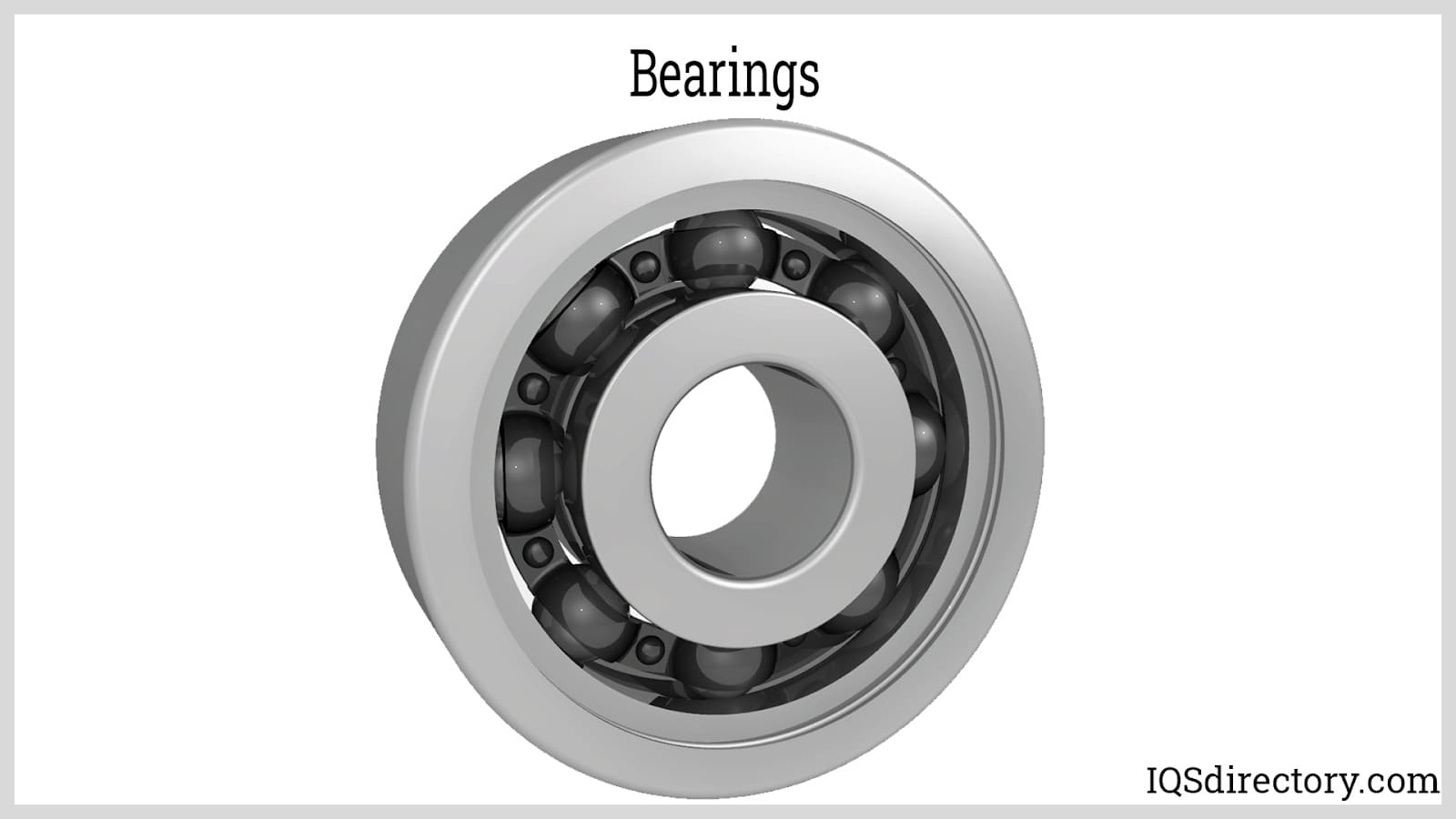 Bearings support the rotor and allow the rotor to spin smoothly on its axis while helping reduce friction, vibration, and wear.
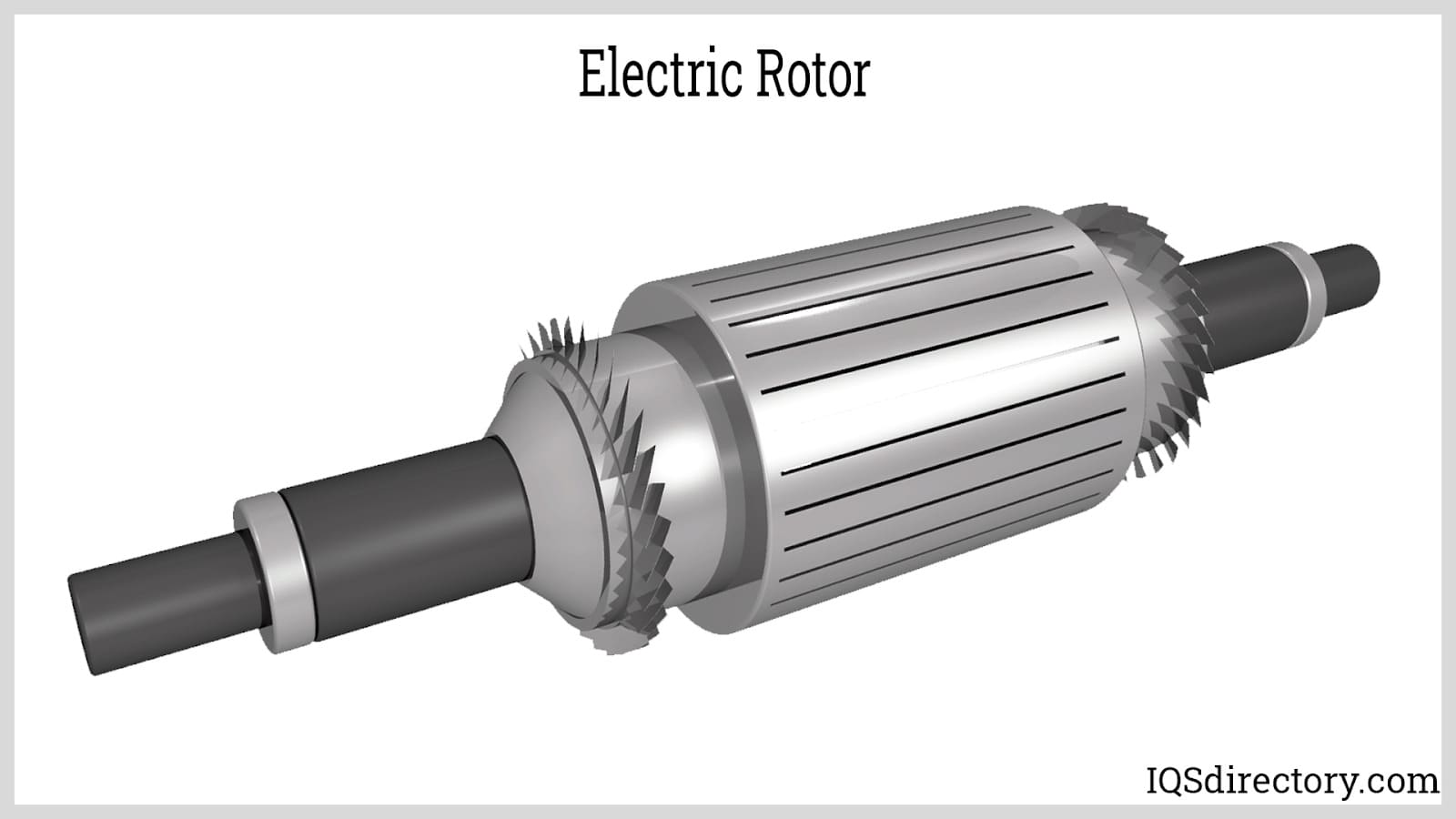 The rotor is the moving part that supplies mechanical power and generally holds the conductors that carry current while the stator magnetic field applies force to spin the shaft.
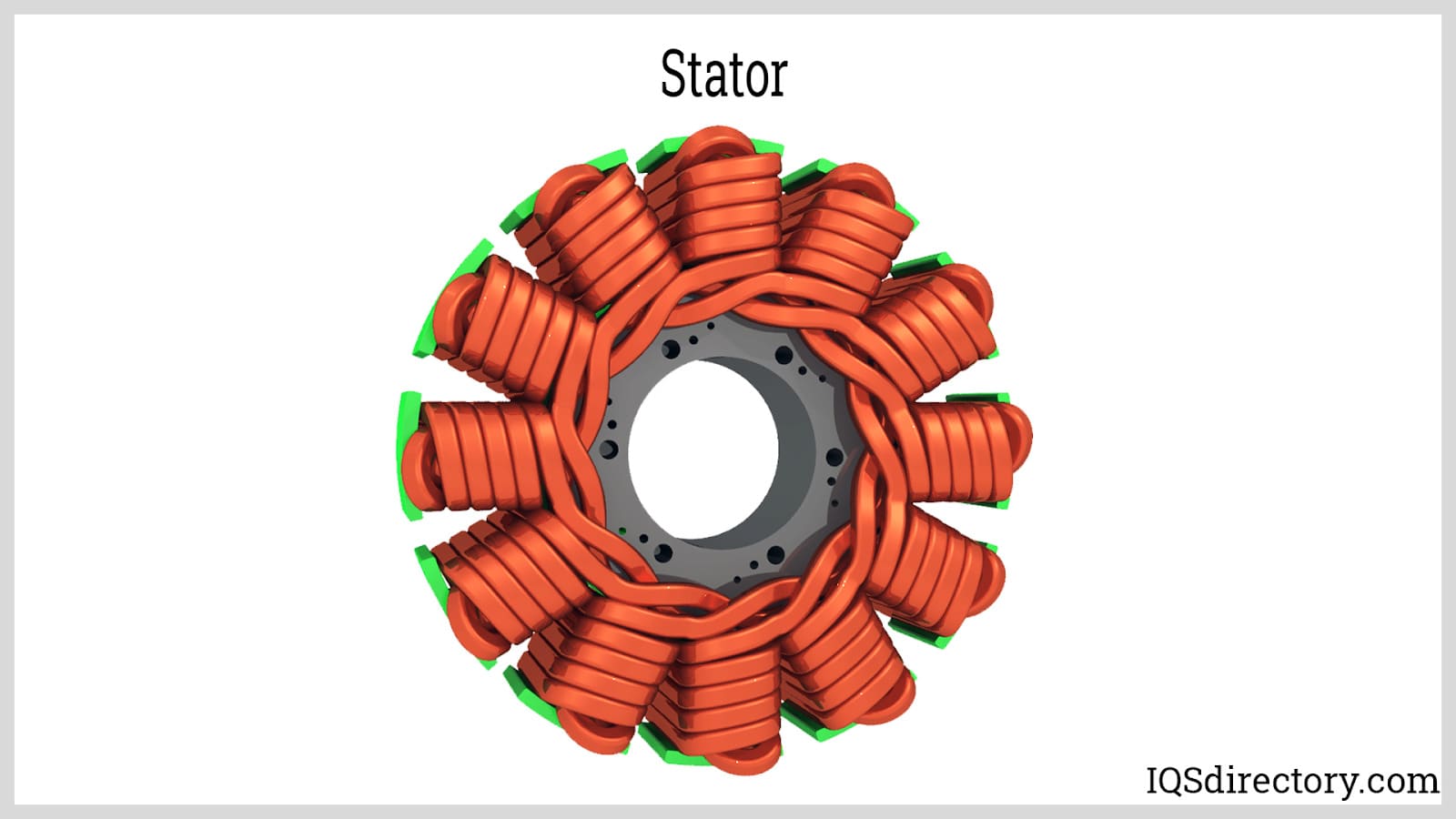 A stator surrounds the rotor and generally holds the field magnets or windings that produce the magnetic field acting on the rotor.
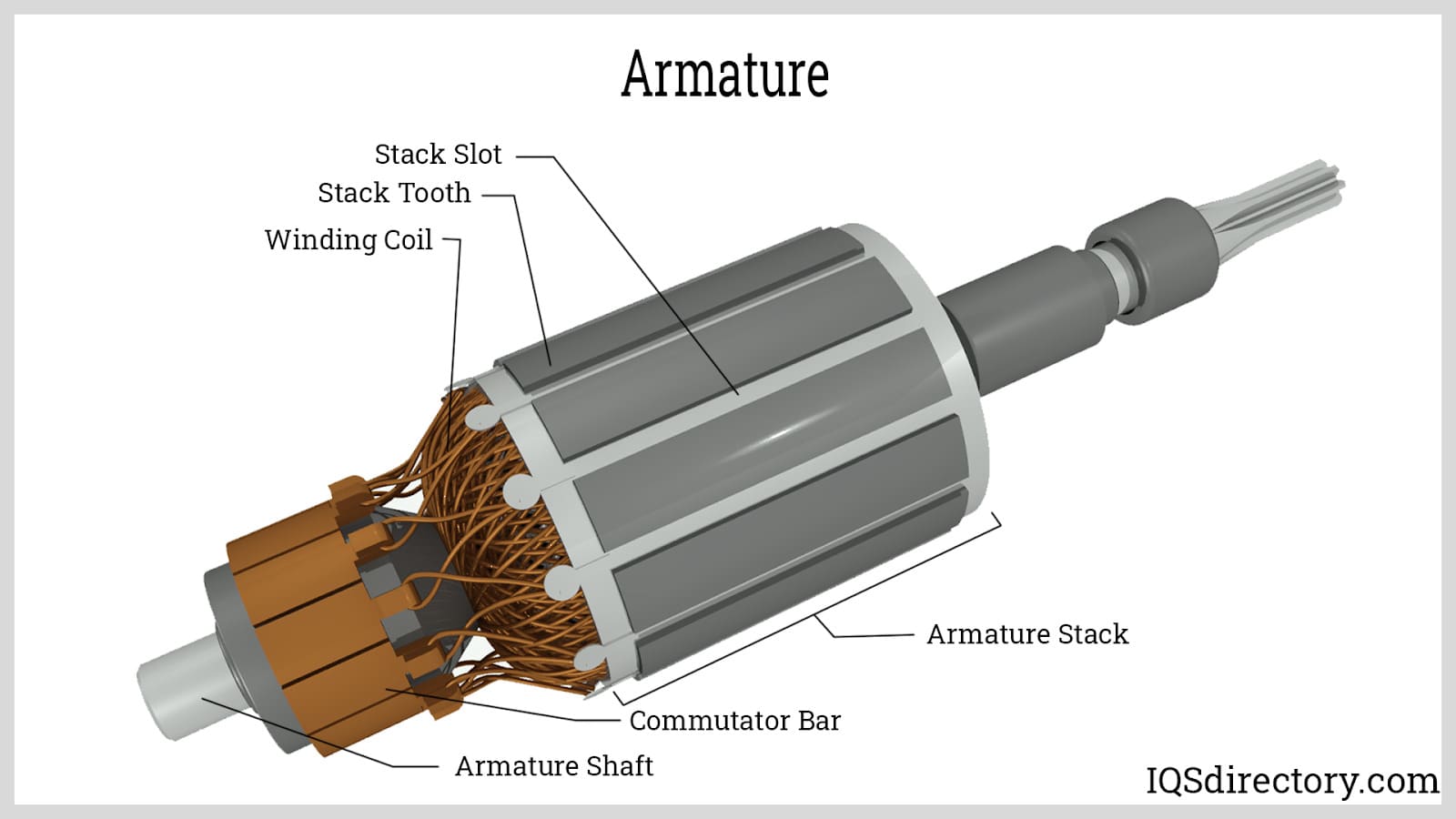 The armature carries electrical current and helps generate the electromagnetic force that creates motor torque.
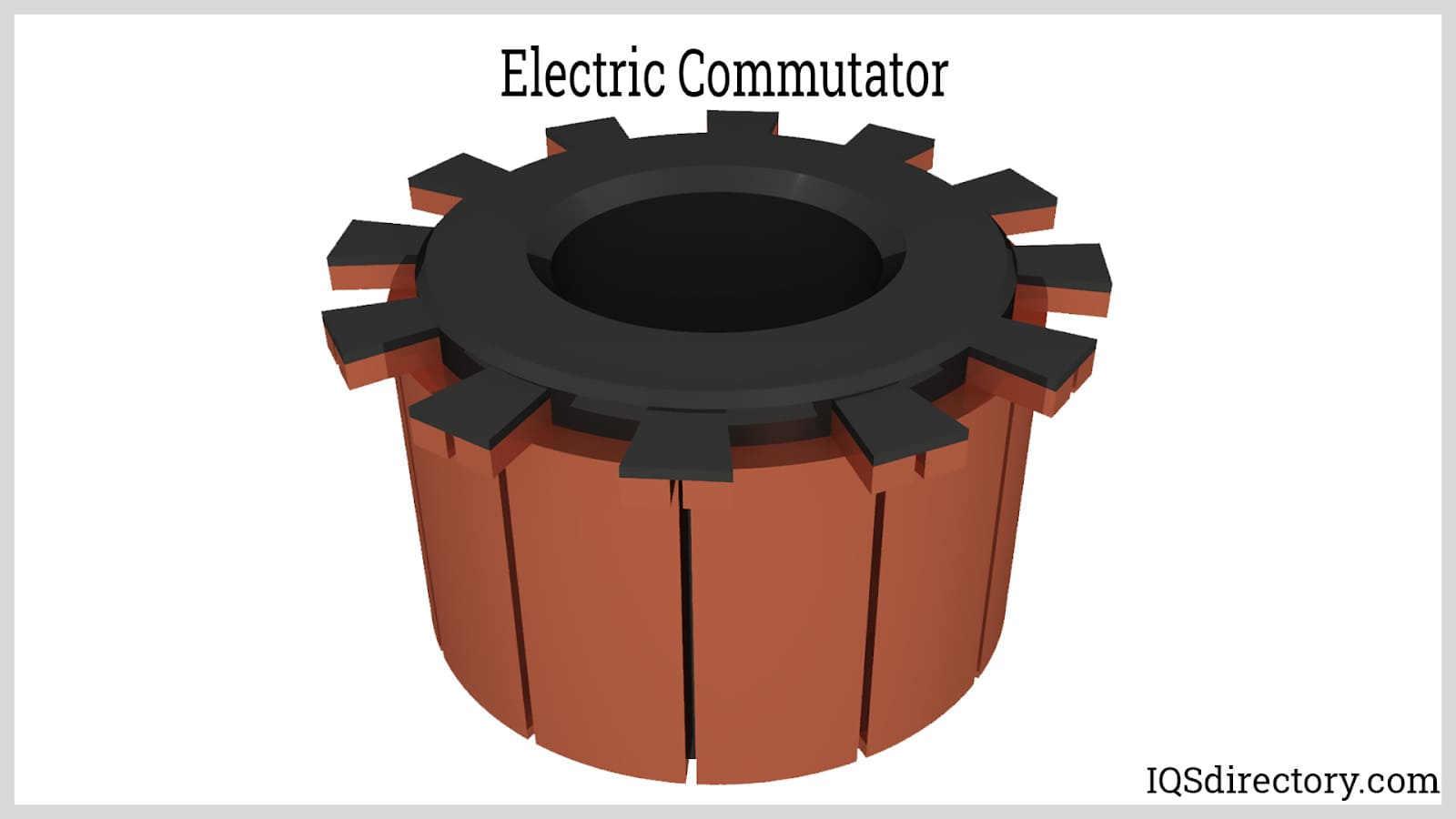 A commutator is a rotary electric switch that supplies alternating current or direct current to the rotor depending on motor design.
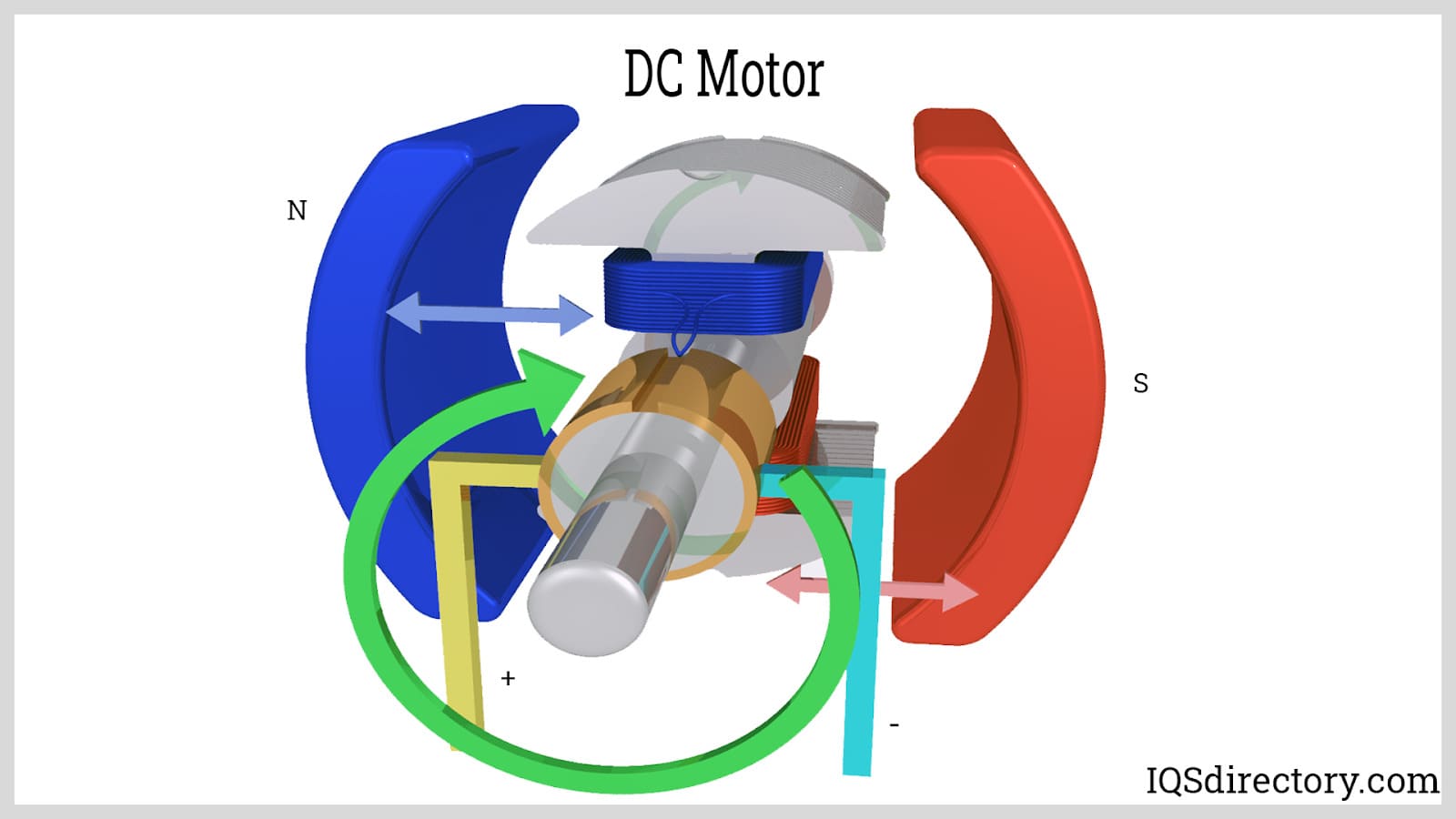 A DC motor is a type of rotary electrical motor that converts electrical energy from direct current into mechanical energy.
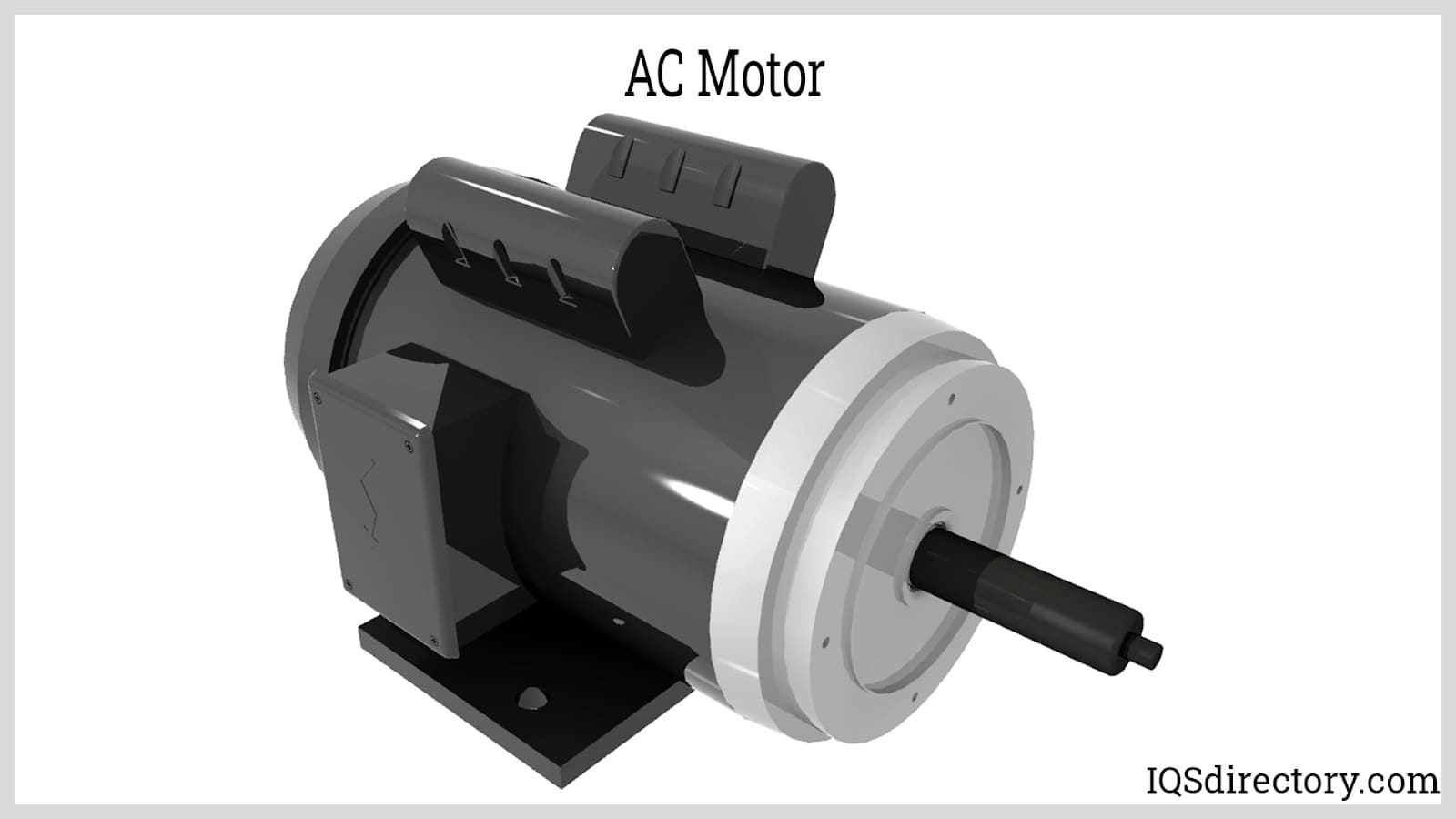 An AC motor consists of a stator with a coil supplied with current to convert alternating current into mechanical power.
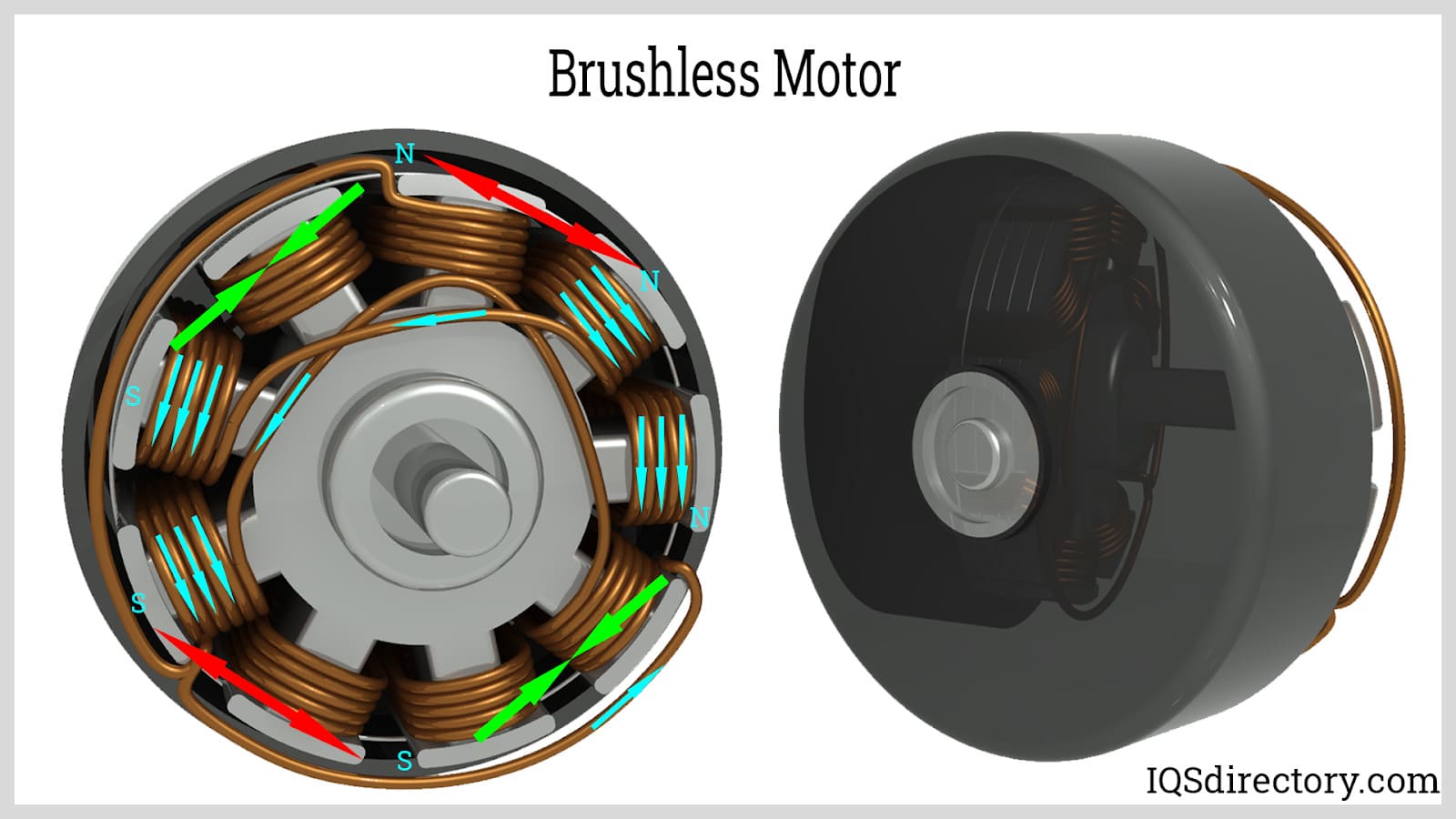 A brushless motor is a type of DC motor that uses an electronic controller to energize windings and create a magnetic field without traditional brushes.
Electric Motors Types
-
12V Motors
These electric motors operate on 12 volts and convert electrical energy into mechanical output used to power compact machinery, vehicle accessories, mobile systems, and other low-voltage equipment.
3 Phase Motors
A type of electric motor powered by a three-phase electrical load, commonly used in industrial power transmission, pumps, compressors, conveyors, and factory machinery because of smooth performance and dependable torque characteristics.
AC Motors
Alternating current (AC) motors generate their magnetic field through an electromagnet powered by the same AC voltage as the motor coil. They can operate in either single-phase or three-phase forms, allowing current cycles to change direction. AC motors come in four basic types: single-phase induction motor, three-phase induction motor, single-phase synchronous motor, and three-phase synchronous motor. DC motors, on the other hand, are always single-phase. Many buyers choose AC motors for continuous-duty industrial service, HVAC systems, fans, and pumps.
Brushed Motors
These motors use mechanical brushes to commutate coils on the rotor as it rotates. Brushed motors are often cost-effective and straightforward to control, though the brushes can wear over time and require maintenance in higher-duty applications.
Brushless Motors
These motors allow for commutation of the stator coils using an external power drive, eliminating the need for brushes. They are popular where low maintenance, high efficiency, long cycle life, and accurate electronic control are priorities.
DC Motors
Direct current (DC) motors are known for their adjustable speed and torque capabilities. They include a rotor and a stator with a permanent magnetic field, offering variable performance for battery-powered systems, automation equipment, and motion control applications.
Electrical Motors
Motors that convert electrical energy into mechanical motion through magnetism. Unlike engines, which rely on fuel combustion, electrical motors use electricity to produce repeatable motion with high control potential and broad application flexibility.
Gear Motors
These motors combine a gear head with the motor to reduce speed and achieve the desired RPM. Gear motors are often chosen where controlled output speed, added torque multiplication, and compact package size are needed.
Induction Motors
Induction motors generate rotation in the coils by inducing current through changing magnetic fields rather than directly delivering rotation. They are widely used because they are durable, practical, and well suited to many industrial loads.
Linear Motors
These motors produce motion solely along a single linear axis, where the converted mechanical energy moves the equipment or machinery without requiring rotary-to-linear conversion components.
Permanent Magnet Motors
These motors have magnets embedded in the rotor assembly, which align with the rotating magnetic field of the stator. They are often valued for compact design, strong efficiency, and responsive control.
Servo Motors
Servo motors feature shafts that move to specific angular locations rather than freely rotating. They are used in motion control applications such as robotics, hard disk drives, pick-and-place systems, and automated equipment. Servo motors with built-in controllers allow precise angular adjustments on command. Stepper motors, used in robotics and 3D printers, are often even more precise but can be more complicated and expensive to control.
Single Phase Motors
These motors operate on single-phase electrical power, where all voltage supplies are synchronized as one unit, distributing alternating current (AC) power. They are frequently used in residential, light commercial, and smaller equipment applications.
Stepper Motors
Stepper motors operate without commutators. All commutation is handled externally by the motor controller, allowing the motor to be stepped at controlled increments for precise starting, stopping, indexing, and orientation.
Synchronous Motors
Synchronous motors operate at a constant speed even under full load. They use three windings in the stator section with a rotating area, ensuring no slip. Nikola Tesla is credited with creating the first AC motor in 1887. Synchronous motors, a type of AC motor, use a rotating magnetic field produced by the rotor and current passing at the same rate. In contrast, induction motors, which are also AC motors, are asynchronous and function based on electromagnetic induction, where a voltage is induced across the rotor as it moves through the magnetic field. Induction motors tend to be less expensive, while synchronous motors offer constant speed with variable torque for applications where timing and repeatable speed matter.
Electric Motor Operation
The basic operation of an electric motor can be understood by visualizing a simple design consisting of just a rotor and a stator. As the names suggest, the rotor rotates while the stator remains stationary. Even this simplified model helps explain how current, magnetic fields, and moving components interact to create useful work.
The rotor is a rod that spins around its long axis, with an arm extending from the rod. At the tip of this arm is a permanent magnet. The stator is a rod placed parallel to the rotor, positioned outside the rotor's swing radius. In actual electric motor assemblies, these parts may be more complex, but the underlying function is similar.
The stator rod is wrapped with wire, and when electric power is applied, current flows through the wire, generating a magnetic field around the stator. This magnetic field transforms the stator into an electromagnet. The electromagnetic field then attracts the permanent magnet on the rotor, causing it to move. That magnetic interaction is the basis for torque generation and shaft rotation.
A switching system, which includes wire brushes on the stator and metal strips on the rotor, completes the circuit. This system alternately energizes and de-energizes the electromagnet, depending on whether the rotor magnet needs to be attracted. In modern designs, this switching may be mechanical or electronic depending on whether the motor is brushed or brushless.
To produce mechanical power, a shaft is attached to the rotor. As the rotor spins, the shaft rotates as well, powering attached components such as wheels, drills, pumps, or fan blades. This is what makes electric motors so versatile across manufacturing, transportation, and consumer applications.
While this basic design is inefficient and simplified, it demonstrates the core principle of electric motors: converting electrical energy into magnetism and then into mechanical power. In most motors, a more advanced system using a commutator with brush-and-contact systems cyclically switches the magnetic poles to improve efficiency, ensuring the rotor magnet is attracted when it moves toward the stator and repelled when it moves away.
When categorizing electric motors by construction, they generally fall into two main categories: brushed motors and brushless motors. Brushed motors are typically a type of DC motor, utilizing a wound rotor, a commutator, and a permanent or wound magnet stator. The motor is named after its commutator, which is fitted with numerous brushes. These brushes allow current to flow to the rotor. There are five primary types of brushed motors: DC shunt-wound motors, DC series-wound motors, DC compound motors, permanent magnet DC motors, and separately excited motors.
Brushless motors, which often fall into the DC motor category, eliminate many of the complications of brushed motors. Instead of brushes, brushless motors use sensors, typically Hall effect sensors, to transfer current to the rotor. These motors feature a permanent magnet external rotor, a three-phase coil, sensors, and drive electronics, making them more efficient, cleaner running, and more reliable than many brushed counterparts.
Things to Consider When Purchasing Electric Motors
Proper installation of large motors matters for the safety of the motor, the workplace, and personnel, but purchasing decisions begin even earlier with specification review. Buyers should compare available power supply, full-load current, starting torque, RPM, enclosure type, horsepower, duty cycle, efficiency expectations, and the environmental conditions the motor will face.
For safety, the motor should be placed in a location where its rotating shaft cannot catch workers' clothing and where its power cords will not pose a tripping hazard. Noise from motors can also contribute to hearing loss, which can be mitigated by using padded housings or requiring workers to wear hearing protection. In many facilities, enclosure selection and mounting method are just as important as motor output.
If the motor is not mounted securely, excessive vibration may occur, leading to internal damage that could go unnoticed until the motor breaks down. Motors should be shielded from water, dust, vibration, impact, and extreme temperatures unless they are specifically designed to withstand such conditions. Additionally, if the motor has ventilation slits on its casing, these should not be obstructed or placed against a wall to prevent overheating. Buyers evaluating industrial motors often ask whether a TEFC, open drip-proof, washdown-duty, or hazardous-location enclosure is more appropriate.
Electric motors can generate electromagnetic interference that may disrupt electronic communication systems. The magnets within a motor may also affect nearby electronics, so installation planning should account for surrounding controls, sensors, and sensitive devices. This is especially important in automated production lines, control panels, and high-precision equipment.
Typically, a motor should simply be connected to the appropriate power source and can operate with minimal maintenance for years. However, some motors are equipped with internal fuses to protect against power surges, while others require external circuit protection. Motors in heavy-duty industrial settings often need scheduled inspections and maintenance by certified professionals, while smaller motors, such as those in household appliances, require little to no maintenance. Matching the motor to the application from the start helps reduce wear, lower energy use, and improve reliability over time.