Plastic Tanks
Plastic tanks, also known as poly tanks, are versatile containers used for bulk storage of a wide range of industrial substances or liquids. The tanks are available in an array of sizes and configurations. They can be vertical or horizontal, rectangular, circular, or square shaped. Plastic tanks may store substances from as little as 15 gallons to as large as 20,000 gallons.
Plastic tanks are the preferred choice for many applications, both in large or small scale industrial use, because they hardly react to any liquid it contains. Most of the tanks, especially the bulk storage tanks, feature slots for tying them down, while others have centered and offset self-vented and slosh-proof lids.
Quick links to Plastic Tanks Information
Applications of Plastic Tanks
Plastic tanks have many applications in various industries. Notably, some containers such as the chemical tanks are used for processing or storing highly reactive materials or substances like acids in large-scale industrial chemical applications. Plastic tanks are not limited to only chemical industries. Other industries benefit from the use of these plastic tanks where stainless steel tanks or other material tanks are inapplicable.
Other applications include:
- Water treatment and storage
- Sewage treatment and disposal
- Liquid fertilizer storage
- Liquid feed in agricultural applications
- Reverse osmosis systems
- Car wash companies
- Waste and vegetable oil storage
- Petroleum and gas industries use gas tanks
History of Plastic Tanks
Water tanks utilized by some manufacturing industries feature translucent tank walls to allow for level viewing and indicators for sidewall gallons. The tanks are also applicable in industries or plants dealing with electroplating, parts washing, and recycling.
Today, the plastic tank industry, through the evolution of storage tanks, has experienced further revolutionary change. Modern ways of rotational plastic molding were developed in the 1960s. This process allowed manufacturers to create large hollow containers using low-density polyethylene. As improvements were made, better equipment and plastic powder were developed to speed up the process of creation of plastic tanks. This caused rotational molding and plastic fabrication to grow rapidly, and the current tanks were born.
Plastic Tank Production and Customization
Plastic tanks are made from a UV treated high-density polyethylene, which is impact-modified and FDA-approved to make it safe for home applications like in water storage tanks. There are other tanks also made from plastics like polypropylene (PP), polyvinyl chloride (PVC), and polyvinylidene fluoride (PVDF). Several design aspects go into the production process to produce water storage tanks, plastic fuel tanks, gas tanks, and others, all which have a wide range of capacities and capabilities.
The decision to make tanks from high-density polyethylene HDPE, which is the most popular for plastic tanks, arose perhaps because the plastic is durable and can withstand the sun for at least 25 years. Also, poly plastic doesn’t readily react with a wide variety of substances or chemicals. This makes it the popular choice for a wide range of applications.
The production process involves rotary molding or plastic fabrication. A plastic tank manufacturer creates a mold from stainless steel, like a large stainless steel canister. This canister is then loaded with plastic powder or granules, then sealed and rotated over a heating source for the plastic to melt. After melting, the canister is cooled down and opened and there is a tank. The thickness or the durability of the tank depends on the amount of powder or granules placed in the canister.
Different manufacturers have varied designs, styles, and shapes of tanks with a wide assortment of colors. The majority of plastic tanks are computer-generated for precision, uniformity, and strength. By far, the strongest engineering aspect put into a tank for strength is the corrugated design.
Some plastic tank manufacturers also offer custom plastic tanks depending on your specifications, the material, and the application. This is beneficial to those who cannot find their preferred tanks anywhere on the market. Custom plastic tanks may be made to look like a conventional tank to complement the environment correctly.
Features of Plastic Tanks
High-density polyethylene (HDPE) tanks among other plastic tanks are built to suit a wide range of applications, conditions, and particular standards. Some features contribute to the exceptional reputation of these tanks.
Polyethylene material complies with standards of various countries. It is an approved food-grade material, which makes it safe for use as water tanks. The material is also UV-treated for durability, and some have self-supporting features, which makes the use of other support accessories unnecessary. The corrugated and smooth designs are ideal for several applications and above-ground storage tanks for home use.
Plastic tanks are environmentally friendly, as well as non-reactive, and most can be recycled. They provide a large volume for liquid gas storage or transport, water storage, and treatment. In some manufacturing and industrial chemical applications, plastic tanks have several fittings combined to contain acids and other highly corrosive or volatile material. Double wall tanks used in some industries ensure that no leakages occur during aggressive processes. Hazardous wastes are also stored in some of these plastic storage tanks.
Advantages of Plastic Tanks
Perhaps the most notable advantage of plastic tanks is the lightweight nature. What this means is that the less weight saves on cost and allows easy transportation or installation in various spaces. Handling and installation is also quick. The plastics are also less likely to react with the contents they hold. Because some of them are FDA-approved, they make suitable containers for use with drinking water and other food substances.
Plastic tanks are also inexpensive compared to metallic and a few other types. Their durability can also rival and exceed the lifespan of other tanks. They require virtually no maintenance cost. They are available in a wide range of sizes, colors, and shapes. They are also available with double walls for reinforcements in case strength is what you seek.
Accessories Used with Plastic Tanks
Plastic tanks may not require many accessories, but depending on the industrial use, there are several ideal fittings to complete installation or adapt them to a particular function. In water storage tanks, valves are used to control the flow. Other popular necessities include hoses for draining or feeding the tanks with various kinds of materials.
Other accessories include vents, manways or lids, restraints, pumps, siphon tubes, tie down kits for holding tanks firmly, float valves, rainwater collection adapters, and precision gauges. All the accessories are specific to the application of the tank. Strainer baskets are also popular for keeping unwanted substances at bay.
How to Install Plastic Tanks
The installation of plastic tanks depends on the site, the platform, and whether it needs to be installed above ground or below ground. Whichever the case, you should ensure that the tank is in a safe position. Also, confirm that the tanks can be easily accessed, depending on the purpose.
Next, prepare the tank base or platform. Many stations include the use of concrete or compact material. This is especially the case with tanks that do not require much mobility like water storage tanks and some industrial stainless steel gas tanks. While handling the tank, always ensure that it is safe. Use the appropriate tools to avoid distortion.
Tanks will come with instructions on how to install or mount them on platforms with necessary fittings and accessories. If the process is too much for you to follow, some professionals will help. It is also important to consult the factory for installation details for above ground in tanks designed to be buried and vice versa.
Finally, tighten all screws, continually support the platform, check bulkhead drain to ensure they are secure, connect them with the proper pipe sizing if necessary by referring to the manufacturer, and ensure that access caps have breather valves whenever necessary.
Proper Care of Plastic Tanks
Here are a few maintenance tips:
- Whenever there is a need for handling of the product, whether in transportation, loading or unloading, ensure that care is taken and the bottom of the tank is continually supported to prevent damage.
- Always place or install the tanks on flat grounds or stable platforms that can withstand lots of pressure from the liquid or substance it carries.
- Install the plastic tanks in spaces or sites free of materials that could fall on them, which could damage its walls during stormy weather or high winds.
- Do not store excessively hot water or other materials in the tanks unless it is adapted for the purpose. Most plastic tanks can only withstand temperatures of up to 40 degrees Celsius unless otherwise stated. Tanks which are laminated or combined with other materials during the manufacturing process may resist temperatures up to a certain level. Always read the specification first. Similarly, plastic tanks should be kept away from fire or other heat sources. They pose a great danger especially for the flammable substance they store.
- Reverse osmosis water filter systems.
- Clean the tanks regularly after use.
Plastic Tank Standards and Compliance
Standards compliance govern most products to ensure that whatever you are buying is safe, of high quality, and reliable. Although some standards, unless regulated by the government, are voluntary, it is important to verify that the manufacturer does comply with the required standards. The easiest way to know this is by checking if the manufacturing industry you source your tank from is certified.
Most plastic tank standards touch on correct use, installation, and maintenance. It also specifies the requirement for the design and manufacture of the material used to make the tank. Nevertheless, the standards should detail on the performance and the fittings required for the tank.
Choosing the Right Plastic Tank Manufacturer
A manufacturer’s specification that the tank has double walls for strength, is made of a durable plastic, and is infused with fiberglass, isn’t sufficient enough to guarantee a quality product. Ensure that the manufacturer is certified, has an excellent reputation, and offers the best support for its products. If he or she provides after-sale services like installations, regular inspection, and a good warranty, all the better. You may want to consider a manufacturer who will provide you with a custom tank if you want a specific container for a specific purpose.
Plastic Tanks Images, Diagrams and Visual Concepts
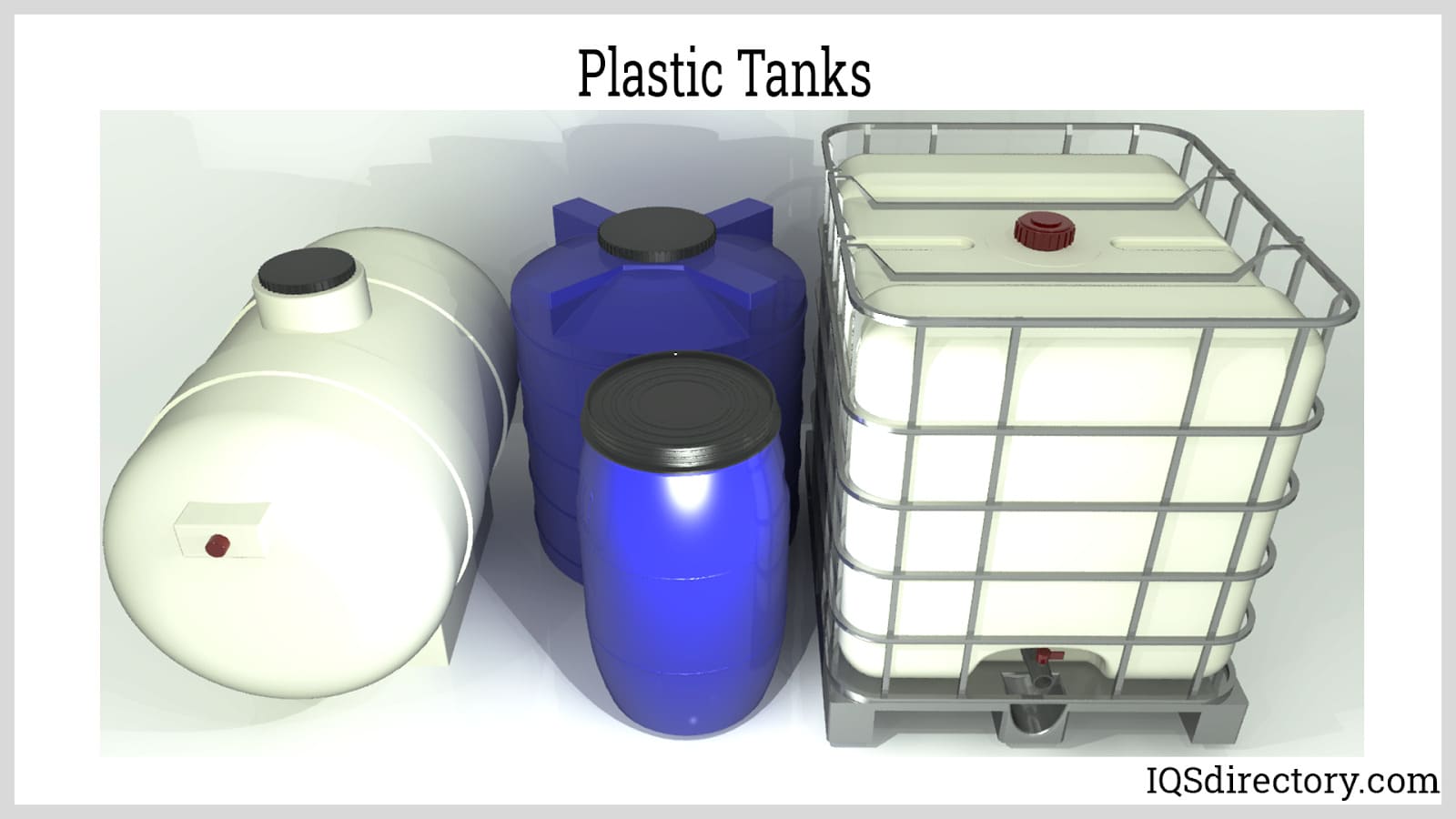 Plastic tank, a large capacity liquid or granular storage unit which can be vertical, horizontal, below or above ground, and permanent in place or movable.
 Polymer material in powder form into the mold to form the plastic tank.
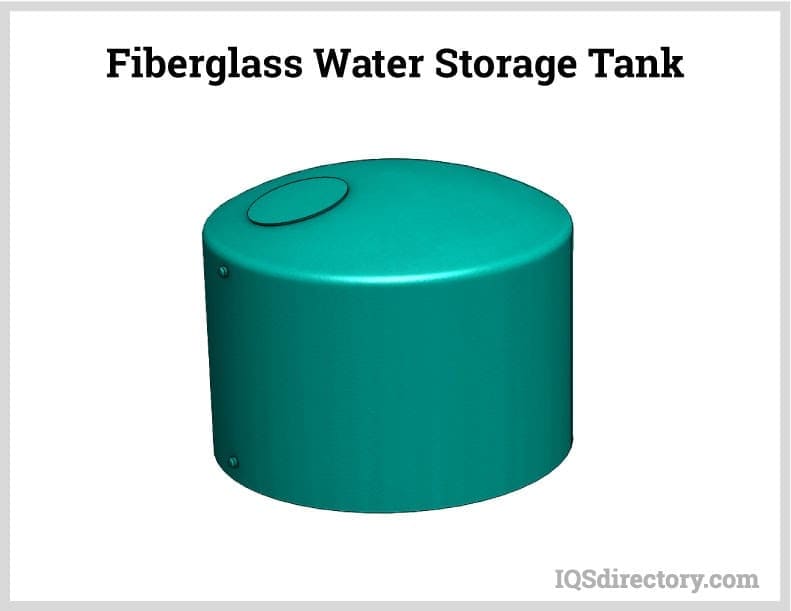 Fiberglass storage tanks are used for underground and above ground storage since they are durable, corrosion resistant, and do not deteriorate.
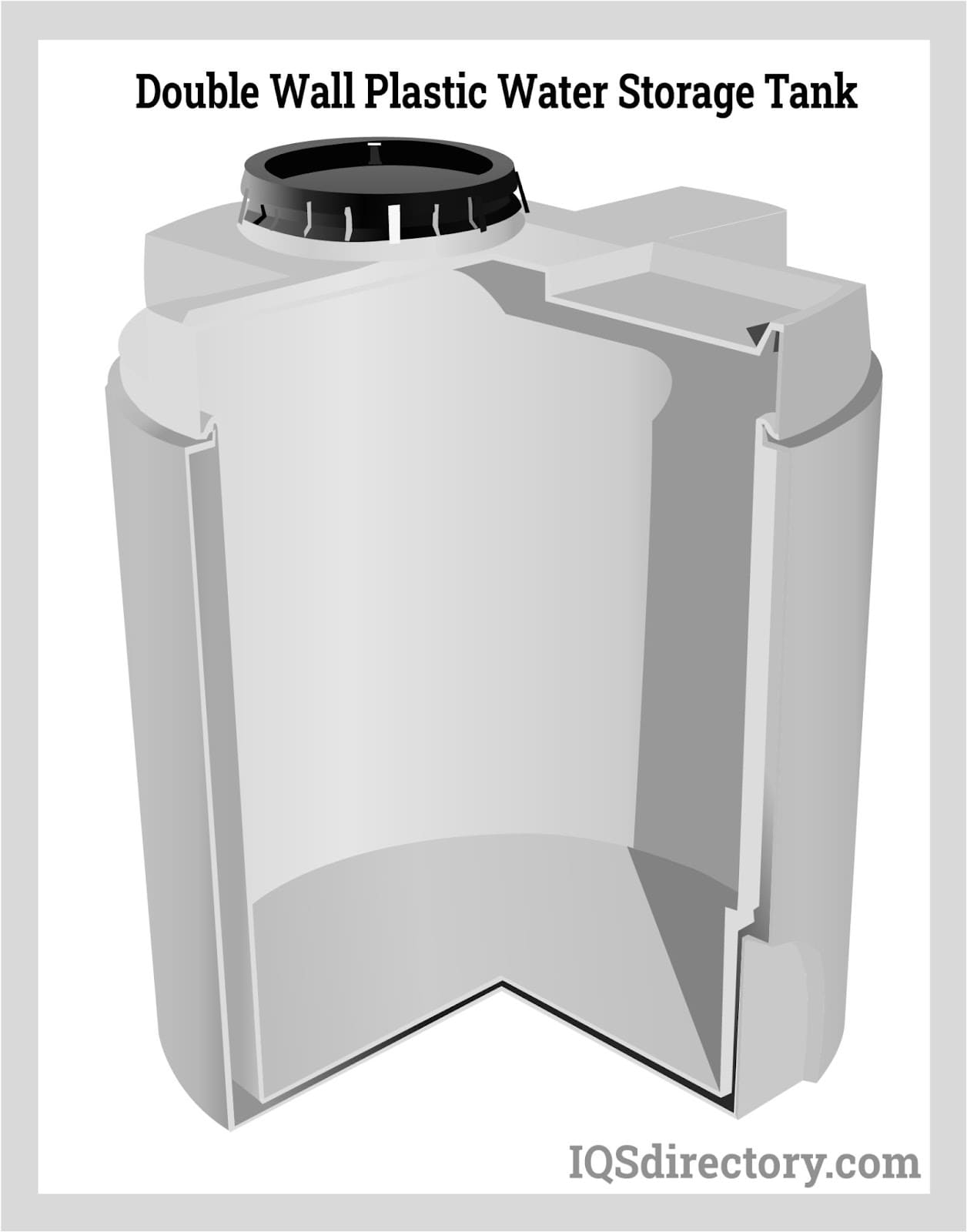 An example of a the type of water tanks that is constructed with an inner tank and outer tank to prevent pollution.
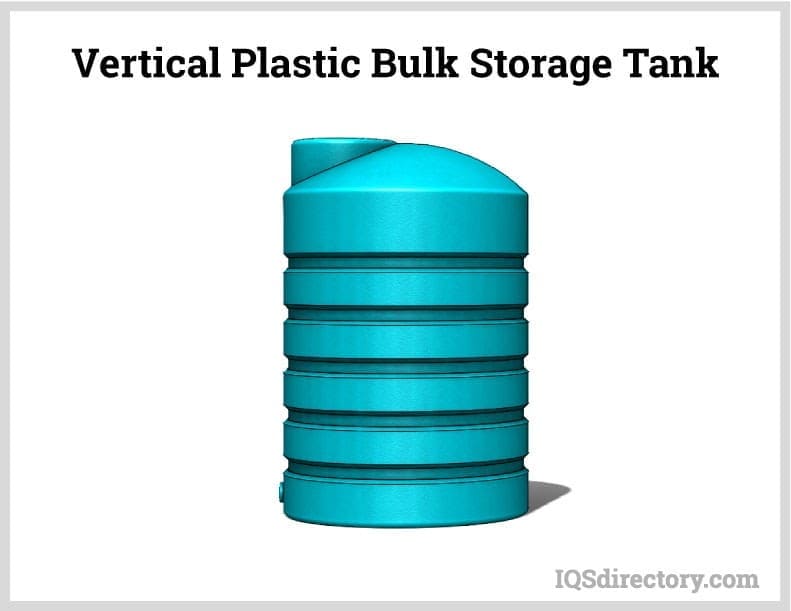 Since plastic tanks are flexible, durable, strong,and long lasting which can be used to store or transport a variety of liquids.
Types of Plastic Tanks
- Chemical Tanks
- Made of plastic and provide superior resistance to harsh chemicals that no other material can match. They are used for chemical processing and storage of highly reactive substances like sulphuric acid. They have fittings and interiors ideal for resistance to corrosion or reaction unlike other types of tanks, such as stainless steel tanks.
- Clarifiers
- Tanks in which sediment and other precipitate settle.
- Cone Bottom Tanks
- Have a bottom angled to a point and are used when complete drainage of materials or liquids inside is necessary.
- Double wall tanks
- Provide superior protection against spillage of hazardous chemicals. They have strong linings for high-pressure applications. They provide the best protection against leakage or spillage of hazardous wastes or chemicals.
- Dual Laminate Tanks
- Tanks in which a thermoplastic lining (consisting of resins, such as polypropylene, polyvinyl chloride, and polyvinylidene fluoride) is bonded to a fiberglass structure for reinforcement.
- FRP Tanks
- Manufactured from a combination of resin and glass and are rust-proof and long-lasting. FRP tanks formed from FDA-accepted raw materials are acceptable for potable (fit to drink) water.
- Plastic Fuel Tanks
- Can provide safe storage and transportation of flammable substances or they can be used to gauge the substance level, venting, as well as possibly feeding the engine and anticipating the potential for harm. In other cases, they are used with liquid hydrogen and other gases.
- Plastic Oil Tanks
- Used to transport, store, and hold oil, and are generally made of industrial grade plastics, like fiberglass reinforced plastic (FRP) and molded polyethylene. They are the ideal choice for transportation, storage or holding oil.
- Plastic Water Tanks
- Used as primary or secondary storage for drinking water, water reserves, and fire safety. The use of plastic water tanks is increasing, as the availability of drinking water is decreasing.
- Poly Tanks
- More durable, provide more chemical and corrosion resistance, require less maintenance, and cost less than comparable steel and fiberglass tanks. Poly tanks are used in the water treatment and chemical processing industries for such hazardous fluids as sodium hypochlorite, sulfuric acid, caustic soda, and hydrochloric acid.
- Polyethylene Tanks
- A type of poly tank. They provide atmospheric, or non-pressure, storage of a multitude of substances.
- Polypropylene (PP) Tanks
- Provide excellent chemical and corrosion resistance, have a wide operating temperature, high rigidity, good structural strength, and can be easily fabricated and welded using hot air, extrusion, and fusion equipment. They are ideal for a variety of electroplating applications and are increasingly being used in the demanding environment of steel process plants. They are the best choice for reactive elements.
- Septic Tanks
- On-site sewage treatment systems that store waste materials in a large plastic tank. Most sewage treatment and disposal industries use septic tanks. They are large plastic tanks used to store waste materials in treatment systems.
- Storage Tanks
- Plastic containers used to store various substances in industrial settings.
- Water Tanks
- Designed from food-grade plastic for the storage of water for home use. Some of these tanks are used to store water for fire extinguishing purposes.
Plastic Tank Terms
- Additive
- A substance added to a polymer to increase the effectiveness, but not the strength, of the polymer. Examples of additives include flame-retardants, anti-static compounds, pigments, and lubricants.
- Bag Molding
- The process in which atmospheric force is applied to a laminate using an elastic or woven material.
- Blister
- A flaw that forms between the laminate layers or between the laminate and the gel coat film of a fiberglass tank.
- Blow Molding
- The formation of a hollow object, such as a plastic tank, by using air to expand a hollow tube, called a parison, against the internal walls of a mold.
- Casting
- The process in which a mold is filled with a mixture of resin, fillers, and/or fibers to form an end product, such as a plastic tank.
- Contact Molding
- A process in which layers of polymer and reinforcement materials are applied to a single or open mold, producing one finished cosmetic side.
- Copolymer
- A polymer made up of two monomers in which each repeating unit in the chain consists of units of both monomers.
- Crazing
- Very thin cracks in a polymeric material caused by chemicals or other agents, such as ultraviolet radiation.
- Degree of Polymerization
- The length of the molecular or monomeric units in a polymer chain. The degree of polymerization determines the properties of the polymer.
- Depolymerization
- The breakdown of a polymer to its original monomers or to a polymer of a lower molecular weight. Depolymerization often occurs when a polymer is exposed to chemicals or certain environmental conditions, such as high temperatures.
- Die
- A piece of equipment, usually consisting of metal, through which a substance, such as plastic, is forced in order to provide shape to the substance, such as the shape used in creation of plastic tanks.
- Extrusion
- In plastic shaping, extrusion is the process of softening plastic through the application of heat then pushing the plastic through a die.
- Filler
- Typically inert organic or inorganic material added to resins, plastics, or gel coats, in order to change the properties, increase volume, or decrease the cost of the end product.
- FRP (Fiber Reinforced Plastic)
- Also called GFRP (glass fiber reinforced plastic), GRP (glass reinforced plastic), or RP (reinforced plastic), FRP is a durable, rust-proof material that is a combination of glass and resin.
- Gel-Coat
- A surface coat of colored or clear polyester resin that cosmetically enhances fiberglass laminate and provides it with good weatherability.
- Hand Lay Up
- A process in which fiberglass and resin layers are built up manually using hand rollers, spray equipment, and brushes.
- Hot Air or Gas Welding
- The process of joining two pieces of plastic by blowing heated air or gas to melt the plastic pieces.
- Injection Molding
- The process of creating an object, such as a tank, by applying pressure to molten plastic in order to push the plastic into a mold. The mold is then cooled to produce the final plastic form.
- Laminant
- A composite formed by lamination, a process in which thermoset polymers and fiber reinforcement are layered.
- Mold
- A hollow, heat-resistant container in which liquid substances can be formed into solid shapes by allowing the fluid to solidify within the mold cavity.
- Monomer
- The most basic polymeric unit, usually a liquid or a gas, consisting of molecules from the same organic substance.
- Permeability
- The ability of liquids and gases to flow through a substance. Low permeability is advantageous in plastic tank resins.
- Plastic
- A material whose essential ingredient is an organic substance of large molecular weight and whose end state is solid. Plastics can be shaped by flow at some stage of the manufacturing process.
- Plasticizer
- A material added to a plastic to make it more workable and flexible.
- Polymer
- Two or more monomers bonded together through a chemical reaction. Each polymer consists of a chain of repeating monomers.
- Potable Water
- Water fit for human consumption. Typically dispensed from plastic water tanks.
- Regulated Substance
- Petroleum or any hazardous substance stored in an industrial tank. Hazardous substances are defined in the Comprehensive Environmental Response, Compensation, and Liability Act (CERCLA).
- Reinforcement
- Substance added to a polymer to increase the strength of the plastic. Examples include clay, mica, and glass fibers.
- Resin
- A class of polymers, or plastics, chemically different to naturally occurring resins, which are sticky substances obtained from certain trees and plants. Examples of resins include polyethylene, polyurethane, and acrylics.
- Rotational Molding
- Also called rotomolding, this is the formation of a hollow object, such as a tank, by simultaneously rotating and heating a mold filled with thermoplastic resin powder. As the mold rotates, the resin evenly coats the mold walls and is then cooled into a final form, providing seamless molding at a low manufacturing cost.
- Stress Cracking
- Cracking that occurs as a result of mechanical stress. In most cases, tiny cracks caused from exposure of the plastic to chemicals or ultraviolet radiation are already present, so that when stress is applied to the plastic, the cracks enlarge and spread, creating a greater fracture.
- Thermoplastic
- A category of plastics with the potential to soften and reform when heated, then harden again during cooling. During the process, the physical makeup of the plastic does not change.
- Thermoset
- A category of plastics that cannot be reformed upon reheating. Thermosets remain permanently hard.
- Underground Storage Tank System
- A plastic tank system storing a regulated substance, such as petroleum, in which at least 10% of the plastic tanks, plastic tank piping, and other equipment associated with the tank is located underground.