Foam Fabrication
Foam fabricating is the manufacturing of a lightweight, versatile, polymer-based material. The material, such as plastic or polyurethane, is frothed up while in a molten state and then cooled, which fills the material with countless little bubbles, giving it an appearance similar to a sponge.
Quick links to Foam Fabrication Information
History of Foam Fabricating
Foam fabrication encompasses such a wide selection of fabrication technologies and products, that detailing the history of the various processes' development could easily encompass an entire textbook. The earliest science and fabrication technology of polymeric foams traces back to the 1920s and 1930s, with the development of the Talalay and Dunlop processes for producing latex foam.
From there, the history of foam fabrication shares much in common with the general development of chemicals over the next few decades, as new substances and chemical concepts discovered during the WWI made their way into general industry and technology.
Foamed polystyrene, i.e. Styrofoam was invented in 1947 by researchers at Dow Chemical Company's industrial labs. Other modern foams trace their history to any number of different researchers and corporations, with each type of foam developing parallel to the others.
Modern foam fabrication thus represents nearly a century of accumulated learning and experimentation from countless researchers and engineers. The scientific principles behind the production of each type of foam, combined with logistical and manufacturing considerations for producing effective products from these foams, continues to evolve even now with the latest breakthroughs in Nano cellular polymer foams.
Benefits of Foam Fabrication
It's difficult to describe general benefits of foam fabrication as a process, due to the wide variability of end products. Some foams offer incredible strength, while others are extremely flexible and pliable. Some are brittle but resist pressure, while others are soft but resist tearing. If there's a single overarching benefit to foam fabrication, it's the sheer granularity of options you have in producing your end product.
- Lightweight Advantage
- Foam products are consistently lighter in weight than comparable alternatives. This makes them particularly appealing in any industry or application where weight is a significant concern, such as shipping and automobile manufacturing. It's also a convenient bonus when considering the logistics of working with foam products for any industry or field.
- Cost Effective Benefit
- Foam fabrication produces bulk products quite efficiently, with the benefits of using foam over competing materials increasing in most cases as the scale of production grows. It's also noteworthy that a skilled foam fabrication team can cut costs significantly beyond the average by minimizing waste products and making proper use of what scraps can be recouped and applied to other uses.
- Versatility of Foam
- While the pure versatility of foam products may seem of limited use to a company with a singular need for foam, it's worth remembering that a close relationship with a foam fabrication team can help you with any number of other tasks further down the road. If you require foam for shipping or other secondary applications down the road, your existing relationship with a foam fabricator will make it far easier to source those products effectively and efficiently.
- General Insulation of Foam
- While the specific properties of foam varies with the material and production method used, foam in general offers unique properties making it ideal for thermal, acoustic, and vibration insulation. This is one area where foam isn't just a good option, but a standout compared to competing materials; in most cases, a foam-based insulation solution will exceed the insulation offered by other materials. This is especially true when comparing weight and density in most cases.
Applications of Foam Fabricating
Foams in general have a huge assortment of applications, and many of those applications make them valuable across a huge number of industries. It's probably difficult to name an industry or field where fabricated foam isn't found performing some major or minor role. Notable applications include:
- Uses in Construction
- Rigid foams and sprayed polyurethane foam work effectively as insulation and sealant, reducing construction costs and utility bills.
- Household Applications
- Foam is used in various household goods such as sponges, filters, and mats.
- Automotive Foam
- Custom foams play critical roles in any number of components in the automotive industry; NVH seals, gaskets, pads, pillar stuffers, etc.
- Medical Foam
- Produced for any number of purposes, from surgical sponges to orthopedic foam insert devices.
- Fabricating Foam for Shipping
- Foams play a critical role as shipping containers, packing goods, cushioning mats, and other shipping goods.
- Acoustic Applications
- Many foams offer unique benefits in soundproofing and general acoustic management.
- Bedding
- Memory foam mattresses and pillows both originate from careful foam fabrication.
- Uses in Furniture
- Many of the cushions and upholstery found on modern furniture take advantage of the unique traits of polymeric foams.
- Using Foam for Filtration
- Simple air filters are frequently made up of course open-celled foams.
- Absorption Applications
- The nature of foam makes it ideal for any number of custom absorption applications, from simple kitchen sponges and bath mats to major industrial absorption pads.
- Seals
- Many seals are produced from foam to take advantage of the flexibility of the foam material.
Fabricated Foam Images, Diagrams and Visual Concepts
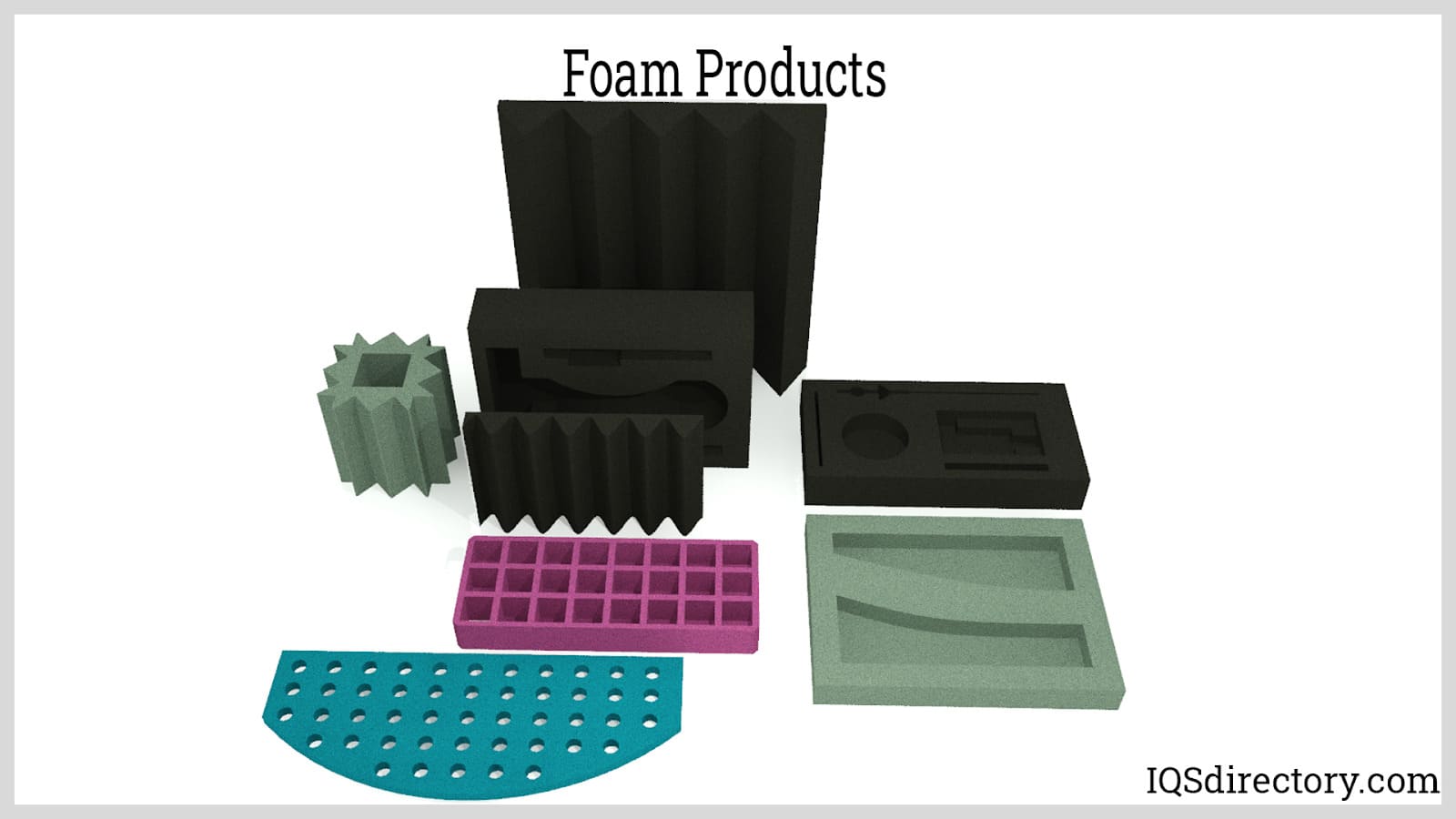 Products made by polyurethane foam allowing for flexibility, low density, and high force absorption.
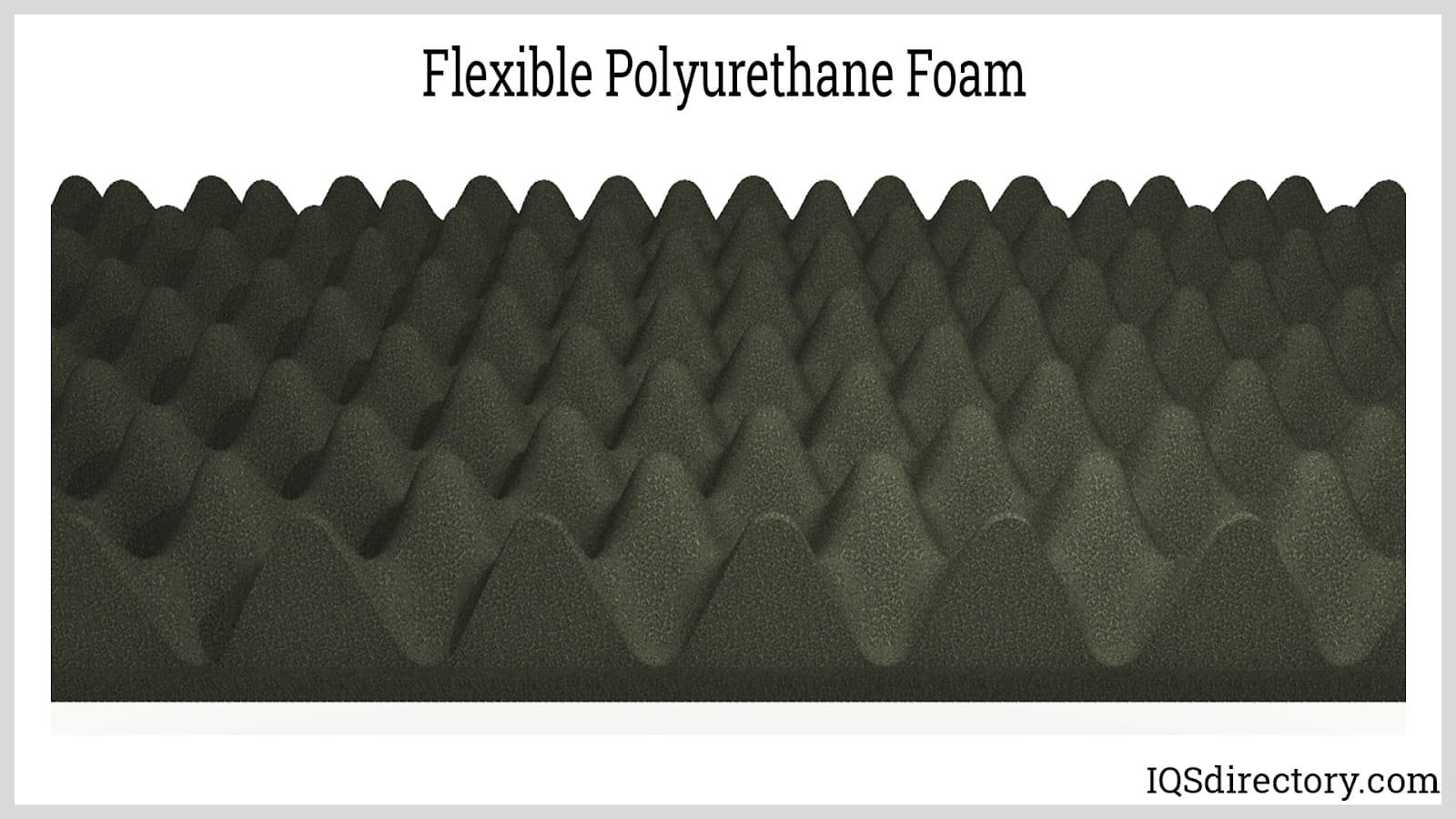 Flexible polyurethane foams can be made from either polyether or polyester polyols and have lower bulk densities, higher sag factors, and permeable structures.
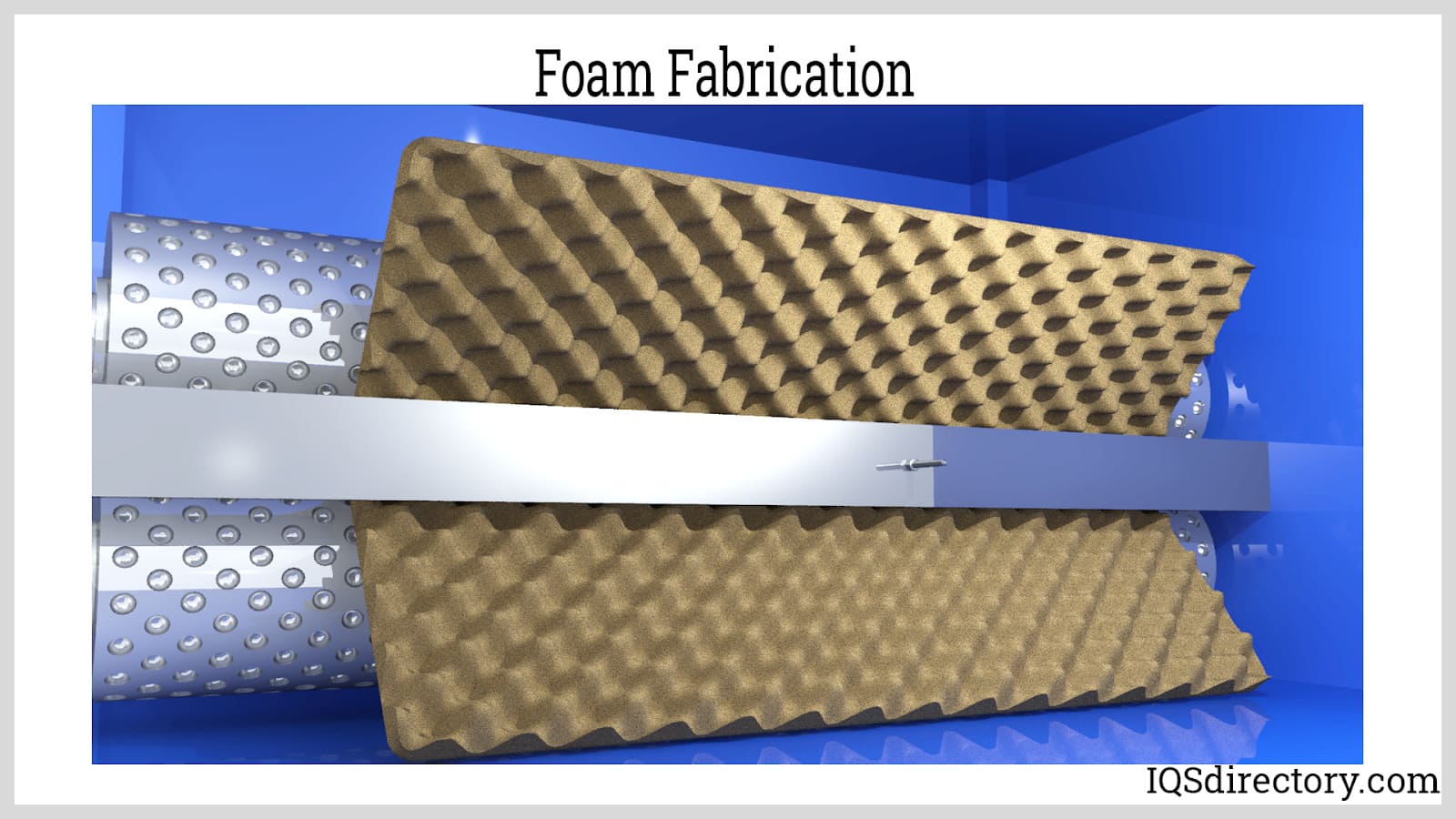 Polyurethane foams are used for packaging materials, furniture, thermal insulations, car seats, and mattresses.
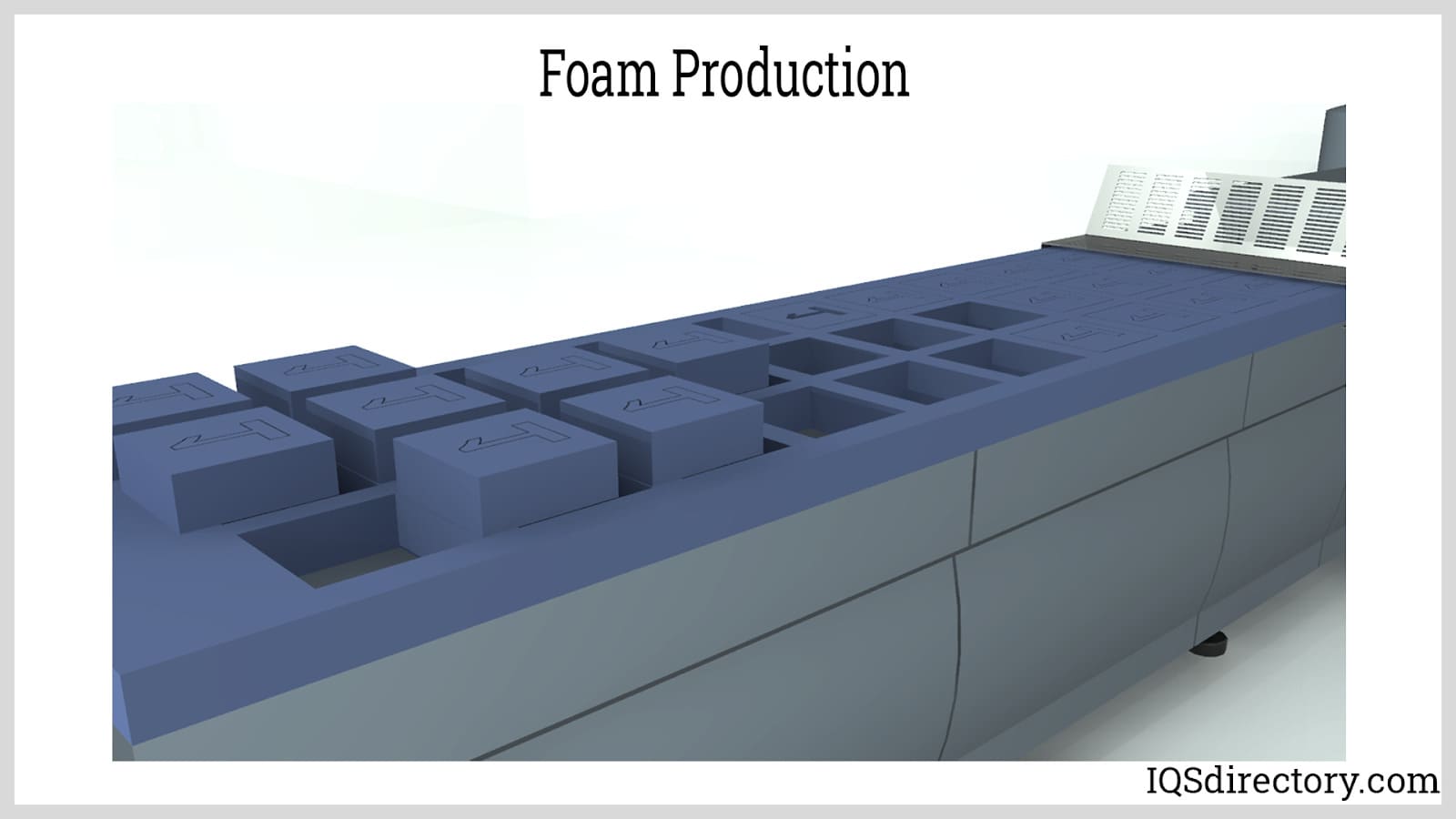 The production process can be divided into the polymer system preparation and the foam production process.
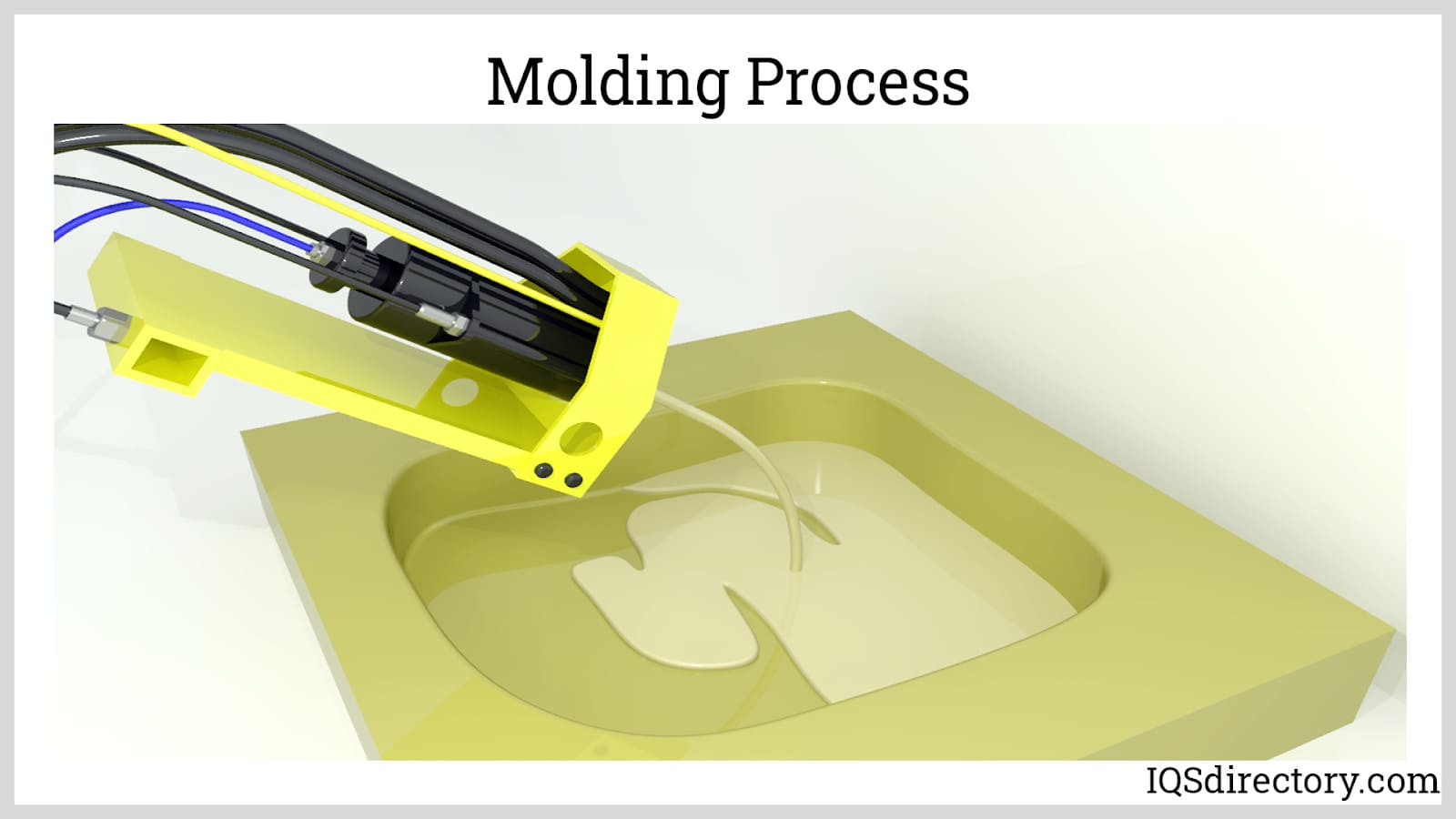 Molding foam process involves pouring or injecting the components through a mixing head and into a preheated mold, where the components react inside the mold causing the foam to rise.
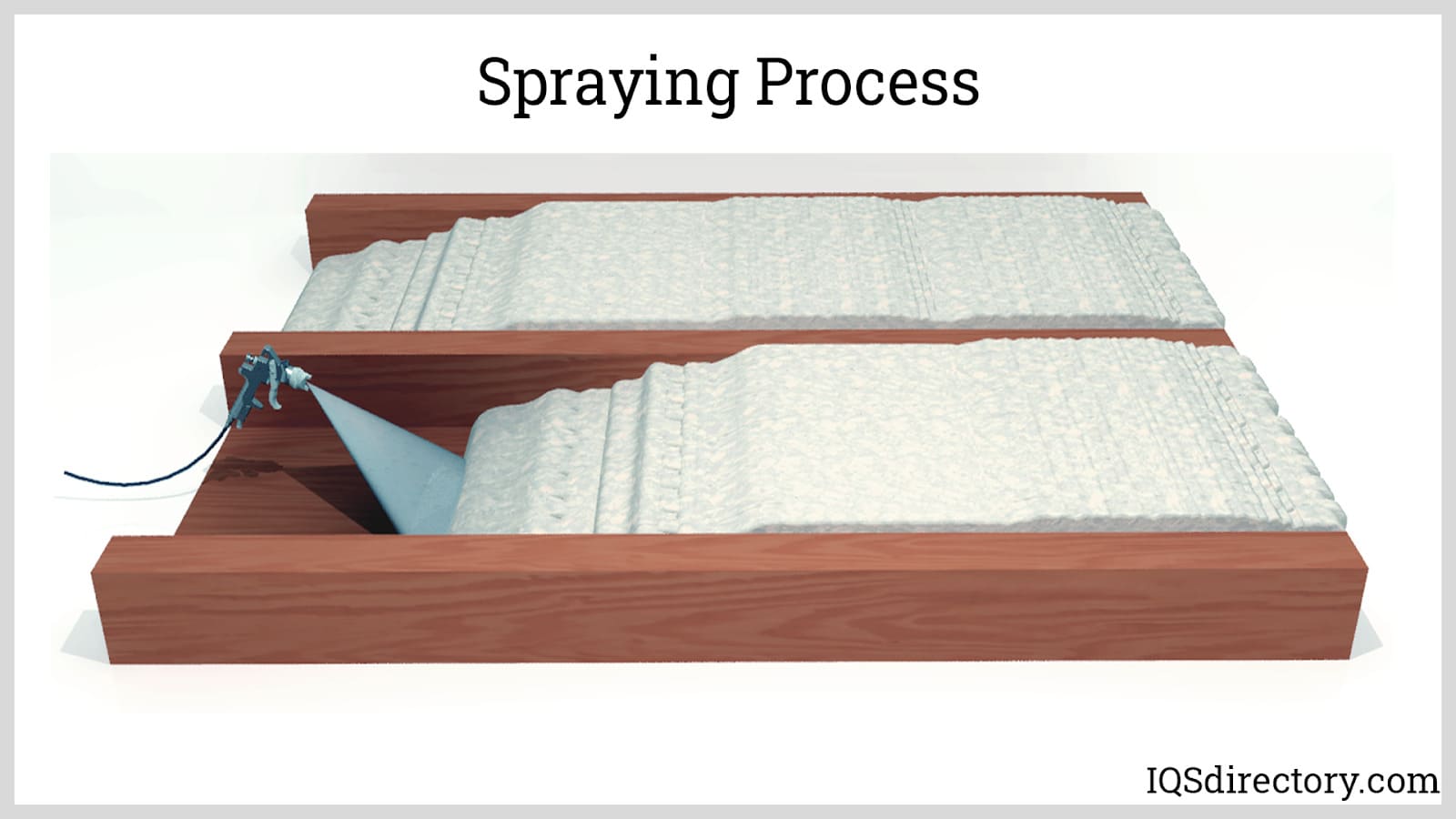 Spraying polyurethane projects and impinges the blended polymer system on a surface or inside the cavity.
Types of Fabricated Foam
When discussing fabricated foam, you'll often come across a huge number of descriptors and types. Some of these are differentiated by material, others by production method, still more by post-processing. Even this list fails to encompass every type of foam you may encounter, due to the sheer volume of options available.
- Closed-Cell Foam
- Denser foams in which each cell, or pocket of air, is separated from the rest physically. Closed-cell foam contains foam cells which are sealed, or "closed" and separate from one another. This foam is very dense and has high compressive strength. Because the cells are not broken in this foam and gas and liquid molecules do not freely travel from cell to cell, the cells expand when exposed to heated gas. The expansion fills the material, making closed cell foam an excellent heat insulator, like spray foam.
- Open-Cell Foam
- More flexible foams in which the various cells of the foam allow air to flow between them. Open-cell foams are lightweight, spongy, soft foams in which the cell walls or surfaces of the bubbles are broken and air fills all of the spaces in the material. This makes the foam soft and weak; as a result, open-cell foams are commonly used for foam padding products and foam cushions. In addition, open cell foams are effective as sound barriers, having about twice the sound resistance as closed cell foam.
- Polyethylene Foam
- The most common form of foam, polyethylene foam, is used for shock absorption, insulation, vibration dampening, and many other applications. Polyethylene foam is a closed-cell, expanded, extruded, flexible plastic foam with predictable shock absorbing qualities. Used mainly as a protective packaging material, polyethylene foam is used to wrap products such as computer components, frozen foods, furniture, signs, sporting goods and clothing. Ethafoam is polyethylene foam that offers excellent shock absorption qualities and is often used for blocking, cushioning and bracing protection in material handling and shipping. Polyether foam is low-cost polyurethane foam that provides good cushioning and has acoustic and packaging properties.
- Cross-linked Polyethylene
- Also known as XLPE foam, this extremely fine-celled foam is thick, smooth, and physically and chemically resilient.
- Flexible Polyurethane Foam
- A wide variety of polyether and polyester foams used in many commercial applications, notable for its resilience and its value as cushioning and foam packaging.
- Foam for Acoustics
- Usually refers to flexible polyurethane foam used to absorb sound or shape it, depending on whether it is attenuated or non-attenuated.
- Adhesive-Backed Foam
- Padding made of foam and designed to stay intact and maintain even pressure, often used in medicine and related fields.
- Bonded Foam
- A foam product produced by gluing particles or shredded pieces of foam together into a block, often used for carpet cushioning and similar applications.
- Cushion Foam
- Any foam used for athletic padding or furniture cushions.
- Flexible Foam
- Usually refers to polyurethane foams used in furniture and bedding.
- Molded Foam
- Any cellular foam which holds the shape of its mold after production.
- Foam Used in Packaging
- General term for any number of foams used in shipping and product packaging.
- Plastic Foam
- Lightweight foams with a high strength-to-weight ratio, characterized by tiny gas bubbles dispersed in a matrix.
- PVC Foam
- A rot-proof self-extinguishing closed-cell foam with low moisture absorption. Bonds well using common adhesive techniques.
- Rigid Foam
- Close-packed foam with excellent thermal properties and moisture resistance.
- Microcellular Foam
- Advanced foams produced with cells at micrometer sizes, offering increased compression resistance and other unique physical properties.
- Nanocellular Foam
- Cutting-edge foam products produced with cell sizes measured in nanometers rather than micrometers or millimeters.
Process and Materials of Foam Fabrication
Foam can be made from a variety of materials including plastic, low density elastomers and rubber. Typically formed from polymers, foam is made by mixing a number of chemicals and adding a gassing agent. The addition of the gassing agent causes the material to expand and form a foam strip. The foam is composed of numerous gas bubbles trapped in the material. After foam is formed, a variety of foam fabricating services can be performed, including several types of foam cutting processes. Die cutting is a common foam fabricating process, in which different shapes are cut out of foam strips, blocks or sheets. Water jet cutting manufacturers use a fine stream of water under ultra high pressure to perform the same function as die cutting, but which offers extremely close tolerances that die cutting cannot achieve. Hot wire cutting utilizes a heated wire in order to form smooth, straight cuts in the foam. There are also several types of foam forming processes. A popular foam forming process is thermal-forming, in which bulk foam materials are heated in order to produce machining shapes like foam sheets. Another forming process, foam felting, produces denser foam materials by means of compressing and curing thick, soft foam materials.
Generally speaking, foam is initially produced through one of the various complex chemical reactions discovered and researched over the century of foam production. From there, foams may be shaped or cast into any number of forms.
In many cases, a simple slab of foam is produced from the initial method. This slab is then cut into various forms via one of several major cutting methods:
- Water Jet Cutting
- Highly pressurized jets of water cut through the soft materials. Efficient and accurate, but limited in shapes.
- Die Cut Foam
- A shaped cutting instrument, usually as part of a press or rotary, cuts out shapes from the foam. Die cut foam is relatively inexpensive and simple.
- Hot Wire Foam Cutting
- A piece of foam is passed through a heated wire to achieve accurate, clean cuts. Wire cutter foam can be very detailed, but loses efficiency at bigger scales.
- Laser Foam Cutting
- A high-intensity laser cuts foam into shapes, usually determined by advanced programming. Can be highly complex.
- Other Foam Cutting Options
- Of course, these are only the bare basics of foam fabrication processes and techniques. Dozens of custom cutting and post-processing methods for foam exist, creating nearly as much variation in how a manufactured foam is shaped as there are in the basic materials of the foam.
- More advanced foam products may also involve various unique approaches to combining or layering foam via adhesives, heat treatments, lamination, and other joining techniques.
Machinery Used for Foam Fabricating
Due to the sheer variability of foam fabrication, it's difficult to detail the machinery likely to be used by any given team. Simple production of two foams such as flexible polyurethane foam or cross-linked polyethylene foam is likely to require significantly different equipment, and either one of those foams may then be shaped, treated, or combined through use of various secondary pieces of equipment.
This makes it particularly important for anyone seeking custom foam fabrication to carefully research their options and discuss their specific needs with each fabricator, as the market is strongly differentiated in capabilities and specialties.
Things to Consider When Choosing Foam Fabrication
There are quite a few factors to consider when finding the right manufacturer for your needs. Because foam fabrication encompasses such a wide range of end products and applications, you're best served looking for a fabrication team that matches your specific needs rather than one that's simply 'good' in a generic sense. In particular, you'll want to look for these factors.
- Equipped the Right Foam Type
- First and foremost, you'll want to make sure a given manufacturer is equipped to produce foam of the type necessary for your project. While many manufacturers maintain the tools necessary for an extremely wide selection of products, others may specialize in a fairly narrow band of foam production methods.
- Familiar With Your Usage
- Beyond simply being equipped for your needs, it's best to work with a manufacturer with a history of working with similar products or requirements. The more specific the familiarity the better, especially if you're dealing with narrow standards or issues of compliance. A manufacturer that knows your usage case will be able to produce better products with less waste, at less cost to you.
- Transparency With the Consumer
- Because of the many options involved in foam fabrication, it's a good idea to make sure you're working with a manufacturer that values transparency in its processes, charges, and logistics. You don't want surprises cropping up and delaying your project, ruining your budget, etc.
- Versatility in Foam Fabrication
- While it may be tempting to work with an extremely specialized fabrication service, it's often worth it to choose a foam fabricating team you can work with on a number of projects and processes over time. It's far easier to establish and maintain an effective, efficient working relationship with a single foam fabricator than with several different producers of foams.
New Foam Fabrication for Structural Support
For many centuries, the same materials have remained as the base structural support for any structure. These materials include concrete, wood, and steel. However, new research has created the potential for new structural support systems manufactured from fiber-reinforced polymer composites (FRP).
A FRP structure uses a combination of high-performance polymer resins, carbon and glass reinforcement fibers, and a foam core to create a highly stable, yet still flexible structural support system that is inexpensive and highly useful. The structures have been used successfully in the marine, renewable energy, and aerospace markets. FRP has been used in these markets for 40 years with favorable results.
Now, the FRP structures are available for use in architectural and civil structures. There are many benefits to using FRP, including the ability to form unique shapes, the freedom to use structural elements to create design freedom, and a simpler way to create curved forms. FRP is also resistant to structural damage, corrosion, fire, and environmental damage. The cost of FRP is also less than some materials, like steel, and the strength of the material is just as high.
Because of these benefits, the structure requires less maintenance, which cuts down on maintenance time and expenses. Buildings that use the foam structural cores will find that the chances of the structural support catching on fire is much less, and the structure is impervious to flooding. FRP is not invincible, as it can still be damaged by earthquakes and other shifts in the ground. The benefits of the material far outweigh any downsides, however.
Handling Foam Waste
Foam fabricating services produce a large amount of scrap. The first major source of scrap is produced during foam production as well as foam die cutting processes. Foam scrap is produced as a result of the startup and shutdown of the production line when manufacturing runs are changed over and when foam blocks are cut and shaped into the desired end product. The second major source of foam scrap is foam products that have reached the end of their useful life. Scrap foam is often shredded and rebonded and then used for such products as carpet padding and filler for pillows and furniture. Foam scrap can also be burnt in order to reduce waste bulk; however this was more popular in past decades. Although the burning of foam is considered to be non-toxic by U.S. government agencies, as a result of growing environmental concerns and more stringent carbon dioxide emission regulations, many foam manufacturers have turned to recycling as a waste handling method. Recycling offers manufacturers the ability to recoup return on investment, which would be lost by burning the scrap. Although the use of recyclable foam materials is growing, the process of collecting the foam, separating out the contaminants and then shipping the foam economically can be time consuming and costly to those foam manufacturers wanting to recycle.
Alternatives to Foam
Due to the many different applications of foam across different industries, there is accordingly a wide variation in alternative materials and solutions. For insulation, you might use fiberglass insulation or cellulose boards. For bedding, you might use down or textiles. For shipping purposes, you might alternatively use bubble wrap or cardboard padding.
In many of these fields, foam stands out for its convenience and cost efficiency—but to identify your best option for a given application, you'll need to look closely at your given usage rather than choosing generally between 'foam' and 'not foam'.
Foam Fabricating Terms
- Additive
- A material utilized to alter the properties, processing or final use of a base polymer. The quantity of additive is usually articulated in terms of parts per hundred of the total resin in the polymer formulation.
- Air Flow
- The quantity of air that can flow through a two foot by two foot by one foot foam sample with a five inch water pressure differential. Air flow is expressed in cubic feet per minute.
- Air Traps
- Voids in molded foam parts that are the result of the entrapment of air pockets occurring during mold fill out. Air traps are characterized by shiny, smooth surfaces.
- Amine
- Category of compounds that catalyze in polyurethane foam reactions.
- Anti-Static Flexible Polyurethane Foam
- Foam containing electrically conductive material in order to prohibit static electricity buildup or to promote static discharge. Anti-static flexible polyurethane foam is used mainly for packaging electronic components.
- Auxiliary Blowing Agent (ABA)
- An additive that supplements the main blowing agent water in the production of foam and could create softer or lighter foam.
- Ball Rebound
- A test technique that measures the surface resilience of flexible polyurethane foam by dropping a steel ball of a specified mass from a certain height onto the foam sample. The ball rebound value is the ball rebound height as a percentage of the height of the fall.
- Basal Cells
- Large, irregular cells found beneath the surface of the skin of a molded foam part.
- Blowing
- The method of foaming flexible polyurethane in production. Blowing happens when toluene diisocyanate and water react to create CO 2.
- Bonding
- The blending of two or more components into a composite. Foam is typically attached to other foam grades or polyester fiber.
- Buffed
- The contouring or shaping of flexible polyurethane foam pieces by the removal of foam with abrasives.
- Bun
- A section of foam cut from a constantly produced slab stock kind of foam.
- Cells
- The hollow space left behind in the structure of polyurethane foam encased by polymer membranes or the polymer skeleton after blowing is finished.
- CFC-Free Foams
- Flexible polyurethane foams produced without using chlorofluorocarbons as auxiliary blowing agents.
- Cold Molding
- A process in which high-resiliency foam is produced. Pouring is carried out without heat and foam is cured at or near room temperature.
- Combustion Modifying Additive
- An additive that will decrease the ability of flexible polyurethane foam to ignite or make it burn more slowly.
- Compression Force Deflection (CFD)
- Also known as compression load deflection (CLD), it is a calculation of the load-bearing capability of a foam.
- Compression Molding Foam
- Compression molding is a forming/fabricating process used to form thermoplastics and rubbers into different shapes. Compression molding of foam is a go-to for manufacturers looking to create regular and contoured 3D parts and products that may or may not feature intricacies.
- Convoluting
- A process involving special cutting equipment to create a foam sheet with dimples.
- Clickability
- The capability of a flexible polyurethane foam to return to its natural state from the pinched results of die cutting.
- Closed Pour
- A process in which the mold lid is closed and locked in molded foam production and the foaming mixture is injected through ports in the lid of the mold.
- Contour Cutting
- The cutting of foam with a specialized saw into patterns from a foam block, creating a custom foam part.
- Core
- The inner area of foam, away from the outer skin.
- Crushing
- A procedure, typically mechanical- or vacuum-assisted, in which the closed cells of a high resilience slab stock or molded foam are opened.
- Dead Foam
- Foam with low resiliency that does not quickly regain its original shape after deformation.
- Deformation
- A method in which the shape of the foam is altered from its original state through compression or heat.
- Die Cutting
- The cutting out of parts from foam using a process that is similar to stamping out the part. It is good for long duration runs of cut parts that necessitate uniformity in size.
- Drilling
- The boring of holes into a foam to enhance air flow, provide for greater ease of button application in tufted design and to make the foam feel softer.
- Elastomers
- Polymers that, when undergoing deformation, resist and recover in a way similar to that of natural rubber.
- Flame Lamination
- Also called "flame bonding" it is the process of bonding flexible foam to a fabric, film or other material by melting the surface of the foam with a flame source and quickly pressing it to the material before the foam resolidifies.
- High Resilience (HR) Foam
- A kind of polyurethane foam created with a combination of polymer or graft polyols. This foam is not as uniform in its cell structure in comparison to conventional products, which enhances the comfort, support, resilience and bounce of the foam.
- Hot Wire Cutting
- The cutting of foam using high-temperature wires instead of a saw blade. Hot wire cutting is generally used for cutting intricate parts.
- Isocyanate
- A quick way to refer to the group of diisocyanates that are one of the two primary ingredients in the chemical process from which polyurethane foam is produced.
- Laminating
- A method of bonding layers of foam together in a simple composite. Laminating could be attained with adhesives or with heat processes, such as flame lamination.
- Peeling
- Method of cutting thin sheets from a foam cylinder.
- Skin
- The higher-density exterior surface of foam, typically resulting from the foam surface cooling at a higher rate than the core.
- Slab Stock
- Flexible polyurethane foam produced by the constant pouring of mixed liquids onto a conveyor, which creates a continuous loaf of foam.
- Slitting
- Method a foam cutter uses for cutting sheets from a rectangular foam block.
- Voids
- Significant hollow spaces that inadvertently form in foam structures. Voids are typically the result of inaccurate mold filling or inadequate moldability.
- Thermoforming Foam
- Refers to the thermoforming of thermoplastic foam. It is a sponge-like material, available in both solid and liquid form, made from the frothing and subsequent cooling of a molten polymer.