Coating Services
Coating of materials is done to protect, preserve, or aesthetically improve their surfaces. The most familiar coatings are paints used on buildings and cars, and although both objects are painted, the type of paint and methods of application are very different.
Industrial coating applications provide corrosion resistance or a surface that performs a specified function, such as non-stick cookware or non-skid walkways. The process may be as simple as placing the protectant on the outside of an object or may require complex thermo-, chemical-, or timed- reactions to set the coating.
Coating technology has developed alongside industry, perhaps even paving the way for certain technological advances. It covers a wide range of products and utilizes state-of-the-art equipment to offer coating solutions to nearly every corner of commerce. Some industrial coating options include metal plating, dip coating, powder coating, and spray coating.
The surface of the object to be coated is referred to as the substrate.
Quick links to Coating Services Information
The History of Coating
Protective coatings have been with us since the first person smeared a layer of mud over a wall to improve its integrity, and shared the innovation. This might have been done to create a smoother interior or to help block wind, sun, or rain from entering a shelter.
Paint has been used for millennia to decorate, tell stories, and protect surfaces, but industrial paints were not manufactured until the mid 1800s. The Industrial Revolution brought the advent of assembly lines, which spawned the need for protective coatings of industrial equipment and products.
In 1844, an accidental discovery showed that deposition of nickel-phosphorus ions occurred in a chemical reduction bath, such as sodium hypophosphite. In 1911, Roux patented the "spontaneous and complete" electroless nickel coating process.
The electroless nickel process was further exploited in 1946, when Brenner and Riddell expanded on previous information and developed a method of plating the inner walls of tubes with nickel-tungsten alloy. Their 1950 patent, giving due credit to their predecessors, was allowed on the basis of their process being controlled, only coating specified catalytic surfaces. Their discoveries eventually led to diamond and PTFE deposition, changing the world forever.
World War II was a turning point for industry. The mass construction of airplanes, aircraft carriers, and ground support facilities created a boom in technology. The need for tools, equipment, and structures that were durable, functional, and safe became paramount. Industrial coatings that could withstand the ravages of weather, war, and time were developed on a grand scale.
By 1918, people were learning the health hazards of the materials used in industrial coatings, lead being the primary offender. In 1950, conscientious manufacturers voluntarily removed lead from their processes and products. It was not until 1978 that the Consumer Product Safety Commission banned the use of lead completely.
In the 1980s, high velocity oxy fueled (hvof) spray techniques were developed, pushing thermal plating and surfacing to the forefront of coating technology.
Since 1996, cold spray processes have been in the works, with fair success, to develop coatings of alloys including copper, aluminum, stainless steel, titanium, Inconel, and other metal composites for use in clean rooms and environments where possibility for contamination must be kept at a minimum.
Coating Service Images, Diagrams and Visual Concepts
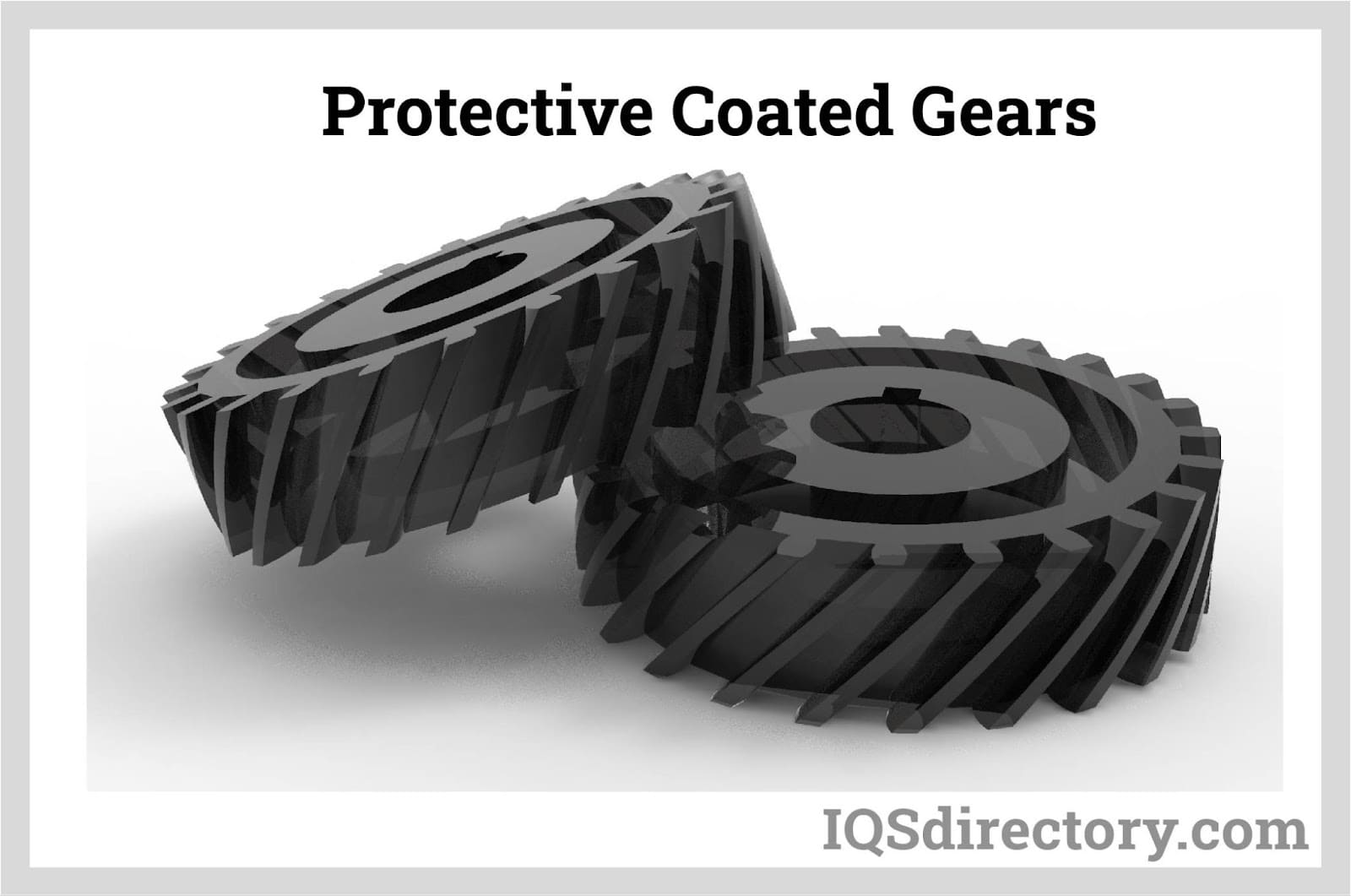 Industrial coating, a layer of a substance added to the surface to provide protection and to enhance the surface appearance.
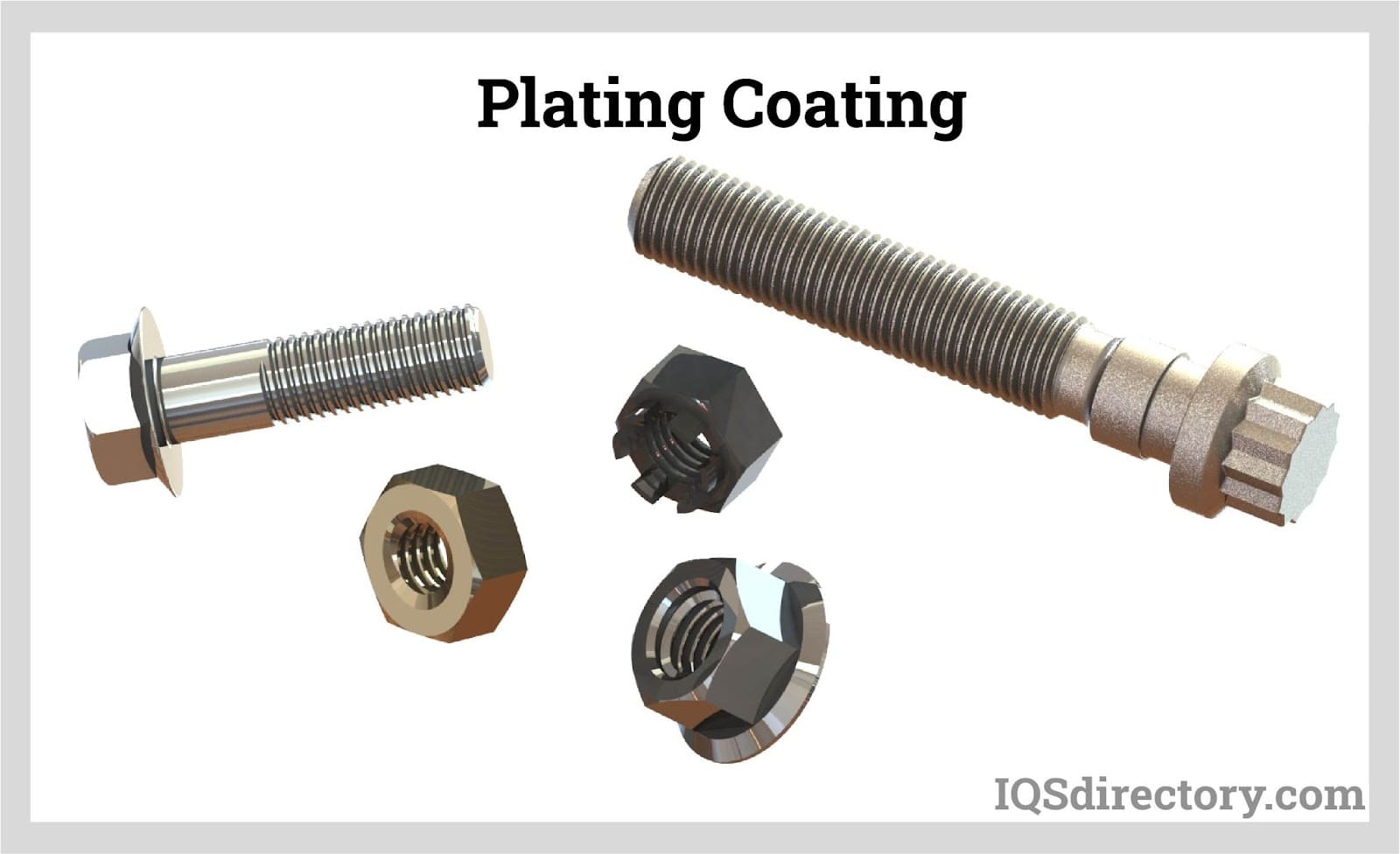 Plating uses metal as a substrate and applies a layer of metal to a part.
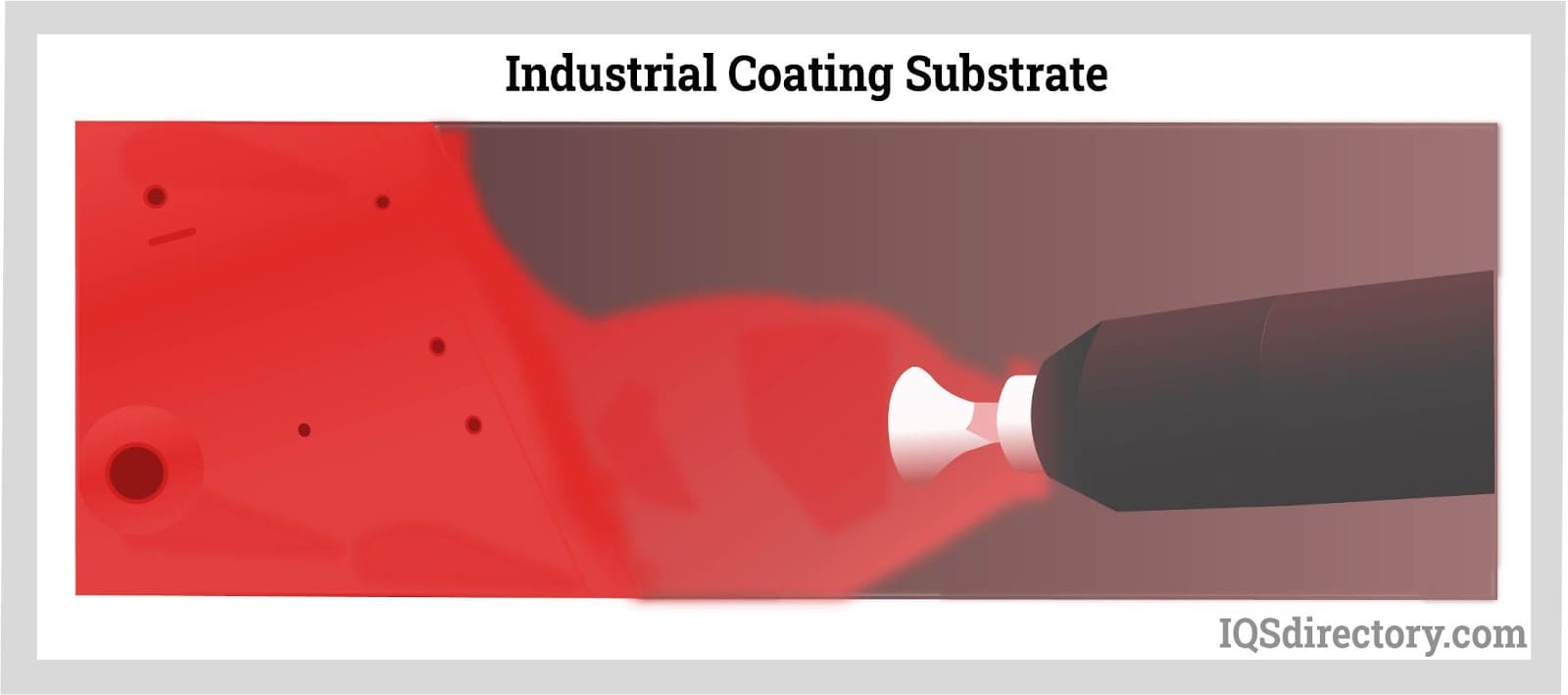 Industrial coating formulation depends on the substrate of the part.
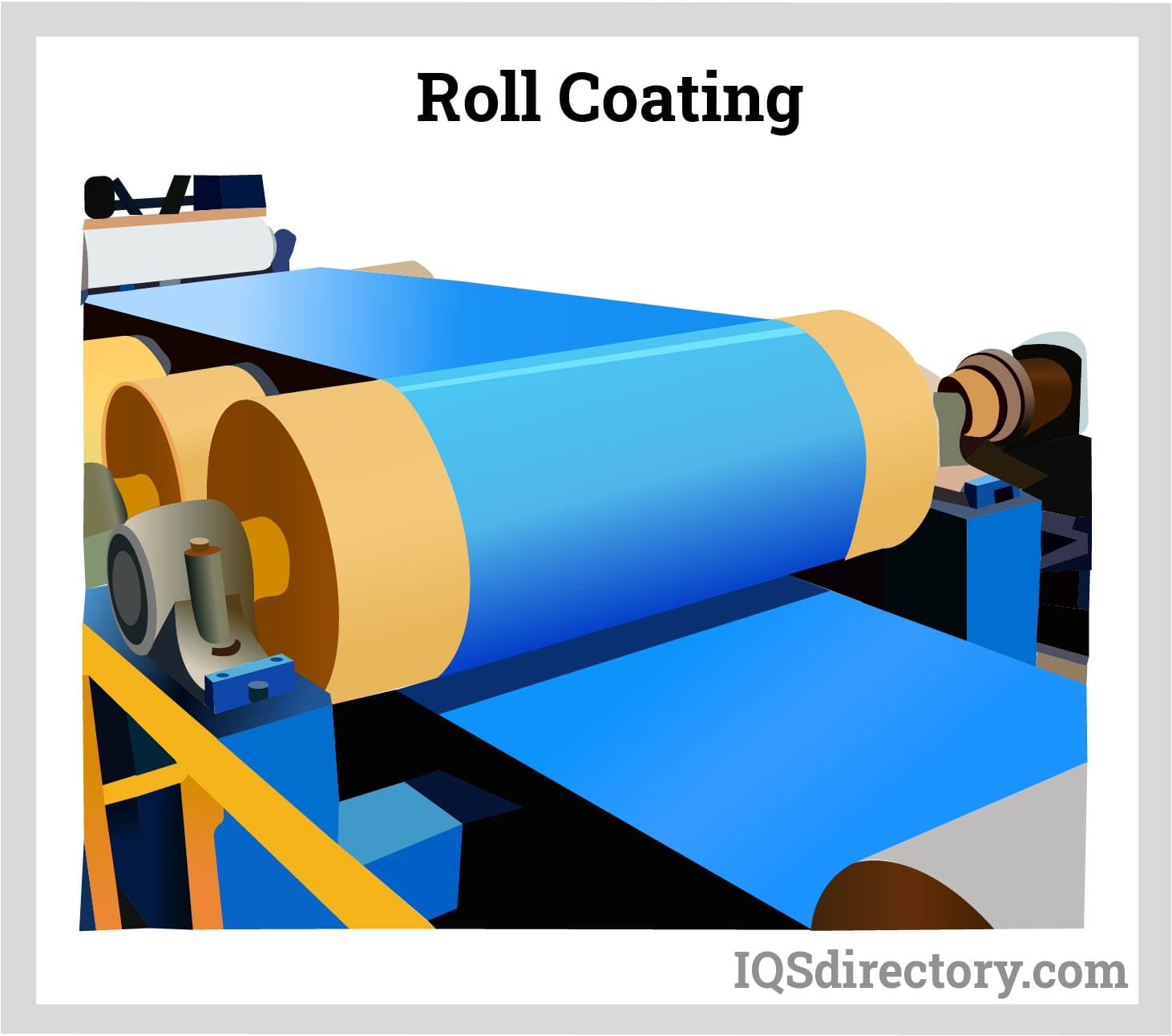 Roll coating applying a base, intermediate, and topcoat to flat substrate using rollers.
 E Coat is a cross between plating and painting which involves submerging a part in a water-based solution that contains a paint emulsion.
Coating Services Types
Substrates should be prepared for processing before entering the coating process. Surface preparation may include grinding, sanding, milling, or washing. Chemical or heat treatments may be necessary. The substrate should be free of grease, dust, and debris prior to coating.
- Air-Dried Coatings
- Including forced-air dried coatings, are those which are not heated above 194ºF (90ºC) for coating or drying.
- Air Spray Techniques
- Utilize compressed air to spray liquid coating through a small opening at high pressure. The materials are not mixed with air before being sprayed through the nozzle.
- Baked Coating
- Heated to a temperature of 194ºF (90ºC) in order to cure or dry them.
- Ceramic Coatings
- Inorganic, non-metallic coatings that may be semi-crystalline or amorphous. They are hydrophobic and oleophobic, making them highly resistant to water, solvents, and oil. These "advanced ceramics" may be applied by powder coating, plasma spray, chemical vapor deposition, or spray coating. The ceramic product may contain silicon, tungsten carbide, chrome oxide, titanium dioxide, alumina, zirconium, or magnesium. Products with applications of ceramic coatings include automobiles, appliances, electronics, medical equipment, and marine equipment.
- Chemical Vapor Deposition (CVD)
- A thin-film coating process that produces a film by a chemical reaction. CVD processes often use unstable elements to coat cemented carbide inserts.
- Chromate Conversion Coatings
- Have good corrosion resistance and provide a good base for paint or rubber bonding. However, chromate conversion coatings have little to no abrasion resistance.
- Dielectric Coating
- Or conformal coating, refers to the complete coverage of an object, with regard to its shape. It includes epoxies, urethane, silicone, or acrylics that are sprayed onto the substrate and allowed to harden through the catalytic chemical reaction between ingredients of the coating.
- Dry Film Coating
- A lubrication process that helps to prevent scuffing and galling, reduces friction, provides extra protection by preventing damage from oil film failure and aids in the distribution of heat, resulting in less metal fatigue, which reduces the chance of part failure. Dry film coating does not cause any dimensional changes to the product to which it is applied, because it is impregnated directly into the metal surface.
- Electrocoating
- Also known as “electrodeposition,” “electrophoretic deposition” or “electropainting,” is a process that resembles electroplating, in that it uses an electric current to apply thin-film primers and one-coat finishes onto the metallic substrates. However, this organic finishing process does not deposit metal ions onto the substrates, but rather, waterborne paint.
- Electroplating
- Also known as electrodeposition, electrophoretic deposition, or electropainting, can be used to build up thickness of parts, to form objects, or to provide a corrosion, abrasion, and wear resistant surface. Coins are some of the most familiar items to be manufactured this way. Electroplating is accomplished by placing a pre-cleaned object, which acts as a cathode, into the plating vat filled with electrolytic solution. The solution, which acts as an anode, is composed of dissolved metal salts and ions. The temperature of the cathode (object to be plated) is allowed to equalize with the anode (solution in the vat). A DC electric current is applied to the solution, causing the plating solution to oxidize the metal. The ionized metal accumulates on the surface of the substrate. The longer the object remains in the electrified solution, the thicker the coating will be. Electroplating is also used for chrome plating, although chemicals used in the chroming process are highly toxic and alternative methods of achieving a similar finish have been heavily pursued.
- Electroless Nickel Plating
- An auto-catalytic process of metal deposition that does not require the use of electricity. The substrate is thoroughly cleaned before being submerged in a chemical bath that reduces nickel alloy ions suspended in the solution. The nickel adheres to the substrate through covalent bonding caused by the chemical reduction. Polymers may be added to the solution to add flexibility to the finish. Gold may be added to the alloy for use in manufacturing electronic components. EN plating provides an even coat on the substrate. It covers recesses, holes, and back sides of the object. The process is inexpensive and requires no electricity, but the plated product is inferior to an electrolytically plated one, and the cost of waste management from the chemical process may be exorbitant. Electroless nickel plating is ideal for small parts, provides an even, uniform layer, leaves no anode shadow, does not pose disposal problems and can be applied to many metals, including all steels, irons, copper, brass, bronze, lead free solders and nickel alloys.
- Electrostatic Spraying
- A process in which the paint is given a negative or positive charge before it is sprayed and the workpiece is oppositely charged, resulting in the attraction of the paint particles, uniform dispersion and reduction of waste. Electrostatic spraying, which is well-suited to automation because it increases production rate, reduces corrosion, protects against scratching, stops contact with air, water, chemicals, etc., alters appearance of workpieces and gives good finishes.
- Epoxy Coating
- The process of applying a thin layer of an epoxy, which includes a variety of typically thermosetting polymer resins, over another material such as plastic or metal.
- Hot Melt Coating
- A method used to apply plastic materials to a substrate. Hot melt coating is frequently used on papers and books and does not necessitate the use of solvents.
- Ion-Plasma Coatings
- Very dense and are highly wear- and corrosion-resistant.
- Coating Through Laminating
- Laminating is a process by which a plastic transparent film is applied to one or both sides of a product. Most frequently used for paper products, the laminate enhances both decorative and protective qualities.
- Liquid Paint Coating
- Applied by spraying—atomizing the paint into a fine mist—and depositing the mist on the surface of the part, where the tiny droplets flow together to form a film. Liquid paint coatings are available in a wide variety of colors and contain binders, solvents and pigment.
- Manganese Phosphating
- A coating process that is used in the pretreatment of iron and steel surfaces prior to painting, especially military equipment that requires oil or greased paints. Manganese phosphate coatings are highly corrosion and wear resistant.
- Passivation
- A process that removes excess iron molecules from the surface of stainless steel products, typically with the use of nitric acid solutions. The danger of rust then becomes negligible.
- Phosphate Coatings
- Chemically convert the surface of a base metal into a non-metallic, crystalline coating.
- Plasma Spray Coatings
- Provide high quality coatings for high temperature or heavy duty purposes. Similar to twin arc spray welding, the plasma arcs form between the anode and the cathode, but the arcs are surrounded by a carrier fluid. The carrier fluid may be helium, hydrogen, nitrogen, or oxygen. The gas is superheated to over 26,500 degrees F., creating a plasma flame, which is propelled by a plasma jet that melts the metal as it accelerates, and is then splat deposited on the substrate, where it flattens and adheres. Multiple passes and length of exposure time determines the thickness and texture of the deposition. Plasma coating is an efficient and economic process used in manufacturing mining and farm equipment, pumps, and engine parts. Because the high temperature and velocity involved in the manufacturing process creates an extremely durable, high temperature tolerant finish, plasma spray coatings are ideal for refractory materials or aircraft and aerospace grade components.
- Plastic Coating
- A layer of plastic material that is dried on top of a substrate. Plastic coating is ideal for odd shapes and when materials need to be coated entirely.
- Polytetrafluoroethylene
- PTFE coating is a thermoplastic polymer that was accidentally discovered in experiments with electroless plating. It is a high molecular weight, hydrophobic fluorocarbon, consisting exclusively of carbon and fluorine, with a very high coefficient of friction. The slick, water repellent surface makes it an excellent choice for catheters, non-stick cookware, and pipes for conducting corrosive liquids.
- Powder Coating
- Quickly becoming one of the most popular ways to coat surfaces. The process starts with finely ground, electrically charged pigments mixed into powdered resin. The object to be coated is electrically grounded. The charged particles adhere to the grounded surface as they are sprayed to the correct thickness. The object is heated in a curing oven until the resonated powder fuses into a uniformly smooth surface finish of durable high quality. No premixing is required and no adjustments for viscosity must be made, making the automated process fast, and generally, flawless. A broad spectrum of formulas provides the desired color and texture for finished surfaces, including aluminum, steel, glass, ceramics, plastic, and wood products. Powder coating services offer the advantage of cost effectiveness from several standpoints. The pigments contain no VOCs and require no chemical solvents. Up to 99% of the overspray can be reclaimed, reducing waste, waste management, air purification, and environmental concerns. The coating may be applied in thicknesses of one to eight mils, that do not run or sag, in a single pass, keeping production rates high and rejection rates low.
- PVD Coating
- Physical vapor deposition, is a process of vaporizing material in a vacuum chamber, then blasting the atoms onto the substrate where they condense into a film.
- PVC Coating
- Not to be confused with PVD coating, is a dip coating process in which items are dipped into liquid polyvinyl chloride (PVC) and allowed to air dry or heat cure. The PVC coating may be permanent or removable. It is often used for industrial process masks, covering surfaces that are to be protected during processing, then peeled off, for alternate treatment in later steps. PVC coatings provide sound dampening and cushioning effects for transfer trays and conveyor guides. They are used to decorate and protect metal shelving and components, and to make or replace hand grips on tools.
- Steel Coating
- Refers to the substrate, which is the steel workpiece, being coated, rather than the coating material itself.
- Thermal Spray Coatings
- Also known as spray welding, includes oxy-acetylene flame spray, twin wire electric arc spray, high velocity oxy-fuel (hvof) spray, plasma spray, and metalizing. These coatings are typically thicker than plating and can be used on substrates of almost any metal and some plastics. Thermal spray coatings may be made from ceramics, tungsten carbide, stainless steel, nickel/ chromium carbides, or pure metals, including gold, silver, copper, or nickel. Oxy-acetylene flame spraying is the original method of thermal coating. It crosses the heat of the welding torch with a high velocity air stream that blasts a stream of molten wire or powder feed onto the substrate surface. Twin wire electric arc spraying works on the same principle as oxy-acetylene flame spraying except that the heat comes from an electric arc, as opposed to a gas fed flame. The wire feed provides the metal coating product as well as the arcing medium, typically aluminum or zinc. A high velocity air stream blows the molten metal onto the substrate as it melts.
- Thin Film Coating
- Which include physical vapor deposition (PVD) and chemical vapor deposition (CVD), are used predominantly in the manufacturing of electrical devices.
- Vacuum Coating
- A process in which the coating material is applied in a vacuum chamber to the substrate. Usually the material is vaporized and then transferred through a chamber to the substrate.
- Zinc Phosphate Coating
- A paint pretreatment that is commonly used to develop good bonding qualities between the paint and the galvanized or galvannealed coatings on steel sheets and is applied while the steel is in a coil, to the cut sheet or to the fabricated article. Zinc phosphate coatings greatly aid paint adhesion, in that they dramatically decrease the tendency for paint disbondment during subsequent atmospheric exposure in a corrosive environment.
Coating Service Companies
Coating services suppliers are as diverse as the products they provide. Choosing the right coating services for your product will depend on the product in question and the type of finish desired.
A satisfactory custom finish includes getting the right color, texture, durability, and resistance factors for your design. If there are required standards that must be met regarding food safety, medical uses, electronic applications, or personnel safety, your coating services provider will know which finished products are appropriate and will direct you accordingly. They should be able to answer any questions you have about the process or the finished product.
The right service company is always concerned with the consistency, quality, and cost effectiveness of their product, offering you a product you can stand by at a price you can afford.
Coating Services Terms
- Adhesion
- The strength of the coating bonds to the substrate. Some techniques for measuring adhesion include the tape test, scratch adhesion test and stud-pull-off test.
- Adhesive Applicators
- Tools used to apply an adhesive or bonding agent, including squeeze bottles, pressure tanks, glue guns and coating machinery.
- Binder
- A non-volatile material, commonly a resin, in a coating that forms a film by binding the pigment and additive particles together.
- Biocide
- A chemical agent, sometimes added to waterborne coatings, which prevents microbial degradation by killing the organisms that cause it.
- Bituminous Coating
- A compound made from tar or asphalt that provides a protective finish for a surface.
- Coating Applicator
- A machine used to apply defect-free films to products. Factors that affect the quality of the coating include line speed, viscosity and percent solids.
- Cohesion
- The ability of a substance to adhere to itself. When delamination occurs within a material, it is referred to as cohesive failure.
- Delamination
- Also known as “cohesive failure,” it is the separation of a coating from its substrate. Delamination can also refer to the division among multiple coating layers.
- Hylar
- A material that is quite stable when exposed to harsh environments and is applied to such products as semiconductors, chemical processing, wire, cable, piping and tubing. Hylar is useful in the preparation of corrosion-resistant coatings for chemical process equipment and durable decorative finishes on building panels, due to its ability to be dissolved at high temperatures in certain polar solvents, such as esters and ketones.
- Insulbar
- A glass-fiber, reinforced polyamide nylon material that provides superior insulation, strength and durability, especially on windows.
- Kynar
- A material used in coating applications to provide high mechanical and dielectric strength, thermal stability and abrasion, chemical and solvent, UV and radiation and weathering resistance. Kynar coatings have been used as pipe liners in chemical processing plants, on equipment that is constantly exposed to high concentration of chlorine and chlorine dioxide, typically in paper and pulp processing plants, and in silicon microcircuit fabrication.
- Metal Finishing
- Removes the surface to produce a flat, even surface.
- Parylene
- An atypical polymer conformal coating that conforms to almost any shape.
- Substrate
- The material that is being coated.
- Scratch Adhesion Test
- An adhesion test for coatings that normally uses a diamond stylus to apply a force to the coating. The test is affected by factors that include the substrate material and its hardness, the geometry of the part and the thickness and hardness of the coating.
- Stud-Pull-Off Adhesion Test
- An adhesion test in which a stud containing a head with a specified surface area is epoxy-glued to the coating. A machine pulls on the stud with amplifying force until it is pulled off.
- Tape Adhesion Test
- An adhesion test in which a certified tape is adhered to a coating and removed. If any coating is observed on the tape, it is a sign of an adhesive problem.