Please fill out the following form to submit a Request for Quote to any of the following companies listed on
Get Your Company Listed on this Power Page
Introduction
An explanation of the benefits of silicone rubber gaskets and how they are made with a list of silicone gasket manufacturers.
You will learn:
What are Silicone Rubber Gaskets?
How Silicone Rubber Gaskets are Made
Uses for Silicone Rubber Gaskets
The Advantages of Silicone Rubber Gaskets
And much more ...
Chapter 1: What is Silicone Rubber Gaskets?
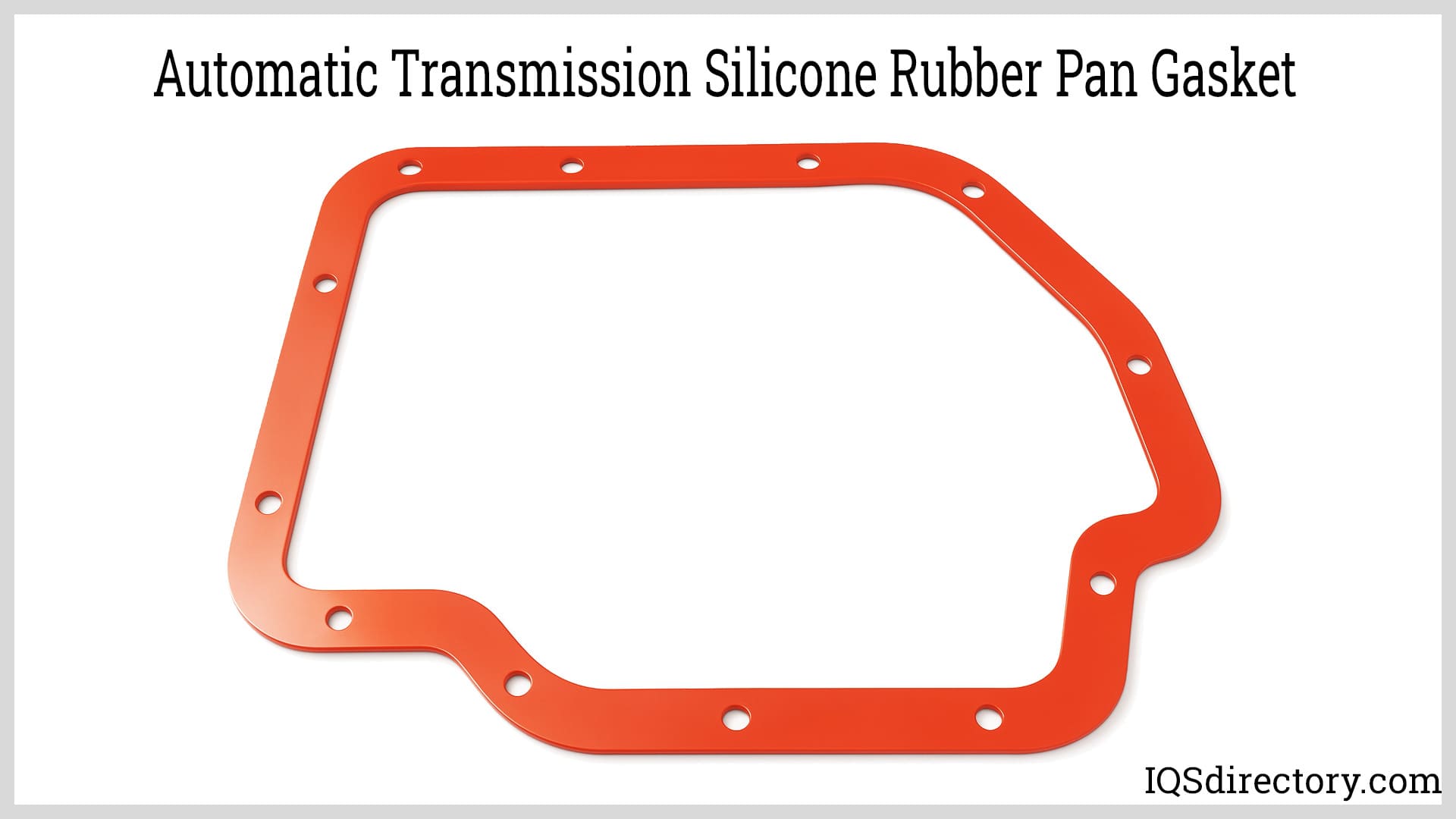
Silicone rubber gaskets are synthetic rubber elastomers widely used for their high-temperature resistance, excellent durability, weather resistance, and non-toxic properties. The silicone material used to manufacture these gaskets is a flexible, high-performance elastomer made from linear silicone polymers reinforced by carbon, hydrogen, or oxygen, combined with a crosslinker and catalyst. Because of this composition, silicone rubber gaskets can withstand repeated stretching, compression, and deformation while still returning to their original shape, making them a reliable sealing solution for demanding industrial and commercial applications.
These silicone gasket properties make the material a preferred choice for sealing, insulation, and vibration dampening in environments where consistent performance is essential. Common applications include automotive components, food processing equipment, medical devices, HVAC systems, electronics enclosures, and outdoor machinery. The variations in viscosity and structural features of silicone rubber gaskets are influenced by how the straight-chain silicone polymer is blended and processed at different temperatures. In addition, reinforcement from various elastomers creates different performance profiles for specific applications. Flexibility, tear strength, compression set resistance, and tolerance to temperature fluctuations are determined by the type of reinforcement used during the manufacturing process.
The chemical structure of silicone rubber gaskets differentiates them from other similar sealing materials such as neoprene, EPDM, and natural rubber. Silicone’s unique chemical structure is due to the strong bond energy between silicon and oxygen molecules, which helps deliver long-term stability, thermal resistance, and ozone resistance. Condensation or crosslinking reactions are used to meet processing and performance requirements, including mechanical properties such as elasticity, absorption, and tear strength. The addition of mineral fillers further enhances the performance of silicone rubber gaskets, improving durability, compression resistance, and sealing efficiency. Additives can also be used to create specific characteristics, allowing silicone rubber gaskets to meet exact material specifications, industry standards, and custom gasket fabrication requirements for a wide range of applications.
Chapter 2: How Silicone Rubber Gaskets are Made
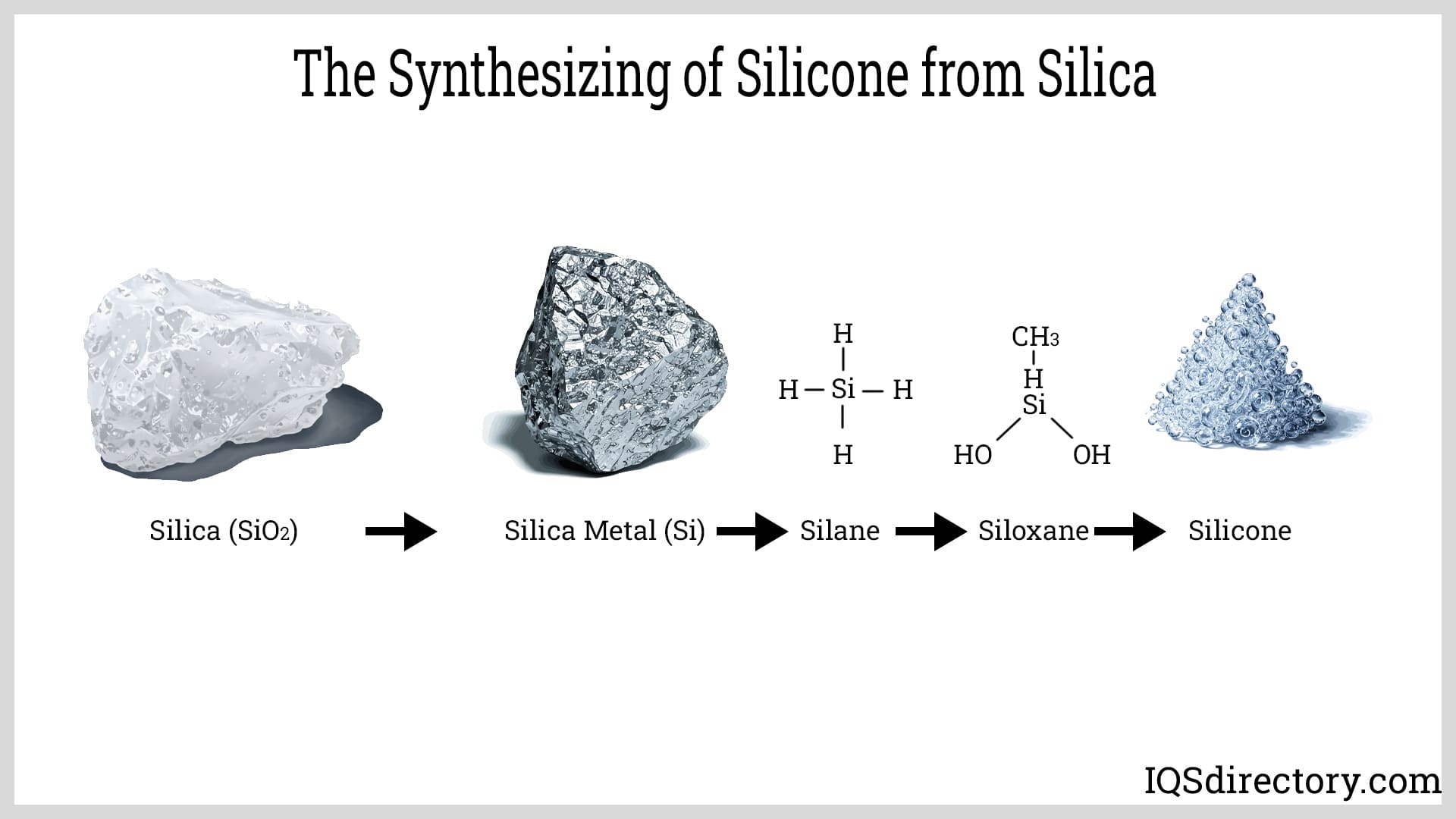
Silicone is a synthetic elastomer that displays viscosity and elasticity, a factor that is described as viscoelasticity. The chemical structure of silicone includes carbon, hydrogen, oxygen, and silicon, which comes from silica found in sand. The process for extracting silicon from silica is complex and time consuming, which is the reason for the high cost of silicone rubber gaskets. The backbone of silicone rubber is silicon-oxygen (Si-O) that gives silicone its high temperature resistance and flexibility.
The process for the manufacture of silicone rubber gaskets includes extracting high performance polymers from raw silicone materials, which are manipulated and configured to obtain the different formulations of silicone rubber. The bases for all silicone products are siloxanes, chains of silicon and oxygen atoms in an alkane compound, which are the building blocks for silicone rubber gaskets.
Silicone Extraction
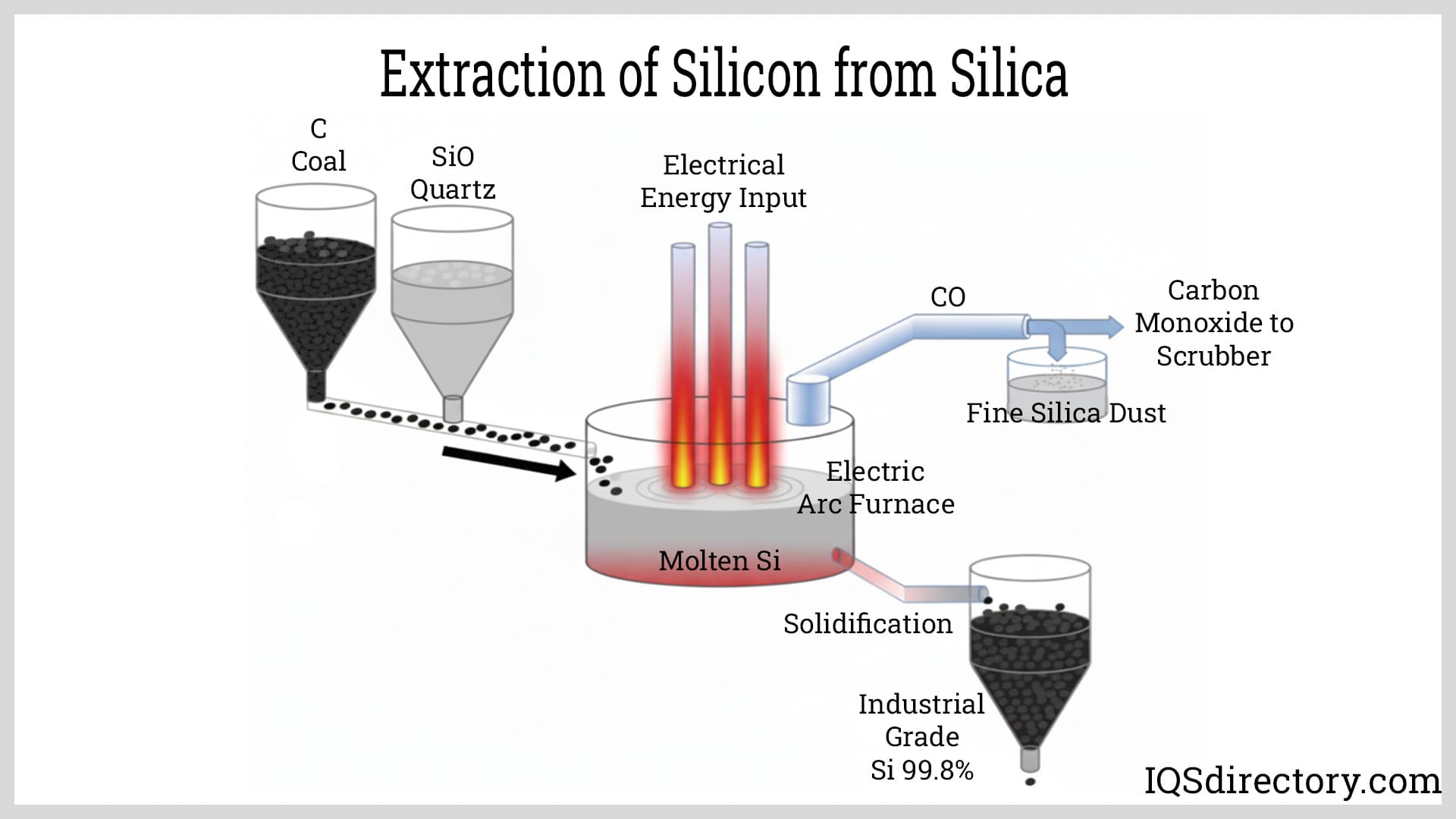
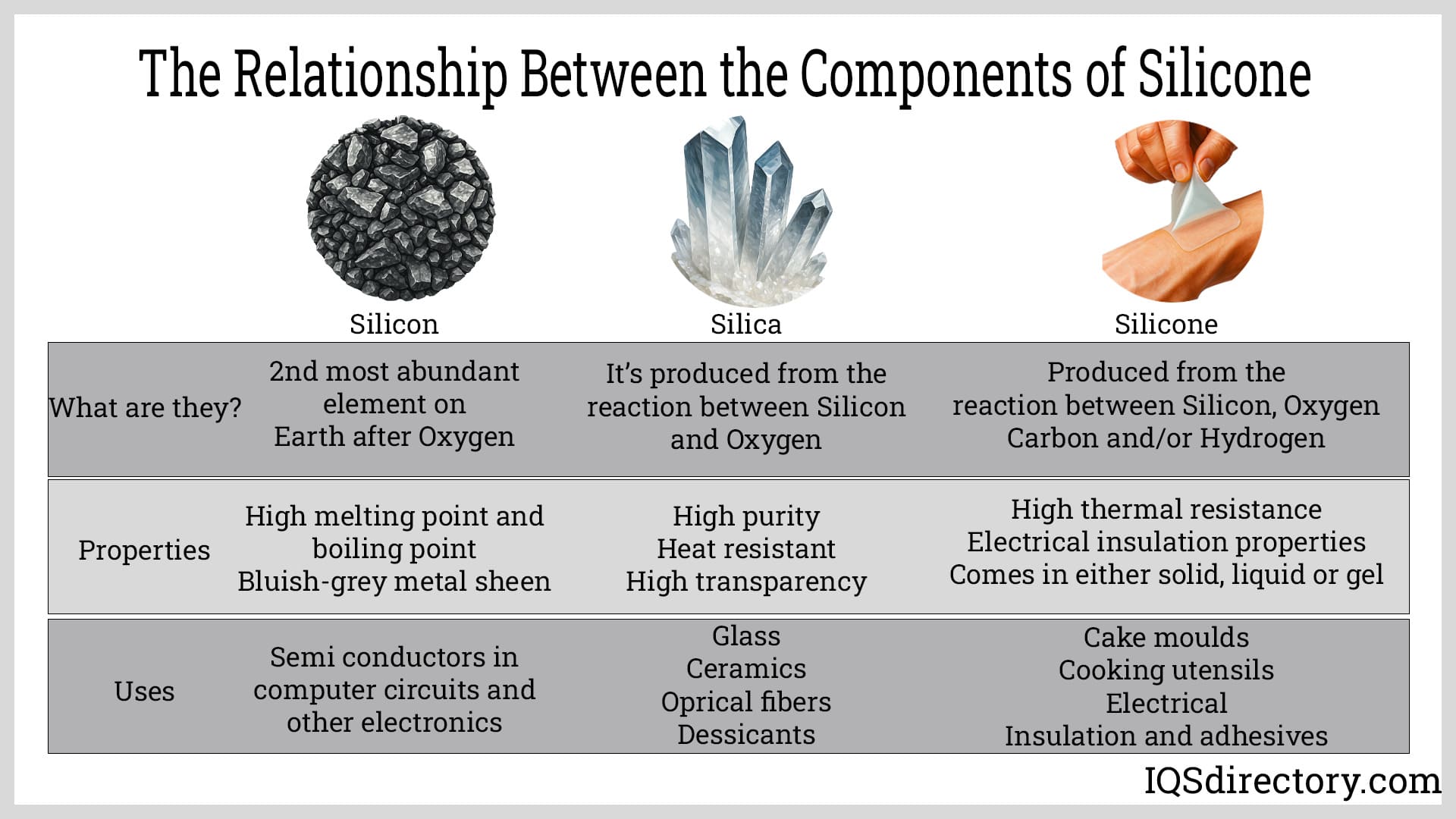
The first step in the manufacture of silicone is the extraction of silicon from silica, which is found all over the earth and is one of the most common elements in the earth’s crust. Silica is in sand, oil, granite, and rocks and is the main component in quartz. Although it is essential to the manufacture of silicone rubber gaskets, silica sand is the foundational element for the manufacture of glass.
The process for separating silicon from silica involves heating silica at up to 1800°C (3272°F). Oxygen is removed during the heating due the reaction of carbon and oxygen, which forms carbon dioxide and leaves pure silicon at the bottom of the furnace. Oxygen is reintroduced to the pure silicon to eliminate calcium or aluminum that are impurities. The result of the process is metallurgical grade silicon with a 99% level of purity.
The extreme temperature of the process is above the melting point of silicon, 1410°C (2570°F), a factor that causes oxygen to separate from silicon. The melted silicon is drawn from the bottom of the furnace and solidifies into polycrystalline chunks. The carbon dioxide from the process is also drawn off and passes through a scrubber.
Grinding
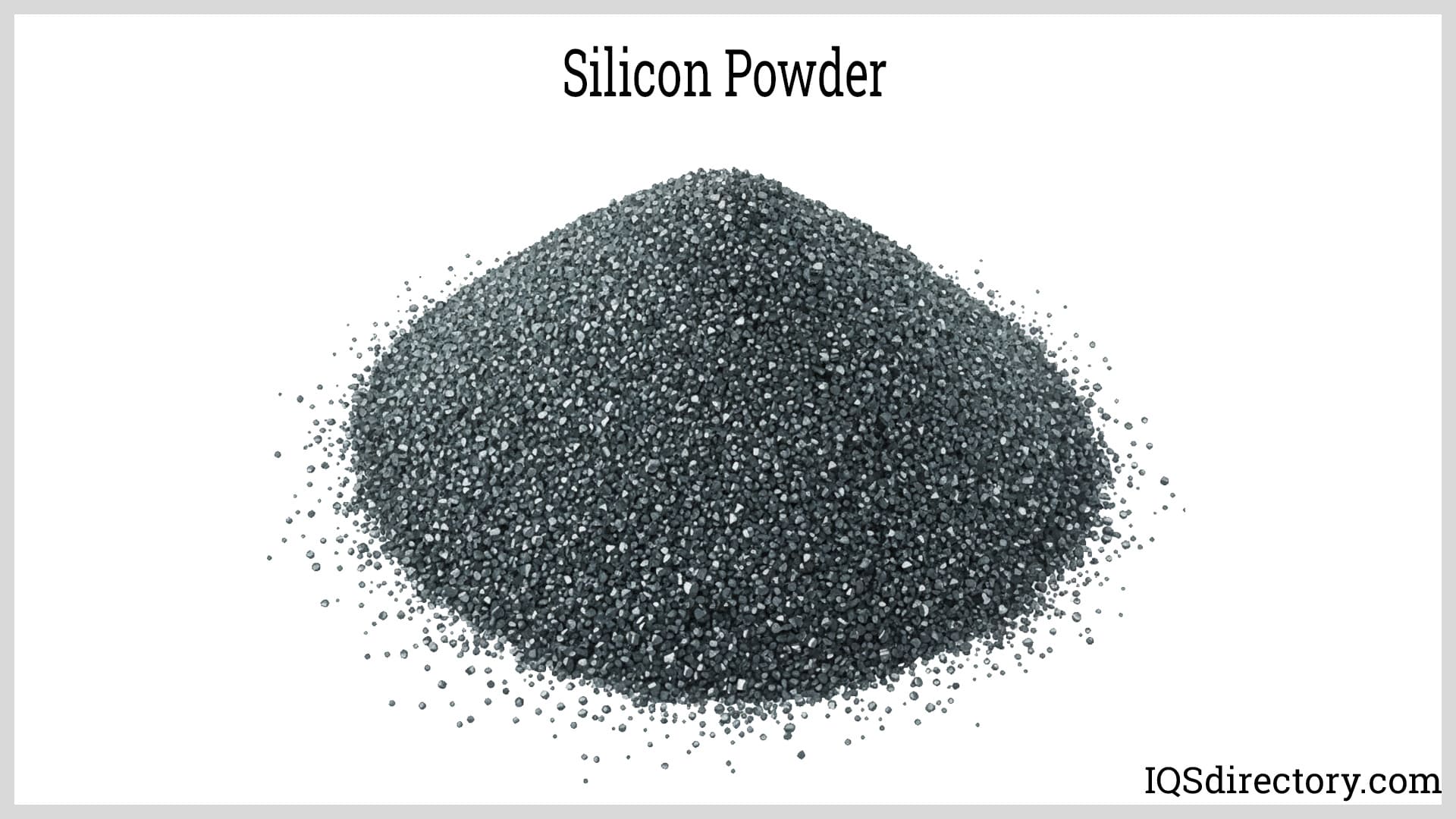
The pure silicon crystals are ground into a fine powder with micron or nano sized particles. Although physical grinding is common, chemical grinding is also used. The silicon crystals extracted from the furnace are first subjected to mechanical crushing to decrease their size. After achieving the proper shape, ball mills or other types of grinding equipment grind the particles further until they reach the desired fineness.
The plasma method uses high temperature plasma to vaporize the silicon, after which it is cooled to form an ultra-fine powder. After being heated and evaporated, the silicon condenses into a nano sized powder. The chemical method uses silane or silicon tetrachloride that is decomposed to form pure silicon.
Combine Powder
The fine powder is mixed with methyl chloride to form methyl chlorosilanes (CH₃Cl), an essential element for forming silicone substances. Heat applied to the mixture activates the reaction between the components. The chlorosilanes provide a hydrolysis reaction that allows for the controlled formation of the polymer molecular framework. The types of chlorosilanes formed are trimethyl chlorosilane, dimethyl di-chlorosilane and methyl trichlorosilane. Of the many forms of chlorosilane, dimethyldichlorosilane is the most important since it is the primary building block of silicone rubber gaskets.
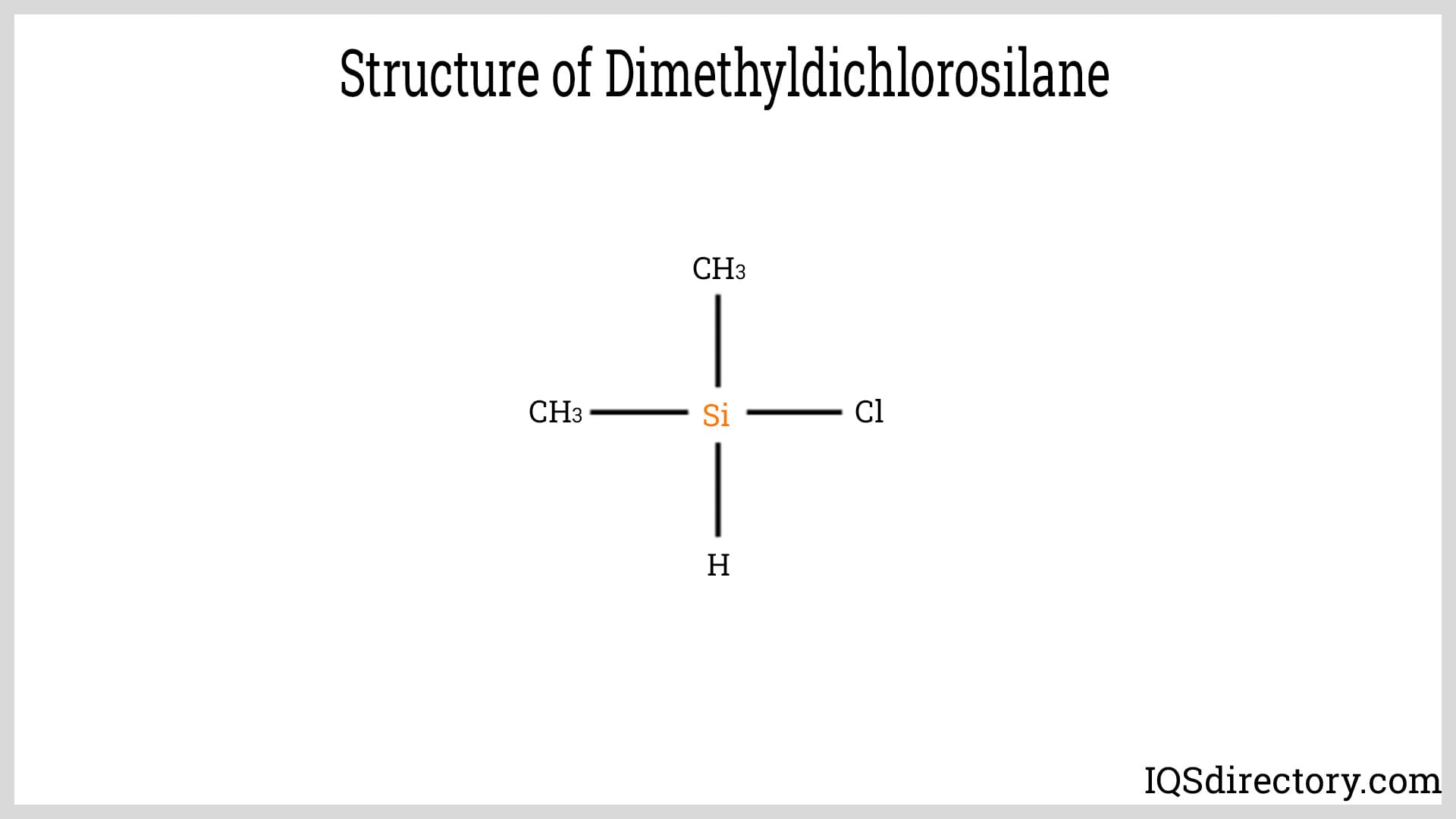
The chemical structure of dimethyldichlorosilane (CH₃)₂SiCl₂, consists of a silicon atom bonded to two methyl groups and two chlorine atoms. The combination forms a tetrahedral geometry around the silicon atom with the chlorine and methyl positioned at the corners of the tetrahedron.
Distillation
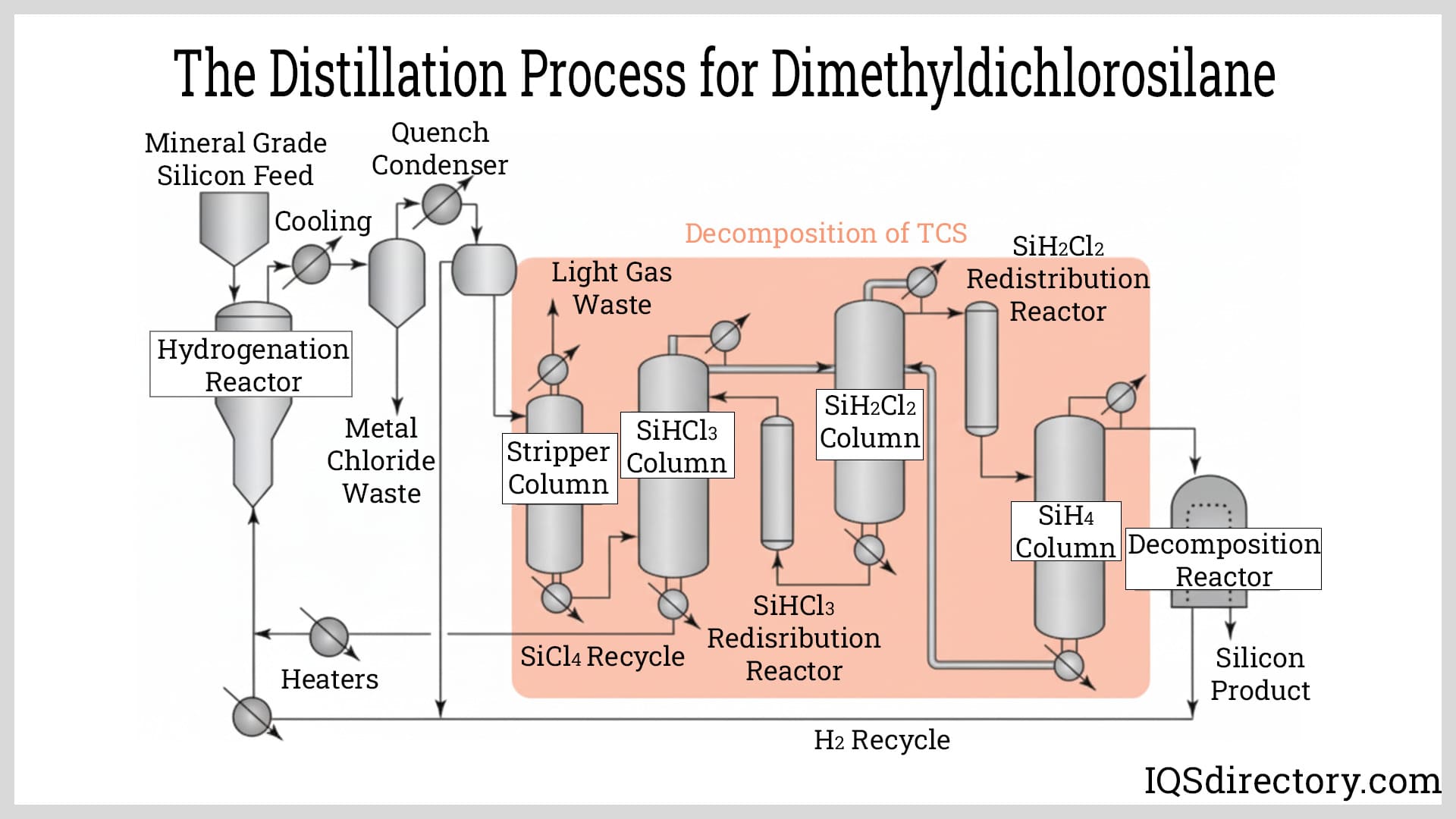
The process of getting dimethyldichlorosilane to silicon is a complex and intricate process that is carefully controlled and planned. The distillation process separates the components of methyl chlorosilane from one another. The chlorosilanes have different temperatures, which requires heating the mixture slowly in a series of temperature increases. For the process to be successful, the dimethyldichlorosilane has to be of the highest purity, at least 99%. The critical factor, and the most difficult, is the different temperatures required for the process, which takes time and requires extreme accuracy.
Hydrolysis
The hydrolysis process, also known as methanolysis, involves breaking down the compound from distillation using water. The addition of water with dimethyldichlorosilane causes the separation of hydrochloric acid and disilanol. The hydrochloric acid is a catalyst for the disilanol to condense into polydimethylsiloxane, which has a bond with siloxane, the backbone of silicone.
The hydrolysis process is the most important aspect of the manufacture of silicone. The temperature of the mixture is kept at a specified level and allowed to stand. During this aspect of the process, the mixture stands until silica alcohol and acid water separate into layers. The layer of acid water is discharged and the silica alcohol is washed with water.
Polymerization
Siloxane from hydrolysis goes through polymerization to produce silicone polymers. During polymerization, silicone compounds are reacted with straight chained molecules, cross linking agents, and reinforcement to produce the mechanical properties desired for silicone rubber gaskets, which is a type of silicone made from reactive silicone gums. The reactive groups contained in silicone gums, which are straight chains with very high molecular weight, are combinations of methyl, phenyl, and vinyl.
Several different methods are used for polymerization. The choice of method is determined by the properties required for the silicone rubber gaskets. In the case of rubber, the desired properties are temperature, water, and chemical resistance as well as durability. Also included are compression set, electrical properties, high strength, biocompatibility, and flexibility. The characteristics and properties of silicone rubber gaskets are achieved during the polymerization phase when the cross linking agent is introduced.
The strong bonds between the compounds and the organic side groups work together to give silicone rubber gaskets their wide range of features. The silicone to oxygen structure of silicone rubber gives silicone rubber gaskets their stability, tear resistance, and strength.
Leading Manufacturers and Suppliers
Chapter 3: Types of Silicone Rubber
The different forms of silicone rubber are divided into organic groups and classes. The distinction between the organic groups is in regard to their chemicals, which are methyl, vinyl, phenyl, and fluoro. They are classified in accordance with their molecular structure, viscosity, and method of being processed. The main forms of the classifications are solid, liquid, and room temperature vulcanized.
Numeration of Organic Silicone Rubbers
ISO Standard
ASTM D2000
Chemical Structure
MQ
GE
Methyl Silicone
PMQ or PVMQ
FC
Phenyl Methyl Silicone
VMQ
FE
Vinyl Methyl Silicone
FMQ or FVMQ
FK
Fluorosilicone
Organic Groups
Silicone rubbers that are part of the organic group contain methyl, vinyl, phenyl, or combinations of these elements. The American Society for Testing and Materials (ASTM) has developed designations to identify the types of silicone rubber that fit into each of the organic groups.
Methyl Group (MQ)
The methyl group of silicone rubbers was the first type of silicone rubber that was developed and is the simplest form of silicone compound. It is referred to as dimethyl silicone rubber and methyl silicone rubber. MQ rubber has repeating units of oxygen, a factor that gives it resistance to ultraviolet (UV) rays, ozone, and weathering. The limited use of the methyl group of silicone rubber is due to its poor elastomeric properties. In many cases, it is used as a foundation. Over the years, to enhance the performance of methyl silicone rubbers, it has been combined with other chemicals and elements to improve its elasticity.
Methyl Phenyl Group (MPQ or PMQ)
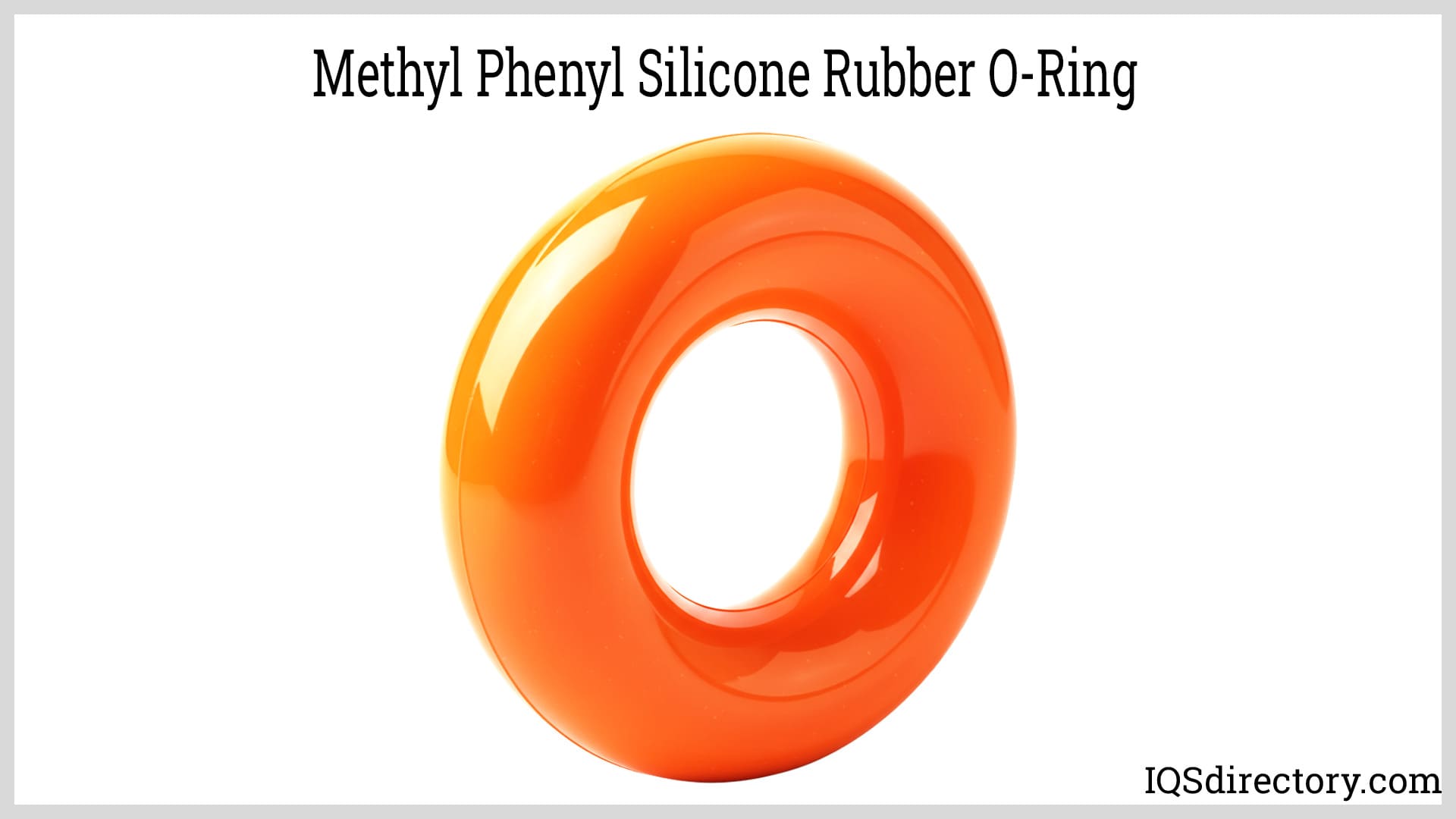
With MPQ, the methyl groups are replaced with phenyl groups, which enhances the low operating temperature of the rubber. The dramatic change of PMQ allows it to operate at 100°C (212°F) lower than MQ, enabling it to work at temperatures of -100°C (-148°F) or as low as -177°C (286.6°F). The low temperature gradient of PMQ differentiates it from all other forms of silicone rubber. It is known as methyl-phenyl silicone rubber or phenyl silicone rubber. The adjustments to MQ enable it to perform at a wide range of temperatures and give it resistance to weathering, moisture, and several chemicals. These properties of PMQ make it ideal for the manufacture of highly resistant and durable silicone rubber gaskets.
Methyl Vinyl Groups (VMQ)
Methyl vinyl silicone rubber is processed by replacing the methyl molecules with vinyl molecules. As with PMQ, the resulting silicone rubber has temperature resistance beyond MQ and an improved compression set. The downside of VMQ is its poor tensile strength, which limits its use as an O-ring. The introduction of vinyl into VMQ helps in the vulcanization of silicone rubber. As with all other forms of silicone rubber, VMQ has a name that has been given to it by ATSM, which is methyl vinyl silicone rubber.
The molecular structure of VMQ is built with a backbone of silicone-oxygen, making it an ideal electrical insulation material. The inertness of VMQ allows it to be used for special functions, such as food processing and medical instruments.
Fluorosilicone (FVMQ)
The fluorination of MQ creates stronger bonds at the molecular level for silicone, a factor that improves its chemical resistance. FVMQ or fluorosilicone contains trifluoro propyls next to the methyl groups. This gives FVMQ mechanical and physical properties that are similar to VMQ along with its resistance to fuels, chemical attacks, and mineral oil. The downside of FVMQ is its limited resistance to hot air. In addition, FVMQ is limited to applications that do not include abrasions or dynamic factors.
The primary use of fluorosilicone is in fuel systems that reach temperatures as high as 177°C (350°F) and applications where dry heat resistance is required. The main use of FVMQ is in the petroleum based oils and hydrocarbon fuel industries. In low temperature applications, fluorosilicone forms a tight seal at temperatures as low as -73°C (-100°F). A factor that has to be considered in regard to FVMQ use is its low tear strength, high friction, and extremely limited abrasion resistance. These factors limit the use of FVMQ to static applications.
Molecular Structure Classification
Included in the understanding of silicone rubbers is a study of their molecular structure, viscosity, and processing methods. The three main categories in this method of classification are solid silicone rubber or high temperature vulcanized (HTV), liquid silicone rubber (LSR), and room temperature vulcanization (RTV).
Solid Silicone Rubber (HTV)
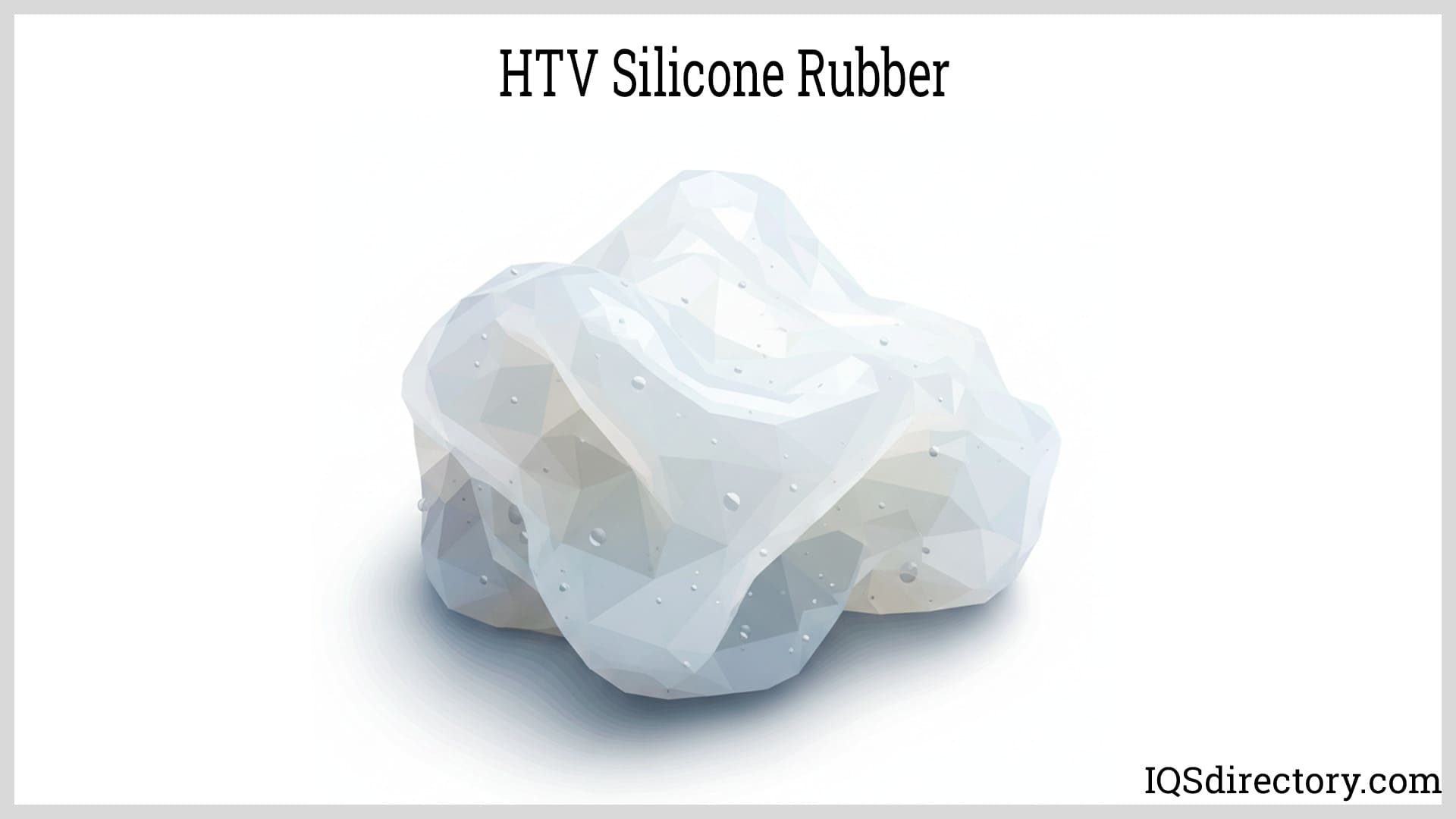
Solid or high temperature vulcanization silicone rubber is vulcanized at very high temperatures, which causes the rubber to take a solid and fixed shape. The vulcanization process causes the creation of a cross-linked structure between the silicone molecules, a factor that enhances elasticity and creates heat resistance.
HTV is the main type of rubber for the manufacture of high temperature resistant products, such as seals, gaskets, and electric wire insulation. When silicone rubber is enduring the high temperatures, a vulcanizing agent is added, the reaction of which causes the formation of a flexible, heat-resistant silicone structure due to the cross-linking.
High heat vulcanization, aside from adding flexibility and heat resistance, also increases the hardness of silicone rubber. As can be ascertained, the curing process at 150°C up to 200°C (302°F up to 392°F) for HTV is very long due to the high heat of vulcanization. This aspect of the manufacture of HTV increases its production time. In addition, HTV requires an extended cooling period, which is necessary to solidify the rubber. The final steps in the processing are trimming, cutting, surface treatments, and other processes to meet product specifications.
Liquid Silicone Rubber (LSR)
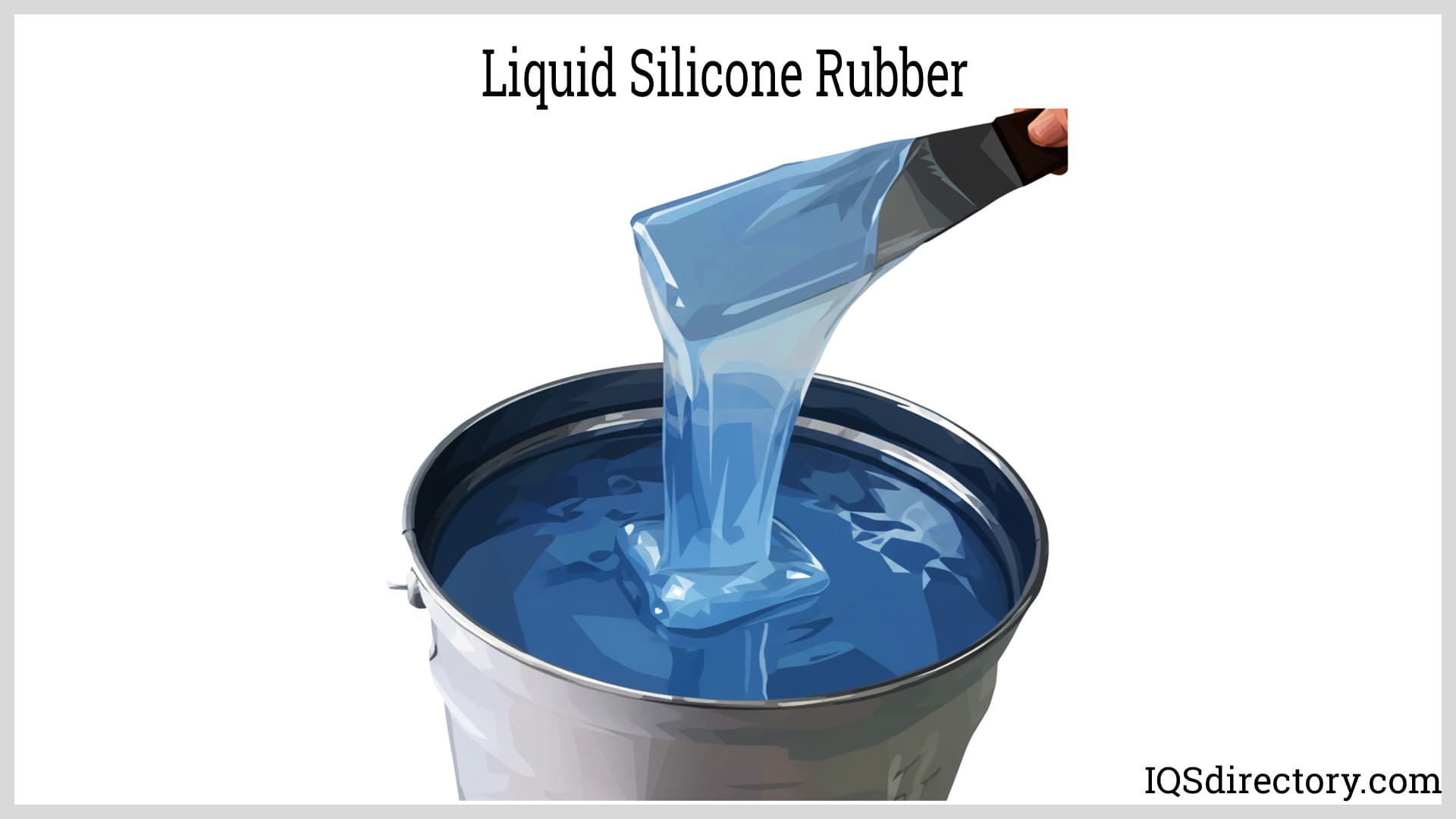
LSR is an inorganic polymer that is formed by silicon (Si), oxygen (O), carbon (C) and hydrogen (H) with the main chemical chain, backbone, being siloxane. During the curing process, platinum and peroxide are added. Platinum cured LSR has excellent tensile strength, tear strength, clarity, and uniform consistency and does not leave a peroxide residue. In LSR, the siloxane bond provides better mechanical performance and exceptional strength.
The inorganic aspects of LSR makes it ideal for applications for the medical field where the material will come in contact with the skin. A key characteristic of LSR is its compression set, which is higher than any other elastomer, a factor that makes LSR ideal for applications that involve gaskets.
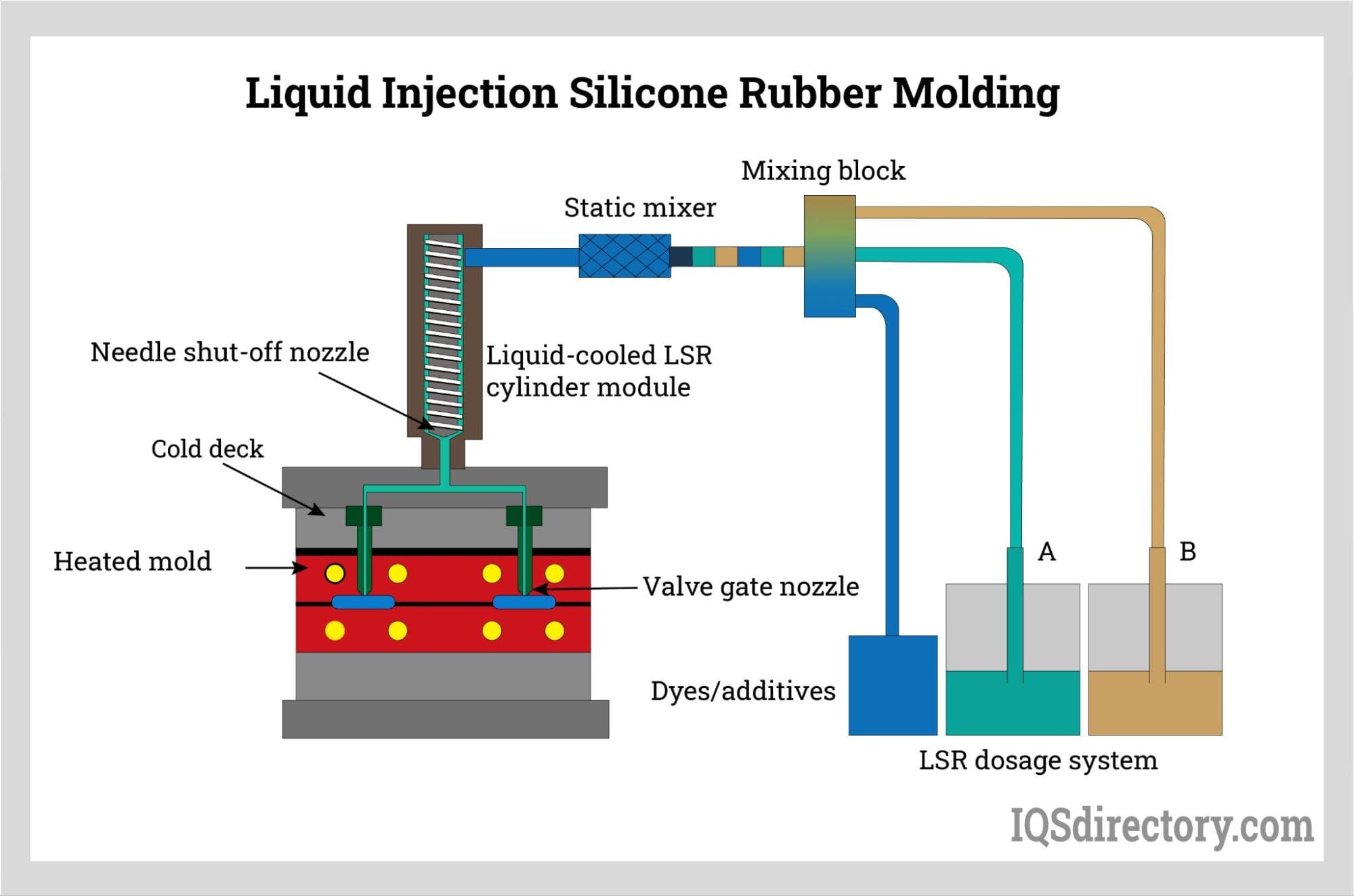
Injection molding is used to produce products from LSR. Due to its viscous nature, it processes easily and is ideal for high volume production that requires consistent high quality. The unique properties of LSR makes it the perfect silicone rubber for intricate designs and demanding, critical applications.
Room Temperature Vulcanized (RTV) Silicone Rubber
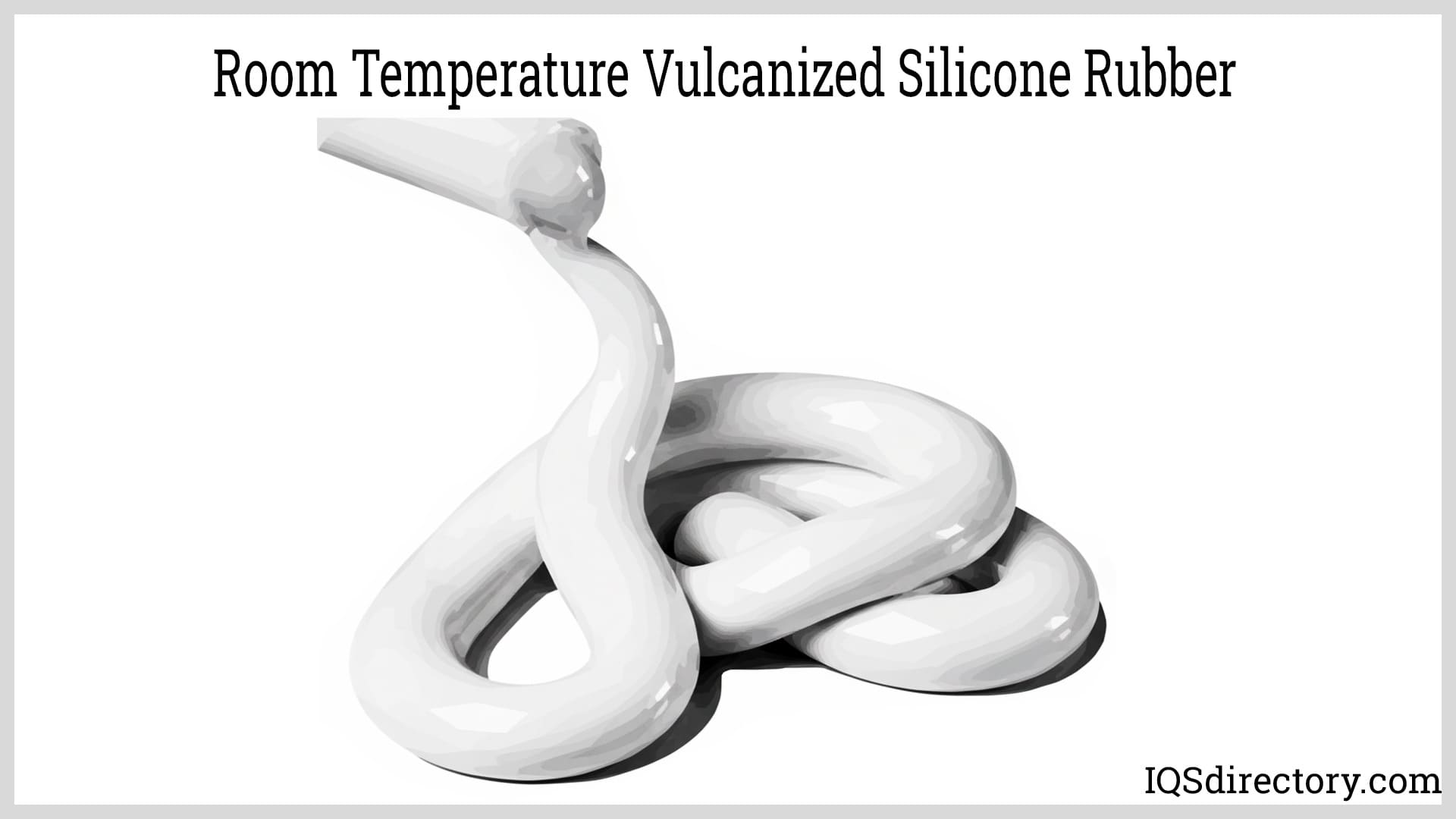
Room temperature vulcanized silicone rubber is made from a two-component system and can have a soft or medium texture with a shore hardness between 15 Shore A and 40 Shore. It is a silicone adhesive with a unique mix of properties for creating a gasket like adhesive for gluing surfaces and providing a cushioning effect.
RTV begins to cure as soon as it is exposed to the atmosphere, which makes it ideal for use as a sealing agent because of its water repellent property, adhesiveness, and its ability to retain its shape. During the vulcanization of RTV, water is introduced to the mixture that triggers condensation that forms cross links between the polydimethylsiloxane chains.
Once applied, RTV reacts quickly, as long as the temperature is 24°C (75°F) and forms a tight secure seal in 20 minutes. As the amount of RTV is applied, the time it takes to form a seal increases with the maximum drying time being 72 hours. The exact drying time is dependent on the thickness of the application. After RTV is applied, it continues to strengthen for up to two weeks, ensuring a long-lasting seal.
The main use of RTV is in applications that require high temperature and chemical resistance for the sealing and bonding of equipment and machinery. The properties of RTV make it resistant to engine and gear box fluids with exceptional qualities of adhesion to metal and plastic parts. Since RTV does not oxidize when in contact with metals, it can be used to bond and protect electronic components. It is odorless and non-toxic, which makes it safe for use at workstations and closed environments.
When examining the various positive features of silicone, it is important to understand what it is and how it compares to rubber. Silicone rubber is a synthetic rubber with a silicon backbone that gives it superior heat, UV, and ozone resistance. It comes in different forms, which makes it adaptable to a wide range of applications and processes.
Chapter 4: Types of Silicone Rubber Gaskets
During the manufacturing process, sheets of silicone of differing thicknesses are cut into gaskets. Aside from the variations in thicknesses, the sheets of silicone are made up of different types of silicone to create the various types of silicone gaskets. When clients select silicone gaskets, they examine the gaskets for their sealing abilities, which is a necessity for industrial applications.
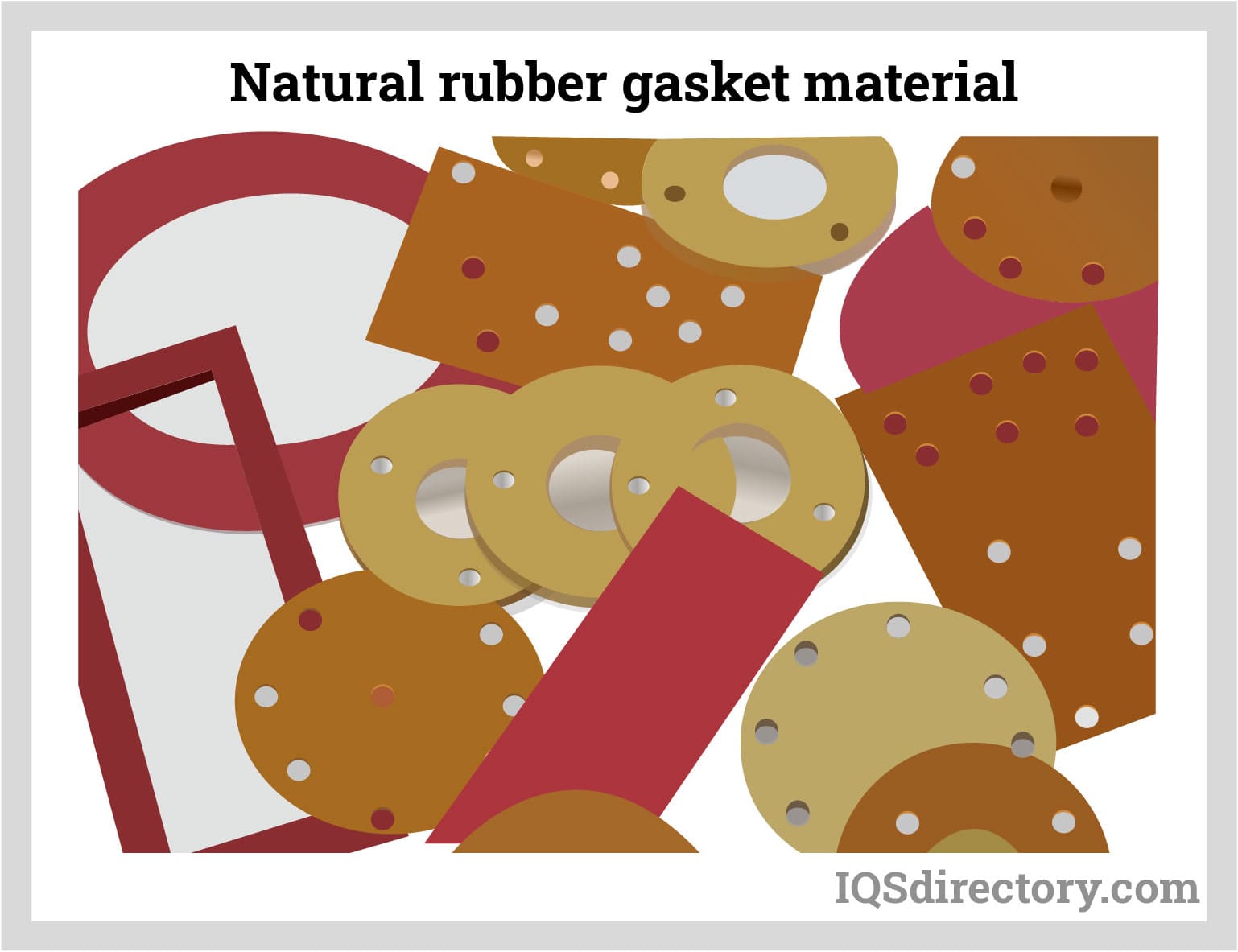
Part of choosing a gasket is determining whether an application can be served better by a rubber gasket or a silicone gasket. In the majority of cases, silicone gaskets are more resilient, efficient, and provide better performance than rubber gaskets, especially in extreme high temperatures. The normal temperature range for rubber gaskets is between -50°C and 80°C (-58°F and 176°F) while the temperature range for silicone gaskets is between -70°C and 218.89°C (-94°F and 426°F). Natural rubber wears down at 80°C (176°F) and melts at 120°C (248°F).
A major differentiating factor when deciding between rubber and silicone for gaskets is the cost, since SBR rubber is much less than silicone. However, rubber is not resistant to ozone, strong acids, fats, oils, and grease, materials that silicone easily resists. In addition, silicone gaskets can be used in any type of weather conditions without deteriorating. The strength and high resistance of silicone rubber gaskets enables them to have a much longer service life than rubber gaskets.
Solid Silicone Gaskets
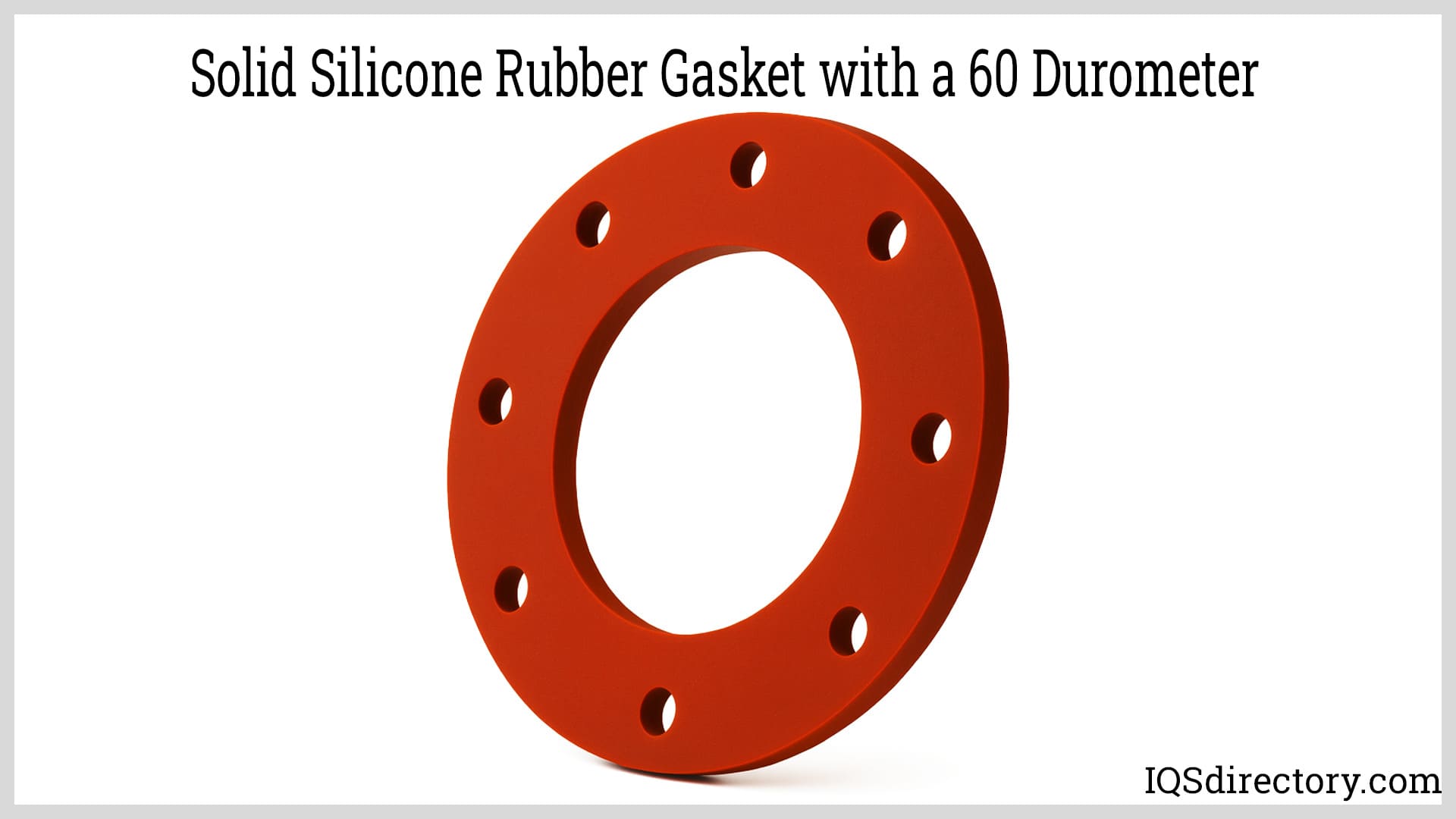
Solid silicone gaskets are tightly packed dense materials that are designed for demanding conditions, such as water submersion. They are available in different durometer hardnesses with low durometer gaskets being used for low force applications. Higher durometer gaskets are able to endure more force and are commonly used in metal enclosures. Applications requiring a seal rating of IP67 or higher normally necessitate the use of solid silicone rubber gaskets.
One of the challenges of working with solid silicone gaskets is their amount of compression due to their hardness. They require 15% to 20% compression, which means they will require more closing force to compress while solid silicone gaskets with a lower durometer reading require less force.
Sponge Silicone Gaskets
Sponge silicone gaskets are made from silicone gum material and have a closed cell foam structure. Their density ranges from 21 lbs. up to 43 lbs. per ft2. Although they are referred to as sponge silicone gaskets, they do not absorb water and are ideal for any form of gasketing and sealing application. As with other types of silicone rubber gaskets, sponge silicone gaskets are waterproof and resistant to the effects of high temperatures. They have been approved by the Food and Drug Administration (FDA) for use with food and are widely used in the pharmaceutical industry, electronics, and outdoor applications. The many benefits of silicone sponge gaskets include a flame rating of MIL-R-764310 Type II, tensile strength of 130 psi, operating temperature between -73.33°C and 260°C (-100°F and 500°F), and resistance to UV, ozone, and solvents.
As with most silicone rubber gaskets, sponge silicone gaskets are precision cut from sheets of silicone sponge. The cutting process is completed with exceptional accuracy to ensure the quality of sponge silicone gaskets. Applications that require cushioning, padding, or a soft gasket use sponge silicone gaskets.
Aside from the open cell version of sponge silicone gaskets, there are closed cell sponge silicone gaskets that are filled with natural gas to prevent air and chemicals from passing through at low pressures.
Foam Silicone Gaskets
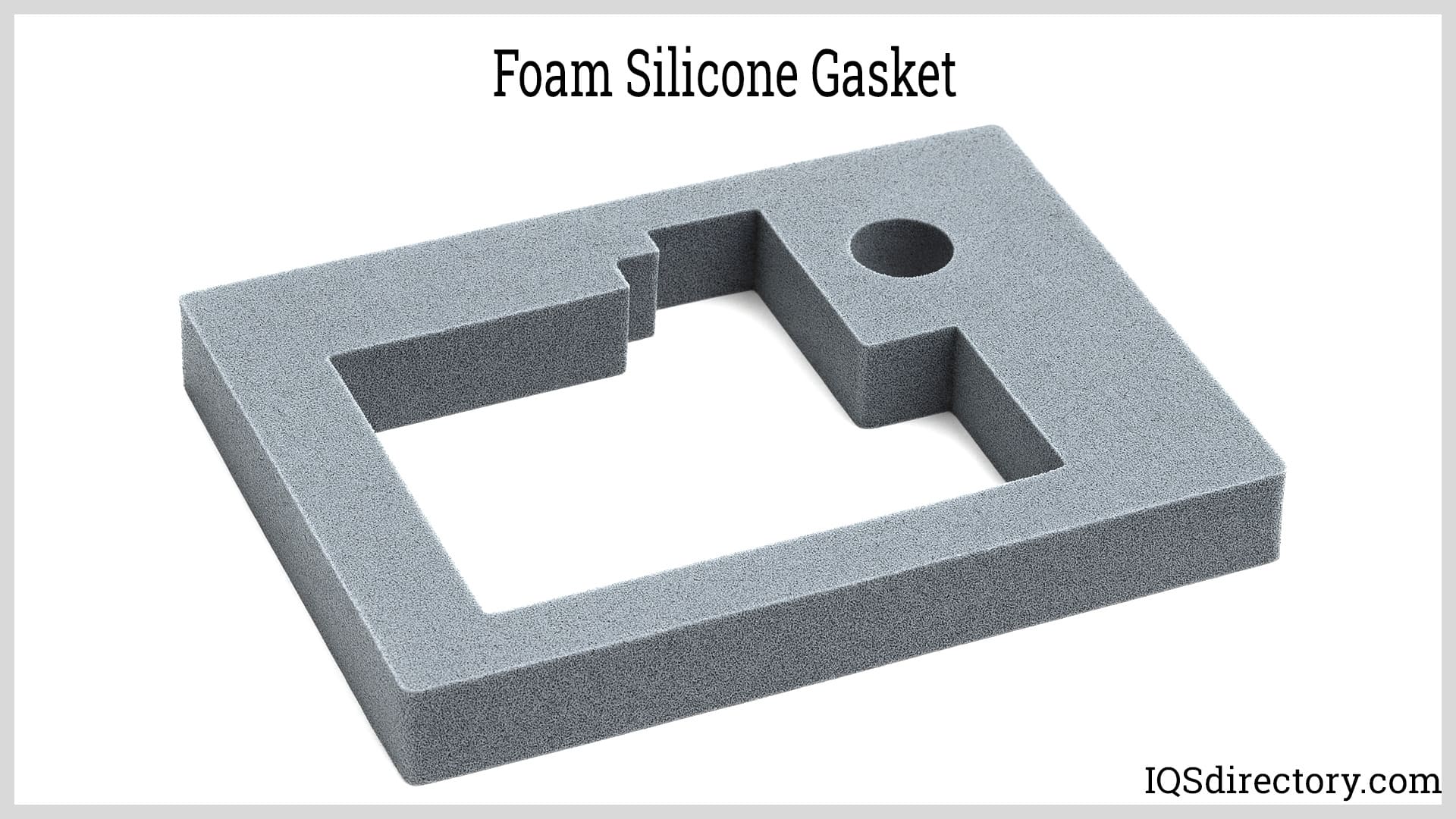
It would seem that silicone foam gaskets and silicone sponge gaskets would be the same type of gasket. The difference between the two gaskets is in regard to the type of silicone that is used to form the gaskets. Sponge silicone gaskets are made from a silicone gum compound that is mixed and milled with pigment, catalyst, and blowing agent. Foam silicone gaskets are cast from low viscosity liquid silicone that is rapidly catalyzed and mixed before being cast on a smooth plastic release liner. During casting, the foam is placed on a release liner to control the thickness of the gaskets as they pass through a curing oven, after which they are post-cured to remove moisture and vapors. The result of the process is a roll of foam with an extremely smooth surface.
Foam silicone gaskets are made from HT-800 silicone and have a low compression rating, high temperature stability, low temperature flexibility, flame rated at UL 94, FAR, and a sealing rating of UL 50 and UL 508. Various methods are used to form foam silicone gaskets including die cutting, water jet cutting, and roll sitting.
Fluorosilicone Gaskets
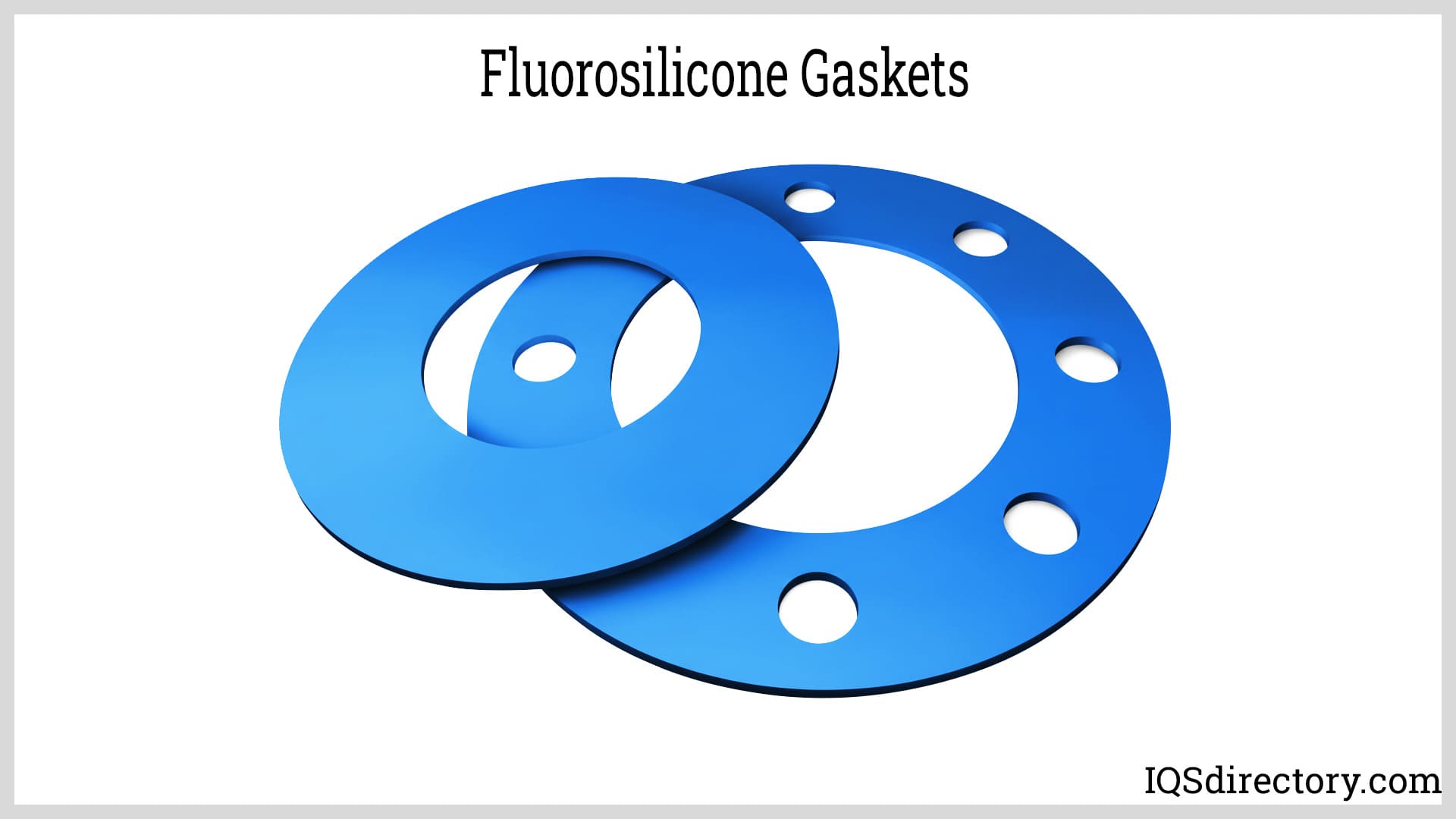
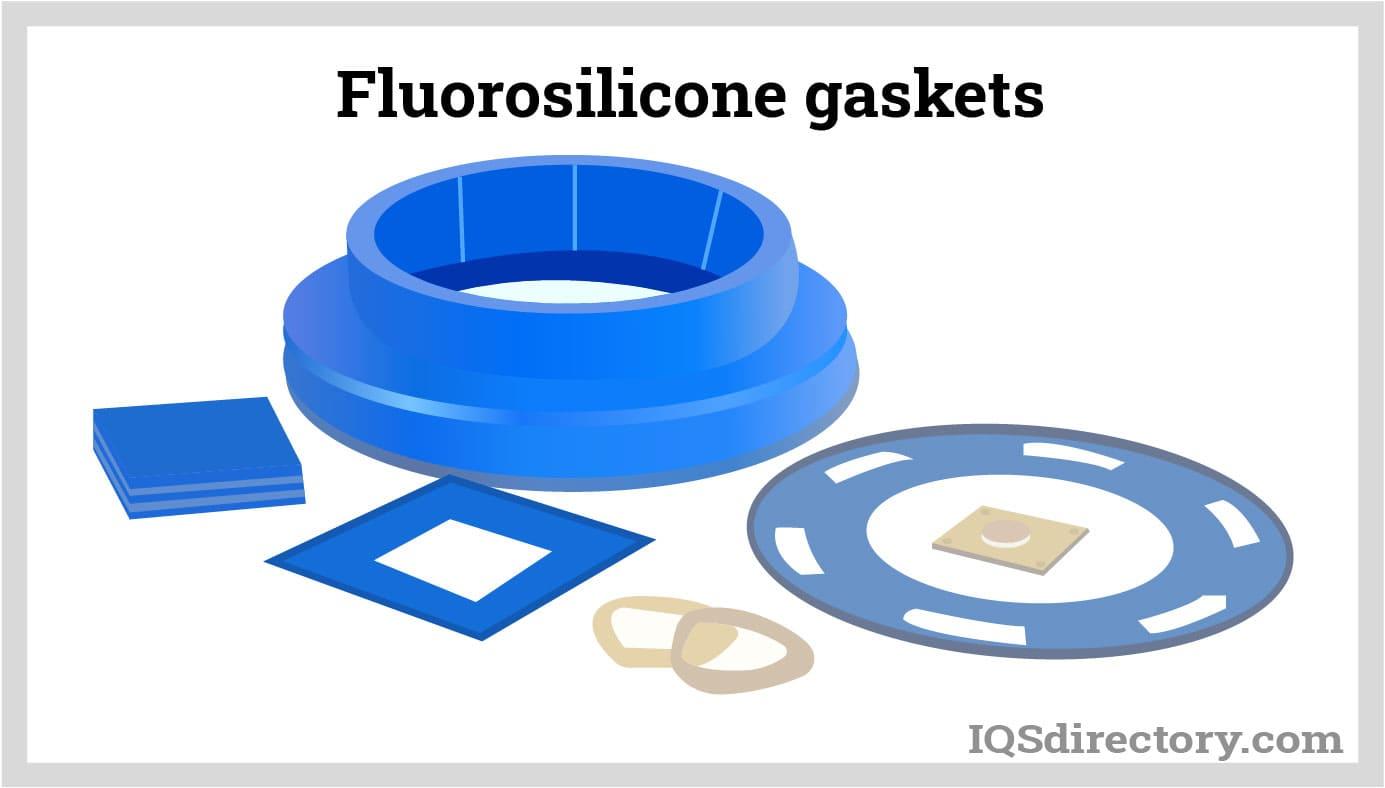
Fluorosilicone gaskets are a unique form of gasket that combines the temperature resistance of silicone with the fuel, oil, and solvent resistance of fluorocarbon. The properties of fluorosilicone vary in accordance with the temperature of the environment with special types being capable of resistance to abrasions and electromagnetic interference (EMI). Fluorosilicone gaskets are also used in place of O-rings and protective boots for electrical equipment.
The chemical composition of fluorosilicone makes it more durable and resistant to chemical degradation than silicone. Unlike silicone, fluorosilicone has poor flexibility and is more expensive. Regardless of this one factor, fluorosilicone has most of the properties of silicone with some of the properties being enhanced with fluorosilicone’s unique chemical composition.
Flame Resistant Silicone Gaskets
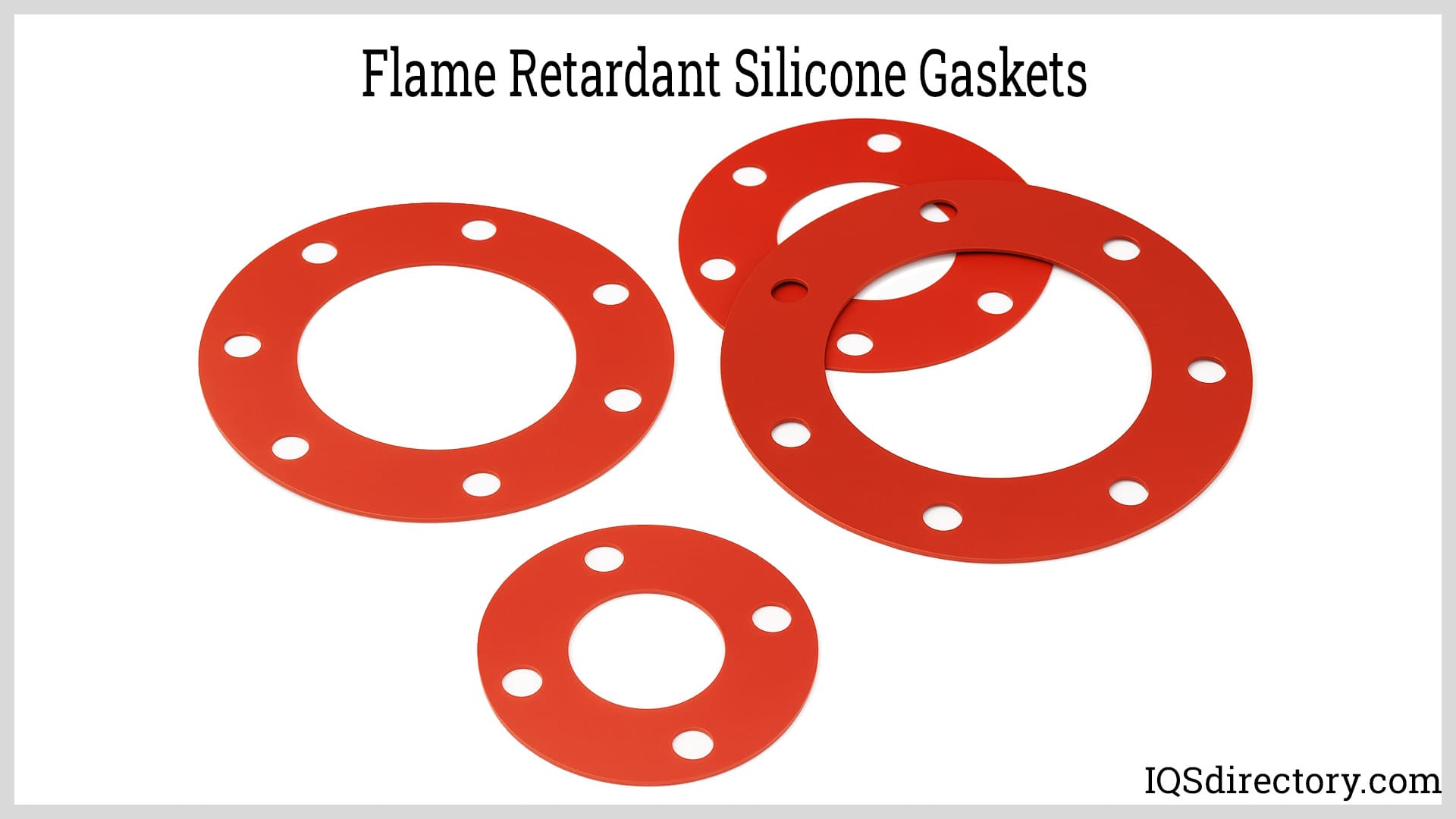
Flame resistant silicone gaskets are a form of solid gasket that have been specially treated to resist burning, slow the spread of flames, and are capable of being functional in a fire. In order for a solid silicone gasket to be classified as flame resistant, it has to pass five fire performance tests, which are burning behavior, smoke generation, toxicity, heat emission, and combustion.
Burning Behavior – EN ISO 4589-2 (Oxygen Index) - The Burning behavior test measures the oxygen concentration needed to maintain combustion. Using EN ISO 4589-2, the Oxygen Index, the silicone material is exposed to an oxygen–nitrogen atmosphere. As the oxygen level of a material goes up, its flame-resistance increases.
Smoke Generation – EN ISO 5659-2 (Ds Max) - The Smoke Generation test measures the maximum smoke density produced by a material. Flame-retardant silicone rubber produces lower smoke compared to organic polymers.
Toxicity – NFX 70-100-1 & -2 (CITNLP) - The Toxicity Test evaluates CITNLP (Conventional Index of Toxicity for Non-Lethal Products) by burning a sample at 600° C (1112o F) and analyzing the gases produced, such as CO, HCN, NOx, and others.
Maximum Average Rate of Heat Emission – ISO 5660-1 (MARHE) - The MARHE test conducted in a cone calorimeter that measures the average rate of heat produced during combustion. Lower MARHE values indicate slower fire growth and reduced energy output, giving more time for evacuation and fire control
Gross Heat of Combustion – ISO 1716 (MJ/kg) – The Gross Heat of Combustion or the Calorific Value test determines the amount of energy released when the material is burning. The tests are conducted in an oxygen bomb calorimeter that provides a MJ/kg, energy per unit of mass. Lower values indicate flame retardance and less heat for propagating a fire.
The five silicone gaskets described above are a sampling of the many types of silicone rubber gaskets that producers offer. The other factors that define a silicone gasket include how they are produced, FDA approval, and their level of conductivity. Each of these factors are included in the discussion of the five gaskets above. Silicone gaskets are the most popular form of gasket due to their many positive properties. Their strength, resilience, durability, and long useful life are factors that are measured against their cost.
Chapter 5: Uses for Silicone Rubber Gaskets
Of the many types of materials that are used for industrial applications, silicone rubber gaskets are one of the most popular and widely used. The long list of the silicone rubber gasket’s positive properties enables them to be a critical part of machine, equipment, and production applications as well as an essential part of consumer products.
Silicone rubber gaskets are used in the food and medical fields due to their insulation properties, resistance to pressure, and their ability to withstand extremes in temperature. They meet the highest standards for hygiene, durability, and safety, regardless of the application. The key determinant for the use of silicone rubber gaskets in the medical field is their non-toxicity and biocompatibility.
In the automotive industry, silicone gaskets improve engine performance by effectively sealing gearboxes and engines, helping avoid fluid leaks. Silicone rubber gaskets are capable of enduring the high temperatures from engine components, ensuring the safety and effectiveness of vehicles. The result of the stability of silicone rubber gaskets is long engine life and an increased lifetime for vehicles.
The industry that places the greatest amount of strain on gaskets is the aerospace industry. The nature of space and air travel necessitate the use of materials that are highly reliable, resilient, and dependable. On all counts, silicone rubber gaskets step up and fulfill the demand. They are used to supply airtight seals that ensure personnel and aircraft safety as well as protection of vital systems.
HVAC systems rely on all of the positive properties of silicone rubber gaskets. The key factors are reliability, resistance to extreme temperatures, weather, UV, and moisture, a factor that improves the efficiency and useful life of an HVAC system. Compressibility and resilience are necessities for HVAC systems due to the workings of the systems. Silicone rubber gaskets maintain a tight seal regardless of the thermal cycling.
In building and construction, silicone gaskets seal doors, windows, and electrical equipment enclosures. They provide a watertight seal and are able to endure outdoor construction applications due their ability to withstand UV rays, weather, ozone, and wide variations in temperature. When used with electronics, silicone rubber gaskets keep water from entering devices and protect components from heat, corrosion, and EMI.
Chapter 6: Positive Properties of Silicone Rubber
The term silicone rubber covers a set of materials that breaks into three distinct groups. Each of the types of silicone rubber are distinguished by their chemical composition and their method of being manufactured. This aspect of the nature of silicone rubber necessitates describing the positive features according to their type. Although there are general descriptions of silicone rubber, it is better to examine them in their group, which provides more specific information and assists in selecting the correct silicone rubber for an application.
High Temperature Vulcanized (HTV) Silicone Rubber
HTV silicone rubber is referred to as solid silicone rubber due the form it takes after vulcanization, curing, and cooling. It is a highly resilient synthesized rubber that is widely used for the manufacture of gaskets and O-rings.
High Temperature Resistance – The high temperature manufacturing process used to produce HTV gives it superior resistance to high temperatures. The range of temperatures that HTV is able to endure are from -70°C up to 250°C (-94°F up to 482°F). Specialty grades of HTV are able to tolerate even higher temperatures. This aspect of HTV is one of the reasons that it is so widely used in the auto, aerospace, and food processing industries.
Elasticity – During the processing of HTV, it forms a strong cross-linked structure that makes it durable and enhances its elasticity. Although rubber is known for its elasticity, HTV has exceptional elasticity, which adds to its longevity. It is able to maintain its shape as well as adapt to different constraints and deformations.
Insulation Properties – Dielectric strength is the ability of a material to resist breaking down in an electric field. The higher the electric strength of a material, the more capable it is to endure electric fields. HTV has exceptional dielectric strength, which makes it ideal for use as an insulator. It can withstand electric fields that range between 15 kV/mm and 30kV/mm.
Chemical Stability – The chemical stability of HTV is due to its non-reactive structure. This aspect of HTV is due to its silicon-oxygen backbone, which is unaffected by solvents or inorganic acids. During manufacturing, this characteristic of HTV is further enhanced with the addition of phenyl for resistance to heat and radiation and trifluoro propyl.
Anti-Aging – One of the factors that is the result of high heat vulcanization is the manufacture of silicone rubber that is exceptionally sturdy, durable, and impenetrable. The vulcanization process produces silicone rubbers that are capable of lasting decades without deterioration or degrading. HTV’s long life enables it to have prolonged usage due to its stable chemical and physical properties.
Hardness – The Shore A hardness of HTV varies between 20 and 80. The variations in the hardness of HTV is due to the different formulations used in its manufacture. The wide range of hardnesses enables producers to customize HTV to fit the specific requirements of an application.
Liquid Silicone Rubber
The versatile properties of LSR come from its siloxane bond, an inorganic backbone that does not interact with biological materials but can be combined with organic chemicals. The siloxane bond enables LSR to have exceptional mechanical performance with high strength.
Biocompatibility – LSR is compatible with human tissue and body fluids. It is hypoallergenic, which makes it ideal for products that make contact with the skin. The structure of LSR makes it resistant to the growth of bacteria and prevents it from staining or corroding other materials.
Tasteless and Odorless – A key and important aspect of LSR is its tastelessness and lack of odor. This enables it to be used in more products and expands its capabilities. LSR is odorless and tasteless due to its chemical structure, which is built on stable, inert siloxane that does not react with other substances. During LSR’s curing process non-toxic chemicals are used that do not release dangerous odors. The inertness of LSR is what makes it biocompatible and enables it to be used for food processing and medical applications.
Durable – As with most silicone rubbers, LSR is exceptionally strong, which enables it to withstand stressful and harsh conditions. The superior strength of LSR allows it to be used for the manufacture of batteries, electronics, and components for the auto industry. Its ability to endure distress makes it suitable for outdoor use in severe weather.
Chemical Resistance – The uses of LSR are broadened by its exceptional chemical resistance, which covers a wide expanse of toxic substances. Included in the spectrum of materials that LSR is resistant to are alkali and acids. The resistance of LSR to chemicals enables it to be used in products that are subjected to cleaning solutions during manufacturing. In many cases, products require frequent sterilization using steam autoclaves, ethylene oxide, gamma, e-beam, and other techniques, all of which LSR is able to endure. These measures are especially true for healthcare products and medical devices and instruments.
Temperature – One of the necessities of modern products is the ability to withstand extraordinary and unusual conditions, especially in regard to different types of environments. Since different locations present a unique set of challenges, products have to be capable of adapting and enduring such conditions. In the case of LSR, it is able to withstand a wide range of temperatures that range from -60°C up to 180°C (-76°F up to 356°F). This makes LSR ideal for dishwashers, hot water, and a multitude of industrial and residential conditions.
Mechanical Properties – There is a long list of properties associated with the mechanical abilities of LSR. Included in the list is superior elongation, tear and tensile strength, flexibility, and a hardness that ranges on the Shore hardness scale between 5 and 80 Shore A. To measure hardness, the Shore hardness scale measures a materials resistance to indentation. Low numbers indicate poor resistance and softness. LSR is used in applications that need a thin membrane that seals a product from air, gas, and fluid flow.
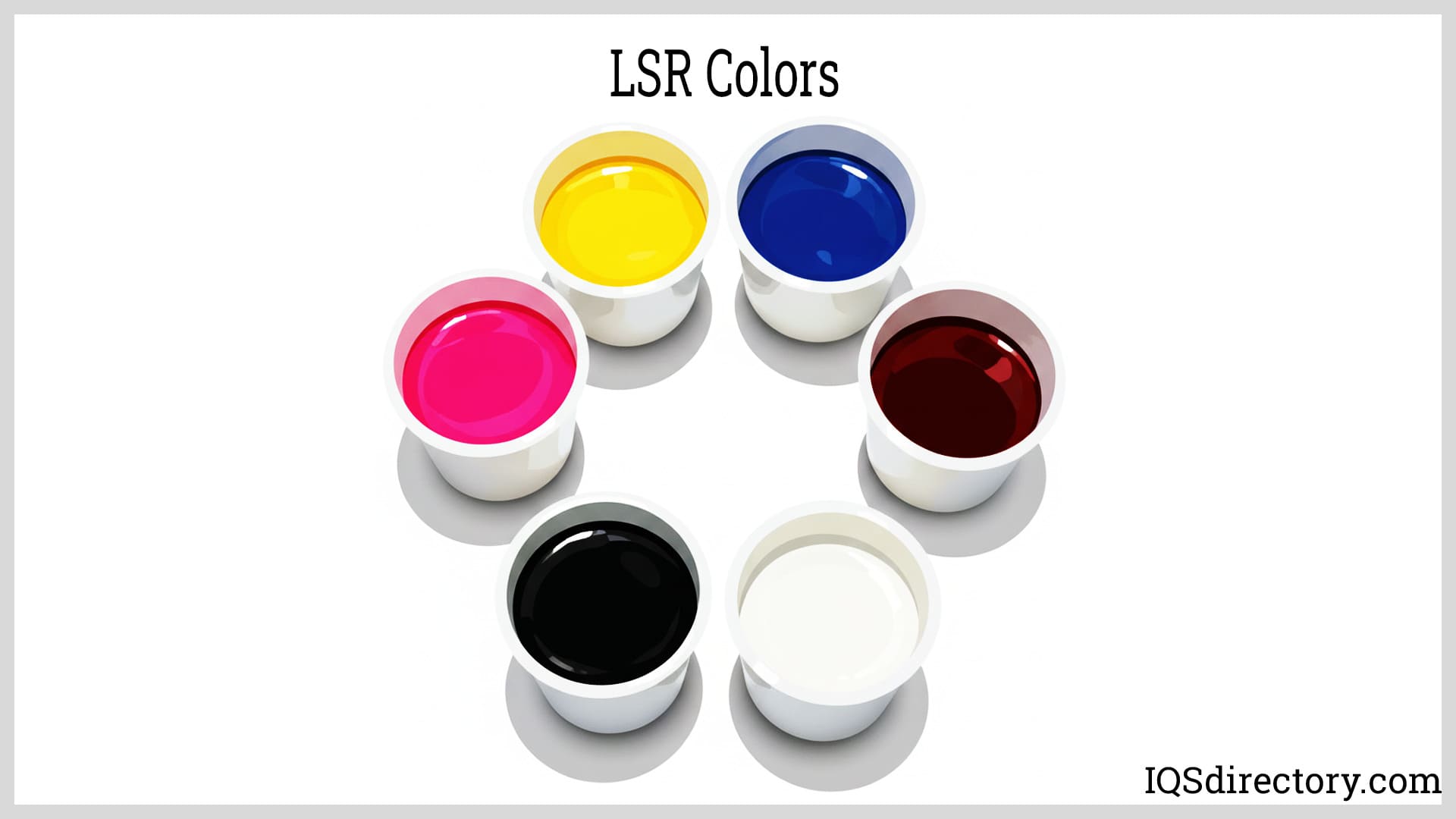
Pigmentation – After manufacturing, LSR is a translucent white color but can have black or gray pigmentation added. Although these are typical, a wide range of colors are used to highlight LSR for a specific application. The main factor that determines the color of LSR is the application for which it is to be used. In certain cases, LSR may be used to differentiate components, provide aesthetic appeal, or meet industry standards.
Electrical – As with HTV, LSR has excellent insulation capabilities that makes it applicable for a wide range of electrical applications. The ability of LSR to perform at a wide range of temperatures further enhances its use as an insulation material. Aside from its range of temperatures, LSR has high electrical resistivity with hydrophobicity, repels water. These many characteristics is why it is so widely used for cable joints, connectors, and powerlines.
Room Temperature Vulcanized Silicone Rubber
As with LSR, RTV is important for use with electronic assemblies as a sealant. It enhances the durability of devices and provides stability for the performance of electronic components. In many cases, RTV is adapted to meet the requirements of an application and the needs of an industry.
Curing – RTV cures at room temperature, which makes it adaptable and easy to use. The moisture resistance of RTV enables it to be used for sealing all forms of equipment, regardless of the environmental conditions.
Temperature Resistance – As with all forms of silicone rubber, RTV has exceptional resistance to temperature with a range -70°C up to 250°C (-94°F up to 482°F). Like other types of silicone rubber, adjustments can be made to RTV that enable it to enhance and increase its temperature range. Regardless of the conditions, freezing cold or scorching hot, RTV maintains its stability and reliability.
Compression Set – RTV holds its shape even when enduring long term high pressure. This aspect of its properties gives it longevity and ensures that it maintains a tight, secure, airtight and watertight seal regardless of environmental stress.
Adhesion – The inert nature of RTV silicone rubber enables it to bond easily with any form of surface. This feature adds to its wide use and enables it to serve as a sealant for any form of surface, including ceramics, metals, and plastics. As any engineer can attest, strong adhesion is critical for keeping elements and components in place. This aspect of RTV is essential to the performance and function of products.
Nonflow and Non-Sag – In conjunction with the adhesion properties of RTV is its nonflow, non-sag characteristic. Once RTV is applied, it stays in place. This makes it ideal for overhead and vertical use, which makes it the right choice for construction and assembly projects.
Chemical Resistance – As with all forms of silicone rubber, RTV is highly resistant to all forms of chemicals, including solvents, moisture, and oils. The chemical resistance of RTV enables it to be used for industrial processes that involve deep cleaning and purification.
RTV is like the other forms of silicone rubber in regard to its ability to perform as electrical insulation. It prevents short circuits, guards against static electricity, and protects electrical devices from all forms of electrical issues. In addition, RTV is easy and convenient to apply. Once applied, it begins to cure immediately with the length of time determined by the amount of RTV that is applied.
Conclusion
Silicone rubber is an inorganic elastomer that is synthetically produced for a wide range of industrial and commercial uses. It is made up of a combination of silicon, taken from silica, carbon, hydrogen, and oxygen.
Although silicone rubber is regarded as a rubber product, it shares some properties with plastics. Its unique chemical structure enables it to be formed into products that are rigid like plastic resins.
Silicone rubber is a highly durable, long lasting flexible elastomer that is capable of enduring extremes in temperature. Its electrical insulation properties make it ideal for use with electrical devices and equipment.
The many types of silicone rubber vary in degrees of viscosity and structural features based on how the chain of polymers has been combined and the processing temperature.
The three basic types of silicone rubber vary in accordance with how they are manufactured, their chemical make up, and their designed use. They are high temperature vulcanized (HTV), liquid silicone rubber (LSR), and room temperature vulcanization (RTV).
Leading Manufacturers and Suppliers
Related Posts
Gaskets
Gaskets are a type of mechanical seal that inhibits leakage by filling the gap between static mating surfaces. It takes advantage of the compressive force that drives the gasket material to plastically flow between the...
Gasket Materials
Gaskets are seals that are mechanically made to prevent either process fluids from escaping or contaminants from entering the delicate areas. Each given system has its best suited gasket, and it is critical to make the right...
Head Gaskets
The head gasket is a motor engine component that seals the combustion part of the engine so that oil and the motor coolant circulate. The head gasket also seals the combustion chamber inside the engine...
Rubber Gaskets
Rubber gaskets are elastic components used for mechanically sealing the microscopic gap between two mating surfaces or joints. Examples of these surfaces are flange faces of piping and fittings, mating surfaces of an...
Compression Molding
Molding is a manufacturing process that uses a mold - the latter being a solid container used to give shape to a piece of material. It is a forming process. The form is transferred from the mold to the material by...
Die Cutting
Die cutting is the mass fabrication of cut-out shapes by shearing a stock material such as paper and chipboard using tooling called a die. A die is a specialized tool used in manufacturing to cut or shape a material fitted into a press...
Hydraulic Seals
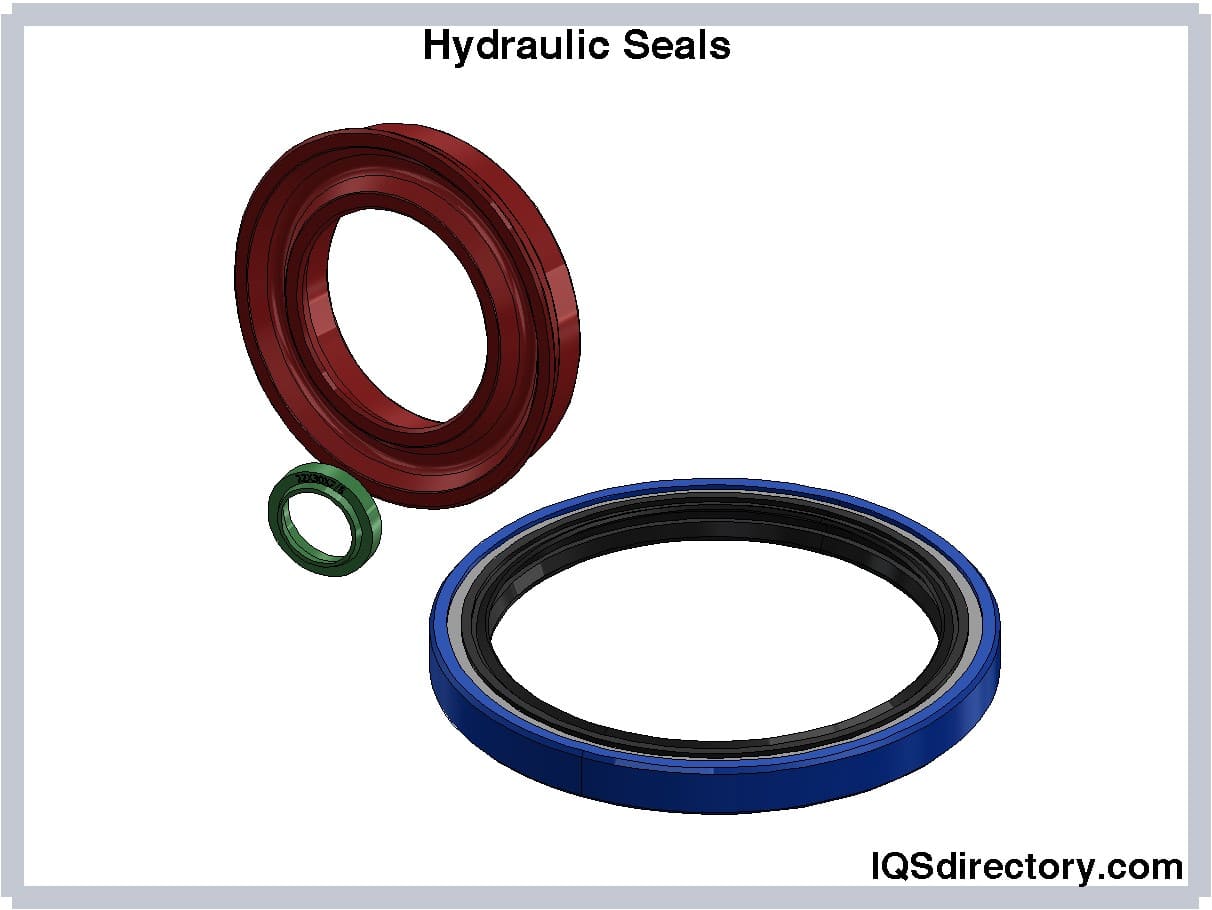
Hydraulic seals are a form of gasket-like rings that are used to fill gaps between hydraulic cylinder components. Many different components are found in hydraulic cylinders, some of which get in...
Kiss Cutting
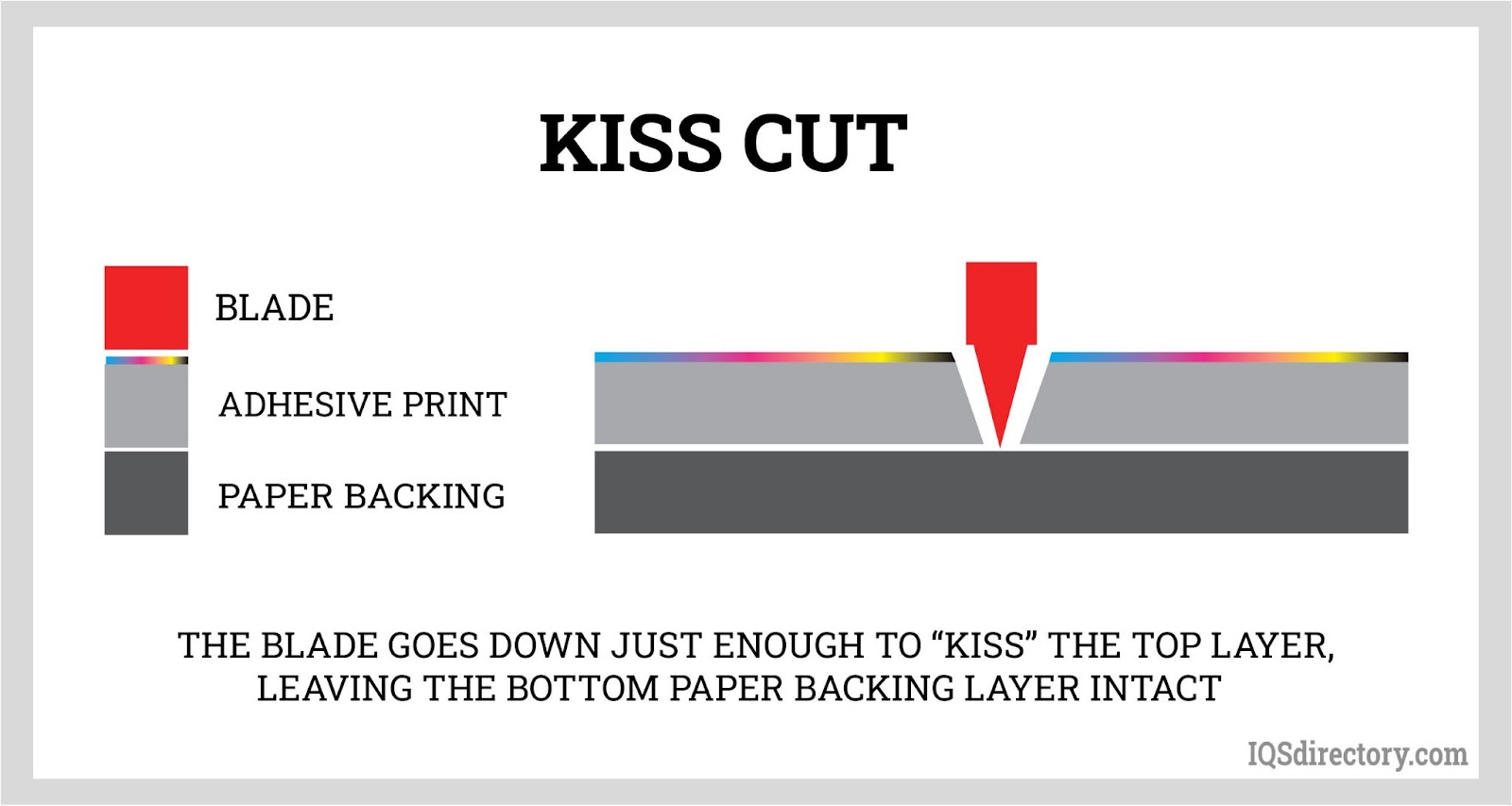
Kiss cutting is a method for cutting into a material where the upper layers are pierced, but the back layer is left intact. The term "kiss" refers to the way the blade touches the upper layers of the material and leaves a pattern...
O-Rings
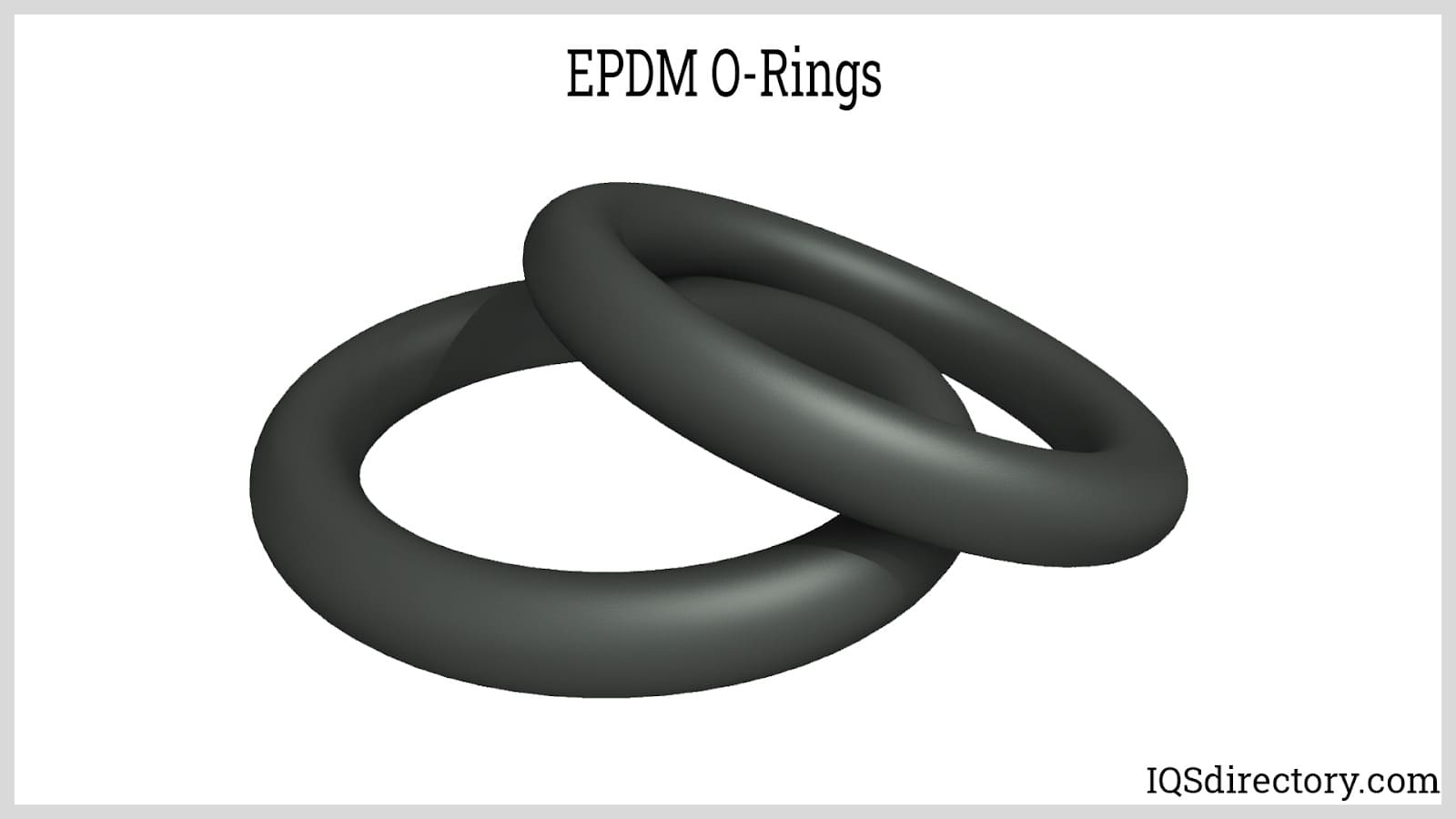
An O-ring is a round elastic loop that is used as a seal for static and dynamic applications. Their main purpose is to serve as a seal between structures such as pipes, tubes, in pistons, and cylinders. O-rings are made of...
Rubber Injection Molding
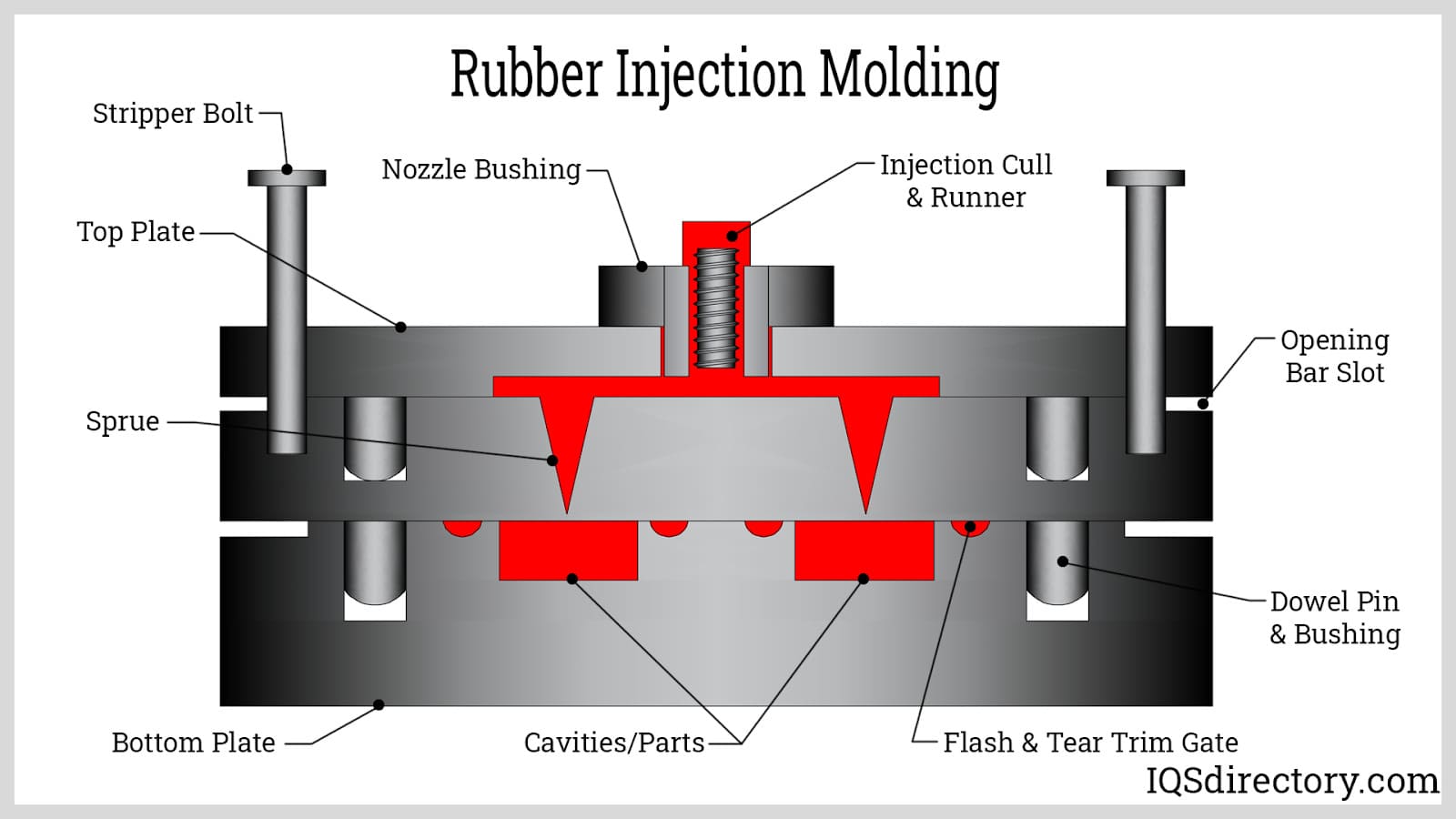
Rubber injection molding is when uncured rubber is transformed into a usable product by injecting raw rubber material into a mold cavity made of metal. The applied pressure produces a chemical reaction like...
Rubber Molding
Rubber molding is a process of transforming uncured rubber or an elastomer into a usable product by transferring, compressing, or injecting raw rubber material into a metal mold cavity...
Rubber O-Rings
A rubber O ring is a mechanical gasket in the shape of a torus or donut and is used for static and dynamic applications where there is relative motion between parts and the possibility of friction. Some of the benefits of rubber O rings are...
Rubber Overmolding
There are several methods to perform rubber overmolding, and each method has its own unique advantages and disadvantages. The choice of method typically depends on the design and material requirements of the product being...
Silicone Rubber Molding
Silicone rubber molding is a method for shaping, forming, and fabricating silicone rubber parts and products using a heated mold. The process involves compressing or injecting silicone rubber into a mold...
Grommet Edging
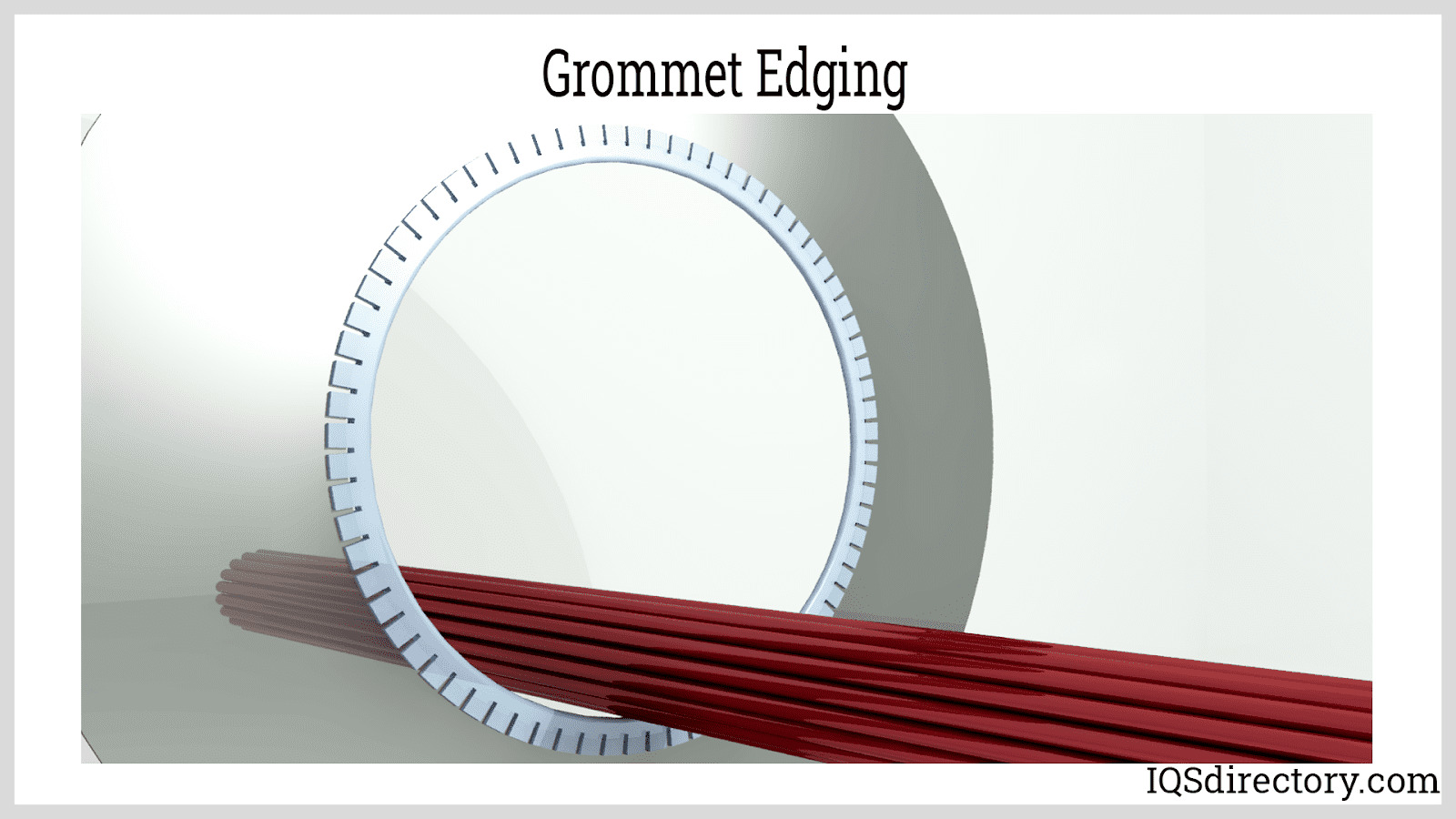
A grommet edging is a flexible rubber or plastic strip that covers rough and sharp surfaces found in openings and edges of panel walls to protect the passing electrical cables, wires, and other sensitive components...