Rubber Tubing
Rubber tubing products are hollow channels made from a wide variety of natural and synthetic rubber materials. They are used for the transmission of liquids and gases, which is why they’re also known as hoses, tubes or pipes.
Quick links to Rubber Tubing Information
The History of Rubber Tubing
The first rubber tubing was fabricated from natural rubber, or pure gum rubber, derived from natural latex produced by the Pará rubber tree and other latex producing plants. While latex rubber tubing worked well for many years, users eventually discovered that a fair amount of the population is prone to latex allergies. This, in part, led to its decreased use. Also contributing, though, were the rise in latex prices and the development of synthetic rubbers.
The first synthetic rubber was synthesized in 1909 by scientists at Bayer, in response to the growing demand for rubber for tires. These scientists and others rapidly began working on developing more types of synthetic rubber, which they did. Synthetic rubber tubing, made from new rubbers like butyl rubber, was especially important in WWI and WWII.
The scientific community continues to develop new kinds of rubber and rubber tubing with new characteristics for new uses. The Viton fluoroelastomer, for example, was created in 1957 to meet the high performance needs of the aerospace industry. Because of its unique qualities, particularly its corrosion resistance, new varieties are still being developed and improved.
Advantages of Rubber Tubing
- Portability and Storability
- The biggest advantage of rubber hoses are their portability and storability. No matter how strong and robust your rubber tubes are, they offer convenient storage. You can easily fold or roll them and place them anywhere you want and, regardless of their weight, they will not take up a large amount of space in your storage area.
- Affordability
- Affordability is another perk that tubing offers. Rubber tubes are more economical than tubing made with other materials, including metal tubing and plastic tubing.This is largely because of the way they are priced. Metal pipes are usually sold by weight, whereas rubber pipes are not. So, if you’re buying metal pipes, the longer the pipe, the more you pay. Rubber pipe prices, on the other hand, start at just below the $10 mark.
- Durability and the protective layer are two other factors that determine the cost of rubber tubing. Color and quality also make a contribution in the final product price. Customization options can be a bit pricey. However, on average, you can easily get a single rubber tube with a $20 bill, max.
- Easy Maintenance
- Rubber tubes are also very easy to take care of. Whenever a blockage emerges in the supply, it can be addressed and fixed immediately, without having to call an expert engineer. Of course, this only works if you follow the prescribed safety and operation procedures.
- Flexibility
- You can set up a very flexible fluid distribution system, complete with twists and turns, for your home or facility, while ensuring free and unbarred motion of the fluid. You can lay down and adjust the plan according to your requirements.
- Versatility
- Rubber tubes can be designed with a range of options, and are an ideal choice for an application of any size. Rubber tubing manufacturers can design them to fit in with your aesthetic as well as environment. For example, many suppliers can also fabricate rubber tubing with a weather protective layer. Other rubber tubes can be explosion-proof.
Rubber Tubing Design
Rubber tubing is produced via the extrusion process. During rubber extrusion, an extruder machine forces uncured rubber material through a die, so that it takes on its cross-section. Manufacturers then take the newly formed rubber product and cure it via vulcanization.
To create these products, manufacturers may use any number of elastomer and thermoplastic rubber materials. First is natural rubber, also known as gum rubber or latex rubber. In addition to latex rubber, manufacturers offer tubing made from different resin grade synthetic materials including: neoprene, PVC, silicone, Viton, EPDM, nitrile, foam rubber, metal rubber and more.
Manufacturers design tubes or hoses mainly based on the application for which they will be used. Apart from size, the pressure, weight, length, and chemical friendliness also depend on the intended application and application environment.
Rubber tubing is highly customizable and can range in terms of inner diameter, outer diameter and thickness from a few thousandths of an inch to several inches. Tubing is available in not only a wide range of shapes and sizes, but also properties, such as chemical resistance, abrasion resistance, working temperature range and color. To perform these customizations, before extruding the material they choose, manufacturers mix in additives.
Rubber Tubing Images, Diagrams and Visual Concepts
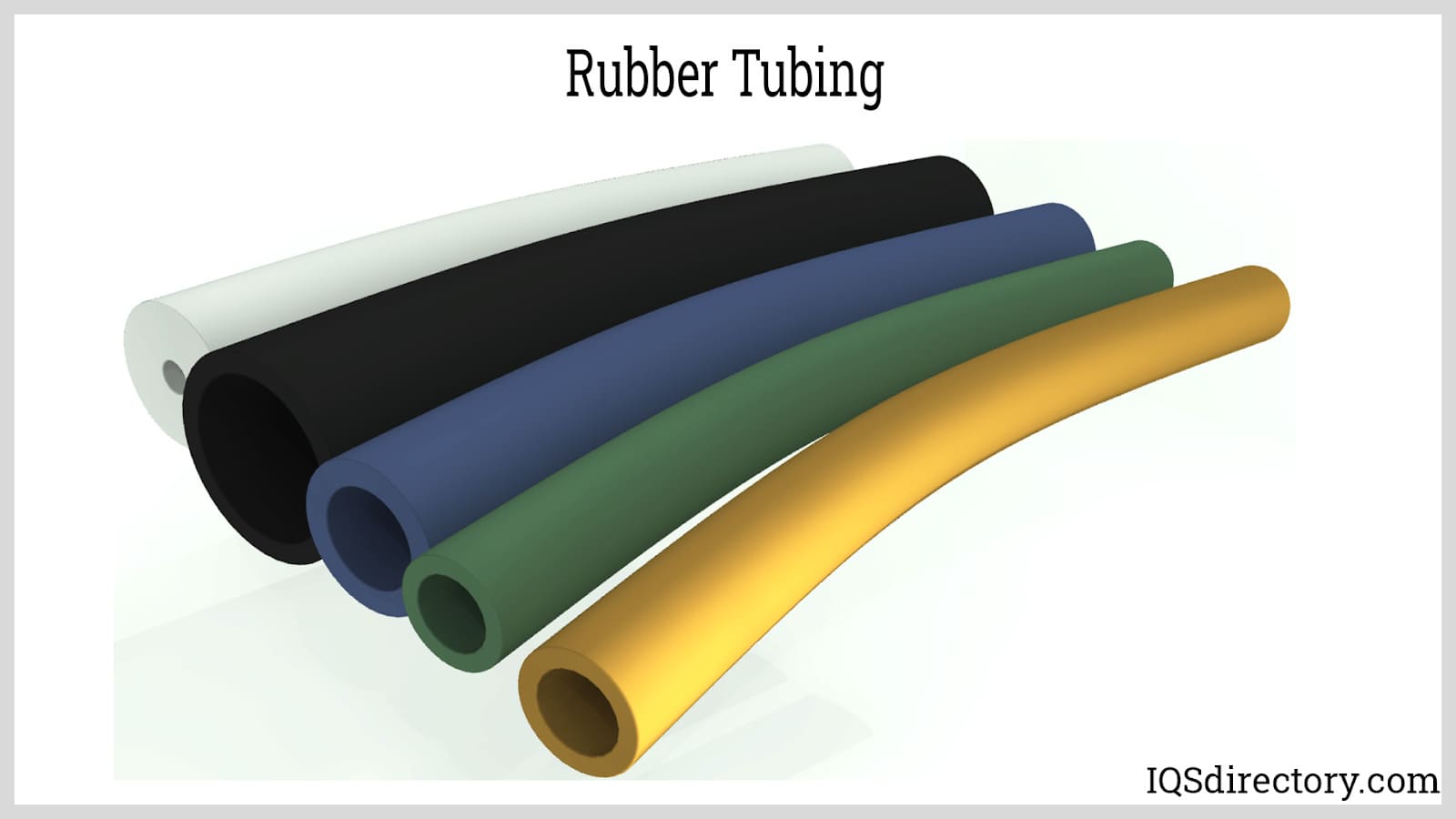 Rubber tubing is made of natural and synthetic rubber and is used to circulate and transport liquids and gases.
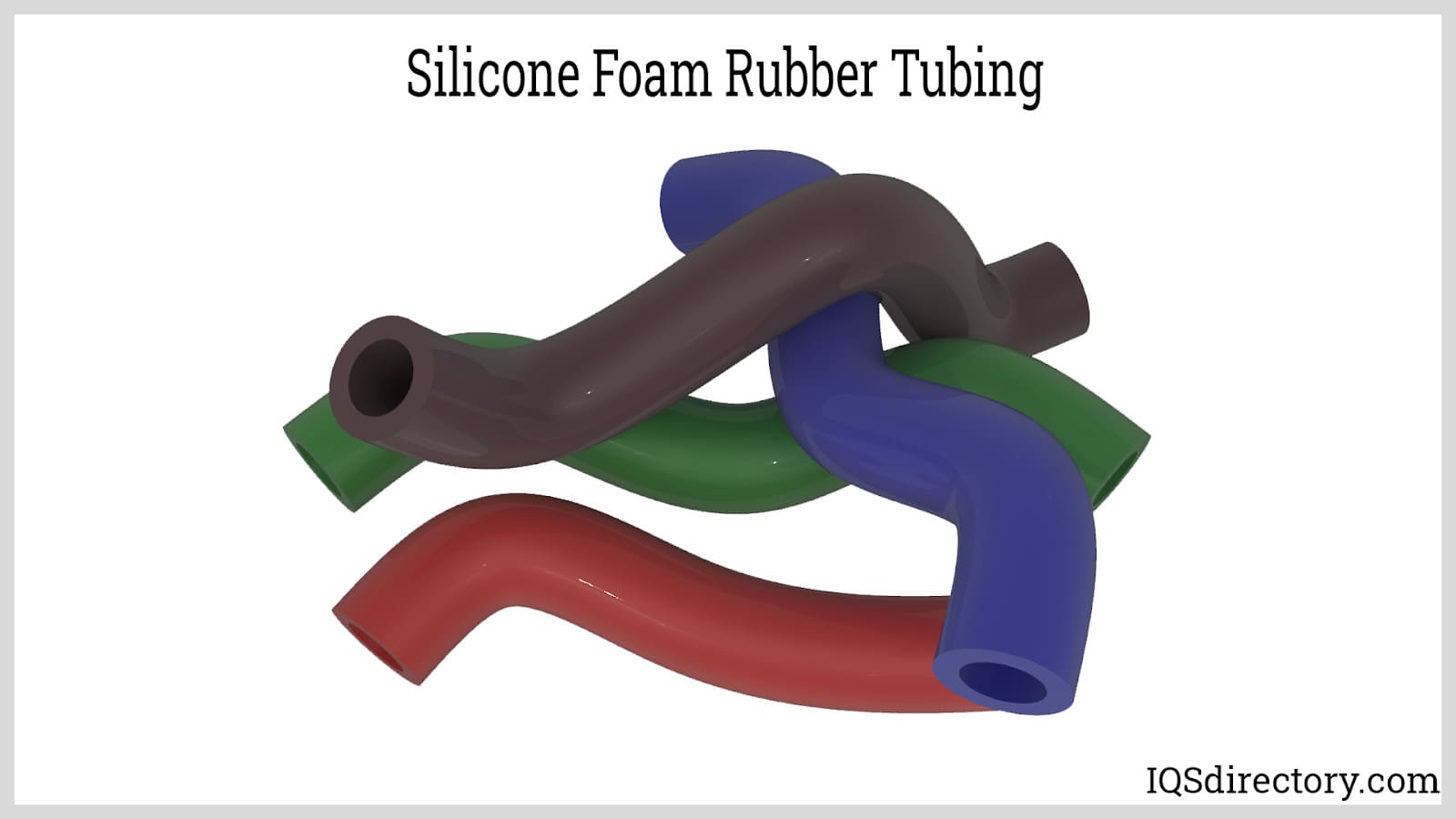
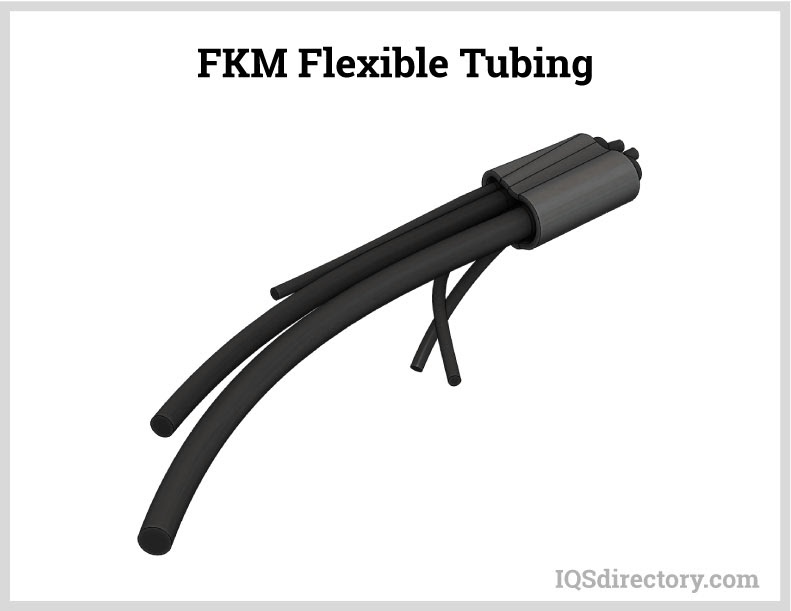 Fluoroelastomer rubber tubing is used for high temperature environments and is resistant to chemicals, oil, and heat above 200°C.
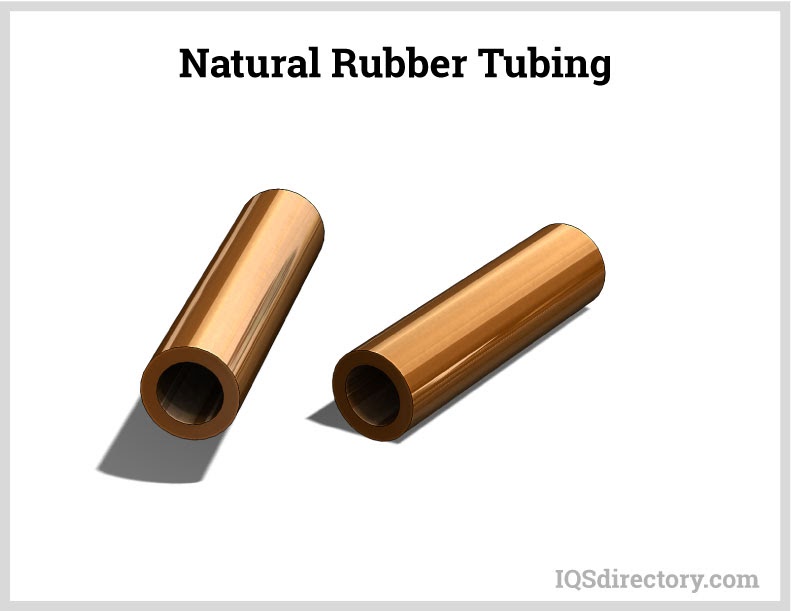 Natural rubber is very durable and flexible, which makes it usable in environments that require high strength, elongation, and tear strength.
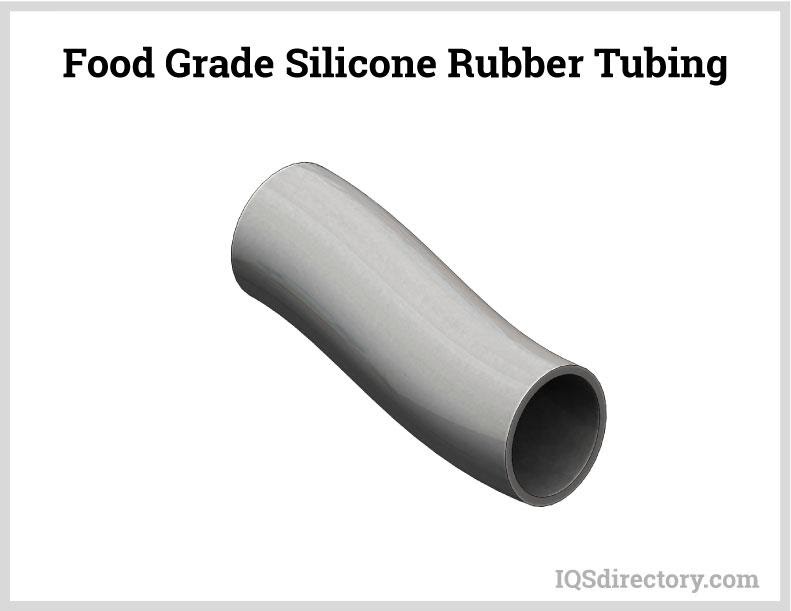 Rubber tubing for food processing is extremely critical and has to be manufactured to meet the rigorous standards set by the FDA.
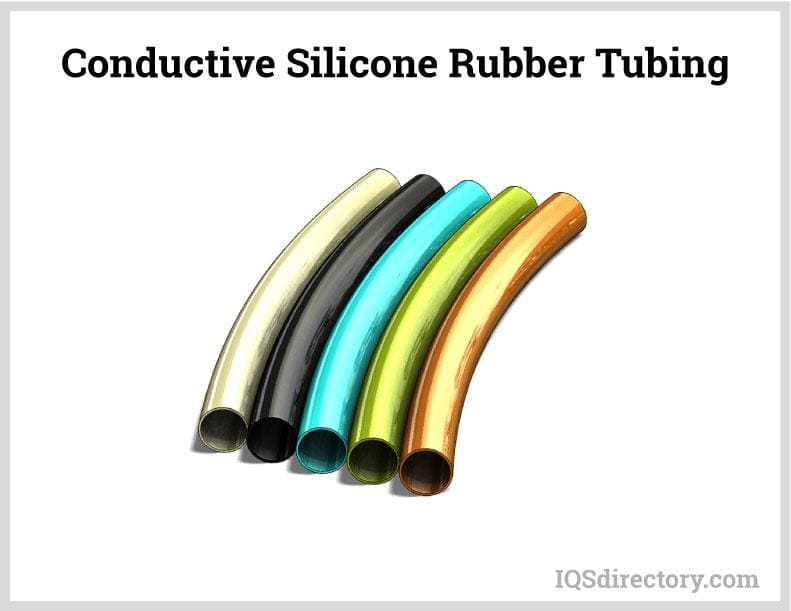 Conductive rubber tubing is used to control the static in electromagnetic interference (EMI) or radio frequency interference (RFI) shielding.
Types of Rubber Tubing
- Latex Rubber Tubing
- Natural rubber tubing is valued as chemically-inert, flexible rubber tubing. It is often used as surgical tubing and in other sensitive applications. Latex tubing can also be used as rubber hose, black rubber tubing, and conductive rubber tubing, among others. Despite those favorable qualities, latex rubber can be unsuitable for certain applications because many people suffer from latex allergies.
- Thermoplastic Rubber Tubing
- Known for its ability to stretch while maintaining its original shape, its durability, recyclability, abrasion resistance and stiffness.
- Neoprene Tubing
- Chemical and abrasion resistant, waterproof, lightweight, stretchable, buoyant and hypoallergenic.
- PVC Tubing
- Super versatile. First, it is available as both rigid tubing and flexible tubing. Second, naturally clear PVC tubing can be imbued with a wide variety of colors. Resistant to acids, alkalis and many solvents, PVC tubing can be used for applications from drainage to protective insulation.
- Silicone Rubber Tubing
- Derived from synthetic rubber, is smooth, pliable, elastic and highly resistant to water, heat and weather. Silicone tubing is also quite flexible. When tubing silicone, manufacturers create silicone tubing of many characteristics and sizes.
- Viton Rubber Tubing
- Made from the world's first fluoroelastomer, a high performance synthetic rubber that is exceptionally resilient to substances and conditions that other rubber tubing cannot withstand.
- EPDM Tubing
- A synthetic rubber made from ethylene propylene diene monomers. It is commonly used for automotive and industrial purposes.
- Conductive Rubber Tubing
- Prevents the buildup of static electricity and is used also to shield sensitive electronic equipment from electromagnetic interference or radio frequency interference. Common types of conductive tubing include conductive latex rubber and conductive silicone rubber.
- Flexible Rubber Tubing
- Valuable in applications where the rubber tube must be bent or contorted to fit into a space. Some materials allow for a product that resists kinks and can be repeatedly stretched or bent without becoming weak.
- Surgical Tubing
- Sterile and inert because it is used for medical processes; this kind of tubing usually has extremely thin walls to permit free flow.
- Black Nitrile Rubber Tubing
- A type of black rubber tubing, made from nitrile. All black rubber tubing is more heat absorbent than clear tubing and can provide insulation or heat retention. Black nitrile tubing in particular, though, is also resistant to acids, mineral oils and vegetable oils.
- Hose Rubber Tubing
- Or rubber hose, is a large rubber tube that is usually reinforced by thin metal wires or stiff rubber to hold the shape even when no liquid is flowing through it.
- Foam Tubing
- A little different than most rubber tubing. Unlike the others, instead of carrying fluids and gases, it is used exclusively to surround solid items like handles. This rubber product, available in many colors and textures, is used primarily for cushion, improved grip, and insulation.
- Microbore Tubing
- Used in the medical field for intravenous lines and delicate placement inside veins and arteries. The walls of the tubing are strong enough to support themselves while also allowing free flow of necessary liquids such as blood or drugs. It is ultra-smooth, inert and sterile to minimize any discomfort or danger for the patient.
- Gum Rubber Tubing
- Another name for natural rubber tubing that provides a pathway for liquids and gases. Natural rubber is derived from natural latex and synthetic rubber comes from processed petrochemicals; the term gum rubber refers to the naturally derived version. Gum rubber tubing can range in outer diameter, inner diameter and wall thickness. It is usually tan or white in color; colorants may be added, though this interferes with the purity of the rubber.
- Metal Rubber Tubing
- Another innovation is the development of a strong material called metal rubber. Flexible and lightweight, metal rubber can be stretched, frozen and subjected to chemicals and then snap back to its original shape and form. It is made from polymers with metal ions and is self-assembling, meaning that the components form an organized structure or pattern without external direction. Two of the most common types of metal tubing are steel tubing and stainless steel tubing.
Things to Consider When Purchasing Rubber Tubing
For a safe and successful system performance, you need the right rubber tubing. Since there are so many variations out there, we recommend taking your specifications to an experienced tubing supplier, such as one of those we have listed on this page. When you’re searching for a manufacturer, remember to not only focus on their capabilities, but their customer service. A capable rubber company that will not work with your timeline, budget or other requirements is of no use to you. Instead of compromising, look for the manufacturer that can serve you best.
Proper Care for Rubber Tubing
To prevent leakage and smells, it is important to keep your rubber tubes well-maintained. Here are a few tips that will help you take care of your rubber tubes:
- Careful Handling
- When using rubber tubing, following a careful approach is crucial. Rubber is a soft and flexible material, which can be prone to distress, such as tearing and wearing. Although there are rubber tubes available with protective layers, you will still need to take care of these utilities to prevent damage. You should not keep the pipe in an unsuggested area. Also, you should keep your storage area clean and free of dust and moisture.
- Additionally, during use, you should connect the pipe only with recommended connectors and accessories. You should never set a supply force that your pipe is not suitable for. Most importantly, you should never drag your rubber pipe over sharp edges and rough surfaces, as doing so can potentially damage the shielding layer, resulting in a decrease in durability. Further, never attempt to tie knots in the pipe, or stand or crush the pipe.
- Use the pipe for its purpose only
- Never use your tubing to carry a flow that it’s not meant to carry. Doing so risks damage to your tubing and damage to the area around the tube, if it bursts or leaks. If you put chemicals or acids in water tubing, for example, the chemicals could weaken the tubing, or the tubing materials could leach into the chemicals. You just don’t know what could happen. If you want to use the tubing for other purposes, talk to your manufacturing about new tubing.
- Routine Cleaning and Inspection
- Set up a cleaning routine for your tubing. Clean it at least every six months, or more often, per the recommendation of your supplier. When you do so, clean it with lukewarm soapy water and allow it to dry out completely. Don’t forget to include accessories like grommets. Also, before washing, inspect it for spot leaks and damages in the tube. If you notice wide leaks, you should either replace it or cut the pipe in two, and connect those parts with a same size connector.
Applications of Rubber Tubing
Rubber tubing is used in flow lines to move and dispense liquids or gases. It is one of the most important building management utilities. With these tubes, homeowners and construction engineers create effective and efficient water management plans, from gardening applications to chemical conveyance. In addition, it’s valued by industrial, commercial and consumer utilities for process fluids. Among the industries in which it is valued are: petrochemicals, medicine and healthcare, food and beverage, sewage and wastewater management and HVAC.
Rubber Tubing Accessories
Tubing requires fittings, industrial hose barbs, rubber grommet rings, or other attachments, in order to be connected to tools, instruments or more tubing.
Rubber Tubing Terms
- Butyl
- A type of rubber with excellent air retention and good flex that was first widely used for tire innertubes.
- Neoprene
- A very versatile type of synthetic rubber because of a combination of properties: sun, ozone, weather, oil and chemical resistance, a wide temperature tolerance range and physical toughness to stand up to burning, flexing and twisting.
- Nitrile
- A type of rubber, also known as NBR, used in the industrial and automotive rubber products industries, offering oil, fuel and chemical resistance for applications such as fuel and oil handling hose, seals and grommets.
- Polysulfide
- A type of synthetic rubber compound known for resistance to water, oils and many other organic solvents.
- SBR
- An abbreviation for styrene-butadiene rubber, a synthetic rubber that was developed when stores of natural rubber were cut off during World War II. SBR, which can be vulcanized, is harder and more chemical resistant than natural rubber.