Rubber Molding
Today, numerous commercial products utilize molded rubber products as important assembly components. From custom mold making and industrial roller manufacturing machinery to gaskets, grommets, seals, and parts in medical equipment, housewares, consumer appliances and more, rubber molding contributes to diverse products in the marketplace today. You'll discover a great selection of rubber molding manufacturers listed above. Use this website to locate the fine custom products you require for your enterprise. Rubber molding is the process by which raw rubber is melted and formed in a mold. It is the method of choice in the creation of many different kinds of complex rubber products.
Quick links to Rubber Molding Information
The History of Rubber Molding
Some South American tribal peoples have reportedly utilized the sap from rubber trees for thousands of years to make household items. However, industrial rubber really did not become significant as a commercial product until the late Nineteenth Century. The development of vulcanization allowed rubber to withstand extensive processing without degrading.
In 1823, a Scottish chemist named Charles Macintosh discovered he could apply rubber to cloth using a coal-tar byproduct to cement regular cloth to cloth with a rubbery surface. Interest in rubber products grew in Europe and the USA during the Victorian Era. However, early rubber products displayed some serious disadvantages; the rubber became gummy during hot weather. It frequently deteriorated and grew malodorous. Rubber erasers and shoe soles did gain some popularity despite these drawbacks.
In 1839, an American named Charles Goodyear discovered the process of vulcanizing. Adding sulfur to rubber enhanced its durability by stabilizing polymers in the latex. Although he received a patent in 1844, his invention did not receive widespread commercial use during his lifetime. Vulcanization grew widespread only with the development of rubber bicycle tires and automobile tires after 1889. During the late 1800s, entrepreneurs established rubber plantations in many tropical regions and the demand for rubber in international commerce increased. By the early 1900s, a flourishing global rubber industry had arisen.
Despite its utility, rubber molding achieved popularity only decades later. Advances in chemistry led to interest in the development of synthesized plastics during the second half of the 19th Century. Inventors John and Isaiah Hyatt, brothers, reportedly patented the first injection molding machine in 1872. They eventually used this invention to create both rubber and plastic products. Subsequent inventors continued to improve rubber molding technology throughout the late 1800s and the Twentieth Century.
The development of plastics contributed significantly to improvements in injection molding technology. Liquid silicone molding capabilities increased significantly during the 1970s, following James Watson Hendry's invention of a gas-powered process for injection molding. During subsequent decades, the use of automation increased significantly. Today, computers assist many rubber injection molding production efforts. Companies supplying custom molding services have increased as many firms have begun specializing in specific types of rubber molding.
The Advantages of Rubber Molding
Molding offers important advantages over other types of rubber product production processes in certain situations. While this process may lack the production speed of rubber extrusion, for instance, it does permit the generation of a wide variety of complex parts. Additionally, molding offers versatility. It utilizes many different formulations of rubber-based raw materials, allowing the generation of products with different desired properties, such as durability or high heat resistance. Modern rubber molding facilities can mass produce custom products quickly and efficiently. A customer utilizing a proprietary rubber compound for a brand can create prototype products for marketing purposes or commission large production runs, for example.
The Rubber Molding Materials Process
Manufacturers today use a variety of processes for molding natural and synthetic rubber. These processes include:
- Injection Molding
- Predominates today in the commercial marketplace. It typically supplies inexpensive plastic components during mass production runs. A rubber injection molding manufacturer creates a production line to transform solid rubber or synthetic rubber stock into molten material injected into a terminal mold cavity. Manufacturers usually automate this process through the use of fast-paced computerized machinery. The combination of heat and pressure assist the manufacturer in achieving uniform mold filling. During cooling, a rubber product solidifies into a desired shape. The mold then ejects the plastic work piece, which may require additional finishing before use in an assembly (or not).
- Compression Molding
- This process has achieved popularity as a way to create low tolerance rubber or synthetic rubber parts. The manufacturer performs the stock into a desired shape and weight and then inserts it into a mold cavity. The closing of the heavy compression mold helps squeeze the preformed material into a desired shape. The manufacturer heats molds to designated temperatures and allows them to remain closed for specified periods of time to optimize the production of final products.
- Liquid Injection Molding
- Closely resembles the conventional rubber injection molding process. However, manufacturers utilize liquid stock such as liquid silicone rubber as the starting raw material. The machinery which accomplishes this process usually includes some form of metered pump to help regulate and control the flow of silicone. The manufacturer mixes the liquid silicone with any other applicable constituents after the initial metered discharge. Then a nozzle injects the mixture into a mold. After securing the mold tightly with clamps, the manufacturer applies a designated amount of heat and pressure to create a product. Liquid injection molding may shorten the production process, since the manufacturer does not need to transform solid stock into a liquid state to initiate molding. Products generated in this way also require very little finishing.
- Transfer Molding
- Allows manufacturers to produce both rubber items bonded to metal surfaces, and precision molded rubber parts. As with compression molding, the manufacturer uses preformed rubber in a designated weight. However, instead of placing this material into an open mold, the manufacturer inserts it into a cavity located above the mold called a "pot" and then applies a heavy mechanical part known as a "ram" to force the preform to transfer into the mold through a runner and gate system as it melts upon the application of heat and pressure. The ram remains in place over the mold for a specified period of time.
Rubber Molding Images, Diagrams and Visual Concepts
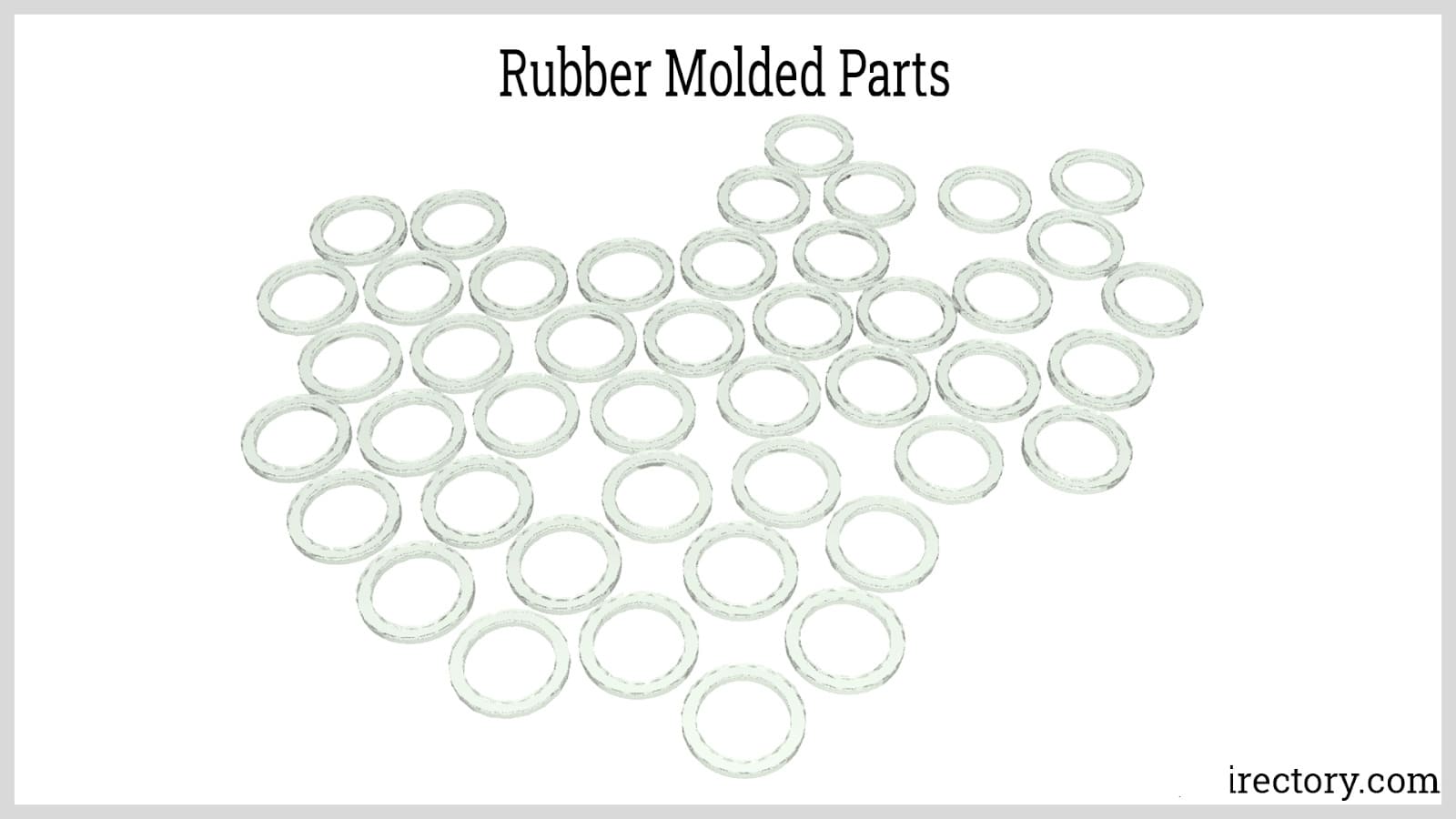 Rubber molding is the process of transforming an elastomer by transferring, compressing, or injecting raw rubber material into a metal mold cavity.
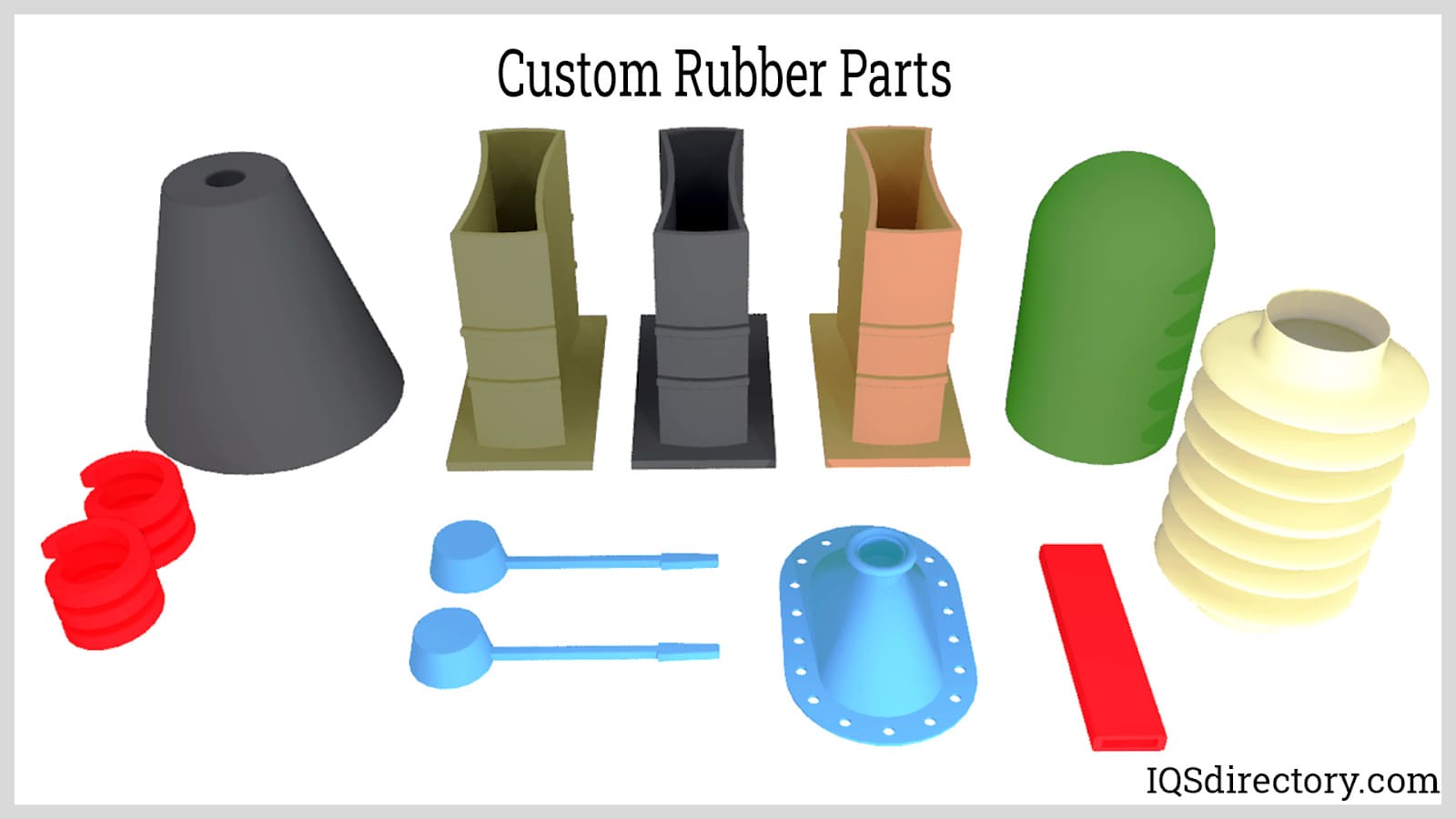 Rubber can be molded in different shapes and sizes which have a multitude of uses.
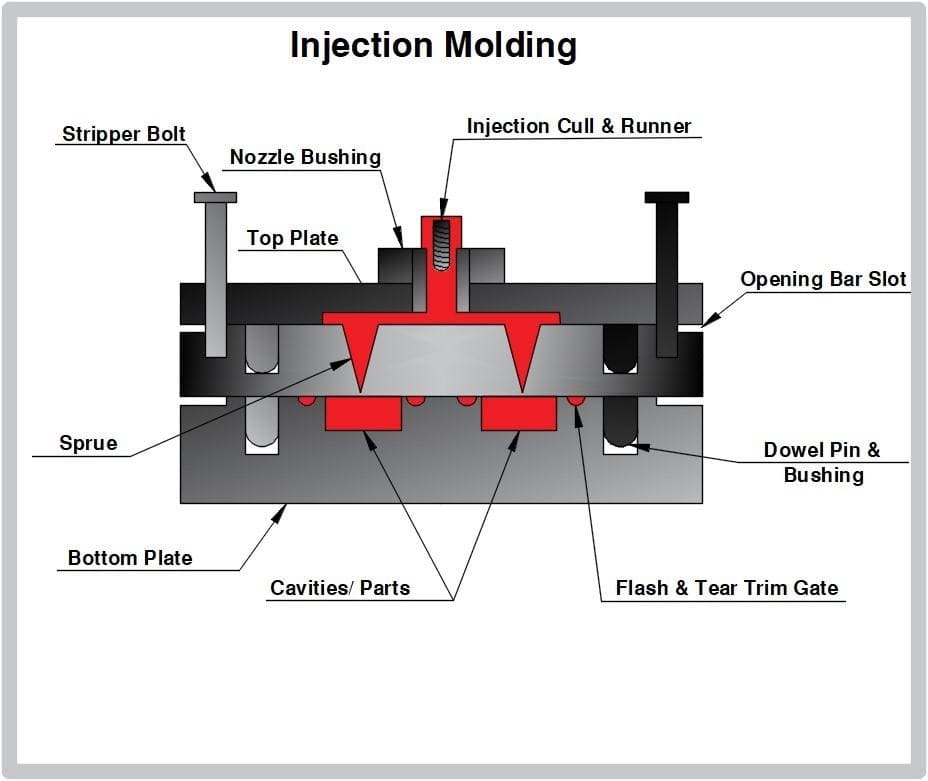 The injection molding rubber begins with raw liquid rubber that flows into a mold cavity, then is tightly clamped to form the desired shape.
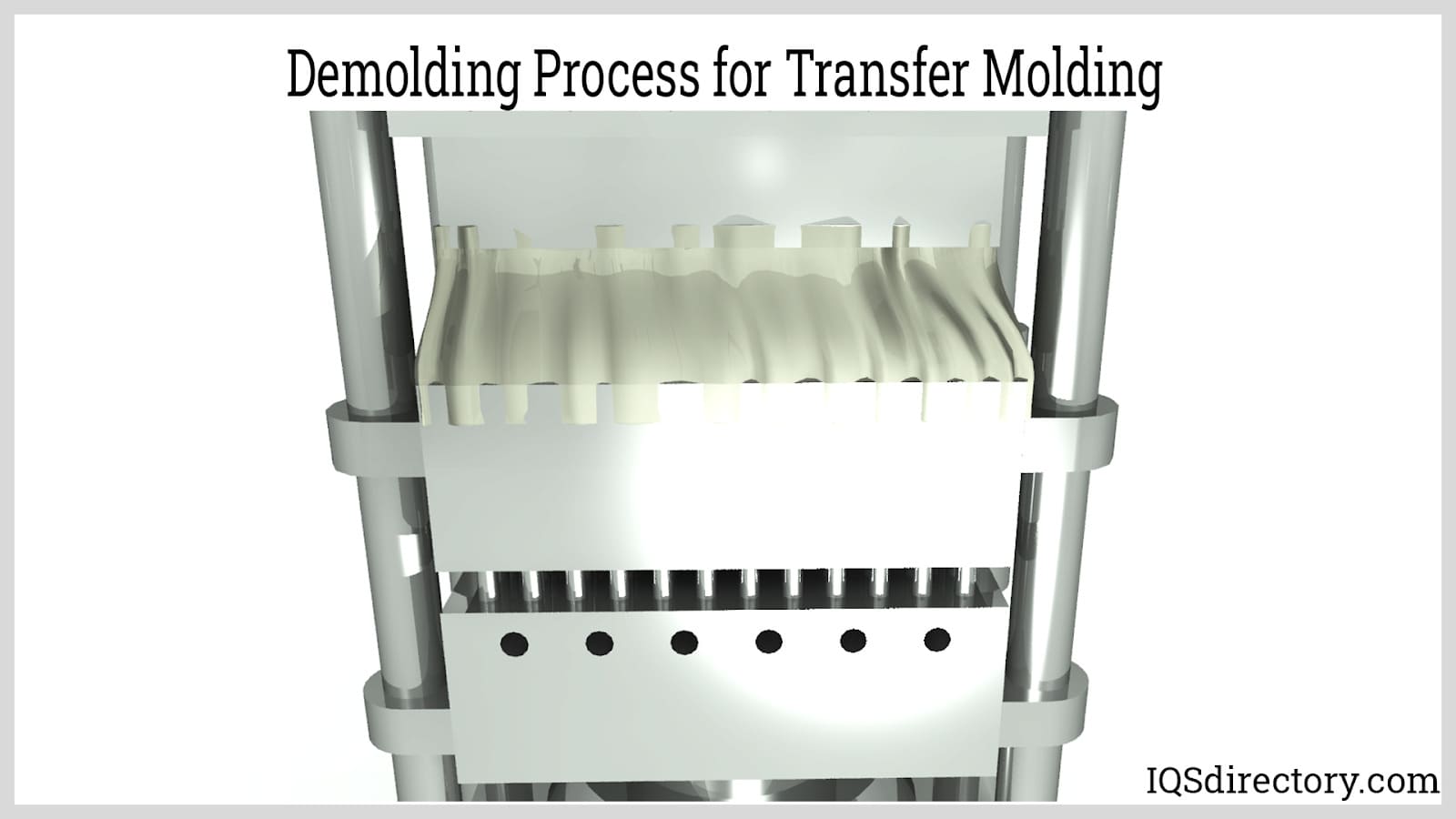 The transfer molding process feeds raw rubber into multiple mold cavities after the closure of the press.
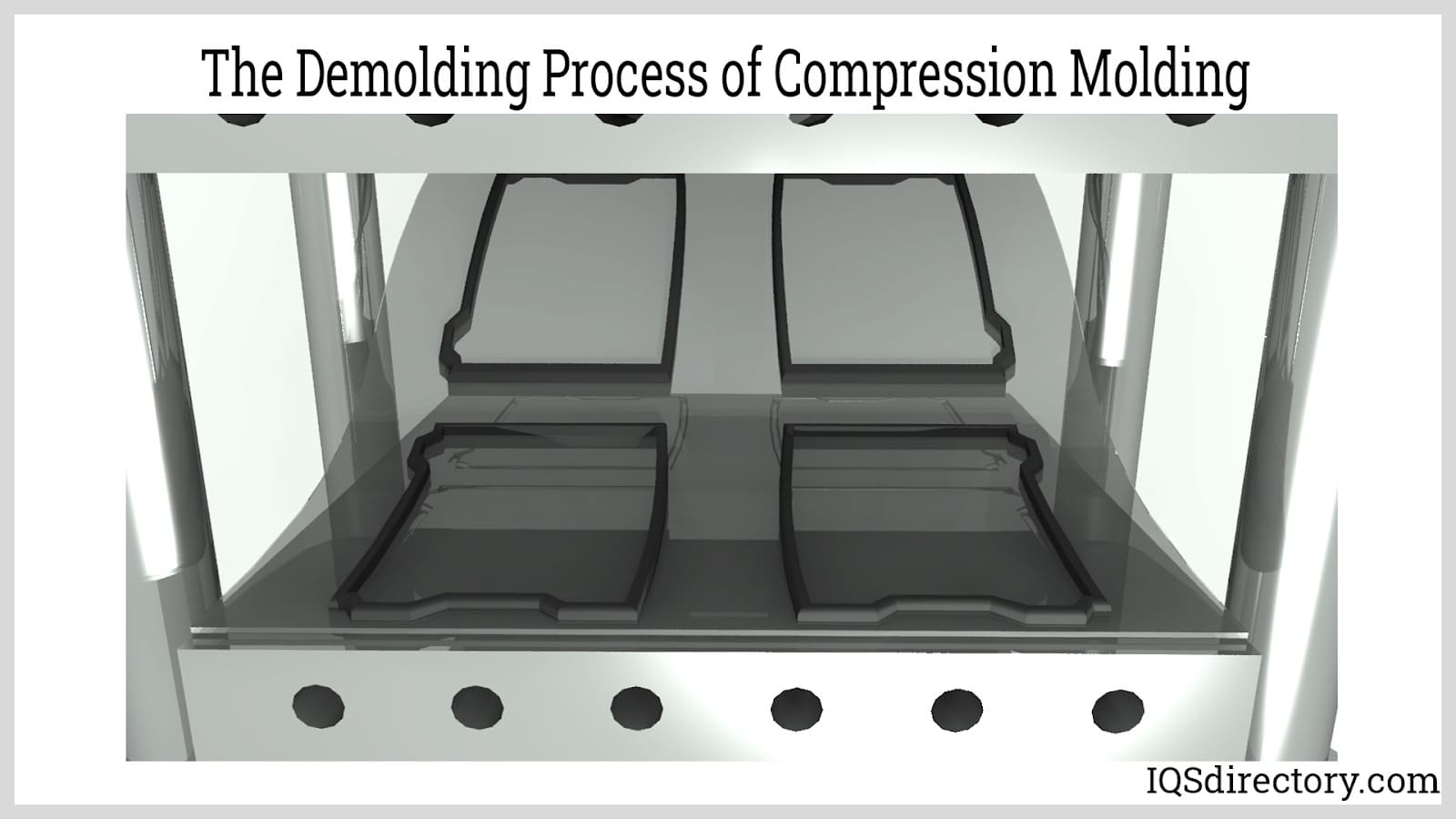 Compression molding uses heat and pressure, once unvulcanized rubber is placed in the mold cavity, the mold is closed and heated whlie pressure is applied with a hydraulic press.
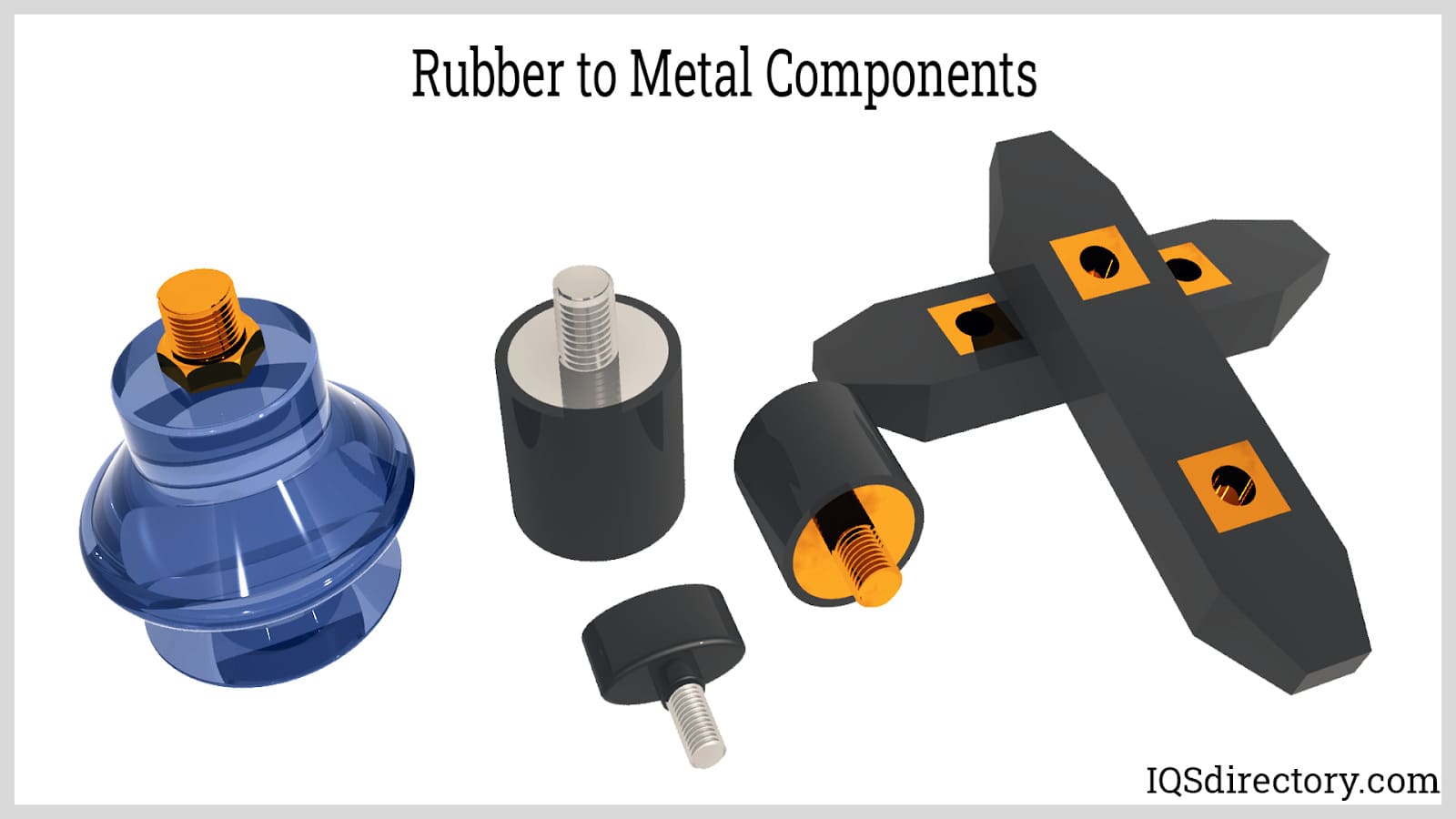 The process of rubber to metal molding to bond rubber with metal to cancel out noise and other vibrations.
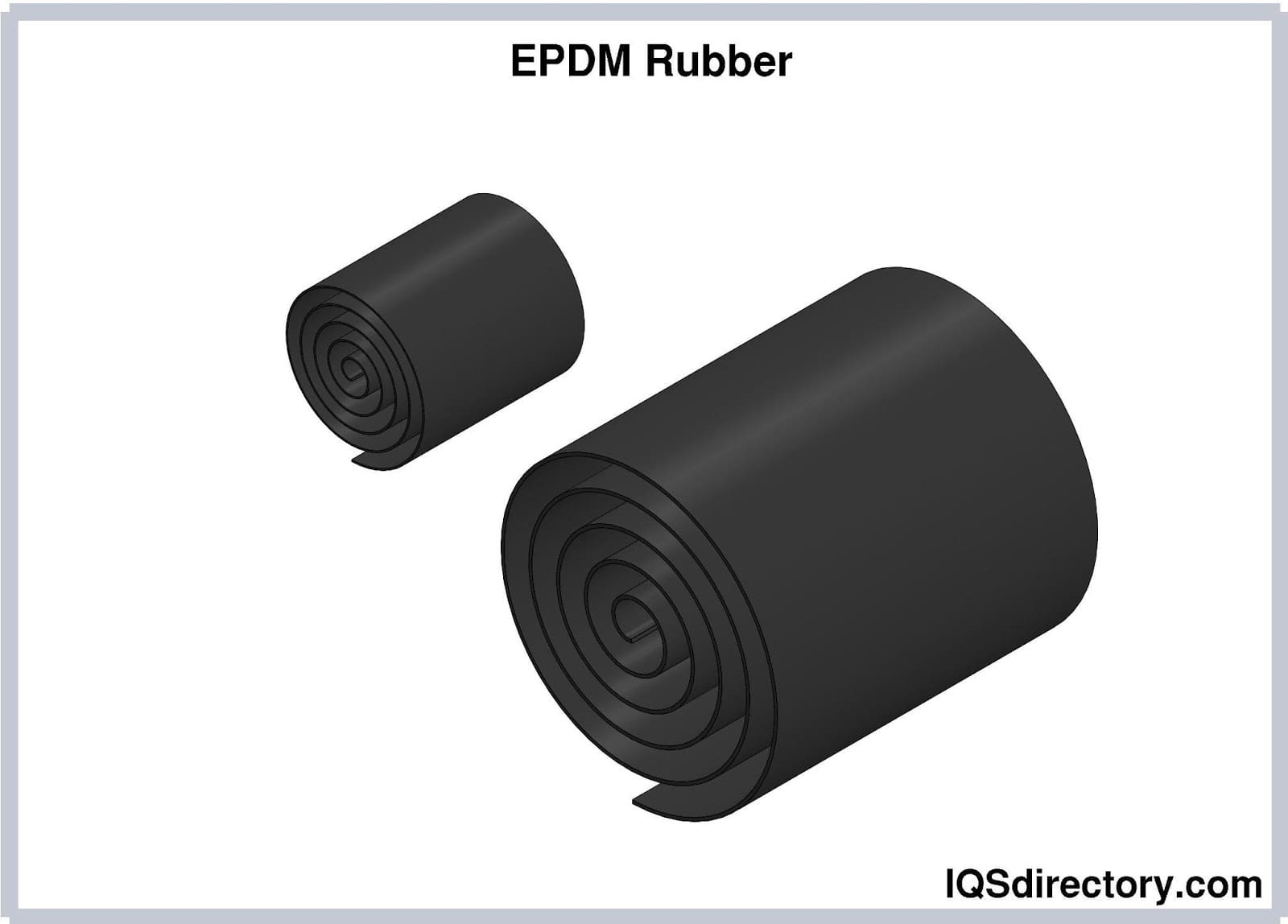 Ethylene Propylene Diene Monomer(EPDM) rubber is resistant to temperatures up to 302 °F (150 °C) and is highly durable.
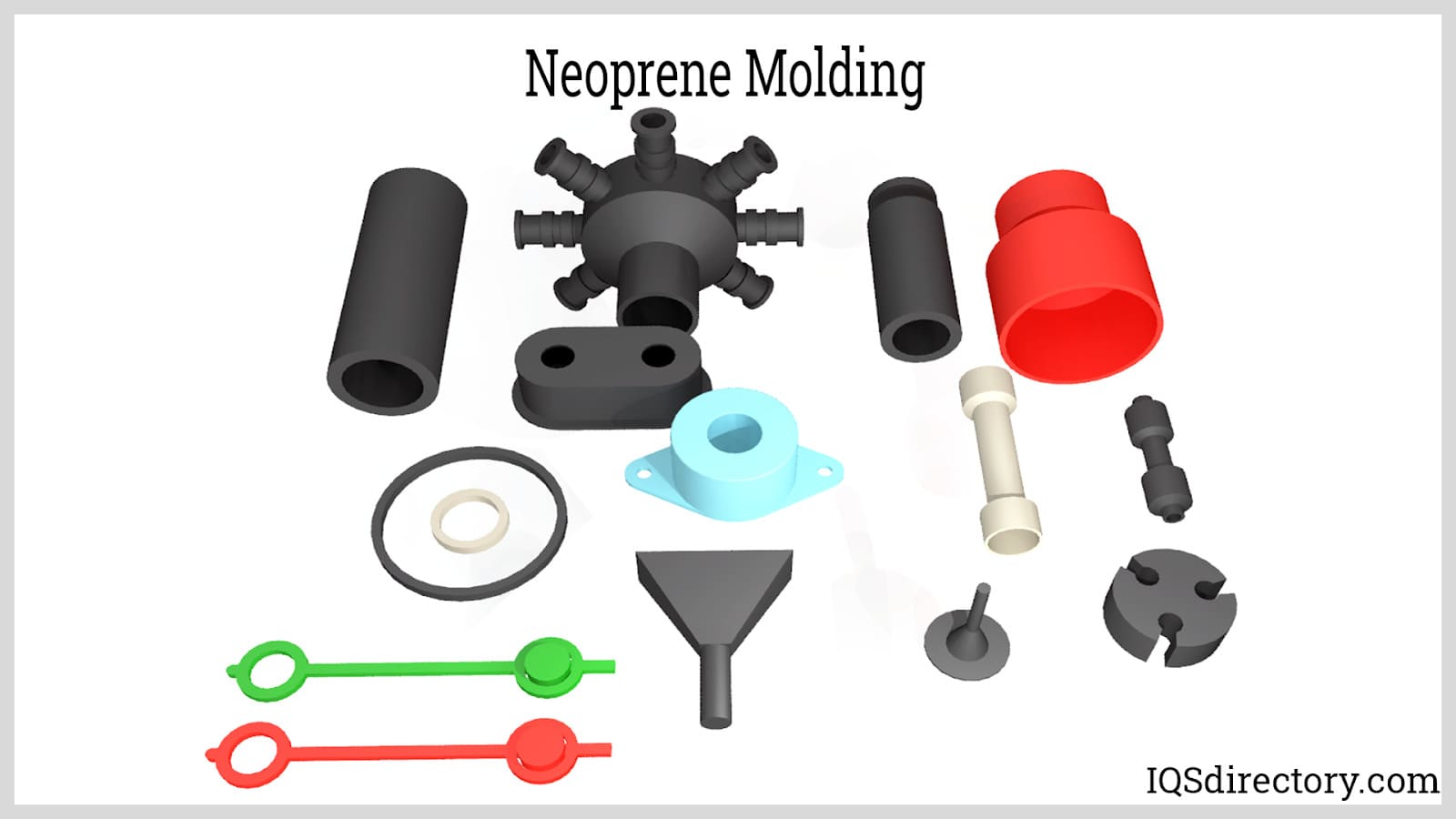 Neoprene rubber is a multipurpose material with temperature and abrasion resistant properties.
Rubber Molding Types
- Blow Molding
- A less-common process of placing a hollow tube between the two halves of a blow mold. The blow mold then closes, pinching off the bottom half of the tube, and air is injected into the top, forcing the material outwards to the walls of the blow mold.
- Foam Rubber
- Rubber that was manufactured with the addition of a foaming agent in order to create a flexible, air-filled substance.
- Liquid Silicone Rubber
- The liquid form of a synthetic, two-component, elastomeric polymer that is made from silicone elastomers.
- Rubber Baseboard
- A molded rubber product used to cover the joint that is formed when a wall meets the floor.
- Rubber Diaphragm
- Flexible seals that are resistant to a variety of media at different pressures.
- Rubber Grommets
- Rubber rings inserted into a hole in sheet metal to protect cords or electrical wires from the abrasion.
- Rubber Seals
- Used to prevent leakage at joints.
- Rubber Sheets
- Flat pieces of rubber used for a variety of purposes.
- Rubber Tubing
- Refers to long, hollow cylinders used to transport liquids and gases.
- Rubber Washers
- Primarily used to support the weight of a threaded fastener, but are also used in taps or valves to control the flow of liquids or gases.
- Rubber Molders
- An operation where rubber components are shaped into useful products.
- Viton Rubber Molding
- A specialized synthetic rubber that is combined with a fluoropolymer elastomer. This combination makes viton rubber particularly durable in applications where it will be exposed to aggressive chemicals.
Molded Rubber Applications
The ability of manufacturers to shape molded rubber into complex forms enhances the usefulness of flexible rubber and synthetic-rubber parts. It enables engineers to obtain useful seals and cushioning components. In mechanical assemblies, parts made from rubber sometimes help reduce the impact of vibration. They may dampen noise in some products, for instance.
The development of different types of man-made rubber-based products has further increased the demand for rubber molding. Synthetic materials such as neoprene, silicone, EPDM (ethylene propylene diene monomer M-class rubber), and other elastomers modify the properties of rubber, enabling rubber manufacturers to produce a variety of items for specific purposes. Additionally, specialized processes permit the affixation of rubber or synthetic rubber layers to some metal parts.
Most industries use multiple rubber molding products. This technology assists manufacturers in the agricultural, industrial, electronic, transportation, defense, construction, consumer goods and biotech sectors. For example, molded rubber frequently permits designers to create useful models for new or custom products. It may expedite the creation of samples for market testing purposes. Some companies specialize in generating rapid custom mold prototypes for clients, for instance.
Rubber custom molding also enables manufacturers to generate unique components for assemblies. The use of a mold cavity facilitates the production of richly detailed, complex parts. Today, manufacturers obtain a wide range of competitively priced rubber parts through this process. From the custom molding of grommets and gaskets to the generation of distinctive flexible rubber edge trim, custom rubber molding helps promote brand development and the creation of original equipment manufacturer parts.
A Closer Look at Rubber Molding
Today rubber molding frequently involves the use of synthetic as well as natural rubbers. Some common raw materials used in rubber molding include:
- Natural Rubber Latex
- Today some manufacturers still generate natural rubber latex products using natural rubber latex components. Agricultural workers draw a milky latex sap from the tropical hevea brasiliensis tree or from certain trees of the genus Ficus. They cut into the tree and allow the sap to flow in small quantities into attached containers. Producers then mix the latex gathered from several trees with formic acid, which causes the sap to coagulate into a solid sheet. After initial processing, this organic uncured rubber substance provides a raw material for use in natural rubber latex molding.
- Rubber
- Typically, instead of creating natural rubber latex products directly, rubber producers send natural latex rubber to factories to undergo vulcanization prior to export. This step causes the rubber to harden further, allowing easier shipment. Manufacturers then create vulcanized rubber products.
- Neoprene
- One of the earliest synthetic rubbers, neoprene results from research performed by the DuPont Corporation during the 1930s. This general-purpose chloroprene polymer still forms a component of many commercial products today. Rubber molding manufacturers employ it to form gaskets, liners and a variety of houseware and gardening items. Some widely-used chemicals eventually break down neoprene, including iodine, turpentine and acetic acid, so it enjoys limited utility for industrial applications.
- EPDM (Ethylene-Propylene-Diene Monomer)
- This polymer has obtained widespread use in the construction and automotive industries. It frequently contributes to roofing materials in commercial buildings, for instance. Automakers rely heavily upon molded EPDM parts in electrical gaskets and in trunk, door and window seals. It serves as the constituent material for many engine cooling system hoses, also.
- Silicone Rubber
- Silicone, a man-made rubber, consists of the element silicon, as well as oxygen, carbon and hydrogen. Manufacturers who use this polymer can make this mix into either a liquid or a solid. It offers resistance to high temperatures, and reportedly remains stable at temperatures of up to 446 degrees Fahrenheit, making it a very useful product in molds during some types of metal casting. Additionally, manufacturers can sanitize silicone rubber items readily. Silicone has also found widespread utility in components in the medical, biotech and food processing machinery industries.
Rubber Molding Machinery
Today an impressive variety of rubber molding machinery creates products in many industries. As automation has increased, the cost of some sophisticated high-volume machines has also risen. Today, an injection molding machine often represents a significant investment.
The availability of custom molding services has permitted enterprises of many sizes to enter the rubber products manufacturing marketplace. The specific raw materials, equipment, rubber injection methods and tools required may vary widely from one production setting to another, depending upon the type of products created by manufacturers.
Why Choose Custom Rubber Molding?
Custom rubber molding is the ability to create a design and have it manufactured on the spot by a rubber molding manufacturer. Customized designs are better for certain companies that require unique designs for their needs and new products. There are many other ways to create custom products, but not all methods are best for all uses.
Rubber molding is beneficial because it offers a variety of services to the user. For injection molding, the costs of custom rubber molding are lower than some other forms of rubber manufacturing. In large volume runs, injection rubber molding is the ideal choice.
When using custom rubber molding, the run time of the process is reduced. This will save both time and money for large volume rubber runs. Machines using the latest molding technology have a variety of automation capabilities that reduces the cost of custom molding even lower. Using a material like liquid silicone rubber creates precision, tight tolerance parts. It is possible to create products with a variety of finishes and textures when using rubber molding.
Some of the industries that can benefit from custom molding include:
- Medical
- Custom devices, blood analysis machines, surgical instruments.
- Electronics
- Electrical connector inserts, EMI shielding, high performance seals and gaskets.
- Aerospace
- Cable boots, vibration isolators, power supply gaskets, keypads.
- Industrial
- Oil and gas components, fluid pumps, customized buttons and vibration absorbers.
- There is no end to the types of products you can manufacture for an affordable price using the techniques of custom molded rubber manufacturing.
Selecting a Rubber Molding Manufacturer
The IQS Directory website supplies contact information for a variety of excellent rubber molding manufacturing companies. Many companies specialize in specific types of molding processes. Use this helpful directory to assist your company in locating the best manufacturing firm to meet your needs!
Variations of Rubber Creation
Instead of generating rubber components through molding processes, sometimes manufacturers employ extruding or calendaring:
- Rubber Extrusions
- The process of rubber extrusions helps form rubber tubing or strips with the assistance of dies. Machines may force a rubber or plastic through cross sectional dies to create specific shapes for products such as residential baseboard molding or curtain rods, for example.
- Rubber Calendaring
- During this manufacturing process, a manufacturer uses a series of rollers to press and flatten raw materials, frequently applying them over other materials, such as textiles. This process can create fabrics which include plastic or rubber components. It may also produce rubberized coatings, films and sheets.
Rubber Molding Terms
- Abrasion Resistance
- A rubber compound’s capability to withstand mechanically caused deterioration.
- Accelerated Life Test
- A test made to replicate in a short period of time the breakdown resulting from normal working conditions.
- Accelerator
- A substance that increases the speed of vulcanization when used in small quantities in conjunction with vulcanizing agents.
- Activator
- A compound used to increase the effectiveness of an accelerator, small amounts at a time.
- Adhesion
- Tendency of rubber to cling or bond to any surface it contacts.
- Aftercure
- The continuance of vulcanization, even after the energy source has been taken away.
- Air Checks
- Depressions and marks on the surface of rubber, caused by air trapped during the molding process.
- Autoclave
- Uses steam under pressure to vulcanize rubber products.
- Backrind
- A defect in the molding process, where the rubber near the parting line sinks below the surface and the parting line ends up ragged and torn.
- Batch
- The result of a mixing operation.
- Blank
- Rubber compound that fills a mold.
- Bloom
- A discoloration of rubber, caused by a liquid or solid migrating towards the surface.
- Breakout Friction
- The necessary force to start the sliding between a rubber seal and its mating surface.
- Chalking
- The development of a powdery residue on a rubber surface as a result of surface breakdown.
- Checking
- Small cracks on the surface of rubber, usually from environmental damage.
- Compression Set
- The permanent deformation of rubber after removing the compression.
- Conducting Rubber
- Rubber that is able to conduct electricity.
- Crosslink
- A chemical bond between polymer chains.
- Cure Date
- The date of completion of the molding process for a rubber product.
- Deflashing
- Any of a variety of processes for waste edge removal from molded rubber parts.
- Dispersion
- The application of force used to evenly disperse various compounds through rubber.
- Durometer
- An instrument that measures the hardness of rubber.
- Dusting
- Applying powder to rubber to prevent adhesion to something else.
- Dynamic Seal
- A seal necessary for the prevention of leaks beyond parts that are in relative motion.
- Elasticity
- A characteristic of rubber, describing its tendency to return to its initial shape after warping.
- Elongation
- Extension of rubber when exposed to stress.
- Extruder
- A machine that forces rubber through a hole that shapes it into the finished product.
- Fatigue Breakdown
- The wearing out of elastomers after repeated deformations.
- Flexural Strength
- The flexing capability of a material with no permanent deformation or breakage.
- Flow
- Capability of uncured rubber to move in the mold and runner system in the molding procedure.
- High Consistency Rubber (HCR)
- Rubber processed on a rubber mill that has a much greater viscosity than liquid silicone rubber.
- Hysteresis
- The process of mechanical energy changing to heat in rubber under strain.
- Insert
- A material that rubber is chemically or physically bonded to during the molding process.
- Logy
- Slow recovery rate of rubber after stress.
- Mastication
- The softening of raw rubber by mechanical and atmospheric forces.
- Monomers
- A chemical compound that is able to endure polymerization.
- Non-Fill
- A defect that occurs when the rubber does not completely fill out the mold.
- Parting Line
- A line on the surface of rubber resulting from where the two halves of the mold met.
- Peptizer
- A material that is used to quicken the softening of rubber compounds under heat or mechanical action.
- Pigment
- An insoluble compound that gives rubber its color.
- Plasticity
- The degree to which rubber will retain deformation.
- Polymerization
- Chemical reaction in which one or more simple materials are transformed into complex materials that have different properties from the originals.
- Reinforcing Agent
- A substance that is added to rubber to increase its resistance to the harms of the vulcanization process.
- Scorch
- The result when rubber vulcanizes too quickly.
- Spew
- Extra material that leaks from the mold as it closes.
- Splice
- The term for the uniting of two parts of vulcanized rubber to make a whole.
- Vulcanization
- A thermo-setting reaction that involves the use of pressure and heat, and results in highly increased elasticity and strength of materials like rubber.