Metal Spinning
Metal spinning, often called spin forming, is a cold metalworking process in which a flat metal disc affixed to a lathe mandrel is rotated at high speeds and formed by shaping tools.
Sheet metal spinning generates high quality products used in industries including but not limited to: aerospace, food processing, healthcare, defense contracting, pharmaceutical, paper, music, architecture, interior decorating and appliance.
Quick Links to Metal Spinning Information
The History of Metal Spinning
- The Beginning of Metal Spinning
- Metal spinning is a very old metal forming technique; it is likely that ancient Egyptians were among the first to use spinning. This is supported by pictorial evidence in the tomb of the 4th century high priest named Petosiris, also called Ankhefenkhons. On the walls of his tomb, located in the necropolis at Tuna el-Gebel, is the depiction of two men using a lathe tool. In addition, Egyptian writings from before the time of Petosiris mention using hand bows to spin metal, as well as wood and stone. Likewise, records and archeological evidence from the ancient Indians and ancient Chinese imply that they too knew how to spin metal. In fact, there is evidence all over the world that ancient peoples knew how to spin metal using one set of tools or another.
- Some time later, the Vikings developed non-continuous pedal-driven lathes. They reset the treadle with pole tools. These were simple and easy to produce, though their use was limited.
- During the Middle Ages, western metalworkers, who had still been using the bow-driven lathes, developed their own pedal lathe. Theirs, though, was continuous because they replaced the bow tool with a pedal that spun a flywheel. With both hands now free, they could rotate their materials continuously and better control the speed of rotation. This led to metal spun products with more accurate dimensions and more intricate shapes. Another development of the Middle Ages was the shrinking of the lathe; metalworkers were able to get it down to about the size of a desk station.
- The next step in metal spinning development was the introduction of the iron lathe. Before, they had been using copper lathes and wooden lathes. Iron lathes allowed metalworkers to form thicker and denser metal parts. They also allowed for greater precision and higher quality parts. For example, using iron lathes, workers began making intricate watch parts and clock pieces.
- Metal Spinning in the 1800s and Beyond
- During the Industrial Revolution, industrial manufacturers first created steam-powered lathes, then electric-powered motorized lathes. Using motorized lathes, they could create metal products at much higher rates. Still, they worked mostly with soft, nonferrous metals. The products they produced included cups, pewterware, appliances, machine parts, building components and more. People began experimenting with harder metals like steel starting around 1920.
- Motorized lathes ushered in the age of mass metal product production. However, the process still required constant worker participation and oversight. That changed with the advent of CNC technology. CNC control, which is very much a part of our world today, allows lathes to work independently, based on computer programming. The practice of CNC metal spinning yields much more accurate, intricate and quickly produced products. Because people do not have to be so physically close to the product, CNC metal spinning is also much safer. Today, thanks to these innovations, metal spinning is used for countless applications, both large and small, simple and intricate. The metal spinning business continues to grow as the process becomes better through technological advances.
Metal spinning offers many advantages. First, the finished product will have no wrinkling or warble. Second, the process is quick; an average metal piece will take only five to ten minutes to be formed. Also, very little metal waste is produced per part. Another advantage of metal spinning is that it is a cost-effective choice for forming metal, though it is usually used for smaller runs compared to other metalworking processes. Finally, the spinning process often work-hardens the metal product as it is being shaped, providing a stronger end product.
The metal spinning process is fairly straightforward, and goes something like this:
The metal spinner applies pressure to the rotating disc, which is called a blank, using one to several tools, called spoons, to shape the metal over a mandrel. In addition, manufacturers sometimes deep draw the metal using a standard set of drawing tools before spinning it. Likewise, they often mount rollers at the of levers, where they help form and smooth the material before it reaches the mandrel. As a rule, the wider the roller tool diameter, the smoother the finished surface.
The metal spinning process can form various kinds of ductile metals and alloys, including aluminum, titanium, stainless steel and copper.
- Aluminum Metal
- An inexpensive and highly malleable metal. Manufacturers often choose it for these qualities, as well as its high corrosion resistance and low density. It lends itself well to applications in aerospace, construction and transportation.
- Titanium Metal
- An extremely strong and tough metal, with high corrosion resistance, high temperature resistance, low density and an impressive strength-to-weight ratio. As such, it is most popular in aerospace.
- Stainless Steel
- An extremely popular material for metal spinning. It has a superior strength-to-weight ratio, is easy to fabricate and has a good price point. Also, as a strong, aesthetically pleasing, heat resistant and corrosion resistant iron alloy, its applications are widespread. It is used for the fabrication of everything from cutlery to car parts.
- Copper Metal
- A non-magnetic, aesthetically pleasing metal with good corrosion resistance, high ductility and good workability. It is also recyclable, anti-microbial, electrically conductive and thermally conductive. It is popular for both decorative and functional metal fabrication. Examples of metal spun copper products include: pipes, sinks, building components, jewelry and medical equipment.
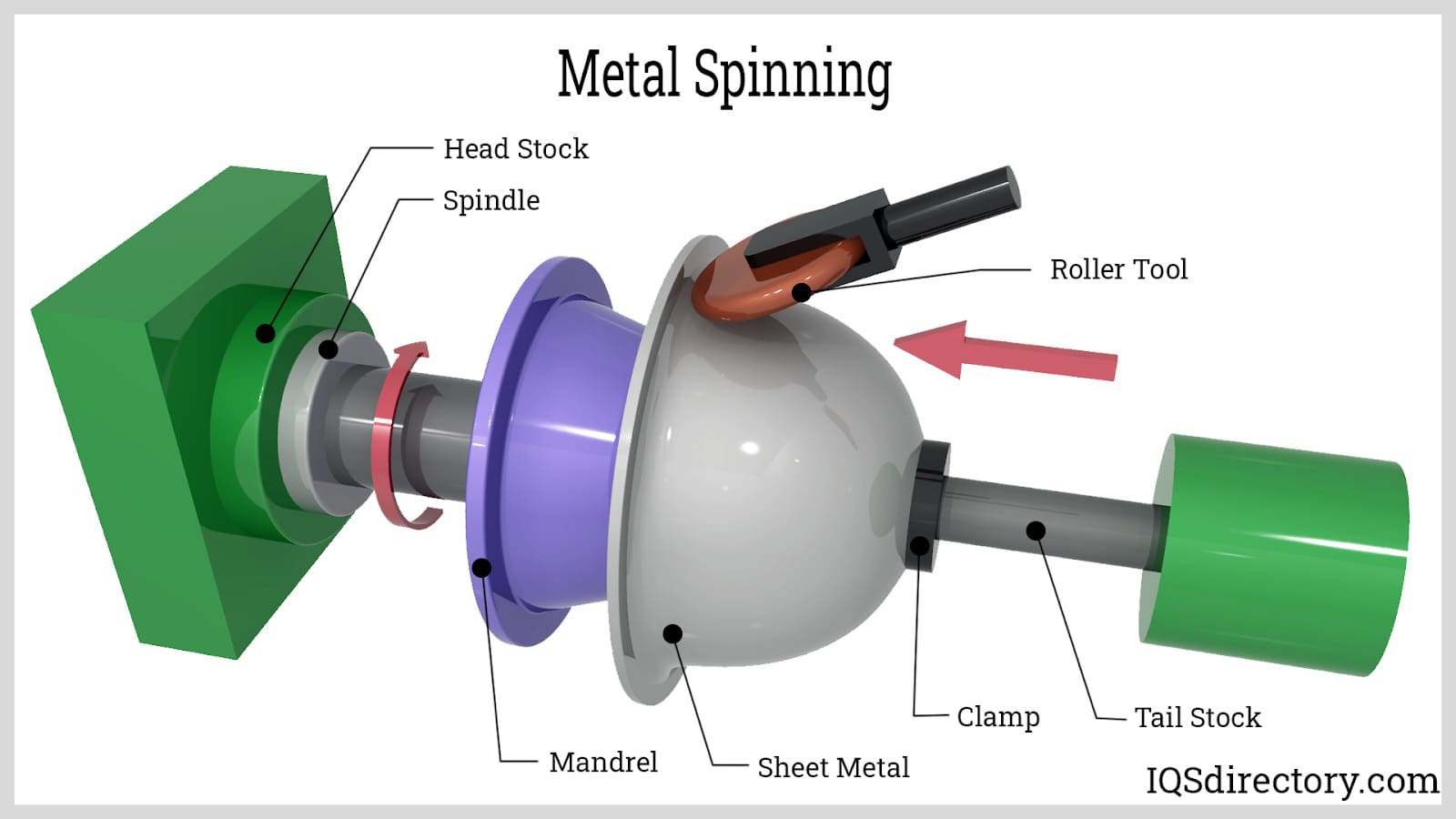 Metal spinning, a metalworking process which transforms a flat circular blank or disc into symmetrical round shapes.
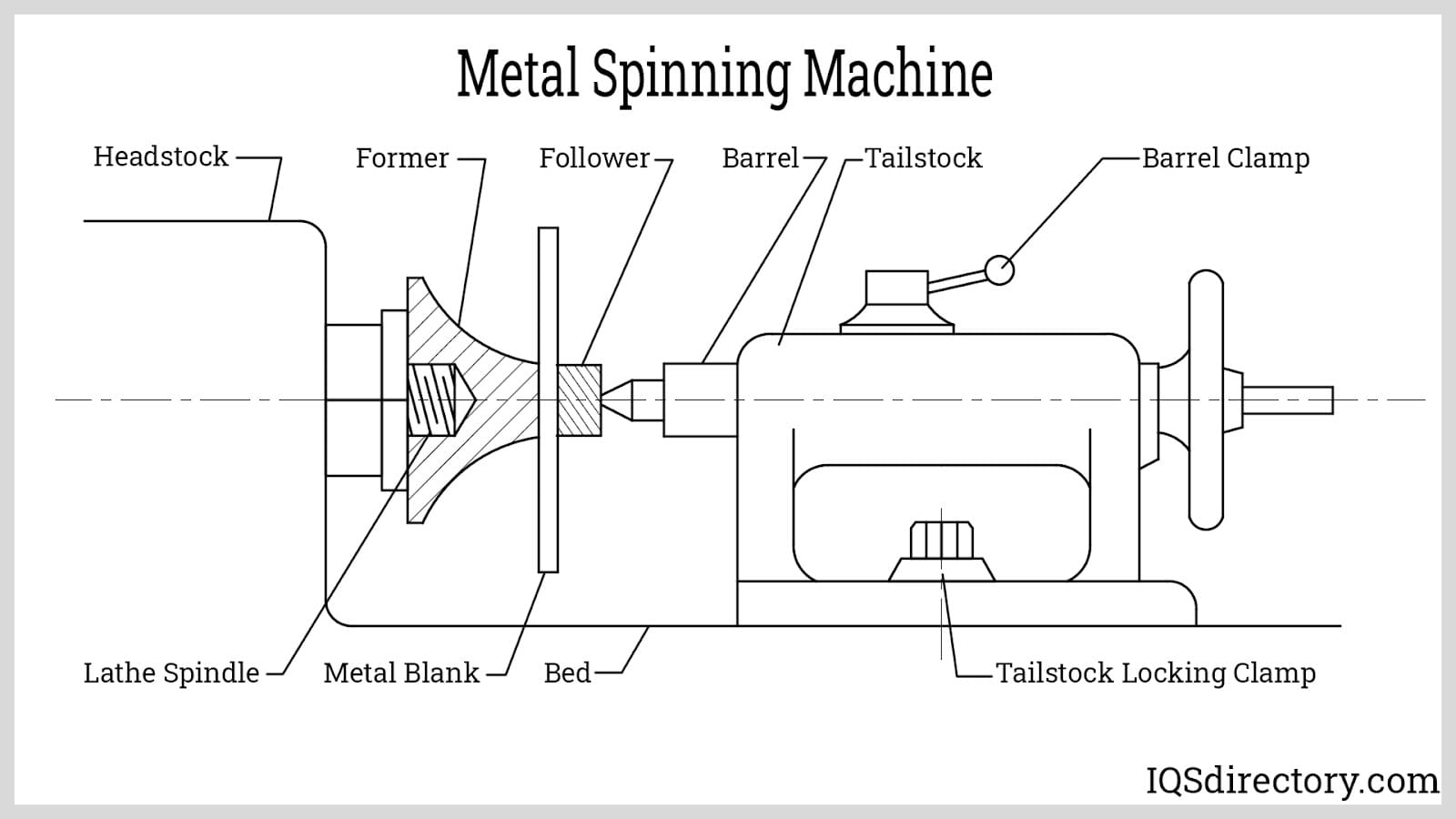 Metal spinning machinery spins the workpiece at fast speeds on an axis, while utilized for other operations such as cutting, drilling, and sanding.
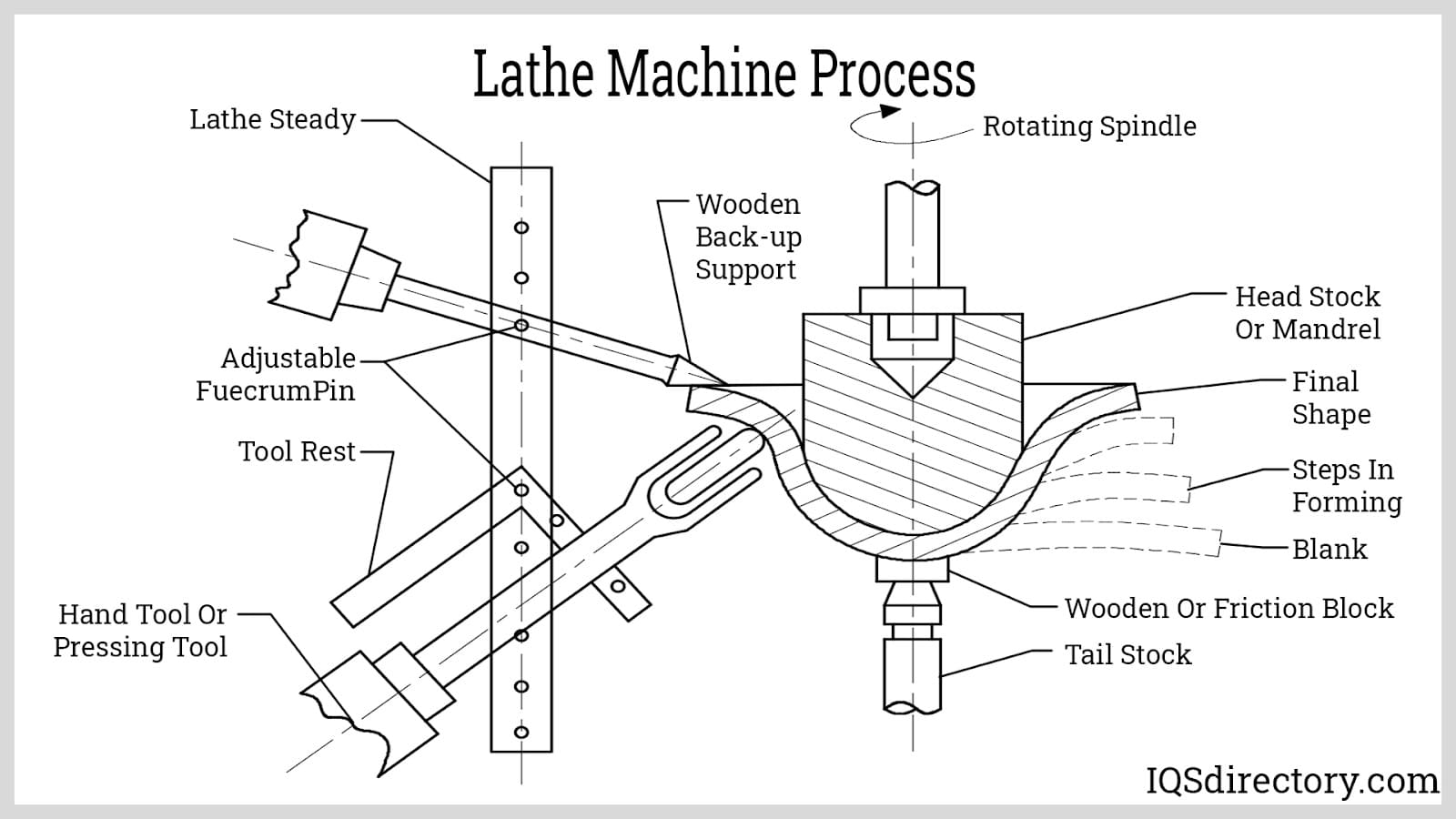 Lathe beds supports the headstock, tailstock, and the rest of the components.
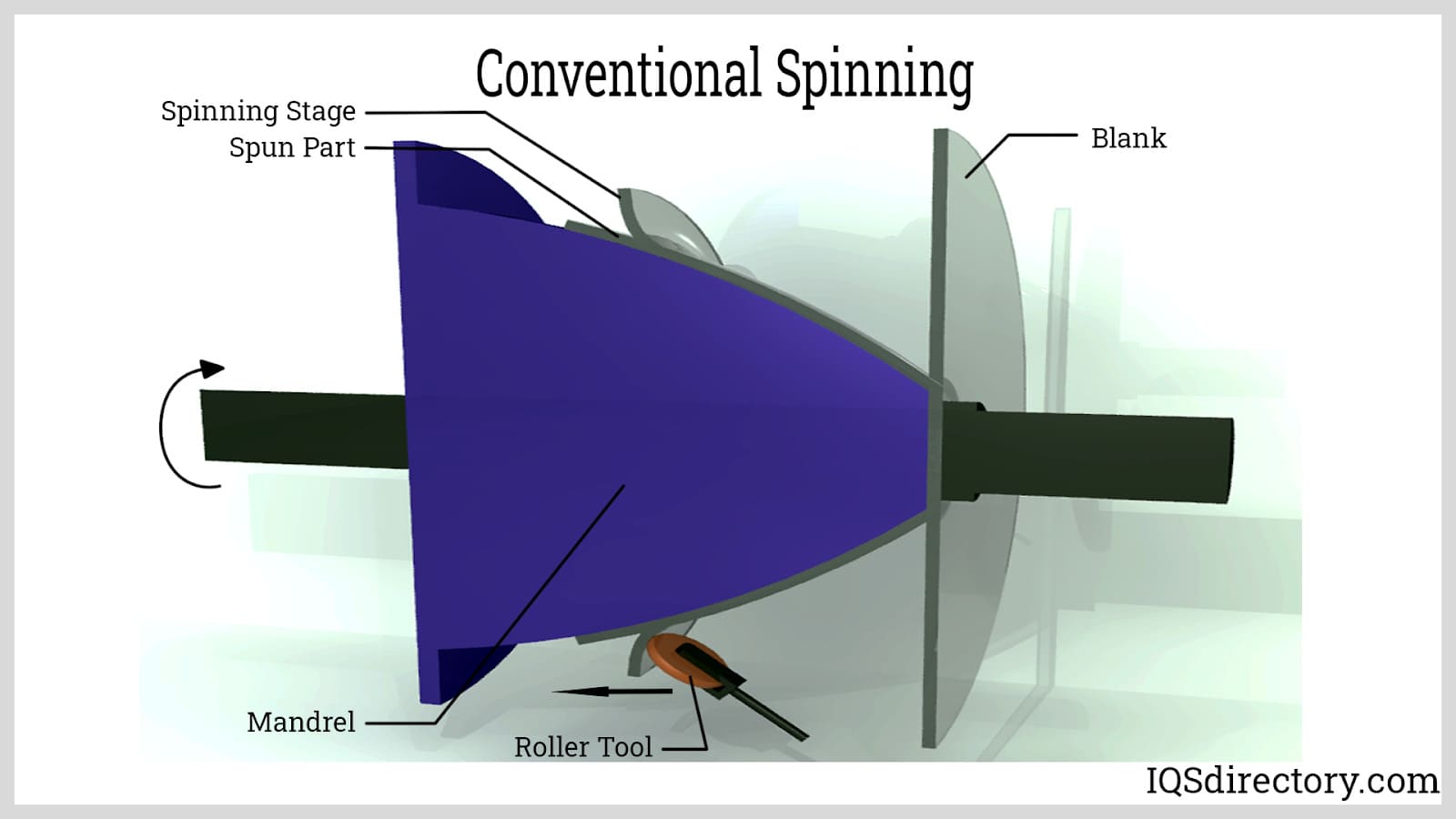 Conventional spinning, the roller pushes the workpiece over the contour of the mandrel.
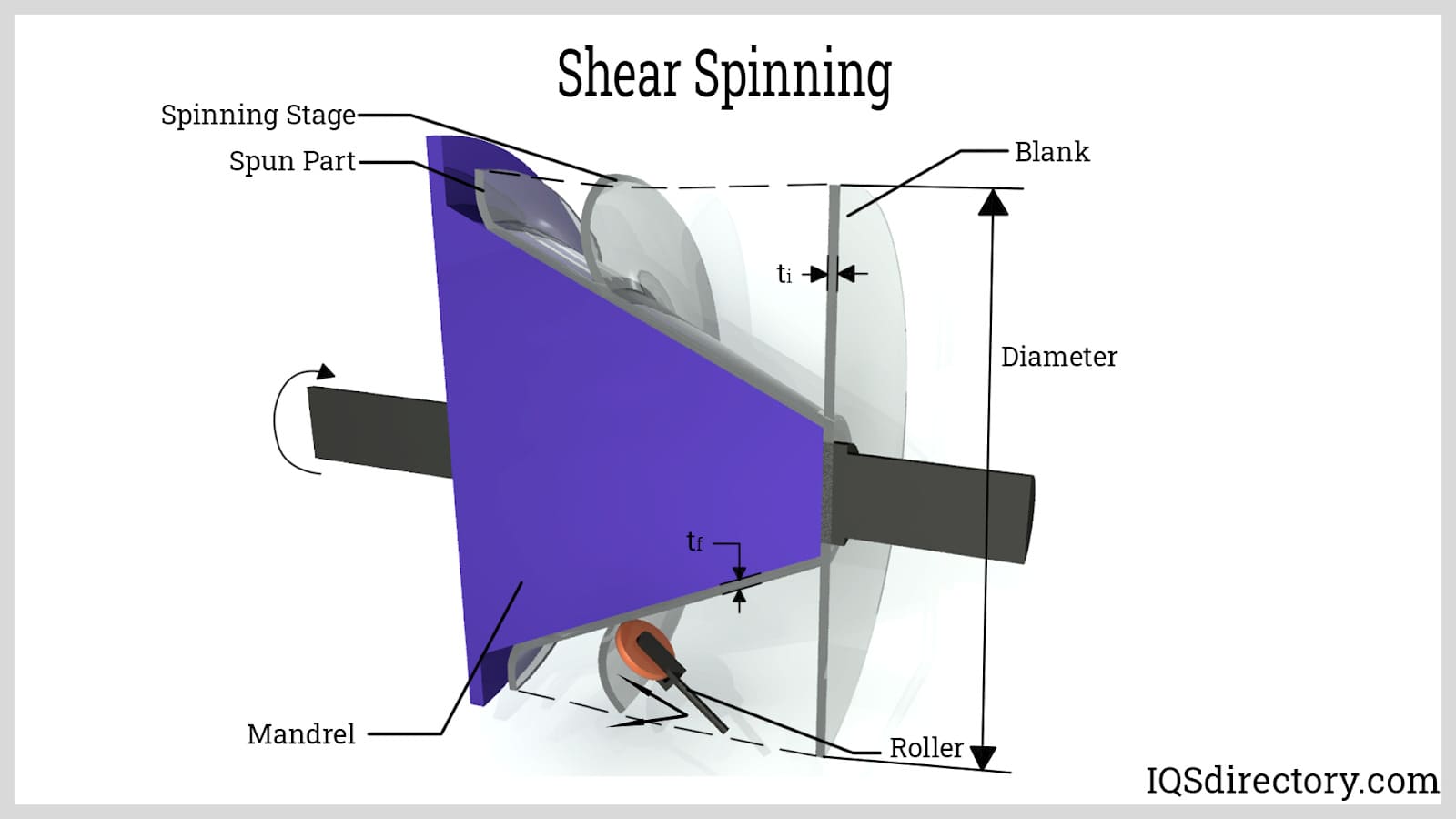 Shear spinning, the rollers exert downward force as workpiece the moves over the contour of the mandrel.
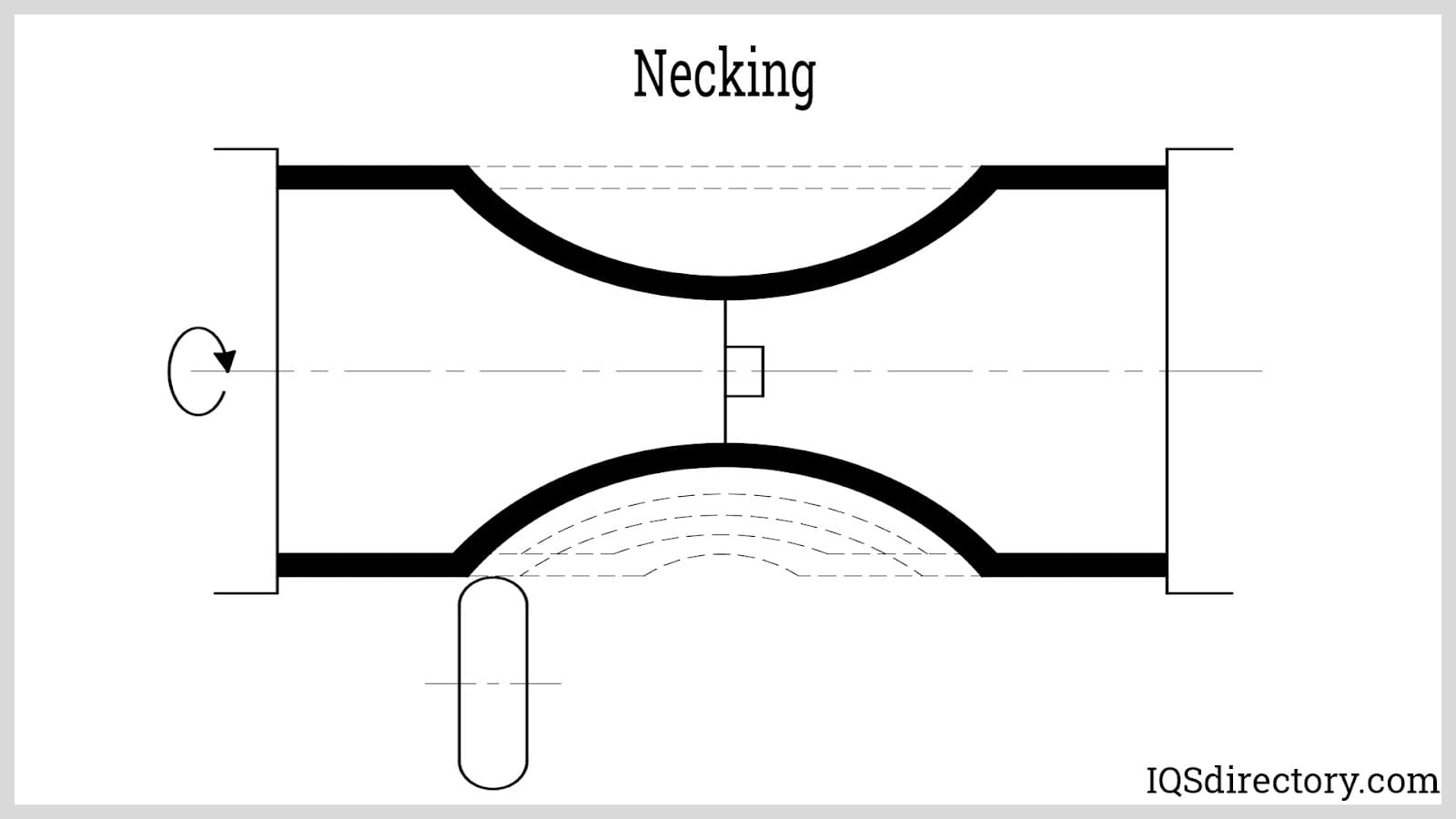 Necking, the gradual recession of the diameter in a section of the part.
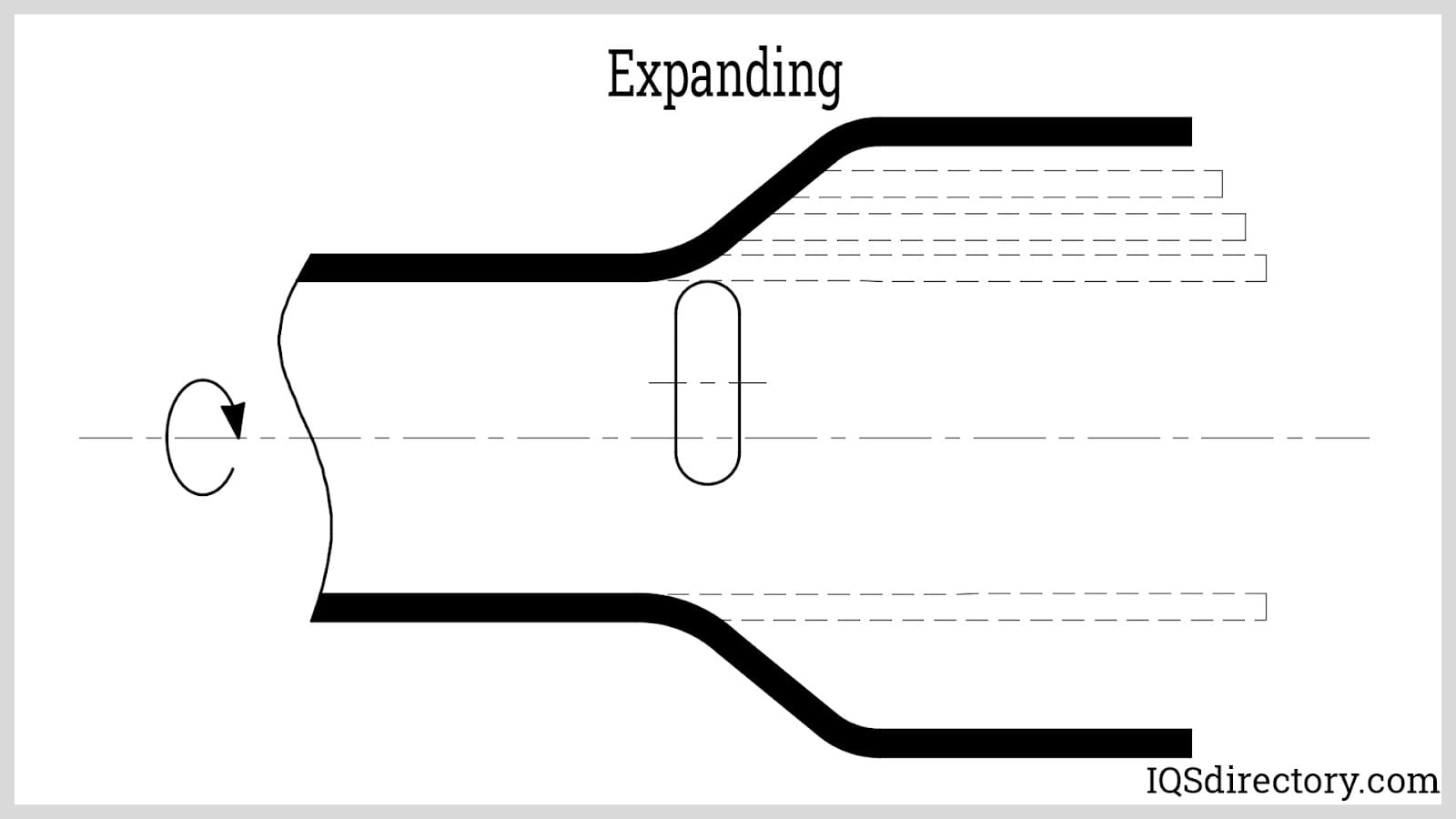 Expanding, increasing the diameter in a section of the part.
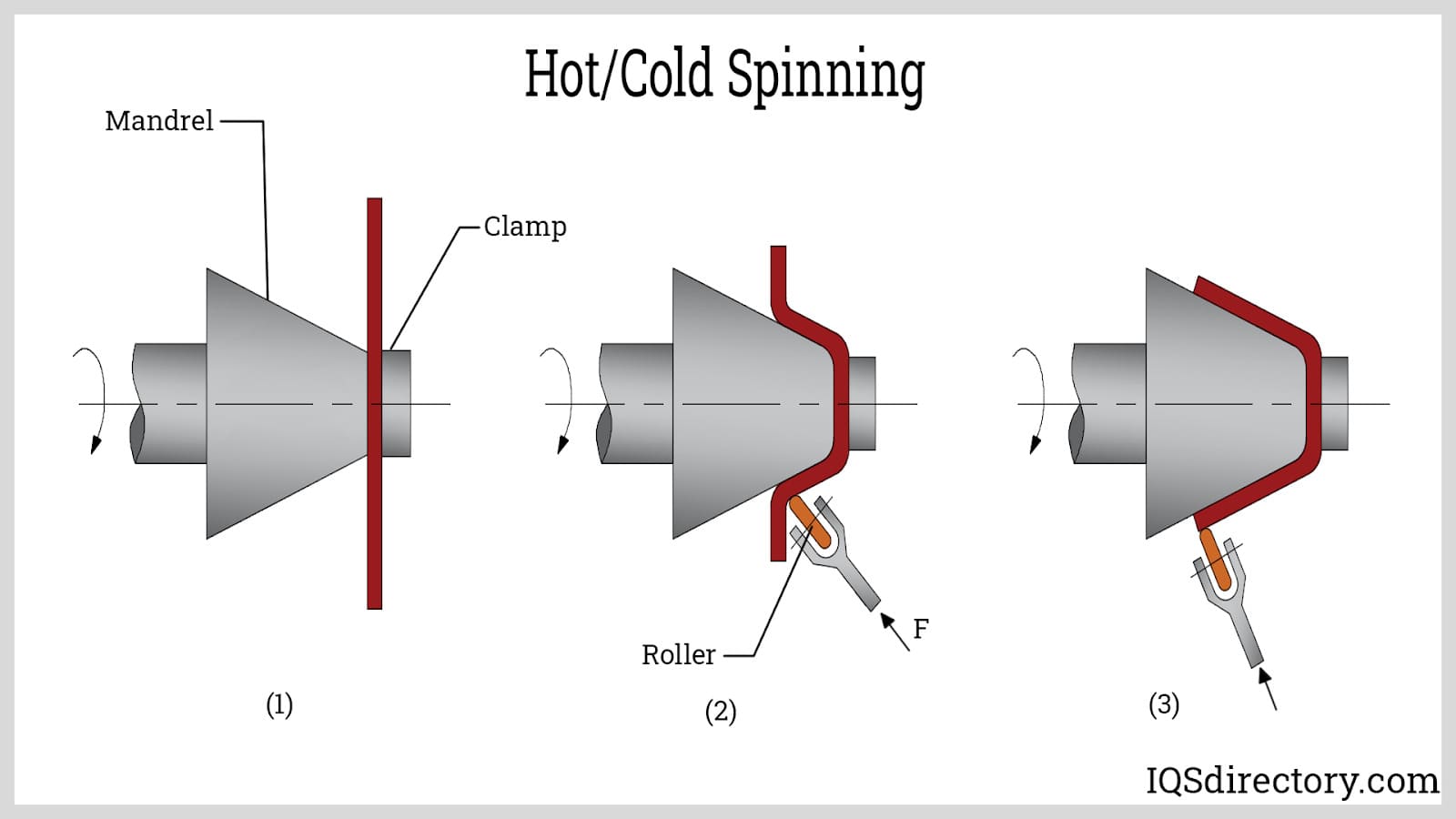 Hot spinning, the temperature of the workpiece is brought to the forging temperature, while cold spinning is preformed at room temperature.
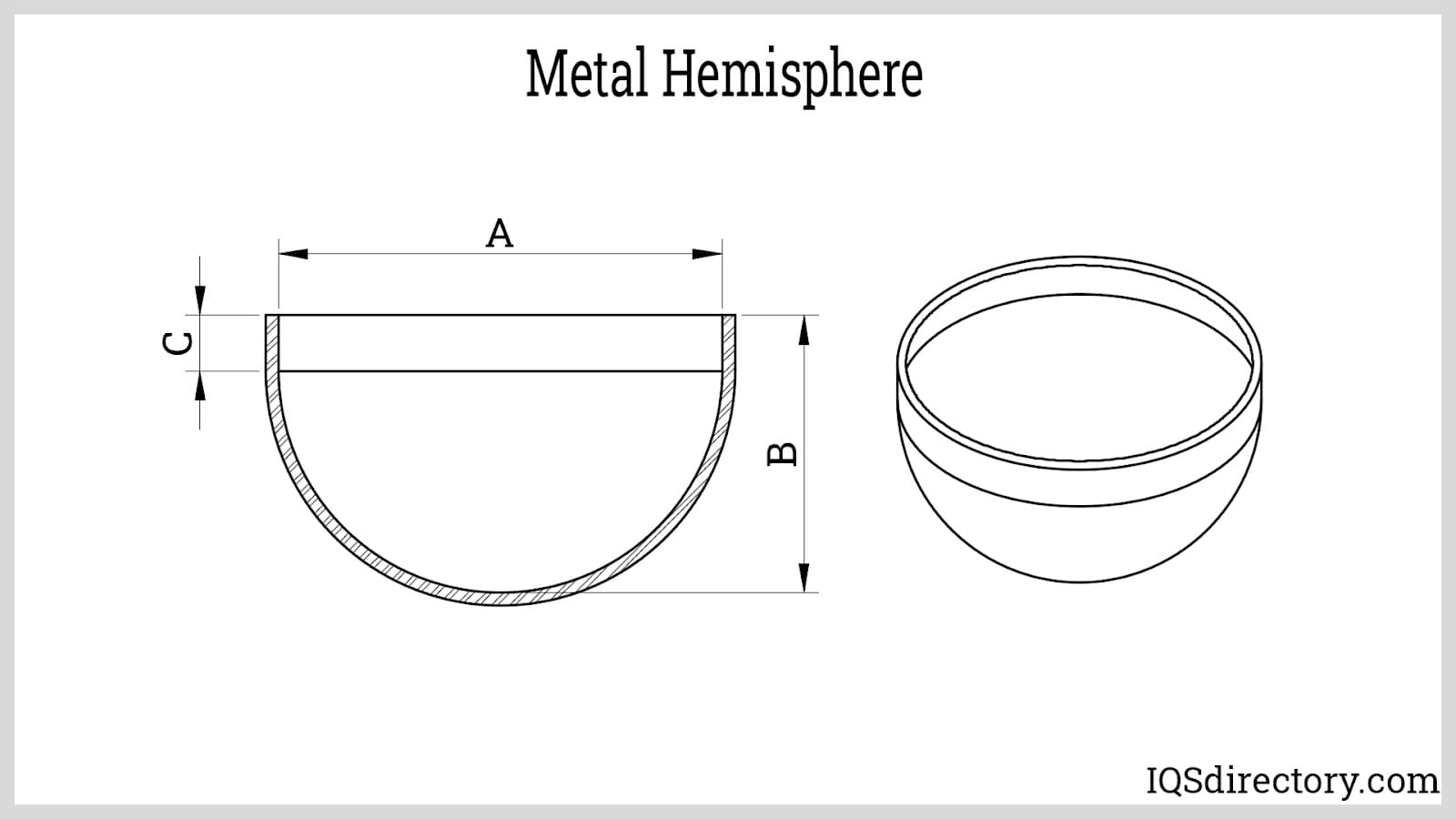 Metal spinning is useful for low or medium volume production runs and where the cost of metal stamping dies is prohibitive.
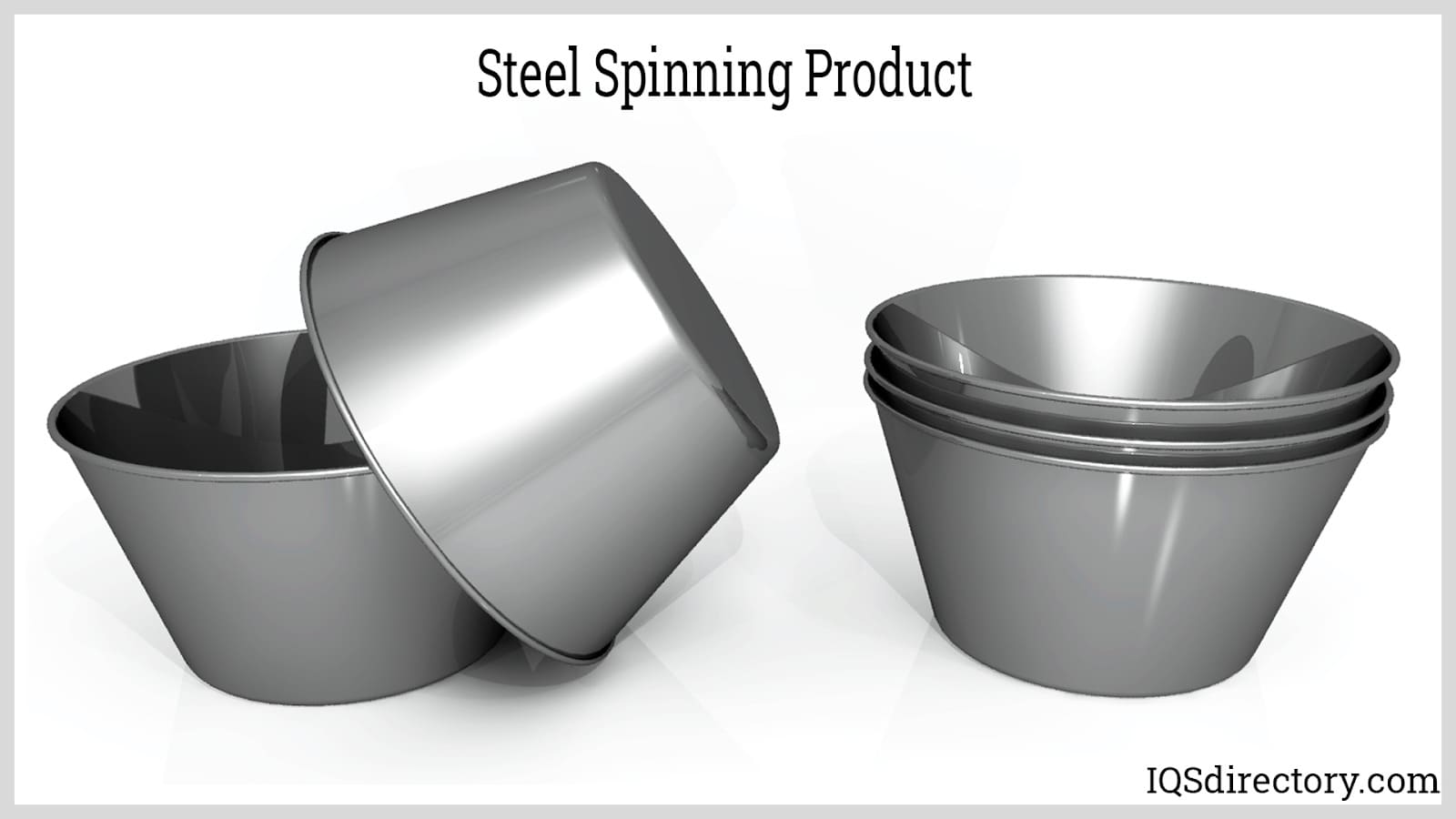 If a metal can be formed by metal stamping it can be processed by metal spinning.
Metal spinning can be done by hand, but a CNC metal spinning machine, which is short for computer numeric controlled machine, usually produces metal spun products.
Hand metal spinners are still used by some manufacturers but are increasingly rare. The spinning of the metal is machine controlled but the application of pressure is done by hand, making for a very hard and cumbersome process; the results sometimes lack uniformity from piece to piece.
CNC metal spinners (computer numerical controlled spinning) and related tools and technology are most often used during the metal spinning process. Today’s modern CNC technology has made it possible to produce high volume, close tolerance, concentric metal parts quickly and economically. CNC spin machines are also used for the fabrication of other sheet metal parts.
Custom metal spinners are what the majority of metal spinning shops use. Because of flexible rapid tooling and the short setup times associated with the technique, the costs of custom metal spinning can be much lower than other metal fabrication techniques.
Examples of precision metal products that metalworkers can produce using metal spinning include: engine parts, gas cylinders, nozzles, tank heads, rocket nose cones, brass instrument bells, decorative household goods, specialty lighting, public waste receptacles, funnels, freezers, mixing bowls, cookware, filter housings, pressure vessels and cartridges.
Variations on metal spinning and processes similar to it include: hot spinning, reducing, flow forming (including tube forming, forward flow forming, reverse flow forming and shear spinning) and hydroforming (including tube hydroforming, panel hydroforming, low pressure hydroforming and high pressure hydroforming).
- Hot Spinning
- A version of metal spinning that uses high heat applied to the workpiece. The use of heat makes it easier to create parts with smaller diameters with seamless shoulders. The process requires minimal force because heat does most of the metal workpiece distortion work.
- Reducing Method
- A method metal spinners use to create parts with inward angles and smaller diameters. To create parts with less precise angles and/or parts that do not require perfect surface finish, manufacturers spin the workpiece without a mandrel. Workpieces spun without a mandrel are said to be “spun on air.” If the form and finish are important, they will spin the workpiece on an eccentrically mounted mandrel.
- Flow Forming
- A popular alternative to spin forming; it is an advanced manufacturing process used when spinning cannot meet more complex design specifications. Flow forming allows variation in the product wall thickness. It can create seamless, single pieces that have a wide range of design flexibility with increased tensile strength.
- Flow forming produces hollow, symmetrical shapes by using rollers to extrude a cross-sectional area of a pre-formed metal workpiece, often called a blank or perform. The thickness of the blank is determined by the gap that is maintained between the mandrel and the rollers. This gap may change in order to produce a product with inconsistent or uniform wall thickness.
- The custom end product parts are round in cross section but may be straight sided cones or contoured shapes. The blank that is worked into a shape is either preformed by welding or in sheet form. Heat resistant steels such as stainless steel are good materials for the flow form process because their ductility and tensile strength are ideal for cold extrusion.
- Tube Forming
- A flow forming method, is used to make cylinder shapes. Primarily, it takes tubular performs and cold works them via rollers and a mandrel into tubing.
- Forward Flow Forming
- A tube forming method used when shapes are made with one closed end (like a vessel). During forward flow forming, the bottom of the preform rests against the face of the mandrel while the material is moved in the same direction as the rollers.
- Reverse Flow Forming
- A tube forming technique that produces a part with two open ends (like a tube). The force applied by rollers pushes against a serrated ring at the end of the mandrel, which compresses and extrudes the material.
- Shear Spinning
- The second main type of flow forming, produces cone shaped or contoured shaped metal products by a flat blank that is sheared by rollers over a rotating mandrel. The diameter of the blank does not change, but the material thickness decreases depending on the angle of the mandrel. No material is lost in this process.
- Hydroforming as an Alternative
- To standard metal spinning and flow forming used when neither is appropriate. During this process, the metal flows around a punch instead of being stretched with dyes. Manufacturers do this using a high pressure hydraulic system to create parts with very consistent thickness. There are four types of hydroforming: tube hydroforming, panel hydroforming, low pressure hydroforming and high pressure hydroforming.
- Tube Hydroforming
- The most popular type of hydroforming. It is generally performed at low pressure and produces tubular parts with high integrity and structural performance.
- Panel Hydroforming
- A high pressure process that manufactures products for the automotive and aerospace industry.
- Low Pressure Hydroforming
- Involves reshaping tubes when the cross-section definition is not strict.
- High Pressure Hydroforming
- Reshapes tubing more than the other three methods. In this type of hydroforming, the length-to-circumference ratio can change up to 50 percent.
- Application Specifications
- Before selecting a metal spinning manufacturer, consider your application specifications, including your budget, standard requirements, order volume, delivery preferences and time. We recommend you jot down these details and others, so that you’ll be fully prepared to discuss your project with a potential supplier.
- Supplier Output Capability
- When using metal spinning to fabricate a product, it is important to note the supplier's output capability. Some metal spinning manufacturers are not capable of short run orders and may have limitations as to the diameter and thickness of the final product desired. However, many suppliers offer sizes from a fraction of an inch to over six feet in diameter. Sometimes, a metal spinning manufacturer will only have the capacity to spin a certain type of metal, such as stainless steel or aluminum. Though not all manufacturers can offer every type of spinning service, metal spinning can mean lower tooling costs because spinner dies are simpler and cheaper. Spinning tooling can also be made in-house by many spinning shops, meaning shorter lead times. Make sure you find out these sorts of details when you speak with prospective manufacturers.
- To help you find the right manufacturer, we’ve put together a comprehensive list of some of the best metal spinning companies in this business. Learn more about each of them by browsing their profiles, which you can find by scrolling up towards the top of this page. Remember: the right manufacturer is not the one who offers the best prices, but the one who offers the best metal spinning services for your application.
- Alloy
- A substance that has metallic properties and is composed of two or more chemical elements of which at least one is an elemental metal.
- Buckling
- An uncontrolled deformation pattern perpendicular to the surface of a sheet caused by compressive stresses.
- CNC
- Computer Numeric Controlled.
- Camber
- The sheering tendency of sheet metal material that occurs via the bending of the same plane.
- Cold Working
- The reforming of metal, usually, but not necessarily, conducted at room temperature. Also referred to as cold forming or cold forging. Contrast with hot working.
- Concentric
- Having the same center, as concentric circles; having the same axis, as concentric cylinders.
- Deep Drawing
- The drawing of deeply recessed parts from sheet material through plastic flow of the material when the depth of the recess equals or exceeds the minimum part width.
- Die
- A tool, usually containing a cavity, that imparts shape to solid, molten, or powdered metal primarily because of the shape of the tool itself.
- Draw Plate
- A circular plate with a hole in the center contoured to fit a forming punch; used to support the blank during the forming cycle.
- Elongation
- The amount of permanent extension of the material before it fractures.
- Hemming
- The bending of a piece 180°, usually done in two steps after a piece has been created via spinning. First a sharp angle is created then closed via a flat punch and die.
- Hold Down
- A device used to secure a workpiece.
- Lathe
- Machine tool for shaping metal or wood; the workpiece turns about a horizontal axis against a fixed tool.
- Mandrel
- A tapered steel form used to support metal as it is being formed. Also called a Chuck.
- Necking
- The reduction of the cross-sectional area of metal in a localized area by uni-axial tension or by stretching.
- Orange Peel
- Texture of steel that appears like an orange, either from the steel mill or after forming.
- Overbending
- Bending metal a greater amount than called for in the finished piece to allow for springback.
- Reset
- The realigning or adjusting of dies or tools during a production run; not to be confused with the operation setup that occurs before a production run.
- Stamp
- This is a general term used to describe most press workings.
- Support Plate
- Used most often as a spacer within the spinning machine.
- Tooling
- The form to which the sheet metal is formed to simulate.