Deburring Equipment
Deburring equipment refers to a variety of devices, materials, and assemblies designed to remove burrs from materials and finished products. A burr is any unwanted raised point or fragment of material attached to a piece after a modification. Burrs commonly result from machining processes such as grinding, drilling, or engraving. In modern manufacturing, burr removal is part of a broader quality process that supports safer handling, smoother assembly, better fit and finish, and more consistent part performance. Whether a shop is processing machined components, stamped parts, castings, tubing, or molded pieces, deburring helps reduce sharp edges that can interfere with downstream production, coatings, welding, fastening, sealing, or packaging. Buyers often search for deburring machines when they need repeatable edge finishing, cleaner part geometry, and a more dependable way to prepare components for inspection or shipment.
The methods and technologies used in deburring equipment can vary greatly in terms of action, suitable materials, scale, automation, and other factors, but they all serve the same core function: removing rough edges, pultrusion, chips, shavings, and splinters from materials such as metal, wood, plastic, and more. Deburring processes often overlap with other operations like finishing, polishing, surface finishing, and descaling. Some systems rely on abrasive belts, brushes, barrels, media, blast systems, cryogenic methods, or electrochemical action, while others use manual hand tools for short runs and specialty work. This wide range lets manufacturers match a deburring process to part size, material hardness, production volume, geometry, tolerance requirements, and budget. When companies compare deburring equipment, they are usually asking practical questions: which process is best for precision metal parts, how do you deburr hard-to-reach holes and slots, and when does it make sense to move from manual deburring to automated deburring equipment or a full deburring cell.
Frequently Asked Questions About Deburring Equipment
What is deburring equipment used for?
Deburring equipment is used to remove burrs, rough edges, and surface imperfections from materials such as metal, wood, or plastic after machining. This improves product safety, appearance, and performance in industries like automotive, aerospace, and electronics. It also supports smoother assembly, more reliable component fit, and better coating or finishing results. For many manufacturers, deburring is not just a cleanup step; it is part of quality control that helps reduce rework, protect operators from sharp edges, and improve the finished condition of machined parts, stamped components, cast parts, and fabricated assemblies.
How does vibratory deburring work?
Vibratory deburring uses a bowl or tub filled with abrasive media and parts that are vibrated together. The mechanical motion smooths sharp edges and surfaces evenly, making it ideal for complex shapes or hollow parts found in many manufacturing environments. This method is popular because it can process large batches with steady results while also combining deburring, edge radiusing, light cleaning, and surface refinement in one operation. Shops often choose vibratory finishing when they need efficient burr removal for small metal parts, fasteners, stampings, die cast components, or mixed loads with intricate features.
What are the advantages of electrochemical deburring?
Electrochemical deburring removes burrs precisely without mechanical wear, using electrolytic action on conductive materials. It’s ideal for intricate parts that require tight tolerances but is limited to metals that can resist corrosion from electrolytes. Because it targets burrs in hard-to-access intersections, cross-holes, and internal passages, it is frequently considered for fuel system parts, hydraulic components, medical parts, and precision-machined products. Manufacturers that need burr removal without distorting delicate features often look at electrochemical deburring as a way to maintain dimensional consistency while improving part cleanliness and repeatability.
When is manual deburring preferred over automated systems?
Manual deburring is preferred for low-volume production or custom parts that require precision and immediate inspection. Skilled operators can adjust techniques in real time, making it practical for smaller machine shops and manufacturers handling diverse workpieces. It is also useful when part designs change often, when burrs are isolated to a few locations, or when production runs are too short to justify investment in automated deburring equipment. Hand deburring tools, files, scrapers, brushes, and abrasive products remain valuable when flexibility, touch-up work, and visual confirmation matter as much as throughput.
What factors should be considered when selecting deburring equipment?
Key factors include material type, product standards, available floor space, manpower, automation level, and budget. The right equipment balances cost, precision, and throughput while allowing flexibility for future production changes or expansion. Buyers should also evaluate burr size, edge finish requirements, cycle time, part geometry, media compatibility, dust control, maintenance needs, and whether the process must integrate with washing, drying, inspection, or packaging steps. Asking what type of deburring machine works best for aluminum, steel, stainless steel, brass, plastic, or composite parts can help narrow the field and guide a more efficient equipment comparison.
What industries rely most on deburring equipment?
Deburring equipment is vital in automotive, aerospace, electronics, construction, and medical manufacturing. It ensures smooth edges and reliable finishes, preventing friction-related wear and improving component safety and appearance. It is also widely used in metal fabrication, defense work, appliance production, tool and die operations, hardware manufacturing, energy equipment, and precision machining. Any sector that produces components with drilled holes, cut edges, machined surfaces, laser-cut profiles, or stamped features can benefit from a dependable deburring process that improves consistency from one production run to the next.
How does thermal deburring differ from other methods?
Thermal deburring uses controlled explosions in a sealed chamber to burn away burrs from metal parts. It’s ideal for heat-resistant materials like stainless steel but unsuitable for components sensitive to high temperatures or variable tolerances. The process is especially helpful for removing burrs from multiple edges at once, including burrs hidden in passages and recesses that are difficult to reach with brushes or cutting tools. Manufacturers usually evaluate thermal deburring when they need high-speed burr removal for complex metal components and can support the safety, ventilation, and process controls that this method requires.
The History of Deburring
Deburring, by its nature, doesn't have a clear origin or a single inventor. The concept of deburring likely dates back to the creation of early metal weapons, parts, and jewelry, evolving significantly over time. Historical evidence suggests that ancient civilizations, like the Egyptians, had grinding wheels as early as 2000 BC. Whenever people shaped metal, stone, wood, or other workable materials, they also faced the need to smooth edges, remove splinters, and refine surfaces for safer use and better function. In that sense, deburring developed alongside manufacturing itself, growing from a simple hand-finishing task into a specialized finishing discipline with its own tools, abrasives, media, and automated equipment.
Early deburring methods were probably based on simple tools like hand files, brushes, grindstones, and other manual equipment used to achieve a finished surface. There is evidence that blacksmiths during the medieval period utilized tumbling methods for items like metal chain mail. This process involved adding components to casks filled with small jagged stones and then rolling the casks to smooth the metal. Other key developments in the evolution of deburring include the Chinese invention of abrasive paper in 1225 and its first recorded use in France in 1769. These early methods may sound basic by today’s standards, but they established the same goals that drive modern burr removal: smoother edges, more uniform surfaces, better handling, and a finished part that performs as intended after forging, cutting, drilling, or shaping.
The modern history of deburring began around the same time as the application of abrasive materials. Throughout the 1700s and 1800s, deburring became more significant with the rise of industrialization and the development of machining tools. By the late 1800s, early forms of automated deburring and modern manual deburring equipment started to emerge. However, it wasn't until the 1900s and beyond that many of today's deburring and finishing methods, including sandblasting in 1935 and advanced cryogenic deburring techniques, were truly developed and refined. As factories adopted tighter tolerances, higher production speeds, and more demanding quality standards, deburring moved from a secondary bench operation to a planned manufacturing step. Today, the field includes brush deburring machines, vibratory and centrifugal finishing systems, robotic deburring cells, abrasive belt equipment, thermal deburring systems, and precision processes designed for industries where edge condition, cleanliness, and repeatability directly affect final product quality.
Advantages of Basic Deburring Systems
Vibratory tumblers provide consistent treatment for workpieces, including difficult-to-reach areas like hollow spaces, interior surfaces, or edges, such as those found inside pipes or rings. Vibratory finishing offers greater flexibility for adjusting intensity compared to other tumblers, giving you better control over the metal finish. However, the main challenges with vibratory bowl deburring systems are the high cost, noise, and energy consumption. Even so, manufacturers often choose vibratory deburring equipment when they need dependable batch processing, smoother edge radiusing, and more uniform surface finishing across large quantities of small or mid-sized parts. This method is especially attractive when production teams want one system that can support deburring, light polishing, cleaning, and pre-finish preparation without moving parts through multiple separate operations.
Rotational tumblers, or rotary tumblers, are a more cost-effective option compared to vibratory tumblers, with the price advantage increasing as the size and weight of your workpieces and abrasive media rise, especially when using heavier materials like stainless steel. Rotary tumblers also operate much more quietly, while still delivering satisfactory results in many applications. However, they may struggle with achieving uniform results on the surface due to the unidirectional force, which can lead to uneven finishes on uniquely shaped parts. For shops comparing rotary tumblers vs. vibratory tumblers, the decision often comes down to throughput, desired finish consistency, part geometry, and operating budget. Rotary systems can be a strong fit for general-purpose deburring and economical surface conditioning, particularly when cycle time is less pressing than equipment cost and noise reduction.
Electrochemical deburring systems provide several benefits when applicable, such as reducing mechanical and thermal wear on machinery, offering high precision, and minimizing the risk of secondary burr production. The main limitation of electrochemical deburring is its restriction to electrically conductive materials and the risk of corrosion in the machine and parts due to exposure to electrolytes, unless proper maintenance is ensured. Even with those considerations, electrochemical deburring remains attractive for manufacturers producing precision metal components with intersecting holes, recessed features, or tight tolerances where manual access is limited. When burr removal has to happen in exact internal locations without deforming the surrounding workpiece, this process can deliver a cleaner, more controlled result than many contact-based finishing methods.
Manual deburring systems provide a high level of control and accuracy, especially in skilled hands, and allow for immediate inspection and adjustments during the process. The advantages of manual deburring depend on the tools available and the expertise of the workforce, though the key limitations include difficulty managing large volumes of workpieces and achieving consistent results across the entire batch. Manual deburring is often the right choice for prototype work, low-volume fabrication, specialty repair, and custom machining where each part may need individual attention. It also gives operators the ability to respond immediately to burr size, edge condition, surface defects, and visual requirements, which can be valuable when finish quality matters as much as production speed.
Thermal deburring offers benefits similar to electrochemical deburring, but with different limitations. It is effective only for parts that can withstand the high temperatures required to burn off burrs and flash. Thermal deburring requires careful inspection of each part to determine suitability, making it less ideal for systems that process a wide variety of components. However, it works particularly well for sheet metal and products made from stainless steel sheet metal. Manufacturers usually consider thermal deburring when they need fast removal of fine burrs from complex metal components and want to reach multiple burr locations in a single cycle. Like many advanced deburring methods, it performs best when part design, material characteristics, and process controls are aligned from the beginning.
Deburring Design
The effective use of deburring machines starts with a clear understanding of the deburring process, your goals, and the available options. While optimizing the use of a specific piece of deburring equipment can improve efficiency, the most significant gains will come from selecting the right deburring approach from the outset. Buyers who ask how to choose deburring equipment are usually trying to balance finish quality, cycle time, labor demands, floor space, consumable cost, and the need for repeatable results. A system that works well for aluminum stampings may not be the best choice for hardened steel parts, delicate plastic components, or parts with deep holes and narrow passages, so process design plays a major role in long-term performance.
Several factors will influence the best approach for your deburring needs, including the material and product you're working with, available manpower, product standards, system installation costs, floor space, and existing automation in your workspace. Shops also need to consider burr size, part-to-part consistency, edge break requirements, post-machining cleanliness, and whether the deburring process must support polishing, descaling, washing, or coating preparation. In high-volume manufacturing, even small differences in handling time, media life, and maintenance requirements can affect total operating cost, which is why equipment comparison usually goes beyond purchase price alone.
You’ll also need to assess how much flexibility your system requires. If you regularly work with different materials, tolerances, or components of varying sizes, your needs will differ greatly from a company that handles the same components consistently. A flexible deburring setup may need adjustable machine settings, multiple media options, simple changeovers, and room for future process expansion. On the other hand, a dedicated system built for one family of parts can often deliver faster cycle times and stronger repeatability. This is why manufacturers often evaluate whether they need a job-shop deburring solution or an in-line deburring process designed around a narrow production range.
Additionally, it’s important to consider logistics for components or consumables used in the deburring process. Whether you're using chemicals, abrasives, or grindstones, these materials will be consumed regularly, so setting up a reliable supply chain is important. Media replacement schedules, compound storage, waste handling, dust collection, and routine machine upkeep can all influence how practical a deburring system will be over time. Thinking through these details early can help prevent downtime, improve process consistency, and make it easier to scale production when demand grows.
Manual and Automated Deburring
Deburring equipment can generally be categorized into two types based on their operation: manual and automated. Understanding the difference helps buyers decide whether they need operator-guided precision, high-volume throughput, or a combination of both. In many facilities, manual and automated deburring are not competing choices so much as complementary processes used at different stages of production, inspection, or final finishing.
Manual Deburring Equipment
This category ranges from simple, low-tech methods, such as workers using abrasive brushes to remove small burrs, to advanced machinery designed for precise grinding down to millimeter accuracy. Manual deburring equipment can only process one workpiece at a time, which makes it impractical for high-volume applications. Even so, it remains highly useful for parts that demand close visual inspection, custom edge work, touch-up finishing, or individual handling after CNC machining, cutting, drilling, or punching. Manual systems are often preferred when part geometry changes frequently, when tolerances vary from job to job, or when the operator needs immediate control over pressure, angle, and finish appearance.
Automated Deburring Equipment
In contrast, automated deburring equipment involves systems that perform deburring tasks with minimal human intervention. These machines are typically designed for high-volume use, where multiple components are deburred simultaneously through processes like tumbling or vibration. Achieving precision in automated high-volume deburring often requires sophisticated, expensive equipment. The cost of such systems tends to decrease depending on the specific requirements and tolerances of the components. Automated systems can also improve repeatability, reduce operator fatigue, and help standardize finish quality across large production runs. For manufacturers trying to shorten lead times, control labor costs, and support continuous production, automated deburring machinery often becomes a practical long-term investment.
This distinction helps explain the significant costs associated with deburring in various manufacturing processes. Projects that cannot be automated for deburring require much more labor, even when using top-quality manual deburring tools. As production volumes increase, the cost of hand-processing every workpiece can rise quickly, which is why many manufacturers review deburring operations when looking for better throughput, lower rework rates, and more dependable part-to-part uniformity. Choosing between manual and automated deburring often depends on the mix of precision, flexibility, speed, and budget your operation can support.
Deburring Equipment Images, Diagrams and Visual Concepts
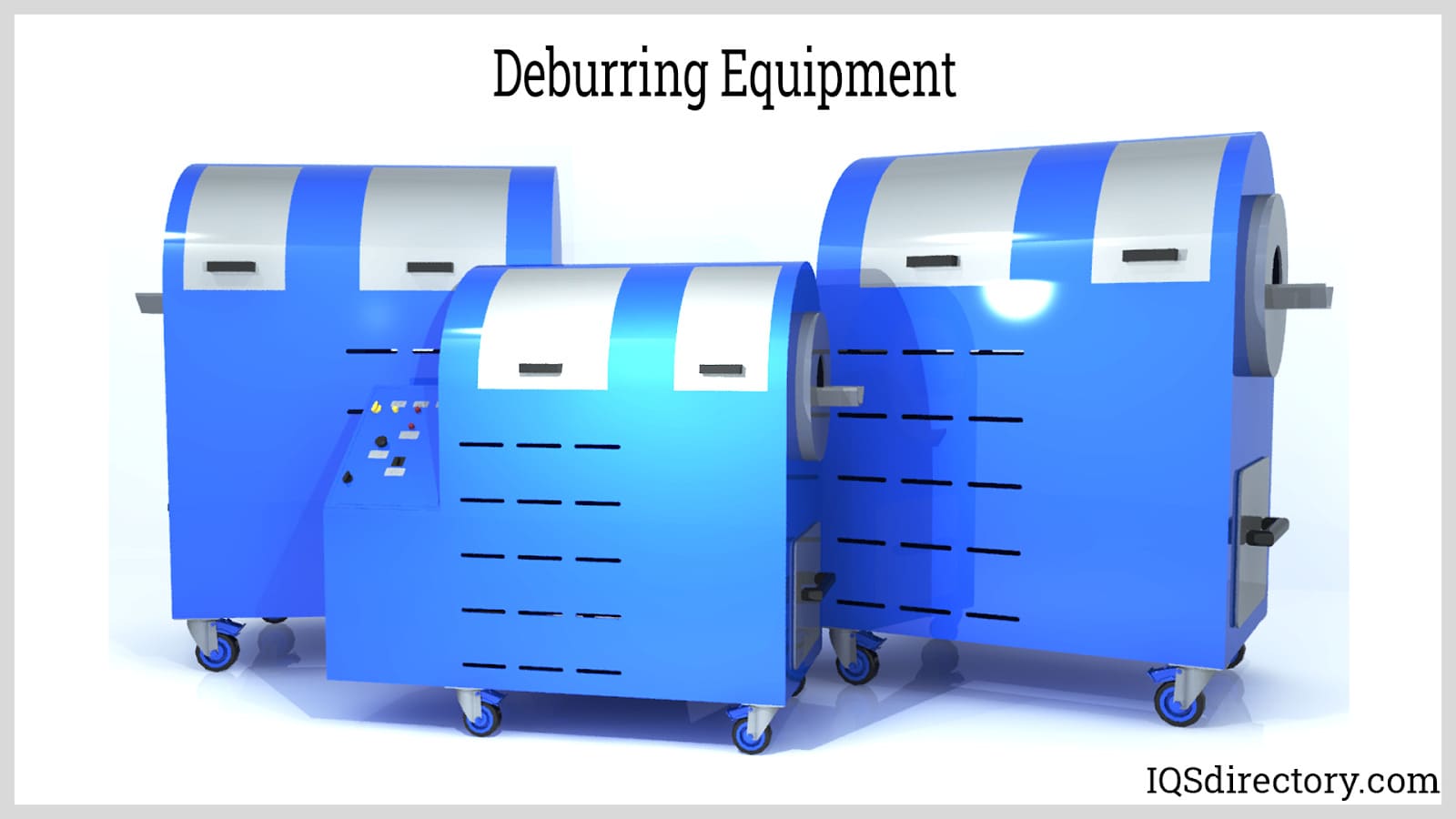 Deburring equipment are used to remove raised edges and unwanted pieces of material from a product. In many manufacturing settings, these systems also help improve safety, assembly fit, edge quality, and the overall finish of machined or fabricated parts.
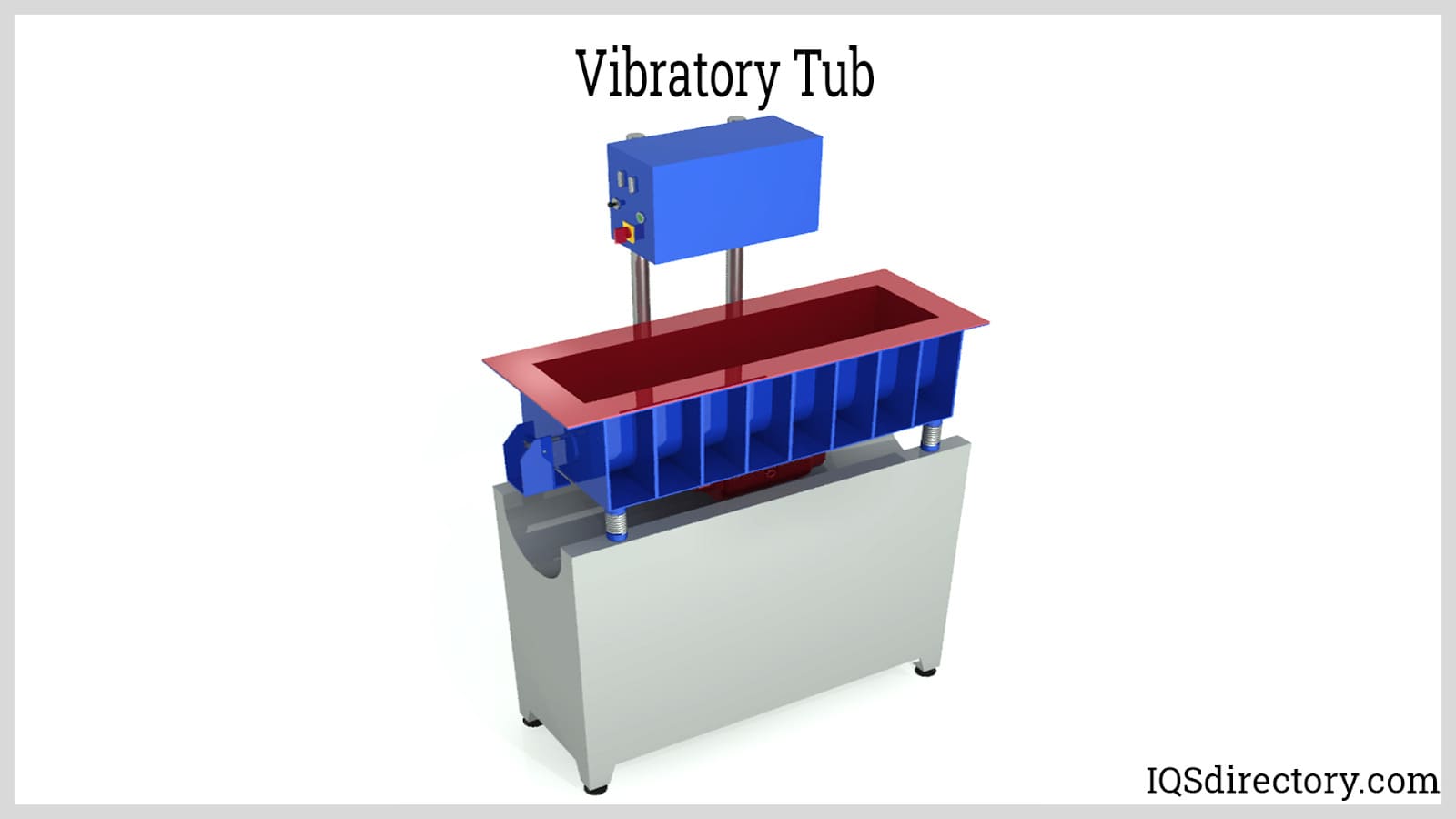
 The parts inside a tub filled with specially shaped pellets of media then applying vibration force to all the tub’s contents which will remove any burrs. This setup is commonly used for batch deburring, light polishing, and consistent treatment of small components with difficult-to-reach surfaces.
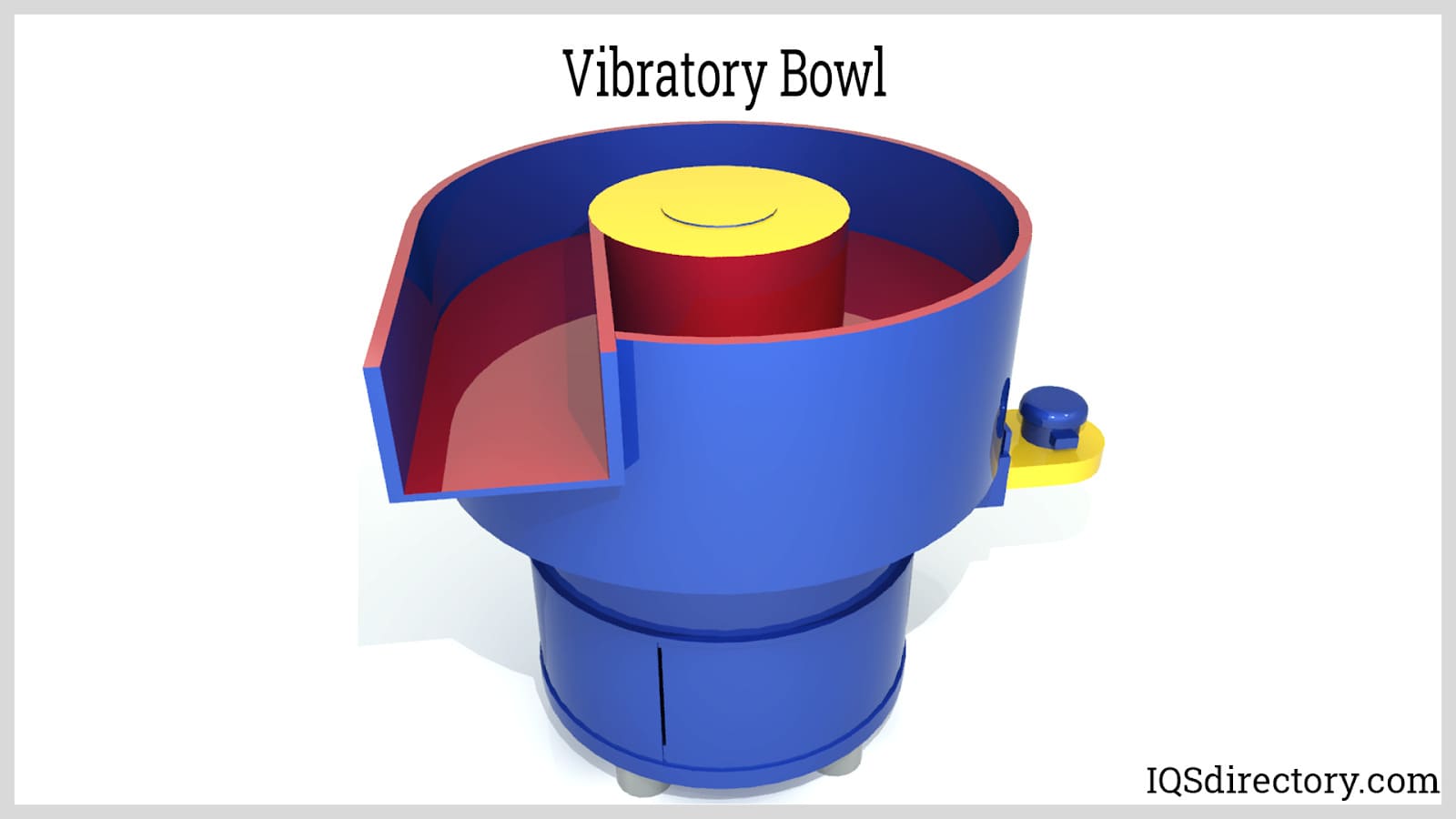
 Vibratory deburring machines are tumblers where parts are loaded into a chamber along with the abrasive media and other compounds. The process helps smooth sharp edges, refine part surfaces, and prepare components for later finishing or inspection.
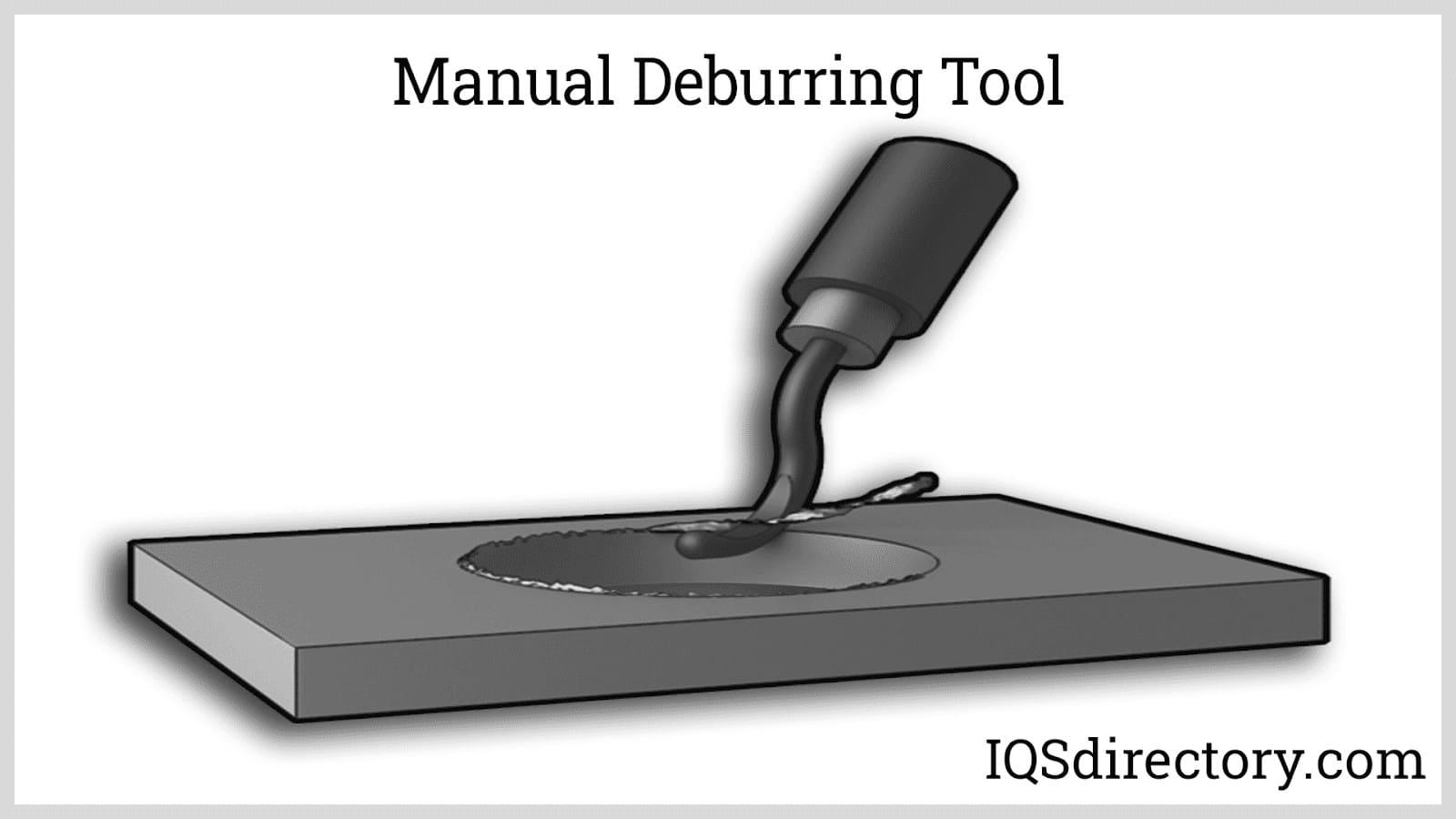 This process uses hand-held tools which is slow and generally done at the end of a production line. It is often chosen for precision touch-up work, prototype parts, short runs, or situations where an operator needs close control over the final edge condition.
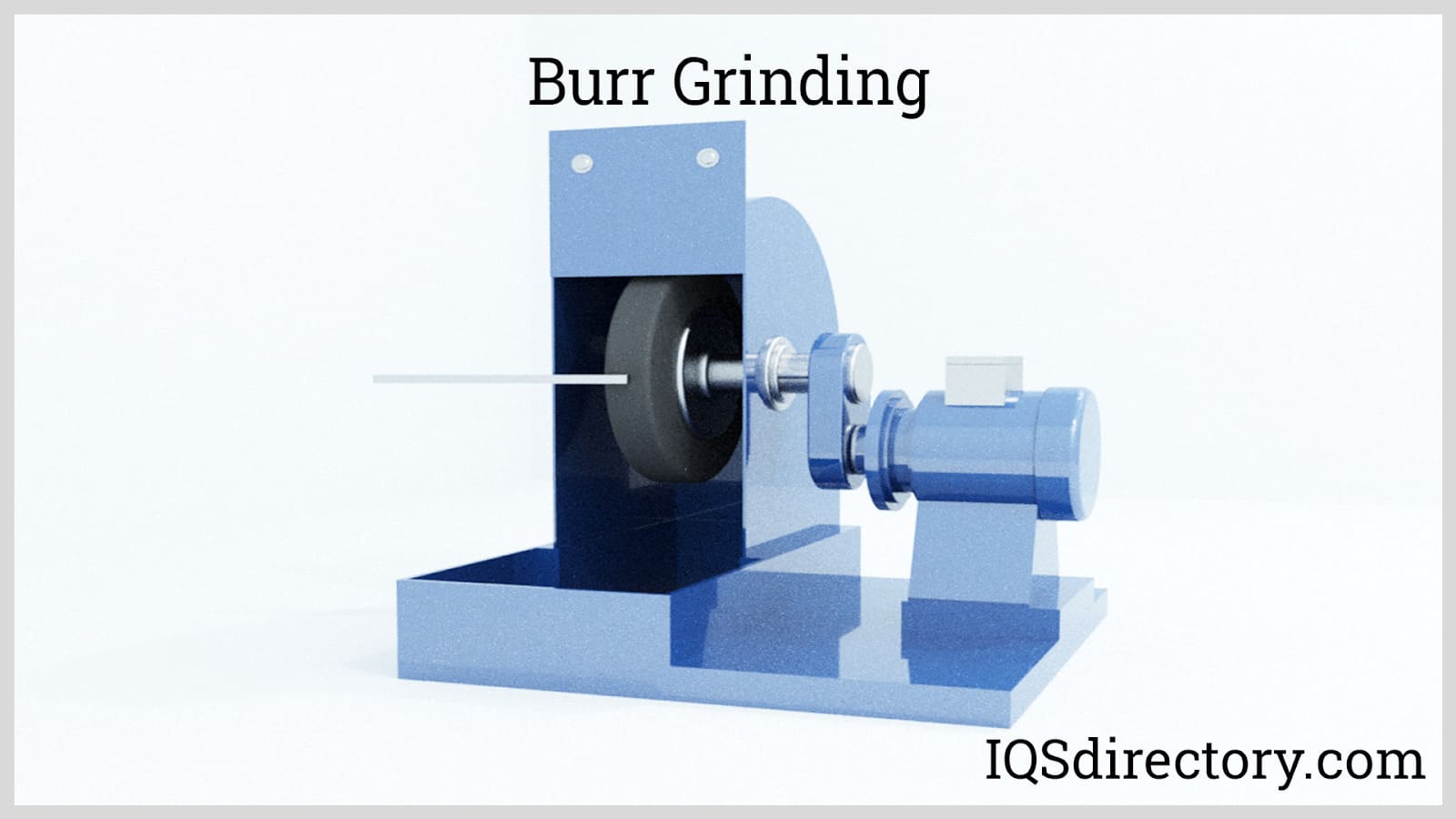 Uses abrasives such as aluminum oxide, silicon carbide, and zirconia compounds bonded into sheets, belts, pads, wheels, and discs. Mechanized reciprocating or rotating action of the abrasives removes materials that is raised from the surface. This approach is widely used when manufacturers need targeted material removal and a controlled surface finish.
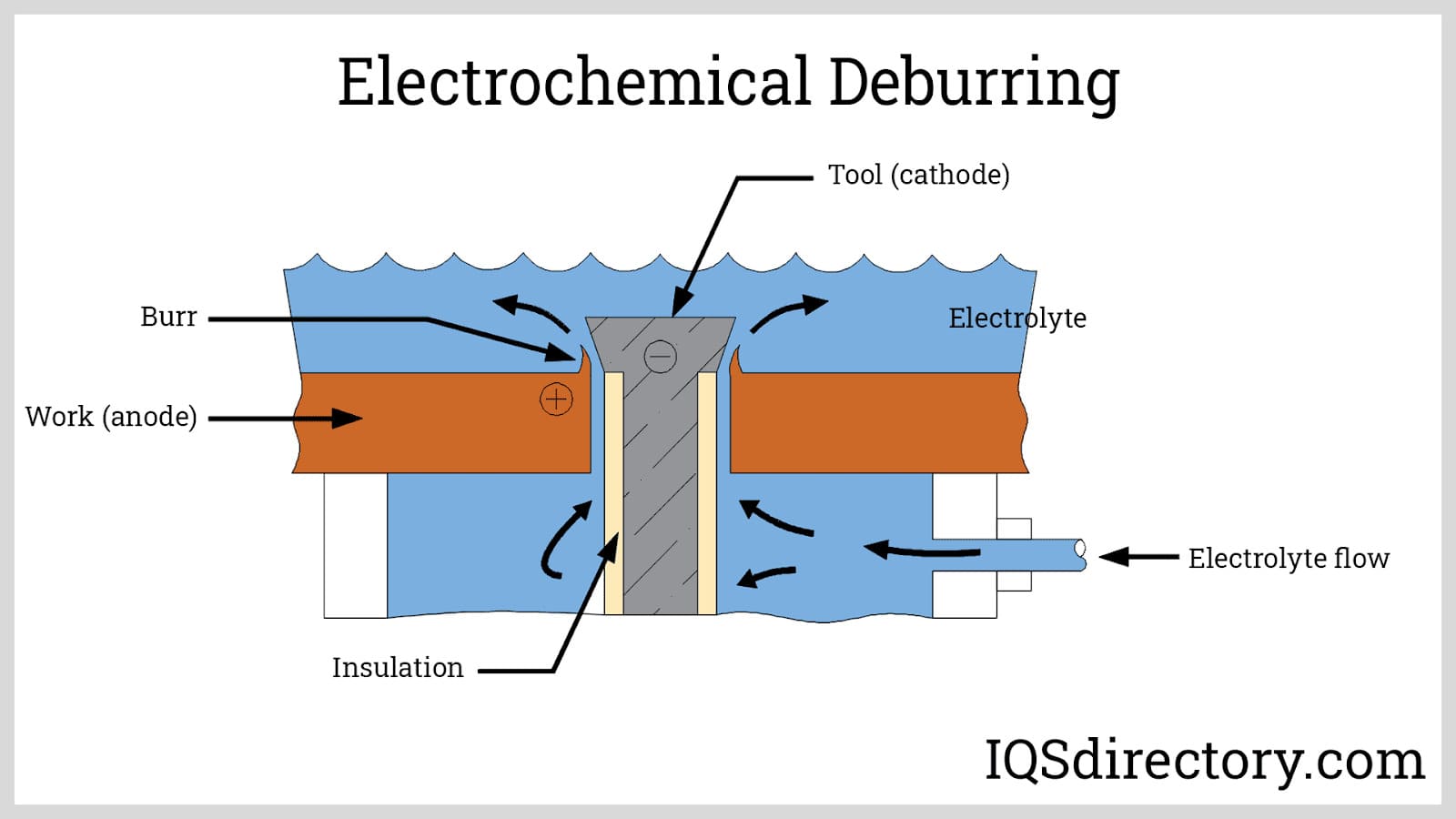 A process that uses electrolysis which is focused on the burrs. It is especially helpful for conductive metal parts with internal features, intersecting passages, or burr locations that are difficult to reach with conventional tooling.
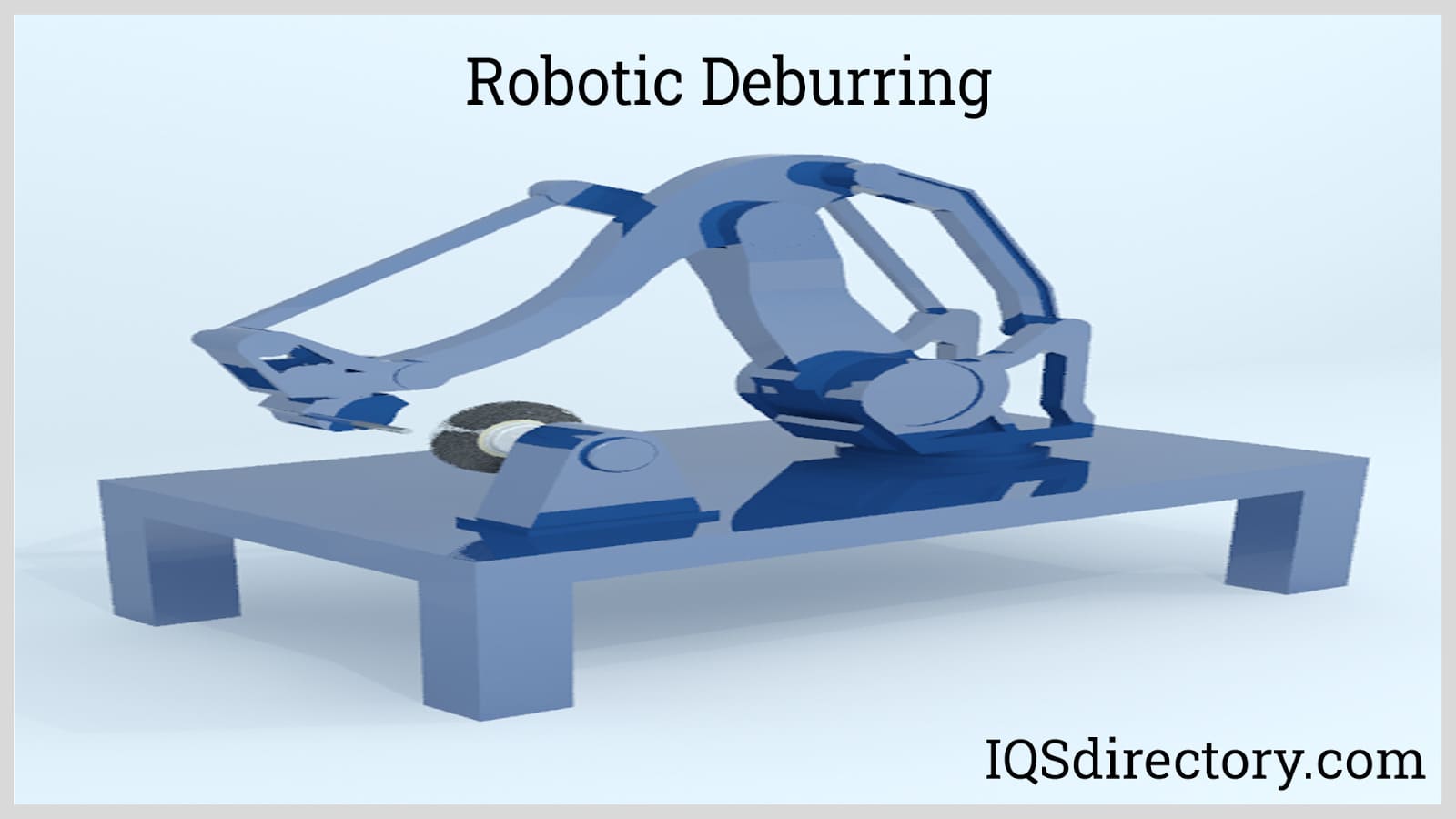 Robotic deburring is beneficial long term because of the reduced operating costs and the robotic systems are more safer than the manual process. It can also support repeatable cycle times, stable finish quality, and better handling of high-volume production environments.
Deburring Equipment Types
There are numerous machines, systems, and tools within the deburring equipment category, each offering its own unique advantages and drawbacks. Some may overlap or work alongside other deburring methods, while others function as complete independent systems. Understanding the differences between these deburring machine types can make it easier to match part material, burr size, production volume, and desired finish to the right process. In many facilities, the best solution is not a single machine but a combination of deburring equipment, finishing equipment, and media selected around the needs of the workpiece.
Barrel Finishing
Also known as tumbling, this process involves tumbling workpieces in a hexagonal or octagonal barrel along with abrasive media, creating a low-pressure abrasion action to remove burrs. Barrel finishing is often used for general deburring, surface smoothing, and edge refinement where large batches of similar parts can be processed together with a practical balance of cost and finish quality.
Brush Deburring
This method uses abrasive brushes to rub against items, effectively removing unwanted bumps and edges while adhering to specific tolerances and requirements. Brush deburring is frequently selected for sheet metal, stamped parts, laser-cut components, and machined surfaces where consistent edge rounding and gentle finishing are needed without excessive material removal.
Centrifugal Disc
Similar to barrel machines, centrifugal disc systems use a spinning disc at the bottom of the machine to rotate the parts and abrasive media together, enhancing the deburring process. These systems are often chosen when manufacturers need faster processing than standard tumbling can provide, especially for smaller precision parts that benefit from more energetic media movement and shorter cycle times.
Continuous Processing Equipment
This equipment is designed for processing high volumes of parts on a continuous basis in an in-line production setup, ensuring smooth and efficient deburring for large quantities. Continuous deburring equipment can be a strong option for manufacturers looking to support repeatable throughput, predictable handling, and easier integration with washing, drying, sorting, or packaging operations.
tumbling
A type of dry deburring media made from pulverized, treated corn cob rings. The particle size can vary from fine to moderate and is often used in applications requiring a gentler abrasive material. This kind of media can be useful when parts need lighter cleaning or finishing action and when surface protection matters as much as burr removal speed.
Deburring Machines
These machines are specifically designed to remove burrs from metal and plastic parts, helping to refine and smooth the finished products. Depending on the application, deburring machines may focus on edge breaking, flash removal, hole deburring, surface smoothing, or integrated finishing steps for parts that require a cleaner presentation and better assembly performance.
Deburring Media
Refers to the materials used to remove burrs from parts. These media can vary depending on the material and application. Ceramic media, plastic media, steel media, organic media, and specialty compounds all influence cut rate, finish quality, and part protection, so media selection is a major part of process performance.
Finishing Equipment
This category includes machinery designed to alter the surface characteristics of parts or materials, such as polishing, coating, burnishing, and deburring. In many production environments, deburring equipment is evaluated alongside finishing equipment because manufacturers often want a process that improves both edge quality and final surface appearance.
Oval Vibratory Systems
These versatile machines can be set up for either continuous or batch processing, making them adaptable for extended time cycles in deburring applications. Their flexible design can help shops handle mixed workloads while still maintaining the smooth media action associated with vibratory finishing processes.
Parts Tumbler
Used for finishing, polishing, and deburring plastic and metal parts. Tumble machines offer a consistent and efficient method for processing a variety of materials. They are often selected for batch work where large quantities of similar parts need repeatable deburring and surface conditioning with limited operator attention.
Polishing Equipment
Often involved in deburring processes, polishing equipment can include barrel or vibratory tumblers, as well as non-enclosed tools like Nylon Abrasive Filament (NAF) brushes or standard hand-held sandpapers and files. In practice, polishing and deburring often work together when parts need both smoother edges and a cleaner cosmetic finish.
Sand Blasting Equipment
A deburring method where parts are blasted with media, such as small ceramic pieces or walnut shells, to achieve a desired finish. This is typically used for softer plastic parts, in contrast to other methods like tumbling. Media blasting can also be useful when a manufacturer wants broad surface treatment, flash removal, or controlled texturing without direct tool contact.
Tumblers There are two main types of tumblers: rotary tumblers and vibratory tumblers. Both are commonly used in deburring, but their functions and applications may differ. Comparing these two options often involves reviewing finish consistency, media movement, cost, noise, cycle time, and how well each machine handles part shape and part fragility.
Tumbling Barrels
A type of deburring equipment used primarily on hard metals like steel and stainless steel, ideal for removing heavy burrs and refining the surface. Tumbling barrels are often valued for durability, straightforward operation, and the ability to process robust parts that can tolerate longer abrasive action.
Tumbling Media
The abrasive materials used in tumbling processes to remove burrs and smooth surfaces. Media selection affects everything from cut aggressiveness and finish texture to cleaning action and part protection, making it one of the most important variables in a successful tumbling process.
Vibratory Finishing
A burr removal process in which parts are accelerated and decelerated by mechanical means inside a drum-like enclosure, helping to smooth edges and refine surfaces. Vibratory finishing is often selected for manufacturers that want consistent deburring, effective media contact, and a process that can also support polishing and general surface enhancement.
Vibratory Tumblers
A type of deburring machinery similar to barrel machines, but with an open top to allow operators to observe the deburring process without stopping the machine. This visibility can make it easier to monitor media action, adjust cycle timing, and maintain more predictable finishing results during production.
Deburring Applications
Deburring equipment is widely used to finish machine components and various completed products in situations where burrs, rough edges, or protrusions could lead to safety hazards, friction-related inefficiencies, or other potential problems. It is also employed for aesthetic purposes to improve the appearance of the finished products. In many manufacturing environments, deburring is part of the larger finishing and quality-control workflow, helping companies improve fit, reduce assembly interference, support smoother motion between parts, and prepare workpieces for coating, welding, painting, plating, packaging, or final inspection. Whether a facility produces machined metal parts, molded plastic components, stampings, fabricated assemblies, or precision parts with holes and edges that need refinement, deburring helps deliver cleaner, safer, and more consistent results.
Due to its versatility, deburring equipment is used across many industries, but it is particularly important for companies in the following fields. These industries often search for deburring solutions when they need smoother edges, better surface finish, improved part consistency, and a process that can support either custom work or high-volume production without sacrificing quality.
- Industrial Manufacturing, where deburring supports machining, fabrication, assembly accuracy, and dependable surface preparation across a wide variety of production lines.
- Electronics, where small parts, connectors, housings, and precision features often require clean edges and controlled finishing to support product performance.
- Construction, where finished metal parts, hardware, fittings, and fabricated components benefit from burr removal for safety, durability, and easier installation.
- Automotive, where deburring helps improve assembly fit, reduce wear, and support dependable performance in components exposed to movement, heat, and vibration.
- Aviation, where edge condition, finish quality, and dimensional consistency can affect both safety expectations and long-term component reliability.
- Medical, where precise finishing can support cleaner surfaces, smoother handling, and better performance for parts used in regulated or high-precision applications.
Safety and Compliance Standards for Deburring Equipment
Safety and compliance requirements vary depending on the type of deburring equipment used. For example, equipment that utilizes grindstones or machine tools will have different safety and regulatory requirements compared to systems that use chemical, thermal, or vibrational methods. The hazards involved may include moving parts, abrasive dust, heat, vibration, noise, chemical exposure, media handling, and waste management, so the right protective measures often depend on the exact deburring process being used. Companies evaluating deburring systems should look beyond output and finish quality to understand guarding, ventilation, operator training, maintenance access, and the daily safety routines needed to keep the equipment running properly.
It's important to thoroughly review all relevant safety regulations, compliance standards, and potential hazards for the specific equipment you plan to use. Make sure to communicate these details to your employees. These considerations should be factored into your decision-making process when selecting deburring equipment. A system that appears efficient on paper may create avoidable operating challenges if it requires more specialized training, dust control, chemical handling, or inspection procedures than your facility can comfortably support. Clear documentation, strong vendor guidance, and a realistic safety plan can make implementation smoother and help reduce downtime, operator risk, and process inconsistency.
Other Considerations for Deburring Equipment
Maintenance needs will vary depending on the deburring solution you choose. Some systems may require consumables, while others may experience wear and need regular part replacements. More complex systems could have strict maintenance demands, potentially requiring someone with expertise in heavy machinery, while simpler manual equipment may be easily managed by lower-skilled labor. Over time, maintenance planning can affect total operating cost just as much as equipment purchase price, especially in facilities where uptime, batch consistency, and predictable scheduling matter. Buyers often compare deburring systems by asking how often media needs replacement, how much cleaning is required, what parts wear out first, and how difficult it is to keep the machine within performance targets.
It's also important to consider upkeep beyond routine maintenance. For example, you may need to replace components due to standard wear and tear on machine parts, a common aspect of all deburring methods. Whether using brushes, belts, chemicals, heat, or other systems, both machine parts and the parts being processed will inevitably degrade over time. Consumables, replacement schedules, operator attention, and cleaning procedures should all be considered early so the chosen deburring process remains practical once production volume increases. A strong maintenance plan can also help preserve finish quality and reduce the chance that burrs, scratches, or inconsistent surface treatment begin showing up later in the process.
Additionally, when selecting deburring equipment, it’s wise to think about future growth, potential expansion, or efficiency upgrades. Investing in a system that cannot be expanded could become a bottleneck in your production pipeline, while spending more today on a system that meets current needs but allows for future upgrades might be more beneficial in the long run. For companies planning to grow, scalable deburring equipment can make it easier to add automation, improve throughput, and integrate finishing with inspection or material-handling steps later on. Looking ahead at volume, staffing, part mix, and floor-space requirements can help prevent the need for a full replacement sooner than expected.
Choosing a Deburring Equipment Manufacturer
Choosing the right manufacturer for your deburring equipment can be challenging due to the many factors that influence not only the final product but also your overall experience. To ensure an efficient and cost-effective process, here are some key points to consider. Buyers are often comparing more than machine specifications alone; they are also evaluating process knowledge, application support, training, replacement-part availability, and how confidently a supplier can recommend the right deburring approach for the material, part geometry, and production volume involved.
Experience
While every company needs to start somewhere, it's best not to be the first customer for a new manufacturer. Even if a deburring equipment manufacturer is new, they should have a strong background in manufacturing or staff with the necessary expertise. More important than general industry experience is familiarity with your specific requirements. A company that primarily serves customers with one-off deburring solutions may not be the right fit for supplying mass-volume deburring systems for industrial clients. Manufacturers with application knowledge can often help identify process risks early, recommend media or machine adjustments, and guide you toward a more practical long-term solution.
Support
The product you receive is just one part of your overall experience with a manufacturer. Pay close attention to the quality of support, sales, and customer service you receive. You want clear and reliable communication whether you are a new customer, a repeat customer, or seeking help with a problem. It should be easy to get a response to your inquiries, and the information provided should be actionable. Good support is often a strong indicator of the overall quality of a company’s products and services, as transparency, professionalism, and efficiency in support typically correlate with a high level of manufacturing quality. Support also matters after installation, when process tuning, maintenance questions, consumable selection, and operator training can influence how well the deburring system performs day to day.
Flexibility
If you are only placing a single order, flexibility may not be as important. However, if you expect to make additional orders or adjustments down the line, flexibility becomes key. Whether you need to switch to a different solution, adjust order volumes, or require expedited delivery, a manufacturer’s ability to accommodate changes and react quickly will greatly impact your experience. Flexible suppliers are often easier to work with when production needs shift, new part families are introduced, or process refinements are needed after real-world testing.
Suitability
It's important to distinguish between a good manufacturer and the right manufacturer for your needs. A company that excels in general manufacturing may not be the best fit if they rarely work with the type of deburring equipment you need, primarily serve companies with much larger or smaller volume demands than yours, or are unable to meet your specific logistical expectations. Make sure the manufacturer you choose aligns with your unique requirements. The best fit is usually a supplier that understands your application, communicates clearly, and can support the finish quality, throughput, and service expectations your operation depends on.
Deburring Equipment Terms
-
Abrasive
Technically, any material that can be used to wear down or shape another material. In industrial terms, abrasives are typically hard minerals from a specific group, used for shaping, finishing, polishing, or deburring materials. In deburring operations, abrasive choice affects cut rate, finish quality, heat generation, and how aggressively a process removes raised edges or surface imperfections.
Buffing
A polishing method that utilizes a soft cloth and very fine polishing compounds to create a smooth surface. Buffing is often a follow-up step after deburring when the goal shifts from edge cleanup to cosmetic surface enhancement.
Burr
Unwanted protrusions or rough edges on a material resulting from machining processes. Burrs can interfere with assembly, create handling hazards, and reduce the overall finish quality of a completed part.
Coated Abrasive
Commonly known as sandpaper, this abrasive is often used on machines like disc sanders and sometimes applied by hand. The abrasive material, typically a synthetic mineral, is coated onto paper or fiber rather than actual sand. Coated abrasives are often selected for controlled manual finishing, light deburring, and smoothing flat or contoured surfaces.
Crystalline
Refers to the texture of mineral groups or masses where distinct crystal faces are visible. In abrasive materials, crystalline structure can influence hardness, breakage behavior, and performance during finishing.
Disc Grinding
A grinding process that uses the face of a large wheel to create flat and parallel surfaces in high-volume production settings. It can also support burr removal and surface correction when dimensional consistency matters.
Edge
The point where two surfaces meet or intersect. In deburring, edge condition often determines whether a part is safe to handle, ready to assemble, or visually finished to the desired standard.
Finish
The measurement of surface characteristics of a workpiece, typically related to smoothness and texture. Finish quality is often one of the main reasons companies invest in deburring and finishing equipment.
Friability
The tendency of abrasive grains to fracture or break apart when struck or placed under pressure. This property can affect how aggressively an abrasive cuts and how long it maintains useful performance.
Emery
A natural abrasive composed of aluminum oxide and small amounts of iron oxide. Historically used in the finishing industry, it is now primarily used in home workshops for hand deburring. It remains a familiar reference point in discussions of traditional abrasive materials.
Mass Finishing
A group of processes that use abrasives to remove burrs or apply finishes to small workpieces, often in large quantities. Mass finishing is widely used when manufacturers need consistent deburring and surface treatment across many parts in a batch.
Media
The abrasive materials, such as pellets, stones, or other substances, used in mass finishing and deburring. Common examples include silicon carbide, plastic, ice, sand, and walnut shells. Media choice helps determine surface finish, cut speed, and how gently or aggressively the process treats the workpiece.
Polishing
A finishing process that uses very fine abrasives to remove little to no material, focusing primarily on improving surface appearance. It often follows deburring to achieve the desired finish and overall presentation.
Silicon Carbide
A synthetic mineral used extensively in the finishing industry, known for its hardness and effectiveness as an abrasive. It is harder than aluminum oxide and is commonly used in a variety of finishing applications. In deburring, it is often selected when strong cutting action and dependable abrasive performance are needed.
More Deburring Equipment Information