Please fill out the following form to submit a Request for Quote to any of the following companies listed on
Get Your Company Listed on this Power Page
Introduction
The importance of pulverizers and their use with a list of recommended manufacturers
You will learn:
What is a Pulverizer?
Uses for Pulverizers
Components of a Pulverizer
Types of Pulverizers
And much more ...
Chapter 1: What is a Pulverizer?
Pulverizers are industrial machines designed to reduce solid materials into manageable sizes or fine powder, making them essential in size reduction, material processing, and bulk solids handling. They process loads in batches or as part of an automated continuous system. Various methods are used to load pulverizers, including conveyors, feeder systems, and other material handling options depending on the material being processed and the type of pulverizer. Grinding speed, pressure, rotor design, and screen size help determine final particle size, especially when producing fine powders, granules, or uniform output for downstream manufacturing.
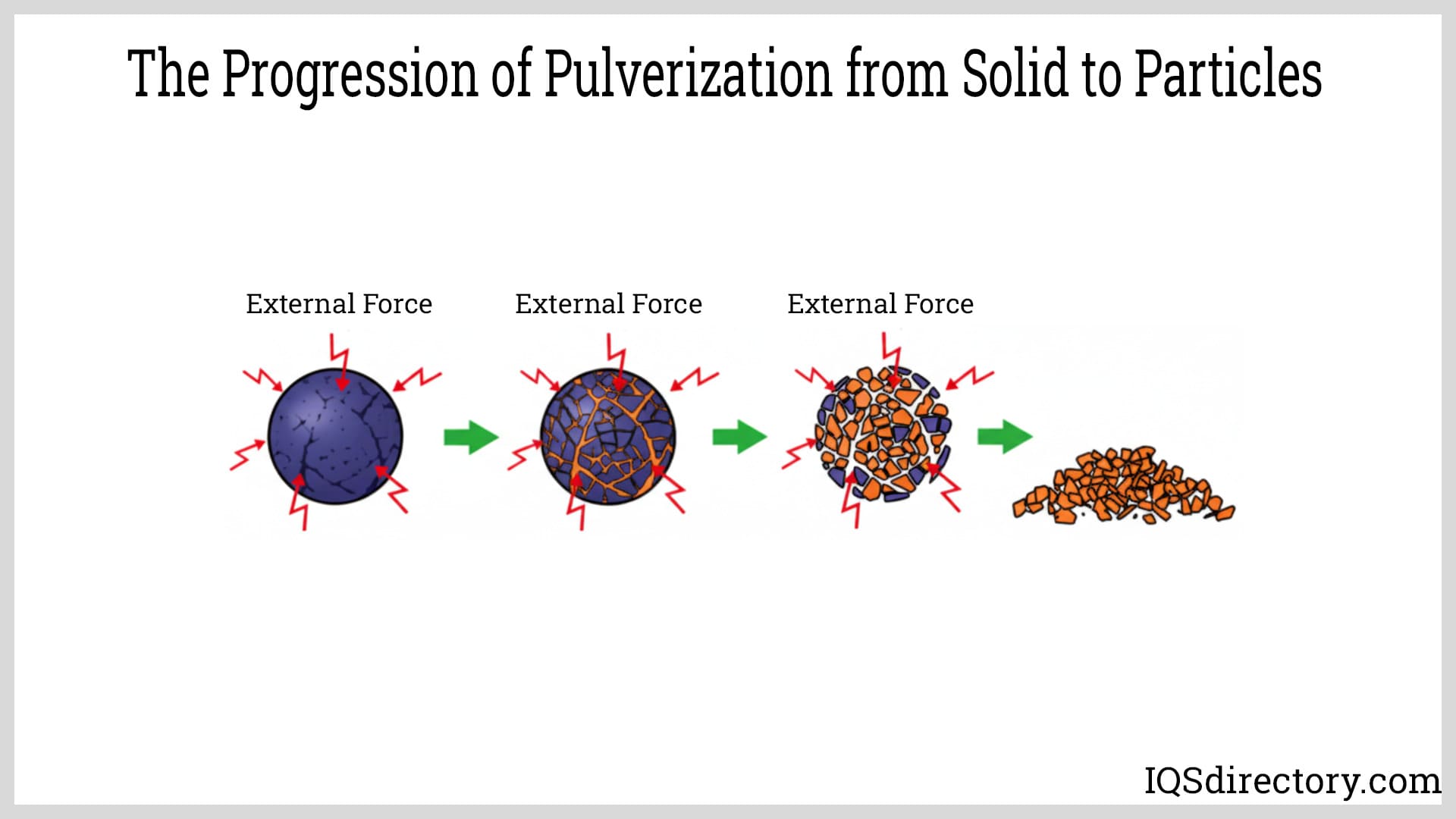
The process of pulverization refers to the application of external force to solid material of a specific size in order to reduce it to particles much smaller than the original material. For centuries, pulverization has been used by many cultures to change the shape and size of materials, making them more practical, easier to use, and better suited for processing, blending, and refining. Today, pulverizers are widely used in industries that require consistent particle size distribution, improved throughput, and efficient material reduction.
The term pulverization is a generic descriptor that refers to different methods used to grind, crush, and smash large particles into small bits or powder. The methods of pulverization fall into four general categories: friction, compression, impact, and shearing. These four size reduction forces can work independently or together to complete the pulverization process. The use of multiple forces is often necessary because different materials respond differently to mechanical milling, depending on hardness, moisture content, abrasiveness, and desired fineness.
The types of pulverizing machines cover a wide gamut of equipment due to the nature of the process and the many end-use applications involved. Many people may envision pulverizing equipment as large pieces of machinery that grind up trees, rocks, coal, plastics, and other bulk materials. In actuality, pulverizers can also be found in kitchens where they are used to mill grain, crush nuts, and prepare other food ingredients. In industrial settings, common applications include plastic recycling, chemical processing, mineral processing, pharmaceuticals, food production, and waste reduction. Choosing the right pulverizer depends on material characteristics, capacity requirements, maintenance needs, and the final product specifications required for efficient operation.
Chapter 2: Types of Pulverizers
The nature of the various materials that are to be pulverized requires the use of diverse equipment due to the properties and characteristics of the materials. Each type of pulverizer has unique and distinctive abilities that enables them to meet the challenge of demolishing solid materials. The many features and capabilities of pulverizers provide them with the necessary force to compress and break any form of solid.
Although the process of a pulverizer can be easily explained, the selection of the right pulverizer for a job requires careful consideration. The main aspects of the selection process are in regard to durability, power consumption, adaptability to materials, volume, dust control, and the safety of personnel. Manufacturers assist their clients in regard to the type of grinding mechanism a pulverizer has. Having an understanding of this facet of a pulverizer is critical to the success of the process.
Hammer Mill Pulverizer
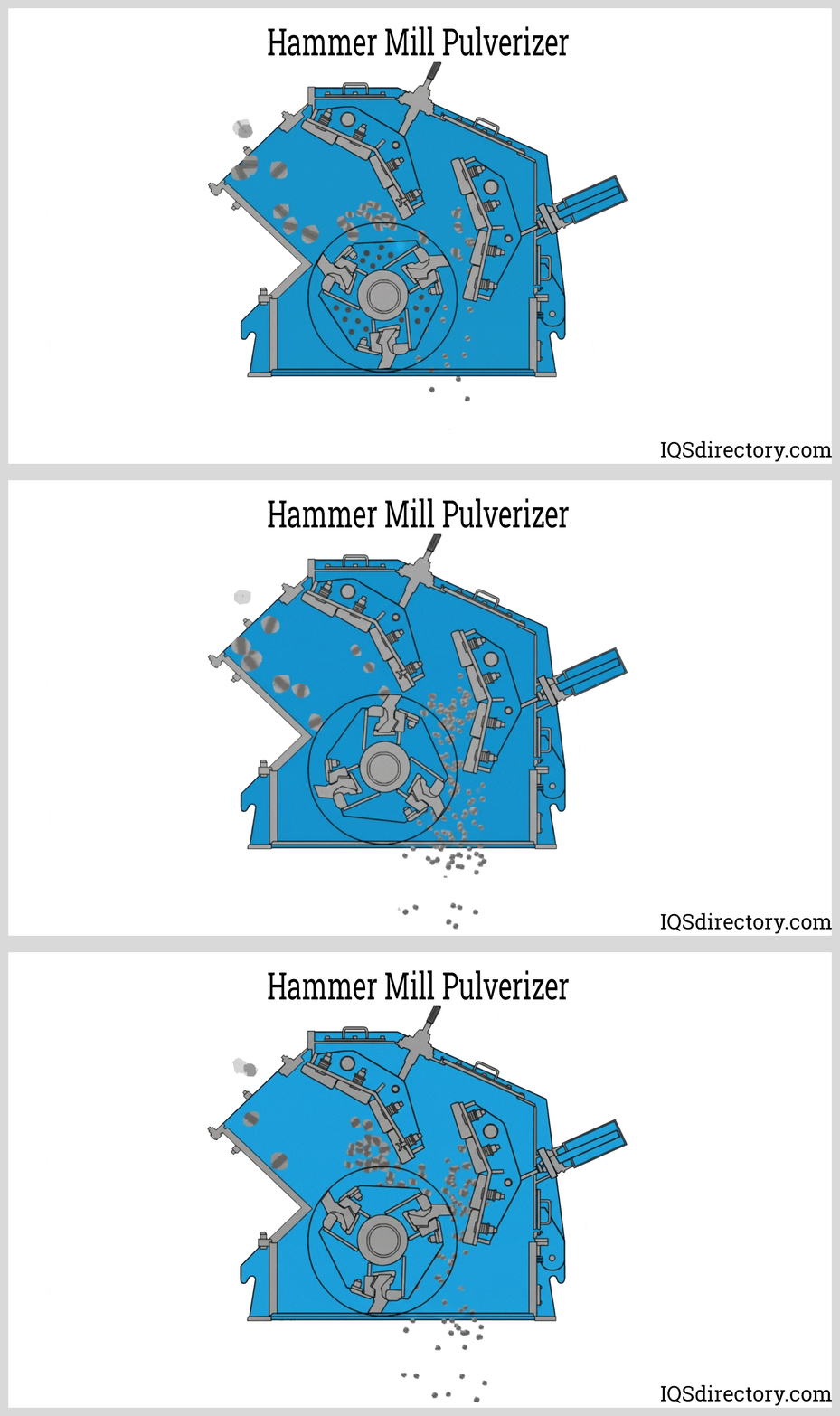
A hammer mill pulverizer has a cylindrical steel drum that has hammers mounted vertically or horizontally along the shaft. The hammers rotate rapidly around the axis of the cylinder and strike material as it is fed into the drum. The breaking action of hammer mill pulverizers is suited for breaking flat or elongated spalls, small chips or pieces broken from a large solid mass. Materials with parallel cleavage planes are broken off in flat spalls, which have to be struck multiple times before exiting the machine.
Hammer mills are capable of greater reduction than any other form of crushing equipment and can have a reduction as high as 20:1 in an open circuit and much higher in a closed circuit. The difference between a closed circuit hammer mill and open circuit hammer mill is in regard to the number of times material is processed by the machine. With the closed circuit process, crushed material is not allowed to leave until it has reached a specific size. This requires material to be struck multiple times and be recirculated through the mechanism.
Open circuit hammer mills apply force to the feed once, after which the material passes through. The open circuit configuration is normally a part of the primary stage of crushing prior to material entering a secondary crushing stage. The primary identifiable characteristic of the open circuit process is material to be crushed undergoes one application and does not recirculate.
The normal materials processed by a hammer mill pulverizer are soft to medium hardness and include coal, biomass, fertilizers, and grains. The simple construction of hammer mill pulverizers makes them easy to maintain at very low cost. The process is not designed for ultrafine milling.
Ball Mill Pulverizer
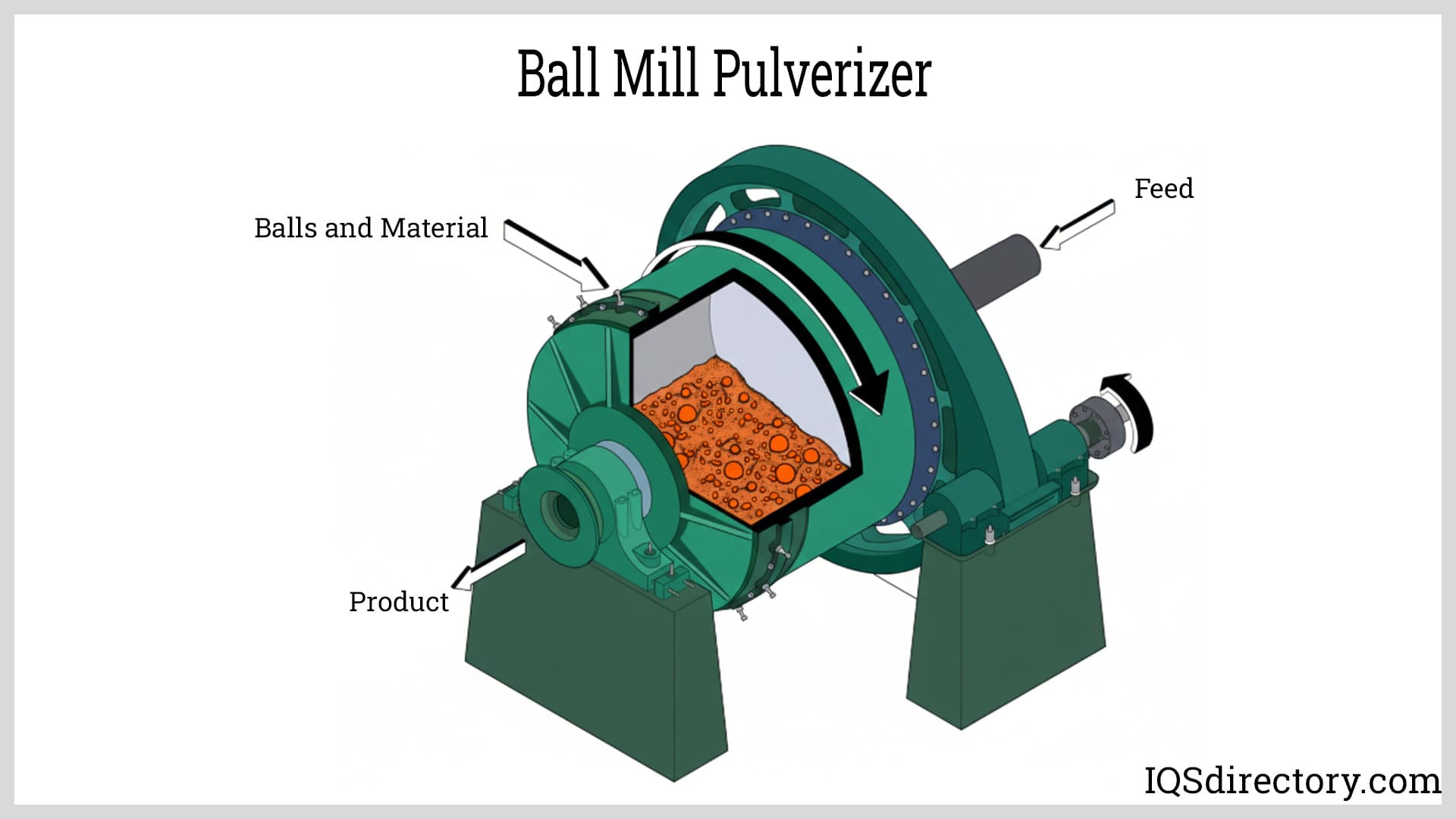
As with hammer mill pulverizers, ball mill pulverizers consist of a cylindrical shell that rotates around a horizontal axis. The grinding media is steel balls or ceramic balls that partially fill the cylinder. Material to be ground is loaded into the cylinder with the ball media. As the cylinder rotates, the material and media rise up the side of the cylinder, after which they fall back down into the cylinder to be lifted again.
The rising and falling of the material and media causes the balls to collide with the material and crush and grind it into particles. The grinding process continues until the desired particle size is achieved. The popularity of ball mill pulverizers is due to the fineness of the particles the process produces. In some instances, ball mill pulverizers are part of a continuous milling process where materials with media are continually fed into the cylinder.
The nature of the process of ball mill pulverizers makes them ideal for hard materials like minerals, ores, ceramics, and cement. Unlike hammer mill pulverizers, ball mill pulverizers can achieve exceptionally fine particle sizes, which is one of the reasons for the process's wide use. Ball mill pulverizers require a great deal of energy to reach the very fine particle size and have a very slow time consuming process.
Raymond Pulverizer
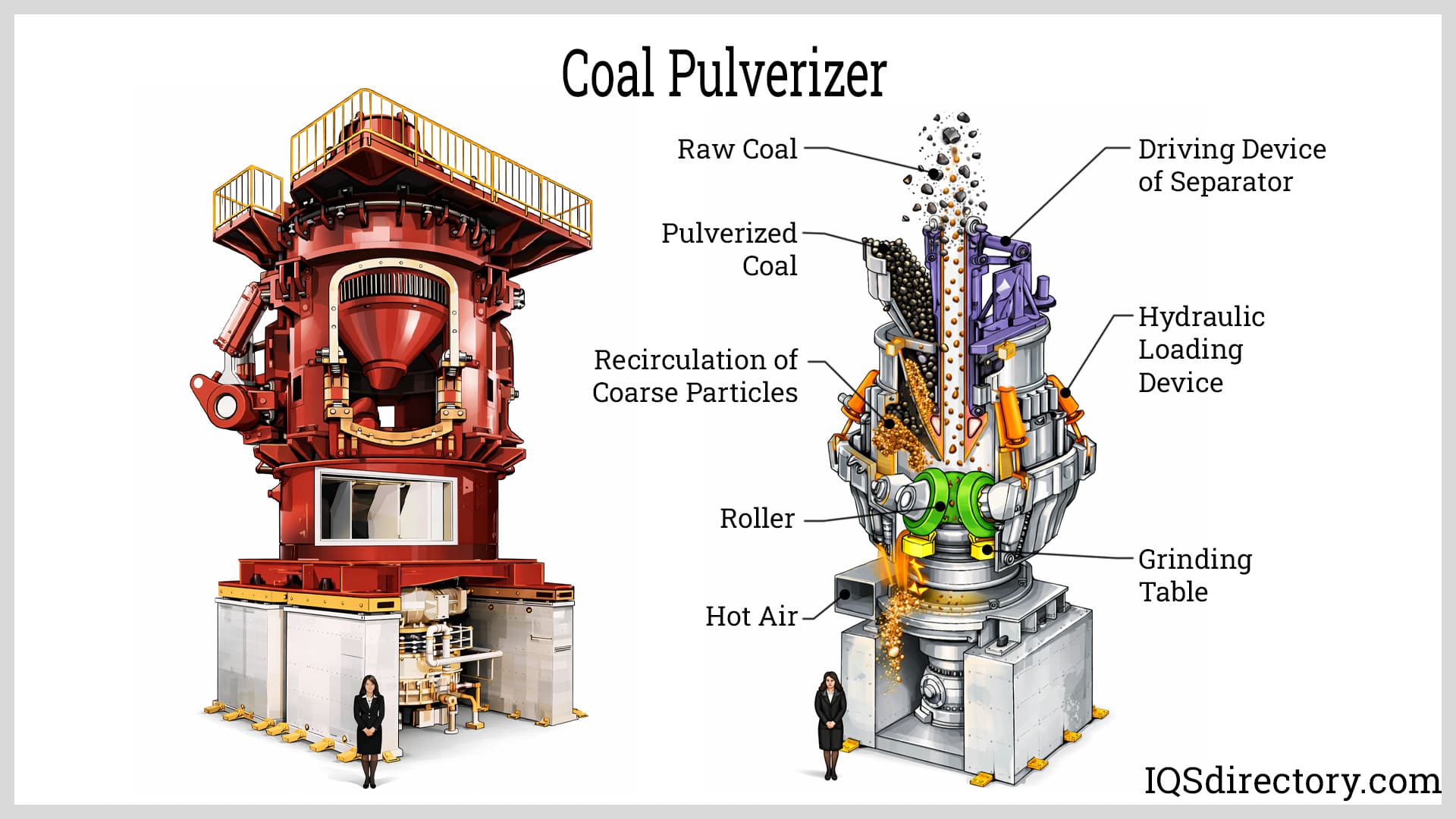
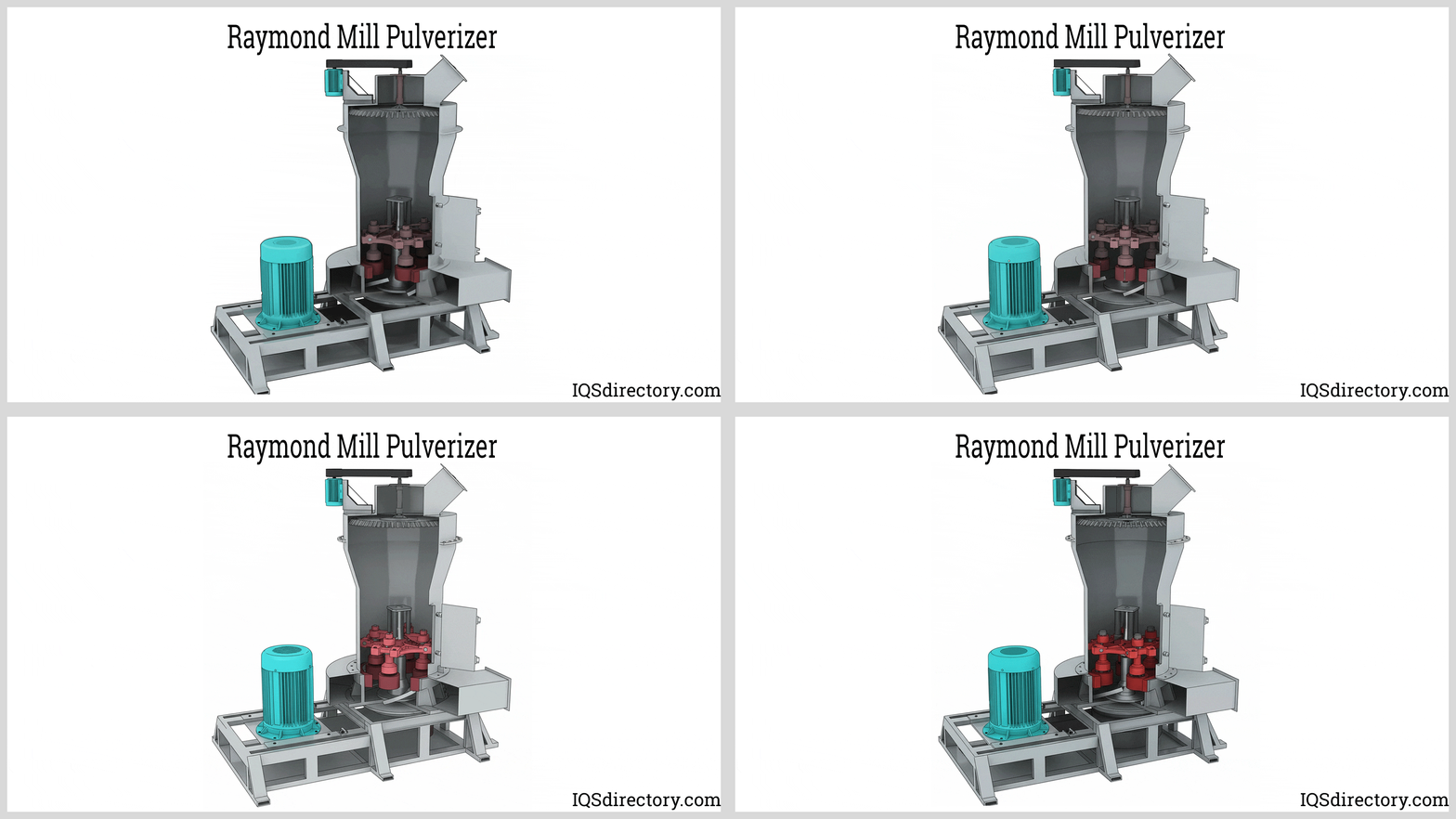
A Raymond pulverizer combines milling and crushing in one function. They are used for grinding materials into a fine powder, which makes them an important part of industries that require substantial particle size reduction. The mechanism of a Raymond pulverizer includes a grinding roller and grinding ring. Once the material is ground, fine particles are released and collected while coarse materials are returned for further grinding.
As the ground material is released by the grinder, it is lifted by a hot air stream that is generated by a blower to an air separator that classifies the size of the particles. Fine particles are allowed to pass through while larger coarse materials are returned to the grinder for further processing. The acceptable particles enter a cyclone collector where they are prepared for packaging or further processing. Raymond pulverizers have a tightly closed system that minimizes or eliminates any concerns regarding dust emissions, ensuring clean safe working conditions.
Raymond pulverizers provide high grinding efficiency and have the ability to process large quantities quickly and efficiently. The air separator ensures control of the particle size. Final products are guaranteed to meet the desired specifications, an aspect of the process that is a necessity for industries that require consistency and uniformity. Unlike other forms of pulverizers, Raymond pulverizers are energy efficient and use less energy than any other pulverizing system. The materials that are processed by a Raymond pulverizer include minerals, non-metallic ores, and chemicals, which enables a Raymond pulverizer to be used by mining companies, construction sites, and chemical processing. It is very common for a Raymond pulverizer to be used like a ball mill pulverizer as part of a continuous feed process.
Jet Mill Pulverizer
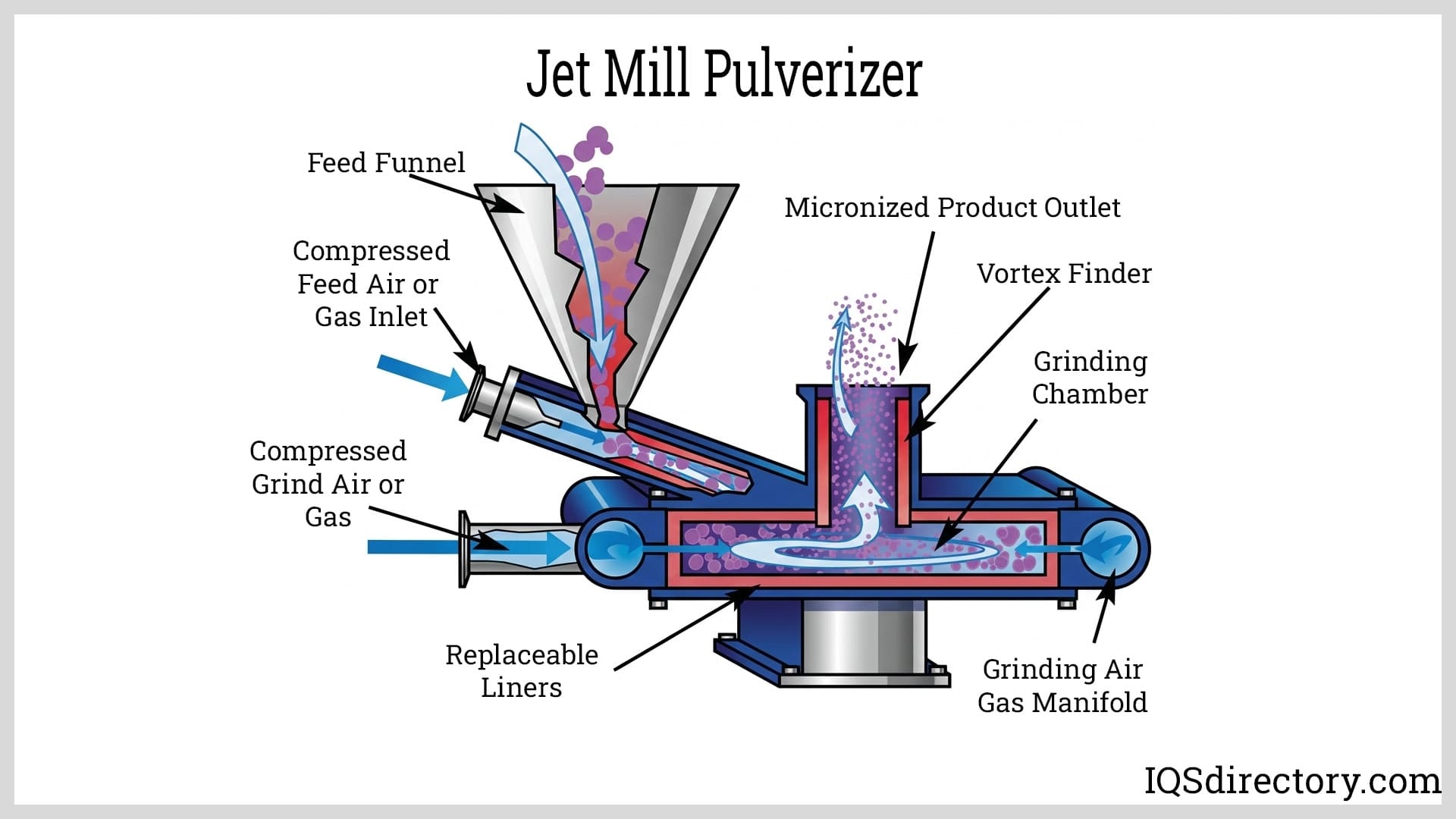
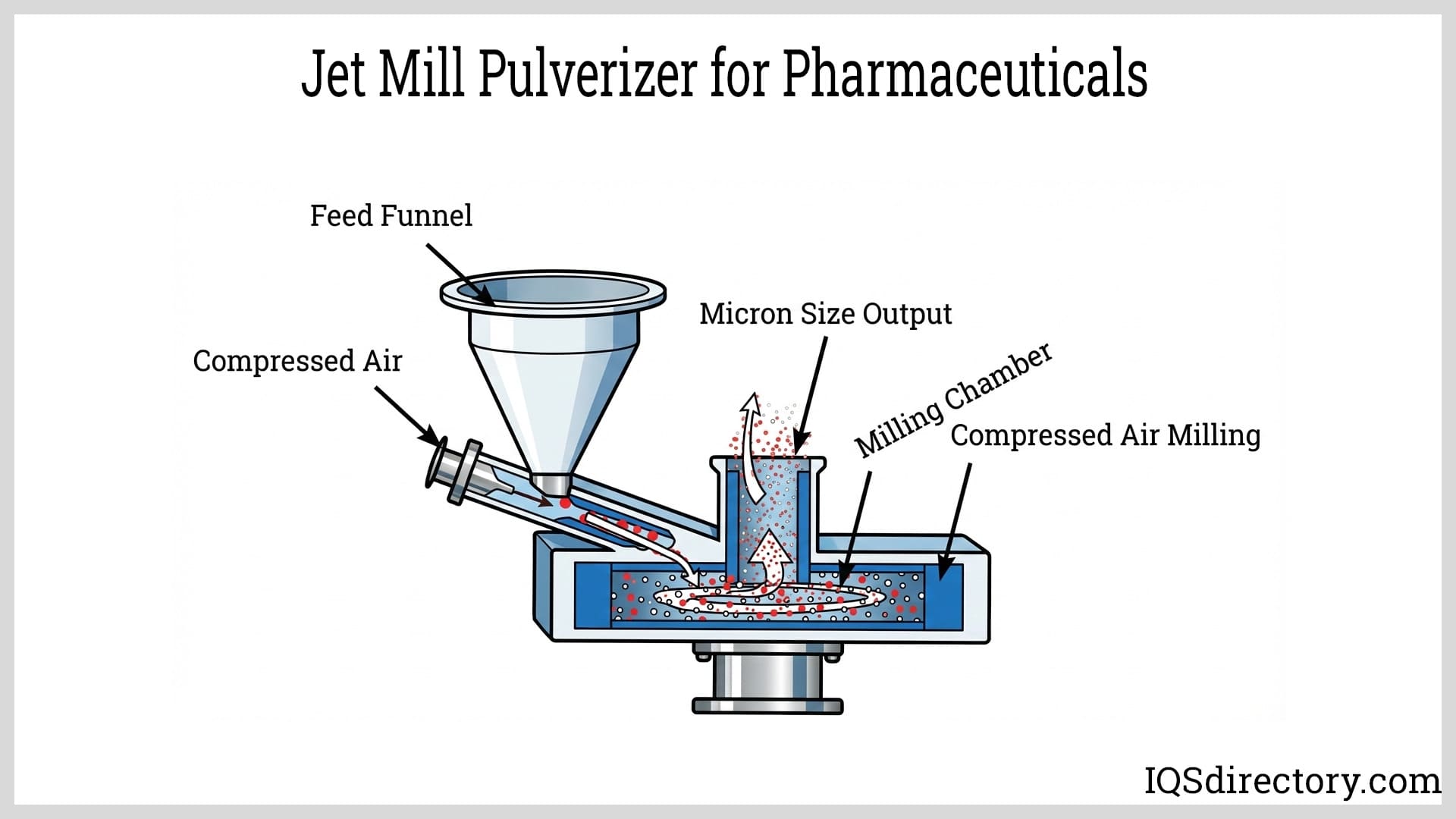
Jet mill pulverizers, known as jet mills or flow energy mills, use high speed airflow to cause materials to collide and impact resulting in a shearing and crushing effect. High pressure, compressed gas creates the high velocity collisions between the particles, which fractures the particles into smaller pieces. In a single process, particle size reduction is achieved as well as particle classification. The process can fine grind polymers, chemicals, and ceramics.
The types of jet mills fall into two categories, fluid bed and circular, which have free moving parts that reduce wear and tear on the equipment. Unlike mechanical pulverizers, jet mill pulverizers do not generate heat, a factor that allows them to process soft powders and sensitive materials. The result of jet mill pulverizing is uniform particle sizes with exceptional accuracy and precision. Air pressure for systems range between 50 psig up to 120 psig. Particle sizes of one micron (µ) up to 10 µ are common, with some processes producing particles as small as 200 nanometers. The variations in particle size are achieved by adjusting the power to the pulverizer as well as the amount of time spent in the mechanism.
The main benefit of jet mill pulverizers is the small size of the particles and the tight size distribution. Since there aren’t any hammers, screens, wheels, or blades, there is minimal risk of particle contamination from worn metal parts. The simple design of the pulverizing chamber makes it easy to clean without fear of any type of cross contamination. The absence of metal parts clashing against materials removes concerns regarding temperature changes during processing time.
Attrition Pulverizer
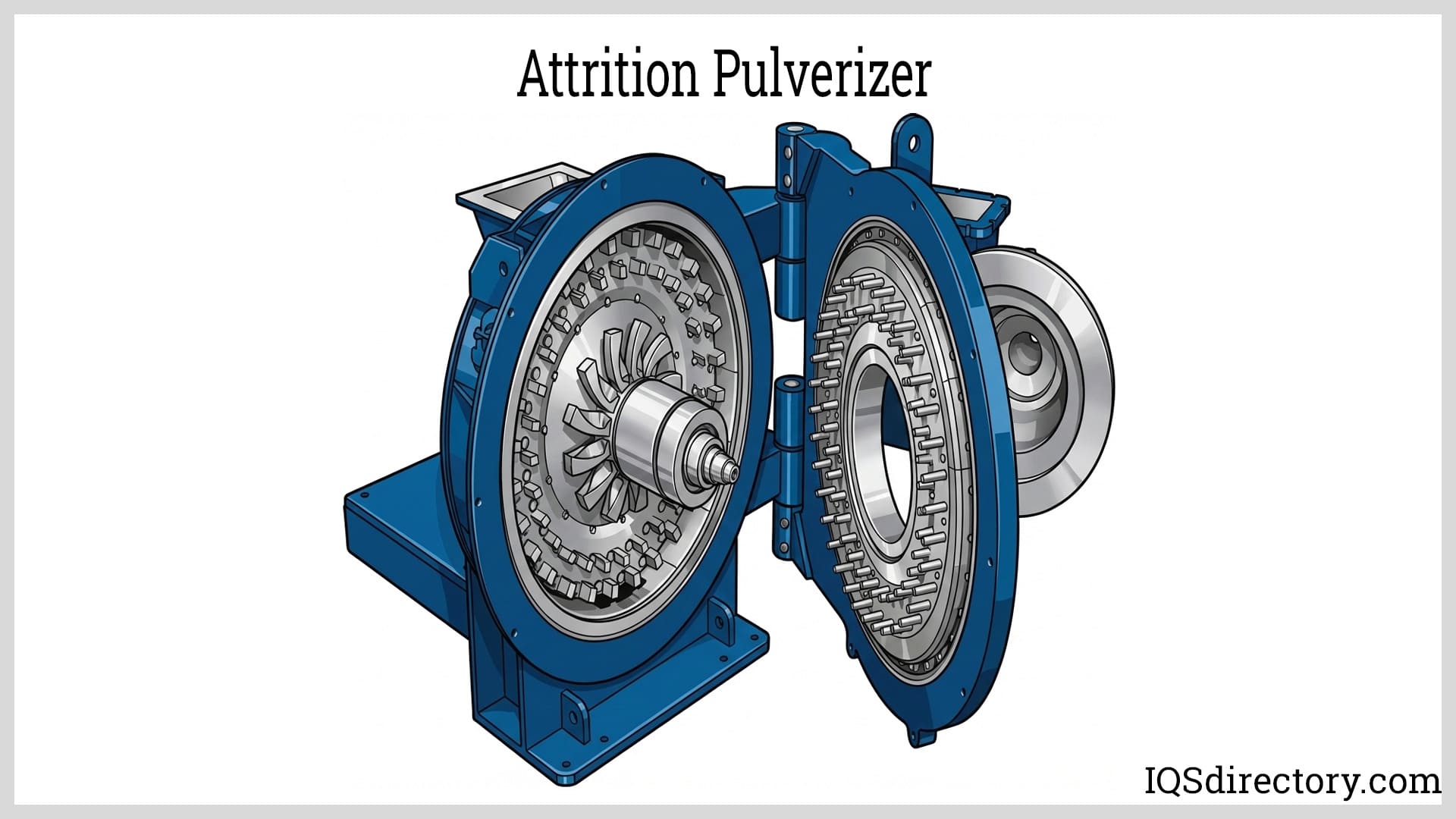
Attrition pulverizers reduce materials to fine powders by accelerating the particles against one another, much like a jet mill pulverizer, using a flat or curved grooved surface referred to as a stator. A high-speed rotor motor creates centrifugal force that causes the particles to collide. Rotors accelerate the particles using multiple pockets with blades on a vertical shaft that presses the particles against the stator. Another form of rotor has grooves that grind particles against the stator.
The structure of attrition pulverizers includes a stationary milling disc on the outside and a rotating milling disc on the inside. The milling disc is adjusted to widen or narrow the gap between the discs for varying the sizes of the produced particles. Material to be processed is placed between the discs in the gap at the midpoint of the outer disc. The produced centrifugal force rotates the disc forcing the material outward as it is ground by the discs. The size of the gap, the number of teeth on the discs, and the speed of the rotation of the rotor determine how fine the end product will be.
Attrition pulverizers are better for grinding than hammer mills and pin mills or forms of screen classifying cutters. They efficiently reduce grains, metal powders, minerals, seeds, and tobacco as well as plastics and waxes, which do not do well in impact milling. A unique feature of attrition pulverizers is their ability to blend and mix metallic powders due to the processes’ capacity to produce finer particle sizes in a shorter time. A drawback of attrition pulverizers is their low output compared to other pulverizing methods.
The process of attrition pulverizers allows for greater control and narrow particle distribution. Unfortunately, the grinding between the rotor and stator causes extensive wear to the components, which increases maintenance costs and component replacement.
Bead Mill Pulverizer
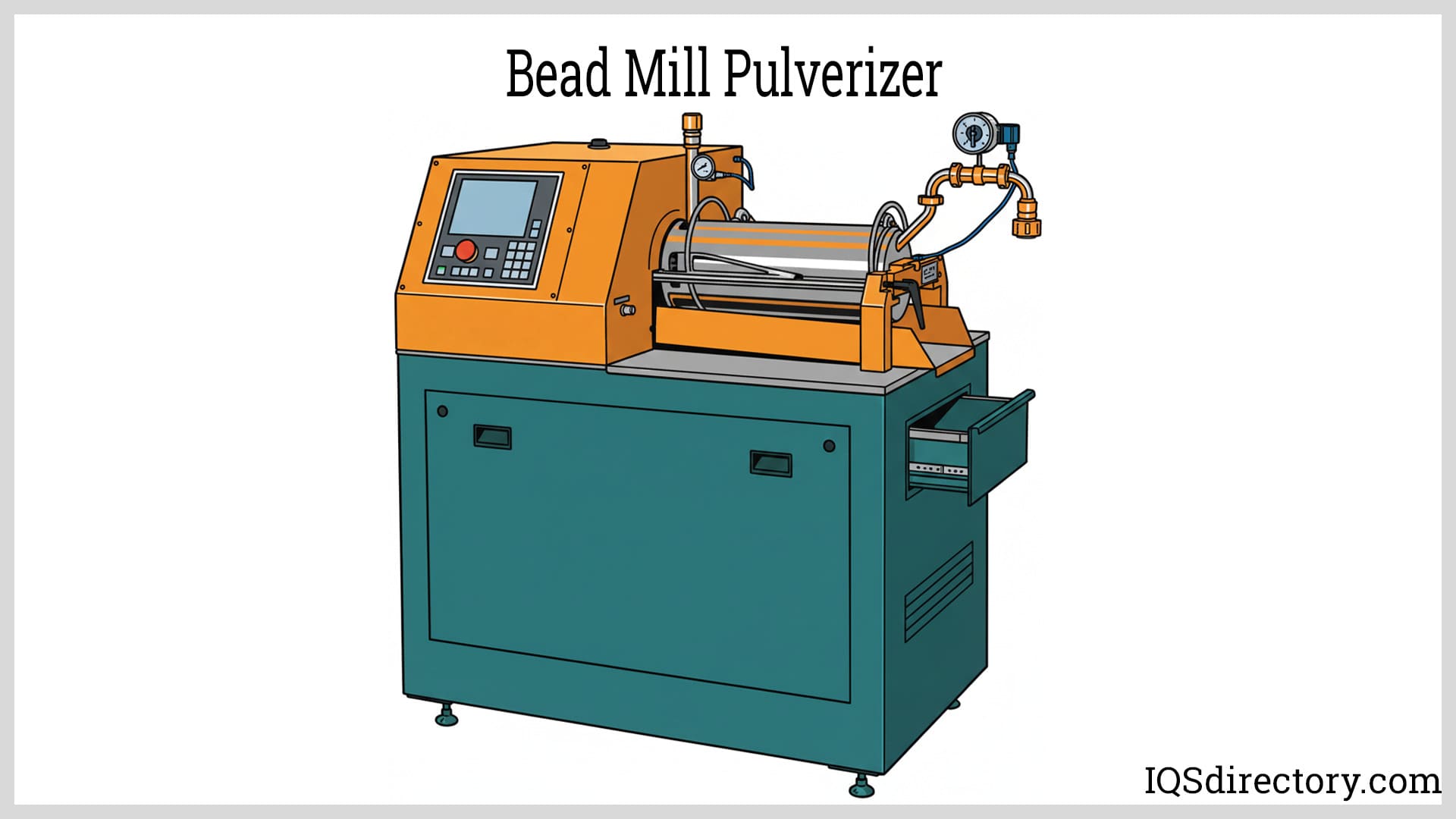
Bead mill pulverizers work by agitating materials using a bead grinding medium with a rotating agitator. The beads collide with the material and break it down into a fine powder. Bead mill pulverizers have similarities to ball pulverizers. The differences between the processes are in regard to the types of materials that they process. Bead mill pulverizers are used for ultrafine grinding processing to produce particles at nano and sub-micron levels. Ball pulverizers process a broad range of materials from very soft to extremely hard, capabilities a bead mill pulverizer is not designed for.
The uniqueness of bead mill pulverizers enables them to process difficult to grind materials such as pigments, nanoparticles, and pharmaceutical compounds. They specialize in liquid and semi-liquid materials, which makes them ideal for grinding wet materials. Bead mill pulverizers are widely used for processing samples into smaller particle sizes and can process multiple types of samples.
One of the main uses of bead mill pulverizers is in scientific research where they reduce particle size and disperse the particles into samples. The type and size of the beads used in the process are determined by the material to be treated with large beads used for dense structures while small beads are used for cellular materials. In addition, the shape and density of the beads are a factor with denser beads being used for tough, hard materials.
Chapter 3: The Pulverizer Process
Comminution, crushing, grinding, and pulverization are processes by which force is applied to solids to destroy them and reduce their size. These are ancient methods that have been used for centuries for the mining of ore and the manufacture of glass, ceramics, grains, paints, and medicines. The application of force causes materials to elastically deform and crack at places where stress in a solid has reached its limit. As the number of cracks spreads, the solid structure is destroyed, and a material crumbles into small pieces.
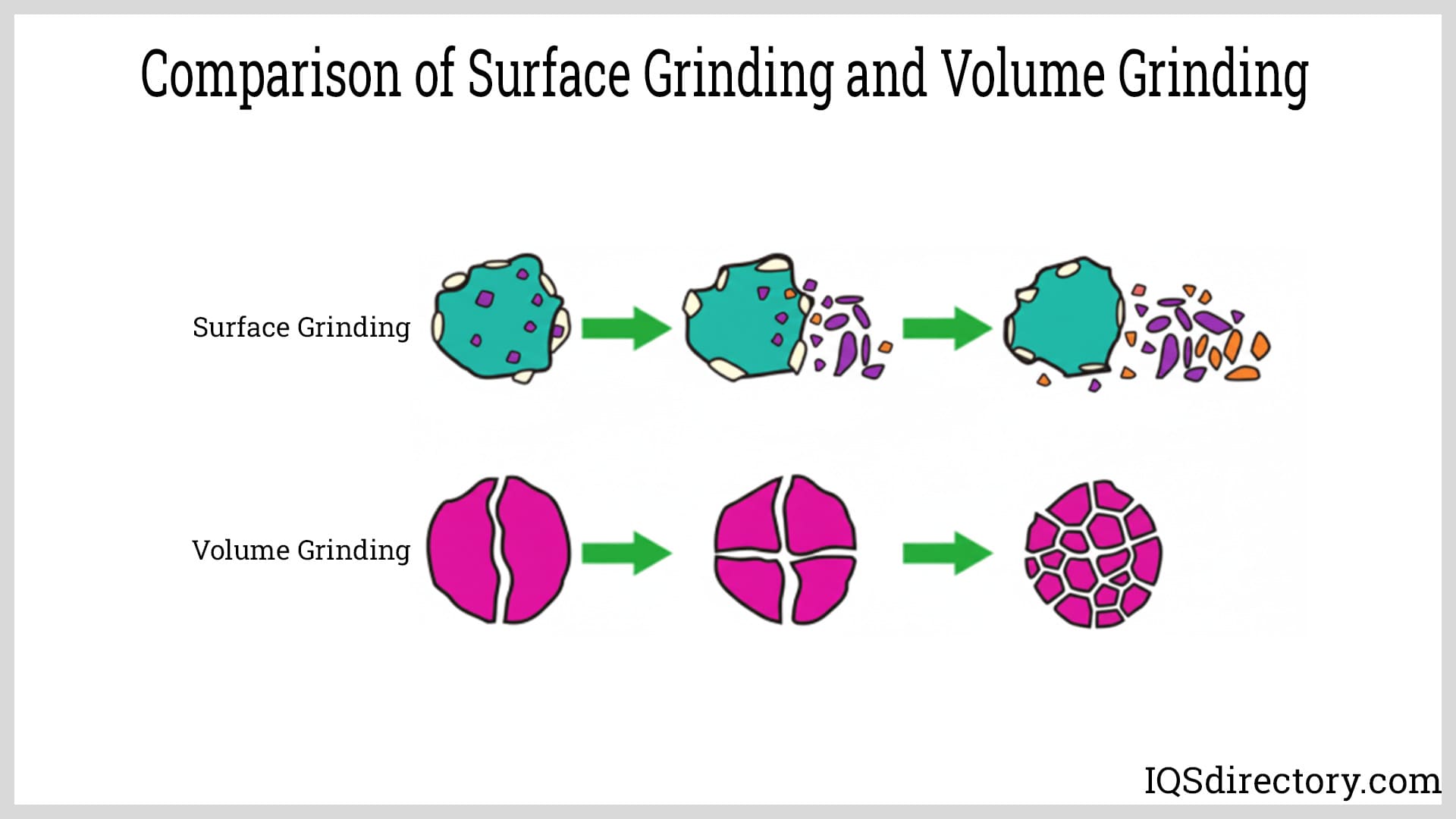
The two forms of particle destruction are surface grinding and volume grinding, which vary in regard to how they perform the pulverization process. The difference between the destructive processes is in regard to how the material that is being processed is treated.
Surface grinding, milling, pulverizing attacks the surface of a solid and extracts small particles by chipping away surface particles until a fine powder is achieved. Particle sizes form a bimodal distribution with two different sizes, which is unlike a Gaussian distribution of uniform particles. Surface grinding refers to friction grinding that is found in ball pulverizers, disc pulverizers, and hammer mill pulverizers.
Volume pulverization is a more dynamic form of grinding. It involves destruction of the complete structure of a solid. As force is applied, solid materials break into multiple pieces, which are continually stressed until they become a fine powder. Volume pulverization is a compression and impact process that literally disintegrates solids until they become extremely fine powder.
The Mechanism of Pulverization
The term pulverization is a generic term that refers to four general terms that describe the process. The essence of all four methods is to apply external force to a solid to break its structure into another smaller form. Although there are four distinct forms of force, they generally work in unison to demolish a solid. The types of solids, the environment, the purpose of the process, and the desired outcome influences the combination of forces that are used. Compression, impact, grinding, and shearing are the pulverization forces that are applied to solids to stress their structure and change their size.
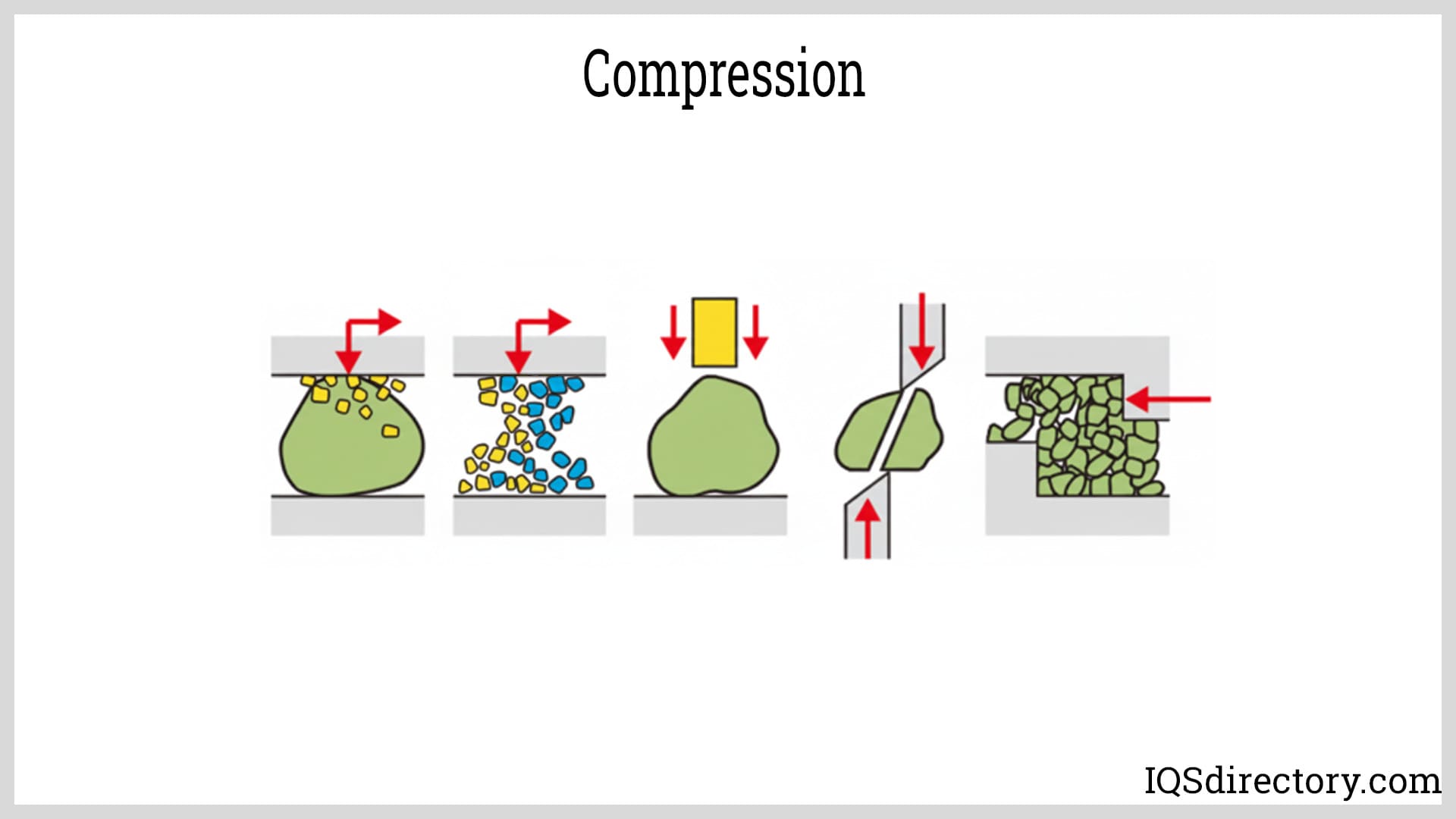
Compression – Compression involves the use of two working surfaces that pressurize a solid until it is crushed. Large solid objects are demolished to workable sizes. The key feature of compression pulverization is its ability to reduce material volume in order for a material to be moved on to further processing. Stones, minerals, and metals are easily deformed for easy handling. Compression pulverizing is widely used in mining and the waste management of construction materials.
Impact – Impact pulverizing involves striking a solid at high speed to crush and destroy its structure. Plates, hammers, and other devices are rotated to generate sufficient kinetic energy to impact solids. The results of the collision of the solids and the impact devices are small fragments that are constantly pounded until achieving a desired shape. Impact pulverization is capable of producing fine micro-fine powders that are air classified. They are one of the most popular forms of pulverizing equipment and are known for their ability to produce the finest precision and consistent output. Impact pulverization produces cubical shaped particles and is effective for medium hard and less abrasive materials.
Shear – Shear pulverization involves cutting a solid material using rotating blades, rotors, or cutters that demolish solids by the action and force of the blades. The motion of the blades against the fixed surface of a solid cuts the material into small fragments. Depending on the type of shearing pulverizer, the process may be repeated multiple times to achieve the necessary size of the material.
Grinding – Grinding is a friction process that involves the placement of solids between surfaces that slowly reduce the size of solids to small particles. It is a process that has been used for centuries to change the form of grains, rocks, minerals, coal, and other solid materials. The speed of the grinding, the roughness of the medium, and amount of pressure applied influences the effectiveness and efficiency of the process. The movement of the surfaces against a solid material creates the friction that diminishes the size of a solid.
Small particles are scraped off the surface of a solid exposing the inner surface causing the removal of material a layer at a time. The combination of compressive force and shearing force to a solid gradually reduces it to a fine powder. Grinding is known for the ultra-fine particles produced by pulverization.
Each of the four methods of pulverization is distinctive and has its own characteristics. Their outcomes produce different results, which range from granules to fine powders. Although they can work independently, in many cases, the processes are used in combination to achieve the desired results. Two or more pulverizing techniques may be combined in a single machine for efficiency, faster processing times, and for the production of more refined products. The design is ideal for working with composite materials that are composed of different materials that necessitate varying pulverization methods.
Dry Pulverizing vs Wet Pulverizing
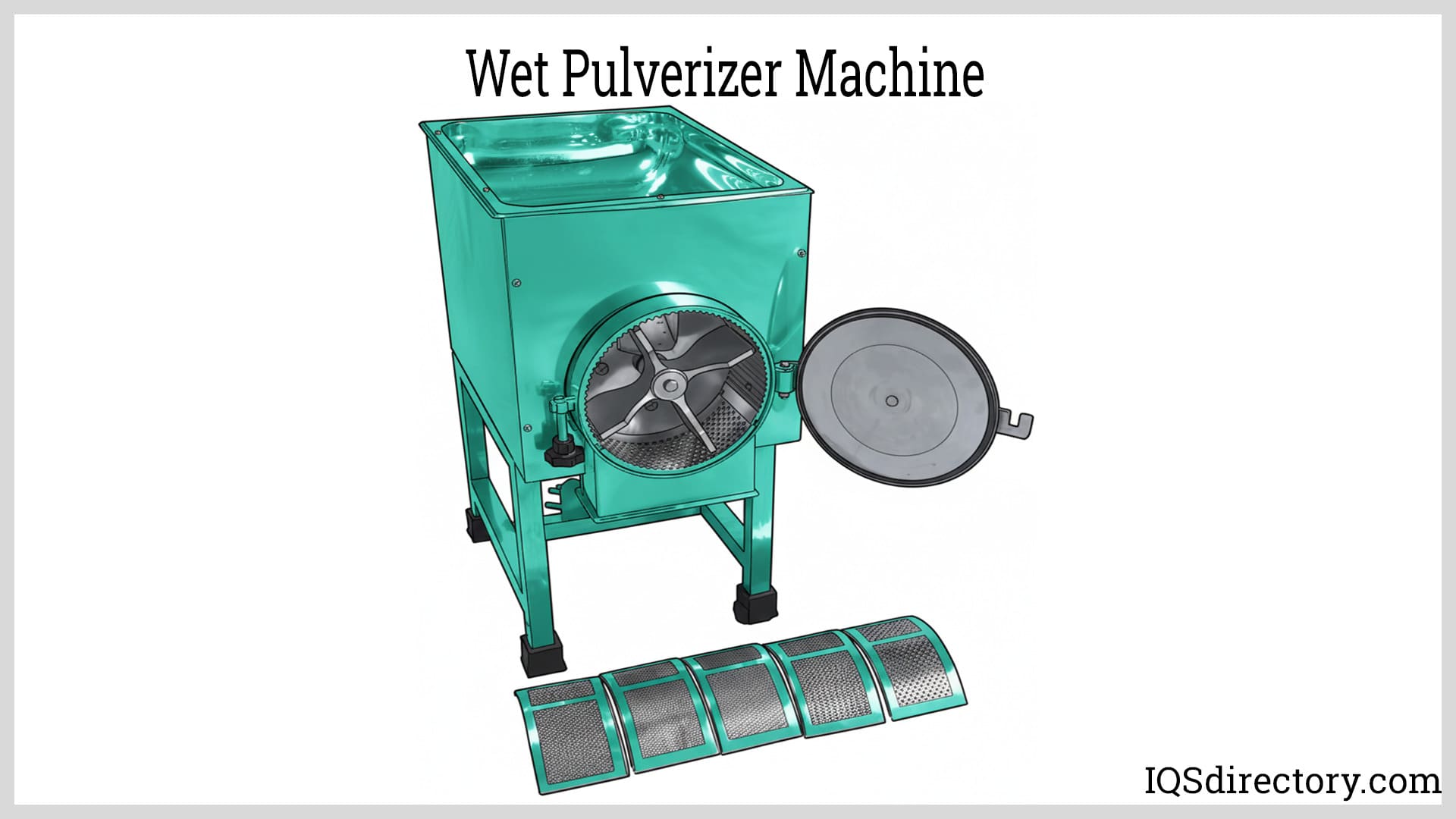
The basic difference between wet and dry pulverizing is in regard to the addition of a liquid to the process. As with all forms of pulverizing, this additional aspect is used to speed up the pulverizing process and increase precision. Aside from this distinct variation, the equipment involved in the process remain the same and include ball pulverizers, bead pulverizers, and attrition pulverizers.
Wet Pulverizing – There are seven steps to the wet pulverizing process, which begin with wetting the material. The liquid has to be carefully chosen in order to meet the properties of the material. The pulverizing media circulates with the slurry created by wetting the material. As with other forms of pulverizing, the media collides with the material to reduce its size through impact and shearing. To avoid agglomeration, the powder created by the pulverization is agitated by mechanical energy.
During the pulverization process, solid particles are recirculated through the pulverization process. This is repeated until all portions of the solid matter has achieved the desired particle size. Even though this may have to occur multiple times, the overall cost of the process is less than dry pulverizing. The final step in wet pulverizing is the drying and degassing of the material. The determination of the length of the drying is dependent on the intended use of the pulverized material.
Dry Pulverizing – Dry pulverizing involves all of the various pulverizing methods, including compression, shearing, impacting, and cutting. Without the presence of a liquid, solid material is subjected to exterior forces that crack, break, and demolish the structure of the material. Material is subjected to the various forces by being fed into the pulverizing machine where it is deformed to a smaller size. Once the desired size is achieved, particles pass through a control point to a collector. The methods used for dry pulverizing include hammer mill pulverizers, ball mill pulverizers, and crushers.
Dry Pulverizing and Wet Pulverizing
Dry Pulverization
Wet Pulverization
Pulverize in air or inert gas
Pulverized in liquid such as water
Particles sizes ranging between large and fine
Fine and ultrafine particles
Particle diameter is reduced
Particle size can reach nanometer size
Lower cost than wet pulverization
More contaminants than dry pulverization
High Cost
Solid State Shear Pulverization (SSSP)
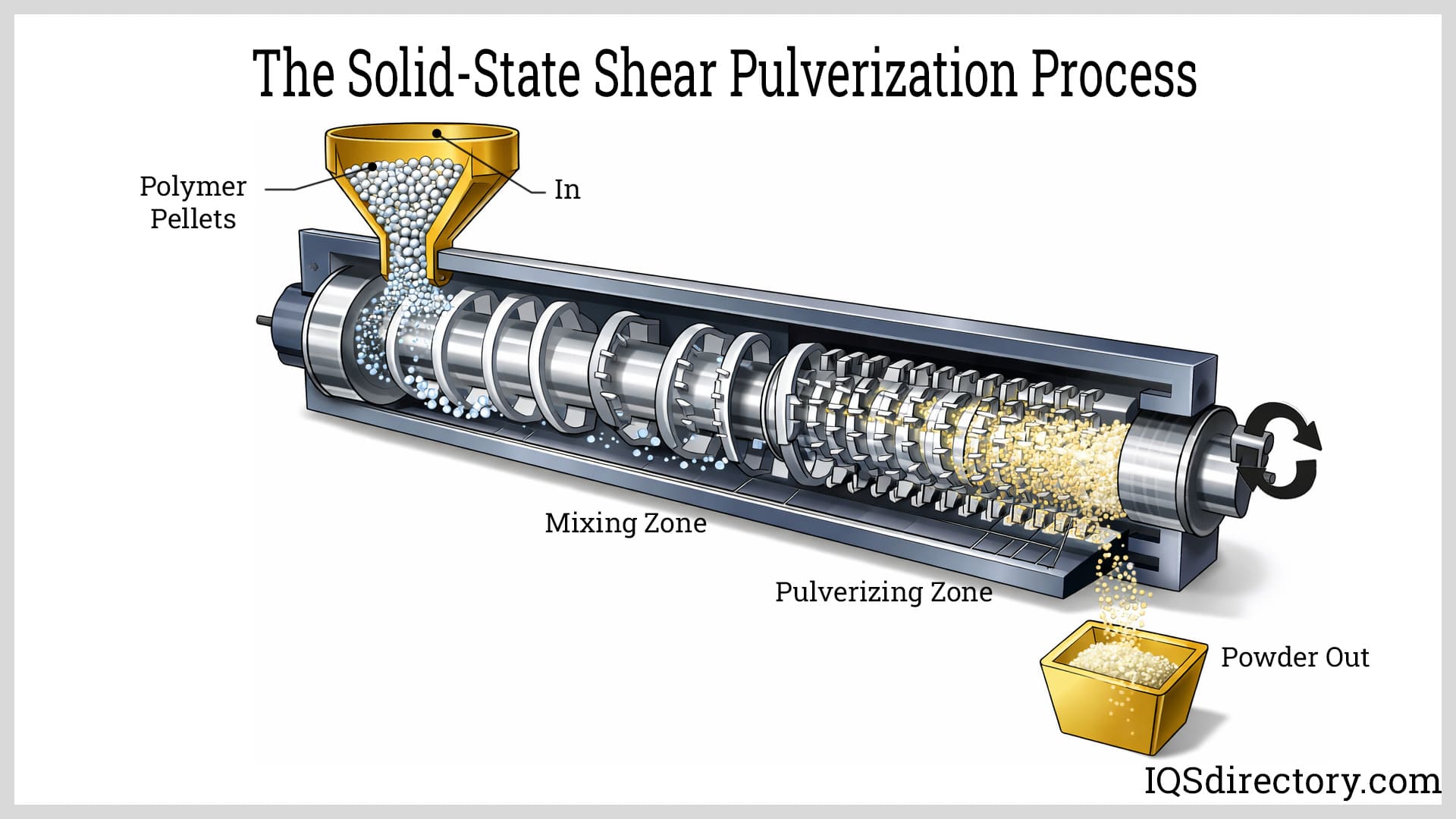
Solid state shear pulverization is a polymer processing method that uses twin screw extrusion with a cooling system. The shearing and compressive forces of the process creates fragmentation and the fusion of polymers in a solid state, which leads to exceptional dispersion and mixing of polymer blends and nanocomposites. The SSSP process is used to produce nanostructured polymer blends and nanocomposites that are unable to be made using other conventional methods. Polymers produced using SSSP technology have crystallinity, mechanical strength, and prevent the passage of chemicals or liquids.
The continuous fragmentation of SSSP creates beneficial properties in homopolymers and enables the creation of copolymers and composites. The technique is scalable and adds mechanochemical changes to polymer based materials. Cold temperatures are applied to the polymers during the SSSP process to overcome the heat from the friction of the process and keep treated polymers in a solid state.
The various forces used to perform pulverization depend on external force that is applied to a solid object. The mechanics of pulverization are complex and complicated and require careful planning such that the process is oriented toward the nature and characteristics of the material to be treated. Pulverization is affected by the physical properties of materials, such as hardness, micro structure, and the initial form of the material, which can vary from large chunks to grain size.
The acceptable definition of the work of pulverizers is size reduction or comminution, reducing the size of solids. Grinding, on the other hand, is a pulverizing process that produces finer particle sizes. When crushing is used in reference to pulverization, it refers to attacking large pieces where the outcome is large fragments or pieces.
Leading Manufacturers and Suppliers
Chapter 4: Choosing a Pulverizer Machine
Pulverizers are an essential piece in the size reduction process. They are carefully chosen to meet the needs of a process or application to ensure efficiency and a continuous work flow. The proper pulverizer minimizes energy usage, increases yield, improves consistency, and removes or reduces maintenance problems.
As with all forms of industrial equipment, the selection of a pulverizer is a capital intensive issue, which further complicates the selection process. Although cost may be a motivating issue regarding the selection of a pulverizer, it is important to note that the most critical aspect of the selection process is finding the exact machine that fits a process.
Characteristics of the Material
Every type of material that is fed into a pulverizer has a set of characteristics that determine how the material can be reduced. The properties of a material have to be treated carefully such that the chosen pulverizer can reduce it. Each type of pulverizer is designed to demolish certain forms of solids. Manufacturers assist clients in matching a pulverizer to the material to be resized.
Hardness - Hardness is measured on the Mohs scale of hardness with one indicating very soft while 10 indicates as hard as diamonds. Soft materials don’t require as much energy to be changed while harder materials necessitate extremely strong equipment to produce the necessary force.
Brittleness - As can be assumed, brittle materials break and fracture easily and don’t require much energy to be demolished. Regardless of this factor, brittle materials still need to be treated by a pulverizer to reach a consistency that is applicable for a process.
Ductile - On the other hand, ductile materials smear and spread instead of breaking. In many cases, they are not suitable for a pulverizer.
Moisture - Wet or sticky feedstocks clog pulverizers. As with ductile materials, they may spread and prevent the operation of equipment. There are pulverizers that are designed to deform wet, sticky materials into a workable state.
Abrasiveness - Abrasive materials can damage the interior of a pulverizer and cause wear. When selecting a pulverizer for such materials, it is important to ensure that a wear resistant and highly resilient liner has been included in the manufacture of the pulverizer.
Corrosiveness - As with all forms of manufacturing, when it comes to corrosives, special handling is necessary for the protection of equipment. Just like the other factors regarding pulverizers, specially designed pulverizers are available to handle such materials.
Particle Size - The particle feed size for a pulverizer varies from 100 microns for ultra-fine grinding up to larger than 25 mm for more aggressive grinding. The range for animal feed grain falls between one and three mm. Coal can be larger than 50 microns while cosmetics are less than 10 microns. The feed size is critical and must exactly fit the mechanism of the pulverizer.
Density - As with particle size, the density of the feed varies radically from pulverizer to pulverizer. The common bulk density ranges from 353 kg/m³ up to 727 kg/m³. This aspect of the process is significantly impacted by the size of the particles. Again, the acceptable density is influenced by the size of the opening into which particles are fed.
Output
As may be assumed in regard to pulverizers, the output is a critical factor in deciding the type of pulverizer, since it is the major reason for investing in the process. Different processes produce different results with output varying from fine powder of 50 µm up to 500 µm for pharmaceuticals and food with up to 10 µm to 100 µm for mining, ores, and coal. The screening system on a pulverizer is a determining factor regarding the final product.
Cost
The cost aspect of selecting a pulverizer is the place where the trained experts of pulverizer manufacturers become so helpful. They can assist with evaluating the amount of space necessary for the equipment as well as the expense of installation, shipping, maintenance, noise levels, and contamination. Each of these factors play a relevant part in determining the investment necessary for purchasing the piece of equipment for the job. Pulverizers for pharmaceuticals and laboratories cost close to a thousand dollars while industrial grade pulverizers can reach over $25,000, depending on the type and application.
Although it may be tempting to purchase the lowest price pulverizer, it may be a bad investment if the cost does not meet the requirements of the job. Again, pulverizer manufacturers provide the necessary data to assist in the selection process such that a too large machine is not purchased for small jobs, and a cheap pulverizer is not purchased for complex and intricate work.
Contamination
In some instances, pulverizers introduce contaminants into processed materials. Due to the nature of the pulverizing process, dust, dirt, oil mist, and other contaminants are released from abrasiveness, metal to material contact, and the aggressiveness of the process. In modern manufacturing, the presence of contaminants from an industrial process has become a major concern. It is essential that clients work with manufacturers to ensure that sufficient control is available to monitor and contain any types of contaminants produced by pulverization.
Chapter 5: Industries that Use Pulverizers
Although pulverizing is an ancient manufacturing method, it is still an essential part of the production of a wide variety of products from feed for agricultural stock to crushing and demolishing concrete and raw minerals. The power and force of a pulverizer increases efficiency and assists in the quality of products.
Feed Production
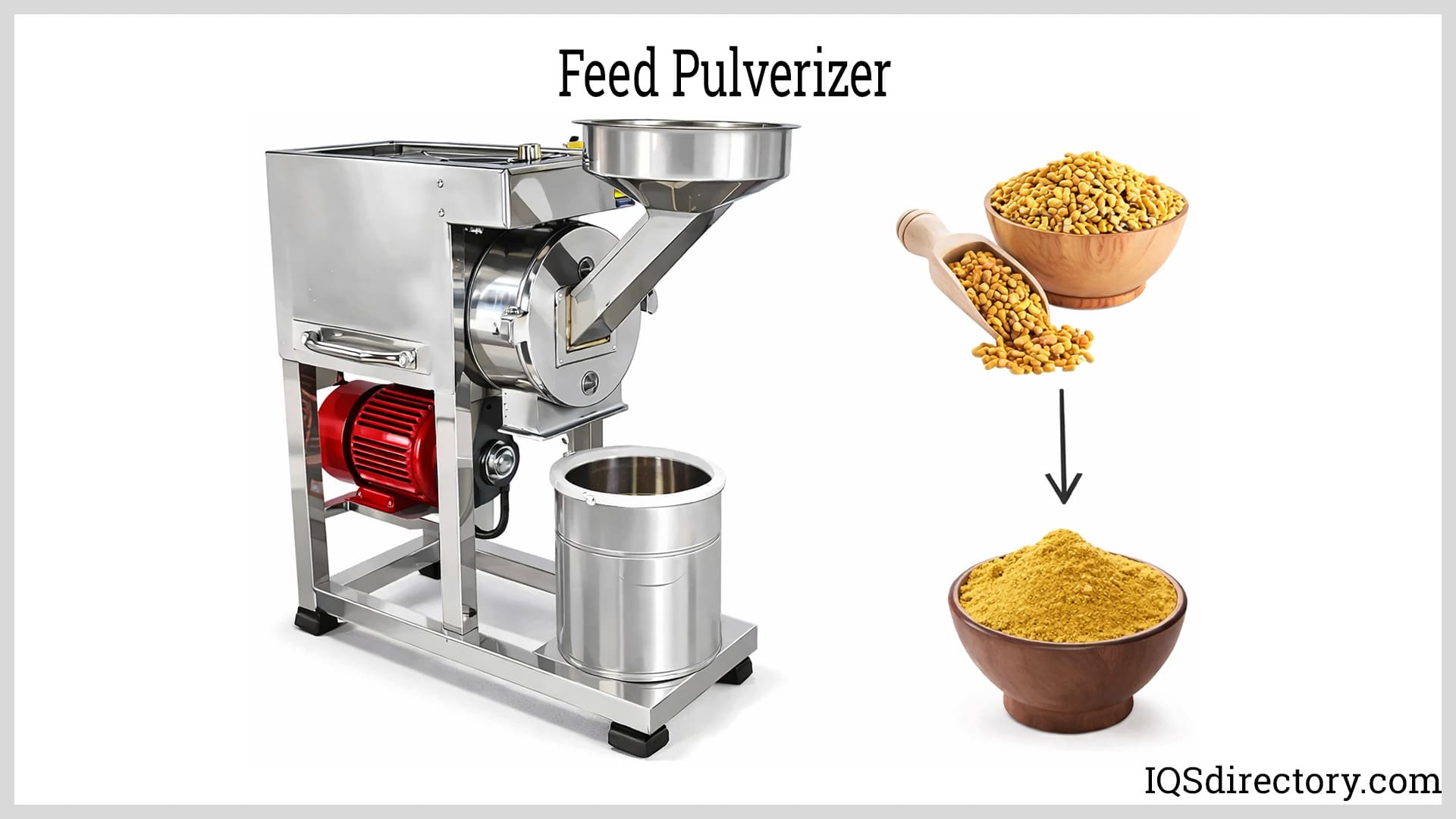
In feed production, pulverizers are used to change corn, soybeans, and wheat into fine powders. This is important for improving nutrient absorption by livestock, enhances feed conversion ratio, and allows for mixing supplements with the feed. In the aquaculture industry, pulverizers produce particles in the right size for consumption. The use of pulverizers in the food industry is in the preparation of ingredients like sugar, wheat, and spices.
Coal Mining
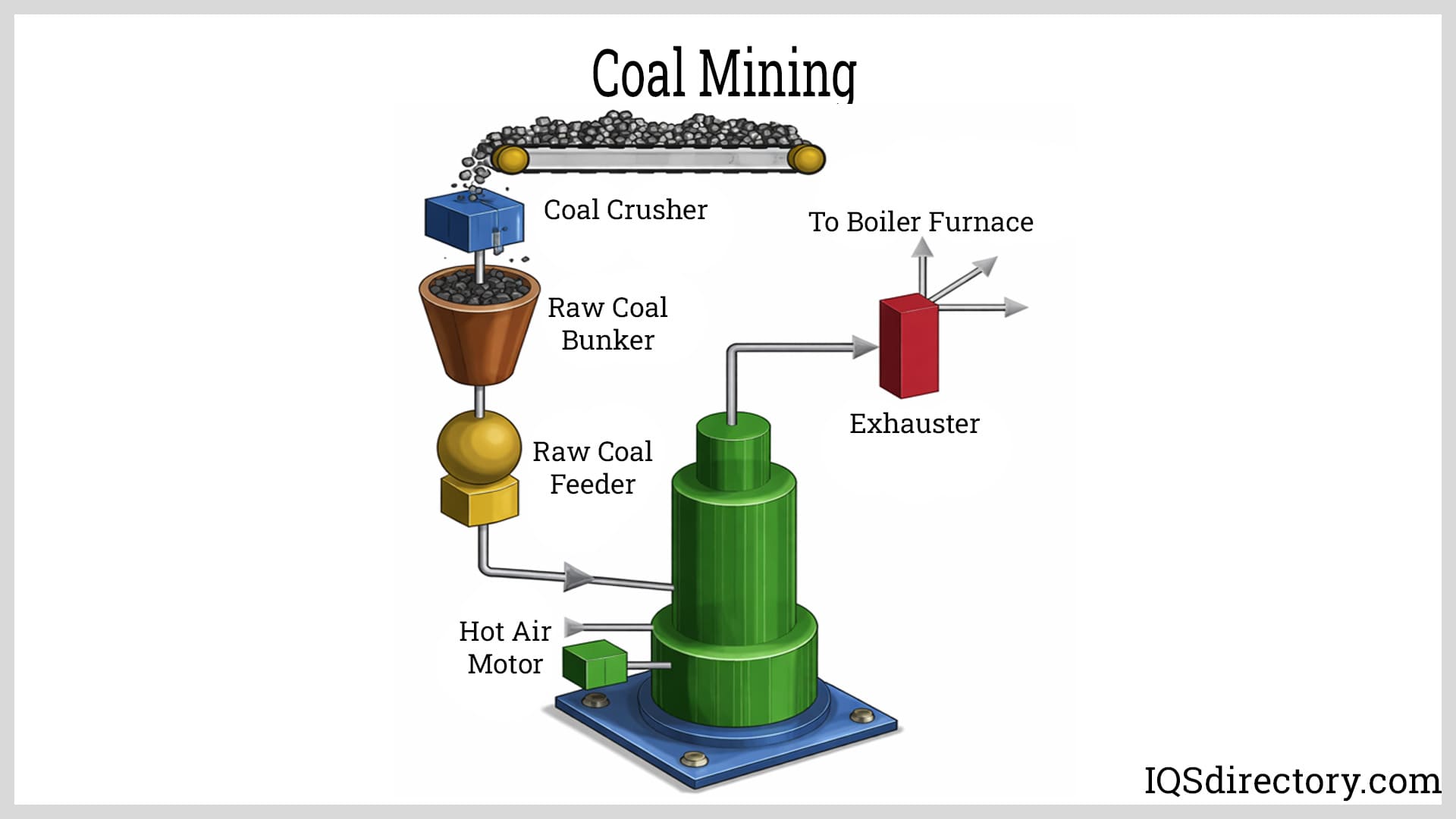
In coal mining, pulverizers are used to reduce the size of coal to increase its surface area for efficient combustion and allowing the coal to burn like gas. The reduction in particle size increases the release of heat, reduces waste, and assists in meeting environmental standards. Pulverizers that are used for reducing coal to powder are ball mill pulverizers, impact mills, and vertical roller mill pulverizers.
Pharmaceuticals
The use of pulverizers in the pharmaceutical industry is to reduce particle size to increase bioavailability, improve dosage accuracy, and increase surface area. When a new drug is introduced, it is milled or pulverized to determine the best way to change the ingredients into an effective dosage form. To make a drug an active pharmaceutical ingredient (API), several factors are considered including dissipation rate and bioavailability. Fine particles have to be pulverized to achieve a consistent and viable particle dissipation size to ensure accuracy. Pulverizers are used to create the correct micronization.
Concrete
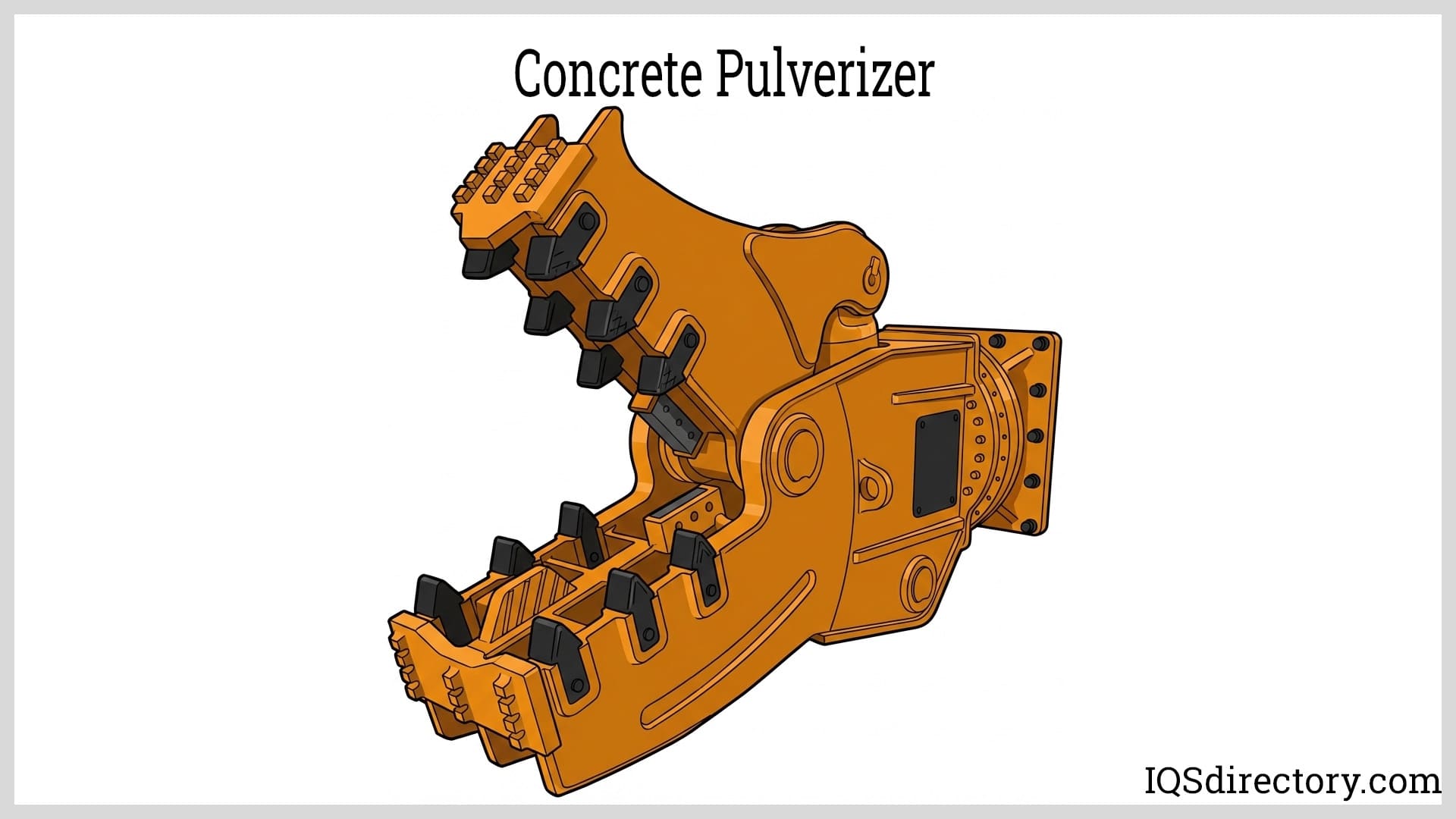
Concrete pulverizers, also referred to as concrete processors, are widely used in the construction and demolition industries. Unlike machine pulverizers, concrete pulverizers are attachments that are used for excavation and the handling of building materials. As may be assumed, they are robust tools that provide a multitude of functions. Concrete pulverizers are capable of destroying buildings, bridges, roads, and other structures. They transform such structures into manageable pieces and facilitate the demolition process. Once a structure is demolished, concrete pulverizers are used to process the rubble by crushing it into manageable pieces.
Waste Management
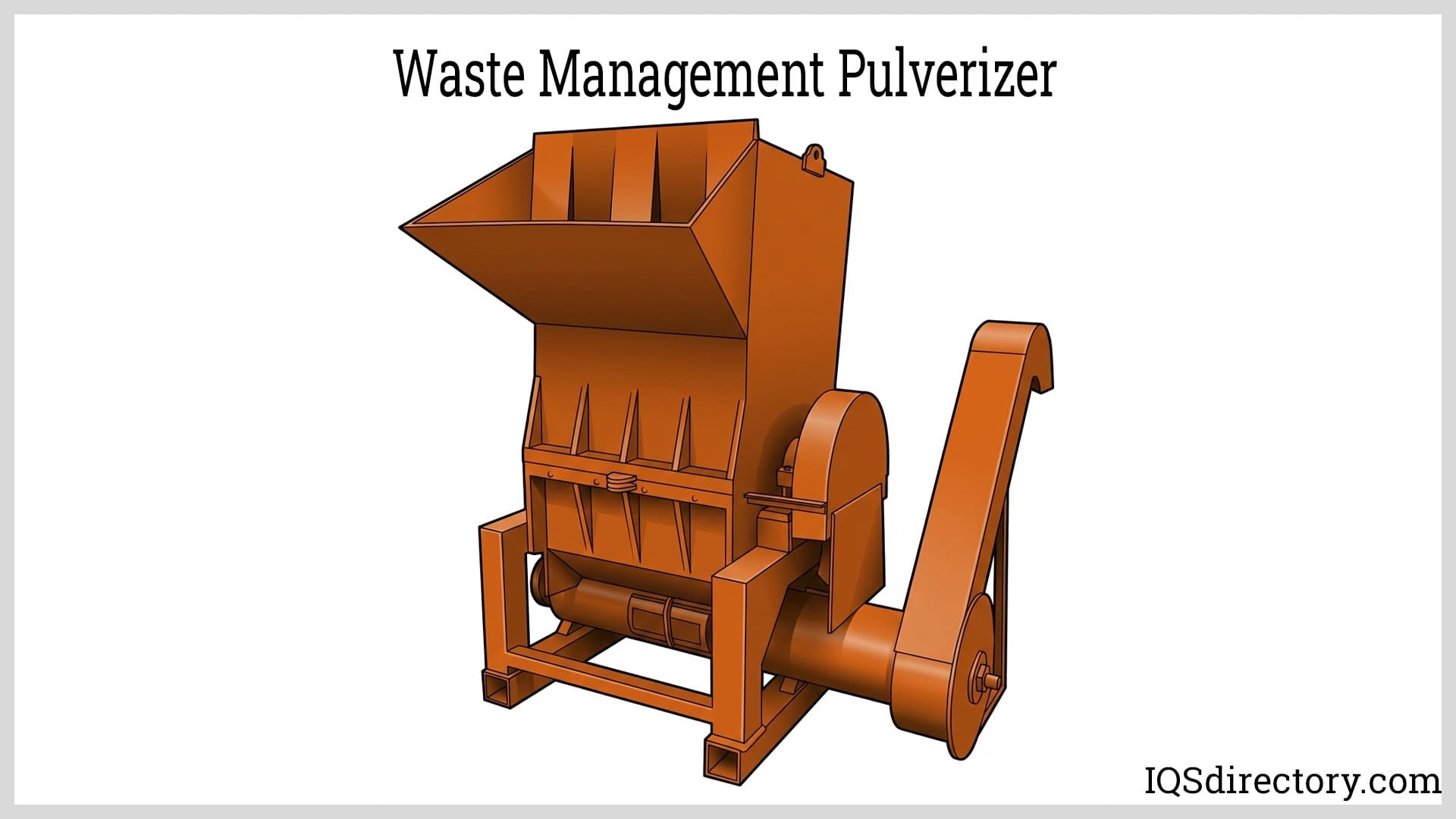
A rapidly growing market for pulverizers is waste management due to the emphasis being placed on proper recycling methods. Pulverizers for waste management perform all of the functions of pulverizers used to produce products with a different objective. In addition, unlike industrial pulverizers, waste management pulverizers deal with a wide range of materials that include glass, concrete, plastics of all kinds, food, furniture, and debris from construction sites.
For many years, garbage waste from homes and industries was dumped into landfills and dumpsites. The concept was to let the waste degenerate and return to its natural form. With the advent of plastics and other chemically based products, there was little likelihood that the buried materials would dissolve. This led to the development of waste management pulverizers that crush all forms of materials such that they can be recycled, repurposed, and reused. Although the function of all pulverizers is purposeful and useful, the advent of waste management pulverizers has made great strides in improving the use of the earth’s resources.
The uses for pulverizers described above is a fraction of their many uses. Pulverizer manufacturers have a full array of pulverizers for any form of application. Their trained experts guide clients to the perfect solution for any application.
Conclusion
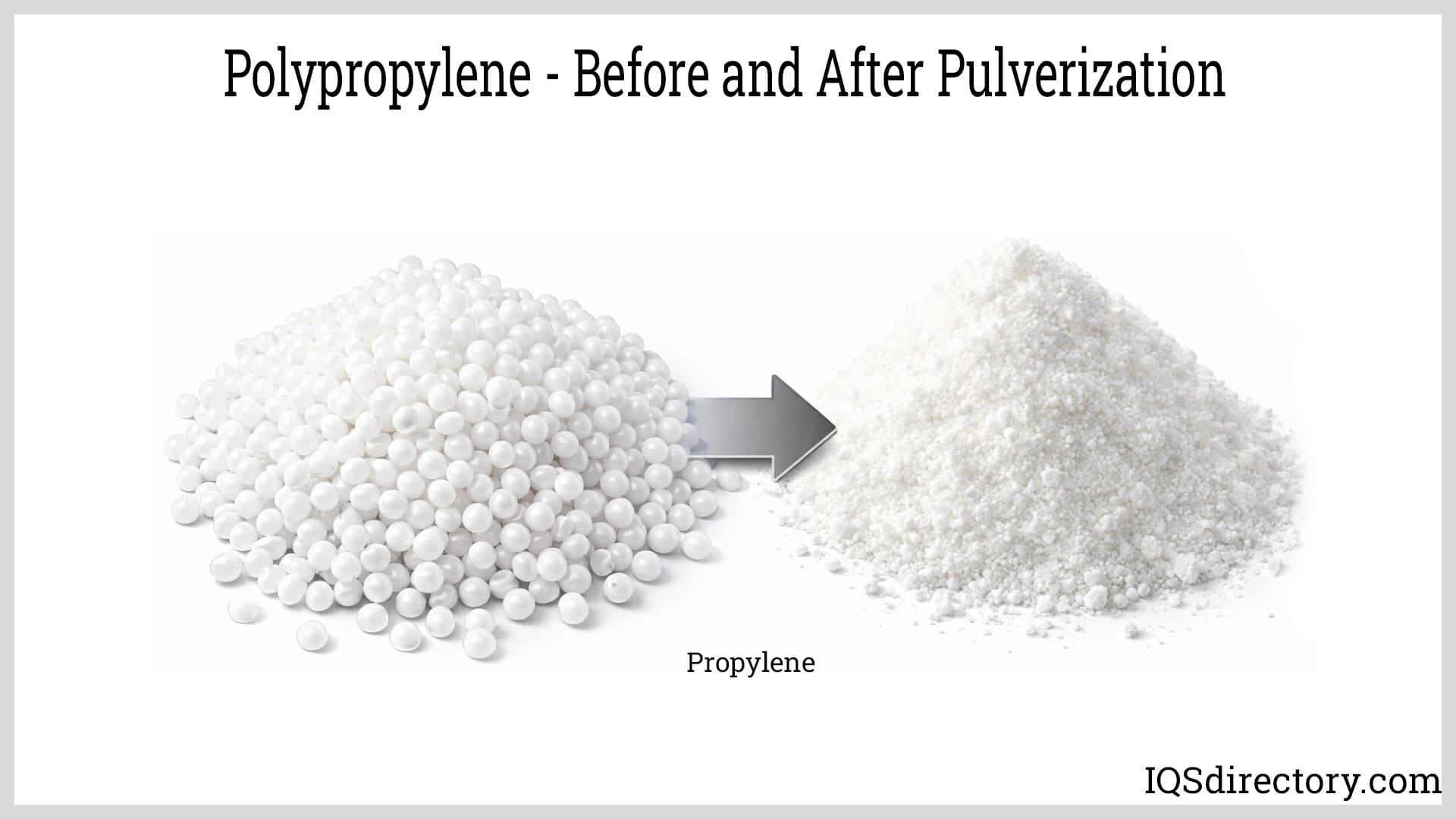
The purpose of pulverizing is to break down solids into small increments, such as fine powders and small particles. The essence of the process is the use of force that is applied to crack, break, and demolish the structure of solid materials.
Although pulverizing is sometimes referred to as milling, the process moves beyond milling in regard to the effects the process has on materials. In the end, solids are deformed to micro and nanometer sized particles for industrial use.
The basic types of pulverization are surface grinding and volume grinding. The differences between the two forms are in regard to the aspect of a solid that they attack. Surface grinding chips away at the exterior of a solid while volume grinding attacks the complete structure in several places creating cracking and deformation.
The external forces applied during pulverizing are compression, impact, shearing, and friction. Although these are distinct forces, they are normally used in combination to provide the best possible outcome.
Pulverization is an ancient process that has been used for centuries to change the structure of grains, minerals, and other solid materials. It is used to force a material to conform to a condition that makes the material more practical and useful.
Leading Manufacturers and Suppliers
Related Posts
Belt Conveyors
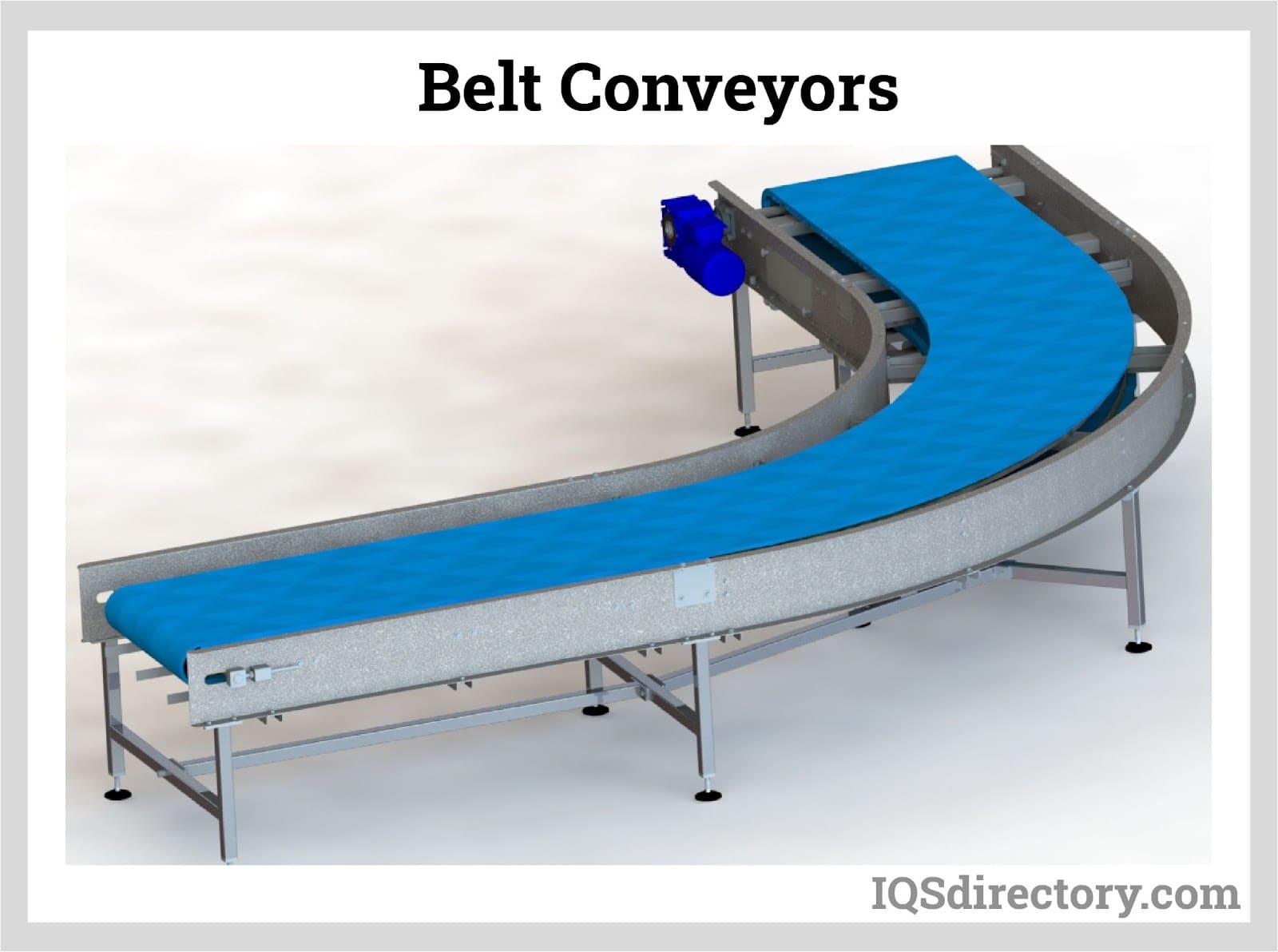
A belt conveyor is a system designed to transport or move physical items like materials, goods, even people from one point to another. Unlike other conveying means that employ chains, spirals, hydraulics, etc., belt conveyors...
Industrial Mills
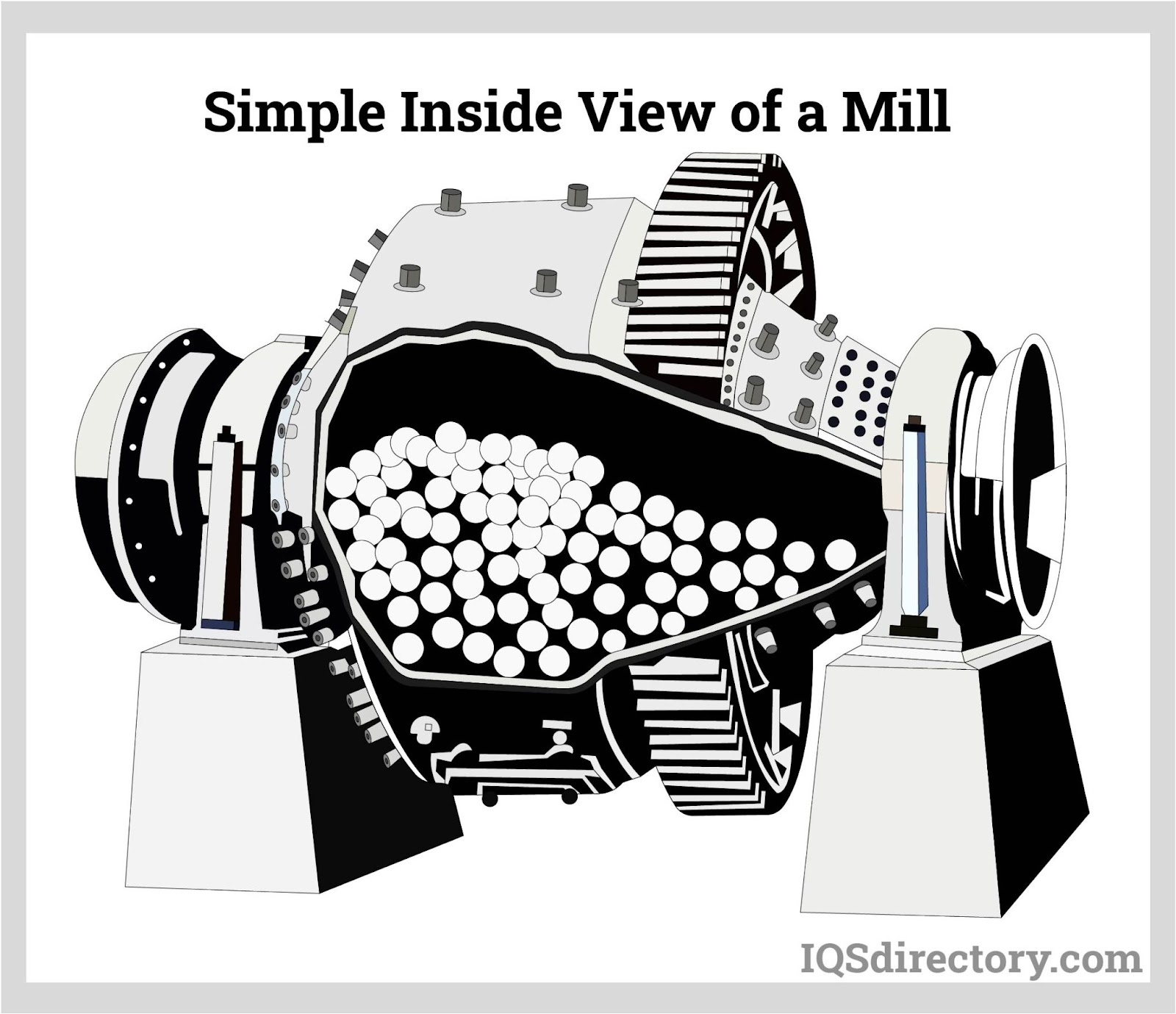
A mill is a machine that is used to break down solid materials into smaller pieces by cutting, grinding, or crushing. The process of milling includes the use of force that acts on a material to tear it apart and reduce its size...
Size Reduction Equipment
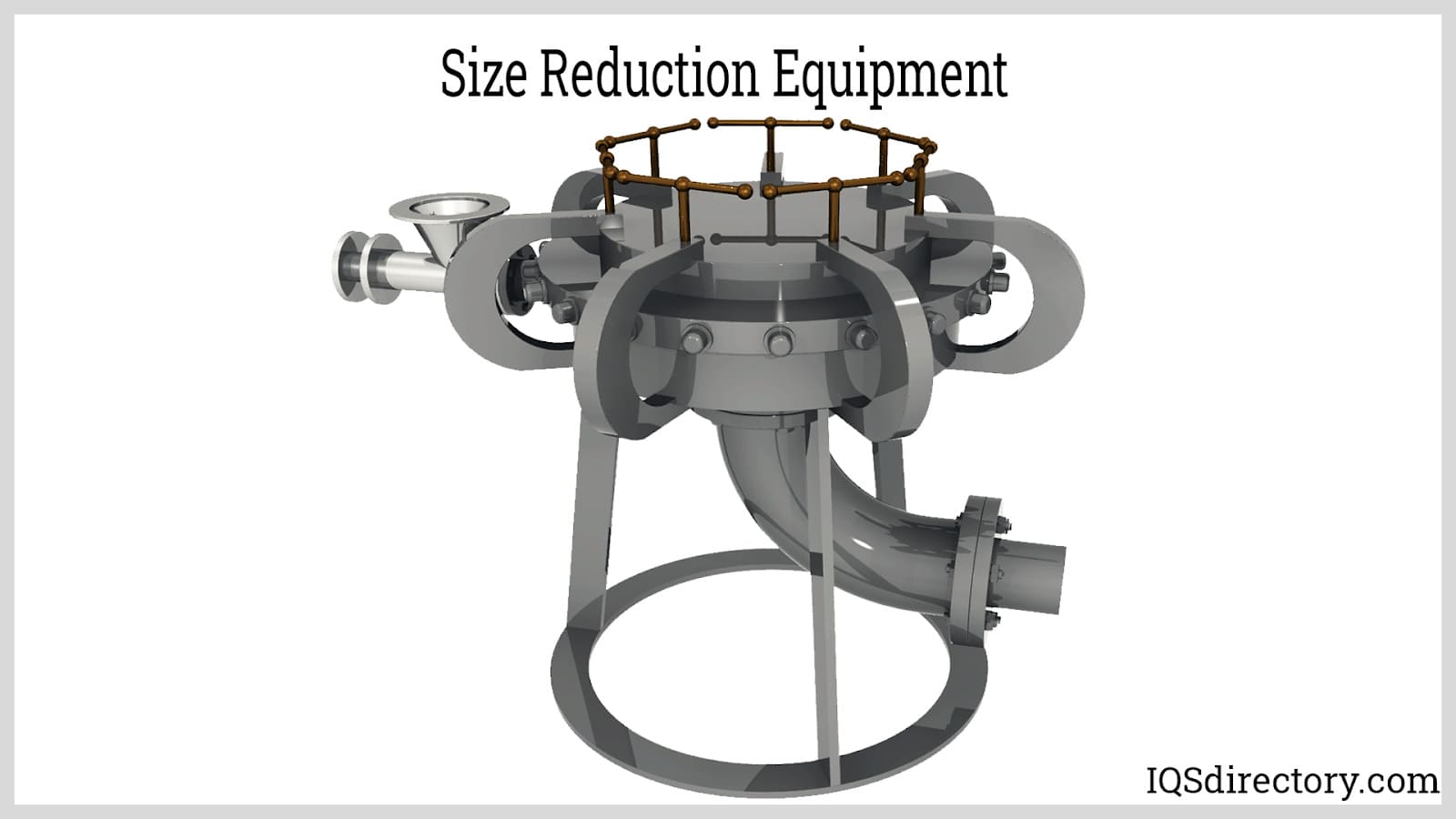
Size reduction equipment refers to machines that crush and grind materials to reduce their size. Pulverizers are a type of size equipment, the names are used interchangeably. Size reduction is an essential component of a wide...
Types of Mixers
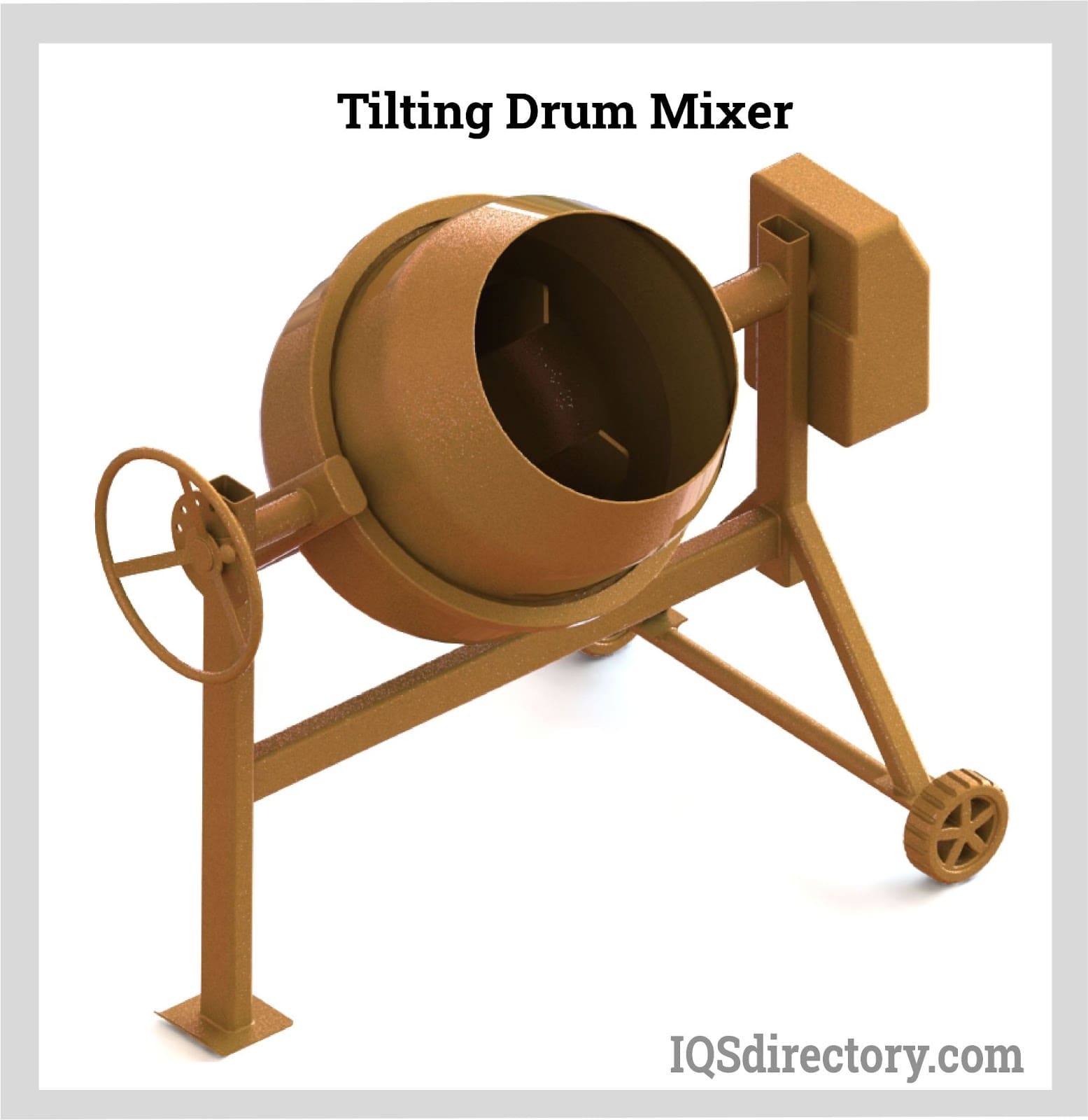
Common mixing states are solid to solid dispersion, solid to liquid, liquid to gas, and the two forms of liquid to liquid with one being miscible liquids and the other immiscible ones. The degree of mixing is the function of...
Industrial Shredder
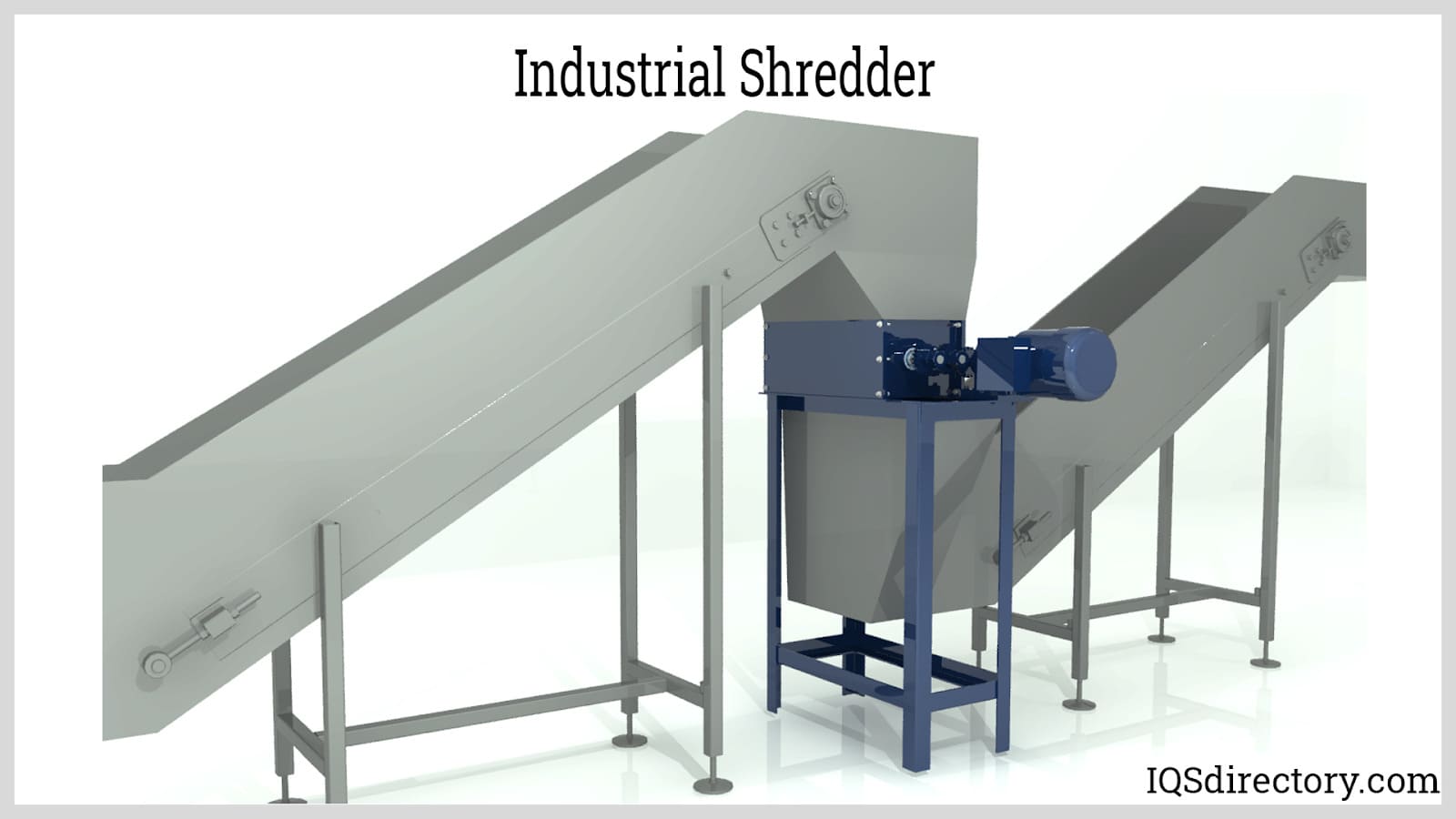
An industrial shredder is a piece of heavy duty equipment designed to shred dense and light materials to prepare them for recycling or for the destruction of unusable products. They are an environmentally sound device that takes...
Conveyor Systems
A conveyor system is a method for moving packages, products, supplies, parts, and equipment for production, shipping, or relocation. The different types of conveying systems include pneumatic, screw, belt, and roller. The construction of individual systems depends on the materials...