Please fill out the following form to submit a Request for Quote to any of the following companies listed on
Get Your Company Listed on this Power Page
Introduction:
Descriptions of modular inplant offices and their use with a list of manufacturers and suppliers.
You will learn:
What is a Modular Inplant Office?
How Modular Inplant Offices are Made
Uses for Modular Inplant Offices
Benefits of Modular Inplant Offices
And much more ...
Chapter 1: What is a Modular Inplant Office?
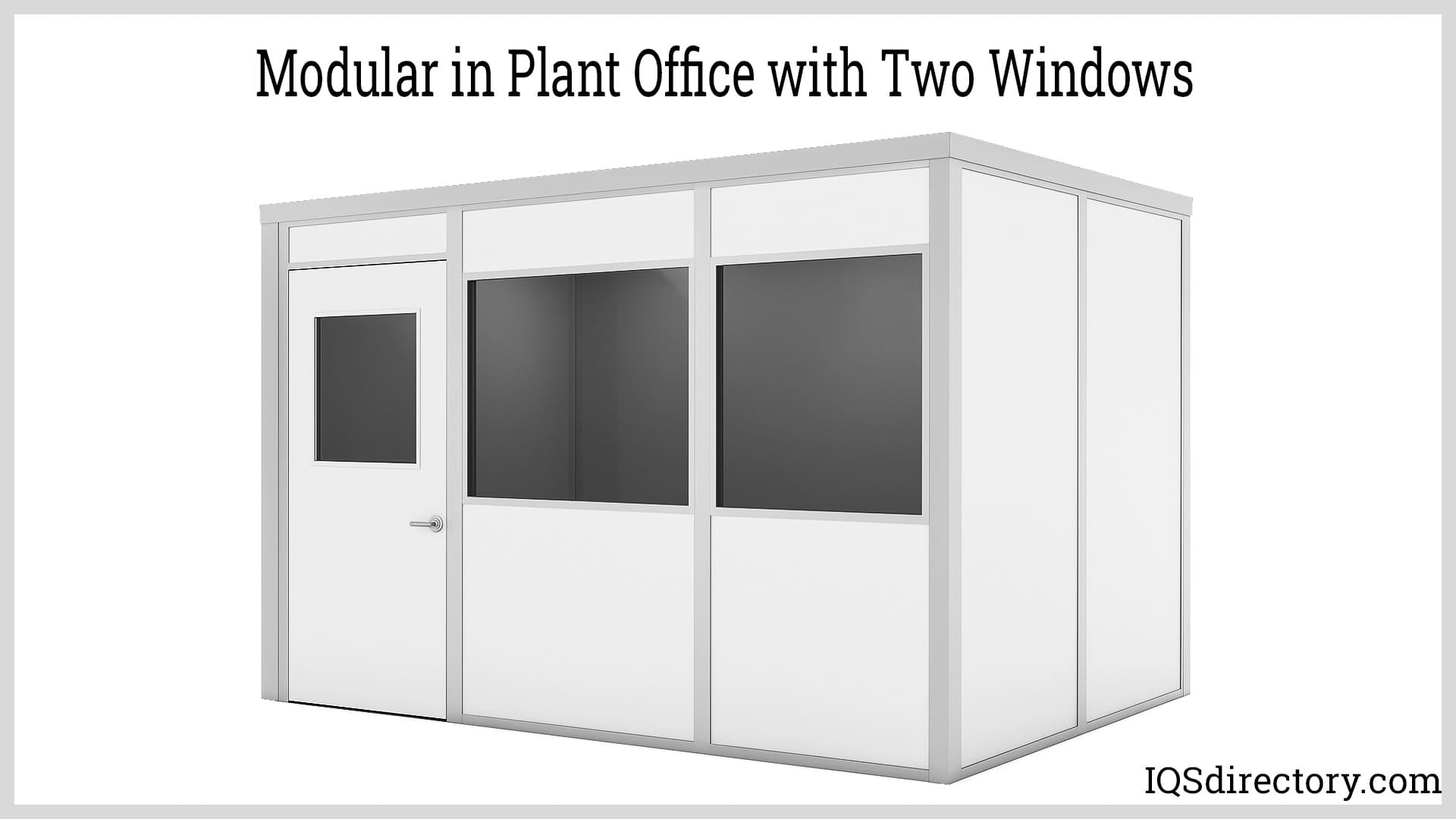
Modular inplant or inplant offices are durable, strong, space-saving enclosures that are prefabricated off-site for fast on-site assembly. Known as manufactured offices, modular office units, inplant modular offices, or modular building offices, these prefabricated office solutions are designed to create functional workspace inside warehouses, factory floors, industrial facilities, distribution centers, and schools. They can be installed quickly with minimal disruption to production, logistics, or day-to-day industrial operations, making them a practical choice for businesses that need immediate office space without major construction downtime.
The main feature of modular inplant offices is their highly durable and long-lasting wall panels, which typically include a structural core material sandwiched between strong flat sheets made of plastics, gypsum, or metals. This panel construction provides excellent strength, insulation, and noise control, helping improve comfort in busy manufacturing environments. Customization and adaptability are two of the primary reasons for installing modular inplant offices. They are versatile enough to fit into nearly any floor plan and can be configured to support supervisory offices, quality control rooms, break areas, control rooms, conference rooms, and administrative workstations. Unlike permanent structures, modular inplant offices can be quickly assembled, expanded, relocated, or disassembled, a factor that makes them cost-effective and a sound long-term investment.
The materials and structure of modular inplant offices are two of the reasons that they are as resilient and strong as traditional offices. When properly maintained, they can last for decades and provide dependable workspace for a wide range of projects, employee oversight, and managerial functions. Buyers evaluating modular office construction often compare options such as steel framing, insulated wall systems, modular partitions, and access features like windows, doors, electrical wiring, HVAC integration, and sound attenuation. The factors that influence the cost of a modular inplant office include its layout, size, materials used, special features, installation requirements, and compliance with local building codes and safety regulations. Modular inplant office manufacturers work closely with their clients to meet budget restrictions, project timelines, and regulatory needs while delivering a custom modular office that supports efficient operations.
Chapter 2: Types of Modular Inplant Offices
The categorization of modular inplant offices takes different forms depending on the factors used to determine the type of modular inplant office. Methods used to describe modular inplant offices are structure, function, size, and construction materials. The most obvious way that modular inplant offices are described are their number of stories, which can be single and two story and mezzanine, a third separate category. Another factor that differentiates modular inplant offices is their function, which can be break area, meeting and conference rooms, computer labs, and special assembly areas.
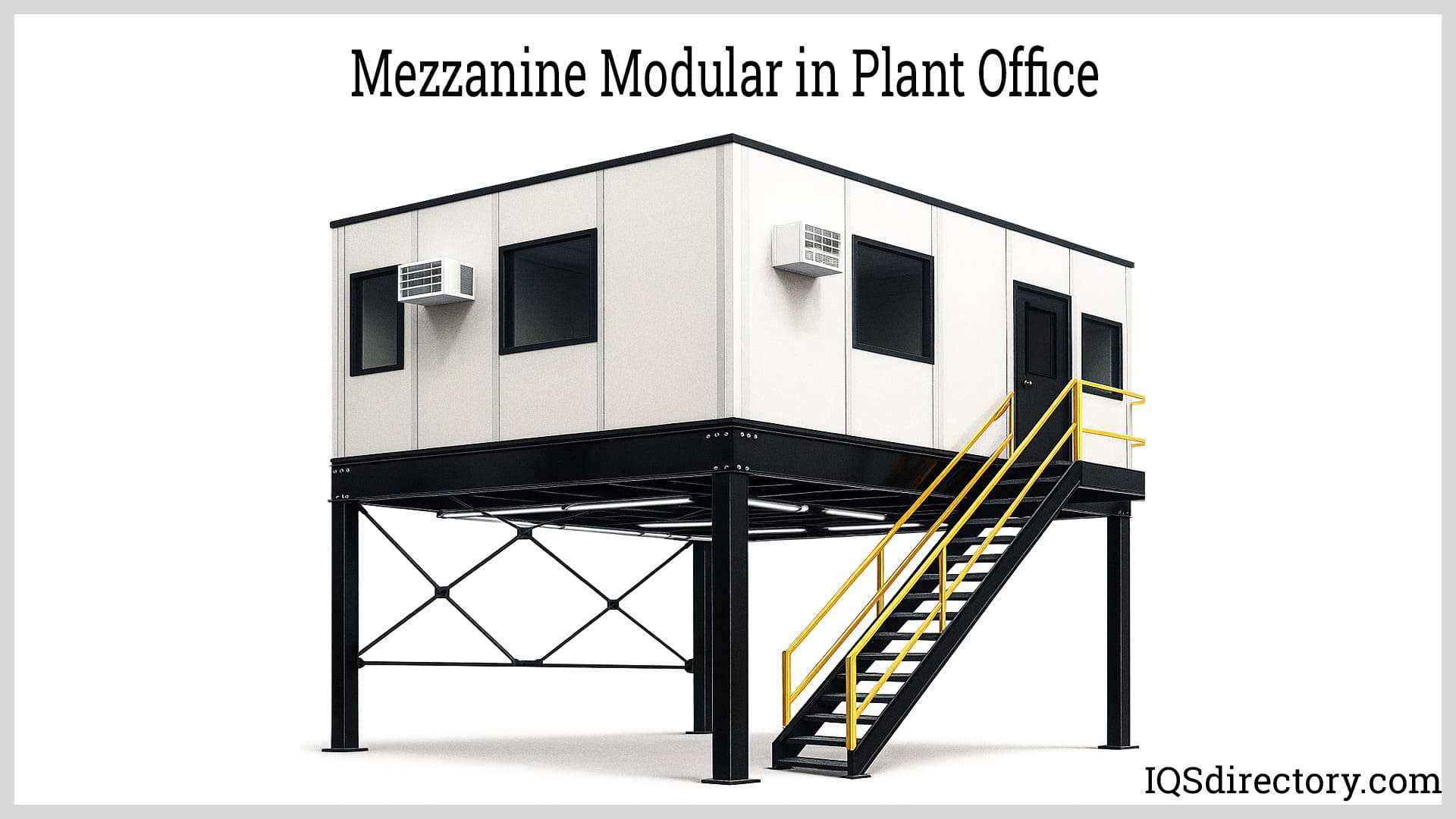
The sizes of modular inplant offices vary from five or ten feet for low functioning modular offices to very large offices that can be close to a hundred feet. The difference between the sizes is in regard to the available space and the function of a modular inplant office. A common form of modular inplant office is a mezzanine office that is raised above the floor and takes advantage of unused space located below the ceiling. Mezzanine inplant offices have a structure that is similar to ground level offices but require more effort for placement and assembly.
The structural materials for modular inplant offices take different forms, which is determined by manufacturers who provide a list of different wall, floor and ceiling types for their clients. This aspect of modular inplant offices is determined by the required resilience of an office and the conditions where it will be placed.
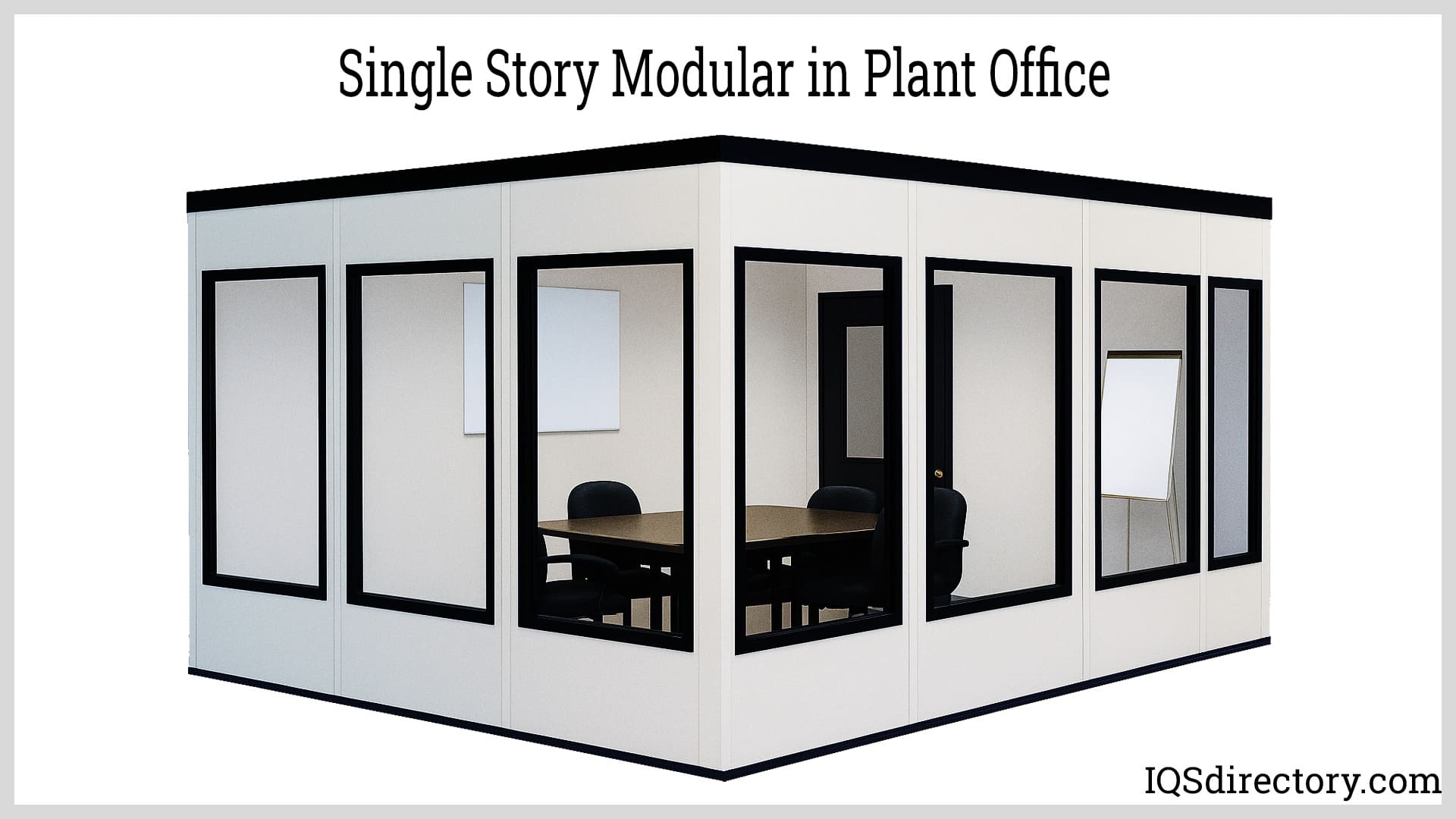
Single Story Modular Inplant Office
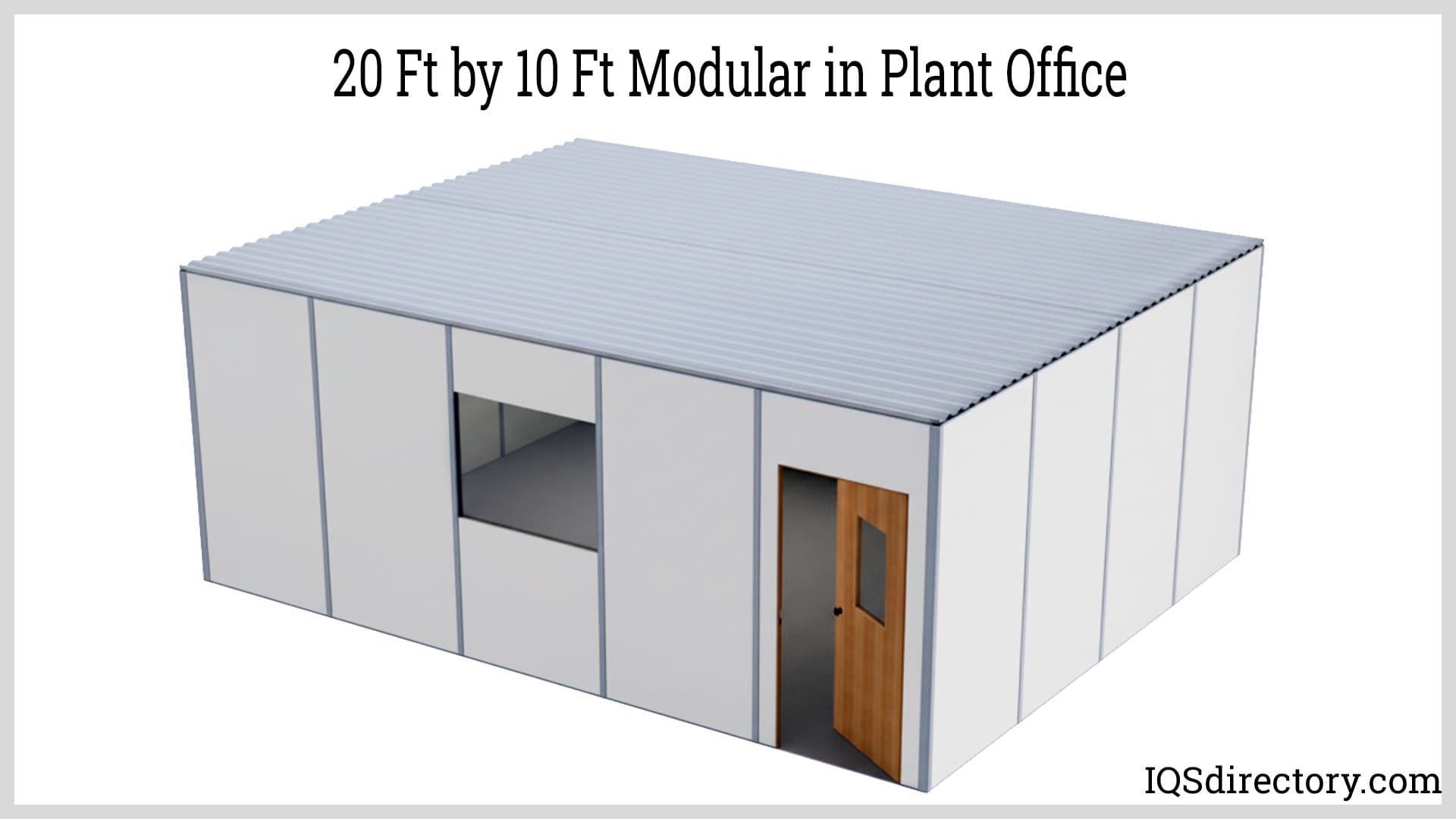
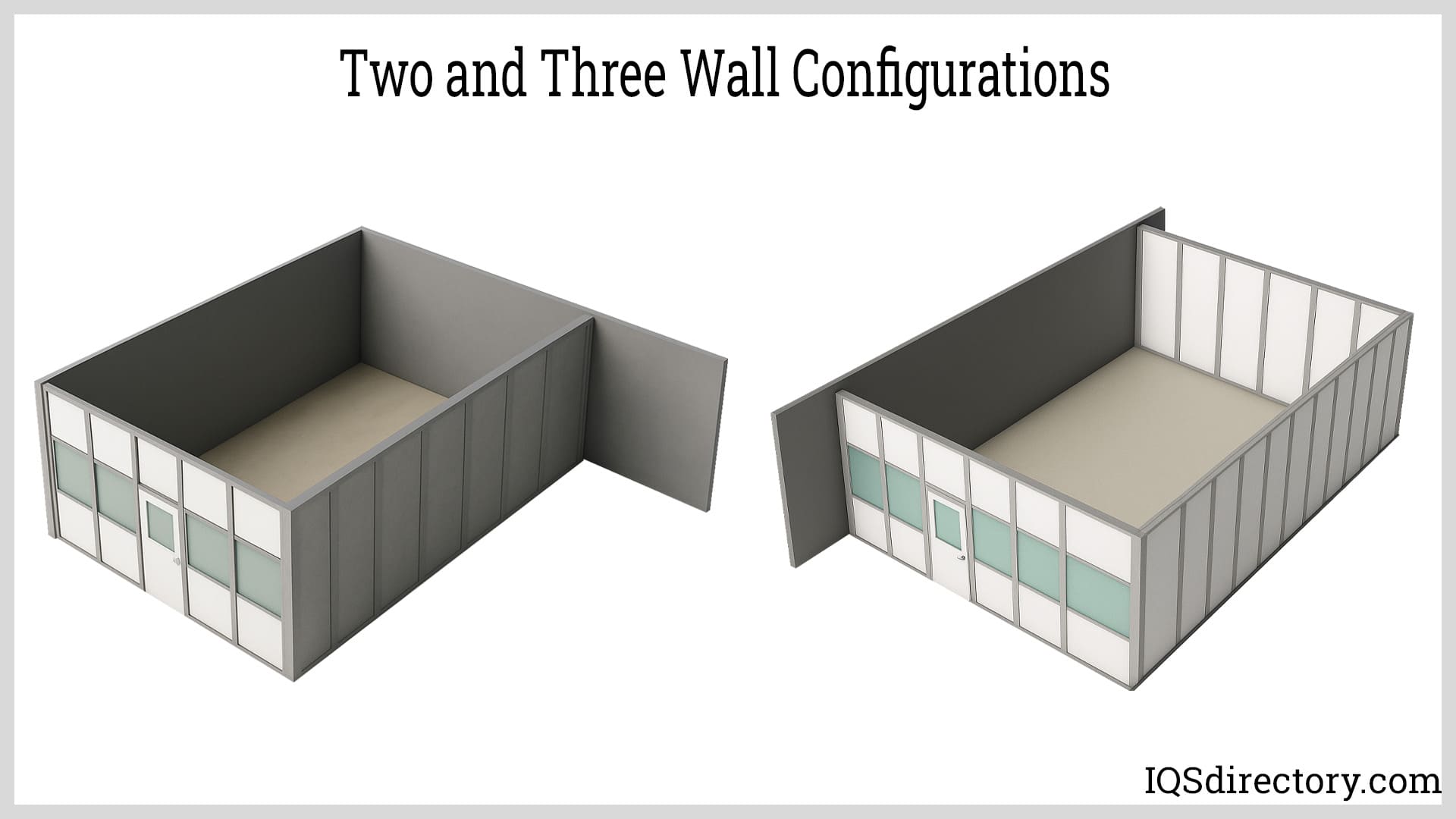
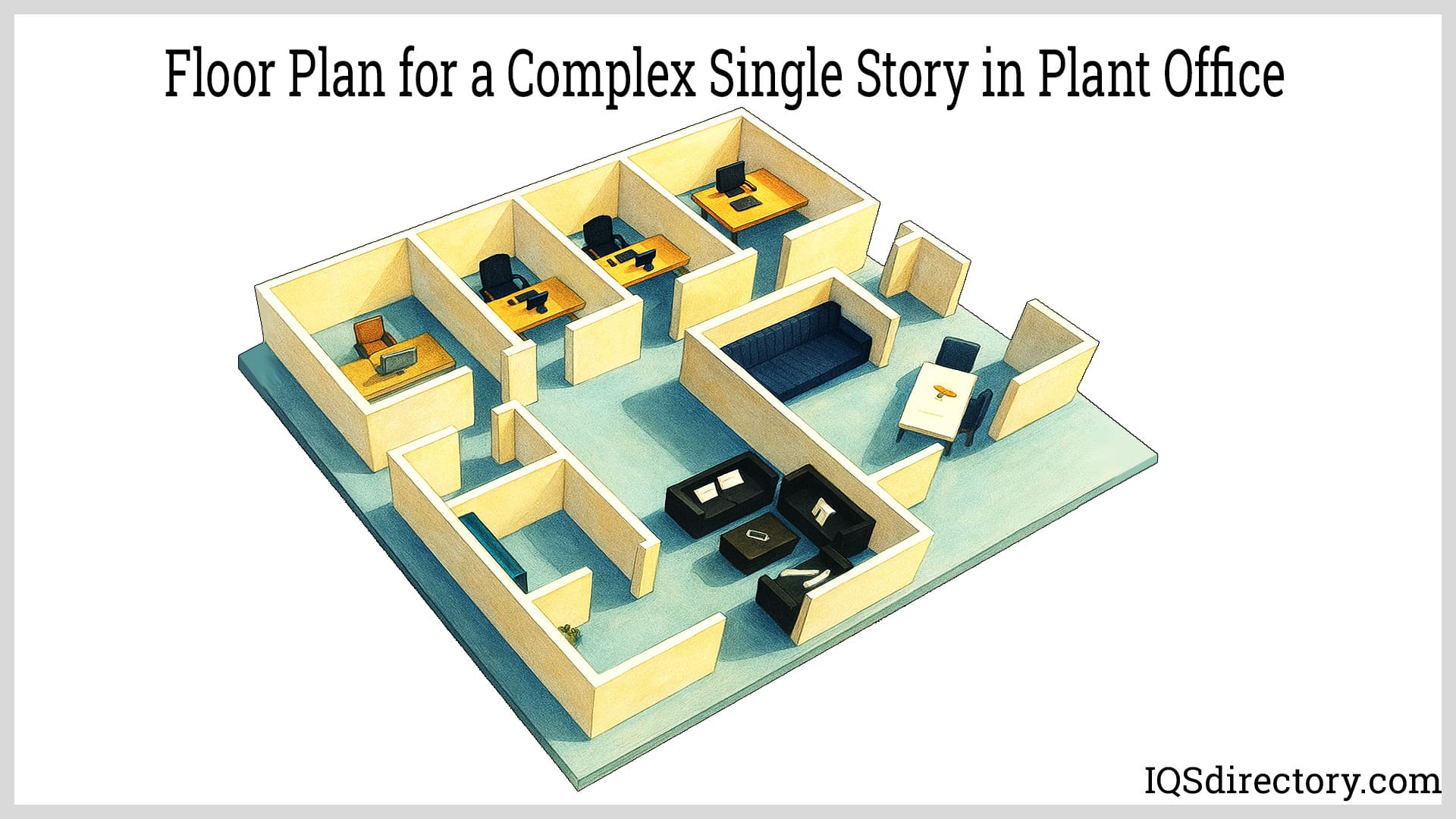
The layout for single story modular inplant offices can take different forms depending on the function of the office. The design of single story modular inplant offices can have two or three walls, using walls at the site for the other walls. The many designs of single story modular inplant offices offers flexibility for placement and can be time and cost saving.
As with all forms of modular inplant offices, the panels, color, and design are planned in advance with the manufacturers to ensure the office meets the needs of a client. Of the different forms of modular inplant offices, single story offices are the most flexible. They can be torn down and moved to a new location or expanded by adding more walls.
There are many factors that are considered when designing a modular inplant office. Although it may seem simple to select a design and have it installed, a variety of factors have to be considered prior to going ahead with the installation. One of the first considerations is if the modular office will be temporary or permanent. Temporary modular inplant offices need a solid foundation and secure anchoring. To give a temporary modular inplant office the appearance of permanence, it may have walkways and special lighting.
Permanent modular inplant offices necessitate more planning and require additional features. Their foundation can be made of blocks or include a cement slab with walkways, lighting, and other features. As may be assumed, permanent modular inplant offices have to provide an appearance of solidity, stability, and durability.
Multi-Story Modular Inplant Offices
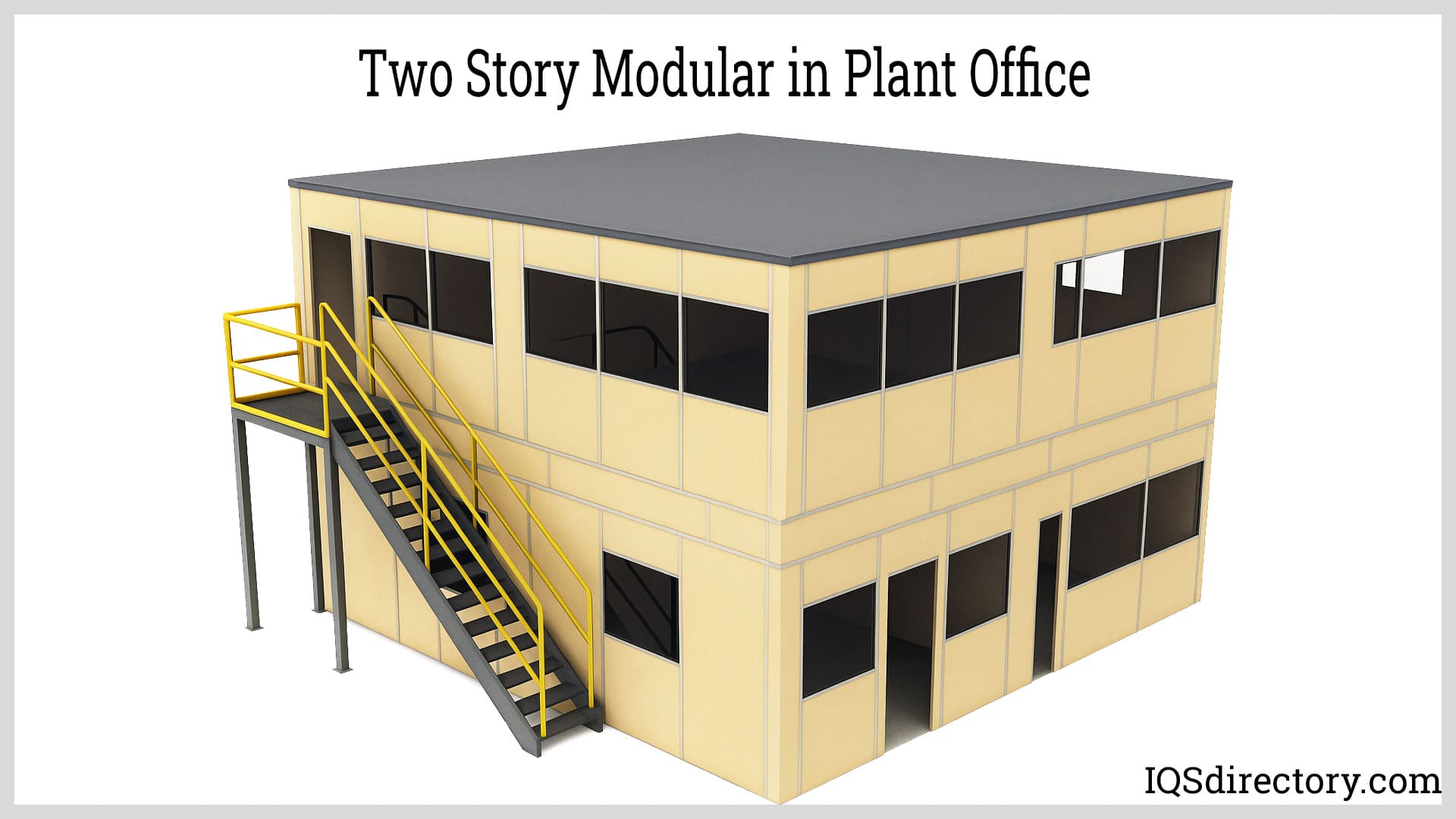
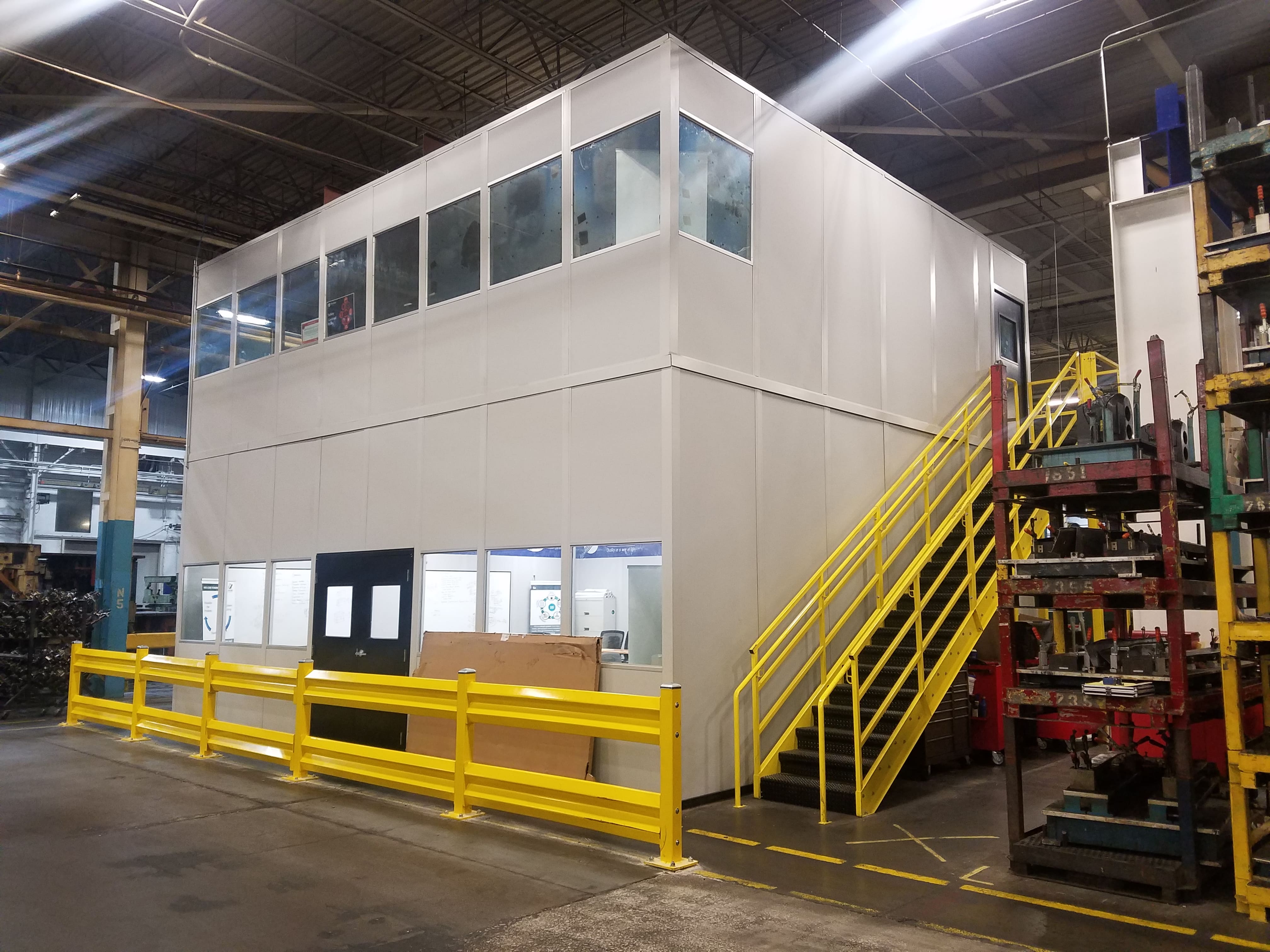
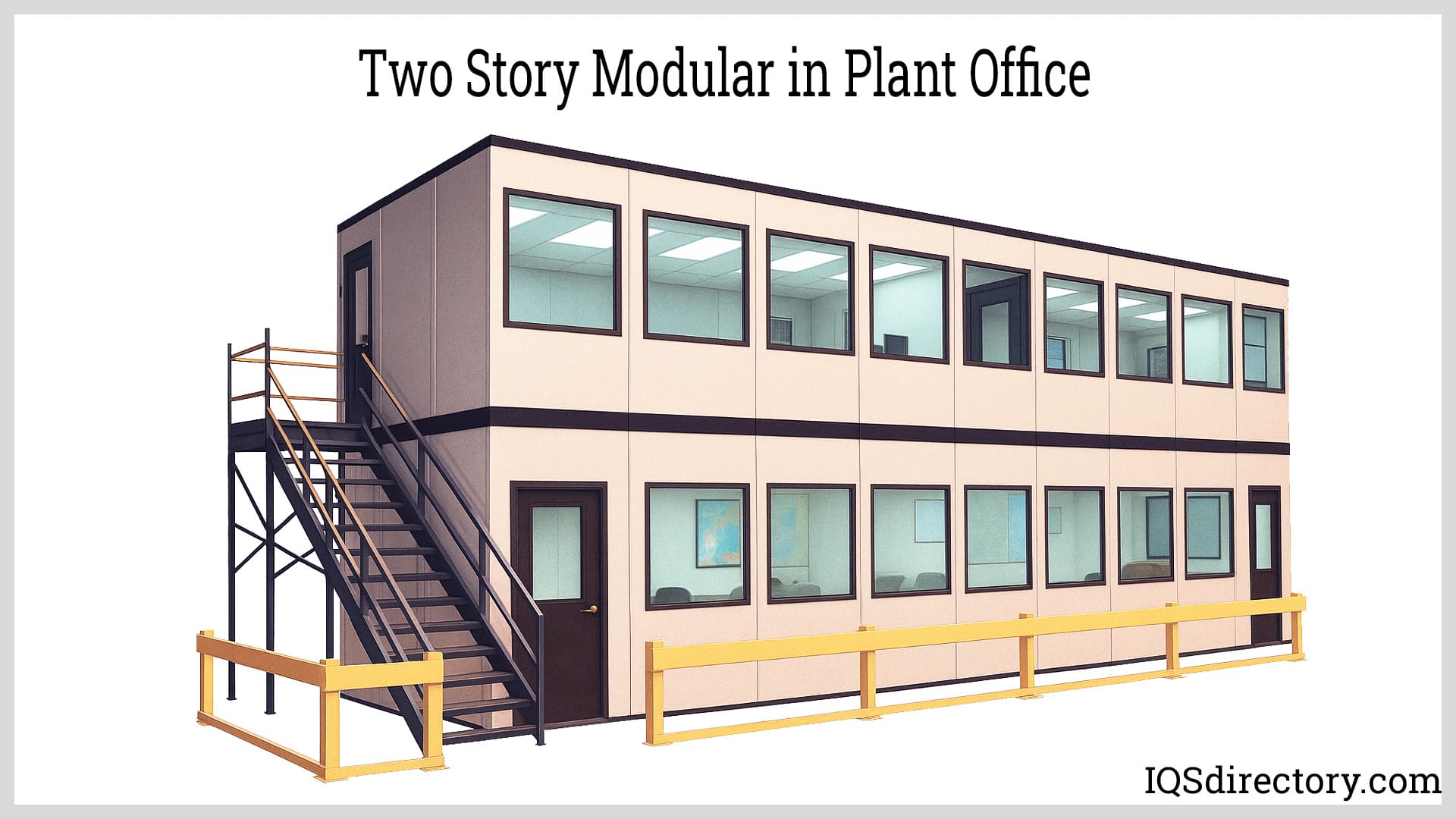
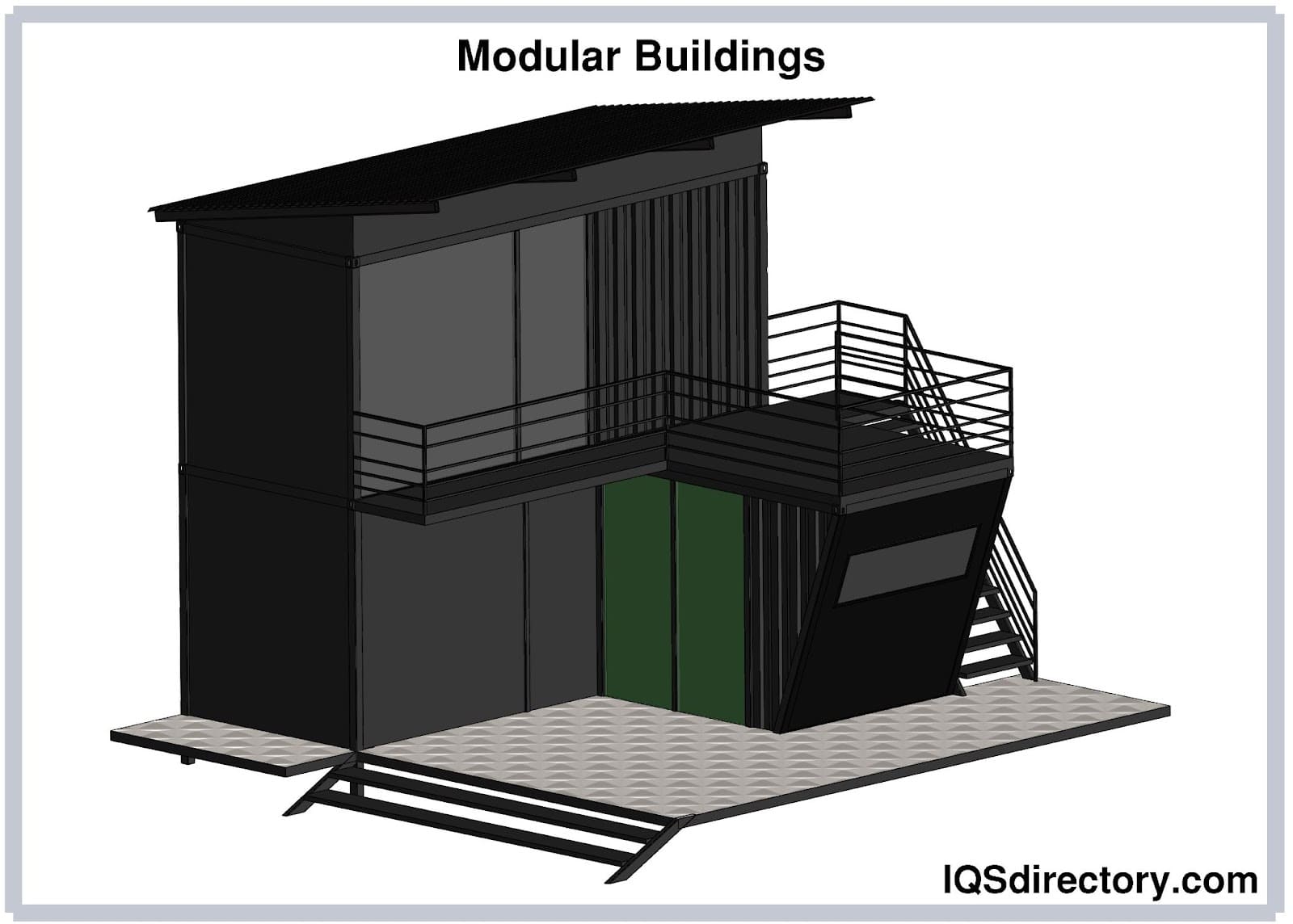
The choice of two story modular inplant offices is similar to the choice for mezzanine offices in that the structure takes advantage of unused upper space. A factor that is of major importance for two story modular inplant offices is adherence to municipal building codes since two story modular offices are more complex and intricate than single story modular inplant offices, which follow a different set of building codes.
The use of two story modular inplant offices is restricted to locations that have sufficient overhead clearance to fit modular offices. Stairs, railings, landings, and supports come in different sizes to fit the requirements of the structure. As with single modular inplant offices, two story offices come in a wide variety of designs and are planned in advance with clients to ensure a proper fit.
Aside from height, weight ratings are necessary to determine the loads a two story modular inplant office can handle. Every aspect of the structure is studied, examined, and monitored to ensure load limits are met for the safety of workers.
Mezzanine Modular Inplant Offices
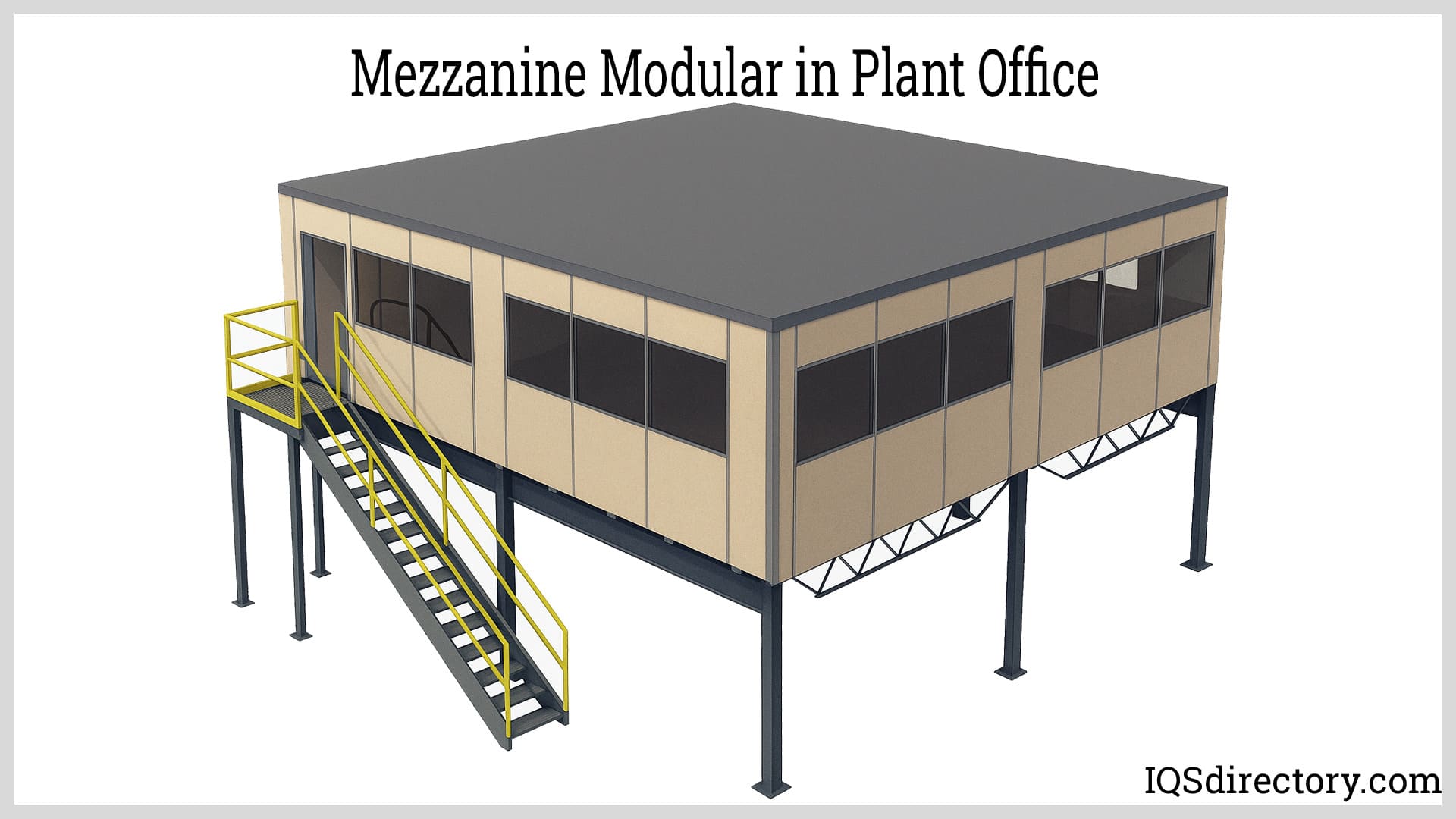
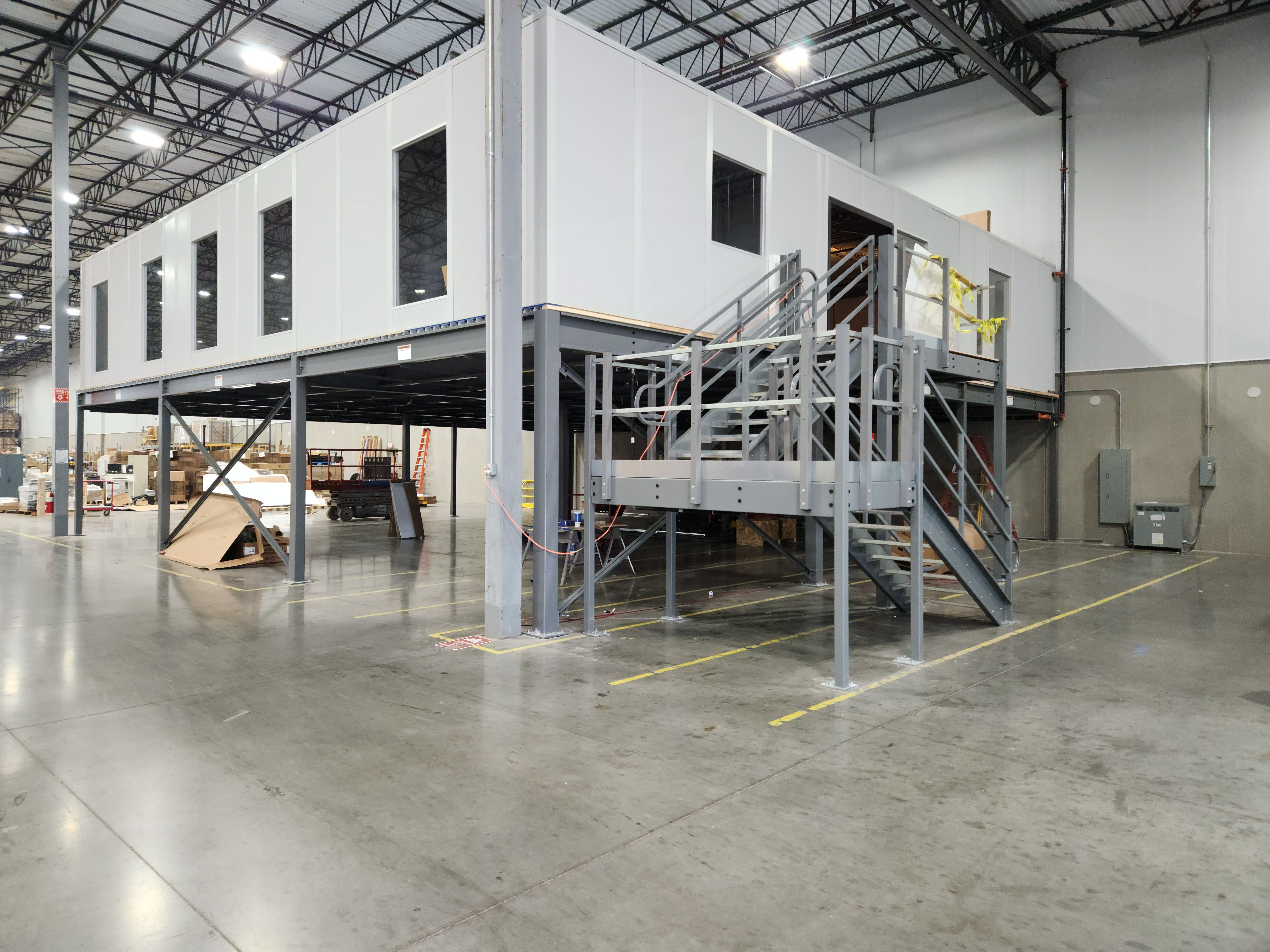
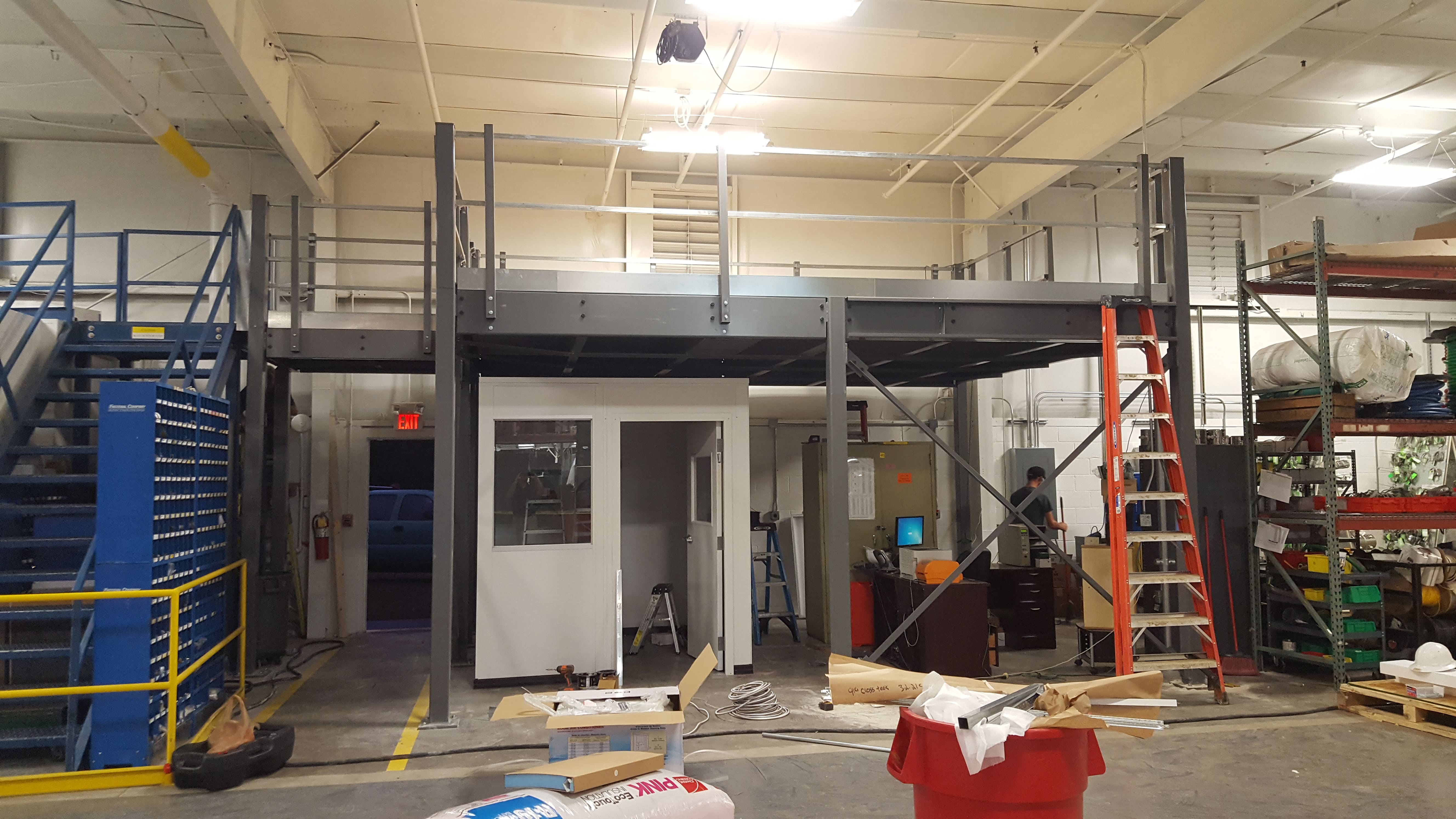
Mezzanine modular inplant offices are particularly popular in manufacturing and industrial operations. They provide first level management immediate access to operations to deal with any issues and meet with workers. Mezzanine style modular inplant offices take advantage of the unused space below the ceiling. As with two story modular inplant offices, mezzanine modular inplant offices require special planning and preparation.
The main configuration of a mezzanine modular inplant office is similar to a single story modular inplant office with the major difference being a mezzanine modular office being raised off the floor. They are a standalone structure that is placed within a building to take advantage of the space below the ceiling. Mezzanine modular inplant offices are installed between the main floor and the ceiling to provide additional office space. They are designed for comfortable and safe movement on the mezzanine and the floor underneath the mezzanine.
As with all forms of modular inplant offices, mezzanines can be customized to fit the available space ensuring that there won’t be any wasted space. The popularity of mezzanine modular inplant offices is due to their ability to free up floor space for other purposes. In addition, they increase efficiency and offer a wide range of solutions.
Single story, two story, and mezzanine modular inplant offices are general descriptions of a wide range of designs, configurations, types, and fabrications that are used for temporary and permanent offices. The versatility and adaptability of modular inplant offices provides clients with solutions that can be adjusted to fit their facility and needs. In most cases, modular inplant offices are customized to fit existing conditions, which is a factor that adds to their desirability.
Standard Modular Inplant Configurations
Normally, when a company is considering the addition of a modular inplant office, they consider one and two story, four wall types that can be placed anywhere in a building or plant. Although this configuration is the standard form for inplant modular offices. There are varieties that involve the use of one or two walls inside a structure that can be two or three wall modular inplant offices with the extra walls being part of the main structure.
The use of two and three wall modular inplant offices takes advantage of existing space and provides a low-cost solution for extra office space. The four wall version of modular inplant offices offers more flexibility since they are not tied or connected to a permanent wall. In cases where companies are experimenting with expansion and trying different methods, two and three wall configurations are a low-cost alternative that is offered by most manufacturers.
Chapter 3: Wall Panels for Modular Inplant Offices
Regardless of the features and uses of modular inplant offices, all forms of modular inplant offices are constructed from a set of basic components, which include wall panels, framing, doors, ceilings, floors, and windows. Each manufacturer offers a selection of components with information in regard to their use, resilience, and longevity. Elements are chosen in accordance with the function of a modular inplant office and the requirements of the client.
The walls of modular inplant offices consist of two flat skins that sandwich a filler, both of which can take different forms. There is a wide variety of modular office wall panels that come with differing finishes to serve special functions. Manufacturers produce wall panels to meet the needs and requirements of clients.
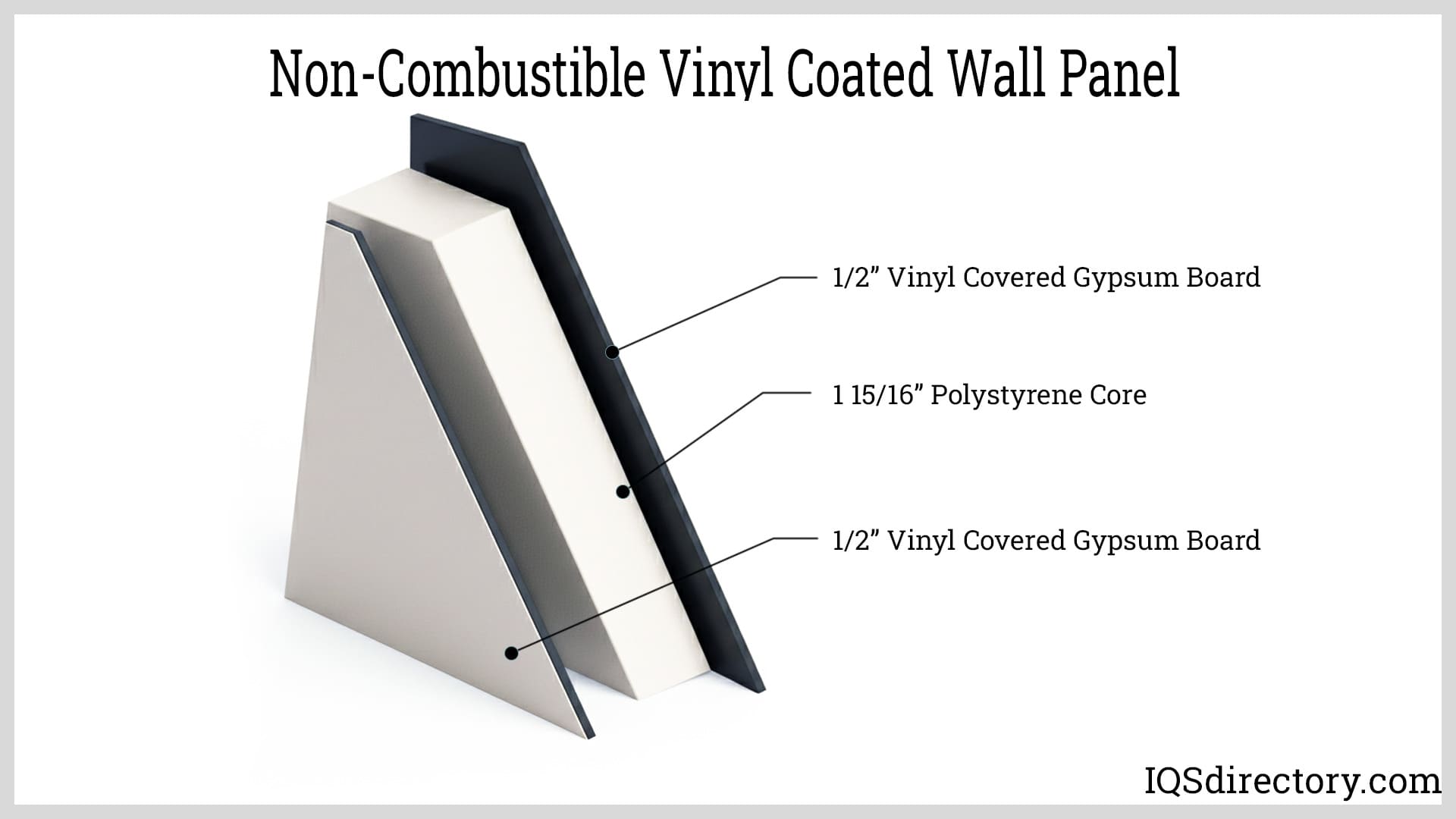
The most basic and original wall panels consisted of two pieces of hardboard covered with vinyl that included a polystyrene core between the hardboards. They are and were three inches thick with a class C fire rating, which does not meet modern standards.
Non-Combustible Wall Panels
Non-combustible wall panels have the same structure as the original wall panels with gypsum replacing the hardboards. They are three inches thick with polystyrene that provides a R value 11 insulation, which makes them viable for indoor use. A property of non-combustible wall panels, especially in industrial settings, is their sound transmission class (STC) rating at 30. The best STC ratings are over 60. At thirty, non-combustible wall panels provide a sufficient amount of sound suppression.
Gypsum board is non-combustible with a Class A fire rating, the highest fire resistance rating for building materials. A Class A indicates that a material has a flame spread rating of A 25 with a smoke development index of 450. Materials with these ratings are bricks, concrete, and treated materials, which are resistant to severe fire exposure and do not provide fuel for fires. These factors make non-combustible wall panels durable, resilient, and tough.
The addition of coatings and vinyl to gypsum wall panels further enhances their endurance and capabilities.
Fire Rated Wall Panels
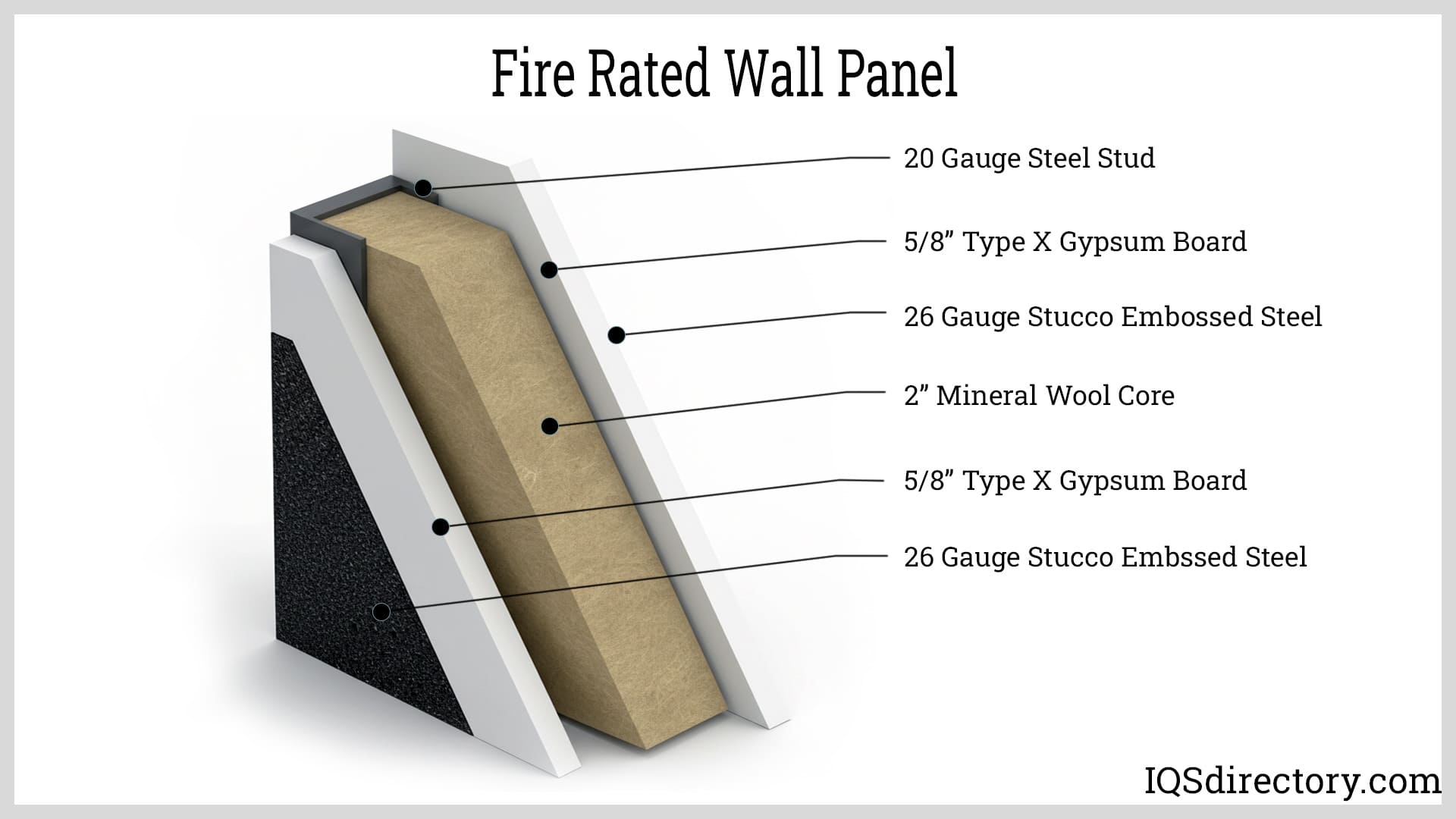
In certain circumstances, companies are required to use fire rated wall panels for fire rated inplant modular offices. These inplant modular offices are required to meet American Society for Testing and Materials (ASTM) E119 standard for a materials response to heat or flames. Such stipulations are in response to insurance companies and local fire inspectors. ASTM E119 indicates that a material can survive exposure to open flame for 60 minutes and a blast from a fire hose and still retain its stability.
The structure of fire rated wall panels includes stucco embossed with steel and gypsum board with a mineral wool core, which is insulation formed from molten rock or slag that has been spun into fibers. The process produces a high-density material that is exceptionally resistant to fire and moisture with a soundproofing rating of STC 48.
Although the basic exterior appearance of fire rated wall panels is pleasant, some wall panel manufacturers add vinyl to provide a more aesthetic look. In all cases, fire rated wall panels protect personnel and provide stability in flammable and high-risk conditions.
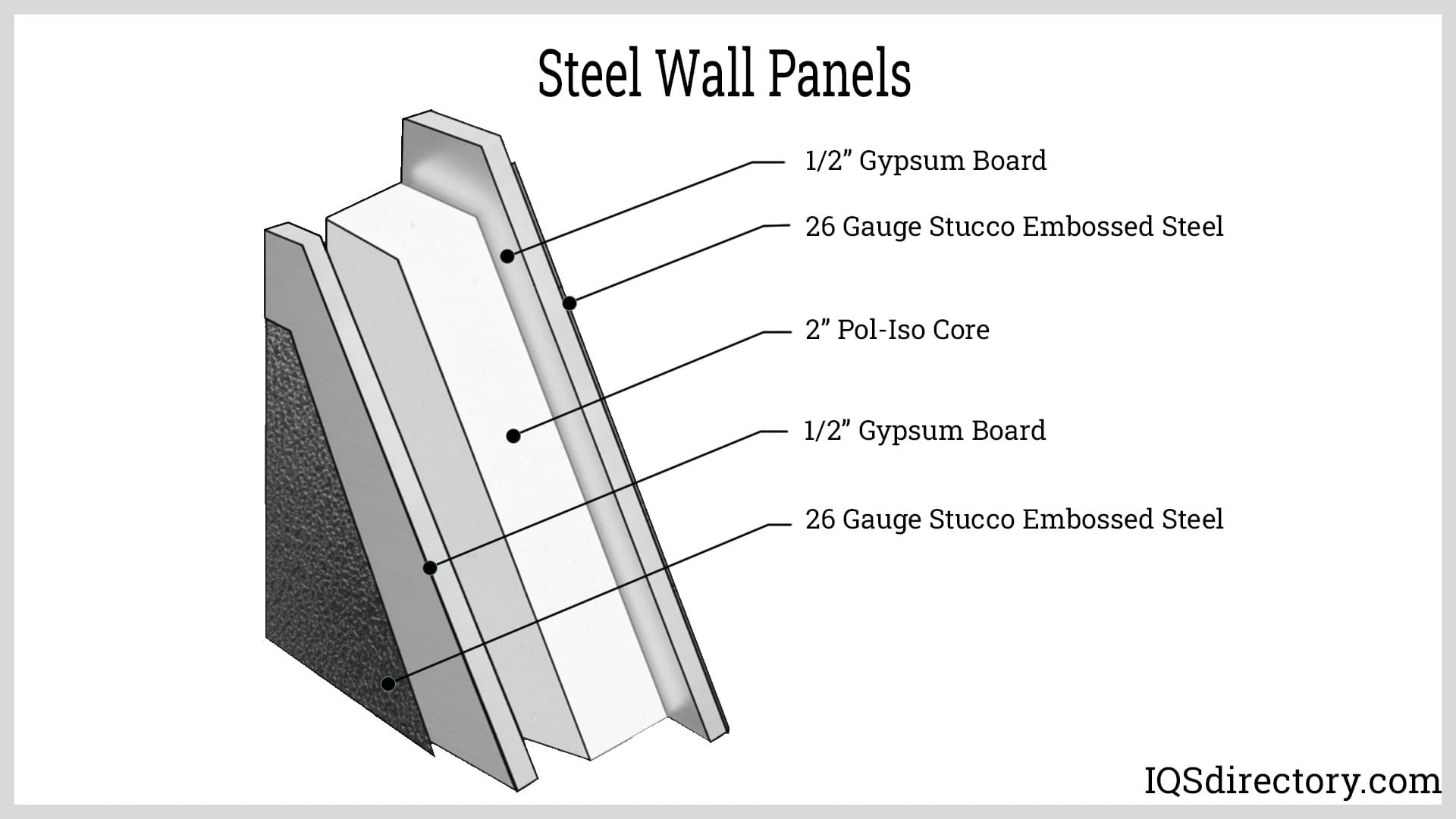
Steel Wall Panels
The difference between steel panels and other panels is the use of steel as the flat sheets on the interior and exterior that sandwich the core, which is normally polystyrene but other core materials can be chosen. They have the same R level as gypsum panels but with a lower STC rating of 26 due to the layers of steel being thinner than gypsum. In addition, steel panels are susceptible to vibrations from the exterior environment.
Although steel panels are referred to as steel panels, the sheets of steel are placed over gypsum to sandwich the core. In essence, they enhance the capabilities of gypsum panels. Steel wall panels are commonly used in harsh, rugged, and stressful environments where there is constant forklift traffic. They are ideal for single story modular inplant offices that are close to high traffic work areas. Steel panels enable modular inplant offices to be resistant to impact, a factor that extends their useful life. The strength and durability of steel wall panels removes the need for repairs or regular maintenance.
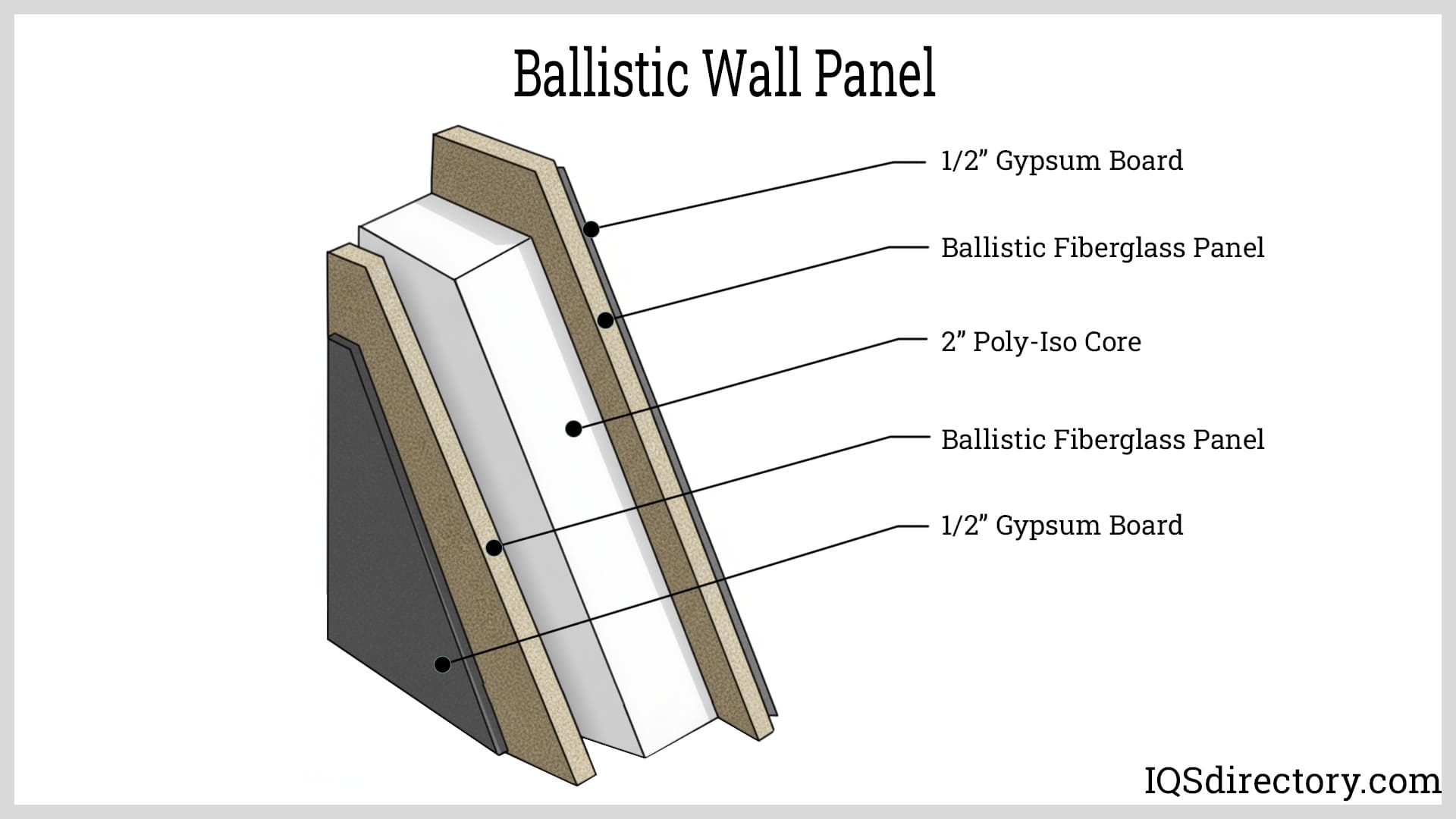
Ballistic Wall Panels
A special form of wall panel, which may not be necessary for modular inplant offices, is ballistic rated wall panels that provide security and protection from gun fire. Although ballistic wall panels provide protection against weapons fire, they are not bullet proof. There isn’t any form of material that is bullet proof. As the term ballistic wall panel indicates, they are a form of panel that can provide temporary resistance to the effects of weapons fire.
In order for a ballistic wall panel to be categorized as ballistic, it has to adhere to National Institute of Justice (NIJ) stipulations and have an Underwriters Laboratory’s UL 752 rating. It is uncommon for manufacturing and industrial locations to require the use of ballistic wall panels. They are very commonly used for military facilities as an additional layer of protection for sensitive areas and upper-level military personnel. In addition, ballistic wall panels are ideal for labs that perform sensitive experiments and testing facilities that may be susceptible to explosions.
As with other forms of wall panels, ballistic wall panels have a gypsum outer layer that is pressed over fiberglass panels that encapsulate a polyisocyanurate, a type of polyurethane, core. The thickness of the panels varies in accordance with their ballistic rating. Poly-iso is a closed cell foam that is highly resilient and used for construction projects that require strength, durability, and ruggedness.
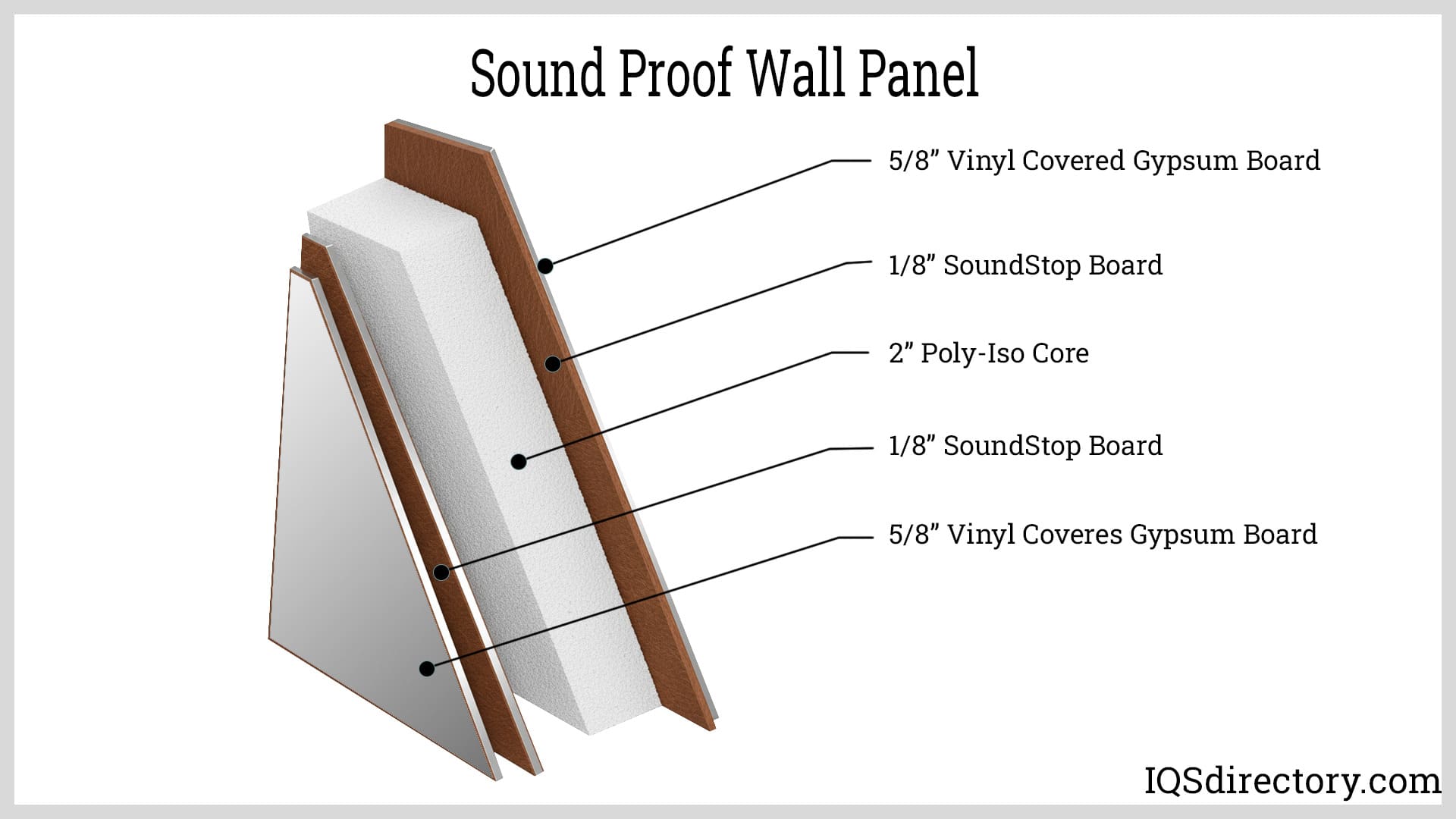
Sound Proof Wall Panels.
Sound proof wall panels are made to reduce, minimize, and absorb sound to prevent it from infiltrating a modular inplant office. They act as an acoustic barrier that shields against disturbances that can interfere with an office work environment. In essence, sound proof wall panels provide a calm, quiet, and peaceful workspace for meetings and managerial decision making.
The structure of sound proof panels can take different forms with expanded polystyrene or poly-iso being the primary core materials. Stranded board (OSB), some form of metal, or cement board can serve as the exterior and interior sandwiching material. Additionally, fiberboard, referred to as soundstop board, is placed between the core and the outer sheets to provide an STC rating of 23, as well as create increased acoustic insulation and meet Occupational Safety and Health Administration (OSHA) sound level guidelines.
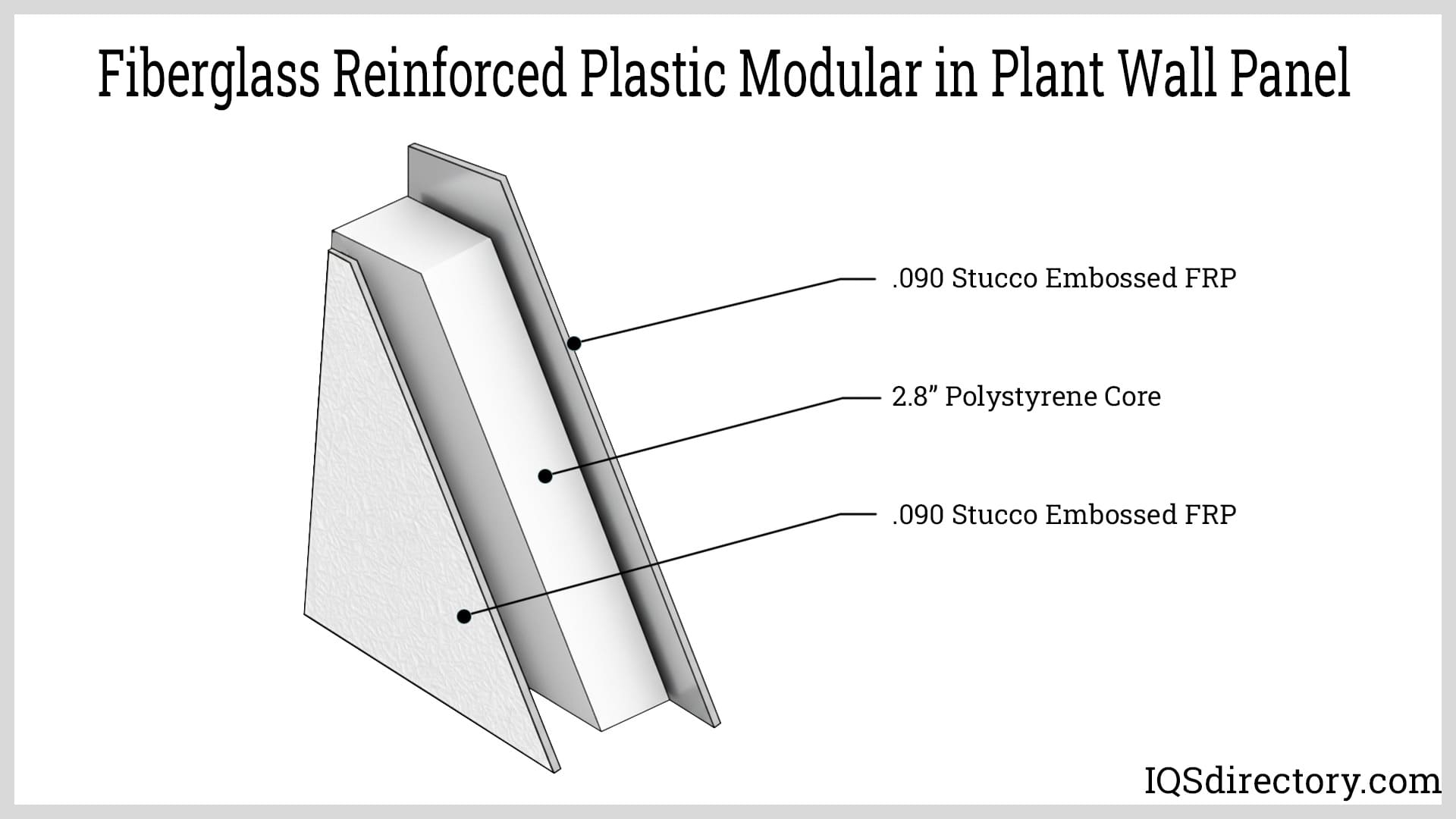
Fiberglass Reinforced Plastic (FRP) Wall Panels
The unique form of wall panels is FRP panels that include a mix of fiberglass and special types of plastics. The structure makes them light, sturdy, and durable. Fiberglass is the aspect of the panels that makes them strong while the plastic provides a smooth, non-porous surface. The combination creates wall panels that are resistant to environmental factors and chemicals.
The smooth surface created by the plastic makes the panels low maintenance and exceptionally durable. The fact that they are resistant to fire and chemicals makes them one of the safest forms of panel. The downside of FRP panels is their high cost, which can be covered with their low maintenance and longevity. The durability of FRP panels makes them ideal for industrial environments and high traffic locations. Their non-porous surface makes them easy to clean adding to their low maintenance.
The main part of all modular inplant offices is the panels, which are the major part of the structure of a modular inplant office. As important as the wall panels are, they require the support of other features that hold the panels in place and ensure the stability of the structure. When working with a modular inplant office manufacturer, the first portion to be selected is the panels. The remainder of the selection process refers to the amenities included in a modular office and the framework that supports the panels.
Leading Manufacturers and Suppliers
Chapter 4: Structural Frame of Modular Inplant Offices
The structural frame for a modular inplant office is part of the assembly of the panels. The materials used to construct the frame are steel and aluminum. Of the two types of framing materials, steel is the more economical. The variations in the modular inplant offices is in accordance with the type of inplant office, one story, two story, or mezzanine.
Structural Frame of Inplant Offices by Donobrog, Inc
Steel Systems
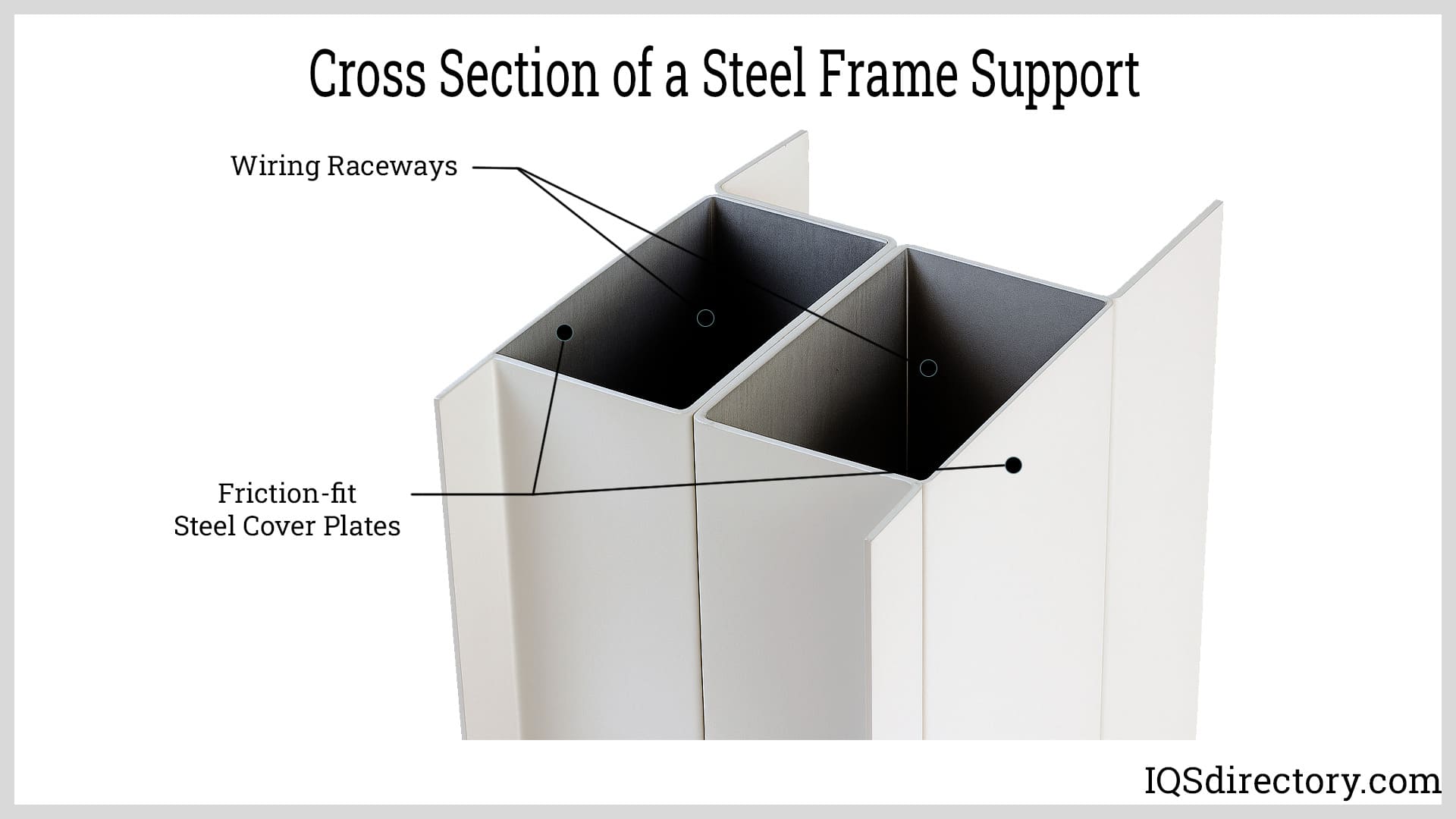
Steel modular frame systems are three inches in width with wiring studs to conceal electrical wiring tracks. Access to wiring is due to the use of friction fit cover plates placed on both sides of the steel support. For single story modular inplant offices, 20-gauge non-load bearing steel is used. The use of 20-gauge steel enables the use of sound proof wall panels.
Two story modular inplant offices require a heavier gauge of steel, which is normally 16-gauge steel that has wiring studs like single story steel frames. The use of 16-gauge steel is due to the increased load bearing with the second floor. The increased load bearing broadens the use of steel framing to meet a wider range of applications.
Aluminum Systems
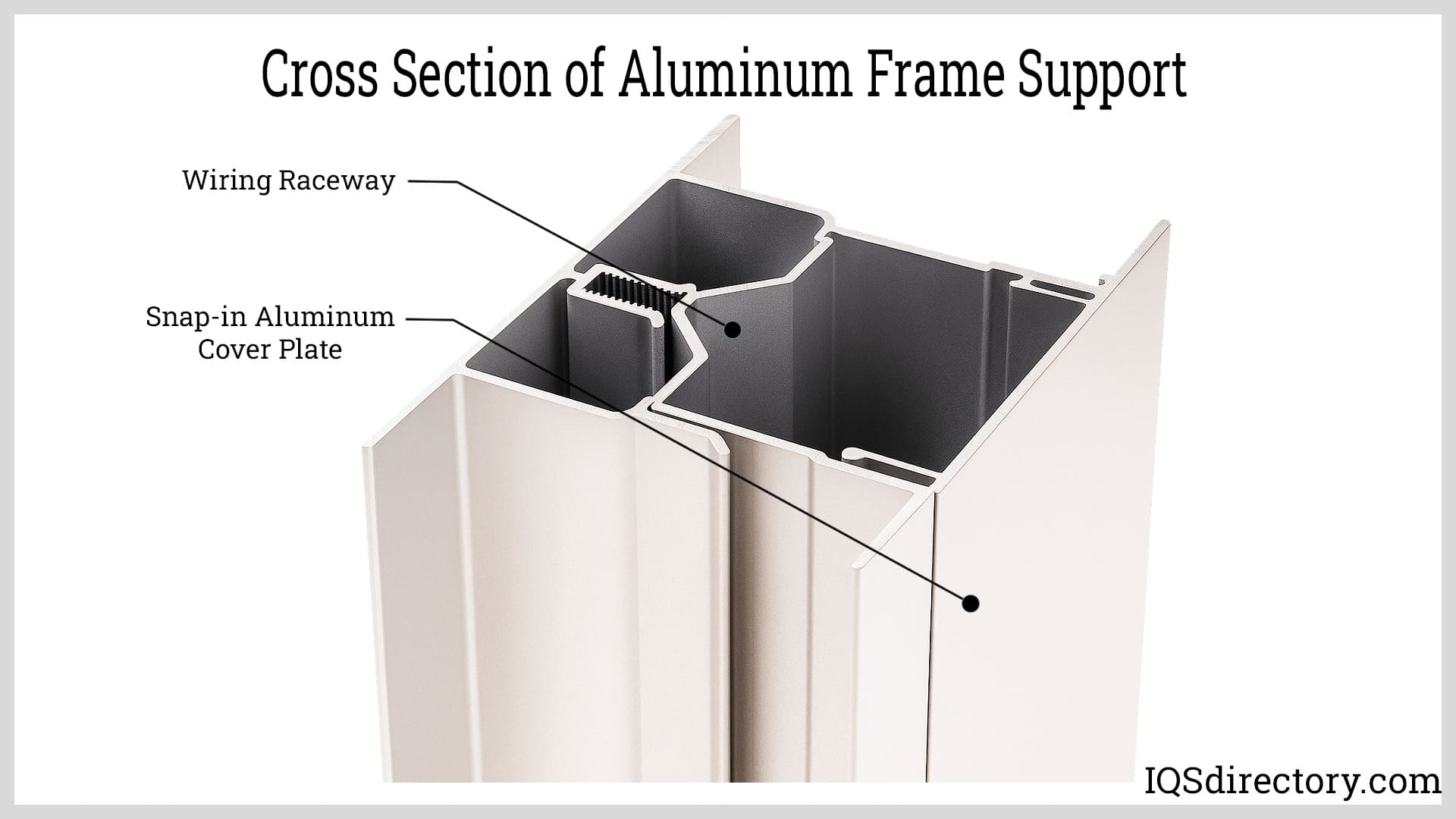
Aluminum modular inplant wall systems are maintenance free and exceptionally moisture resistant. They provide snap cover plates that have a sleek finished look. Aluminum wall systems are FDA approved and are suitable for a wide range of uses. Systems have a sufficient amount of load bearing capabilities to support a second floor and are designed to hold three-inch panels in place. The many positive properties of aluminum systems enable them to resist environmental conditions as well as the stress of inplant traffic.
As the load bearing studs and posts for modular inplant offices, aluminum extruded supports are light weight and easy to assemble. They form the structural framework of an inplant modular office. Like steel supports, aluminum supports have channels for electrical wiring.
Corner Posts
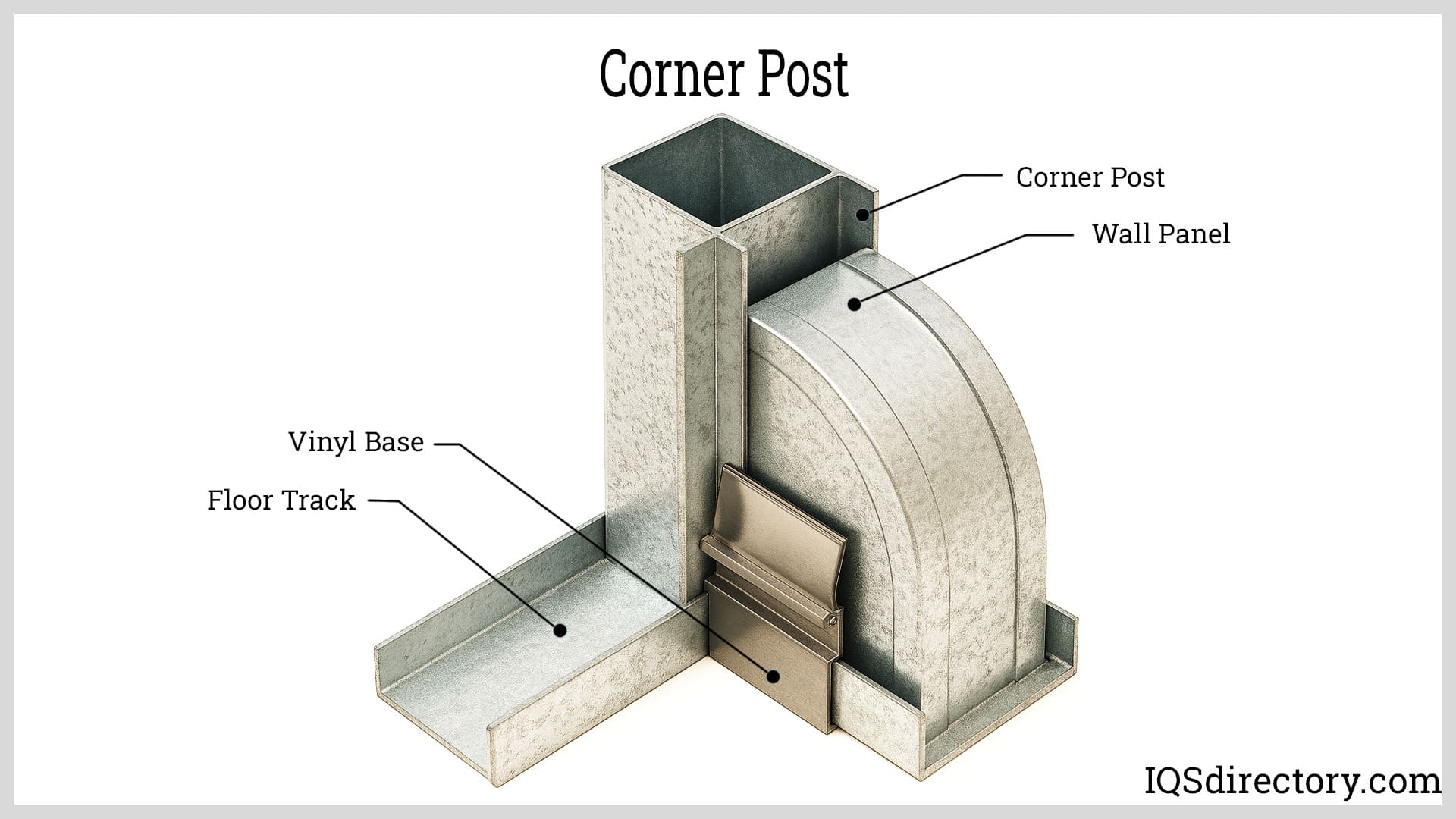
Once the wall panels and supports are prepared, the next step in the modular inplant office process is installation. Although the wall panels and supports provide structural stability, they have to be connected at corners, an aspect of the structure that is crucial to reinforcing wall panel stability. Corner posts join adjacent panels to create a secure corner. Their placement defines the parameters of a modular inplant office and its structure.
The placement of corner posts adds to the versatility of modular inplant offices due to their ability to be easily broken down for additions or relocation of an office. The standard corner post forms a 90o angle for accepting wall panels from each side of an inplant modular office.
Framing Studs
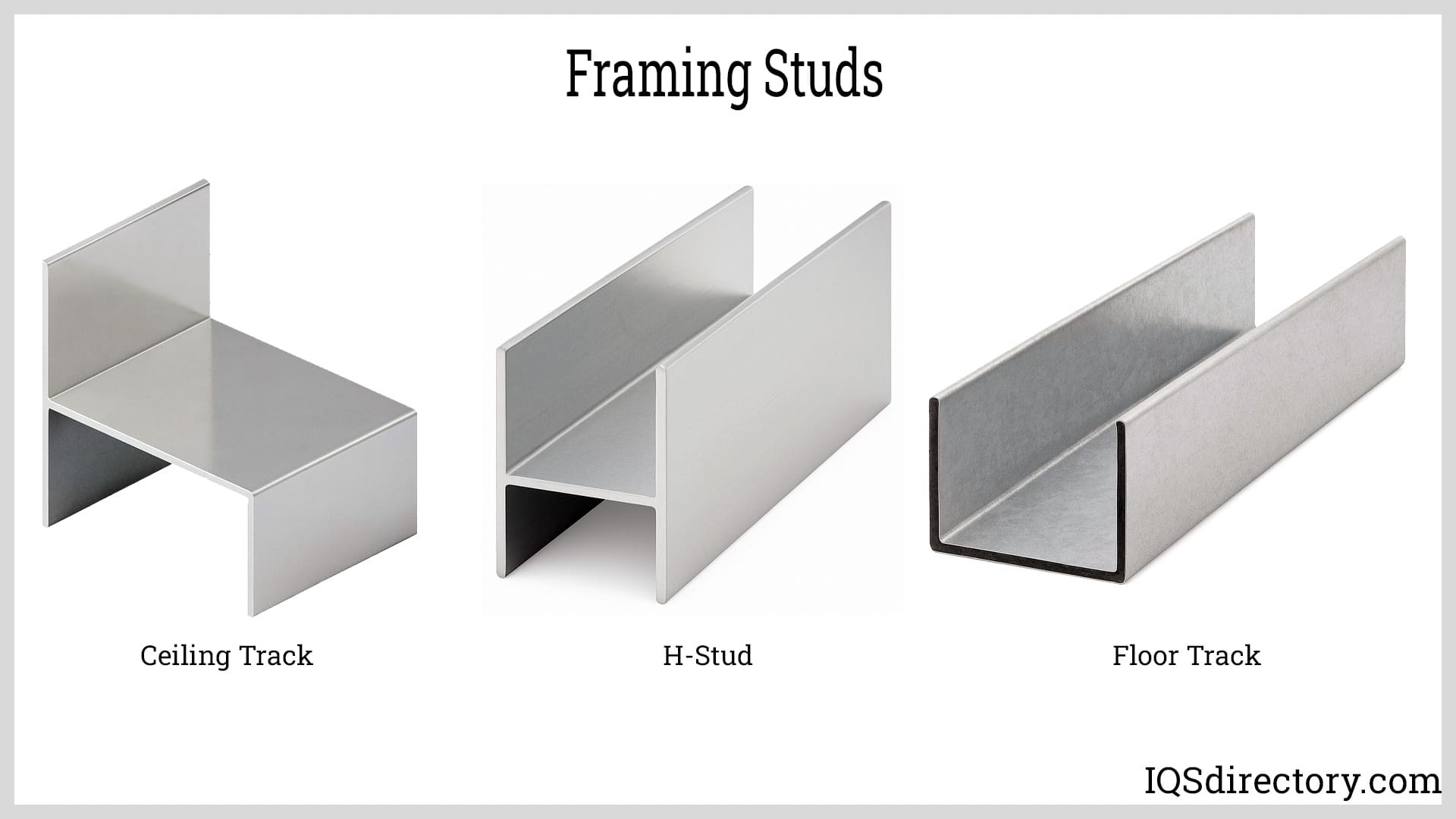
Aluminum and steel support systems are used to connect and support the wall panels. They have space in them to run wiring and electrical. They are referred to as wire studs due to their ability to contain electrical wires. The framing of doors, windows, floors, and ceiling involve the use of H studs and ceiling and floor trackers that have a U and H shape.
Floor trackers lay out the dimensions of the floor of a modular inplant office. They are the first set of structural elements that are placed at a site. If a site has a poured concrete or other form of floor, the floor trackers are placed and secured over the laid floor. Floor trackers define the space that a modular inplant office will occupy. Their U shape is wide enough to fit the width of the wall panels.
Once the wall panels are in place, the ceiling trackers cover the top of the wall panels and hold them in a straight unwavering structure. Ceiling trackers have a lower-case h shape where the two lower legs of the h are placed over the top of the wall panels. The upper portion of the h has several functions, such as holding decking or a ceiling.
Capital H shaped studs are used in several ways in modular inplant office construction. They are used to integrate other features such as windows and doors.
Chapter 5: Components of Modular Inplant Offices
Aside from the structural features of modular inplant offices, there is a wide array of features and addons that cover the full spectrum of equipment, tools, and conveniences that can be included in a modular inplant office. This aspect of the offices is what manufacturers offer as incentives for their products and as help to acclimate clients.
Custom Lighting
Lighting for modular inplant offices can take several forms. In most cases, lighting has to be customized to the configuration of an inplant modular office. This aspect of their structure is a necessity since nearly every inplant modular office is customized and configured for a client. In essence, clients are given the opportunity to select a lighting system that matches the ambiance of their modular offices. Most modern inplant offices have LED adjustable lighting.
Windows
The sizes and types of windows for modular inplant offices take several forms depending on the use of an inplant modular office. In many cases, modular inplant offices do not have windows and are shut in walled spaces. This configuration is designed to protect the occupants and allow for privacy. When windows are added, they are small square or rectangular shapes placed to monitor manufacturing activities.
Mounting Capabilities
Mounting capabilities refer to hanging boards, desks, shelving, and other forms of furnishings on the walls. The majority of modular inplant offices allow for a variety of mounting features, which enables clients to configure their modular office to their business model. In special cases, such as modular offices used for assemblies and sensitive work, different forms of workbenches are mounted on the walls with height adjustable features.
Display Boards
Modular inplant offices that are used for meeting rooms, conference rooms, and training can have magnetic boards and white boards added. Again, with other aspects of modular inplant offices, these are additions that clients insert to meet the requirements of their business.
Furniture
Many manufacturers offer an assortment of office furniture that are installed with a modular inplant office, which makes the space ready to occupy once installed. This aspect of modular inplant office marketing is available from different suppliers but is not generally available from all. It is an excellent marketing tool, which is used by both renting and selling suppliers.
Electrical
All forms of modular inplant offices use structural supports and elements that allow for wiring of electrical sockets and components. Supports are designed with space for all forms of wiring to supply modular inplant offices with computer connections and wifi capabilities. This aspect of modular inplant offices is a necessary aspect of their functionality.
Chapter 6: Benefits of Modular Inplant Offices
During the expansion of a business, there are several alternatives considered in regard to the construction of additional space. In many cases, companies decide to go with permanent improvements due to tradition. Although this is a common method, more discerning companies, over the last few years, have accepted alternative methods of expansion that do not involve high costs but provide structures that simulate the characteristics of normal, traditional construction.
Installation
The use of modular inplant offices can significantly speed up the timeline for expansion. The installation of modular inplant offices can be completed in a fraction of the time it takes to add permanent, traditional structures. The speed of the installation of modular inplant offices is due to the units being produced off site before being assembled on site.
Lower Cost
There are three factors that influence an investment in a modular inplant office, which are the timeline, labor cost, and maximization of resources. Since modular inplant offices are fabricated at an off site location, the construction process is fast tracked enabling instant operational use when installed.
As can be assumed, the assembly of a modular inplant office requires less labor, which makes the building process faster and economical. Every aspect of the construction of a modular inplant office is carefully planned, a factor that eliminates waste, over ordering, and any damage to a facility.
Flexibility
Flexibility is one of the major selling points for modular inplant offices. Their use gives management the ability to expand and contract a company’s assets to meet changes in the market. When a business is growing, it can instantly have office space added to meet the increasing need. As conditions slow or contract, the office space can be removed. In addition, the location of a modular inplant office can be changed by tearing it down and reassembling it in another location.
If business continues to grow and additional space is needed, the on-site modular inplant office can be expanded to add more space or have an additional modular inplant office connected to the original. The configuration and changes are endless and can meet any type of conditions.
Smooth Integration
As with flexibility, smooth integration is another major selling point for modular inplant offices. Unlike major construction projects that created dust, dirt, noise, and turmoil, modular inplant offices can be added with limited disturbance to everyday business functions. Within a few hours or days, a brand new structure can be added without interrupting manufacturing and industrial activities.
Sustainability
One of the key focuses of modern business is sustainability, ensuring that projects will not damage the environment and cause permanent harm. All forms of modular inplant offices are made from environmentally friendly materials. The fact that modular inplant offices can be disassembled and reused, further adds to their compliance with the stipulations of sustainability projects.
Durability
The supports and wall panels of inplant modular offices are built for longevity. In many cases they will last decades and provide ongoing comfort, securing, safety, and convenience. They are designed to enhance productivity with a pleasant environment, while providing an assurance of sufficient workspace.
Space Utilization
In many cases, modular inplant offices take advantage of wasted space in facilities that would otherwise go unused. This aspect of the implementation of modular inplant offices is an additional factor in relationship to cost savings. The many designs and configurations of inplant modular offices enables them to be adapted to any workspace and conditions.
Noise Reduction
As anyone who has ever worked in a manufacturing setting knows, one of the biggest difficulties related to industrial operations is the amount of noise created by the many operations. For management, such cacophonia can be irritating, disruptive, and distracting making it impossible to think. The addition of a modular inplant office can ease tensions and increase productivity.
Conclusion
Modular inplant offices are a flexible and cost-effective solution for companies that are experiencing rapid growth and require more office space.
Compared to traditional permanent structures, modular inplant offices are less expensive, can be quickly installed, and can be disassembled, moved, and reassembled with minimal disruption and effort.
Modular inplant offices are prefabricated off site to be shipped to their location. This characteristic of their structure removes the creation of debris, dust, or noise during assembly.
The main types of modular inplant offices are one story, two story, and mezzanine. Each type can be engineered to endure any form of hostile environment and includes sound suppression and ballistic forms for special conditions.
There are an endless number of uses for modular inplant offices, which include lunch rooms, conference rooms, break areas, assembly areas, and secure sites for sensitive work. Manufacturers work closely with their clients to develop a modular inplant office that perfectly matches the requirements and needs of the client.
Leading Manufacturers and Suppliers
Related Posts
Modular Buildings
Modular buildings are buildings made up of standardized sections, called "modules," manufactured in a controlled environment of a factory away from the building's future location. The common factory-made, standard modules include walls...
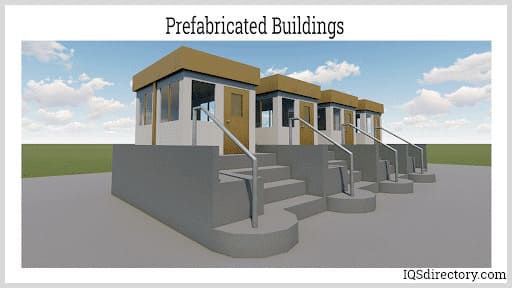
Prefabricated Buildings
Prefabricated buildings, or prefabs, are buildings with components (walls, roof, and floor) that are manufactured in a factory or manufacturing plant. These components can be fully or partially assembled in a factory which is then transferred at the construction site...
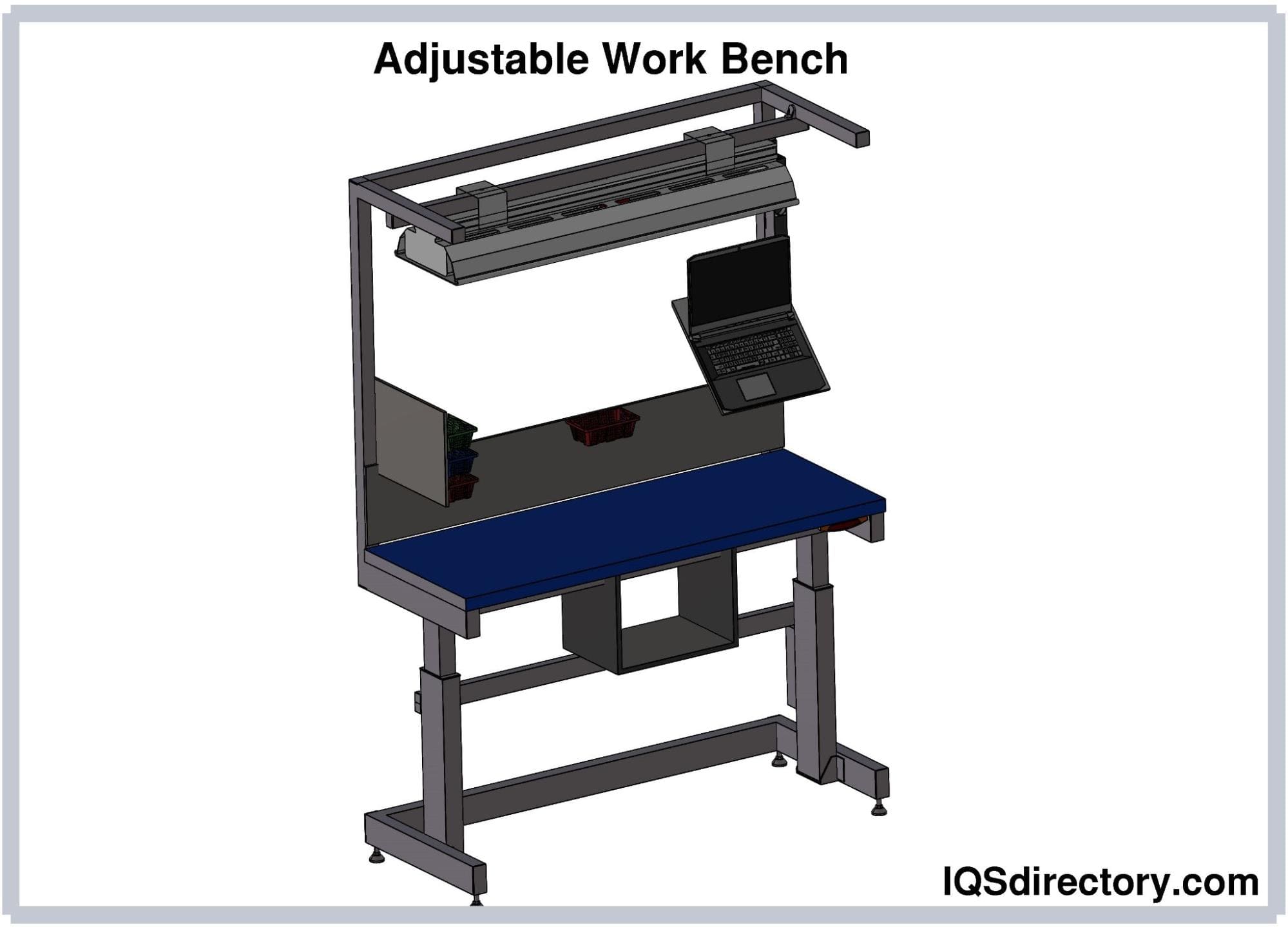
Adjustable Workbenches
An adjustable work bench is a tool that allows the user to adjust and regulate the height of the work surface to a more ergonomic and comfortable position for the safe and effortless performance of work...
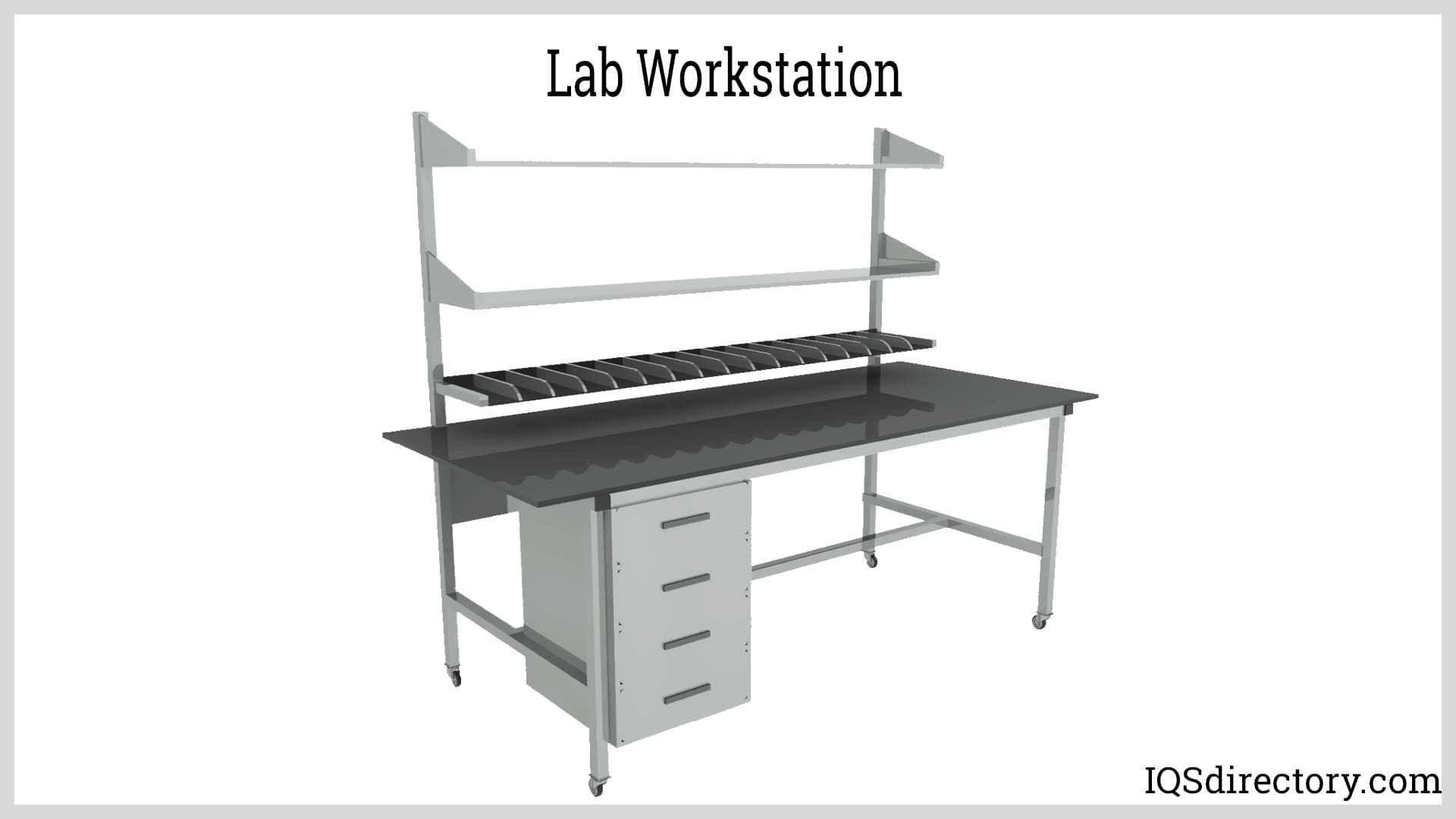
Lab Workbenches
A lab bench is a specially designed bench or table that is able to assist in the performance of laboratory experiments and tasks, including the handling of reagents and test samples. Part of the design process for...
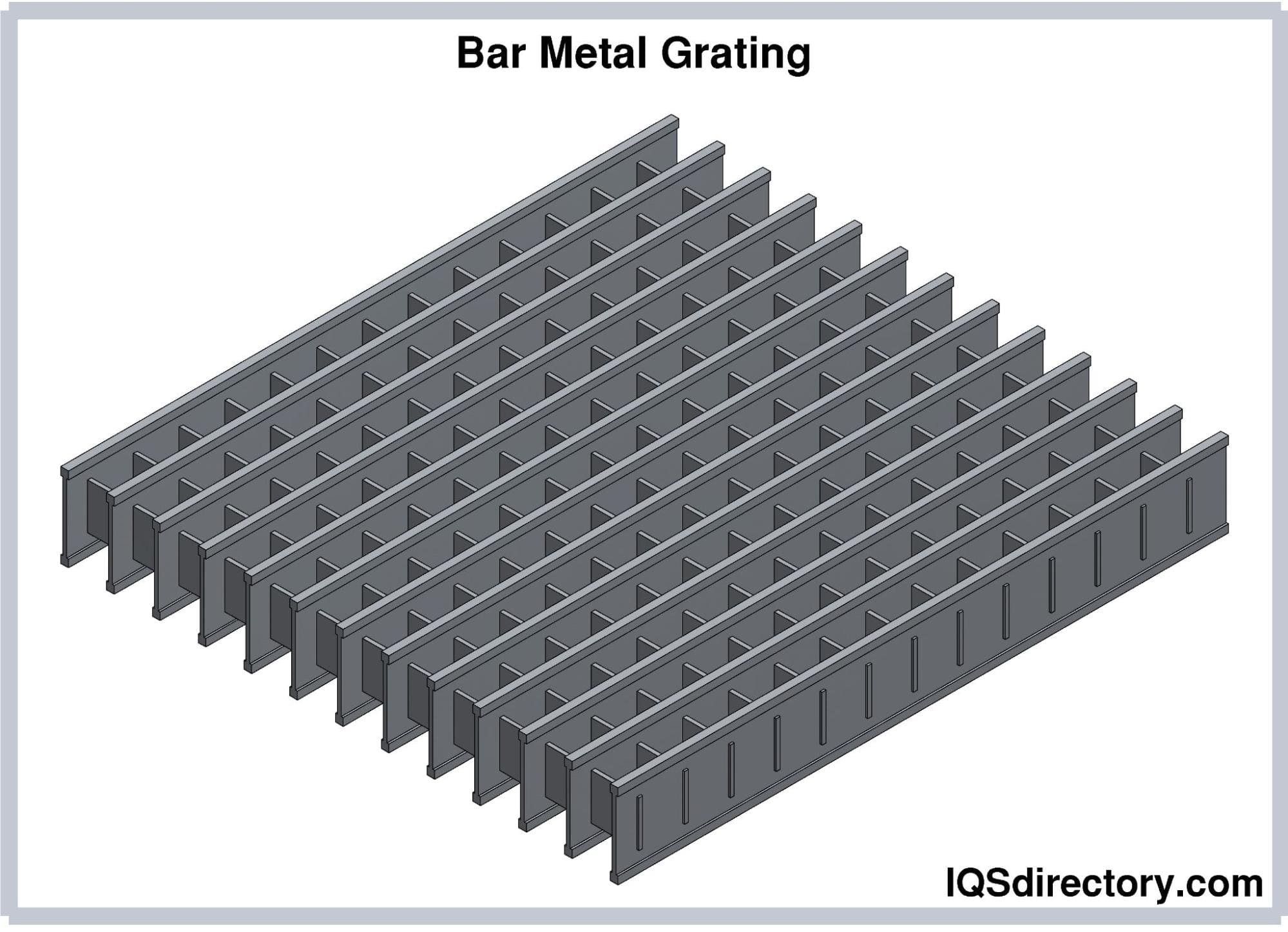
Metal Grating
Metal grating is a metal product produced by perforating metal sheets or joining bars of metal to form a grid. They are a metal product that is widely used in various industries as stairs, platforms, scaffolding, and protective coverings...
Mezzanines
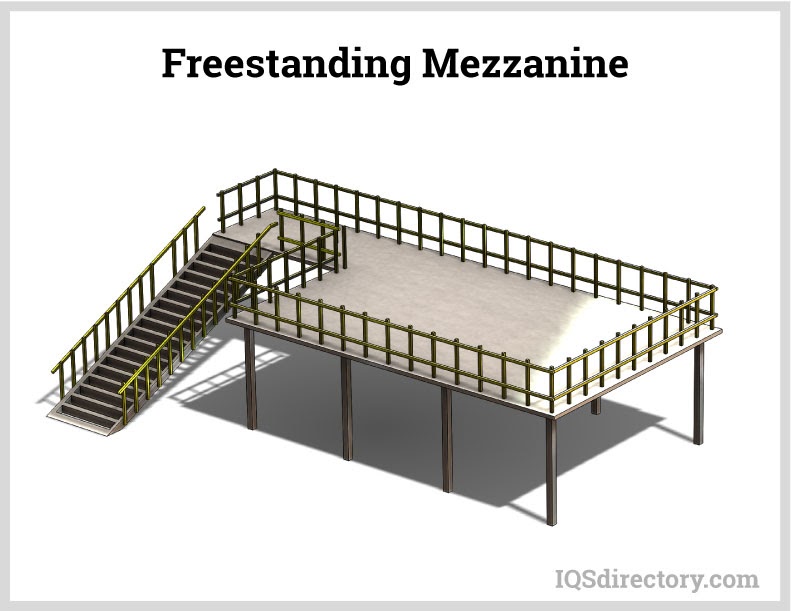
A mezzanine is an intermediate floor installed in a building between the main floor and the ceiling that is partly open to the main floor. They have a low ceiling and project out over the main floor but do not completely cover it...
Mezzanine Floors
A mezzanine floor is a middle floor that is installed between the ceiling and the ground floor to provide extra space for storage, assembly operations, or office space. The normal design for a mezzanine floor is 25% of the flooring of a building or smaller...
Pallet Racks
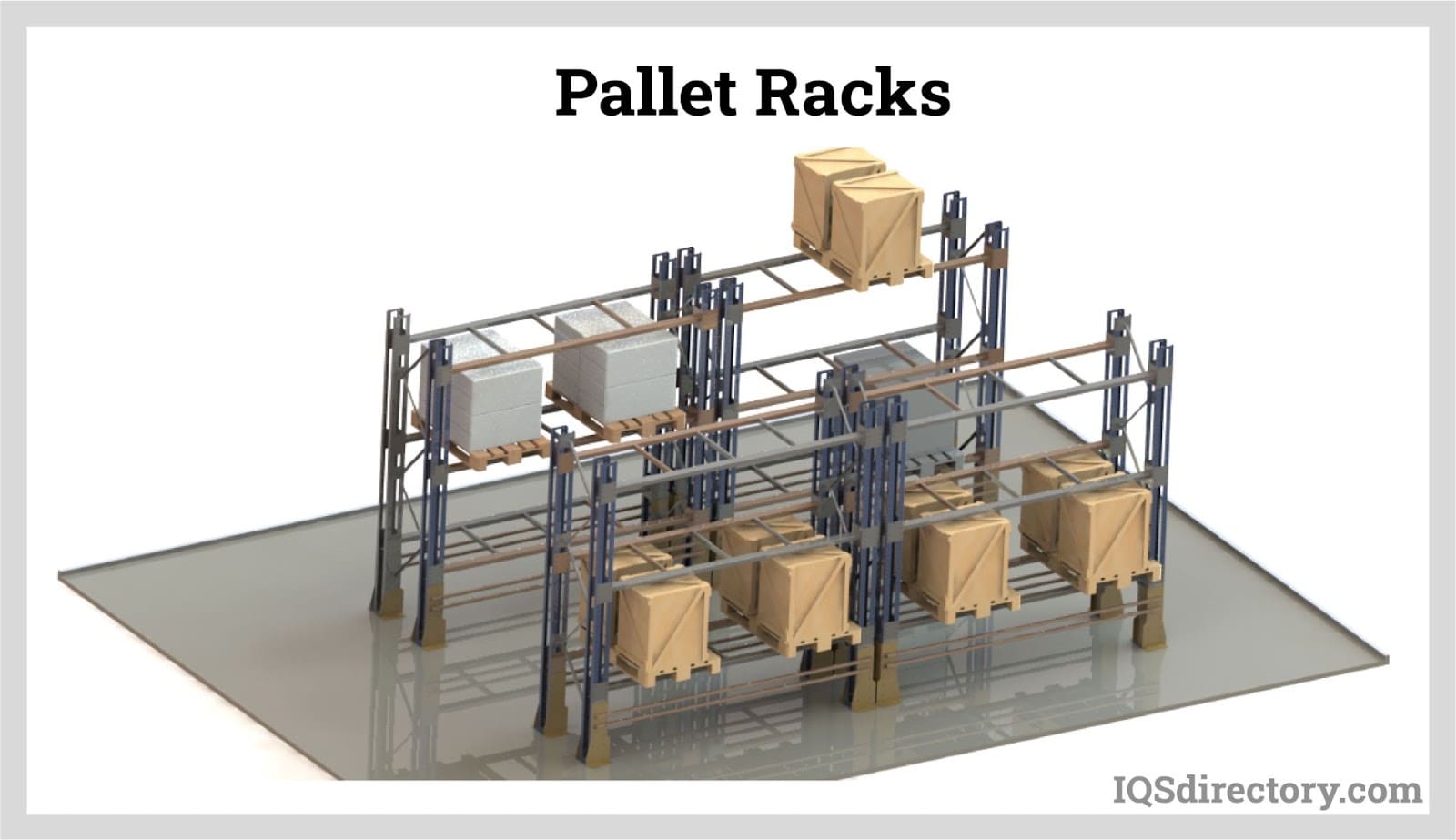
A pallet rack is an upright structure made of steel framing with beams and connectors that are bolted, welded, or clipped together to form a shelving unit to store inventory and equipment. In warehousing, pallet racks are...
Portable Workbenches
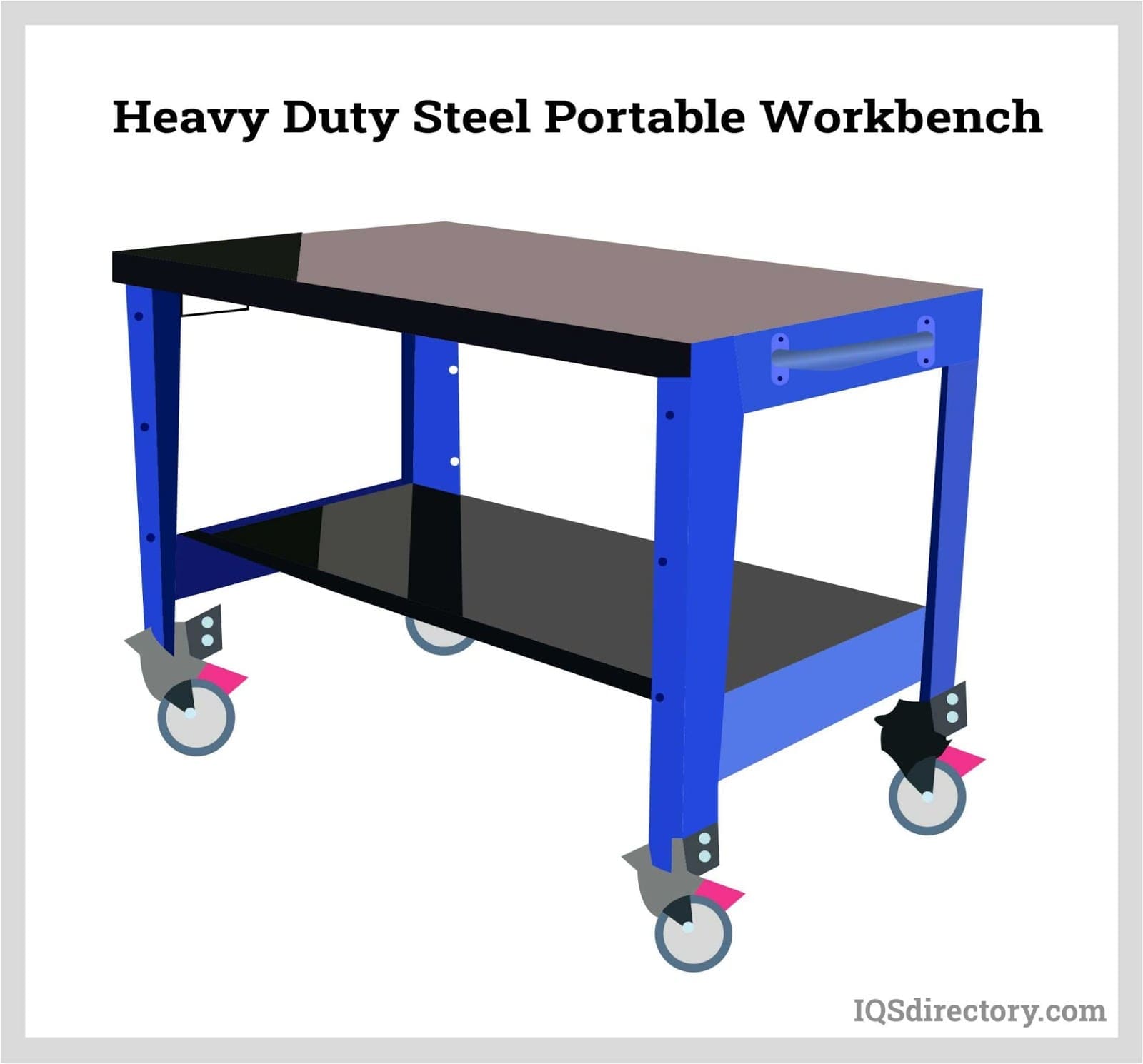
A portable workbench is a flexible and mobile work surface that is designed to function in multiple environments for the purpose of preparing, constructing, or servicing a wide variety of industrial and commercial applications...
Storage Racks
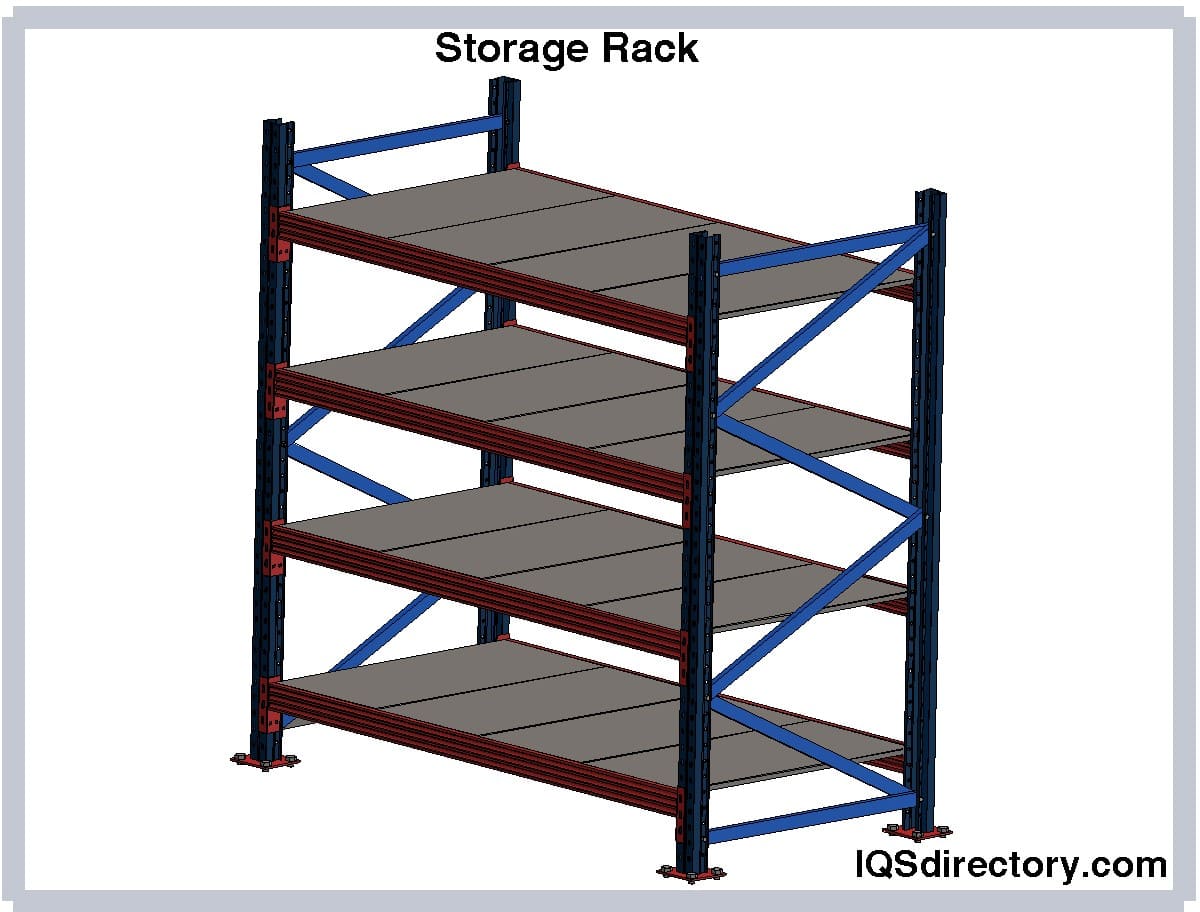
Storage rack, also known as racking, is a structure that stores items and materials and comprises at least two upright (vertical) frames, horizontal beams, and some sort of decking (bars, panels, meshes, or none)...
Warehouse Racking
Warehouse racking, also known as storage or pallet racking, is a material handling system suitable for mass storage of goods unitized on skids or pallets. It allows efficient utilization of space while providing easy access to stockpiled items for better inventory control...
Workbenches
A workbench is a sturdy flat, smooth, molded surface that comes in a variety of sizes designed for specific tasks. They can be very complex for engineering design work, complicated machining, and intricate precision tooling or be a highly finished wood table for woodworking, metal work, and project design...
Work Equipment Platforms
A work equipment platform is an elevated platform or surface in a manufacturing or production site that provides easy access to equipment and machinery. The raised space of a work equipment platform...