Please fill out the following form to submit a Request for Quote to any of the following companies listed on
Get Your Company Listed on this Power Page
Introduction
Information about catwalks, their structure, and use with a list of catwalk manufacturers
You will learn:
What is a Catwalk?
How Catwalks are Made
Uses for Catwalks
Occupational Safety and Health Administration (OSHA) Catwalk Regulations
And much more ...
Chapter 1: What is a Catwalk?
Catwalks are elevated walkways, pathways, or platforms that provide a safe, convenient, and secure method for workers and personnel to move between work and office spaces. In industrial and commercial settings, a catwalk may also be referred to as an elevated platform, access walkway, maintenance platform, or overhead walkway, depending on its application and design. The purposes and functions of catwalks vary in regard to how they are used. The term catwalk originated in the fashion and entertainment industries as a means for displaying clothing, theatrical lighting, and ship maintenance purposes. In the entertainment industry, catwalks have the same function as they do in industry, as a means to maintain and access lighting and technical equipment.
The use of catwalks has become an essential part of warehousing for accessing stored materials. In industry, they are used to take advantage of unused space and improve facility layout efficiency. Companies that produce over-sided machinery and equipment rely on catwalks as part of the assemblage process. Catwalks have become a safe means of accessing different levels in industrial facilities and are a method for increasing workflow efficiency, reducing downtime, and supporting better material handling and maintenance access. They are commonly integrated into manufacturing plants, distribution centers, storage facilities, and processing environments where overhead clearance, structural support, and safe access are critical considerations.
Due to the nature of catwalks, OSHA has developed a long list of requirements and dynamics that are required for the construction of catwalks. The most minute aspects of catwalk construction are covered in the different regulations, including guardrails, load capacity, tread surface, fall protection, and slip resistance. The many stipulations are designed define the wide variety and uses of catwalks, which can vary from pathways that are a few feet off the floor to ones that are 40 to 50 or more feet off the floor. When evaluating a catwalk system, businesses often consider custom fabrication, code compliance, installation requirements, and long-term durability to ensure the structure meets operational and safety goals.
As with mezzanines, catwalks optimize the use of space that goes unused due to its location. They are an efficient method for saving time and improving productivity. Personnel can move easily and less time is spent positioning ladders for simple tasks. Catwalks allow access to machinery, mezzanines, offices, inventory, and storage space, while also helping streamline inspection routes, maintenance procedures, and facility traffic flow. For operations looking to expand usable square footage without major building expansion, a well-designed catwalk can be a cost-effective solution that improves accessibility, safety, and overall operational efficiency.
Chapter 2: Types of Catwalks
There are an infinite number of ways that catwalks can be configured, with many of them needing to be customized to meet the requirements of a facility. In industrial environments, getting from one point to another is an essential part of an efficient operation and necessitates the use of convenient, reliable, and safe pathways. It is for this reason that catwalks have become such a critical part of warehousing, manufacturing, and distribution centers.
Catwalks Vs Walkways
The terms catwalk and walkway are sometimes used interchangeably but actually describe two distinctly different designs and functionalities. The distinction between the two is in regard to their use. Both types allow movement from one part of a facility to another. This factor is where their similarities end. Walkways are designed for high traffic and have a load capacity of 100 psf while catwalks have low traffic volume and are only used out of necessity.
Most catwalks are 18 inches to 36 inches wide with access by stairs. Walkways are wide and broad to allow for their preponderance of traffic. They generally have a solid metal surface with slits in the surface to avoid slippage. Catwalks have either open grating or a solid surface with a nonslip surface. Both have guardrails, which are required by OSHA for catwalks. The rules for walkways are less restrictive and only require guardrails if a walkway is raised off the floor.
The factor that easily differentiates walkways from catwalks is their distance from the floor. The highest a walkway will be off the floor is a couple of feet. They are inserted into areas with heavy machinery and hazards to provide a safe path that is secure and efficient. Catwalks are raised several feet off the floor and can be located close to the ceiling. They are designed for limited traffic and limited access. In general, they are used by trained personnel who are required to perform maintenance or retrieve parts or products. The key factor is the distance off the floor, which is easily detectable.
Ceiling Hung Catwalks
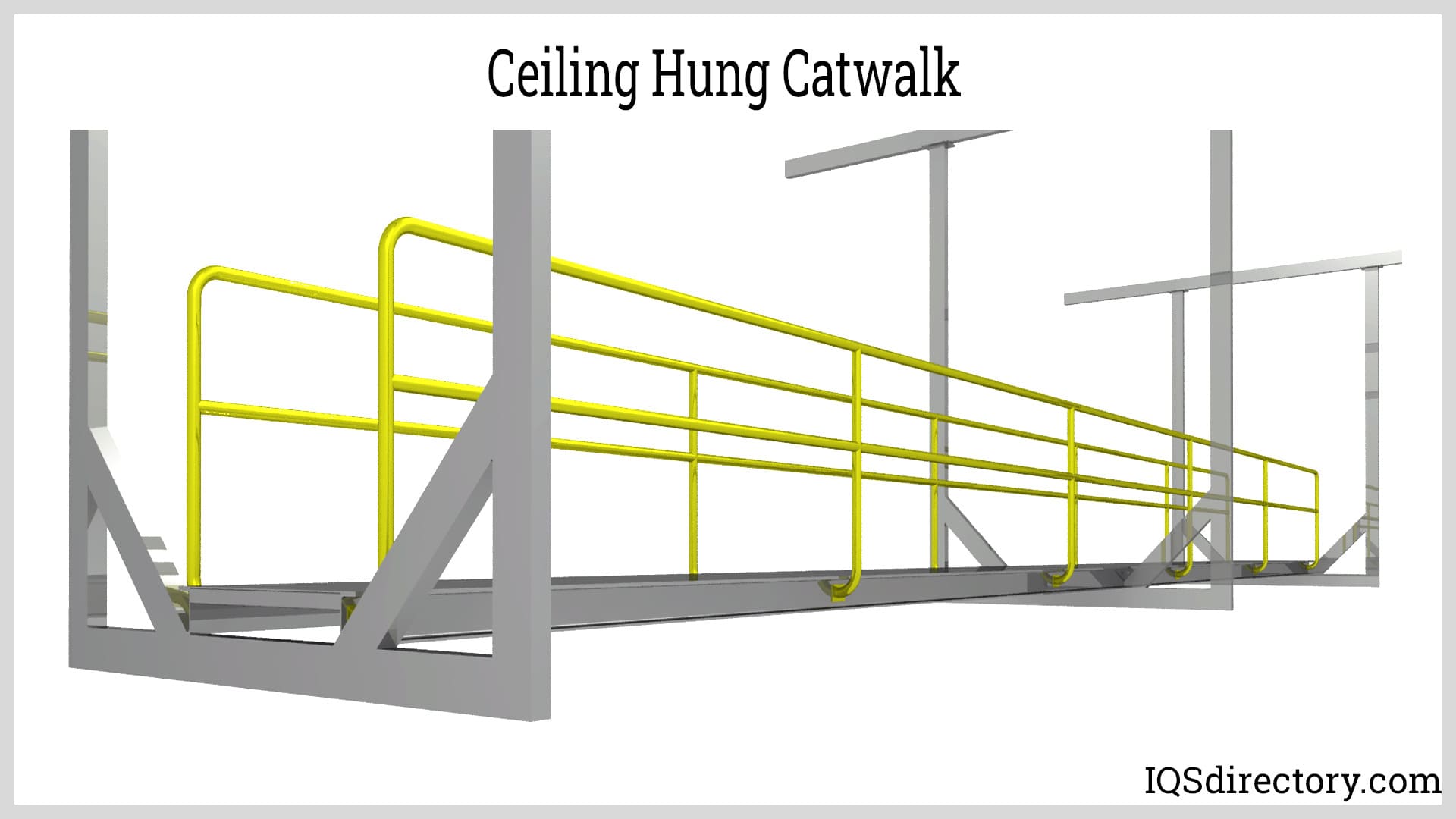
Ceiling hung catwalks provide walkable, safe access across overhead areas without interfering with the space close to the floor. They are hung from the ceiling using cables and rods and are installed in facilities that have high ceilings with a strong overhead structure that is capable of supporting the weight and load of a catwalk. Ceiling catwalk systems are constructed of light metals such as aluminum, lightweight steel, or composites.
The installation of ceiling catwalk systems is restricted to structures that are capable of supporting the load of the system. The initial steps in the installation involves an assessment of the facility where the catwalk will be located. This aspect of the process is an evaluation of the frame, supports, and beams in regard to their strength and durability as well as the amount of available clearance.
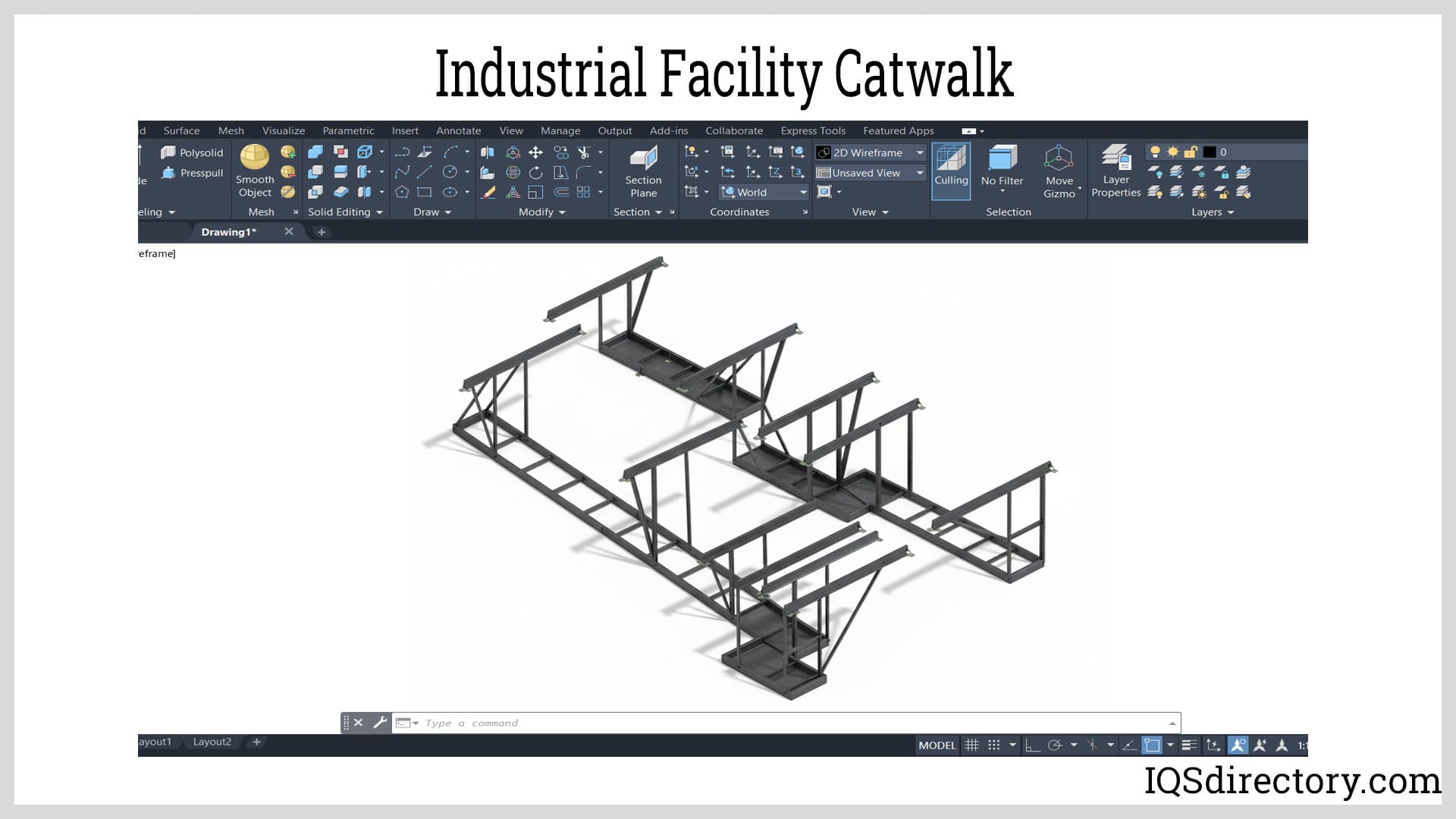
The components are prefabricated by the catwalk manufacturer in sections. The assessment of a location provides manufacturers with data that is used to develop the design and necessary structural components. The compiled information guides engineers as to the placement of pathways, rails, stairs, and other components. The focus of every part of the process is the safety of workers and the viability of the final structure.
Structural Support Catwalks
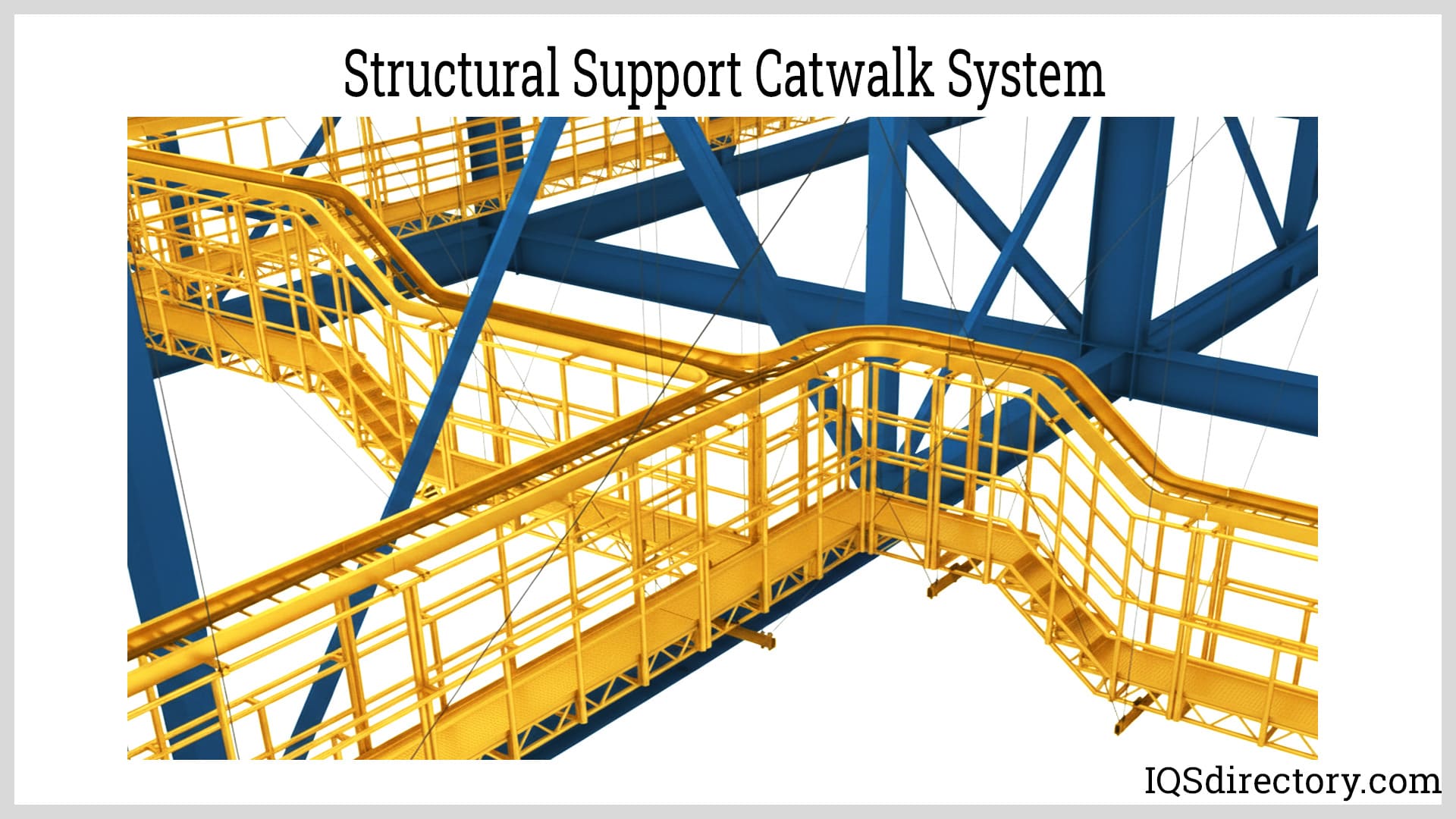
Structural support catwalks are attached to existing building structures that can bear the load of a catwalk system. They are used when it is necessary for a catwalk to follow the contour of a building or structure. Structural support catwalks are used in buildings where the flooring or ceiling do not have sufficient strength and structure to hold a catwalk system.
The heights of structural catwalk systems differ due to the varying ceiling heights of the buildings where they are installed. As with all forms of catwalks, structural support catwalk systems are engineered to support storage systems and equipment. The uniqueness of structural support catwalk systems is due the customization required to install them since every structural catwalk system is unique and configured to fit a specific type of building.
There are many factors that make structural support catwalks an ideal choice for a facility. They are a cost-effective choice due to their ability to be attached to existing building elements removing the need for the development of special supports. They are available with an assortment of decking choices and railing designs.
Floor Supported Catwalks
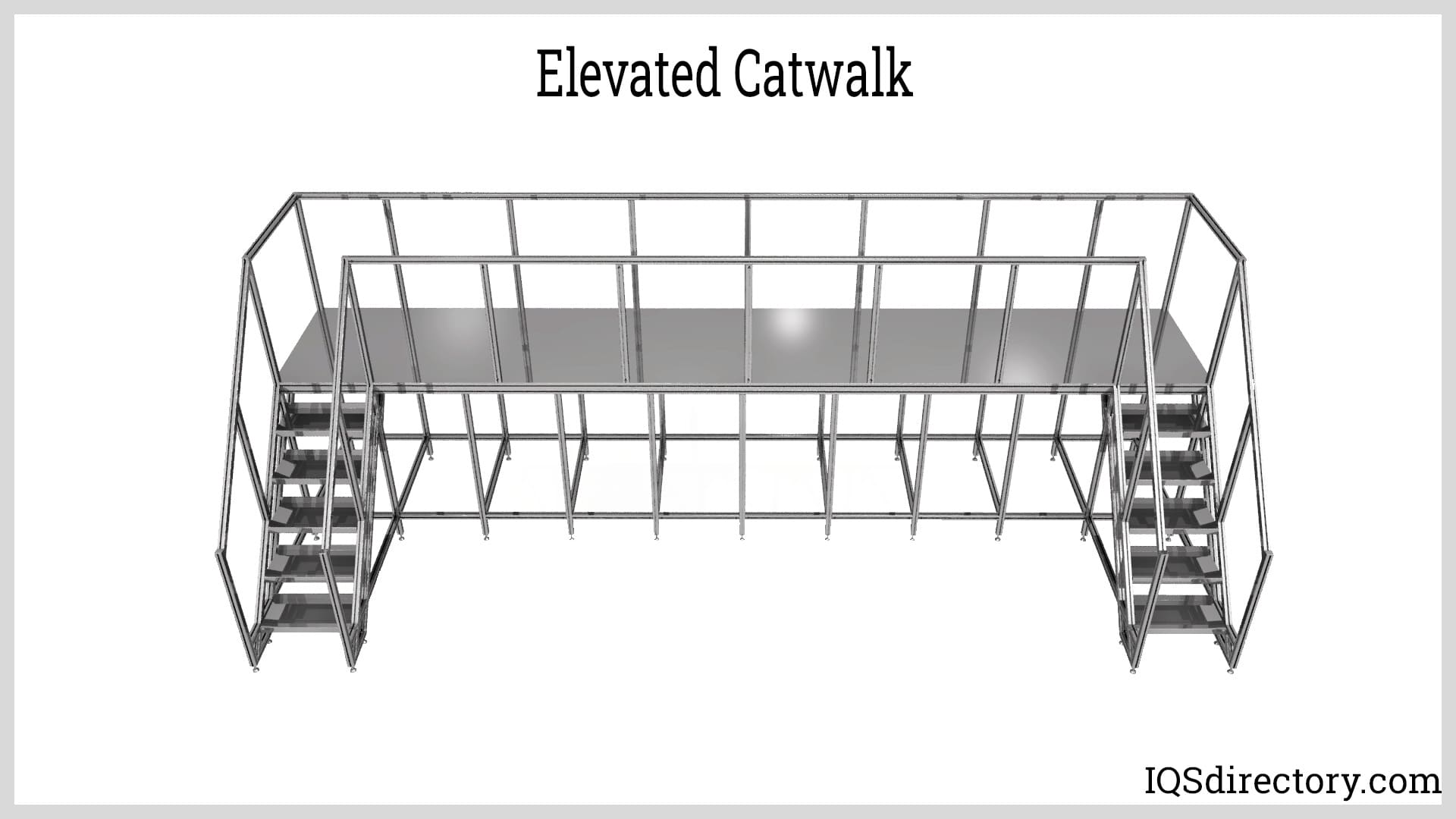
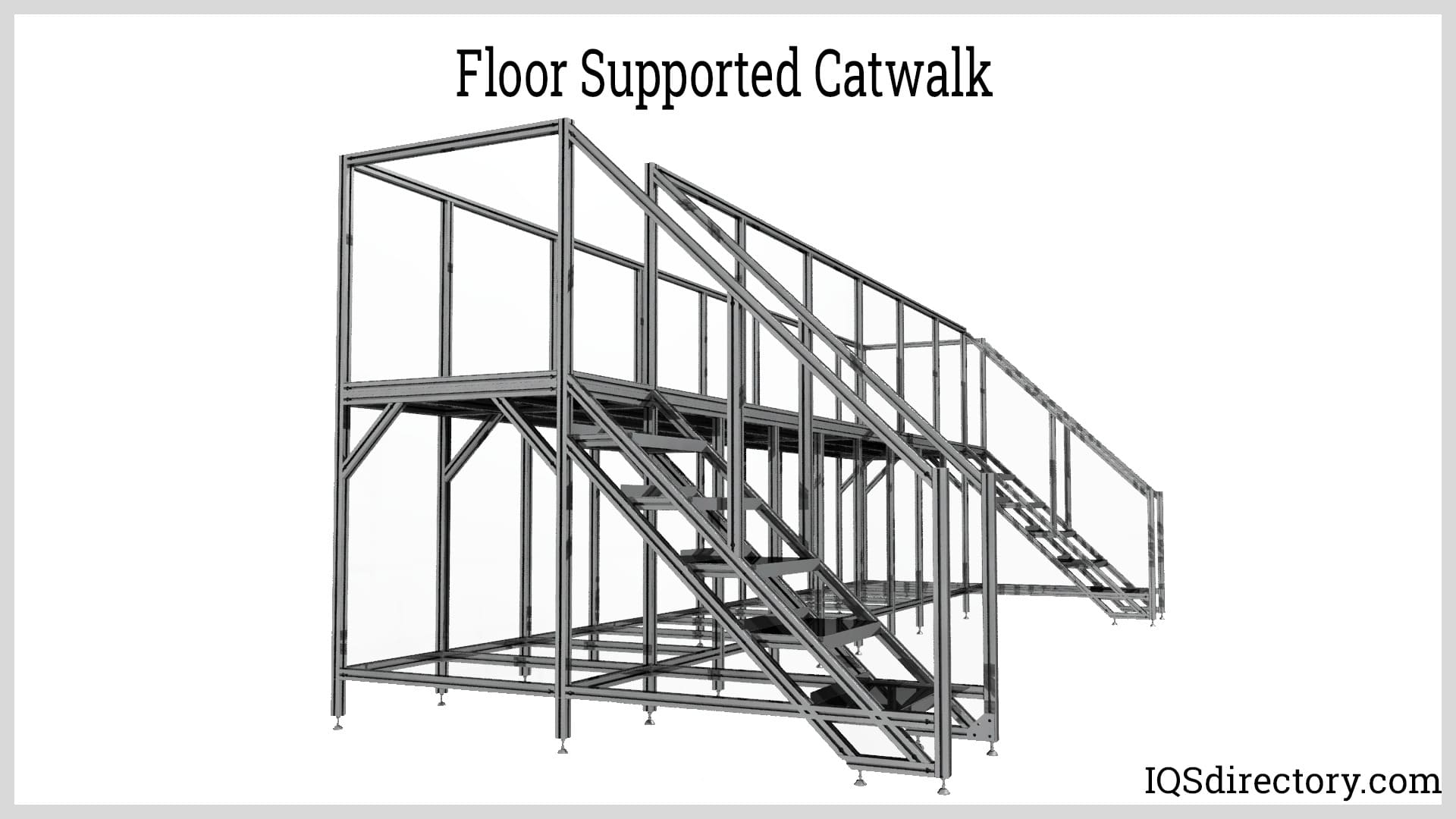
The structure of floor supported catwalks consists of mounted columns securely attached to the floor. They are available in different heights in accordance with the requirements of a facility. Unlike ceiling and structural catwalks, floor supported catwalks take up a large amount of space to make room for the columns. They are commonly used in buildings where the ceiling and walls are not capable of supporting the weight of a catwalk.
In comparison to ceiling and structural catwalks, the load of a floor supported catwalk is not a concern since their structure rests firmly on the floor. The columns for floor supported catwalks are made of steel or concrete. The strength, endurance, and stability of the columns removes any concern for the amount of weight they can support. Of the various types of catwalks, floor supported catwalks are the least expensive since they are easy to design and install. They are prefabricated and take little time to emplace.
Aside from taking advantage of floor space, floor supported catwalks are available in an array of different heights depending on the requirements of a location. The key to the strength of floor supported catwalks is the material used for their columns that rest on the floor and support the overall structure. They are weight bearing catwalks and are the most stable type.
Industrial Catwalk Mezzanines
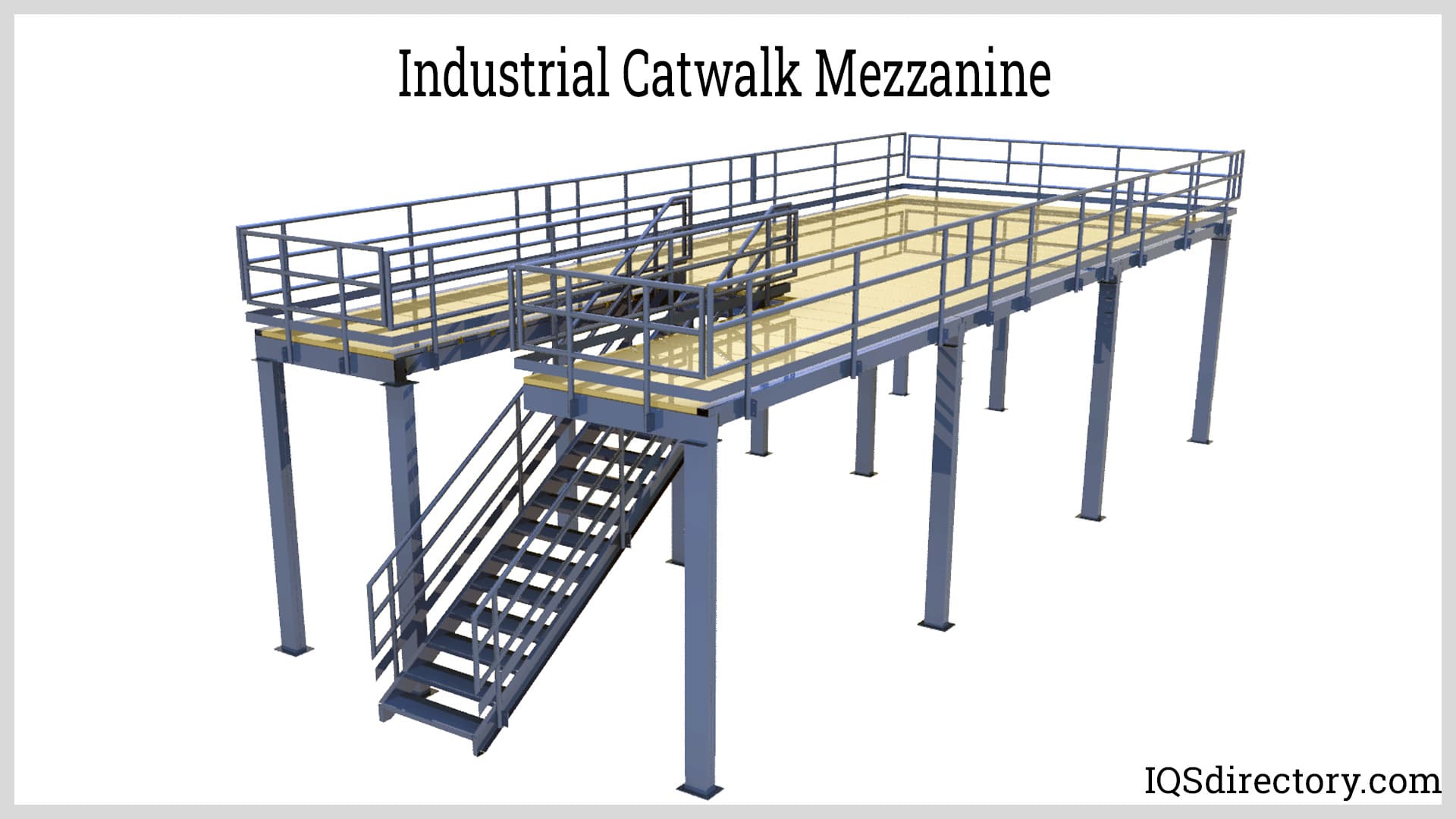
Industrial catwalk mezzanines is a structure that combines the benefits of a mezzanine and a catwalk. They are a form of floor supported catwalk with extra space for offices, storage, and shelving. As with all forms of catwalks, industrial catwalk mezzanines take advantage of space below the ceiling to increase efficiency and productivity. As with most catwalks, industrial catwalk mezzanines have narrow pathways that make it easy to move from location to location.
Aside from taking advantage of unused space, industrial catwalk mezzanines are economical and convenient. They allow personnel to move about a facility without disturbing workflow while providing clean, safe, and efficient movement. In the majority of cases, industrial catwalk mezzanines are custom made to meet the requirements of an application. They are configured and designed to fit smoothly into an operation without disrupting operations.
Walk Through Truss Catwalk
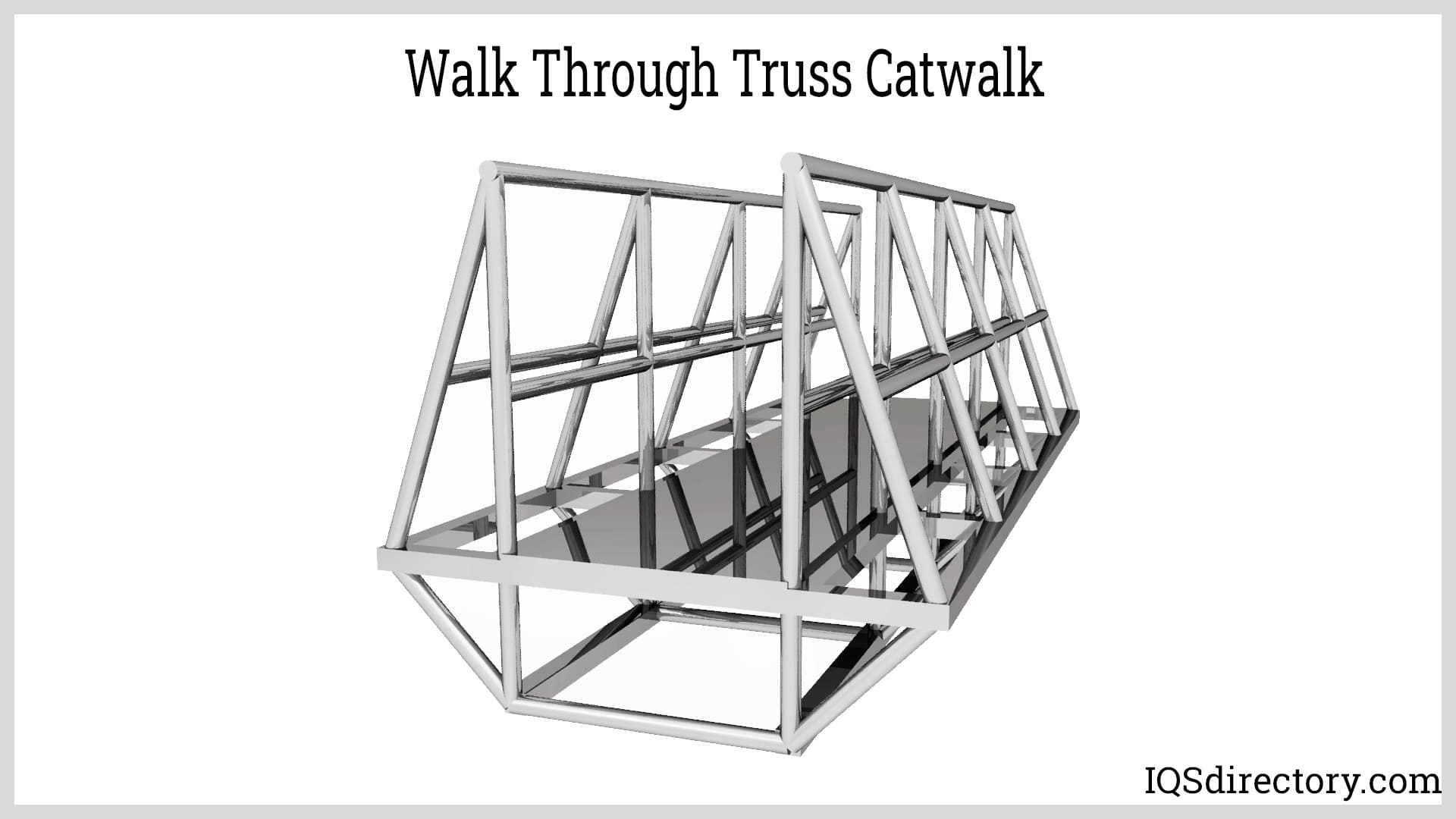
Walk through truss catwalks are designed for heavier loads and longer lengths. They are used for mother grids, work platforms, and lighting bridges. Walk through truss catwalks have all of the accommodations of other catwalks, including guardrails, handrails, and toe plates. A common part of walk through truss catwalks is the addition of bracing bars for suspension and side levers for hanging lighting.
The design of walk through truss catwalks is included in the roof trusses, a factor that adds to their strength and durability. In essence, walk through truss catwalks are parts of the permanent structure of a building. This increased strength enables them to facilitate the use of heavier loads while providing greater safety for workers.
Pallet Rack or Pallet Access Catwalks
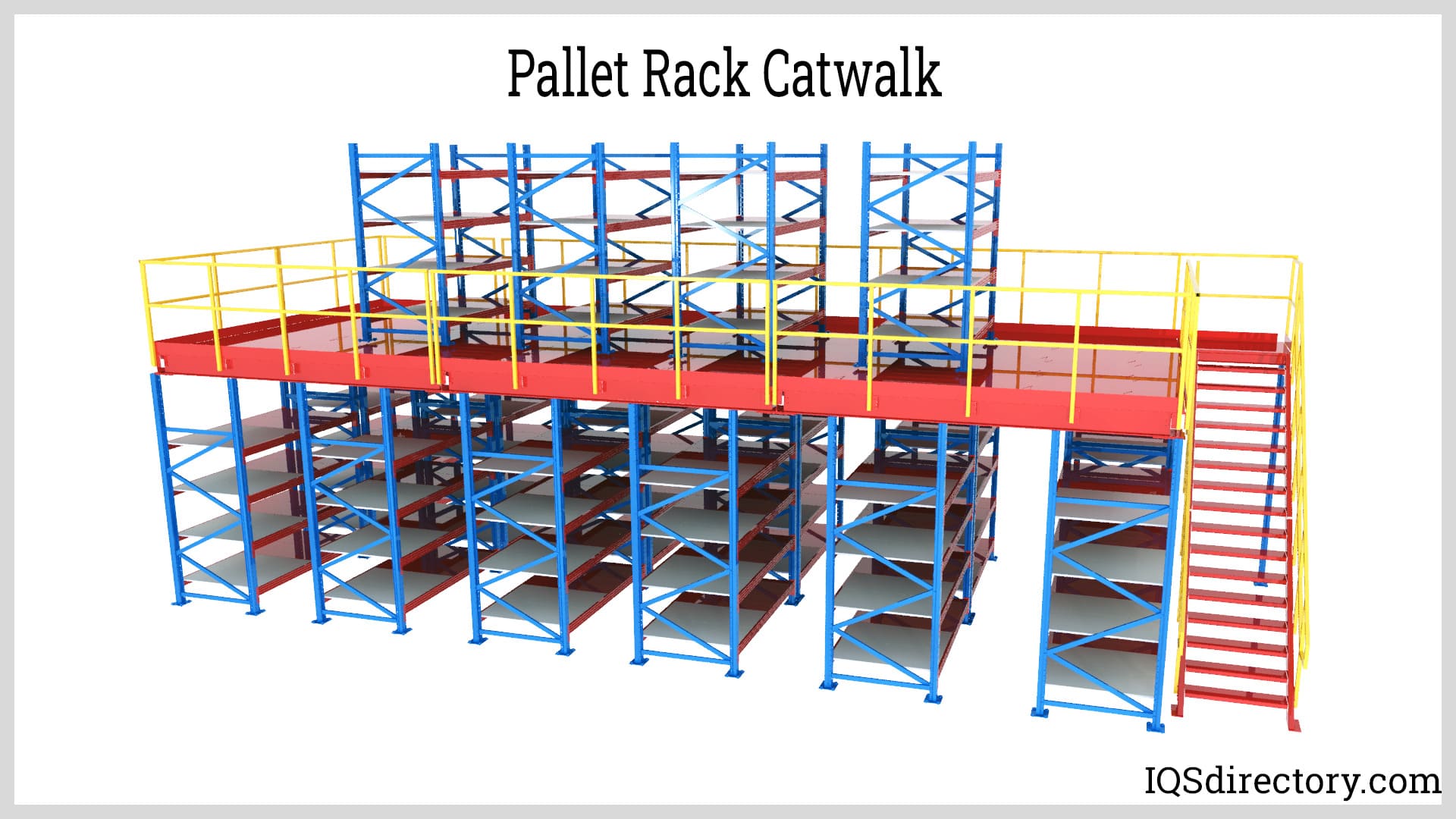
Pallet rack catwalks are used in warehouses and distribution centers. They have the same structure as other catwalks and are designed to eliminate the need for ladders or step stools for accessing products. Pallet rack catwalks have load capacities of over 3000 lbs.
(1350.78 kg) per inch² enabling them to handle heavyweight items. In addition, they are designed to allow forklifts to pass beneath the shelves to access materials.
The benefit of pallet rack catwalk systems is quick access to SKUs. They are a full use system that takes advantage of the height of a warehouse and allows for straightforward access. The layout of pallet rack catwalks, with upper level catwalks, helps workers reach products easily, quickly, and efficiently. They are designed to match the requirements of the workflow and prioritize picking over storage.
Chapter 3: OSHA Catwalk Requirements
OSHA defines a catwalk as a narrow, elevated walkway or platform that is used for industrial applications and provides safe access to areas above the floor of a building or facility. They are a safe, stable, and convenient way to access equipment, provide maintenance, and enable access to hard-to-reach places. The stipulations from OSHA address the design variables for catwalks to ensure the safety of workers. They establish minimum dimensions, load requirements, fall protection, and openings to catwalks.
Catwalk manufacturers are well aware of the standards of OSHA and work closely with inspectors to ensure their products meet government requirements. Manufacturers work with their clients in regard to OSHA’s oversight and how it applies to a project. A general understanding of the parameters of OSHA assists clients in their understanding of the installation process.
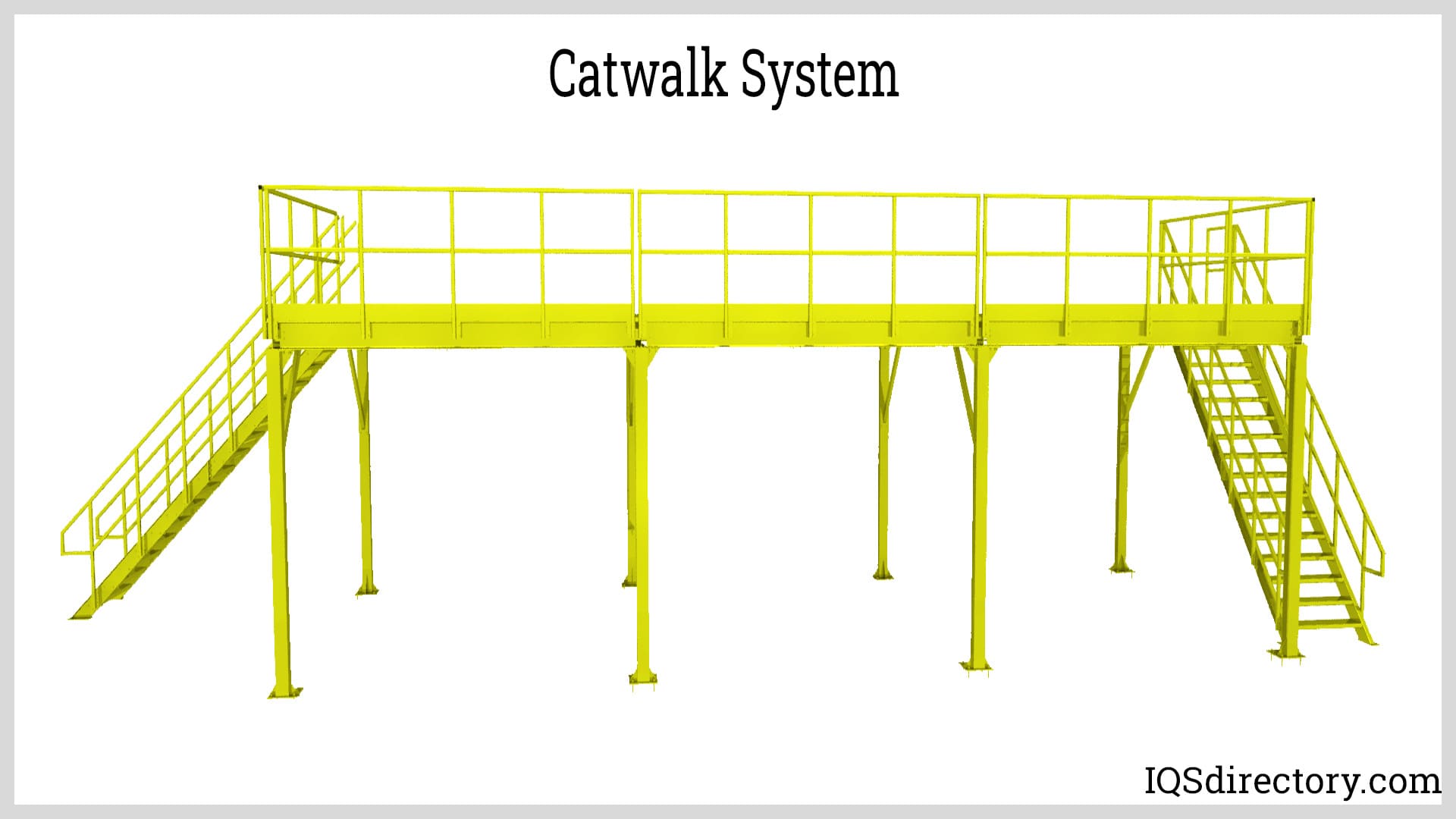
Catwalk System
Section 1910.22 of OSHA’s guidelines provides a general overview for work surfaces and includes surfaces for catwalks. As a key aspect of elevated working conditions, all surfaces on catwalks must be free of debris and slip resistant, free of fall hazards, and be exceptionally structurally sound. Access and egress to catwalks must be safe and open for all employees. A record should be kept of times of inspection to ensure safe conditions. Any hazardous conditions should be immediately corrected and be cordoned off during repairs and cleaning with clear signage.
Stairs
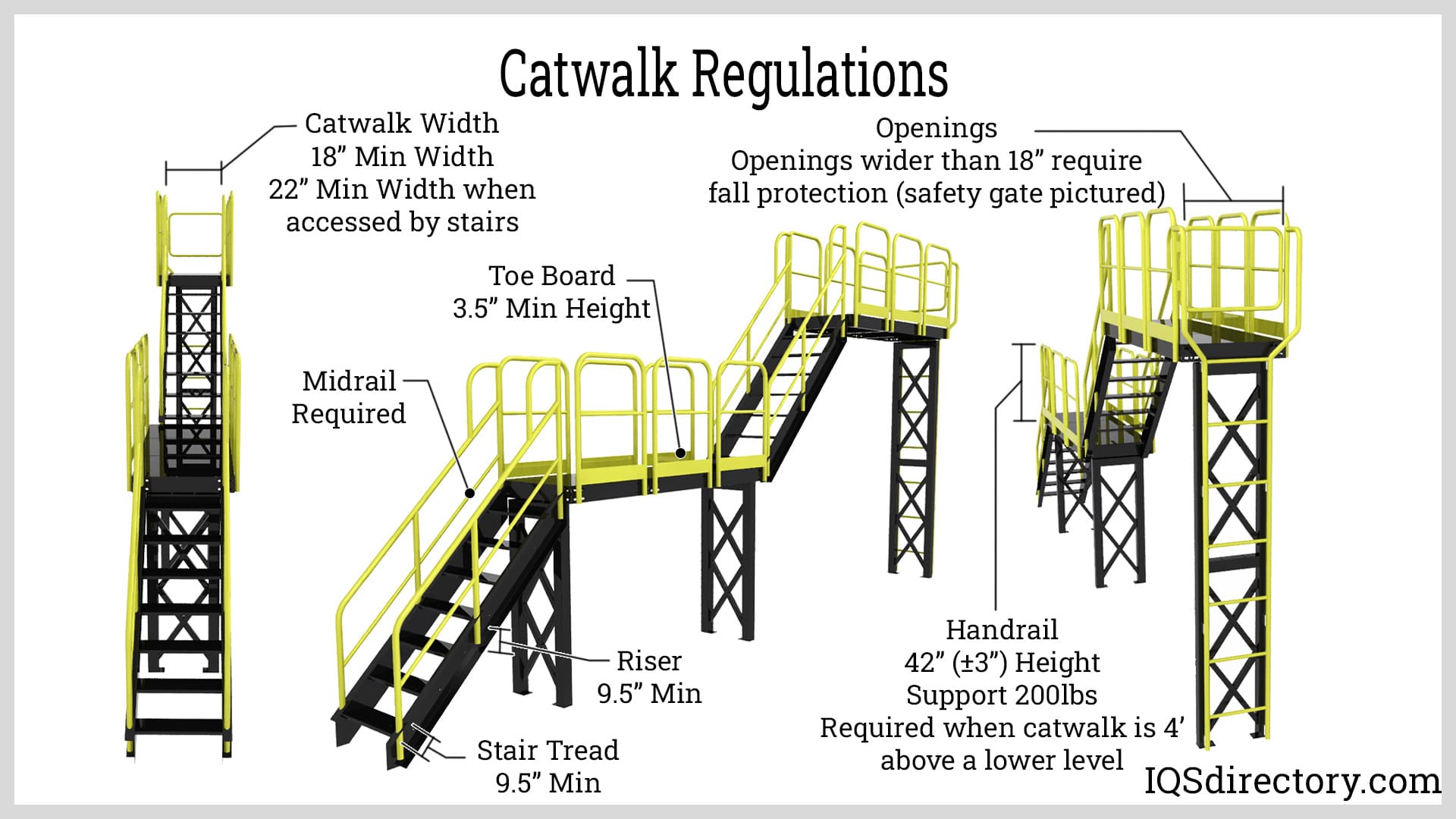
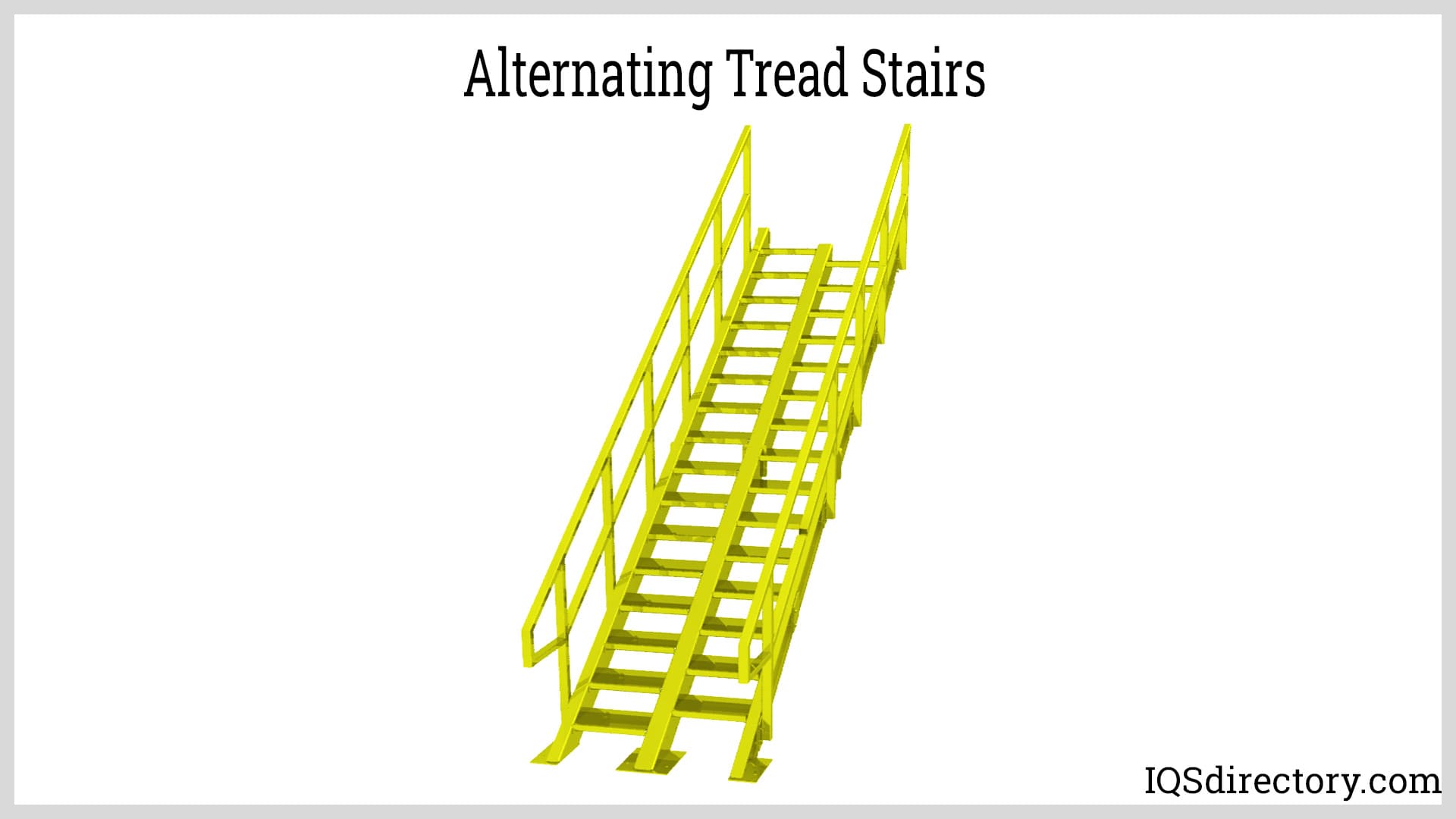
Different types of stairs may be used to access catwalks and should include standard stairs, alternating treading, ship stairs, or spiral stairs. All catwalks are required to have access to stairways. The maximum riser height for stairs is 9.5 inches (24.13 cm) with minimum stair tread being the same as the height. When there is a change in the walking surface elevation that is greater than 9.5 inches, a stairway should be installed. In cases where there is movement from one working surface to another working surface, stairs should be used for regular and routine movement between levels.
OSHA section 1910.25(b) (8) stipulates that spiral, ship, or alternating tread stairs are only used when standard normal stairs are not feasible. These types of stairs should be used in tight spaces. Access to catwalks should not be provided by ladders. The safest stairs for limited space applications are alternating tread stairs, which are the most efficient option.
Catwalk Width
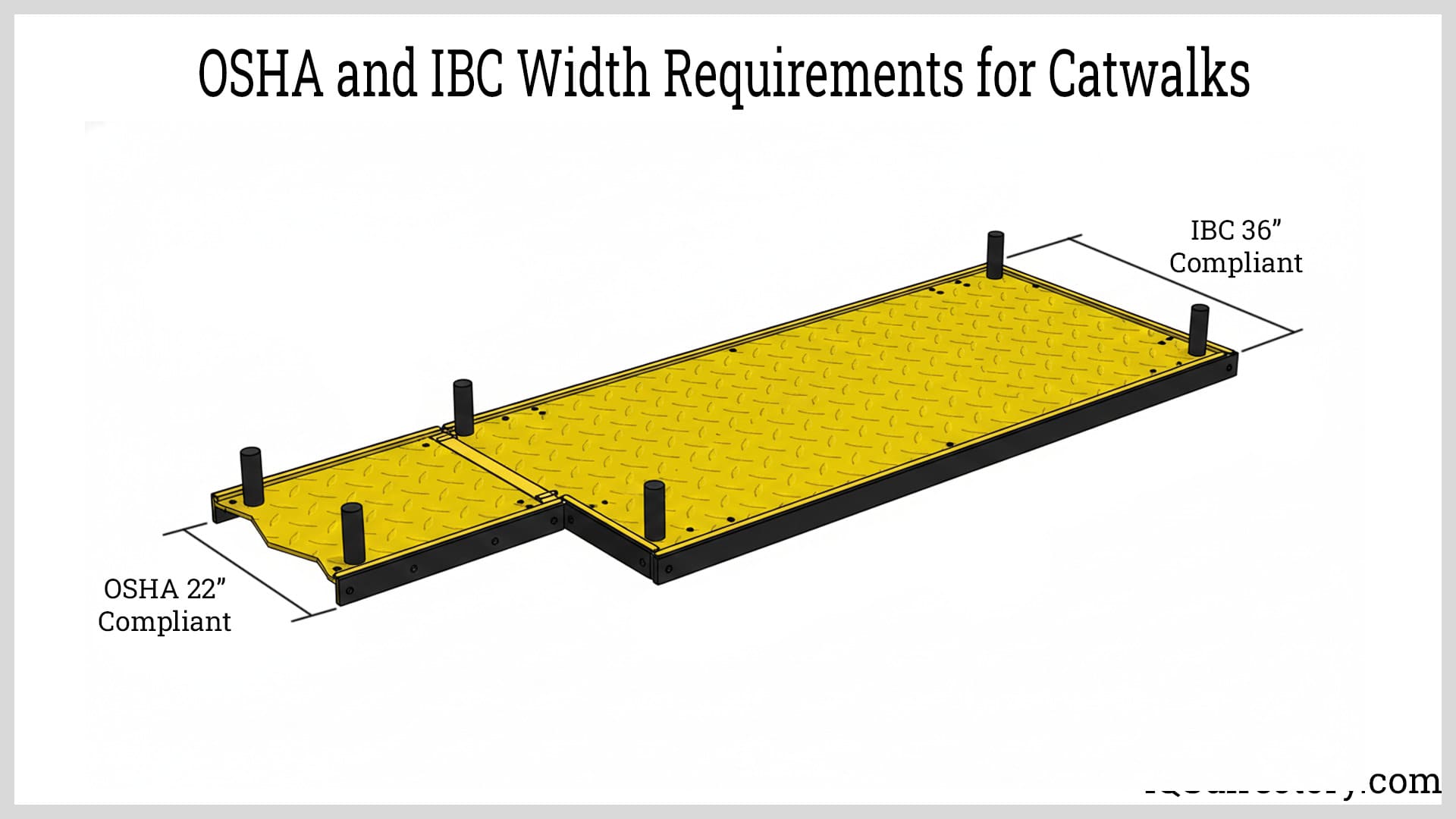
Under the OSHA catwalk width provision, catwalks must be at least 18 inches (45.72 cm) wide. When a stairway intersects or accesses a catwalk, the width of the catwalk must match the width of the stairs. Such a connection is referred to by OSHA as a stair landing, which must be a minimum of 22 inches (55.88 cm). When a catwalk is connected to a stairway, the width of the catwalk must match the 22 inch requirement for stairs.
In a separate requirement that refers to International Building Code (IBC) stairs, catwalks must be as wide as IBC stairs, which are 36 inches (91.44 cm). As the width of catwalks increases, they may reach the classification of mezzanines and would have to comply with IBC mezzanine requirements.
Catwalk Loads
The loads of catwalks is a major concern for local building codes and OSHA. The definition of load specifications is outlined in OSHA section 1910.21 and 1910.22. The maximum load for a catwalk, weight and force, is determined by what an employer expects when employees, materials, tools, vehicles, and other loads are present. Employers must be able to guarantee that the surface of a catwalk is able to support the maximum designed load.
The requirements for catwalks extend to guardrails and holes. In the case of guardrails, they must be capable of withstanding at least 200 lbs. (890 N) of downward or outward force within 2 inches (5 cm) of the edge at any point. This particular rule stipulates that the deflection should be less than 39 inches (99 cm) above a catwalk’s surface.
Handrails
Handrails are regarded by OSHA as fall protection. The use of handrails or guardrails is required for catwalks that are over 4 feet (1.22 m) above the lower level. Although handrails are a part of fall protection, catwalks can also include safety nets or a fall protection system. Any area that does not have fall protection must be outlined and identified such that the area be seldom used.
There are some conditions where handrails and guardrails are not required due to the configurations of the catwalk. In these situations, a catwalk has to strictly adhere to the 18 inch rule. If any equipment is located in such areas, provisions have to be made to avoid having such equipment fall onto equipment located at a lower level.
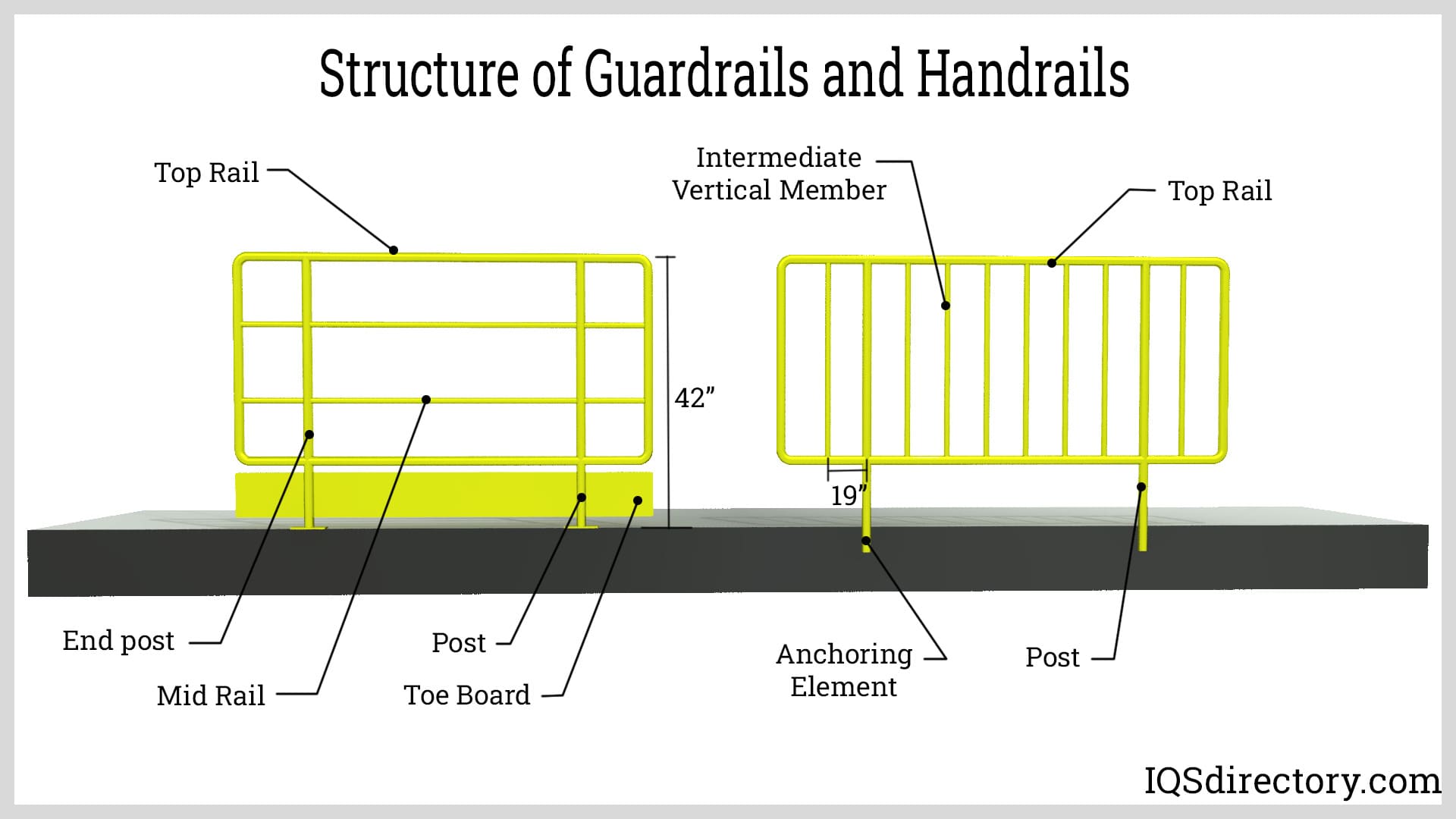
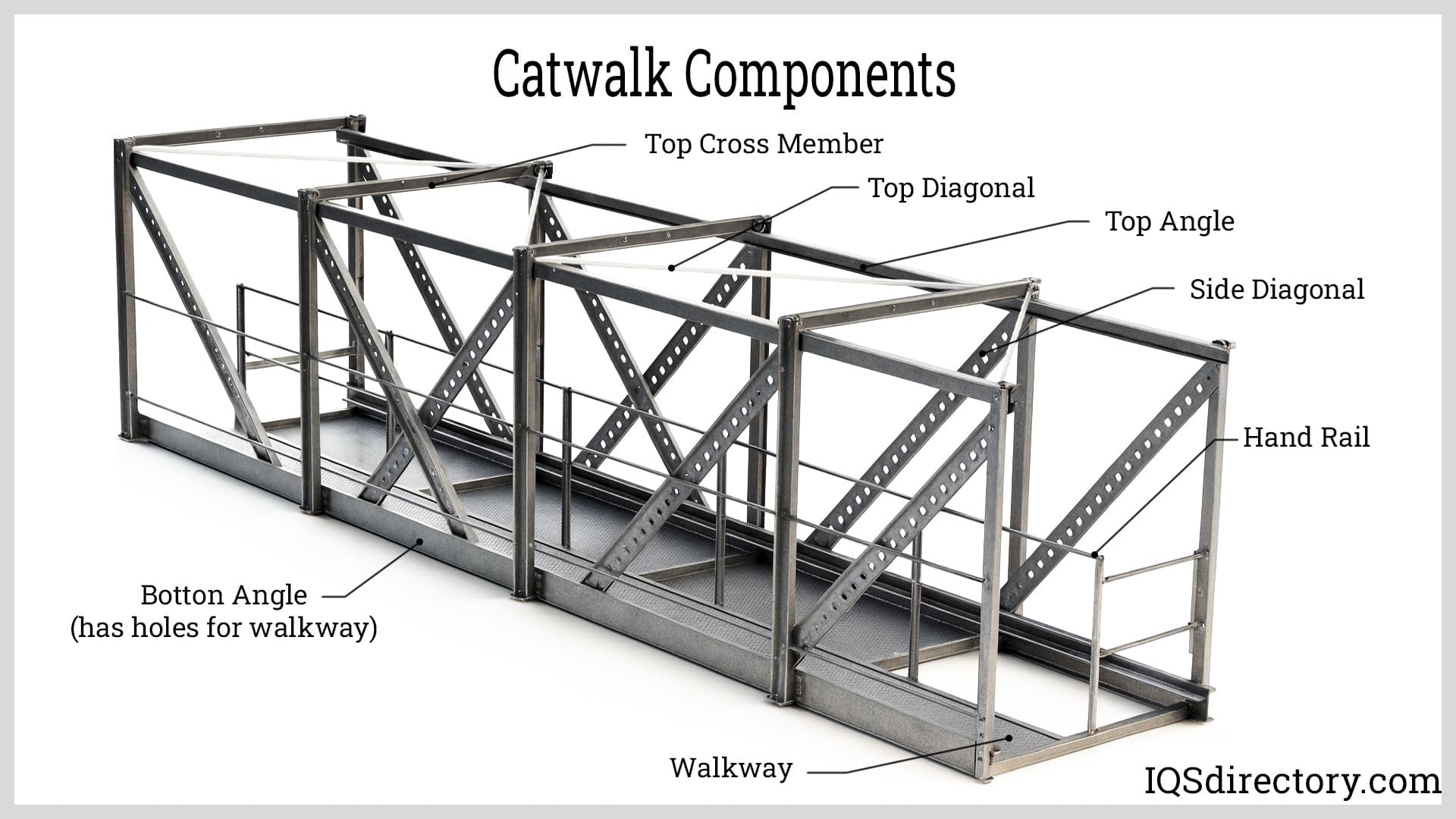
The main parts of guardrails or handrails are the top rail, mid rail, and vertical post. The various parts of guardrails must comply with OSHA’s stipulations for materials, size, height, and location. Guardrails must be 42 inches (107 cm) above the surface of a catwalk. Mid rails should be installed midway between the top edge of the rail and catwalk surface. Screens, mesh, intermediate vertical members, and solid panels can be installed in place of mid rails. To protect employees, the surface of guardrails should be smooth and even to avoid injuries.
When intermediate vertical members are used, they should be 19 inches (48.26 cm) apart. The multiple intermediate vertical members are separated into sections by vertical posts that anchor each section to the catwalk. They define the beginning and end of each section.
Catwalk Toe Boards
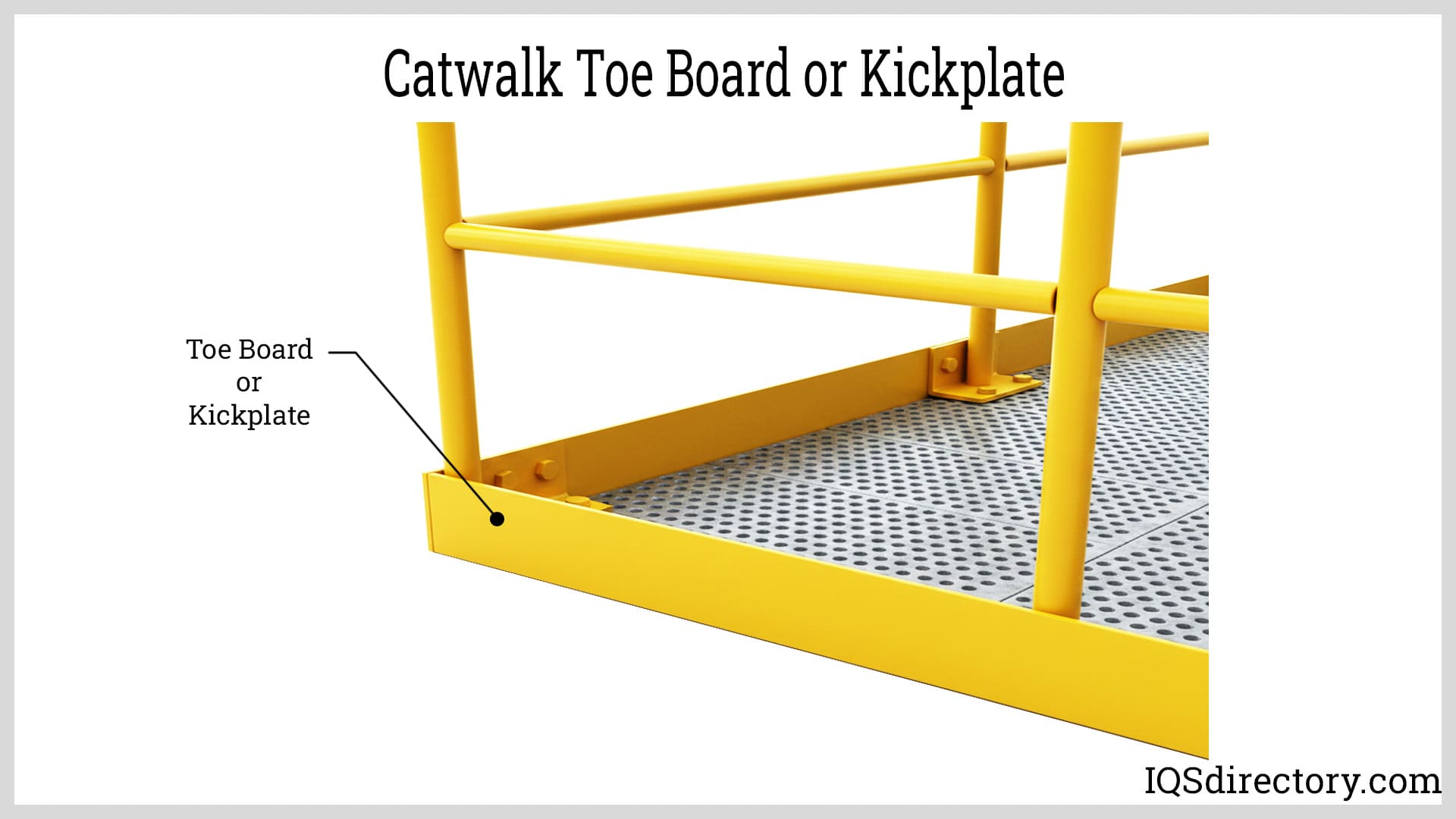
The purpose of toe boards is to protect lower levels from falling objects. Referred to as kickplates, toe boards are vertical projections placed at the edge of catwalks. OSHA toe boards serve as vertical barriers below handrails. They eliminate the potential danger from falling tools, materials, and assorted other objects.
Typical toe boards are 2 inches thick and 4 inches high and are used for protection with scaffolding, catwalks, and platforms. They are designed for falling object protection and are a key safety element that is used in conjunction with safety equipment. Although toe boards can be placed 0.25 inch (0.5 cm) above the surface of a catwalk, they normally rest on the surface and can withstand a force of 50 lbs. (222 N).
Openings
Openings on catwalks refers to chutes, windows, and wall openings. As with several aspects of catwalks, openings present the possibility of danger from falling. They can be on the edge or surface of a catwalk and are required to have some form of protection such as special guardrails, safety nets, restricted access, or a fall arrest system. Openings are planned and designed into a catwalk system and have been engineered into the system.
More concerning for catwalk safety are holes that are formed as drains, cracks, broken flooring, and pits in the flooring. These unplanned hazards have to be dealt with immediately and are reported during an evaluation of a catwalk system. Employers are required to protect employees by placing some form of barrier around a hole such as covers or metal mesh.
Industrial catwalks have become an important part of workflow efficiency by providing elevated access to equipment, supplies, maintenance areas, and various devices. In most cases, catwalks are custom engineered to meet the requirements of a facility. They are designed to easily fit into a location to improve movement. OSHA has developed regulations to guide manufacturers and employers as they implement a catwalk system. Catwalk manufacturers are trained and aware of OSHA specifications and adhere to them during fabrication and installation.
Leading Manufacturers and Suppliers
Chapter 4: How Catwalks are Made
The manufacture of catwalks involves fabricating structural materials, such as steel, aluminum, or fiberglass, that are bent, welded, cut, and assembled to meet OSHA standards, local structural requirements, and industry standards. There are several steps involved in the manufacture of catwalks, each of which are carefully monitored such that the final catwalk meets safety and functionality requirements.
Design Phase
During the design phase, the specifics of a catwalk are created. Dimensions, materials, connections, and fabrication are clearly defined, inspected, tested, and examined, down to the smallest detail. It is during this aspect of catwalk construction that the load requirements are stipulated in regard to personnel and equipment. In the initial phase, span lengths, support structures, handrails, guardrails, and safety measures are determined as they relate to the use of a catwalk.
Due to the nature of catwalks, OSHA standards and regulations are checked against design parameters to ensure compliance. In addition, local building codes and stipulations are studied to confirm the safety and integrity of the proposed catwalk.
Materials
The stability of catwalks depends on the materials chosen to construct them. Although steel is the most common choice, lightweight aluminum and fiberglass may be used for catwalks that do not require a high load potential. The load bearing capacity of a catwalk is the main factor that is considered during materials selection since it influences a catwalks ability. At each step of the process, the safety of workers and equipment is the main focus. Since catwalks can increase productivity and efficiency, they must also be safe enough to fulfill those goals. The grades of steel used for catwalks are ASTM A36, ASTM A572, and ASTM A992. These steels have sufficient resilience, strength, durability, and corrosion resistance to withstand the ardor of manufacturing facilities.
Other considerations that are vital to the selection of materials is the conditions where a catwalk will be placed. Chemicals, moisture, stress, and other factors from an environment determine the strength and longevity of the chosen structural materials. In addition, standards of the industry into which a catwalk will be installed have to be adhered to and followed for compliance. These aspects of the manufacturing process are supplied by clients and are part of the dialog between the manufacturer and the client.
Catwalk Fabrication
Once the design has been approved and found to be in compliance with regulations, the process of fabricating the catwalk begins. As with other aspects of the process, the fabrication is carefully planned to ensure the safety and protection of the users. The initial steps in the fabrication begin with the collection of the materials and planning the steps to the process.
Material Preparation
The metal components for catwalks are first inspected and examined for any abnormalities. They are checked for their compliance with industry and OSHA specifications. Surfaces and seams are cleaned, ground, and adjusted to conform to design specifications. This first part of the project is crucial to the overall success of a catwalk system. Errors and imperfections can impact the structural stability of a catwalk.
Cutting
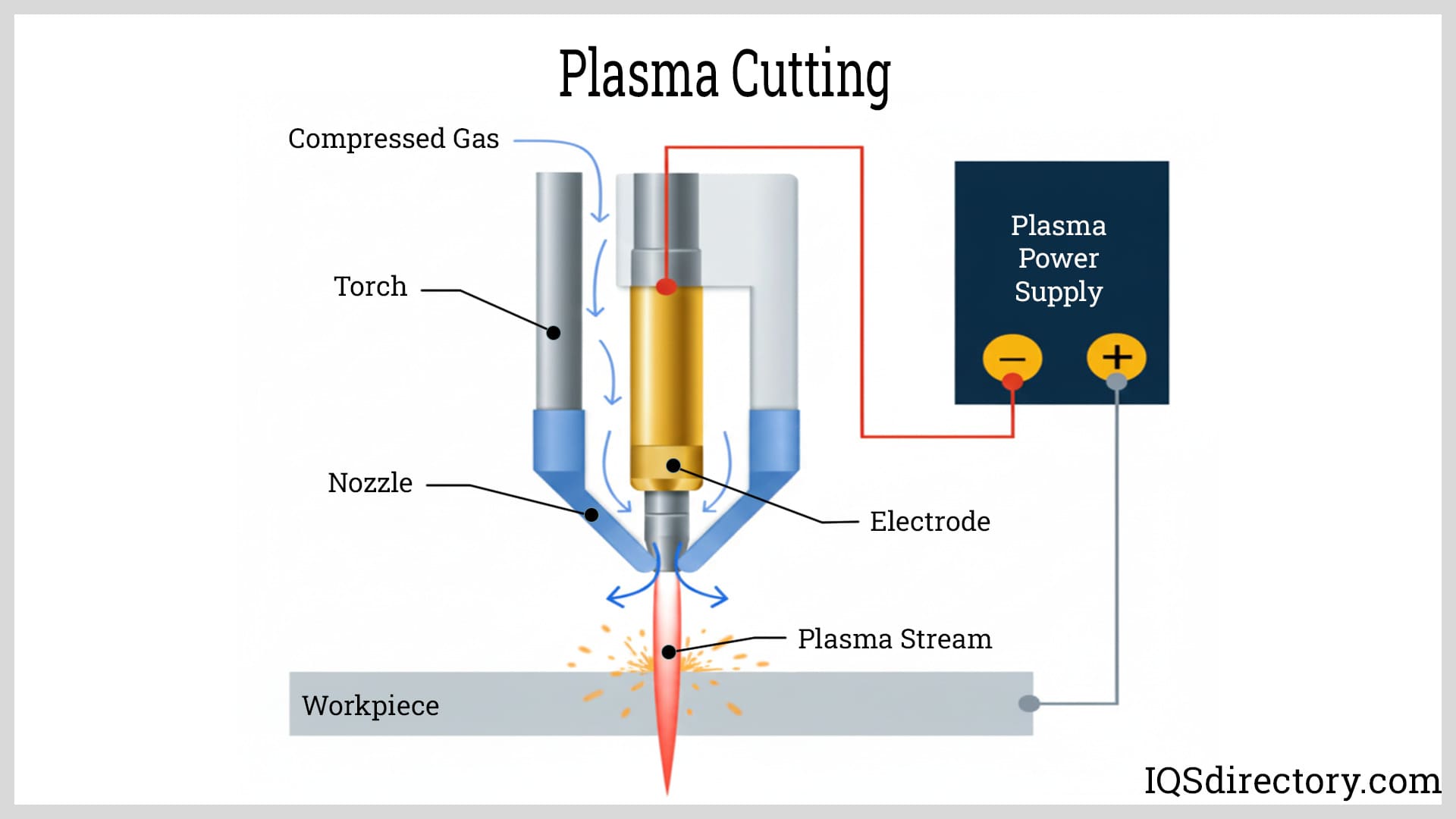
The next step in the process begins the heavy labor phase where the approved and cleaned metals are subjected to the cutting process where the metals are cut, sheared, or shaped using some form of thermal method. During the cutting process, the initial design parameters are translated into the M codes and G codes for CNC machines to enhance the accuracy of the cutting process.
Shaping and Forming
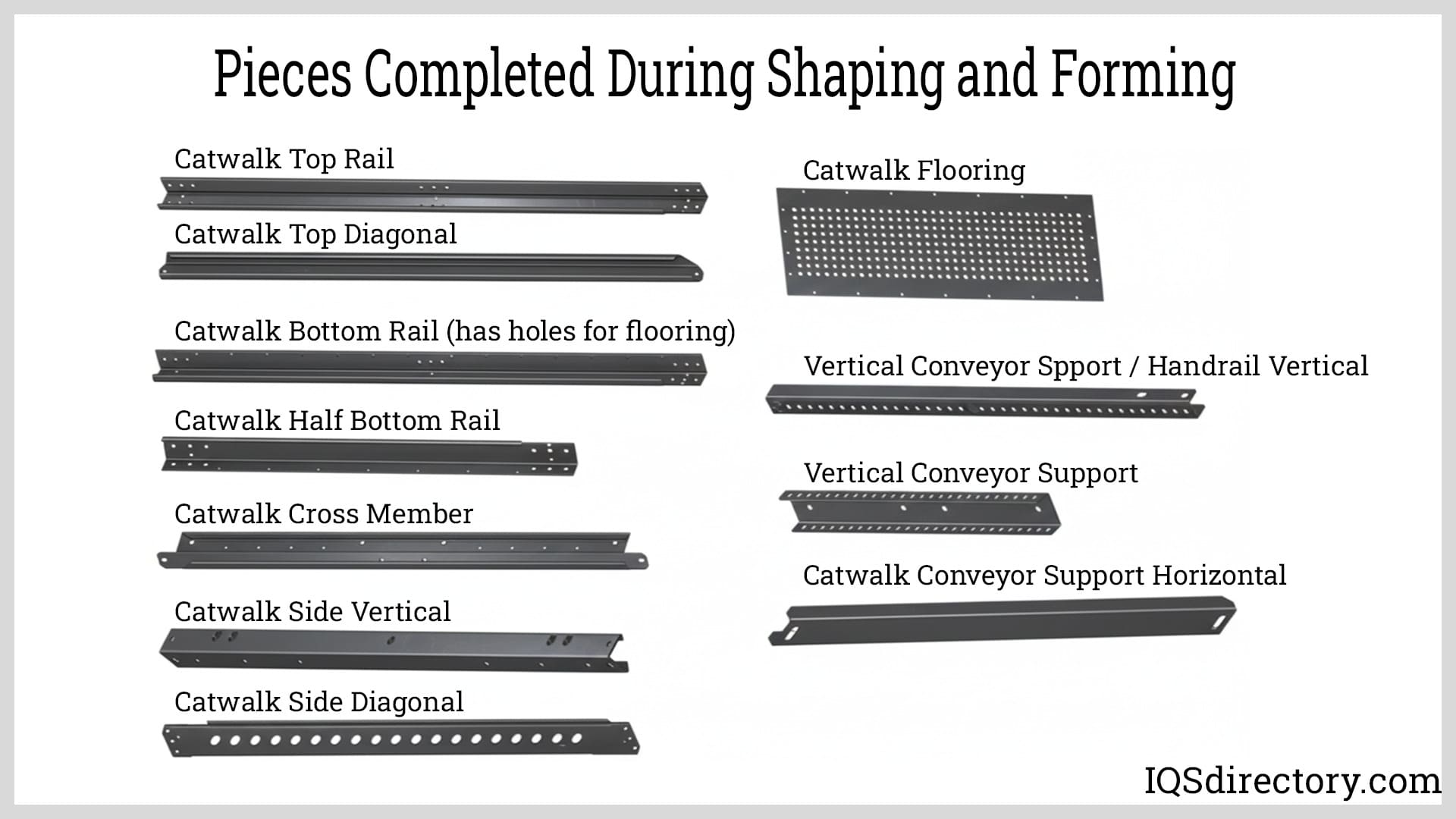
The pieces of metal that have been cut to size are ready to be bent, punched, rolled, drilled, and formed for the assembly of the prefabricated sections of the catwalk. To ensure the stability of the catwalk’s structure, each element is measured and examined for accuracy and consistency in regard to its compliance with the catwalk design. As with every part of the construction of a catwalk, the components are checked for their stability and structural proficiency. CNC machines are also used during this stage of the process due to their ability to precision shape each metal piece.
Welding and Assembly
As with a giant jigsaw puzzle, the shaped and formed pieces are ready for the assembly of the catwalk. The assembly of fiberglass catwalks varies in regard to this aspect of the process since fiberglass does not include welding. With aluminum and steel catwalks, welding is used to connect the pieces and includes either arc welding, MIG welding, or TIB welding. During the welding process, workers follow the dictates of the design parameters as they join the components.
Catwalks are assembled in sections to be shipped to the location where they will be installed. As can be ascertained, the larger and longer a catwalk is, each of the prefabricated sections takes longer to assemble. The welding and assembly process is completed with care with the main focus of the process being the stability and safety of a catwalk.
Surface Treatment
The types of surface treatments vary in accordance with the final placement of a catwalk. In certain instances, catwalks are painted for easy identification and protection of the material. Sand blasting and other surface treatments are used to remove contaminants, debris, and excess materials that are left from the welding, assembly, and forming processes. Powder coatings have become a popular option for surface treatments, which is the application of powder using an electrostatic charge.
Installation
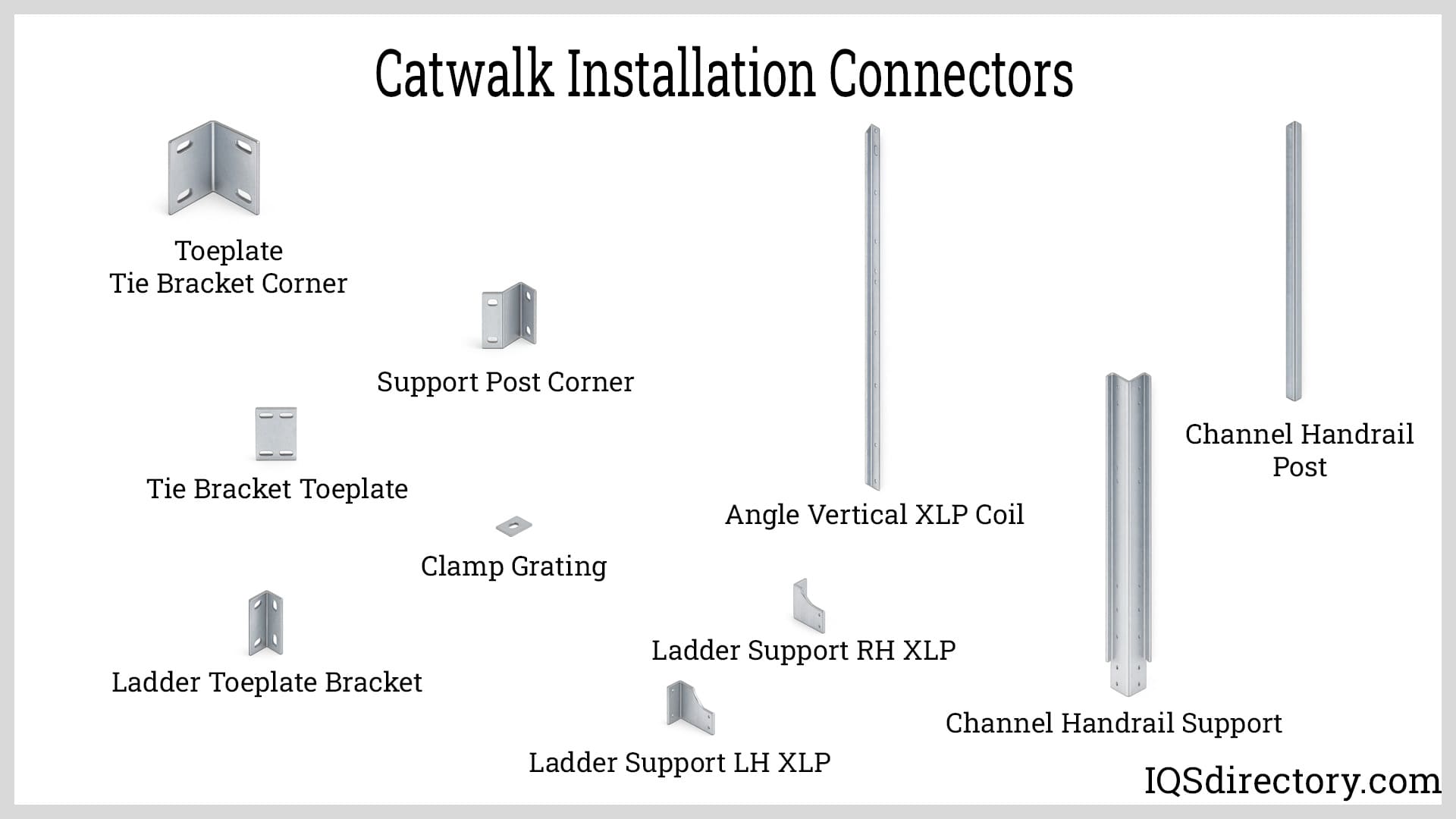
The installation process is completed by trained professionals employed by manufacturers and includes a set of instructions provided by designers. A crucial part of the installation process is the use of approved fasteners that ensure stability and safety. The assembled pieces for a catwalk are connected using brackets, corners, posts, and clamps that connect the prefabricated sections. The process begins with the assembly of the front and rear vertical supports, which are screwed together. Once the supports are assembled, they are mounted, positioned, and adjusted. The installation of the supports is followed by the toe plates that connect the supports. Handrail posts and corner posts come next followed by stair’s toe plates.
A final step of the process is the installation of the surface grating using anchor clips that are attached to the toe plates. Next, the handrails are securely attached to the handrail posts. The final necessary step in installation is installing access stairs, which may include cages as an added safety measure. An optional component for safety is swing gates that are connected to handrail posts. Stair cages and swing gates can be optional but, in certain cases, may be a necessity when a catwalk is exceptionally high.
Manufacturers employ highly trained, skilled professional installers that assemble and secure a catwalk in accordance with design specifications. The focus of every step of the installation process is the safety of installers and employees, in accordance with OSHA and local regulations. In many cases, inspectors may be onsite during installation to ensure adherence. This particular step is welcomed by manufacturers who work closely with authorities.
Regardless of the durability, longevity, and stability of catwalks, for safety purposes, they require regular maintenance, inspection, cleaning, and repairs. Any structural issues, such as corrosion, loose connections, or deterioration, must be immediately identified and addressed, a process that ensures the longevity of a catwalk and the safety of workers.
Chapter 5: Uses for Catwalks
The industrial version of catwalks began as theatrical walkways and marine passageways in the 19th century. They were named for the way a cat walks across a raised and perilous surface, gently placing each step. The name grew due to the agility required to walk across a raised passageway. From its original association with careful walking, catwalks devolved into a description of the surface models walk when presenting a line of clothing.
Modern industrial catwalks are imitations of the strong and sturdy catwalks used for theaters and ships. The difference between the ancient version of catwalks and modern industrial catwalks is the emphasis on safety and the improvement in efficiency and workflow.
Manufacturing
In manufacturing, catwalks provide access to conveyor belts and sortation systems for clearing and cleaning. Conveyor systems are an essential part of modern manufacturing due to their efficiency and movement of products. They are a complex network of hooks, belts, and baskets that wind through manufacturing facilities and require an integrated catwalk system for performing maintenance, making adjustments, and clearing jams.
Observation Platforms
In many industries, catwalks provide observation platforms to oversee workflow, production equipment, and workers. Catwalks can be elevated vantage points for observing processes and conducting inspections.
Crossovers
Industries that have large equipment require methods for moving over and around the equipment. Crossover catwalks provide a safe pathway that allows passage over assembly lines, conveyor belts, and large equipment.
Equipment Access
A common use of catwalks is for access to large equipment or elevated systems. For safety reasons, catwalks are widely used to access large HVAC systems for maintenance and repair. Catwalk platforms and stairs make it easy to provide assistance and oversight for generators and other operational needs. In refineries, catwalks are essential for accessing various levels of equipment and processing units. They are used in power plants and water treatment plants for easy access to critical infrastructure.
Safety Walkways
Busy industrial operations with rapid movement of materials and equipment are avoided with the installation of catwalks that give workers a pathway over high traffic areas. As with most uses of catwalks, they provide safe passage over operational zones.
Warehouse and Distribution Centers
Catwalks have become a vital part of warehousing and distribution centers. They allow for instant access to storage areas, upper levels, and mezzanines, aiding in material movement and storage. Catwalks allow for safe access or movement between different levels during loading and unloading on shipping docks.
Rooftop Access
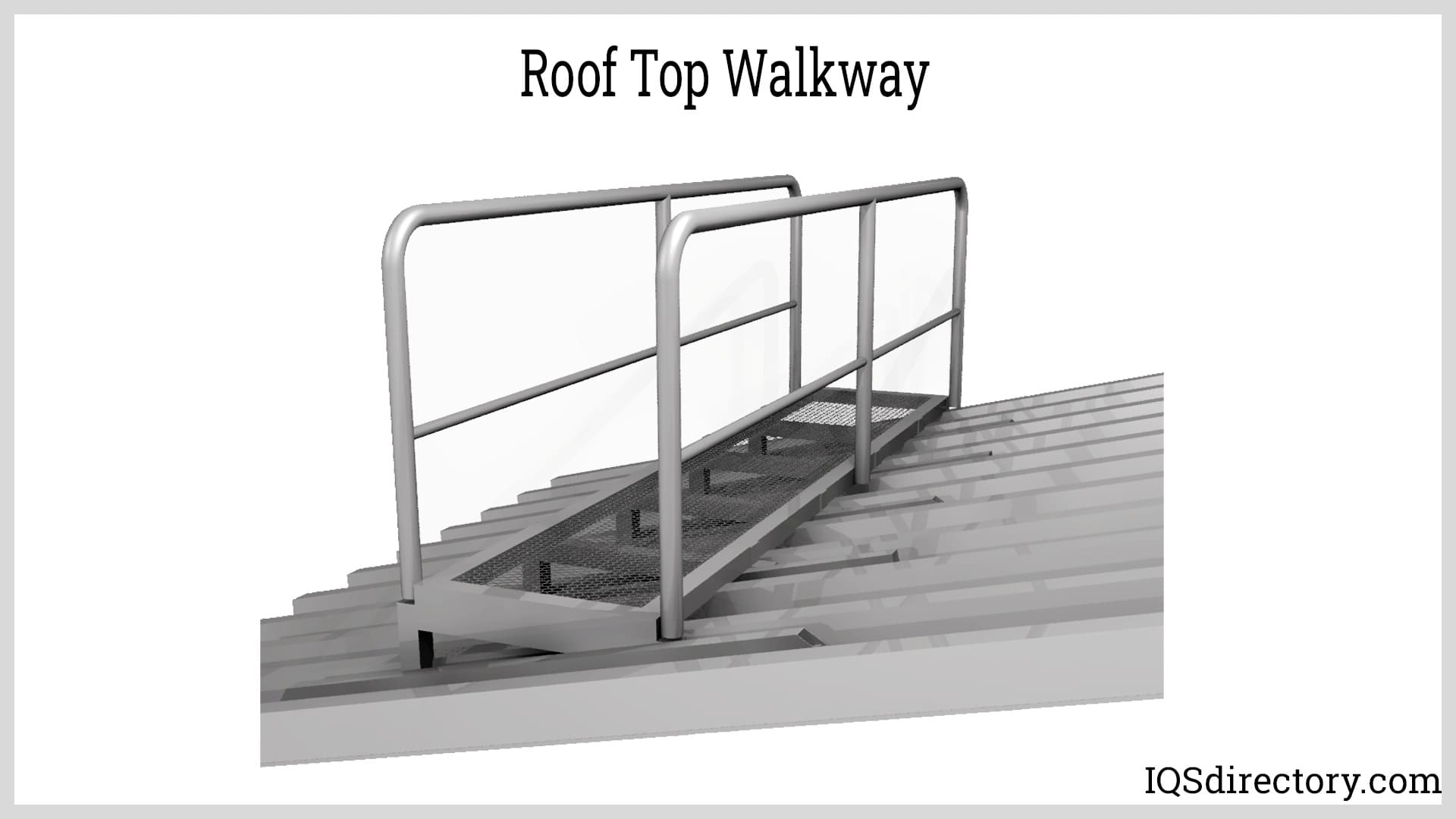
It is very common to see catwalks strategically placed on rooftops to assist workers in accessing air handlers, HVAC systems, and generators.
Outdoor Applications
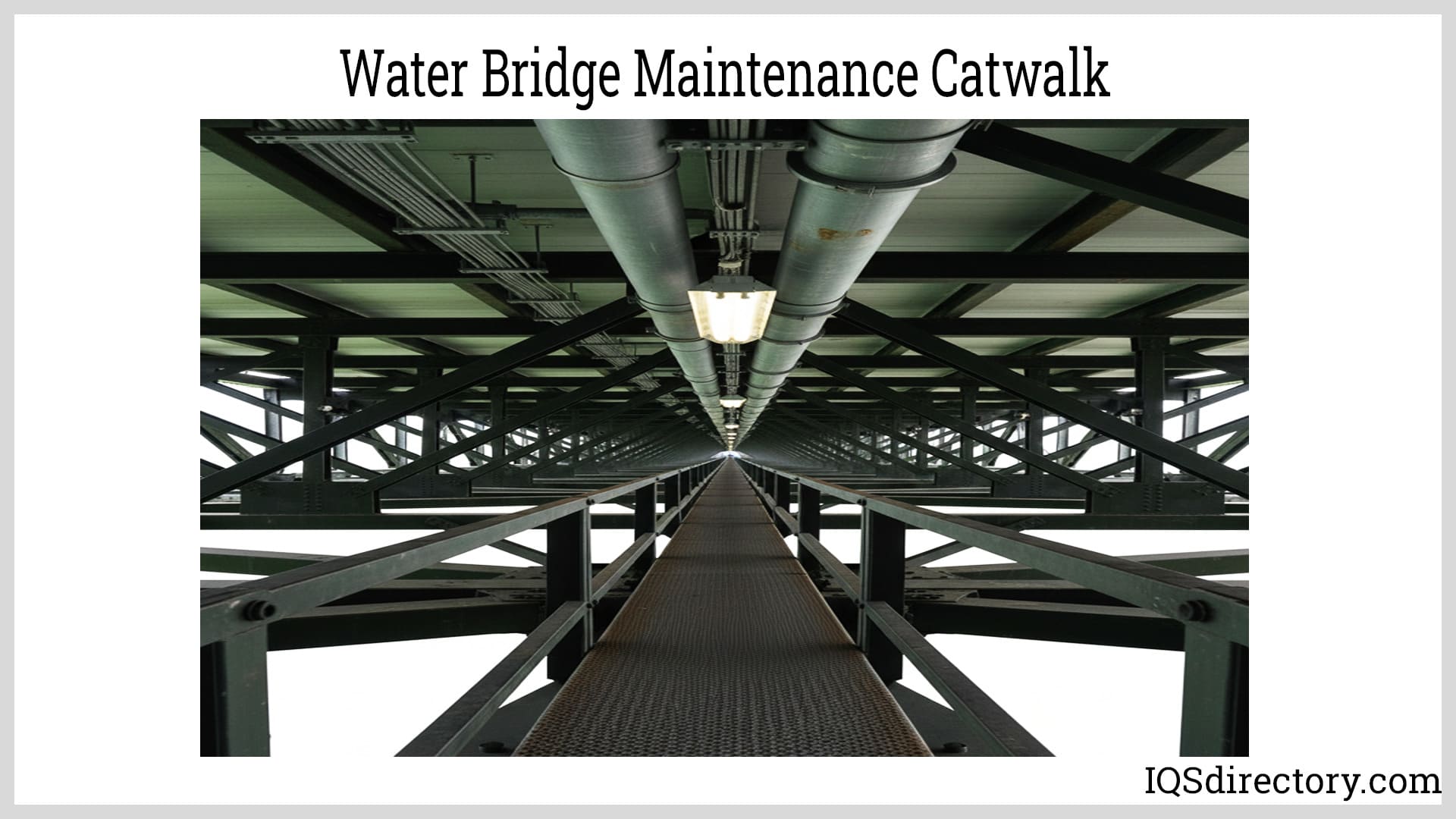
Although much of the emphasis is on industrial uses for catwalks, they are also a vital part of a wide range of outdoor applications, especially in regard to bridges and towers. The critical placement of catwalks enables personnel access to maintain, inspect, and repair large, tall structures.
Conclusion
A catwalk, for industrial use, is an elevated platform that provides a safe, efficient, and secure method for moving between locations in a facility or allowing access to machinery and stored materials.
Catwalk systems are custom designed to fit a location and are manufactured offsite for onsite assembly. They are made of steel, aluminum, and fiberglass with steel being the most common type of material.
The use and properties of catwalks are regulated by OSHA, which has published hundreds of stipulations regarding assembly, measurements, and other safety measures to protect workers.
Manufacturers prefabricate catwalk components and assemble them onsite using the initial design parameters as guidelines. The experience and expertise of manufacturers contribute to the successful installation and safety of catwalks.
The use of catwalks is related to the industry where they are used. In most cases, catwalks take advantage of unused space located below the ceiling of a facility. Catwalks are connected to ceilings, floors, or walls, depending on which structure is the strongest, most secure, and capable of withstanding the weight of a catwalk.
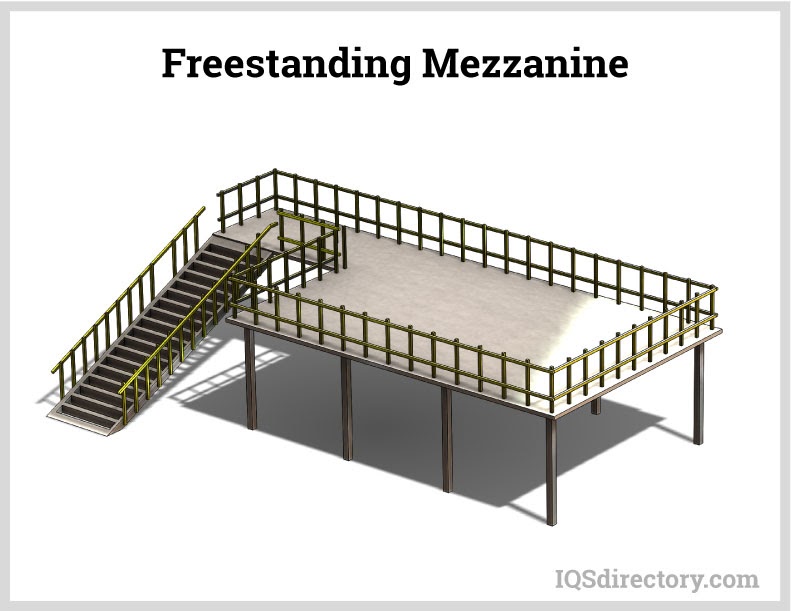
A mezzanine is an intermediate floor installed in a building between the main floor and the ceiling that is partly open to the main floor. They have a low ceiling and project out over the main floor but do not completely cover it...
Work Equipment Platforms
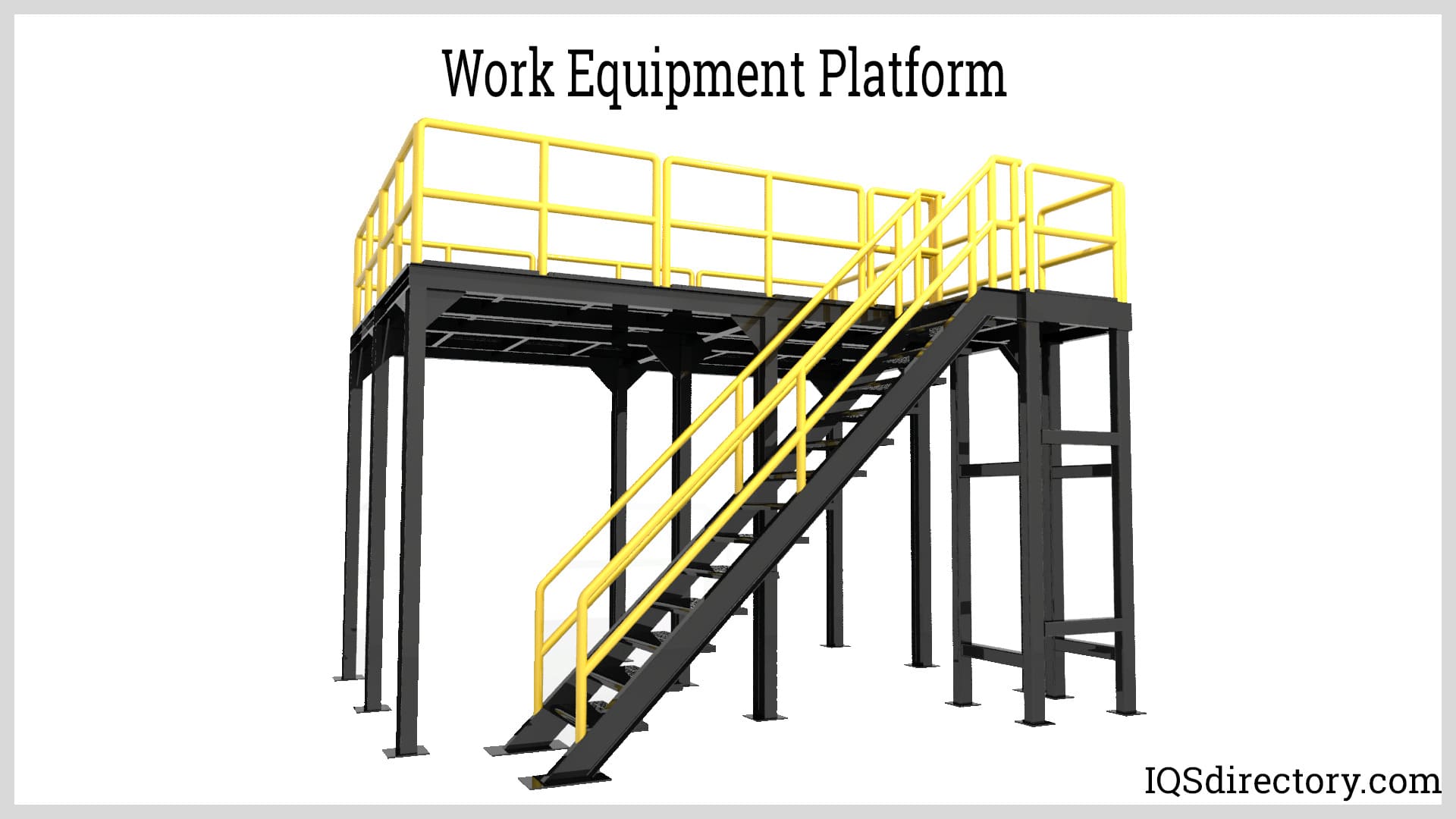
A work equipment platform is an elevated platform or surface in a manufacturing or production site that provides easy access to equipment and machinery. The raised space of a work equipment platform increases the square footage of a work site...
Mezzanine Floors
A mezzanine floor is a middle floor that is installed between the ceiling and the ground floor to provide extra space for storage, assembly operations, or office space. The normal design for a mezzanine floor is 25% of the flooring of a building or smaller...
Adjustable Workbenches
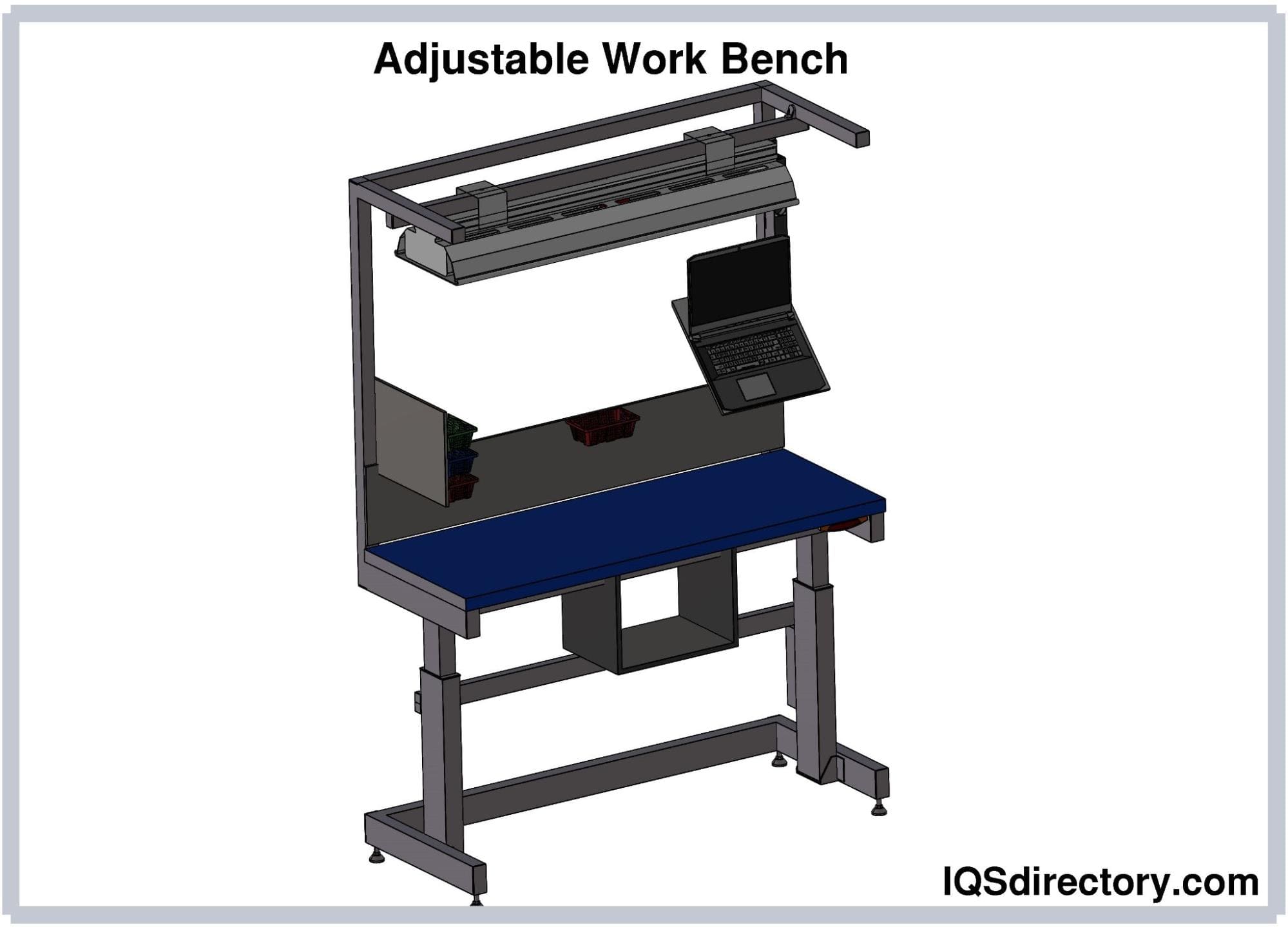
An adjustable work bench is a tool that allows the user to adjust and regulate the height of the work surface to a more ergonomic and comfortable position for the safe and effortless performance of work...
Lab Workbenches
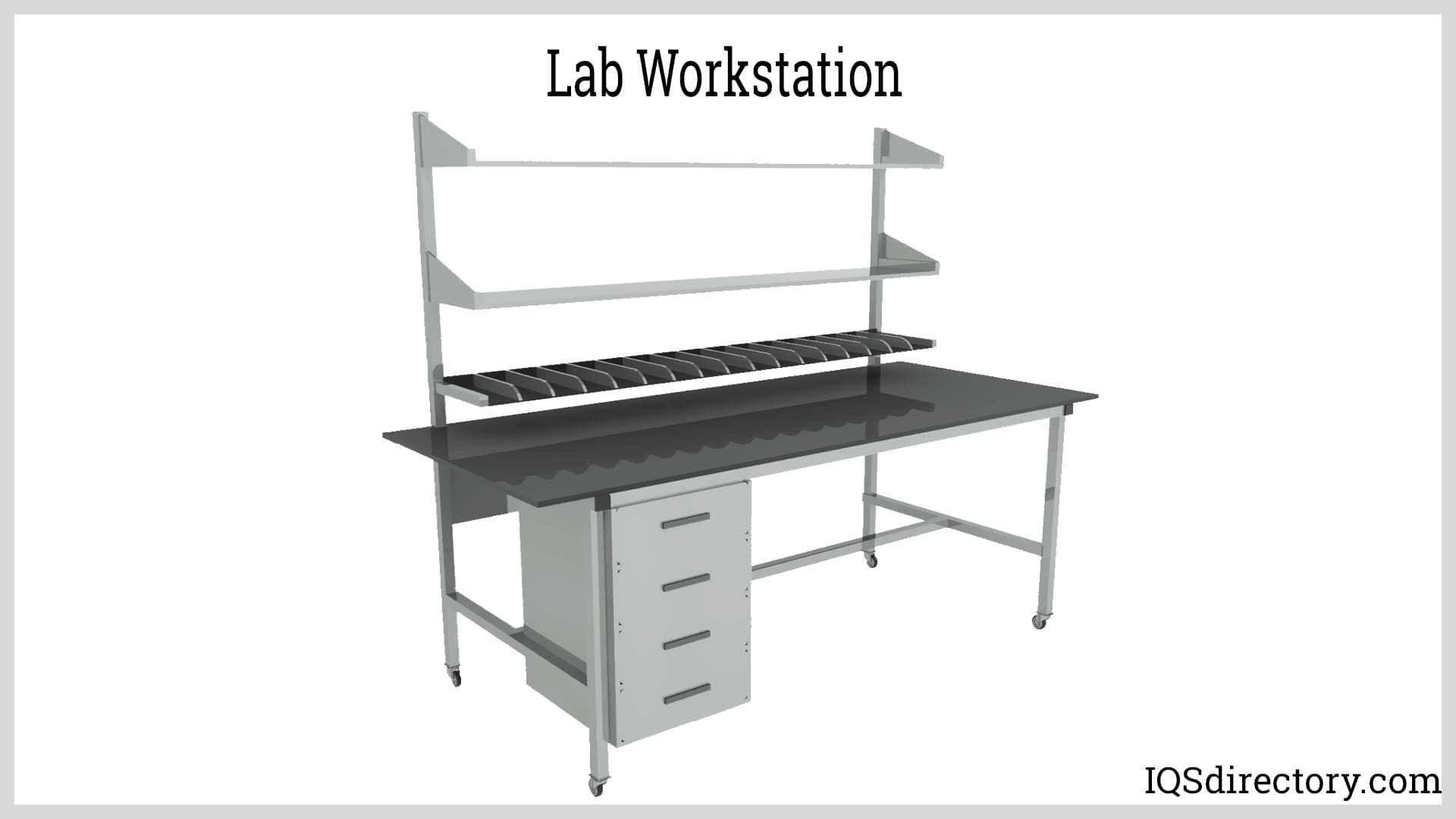
A lab bench is a specially designed bench or table that is able to assist in the performance of laboratory experiments and tasks, including the handling of reagents and test samples. Part of the design process for...
Metal Grating
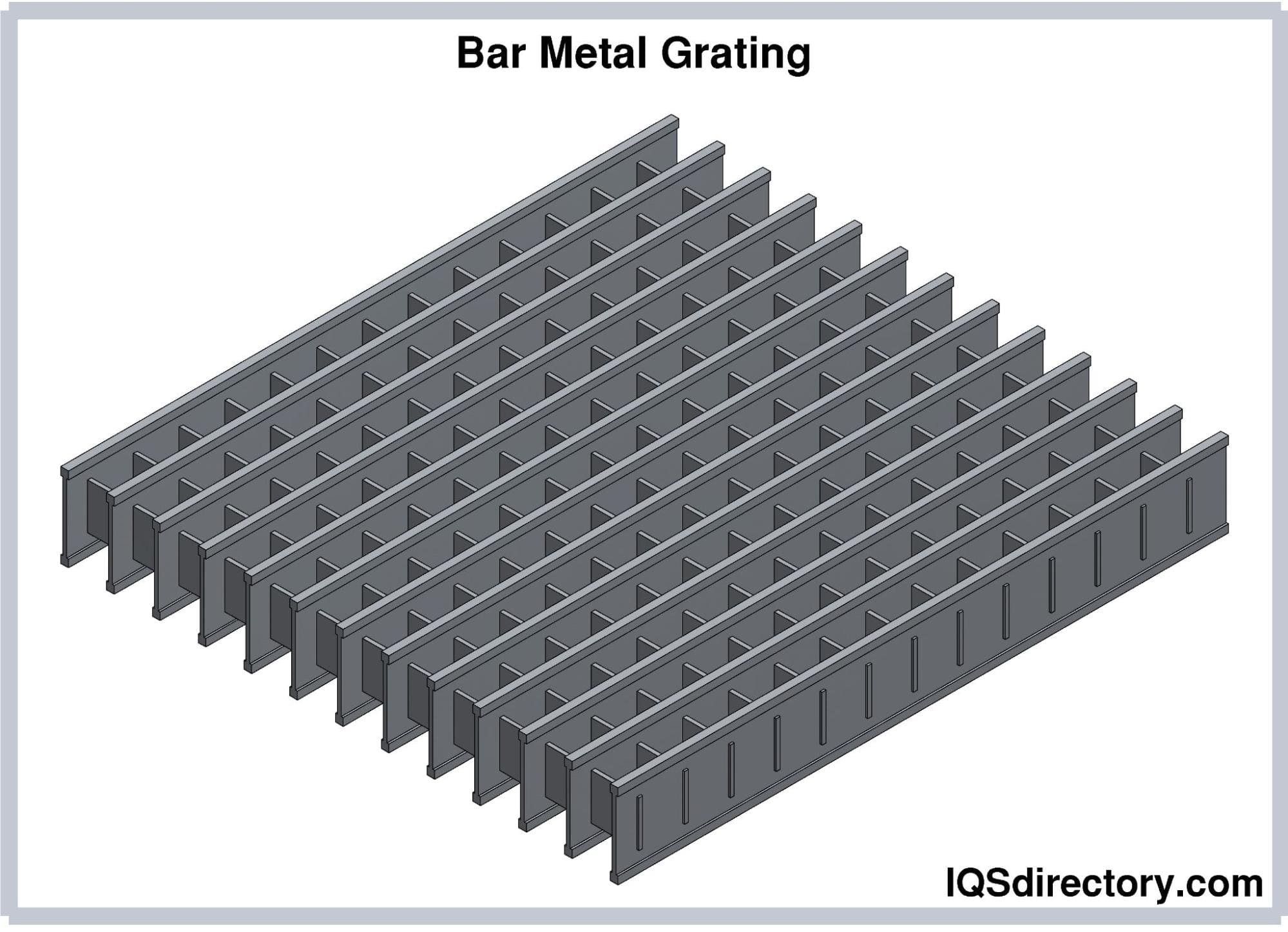
Metal grating is a metal product produced by perforating metal sheets or joining bars of metal to form a grid. They are a metal product that is widely used in various industries as stairs, platforms, scaffolding, and protective coverings...
Modular Buildings
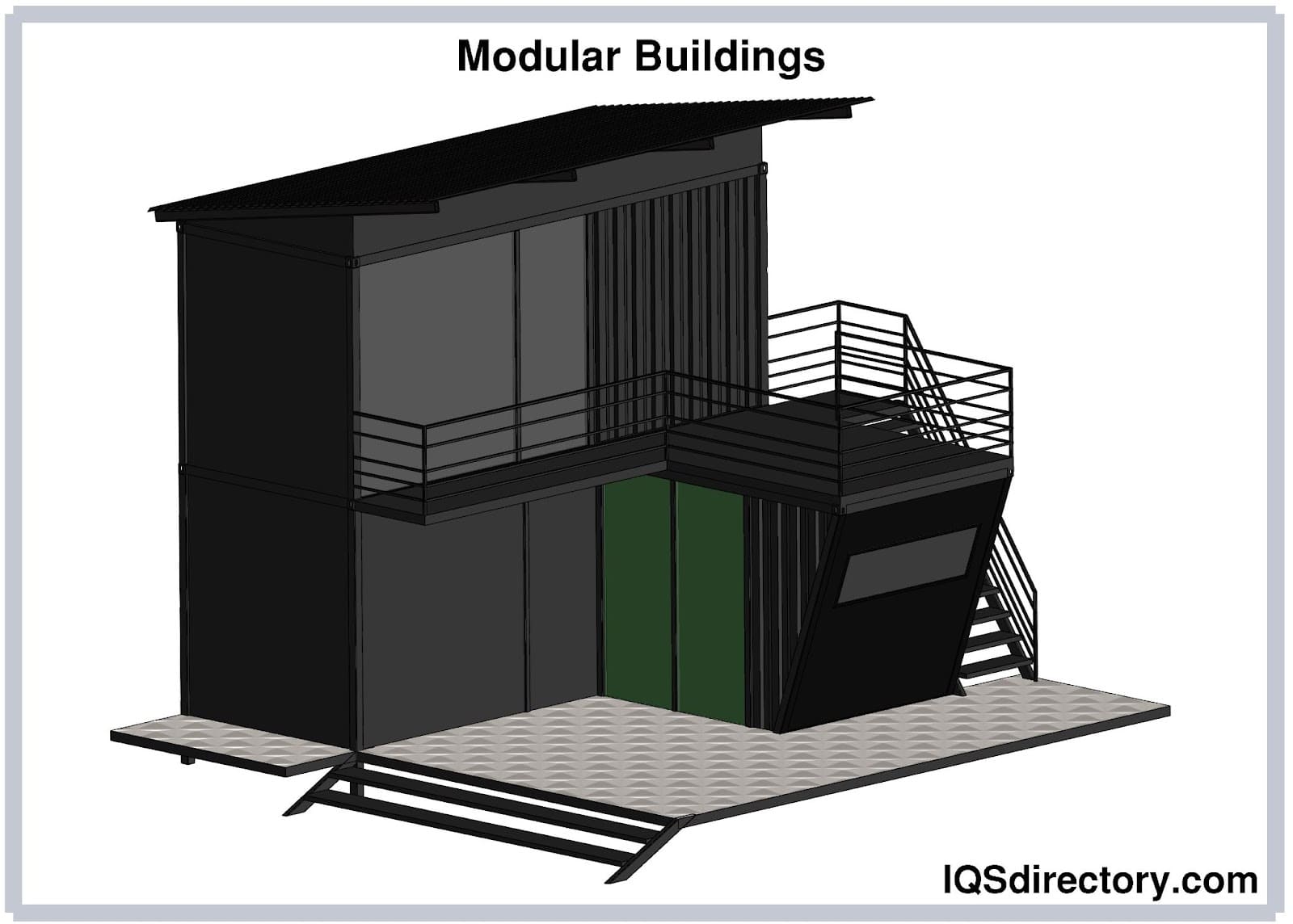
Modular buildings are buildings made up of standardized sections, called "modules," manufactured in a controlled environment of a factory away from the building's future location. The common factory-made, standard modules include walls...
Pallet Racks
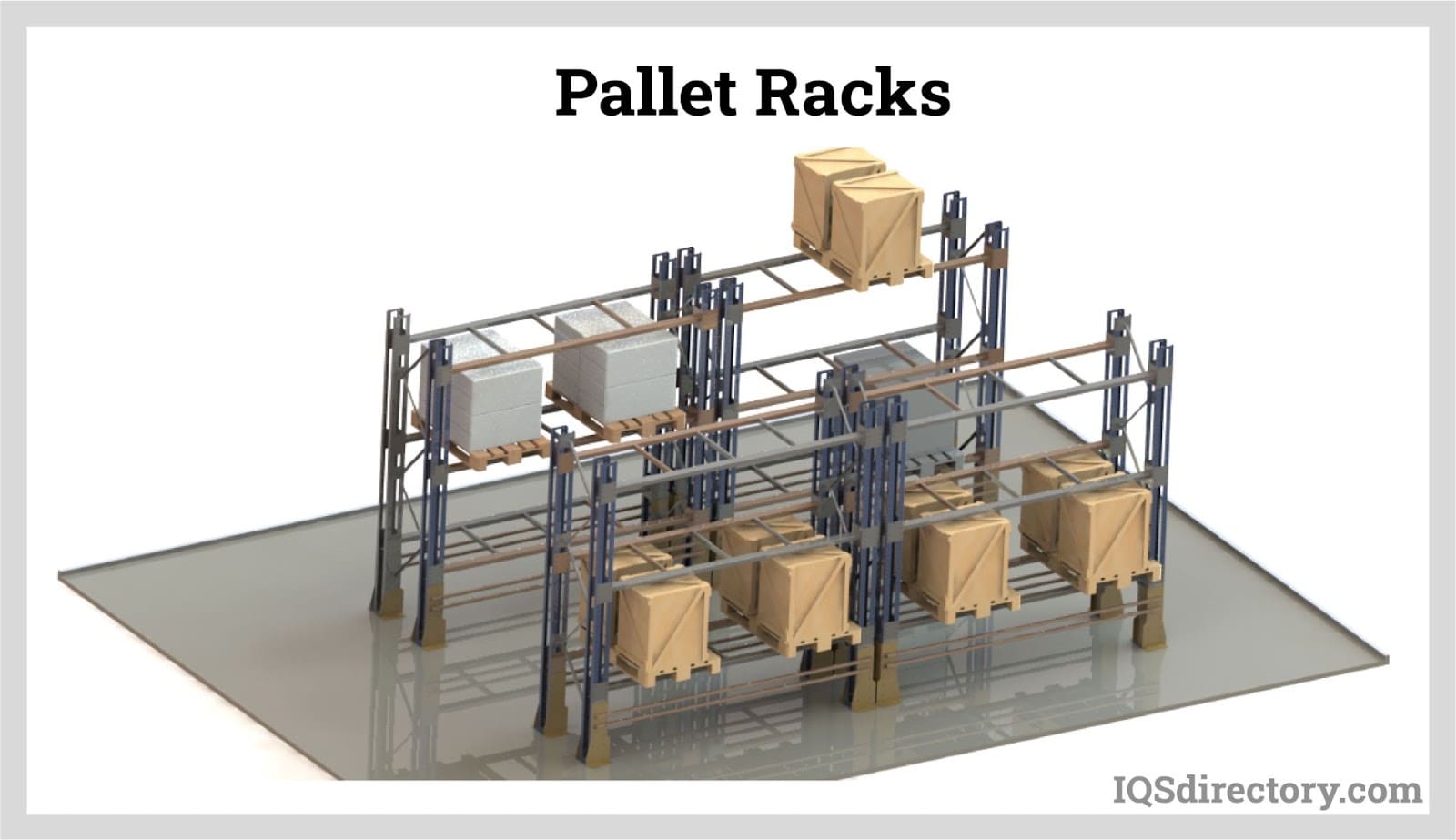
A pallet rack is an upright structure made of steel framing with beams and connectors that are bolted, welded, or clipped together to form a shelving unit to store inventory and equipment. In warehousing, pallet racks are...
Portable Offices
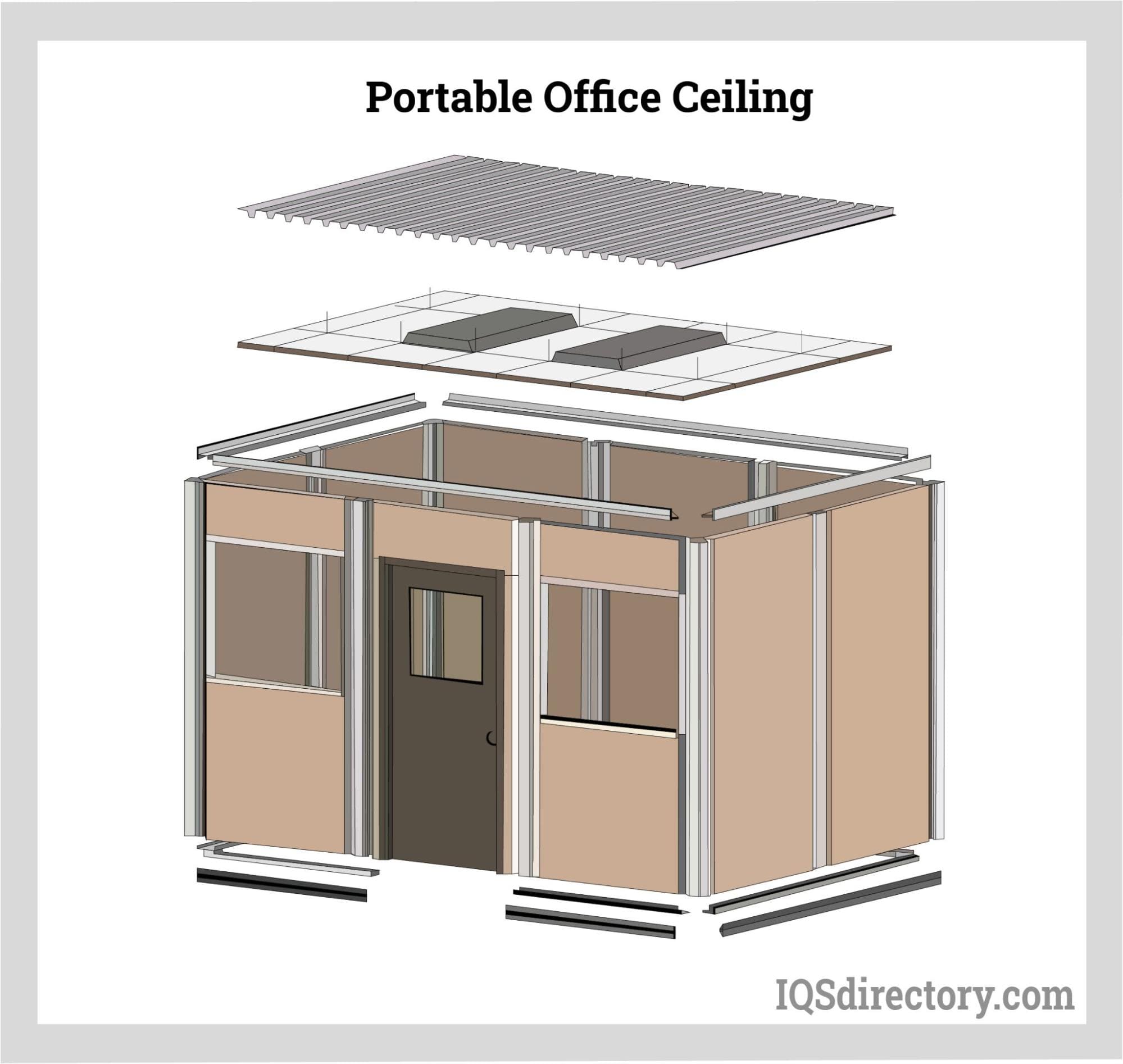
A portable office is a mobile workspace that can be easily assembled and placed to provide a quiet and convenient location for meetings, completing paperwork, or examining plans. They are built using...
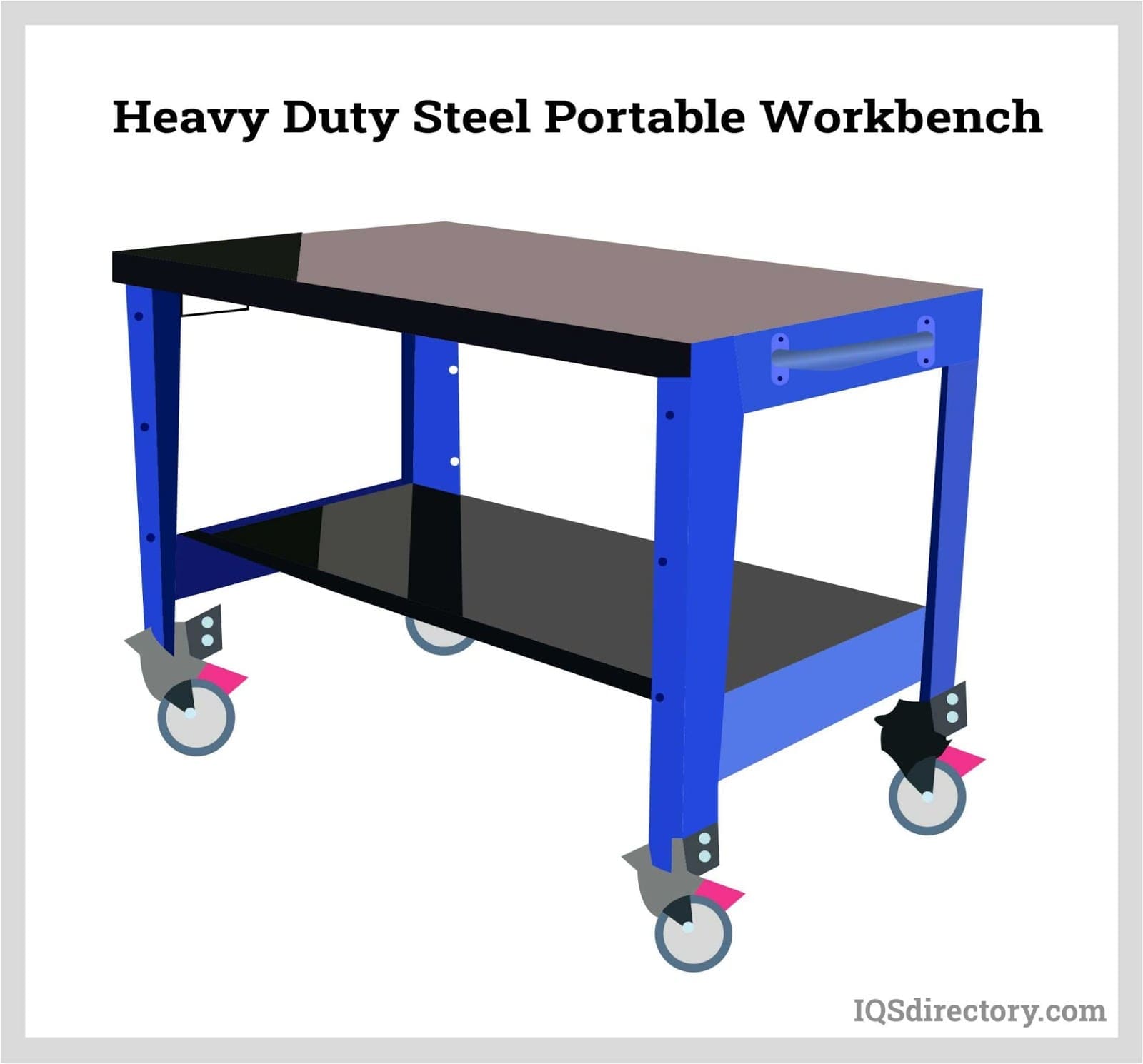
Portable Workbenches
A portable workbench is a flexible and mobile work surface that is designed to function in multiple environments for the purpose of preparing, constructing, or servicing a wide variety of industrial and commercial applications...
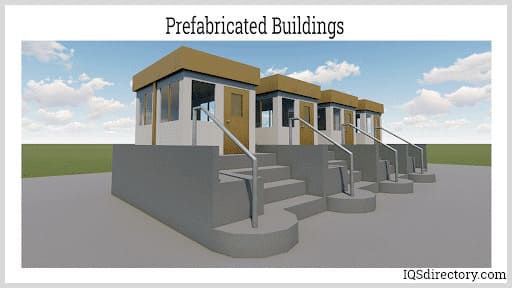
Prefabricated Buildings
Prefabricated buildings, or prefabs, are buildings with components (walls, roof, and floor) that are manufactured in a factory or manufacturing plant. These components can be fully or partially assembled in a factory which is then transferred at the construction site...
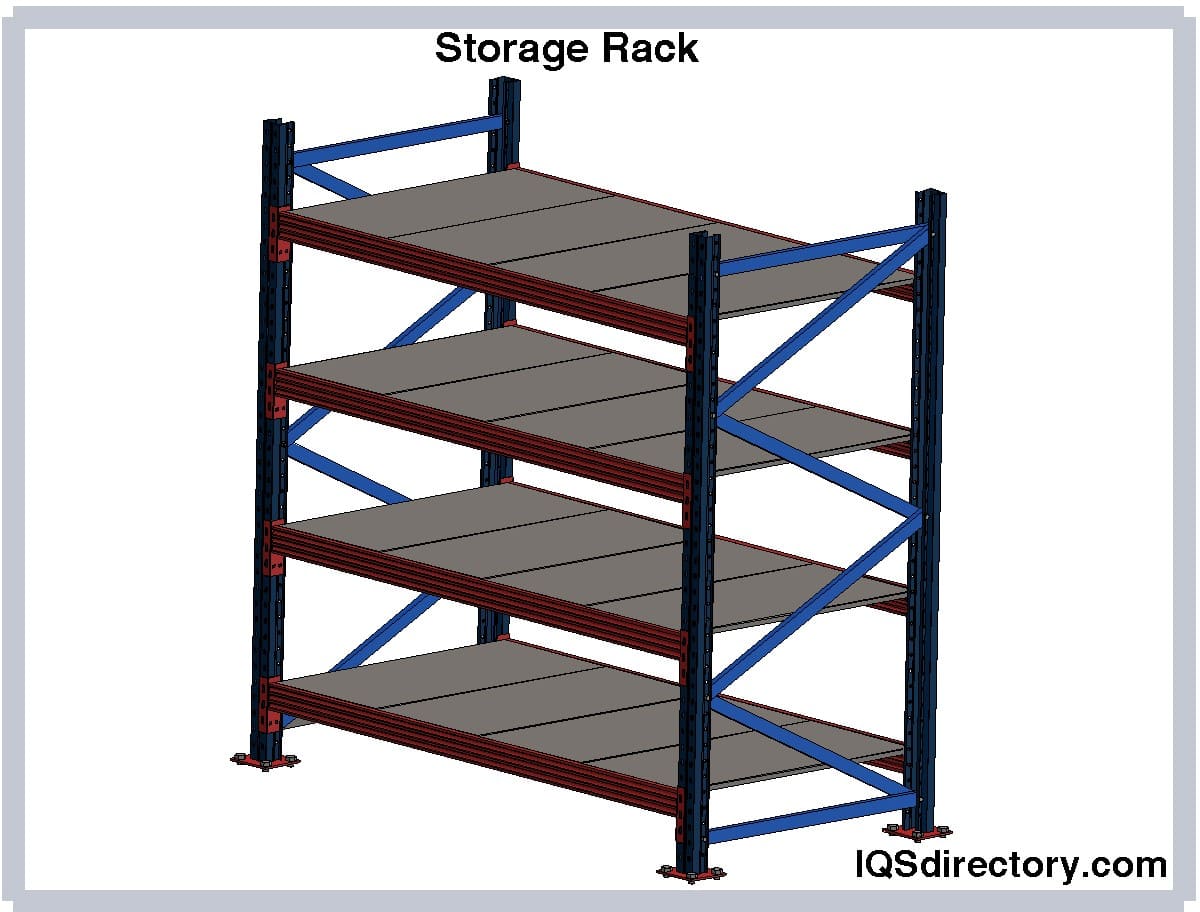
Storage Racks
Storage rack, also known as racking, is a structure that stores items and materials and comprises at least two upright (vertical) frames, horizontal beams, and some sort of decking (bars, panels, meshes, or none)...
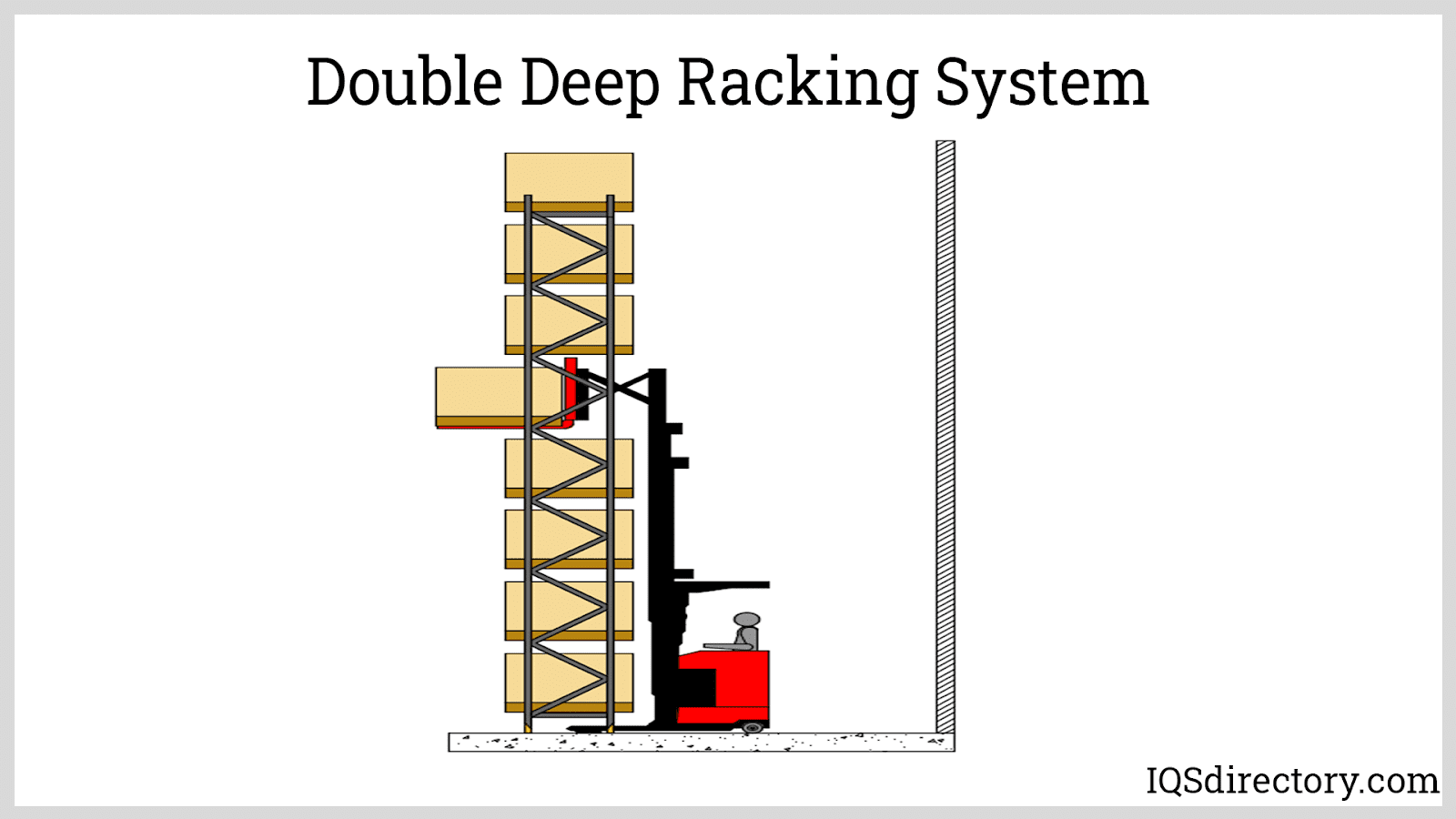
Warehouse Racking
Warehouse racking, also known as storage or pallet racking, is a material handling system suitable for mass storage of goods unitized on skids or pallets. It allows efficient utilization of space while providing easy access to stockpiled items for better inventory control...
Workbenches
A workbench is a sturdy flat, smooth, molded surface that comes in a variety of sizes designed for specific tasks. They can be very complex for engineering design work, complicated machining, and intricate precision tooling or be a highly finished wood table for woodworking, metal work, and project design...