Please fill out the following form to submit a Request for Quote to any of the following companies listed on
Get Your Company Listed on this Power Page
Introduction
How iron ductile castings are made with a list of ductile iron casting manufacturers
You will learn:
What are Ductile Iron Castings?
Ductile Iron Grades
Uses for Ductile Iron Castings
How Ductile Iron Castings are Made
And much more ...
Chapter 1: What are Ductile Iron Castings?
Ductile iron castings are solid metal components formed from molten ductile iron that is poured into precision molds and allowed to cool into the desired shape. This metal casting process produces durable parts with a high strength-to-weight ratio, excellent impact resistance, superior machinability, and dependable performance in demanding environments. Because of their toughness, vibration damping, and cost efficiency, ductile iron castings are widely used in industrial equipment, automotive applications, waterworks, construction, and heavy-duty infrastructure.
A critical aspect in regard to the use of ductile iron is selecting the right grade for the application. The American Society for Testing and Materials (ASTM) International has developed standards and criteria for ductile iron grades under ASTM A536. The most commonly specified grades are ASTM A536 60-40-18, 65-45-12, and 80-55-06, each offering a different balance of tensile strength, yield strength, hardness, and elongation. Choosing the correct grade helps engineers and buyers match performance requirements to cost, ensuring long service life, reduced maintenance, and reliable operation in cast components, machine parts, housings, fittings, and structural castings.
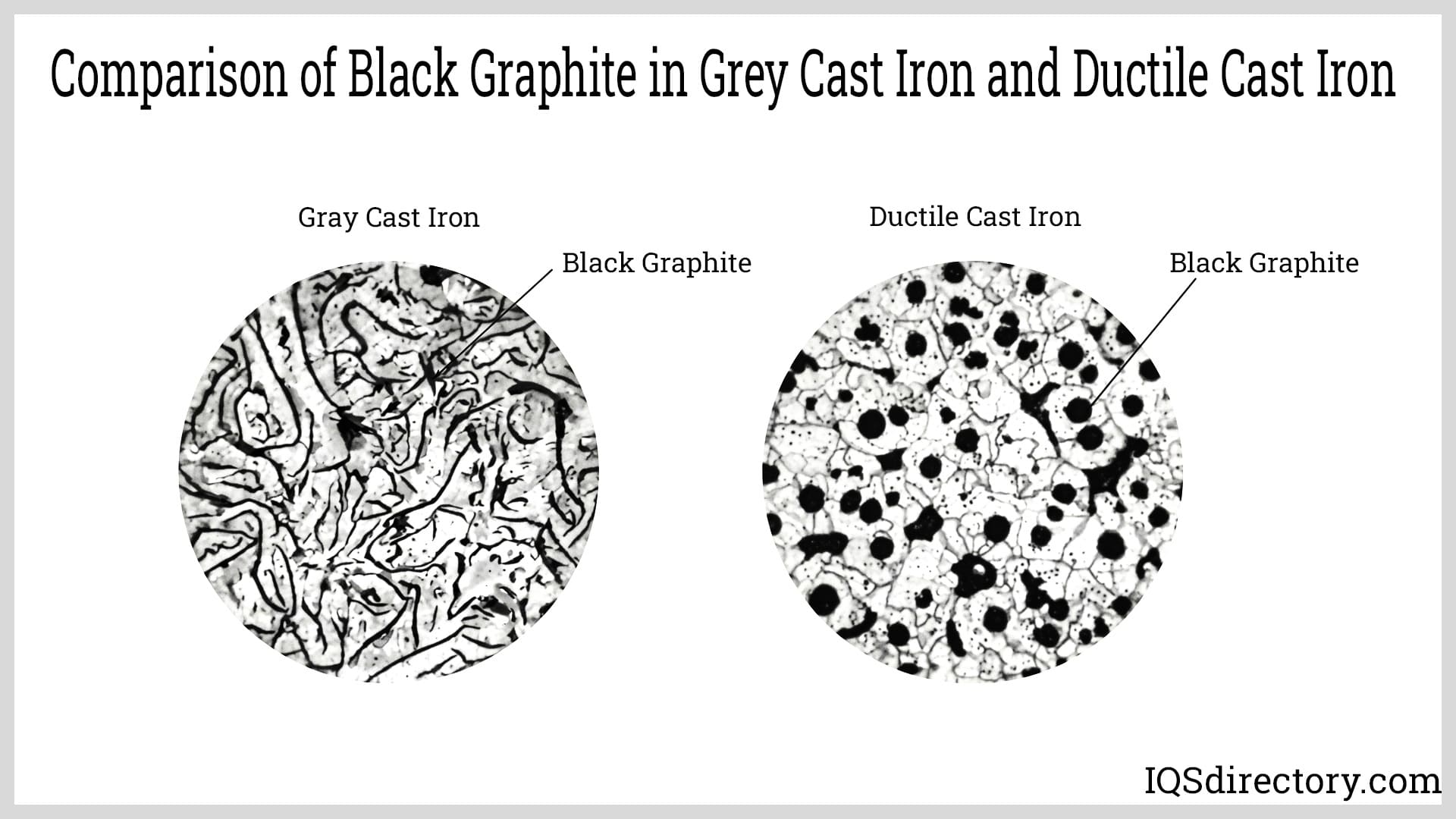
As with many other industrial materials, ductile iron is also known as spheroidal graphite iron, spheroidal iron, and nodular iron. The graphite nodules found in ductile iron are what distinguish it from grey iron and help give the material its superior ductility, elasticity, and fatigue resistance. This unique microstructure allows ductile iron to perform more like steel while retaining the casting advantages of iron. With carbon content exceeding 3 percent, cast ductile iron offers an ideal combination of strength, wear resistance, and castability, making it a preferred choice for manufacturers seeking a versatile, high-performance engineered material.
Chapter 2: Grades of Ductile Iron
The various grades of ductile iron define their mechanical properties and composition. The designations provided by the grades helps determine each grade’s strength, flexibility, and durability. Each grade has a unique combination of yield strength, tensile strength, and elongation that determine how it will perform in various environments and applications. All ductile iron foundries and manufacturers advise their clients to have a basic understanding of the characteristics of each grade in order to select the proper grade for a project or assembly. The correct selection helps improve a product's quality, lifespan, reduces costs, and ensures safety.
Ductile iron grades vary based on their mechanical properties and ASTM International standards. ASTM A536 60-40-18 has high elongation and moderate strength, which makes it suitable for applications that require flexibility while ASTM A536 80-55-06 is exceptionally strong but has less elongation, which makes it ideal for heavy-duty applications. Experts at ductile iron casting manufacturers and foundries evaluate each grade to ensure optimal performance and a proper match for an application.
Mechanical Properties of Ductile Iron as Outlined in ASTM 536
Grade
60-40-18
65-45-12
80-55-06
100-72-03
120-90-02
Tensile Strength (min ksi)
60
65
80
100
120
Yield Strength (min ksi)
40
45
55
70
90
Elongation (min %)
18
12
06
03
02
The different grades of ductile iron are determined by their matrix or microstructure around their graphite during the casting process or heat treatments. The compositional differences create the matrices. Ductile iron is steel with graphite spheroids throughout its matrices. The quality of the matrices in which the spheroids are suspended affect the properties of ductile iron but do not determine the properties.
Iron is a ferrous alloy that consists of carbon, silicon, manganese, and sulfur. Other elements are added to create the different grades. The amounts of carbon are normally greater than the iron’s solubility limit, which causes graphite to precipitate during solidification. Silicon, with other alloys, controls the morphology of the graphite and determines the amount of carbon that remains in the iron. With ductile iron, the remaining amount of carbon is dependent on the rate of solidification and cooling as well as elements that are added to promote graphitization or pearlite formation. Low carbon content ductile iron has lower strength, high ductility, and is easier to machine.
The control of the grades of ductile iron is in regard to the precipitation of graphite particles and the amount of carbon that remains in the matrix. While steel grades are defined by their chemical composition, ductile iron grades are distinguished by their graphite morphology and the composition of their matrix. Ductile iron grades are categorized under ASTM 536, which is followed by three numbers separated by dashes. The first two numbers represent the tensile and yield strength of a grade of ductile iron while the final number is a grade’s percentage of elongation.
Ductile Iron Matrices
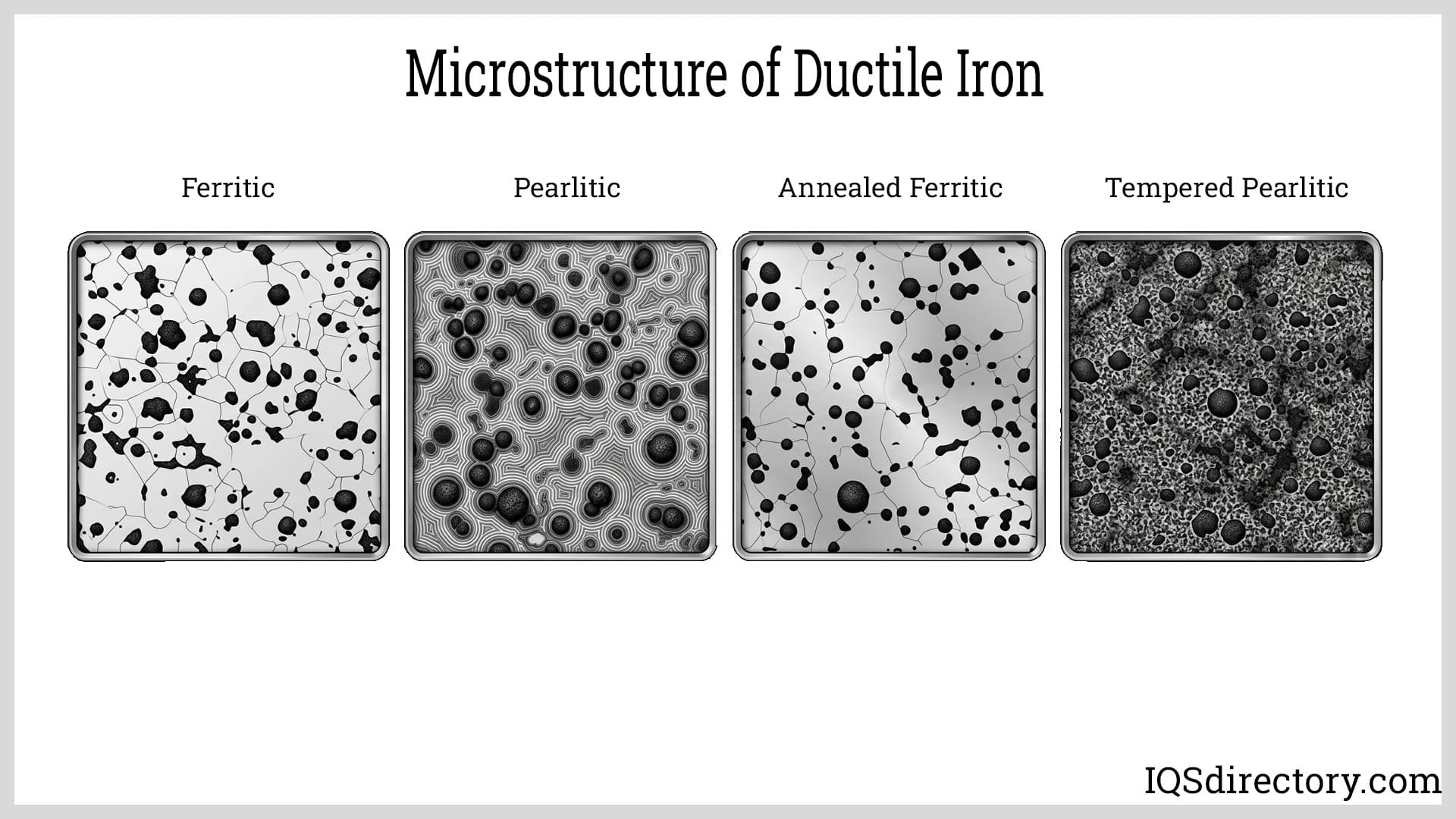
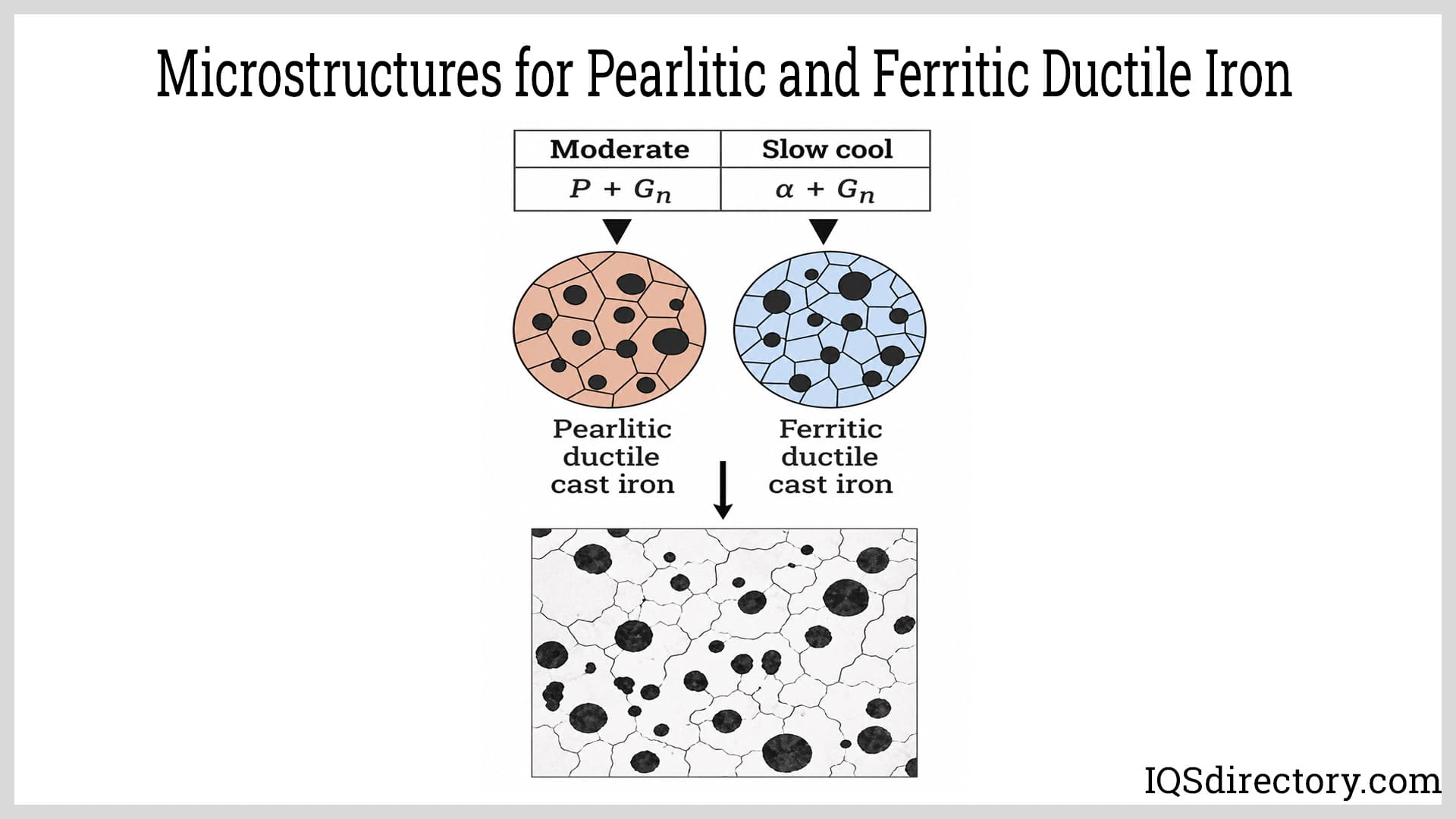
Ductile iron matrices define the mechanical properties of ductile iron grades. Several matrices are found in ductile iron with ferrite and pearlite being the most common. The various microstructures are created by additional elements and the rate at which the iron is cooled. The matrix structure around the graphite is created during the casting process or heat treatment. Careful control is used to create the different grades by making minor changes to achieve the desired matrix.
Ferrite – Ferrite matrix ductile iron is a pure, flexible iron with low strength. It has poor wear resistance with exceptional impact resistance. The key factor of ferrite ductile iron is its graphite nodules that are embedded in the ferrite matrix. The strength of ferrite ductile iron is similar to low carbon steel. The development of ferrite ductile iron takes a long time at very high temperatures with the result being its toughness, thermal resistance, and machining properties.
Pearlite – Pearlite ductile iron is a mixture of ferrite and iron carbide. It is a hard ductile iron with moderate ductility. Pearlite ductile iron has exceptional strength, good wear resistance, relative impact resistance, and good machinability. To make pearlite ductile iron, carbon is precipitated as cementite in the form of a thin layer that is combined with ferrite. The transformation to pearlite includes a medium-term diffusion of carbon. The cementite layer decreases with lower temperatures.
Martensite – Martensite ductile iron is formed by quenching and temper heat treatment, factors that prevent the development of pearlite ductile iron. It is a high strength ductile iron with a brittle structure that is formed by rapidly quenching the metal at very high temperatures. As with pearlite, martensite ductile iron has graphite nodules that improves its toughness. The result of the special procedures is a ductile iron with high tensile strength, high hardness, and exceptional wear resistance.
Austenitic – Austenitic ductile iron, also known as Ni-resist iron, has a nickel content that ranges from 18% up to 36%, which increases the production costs of the iron but allows the iron to be used across a wide range of temperatures that vary from -200°C up to 1050°C (-328°F up to 1922°F). Due to the nickel content of austenitic ductile iron, castings made from it are stronger and capable of withstand rapid cycling between cold and hot environments without passing through a stressful phase change. When carbon is displaced from the ferrite, it collects in the austenite, which raises the carbon content of austenite ductile iron. This stabilizes the iron for low temperatures and creates a fine crystalline structure made up of ferrite and austenite matrices.
Aside from the four matrices described above, other ductile iron matrices are bainitic and austempered or ADI. Bainitic ductile iron is highly durable and exceptionally wear resistant. ADI is the newest form of ductile iron. It is created using a heat treatment referred to as austempering that produces an acicular ferrite and high carbon structure.
Grades of Ductile Iron
ASTM A536 is the specification used by ASTM to refer to all forms and grades of ductile iron and identifies the grades based on their strength, flexibility, and durability. Ductile iron is a spheroidal graphite iron or nodular iron due to the graphite in ductile iron appearing as spheroids, which gives ductile iron advantages over other forms of iron. Each of the grades offers certain unique advantages, a factor that is part of the reason for the wide use of ductile iron.
Grade 60-40-18
Grade 60-40-18 has a ferritic structure with mechanical properties that are similar to low alloy steel. The ferritic structure of 60-40-18 is achieved through a full anneal heat treatment. Grade 60-40-18 has high ductility, exceptional impact strength, and good machinability. Its tensile strength is 60,000 psi with a yield strength of 40,000 psi and an elongation percentage of 18. The microstructure of 60-40-18 consists of types I and II nodular graphite with a 100% ferrite matrix. Magnesium is added to 60-40-18 as an inoculation to produce nodular graphite.
Composition of Grade 60-40-18
Element
Percentage
Carbon
3.50-3.90%
Silicon
2.25-3.00%
Manganese
0.15-0.35%
Sulfur
0.025% Max
Phosphorus
0.05%
Grade 65-45-12
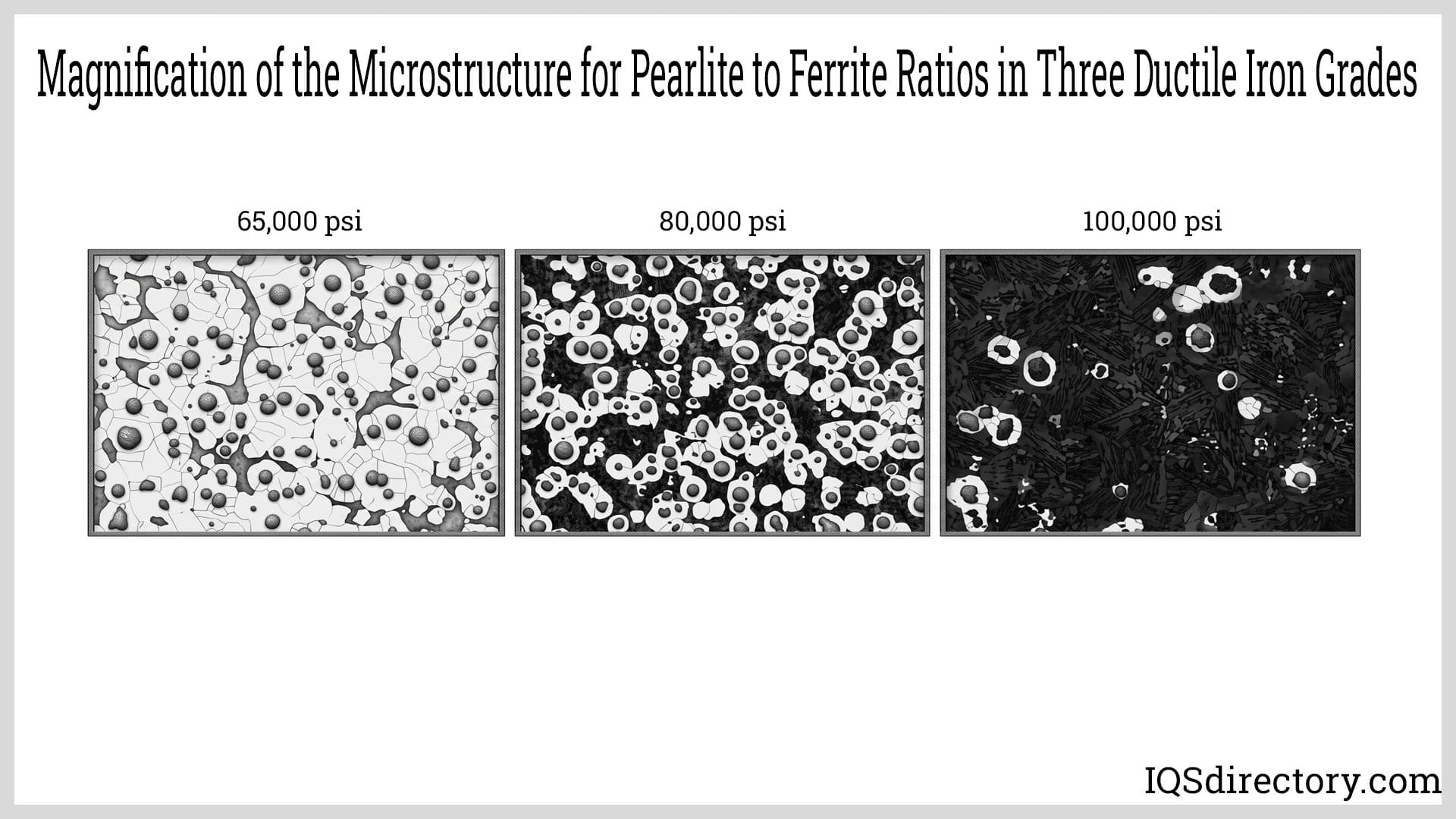
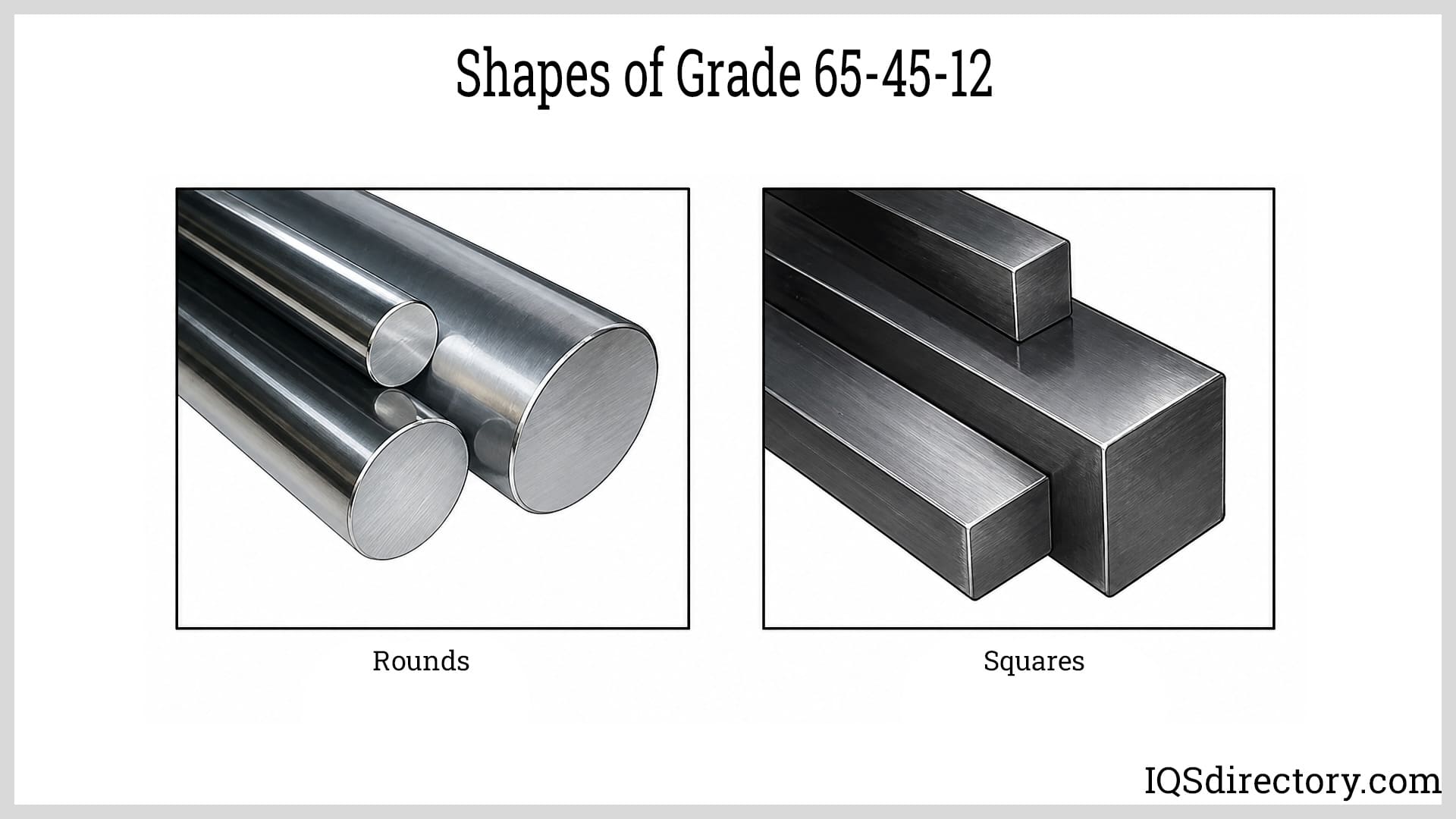
Grade 65-45-12 contains nodular graphite in a ferrite matrix with small amounts of pearlite interspersed between the ferrite grains. The ratio of ferrite to pearlite is commonly 70:30. The ferrite structure has excellent machinability and provides a pleasing surface finish. Grade 65-45-12 has good impact strength, fatigue properties, electrical conductivity, and magnetic permeability. It has the same tensile and yield strengths as American Iron and Steel Institute (AISI) 1020 steel in rolled condition. The matrix of grade 65-45-12 is ferrite with 5% up to 25% pearlite. It has a tensile strength of 65,000 psi and a yield strength of 45,000 psi with elongation of 12%. The chemical makeup of grade 65-45-12 is the same as grade 60-40-18.
Grade 80-55-06
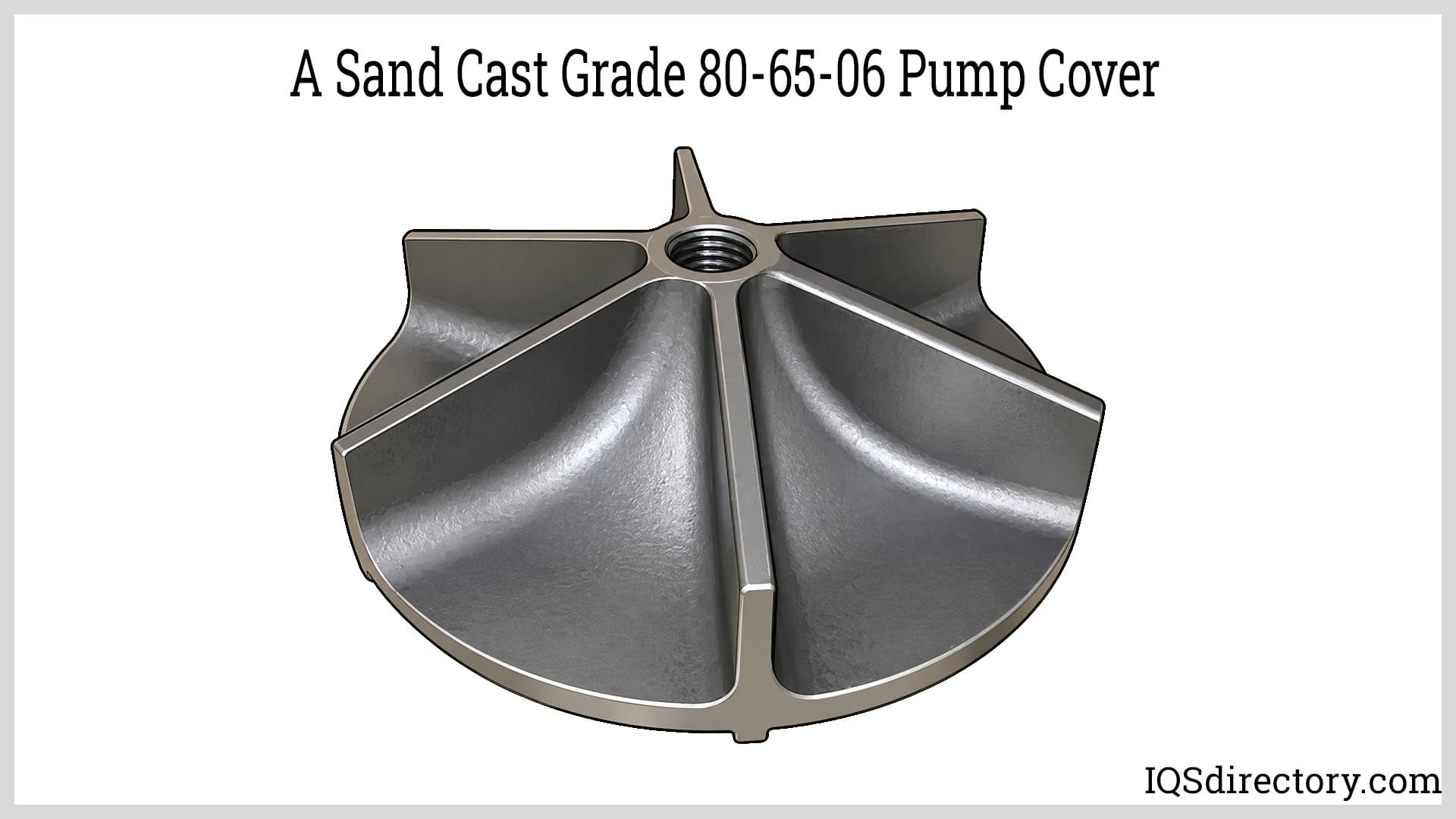
Grade 80-55-06, like grade 65-45-12, has a pearlite/ferrite structure with pearlite being the major portion of its composition with small amounts of ferrite. It has higher wear resistance and strength than other ferrite grade ductile irons. Grade 80-55-06 has a good surface finish with yield and tensile strength that is comparable to rolled AISI1040 steel. It has the same chemical composition as the previous ductile irons with 80,000 psi tensile strength and 55,000 psi yield strength with elongation of 6%. Grade 80-55-06 can be oil quenched at 885°C (1600°F) to achieve a minimum hardness of Rockwell C 50.
Grade 100-70-03
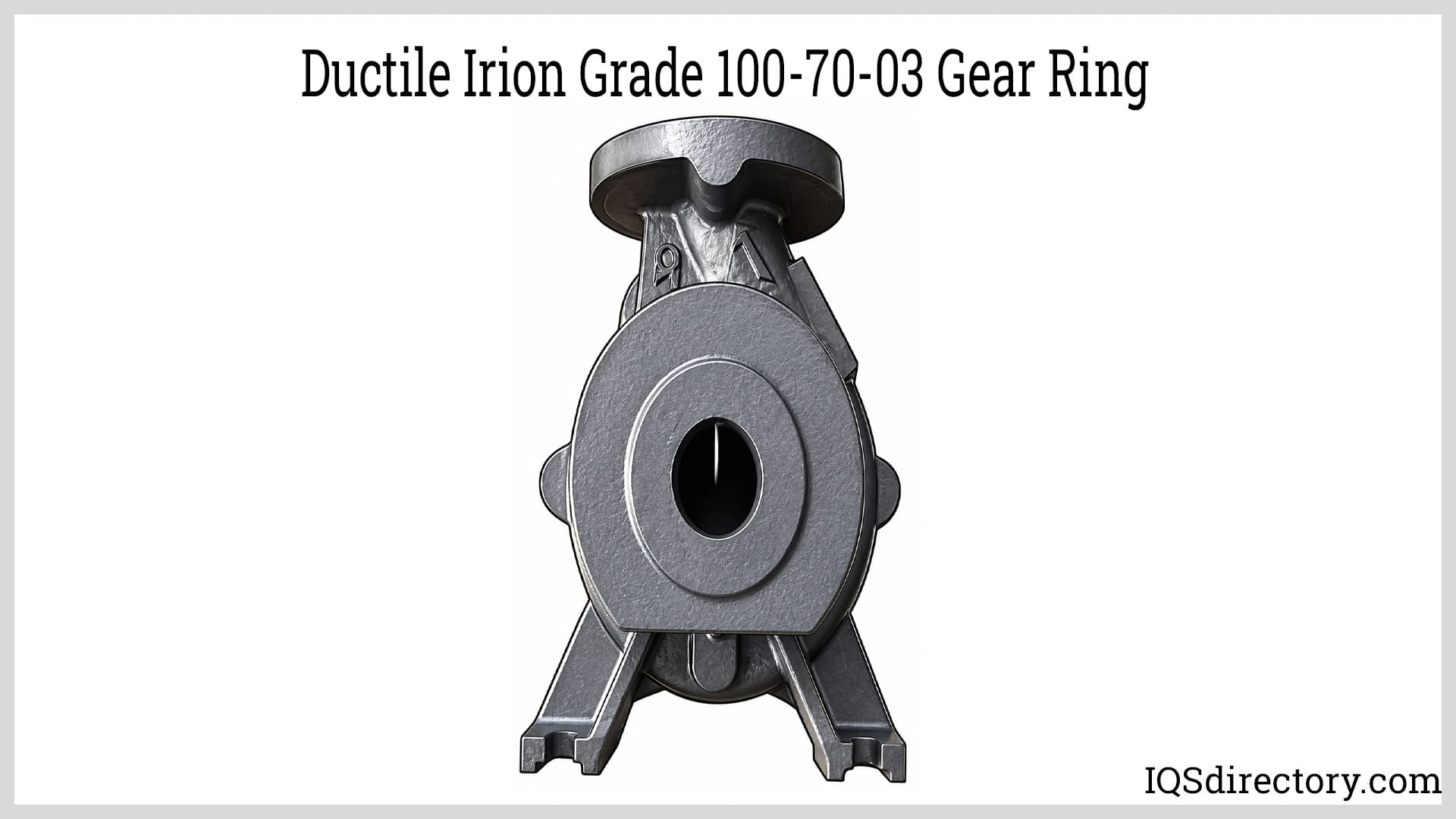
Grade 100-70-03 is a pearlitic ductile iron, which makes it harder, stronger, and has good wear resistance. These characteristics give it average ductility and acceptable impact resistance. The matrix of grade 100-70-03 contains nodular graphite with small amounts of ferrite. The extraordinary aspect of grade 100-70-03 is its tensile strength, which is 100,000 psi with a yield strength of 70,000 psi. As can be ascertained from its exceptional strength, grade 100-70-03 has limited elongation at 3%. The strength of 100-70-03 is normally enhanced with heat treatment, which adds dimensional stability. Due to the strength and durability of 100-70-03, it is commonly used to manufacture gears for machines and vehicles.
Grade 120-90-02
Grade 120-90-02 is a martensitic grade ductile iron with a low to zero pearlite formation due to the addition of an assortment of alloys. When it is untempered, it can be hard and brittle, which requires it to be quenched and tempered to develop its strength and wear resistance. Once quenching and tempering are completed, grade 120-90-02 becomes sufficiently strong to be machined. When grade 120-90-02 is used in the casting process, it has to be immediately tempered and quenched to relieve any internal stress.
Composition of Grade 120-90-02
Element
Percentage
Carbon
3.0-3.8%
Silicon
1.5-2.8%
Manganese
0.15-1.00%
Mangnesium
0.03-0.06%
Chromium
0.03-0.07%
Nickel
0.05-0.2%
Phosphorus
0.15-1.00%
Solid Solution Ductile Iron (SSDI)
Ductile iron normally contains a combination of pearlite and ferrite matrices that surround the nodules. The mix, depending on cooling rates, produces a wide range of varying mechanical properties. Solid solution ductile iron has uniform hardness and an increased elongation percentage. Its compositional make up is not determined by International Standards and can change due to manufacturing methods and charge materials.
Solid solution ductile iron has a 3.2% up to 4.3% silicon content in its ferritic matrix, which gives it extra strength and increases its yield strength and ductility while retaining its impact resistance. The lack of deviation in the hardness of solid solution ductile iron makes it easier to machine and is the reason that it is widely used to produce automobile parts and components. In essence, solid solution ductile iron or solution strengthened ductile iron combines the mechanical strength of pearlite ductile iron with the machinability of ferritic ductile iron. The combination provides benefits in regard to designing and manufacturing metal parts. The tensile strength of solid solution ductile iron is 75,000 psi with a yield strength of 55,000 psi and an exceptional elongation of 15%.
The Composition of Solid Solution Ductile Iron
Element
Percentage
Carbon
3.20-3.75%
Silicon
3.25-4.00%
Manganese
0.15-1.35%
Sulfur
0.025% Max
Phosphorus
0.05% Max
Ductile iron has superior mechanical properties compared to other forms of cast iron. In the ductile casting process, magnesium is added to the molten iron during solidification to change graphite flakes to spheroid nodules that enhance the pliability of the iron and increase its resistance to stress. The grades of ductile iron are achieved by controlling the matrix structure that forms around the nodules. Each grade is identified by three numbers that represent the metals yield strength, tensile strength, and elongation. Designed by ASTM International, the numbering system makes it easy to identify the properties of each grade.
Chapter 3: Ductile Iron Casting Methods
Ductile iron castings provide a reliable and dependable solution for industries that require toughness, durability, and longevity. The properties and characteristics of ductile iron castings deliver the necessary performance that products have to endure in today’s challenging environments. Introduced in 1943, ductile iron is similar to cast iron or grey iron but with different microstructures. While graphite and carbon appear as flakes in cast iron, in ductile iron, they appear as spheroids or spheroid graphite. Commonly referred to as nodular iron, ductile iron has its carbon content held in the form of nodules, which gives it the ability to withstand bending and shock loading.
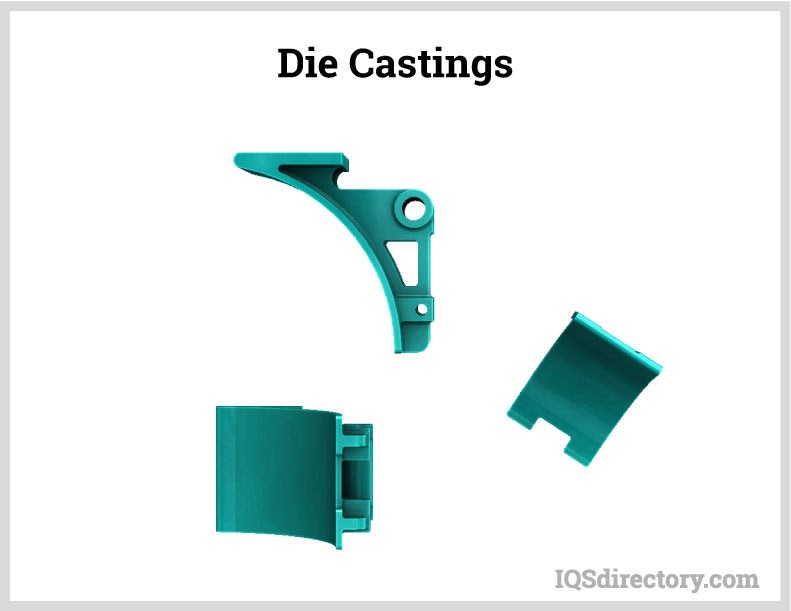
Regardless of the unique qualities of ductile iron, it is cast using the same methods as those that are used to cast other metals. This includes investment casting, die casting, sand casting, lost foam casting, metal mold casting, and centrifugal casting. The differences between the methods is in regard to their tooling with metal permanent mold casting, continuous casting, and counter gravity casting methods being the most expensive.
Each of the different methods has their benefits. The key to the success of a ductile iron product is determined by the proper matching of the casting method with the product to be formed. An important aspect of ductile iron casting is its magnesium treatment, which manufacturers explain at the initiation of the selection process.
Selection Factors for Ductile Iron Casting
Volume – As may be expected the number of parts to be cast plays a major part in the selection process. Each casting process has its limitations in regard to how many pieces can be produced each day or hour.
Complexity – One of the benefits of ductile iron casting is its ability to replicate the complexities and intricacies of a component. Although all casting methods can produce cast parts, only a few are capable of casting complex forms.
Dimensional Tolerance – As with all forms of production, the replication of specific tolerances is a necessity. Like complexity, the selection of a casting method is highly dependent on the required tolerance for a part.
Surface Finish – The surface finishes of castings vary widely between the different methods. This aspect of the selection process is also influenced by the grade of ductile iron. Poor finishes require secondary machining and increase the cost of a component.
Ductile Iron Casting Selection Factors
Volume and Cost
Complexity and Size
Part Geometry
Mechanical Requirements
Surface and Tolerance
Green Sand Casting
X
Resin Sand Casting
X
Shell Molding
X
Centrifugal Casting
X
X
Austempered Castin
X
Investment Casting
X
X
X
X
Lost Foam Casting
X
X
Permanent Mold Casting
X
X
Sand Casting
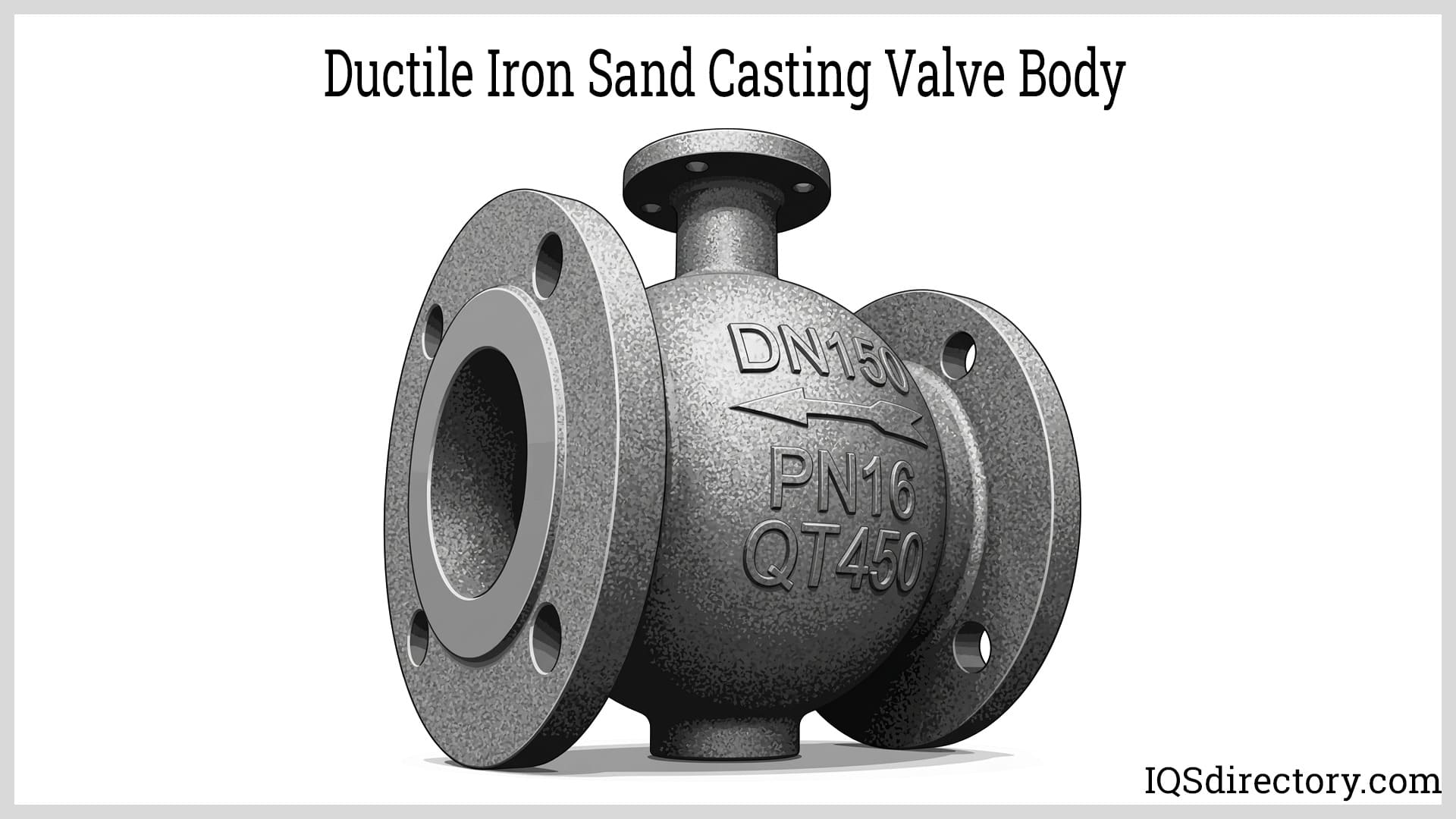
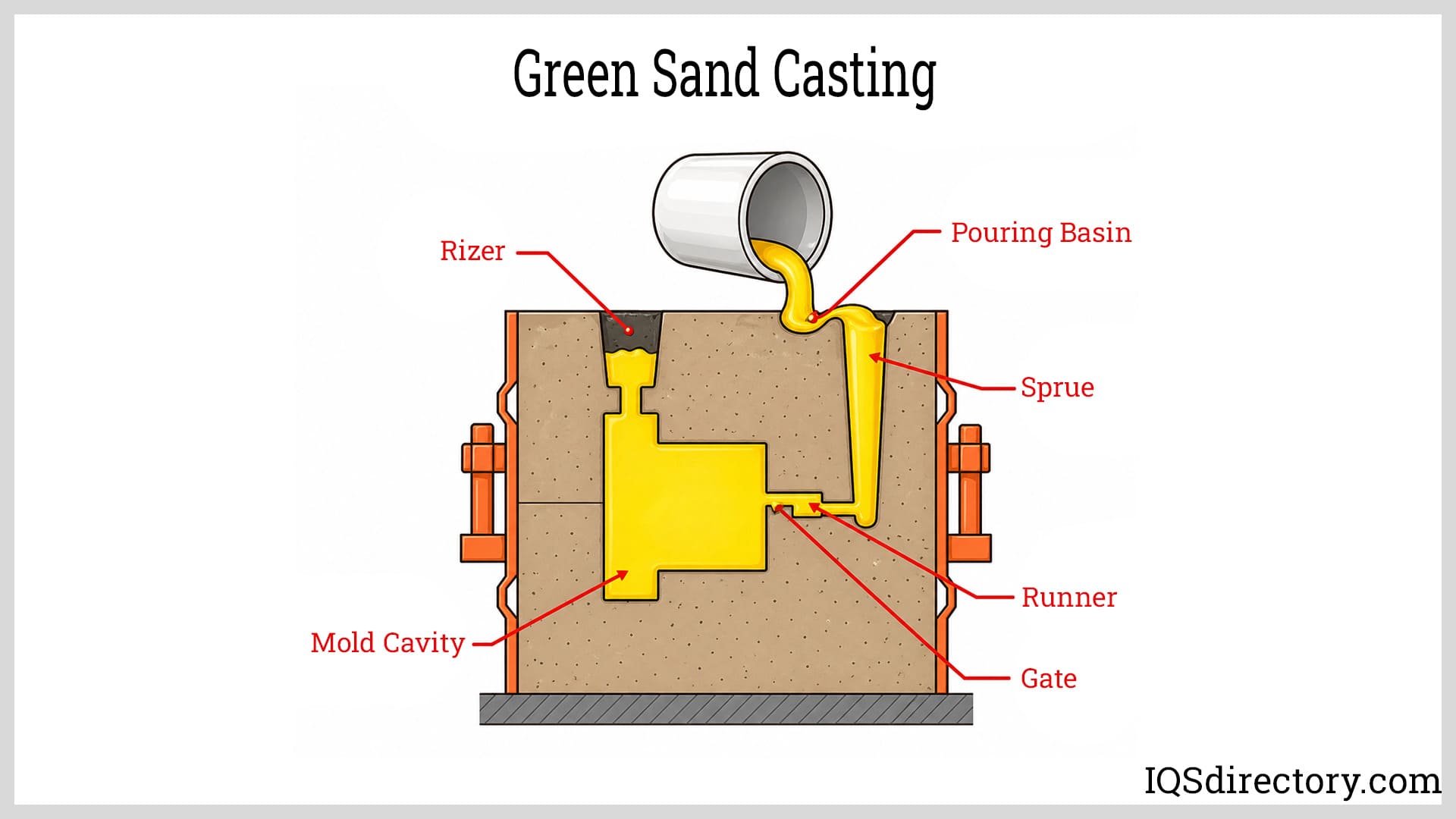
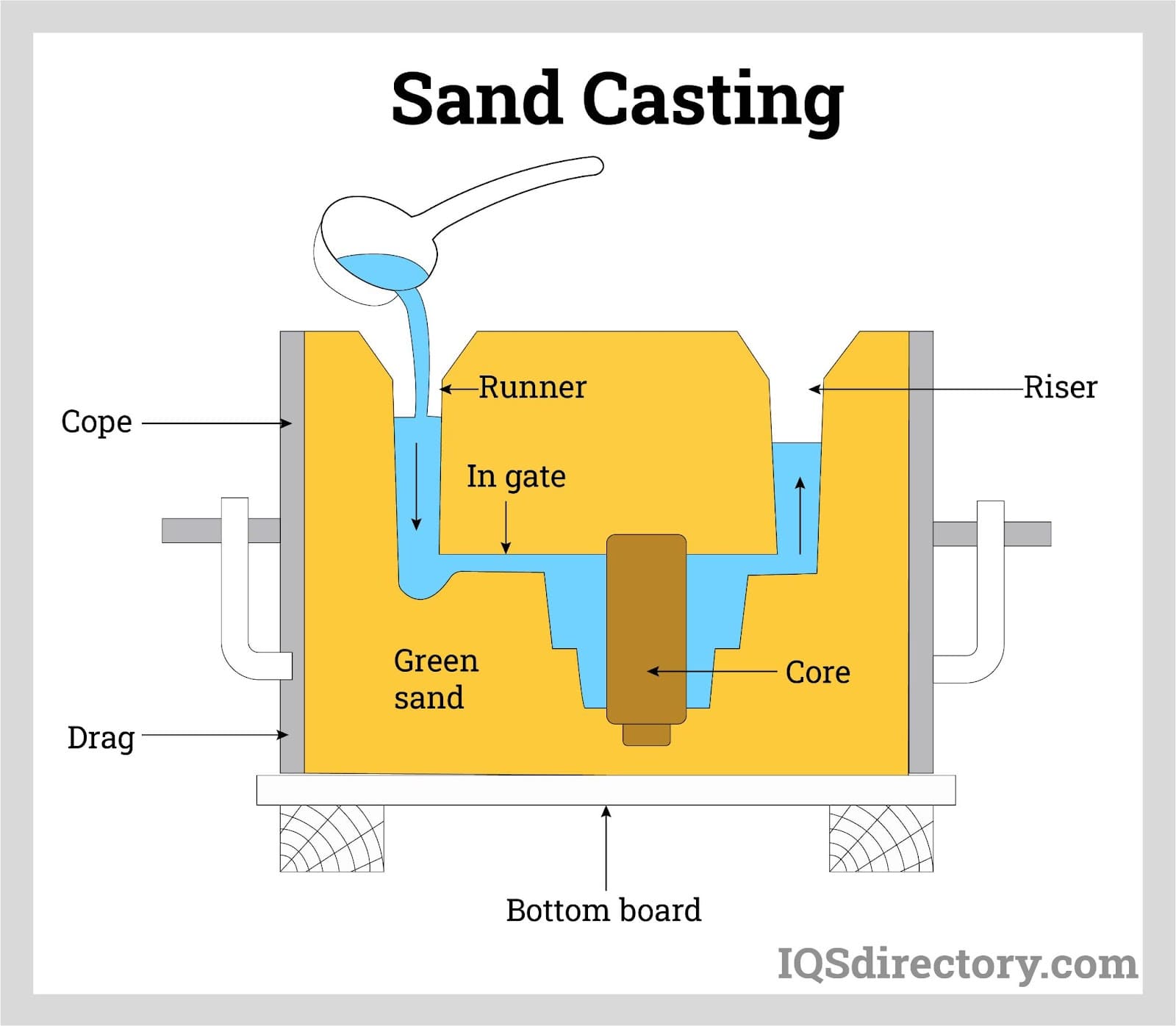
Sand casting is a widely used method for manufacturing ductile iron castings. The process is capable of producing parts that weigh 0.5 kg up to ones weighing 50 tons. The sand used for the process is either silica or olivine, which is bonded with green sand or no-bake, cold-box resins. Patterns created from wood, metal, or 3-D printing create cavities in the shape of a component in the sand. Molten ductile iron, heated to 1300°C up to 1350°C (2372°F up to 2462°F) and treated with magnesium, is poured into the sand mold. The low thermal conductivity of the sand slows the cooling process, allowing the forming of the graphite nodules.
The controlled cooling provides the conditions for the uniform forming of the graphite nodules. Any shrinkage during cooling is compensated for by the risers added to the sand mold. Once cooled, the mold is removed or broken away and the part or parts are cleaned, trimmed, and heated treated, when necessary. The wide use of sand casting is due to its low cost, ability to use all forms of ductile iron, and the uniform formation of nodules.
Shell Mold Casting
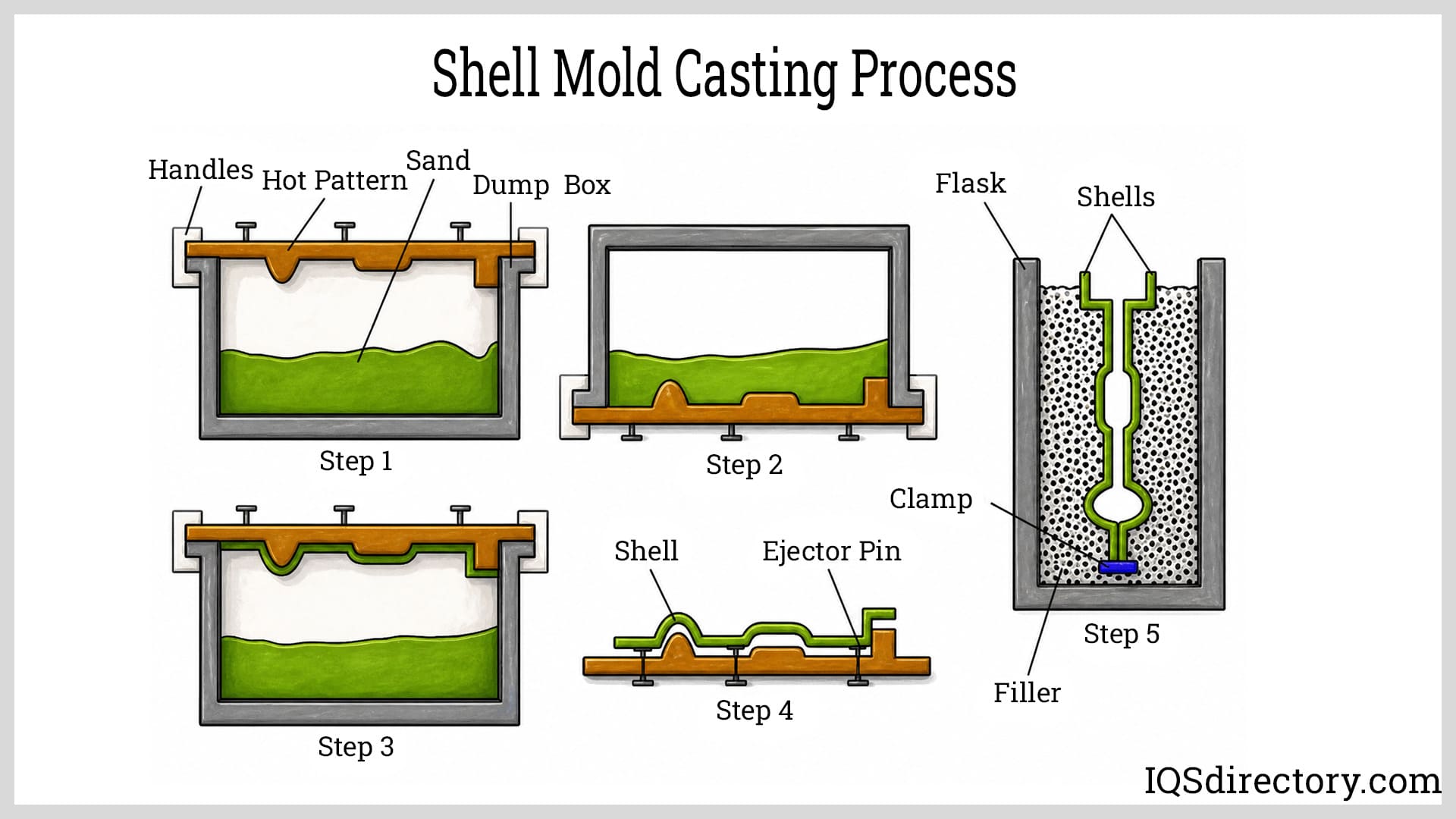
Shell mold casting, or shell molding, is a sand casting process that uses resin coated sand. The process is used to produce dimensionally accurate components that have an exceptional finish and very tight tolerances. It is ideal for medium sized components that need detailing and consistent performance. Shell mold casting provides a balance between the flexibility of sand casting and the dimensional control provided by metal molds.
The process begins with the heating of a steel pattern. Coated, resin bonded silica sand is placed over the pattern, causing the resin to cure and form a thick shell that is hardened by further heating of the pattern, which is composed of two halves that are joined to form the mold shell. Molten ductile iron is poured into shell mold where it rapidly cools due to the thin mold walls. Once the ductile iron cools, the brittle shell is broken away to release the casting.
Lost Foam Casting
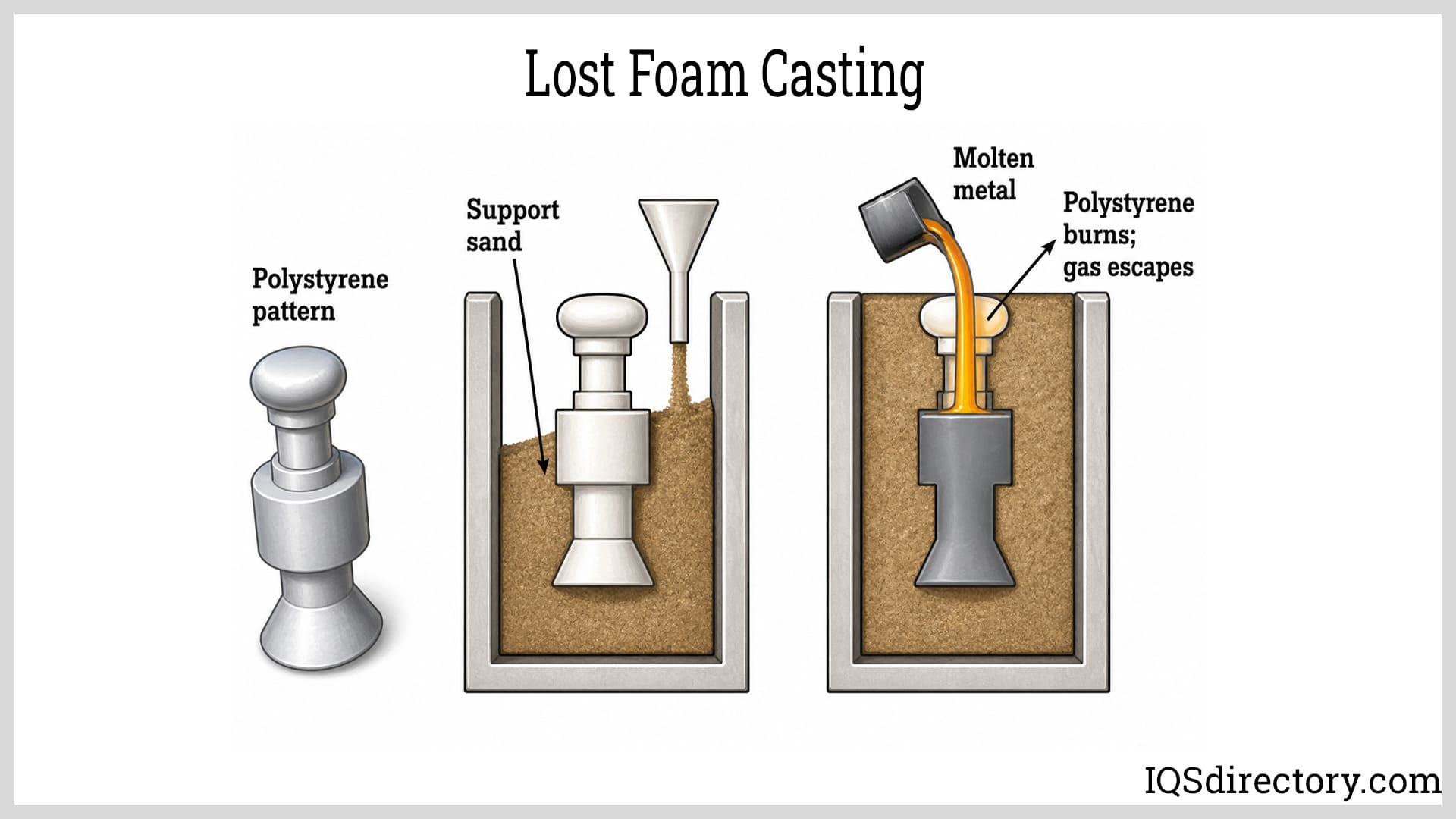
Lost foam casting produces ductile iron parts with complex geometries and is ideal for intricate and complex shapes and channels. The creation of the pattern for a component begins with expandable polystyrene (EPS) foam that is molded into the shape of the casting. Foam cores are used for any internal features. Patterns are assembled in clusters and are dipped in a refractory coating of ceramic or graphite to form the shell. Once the shell is formed, it is placed in a container filled with unbonded sand that is compacted by being vibrated or shaken. When molten ductile iron is poured into the foam pattern, the foam pattern is vaporized. The ceramic or graphite coating applied to the pattern protects the mold from the incursion of the sand.
The process produces parts with thin walls, undercuts, and internal passages that are impossible to form using other sand casting methods. Unlike other methods, lost foam sand casting has high tooling costs due to the expense of the EPS foam. An increase in the volume of parts being produced lowers the per part cost.
Permanent Mold Casting
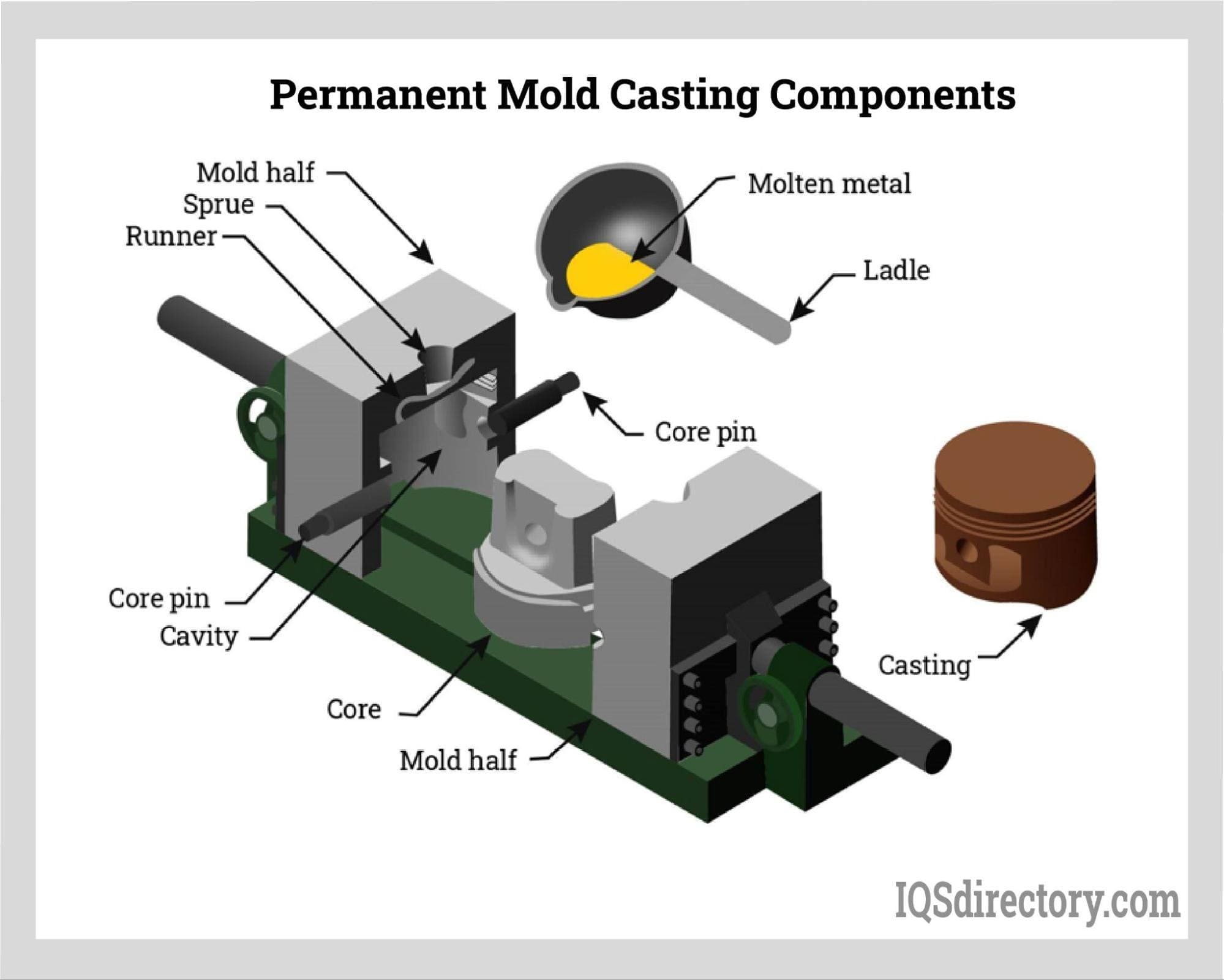
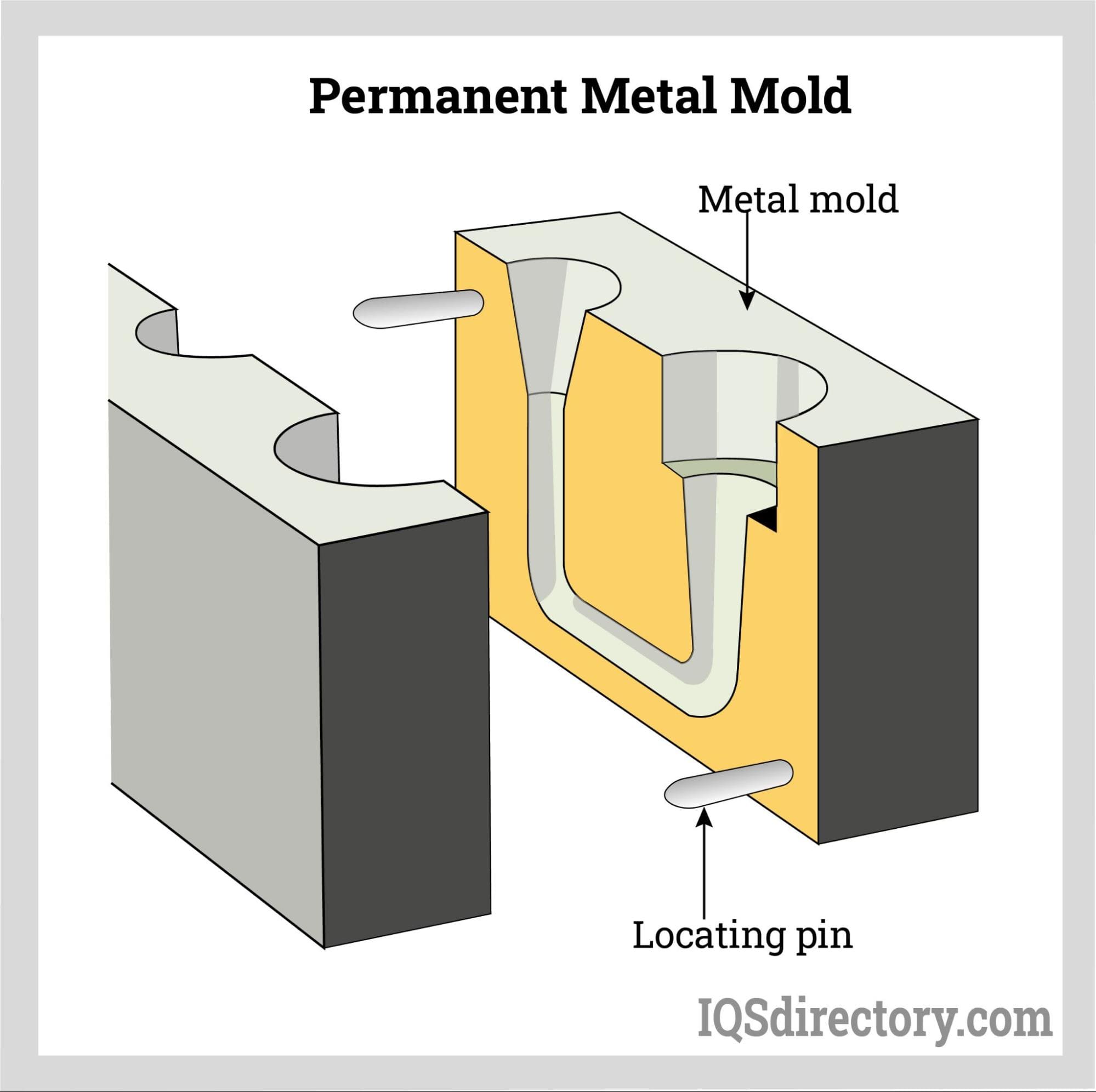
Permanent or metal mold casting uses steel or iron molds. Castings produced by this method have excellent dimensional accuracy, superior surface finishes, and exceptional mechanical properties. The method is ideal for producing parts with high consistency, high volumes, and tight tolerances.
Molds for permanent mold casting are made from high strength tool steel or cast iron. The molds are engineered to withstand repeated thermal cycling. In order to ensure the effectiveness of the mold, it is heated prior to pouring to reduce thermal shock and ensure consistent cooling. Methods for filling molds are gravity filling where molten ductile iron is poured into the mold or low-pressure filling where a pressure system forces molten metal into the mold. Graphite, boron nitride, or zirconia based coatings are applied to the mold prior to pouring to prevent sticking, making release easy, and to control surface finishes. Most permanent molds can last up to 100,000 shots, which varies according to alloy temperatures, mold cooling, and maintenance of the mold.
The major difficulty with permanent mold casting is the cost of tooling, which can be as high as $150,000, a cost that can be decreased by an increase in volume.
Centrifugal Casting
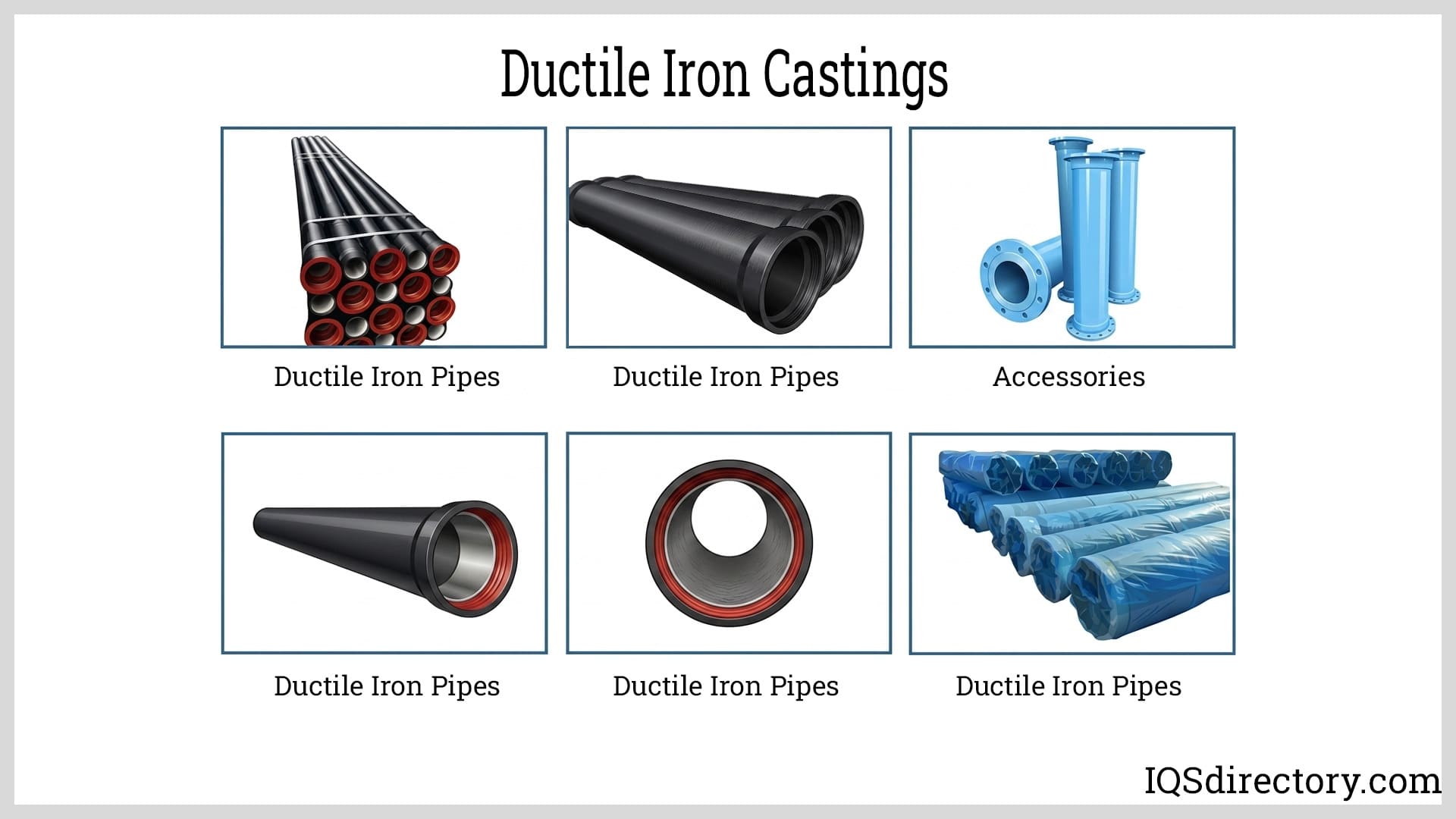
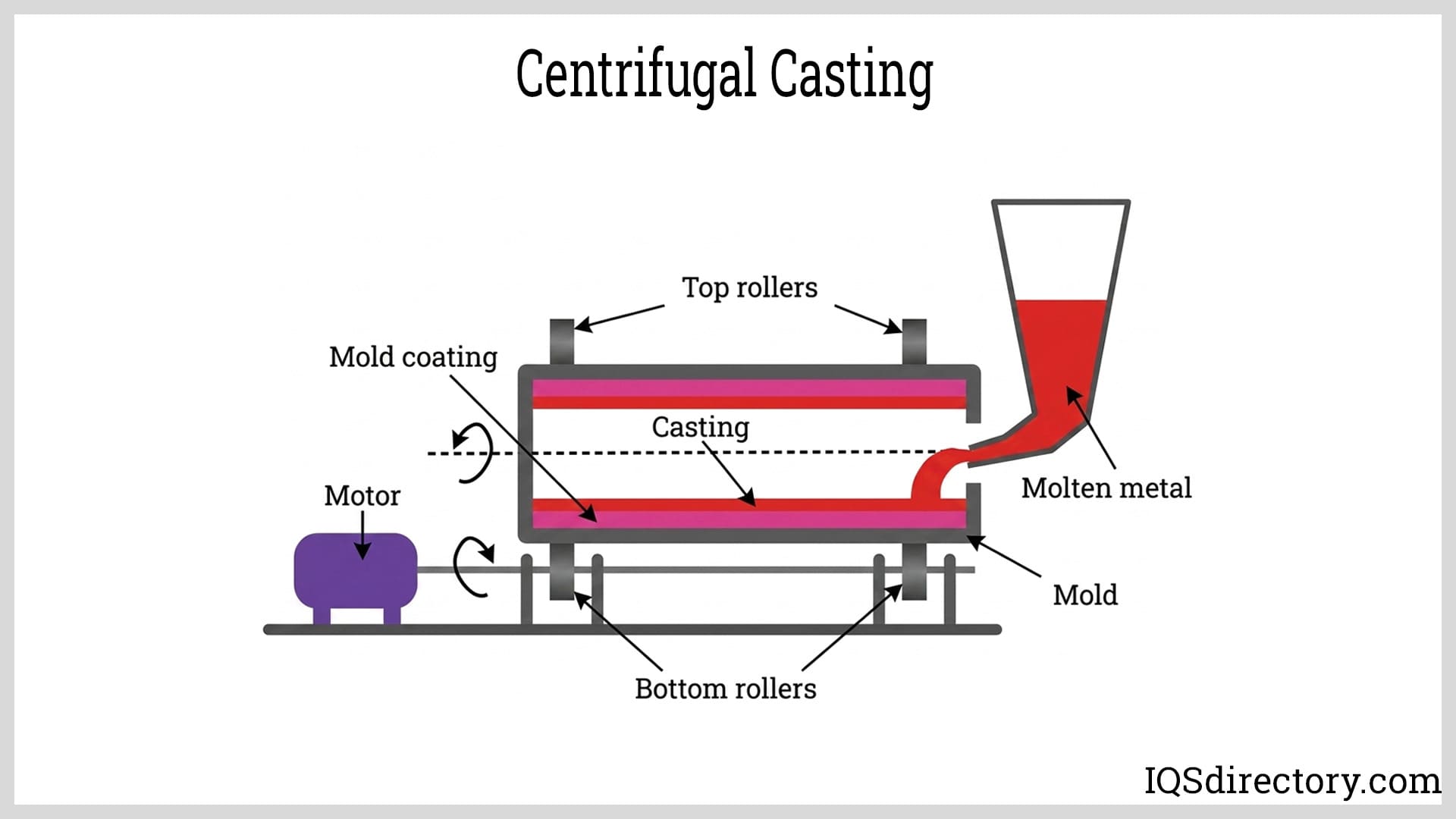
Centrifugal casting involves pouring molten ductile iron into a rotating mold that uses centrifugal force to distribute the molten metal to the walls of the mold. The molds for centrifugal casting can be oriented vertically or horizontally depending on the component to be produced. The method is normally used for pipes, bushings, liners, and sleeves. Parts with high density and exceptional structural integrity are the results of the casting process. Centrifugal casting is recommended for pressure retaining and wear critical components.
Molds for centrifugal casting are cylindrical and made of steel or iron. They are capable of rotating at 500 rpm up to 3000 rpm with higher speeds used for smaller parts. The rotation of the mold creates a radial temperature gradient with the outer layer of the mold cooling faster and forming a dense, fine grain structure. During the process, graphite nodules align radially, which enhances the strength of the casting. Long pipes are formed by horizontal centrifugal casting while vertical centrifugal casting is used for short cylinders.
The rapid rotation of centrifugal casting eliminates porosity and achieves a higher tensile strength than sand casting. The process can only produce axisymmetric shapes and requires the use of specialized spinning equipment and mold systems. To achieve dimensional accuracy, the interior of molds require extensive machining to remove metal fragments.
Investment Casting
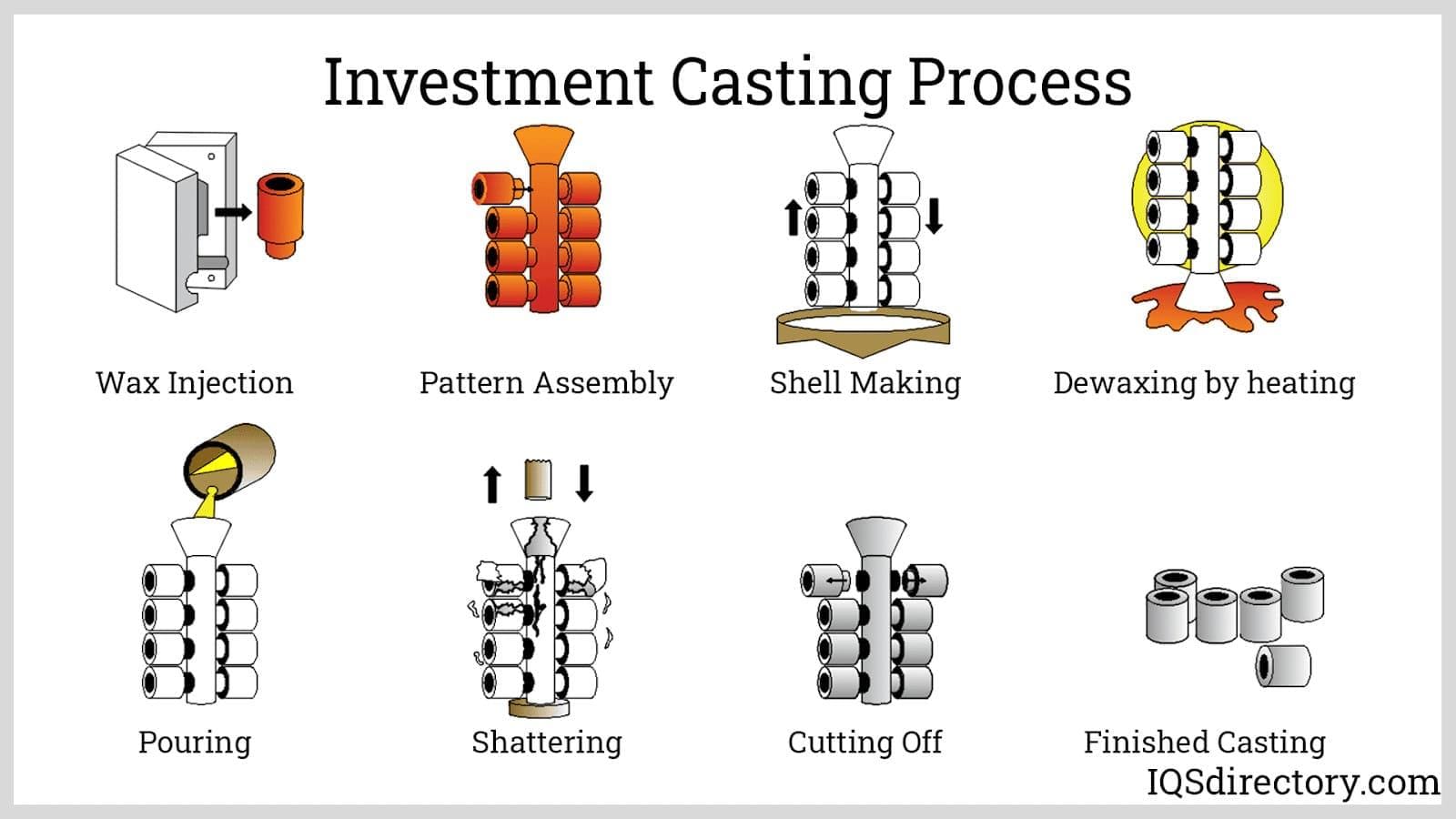
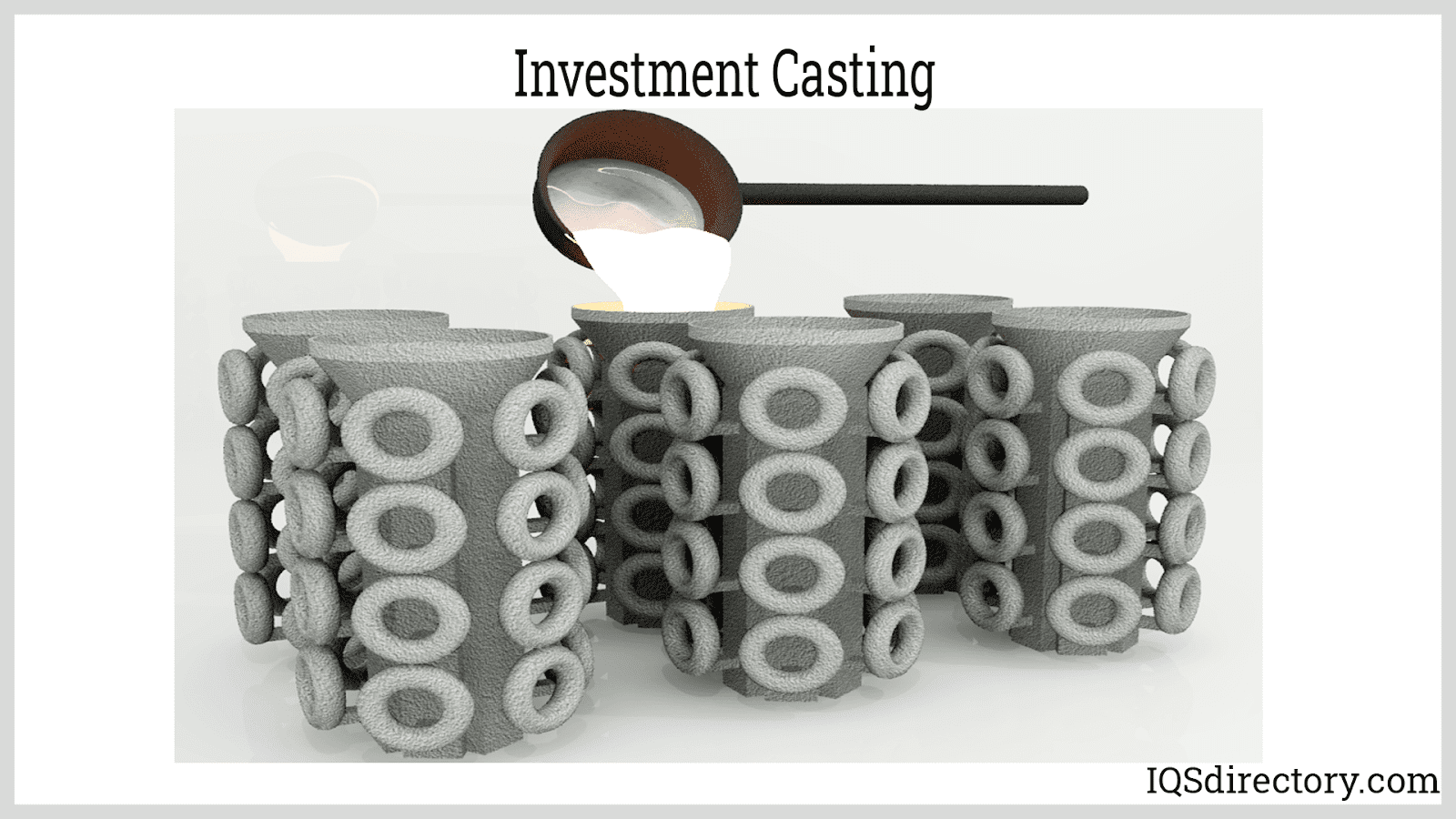
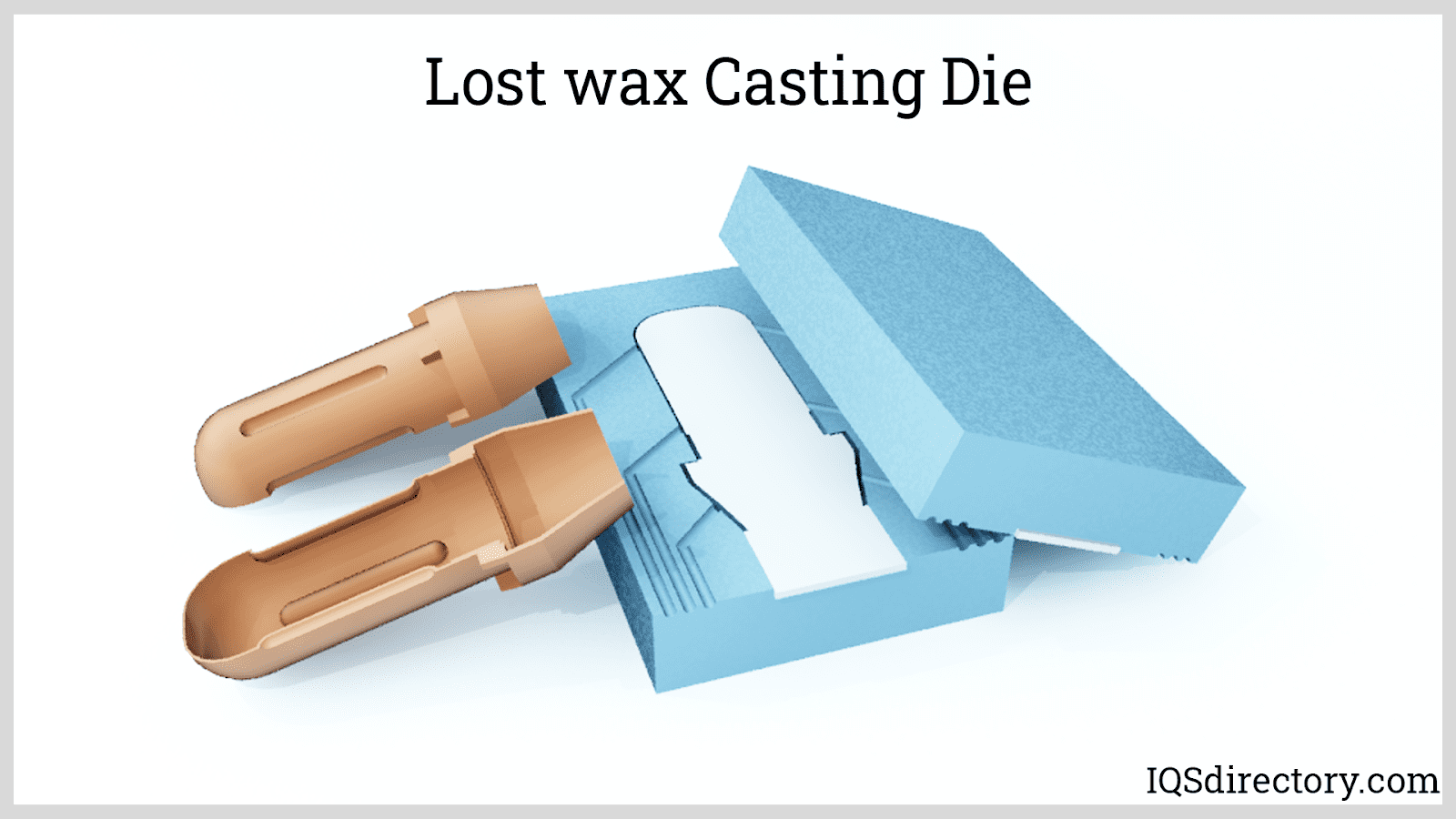
Investment casting or lost wax casting is used to produce complex geometries, tight tolerances, and exceptional surface finishes. Commonly used for steel and super alloy casting, it is becoming popular for ductile iron due to its use for manufacturing parts for aerospace, valve manufacturing, and medical engineering. Patterns for investment casting are formed by injecting wax into metal dies. The patterns are dipped in a ceramic slurry of silica or alumina and coated with fused silica to build the shell of the pattern. This aspect of the process is repeated multiple times before the pattern is allowed to dry.
The created shell is heated to melt the wax and harden the ceramic. Molten ductile iron is poured into the heated shell, a factor that creates fluidity and the microstructure of the casting. Once the shell cools, it is broken and a part or parts are removed, heated, and machined, which is not always necessary. The resulting castings are designed for applications that require exceptional performance and precision.
Investment casting tooling is expensive, which makes it ideal for mass casting and high-volume production. Aside from the increased cost, investment casting has longer cycle times than sand casting, leading to longer lead times. Per part costs are two to ten times higher than sand casting.
Continuous Casting
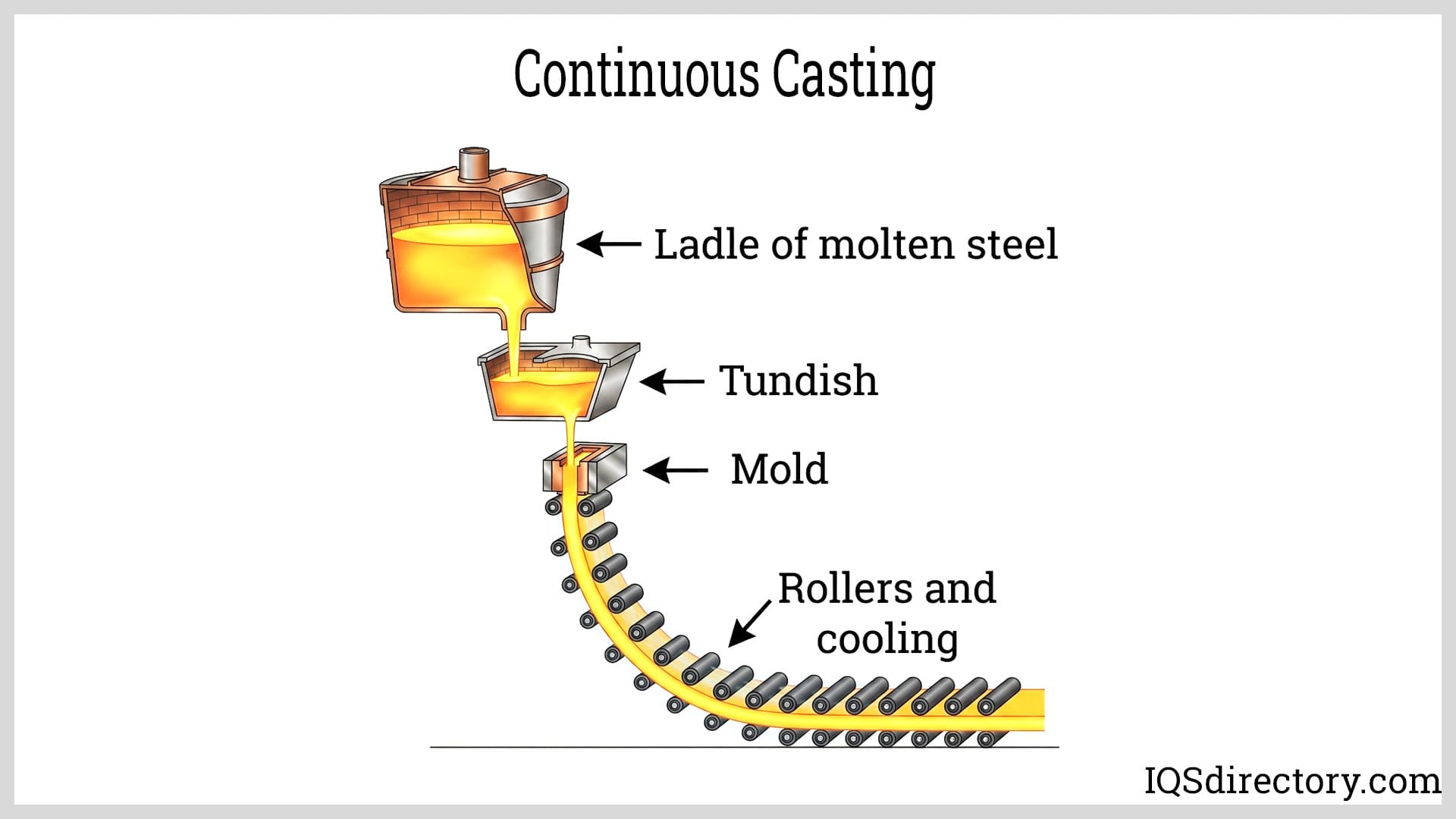
Continuous casting or stand casting is an industrial process that is designed to enhance the efficiency of casting by turning molten ductile iron into solid parts by passing the molten metal through water cooled molds. As the molten ductile iron is pulled or pushed through the mold, it solidifies and takes the shape of the mold. Ductile iron is stretched, shaped, and solidified, reducing waste, improving yield, providing cost efficiency, and enhancing quality. Using rollers and water-cooled molds, continuous casting lowers the chance of impurities and provides better thickness ratios.
Molten ductile iron is ladled into a tundish, wide mouthed funnel or container, that directs the flow of the molten ductile iron into the mold. The tundish is a reservoir that provides the continuous flow of the molten ductile iron as the ladle refills it. Water cooled molds are filled with the molten ductile iron where the metal partially solidifies and is given a basic grid. The grids, that are semi-solid, are sent to the strand guide to be stretched to the desired thickness as cooling continues. When fully solidified, the grades are straightened to achieve their designed dimensions.
Continuous casting provides near net shape production of long sections of pipe or rods. The controlled cooling of the iron promotes uniform graphite nodules and exceptional matrix refinement, which enhances tensile strength and elongation.
Counter Gravity Casting
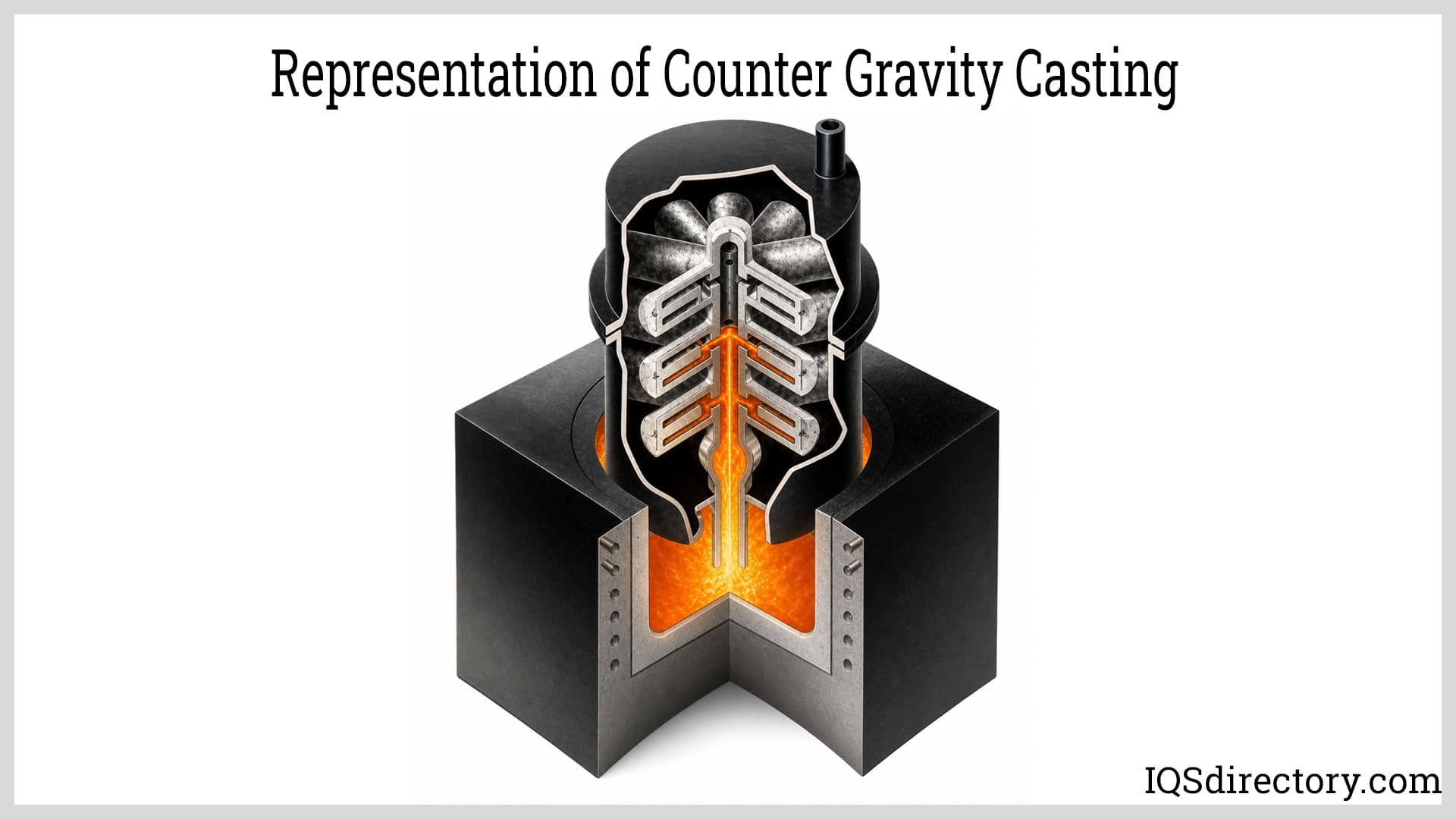
With counter gravity casting, the molten ductile iron flows in opposition to the force of gravity. Unlike common casting, where molten metal is poured into a mold, counter gravity casting forces molten ductile iron into the mold through the bottom of the mold, using an external driving force. The process allows molten ductile iron to overcome its natural gravity, resistance in the mold cavity, and any forms of external forces. The essence of counter gravity casting allows for greater control of the process. Filling speeds are controlled by changing the speed of the external driving force to meet the requirements of various processes.
Control of filling speed allows producers to determine formability and the internal quality of a casting, such as size and wall thickness. Filling and forming take place under pressure making the casting contour clear. Pressurized gas fills the gap between the sand mold and forms a protective layer between the molten metal and the sand mold. Castings have a fine grain, dense structure, and exceptional mechanical properties.
The term counter gravity casting is an identifier for four forms of casting, which are low pressure, vacuum, counter pressure, and adjusted pressure. The difference between the methods is in regard to how pressure and vacuums are used to fill the mold.
Post Casting Treatments
Ductile iron castings endure several post casting treatments to meet the mechanical, dimensional, and surface requirements of applications and producers. These processes ensure that a casting meets performance standards for automotive production, infrastructure, machinery, and pressure systems.
Heat Treatment – Micro structures and mechanical properties are enhanced and changed by heat treatment. It reduces residual stress caused by non-uniform cooling, changes pearlitic or martensitic structures to ferritic, refines grain structure, and produces martensitic or bainitic matrices for wear resistance.
Finishing – Finishing includes fettling, grinding, shot blasting, deburring, and surface smoothing. Machining takes the form of milling, CNC processing, turning, drilling, and boring to meet tolerance and dimensional requirements.
Surface Treatments – Surface treatments for ductile iron are the same as they are for all forms of metals and include painting, epoxy coating, zinc phosphate coating, galvanizing, nitriding, and carburizing.
Testing (NDT) – As with all industrial products, ductile iron casting companies test their products to ensure internal and surface integrity. This is especially true for applications where safety is critical. Various techniques are used to establish the integrity, performance, and quality of a ductile iron casting.
Post Casting Treatments
Method
Description
Application
Magnetic Particle Testing (MT)
Detects surface and near-surface cracks.
Automotive knuckles, suspension parts.
Ultrasonic Testing (UT)
Identifies internal flaws, inclusions, or porosity.
Thick-walled pressure components, gear blanks.
X-ray Radiography
Visualizes internal cavities and shrinkage porosity.
Aerospace, pump housings, and valve bodies.
Dye Penetrant Testing (PT)
Highlights surface cracks and porosity.
Machined sealing faces, small precision parts.
Tooling Costs for Ductile Iron Casting
Tooling costs for ductile iron casting vary widely between the different methods. Costs are determined by the complexity of the casting, size, number of cores, and cavitation. The initial costs are derived from the development of the pattern, die materials, and casting cores.
Sand Casting – Low, between $500 and $5,000
Shell Mold Casting – Medium, between $5,000 and $20,000
Permanent Metal Casting – High, between $50,000 and $200,000
Investment Casting – High, over $20,000
Lost Foam Casting – Medium, between $10,000 and $50,000
Continuous Casting and Counter Gravity Casting – Very high, over $100,000
Leading Manufacturers and Suppliers
Chapter 4: Comparison of Cast or Grey Iron to Ductile Iron
Ductile iron and cast iron are two of the most widely used manufacturing and construction materials. Both metals are made from iron but have very unique properties that differentiate them and make them suitable for different types of applications.
Cast Iron
Cast iron has been used for thousands of years to produce a wide assortment of tools and weapons. Over the centuries, it has become an essential for the production of cookware, pipes, and construction due to its durability and ease of casting. As with ductile iron, cast iron or grey iron is composed of iron, carbon, and silicon. Cast iron products are made by pouring or injecting molten iron into molds. The structure of cast iron consists of graphite flakes, which gives it its grey color and its mechanical properties.
Grey cast iron has a distinctive microstructure and appearance. When it is cast, carbon precipitates out as graphite flakes during cooling. The flakes are what give the metal its greyish color when it is polished or fractured. They give grey cast iron its mechanical properties. When closely examined, the graphite in grey cast iron appears as flat with an interconnected structure. How the flakes are formed depends on how the metal is cooled and its chemical composition. The silicon in the metal stabilizes the graphite formation and prevents the carbon from forming hard, brittle structures.
The wide use of grey cast iron is due to its low cost of production, which is less than ductile iron. Its high hardness gives it excellent wear resistance. The main use for grey cast iron is in applications that require stability and noise reduction. The downsides of grey cast iron are its brittleness and tendency to corrode over time. It can rust and degrade if not properly maintained.
Ductile Iron
Ductile iron, unlike grey cast iron, was developed in the middle of the 20th century and is produced with small amounts of magnesium added that changes the graphite structure into nodules instead of flakes. The change in the microstructure from grey cast iron to ductile iron significantly improves the toughness and ductility of the metal.
The structure of ductile iron makes it far less brittle than cast iron enabling it to be bent and deformed without breaking. The various grades of ductile iron have exceptional yield and tensile strength as well as elongation, which is not present in cast iron. Ductile iron has superior strength and toughness compared to cast iron, a factor that makes it ideal for high stress applications. Since it can bend without breaking, it is able to endure stressful applications. The unique structure of ductile iron makes it resistant to corrosion enabling it to be used outdoors in moist environments.
The special processes used to produce ductile iron make it more expensive. Complex and intricate steps are necessary during the manufacturing process to ensure the quality and performance of the iron. It is heavier than cast iron, which has to be considered for weight sensitive applications.
Comparison Chart for Ductile Iron and Grey Iron Castings
Characteristic
Ductile Iron
Gray Iron
Castability
no preference
Ease of Machining
✔
Vibration Damping
✔
Surface Hardenability
no preference
Modulus of Elasticity
✔
Impact Resistance
✔
Corrosion Resistance
no preference
Strength/Weight
✔
Wear Resistance
no preference
Cost of Manufacture
✔
Ductility – Ductility is the percentage of elongation a metal can endure under tension. The magnesium in ductile iron gives it a higher percentage of elongation.
Tensile and Yield Strength – The minimum tensile strength for ductile iron is 60,000 psi with a minimum yield strength of 40,000 psi. Grey iron does not have a measurable yield strength but has a minimum tensile strength of 20,000 psi.
Impact – Impact is a measure of a metal’s ability to resist fracturing under impacts. Ductile iron can withstand seven foot pounds of impact while grey iron can withstand two pounds of impact.
Thermal Conductivity – Ductile iron has lower thermal conductivity than grey iron, which transfers heat through its graphite flakes.
Vibration Dampening – grey iron dampens vibrations more effectively than ductile iron due to its non-elastic behavior at low stress.
Welding – Ductile iron is easier to weld than cast iron due to cast iron being brittle. During the welding process, cast iron cracks or warps. Ductile iron can be welded using any of the normal welding processes.
Microstructure – The primary differences between cast iron and ductile iron are their microstructure and mechanical properties. Ductile iron, with its nodular graphite, has exceptional ductility and toughness, which makes it less brittle.
Outdoor Use – Cast iron can be used outdoors but needs to be coated to protect it from the environment. Over time, exposure leads to rust and degradation. Ductile iron is resistant to corrosion, making it the better choice for outdoor use.
Cost – Cast iron is the more effective choice in regard to cost since its processing is less demanding or critical. It is budget friendly. The superior mechanical abilities of ductile iron make it preferable due to its longevity, durability, and flexibility.
Black Graphite Distribution
There is a variation in the distribution of black graphite between grey cast iron and ductile iron. The differences in the distribution are the factors that lead to the fracturing in grey cast iron, which has black graphite strands instead of nodules. When shock loads are applied to grey cast iron, cracks spread along the strands. The nodules in ductile cast iron are shock resistant and prevent fractures or cracks.
Grey cast iron is normally chosen for its cost, vibration dampening, and superior thermal conductivity. Ductile iron is used for parts that need to endure high pressure, resist impacts, and are capable of bending under stress.
Chapter 5: Ductile Iron Casting Designing
The strength and durability of ductile iron castings make them an ideal metal for a wide range of products. Regardless of the many positive aspects of ductile iron, it is important to take care during the design phase of the casting process. Incorrect design features can lead to product failure. At the top of the list of design mistakes, there are five that stand out that need to be carefully monitored. They are sharp external corners, rapid cross-sectional changes, alignment of cross members, positioning of ribs, and insufficient machining allowance.
Sharp External Corners
Sharp external corners cool faster, which leads to higher and inconsistent hardness that affects the mechanical properties of the corners. External corners are stress concentrators and can have a brittle microstructure. The 90° of corners results in cracks, premature solidification, and hard spots that are difficult to machine. In sand molding, sharp corners break off during molding, which leads to sand incursion in the casting. The use of 1/8” minimum inside radius and fillets between intersecting features create smooth transitions between sections.
Rapid Cross Sectional Changes
During casting, ductile iron shrinks, which necessitates feeding more metal into the shrinking zones. Designs should allow for dimensional increases in a consistent manner with risers that can feed the needed metal. Rapid cross-sectional changes cause non-uniform cooling that lead to shrinkage, hot tears and warping. This phenomenon occurs when the design does not allow dimensions to increase in a consistent manner in a location supplied by a riser feed. It compromises the wall thickness of a part. Since ductile iron shrinks as it solidifies, uniform wall thickness helps ensure shrinkage is eliminated.
Aligning Cross Members
If cross members are aligned, uneven cooling occurs which leads to hot spots, distortion, and weaknesses. Cross members should be staggered at their intersection, if they need to be brought together. Aligned cross members create hot tears, warping, and reduced structural integrity. Aside from staggering intersections, cross members should be tapered or gradually change in thickness to avoid thermal gradients.
Positioning Ribbing
Ribbing should not be placed on both sides of a casting in the same location since it creates hot spots. As with cross member alignment, ribs should be misaligned on either side of a casting section and 80% as thick as the section to which they are attached. Ribs should be shaped for uniform cooling to solidify before the casting section.
Not Enough Machining Allowance
The minimum machining allowance for small casting is 2.5 mm while the allowance for larger parts should be over 300 mm in length or diameter with 5 mm allocated for irregular shaped surfaces and surface defects. Since the accuracy and finish from sand casting is poor, machining is required to achieve proper design parameters. During the design phase, a machining or finishing allowance is added to the pattern dimensions, which has to meet the requirements of the piece. Not enough machining allowance creates difficulties for the casting staff.
Factors Required for Designing Ductile Iron Castings
Aside from designing a component for functionality, it also has to be designed for manufacturability, performance, and cost. Smart design up front saves on production time, costs, and the life of a ductile iron cast part.
Wall Thickness
As with all forms of casting, wall thickness is a major consideration. Thick to thin transitions cause uneven cooling that lead to shrinkage, porosity, and internal stress. All wall sections should be uniform with generous radii and tapers at transitions.
Draft Angles
Draft angles on external walls should be 3° with a slight taper added to vertical surfaces for easy pattern removal. Internal walls should have a slightly greater draft angle which should be included in deep pockets.
Core Requirements
Cores are used for hollow sections or undercuts. They add complexity, cost, and risk to a casting and should be eliminated when possible. Open pockets or redesigned geometry should be used in place of deep cores. Foundries work closely with their clients during the design process in order to avoid errors and lower costs. Early knowledge of cores helps in the efficient manufacturing of a component.
Section Limits
Although ductile iron flows well, it does have limits regarding wall thicknesses. Too thin walls can lead to incomplete filling or structural weakness. The minimum wall thickness should be 0.3”. Staying within this thickness ensures the integrity of a ductile iron casting and prevents defects or failures.
Providing for Machining
A design should include a flat mounting surface with easy to reach internal features and proper orientation of a part for machining. It is important to consider machining stock, datum surfaces, and necessary access points for ease of machining.
Machining of ductile iron castings involves turning, milling, drilling, and grinding. Special considerations are necessary when preparing to machine ductile iron castings due to the nature, properties and characteristics of ductile iron.
Turning Parameters for Grade 65-45-12
Cutting Speed: 400–600 surface feet per minute (sfm)
Feed Rate: 0.008–0.012 inch/rev
Depth of Cut: 0.020–0.100 inch
Milling Parameters for Grade 80-55-06
Cutting Speed: 300–500 sfm
Feed Rate: 0.004–0.008 inch/tooth
Depth of Cut: 0.040–0.120 inch
Drilling Parameters for Grade 65-45-12
Cutting Speed: 150–250 sfm
Feed Rate: 0.002–0.006 inch/rev
Drill Point Angle: 118°–135°
Grinding Parameters for Grade 100-70-03
Wheel Speed: 5000–6000 sfm
Workpiece Speed: 50–100 sfm
Depth of Cut: 0.0005–0.002 inch/pass
The graphite nodules and hard matrix of ductile iron causes abrasive wear on tools. High strength grades, such as 100-70-03, accelerate flank and crater wear. Achieving high quality surface finishes is difficult due to the forming of built-up edges and irregularities. The graphite nodules cause smearing while the hard phases have micro chipping.
A major problem regarding all machining of ductile iron castings is the heat generated by the strength and hardness of the iron. Heat causes thermal expansion, dimensional inaccuracies, and tool degradation, which necessitates the use of coolants or lubricants to reduce heat buildup.
It is essential and critical that during the machining of ductile iron castings that they be placed in a rigid setup and vibration dampening tool holders to minimize chatter and vibrations. Machining produces short, abrasive chips that clog tools or damage equipment. The created dust from machining is conductive and affects electrical systems, which requires the use of dust collecting systems, such as shop vacs.
The production of ductile iron castings is challenging and requires a great deal of thought and preparation. The end result is a collection of highly resilient and beneficial parts that are long lasting, highly durable, and exceptionally strong and resilient.
Conclusion
Ductile iron casting is a modern version of cast iron with a different microstructure than cast iron or grey cast iron. The unique microstructure gives ductile iron castings the ability to withstand bending and shock loading without cracking.
Ductile iron is made from steel or iron scrap with pig iron being the primary source due to its purity. Pig iron has low residual or harmful elements.
Several matrices make up the structure of ductile iron, including pearlite and ferrite, which are the most used and most popular.
The grades of ductile iron vary in accordance with their yield strength, tensile strength, and elongation. The yield and tensile strengths of ductile iron vary from 40 to 50 thousand up to over 100 thousand.
The development of ductile iron in the middle of the 20th century was due to the weakness of cast iron, which is brittle and has power tension.
Leading Manufacturers and Suppliers
Related Posts
Iron Castings
An iron casting is a hard product obtained from combining iron with carbon. This can be readily cast in a mold, and it contains a higher proportion of carbon compared to steel. The proportion typically ranges from 2 to 4.3...
Types of Casting Processes
The casting process is an ancient art that goes back several thousand years to the beginning of written history. The archeological record has finds that document the use of the casting process over 6000 years ago around 3000 BC or BCE...
Aluminum Casting
Aluminum casting is a method for producing high tolerance and high quality parts by inserting molten aluminum into a precisely designed and precision engineered die, mold, or form. It is an efficient process for the production of complex, intricate, detailed parts that exactly match the specifications of the original design...
Die Casting
Die casting is a high pressure metal casting process that forces molten metal into a mold. It produces dimensionally accurate precision metal parts that have a flawless smooth finish...
Investment Casting
Investment casting is a metal working process that uses a ceramic shell built over a wax pattern to produce parts with extraordinarily uniform and smooth surfaces. The wax pattern is produced from an aluminum die.The final products of investment casting are without parting lines, mold half marks, or other deformities...
Lost Wax Casting
Lost wax casting is a casting process that uses a wax pattern to create a ceramic mold for creating a part or product design. It has been known over the years as lost wax or precision casting due to its accuracy in recreating parts with precise tolerances...
Permanent Mold Castings
Permanent molding casting is a casting process that uses strong durable reusable molds to produce parts and components using molten metals. The molds for permanent mold casting are made from steel or...
Sand Casting
Sand casting is a manufacturing process in which liquid metal is poured into a sand mold, which contains a hollow cavity of the desired shape and then allowed to solidify. Casting is a manufacturing process in which...