Please fill out the following form to submit a Request for Quote to any of the following companies listed on
Get Your Company Listed on this Power Page
Introduction
A definition of a hazardous waste containers using United Nations certification criteria with a list of hazardous waste container distributors
You will learn:
What is a Hazardous Waste Container?
United Nations Symbols for Hazardous Waste Containers
Types of Hazardous Waste Containers
Industries that Rely on Hazardous Waste Containers
And much more ...
Chapter 1: What is a Hazardous Waste Container?
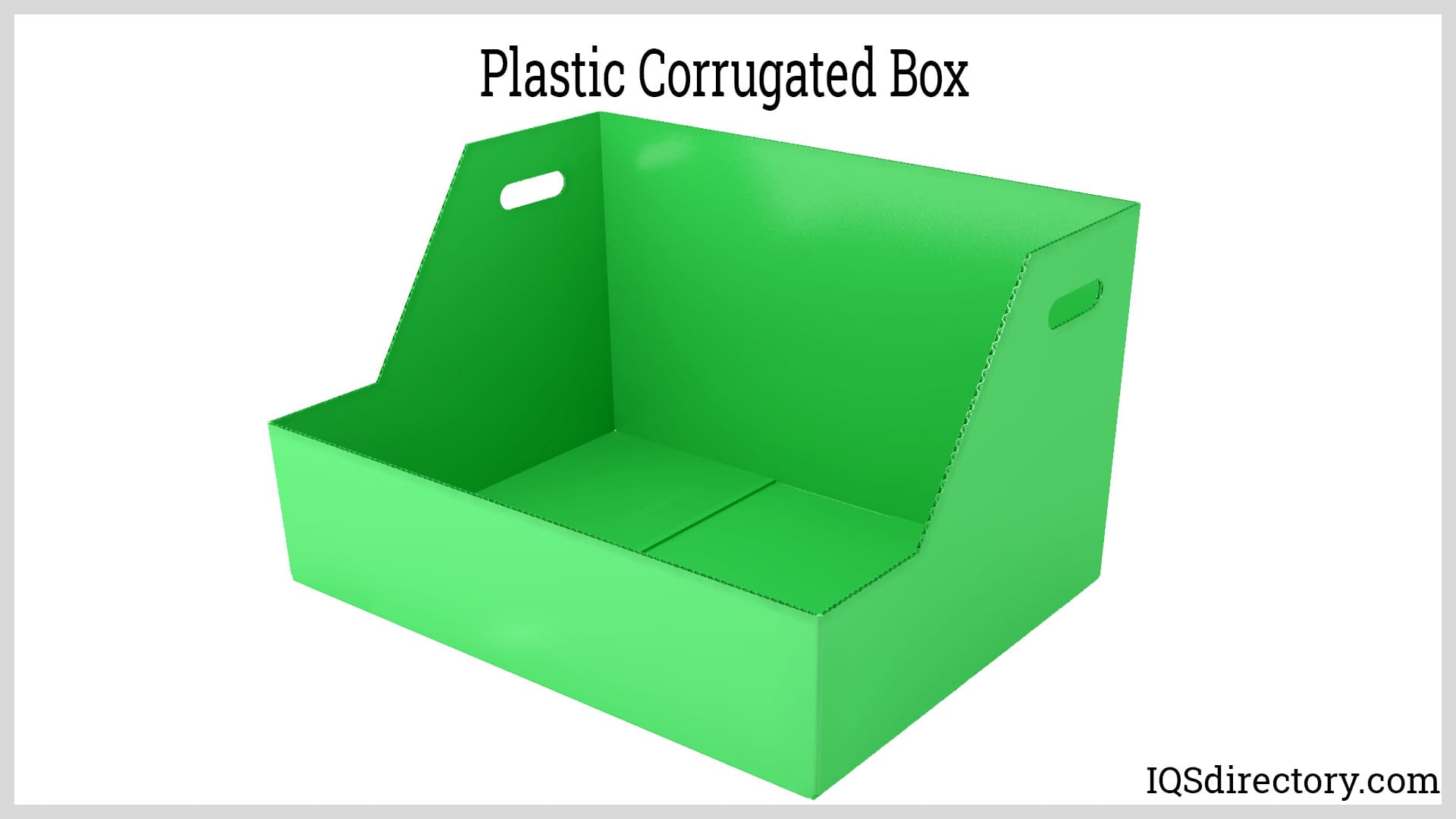
A hazardous waste container is a portable vessel designed for the safe containment, storage, transport, treatment, and handling of hazardous waste materials. In industrial, laboratory, and manufacturing environments, the right waste container helps reduce spills, leaks, vapor release, and environmental contamination while supporting regulatory compliance. The most common form of hazardous waste container is a 55-gallon drum made of plastic or metal, but other approved container types include pails, test tubes, buckets, bags, plastic boxes, cardboard boxes, railroad tankers, shipping containers, and tanker trucks. Selecting the correct drum, tote, or shipment container depends on the waste stream, compatibility, and required capacity.
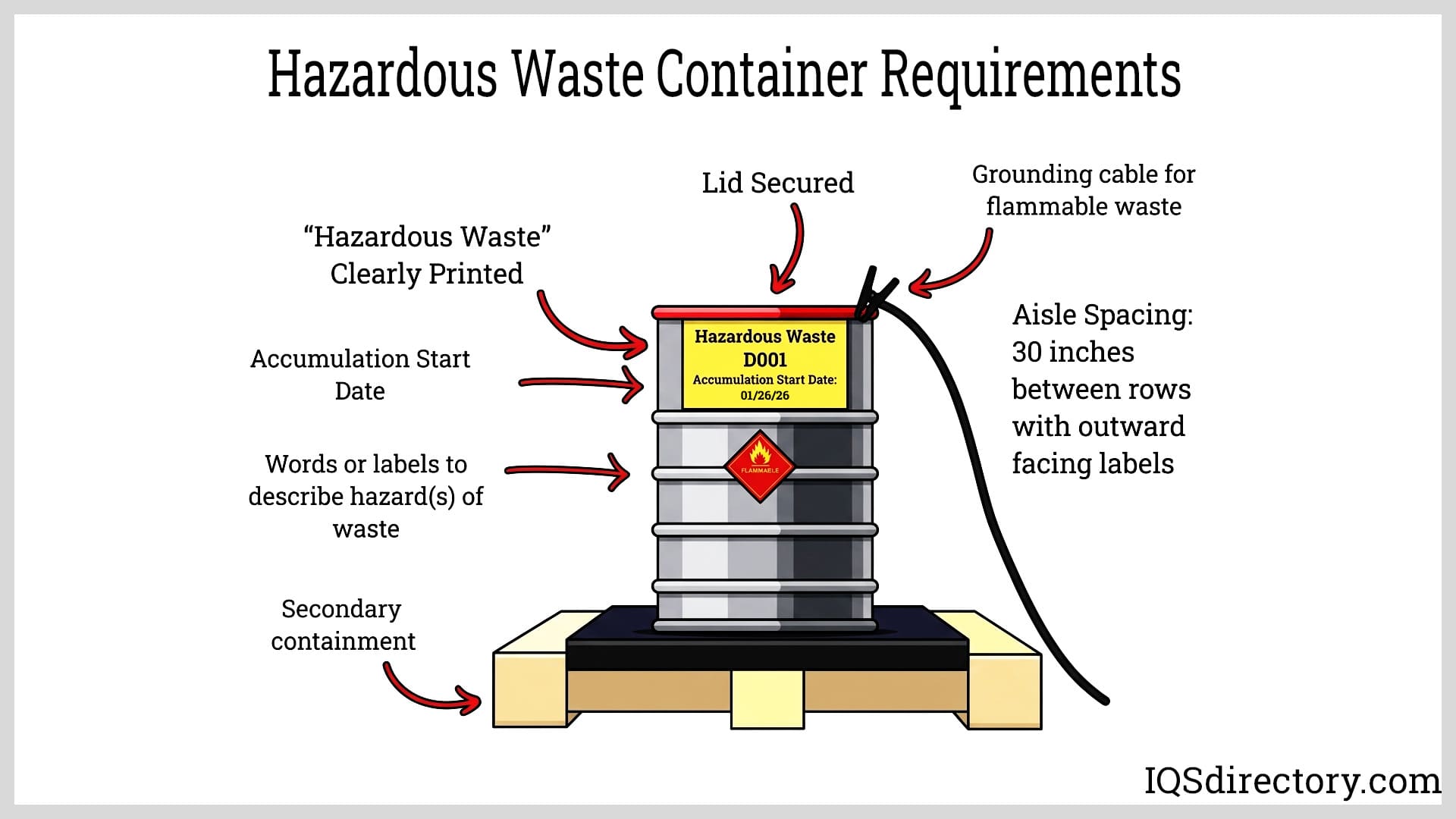
Regulations regarding the handling of hazardous waste containers are stipulated by the Resource Conservation and Recovery Act (RCRA) of 1976. The purpose of RCRA is to clearly define how hazardous waste containers are to be handled, stored, labeled, and managed to help protect workers and the environment. The Environmental Protection Agency (EPA) outlines the methods and procedures for the handling of hazardous waste containers in 40 CFR Part 264/265, Subpart I, which the EPA defines as good management practices. These standards address important container management requirements such as keeping containers closed, inspecting for damage or corrosion, preventing incompatible waste mixing, and maintaining proper secondary containment where needed.
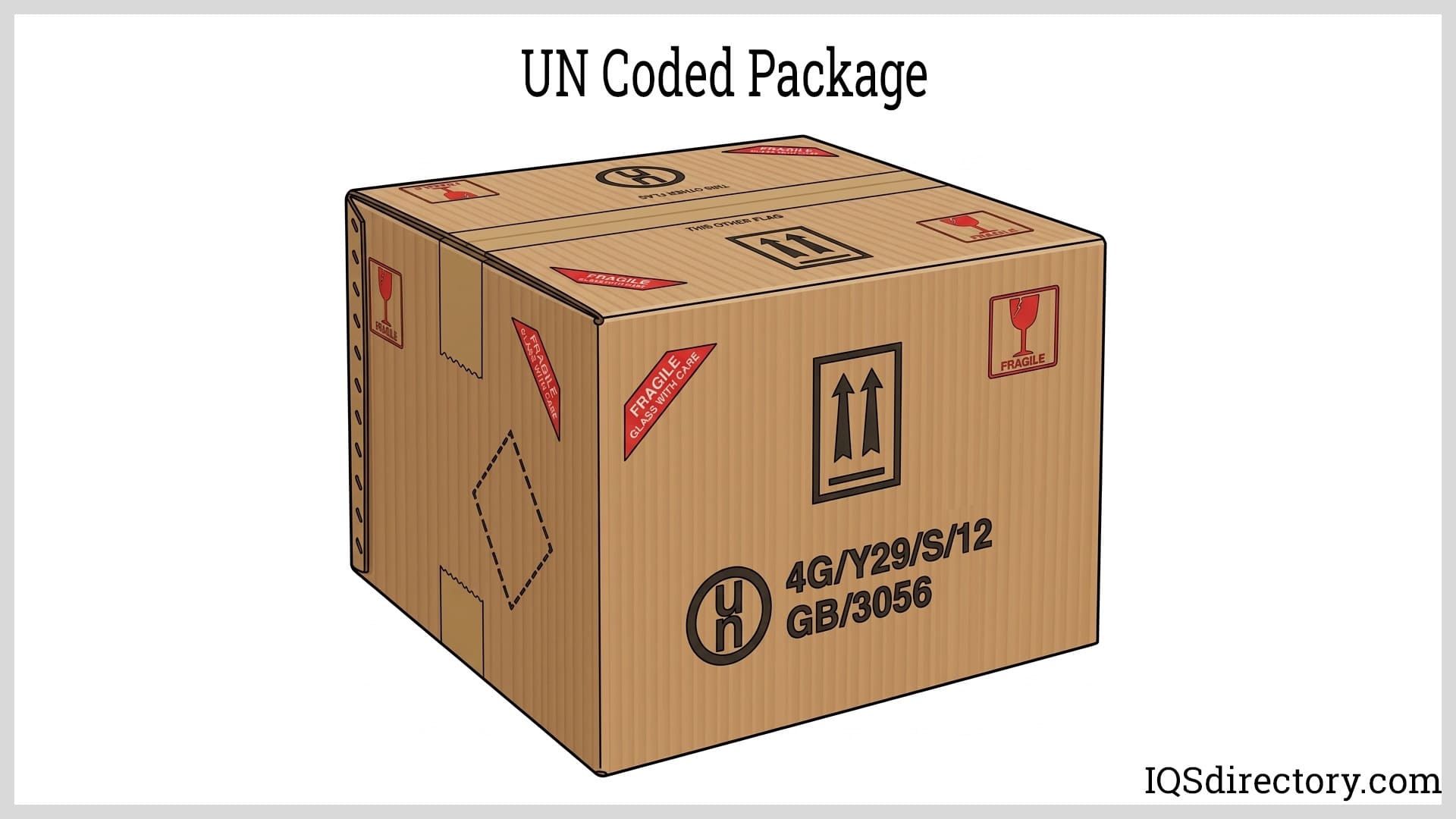
In conjunction with the RCRA and EPA, the United Nations (UN) has a set of identifiers for containers that conform to the UN’s standards for packaging materials, 49 CFR 178.503. The UN markings identify for workers and handlers the details regarding the materials in a container. Included in the markings are the UN symbol, packaging codes, performance standards, country of origin identification, and other clarification symbols. These UN-rated packaging and hazardous materials labels help buyers compare container performance, select the right packaging for shipping hazardous materials, and confirm that a container meets the required safety and regulatory specifications for storage, transport, and disposal.
Chapter 2: United Nations Symbols for Hazardous Waste Containers
Producers of hazardous waste materials are responsible for providing proper identification of containers for hazardous waste. These companies and organizations are categorized as Large Quantity Generators (LQS) and Small Quantity Generators (SQG). Groups that fall into these categorizations are required to identify hazardous waste material when it's accumulated, stored, and prepared for shipping. The length of time of the accumulation phase and storage phase for LQS and SQS varies due to the difference in the amount of hazardous waste they collect. LQS companies have 90 days or less to accumulate and store hazardous waste while SQS companies have 180 days or less.
The United Nations code system for hazardous and dangerous substances consists of a four-digit number that have been published by the United Nations Recommendations on the Transport of Dangerous Goods, Model Regulations (UNRTDG), UN Model Regulations Rev. 23 – UNECE. Some hazardous substances have their own number while others are part of groups identified as chemicals, products, and other forms of waste. For example, UN 1789 is the indicator for hydrochloric acid, while UN 1993 refers to flammable liquids, and UN 2794 indicates the presence of batteries filled with acid.
United Nations Rating Codes for Hazardous Waste Containers
The four-digit codes devised by the United Nations are used to identify the different types of hazardous waste. In conjunction with these codes, the United Nations has developed a set of rating codes for hazardous waste containers, which are placed on the outside surface of containers. There are seven parts to the rating system that identify the packaging type, material, group, mass, pressure or inner packaging, year of manufacture, location of manufacture, and manufacturing code. The rating code system is divided into hazardous waste containers for liquids and those for solids.
Container Type and Container Material
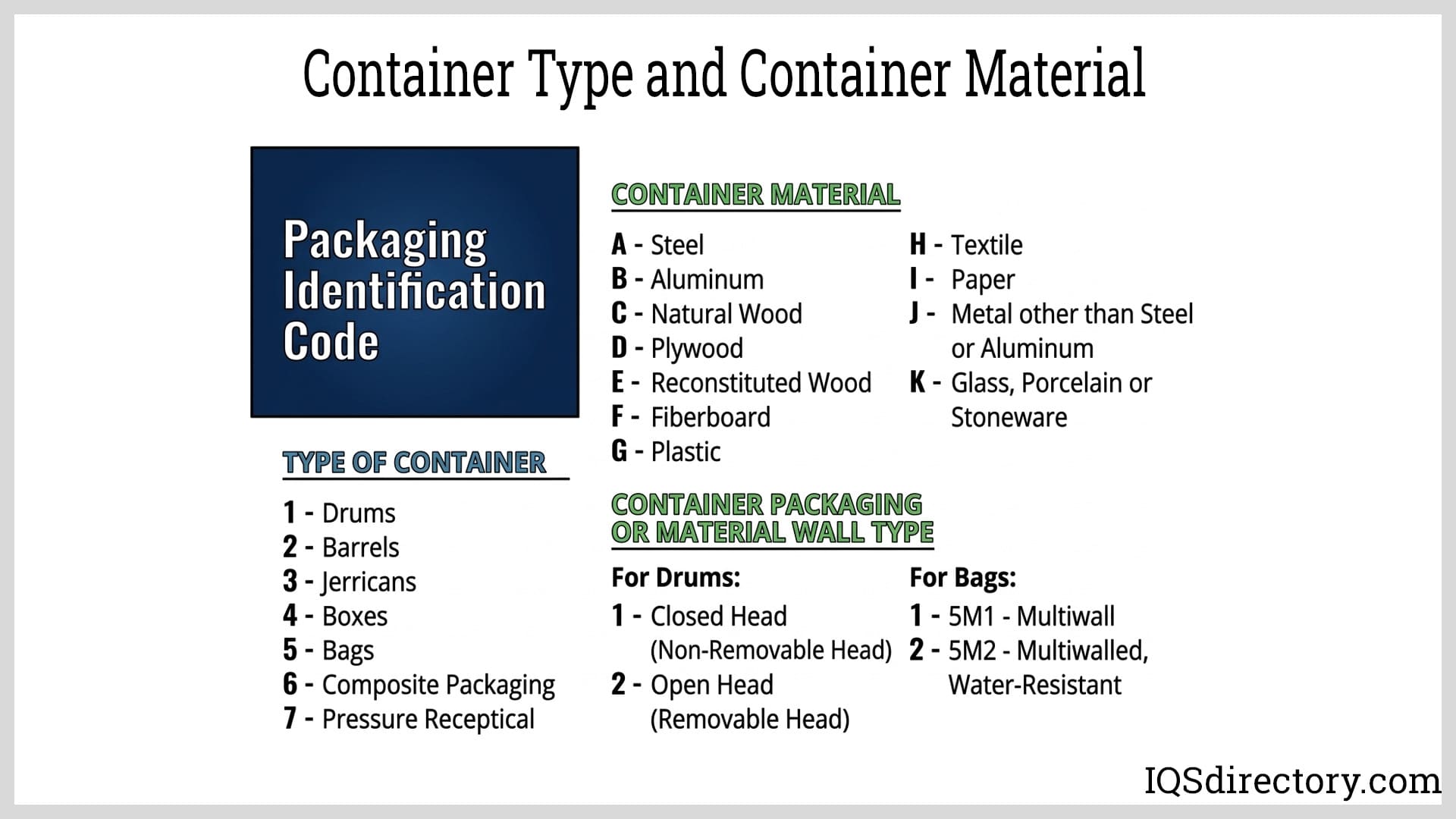
UN rating codes are indicated by the UN logo that appears first in the form of a lower case “u” and lower case “n”, . The UN logo is followed by the code for the type of container and an identifier for the type of material from which the container was manufactured. Seven numbers are used to indicate the container type while ten letters are used to indicate the material. The numbers 1 and 2 indicate if a drum is open or closed head. A common rating for liquid hazardous waste containers is 1A2 with 1 meaning a drum, A for steel, and 2 for closed head.
Group Level Codes and Gross Mass or Specific Gravity
The group level code identifies the hazard level of hazardous waste and has the specific gravity of liquids or the gross maximum mass in kilograms (kg) for solids. In essence, the three letters used for the group level codes indicate the level of danger associated with a contained hazardous substance. Each hazardous waste container is tested and approved in regard to its ability to protect against the danger it presents.
The three letters used to identify the dangers of the contents of a container are X, Y, and Z with X packaging group I having the highest level of danger. Y packaging group II indicates a medium level of danger while Z packaging group III is the least dangerous or hazardous. Although X is capable of transporting the most hazardous of substances, it is also able to transport liquids or solids from categories Y and Z.
After each of the three letters, X, Y, Z, there is a number that indicates the gross mass for solids or specific gravity for liquids. In the case of liquids, the companion number compares a liquid’s density to the density of water. The number with solids is the specific mass of the material being shipped or the contents per unit of volume.
Test Results for Packaging
After the type and kind of packaging and the level of danger codes come the results of the testing of packaging materials. In order to meet UN standards, packaging materials endure a series of tests to ascertain the safety, integrity, strength, and durability of packaging. The tests are applied in accordance with the nature of the hazardous materials to be shipped. The type of test is determined by the category into which the substance to be shipped corresponds. Included in the nine categories of hazardous materials are explosive, flammable, toxic, and corrosive materials.
To receive UN hazardous packaging certification, hazardous waste containers have to undergo a set of tests to determine their durability, stability, strength, and longevity. The common basic tests are drop test, leakproofness test, pressure test, stacking test, burst test, and drilling test. These six tests are approved by UNECE and used by manufacturers to establish the integrity and viability of their hazardous waste containers.
Drop Test – There are several forms of drop tests that are performed on packaging where a package is dropped in controlled conditions on its edges, corners, and sides. The free fall drop test examines the structural integrity of the material of packaging by dropping it from various heights. The test is performed by specially designed equipment that follows the requirements outlined by the UNECE.
Leakproofness Test – Hazardous Materials Regulations (HMR) of the United States Department of Transportation (USDOT) requires that hazardous waste (HAZMAT) containers meet the specifications of the United Nations. The leakproofness test is performed for the containment of liquid hazardous waste in accordance with 49 CFR 178.604 and is completed using compressed air or a suitable gas. The container is placed under water while internal pressure is applied with the test length being five minutes or more.
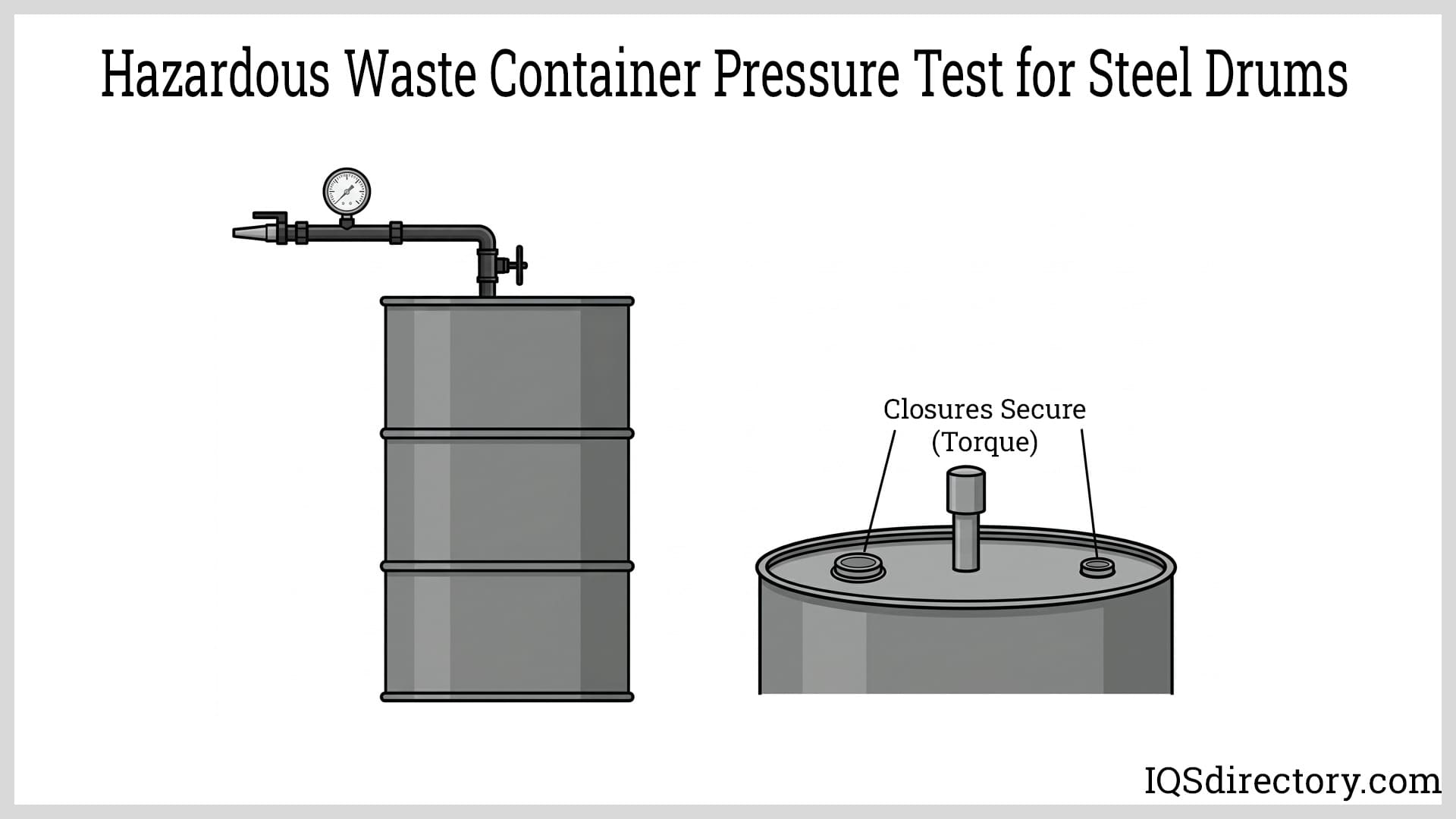
Pressure Test or Hydrostatic Test – Pressure testing for hazardous waste containers is referred to as hydrostatic testing. It includes filling a container with water and applying sufficient pressure that is above a container's Maximum Allowable Working Pressure (MAWP). Much like leakproofness testing, pressure testing is designed to detect leaks and deformations. For the test to be valid, the pressure must be applied evenly and continuously without fluctuations. Pressure testing is a special form of testing designed to ensure the integrity of hazardous waste containers due to the nature of their contents.
Stacking Test – The purpose of the UN packaging stacking test is to determine if a hazardous waste container can withstand the physical pressure when other containers are stacked on it. Stacking force is applied to the top surface of a container that is comparable to that of other containers. For a hazardous waste container to pass the test, it must not show any signs of deterioration, deformity, or reduction in strength. Different formulations of the test are designed in regard to liquid hazardous waste and solid hazardous waste. The level of pressure is set in accordance with the parameters of UN packaging requirements.
Burst Test – The burst test is a very common test that is used for a wide variety of containers including plastic bags, boxes, and various metal containers. In the case of hazardous waste containers, the burst test is necessary and comparable to the pressure test. The essence of the burst test is to measure the burst strength of packaging material in kilograms per square centimeter. Referred to as the Mullen Burst Test, the test measures how much force it takes to burst a container. The burst factor is calculated using the burst strength and density of the container’s material. During the burst test, pressure is increased in increments of 20% from the initial application of pressure. As the pressure increases, a container is examined for deformations, leaks, and cracks.
Drilling Test – The purpose of the drilling test is to measure the resistance of a hazardous waste container to sharp objects. During the test, sharp materials are applied to the surface of a container at different speeds with different force.
The six tests listed above are the basic tests that are performed to receive a UN certification but are not the only tests used on containers. Other tests that are carried out for materials that are considered to be hazardous are the leak test, cooperage test, vibration test, pressure differential test, and hot water bath test. Each of the tests are completed to match the rigor that hazardous waste containers will endure during transport
Final Sections of the UN Packaging Codes
The last three sections of UN packaging codes are informational in regard to the container and its origins. The UNECE requires that a short history of a container be visible in order to ascertain where it is from and when it was made. In order to establish the viability of a hazardous waste container, identifying data regarding the organization or company that gave the container its status as an UN certified approved hazardous waste container is provided.
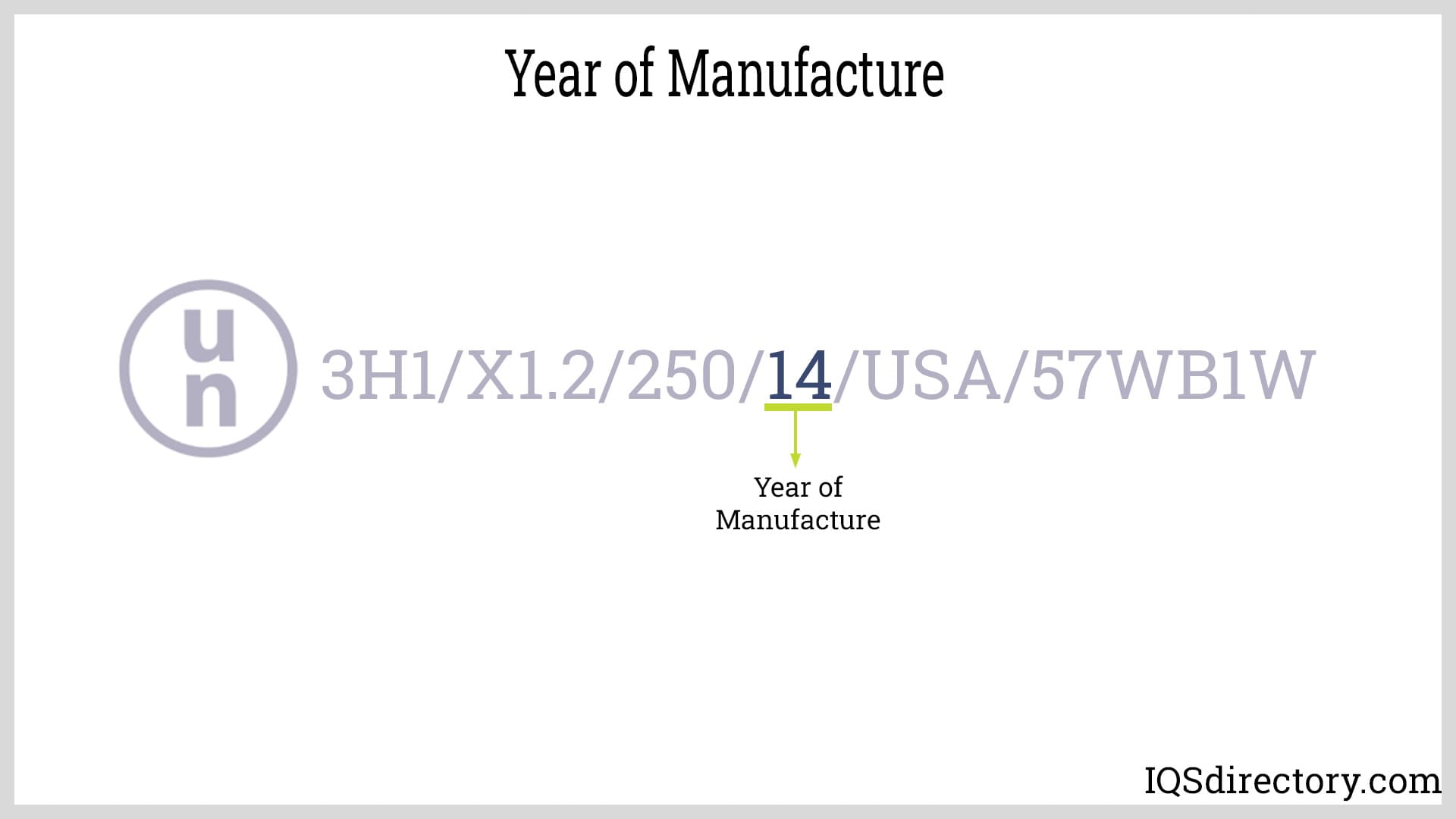
Year of Manufacture – The year of manufacture is represented by the last two digits of the year a container was produced. Containers assembled in 2026 are identified with the number 26. This establishes the age of a container and its timeline. Knowledge of the year helps determine the remaining structural integrity of a container, its safety, plans for inspections, its price, and viability for international commerce. In most cases, hazardous waste containers have a Convention for Safe Containers (CSC) plate for international transport with the date.
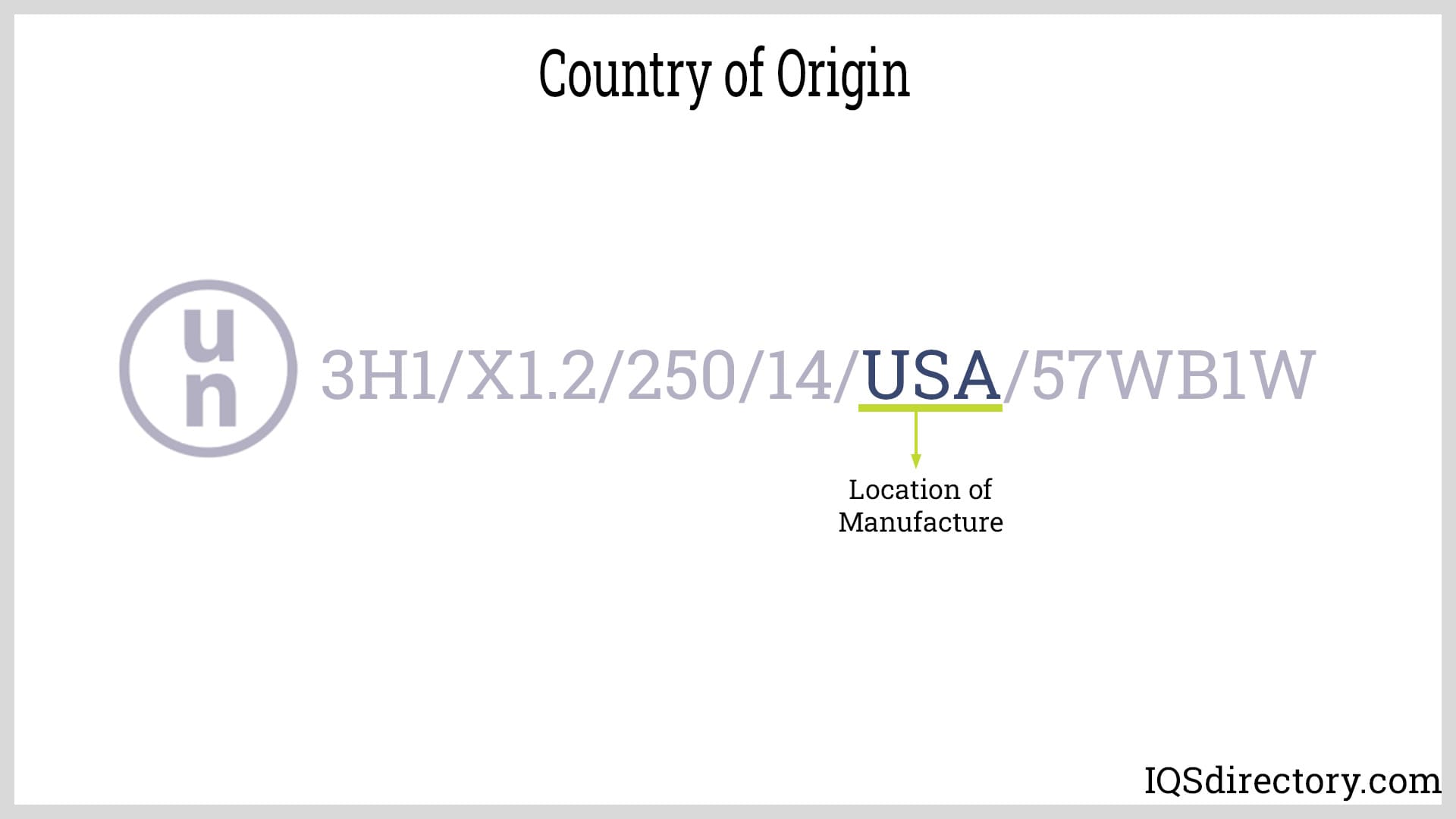
Country of Origin – After the date comes the country of origin of a hazardous waste container. The letters of the code identify the country where the material for the container originated. The information ensures compliance with regulations and gives accountability for adherence to the stipulations of UN codes for hazardous waste containers.
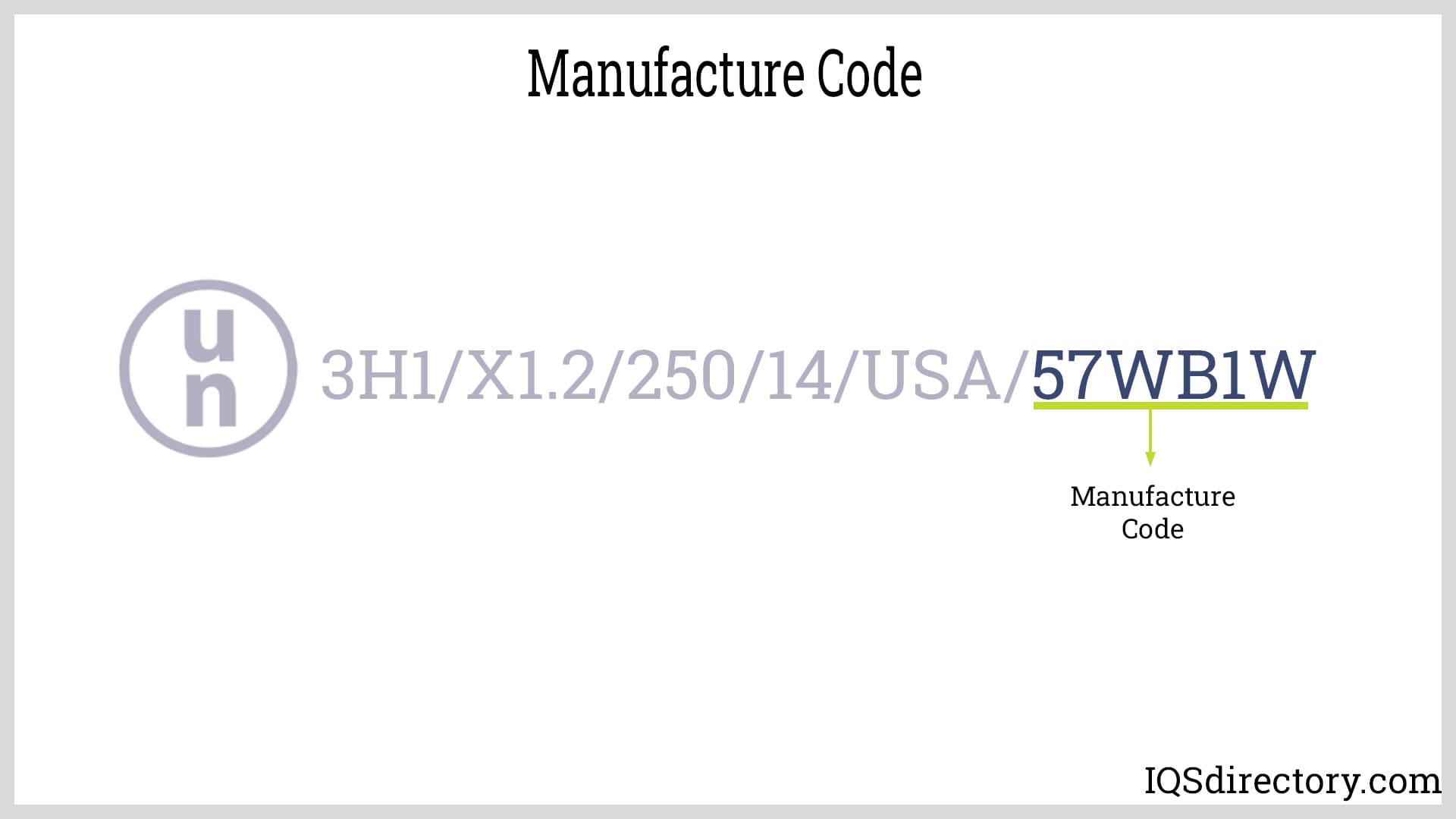
Manufacture Code – The manufacture code is the final piece of information placed in the line of data used to identify a hazardous waste container certified by the United Nations. The identifier is a unique set of numbers and letters that specifies the company that produced a particular hazardous waste container. The manufacturer code certifies that the packaging has met all of the necessary testing requirements.
The identifier can take several forms, such as the name and address of the producer, a special symbol, or the code of the certifying agency. Regardless of what identifier is used, it must comply with the Pipeline and Hazardous Materials Safety Administration (PHMSA) for transporting hazardous materials in the United States in order to be valid.
Companies are required to register with PHMSA to receive their PHMSA number if they meet any of the following criteria.
Radioactive Materials - Companies handling Class 7 (radioactive) material.
Explosives - Transporting more than 25 kilograms (55 pounds) of Division 1.1, 1.2, or 1.3 explosive material.
Toxic Materials - Shipping more than one liter (1.06 quarts) per package of a material extremely toxic by inhalation.
Hazardous Materials in Bulk Packaging - Handling hazardous materials in bulk packaging.
Placarding – Transporting hazardous materials requiring placarding, the display of a diamond shaped, color-coded sign that identifies hazardous materials that are being transported.
The United States Department of Transportation (DOT) relies on UN regulations for compliance and safety during the shipment and storage of hazardous materials. UN ratings are normally on the bottom of the side or top of a container and are referred to as the “birth certificate” of a container. The goals of UN ratings are to preserve the environment and protect workers who handle hazardous waste materials. The ratings provide a standardized, internationally accepted approach to hazardous waste containers and packaging.
The UN rating system began in the 1990s when DOT adopted Performance Oriented Packaging (POP) in order to provide a form of standardization due to the many different conflicting regulations adopted internationally. The UN proposed the ratings to provide a streamlined and smooth set of regulations for international compatibility and ensure the safety of hazardous waste handlers.
Chapter 3: Types of Hazardous Waste Containers
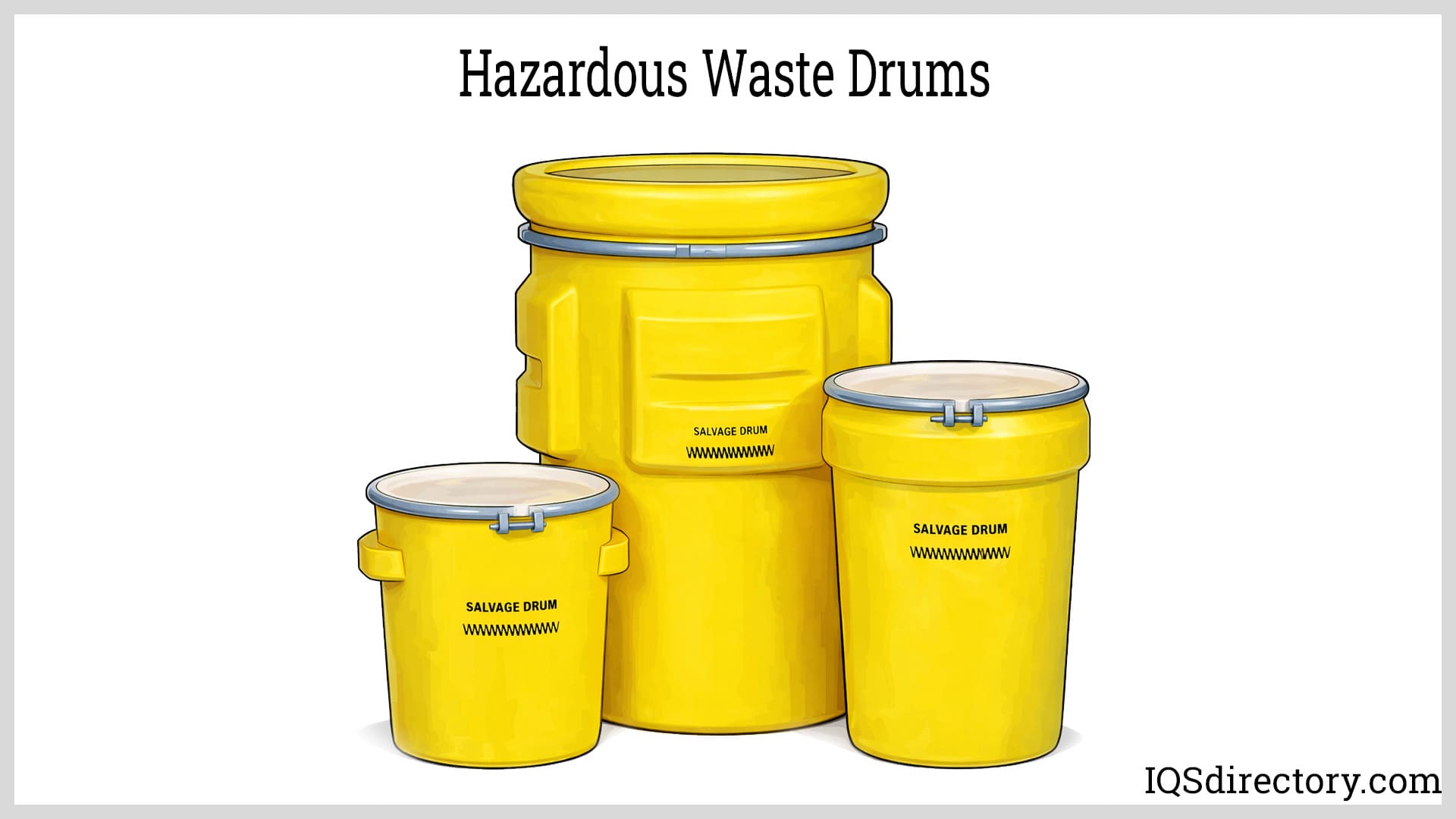
Hazardous waste containers, known as hazmat containers, come in many different shapes and sizes. They are closely regulated and designed for the safe storage and transport of the many different types of hazardous waste materials. The types of hazardous waste containers include plastic drums, metal containers, specialized bins, and different types of boxes. They are chosen in accordance with the type of hazardous waste material and are divided between solid waste and liquid waste. In addition, the amount of hazardous waste also has an impact on the selection process.
Steel Hazardous Waste Drums
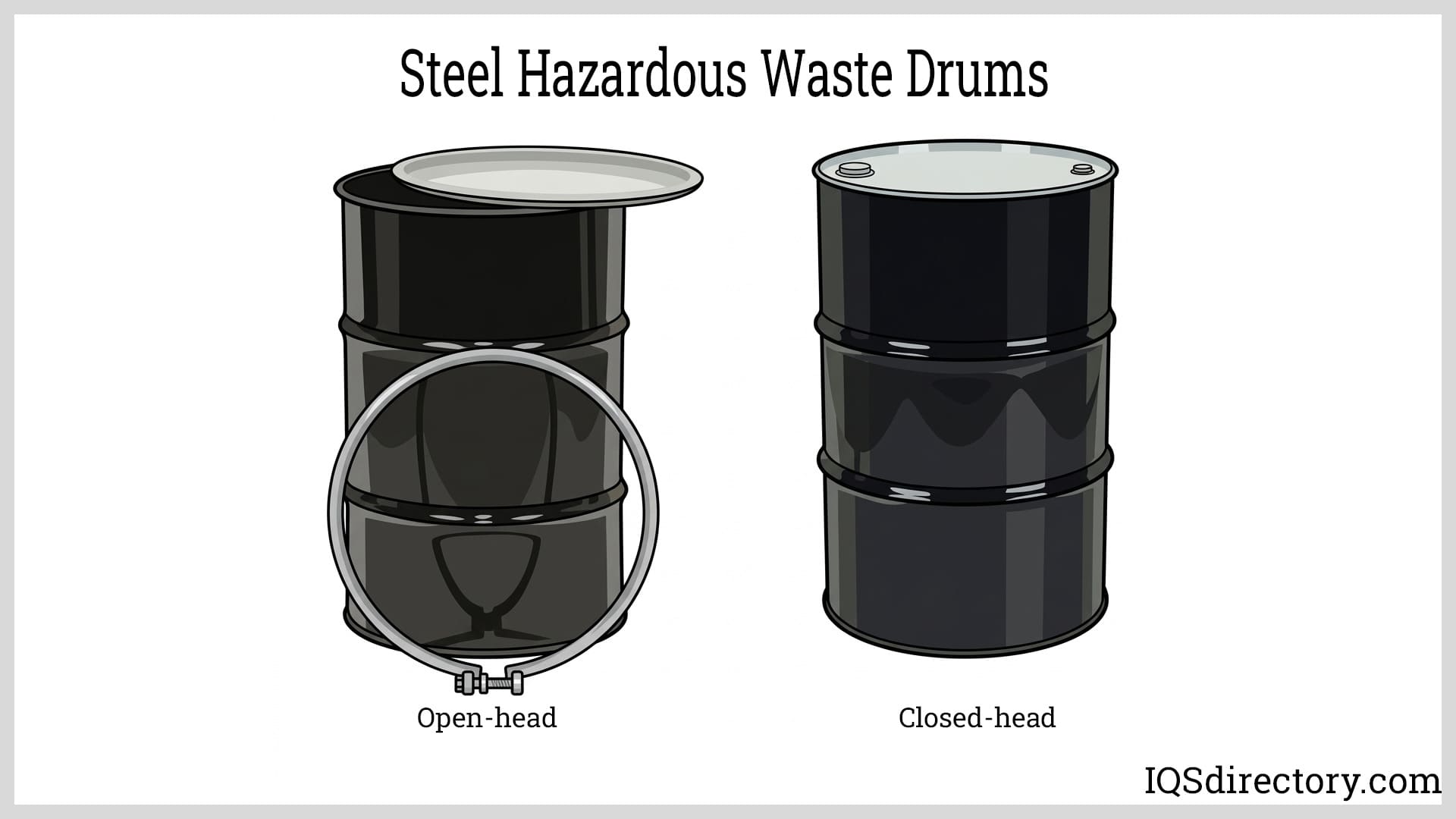
Hazardous waste drums come in different sizes, materials, and closure types. As with the other factors related to hazardous waste, drums are chosen in regard to suitability, labeling, and compliance with UN regulations. The main types of drums are open head and closed head with open head drums having a removable lid while closed head drums are one solid piece with holes for loading hazardous waste.
Stainless steel and carbon steel are used to produce steel hazardous waste drums. The drums begin as rolled steel sheets that are cut to the dimensions of the drum. The sheets are rolled into a cylindrical shape and welded. For all forms of steel drums, the bottom is welded on and sealed. A key factor for drums used for hazardous waste is the thickness of the steel, which increases the strength of the drum enabling it to endure more weight and pressure. The thickness for most drums falls between 0.9 mm up to 1.5 mm, with high end thickness being used for hazardous waste drums.
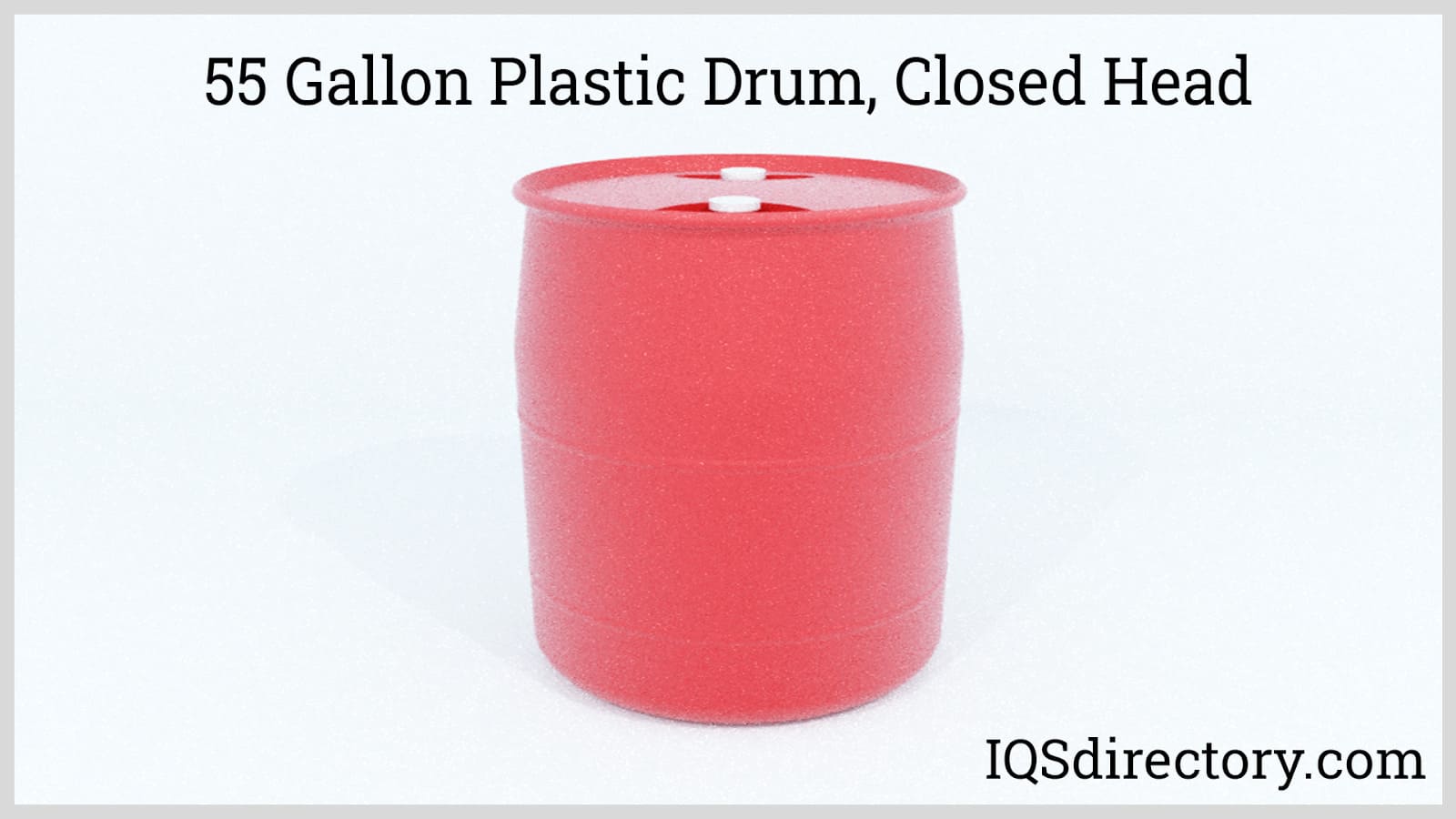
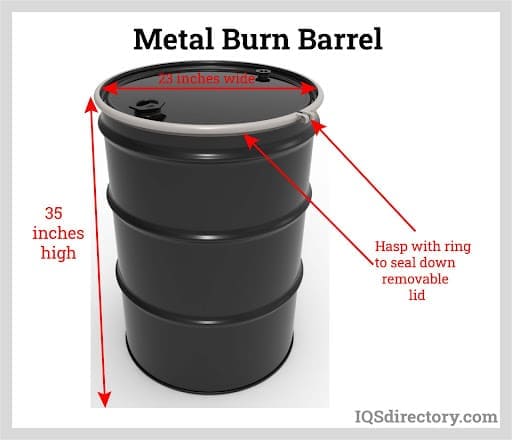
Open head steel drums have lids that are secured using locking rings with a lever lock or bolt ring. The lid is easily removable and gasket sealed for access. In the case of hazardous waste steel drums, extra care and attention is given to the seal on the lid and is tested under pressure to ensure its stability and endurance. Closed head drums have the top of the drum tightly welded and sealed. They have bung holes that enable them to be filled and sealed.
Plastic Hazardous Waste Drums
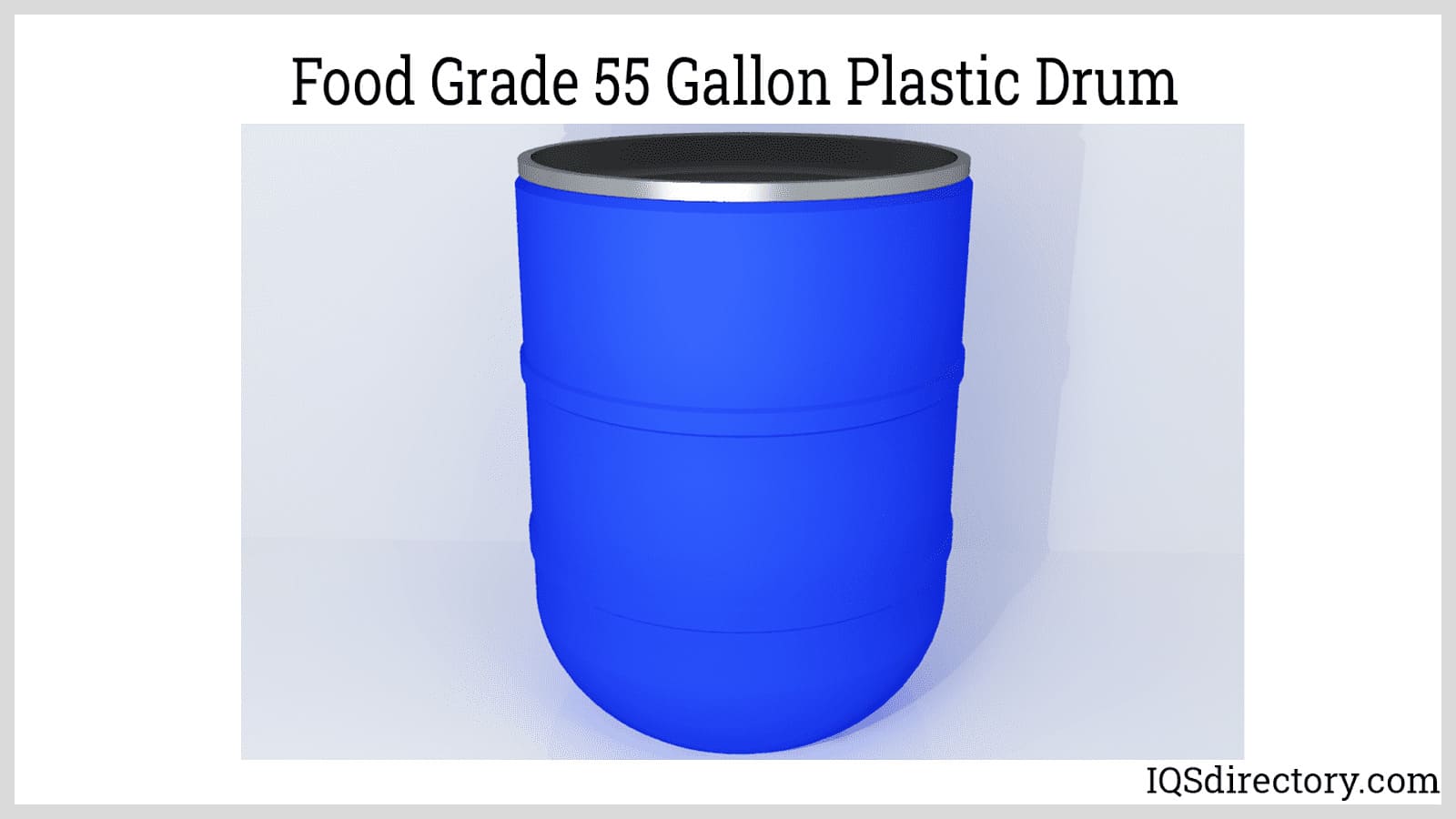
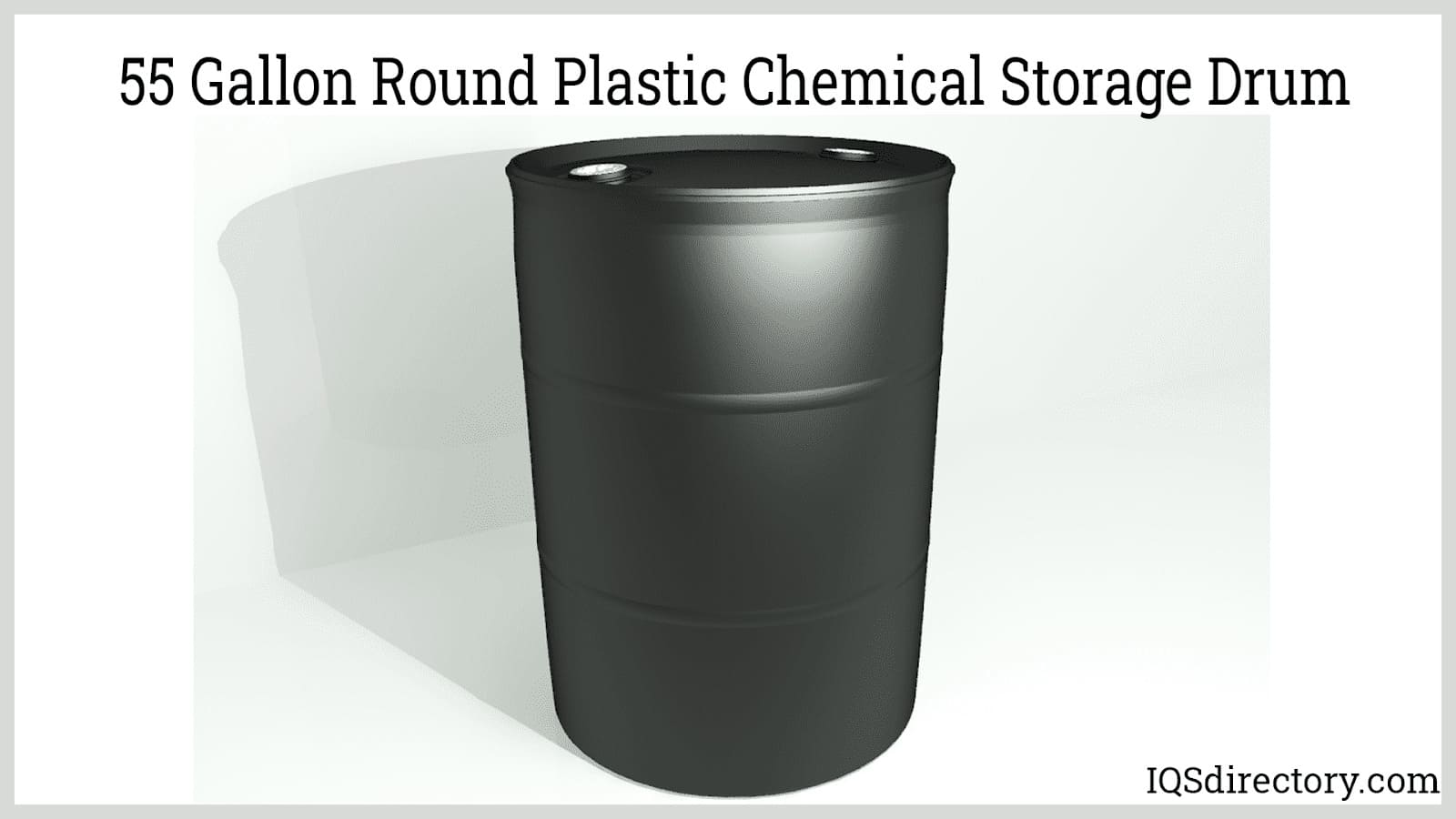
As with steel drums, plastic drums come in a wide variety of shapes, sizes, and configurations. In most cases, they are made from high density polyethylene (HDPE), which is produced from an ethylene monomer. Plastic hazardous waste drums tend to be more popular than steel or metal drums due to their lower cost, ease of manufacturing, and light weight. The consistency of the plastic material makes plastic drums resistant to the effects of acids, bases, and corrosion. The rugged design of plastic drums makes them ideal for handling hazardous waste.
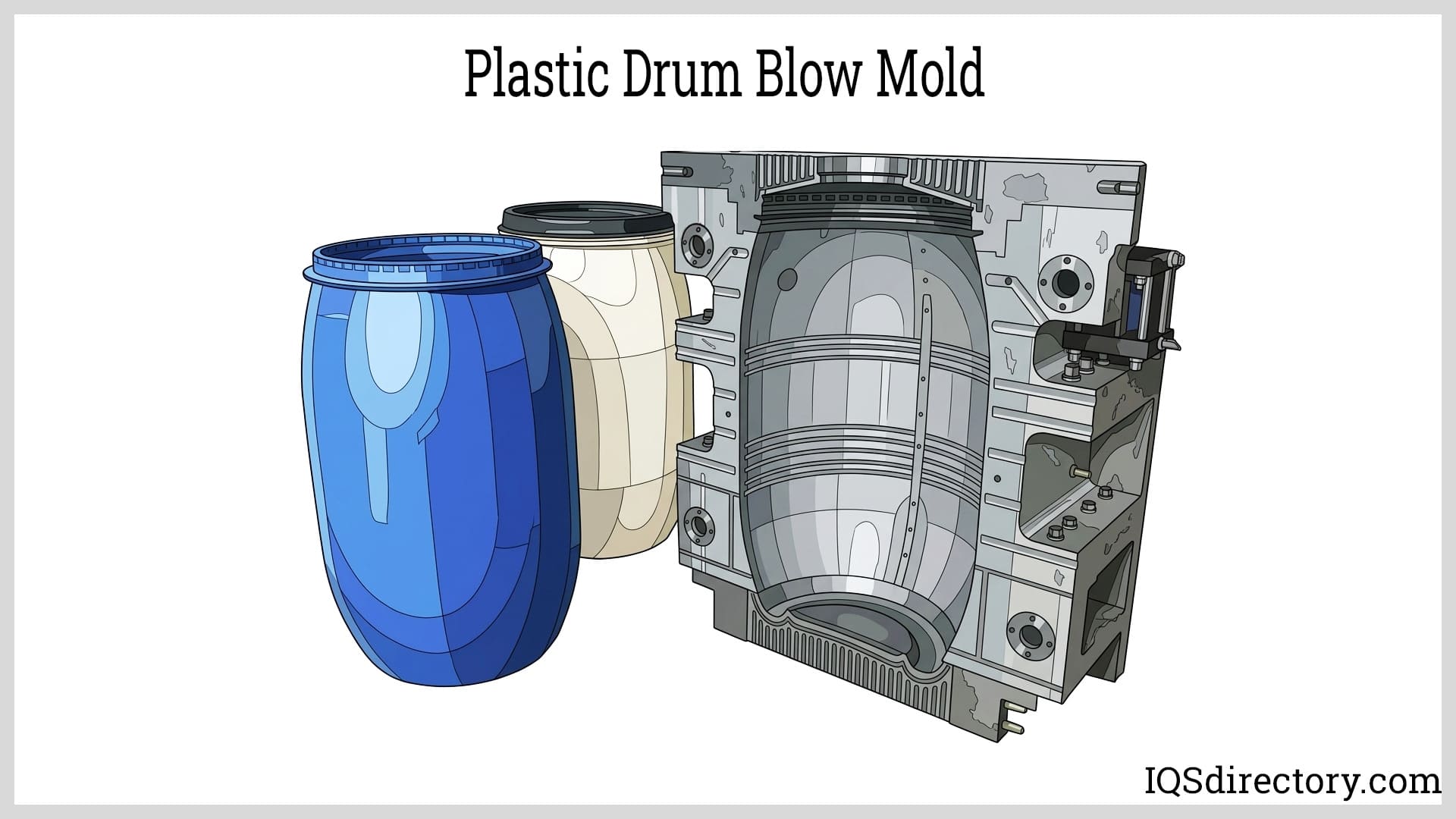
The manufacture of plastic drums takes different forms with blow molding being the most efficient and common process. The plastic drum manufacturing relies on the use of a mold that has the shape and size of a drum. HDPE resin pellets are heated to make them pliable before being inserted into the drum mold. In the blow molding method, the molten resin enters the mold and spreads across its surface, under pressure, as a form of plastic sack referred to as a parison.
With blow molding, resin pellets are loaded into an extruder that uses a screw to move the resin along a heated barrel to form the parison, a tube like piece of plastic with a hole in one end. Compressed air is applied to the open end of the parison, which forces the molten plastic into the drum mold. The air pressure evenly distributes the plastic material over the mold creating uniform thickness. Once the plastic cools, it is removed from the mold and trimmed of any excess plastic.
As with steel drums, plastic drums can be closed or open head. They come in a wide variety of sizes to meet the requirements of large and small hazardous waste producers. In most cases, they have the same shape as steel drums for ease of handling. Unlike steel drums, all plastic drums are seamless and smooth due to the nature of the flow molding process. Features such as bung holes, lids, and other additions are added after the drum is removed from the mold. The round shape of plastic drums removes weak corners that are susceptible to cracking from impacts and exposure to the environment. The tightly sealed smooth surface of plastic drums makes them ideal for the transport and storage of hazardous waste.
Small Sized Hazardous Waste Containers
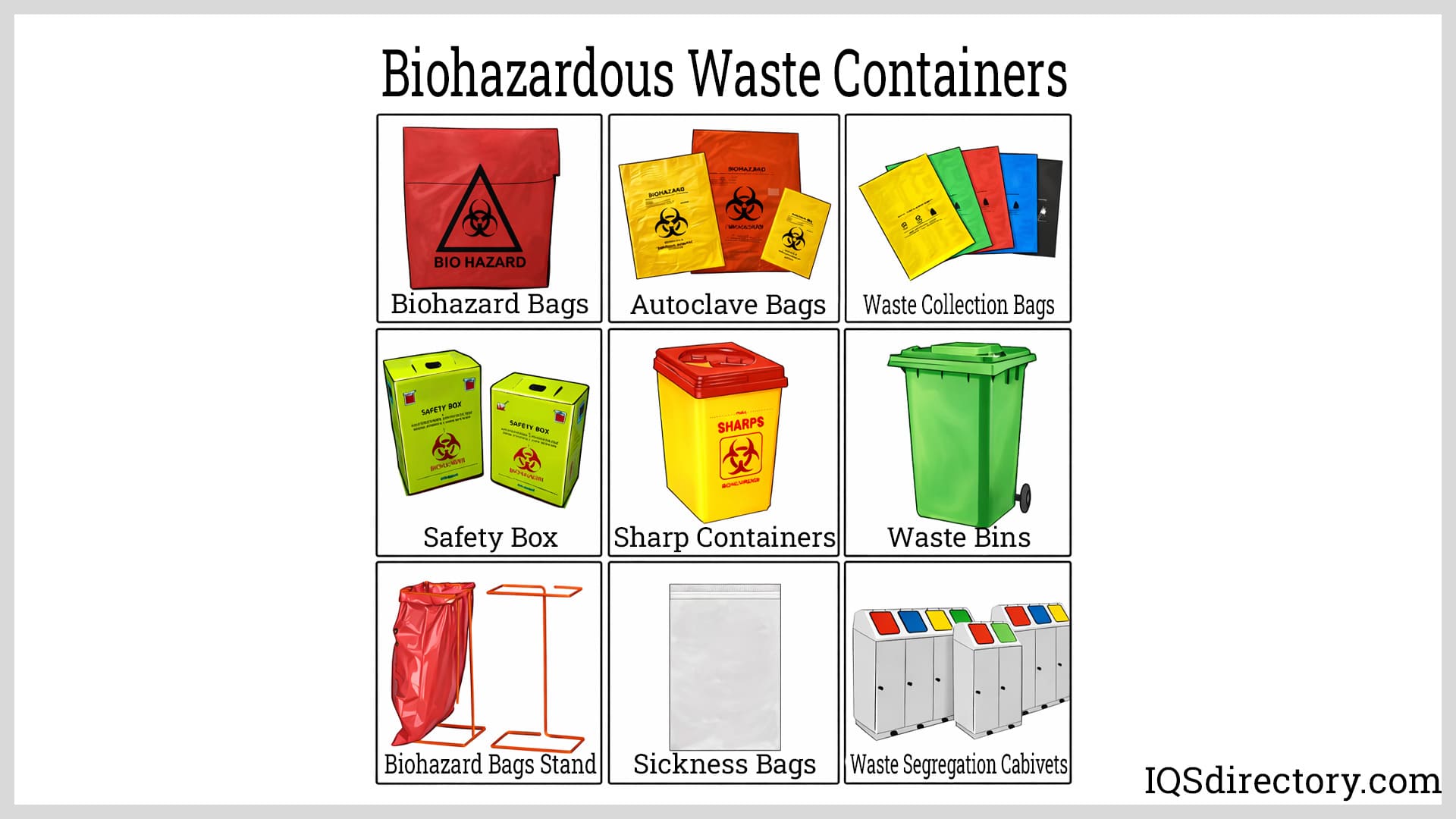
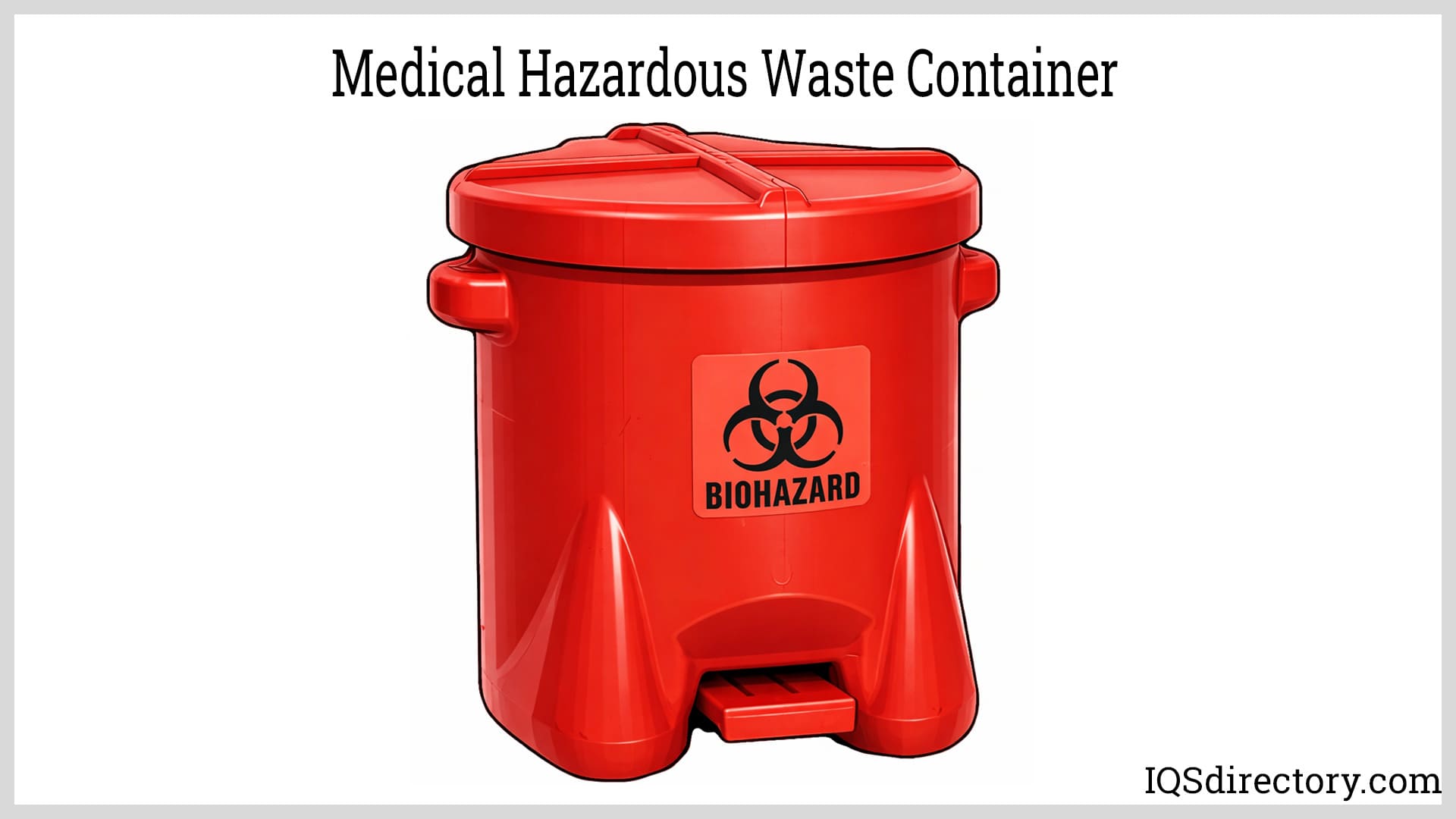
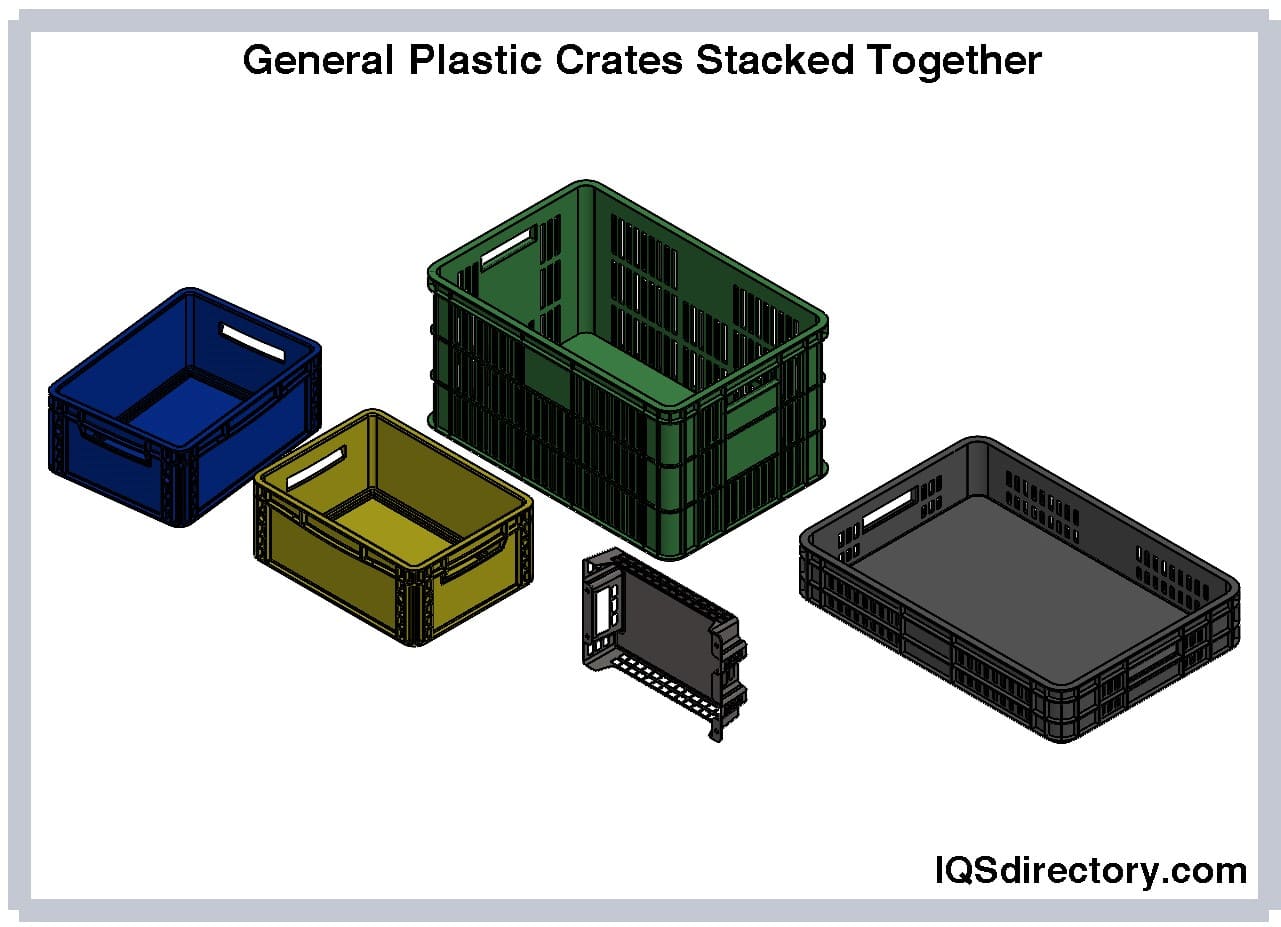
Although high volume hazardous waste is a critical issue, there is a wide variety of smaller waste containers that are needed to contain smaller quantities of hazardous waste. They vary in size from a few quarts up to 30 or 40 gallons, depending on the conditions and uses of the containers. This type of hazardous waste container comes in the form of buckets, bins, and waste baskets, each of which meet the requirements established by the EPA and the UN Requirements. The types of items collected are chemicals, oils, sharps, medical waste, and other toxic substances and materials.
As with larger hazardous waste containers, small containers have to meet the same standards as those set for high volume hazardous waste containers. They are tested, certified, and approved with proper signage, which is essential due to where they are located. There are strict rules regarding the placement of small hazardous waste containers, such as the capacity of the hazardous waste container, when it should be emptied, and its handling.
Hazardous Waste Pails
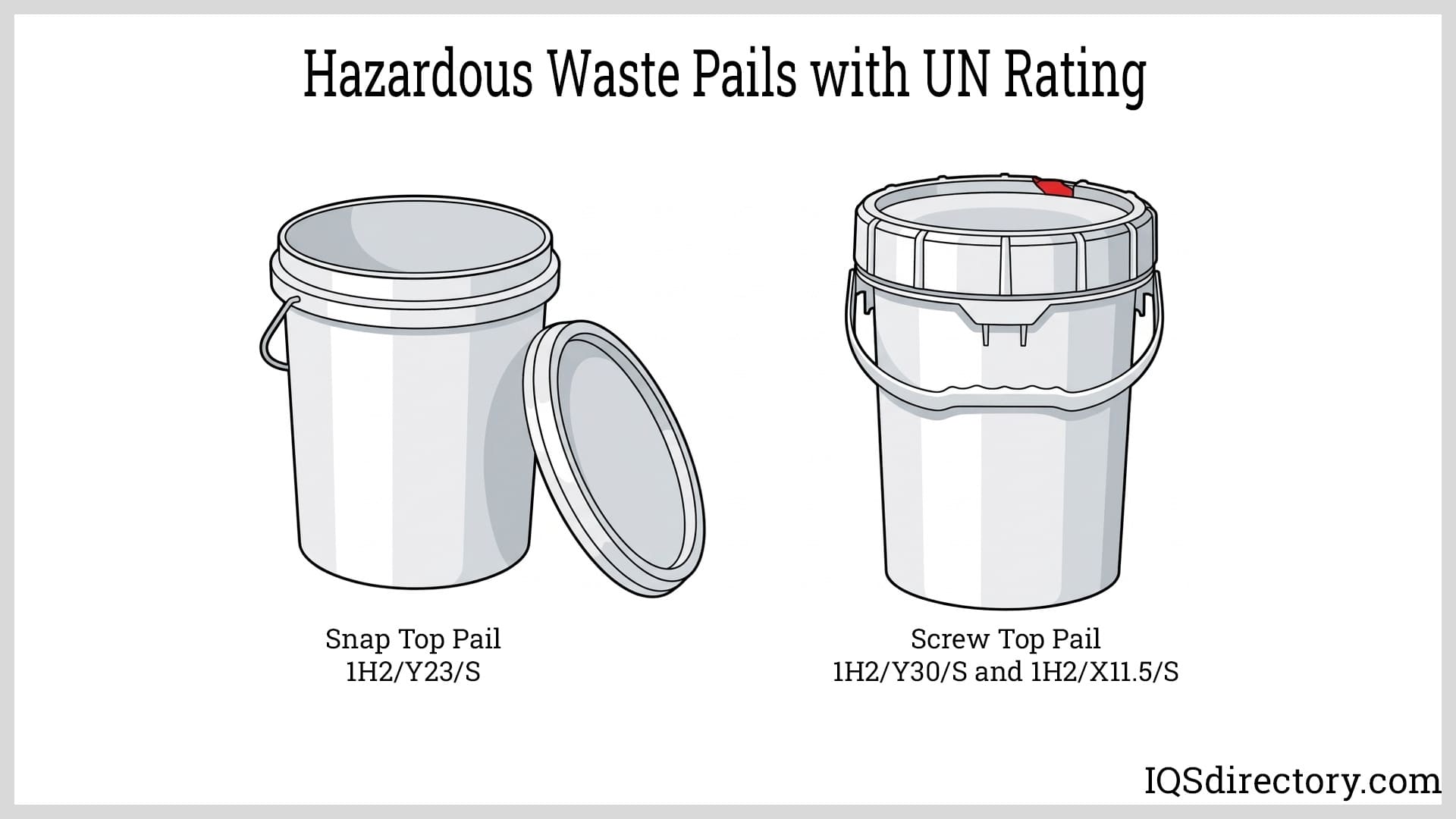
Of the small forms of hazardous waste containers, pails are a unique and handy form that are small and light enough for ease of handling but large enough to contain 5 up to 30 gallons (18.93 L up to 113.56 L) of hazardous waste. As with plastic drums, hazardous waste pails are made of polyethylene and are tested for a UN rating, which determines the types of hazardous waste they can contain. Hazardous waste pails can have snap top lids or screw on lids, depending on their design.
Hazardous waste pails with a snap top lid have a UN rating of 1H2/Y23/S, which designates them for handling medium hazardous solids from groups II and III. Screw top hazardous waste containers have the same durability as snap top pails but with a more secure lid for the prevention of accidents. They have 1H2/Y30/S UN rating or a 1H2/X11.5/S where the X rating allows them to handle the most severe forms of solid hazardous waste.
Hazardous Waste Boxes
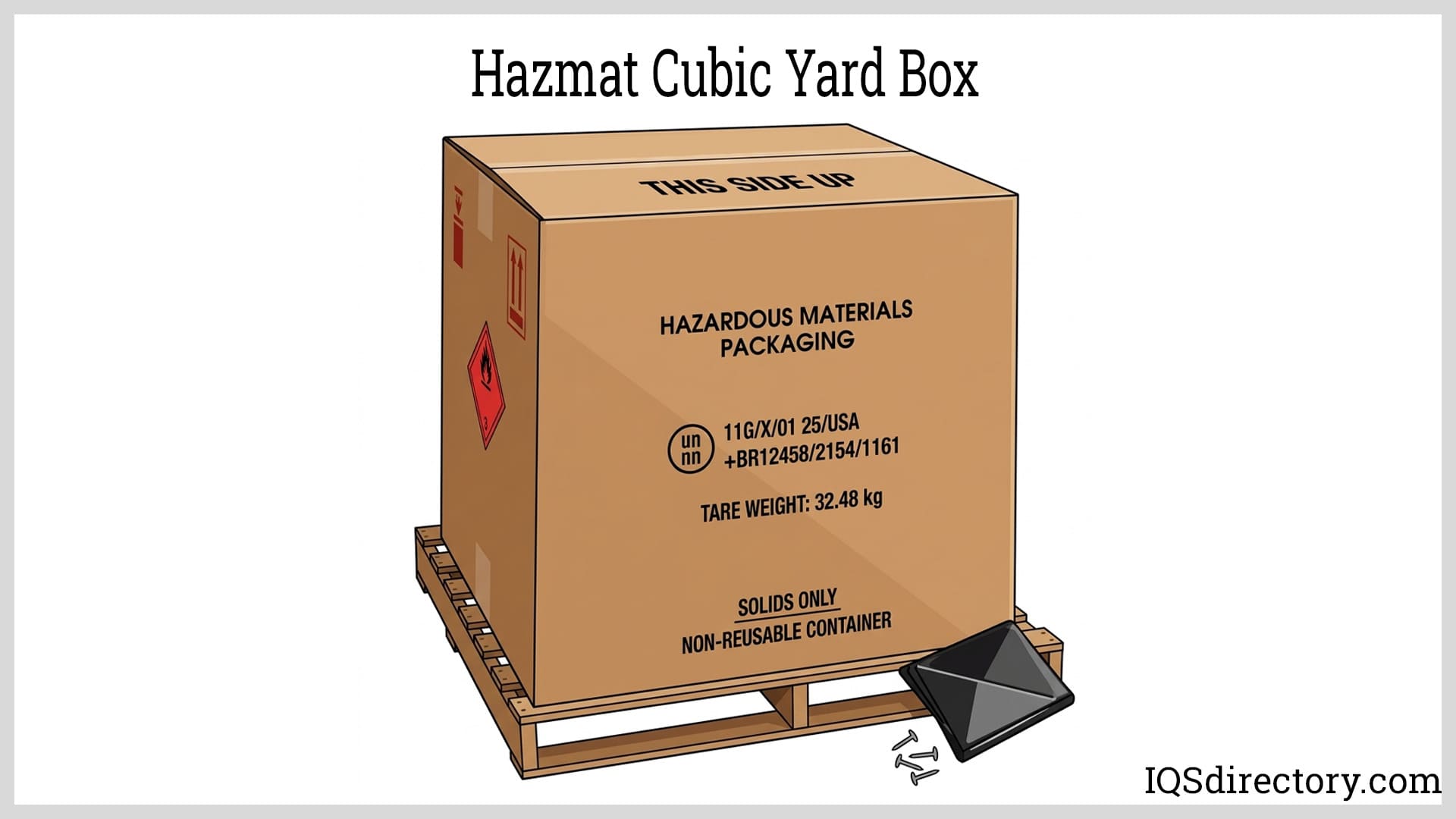
Referred to as Haz-Waste boxes, hazardous waste boxes are designed for the storage, transport, and disposal of solid hazardous waste material. In most cases, one box can contain as much dry solid waste as a 55-gallon drum, which makes them an economical choice. The construction of hazardous waste boxes falls into the X, Y, and Z categories established by the United Nations.
Hazardous waste boxes have thick triple walls up to five wall or more corrugated fiberboard walls with various types of fluting that meet UN standards for strength, durability, impact resistance, and solid hazardous waste requirements. The corrugated fiberboard walls are treated with a coating for moisture resistance and assembled with contact cement or epoxy glue. The strength of Hazardous waste boxes enables them to handle a ton or more of solid waste.
Hazardous Waste Buckets
As with plastic drums, hazardous waste buckets are made of polyethylene and are designed to handle a variety of hazardous waste. They are used for the storage and transport of corrosive waste that can’t be moved in a metal container. The corrosive resistance of the polyethylene makes these buckets ideal for handling small quantities of hazardous waste in accordance with UN standards.
Intermediate Bulk Containers (IBC) for Hazardous Waste
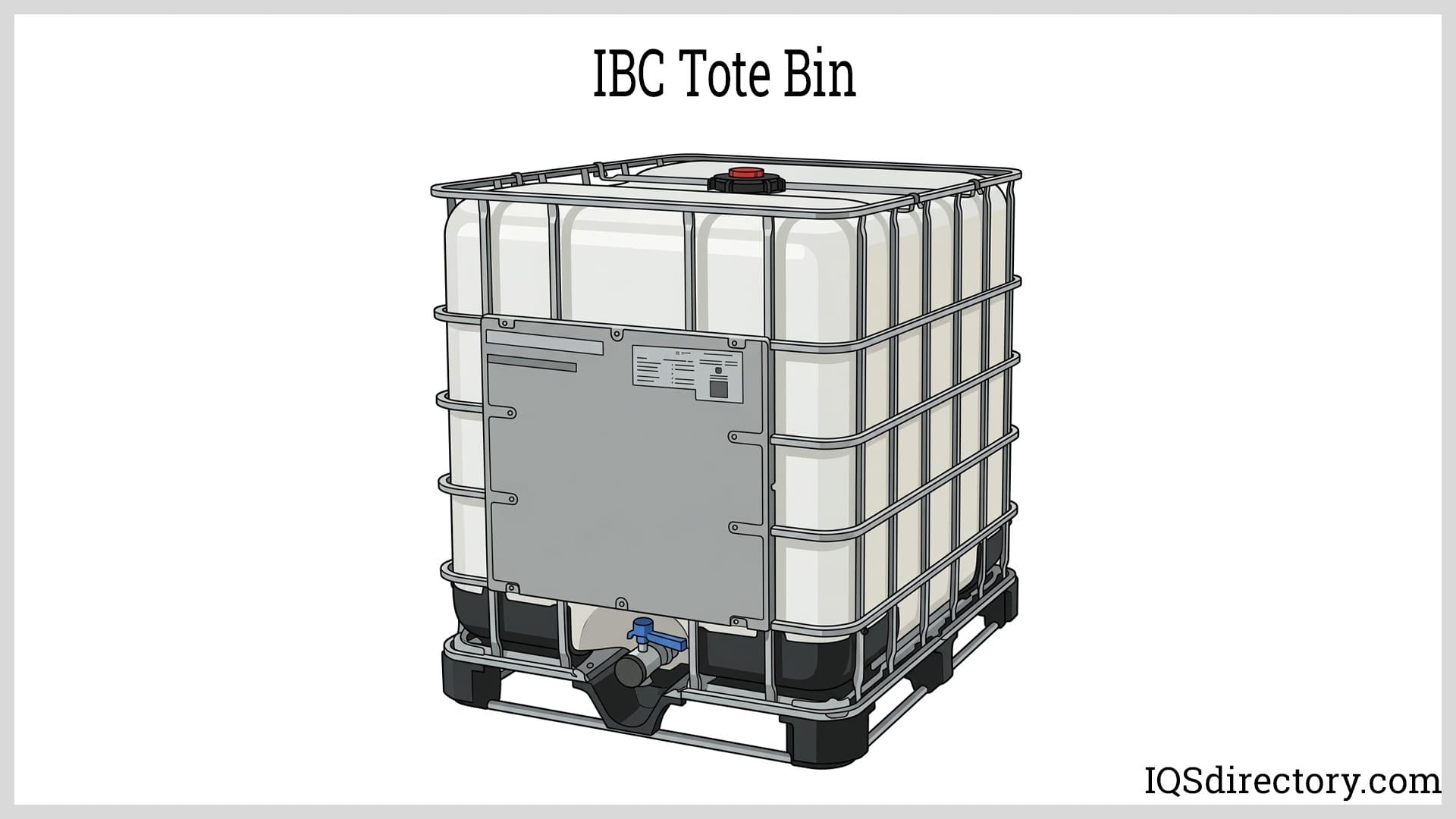
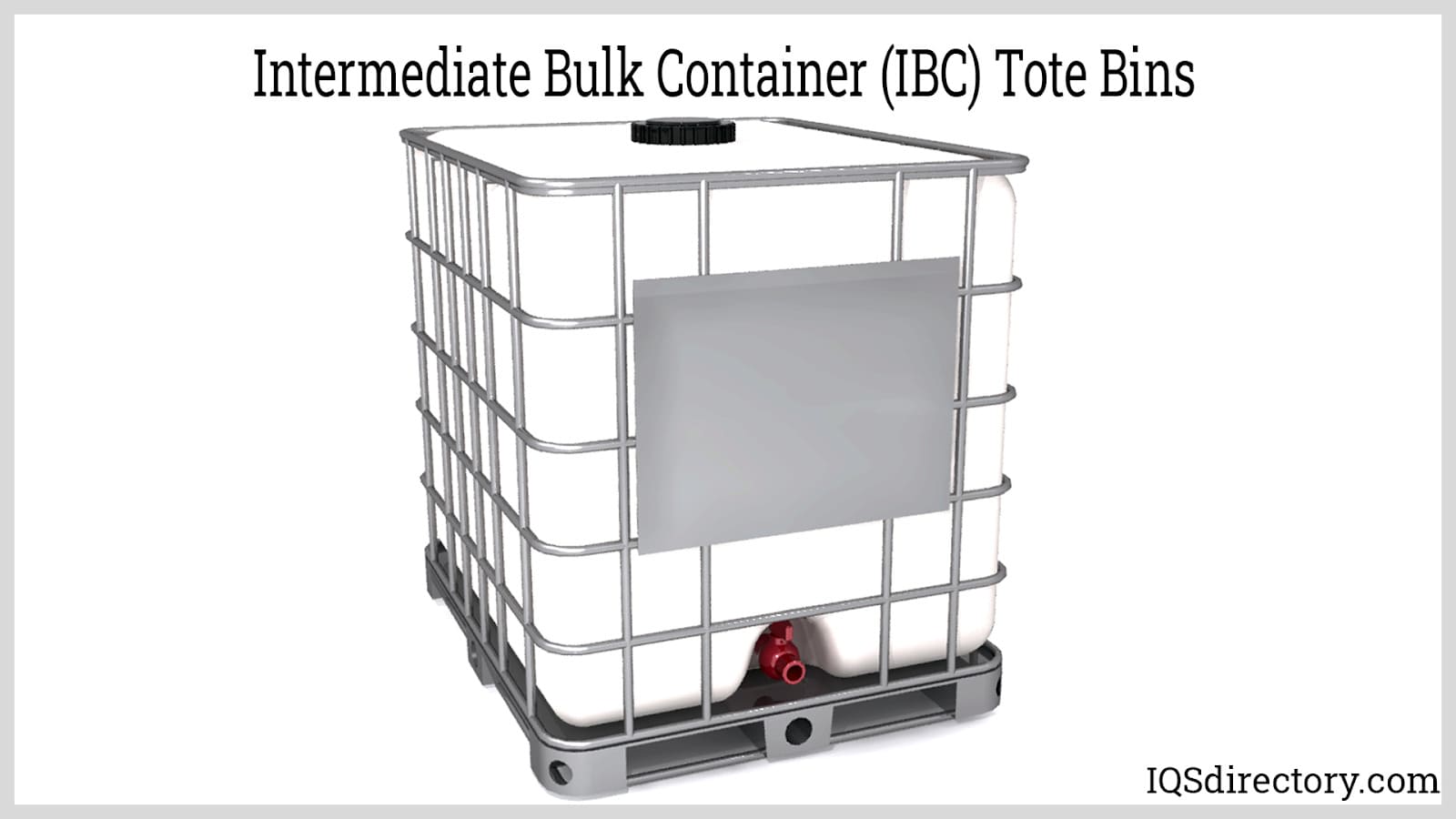
IBC bulk containers are a step up from drums with a capacity of 275 gallons up to 330 gallons. They have an inner storage container made of highly durable and resilient plastic that is placed in a reinforced steel frame. Most IBC bulk containers have a pallet base for easy transport and storage. IBC containers are referred to as intermediate due to their size, which is larger than drums but not as large as tankers and tanker trucks. The size of IBC bulk containers makes them perfect for shipping, storing, and handling of hazardous waste.
The steel frame and heavy plastic inner liner enables IBC bulk containers for hazardous waste to be used for many years. The cubic design and steel frame makes them easy to stack without concerns regarding weight. IBC bulk containers are used for the transport of hazardous liquids and powders. As with plastic drums, the inner lining of an IBC bulk container is made of HDPE.
The loading and unloading access for IBC bulk containers for hazardous waste are located at the top and on the bottom. The top cap enables liquids or powders to be poured into an IBC container. The tap or valve at the base of an IBC container makes it possible to connect a hose for unloading the container. As with all forms of hazardous waste containers, IBC containers are required to have proper signage, placards, and be UN tested and approved.
Leading Manufacturers and Suppliers
Chapter 4: How Hazardous Waste is Categorized
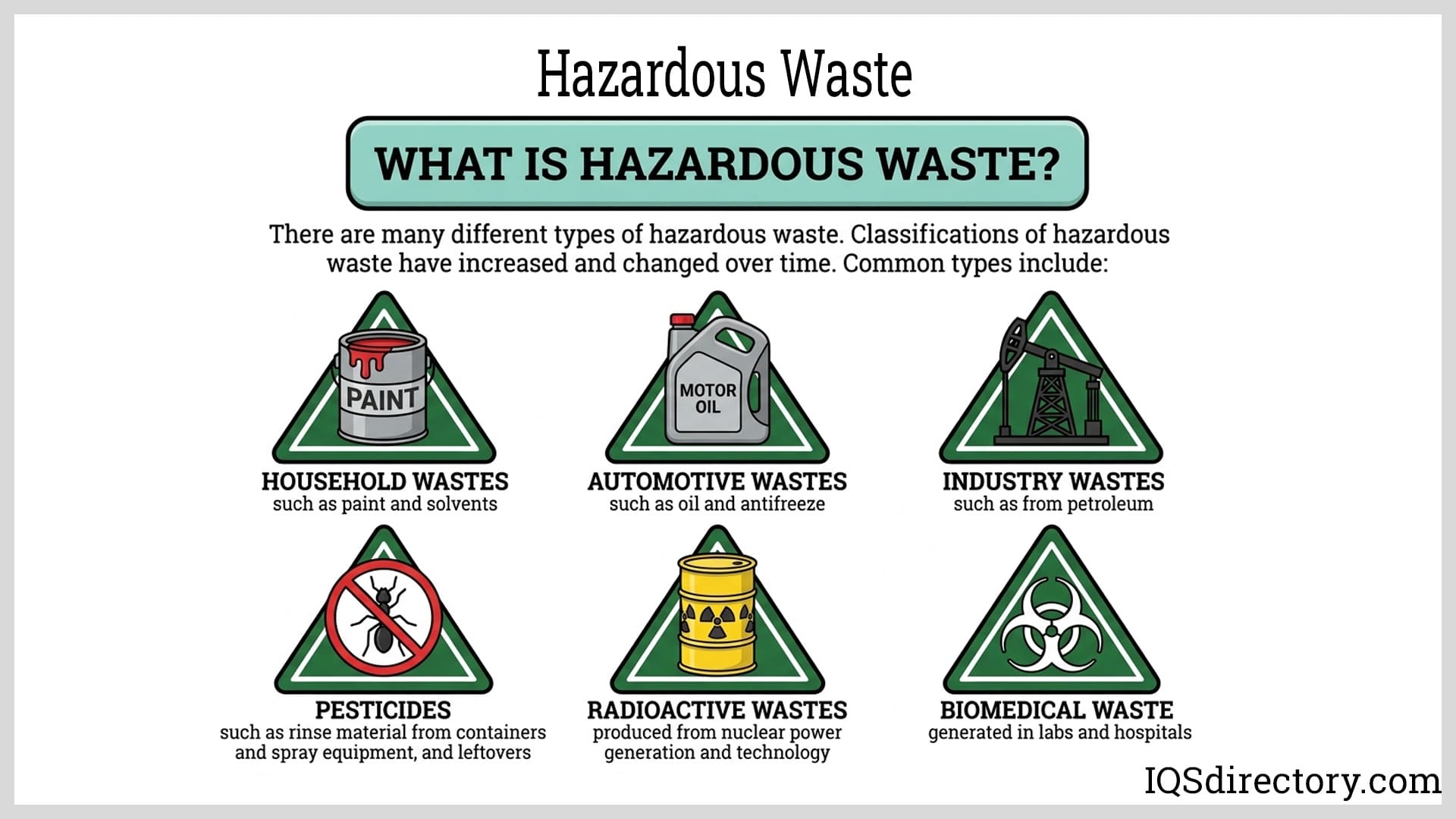
Hazardous waste is referred to as “HAZMAT” or hazardous materials, which are substances that pose a risk to the health, safety, property, and environment. Hazmats include toxic chemicals, fuels, nuclear waste, and biological, chemical, and radiological agents. These substances are released as liquids, solids, gases, or a combination thereof and take the form of dust, fumes, vapors, mist, and smoke.
Of the many aspects of society, hazmats are of the greatest concern and are strictly regulated, nationally and internationally. It is for this reason that a long list of regulations and stipulations have been developed to identify, control, monitor, and contain hazmats. Along with the United Nations, countries around the world have developed signage and placards as well as regulations regarding methods for highlighting and informing handlers of hazmat and their dangers.
The National Fire Protection Association (NFPA) in NFPA 1, Fire Code, NFPA 101, Life Safety Code, and NFPA 5000, Building Construction and Safety Code uses NFPA 400 as the definition for hazardous material. Understanding physical hazard materials and health hazard materials is important for applying this definition.
A chemical or substance that is classified as a physical hazard material or a health hazard material, whether the chemical or substance is in usable or waste condition. (NFPA 400)
Hazardous materials are classified differently by different organizations. The Department of Transportation (DOT) has a 9-system classification method while NFPA 400 has a 14-category system. Each of the 9 classifications of the DOT system are broken down into separate divisions. The 14-point NFPA system has subclassifications.
The EPA uses a four letter system, F, K, P, and U, to categorize hazardous waste. The hazardous wastes that are listed come from manufacturing and industrial processes, specific industries, and commercial products. Characteristic waste is ignitable, corrosive, reactive, or toxic. Waste that has hazardous components and radioactive components is referred to as mixed waste and is regulated under RCRA and the Atomic Energy Act.
NFPA 14 Category Classification System for Hazardous Materials
Physical Hazard Materials
Health Hazard Materials
Explosive
Toxic
Flammable Cryogen
Highly Toxic
Flammable Gas
Corrosive Material
Flammable Solid
Ignitible (Flammable or Combustible) Liquid
Organic Peroxide
Oxidizer
Oxidizing Cryogen
Pyrophoric
Unstable (reactive)
Water-reactive material
DOT Placards
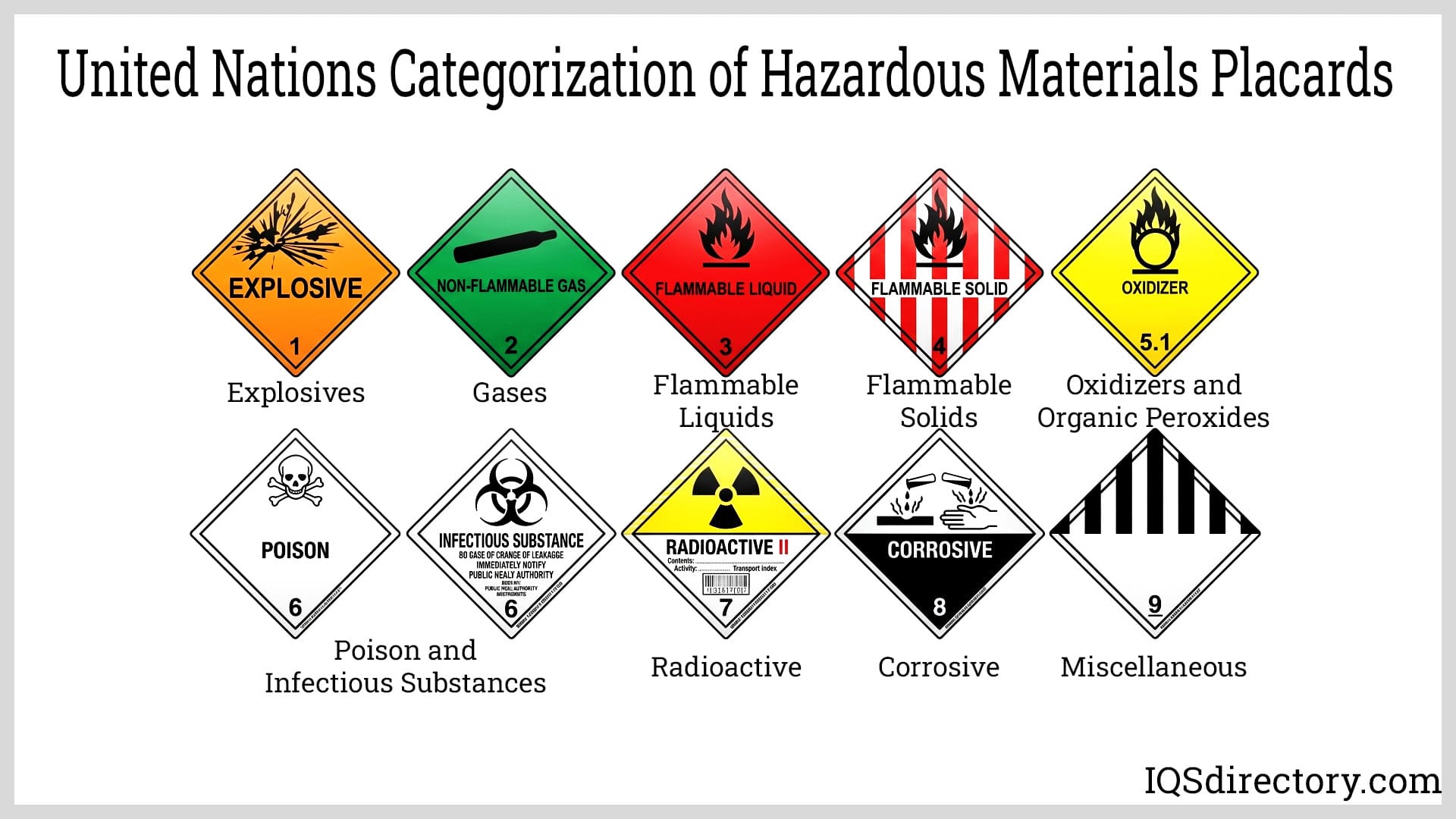
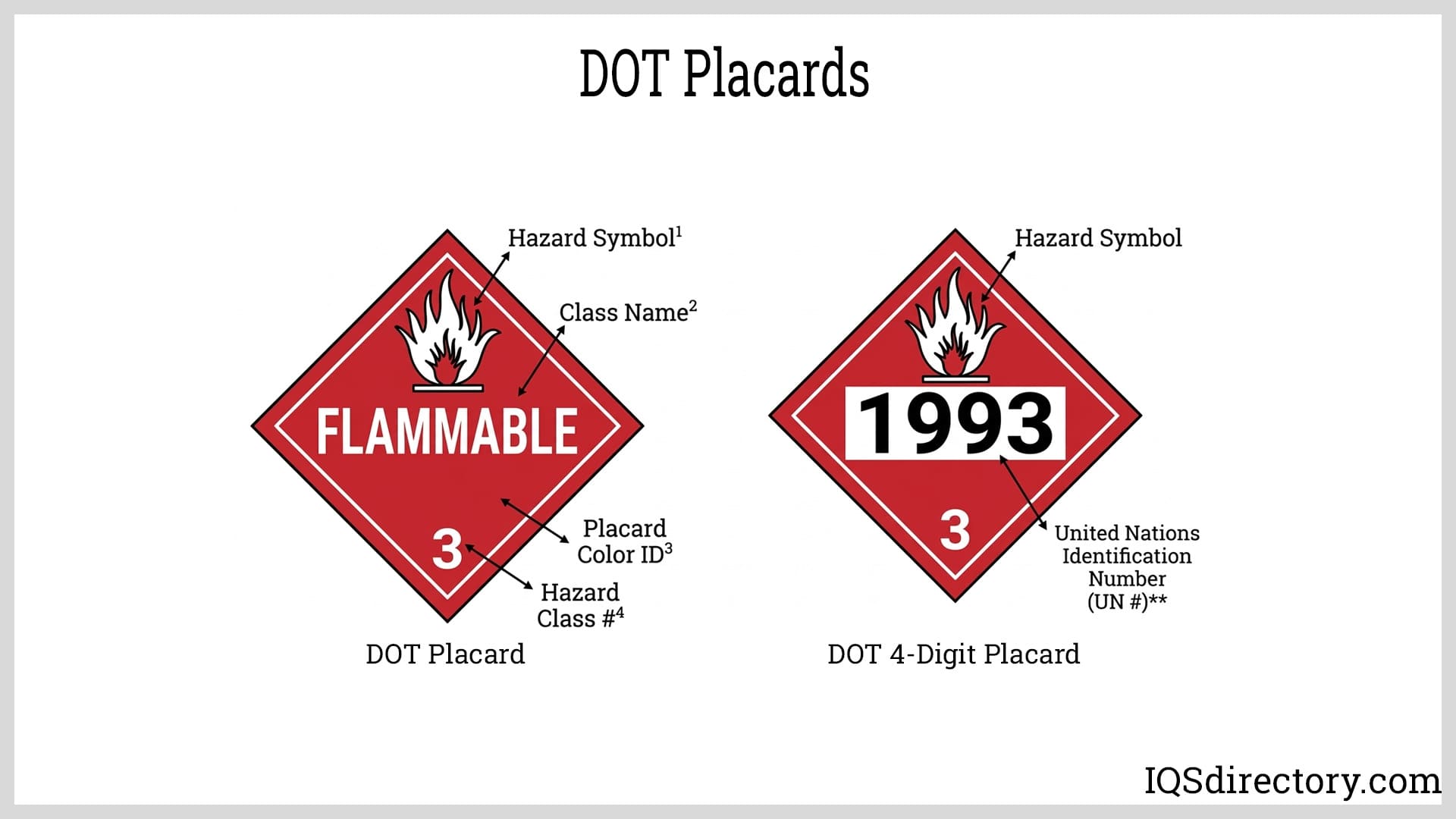
Hazardous waste classes for dangerous materials are identified by their class or division and their number or name. DOT placards identify the class or division of materials using a number code, which is displayed in the lower corner of a placard and is required for primary and subsidiary hazard classes and divisions. The numbering system for DOT is the same as the UN certification and ratings system. A variation from the DOT class name system is the use of the United Nations identification for a substance or material that is displayed in place of the class name from DOT placards.
When hazardous materials are transported, they are required to be marked with warning placards, which are 10.75 inches by 10.75 inches (273 mm by 276 mm) and must be displayed on all sides of a vehicle. Placards are identified by their color, symbol, and class name. They contain United Nations identification numbers specific to the transported material. DOT placards can display the class name and hazard number or the UN identification number for a substance and the hazard class.
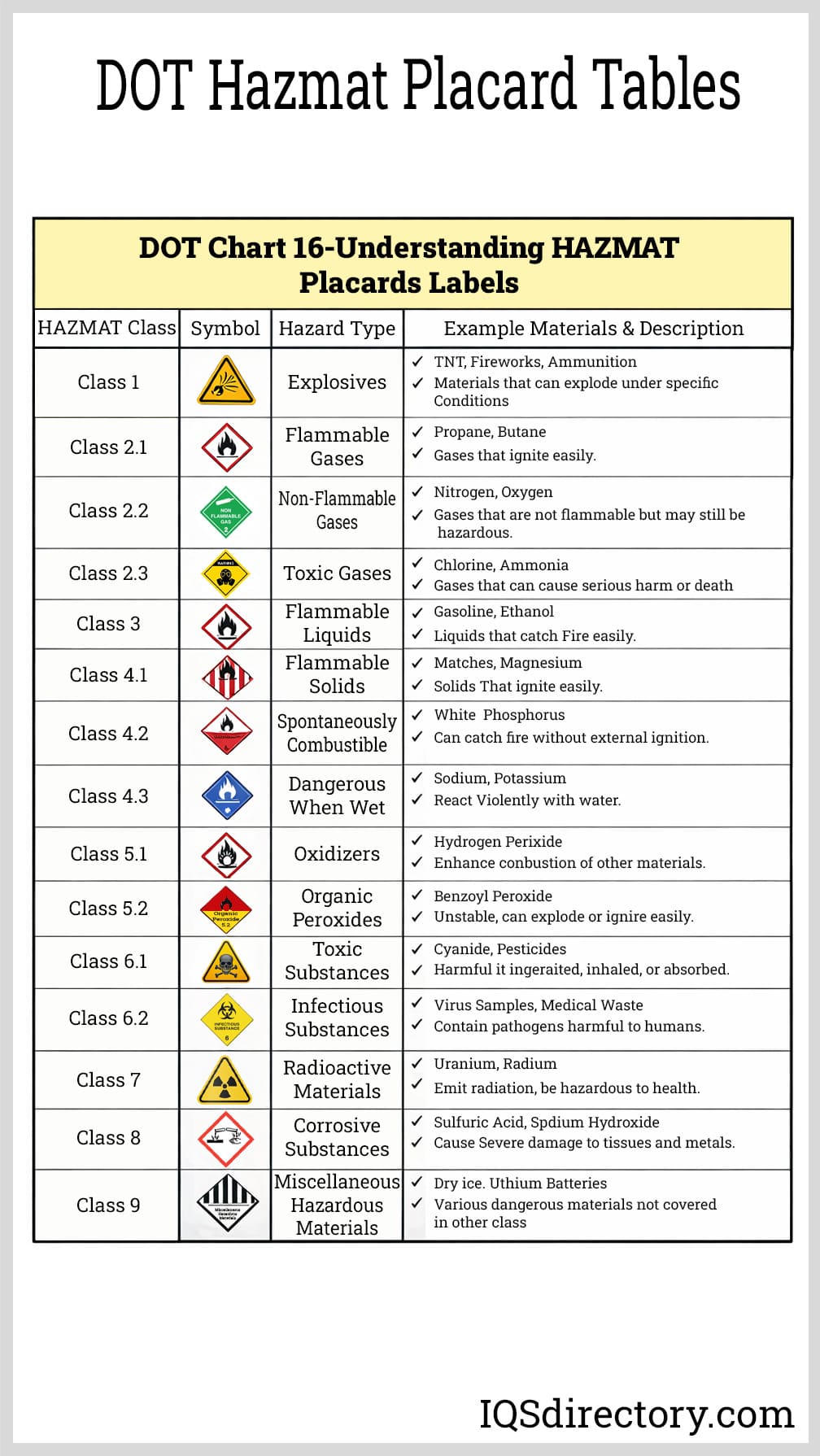
DOT hazmat placard tables are used to determine which placard is displayed on packaging, containers, vehicles, and railroad cars. The table guides shippers in the selection of a placard based on the hazard class and regulatory requirements. Any bulk packaging or transport vehicle must display the correct placard for the material being shipped.
EPA Hazardous Waste Lists
The four lists of the EPA system define the characteristics of various types of waste. Any waste that is determined to be hazardous is listed in one of the four categories, which are found in title 40 of the Code of Federal Regulations (CFR) in part 261.
F-List – The F-list includes hazardous waste generated by manufacturing and industrial processes. Since F-list waste occurs in different sectors, it is referred to as non-specific source hazardous waste. The F-list is divided into seven separate groups depending on what industry or manufacturer creates them. The seven groups are spent solvent wastes, electroplating and other metal finishing wastes, dioxin-bearing wastes, chlorinated aliphatic hydrocarbons production, wood preserving wastes, petroleum refinery wastewater treatment sludges, and multisource leachate.
K-List – While the F-list includes a general description of manufacturing and industrial hazardous waste, the K-list identifies the specific industries that produce the hazardous waste. For an industry to be listed, it must meet one of the 13 categories on the list and must match the descriptions on the K-list. The 13 industries detailed on the K-list are defined in 40 CFR section 261.32 and include:
Wood preservation
Organic chemicals manufacturing
Pesticides manufacturing
Petroleum refining
Veterinary pharmaceuticals manufacturing
Inorganic pigment manufacturing
Inorganic chemicals manufacturing
Explosives manufacturing
Iron and steel production
Primary aluminum production
Secondary lead processing
Ink formulation
Coking (processing coal to produce coke)
Each of the hazardous waste materials defined by the F and K-lists has been assigned an identifier or code that can appear on a placard or signage. The codes have been assigned letters of the alphabet for easy reference. The first two codes identify hazardous waste that is dangerous to humans and the environment. The last four are for hazardous waste that has regulatory characteristics. The codes are:
(T) - Toxic Waste
(H) - Acute Hazardous Waste
(I) - Ignitable Waste
(C) - Corrosive Waste
(R) - Reactive Waste
(E) - Toxicity Characteristic Waste
P-List and U-List – The P and U lists are grouped together to identify hazardous waste of commercial grade with formulas that cover unused chemicals that are being thrown away. For a hazardous substance to appear on a P or U list it must be a chemical on the list, be unused, and be in the form of a commercial chemical product. The difference between the two lists is in regard to the level of hazard regarding commercial chemicals with the P-list identifying acute hazardous waste while the U-list contains other hazardous commercial chemical products. Both lists can be found in 40 CFR section 261.33.
Universal Waste
Along with the F, K, P, and U lists is the classification of commonly generated universal wastes that include bulbs, mercury containing devices, pesticides, and batteries. These types of hazardous waste are identified as dangerous goods and are part of the nine classifications published by DOT.
The three methods for identifying hazardous waste described above are used in conjunction with the United Nations system, which is the standard for hazardous waste classification and is internationally recognized. Whether it is the NFPA system, EPA system, or the DOT system, each classification and identifying method is used to highlight the significant danger of hazardous waste and its danger to communities, individuals, and the environment.
The hazardous waste container industry is well aware of the importance of producing their products. Their ultimate goal is to protect our world from the dangers of the materials and substances produced by manufacturing and industrial processes.
In 1972, the United Nations and the International Maritime Organization adopted the International Convention for Safe Containers (CSC) with the goals of maintaining safety for human life in the transport and handling of containers and establishing uniform international safety regulations. Several countries have adopted the parameters of the CSC, which requires that containers used for international commerce have a CSC approval plate fastened to the container.
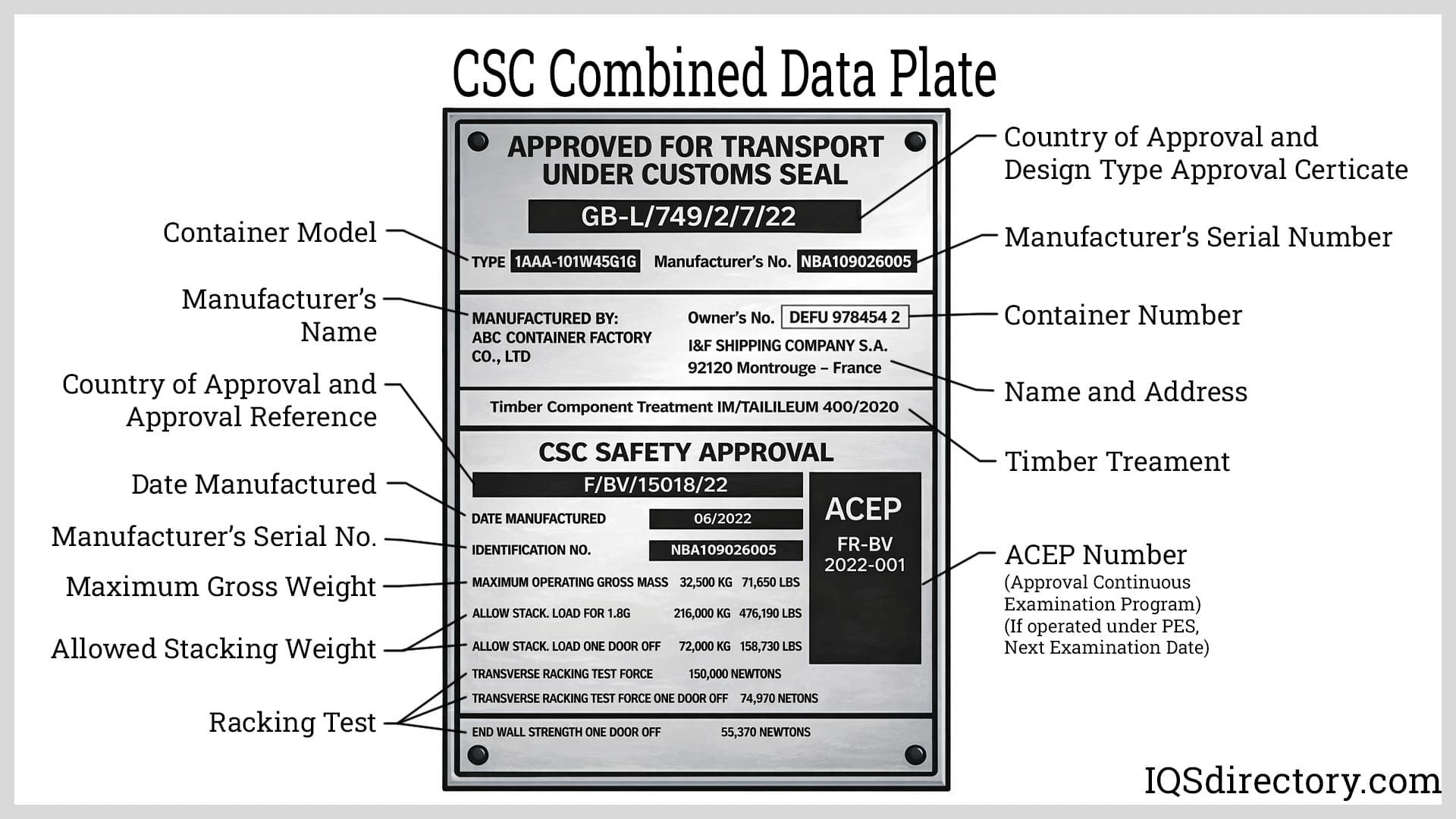
The information engraved, embossed or stamped on the plate follows the dictates of the UN rating system. A CSC plate contains the name of the container manufacturer with the month and year it was made. In addition, included is the manufacturer’s identification number or the container’s operator number or an identification number assigned by the administration. Included on the plate is the container’s weight carrying capabilities in kilograms and pounds along with the results of stacking and racking test data.
The data on a CSC data plate conforms to the stipulations of the United Nations due to the United Nations being a participant in its development. The requirements for the plate include that it be made from permanent, non-corrosive, fireproof metal and have a rectangular shape measuring 7.874 inches by 3.94 inches (200 mm by 100 mm). The words “CSC Safety Approval” should be stamped or embossed on at an 8 mm height with all other words being stamped or embossed at a height of 5 mm, permanent and legible. The plate must be durable and have a color that contrasts with that of the container.
CSC containers must undergo an examination after five years or less and be examined every thirty months thereafter. If a CSC container is repaired, it must adhere to the approved continuous examination program (ACEP) and must display the approval number on the CSC plate in the form of a decal.
Although the CSC plate is valid and necessary, it is normally included with placards for a combined data plate identifier. The plates are normally riveted to approved containers and are engraved or embossed in English or French. The most common use of CSC plates is for very large international containers but is generally applicable to any container used for international transport, especially hazardous waste containers.
CSC plates contain vital information regarding the contents of a shipping container. They are clearly visible such that workers know that a container is approved for transport. The portion of the plate that has the last date of safety inspection lets workers know that a container has been approved within an acceptable time frame. The normal service life of a CSC plate is 20 years, which is longer than most placards or signs. CSC plates are another method for monitoring and controlling the transport of hazardous waste containers. They work in combination with the measures of nations and are designed to protect the environment.
Chapter 6: Types of HAZMAT Waste
Each of the types of waste is handled differently, which is the reason that hazmat waste is clearly identified for handlers and shippers. The specifications for a substance being hazardous includes any material that is harmful to human health or the environment. It has properties that are dangerous and is generated from a wide range of sources. Hazardous waste appears as a liquid, gas, solids, and sludge, each of which can get into the water and air.
Under the purview of the Resource Conservation and Recovery Act (RCRA), the EPA, NFPA, and DOT, regulatory methods and processes for identifying hazardous substances have been developed. These agencies and legislation provide concise descriptions of the various types of hazardous waste, how to contain such waste, and the steps that need to be taken for handling such materials.
Corrosives – Corrosive hazardous waste refers to acids that are capable of wearing away other substances and destroying them. In order for corrosives to be transported, they must be placed in a proper container that is immune to the effects of the corrosive material. Such containers have been approved for this purpose using UN testing and certification.
Ignitable - Ignitable hazardous waste has an ignitability characteristic with a flash point below 60°C (140°F) and causes fires in a specific set of conditions. The ignitability of a substance is tested using Pensky Martens Closed Cup method, the Setaflash Closed Cup method and the Ignitability of Solids method.
Reactivity – Waste that is hazardous due to reactivity is unstable under normal conditions, reacts with water to produce a toxic gas, and has the possibility of detonating or exploding under normal conditions or when heated. Common types of reactive substances are water reactives, pyrophorics or air reactives, and peroxide formers. Water reactives include metal hydrides and alkali metals. Air reactives are substances like phosphorus and organometallic compounds. Compounds that decompose quickly and violently are another form of reactive hazardous waste and include organic peroxides, picric acid, and TNT
Toxic – Toxic hazardous waste is only harmful if it is absorbed or ingested. It is a concern when it has polluted the underground water supply. Toxic waste, such as poisons, are known to be harmful to humans and can cause death, injury, or harm to human health if swallowed, inhaled, or makes contact with the skin.
Radiological – Radiological hazardous waste contains radionuclides that are unstable atoms from radiation. To be identified as radiological hazardous waste a substance or material has to exceed regulatory levels. Radiological hazardous waste is a by-product of mining, nuclear power generation, defense, medicine, and scientific research. The five categories of radiological hazardous waste are high level or nuclear fuel, transuranic or nuclear weapons, uranium or thorium mill tailings, and low level.
Mixed Hazardous Waste – Mixed hazardous waste is defined as waste that contains radioactive materials with hazardous components. The EPA defines mixed hazardous waste as a combination of radioactive materials and chemically hazardous materials. In general, mixed hazardous waste comes from two sources, low level mixed waste and low level, high level, and transuranic mixed waste. The low level version of mixed waste includes waste from research facilities, developments, and the production of nuclear weapons. Low level, high level, and transuranic mixed waste comes from reprocessing nuclear fuel, uranium, and irradiated targets from reactors. Beyond the stipulations of the EPA, NFPA, and DOT, mixed hazardous waste is further regulated by the Atomic Energy Act (AEA) of 1954.
The Hazmat materials described above are general categories for a wide range of hazardous materials that are controlled, monitored, and contained in hazardous waste containers. Manufacturers and distributors of hazardous waste containers are well versed in the characteristics of each of these harmful and dangerous materials and have designed containers that are crafted to protect the public, the environment, and industry.
Chapter 7: Industries that Generate Hazardous Waste
Hazardous waste container manufacturers, distributors, and various agencies work closely with industries that generate and produce hazardous waste in order to provide methods for controlling and containing the waste. Although hazardous waste was overlooked at the beginning of the first industrial revolution, concerned industrial leaders and governments have worked studiously over the years to develop standards, produce equipment and containers, and develop methods for overseeing hazardous waste.
Mining
It has been well documented that the mining and extraction industry produces a great deal of destructive waste that damages the environment. The process involves the use of toxic chemicals, like cyanide and mercury, that contaminate the soil, water, and damage ecosystems. The collection of chemicals in hazardous waste containers and recycling them has become a major assist in controlling the damage caused by mining.
Chemical Industry
As with mining, the chemical and petroleum industries have battled for many years to control and contain hazardous waste. Although the chemical industry is instrumental in the production of fuel, plastics, and cleaning solvents, the production process generates tons of toxic waste and is one of the reasons for the wide use of hazardous waste containers. The vigilance of producers and hazardous waste container distributors has been instrumental in the protection of the environment from hazardous waste.
Manufacturing
A wide range of industries that have enhanced society and provided modern solutions are also responsible for the production of hazardous waste. The automotive, textile, and food processing industries used hazardous materials in the production of their products. Since the implementation of automation and other advancements, these industries have had to work diligently to control and contain the toxic materials they produce. Using hazardous waste containers, they have developed sustainable practices for waste reduction, collection, and recycling, which has significantly reduced the impact of the waste they produce.
Pharmaceutical and Healthcare Industries
Over the years, the pharmaceutical industry has produced products that have improved the health and well being of the public. The down side of the many advancements have been the toxic chemicals that have been the result of these improvements. Hospitals and clinics make wide use of placarded hazardous waste containers that are designed for the collection of sharps, medications, and instruments.
Electronics and Technology
The electronics and technology industries have experienced significant growth over the last three decades. Cellphones, laptop computers, and iPads have become common parts of everyday life. As a result, there has been an increase in electronic waste or e-waste that contains a variety of hazardous materials, such as lead, mercury, and cadmium that can leach into the environment. Hazardous waste containers have made it possible to control, contain, and recycle these harmful materials and prevent them from being dumped into landfills.
Aside from the industries that produce hazardous and toxic materials, local businesses play a part in the problem as well. Auto repair shops collect old oil, paint, lubricants, and various chemicals. Cleaning services use a wide range of chemicals for cleaning windows, doors, siding, and carpets. Print shops use ink that is designated as hazardous substances and have hazardous waste containers. Metal working shops have water based sludge from heavy metals, paint, and cyanide. Every aspect of society has a part in producing hazardous waste that has to be handled properly through the use of hazardous waste containers.
The few industries listed above partner with distributors, producers, and manufacturers of hazardous waste containers in their efforts to protect the public and the environment. The knowledge and expertise of hazardous waste container sellers has made it easier for companies to control and monitor their hazardous waste.
Conclusion
Concern for the environment and the protection of humans has led to the development of a wide range of hazardous waste containers that are designed, manufactured, and configured to withstand the rigors of the conditions related to hazardous waste collection.
Hazardous waste container distributors and manufacturers work closely with hazardous waste producers to advise them and guide them in regard to the correct hazardous waste container for an application.
Hazardous waste is discarded substances and materials in liquid, solid, or gas form that represents a danger to people, the environment, and public health in general.
There are several organizations, agencies, and government departments that oversee and monitor the dangers and harm related to the lack of control of hazardous waste.
A major part of the solution for the control of hazardous waste is hazardous waste containers that are designed for the transport, storage, and handling of hazardous waste.
In order for a hazardous waste container to be approved, it is rigorously tested, examined, and stressed to ensure it can withstand the conditions where hazardous waste is transported and stored.
Leading Manufacturers and Suppliers
Related Posts
55 Gallon Drums
A 55 gallon drum is a cylindrical container made of a variety of materials designed to hold 55 US gallons or 208 liters. They are used for the shipment of large quantities of liquids, chemicals, powders, granule compounds, and food ingredients...
Burn Barrels
A burn barrel is a metal drum that has been transformed and modified to dispose of combustible trash, waste, and other materials by incineration. Carefully constructed and manufactured, burn barrels are a safe and convenient method for disposing of...
Metal and Plastic Barrels
Plastic and metal barrels are cylindrical containers used to store a variety of liquids, solids, and powders for shipping and warehousing. They serve countless purposes, from capturing rainwater to transporting gas and oil. Historically, barrels were made of...
Plastic 55 Gallon Drums
A 55 gallon plastic drum is a storage or shipping container made of a high density industrial strength polymer with thick walls that provide endurance, strength, and longevity for the containment of a wide variety of substances and materials...
Types of Storage 55 Gallon Drums
The 55 gallon drum came into existence over a hundred years ago during the early discovery of oil. At the time, methods used to transport crude were not sufficient to meet the growing demand and bulk transport was limited to water or railways...
Custom Plastic Bag
A customized plastic bag, poly bag, or pouch is a container made of thin, flexible plastic film, nonwoven fabric, or plastic textile tailored to meet a product's particular requirements. Chemicals, food, powders, ice, periodicals, and...
Mattress Bags
A mattress bag is a heavy duty plastic bag designed to protect a mattress from the elements, dirt, dust, moisture, damage, and debris. They come in a variety of sizes and shapes to meet the needs of any size mattress...
Plastic Baggies
A plastic baggie is a type of sack, container, or pouch made of an unwoven material that is exceptionally flexible and pliable made of a polymer. They are used to store food, electronics, pharmaceuticals, shipping, and retail displays for products...
Plastic Bags
A plastic bag is an unwoven single piece poly fabricated receptacle for storing, carrying, packaging of a wide variety of items and materials. Though they are very thin and easy to carry, plastic bags are strong, waterproof, and hold their shape under normal use...
Plastic Containers
Plastic containers are material storage products made of a variety of plastics. Plastics are an ideal material for creating containers. They are known for their excellent formability, degradation resistance, durability, lightweight, recyclability, and controllable mechanical properties...
Plastic Corrugated Boxes
A plastic corrugated box is a disposable container with three layers of material consisting of an inner layer, an outer layer, and a middle layer on its sides. Corrugated plastic is known by various names, including...
Plastic Crates
Plastic crates are containers used for moving or transporting goods from point A to point B. They are also used for storage and are made of exclusively or partially plastic material. The basic material is plastic...
Plastic Pallet Covers
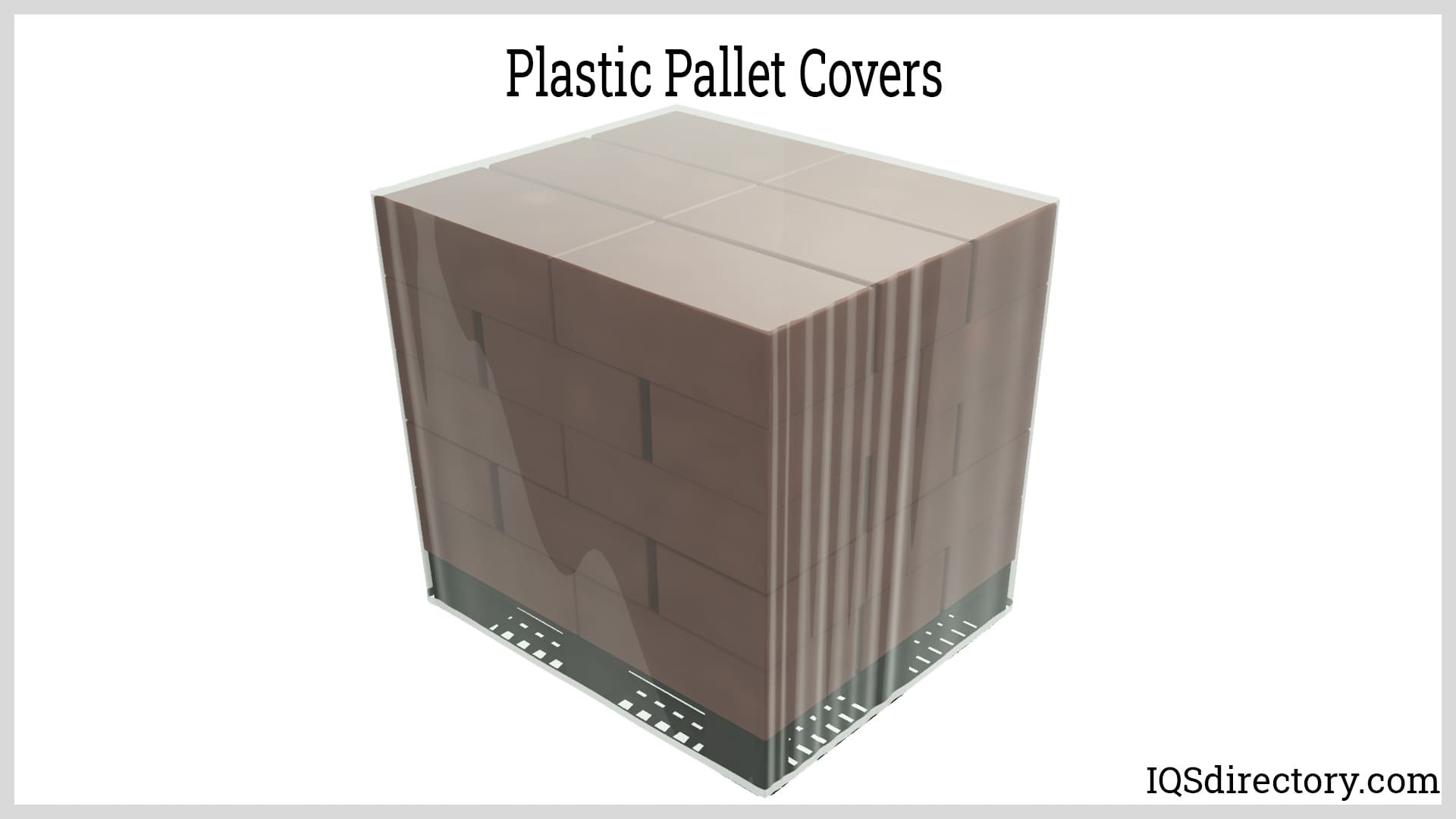
Pallets are covered and protected with plastic pallet covers, commonly known as PPC, which are enormous gusseted poly bags used for storage and shipment. Pallets are found in storage facilities, shipyards, local businesses, warehouses, or...
Plastic Tanks
A plastic tank is a large capacity liquid or granular storage unit that can be vertical, horizontal, below or above ground, as well as movable. They are designed to hold several gallons of a variety of substances for long periods without experiencing wear, weathering, or deterioration...
Plastic Totes
A plastic tote is a box type portable storage container that is made of resilient and durable plastic that is capable of withstanding heavy duty use in industrial and residential settings. They come in...
Plastic Water Tanks
A plastic water tank is a large capacity container designed to store water for household, agricultural, irrigation, and industrial manufacturing use. There are various types of water tanks produced to meet the needs of specific applications, with...
Printed Plastic Bags
A plastic bag is a thin, flexible pouch made from plastic film, non-woven fabric, or plastic textiles. Also known as polybags or pouches, plastic bags are used for a variety of purposes, including containing and...
Poly Bags
A poly bag is a common shipping and packaging resource made of polymer material that is exceptionally durable, pliable, and customizable to fit any application. Made of polyethylene or polystyrene materials, poly bags are a precisely...
Poly Tanks
A poly tank is a plastic storage tank used to store, transport, and collect water, other liquids, and granular or powder materials. They are made of polyethylene or polypropylene and are a cost effective, lightweight, and easy to handle...
Tamper Proof Bags
Evidence bags that cannot be tampered with are essential parts of any crime scene. These evidence bags are made of heavy-duty, leak-proof polyethylene that is tear- and puncture-resistant. They also have a very strong, sticky closing...