Hydraulic Valves
Hydraulic valves are used to direct and control the flow of fluids through a system of pipes, hoses, or cylinders, converting the fluid force into mechanical energy. This energy is transmitted through the hydraulic system by a series of accumulators, pumps and actuators to operate a wide range of equipment for a vast array of functions. They are generally part of a "closed loop" system with a reservoir, that allows the fluid to expend its driving force before being returned to the reservoir for continuous function.
Quick links to Hydraulic Valves Information
A Brief History of Hydraulic Development
- Ancient Hydraulics
- In Ancient Greece, Aristotle noted that water is a continuum. A century later, Archimedes stated that a body in water floats due to the force of displacement and that pressure gradient is an essential part of flow. Leonardo DaVinci developed the first mathematical flow formula at the turn of the sixteenth century, and designed the first known closed loop control system to regulate the flow rate of water to a water wheel.
- All of these grounding theories were pertinent to the advancement of hydrostatics (water at rest) and hydrodynamics (water in motion), paving the way for hydraulic (water powered) developments.
- In 1648, Frenchman Blaise Pascal presented the Hydrostatic Transmission Theory claiming that pressure applied to a static fluid is transmitted equally in all directions. Now known as Pascal's Law, this theory is the fundamental basis of hydraulics.
- Joseph Bramah patented the first hydraulic machine in 1795. It was an industrial press with designs still in use. His progress was followed by the likes of Robert Boyle, Sir Isaac Newton, Daniel Bernoulli, and Leonhard Euler, all of whom lent their knowledge to the field of hydraulics.
- Hydraulics in the 1900s
- Around 1907, Harvey Williams and Reynolds Janney developed the first axial piston devices, which were both pumps and motors, that used the fluid medium as a lubricant. Water was not an adequate medium, so oil hydraulics came into existence, nearly obliterating the water hydraulic industry.
- In 1956, a misplaced mining wagon ruptured a hydraulic oil line and severed an electrical line at a mine in Belgium. The ensuing fire killed 262 people, inciting new legislation that required mines and manufacturers to use water hydraulics for safety reasons. These systems are still considered a safe, effective alternative to oil hydraulics. Both systems are in use today.
Making a Hydraulic Valve
Most hydraulic valves are made from iron, brass, steel, or stainless steel. Smaller units may be made from plastics. The seat, or outer housing of a valve, and the body, or inner component that opens and closes the channel, may be cast, die forged, or machined. An external wheel or lever is incorporated with the body to operate it.
How Hydraulic Valves Work
- Hydraulic Valve Stations
- Basic hydraulic valves have two stations: open and closed. When closed, no fluid is able to pass through but when open, it flows freely. Hydraulic valves are used within a fluid control system as a simple way to prevent improper levels of pressure and fluid. The simplest hydraulic valve uses two equally sized pistons in two cylinders connected by a pipe filled with hydraulic fluid. When force is applied to one piston, the other rises. Because the fluid can not be made smaller, it is considered incompressible, and may only be displaced. This means that the pipe containing the hydraulic fluid may be any size, shape, or configuration. As long as it is full and no compressible air bubbles are present, pressure applied at one end will result in virtually equal force at the other end.
- Hydraulic power transmission is very effective. It may be divided through the use of a manifold and subsequent slave cylinders that are operated by a master cylinder. The most prevalent example of this is the braking system on an automobile. One pedal operates the brakes on all four wheels at the same time.
- Pistons and Hydraulic Valves
- The force at the business end of a hydraulic valve may be "stepped up" or "stepped down" by changing the size of one piston and cylinder in a process of hydraulic multiplication or division. For example: a two inch diameter cylinder with a nine inch long piston will raise another two inch diameter piston nine inches with an applied force of one hundred pounds.
- If the second piston has a diameter of six inches, it has a surface area nine times larger than the two inch piston. The smaller piston will only move the larger piston one inch in distance, but the resulting force is multiplied by nine, providing nine hundred pounds of pressure from one hundred pounds of initial force. Mathematical formulas may be applied to calculate accurate valve sizes and configurations for any hydraulic system.
- Valves and Flow Rates
- Some valves shut off flow when flow rates get too high, while others transmit signals to other valves in order to provide a systematic balance of flow. These valves protect hydraulic systems from being exposed to high pressures that exceed the mechanism's specified limits. The solenoid converts electrical energy into mechanical energy. When the wire coil receives a current, a magnetic field acts upon the plunger, which results in opening or closing of the valve. Hydraulic check valves have two openings: an inlet in which the fluid enters and an outlet through which the fluid exits. They prevent backflow. Hydraulic directional control valves permit flow in more than one direction because they have a component that shifts or rotates to line up with the corresponding pipes or tubes and accommodate a number of ports. Hydraulic control valves prevent improper levels of pressure and fluid in hydraulic systems. Hydraulic relief valves are used to limit the pressure in a hydraulic system by allowing the pressurized hydraulic fluid to flow out of the system into an auxiliary passage. Protecting the passage of the substance as well as the environment through which it is passing is the overall goal of hydraulic valves, as well as protecting the substance and its source.
Hydraulic Valves Images, Diagrams and Visual Concepts
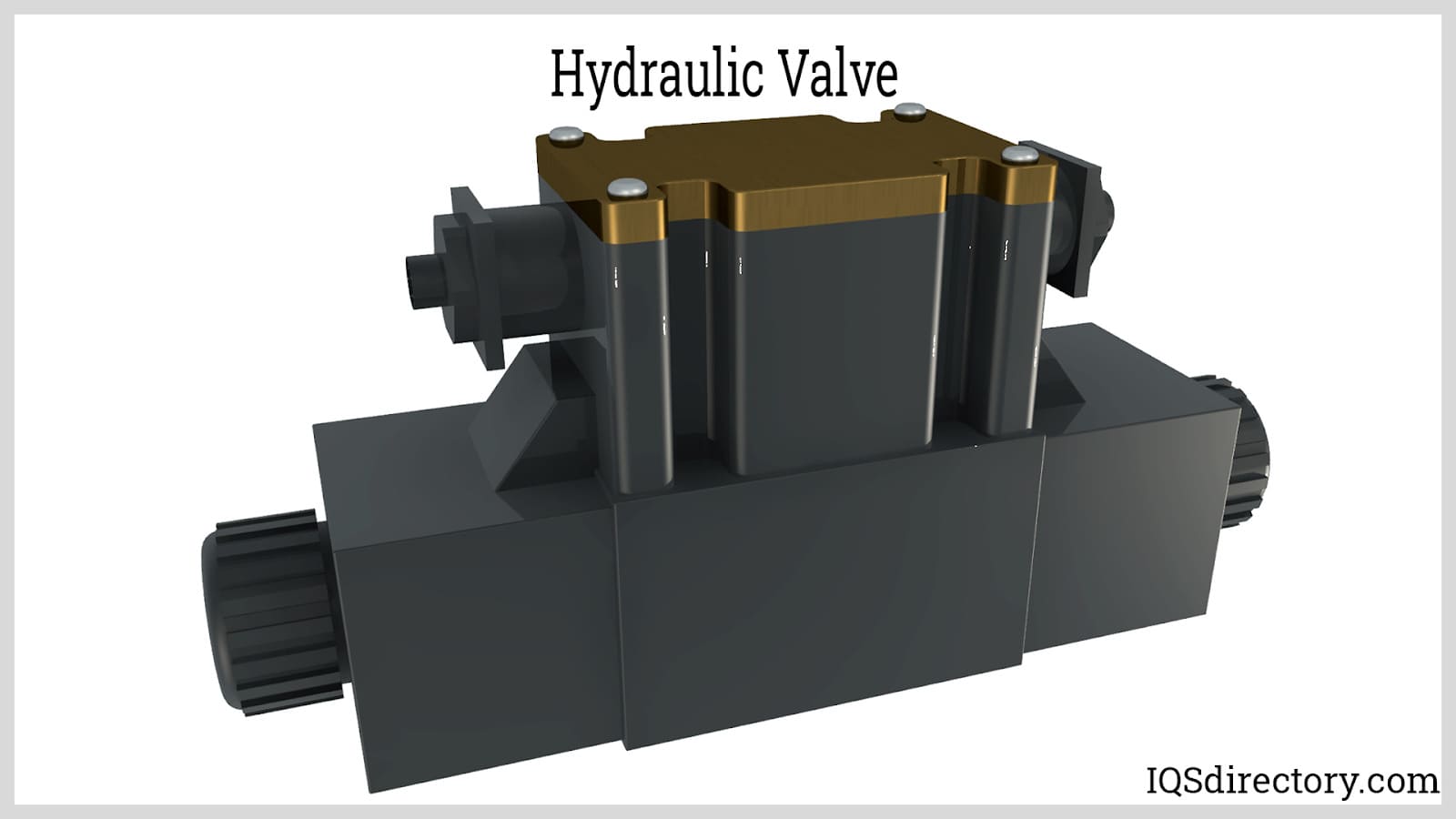 A hydraulic valve, a mechanical device that regulates the flow of the hydraulic fluid.
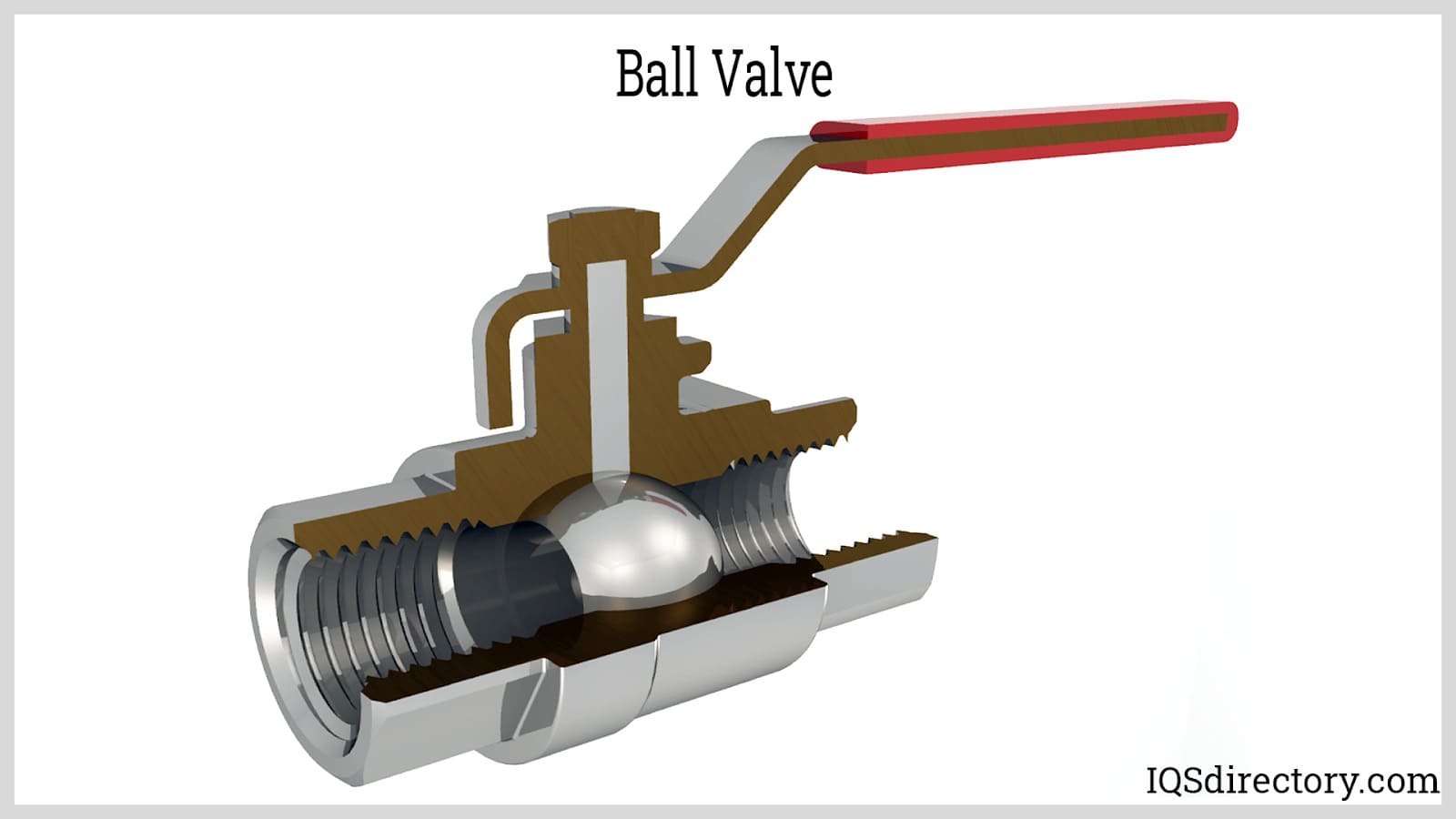 Ball valve is a shut-off valve that allows, obstructs, and controls the flow of hydraulic fluid.
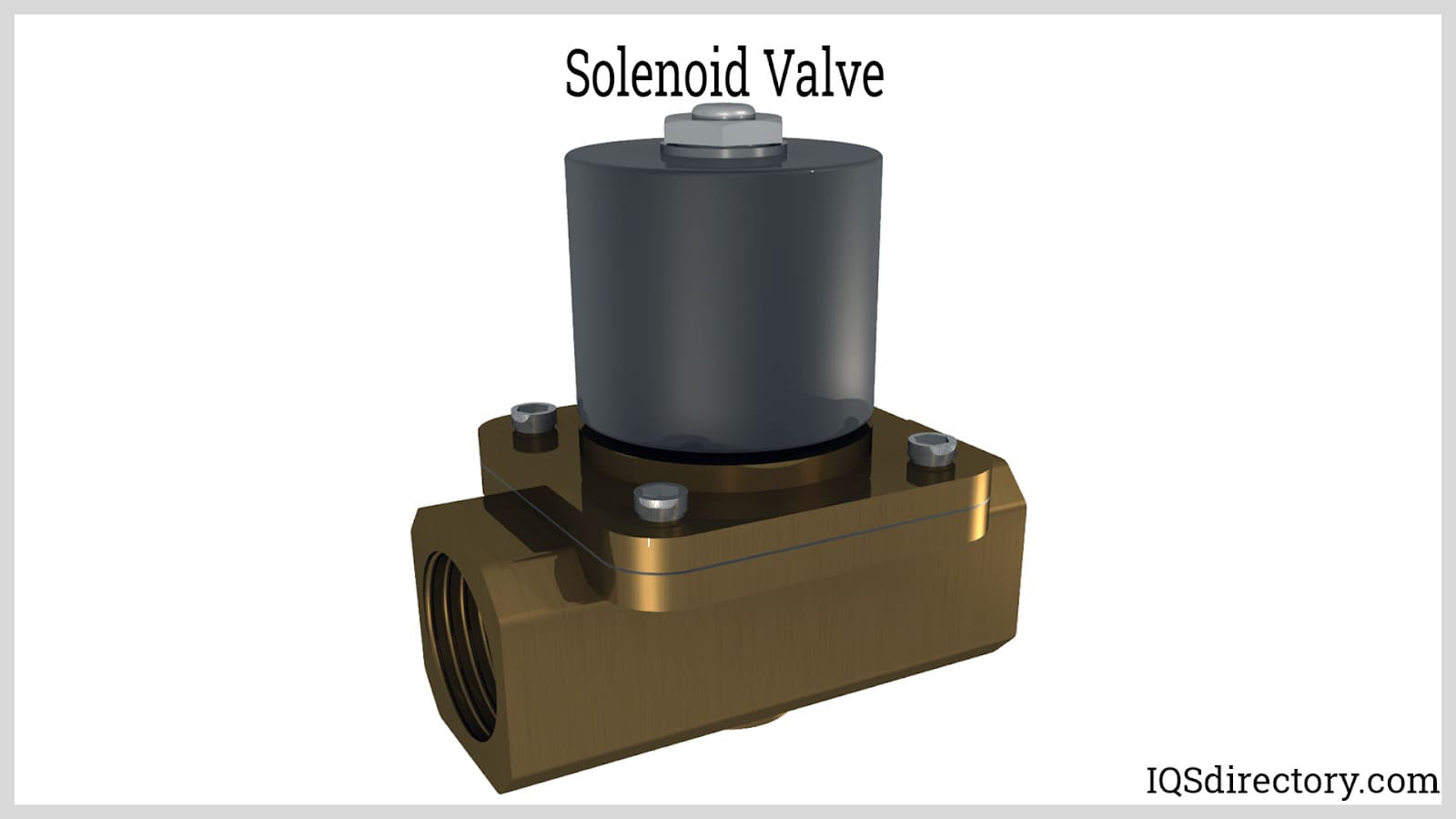 Solenoid controlled directional valve are used in hydraulic systems for opening, closing, or changing the direction of the flow of the liquid.
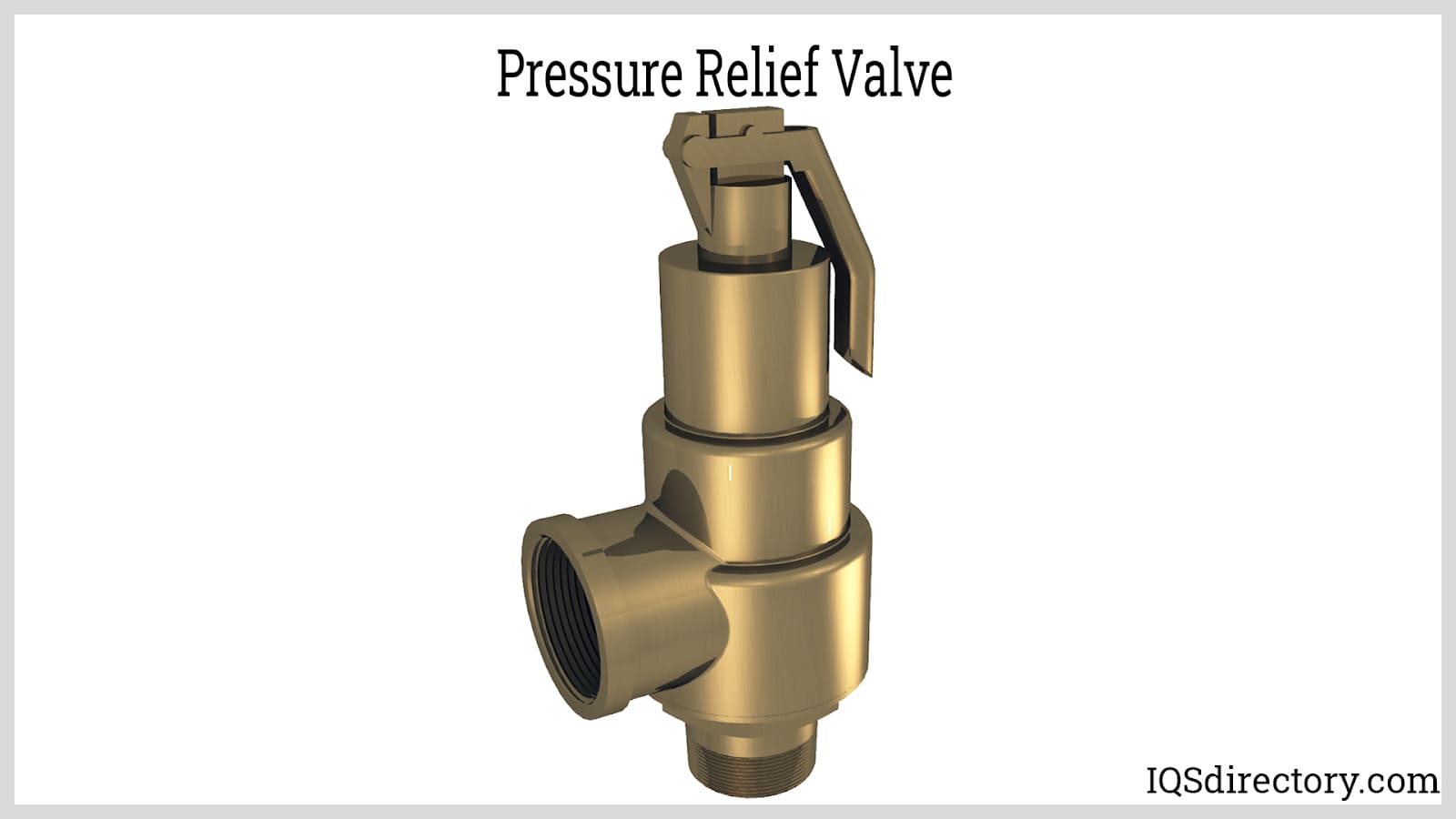 Pressure-control valves regulate the fluid pressure in a hydraulic system by making sure the system pressure does not exceed a certain set point.
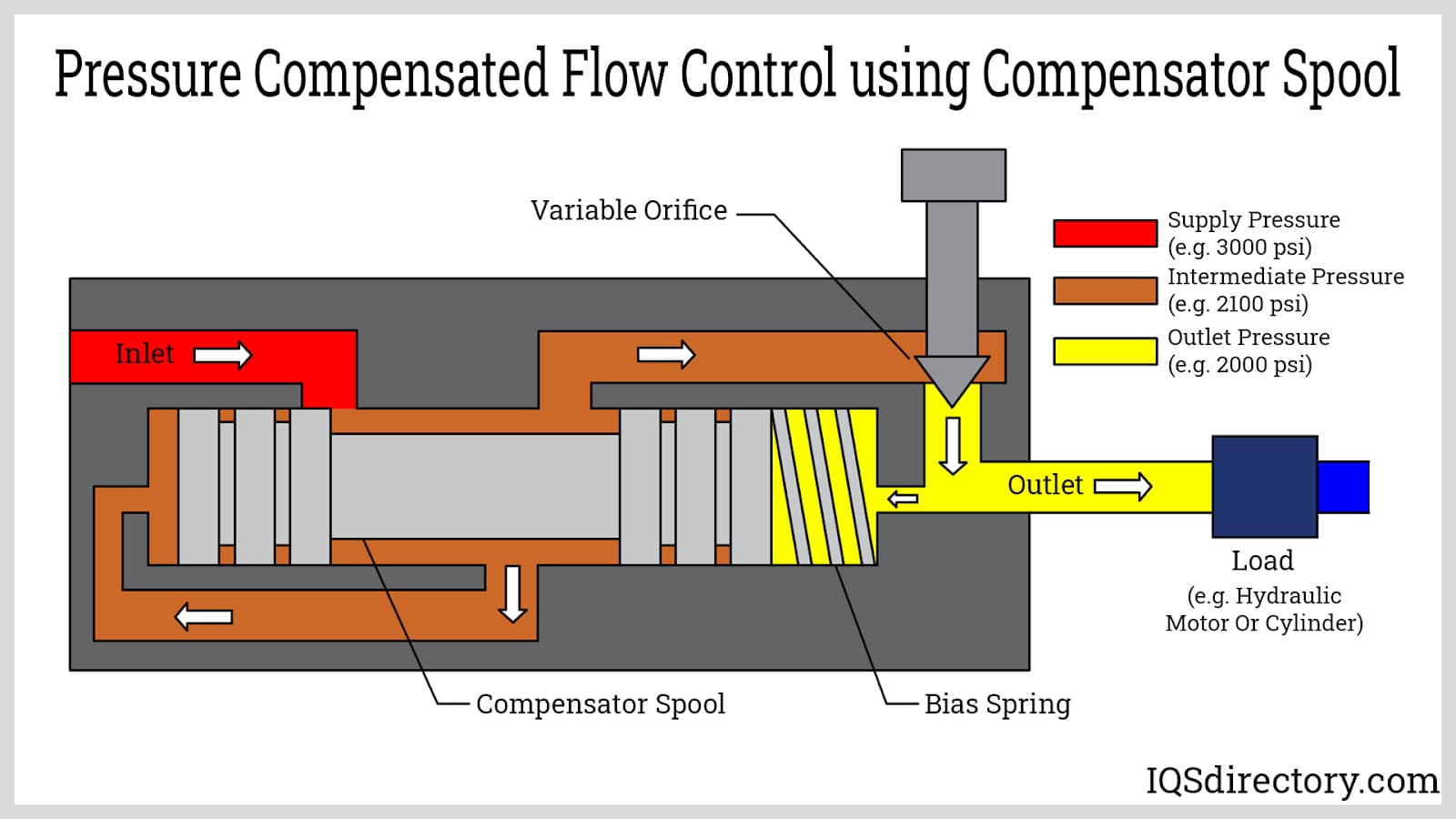 Pressure compensated flow control valves are designed to maintain a constant volumetric flow rate despite any pressure drops across the valve.
Types of Hydraulic Valves
The type of hydraulic control valve placed in the system will depend on the specifications of the job. Some valves such as ball valves, butterfly valves, globe valves, check valves, and gate valves are simple flow control valves that are generally either fully open or completely shut.
- Ball Valves
- Parts that control the flow and pressure of a fluid by using a spherical element to create a seal. Ball valves are used in critical high pressure applications that require a quick and easy shutoff.
- Control Valves
- Used to contain and transfer the flow and pressure of hydraulic fluid in hydraulic systems. There are many different designs of hydraulic control valves, including check, cartridge, directional, relief, safety, shut off, and hydraulic solenoid valves. Hydraulic control valves come in a variety of sizes and pressure ratings.
- Conventional Safety Relief (CSRV)
- A type of spring-loaded pressure relief valve. The characteristics of this valve are directly affected by changes to back pressure within the valve.
- Directional Control Valves
- Control the direction of the hydraulic fluid to the point where it is needed. Directional control valves are useful for hydraulic tools and farm equipment that use hydraulics.
- Electric Hydraulic Valves
- Parts that are able to control the flow and pressure of fluid when an electric signal triggers them to open or close.
- Float Valves
- Valves that automatically open or close as the liquid level changes. Float valves are operated mechanically by a float that rests on top of the liquid.
- Gate Valves
- Linear motion valves in which a flat closure element slides into the flow stream to provide shut-off. Gate valves are designed to minimize pressure drop in fully open positions.
- Globe Valves
- Multi-turn valves that have a closing element that moves perpendicular to the valve body seat and generally seals in a plane parallel to the direction of flow. This type of valve is suited both for throttling and general flow control.
- Hydraulic Valves
- Parts that control the flow and pressure of hydraulic fluid within a system. The main parts include a casing, a bonnet, a seat and a disc.
- Manifold Devices
- Devices that regulate fluid flow between components in a hydraulic system. They let an operator know how much fluid is flowing between the pump and actuators, the hydraulic devices that move or control a mechanism.
- Needle Valves
- Have small ports with thin threaded plungers that allow for tight flow regulation in hydraulic systems. Though the flow rates are low, needle valves provide a steady and precise flow of fluid and are therefore used for calibration or flow regulating applications.
- Pressure Safety Valves (PSV)
- Actuated by inlet pressure and are made to rapidly open or close. They feature a tight shut-off and are used for safety purposes only.
- Pressure Relief Valves (PRV)
- Utilized to re-close and prevent any further flow once normal conditions are re-established.
- Spool Valve
- Also known as a directional valve or directional control valve, is used as a switching device to control hydraulic equipment. It blocks and opens fluid pathways inside the valve to activate power transmission. It is a cylinder with a cutaway view resembling a thread spool, sealed inside a casing. Valves on one side lead to a pump and storage tank. Other valves may lead to a single device, or to a hydraulic manifold which directs power to multiple devices. The controller moves the spool into different positions, moving the fluid through the system. Pressure flows either from the pump to the devices or from the devices back into the fluid reservoir, but only provides force in one direction, depending on the position of the spool, which determines whether the force pushes or pulls.
- Proportional Valve (P Valve)
- Regulates the output pressure in a system with multiple hydraulic lines. Commonly found as components of braking systems for cars, p valves provide less pressure to rear brakes to keep them from locking up.
- Solenoid Valve (S Valve)
- An electromechanical valve. An electrical current is run through a coil which creates a magnetic field. This causes a plunger to open or close the valve. Solenoid valves may be direct-acting, in which case the plunger opens and closes an internal orifice directly, or they may be pilot-operated, also known as servo-type valves, wherein the plunger operates a pilot orifice. Fluid pressure in the line passing through the pilot orifice operates the valve seal. Most s valves have an inlet port and an outlet port, classifying them as two port valves, although they may be designed with more outlet ports. Because they are controlled with electricity, they can be computer programmed to operate systems automatically.
- Hydraulic Cartridge Valves
- Also known as logic valves and 2/2 valves, are threaded inserts that screw into a cavity in a manifold or a valve body. They may be used to control flow rate, direction, or pressure.
- Check Valves
- Directional control valves that only allow hydraulic fluids to flow one way. They are two port valves, meaning they have one inlet and one outlet, that are opened by the pressure of the fluid flow within, and shut by any backpressure that flows back into the pipe.
- Relief Valves
- Types of safety valves designed to release pressure once it has built to a specific point. In equipment operation, hydraulic relief valves will relieve pressure by sending excess hydraulic fluid back to the storage tank. These valves may be pressure activated or spring loaded. Commonly found on water heaters, a safety relief valve will vent steam if the water in the tank gets too hot.
- Position Valves
- Or 3-way valves, consist of two valves in a single body with a shared input and exhaust port. They are used as pilot control for hydraulic valves.
- Safety Relief Valves (SRV)
- A type of pressure relief valve that are easily identified by their rapid opening and closing, which is directly proportional to increases in pressure.
Uses for Hydraulic Valves
Hydraulic valves are used in cars to actuate brakes, clutches, and gears. They are used in engine lubrication and air conditioning systems. Some car jacks use hydraulic cylinders to provide lift. The Jaws of Life utilize a system of hydraulic piston rods that can cut, spread, push, or pull a vehicle apart to rescue passengers.
Some hydraulic valves can handle several thousands of pounds per square inch of pressure and are found in heavy equipment operation. They control dump beds on trucks, swing arms on backhoes, blade adjustments on graders, track drives, conveyors, scissor lifts, and forklifts. Hydraulic valves are found in all industrial timber cutting and processing equipment, water and sewage treatment facilities, power plants, mining operations, oil, gas, and petroleum works, food harvesting, processing, and packaging operations, chemical processing plants, and plastics manufacturing.
Hydraulic control valves can be used to operate tiny nano-bots that perform microsurgery with masterful precision as easily as they control crane booms that can lift railroad cars or place construction materials on catwalks hundreds of feet in the air. They are at the heart of manufacturing automation and robotics. Without hydraulic components, there would be no amusement parks or draw bridges, and many industries would be reduced to a crippling crawl.
Hydraulics In Motion
One of the simplest hydraulic devices is the log splitter. It is driven by an engine, typically a four-stroke gas motor, attached to an oil pump. The pump pushes the oil into a spool valve that operates a ram. The spool valve moves fluid into the ram with "stepped up" force. The ram of the log splitter is a hydraulic cylinder, with a wedge at the head, which splits the wood as the operator applies pressure to the lever. A reservoir contains hydraulic oil. It is often equipped with a filter to maintain the cleanliness of the oil.
- Gear Pump
- A gear pump is the most common type of pump found in hydraulic systems. It is a positive displacement pump and is used to move high-viscosity fluids continuously. The gears are housed inside the pump casing and are classified as external or internal depending on the configuration. Gear pumps use two spur gears that mesh together. One of the gears is driven by a motor, the other, called an idler, is driven by the first gear. The counter-rotation creates a void in the intake side, suctioning hydraulic fluid into the rotation and moving it out the exhaust port. Tight tolerances between gears prevent backflow.
- Ram for Hydraulic Valves
- The ram is a piston rod that is driven by the fluid being pumped through the spool valve. In the log splitter, the pump pushes oil against the ram, which applies increasing pressure to the log, until it splits. The lever is released, the oil returns to the accumulator, and the process may begin again.
- In heavy equipment, a series of pumps and rams are inter-connected through hydraulic lines to perform heavy duty moving, lifting, digging, and farming. These same tools on a miniaturized scale can be trusted to perform delicate brain or eye surgery. The valves that operate multiple component systems can be computer controlled for accuracy and automation.
Hydraulic Maintenance and Safety
- Wear gloves and safety glasses. Hydraulic fluids often contain chemicals that can irritate skin and eyes. A pinhole leak in the system can spray oil at very high pressure, injecting the oil into the skin. Accidental ingestion can cause grave illness.
- Monitor temperatures. Most hydraulic fluids are flammable.
- Clean up spills. Hydraulic fluid is a lubricant. It will lubricate the floor as readily as equipment.
- Watch out for the environment. Conventional hydraulic oil is not environmentally friendly. There are options available that are. If alternatives don't work for specific applications, make sure to handle the fluids responsibly.
- Let the pros handle it. They can ensure machines are operating properly. They can offer information and tips on better performance or maintenance. They can fix existing problems, spot potential issues, and prevent future breakdowns.
Hydraulic Valve Terms
- Accumulator
- A container that stores fluid under pressure and is used to absorb hydraulic shock.
- Backpressure
- The pressure exerted on the downstream side of a valve seat.
- Bonnet
- A removable outer piece of a valve that makes assembly possible, sometimes considered part of the body.
- Bleed
- A small controlled line of fluid from a pressurized system.
- Cavitation
- When gas enters into the liquid stream and causes the pressure to reduce to the vapor pressure.
- Cracking pressure
- This occurs when the valve begins to leak flow, prior to the set pressure.
- Cylinder
- A device that is used to convert hydraulic energy to mechanical motion and force.
- Differential Set Pressure
- The pressure differential between the set pressure and constant superimposed backpressure.
- Disc
- The o-ring or metal wedge that seals the valve to the seat.
- Full Flow
- A condition in which the maximum amount of fluid must be allowed to travel through the system.
- Flow Rate
- The volume, mass or weight of fluid passing through a flow passage, regulated by valves.
- Gear Boxes
- Used to ensure easier operation of larger valves, particularly ball valves.
- Hydraulic Actuator
- A device fitted to the valve stem that uses hydraulic energy to open and close the valve.
- Hydraulics
- The study of fluids in motion.
- Meter
- Used to measure pressure level and volume of fluid in a hydraulic system.
- Overpressure
- The pressure increase or accumulation above the set pressure when the valve is discharging flow.
- Pre-Charge
- The residual pressure in a hydraulic actuator before the introduction of oil.
- Reduced Bore
- Indicates that the internal diameter of the valve is lower than the piping to which the valve is fitted.
- Seal
- A device that restricts the escape of fluid or entrance of foreign material.
- Seat
- The fixed surface on which a valve rests or against which it presses.
- Set Pressure
- This occurs when the inlet pressure of the valve is adjusted to one of three settings: open, maintain, or control.
- Solenoid
- A coil of wire designed to carry an electrical current producing a magnetic field.
- Superimposed Backpressure
- The static pressure existing at the outlet of the relief device at the time the device is required to operate. It is a result of the pressure in the discharge system coming from another source. May be constant or variable.
- Static Water Pressure
- The measured pressure of water when it is not moving.
- Viscosity
- A measure of the internal friction or resistance of a fluid to flow. Viscosity is determined by measuring the liquid shear strength under specific conditions.