Grey Iron Casting
Grey iron casting is done in a foundry. Grey iron castings are made by pouring molten iron alloys into molds. The finished iron casting may be machined, but grey iron cannot be forged or extruded at any temperature, so it must be cast. Grey iron castings have a lower tensile strength than other cast iron products. A grey iron casting absorbs vibrational energy and converts it to heat, providing excellent damping capability. Because of its high thermal conductivity, strength, durability, machinability, and relatively low cost, grey iron is widely used for valves, engine blocks, brake drums, pump housings, and cast-iron cookware.
Quick links to Grey Iron Casting Information
The History of Iron Casting
The first iron castings were made in China around the fifth century B.C. They were ploughshares, simple pots, and weapons. There is evidence that iron casting traveled on the Silk Road out of China, and was used to make shot, but it did not reach western culture until the fifteenth century when Henry VIII used the process to create heavy cannons for the Royal Navy.
In 1707, Abraham Darby discovered a method of casting thinner walled pots, introducing cast iron cookware. Shields and some parts of body armor could be cast through his method. This armament was made until the mid-1700s.
Structural use of iron casting came about in the 1770s when James Watt improved on Thomas Newcomen's steam engine, allowing for better foundry and forge processes. The first structural implementation of cast iron products was in the building of bridges. Iron proved short lived under such conditions and was replaced by the use of steel, beginning in the early 1800s.
Cast iron used in building construction began as a fire preventive measure, during the industrial revolution. Textile mills were notorious for the highly flammable dust and fibers that could combust, either spontaneously or through poor housekeeping habits that proved deadly. The use of cast iron components led to the creation of larger, sturdier buildings, and eventually casting of framework and components of the machinery that was housed inside.
Advantages of Gray Iron Casting
Iron casting is relatively low cost and iron castings can be produced fairly quickly. Gray iron has high compressive strength, damping capacity, and is easy to weld or machine. It offers less shrinkage during the cooling process than other iron casting processes. The disadvantage of gray iron is that it has very little shock resistance and can shatter on impact.
Creation of Iron
Iron is the last element to be produced by a collapsing supernova. It is found in the inner and outer cores of the earth, and is the most common element in the planet. It is a transition metal and can be found naturally in many forms. In its purest form, it is soft, but is rarely found in an uncontaminated state. Iron must be mined and extracted from ore. Once that takes place, it can be alloyed with other metals to provide cast iron and steel products of various grades for specific purposes and strength.
Graphite is a crystalline form of carbon. Formed through extreme heat and pressure, Graphite forms into layered sheets of hexagonal flakes, one atom deep. The flat surface structure gives graphite its slick, lubricated feel. In its pure state, it is soft and cleaves easily. This property is perfect for pencils, as the layers readily slide onto paper, one layer at a time. Alloyed with iron, the graphite flakes are considered self-lubricating, providing grey iron with high machinability and slick wear resistance.
Graphite is naturally found in igneous and metamorphic rocks, where shale and limestone deposits were subjected to the heat and pressure of tectonic shifting. Natural graphite is processed by crushing and froth flotation, which liberates the flake graphite. Graphite is also manufactured synthetically. Coal-tar pitch and petroleum coke are superheated to cook off volatile materials and vaporize unwanted metals. The remaining graphite forms into atom thick sheets of up to 99 percent pure carbon.
Silicon accelerates the process of crystallization, and decreases the presence of iron carbides, which are unstable chemical compounds. Solidification rate of the molten alloy also affects its graphitization. A slow cooling period allows the carbon to diffuse into the iron. This is the process that produces gray cast iron. Faster solidification rates produce a pearlitic or ferritic matrix, which are cementite, or white iron.
Physical Makeup of Gray Iron
Graphite gives grey iron its gray color, and its name, which is known by both spellings. When an iron casting is fractured, the color inside the fracture, gray, white, or black, can reveal a lot about its composition. ASTM International Standard A 48, classifies gray iron corresponding to its tensile strength, based on one thousand pounds per square inch (1k lbs./ sq. in.) Class 20 has low tensile strength and higher ductility. Classes 30, 40, and 60 increase in strength, but higher strength reduces ductility. Class 80 has a high tensile strength but is very brittle. ASTM A 247 describes the graphite structure within the gray iron casting. Per ASTM A 48, the iron alloy must contain 6-10 percent by volume of graphitic microstructure to be considered grey iron. Graphite is added to, or created within, the molten metal during iron casting. The proportions of graphite within the gray iron casting must align with ASTM standard specifications to meet the required mechanical property of the end product. ASTM A126, ASTM A278, and ASTM A319 are other standards relating to classification and manufacture of gray iron castings.
Though several standardized grading systems are available, the general composition of grey cast iron is 95% iron by weight with an additional 2.1 to 4% being carbon and 1 to 3% silicon. Manganese and other impurities are also commonly found in or added to molten iron as needed for the diminishing or enhancement of specific properties. Sulfur, for example, is commonly introduced to the molten metal in order to increase hardness which is otherwise low in most cast-iron components. Specific to grey cast iron is a high amount of silicone which is responsible for the production of graphite when the alloyed materials are heated. The deflection of this graphitic microstructure is what gives the metal its grey appearance. Though most often in flake form, ductile cast iron production slows down the growth of graphite and allows the carbon to separate as spheroidal graphite particles instead. Both the timing and temperature play important roles in the structural disposition of grey iron castings.
The automotive industry employs SAE standards which use grades instead of classes. These correspond to the Brinell hardness scale which grades the tensile strength of the cast metal.
Grey Iron Castings Images, Diagrams and Visual Concepts
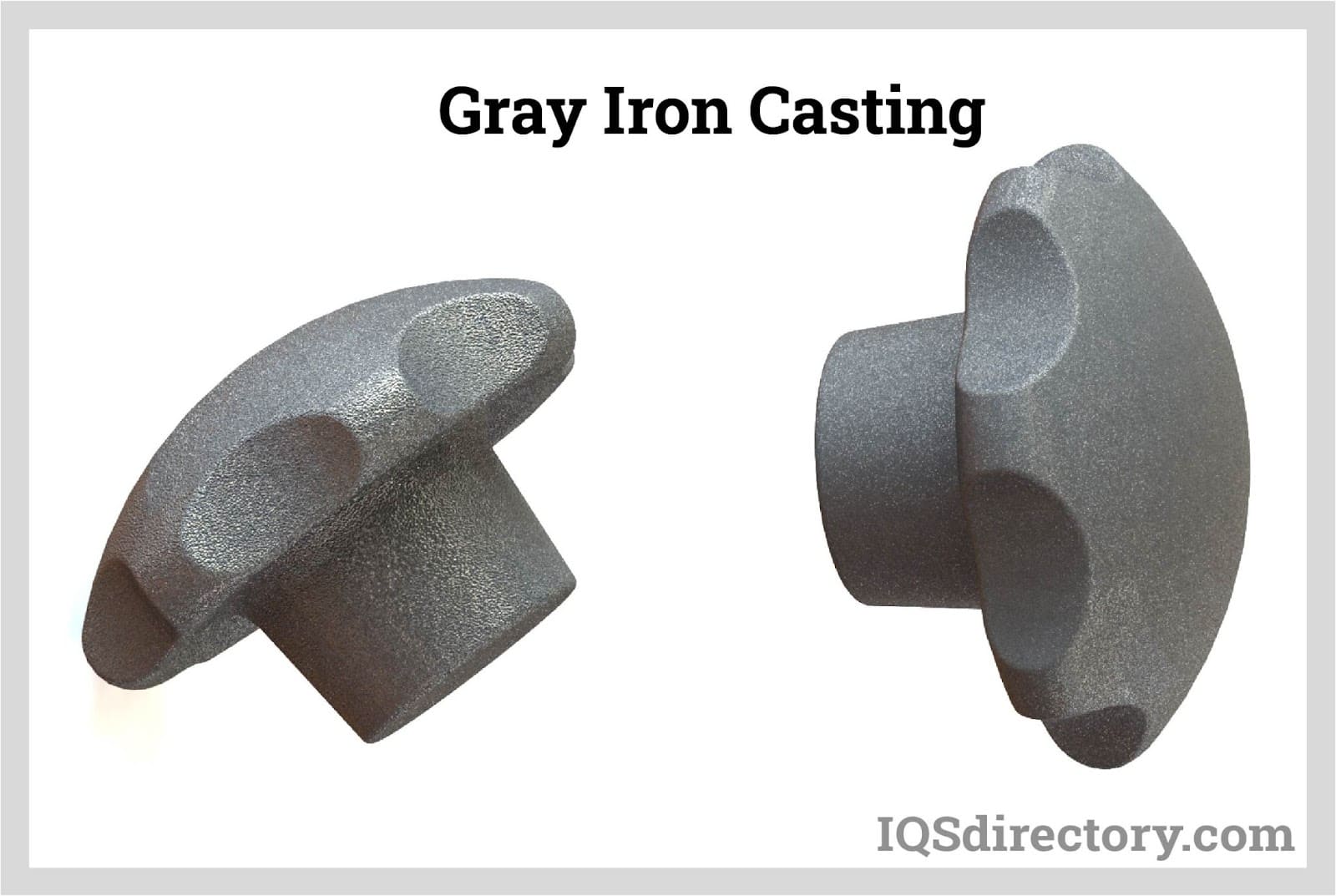 Gray cast iron is the graphic microstructure, which is able to cause fractures to the material and has a gray appearance.
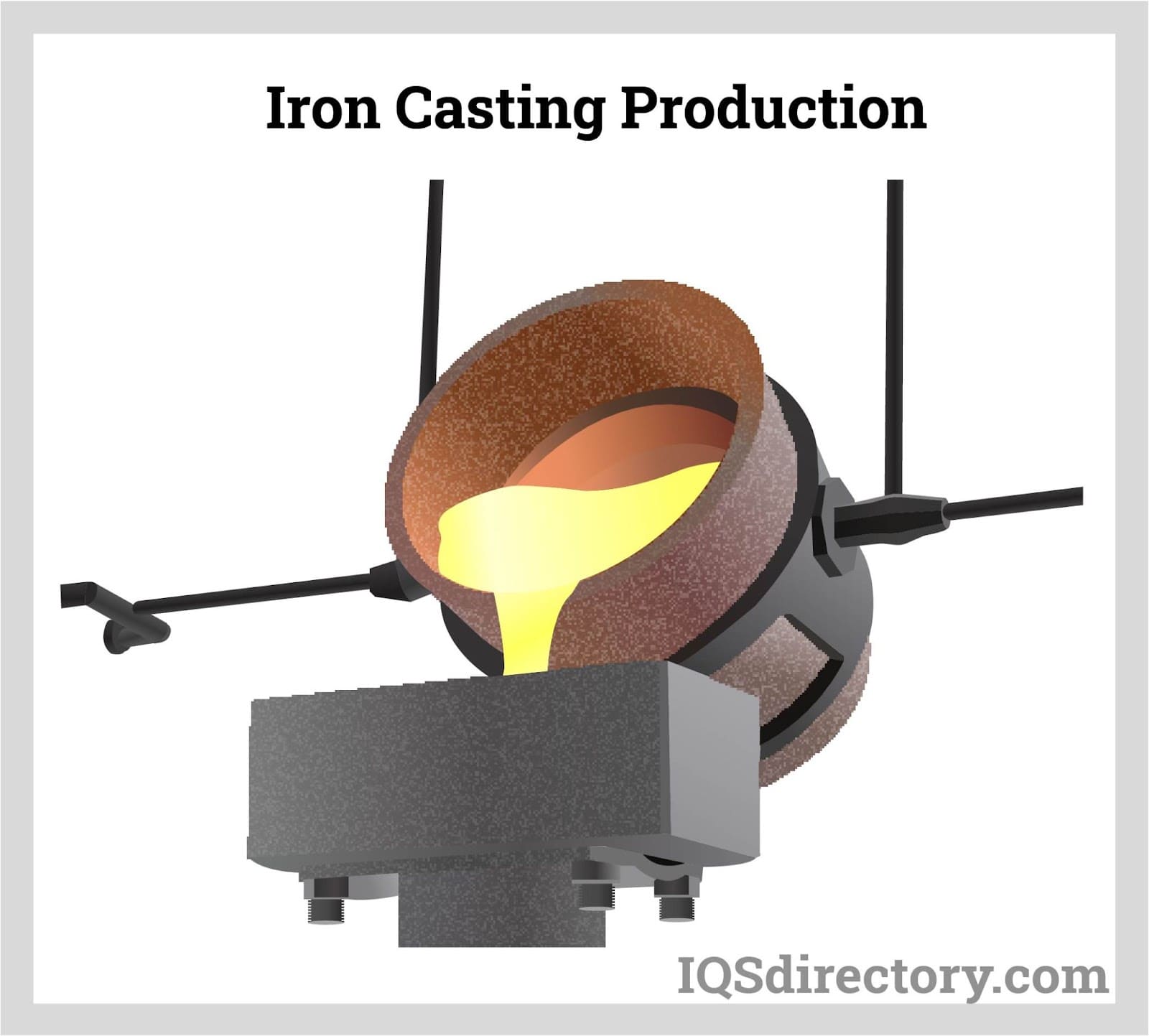 Cast iron is made from pig iron and is the product of melting iron ore in a blast furnace.
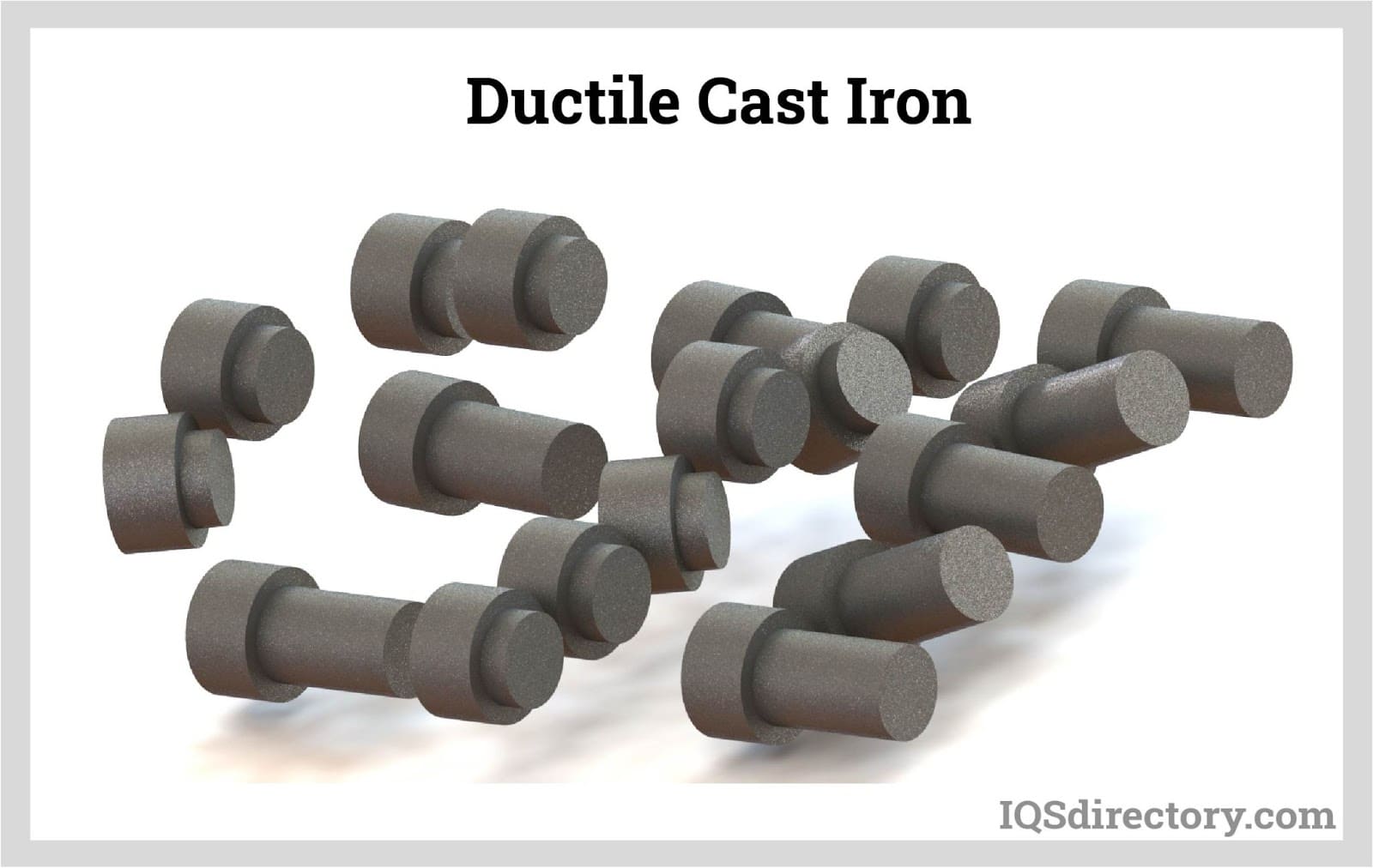 Ductile cast iron is made from pig iron and the product of melting iron ore in a blast furnace
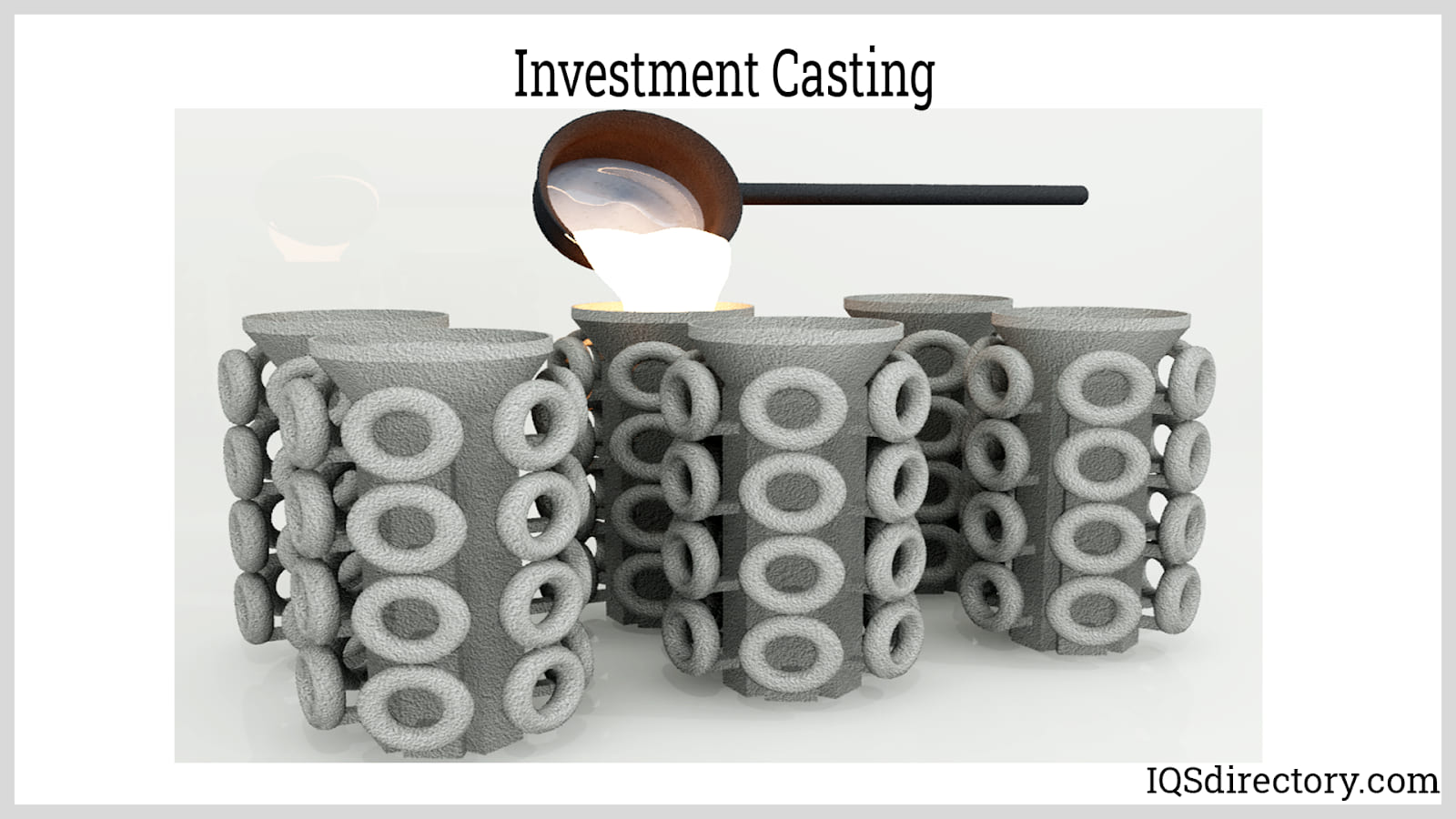 Investment casting, uses a ceramic shell built over a wax pattern to produce parts with uniform and smooth surfaces.
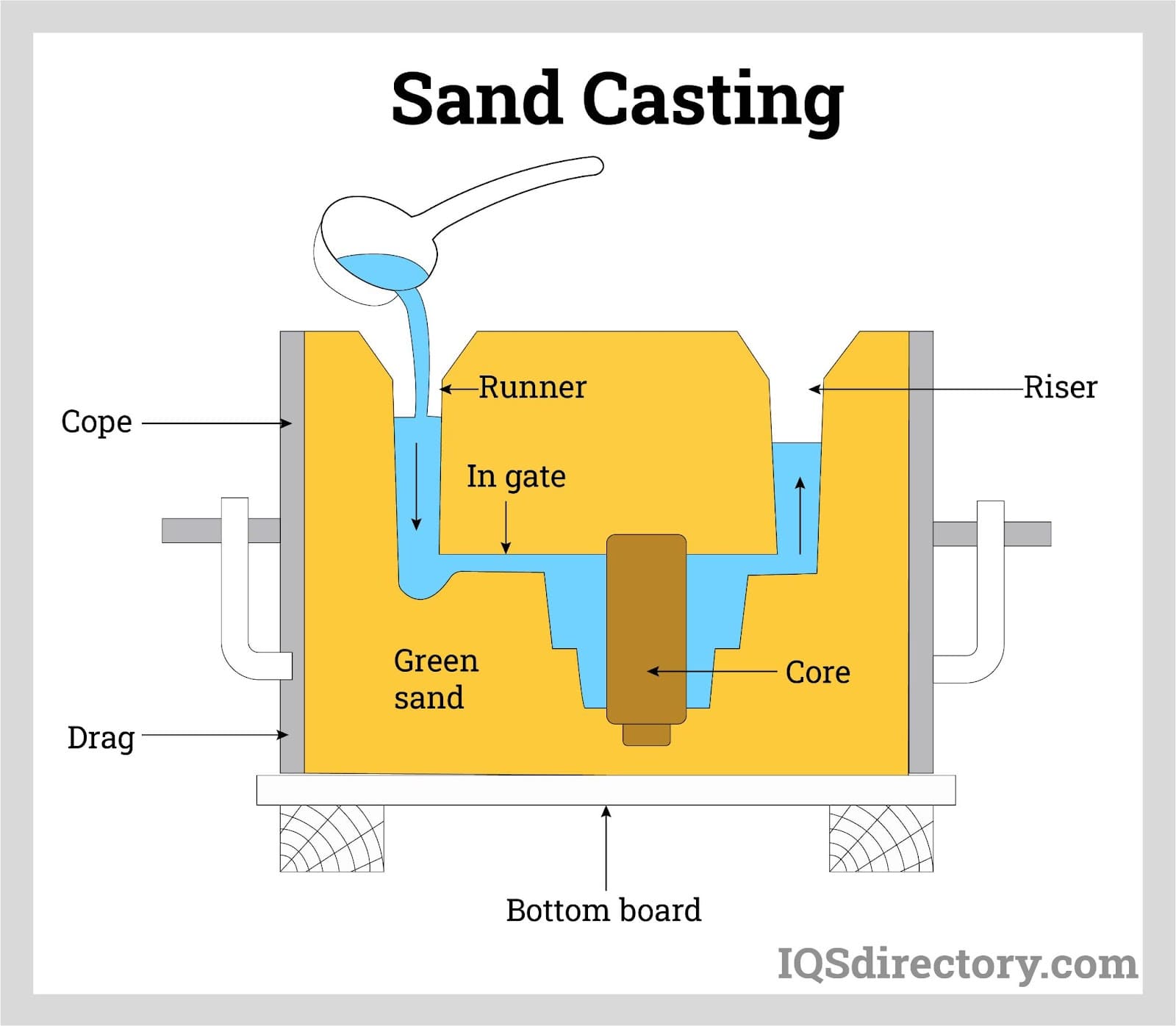 Sand casting, a process were liquid metal is poured into a sand mold, which contains a hollow cavity of the desired shape and then solidified.
 Centrifugal casting, a process where molten metal is poured in the mold, and it is then solidified while the mold will be rotating.
Types of Grey Iron Castings
- Alloy Castings
- A cast product that is composed of multiple metals. Almost all castings are alloys because it is difficult to mold a solitary metallic element.
- Cast Iron
- Encompasses a large group of ferrous alloys containing between 1 and 3 % silicone and 2 to 4% carbon with a core of about 95% iron by weight. There are two predominant types of cast iron, those being grey iron and white iron.
- Core Processes
- Involve the implementation of a block or barrier around which castings are made. The use of a core in this manner allows for the creation of internal cavities and reentrant angles in solid iron castings.
- Ductile Castings
- Molded iron components made with a particular group of cast iron alloys that are designed for improved flexibility as compared to traditional grey iron castings which tend to be brittle.
- Ductile Iron Castings
- Very thin molded products cast out of iron or an iron alloy. A ductile casting has the ability to be stretched, hammered or drawn without breaking.
- Gray Iron Castings
- Created by molding molten gray iron materials. Grey iron is a type of metal often used in castings. In the past, grey iron was known as cast iron; however, cast iron is now made out of iron-carbon alloys that have a higher level of ductility.
- Gray Iron
- Or cast iron, is an inexpensive and commonly used metal material. Grey iron is a type of metal often used in castings. In the past, grey iron was known as cast iron; however, cast iron is now made out of iron-carbon alloys that have a higher level of ductility.
- Green Sand Casting
- Uses disposable molds made of special sand based slurries to produce cast iron parts and components for a number of industrial uses. While some variations may actually appear green in color, the term is actually derived from wood working and references the wet state of the slurry during mold making.
- Grey Casting
- The production of molded products made of any of a particular group of iron alloys with notably high carbon and silicon content.
- Iron Casting
- Any of variously designed products that are primarily iron. Iron is a very strong and plentiful material, making it a prime candidate for casting foundries.
- Iron Foundries
- Facilities which provide all of the services necessary to produce iron castings of various sizes and shapes.
- Malleable Iron Castings
- Cast products that consist of mostly iron. Unlike a normal iron casting, one that is malleable has the ability to be shaped and bent without fracture.
- Spheroidal Graphite Cast Iron
- A group of iron alloys specially formulated to create molded products with heightened elasticity, tensile strength and durability.
Manufacturing Grey Iron
The foundry is where iron casting takes place. Raw materials are shipped into the foundry, and through complex systems of sorting, measuring, and mixing, in accordance with ASTM standards, are fed into a furnace to be melted.
Iron foundries typically use electric arc furnaces (EAFs), induction furnaces, or cupolas to bring the mixture to pouring temperature. EAFs use electrical arcs to heat the metal. They are primarily used for batches of one ton or less. Induction furnaces incorporate the use of gas to create heat. A cupola is a pipe- or tube-like structure, resembling a smokestack on legs. There are doors in the bottom so the metal can be dropped. Cupolas can vary in diameter from one and a half to thirteen feet and are usually made of steel lined with refractory material. They use burning coke to provide heat and graphitization to the molten iron.
Agitation of the molten alloy causes degassing, or release of hydrogen bubbles that form through chemical reactions, and become physically entrapped in the mix. If the molten metal is not degassed, the bubbles will make the final product porous, which reduces strength and promotes deterioration.
Molten metal was originally poured by hand using ladles. This proved highly dangerous and was only practical for casting small parts. Modern foundries are much more safety conscious and efficient, utilizing robotic arms and/ or automated systems to facilitate the work.
Molding of Cast Iron
Once the appropriate melt temperature has been achieved, the metal is poured into molds. The molds can be one-piece solid pattern molds, or two-piece split pattern molds. The two-piece mold consists of a cope and a drag that meet on the parting line.
The molds are made with a taper, or draft to the edges so the cast part can be removed.
A core creates a patterned void inside the gray iron casting that could not be achieved otherwise. The core is often destroyed in the process of breaking it out of the mold, so is generally made from disposable material.
A life-sized pattern of the product to be cast is made from wax, wood, plastic, or metal. The pattern is then made into a mold. Molds are made through various means, depending on the size, complexity, material, and quantity of finished items.
Sand casting utilizes green sand, which is natural silica sand with natural clay added for bonding agents, or resin bonded sand with polymer resins that "glue" the sand in place. A pattern of the iron casting is placed in sand, creating an impression. The pattern is removed and molten metal is poured into the void. Once the metal has cooled, it can be broken out of the mold. Shaking or tumbling the mold will break apart the sand, freeing the casting from the mold and sand from the metal surfaces. This is called shakeout.
Investment castings are typically used for steel casting. A wax pattern is made of the product to be cast, through repeated steps of coating and hardening, a perfect impression of the item is created inside the shell. Once the shell has cured to sufficient strength, the investment mold is turned upside down and heated until the wax melts out, leaving behind a cavity that can then be filled with molten metal that will require little or no machining of the finished cast iron or steel piece.
After Molding Cast Iron
Some cast iron pieces will require heat treatment. This is a secondary heating and/or cooling process that provides annealing, case hardening, tempering, or quenching of the iron casting, for strength. If the cast piece is porous, it can be sealed through a process of metal impregnation which utilizes high vacuum pressure to fill the voids with metal dust, sealing the surface. Shot peening, a type of sand blasting that "hammers" the outer layers of metal into a more solid finish, increases surface strength to resist cracking, as in the making of bells.
Finding a Foundry
The strength of a foundry lies in its ability to produce quality iron castings every time. Look for a company with a reputation for producing good iron cast products, in a timely fashion, at fair prices. Creating patterns and molds for iron casting can be a time-consuming part of the project. Be sure the foundry can provide design services for your iron castings and set-up processes that coincide with project scheduling. A good foundry will maintain a ready supply of raw materials and a program for proper waste management. Waste products from iron casting processes include emissions, dust, and slag, all of which are by-products of the process and may or may not be toxic.
If the castings require finishing, the foundry should be able to provide these services or have reputable colleagues to perform such services as milling, polishing, or painting.
Similar Casting Processes
In 1943, Keith Mills discovered the process of ductile iron casting. Ductile iron is a group of iron alloys with controlled microstructures. Ductile iron casting, also known as nodular iron casting, spheroidal graphite casting, or SG iron casting, employs magnesium as a nodulizing element in the iron cast process, much as silicon is used as a stabilizing element in gray iron casting. Nodular graphite inclusions in the ductile iron increase its tensile strength and make it resistant to fatigue and impact.
Ductile iron castings have a higher tensile strength than gray iron castings. Ductile iron is used for water and sewer lines where polymerics do not offer the strength or durability of ductile iron castings. Ductile iron is found in automobiles, trucks, tractors, oil rigs, piano harps, and windmills. Ductile iron is ideal for casting large, complex shapes and has the strength to withstand repetitive loads.
Malleable iron casting, among the original iron casting processes dating back four to nine centuries BC, was developed as man found finished iron castings too hard to work. By slowly heating the finished iron castings over a period of time, sometimes days, the iron cast pieces developed higher tensile strength, better ductility, and fracture resistance. The heat-treated iron castings could then be cold worked.
Grey Iron Castings Terms
- As–Cast Condition
- Casting without later heat treatment.
- Brinell Hardness Number (BHN)
- A value given to a grey iron casting after undergoing a Brinell hardness test. Higher numbers indicate a harder material.
- Brinell Hardness Test
- A method used to measure how hard a material is. Typically for grey iron castings, a 3000kg metal ball is impressed on the surface of a flat grey iron piece; after removing the ball, the indentation in the metal is recorded and measured, determining a hardness value.
- Chaplet
- A small metal insert or spacer used in the molding process used to give support to the core.
- Cope
- The top half of a piece which has been forged or cast horizontally.
- Deflection
- The amount of bending or deformation that an iron casting endures due to an external load. Deflection is an important consideration for companies that plan on supporting a load with a grey iron casting.
- Drag
- The bottom half of a mold created horizontally.
- Ductility
- The ability of a grey iron casting to deform without being fractured. Iron castings have a considerable amount of ductility.
- Ferrous
- Any material that is made of or contains iron.
- Foundry
- A place where molten metal is poured into a mold, creating a metal casting.
- Galling
- A condition that results from excessive friction between metal surfaces. It creates surface deformation(s) and can result in temporary adhesion. Grey iron is renowned for its resistance to galling.
- Hypereutectic Iron
- Refers to an iron metal that is composed of more than 4.3 percent carbon.
- Hypoeutectic Iron
- Any iron alloy that is made up of 4.3 percent carbon or less.
- Malleable
- A property describing metals that can be pressed, hammered, formed, rolled, bent, etc.
- Modulus of Elasticity
- Measures the ratio of stress to strain for an elastic material. Modulus of elasticity also describes stiffness of a material.
- Permeability
- The mold–metal property which allows passage of mold/core gasses during the pouring of molten metal.
- Pilot Casting
- Also known as sample casting in which a pattern produced by a production die is used to check the accuracy of the quality and dimensions of a potential order run casting.
- Porosity
- Holes formed in casting due to trapped gasses or chemical reactions between the molten metal and internal substances or objects such as chaplets.
- Pounds per Square Inch (PSI)
- The pressure a material applies on the walls of a closed enclosure. Atmospheric pressure at sea level is 14.7 psi.
- Shrinkage
- The decrease in the size of a material. Grey iron goes through little if any shrinkage when going through solidification.
- Tensile Strength
- The amount of stretching and bending that a material can undergo before breaking or tearing. The tensile strength for grey iron castings range from about 20,000 psi to 60,000 psi.