Coating Services
Coating materials are applied to protect, preserve, or enhance the appearance of surfaces. The most common coatings, like paints used on buildings and cars, differ greatly in the type of paint and the application methods used for each.
Industrial coatings are primarily designed to offer corrosion resistance or to provide a surface with a specific function, such as creating non-stick cookware or non-slip walkways. The application process can be as simple as applying a protective layer on an object’s surface, or it can involve complex processes like thermal, chemical, or timed reactions to properly set the coating.
Coating technology has evolved alongside industrial advancements, playing a crucial role in enabling technological progress. The field spans a wide array of products and employs cutting-edge equipment to provide coating solutions across various industries. Some common types of industrial coatings include metal plating, dip coating, powder coating, and spray coating.
The object being coated is referred to as the substrate.
Coating Services FAQ
What are coating services used for in industrial applications?
Coating services protect, preserve, or enhance surfaces. In industrial settings, coatings are used for corrosion resistance, non-stick or non-slip functions, and improved durability across metals, plastics, and composite materials.
What is the difference between electroplating and electroless nickel plating?
Electroplating uses an electric current to deposit metal ions onto a surface, while electroless nickel plating relies on a chemical reduction process to create a uniform coating without electricity, ideal for complex or recessed parts.
How does powder coating differ from liquid paint coating?
Powder coating applies electrically charged powdered resin to a grounded object and bakes it for a durable finish, eliminating solvents. Liquid paint coating sprays a mist of paint that forms a film as it flows together on the surface.
What is the purpose of ceramic coatings?
Ceramic coatings provide hydrophobic and oleophobic protection, resisting water, oil, and solvents. They are widely used in automotive, marine, and electronics applications for durability and chemical resistance.
What is a substrate in coating processes?
A substrate is the object or material that receives the coating. The coating’s composition and application method often depend on the substrate’s properties, such as metal, plastic, or ceramic surfaces.
Why are adhesion tests important in coating services?
Adhesion tests measure how well a coating bonds to its substrate. Common methods include tape, scratch, and pull-off tests, ensuring coatings remain durable under stress and environmental exposure.
What are thermal spray coatings used for?
Thermal spray coatings, also called spray welding, are applied to metals and plastics to resist wear, corrosion, and high temperatures. They’re used in aerospace, mining, and heavy equipment manufacturing.
How do coating services benefit manufacturers in the Midwest?
Midwest manufacturers rely on coating services for corrosion protection, enhanced equipment lifespan, and compliance with safety or food-grade standards—key for agricultural, automotive, and industrial production sectors.
The History of Coating
Protective coatings have been around since the first person applied a layer of mud to a wall to improve its durability, an innovation shared to enhance shelter by blocking wind, sun, or rain, or to create a smoother surface.
Paint has been used for thousands of years, not only for decoration and storytelling but also to protect surfaces. However, industrial paints didn’t emerge until the mid-1800s. The Industrial Revolution, with the introduction of assembly lines , created a demand for protective coatings to safeguard industrial equipment and products.
In 1844, an accidental discovery revealed the deposition of nickel-phosphorus ions in a chemical reduction bath, such as sodium hypophosphite. This discovery paved the way for electroless nickel coating. In 1911, Roux patented a "spontaneous and complete" electroless nickle coating process.
The electroless nickel process gained further traction in 1946 when Brenner and Riddell advanced earlier work and developed a method to plate the inner walls of tubes with nickel-tungsten alloy. Their 1950 patent, which acknowledged prior research, was granted based on their controlled process for coating specific catalytic surfaces. This innovation eventually led to the development of diamond and PTFE deposition, revolutionizing industries.
World War II marked a significant turning point for industrial coatings, as the mass production of airplanes, aircraft carriers, and ground support facilities necessitated durable, functional, and safe equipment. The demand for coatings that could withstand extreme conditions, including weather and wartime stress, spurred significant technological advances.
By 1918, the health hazards of materials used in industrial coatings, particularly lead, became apparent. Manufacturers began voluntarily removing lead from their products in 1950. In 1978, the Consumer Product Safety Commission completely banned the use of lead in consumer products.
In the 1980s, the development of high-velocity oxy-fuel (HVOF) spray techniques advanced thermal plating and surface coating technologies.
Since 1996, cold spray processes have been developed with moderate success, creating coatings of metal alloys such as copper, aluminum, stainless steel, titanium, Inconel, and other composites. These coatings are especially useful in clean rooms and environments where contamination must be minimized.
Coating Service Images, Diagrams and Visual Concepts
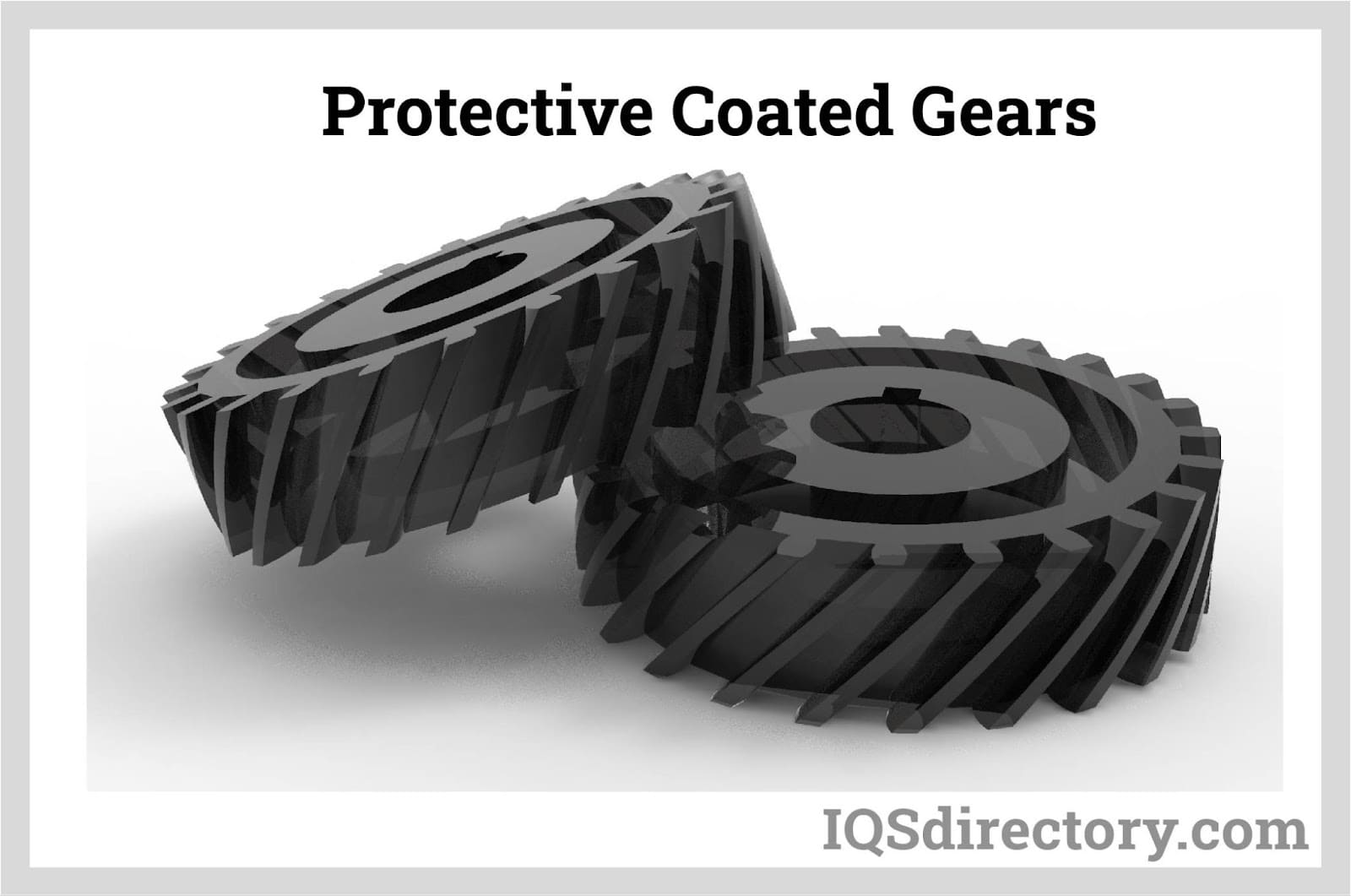 Industrial coating, a layer of a substance added to the surface to provide protection and to enhance the surface appearance.
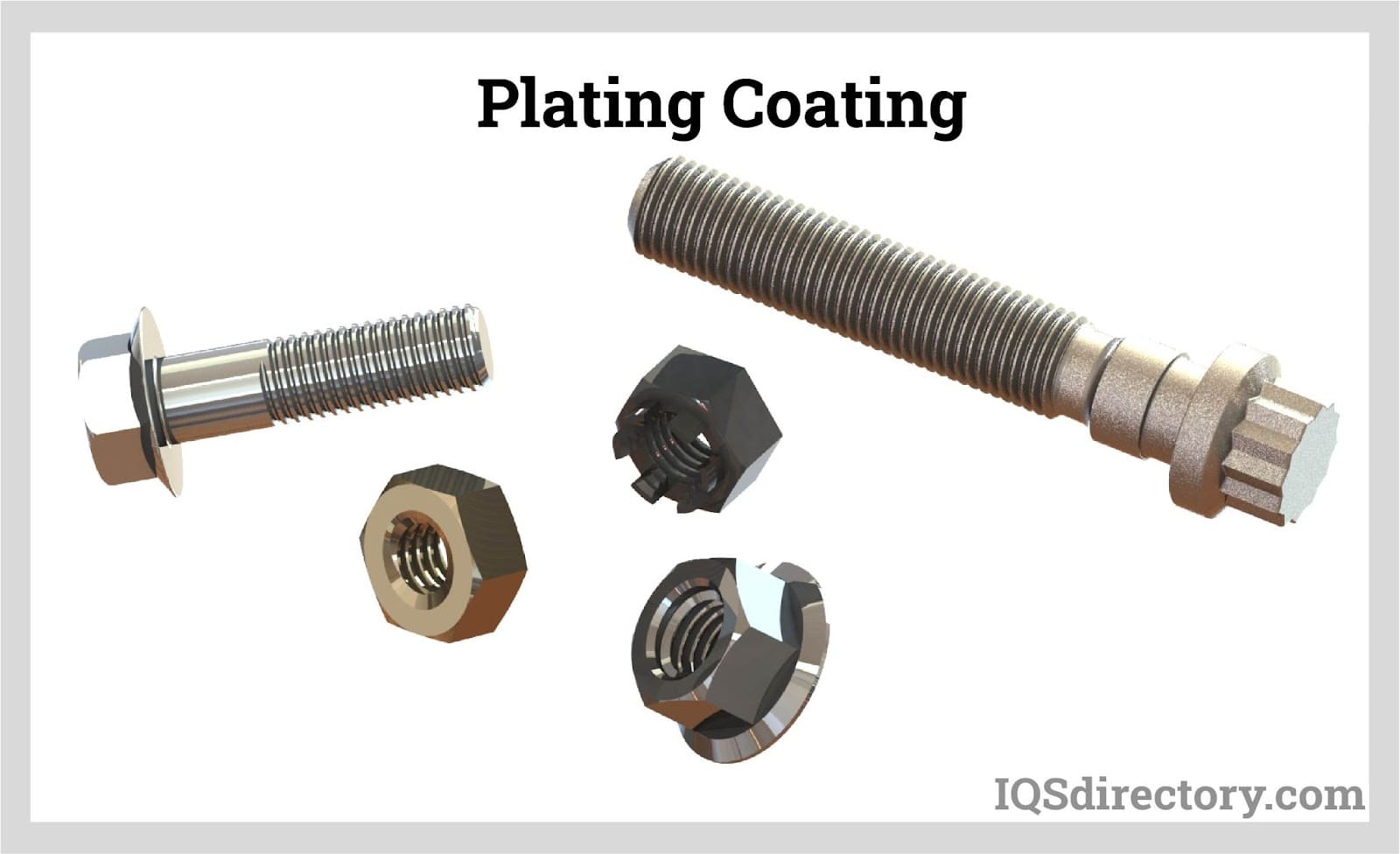 Plating uses metal as a substrate and applies a layer of metal to a part.
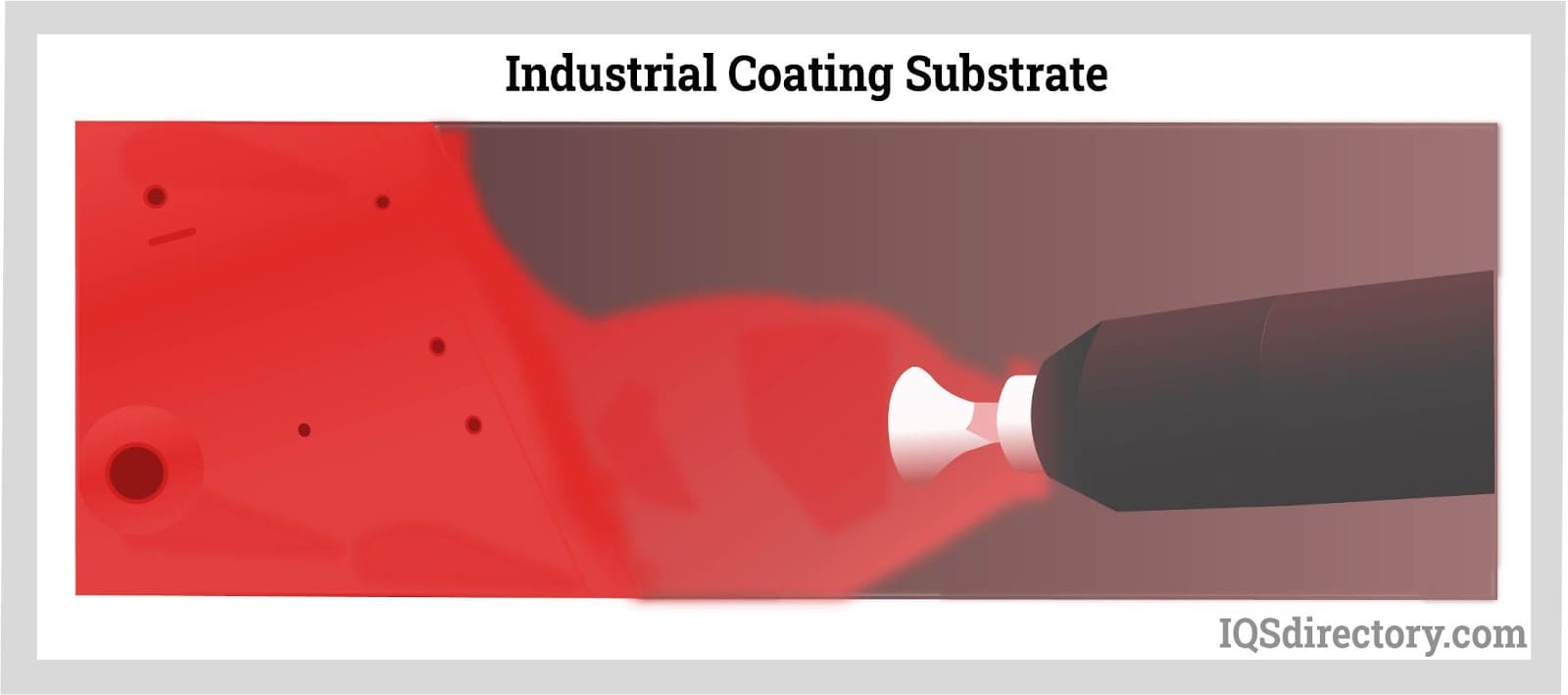 Industrial coating formulation depends on the substrate of the part.
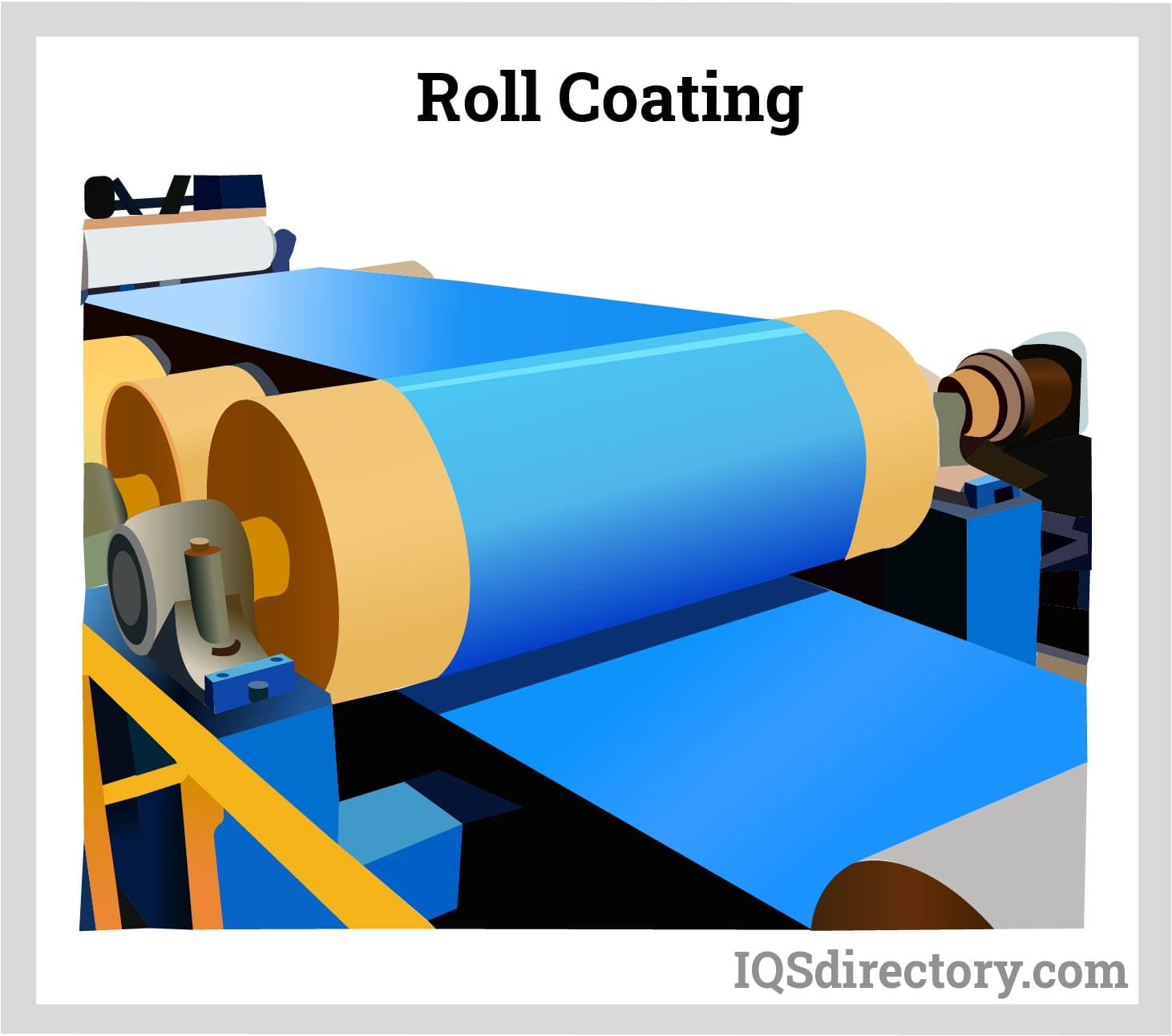 Roll coating applying a base, intermediate, and topcoat to flat substrate using rollers.
 E Coat is a cross between plating and painting which involves submerging a part in a water-based solution that contains a paint emulsion.
Coating Services Types
Air-Dried Coatings
These coatings, including forced-air dried coatings, are those that are not heated above 194ºF (90ºC) during the coating or drying process.
Air Spray Techniques
Utilize compressed air to spray liquid coatings through a small opening at high pressure, with the materials not mixed with air before being sprayed through the nozzle.
Baked Coating
Coatings heated to 194ºF (90ºC) to cure or dry.
Ceramic Coating
Inorganic, non-metallic coatings that may be semi-crystalline or amorphous. These coatings are hydrophobic and oleophobic, offering high resistance to water, solvents, and oil. They may be applied through powder coating, plasma spray, chemical vapor deposition, or spray coating. Applications include automobiles, appliances, electronics, medical equipment, and marine equipment.
Chemical Vapor Deposition (CVD)
A thin-film coating process that produces a coating by a chemical reaction. CVD processes often use unstable elements to coat cemented carbide inserts.
Chromate Conversion Coatings
Provide good corrosion resistance and create a good base for paint or rubber bonding but have little to no abrasion resistance.
Dielectric Coating
Also known as conformal coating, this refers to the complete coverage of an object, including epoxies, urethane, silicone, or acrylics that are sprayed onto the substrate and harden through a catalytic chemical reaction.
Dry Film Coating
A lubrication process that prevents scuffing, reduces friction, and provides protection against oil film failure, while also aiding heat distribution. It results in less metal fatigue, reducing the chances of part failure. Dry film coatings do not cause dimensional changes to the product because they are impregnated directly into the metal surface.
Electrocoating
Also known as electrodeposition, electrophoretic deposition, or electropainting, this process uses an electric current to apply thin-film primers or one-coat finishes onto metallic substrates. Unlike electroplating, it does not deposit metal ions but instead uses waterborne paint.
Electroplating
Electrodeposition or electropainting is used to build up the thickness of parts, form objects, or provide corrosion, abrasion, and wear-resistant surfaces. Electroplating is accomplished by placing a pre-cleaned object (the cathode) into a vat of electrolytic solution, which contains dissolved metal salts. The solution serves as the anode, and an electric current is applied to deposit the metal ions onto the object’s surface.
Electroless Nickel Plating
A chemical reduction process that deposits metal onto a substrate without using electricity. The process forms a uniform coat on all surfaces of the object, including recesses, holes, and back sides. It is cost-effective and ideal for small parts but results in an inferior finish compared to electroplating.
Electrostatic Spraying
Involves charging the paint particles with a negative or positive charge before spraying them, while the workpiece is oppositely charged, resulting in the attraction of the paint and uniform dispersion. This technique is well-suited to automation and increases production rates.
Epoxy Coating
The application of a thin layer of epoxy resin, a thermosetting polymer, over materials such as plastic or metal.
Hot Melt Coating
A method of applying plastic materials to a substrate. Frequently used for paper and books, it does not require solvents.
Ion-Plasma Coatings
Very dense coatings that are highly resistant to wear and corrosion.
Coating Through Laminating
A process in which a transparent plastic film is applied to one or both sides of a product, enhancing both decorative and protective qualities. It is most commonly used for paper products.
Liquid Paint Coating
Applied by spraying the paint into a fine mist, which is then deposited on the surface of the part. The tiny droplets form a film as they flow together. Liquid paint coatings are available in a wide variety of colors and contain binders, solvents, and pigments.
Manganese Phosphating
A pretreatment process for iron and steel surfaces before painting, especially for military equipment requiring oil or greased paints. This process results in highly corrosion- and wear-resistant coatings.
Passivation
The process that removes excess iron molecules from the surface of stainless steel products, typically using nitric acid solutions. This makes rusting nearly impossible.
Phosphate Coating
Chemically convert the surface of a base metal into a non-metallic, crystalline coating.
Plasma Spray Coatings
Provide high-quality coatings for high-temperature or heavy-duty applications. The process uses plasma arcs to melt metal and deposit it on the substrate. Plasma spray coatings are ideal for mining, farm equipment, engine parts, and aerospace components.
Plastic Coating
A plastic layer applied to a substrate, ideal for odd shapes or complete coverage of materials.
Polytetrafluoroethylene (PTFE)
A thermoplastic polymer with hydrophobic properties, PTFE is known for its non-stick and water-repellent surface. It is commonly used in non-stick cookware, catheters, and pipes for corrosive liquids.
Powder Coating
A popular method for coating surfaces, where electrically charged powdered resin and pigments are sprayed onto a grounded object, which is then heated to fuse the coating into a durable, smooth finish. This process eliminates the need for solvents and can reclaim up to 99% of overspray.
PVD Coating
Physical vapor deposition is a vacuum process in which material is vaporized and then deposited as a film onto a substrate.
PVC Coating
A dip coating process in which items are dipped into liquid polyvinyl chloride (PVC) and then dried or cured. It provides a protective and often removable layer, used in industrial process masks, tool grips, and metal shelving.
Steel Coating
Refers to the process of coating steel workpieces, rather than the coating material itself.
Thermal Spray Coatings
Also known as spray welding, this includes methods such as oxy-acetylene flame spray, twin-wire electric arc spray, and plasma spray. These coatings are thicker than plating and are used on various metals and plastics.
Thin Film Coating
Including PVD and CVD coatings, these are primarily used in electrical device manufacturing.
Vacuum Coating
A process where coating material is applied in a vacuum chamber, typically by vaporizing it and transferring it through the chamber to the substrate.
Zinc Phosphate Coating
A pretreatment for galvanized or galvannealed steel that improves paint adhesion and resistance to disbondment, especially in corrosive environments.
Coating Service Companies
Coating services suppliers vary greatly depending on the types of products they offer. Selecting the right coating services for your product will depend on its specific requirements and the desired finish.
A high-quality custom finish ensures the correct color, texture, durability, and resistance factors tailored to your design. If your product must meet standards related to food safety, medical uses, electronics, or personnel safety, your coating services provider will guide you to the appropriate finish. They should be ready to answer any questions you may have about the process or the finished product.
The ideal service company prioritizes consistency, quality, and cost-effectiveness, delivering a product you can rely on at a price you can afford.
Coating Services Terms
-
Adhesion
The strength of the bond between the coating and the substrate. Common methods to measure adhesion include the tape test, scratch adhesion test, and stud-pull-off test.
Adhesive Applicators
Tools used to apply adhesives or bonding agents, such as squeeze bottles, pressure tanks, glue guns, and coating machinery.
Binder
A non-volatile material, often a resin, in a coating that forms a film by binding pigment and additive particles together.
Biocide
A chemical agent, sometimes added to waterborne coatings, that prevents microbial degradation by killing the organisms responsible for it.
Bituminous Coating
A protective coating made from tar or asphalt used to safeguard surfaces.
Coating Applicator
A machine used to apply defect-free films to products. The quality of the coating depends on factors such as line speed, viscosity, and the percentage of solids.
Cohesion
The ability of a substance to stick to itself. When delamination occurs within a material, it is referred to as cohesive failure.
Delamination
Also known as "cohesive failure," it is the separation of a coating from its substrate. Delamination can also refer to the separation between multiple layers of coating.
Hylar
A stable material used in harsh environments, often applied to products like semiconductors, chemical processing equipment, wire, cable, piping, and tubing. It is beneficial for creating corrosion-resistant coatings in chemical processing and durable decorative finishes on building panels.
Insulbar
A glass-fiber-reinforced polyamide nylon material offering superior insulation, strength, and durability, especially in window applications.
Kynar
A material used in coating applications that provides high mechanical and dielectric strength, thermal stability, and resistance to abrasion, chemicals, solvents, UV radiation, and weathering. Kynar coatings are commonly used in pipe liners in chemical plants, equipment exposed to chlorine, and microcircuit fabrication.
Metal Finishing
The process of removing the surface to create a flat, even finish.
Parylene
An unusual polymer conformal coating that conforms to nearly any shape.
Substrate
The material being coated.
Scratch Adhesion Test
An adhesion test that typically uses a diamond stylus to apply force to the coating. The test is influenced by factors such as substrate material, hardness, geometry of the part, and the coating's thickness and hardness.
Stud-Pull-Off Adhesion Test
An adhesion test where a stud with a specified surface area is glued to the coating. A machine pulls the stud with increasing force until it detaches.
Tape Adhesion Test
An adhesion test where a certified tape is adhered to a coating and then removed. If any coating remains on the tape, it indicates an adhesive issue.