EMI Shielding
Electromagnetic interference (EMI) shielding is a widely used manufacturing service and product design strategy that helps protect electronics, controls, and electrical assemblies from unwanted electromagnetic noise. Depending on the application, manufacturers may offer EMI shielding as a value-added service or build it directly into housings, enclosures, cables, and components. EMI can be created by electrical currents, switching circuits, motors, power supplies, and electromagnetic radiation, then travel through wires, conductors, printed circuit boards, or open air. Radio frequency interference (RFI) is a related form of airborne electromagnetic noise that moves as radio waves and can disrupt nearby equipment, communications, and signal integrity.
Some electronic systems intentionally use electromagnetic energy to transmit data or perform work, but most devices are designed around electromagnetic compatibility (EMC), which means they must operate reliably without creating or receiving harmful interference. When EMI or RFI is not controlled, it can lead to signal distortion, intermittent errors, dropped communications, data loss, reduced accuracy, and premature failure in sensitive equipment. For product developers, engineers, and buyers comparing shielding options, the main goal is simple: keep the device performing as intended in real-world electrical environments.
To protect electronic devices from these disturbances, manufacturers use a range of shielding technologies such as conductive enclosures, Faraday cage designs, RF absorbers, conductive coatings, EMI gaskets, EMI filters, cable shielding systems, and custom magnetic shielding solutions. These methods are selected based on frequency range, enclosure design, environmental exposure, grounding strategy, and the level of shielding effectiveness needed for the finished product.
Frequently Asked Questions About EMI Shielding
What is EMI shielding and why is it important?
EMI shielding protects electronic devices from electromagnetic interference caused by currents, circuits, switching components, cables, or radio waves. It helps prevent signal disruption, performance loss, communication errors, and reliability issues in sensitive electronics used in industrial, medical, telecom, and consumer applications.
How does EMI shielding work?
EMI shielding works by reflecting, absorbing, or redirecting electromagnetic waves through conductive or high-permeability materials such as copper, nickel, steel, aluminum, and Mu-Metal®. These materials help block interference before it reaches sensitive components, which supports stable electronic operation and cleaner signal performance.
What materials are commonly used for EMI shielding?
Common EMI shielding materials include copper for conductivity, nickel for durability, steel for low-frequency magnetic shielding, aluminum for lightweight corrosion-resistant designs, and Mu-Metal® for high magnetic permeability. Material choice depends on enclosure design, frequency range, weight targets, and shielding effectiveness goals.
What are the benefits of EMI shielding in electronic devices?
EMI shielding improves equipment performance by reducing electronic noise, helps extend device life, supports EMC targets, and lowers the risk of interference-related malfunctions. It also helps manufacturers protect sensitive assemblies, maintain product quality, and improve reliability in demanding operating environments.
What industries rely on EMI shielding solutions?
Industries such as healthcare, telecommunications, computing, marine systems, consumer electronics, industrial automation, stage production, and manufacturing rely on EMI shielding to protect sensitive devices, maintain signal clarity, and keep equipment operating consistently in electrically noisy environments.
How do EMI coatings differ from solid enclosures?
Unlike rigid enclosures, EMI coatings are conductive layers applied to plastic housings, cables, or other non-metallic surfaces. They provide lightweight shielding and more design flexibility, while solid enclosures create a stronger physical barrier for applications that demand durable all-around electromagnetic protection.
What should be considered when selecting EMI shielding?
Choosing EMI shielding depends on factors such as interference frequency, shield material, enclosure size, grounding approach, environmental exposure, and the required level of shielding effectiveness. Working with an experienced manufacturer helps ensure the selected solution matches the application, compliance goals, and long-term performance needs.
The History of EMI Shielding
The earliest and most recognizable form of EMI shielding is the Faraday cage, invented in 1836 by English scientist Michael Faraday. By coating an enclosure with conductive material, Faraday showed that electric charge remained on the exterior and did not pass into the interior space. His work built on observations recorded by Benjamin Franklin in 1755 and laid the groundwork for modern electromagnetic shielding. Today, Faraday cages, shielded rooms, and conductive enclosures are still used in laboratories, electronics manufacturing, testing facilities, and high-sensitivity installations.
Organized efforts to manage EMI and RF interference gained momentum in 1933 during a meeting of the International Electrochemical Commission (IEC) in Paris. From that work came the International Special Committee on Radio Interference, or CISPR, which helped shape many of the electromagnetic compatibility practices and interference limits used across global markets. The United States formally introduced EMI regulations in 1979, and the European Union followed in the mid-1980s, pushing manufacturers toward better shielding, filtering, grounding, and compliance testing.
Today, EMI shielding and conductive coatings matter more than ever because electronics are smaller, faster, more densely packed, and more sensitive to interference than earlier generations of equipment. Miniaturization, higher clock speeds, wireless connectivity, and tighter packaging all raise the likelihood of unwanted noise inside and outside a device. In response, engineers continue to develop advanced shielding materials, custom enclosure designs, precision gaskets, and lightweight coating systems that help modern products perform reliably in demanding electrical environments.
EMI Shielding Benefits
- Improved Performance
- The primary function of EMI/RF shielding is to minimize electromagnetic interference so devices can operate with fewer disruptions, less distortion, and better overall stability. Well-designed EMI or RFI shielding reduces unwanted coupling, supports cleaner signals, and helps electronics maintain accuracy, uptime, and long service life in real operating conditions.
- Recyclability
- Unlike some sprayed conductive layers, many EMI/RF shielding compounds and metal-based shielding components can be recycled, making them attractive for manufacturers focused on sustainability, material recovery, and waste reduction. This adds value for companies balancing performance targets with environmental goals.
- Permanence
- Durability is a major advantage of many EMI shielding compounds and formed shield materials. Compared with conductive coatings that may scratch or wear over time, robust shielding materials often provide longer adhesion, more resistance to delamination during thermal cycling, and more dependable shielding performance across the life of the device.
- Protection of Human Health
- EMI shielding also plays a meaningful role in limiting exposure to electromagnetic radiation and unwanted radio frequency energy in certain environments. High exposure levels can contribute to heating effects, discomfort, or other safety concerns, so shielding is often used as part of a broader design approach that supports safer equipment operation for users, technicians, and nearby systems.
EMI Materials Process
EMI shields, often called magnetic shields, are commonly made from metals with high conductivity or high magnetic permeability so they can absorb, redirect, or contain electromagnetic energy. Frequently used materials include nickel, copper, steel, and aluminum, while the industry benchmark for advanced magnetic shielding is Mu-Metal®, known for very strong performance in sensitive applications where low-frequency magnetic fields must be controlled.
- Nickel
- Nickel is widely used in EMI shielding alloys because it combines hardness, durability, conductivity, corrosion resistance, and magnetic properties. It may be used by itself in some applications, but it is more often blended into specialty alloys designed for dependable shielding performance.
- Copper
- Copper is one of the most effective and commonly specified shielding materials because of its high electrical conductivity and strong ability to block electrical interference. It is easy to form, fabricate, and integrate into tapes, foils, gaskets, braids, and enclosures, although cost may be higher than some other options.
- Steel
- Carbon steel and stainless steel are often selected for EMI shielding where durability, affordability, and low-frequency magnetic shielding are priorities. Their permeability allows them to block some magnetic interference effectively, making them useful in many industrial and structural applications.
- Aluminum
- Aluminum is a popular shielding choice because it is lightweight, conductive, corrosion resistant, and structurally useful. It is often selected for housings and covers where lower weight, design flexibility, and good electrical shielding performance are all desired.
- Mu-Metal®
- Recognized as the industry standard for high-performance EMI/RFI and magnetic shielding, Mu-Metal® is an alloy of nickel, iron, copper, and molybdenum. Its very high magnetic permeability allows it to absorb and redirect magnetic fields efficiently, making it a preferred option for demanding electronics, instrumentation, and shielding assemblies.
EMI Shielding Design
Manufacturers do not always need to create fully solid enclosures to achieve effective shielding. In many cases, perforated metal can work well if the openings are smaller and closer together than the wavelength of the energy being blocked. A familiar example is a microwave oven door, which uses a conductive screen pattern to contain microwaves while still allowing visibility. This same design principle appears in vent panels, cabinet doors, and shielded fan assemblies.
When more flexibility or lower weight is needed, manufacturers may select EMI coatings instead of rigid metal shields. These conductive coatings can be spray-applied to the inside of plastic housings, the outside of wires, or the surface of standard enclosures, making them useful for electronics packaging where design freedom, appearance, and space savings all matter.
To match application requirements, manufacturers often customize shield geometry, access features, and installation style. EMI shields may be supplied as one-piece parts, peel-off top designs, or fence-and-cover assemblies made from two separate pieces. Custom fabrication also allows suppliers to account for heat, vibration, humidity, assembly constraints, grounding needs, service access, and the exact frequency ranges present in the finished device.
EMI Shielding Images, Diagrams and Visual Concepts
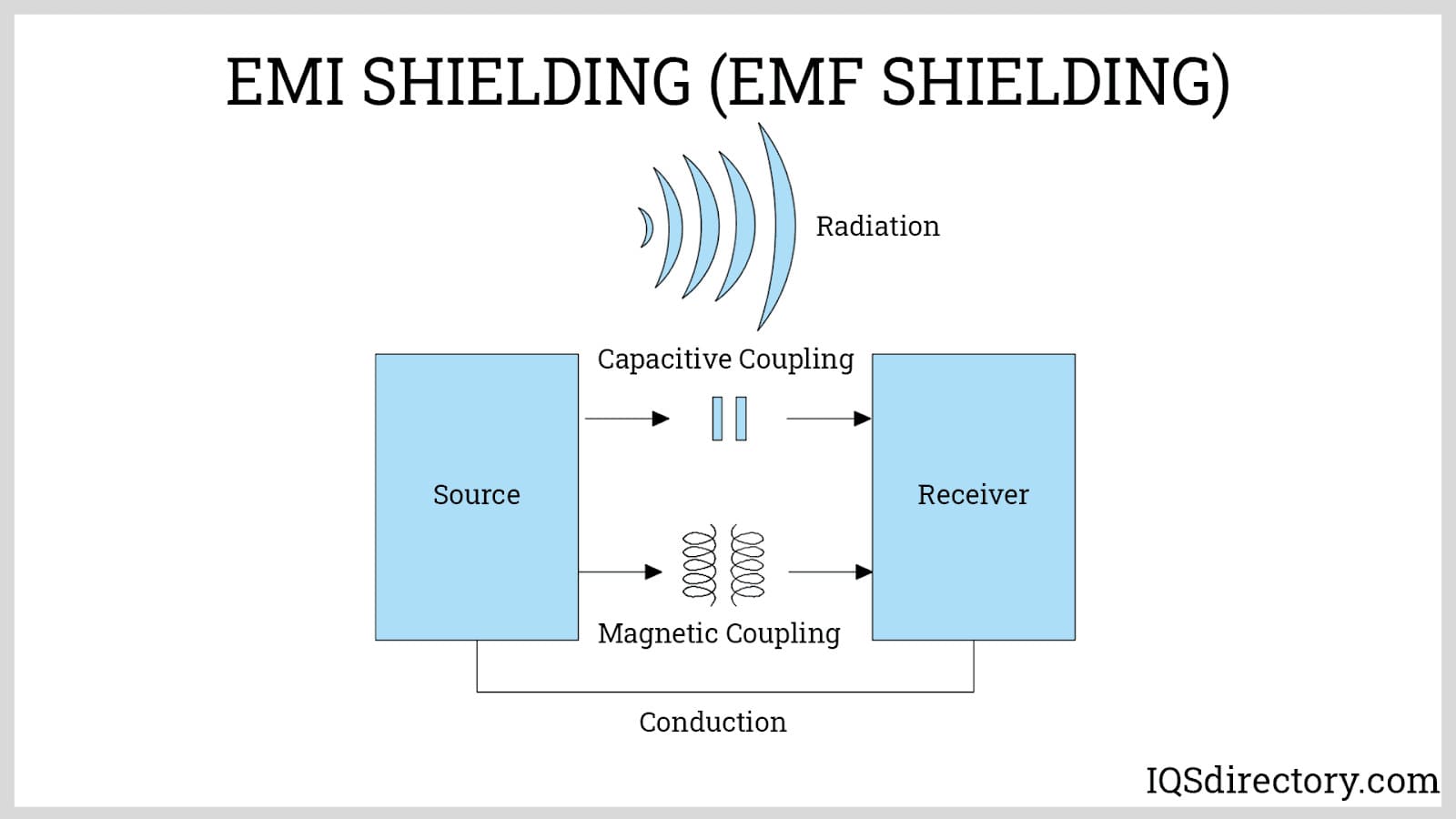 EMI shielding creates a conductive barrier that helps prevent strong electromagnetic fields from leaking into or out of a system, reducing interference with sensitive circuits, devices, and communication signals.
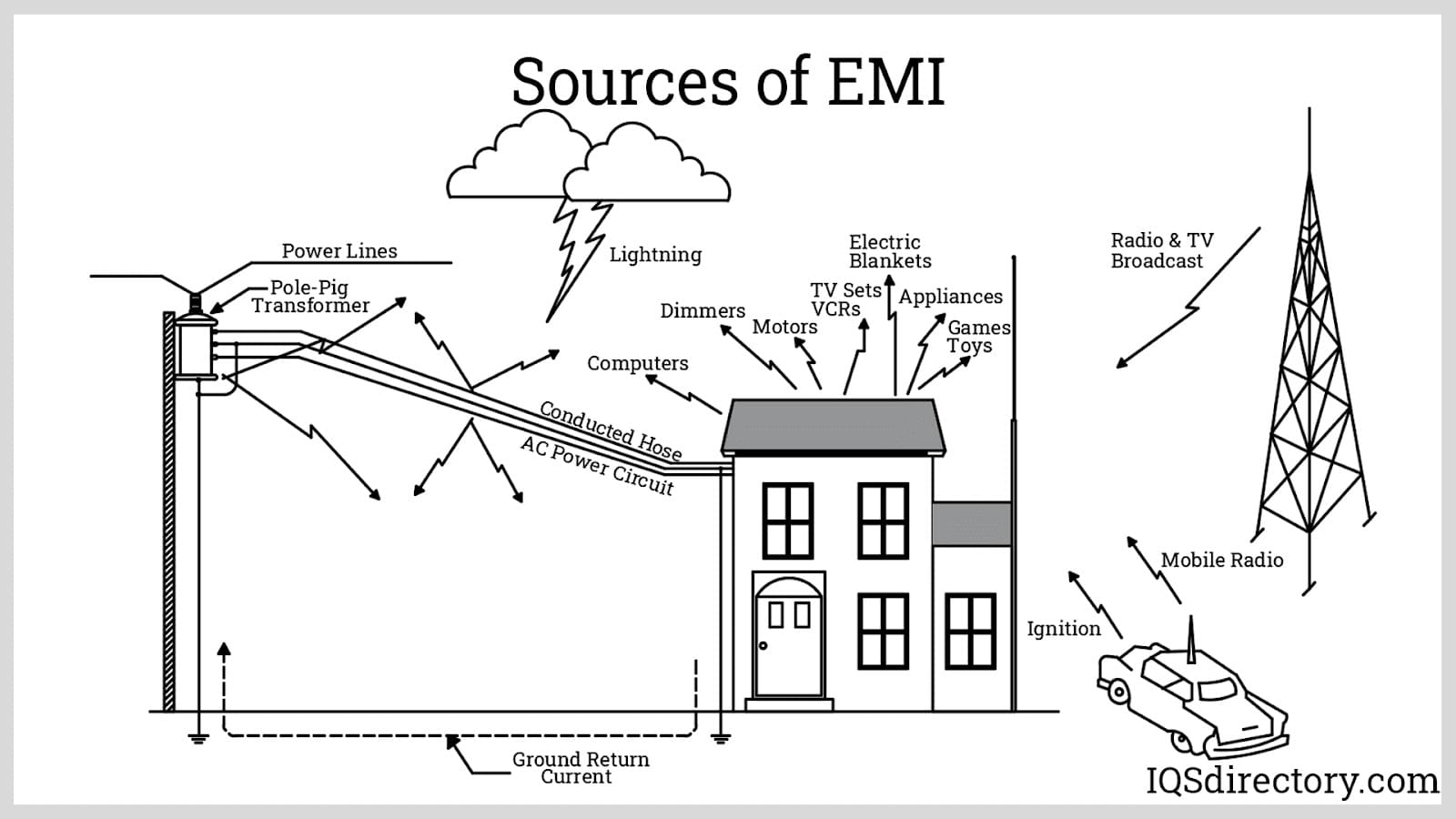 Sources of EMI are often classified by duration, including continuous interference that emits an ongoing unwanted signal and pulse interference that appears for only a short period but can still disrupt electronics.
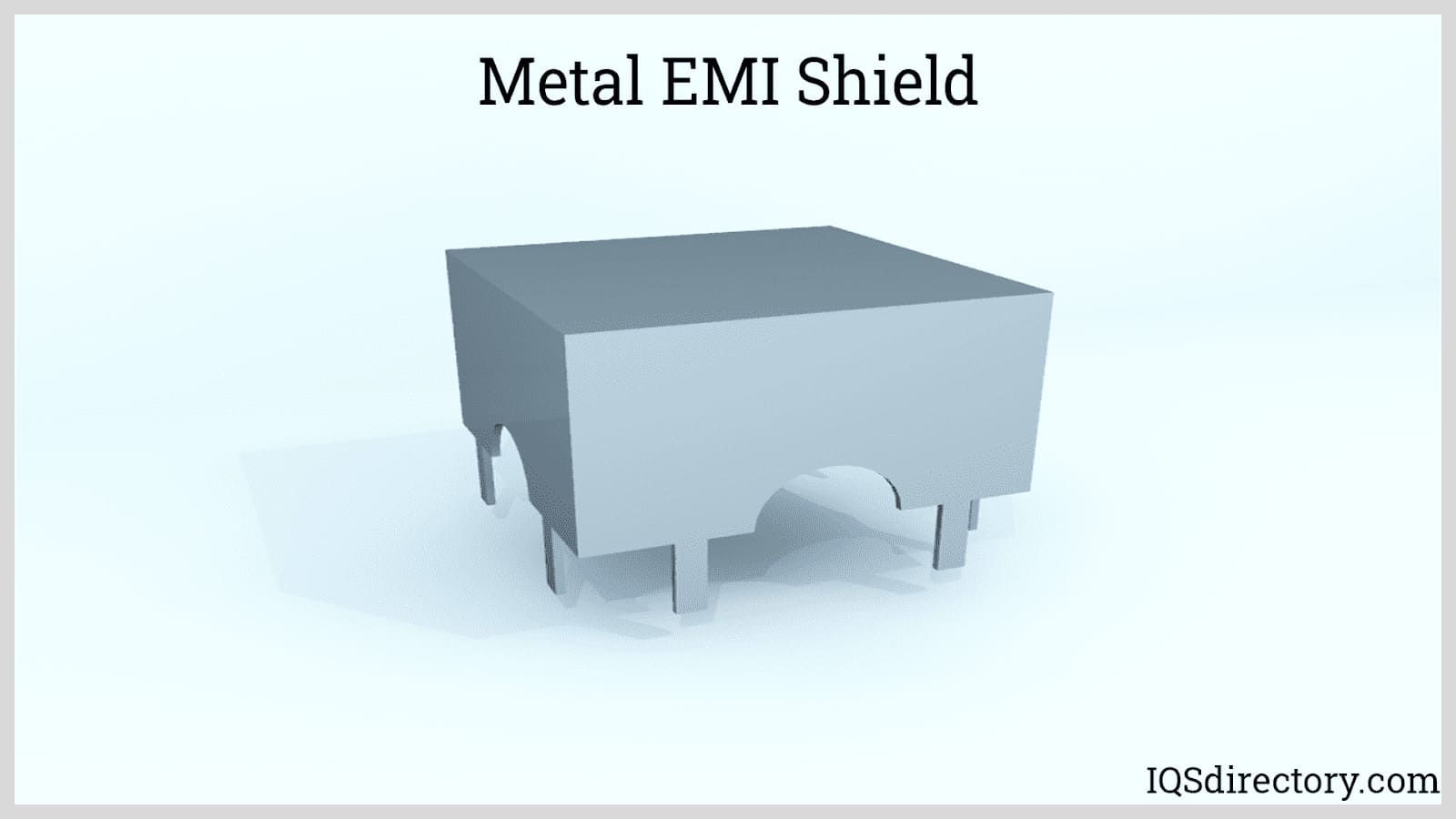 Metal shielding materials offer properties such as conductivity, magnetic permeability, strength, and ductility, which make them well suited for structural EMI shielding components and enclosure designs.
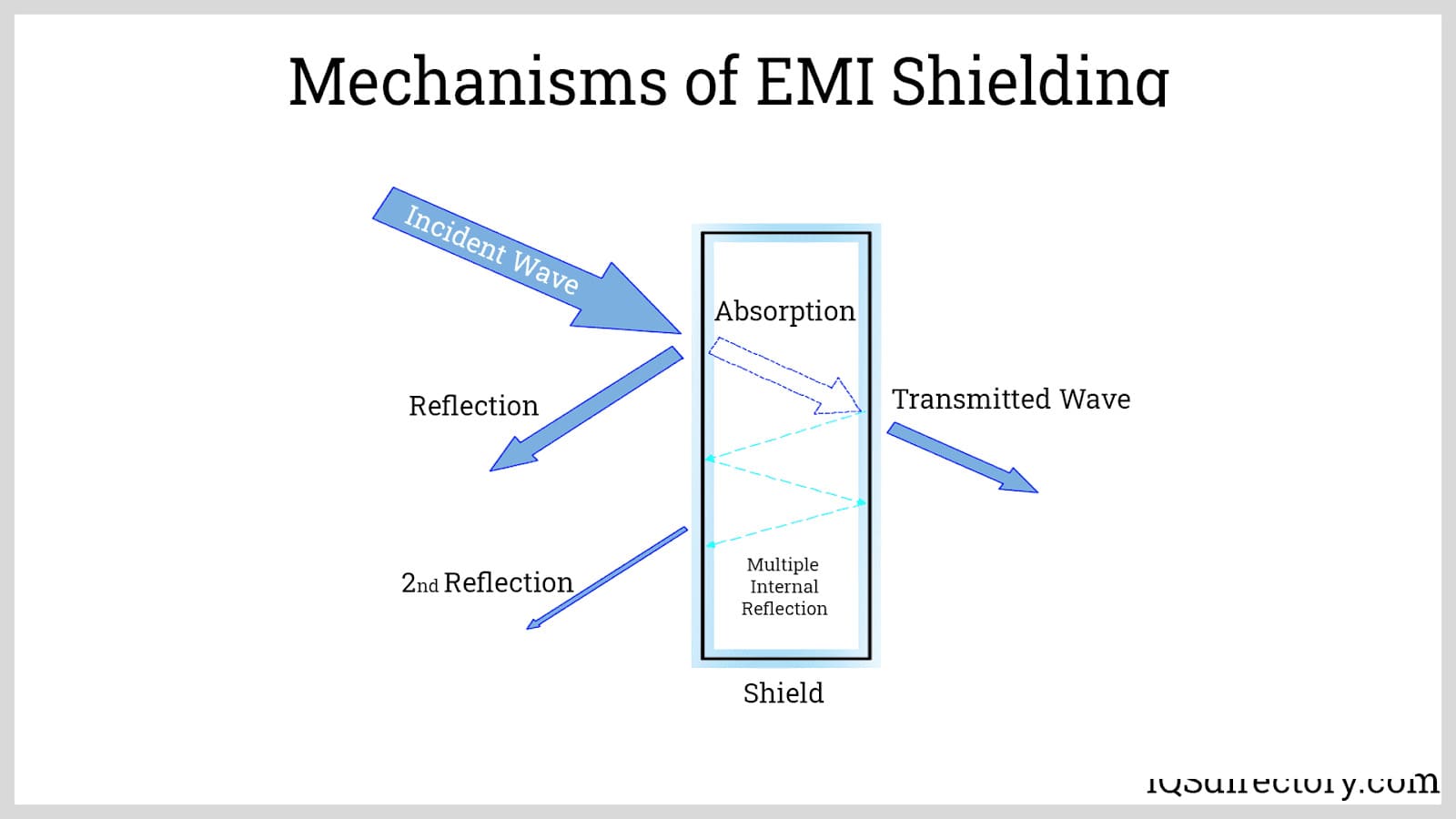 The main mechanisms of EMI shielding include reflection, absorption, and multiple internal reflections, all of which help reduce the amount of electromagnetic energy reaching protected components.
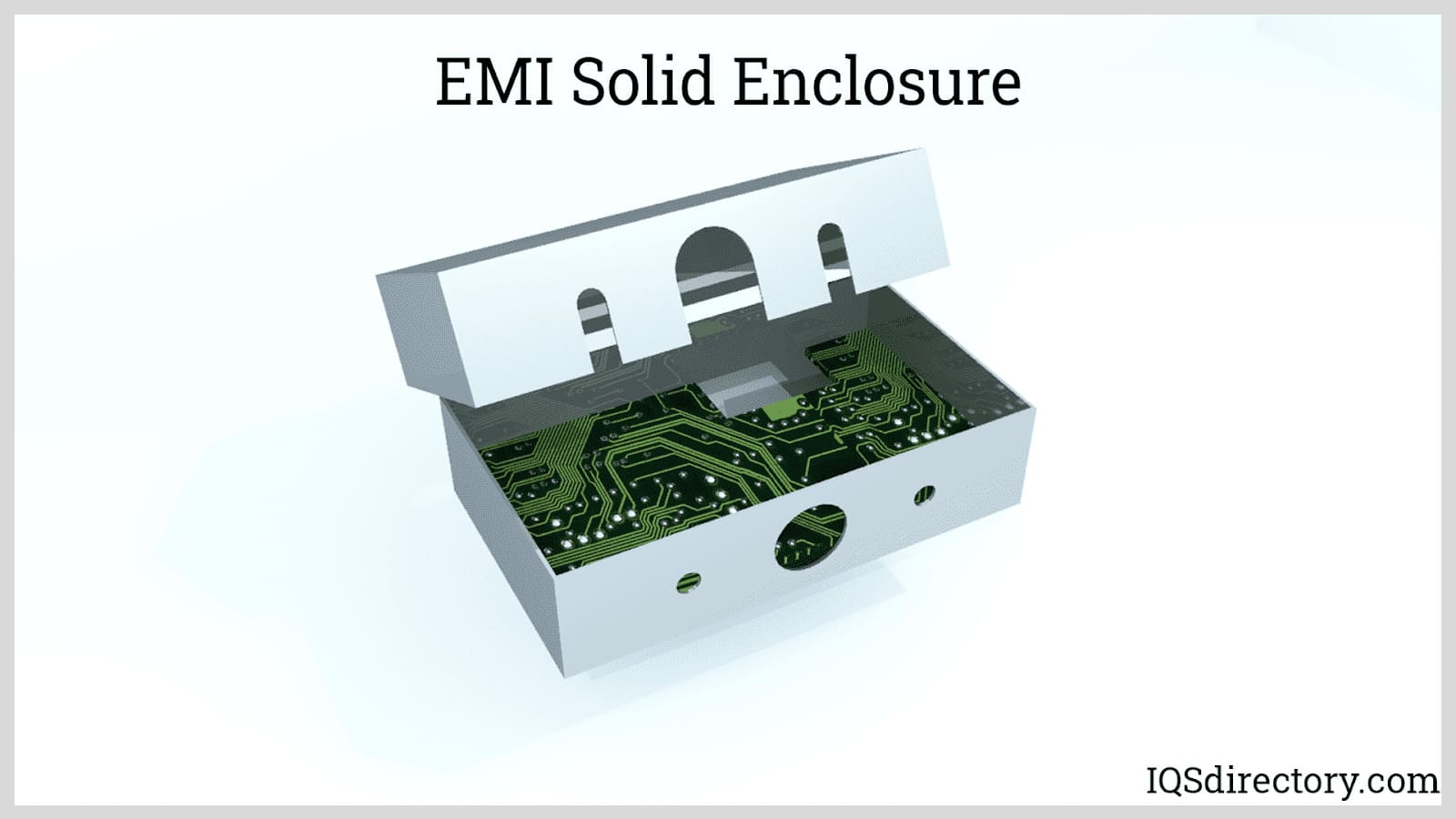 Solid enclosures help prevent electromagnetic waves from entering or leaving a system, and when properly grounded they can also divert stray current to ground to reduce shock and interference risk.
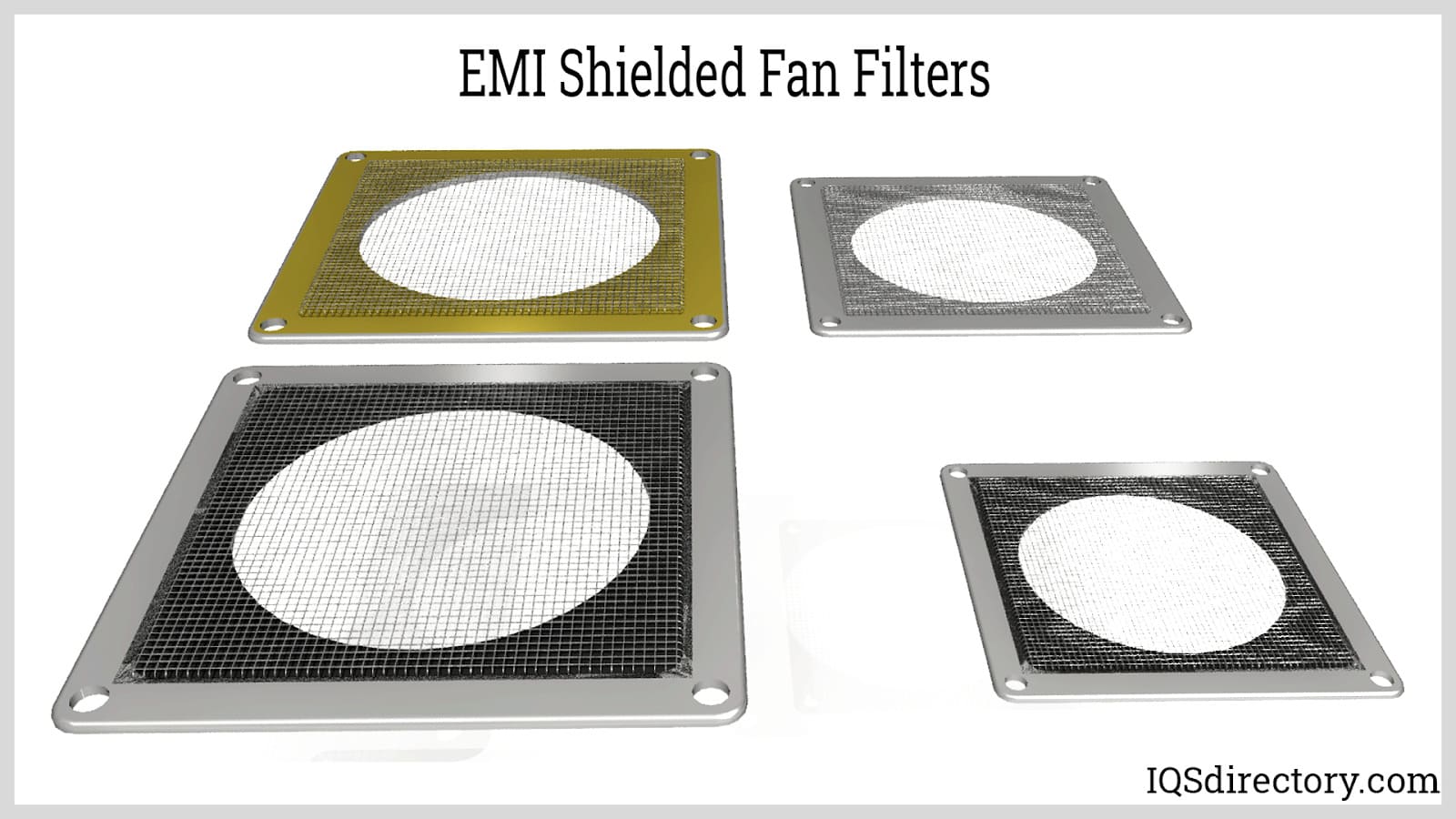 Shielded fan filters use openings smaller than the expected EMI wavelength so ventilation can be maintained while limiting electromagnetic leakage through penetrations and discontinuities.
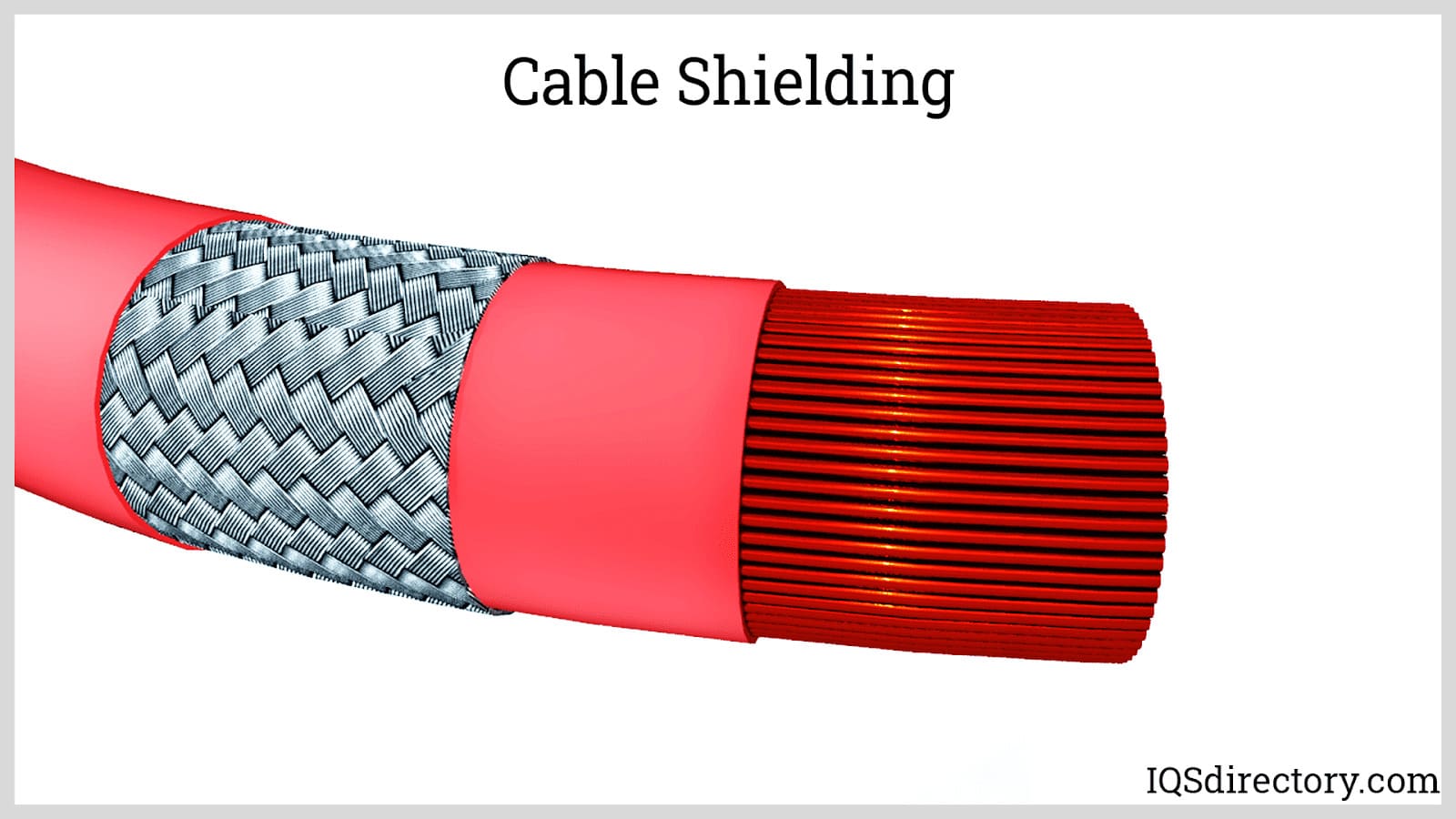 Cable shielding often uses tape, foil, or braided wire to cover insulated conductors, helping reduce radiated emissions, limit noise pickup, and protect signal quality in power and instrument cables.
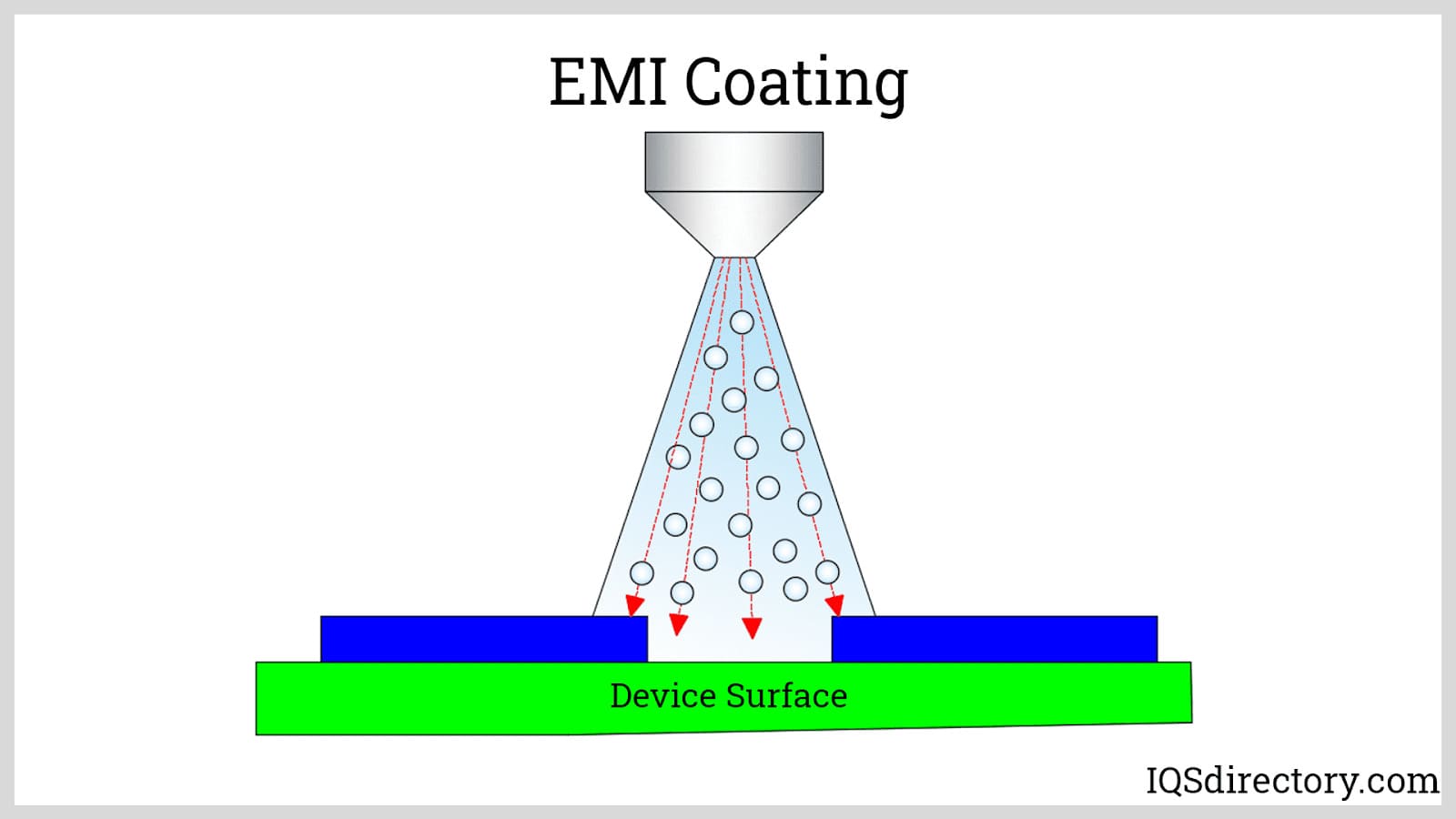 EMI shielding materials can be applied by painting, spraying, dispensing, or electroplating when a metallic enclosure is impractical and a conductive surface layer is needed on a plastic or composite part.
EMI Shielding Types
- Electromagnetic Shielding
- A protective barrier or engineered shielding system that helps prevent electronic devices from being affected by ambient electromagnetic interference, radiated emissions, or nearby electrical noise sources.
- EMF Protection
- Uses magnetic shielding materials or protective products to absorb, redirect, or contain electromagnetic fields (EMF), helping reduce interference with sensitive devices and limit exposure in selected environments.
- EMI Coating
- A specialized conductive spray or coating applied to electronic housings to shield sensitive components from electromagnetic interference. Often made with acrylic systems or metal-filled materials containing copper, nickel, or chromium alloys, EMI coatings allow shielding on plastic and other non-metallic surfaces.
- EMI Enclosures
- Also known as Faraday cages, these conductive enclosures surround sensitive equipment and help absorb, block, or contain harmful EMI and RF/RFI that could affect performance, measurement accuracy, or communications.
- EMI Filters
- Passive electronic devices that suppress conducted electromagnetic interference in power lines, switches, and connected systems. EMI filters allow desired low-frequency signals to pass while reducing higher-frequency noise, and they are often paired with gaskets, enclosures, and coatings for broader protection.
- EMI Gaskets
- Create stronger EMI and RFI protection by sealing seams, joints, and gaps in an enclosure so electromagnetic leakage is reduced. Made from conductive elastomers or related materials, EMI gaskets are often combined with shielding metals to improve enclosure performance.
- EMI Shields
- Materials or engineered shielding products that redirect, absorb, or contain electromagnetic interference so electrical devices can operate with less noise and fewer performance disruptions.
- Magnetic Shielding
- Also known in many contexts as electromagnetic shielding, this technique protects equipment from external magnetic fields and electromagnetic energy by using high-permeability materials that redirect field lines away from protected components.
- Magnetic Shields
- Protective materials or shielding products designed to block or redirect electromagnetic and magnetic field interference so delicate electronics, controls, and instruments can function as intended.
- Mu Metal®
- A high-permeability nickel-iron alloy used to shield electronic components from disruptive magnetic fields. It is widely recognized as a preferred material for advanced magnetic shielding in sensitive electronic systems.
- RF Absorbers
- Also known as radar absorbers or microwave absorbers, these materials reduce radio frequency interference by absorbing magnetic or RF energy before it reaches circuits, instruments, or communication equipment.
- RFI Shielding
- A protective measure that blocks radiated electromagnetic noise in the radio frequency range, helping prevent radio waves from interfering with nearby electronic devices and communication systems.
- Cable Shielding
- A protective layer inside or around cables that encapsulates conductors and helps minimize electromagnetic noise. Common shielding formats include braided copper, foil, copper tape, and conductive polymers, and full coverage of splices is needed for good performance.
- Radiation Shielding
- Reduces radio frequency interference affecting an electronic device and is commonly associated with products operating in wireless or microwave frequency ranges, where nearby signals can influence performance.
EMI Shielding Applications
In a world filled with phones, computers, wireless devices, industrial controls, sensors, and automated equipment, electromagnetic energy is present almost everywhere. That constant activity raises the chance of electromagnetic interference (EMI), RFI Shielding problems, and radio frequency interference (RFI). When multiple electronic devices operate in close proximity, their signals can overlap, couple, or leak into one another, disrupting normal operation and degrading signal quality.
A simple example occurs when a cell phone receives a call near a radio and static becomes audible through the speaker. That interference is inconvenient but manageable. In industrial automation, process control, medical devices, aerospace electronics, or communications infrastructure, however, similar interference can lead to inaccurate readings, dropped data, unsafe operation, or total equipment failure. That is why buyers often ask how EMI shielding works, which materials perform best, and which solution fits their enclosure or cable assembly.
Beyond operational disruptions, many household and industrial devices emit electromagnetic radiation (EMR). Long exposure to high levels of EMR can be associated with heating effects, eye damage from millimeter waves, or nerve irritation at very low frequencies. To help manage both performance and safety concerns, manufacturers integrate EMI shielding, RFI shielding, cable shielding, conductive coatings, and magnetic shielding into the design of devices, enclosures, cabinets, and electronic subassemblies.
A wide range of industries depend on EMI and RF shielding solutions to keep equipment working as intended. These include healthcare, telecommunications, stage production, sound engineering, radio broadcasting, marine systems, medical device manufacturing, consumer electronics, computing, industrial automation, process control, and home appliances. As devices become smarter and more connected, EMI shielding remains a foundational design practice for dependable electronics and better electromagnetic compatibility.
Service Details for EMI Shielding
Manufacturers protect electronic equipment from electromagnetic interference by surrounding it with conductive, EMI-absorbing materials, a process commonly known as electromagnetic shielding. Another popular method is applying a conductive coating to a housing or enclosure so the part can resist both incoming and outgoing electromagnetic disturbances without changing the overall product form.
The shielding process can involve metal foils, conductive fabrics, inner metal shields, conductive elastomers, and plastics treated with a conductive layer. One of the most common techniques is the use of conductive paints or sprays, which turn a non-metallic enclosure into a surface that can absorb, reflect, or redirect electromagnetic waves. This approach is especially useful when product designers need lightweight shielding without switching to a full metal enclosure.
No matter which method is selected, the purpose is the same: create a protective barrier around enclosures, circuit boards, cables, and other electrical components, including EMI gaskets and connector points. This barrier helps keep sensitive equipment isolated from outside interference while also reducing the emission of disruptive electromagnetic frequencies. When matched to the application, shielding improves reliability, product consistency, signal quality, and long-term operating confidence.
EMI Variations and Similar Processes
A variety of alternative materials and methods are used in EMI/RF protection, including copper foil, other metal foils, plastics with conductive coatings, conductive particle-filled silicone, conductive fabrics with pressure-sensitive adhesives, and metallic inner shields. Depending on cost, geometry, production volume, and performance targets, manufacturers may also evaluate vacuum metallization and specialized high-temperature coating systems.
- Vacuum Metallization
- Vacuum metallization is an advanced EMI/RF shielding process in which metal is heated in a vacuum until it vaporizes, then condenses onto a substrate as a thin conductive layer. This method is valued for producing lightweight coatings, consistent coverage, and cost-effective shielding on selected parts and assemblies.
- Master Bond MB600S
- Master Bond has developed MB600S, a conductive coating system that offers EMI shielding, high-temperature resistance, and straightforward application. Made from a single sodium silicate component, this silver-colored conductive coating can withstand temperatures up to 700°F and is designed as a water-based, non-toxic formulation that is relatively easy to handle and apply.
- The coating provides shielding effectiveness of 95 to 105 dB between 100 MHz and 2 GHz, with performance decreasing to 60 to 80 dB above 2 GHz. It can be brushed or sprayed onto surfaces, though spraying typically produces better coverage and stronger shielding results. After application, it generally requires about 48 hours to cure fully before reaching working performance.
Things to Consider When Choosing EMI Shielding
Whether you need to block millimeter waves, radio waves, or general electromagnetic noise, choosing the right EMI shielding solution starts with the application. Buyers often compare shielding materials, enclosure styles, and supplier capabilities before making a decision. Working with a knowledgeable manufacturer can make that process easier because the best shielding approach depends on how the product is used, where it operates, and what performance level is expected.
Once you have chosen a reputable manufacturer, discuss the application in detail. Shielding effectiveness depends on factors such as the frequency range involved, the geometry of the enclosure, grounding methods, installation details, material compatibility, and environmental exposure. Reviewing these points early can help avoid underperforming shields or unnecessary material cost.
- The materials used for the shield
- The frequency of the EMI being blocked
- The size of the application requiring shielding
With the right shielding partner and the right EMI solution, a device can achieve better signal stability, stronger overall reliability, and more dependable long-term performance.
EMI Shielding Terms
- Anechoic Chamber
- A room designed to eliminate acoustical reflections or echoes and, in many testing environments, lined with conductive materials to block or control electromagnetic waves during EMI or EMC evaluation.
- Attenuation
- The reduction in signal strength as it passes through a medium or shielding system, commonly measured in decibels.
- Canted Coil
- A round-wire spring with elliptical coils that deflect independently when compressed, helping maintain consistent contact pressure in sealing and shielding assemblies.
- CE Marking
- A certification mark required for many products sold in the European Free Trade Association and European Union markets, often associated with broader product compliance requirements.
- Double Shielded Enclosure
- A shielded enclosure with isolated inner and outer walls, connected mainly at filter penetration points to improve shielding separation and control.
- Electromagnetic Compatibility (EMC)
- The ability of electronic equipment to operate properly without generating excessive EMI or being adversely affected by EMI from other sources.
- Electrostatic Discharge (ESD)
- The release of electrical energy caused by electron transfer between objects when they touch and separate, sometimes called a triboelectric charge.
- ESD Shielding
- Protection for electronic equipment against failures or damage caused by electrostatic discharge events.
- Emission
- The release of electromagnetic energy from electronic equipment, which can become a source of EMI for nearby systems.
- Filtering
- The process of removing unwanted signal components through attenuation while allowing the desired signals or frequencies to pass.
- Impedance
- The opposition to electrical current flow in a circuit at a given frequency, measured in ohms. Lower impedance is often associated with better conductive performance.
- Insertion Loss
- A measure of filter performance that compares the power received before filtration with the power received after the filter is added.
- Radiation
- The movement of electromagnetic energy in the form of particles, waves, or rays through space or materials.
- Radio Frequency
- A range of electromagnetic radiation frequencies commonly used for communications, wireless devices, and data transmission.
- RFI (Radio Frequency Interference)
- A type of interference in the radio frequency range that affects communications and nearby electronics. Unlike some other EMI pathways, RFI is often transmitted through free air space rather than along circuits or power lines.
- Shielding Effectiveness
- The ability of a shielding material or assembly to block electromagnetic radiation, often expressed as a ratio comparing signals with and without the shield present.
- Skin Effect
- The tendency of high-frequency current to travel more along the outer surface of a conductor than through its center, which increases effective resistance at higher frequencies.
- Slot Antenna
- A radiating element created by a slot in a conducting surface or the wall of a waveguide, which can become relevant in shielding design and leakage control.
- Vacuum Deposition
- A process in which thin material coatings condense on cool surfaces inside a vacuum, often used to create conductive layers for shielding applications.
- Waveguide
- A structure or medium that directs electromagnetic energy and signals from one point to another.
- Magnetic Shielding Foil
- A thin shielding material used in sensitive equipment such as industrial controls, compact housings, and circuit boards where it can be cut and installed in tight spaces.
- Wire Shielding
- A form of EMI shielding that protects wires and cable assemblies from harmful electromagnetic energy and also helps prevent those assemblies from affecting nearby equipment.