Industrial Lubricants
Industrial lubricants are oils, liquids, greases, and other mixtures that lessen wear, moisture, binding, and friction. The main use of these lubricants is to ease the way for the movement of solid surfaces; in addition, they may alter surface characteristics, control temperature, or clear debris. An optimal industrial lubricant minimizes solid-to-solid contact to reduce wear and friction. In industrial operations, that role reaches far beyond simple “slipperiness.” A properly selected lubricant can help stabilize equipment performance, support cleaner operation, extend component life, improve energy efficiency, and reduce maintenance interruptions across production lines, fleets, plants, and heavy machinery. Because so many industrial systems depend on bearings, gears, hydraulics, chains, compressors, and sliding surfaces, lubricants are a major part of preventative maintenance and long-term equipment reliability.
Industrial Lubricants FAQs
What are industrial lubricants used for?
Industrial lubricants are used to reduce friction, wear, heat buildup, moisture exposure, and surface binding in machinery and mechanical systems. They also help carry away debris, protect metal surfaces, and support smoother equipment operation in industrial environments.
What are the main types of industrial lubricants?
The main types of industrial lubricants include mineral oils, synthetic oils, and greases. Specialized products such as hydraulic oils, gear oils, compressor oils, bearing oils, and chain lubricants are also widely used depending on the equipment and operating conditions.
What is the difference between manual and automatic lubrication?
Manual lubrication requires a technician to apply lubricant by hand, often using tools such as grease guns. Automatic lubrication systems deliver measured amounts of lubricant to targeted components on a scheduled or continuous basis, helping improve consistency and reduce downtime.
Why is lubricant viscosity important?
Viscosity affects how a lubricant flows and performs under load, temperature, and pressure. Low-viscosity lubricants can move through narrow passages more easily, while high-viscosity lubricants may be better suited for heavy-duty loads or slower-moving components that need a thicker protective film.
Which industries use industrial lubricants?
Industrial lubricants are used in automotive, aerospace, marine, textile, medical, manufacturing, mining, construction, agriculture, and energy applications. Any industry with moving mechanical parts, gears, bearings, hydraulic systems, or compressors may rely on industrial lubrication.
What are the benefits of using the right industrial lubricant?
Using the right industrial lubricant can reduce friction, lower heat generation, limit wear, improve efficiency, reduce downtime, extend equipment life, and support smoother machine performance. It can also help reduce maintenance and replacement costs over time.
What should buyers consider when choosing an industrial lubricant?
Buyers should consider viscosity, chemical composition, load conditions, operating temperature, contamination risks, corrosion resistance, system design, and the specific application. A lubricant should match both the equipment and the environment in which it will be used.

Mineral, synthetic, and grease lubricants are the most popular industrial lubricants. Each has a unique function and set of qualities that make it suitable for its intended purpose. Due to its low cost and simplicity of handling, mineral oil is the most widely used industrial lubricant in numerous industries. However, synthetic oil has taken the place of mineral oil as the industry standard due to its increased performance. Synthetic oils are also capable of withstanding high temperatures in applications without degrading, which makes them perfect for engine components, bearings, and gears. In addition to temperature resistance, many synthetic lubricants offer improved oxidation stability, cleaner performance, and stronger consistency across wider operating ranges. That makes them attractive for demanding process equipment, high-speed systems, and environments where longer service intervals are valuable. Mineral oils still remain common in many operations because they are familiar, accessible, and cost-effective, especially when equipment conditions do not demand premium synthetic performance.
Grease lubricant is sourced from animal fats like lard or tallow, which are converted into a thick paste and then applied to machinery or equipment. The building, mining, and oil industries employ industrial lubricants to lessen wear and friction. For industrial lubricants to function properly, they must be free of contaminants and dangerous compounds. These goods lessen friction and the temperature of metal surfaces, which lessens machine wear. Industrial lubricants also lower machine use, which results in energy savings. Modern grease formulations may also include additives, thickeners, and performance packages designed to improve adhesion, water resistance, load-carrying capability, and rust protection. In harsh environments such as dusty job sites, wet processing areas, and heavy-load applications, grease often remains in place better than liquid oil and provides a more durable lubricating film where leakage or runoff would be a concern.
Manual and Automatic Lubrication
There are two ways to apply lubricants: manually or automatically.
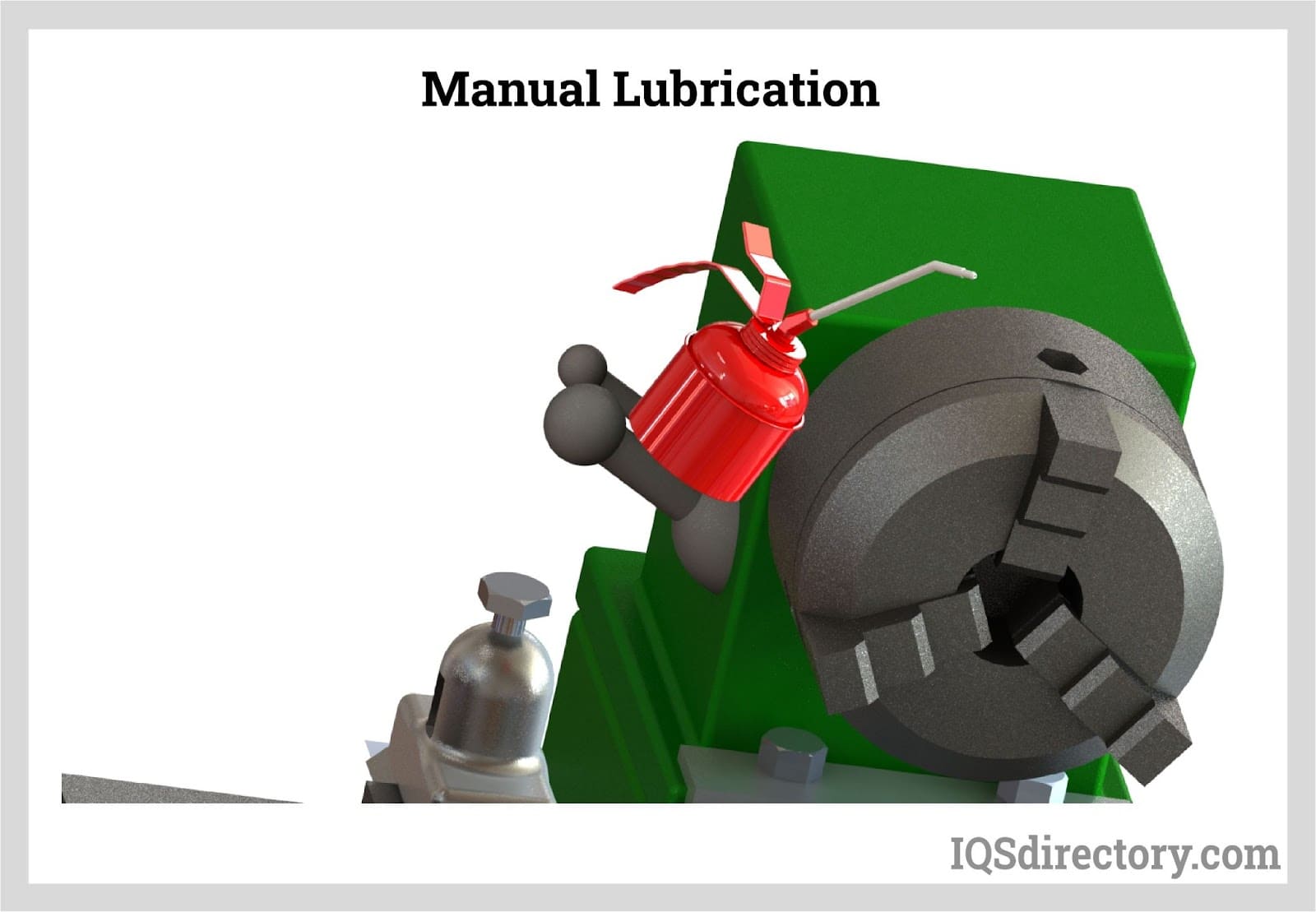
With manual lubrication, a technician must manually lubricate the machinery using a grease gun. Manual lubrication frequently results in inconsistent lubrication and prolonged machine downtime, though some prefer this method. It can still be a practical choice for smaller operations, simple equipment layouts, or machinery that does not run continuously. In those cases, manual lubrication may offer more direct oversight, but it also depends heavily on technician timing, consistency, and application accuracy.
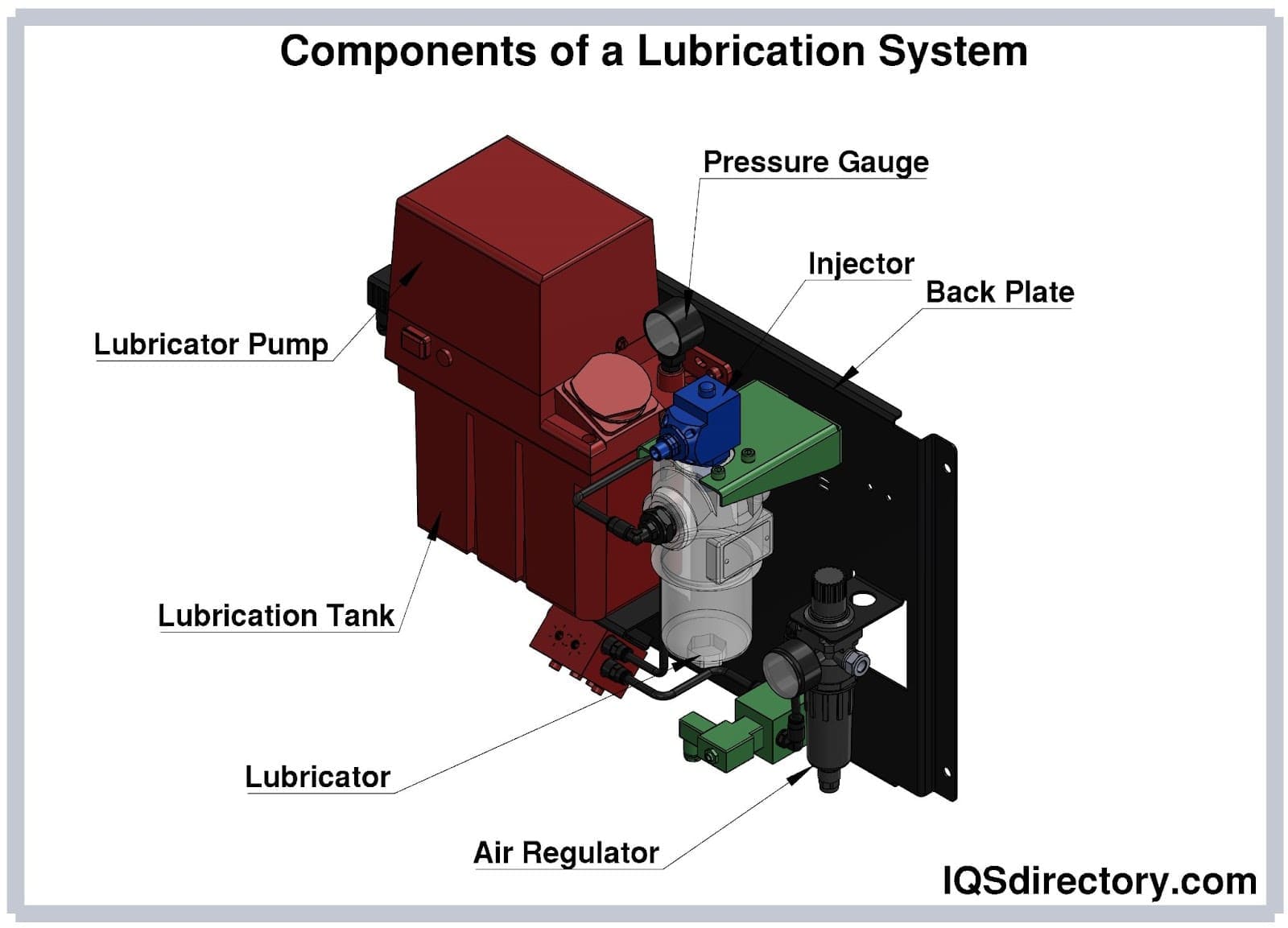
With automatic lubrication, the precise quantity of lubricant needed is applied to the desired parts using automated lubricating machinery. However, manual lubrication is more reliable, effective, safe, and environmentally friendly, which results in lower maintenance costs. Automatic lubrication systems are often selected when equipment operates continuously, contains hard-to-reach lubrication points, or demands consistent lubricant delivery over time. In those settings, automated systems can help reduce human error, prevent over-lubrication and under-lubrication, improve bearing and chain life, and lower unplanned shutdowns. Choosing between manual and automatic lubrication usually depends on machine complexity, staffing, uptime goals, and how precisely the lubricant must be delivered.
Applications of Industrial Lubricant
Industrial lubricants can be applied to any application that involves mechanical machinery with moving components, regardless of the industry. These things include:
- Automotive industry – for under-hood applications, NVH, and engine optimization
- Aerospace industry – landing gear, actuators, and flight controls
- Marine industry – gear systems, compressors, and turbines
- Textiles industry – steamers, motors, and dyeing equipment
- Medical industry – ventilators and gas cylinders
- Energy sector – for hydraulics, generator bearings, and turbine blades
Beyond these examples, industrial lubricants are also widely used in mining equipment, food and beverage processing, metalworking, manufacturing lines, conveyor systems, paper mills, agricultural machinery, plastics production, and heavy construction equipment. In each setting, the lubricant has to match operating speeds, loads, contamination exposure, and service temperature. A lubricant that performs well in one application may not be suitable in another, even when the components look similar, because pressure, moisture, washdown exposure, dust, and duty cycle can vary so much from one environment to the next.
Main Types of Industrial Lubricants
The most common kinds of industrial lubricants include:
- Gear oil in the transportation sector
- Bearing oil
- Motor oil
- Heatproof and oxidation- and corrosion-resistant grease
- Chain and cable oil in agricultural equipment
- Compressor oils to safeguard compressors
- Hydraulic oils for brakes, pumps, excavators, and other hydraulic systems
Each of these lubricant types is formulated with a specific operating demand in mind. Gear oils are often built to handle sliding contact, shock loading, and high pressure within enclosed gearboxes. Bearing oils are chosen for film strength, flow, and thermal stability. Hydraulic oils must transmit power efficiently while also protecting pumps, valves, and seals. Compressor oils are expected to resist oxidation and carbon buildup under elevated temperatures. Chain and cable lubricants are often selected for penetration, cling, and weather resistance. Matching the lubricant type to the equipment function is one of the most important steps in protecting machinery and maintaining dependable performance.
Benefits of Industrial Lubricants
- Less abrasion on the machine's components
- Reduced pollutants and increased engine economy
- Decreased heat generation and fuel consumption due to less friction between moving parts
- Higher productivity
- Decreased mechanical and equipment failures
- Decreased downtime expenses with preventative maintenance on idle machinery and equipment
- Lowered labor costs
When the correct lubricant is used consistently, these benefits can compound over time. Less friction generally means smoother operation, which can improve component life and reduce the frequency of repairs or replacement parts. Lower operating temperatures may also protect seals, surfaces, and internal clearances. In production settings, lubrication practices can directly influence uptime, maintenance scheduling, and the overall cost of ownership for machines and equipment. In other words, industrial lubrication is not just a maintenance detail. It is a performance strategy that can affect output, efficiency, and asset longevity across an entire facility.
Choosing an Effective Industrial Lubricant
Choosing the right industrial lubricant is essential to ensure that the machine performs at its best. Here are some considerations to remember when choosing a lubricant:
- Incorrect oil viscosity
- Chemical composition
- Equipment usage
- The lubrication system in use (which may need special lubricants)
- Impurities like dirt flakes and heavy metals like lead in the lubricant
- Corrosion resistance
In regards to oil viscosity, consider that applications with pumping and moving fluids require low-viscosity lubricants with high shear thinning that allow them to pass through small pipes. Other applications need high-viscosity lubricants to run smoothly. In addition, some heavy-duty machines require industrial lubricants that can withstand high temperatures because of their high-temperature resistance. For example, fluids with a high boiling point can withstand temperatures up to 392 °F (200 °C). Viscosity is one of the most searched and compared lubricant characteristics because it directly affects startup flow, film thickness, temperature response, and the lubricant’s ability to stay where it is needed. Equipment manufacturers often provide recommended viscosity ranges, and those guidelines can be a useful starting point when narrowing lubricant choices.
Finally, in environments containing corrosive environments or fumes, a lubricant may require an extremely high flash point. However, a gear or bearing, a sliding component, can also prematurely wear out. That is why lubricant selection should also account for environmental exposure, contamination risk, load intensity, application speed, and the compatibility of the lubricant with seals, metals, and surrounding materials. In demanding industrial settings, selecting a lubricant often involves balancing performance, maintenance interval, protection level, and cost rather than focusing on only one property.
Common Mistakes in Choosing Lubricants
Since choosing the wrong lubricant for an application is simple, many individuals opt to have a technical expert on hand to support all lubrication applications and questions. Avoid the following mistakes when selecting an industrial lubricant:
- Missing crucial details on industry norms and specifications. Always compare the technical data sheet for the lubricant with the industrial requirements of the application.
- Choosing lubricant vendors who are unqualified or unreliable.
- Deciding on lubricants based only on cost rather than necessity – long-term benefits of quality lubricants include decreased downtime and enhanced component and machinery performance.
- Using the same lubricant more than once in various applications. Each application is unique; thus, a lubricant in one application might not be effective in another.
Other common issues include failing to monitor contamination, mixing incompatible lubricant chemistries, overlooking relubrication intervals, and assuming that more lubricant always means better protection. Over-lubrication can be just as harmful as under-lubrication, especially in bearings and sealed systems. A strong lubrication program usually includes product selection, storage practices, contamination control, application training, and performance monitoring rather than relying on the lubricant alone to solve mechanical problems.
Conclusion
Friction and wear between two surfaces can be decreased by placing a lubricant between them. In any case, the proper lubricant should be used in the proper quantity and at the proper time. That simple principle is the foundation of effective industrial lubrication. Whether the application involves gears, bearings, compressors, hydraulic systems, or conveyor components, the best results come from matching the product to the equipment and applying it consistently under a well-managed maintenance plan.
Choosing the Right Industrial Lubricant Supplier
To make sure you have the most positive outcome when purchasing industrial lubricants from an industrial lubricant supplier, it is important to compare at least five different suppliers using our list of industrial lubricant companies. Each industrial lubricant supplier has a business profile page that highlights their areas of experience and capabilities and a contact form to directly communicate with the supplier for more information or request a quote. Review each industrial lubricant company website using our patented website previewer to get an idea of what each company specializes in and then use our simple RFQ form to contact multiple industrial lubricant companies with the same message. When comparing suppliers, buyers may also want to ask about application support, lubricant analysis, technical data sheets, compatibility guidance, and recommendations for specific operating temperatures, pressures, or contamination concerns. A knowledgeable supplier can often help narrow the selection faster and reduce the risk of choosing a lubricant that looks suitable on paper but performs poorly in actual service.