Die Stamping
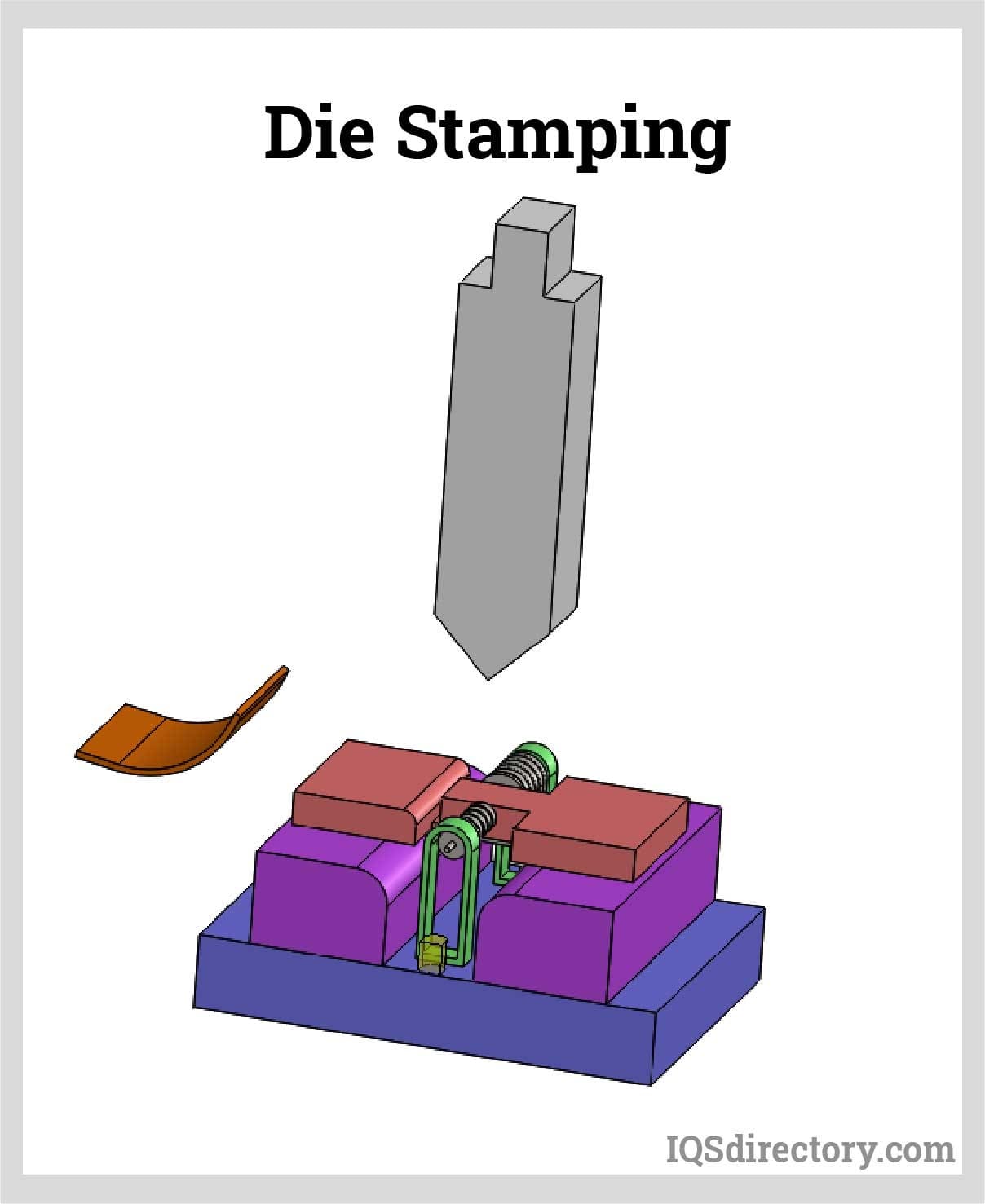
Die stamping cuts and shapes metal sheets using precision dies...
Looking to find and compare metal stamping manufacturers? See our Metal Stamping Companies directory to request free quotes. This guide focuses on technical stamping processes, press mechanisms, die tooling, and alloy selection.
This article provides an in-depth technical analysis of metal stamping technologies, equipment, and production methods:
Metal stamping technologies are manufacturing processes that forcibly compress sheet metal into precise, computer-designed components and parts[cite: 7]. Using a press and die, a controlled compressive force transforms plain metal sheets into complex, intricate shapes with exceptional dimensional accuracy, tight tolerances, and consistent repeatability[cite: 7]. For buyers evaluating metal fabrication solutions, stamping is often chosen for high-volume production runs, efficient part forming, and reliable part-to-part consistency[cite: 7].
The success of metal stamping technologies depends on the amount of time that metal is subjected to the compressive force applied by the press and die, as well as on tooling design, press speed, material thickness, and the quality of process control[cite: 7]. Once ejected from the stamping press, the shaped form is submitted for trimming, deburring, finishing, and other secondary operations designed to complete the part and match exact design parameters[cite: 7].
The introduction of computer numerical control (CNC) has rapidly advanced metal stamping as an essential manufacturing process for automotive, aerospace, electronics, medical devices, and appliance manufacturing[cite: 7]. Computer conceptualized designs (CAD) are digitally tested before being transformed into CNC metal stamping G-codes and M-codes[cite: 7].
The Internet of Things (IoT) integrates embedded sensors, diagnostic software, and network connections into stamping presses and tooling[cite: 7]. IoT enables real-time machine condition monitoring, predictive maintenance, and automatic parameter correction—preventing press downtime and die damage[cite: 7].
Stamping operations utilize diverse press drive mechanisms depending on speed, tonnage, and stroke flexibility requirements[cite: 7].
| Press Technology | Drive Mechanism | Production Speed | Stroke & Dwell Control | Primary Applications |
|---|---|---|---|---|
| Mechanical Servo Press | High-torque servomotors | High (Variable) | Fully programmable stroke, velocity, & in-die dwell | Complex stampings, springback-prone alloys, high-precision drawn parts |
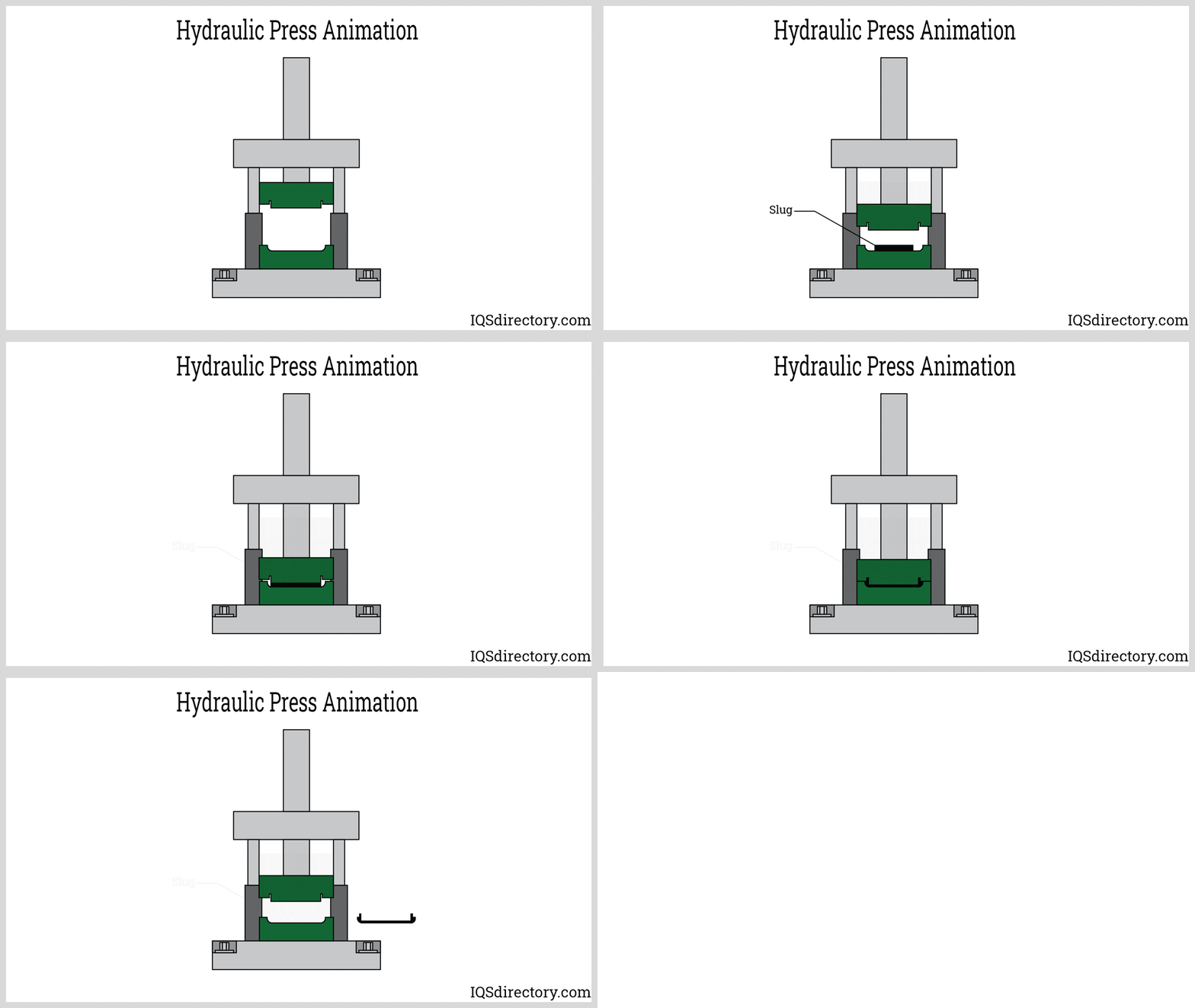
| Hydraulic Press | Pressurized fluid cylinders | Moderate | Uniform full tonnage throughout entire stroke distance | Deep drawing, heavy forming, thick steel plate blanking |
| Mechanical Flywheel Press | Motor, flywheel, & clutch | Extremely High (Up to 1500 SPM) | Fixed mechanical stroke; peak force at BDC | High-volume progressive die stamping, washers, brackets |
| CNC Stamping Press | Computerized motion drive | Low to Moderate | Direct G-code CAD toolpath execution | Low-volume prototyping, intricate sheet metal cutouts |
CNC metal stamping executes tool motions from CAD files using G-codes and M-codes, ideal for high-precision, low-volume, and intricate custom parts[cite: 7].
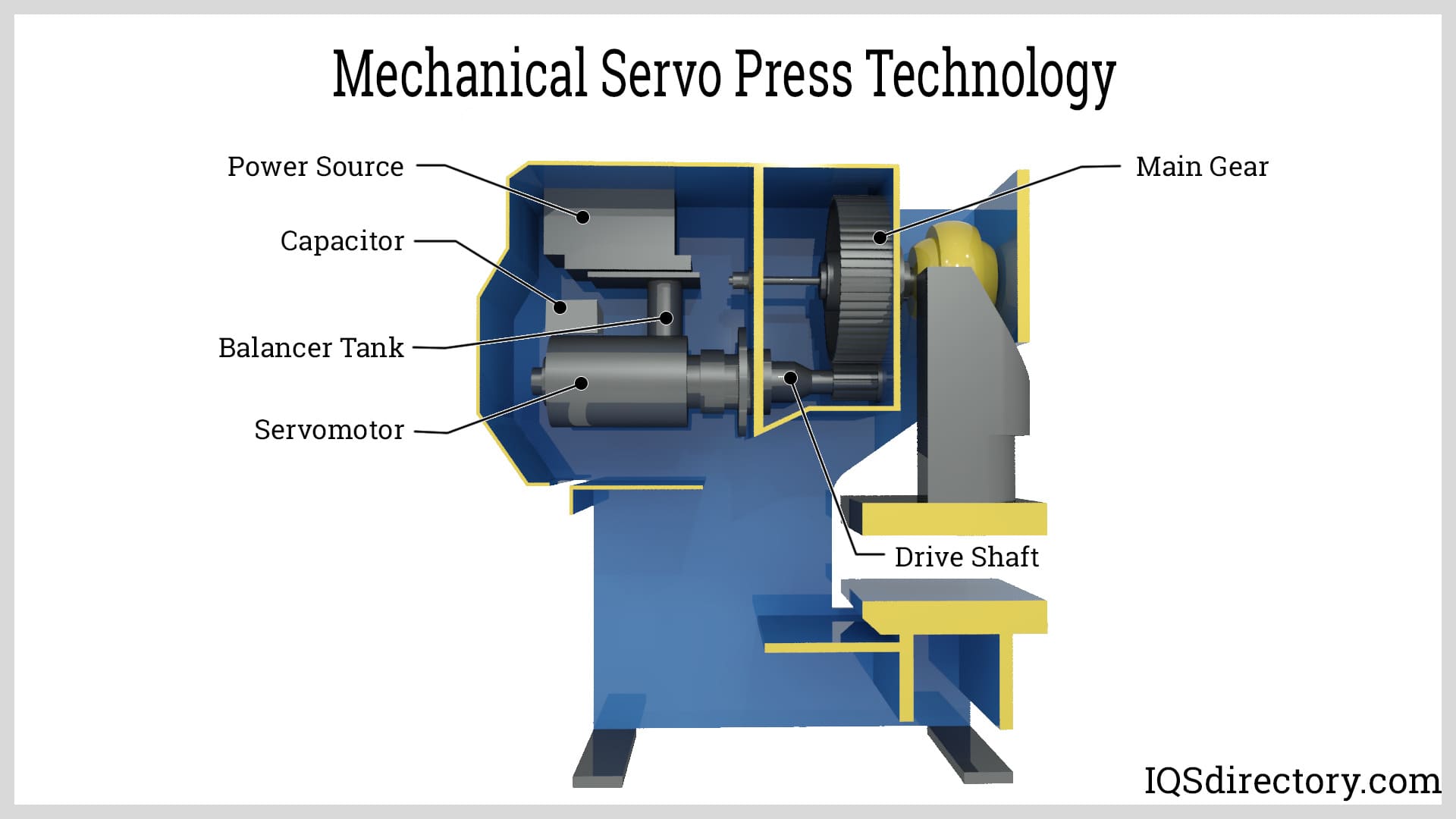
Replaces traditional flywheels with direct servo motors, offering fully customizable stroke profiles, precise velocity adjustments, and extended die life[cite: 7].
Hydraulic presses deliver full tonnage capability at any point in the stroke for heavy drawing, while mechanical flywheel presses provide ultra-high speeds (up to 1,500 SPM) for continuous mass production[cite: 7].
Deep drawn stamping transforms flat blanks into hollow, cylindrical, or box-like components whose depth exceeds half their diameter[cite: 7]. A punch forces the lubricated blank into a die cavity while a blankholder controls material flow to prevent wrinkling[cite: 7].
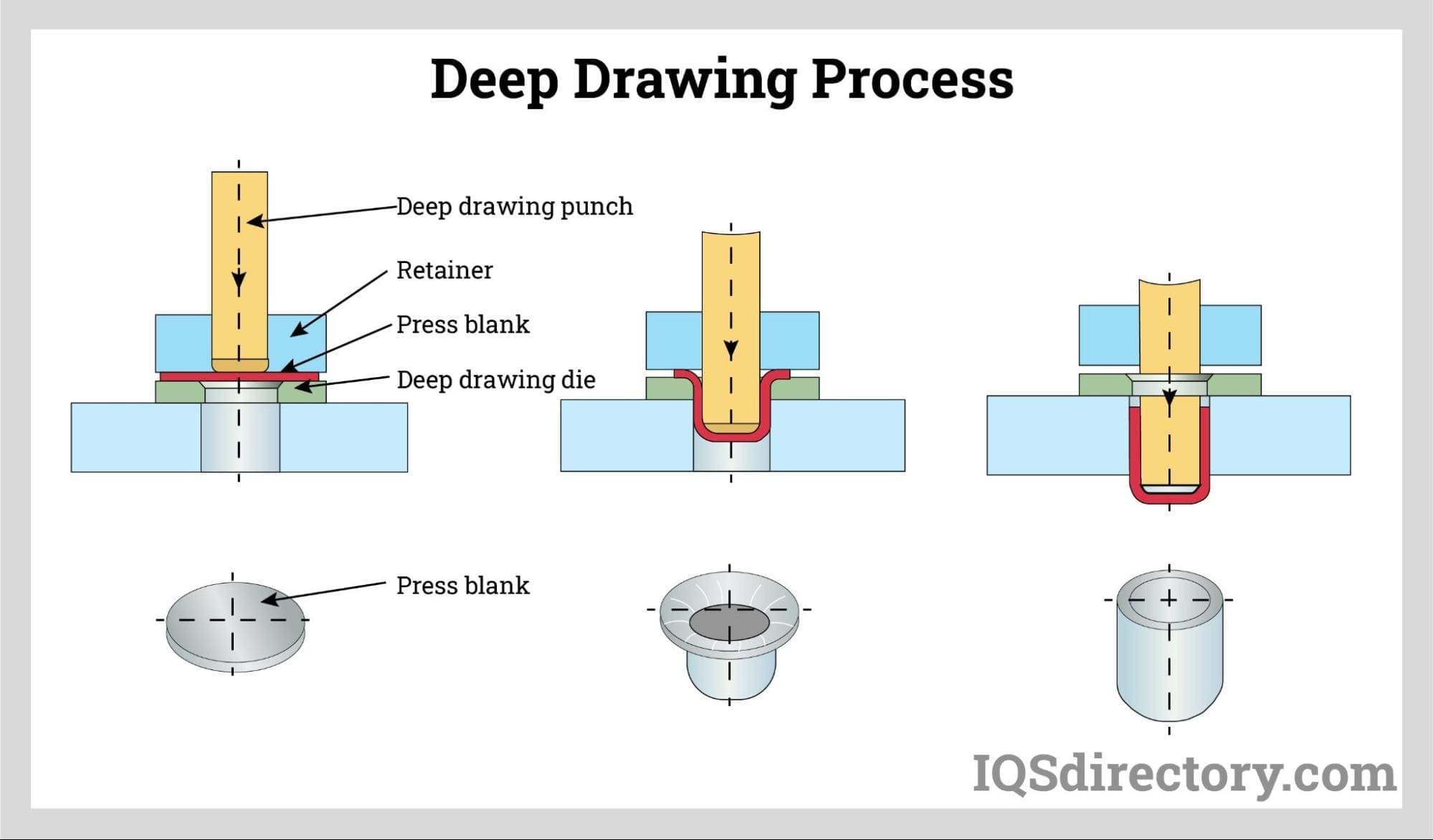
Key applications include automotive oil pans, filter shells, medical enclosures, cookware, and solenoids[cite: 7].
Stamping encompasses several foundational metal shearing and forming techniques[cite: 7].
| Operation | Process Action | Edge / Surface Condition | Primary Function |
|---|---|---|---|
| Punching | Punch tool shears hole into metal sheet | Standard sheared edge (Requires deburring) | Creating mounting holes, internal slots, fastener openings |
| Blanking | Shears exterior contour out of metal strip | Clean sheared perimeter | Producing the primary flat part (blank) for forming |
| Fine Blanking | High pressure from top/bottom with minimal clearance | 100% smooth, vertical, burr-free edge | Micron-precision gears, automotive clutch plates, medical parts |
| Embossing / Debossing | Presses male/female pattern into sheet surface | Raised or indented textured surface | Adding logos, stiffening ribs, panel lettering |
| Coining | Extreme tonnage squeeze between rigid tools | Highly refined surface with zero springback | Precision coins, dense electrical contacts, sharp detail imprints |
| Bending & Flanging | Deforms metal past yield point along single axis | Angled structural profile (90° or custom) | Forming brackets, channels, stiffening rims, lid flanges |
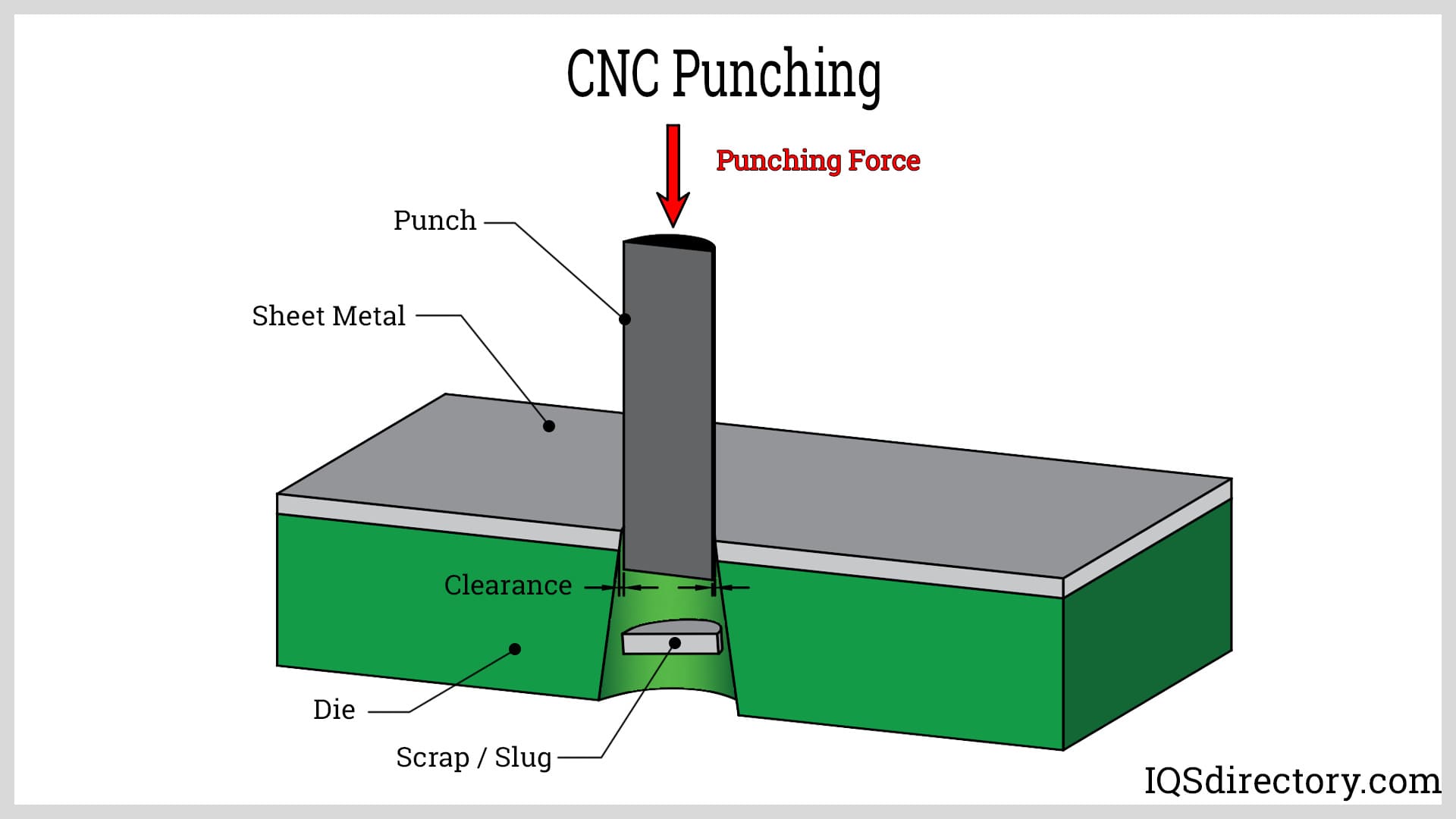
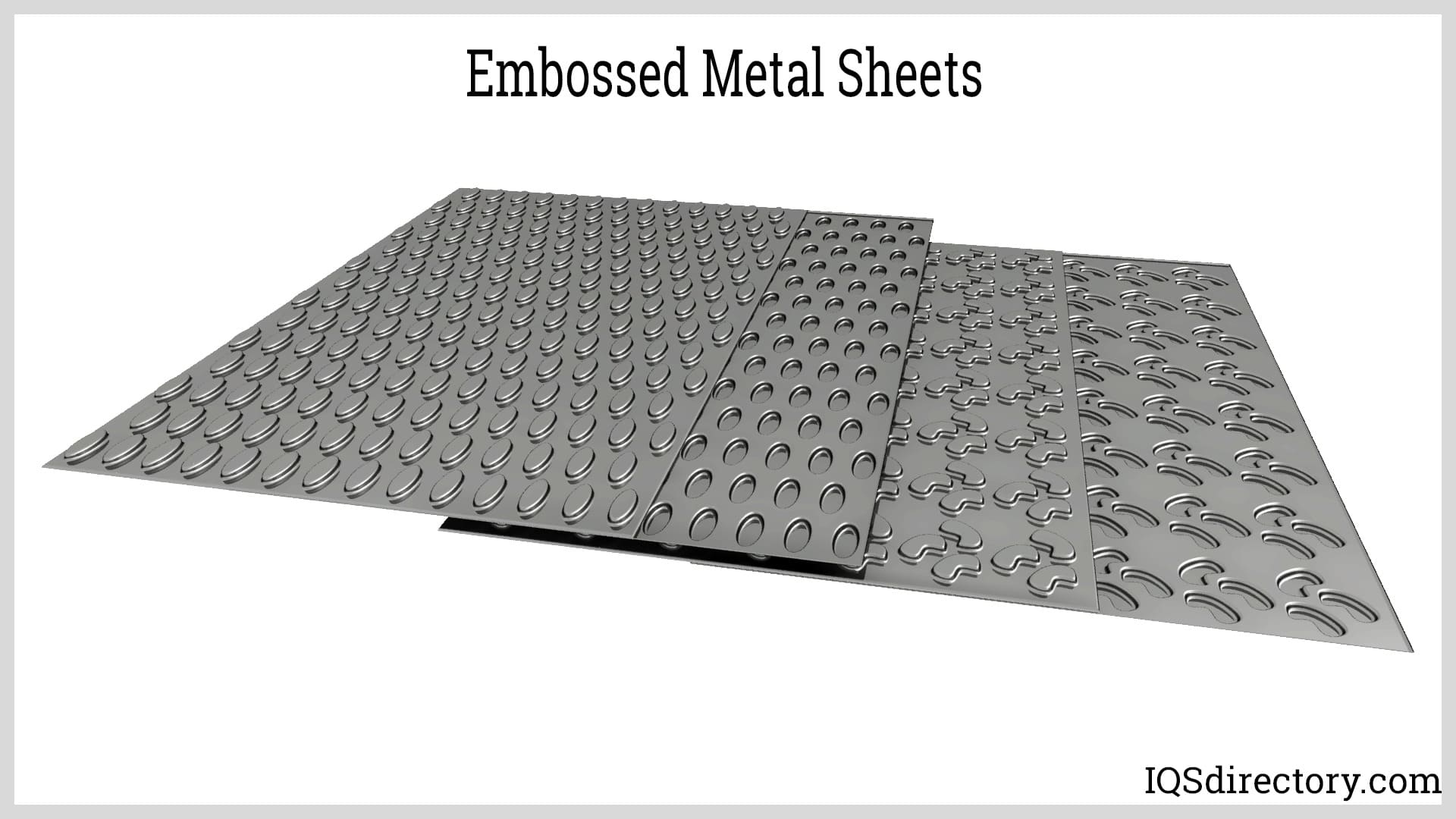
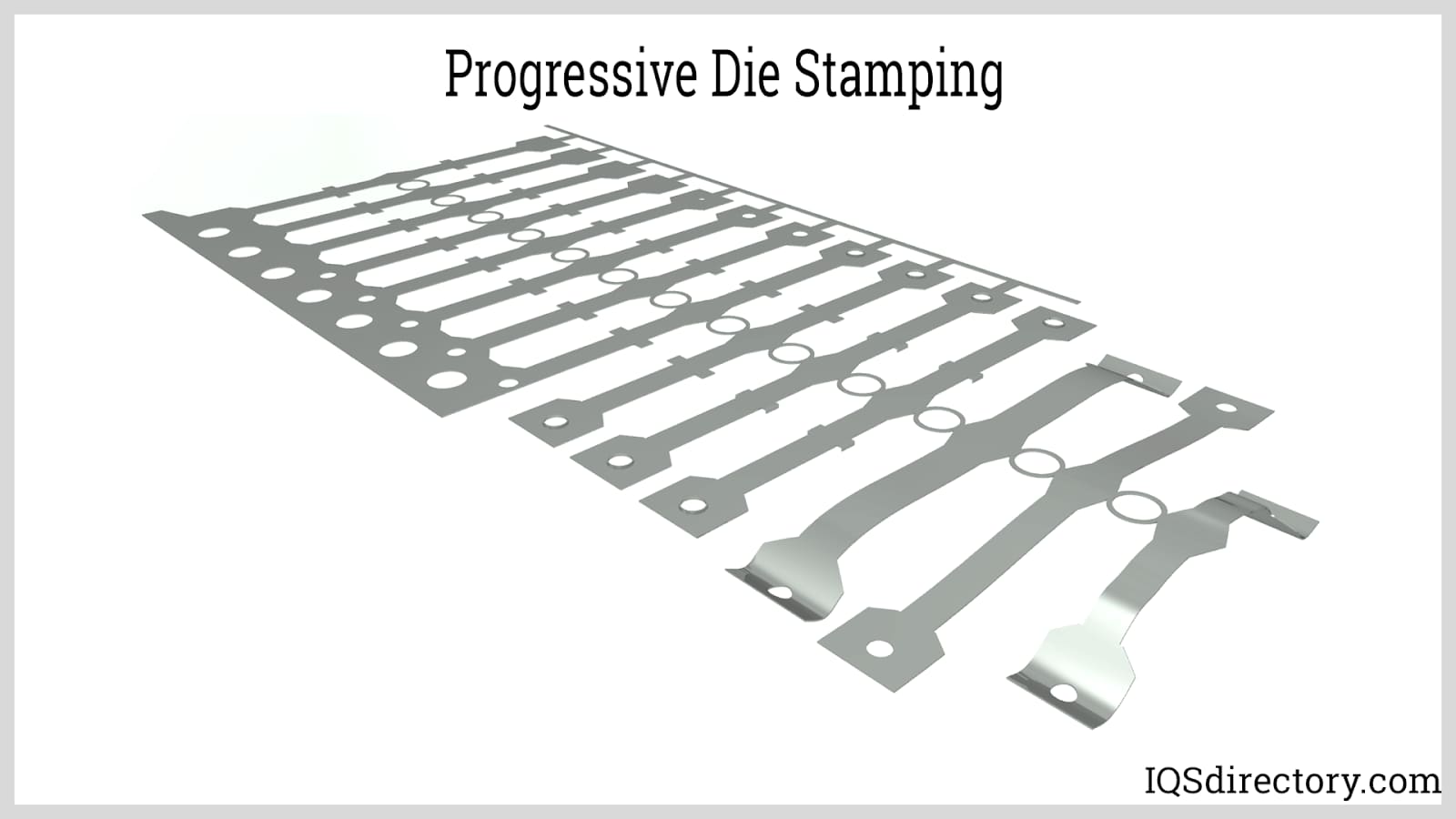
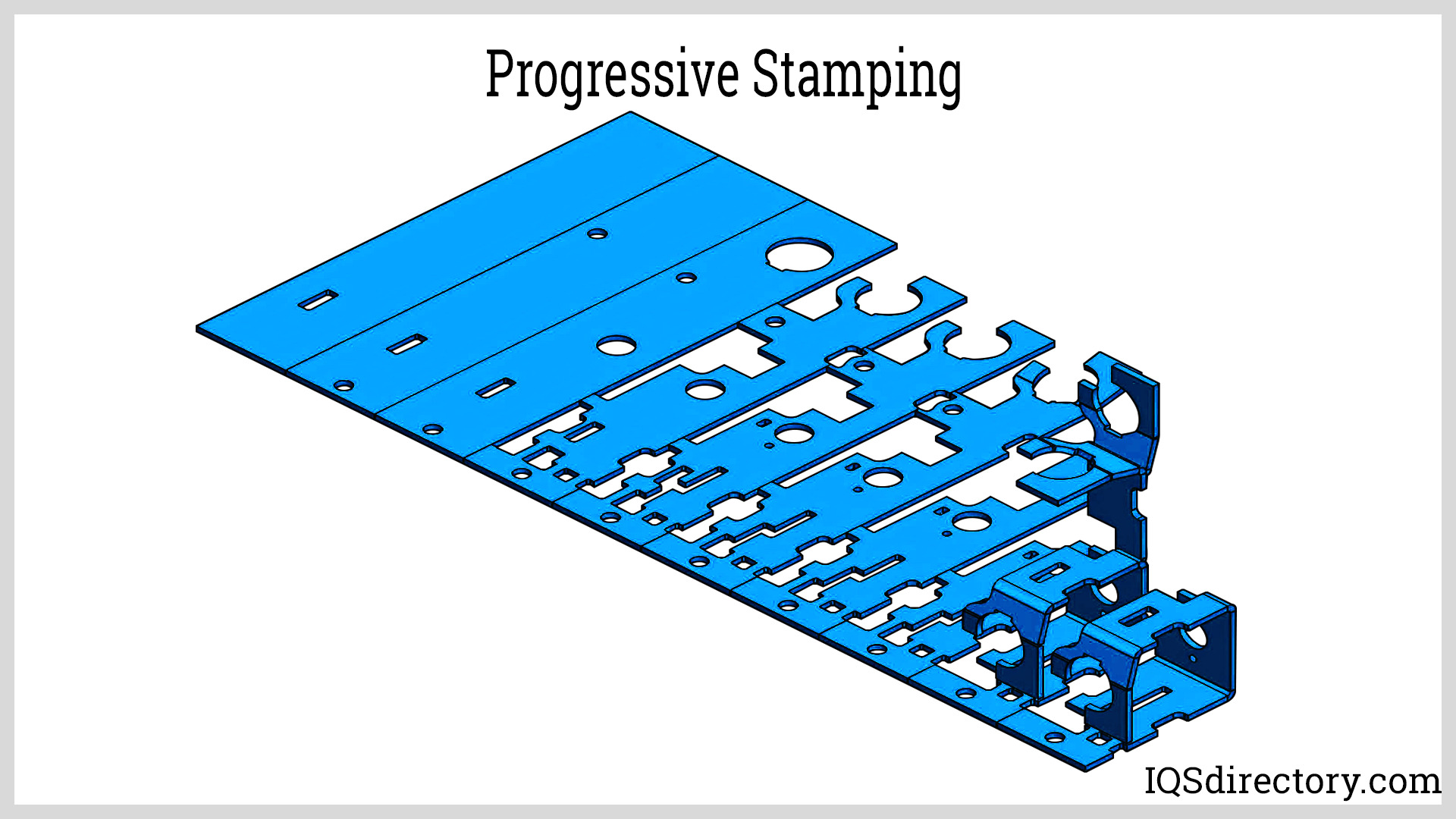
In progressive die stamping, a continuous coil strip advances through multiple sequential stations inside one die set[cite: 7]. Each stroke performs punching, coining, or bending, ejecting a finished part at high speeds (up to 1,500 SPM) with minimal labor cost[cite: 7]. In transfer die stamping, individual blanks are freed from the strip upfront and moved between separate dies via automated transfer rails, ideal for large structural frames and shells[cite: 7].
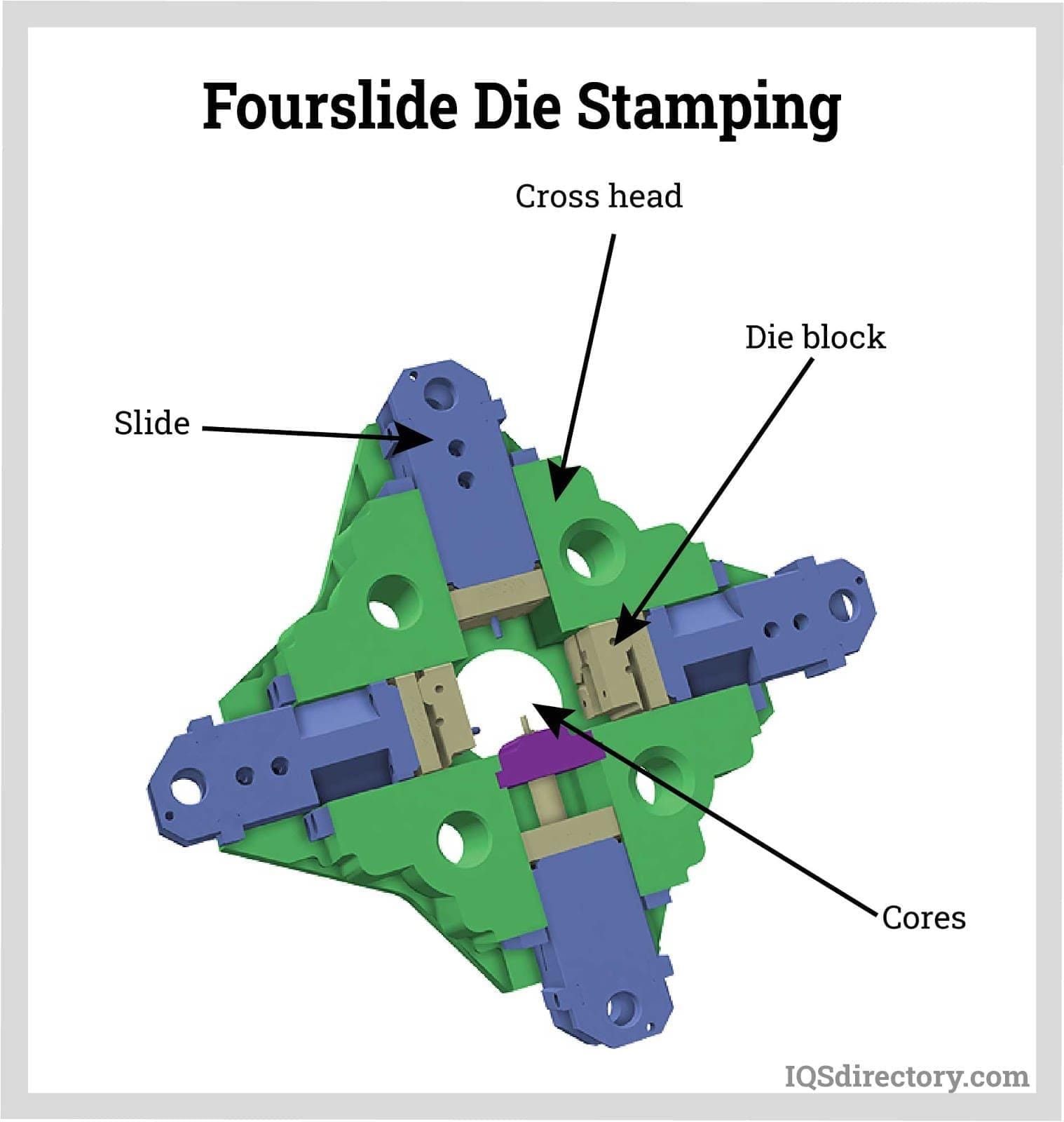
Fourslide stamping utilizes four horizontal shafts positioned at 90-degree angles around a central workpiece[cite: 7]. This multi-axis manipulation forms, bends, twists, and cuts complex wire or strip components in a single rapid operation, offering immense versatility for clips, electrical terminals, and medical springs[cite: 7].
Metal stamping is a cold-forming manufacturing process that compresses flat metal sheets or coils into precise parts using stamping presses and custom-machined dies through processes like blanking, punching, bending, and coining.
Main press technologies include mechanical flywheel presses (high-speed mass production), hydraulic presses (uniform deep-draw force), mechanical servo presses (programmable stroke and dwell control), and CNC stamping machines.
Progressive die stamping feeds a continuous coil strip through multiple workstations within a single die set, while transfer die stamping separates the part from the strip upfront and uses mechanical fingers to move individual parts between discrete press stations.
Fine blanking is a high-precision stamping technique that applies pressure from top and bottom with minimal die clearance. It produces smooth, burr-free, fully sheared edges with micron-level tolerances, eliminating the need for secondary deburring.
IoT sensors embedded in stamping presses monitor real-time temperature, vibration, press force, and die wear to enable predictive maintenance, prevent catastrophic machine downtime, and optimize production throughput.
Common metals include carbon steel, stainless steel (300/400 series), aluminum alloys (3003, 5052, 6061), copper, brass, bronze, and high-strength low-alloy (HSLA) steels.
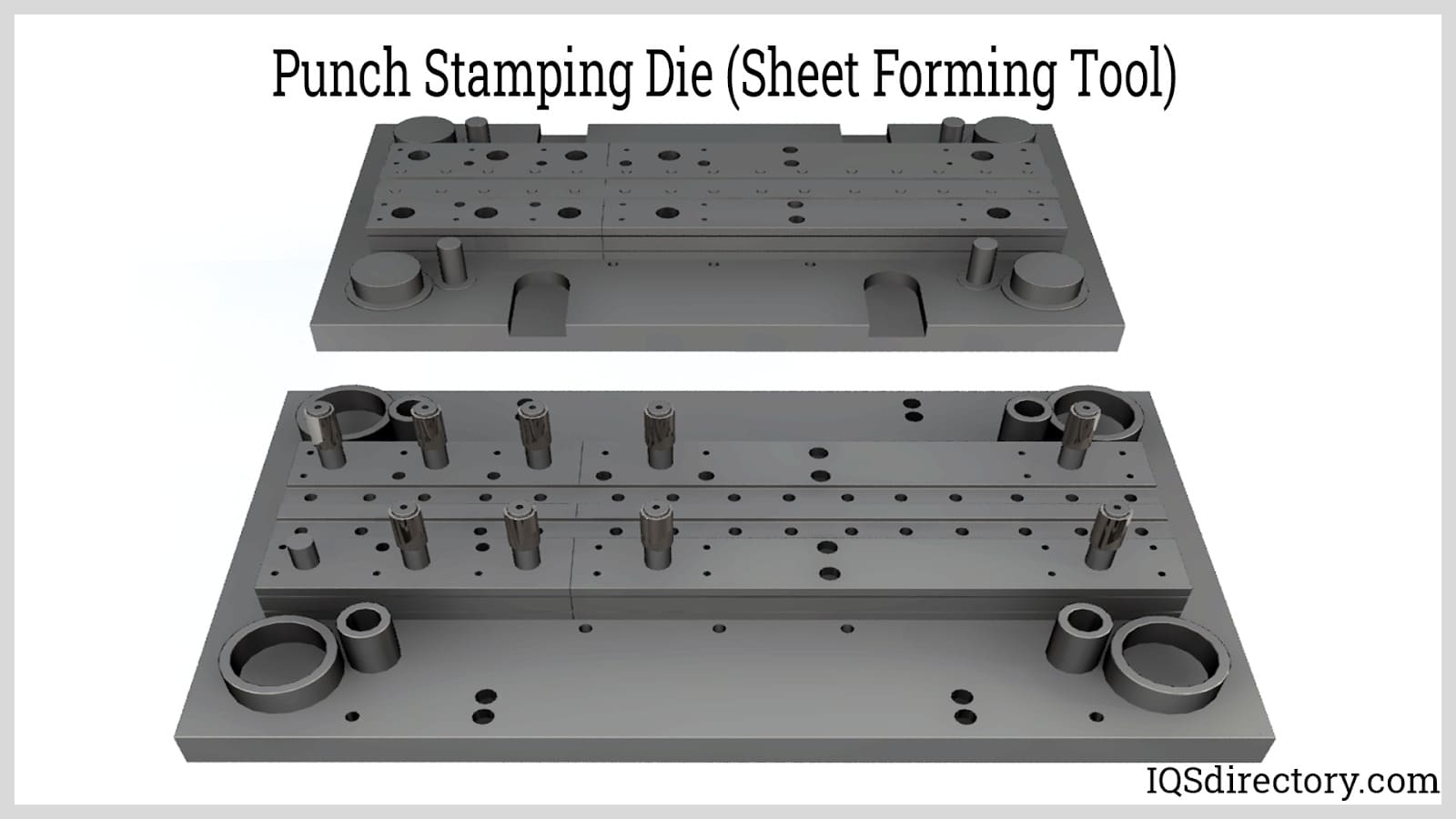
Dies are crafted from hardened tool steel and include compound dies (cutting only), combination dies (cutting and forming), multi-station progressive dies, and steel rule (cookie-cutter) dies for thin foils[cite: 7].
Alloy selection depends on formability, tensile strength, weldability, and corrosion needs[cite: 7]:
Post-stamping finishing includes aqueous/vapor cleaning, manual or electrochemical deburring, tumble finishing, thread tapping, reaming, countersinking, powder coating, plating, and electropolishing[cite: 7].
Metal stamping underpins automotive body frames, aerospace structural certifiable hardware, medical surgical housings, consumer electronics connectors, and architectural hardware[cite: 7].
Metal stamping is an essential, highly automated manufacturing technology that converts flat sheet or coil metal into precision components[cite: 7]. By matching the ideal press mechanism, die configuration, and alloy properties, manufacturers achieve high-volume production with exceptional repeatability and cost efficiency[cite: 7].
Die stamping cuts and shapes metal sheets using precision dies...
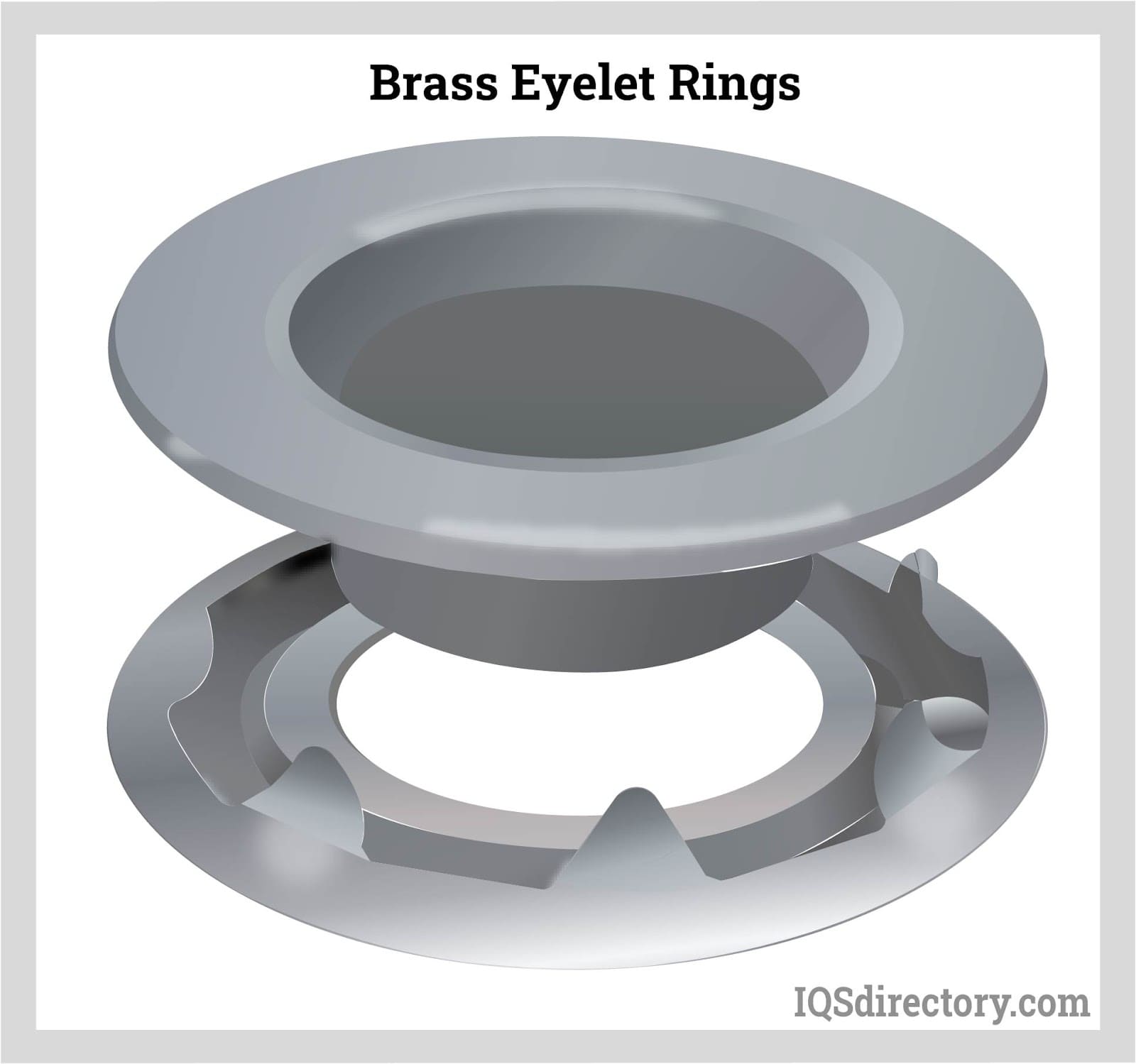
An eyelet reinforces holes in thin materials, offering durability and protection...
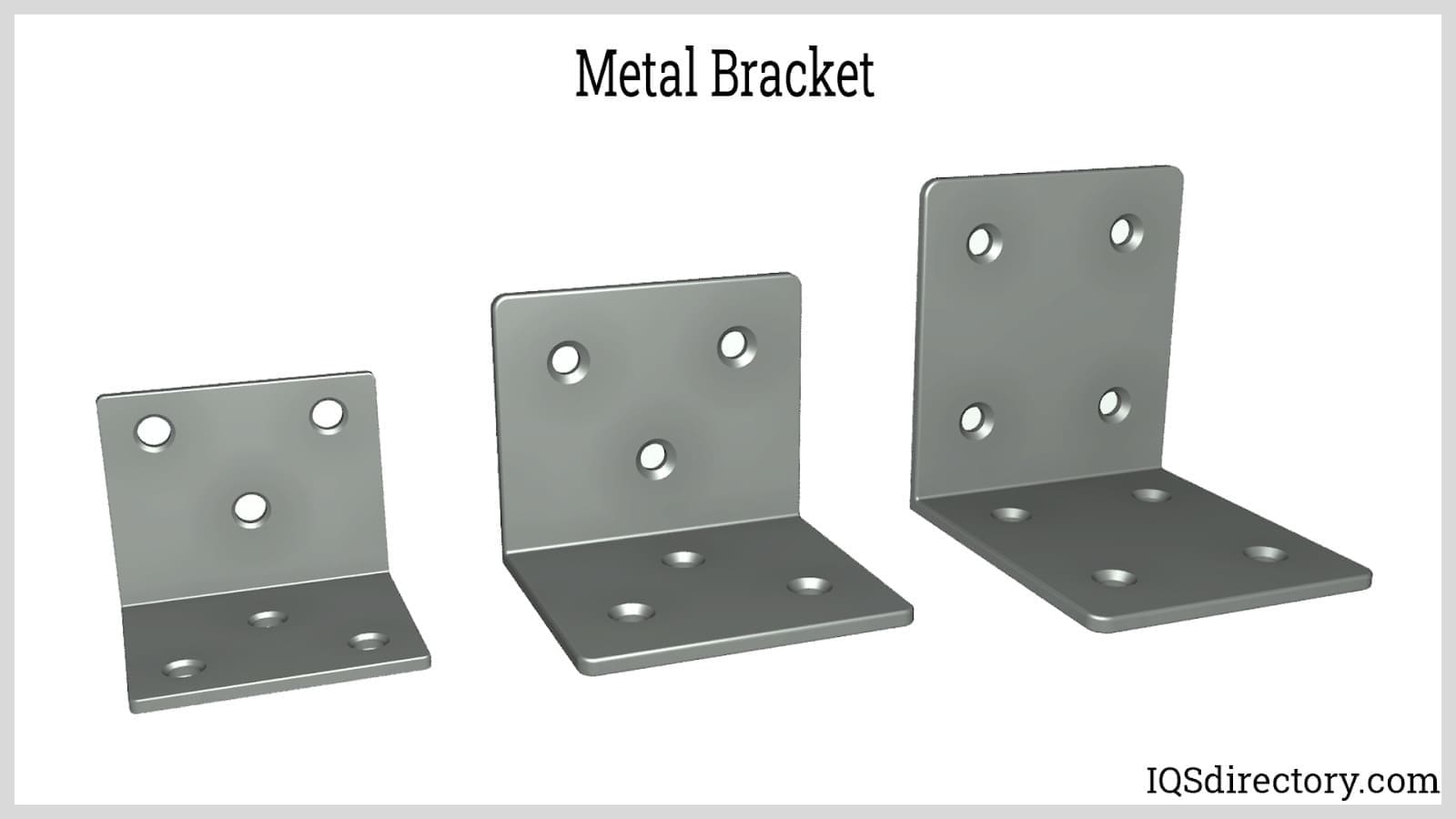
A metal bracket serves as a fastener or connector designed to secure objects together...
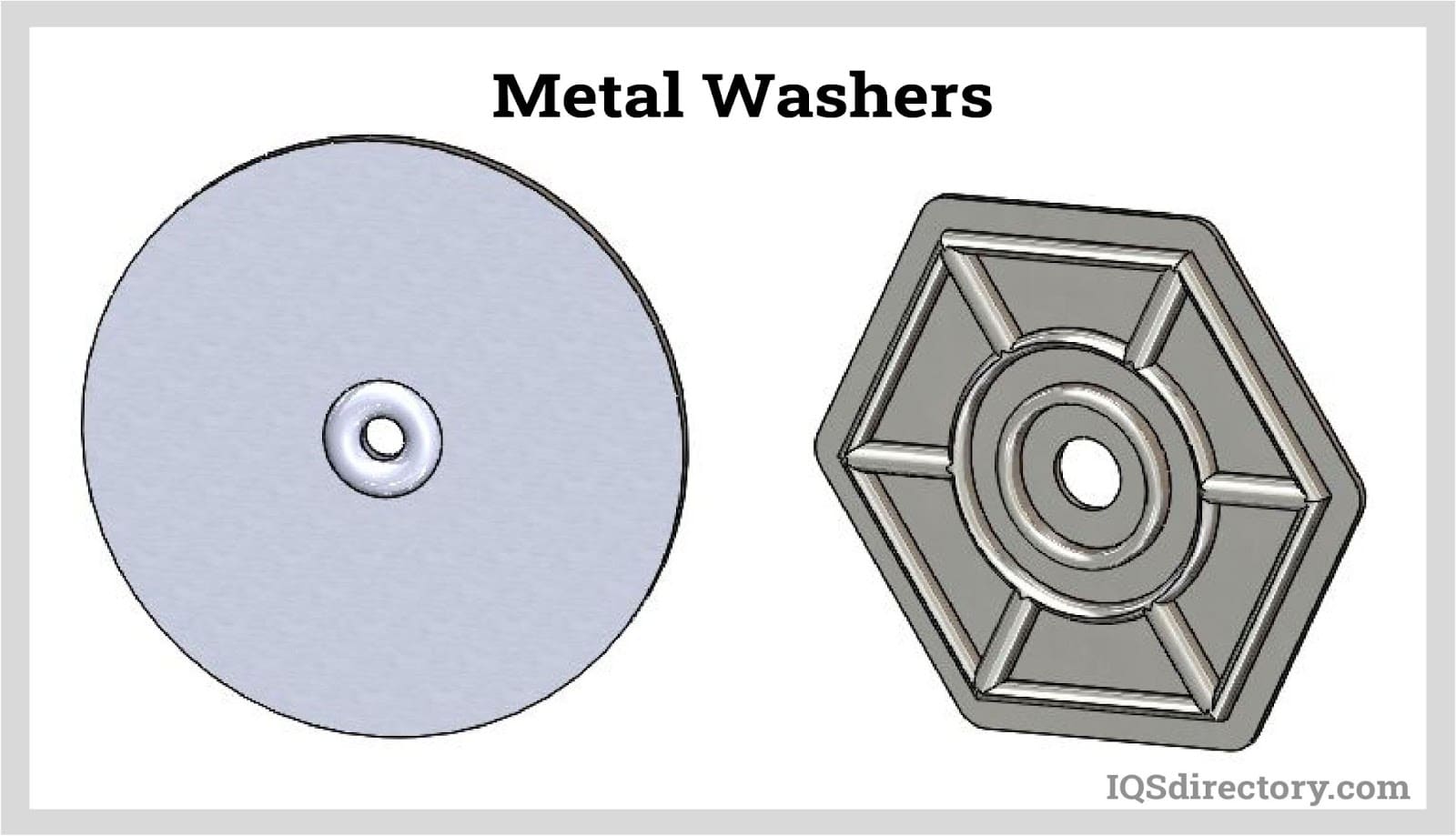
A metal washer is a flat piece of metal used as a spacer or load distributor...