Powder Metal Parts
Solid metal parts that are made from powdered metal via powder metallurgy are strong equipment components used in almost every industry. They are utilized in a variety of industrial applications in the automotive, hardware, electronic, computer and lawn and garden industries.
Quick Links to Powder Metal Parts Information
The History of Powdered Metal
The process of sintering reportedly dates from around 3,000 B.C., according to some archaeologists. Many experts credit ancient Incan craftsmen with using powdered gold in the manufacture of jewelry items hundreds of years ago. Early manufacturing efforts involved very "low tech" production mechanisms compared with the modern era. Ancient craftsmen lacked the ability to rigorously measure and control metal melting points. They also did not possess equipment capable of producing steel and stainless steel products uniformly and repetitively in high temperature environments.
Manufacturing firms did not really begin utilizing powder metallurgy in mass production settings with controlled manufacturing processes until well after the development of the Industrial Revolution. Powdered metal manufacturing initially gained impetus at the turn of the Twentieth Century with the mass production of light bulbs and the invention of welding. Ultimately, powdered metal coatings became important in the automotive and aviation industries. Today, the numerous advantages supplied by this specialized type of metallurgy have contributed to significant, ongoing growth in the field.
Today, an umbrella metal powder industry federation represents over seven unique industry groups. These organizations represent associations of manufacturers allied to disseminate information about powder metallurgy standards and powdered metal products. The members include companies involved directly in powder metallurgy manufacturing, as well as firms engaged in producing metal powder and powder metallurgy machinery, performing isostatic pressing and metal injection molding, synthesizing metal additives and investigating refractory metals. The existence of a metal powder industry federation testifies to the growing importance of this niche metals fabrication market. It also reveals the sharp increase in the number of applications for powdered metal components during recent years.
Powder metal metallurgy offers numerous advantages. One of the most important concerns is the ability to create homogenous, uniform metal components. Another involves the high efficiency and cost-effectiveness of this manufacturing process. This form of metallurgy wastes comparatively small quantities of raw materials, for instance. Additionally, it permits the generation of complex parts within close tolerances. The ability to automate this type of production contributes to its popularity.
The metallurgy of powder metals has developed significantly during recent decades. Today, manufacturers enjoy access to a wide array of powdered metal part materials. Popular raw materials for the production of these components include steel, iron, copper and aluminum. Manufacturers can generate powders in a variety of sizes. The base metal determines the industrial or laboratory processes utilized for obtaining metal powders; not every production process will work with a given metal raw material.
According to the European Powder Metallurgy Association, the most common methods for generating metal powders involve the chemical reduction of an alloy, electrodeposition or atomization. Several other processes will permit the production of metal powders, also. As nanotechnology continues to attract interest in materials science, it seems likely new manufacturing technologies may emerge in the future!
The process of manufacturing powdered metal parts relies upon three distinct steps: formulating powdered metal mixes; compressing the powder into desired shapes; and sintering to achieve solidified forms:
Phase One: Formulation
Companies which produce powdered metal parts can adjust the powder formulation for every production run to achieve desired properties. A manufacturer may choose to add different percentages of metal powders to a mix to enhance properties such as tensile strength, malleability, or color, for instance. Taking this step may help a finished component achieve a desired mechanical property.
The mixing process today usually involves the addition of an organic lubricant, such as zinc stearate, stearin, or stearic acid. Thorough mixing ensures as many metal particles as possible come into contact with the lubricating agent (which will evaporate during heating). After mixing, this gummy material helps hold the dry metal particles together to facilitate pressing.
Phase Two: Compression
The manufacturer can shape components with the assistance of dies. Usually, the powder metal production process involves pressing the lubricated metal powder firmly within a die composed of carbide or steel. The manufacturer then applies high pressure to help compact the mix before ejecting the formed metal so it can undergo sintering.
Phase Three: Sintering
A major final step in powder metallurgy is sintering, a high temperature process that develops the final properties of the metal part. The compacted raw materials, called green parts, are heated in a furnace at temperatures below their melting point to bond the particles together without changing the part's shape. The sintering process also increases part strength and controls the porosity of the part. Secondary operations are not usually required, but parts may still need to be heated, sized, deburred or machined. Although the finished parts look solid, they actually consist of small interconnected capillaries, which cause the parts to be approximately 25% porous. They are sealed through steam treatment, infiltrated with a metal that has a lower melting point, or oil or plastic resin impregnation, which provides the best seal.
Sintered metal products have many benefits over parts produced through other methods. The process results in little waste, as approximately 97% of the materials are used during the procedures. Sintered products are not shape sensitive either. Powder metal part manufacturers create parts close to tolerances, often eliminating the need for secondary operations. Therefore, powder metallurgy is often the technique of choice for the production of intricate parts requiring bends, projections and depressions. A wide variety of shapes and designs can be sintered out of an almost infinite choice of alloys, composites and associated properties. Powder metal parts have controlled porosity for self-lubrication and for gas or liquid filtration.
During sintering, the manufacturer causes the metal particles to melt and fuse together into a solidified unit. Typically, automated manufacturing facilities utilize a continuous belt furnace to ensure every area of the compressed powdered metal mix receives sufficient heat treatment. In rare instances, the manufacturer will employ a vacuum furnace. A vacuum furnace applies heat without permitting oxidation to occur; some vacuum furnaces can achieve very high temperatures to produce sintered steel.
Re-Sintering Process
Afterwards, the sintered part typically undergoes a re-pressing process and then re-sintering. This extra heat treatment increases the hardness of sintered metals. The part then receives finishing treatments. Steps may include plating steel with nickel and copper, or other metals, to add a desired exterior surface to the product. Sometimes manufacturers also provide for resin impregnation, a way to help seal microscopic pores in parts intended to contain liquids. Some specialized parts receive vacuum impregnation, for example. The impregnation process can help make metal containers or tubing formed from metal powders more durable and leak resistant.
For parts requiring close net tolerances, manufacturers may employ hot isostatic pressing to re-press sintered parts at fairly high temperature levels within a high-pressure furnace instead of utilizing re-sintering. Computer modeling can help measure part dimensions during this process, which helps harden the component. In some automated production environments, hot isostatic pressing has become a cost-effective manufacturing tool.
Sintering Process
Powdered metal parts are produced through 2 different processes—sintering and metal injection molding. Sintered metal parts, including sintered bronze parts and sintered steel parts, are made by heating metal powder below its melting point then and formed into shapes. Metal injection molding adds polymers or wax through resin impregnation to powdered metal, heats them both up until pliable, where they are then formed in a mold. Both of these processes are often used to produce aluminum powder parts, copper powder parts or iron powder parts.
Metal is formed and fabricated from powder to a finished part through a process called powder metallurgy. Metal powders are the main raw material, which is processed into powder form by pulverization, chemical reduction, electrolytic techniques, mechanical alloying, or most commonly, atomization. The resulting powder is then impregnated with a lubricant, which is added to the metal to reduce friction between the powder and the pressing dies. Next, the raw material undergoes a forming process, where it is pressed, forged or molded.
Metal Injection Molding
A powder metallurgy process called metal injection molding is sometimes used to produce smaller, more complex, high density and high performance metal parts. It combines the technologies of plastic injection molding and powder metallurgy to produce parts used in the automotive, medical and dental, firearms, hardware, computer, and electronics industries. It offers more design freedom, more complex detailing, reduced assembly costs, reduced waste and denser, stronger, more corrosion resistant and magnetic products. However, only smaller, thinner parts are produced this way, and tooling costs are higher than regular powder metallurgy. There are a few main differences in metal injection molding. During the initial mixing process, the metal powder is mixed with thermoplastics in addition to lubricants. The parts are only formed through molding, which uses standard plastic injection molding machines. The thermoplastics are then removed, or debindled from the parts by thermal or chemical means through an open pore network. The parts are then sintered and put through any necessary secondary operations.
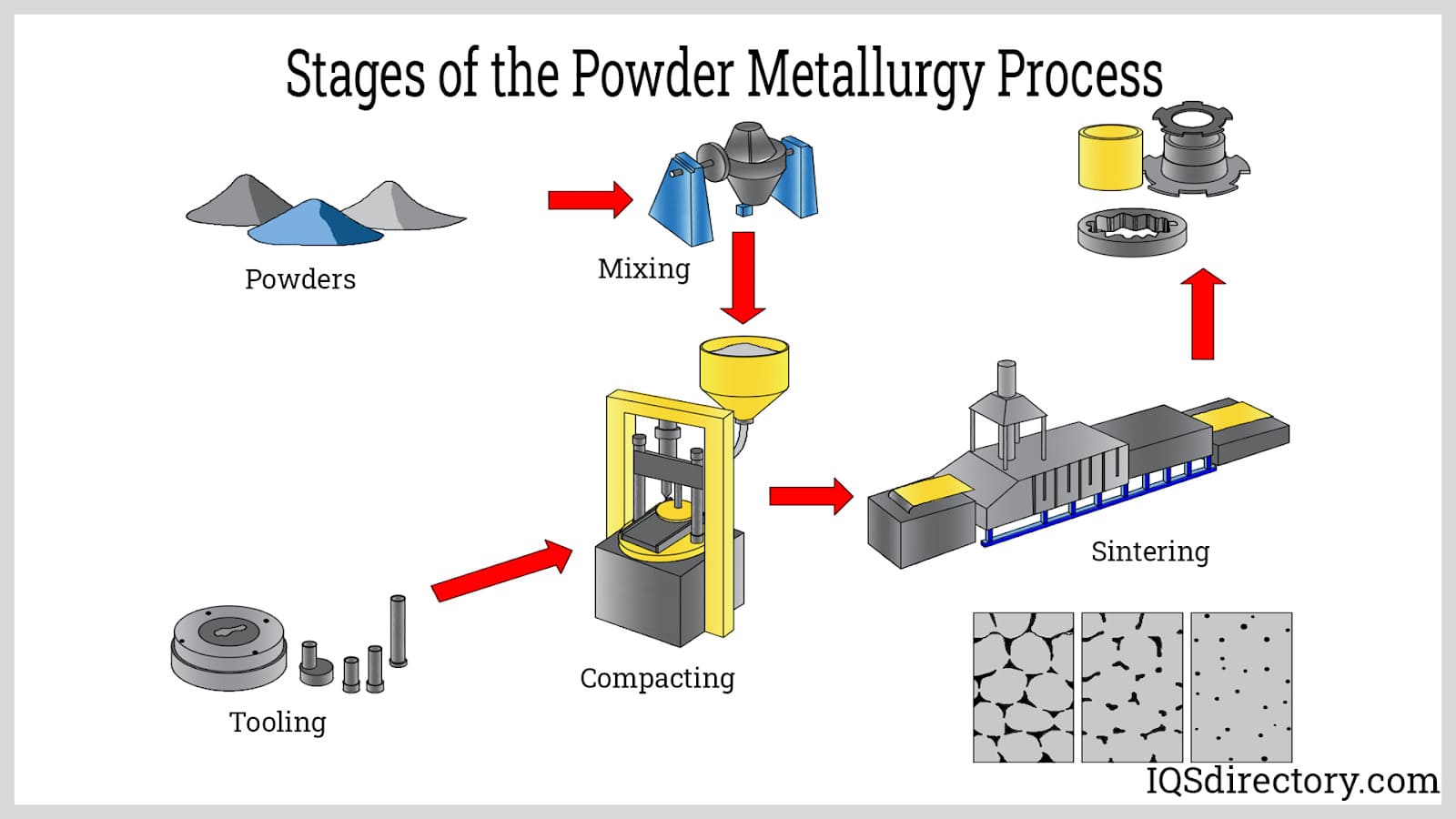 Powder metallurgy, a manufacturing process that produces accurate parts by pressing powdered metals and alloys into a rigid die under extreme pressure.
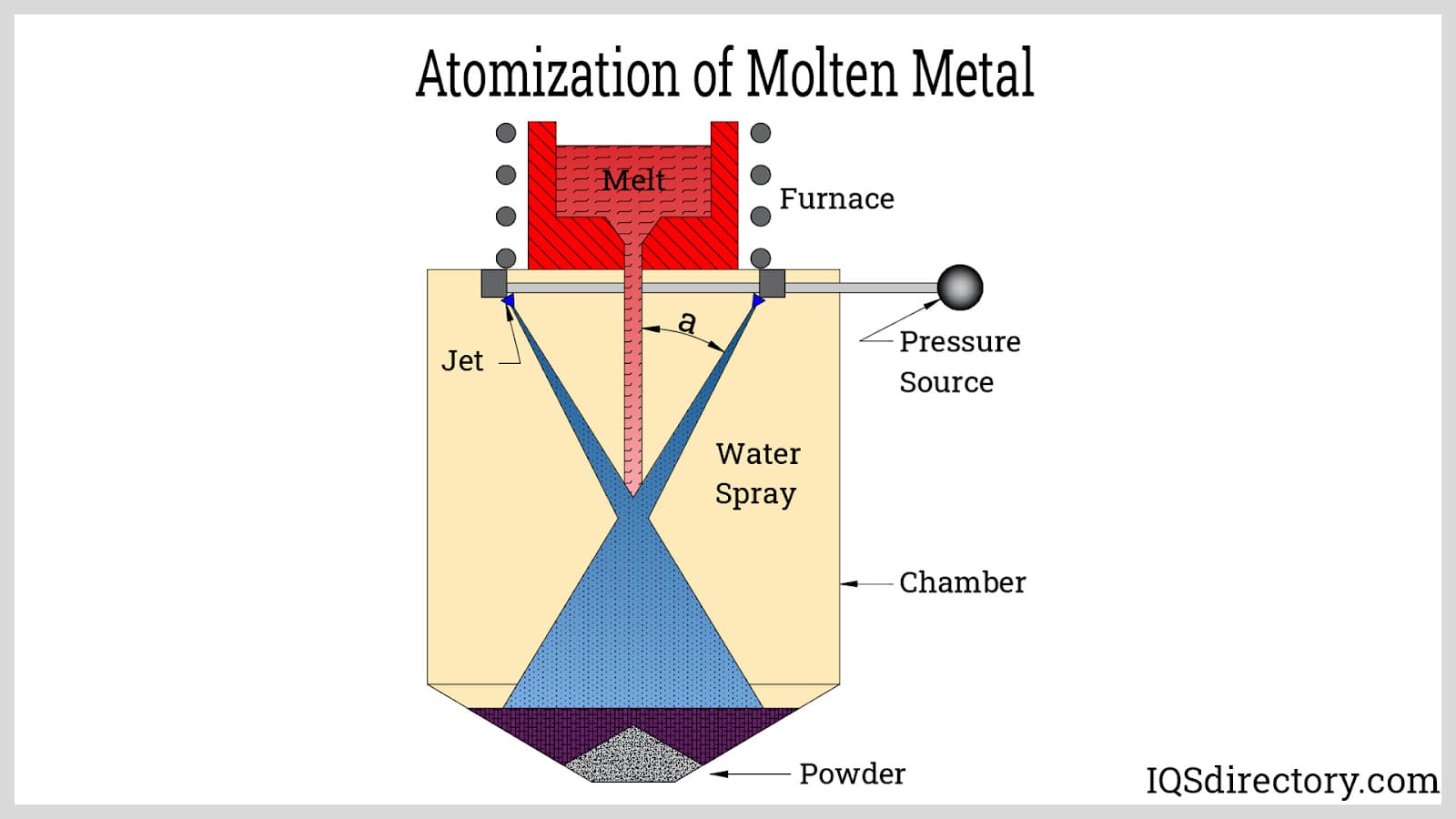 Atomization, uses high velocity water flow to atomize molten metal into particles.
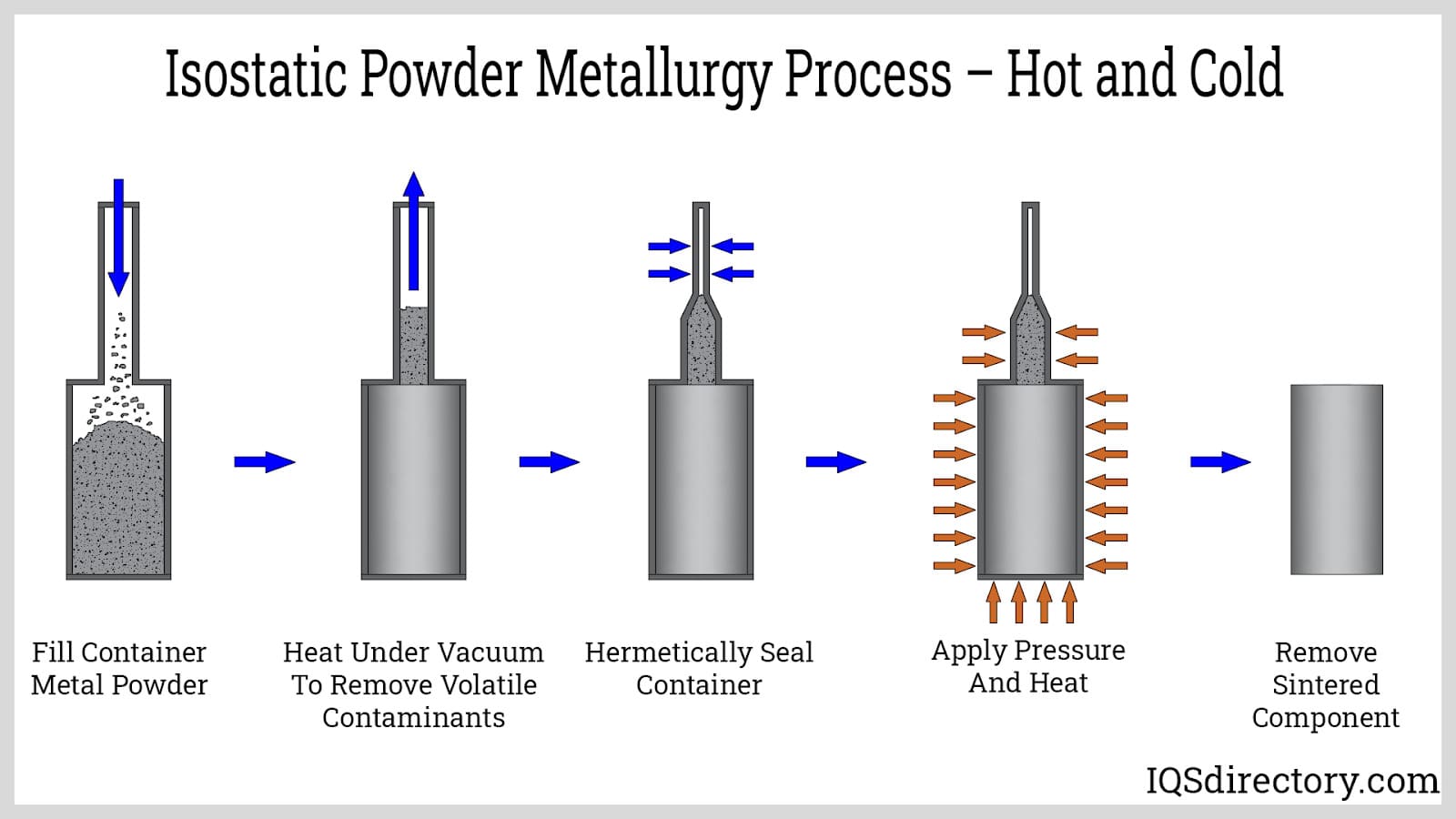 Isostatic pressing, an equal amount of pressure is applied to the entire surface of the workpiece.
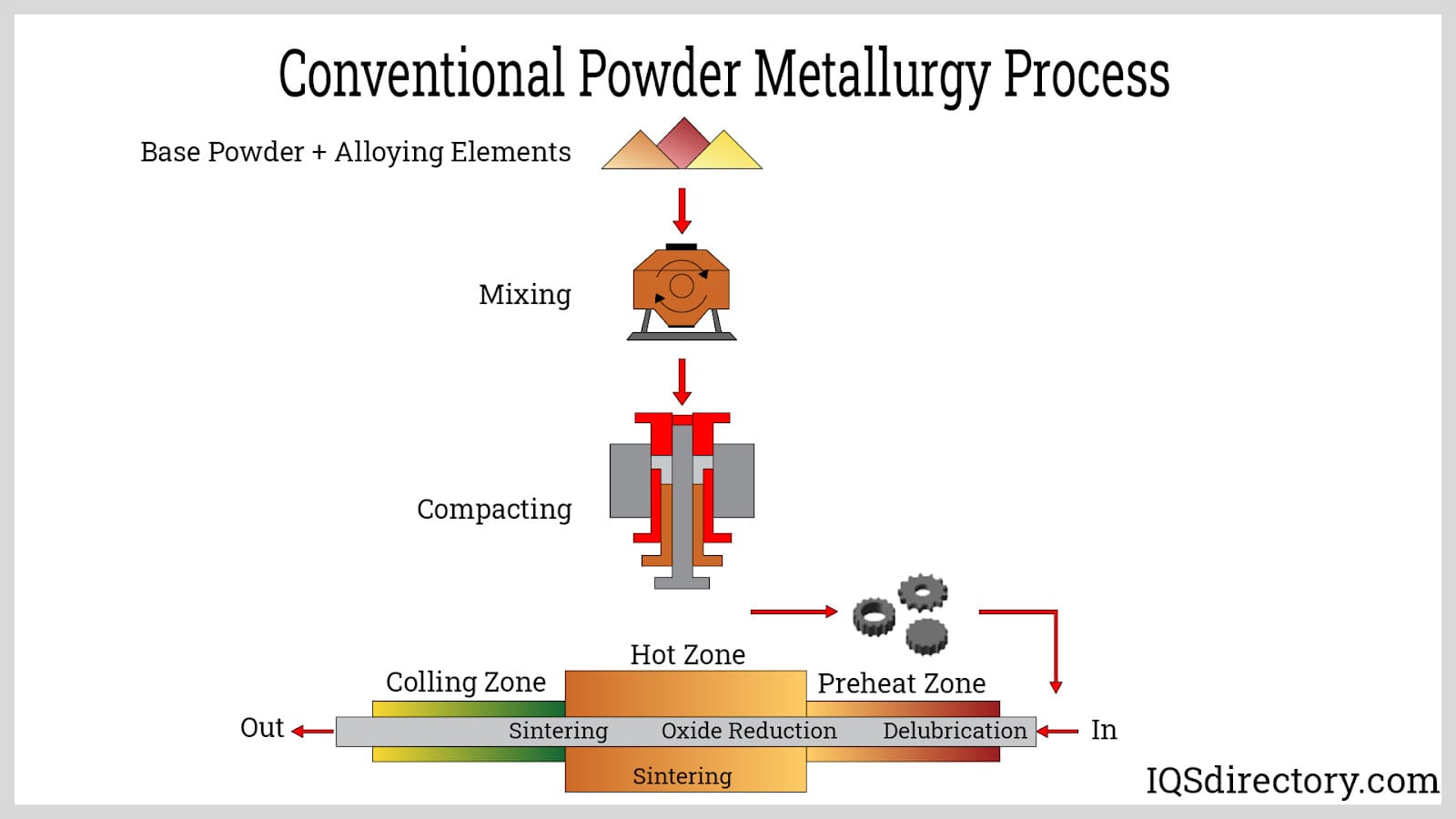 Conventional powder metallurgy follows the steps of basic powder metallurgy with the powder and alloy are mixed, compacted, and sintered.
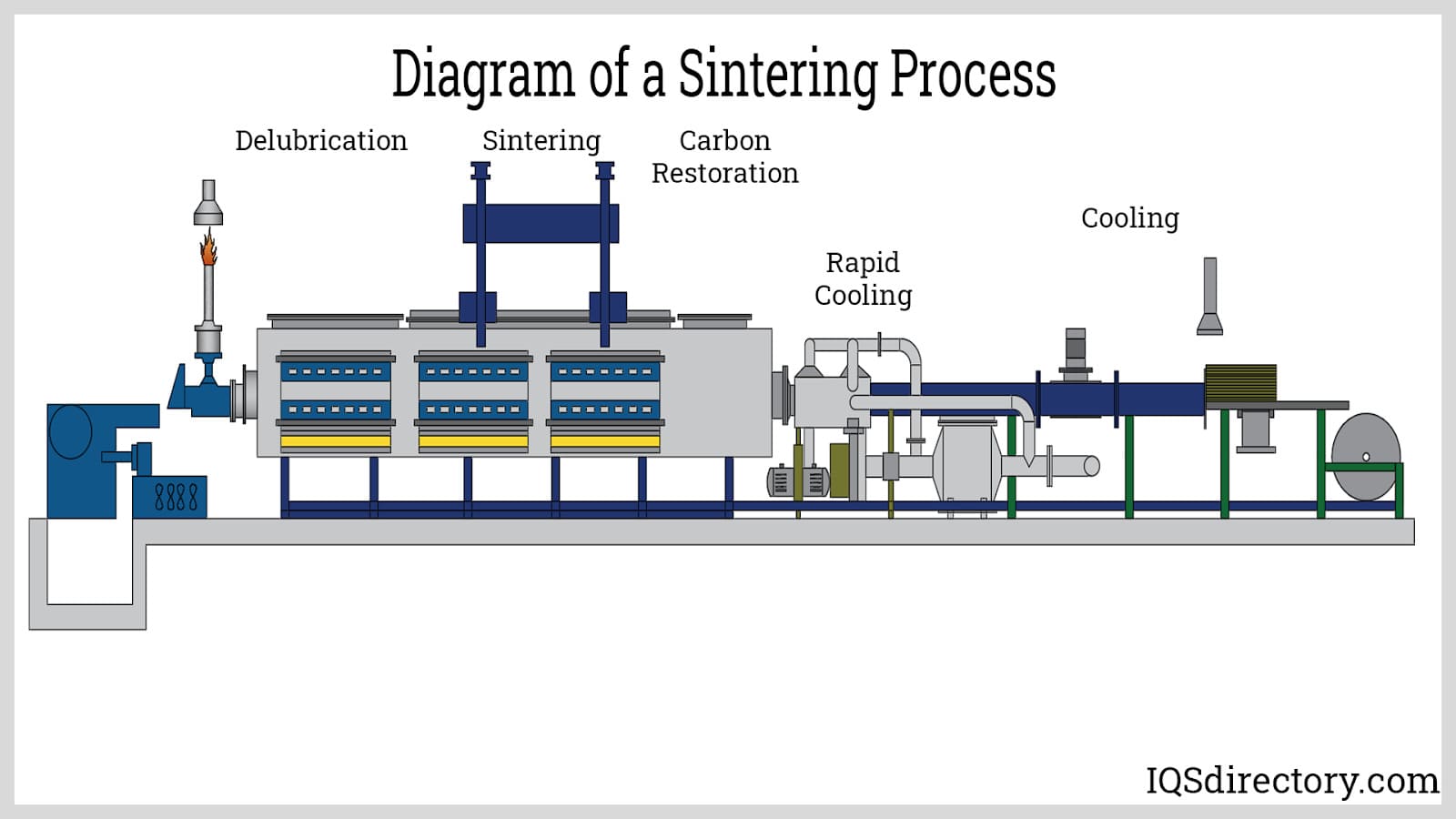 The sintering process, forms a solid mass without liquefying the mass.
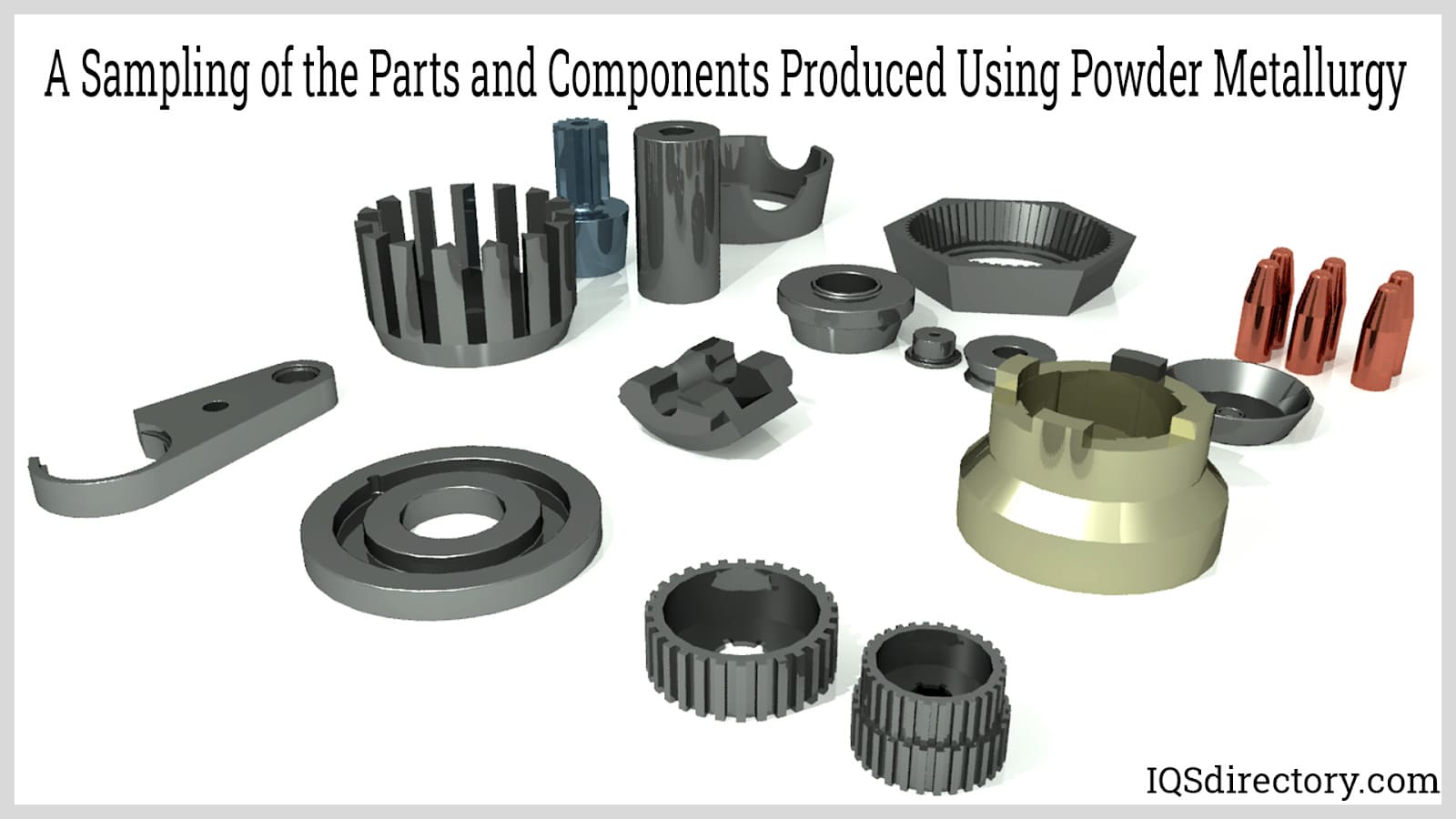 Examples of the different type of parts and components that are manufactured using powder Metallurgy.
Many different metals, including aluminum, copper, brass, iron, steel and bronze, are able to convert to powdered form and undergo a type of powder metallurgy to produce parts and products.
- Aluminum Powder
- A metal powder made from aluminum materials. Aluminum powder parts are produced using flaked aluminum which is popular due to its ductility and light weight. Aluminum is a popular metal to use because of its light weight, conductivity and high flammability. It’s often used in pyrotechnics and high strength structural applications.
- Bronze Powder
- Parts that are used to produce self-lubricating bearings. It is a denser metal with a higher mechanical performance than brass.
- Copper Powder Parts
- Produced through the compaction, consolidation and heating of finely flaked copper materials. Copper parts exhibit good electrical and thermal conductivity, and are used in heat sink and electrical contractor applications.
- Iron Powder Parts
- Are popular due to the properties of the ferromagnetic metallic chemical element which is strong, highly malleable and ductile allowing for easy manufacturing. Iron powder is used to make structural parts, filters and bearings. It also contains a graphite additive.
- Metal Injection Molding
- Also called "MIM," is a low cost, high volume manufacturing process that produces custom metal parts near to net shape by combining the way injection molded plastics are formed with powdered metal sintering.
- Metal Powder
- Created through powder metallurgy and can be formed into solid components through the tool and die process.
- Metal Powder Parts
- Produced through the compaction, consolidation and heating of various flaked metals such as aluminum, copper, bronze, nickel, brass, steel, stainless steel, nickel and titanium in order to produce a solid metal product.
- Powder Metallurgy
- Utilizes metallic powders in the manufacture of shaped components which may be finished or semi-finished products.
- Powdered Metal
- Used to make solid parts from metal powder. Metal can be made into powder form using a variety of techniques, including atomization, chemical precipitation, centrifugal disintegration, and hydrogen reduction.
- Powdered Metal Bearings
- Often self-lubricating, providing low noise level, space savings and low maintenance requirements. Lubrication is achieved through the impregnation of oil into the bearings, which aids bearing performance during rotary support of moving parts.
- Powdered Metal Bushings
- Commonly provide support to rotating axles and other shafts in engines, drive systems and other equipment. Like bearings, powdered metal bushings can be lubricated through impregnation to increase efficiency.
- Powdered Metal Gears
- Mechanical hardware formed through various powder metallurgy techniques to transmit power, motion, speed and directional change between axes.
- Powdered Metal Structural Parts
- Particularly common in the automotive industry in exhaust, fuel and brake systems, engine parts and transmission components. Sintered parts are also found in computer and electronic equipment.
- Resin Impregnation
- A secondary operation in which plastic resins are applied to compact powder metal parts in order to act as a seal and reduce porosity.
- Steel Powders
- Steel, often stainless steel or tool steel powders, are high strength and used in automobile weight reduction.
- Sintered Bronze Parts
- Are produced by heating powdered bronze to just below its melting point in order to adhere the particles together and produce a solid metal object.
- Sintered Filters
- Contain uniform porosity, which increases functioning. In addition, sintered filters are strong, easy to clean and heat resistant.
- Sintered Metal
- A solid product made by a cold forming process that presses metal powder into a coherent mass.
- Sintered Metal Parts
- Solid products made by compressing metal powder into a coherent mass and heating the metal to just below its melting point. Sintered metals parts can be made from aluminum, copper, bronze, nickel, brass, steel, stainless steel, nickel, and titanium.
- Sintered Steel Parts
- Solid metal components created by the controlled heating of powdered steel materials which fuse the particles together without liquefaction.
Powder metal assists manufacturers in forming and shaping complex, intricate designs in a uniform fashion. In some situations, this technology offers a cost-effective alternative to mass producing components which require extensive machining during the finishing process. It plays an increasingly important role in modern CNC machining.
Additionally, when correctly sintered, a component formed with the assistance of powder metallurgy demonstrates precision engineering. Metallurgists can often control porosity more effectively using metal powder. This metalworking process provides an excellent way to manufacture some types of gears which require tight adherence to net shape, for example. The powder metal process involves the generation of far less waste than some alternative fabrication strategies. It may appeal to manufacturers interested in generating high tolerance parts as cost-effectively as possible.
The powdered metal coatings generated with the assistance of powder metal vendors frequently assist manufacturers in obtaining specific desired properties during finishing, also. For example, a company may use this manufacturing process to finish a part to achieve improved corrosion resistance. This process may also give a component's exterior a desired textural or aesthetic quality. The versatility of metal powdered coatings has contributed to the ongoing increases in the size of this marketplace. In Europe alone, powder metal reportedly generates over six billion Euros in sales activity every year!
Powder metal parts are found in automobile components, structural parts, filtration systems and magnetic assemblies. Powdered metal gears are particularly well-suited to the sintering process, as the inherent porosity of powder metal parts naturally dampens sound. Bushings and bearings are also simple to produce through this process, though their tight tolerances usually require a secondary sizing operation. Metal powder parts are a popular choice for parts with magnetic properties, as the soft magnetic material is usually difficult to form, limiting the choice of shapes. However, powder metal can be easily formed in a wide variety of shapes, and its magnetic properties are enhanced in the proper sintering atmosphere.
Currently many popular products involve the use of powder metal during the forming or finishing phases of manufacturing. One popular use of this technology involves the creation of the diamond and tungsten carbide grinding blades used in faceting gemstones. In order to cut corundum, jewelers require very hard materials. Tool manufacturers learned to embed industrial diamonds in rough grinding and cutting blades formed with the assistance of metal particles. Many rock saws depend upon powdered metal cutting and grinding blades today.
Another very popular use for metal powder relates to finishing iron or stainless steel parts by applying coatings capable of improving corrosion resistance. Metal parts intended to withstand a lot of friction, such as drill components, or to endure harsh climatic conditions, such as equipment used in arctic environments, enjoy longer useful life spans when manufacturers apply specific types of metal powder coatings during the finishing phase. Numerous proprietary coatings help promote this goal.
One strength of powder metal manufacturing involves the ability to automate the metal part manufacturing process to a high degree while reducing the need for expensive machining during finishing. Today, most CNC metal injection machines and injection molding machines permit the use of computers to help enhance efficiency. The varieties of machines utilized during any given manufacturing venture ultimately depend upon the specific production processes undertaken by the manufacturer.
Manufacturers have designed a wide array of specialized metal injection machinery. Today, powder metal metallurgy contributes to the production of components as different as haute couture jewelry rings, automotive transmission gears, and stainless steel surgical implements. Many industry-specific production machines assist high volume manufacturing.
The right powder metals manufacturer will satisfy the customer's needs. In some cases, a specialized firm represents a better choice than a much larger entity. By evaluating your marketing goals and requirements carefully, you can pursue the companies listed on our directory to locate outstanding powder metals manufacturers and suppliers.
Manufacturers have developed a number of variations to create products from powdered metals. Product specifications may influence the production processes in a given case, for example. Some important variations on the typical three-step powder metal manufacturing technology include metal injection molding, powder forging and spray deposition.
Metal Injection Molding somewhat resembles plastic injection molding. It permits the generation of very complex shapes during high production runs. Manufacturers use temporary binding agents instead of lubricants alone to help hold the metal powders in a desired shape prior to sintering. After ejection from the die, the binder typically either evaporates upon heating or dissipates upon the application of a solvent.
During powder forging intense pressure helps compress powder before the insertion of the metal into a die followed by the application of heat. During powder spraying, a manufacturer sprays atomized droplets of molten metal onto a pre-formed shape. This manufacturing process contributes to the production of some types of cladding, for instance.
- Acicular Powder
- Powder composed of needle-shaped particles.
- Activated Sintering
- A sintering process whose rate is dramatically increased by something other than the changing of temperature or time (e.g. adding a constituent to the powder, thermal cycling or the atmosphere).
- Air Classification
- A process in which an air stream of controlled velocity is used to separate powder into particle size fractions.
- Atomization
- The production of metal powder by dispersing molten metal into individual particles through mechanical methods or through the rapid movement of streams of liquids or gases.
- Binder
- A cementing medium that is added to the powder to increase the green strength of the compact and expelled during the sintering process. The term binder can also refer to a material, typically having a lower melting point, that is added to a powder mixture in order to bind powder particles together, which would not have normally sintered into a strong body.
- Blank
- An unfinished compact that has already been pressed, pre sintered or fully sintered but requires some other operation, such as cutting or machining, to bring it to its completed form.
- Cold Pressing
- The formation of a metal compact through the compression of metal powder at room temperature.
- Comminution
- The process of breaking down metal into individual particles through grinding and flaking operations, among other procedures.
- Compact
- A solid material consisting of compressed metal powder that has been pressed in a die.
- Composite Powder
- A compact consisting of more than one distinct substance.
- Die
- A press tool consisting of a cavity and shaped according to part design requirements, into which the metal powder is pressed to form a compact.
- Exudation
- Also referred to as “sweating,” it is the rising of a compact component to the top of the compact. During sintering, the component has a lower melting point than that of the main compact constituent.
- Green
- A term that refers to an object that has not been sintered.
- Growth
- An increase in the size of a compact that occurs during the sintering process.
- Impregnation
- Process occurring after the sintering process in which a nonmetallic substance, such as oil, is used to fill the pores of the compact.
- Infiltration
- Process occurring either before or after the sintering process in which the pores of a compact are filled with a metal substance having a lower melting point than that of the compact.
- Isostatic Pressing
- The production of a compact through the application of uniform pressure from all directions to metal powder.
- Lubricant
- A fluid substance applied to the punch and die walls or mixed into the metal powder to aid in the compaction process and compact removal.
- Molding
- Another term for pressing metal powder into a compact.
- Multiple Pressing
- The production of more than one compact at a time by pressing metal powder in different dies.
- Porosity
- Measurement reflecting the percentage of open spaces, or pores, on a powdered metal part compared to the volume of the part.
- Punch
- Die component responsible for pressing the metal powder into a compact. The punch makes contact with the metal powder during the formation of a compact.
- Shrinkage
- A decrease in the size of a compact that occurs during the sintering process.
- Warpage
- Deformations in a compact resulting from the sintering process.