Locks
The term "lock" refers to a wide range of fastening devices used to secure areas and items.
Quick links to Locks Information
The History of Locks
- Early Locking Mechanisms
- Locks are very old mechanisms. The earliest lock and unlock key artifacts we have today were found in the ruins of Nineveh, the capital of ancient Assyria. They had an early pin lock sort of design, which was later expanded upon likely in ancient Egypt around 4000 BC and definitely later in Iraq. The earliest example of a pin lock (pin tumbler lock) was found in the ruins of the Palace of Khorsabad in Iraq. The Egyptian wooden pin lock consisted of a wooden post affixed to a door, a horizontal bolt that they slid into the post, and a key. The bolt itself had vertical openings into which a set of pins fit. When users inserted the key, the pins lifted, allowing the bolt to unlock.
- Locks were also important to affluent Romans, who kept their valuables at home in locked boxes. They wore the keys as rings on their fingers, not only to keep the key close to them, but also as a status symbol.
- Another lock of antiquity was the warded lock, an all-metal lock that appeared sometime between the years 870 and 900. Some people say that the warded lock was invented by English craftsmen, while others believe that it was invented by Theodorus of Samos in the 6th century BC. Either way, it is still one of the most recognizable lock and key designs in the Western world today.
- Modern Locks
- Modern locks were developed during the Industrial Revolution, when craftsmen were suddenly able to produce lock and key mechanisms more quickly, with more precision and with more complexity. This eventually led to the standardization of lock systems. Lock inventions of the Industrial Revolution included: the lever tumbler lock (first improved by Robert Barron in 1778 as a double acting lever lock, then developed further in 1818 by Jeremiah Chubb), the Chubb detector lock (1818 by Chubb), the first burglar resistant safe (1835 by the Chubb brothers), the double acting pin tumbler lock (1805 by American physician, Abraham O. Stansbury), the modern double acting pin tumbler lock (1848 by Linus Yale, Sr.) and more.
- Two of the most prolific inventors of the 18th and 19th centuries were Jeremiah Chubb, along with his brother Charles, and Joseph Bramah. In 1818, Jeremiah invented his signature lock as an entry in a competition put on by the British government to produce a lock that could only be opened by its own key. Not only did this lock prevent unauthorized entry, but it also would indicate to the lock owner if someone had attempted to open it. He won the competition and was awarded £100. In 1820, the Chubb brothers formed their own lock company, called Chubb. Over the years, Jeremiah made many improvements to his lock designs, and to the lock designs of others. Meanwhile, Bramah had a prolific career that began in the late 1800s. While the Chubb brothers and others were focusing on levers, in 1794, he invented a lock with a precisely notched, cylindrical key. His lock was so precise for its time that, in 1790, he issued a challenge, inviting "...the artist who can make an instrument that will pick or open this lock" to come to his shop at 124 Piccadilly in London and do so. No one could pick his lock for 67 years, until the Great Exhibition of 1851. The task was tackled by American Locksmith Alfred Charles Hobbs, who took around 51 hours, spread over 16 days to do it.
- Today, many of those locks invented during the Industrial Revolution are still in use today. Others have been improved upon, but use the same principles, and still others now use electronics and biometrics to work.
Design of Locks
- Production Process
- Standard pin tumbler lock and key sets are made in a multi-step process. First, manufacturers make the key. They do so by cutting unique ridges or combinations into metal blanks. They can duplicate them using key cutting machines that feature grinding and milling functions, or they can use punch machines. From here, they move on to the internal mechanisms. The internal mechanisms consist of tiny pins, which must correspond exactly to the ridges of the key. To get these just right, lock manufacturers use small precision tools. Any other parts, like cams or guard plates, are made via die-casting and secondary machining.
- In addition to the traditional elements of pins, tumblers, bolts and the like, electronic locks feature computer chips that program the door to always automatically lock after closing. They also have a pivoted, rotary or sliding bolt protected either by a movable or stationary item. To make it work, manufacturers connect the bolt or cylinder to a motor inside the door called an actuator. The bolt can be opened and closed by the locking mechanism. They cut the key using a CNC machine.
- To make a lever tumbler type lock, manufacturers make the main securing component, the bolt, from a strong metal rod that they then machine into a round profile. For all lock manufacturing processes, manufacturers rely on techniques such as: blanking, forming, drawing, pressing, cutting and molding.
- Material Process
- Mechanical locks and key assemblies are made from a variety of strong metals. Typically, a lock’s internal mechanisms are made from die-cast zinc or brass. Deadbolts are most often made from titanium or strong steel. Cams are usually made from steel or stainless steel, and the outer casing of a lock may be made from any durable metal or alloy. These include: nickel, brass, steel, stainless steel and chrome.
- Lock Customization
- Locks are controlled and opened by a key, keycard, combination or with some method of keyless entry. When deciding on a lock configuration, a lock supplier will think about your application in terms of: the level of security you require, the level of convenience you require, how quickly you need to gain access, how many people need access to the lock, and how often the lock will be accessed.
- If your application requires very high security, your manufacturer will choose a lock that is more durable. For the highest security, they will likely turn to biometric locks that require something like a fingerprint or a retina scan. On the other end of the spectrum, some applications require less reliable or even portable locks. For convenience and for use by multiple people, a supplier will consider electronic locks. It’s better to use an electronic lock than a traditional mechanical lock when your application involves many people using a single door. This is because the keys are less likely to disappear or get misplaced, and if this does happen, they are easier to replace. Using these considerations, your manufacturer can create a lock system that is just right and customized for you.
Lock Images, Diagrams and Visual Concepts
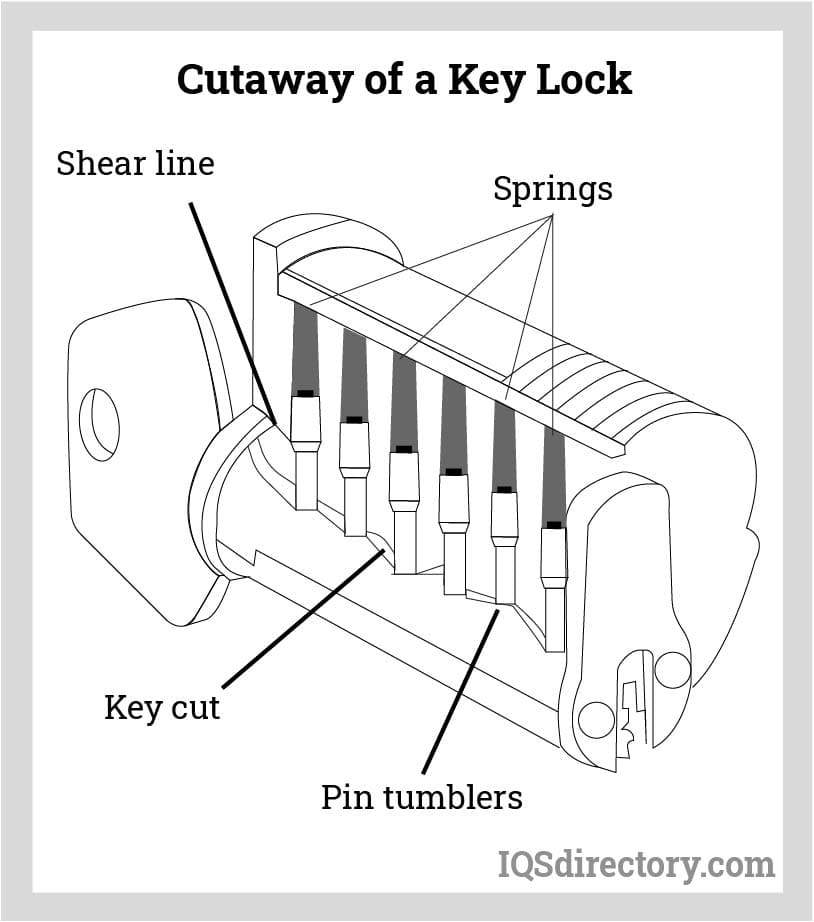 Standard tumbler key locks have pins that line up with the levels of the key, if the correct key is inserted pins are allow rotation of the lock.
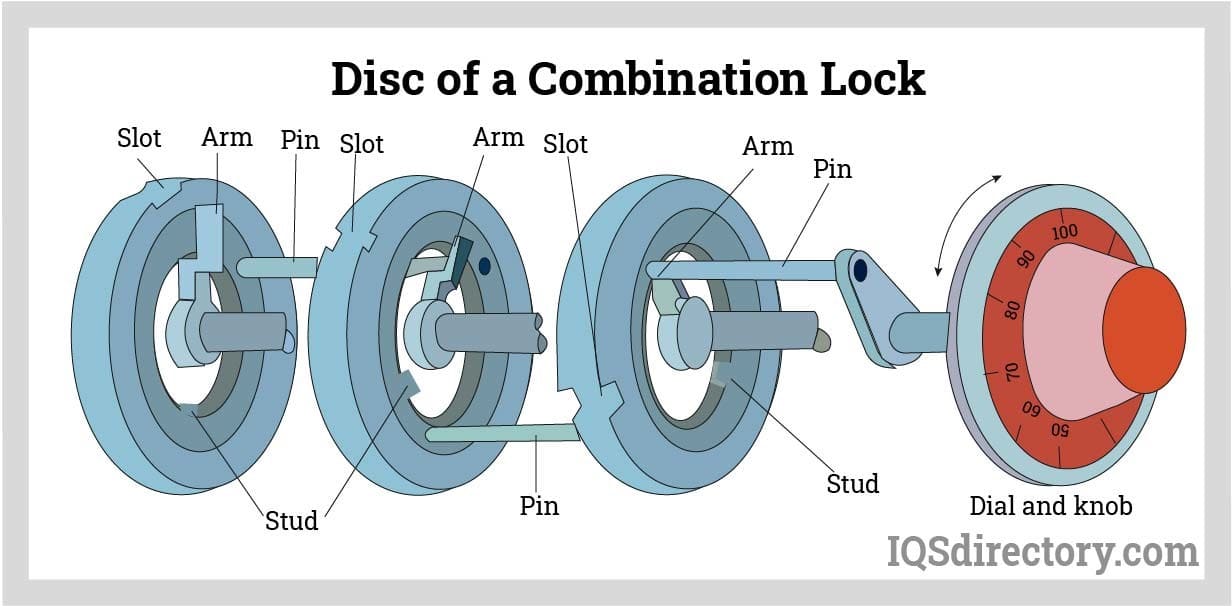 Combination locks opens by aligning a succession of discs in the proper order.
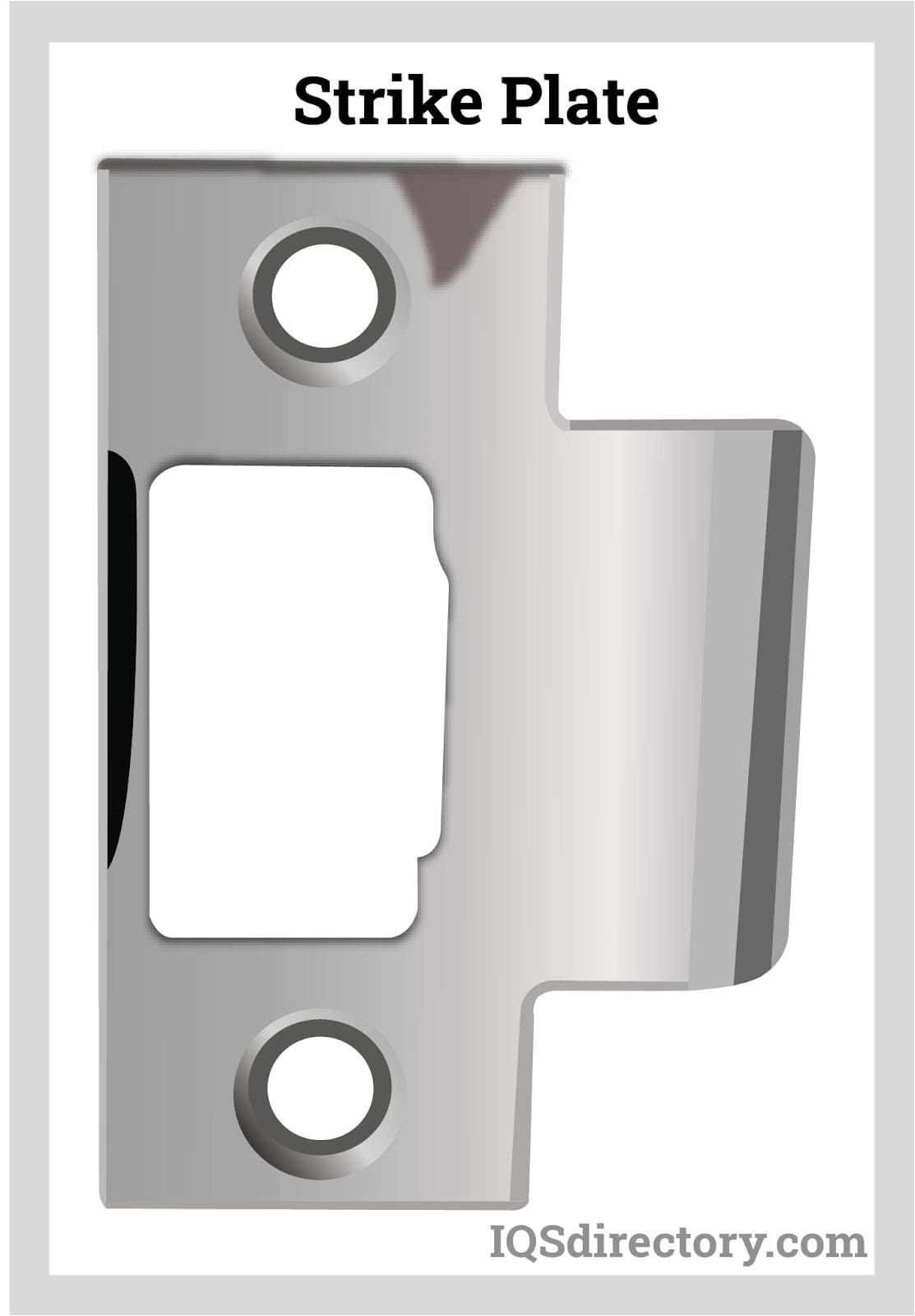 The strike plate, where the plunger or bolt is inserted into the door frame.
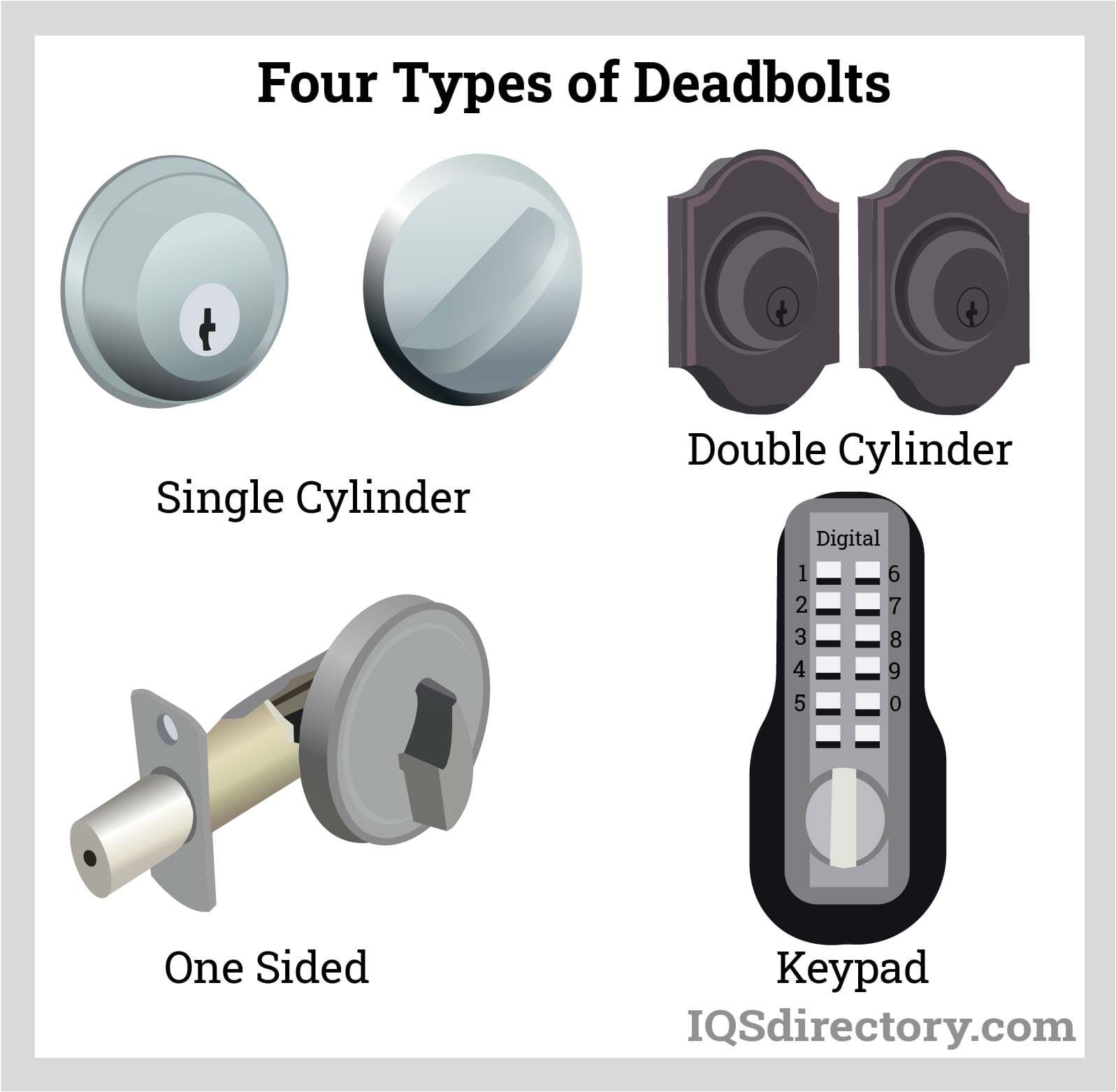 The four many types of deadbots single cylinder, double cylinder, one sided, and keypad are more durable than other locks.
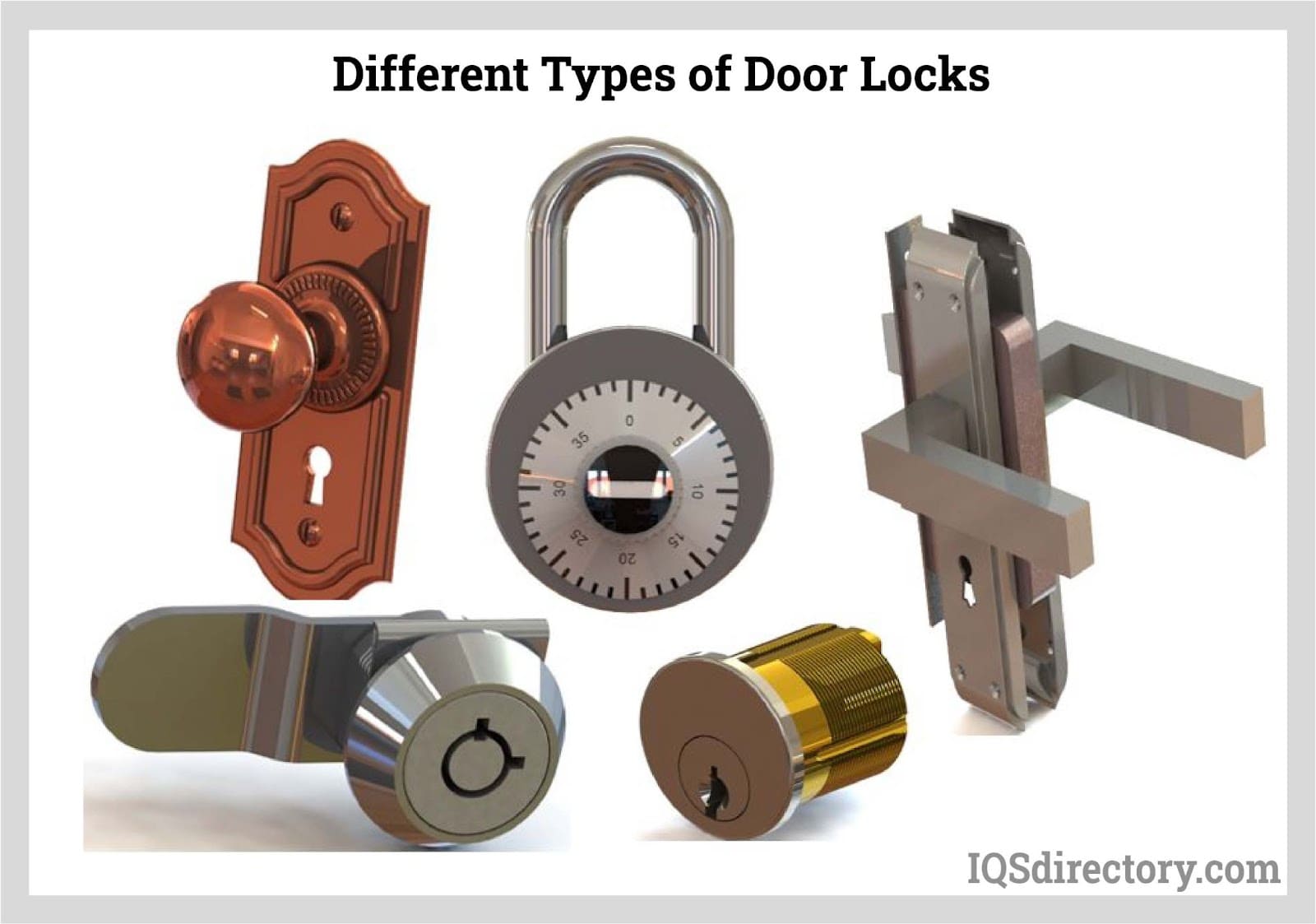 Door locks includes mechanisms or devices designed to prevent entry or access.
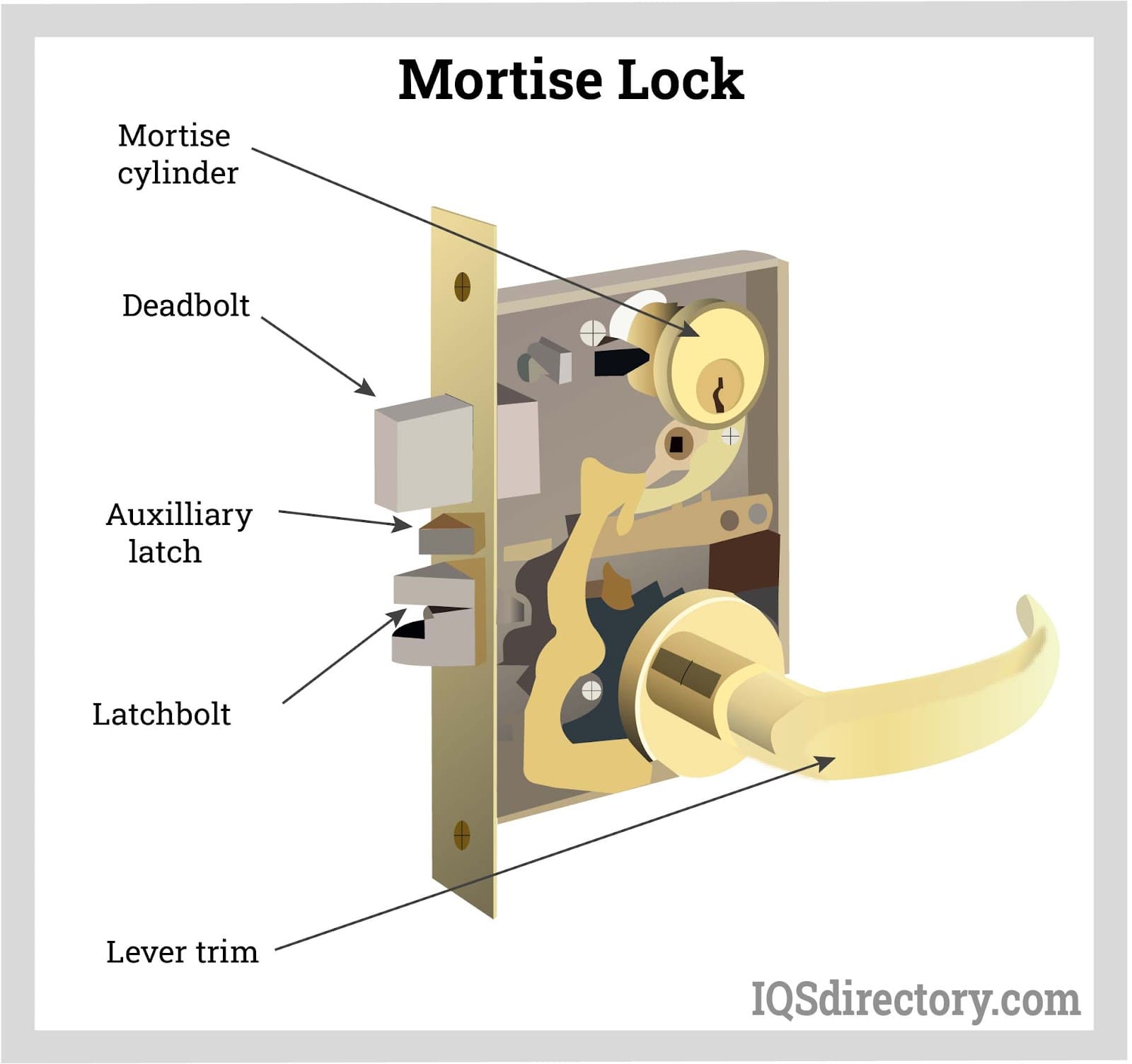 Mortise locks requires cutting a hole through the door thus making them reliable and to withstand constant usage.
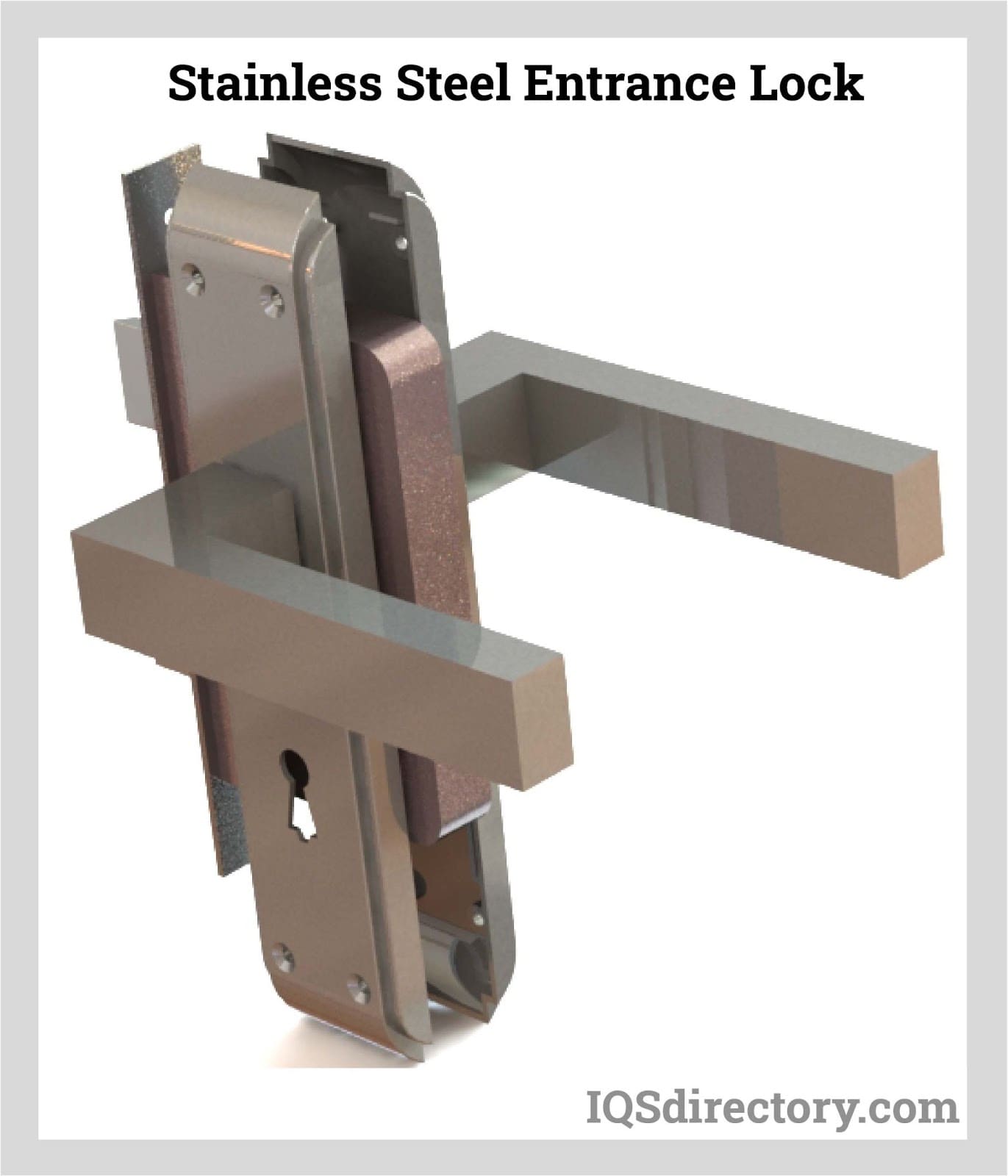 Steel or stainless steel locks are use due to their strength, durability, reliability, and ability to withstand constant use.
Types of Locks
There are three main types of locks: mechanical, electronic and biometric.
- Mechanical Locks
- Made of metal and are either opened with a key or the correct combination, which is made when the spinning locks are aligned perfectly. Mechanical locks include padlocks, mortise locks and cylinder locks, all three of which are most commonly seen in residential and commercial buildings on doors and door frames, as well as bathroom doors, bedroom doors and office doors.
- Mortise Lock
- Harder than others to pick or break. However, they are more costly and difficult to install. Typically, they’re employed to secure doors to the outside.
- Cylinder Lock
- Easily changed and affordable, but provide minimal security.
- Combination Lock
- The first keyless locks invented and consist of disk tumblers that must be aligned properly for the spindle to slide out. The majority of these locks have a dial that turns both counterclockwise and clockwise to certain numbers in order to be opened. In other words, they require a combination to open. They can be attached to any door, vehicle or cabinet, and are often seen on padlocks, strong room doors and safes.
- Padlock
- U-shaped locks, often installed in conjunction with combination locks. They consist of a bar, a hinge and a chain. The bar is hinged on one side. To lock a padlock shut, you pass the other side of the bolt through the link of the chain.
- Tumbler Lock
- This lock has pieces of metal that prevent the bolt from moving by falling into place. The key is serrated to raise the metal pieces, or tumblers, to the appropriate place for the bolt to move and open.
- Warded Lock
- One of the oldest types of lock mechanisms is the warded lock. It has a notched key that slides the bolt backward and forward, and the notches must match up in order to open.
- Cable Lock
- Used to provide visible security to larger possessions that are stored outdoors, such as bikes and trailers.
- Electronic Locks
- Keyless, mid to high level security lock systems. They are common in hotels and workplaces with high turnover rates, high security measures or constantly changing authorized personnel. The access control program allows users to change the code whenever they need to, so it’s much harder to breach. The two main types of electronic keys are those with a magnetic mechanism and those with a keypad and access code.
- Magnetic Key Lock
- A fairly new key type that is most often used to open dorm room doors, hotel doors and secure workplace doors. To make it work, you simply need to insert the key, a plastic magnetized card, into a slot in a bolted door. When you insert the keycard, magnets repel spring-loaded pins, and the door unlocks momentarily. This works similarly to the serrated key of a tumbler lock.
- Keypad Lock
- In order to open them, the user must have an access code or password to type into a keypad.
- Biometric Lock
- The most advanced and expensive locks available today, and they also provide the highest amount of security. Government agencies and areas that require the highest safety from unauthorized entry employ these door locks, which require a fingerprint scan, voice recognition or a retinal scan in order to open. The method employed by this security lock type does not allow key or code theft, and ensures that only the correct personnel may enter an area.
- OEM Locks
- Include locks such as: cam lock, vending machine lock, padlock, cabinet lock, electronic lock, parking meter lock and more. The only criteria are that the lock is used for original equipment manufacturing applications.
- Door Lock
- The most common type of lock. Most often, they’re mechanical, but they can use locking mechanisms as well. Their goal is to prevent unauthorized entry to any kind of building, room or structure.
- Vending Machine Lock
- Specialized locks, designed to stop people from reaching inside the vending machines and getting items for which they haven’t paid. They also prevent anyone beside vending machine technicians from getting access to the money collectors.
Lock Applications
Locks provide important access control to a wide range of areas and objects, such as: residential and commercial buildings, vehicles, furniture cabinets, gates, storage facilities, factories, windows, drawers, jewelry boxes and luggage.
Lock customers seek out these systems as the means to end such things as: theft prevention, vandalism prevention, staff or public safety and protection against unauthorized entrance.
Lock Installation
How you will install a locking system depends entirely on the type of lock system you have and the surface upon which you plan to install it. To learn how the installation of yours works, ask for instructions from your supplier.
Standards & Specifications for Locks
The two most widely accepted and trusted standards organizations for assessing lock quality are the Underwriters Laboratories (UL) and the American National Standards Institute (ANSI). UL is an independent product safety certification organization that helps manufacturers, suppliers and operators create, sell and use products that are safe, secure and highly performative. They do so using services including: advisory services, inspection, education and training, marketing claim verification, auditing and analytics and certification solutions. ANSI/BHMA (Builders Hardware Manufacturers Association) is a private, non-profit organization that produces an accredited grading system with which you can classify different hardware products by grade. These grades identify progressive levels of performance benchmarks, quality and durability.
Choose the Right Lock Manufacturer
The lock industry is incredibly diverse and vibrant. Locks are used in virtually every industry in the world. So, it can be easy to get overwhelmed with your choices. To help you make the right one, you need the assistance of a trustworthy lock company. How do you find this trustworthy locking system professional? We recommend you begin by scrolling up to the top portion of this page and checking out the list we’ve provided. All of those with whom we work offer high quality work. Narrow them down by visiting their respective websites and studying their products and services. Select three or four in whom you are most interested, and then reach out to each of them with your questions, concerns and specifications. Leave no stone unturned. After talking to each of them, compare and contrast their products, services, prices, lead times, and, most importantly, their attitude when speaking with you. Customer service, no matter your application, is key. Choose the lock manufacturer you believe will be most committed to delivering you a high-quality product at a fair price.
Accessories for Locks
Locking accessories in which you may be interested include: chain door guards, plated knobs, security bars, latch strikes, FOBs, internet control accessories, Wi-Fi adaptors, latch shields and more. For more information, discuss your needs with your lock or door lock manufacturer.
Lock Terms
- Automatic Deadlocking
- Allows a gate or door to deadlock as it closes.
- Deadbolt
- The part of a lock that moves from a locked position to an unlocked position when the key is used.
- Detainer
- An alternative to a lever which allows more key variations.
- Differs
- The possible amount of key combinations with a certain lock.
- Dual Control
- A type of lock that offers both electronic and mechanical unlocking options.
- Escutcheon
- The plate surrounding a keyhole
- Lever
- The part within a lock that moves out of the way if the correct key is inserted. Conversely, it blocks the wrong key from opening the lock.
- Snib
- The knob used to hold a deadbolt in locked or unlocked positions.
- Throw
- The distance the bolt moves from locked to unlocked positions.
- Tumbler
- The part within a lock that, when moved with a key, releases the bolt and unlocks the lock.
- Ward
- Represents the ridge part of the lock that does not allow a key to turn if it is not the correct one; also refers to the part of the key that is cut to fit into the ridge.