Hydraulic Pumps
Hydraulic pumps (sometimes erroneously referred to as "hydrolic" pumps) are devices within hydraulic systems that transport hydraulic liquids from one point to another to initiate the creation of hydraulic power. They are an important component overall in the field of hydraulics, a specialized form of power transmission that harnesses the energy transmitted by moving liquids under pressure and converts it into mechanical energy. Other types of pumps that are used to transmit hydraulic fluids may also be called hydraulic pumps. Because of the wide variety of contexts in which hydraulic systems are employed, hydraulic pumps are very important in various industrial, commercial and consumer utilities.
The term power transmission refers to the overall process of technologically converting energy into a useful form for practical applications. Three main branches compose the field of power transmission: electrical power, mechanical power, and fluid power. Fluid power encompasses the use of moving gases and well as moving liquids for power transmission. Hydraulics, then, can be considered as a sub-branch of fluid power which focuses on liquid usage as opposed to gas usage. The other field of fluid power is known as pneumatics and revolves around storing and releasing energy with compressed gas.
Quick links to Hydraulic Pumps Information
Advantages of Hydraulic Systems and Pumps
The use of hydraulic systems in general offer several advantages within the overall field of power transmission. Some of those advantages include:
- Efficiency Advantage
- As described above, the incompressible nature of fluid within hydraulic systems enables an operator to create and apply mechanical power in a very efficient manner. Practically all of the force generated within a hydraulic system is applied to its intended target.
- Hydraulic System Customizability
- Because of the relationship between force, area, and pressure (F = P x A), it is relatively easy to modify the force of a hydraulic system simply by modifying the size of its components.
- Simplicity Advantages
- Hydraulic systems can transmit power on par with many electrical and mechanical systems while being generally simpler at the same time. For example, it is easy to directly create linear motion with a hydraulic system. On the contrary, electrical and mechanical power systems generally require an intermediate mechanical step to produce linear motion from rotational motion.
- System Compactness
- Hydraulic power systems are generally smaller than their electrical and mechanical counterparts while generating similar amounts of power, thus providing the advantage of conserving physical space.
- Physical Versatility
- The basic design of hydraulic systems (a reservoir/pump connected to actuators by some sort of piping system) allows them to be used in a wide variety of physical settings. Hydraulic systems can also be used in environments that are impractical for electrical systems (e.g. underwater).
- System Safety
- Using hydraulic systems in place of electrical power transmission increases relative safety by eliminating electrical safety hazards (e.g. explosions, electric shock).
- Power Generation
- A major, specific advantage of hydraulic pumps is the amount of power they are able to generate. In some cases, a hydraulic pump can produce ten times the amount of power produced by an electrical counterpart. Some types of hydraulic pumps (e.g. piston pumps) are more expensive than the average hydraulic component. These types of disadvantages, however, may be offset by the pump’s power and efficiency. For example, piston pumps are prized for their durability and ability to transmit very viscous fluids, despite their relatively high cost.
How Hydraulic Power Works
The essence of hydraulics lies in a fundamental physical reality: liquids are incompressible. Because of this, liquids resemble solids more than compressible gases. The incompressible nature of liquid enables it to transmit force very efficiently in terms of force and speed. This fact is summarized by a version of "Pascal’s Law" or "Pascal’s Principle", which states that virtually all of the pressure applied to any part of a (confined) fluid will be transmitted to every other part of the fluid. Using alternative terms, this scientific principle states that pressure exerted on a (confined) fluid transmits equally in every direction.
Furthermore, force transmitted within a fluid has the potential to multiply during its transmission. From a slightly more abstract point of view, the incompressible nature of liquids means that pressurized liquids must maintain a constant pressure even as they move. Pressure, from a mathematical point of view, is force acting per a specific area unit (P = F/A). A rearranged version of this equation makes it clear that force equals the product of pressure times area (F = P x A). Thus, by modifying the size or area of certain components within a hydraulic system, the force acting within a hydraulic system can also be modified accordingly (to either greater or lesser). The need for pressure to stay constant is responsible for making force and area reflect each other (in terms of either growing or shrinking). This force-area relationship can be illustrated by a hydraulic system containing a piston that is five times bigger than a second piston. if a certain force (e.g. 50 pounds) is applied to the smaller piston, that force will be multiplied by five (e.g. to 250 pounds) as it is transmitted to the larger piston within the hydraulic system.
The chemical nature of liquids as well as the physical relationship between force, area, and pressure form the foundation of hydraulics. Overall, hydraulic applications enable human operators to create and apply massive mechanical forces without exerting much physical effort at all. Water and oil are both used for power transmission within hydraulic systems. The use of oil, however, is far more common, due in part to its very incompressible nature.
How Hydraulic Pumps Work
It has previously been noted that "Pascal’s Law" applies to confined liquids. Thus, for liquids to act in a hydraulic fashion, it must function with some type of enclosed system. An enclosed mechanical system that uses liquid hydraulically is known as a hydraulic power pack or a hydraulic power unit. Though specific operating systems are variable, all hydraulic power packs (or units) have the same basic components. These components generally include a reservoir, a pump, a piping/tubing system, valves, and actuators (including both cylinders and motors). Similarly, despite the versatility and adaptability of these mechanisms, these components all work together within similar operating processes, which lie behind all hydraulic power packs.
- The reservoir’s main role is to house hydraulic fluid not being processed.
- The pump is responsible for initiating and transmitting a flow of liquid within the hydraulic system.
- Hoses or tubes are needed to transport the viscous liquids transmitted from the pump. This piping apparatus then transports the solution to the hydraulic cylinder.
- Actuators are hydraulic components which perform the main conversion of hydraulic energy into mechanical energy. Actuators are mainly represented by hydraulic cylinders and hydraulic motors. The main difference between hydraulic cylinders and hydraulic motors lies in the fact that hydraulic cylinders primarily produce linear mechanical motion while hydraulic motors primarily produce rotary mechanical motion.
- Hydraulic systems possess various valves to regulate the flow of liquid within a hydraulic system. Directional control valves are used to modify the size and direction of hydraulic fluid flow, while pressure relief valves preempt excessive pressure by limiting the output of the actuators and redirecting fluid back to the reservoir if necessary.
Categories of Hydraulic Pumps
While the way hydraulic pumps work is generally the same, these mechanisms are able to be divided into basic categories.
Two main categories of hydraulic pumps to be considered are piston pumps and gear pumps. Within the piston grouping are axial and radial piston pumps. Axial pumps provide linear motion, while radial pumps can operate in a rotary manner. The gear pump category is also divided into two groupings, internal gear pumps and external gear pumps.
No matter piston or gear, each type of hydraulic pump can be either a single-action or double-action pump. Single-action pumps can push, pull or lift in only one direction, while double-action pumps are multidirectional.
Hydraulic Pump Images, Diagrams and Visual Concepts
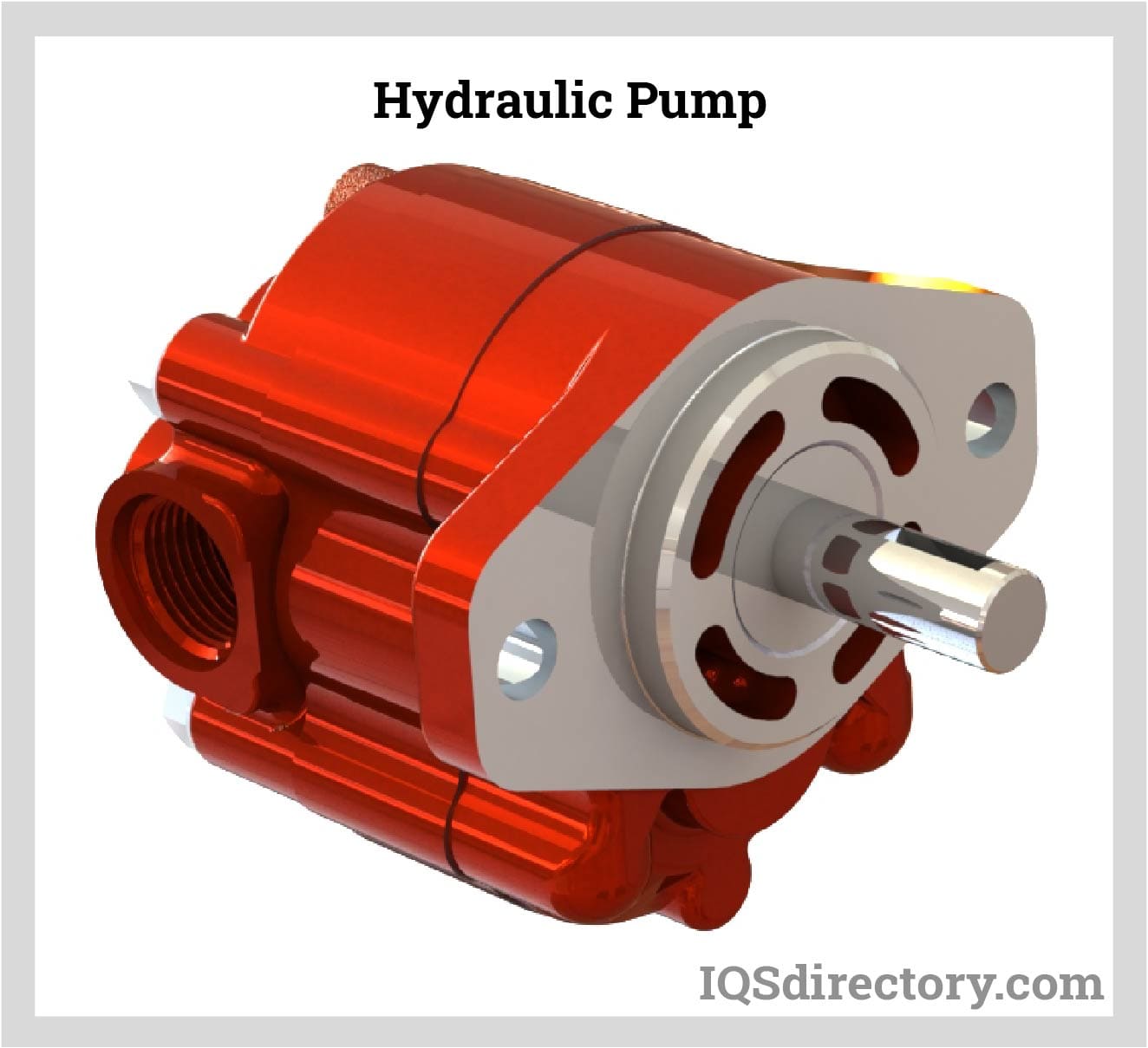 Hydraulic pumps changes hydraulic energy to mechanical energy which allows for the transport of hydraulic fluid from point to point.
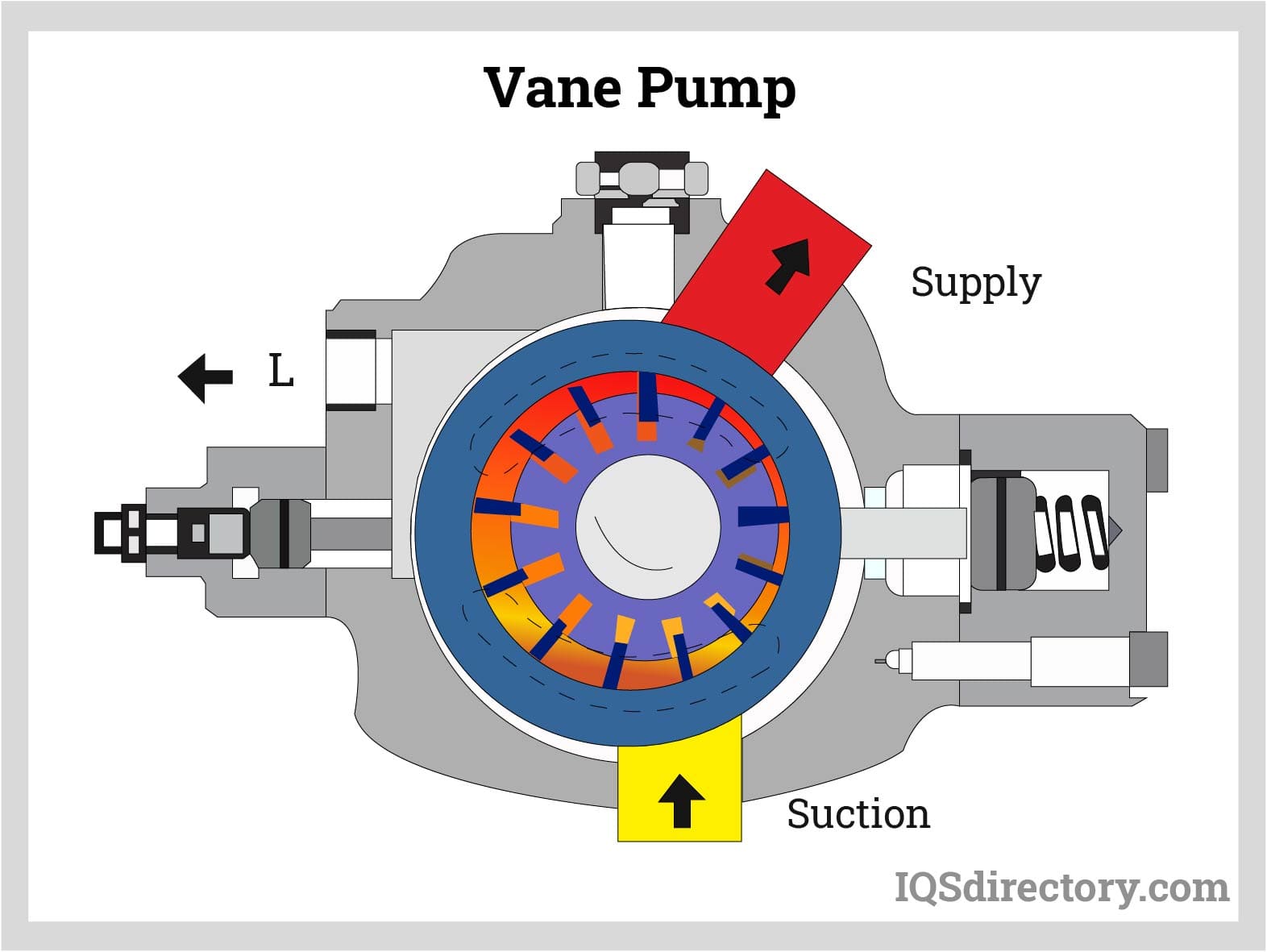 Vane pumps, are positive displacement pumps that maintain a constant flow rate under different pressures.
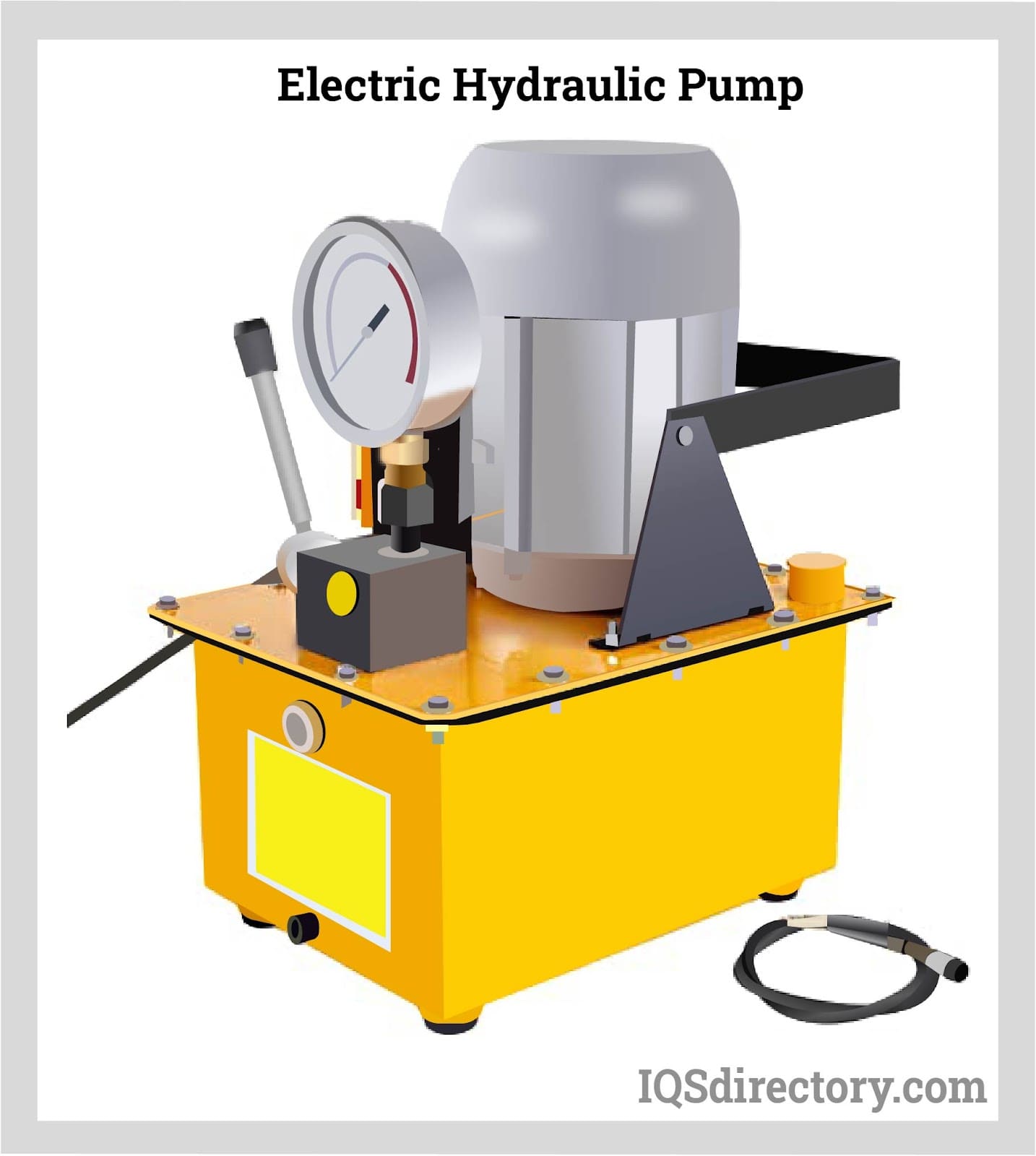 Electric hydraulic pumps, hydraulic liquid transmission machines that use electricity.
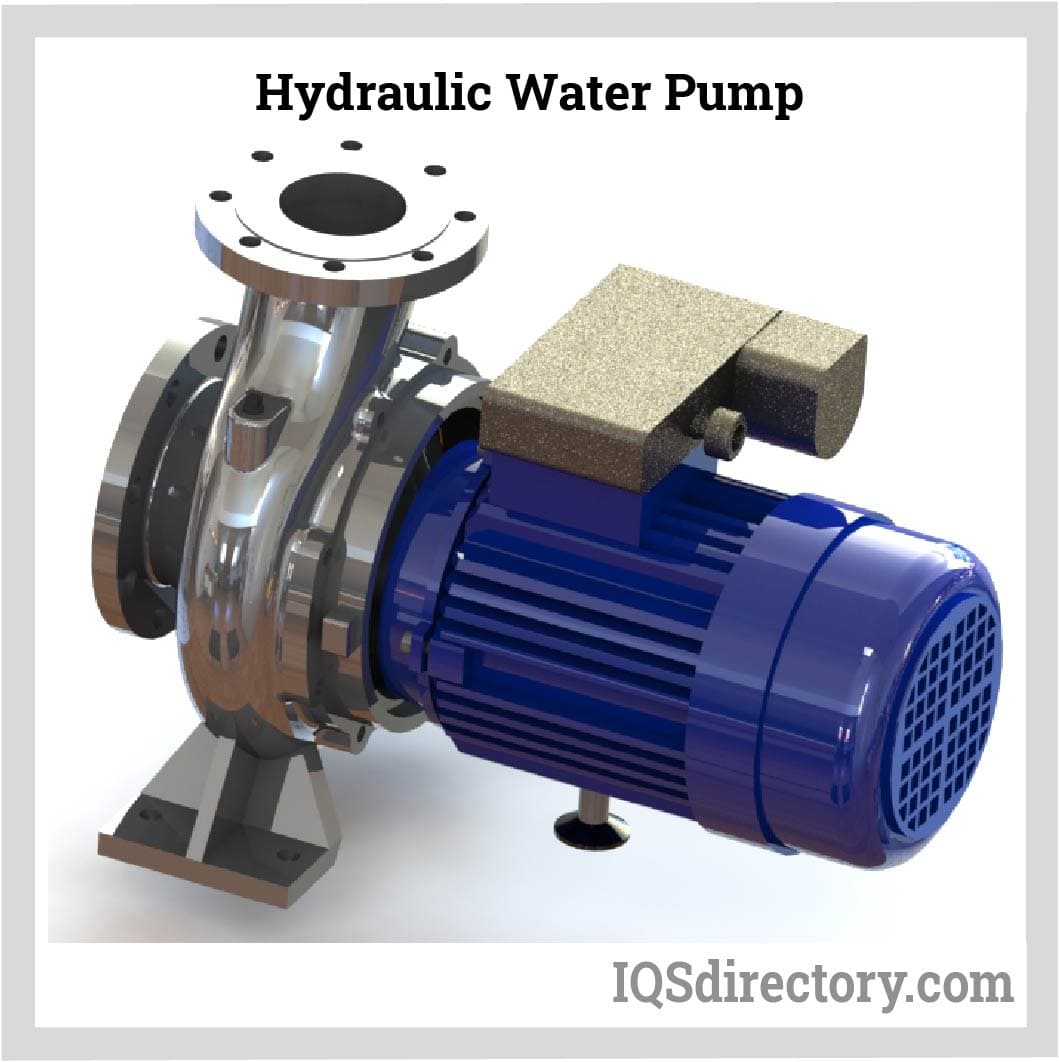 Hydraulic water pumps are machines which moves water from one location to another.
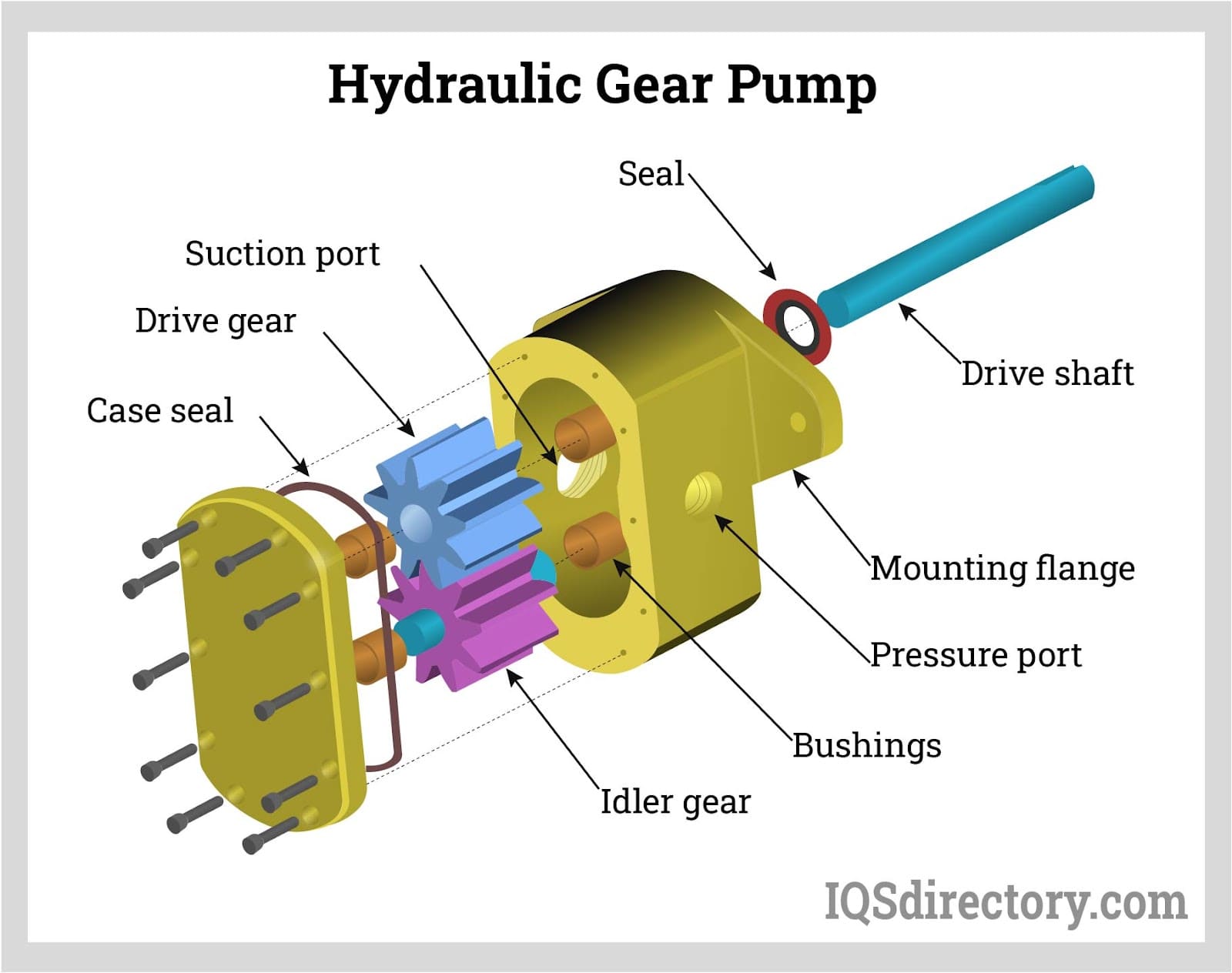 Hydraulic gear pump have internal and external gears pumps types with gears on the interior or exterior.
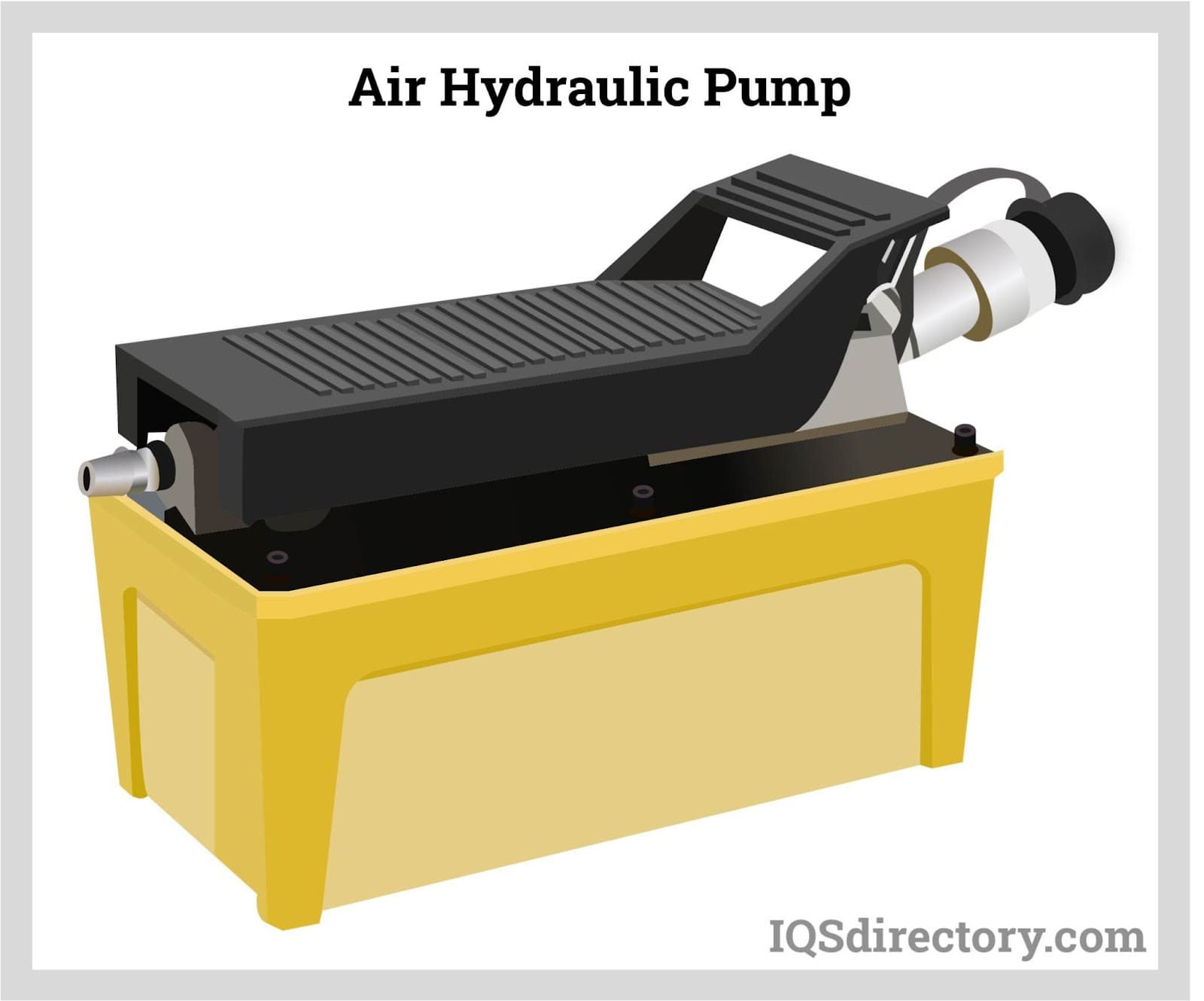 Air hydraulic pumps uses compressed air to stimulate a pump mechanism and generates energy from pressurized liquids.
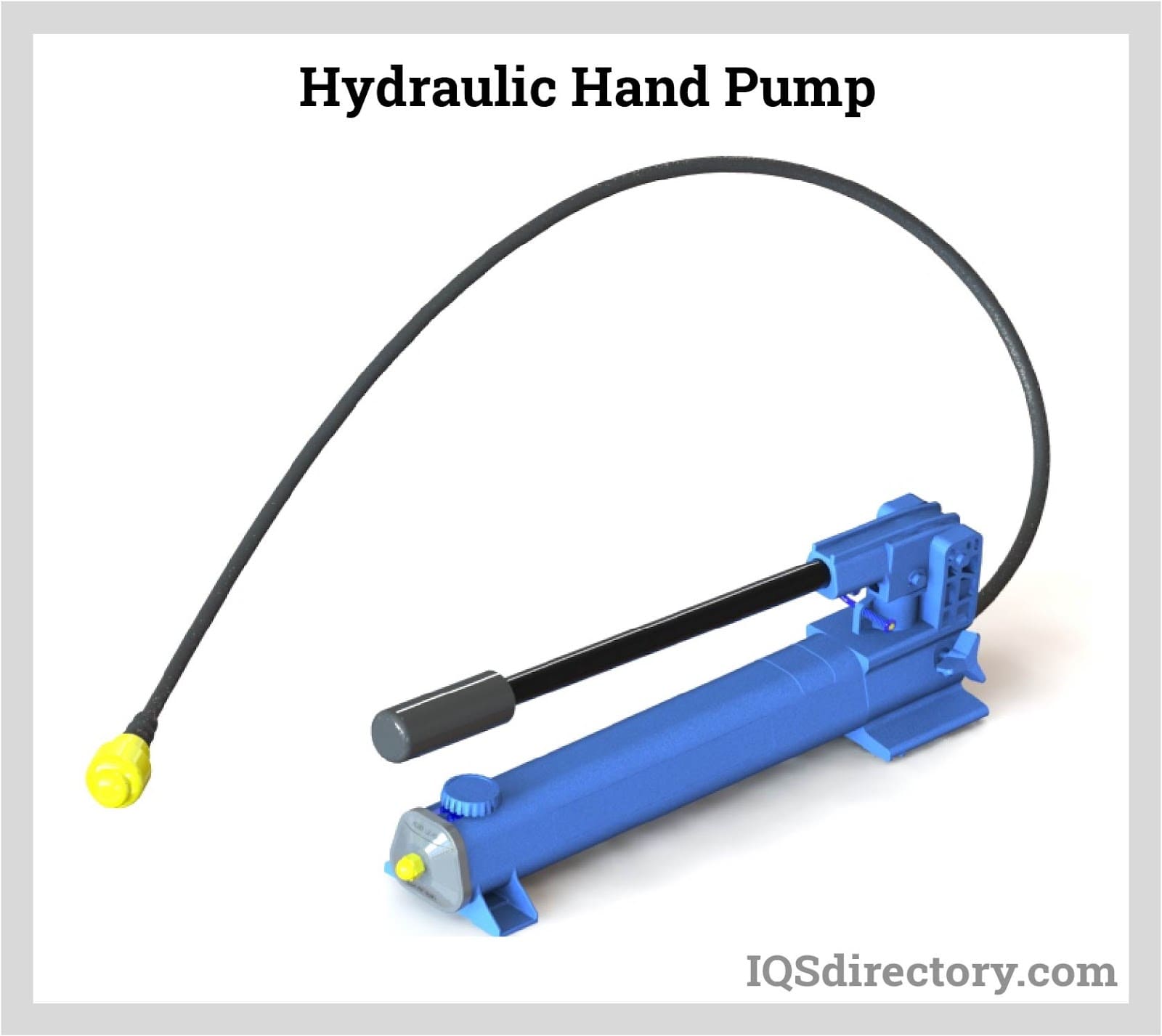 Hydraulic hand pumps, are fluid transmission machines that utilizes the mechanical force generated manually.
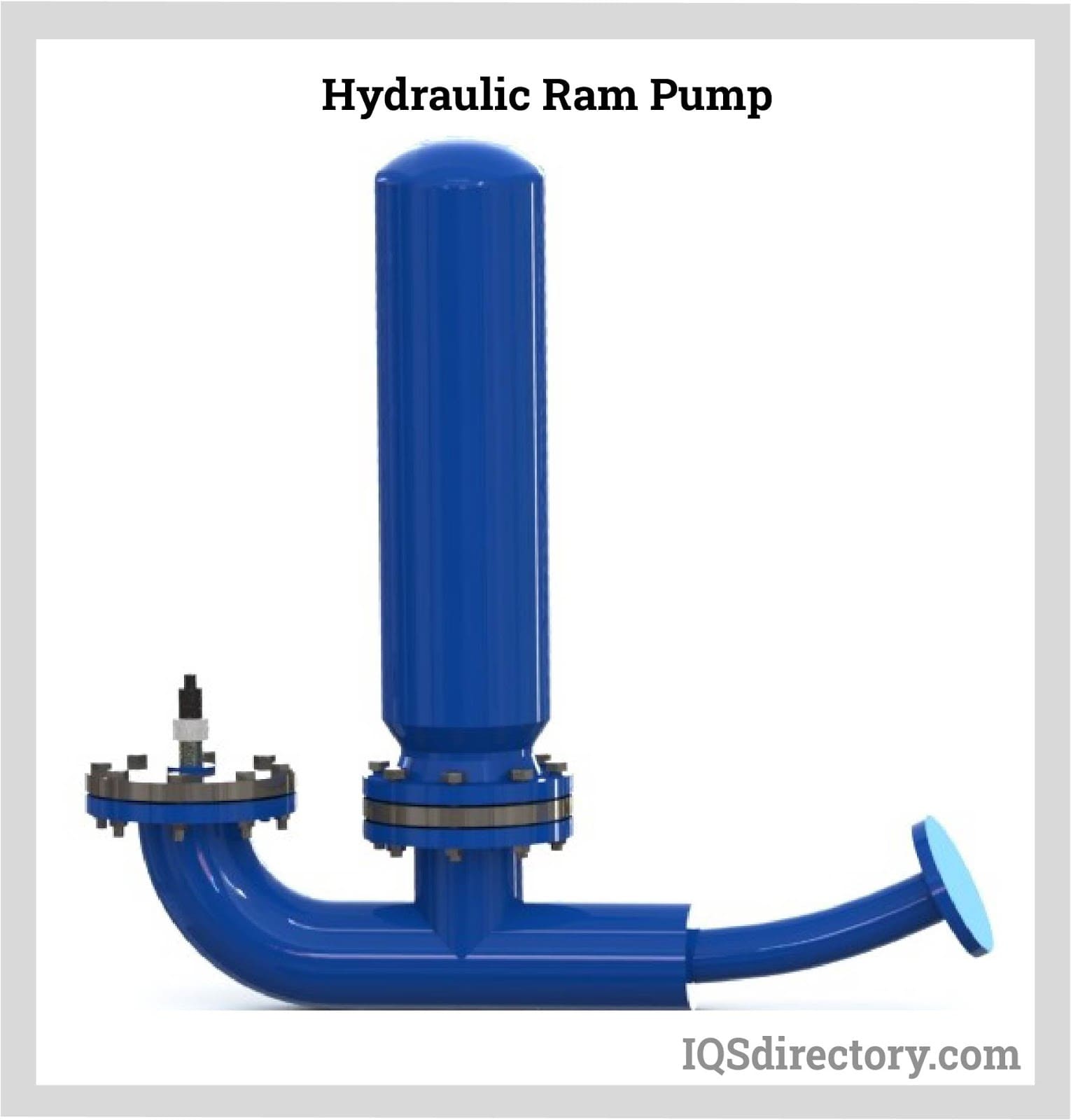 Hydraulic ram pumps are cyclic machines that uses hydropower to transport water.
Types of Hydraulic Pumps
- Vane Pumps
- A type of "positive displacement" pump that use the rotational movement of rectangular "vanes" mounted to a rotor within a cavity.
- Electric Hydraulic Pumps
- The transfer of energy from hydraulic to mechanical is the end goal, with the pump mechanism serving as a generator. In other cases, however, the energy is expelled by means of high pressure streams that help to push, pull and lift heavy loads.
- Hydraulic Gear Pumps
- Hydraulic piston pumps and hydraulic clutch pumps, which operate in slightly different ways, are all utilized in heavy machinery for their versatility of motion and directionality.
- Hydraulic Ram Pumps
- And hydraulic water pumps are widely used to transfer water. The design of these pumps dictates that, although a small amount of external energy is needed to initiate the action, the weight of the water and its movement can create enough pressure to operate the pump continuously thereafter. Hydraulic ram pumps require virtually no maintenance, as they have only two moving parts. Water from an elevated water source enters one of two chambers through a relatively long, thick pipe, developing inertia as it moves down to the second chamber, which starts the pump.
- Hydraulic Hand Pump
- The initial energy within a hydraulic system is produced in many ways. The simplest form is the hydraulic hand pump which requires a person to manually pressurize the hydraulic fluid. Hydraulic hand pumps are manually operated to pressurize a hydraulic system. Hydraulic hand pumps are often used to calibrate instruments.
- Portable 12V Hydraulic Pump
- Operate off of batteries and are useful in emergency situations, as are air hydraulic pumps, which need only an air compressor to run.
- 12V Hydraulic Pumps
- Hydraulic power units that run off of 12 volts of direct current provided by a battery or motor.
- Air Hydraulic Pumps
- Energy-saving pumps that are operated by a compressed air source and require no energy to maintain system pressure. In both the single and two-stage air hydraulic pumps, air pressure is simply converted to hydraulic pressure, and they stall when enough pressure is developed.
- Axial Piston Pumps
- Have pistons that make the strokes in the same direction along the centerline of the cylinder block.
- Centrifugal Pumps
- Non-positive displacement pumps that are used in hydraulics requiring a large volume of flow. Centrifugal pumps operate at fairly low pressures and are either diffuser or volute types.
- Fixed-Displacement Pumps
- Pumps whose output can only be altered by changing the drive speed.
- High Pressure Pumps
- Pumps that operate at extremely high pressures. High pressure pumps operate in the range of 3,000 to 70,000 psi.
- Hydraulic Pumps
- Convert hydraulic energy to mechanical power. Hydraulic pumps are specially designed mechanisms used in industrial, commercial and residential settings to create useful energy from the pressurization of various viscous fluids. Hydraulic pumps are extremely simple yet effective mechanisms for moving liquids. "Hydralic" is actually a misspelling of "hydraulic;" hydraulic pumps rely on the power provided by hydraulic cylinders to power various machines and mechanisms.
- Hydraulic Water Pumps
- Use hydraulic power to move water from one place to another.
- Hydrolic Pumps
- Mechanisms that are used to transmit pressurized fluid. "Hydrolic" is actually a misspelling of "hydraulic."
- Nonpositive-Displacement Pumps
- Discharge liquid in a constant flow.
- Positive Displacement Pumps
- Discharge liquid volumes at separate periods.
- Radial Piston Pumps
- Use pistons that are arranged in a design similar to wheel spokes and are situated in a small cylindrical block.
- Reciprocating Pumps
- Depend on reciprocating motion in order to transmit fluid from the inlet side to the outlet side.
- Rotary Pumps
- A type of positive-displacement pump that use rotational motion to transfer liquids from the pump inlet to the outlet.
- Two-stage Electric Hydraulic Pumps
- Pumps in which the clamps and cylinders are quickly extended by high flow at low pressure in the first stage of operation. In the second stage, piston pumps build pressure to a preset level and then maintain that level.
- Two-stage Pumps
- Composed of two separate pump assemblies that are contained in a single housing.
- Variable-Displacement Pumps
- Have cylinder sizes that are changeable.
Applications of Hydraulic Pumps
The construction, automotive manufacturing, excavation, agriculture, defense contracting and manufacturing industries are just a few examples of operations that utilize the power of hydraulics in normal, daily processes. Since the use of hydraulics is so widespread, hydraulic pumps are naturally used in a broad array of industries and machines. In all of the contexts which use hydraulic machinery, pumps perform the same basic role of transmitting hydraulic fluid from one place to another to create hydraulic pressure and energy (in conjunction with the actuators).
Various products that use hydraulics include elevators, automotive lifts, automotive brakes, airplane flaps, cranes, shock absorbers, motorboat steering systems, garage jacks, log splitters, etc. Construction sites represent the most common application of hydraulics in large hydraulic machines and various forms of "off-highway" equipment such as diggers, dumpers, excavators, etc. In other environments such as factories and offshore work areas, hydraulic systems are used to power heavy machinery, move heavy equipment, cut and bend material, etc.
Things to Consider When Purchasing a Hydraulic Pump
While hydraulic power transmission is extremely useful in a wide variety of professional applications, it is generally unwise to depend exclusively on one form of power transmission. On the contrary, combining different forms of power transmission (hydraulic, pneumatic, electrical and mechanical) is the most efficient strategy. Thus, hydraulic systems should be carefully integrated into an overall strategy of power transmission for your specific commercial application. You should invest in finding honest and skilled hydraulic manufacturers / suppliers who can assist you in developing and implementing an overall hydraulic strategy.
When selecting a hydraulic pump, its intended use should be considered when selecting a particular type. This is important since some pumps may carry out only one task, while others allow more flexibility.
- Material Considerations
- The material composition of the pump should also be considered in an application-specific context. The pistons, gears and cylinders are often made of durable materials such as aluminum, steel or stainless steel which can endure the constant wear of repetitive pumping. The materials must hold up not only to the process itself, but to the hydraulic fluids as well. Oils, esters, butanol, polyalkylene glycols and corrosion inhibitors are often included in composite fluids (though simply water is also used in some instances). These fluids vary in terms of viscosity, operating temperature and flash point.
- Pump Capabilities
- Along with material considerations, manufacturers should compare operating specifications of hydraulic pumps to ensure that intended use does not exceed pump capabilities. Continuous operating pressure, maximum operating pressure, operating speed, horsepower, power source, maximum fluid flow and pump weight are just a few of the many variables in hydraulic pump functionality. Standard measurements such as diameter, length and rod extension should also be compared. As hydraulic pumps are used in motors, cranes, lifts and other heavy machinery, it is integral that they meet operating standards.
- Inefficiencies of Hydraulic Drive Systems
- It is important to remember that the overall power produced by any hydraulic drive system is affected by various inefficiencies that must be taken into account to get the maximum use out of the system. For example, the presence of air bubbles within a hydraulic drive is notorious for diverting the energy flow within the system (since energy gets wasted en route to the actuators on compressing the bubbles). Using a hydraulic drive system must involve identifying these types of inefficiencies and selecting the best components to mitigate their effects. A hydraulic pump can be considered as the "generator" side of a hydraulic system which begins the hydraulic process (as opposed to the "actuator" side which completes the hydraulic process). Despite their differences, all hydraulic pumps are somehow responsible for displacing fluid volume and bringing it from the reservoir to the actuator(s) via the tubing system. Pumps are generally enabled to do this by some type of internal combustion system.
Proper Care for Hydraulic Pumps
Even though hydraulic systems are simpler when compared to electrical or mechanical systems, they are still sophisticated systems that should only be handled with care. A fundamental safety precaution when interacting with hydraulic systems is to avoid physical contact if possible. Active fluid pressure within a hydraulic system can pose a hazard even if a hydraulic machine is not actively operating.
Insufficient pumps can lead to mechanical failure in the workplace, which can have serious and costly repercussions. Although pump failure has been unpredictable in the past, new diagnostic technologies continue to improve on detection methods that previously relied upon vibration signals alone. Measuring discharge pressures allows manufacturers to more accurately predict pump wear. Discharge sensors can be easily integrated into existing systems, adding to the safety and versatility of the hydraulic pump.
Hydraulic Pumps Terms
- Accumulator
- A container that stores fluid under pressure and is utilized as a source of energy or to absorb hydraulic shock. Accumulator types include piston, bladder and diaphragm.
- Cavitation
- A circumstance that occurs in pumps when existing space is not filled by available fluid. Cavitation will deteriorate the hydraulic oil and cause erosion of the inlet metal.
- Closed-Center System
- A system in which the pump continually operates against a load, even in the neutral condition.
- Cylinder
- A hydraulic actuator constructed of a plunger or piston inside a cylindrical housing. The piston or plunger operates because of pressurized liquid.
- Displacement
- The amount of liquid transferred from the inlet of the pump to the outlet in a single revolution. Displacement can be fixed or variable.
- Flow Rate
- The amount of liquid volume that passes a given point in a given time. Flow rate is commonly measured in gallons per minute (gpm).
- Head
- Vertical distance measured between two stages in a liquid.
- Hydraulic Actuator
- The piece of machinery that receives pressure from the energized fluid and then converts it to motion and mechanical force.
- Hydraulic Filter
- A device that filters out impurities in the liquid used to create mechanical energy.
- Hydraulic Hoses
- A relatively thick hose that transfers liquids to and from hydraulic pumps.
- Hydraulic Power Unit
- Any device used to convert potential energy into kinetic energy within a hydraulic system. Motors and manual energy are both sources of power in hydraulic power units.
- Hydraulic Tester
- A device used to troubleshoot and check hydraulic powered system components.
- Hydraulic Valve
- A device used to regulate water distribution in hydraulic applications.
- Hydraulics
- The science dealing with the transmission of force through the medium of a contained fluid.
- Oil
- A slippery and viscous liquid that is not miscible with water. Oil is often used in conjunction with hydraulic systems because it cannot be compressed.
- Open-Center System
- A system in which the yield of the pump has a free-flow passageway back to the reservoir, while in the neutral condition.
- Piston
- A device used for converting hydraulic power to mechanical energy. In hydraulic pumps, the piston is responsible for pushing down and pulling up the ram.
- Pump
- A mechanical device that transports liquids and gases by suction or pressure.
- Ram
- A hydraulic mechanism that uses the kinetic energy of a flowing liquid to force a small amount of the liquid to a reservoir contained at a higher level.
- Resistance
- In hydraulics, the condition engendered by an obstruction or restriction in the flow path.
- Seal
- A fastener designed to provide a perfect and tight closure. Seals prevent environmental materials from contaminating hydraulic assemblies.
- Valve
- A device used to regulate the amount of hydraulic or air flow. In the closed position, there is zero flow, but when the valve is fully open, flow is unrestricted.
- Velocity Pressure
- Pressure in a hydraulic system caused by kinetic energy.