Graphite Machining
Graphite remains one of the most useful industrial carbon materials in modern manufacturing, appearing in everything from pencils to EDM (Electrical Discharge Machining) electrodes, furnace components, crucibles, molds, bearings, and thermal management parts. Manufacturers value graphite for high heat tolerance, electrical conductivity, dimensional stability, low friction, and dependable machinability across aerospace, foundry, semiconductor, metallurgy, and precision tooling environments. Before graphite can perform in demanding service, however, it must be formed and machined into the right grade, density, geometry, and surface finish for the job.
Graphite machining is the CNC cutting, milling, turning, drilling, shaping, and finishing of graphite for industrial use, whether the end product is a custom graphite part, EDM electrode, carbon graphite bearing, fixture, crucible, plate, or heat-spreading component. Because graphite is abrasive, brittle, and prone to dust generation, machine shops typically rely on diamond or carbide tooling, dust-collection systems, careful feeds and speeds, and tightly controlled inspection methods to hold tolerance and protect equipment. The payoff is substantial: machined graphite resists corrosion, performs well at elevated temperatures, handles many aggressive process conditions, and provides natural lubricity in bushings, bearings, and wear parts. Need a fine-grain grade for detailed EDM cavities, a denser carbon graphite material for longer wear life, or a machined graphite plate that can handle furnace temperatures? Those are the kinds of application-driven questions buyers ask when comparing graphite machining services, because grade selection and machining method directly affect surface finish, electrode wear, dimensional accuracy, and total part cost.
Graphite Machining FAQs
What is graphite machining used for in industrial applications?
Graphite machining is used to cut, mill, turn, drill, and finish graphite into parts for EDM, CNC machining support, foundry operations, heat-treatment systems, semiconductor fixtures, and other industrial manufacturing processes. Common machined graphite products include electrodes, bearings, bushings, crucibles, molds, dies, furnace fixtures, and custom wear components because graphite offers a useful mix of machinability, conductivity, lubricity, and heat resistance.
Why are diamond or carbide tools required for machining graphite?
Graphite is highly abrasive, so it dulls conventional cutting tools quickly and can reduce dimensional accuracy if the tooling is not designed for the material. Diamond and carbide tools are preferred because they last longer, produce cleaner cuts, and help machining shops maintain repeatable tolerances, smoother finishes, and more efficient production when working with fine-grain, dense, or specialty graphite grades.
What are the main methods used to machine powdered graphite?
Powdered graphite is commonly formed through compression molding, isostatic molding, vibration molding, die molding, and extrusion. Each method uses heat, pressure, or both to convert graphite powder into durable shapes with different density, grain structure, and performance characteristics, giving manufacturers a way to match the material to EDM, sealing, bearing, furnace, thermal, and structural applications.
What makes isostatic graphite unique compared to other forms?
Isostatic graphite is made by compacting graphite powder uniformly from all directions, producing a dense, isotropic material with fine grain and very consistent properties. That balanced structure makes it a strong choice for high-precision graphite components, EDM electrodes, semiconductor fixtures, furnace hardware, and other applications where predictable machining behavior, tight tolerances, and stable part performance matter.
How is graphite used in EDM machining?
In electrical discharge machining, graphite is widely used as an electrode material because it combines strong electrical conductivity, good machinability, low electrode wear, and reliable performance during repeated spark erosion cycles. These traits support faster machining, intricate cavity production, and dependable results in moldmaking, tool-and-die work, and other precision metalworking applications.
What are the advantages of using graphite bearings and bushings?
Graphite bearings and bushings are self-lubricating, wear resistant, and well suited for demanding environments where oils or greases are difficult to use. They can reduce maintenance, support dry-running operation, perform in high-heat or contaminated conditions, and extend equipment life in pumps, conveyors, process equipment, and other motion systems.
How do natural and synthetic graphite differ in production and use?
Natural graphite is mined from ore deposits and may appear as flakes, plates, or lumps, while synthetic graphite is produced from petroleum-based feedstocks under controlled manufacturing conditions. Natural graphite is often selected for cost and availability, while synthetic graphite is often chosen for greater purity, consistency, electrical performance, and thermal conductivity in batteries, EDM, furnace systems, and engineered graphite components.
History of Graphite
The history of graphite reaches back centuries, with early commercial use tied to pencil production and simple hand-shaping methods that can be seen as the earliest form of graphite machining. A well-known deposit discovered in England in the sixteenth century supplied dense material that could be cut into sticks for writing and marking, helping establish graphite as a practical working material long before modern machine tools existed. As industrial demand expanded, natural graphite from additional regions and later synthetic graphite production opened the door to broader use in electrical applications, sealing products, furnace systems, and precision carbon components. Today, both natural and synthetic graphite feed a large industrial market that depends on dependable machinable carbon materials.
One of the early figures associated with graphite’s broader industrial promise was Joseph Dixon, founder of the Dixon-Ticonderoga pencil company. Dixon recognized graphite’s value as a lubricant for foundries, machinery, bearings, and sliding contact points, and he also saw demand for brake linings and friction-related products. His graphite crucibles became valuable in metal production because they tolerated high process temperatures, while his pencils brought graphite into everyday use. That blend of household familiarity and heavy-industry performance helped move graphite from a simple writing material into an engineered material used throughout manufacturing.
Early graphite processing depended on heat, pressure, shaping, and straightforward forming methods that resembled compression molding. Demand for crucibles and other heat-resistant graphite products remained strong because foundries and metalworking operations needed materials that could withstand severe temperatures without failing. As manufacturing expanded after the Civil War, so did the need for repeatable shapes, tighter dimensions, more uniform grain structures, and specialized graphite grades. That pressure drove improvements in molding, machining, and engineered carbon production, making the history of graphite machining closely tied to the rise of modern industry itself.
When graphite was available as solid chunks, as in early pencil production, it could be cut with relatively basic tools. Modern graphite machining is far more refined. Shops now work with fine-grain grades, isostatic graphite, carbon graphite blends, and advanced carbon materials that are produced through carefully controlled physical and chemical processing, then finished through turning, milling, grinding, and inspection. With the rise of CNC milling, CAD-driven programming, better spindle control, and repeatable shop processes, manufacturers can achieve tighter tolerances, cleaner surfaces, and more dependable graphite parts for EDM, thermal management, metallurgy, semiconductor work, and other precision applications.
How Graphite is Machined
To manufacture graphite shapes, blocks, rods, and plates, producers begin with the graphite grade, purity, and particle size best suited to the finished component. Depending on the application, additives such as aluminum, resins, or carbon fiber may be incorporated during molding or extrusion to adjust density, wear behavior, thermal performance, or conductivity. These engineered graphite materials are widely used for EDM electrode production because graphite machines cleanly, conducts electricity well, and remains stable under demanding conditions. Some shops also produce insulating components, wire EDM support parts, and pyrolytic graphite products used for heat spreading and thermal control.
Graphite is used in CNC machining, EDM, and a wide range of industrial applications because it offers an uncommon mix of machinability, strength, low friction, and thermal performance. As a stable form of carbon built from layered graphene structures, graphite also helps explain why the material performs so well in electrical and heat-management applications. Buyers comparing graphite grades often ask which material delivers the best balance of conductivity, purity, grain size, machining speed, oxidation resistance, and part life. The right answer depends on the design, the production environment, and whether the application favors detail, durability, or cost control. Fine-grain grades are often preferred for detailed electrodes and smoother finishes, while coarser or denser materials may be selected when strength, size, or cost efficiency matters more.
To create usable industrial components, graphite must first be converted from mined or synthesized material into stock that can be pressed, molded, and machined accurately. That may involve crushing, purifying, blending, baking, and forming the material into rods, plates, blocks, or near-net shapes before final machining begins. The resulting stock is then processed into components with the required density, conductivity, wear profile, and dimensional stability. Because graphite performs so well in EDM, furnace, sealing, semiconductor, and thermal applications, both natural graphite and carbon graphite continue to see strong demand across many manufacturing sectors. This is one reason custom graphite machining remains such a specialized service: the machining step only works well when the upstream material preparation has already been matched to the application.
The machining of graphite generally follows a two-stage path. First, raw graphite is reduced to a powder or otherwise prepared as a machinable feedstock, whether the source is natural flake graphite, synthetic graphite, or molded graphite stock. Classification and blending help control particle size and consistency. In the second stage, that material is formed and finished through molding, extrusion, CNC machining, grinding, and inspection so the final part meets the application’s dimensional, structural, and performance requirements.
Five common methods are used to form or machine powdered graphite, each producing a different combination of density, grain structure, and performance. Compression molding consolidates graphite within a mold, while isostatic molding applies pressure from every direction to create a highly uniform, isotropic product. Isostatic graphite is especially attractive for EDM electrodes, semiconductor fixtures, and precision graphite parts because its fine grain and balanced structure support consistent machining and repeatable results.
Vibration molding compacts graphite powder through rapid motion, often combined with hydraulic pressure to improve density and part stability. Die molding compresses graphite into sheet-like or compact forms before shaping, while extrusion pushes the material through a die to create rods, bars, and profiles with a uniform cross-section. Because each process affects density, grain orientation, machinability, and finished-part behavior, process selection plays a large role in how well a graphite component performs in service.
To begin production, manufacturers need complete specifications covering dimensions, tolerances, graphite grade, density, conductivity, surface finish, and any secondary operations. Those requirements are typically delivered through CAD files or related design software so machinists can plan tooling, workholding, and inspection. If the part requires isostatic graphite, a custom carbon graphite blend, or another specialty material, that decision should be defined before machining starts. From there, the shop selects the right forming and machining process, produces the component, and verifies the results through inspection. Need tighter tolerances, better lead times, or guidance on grade selection? Those are common buying questions when sourcing custom graphite machining.
Graphite Machining Images, Diagrams and Visual Concepts
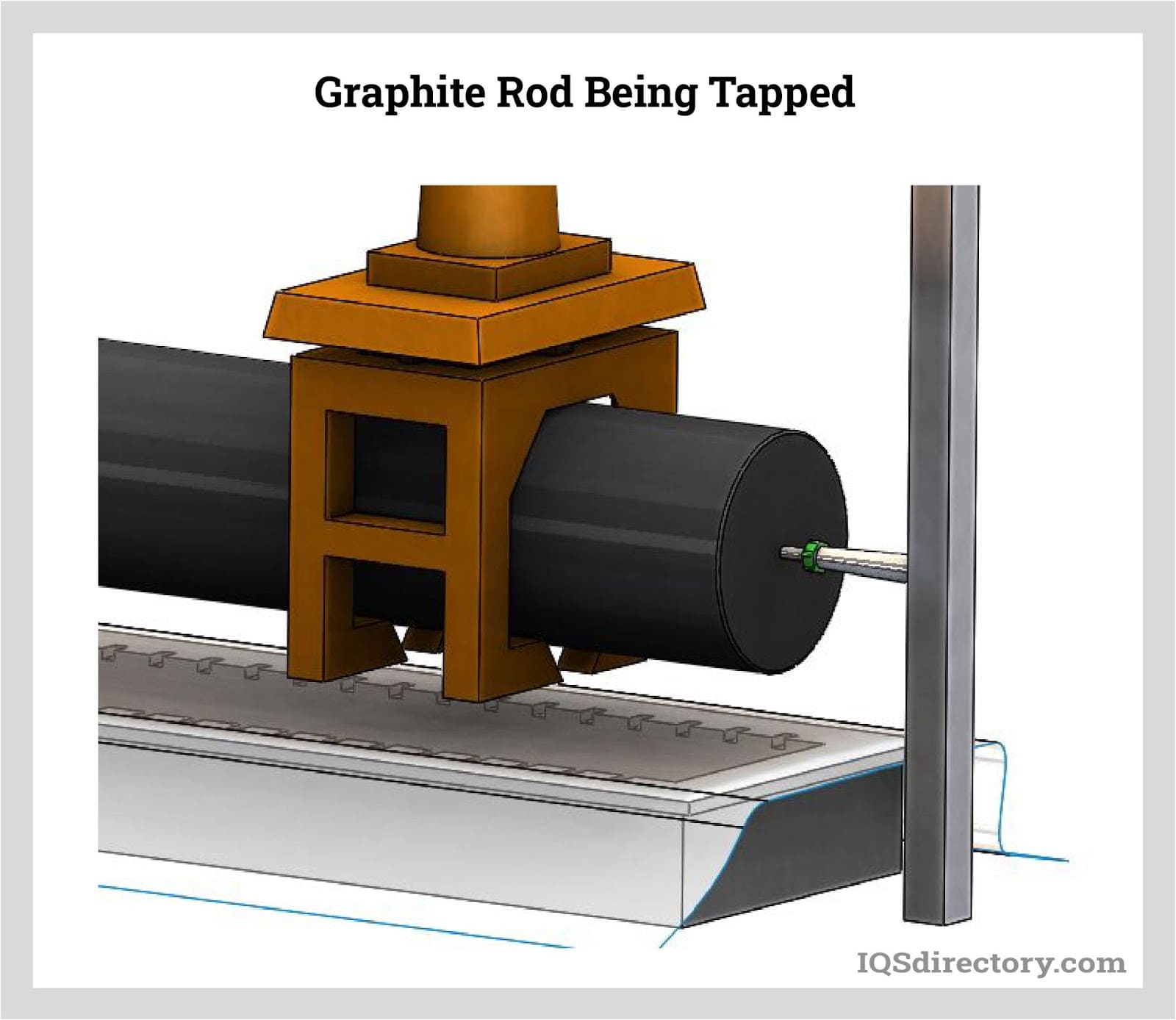 Graphite machining uses drilling, milling, tapping, and finishing operations to produce custom graphite parts and industrial carbon components.
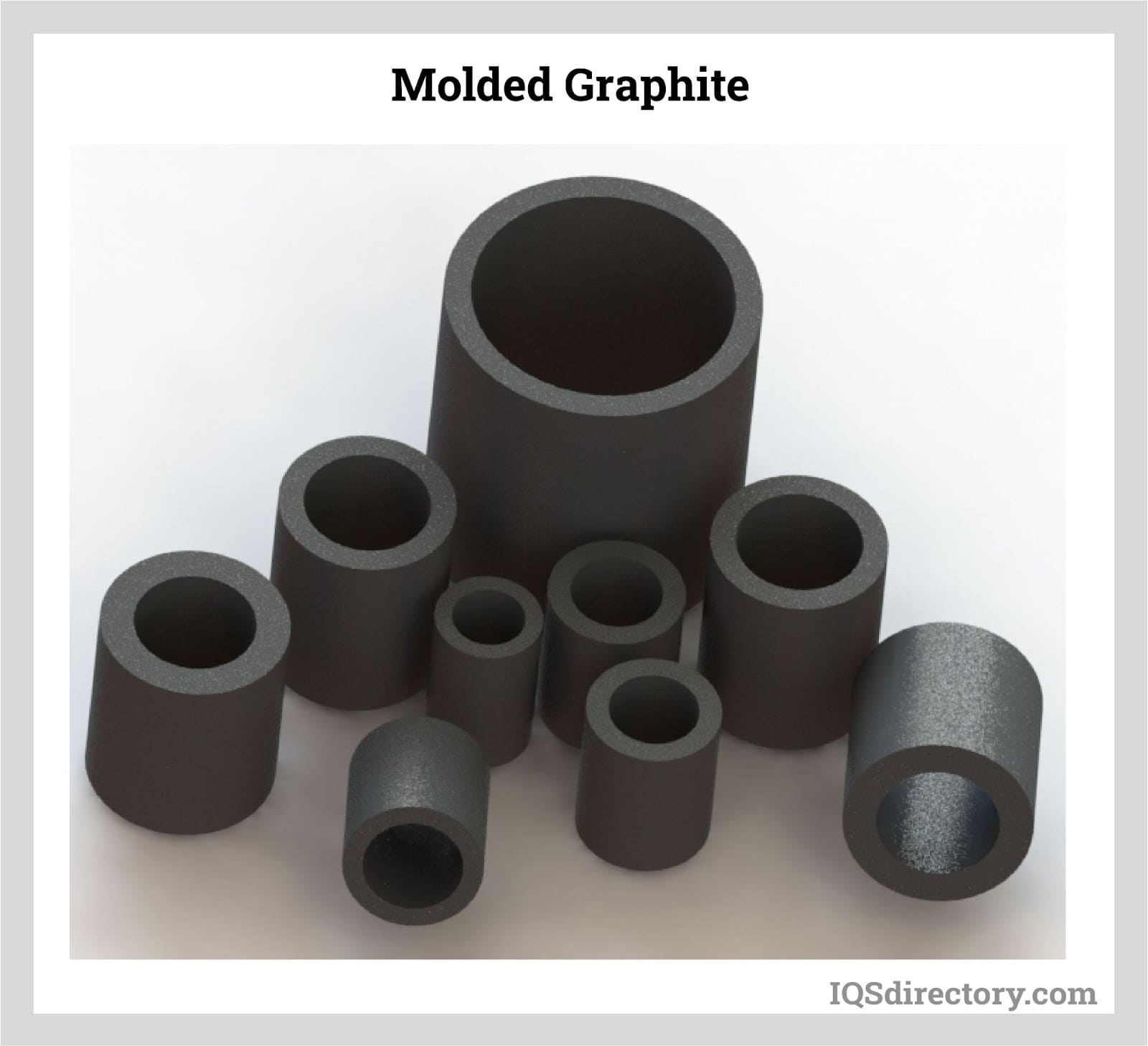 Graphite molding forms dense, repeatable parts and can produce properties similar to materials made through isostatic pressing.
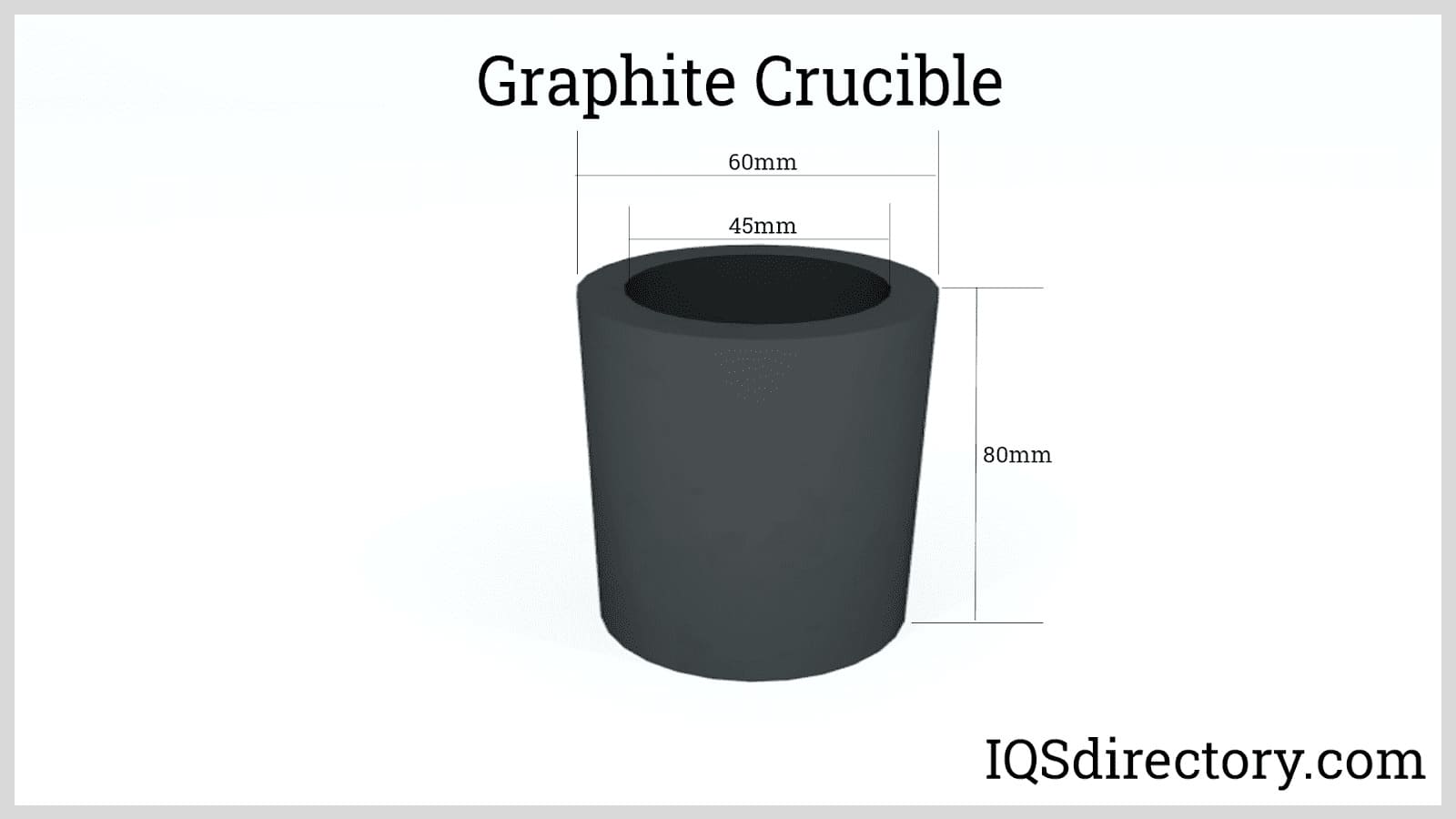 A graphite crucible is a heat-resistant container used for melting and casting non-ferrous metals in foundry and metallurgical work.
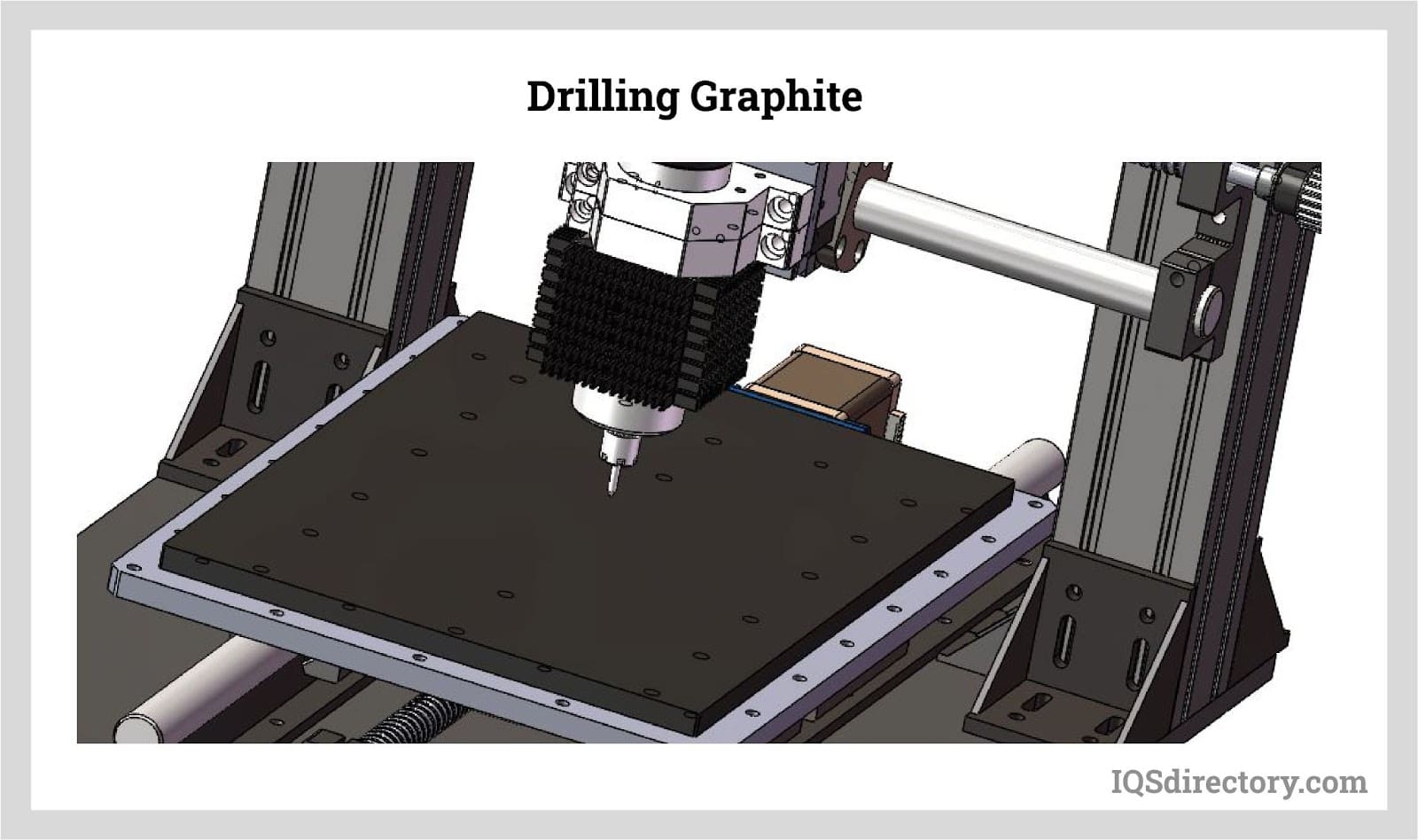 Drilling graphite typically calls for higher spindle speed, proper dust control, and diamond-coated tooling to protect accuracy and tool life.
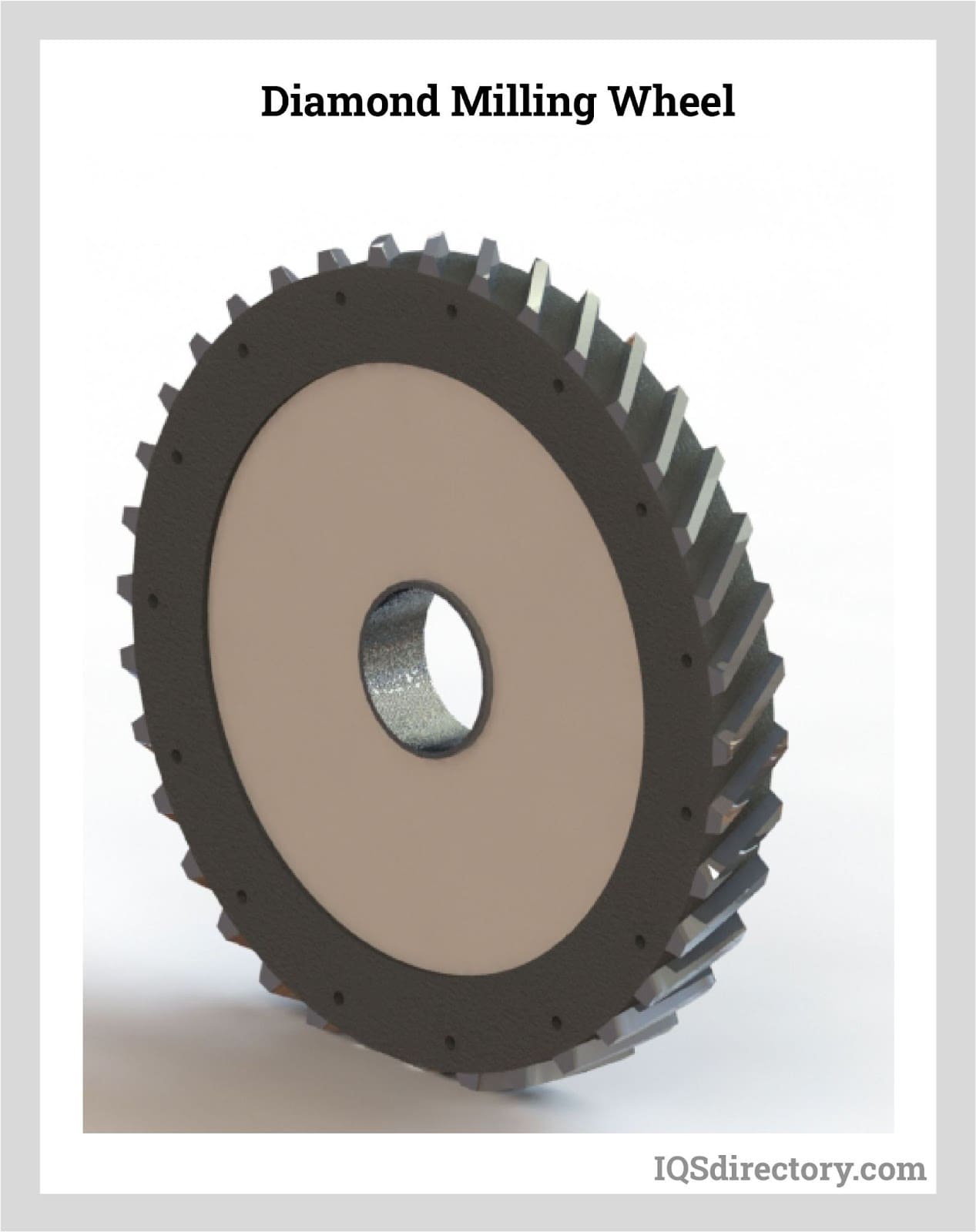 Diamond-edged milling tools are commonly used in graphite machining because they handle abrasive carbon materials more effectively than standard tooling.
Graphite Machining Types
-
Carbon Graphite
Extruded Graphite
EDM Graphite
Graphite Bearings
Graphite Composites
Graphite Crucibles
Graphite Design
Graphite Electrodes
Graphite Fixtures
Graphite Machining
Graphite Rods
Graphite Tubes
Isostatically Pressed Graphite
A dense, isotropic graphite with extremely fine grain produced through isostatic pressing. Because its properties remain consistent in every direction, it is widely chosen for large precision parts, EDM electrodes, semiconductor fixtures, and other demanding graphite machining applications.
Physical Composition of Graphite
Graphite exists in both natural and synthetic forms. Natural graphite comes from ore deposits and commonly appears as flakes, plates, and lumps. Flake and plate graphite may be mined by surface or underground methods, while lump graphite is typically recovered underground. The form present in a deposit depends on the geologic conditions that created it, and those differences can influence purity, processing methods, and the types of graphite products that can be made from it.
Alongside mining, manufacturers have developed ways to produce graphite synthetically from petroleum-based feedstocks and other carbon sources. Synthetic graphite can be engineered for tighter control over purity, density, conductivity, and consistency, which is why it is so often selected for batteries, EDM electrodes, furnace parts, semiconductor fixtures, and other advanced industrial applications. In many buying decisions, the choice between natural and synthetic graphite comes down to performance requirements, cost targets, and the level of process consistency needed.
Production Utilizations for Graphite
Graphite is used across a broad range of industries because machined carbon materials can be made into degassing tubes, cathodic protection anodes, packing rings, thrust washers, brazing fixtures, boards, and pillow blocks. One reason graphite machining remains so common is that graphite delivers long service life, can often be reused in suitable applications, and supports sustainability efforts through recycling and material recovery. It also gives engineers a material that can be machined into custom geometries without giving up high-temperature capability or electrical performance. For buyers researching industrial graphite products, that combination of durability, machinability, and process efficiency makes graphite especially attractive.
Once machining is complete, graphite products and graphite-carbon compounds are used throughout metallurgy, chemical processing, heat treatment, and thermal systems. In metalworking, graphite is valued for heat resistance and is used in the manufacture of anodes for smelting and related operations. Graphite components are also used in industrial furnaces and commercial heating systems where thermal stability, chemical resistance, and dimensional reliability matter. In many of these environments, graphite is chosen because it can handle repeated heating cycles while remaining relatively easy to machine into application-specific forms.
Graphite is also valued for strong electrical conductivity. Graphite electrodes support efficient current transfer, and as industrial technology has advanced, the role of graphite in EDM and CNC machining environments has grown even stronger. In these settings, graphite-carbon electrodes are chosen for their ability to carry electrical energy, resist wear, and support intricate detail. Graphite may also be formed into rods, rings, and heating components for thermal systems, laboratory processes, and selected pharmaceutical and specialty manufacturing applications.
Before the twentieth century, graphite crucibles were among the best-known graphite products because they served as dependable containers for molten metal during smelting and forming. As manufacturing evolved, the market shifted toward more advanced graphite shapes, molded bricks, precision fixtures, and custom machined parts. Today, custom graphite components make up a large share of the market because manufacturers increasingly need application-specific shapes instead of general-purpose stock forms.
Graphite now plays a major role in battery technology, especially in lithium-ion batteries used in electronics, energy storage, and electric vehicles. As demand for those markets has grown, so has the need for reliable natural and synthetic graphite supply. In steelmaking, graphite is also used as a carbon additive during final smelting stages in a process known as carbon raising. That makes graphite valuable not only in advanced energy applications, but also in long-established heavy industrial processes.
In the automotive sector, graphite appears in brake components, foundry mold lubricants, battery systems, and other friction or heat-related applications. It remains useful in both legacy and emerging technologies because it handles temperature, wear, and conductivity demands so well. Even its familiar role in pencil tips reflects the same core qualities that make graphite attractive in advanced industrial environments: stable structure, workability, and dependable performance.
How to Choose the Right Graphite Machining Manufacturer for You
Choosing a graphite machining supplier starts with understanding your own part requirements, including the forming method, graphite grade, tolerance band, production volume, and finish requirements. It also helps to confirm that your design and specification software aligns with the manufacturer’s workflow, since smoother file exchange can reduce delays and quoting mistakes. Beyond equipment and capability, buyers often look for a supplier that communicates clearly, responds quickly, and understands how the part will function in the field. Shops with experience in EDM graphite, furnace parts, bearings, fixtures, and custom carbon graphite components can often offer better guidance on grade selection, manufacturability, and cost-saving design changes.
Because graphite parts may involve multiple forming and machining steps, not every supplier will offer the same range of equipment, tooling, or process knowledge. If your application depends on a specialty method such as isostatic molding, fine-grain EDM graphite, or custom carbon graphite machining, verify that the shop can meet those requirements before moving forward. Ask about material sourcing, tolerance control, inspection, lead times, and dust-management practices. Matching the project to the supplier’s strengths usually leads to a smoother production cycle and better part quality. Buyers also benefit from reviewing sample parts, discussing realistic tolerances, and confirming whether the supplier can support prototype work as well as production volumes.
Graphite Machining Terms
-
Angstrofine
The finest grade of EDM graphite, often selected when a project calls for extremely fine detail, sharp corners, and a smoother machined or burned surface finish.
Billet
An uncut graphite block supplied by the manufacturer and later machined into finished parts. Billets are commonly used for larger components, longer runs, and custom machining jobs.
Breakthrough
The point at which a through-hole is fully completed and the tool exits the far side of the part. In graphite machining, managing breakthrough cleanly can help reduce chipping.
Carbon
A naturally abundant element and the basic building block of graphite. While people sometimes use the terms carbon and graphite interchangeably, graphite is one specific crystalline form of carbon.
Coke
A processed carbon material used as a feedstock in the production of synthetic graphite and other carbon products. Its consistency can influence the quality of the finished graphite material.
Composite
A material made by combining two or more constituents to create a different set of properties. Copper graphite is one example, blending metallic and carbon characteristics for industrial use.
EDM (Electrical Discharge Machining)
A machining method that removes metal through controlled electrical erosion rather than conventional cutting. Graphite is widely used as the electrode material in many EDM operations.
Electrode
A conductive tool used in EDM to carry electrical current and reproduce the desired cavity or shape in the workpiece. Graphite electrodes are popular because they machine well and resist wear.
Filler
Carbon-based particles used in manufactured graphite as part of the green mix before baking or final processing. Filler choice affects density, grain structure, and finished performance.
Flash
A thin ridge or web of excess material extending beyond the intended shape of a casting or formed part, often created where mold sections meet imperfectly.
Grain
A distinct region within a carbon or graphite body that originates from an individual filler particle. Grain size has a strong effect on machinability, surface finish, and detail resolution.
Horn Gate
A curved gate shaped like a horn that directs molten metal into the lower section of a casting cavity, helping improve flow control in foundry work.
Isotropic
A material property describing uniform behavior in every direction. Isotropic graphite offers more consistent machining and performance than directional materials in many precision applications.
Machined
A term describing a component that has been cut, shaped, drilled, milled, or otherwise finished with machine tools to meet a final design requirement.
Premium Graphite
A high-quality graphite grade with very fine particle size, often five microns or less, used where surface quality, detail, and performance are especially important.
Transducer
A device that converts one form of energy into another. In EDM-related systems, transducers convert electromagnetic energy into mechanical motion or vibration used in the process.
Trim Die
A die used to shear or remove excess material from a part so it reaches the intended size and profile after forming or casting.
Workpiece
The material currently being machined or processed. The workpiece moves through one or more operations until it becomes the finished part described by the design.
Graphite Molds
Used in permanent molding and other high-temperature manufacturing operations, graphite molds are valued for thermal stability, machinability, and strong resistance to thermal stress.