Fiberglass Fabrication
Fiberglass fabrication involves blending thin glass fibers with various resins to create a durable, lightweight product. Since its inception, fiberglass has been widely used as a reinforcing agent for plastics, as well as for insulation in buildings and appliances. It is particularly valuable in fabrication applications that require lightweight materials with high strength and scratch resistance.
Fiberglass Fabrication FAQ
What is fiberglass fabrication used for?
Fiberglass fabrication is used to produce strong, lightweight materials by combining glass fibers with resins. These products are commonly found in construction, automotive, HVAC, and industrial applications requiring durability, insulation, and corrosion resistance.
How is fiberglass made during the molding process?
Fiberglass is made by melting glass and extruding it through fine openings to create thin fibers. These fibers are woven, then combined with resin using heat or pressure to form durable panels, pipes, or molded products through open, closed, or centrifugal molding methods.
What are the main types of fiberglass materials?
Fiberglass materials are categorized as E-glass, A-glass, E-CR-glass, C-glass, D-glass, R-glass, and S-glass. Each type varies in strength, chemical resistance, and dielectric properties, depending on its composition and intended use.
What resins are commonly used in fiberglass fabrication?
Polyester and epoxy resins are most common in fiberglass fabrication. Polyester is affordable and corrosion-resistant, while epoxy offers superior strength and performance for high-stress or weight-critical applications such as aerospace or marine products.
Why is fiberglass preferred over aluminum in some applications?
Fiberglass is preferred because it’s lighter, corrosion-resistant, non-conductive, and easier to fabricate than aluminum. It also provides better insulation and can include pigment throughout, eliminating the need for coatings or paint.
What industries commonly use fiberglass products?
Fiberglass products are widely used in construction, automotive, marine, HVAC, telecommunications, and medical industries. Their strength, insulation properties, and resistance to corrosion make them ideal for both structural and protective applications.
What factors should be considered when choosing a fiberglass fabricator?
When selecting a fiberglass fabricator, consider their experience with your specific application, production capacity, scheduling flexibility, and ability to meet volume and quality requirements. Customization and versatility are key for long-term project success.
The History of Fiberglass Fabrication
The earliest form of fiberglass was not the same as what we know today. While modern fiberglass typically refers to fiberglass-reinforced plastics, the term originally referred to mass-produced glass wool.
In 1932, Games Slayter invented the process for mass-producing glass fiber, which he used to create glass wool he called 'fiberglas' by trapping gas in glass fibers.
The modern plastic fiberglass composite emerged a few years later, in 1936, when DuPont combined fiberglass and resin to create a product where the gas of glass wool was replaced with plastic. While this reduced the insulation properties of fiberglass, it significantly increased its structural strength, making it suitable for use in construction.
By 1942, peroxide curing and polyester resins, similar to those used in fiberglass fabrication today, were being applied in production. Over the past century, advancements in plastics have greatly improved basic fiberglass and led to the creation of numerous special varieties and configurations.
Today, the term fiberglass commonly refers to the modern glass fiber composite made with plastics and glass fibers, but it also includes various glass fiber composites, such as low-density glass wool used for insulation.
Fiberglass Fabrication Process
Fiberglass molding is the most commonly used process in the production of fiberglass reinforced plastic products. The process begins by melting glass, which is then extruded through fine openings in a tool, creating thread-like fibers. These fibers are woven together to form a rough cloth or patch. These fibers are then combined with plastic resin through heat treatment or pressing. This technique is used to create a wide variety of products, including panels, racing car shells, electric circuit boards, machinery supports, and many other items.
Fiberglass is ideal for these applications because it is unaffected by temperature changes, non-absorbent to water, highly durable with a high strength-to-weight ratio, non-flammable, resistant to chemicals, and serves as an effective electric insulator. One prominent fiberglass product made through this process is corrugated fiberglass, often used in building construction. This material consists of two-layerfiberglass sheets and panels, which are used for roofing, siding, and greenhouses.
There are three main methods of fiberglass fabrication: open molding, closed molding, and centrifugal molding.
Open Molding: In this method, a gel coat is applied and cured in a one-piece mold. After layering the fiberglass and resin into the mold, they are allowed to cure. This process emits more emissions than the others.
Closed Molding: This method involves a two-part mold where gel coat is applied first. The glass fibers, either chopped or laminated, are added to one part of the mold before being sealed in a vacuum, where catalyzed resin is injected under pressure.
Centrifugal Molding: This process is used for cylindrical fiberglass products such as pipes and tanks. Gel coat is applied to the sides of a rotating cylindrical mold, followed by layers of resin and short fibers until the desired thickness is achieved.
Once the fiberglass product has been formed in the mold, the next steps involve demolding and trimming. After the mold is removed, the product may undergo demolding through various methods such as mechanical, manual, or compressed air-assisted techniques.
Following demolding, the fiberglass structure is then trimmed or cut to size using specialized tools. This may be either an automated process involving modeling software and high-end machinery or a more manual process using hand tools and basic cutting machines.
Some fiberglass products require additional coatings or treatments after trimming to meet specific requirements. However, in most cases, fiberglass can be fabricated to have the necessary properties for particular applications, minimizing the need for post-processing compared to other materials.
In addition to fiberglass enclosures like tanks and boxes , fiberglass reinforced plastics are also used to produce fiberglass pipes and rods, which play essential roles in various industries.
Material Types for Glass Fabrication
There are several types of fiberglass and resins used to produce materials and products with varying strengths, aesthetics, and applications. Fiberglass is typically categorized into seven main types. E-glass is the most common glass-reinforced plastic variety. A-glass has a low boron oxide concentration, while E-CR-glass offers high acid resistance. C-glass is primarily used for glass staple fibers, and D-glass features a high dielectric constant. R-glass is known for its outstanding mechanical properties, and S-glass is recognized for its exceptionally high tensile strength. These fiberglass types are combined with thermosetting resins, commonly made of epoxy or polyester. Resins play a crucial role in molding, laminating, and casting. Epoxy resin is higher-performing and more expensive, making it ideal for weight-critical, high-strength applications. Polyester resins are more affordable, widely used, and offer good corrosion resistance.
To identify a specific type of fiberglass, the basic glass fiber material used in its fabrication and the type of resin employed are key factors influencing the properties of the final product.
Glass Classifications
Fiberglass is traditionally assigned one of seven classifications based on material components and properties:
E-Glass: Standard glass-reinforced plastic fiberglass.
A-Glass: Specialty glass with a lower concentration of boron oxide.
E-CR-Glass: Fiberglass designed for exceptionally high acid resistance.
C-Glass: Used for producing glass staple fibers.
D-Glass: Fiberglass characterized by a relatively high dielectric constant.
R-Glass: Fiberglass created for high mechanical performance.
S-Glass: Fiberglass designed for extremely high tensile strength.
Resins
The type of resin used in conjunction with fiberglass significantly impacts the finished product’s properties. Most fiberglass products use thermosetting resins, with polyester and epoxy being the most common.
Polyester Resin: Inexpensive and widely used for fiberglass fabrication. It offers excellent corrosion resistance.
Epoxy Resin: A higher-performance resin used in applications requiring exceptional strength-to-weight ratios, but it is more expensive than polyester resin.
Other Fiberglass Types
In addition to the basic fiberglass classifications, specific terms are used to describe fiberglass products designed for particular applications or specifications:
Fiberglass Pipe: Made of fiberglass reinforced plastic (FRP), it is highly resistant to corrosion.
Fibercast Pipe: A specific family of fiberglass pipe products designed for chemical processing and handling.
Fiberglass Reinforced Plastic (GRP): A plastic material combined with extruded glass fibers. This is often what is meant by "fiberglass" in the industry.
Structural Fiberglass: Rugged fiberglass components used in construction and industrial processes.
Fiberglass Fabrication Images, Diagrams and Visual Concepts
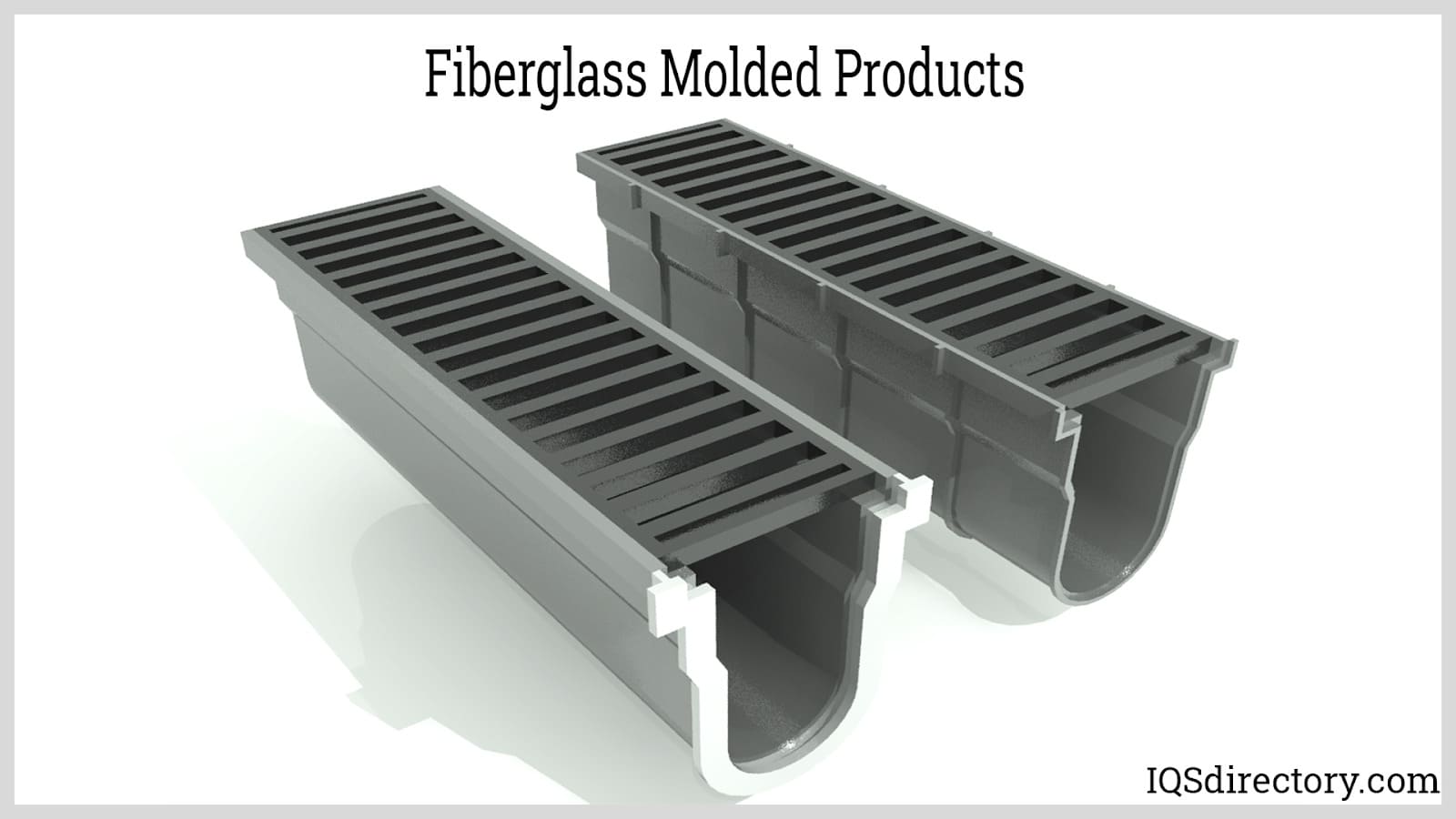 Fiberglass molding, a method for forming complex and intricate parts using fiberglass resin for reasons such as cost of the materials, ease of production, durability, and replicability.
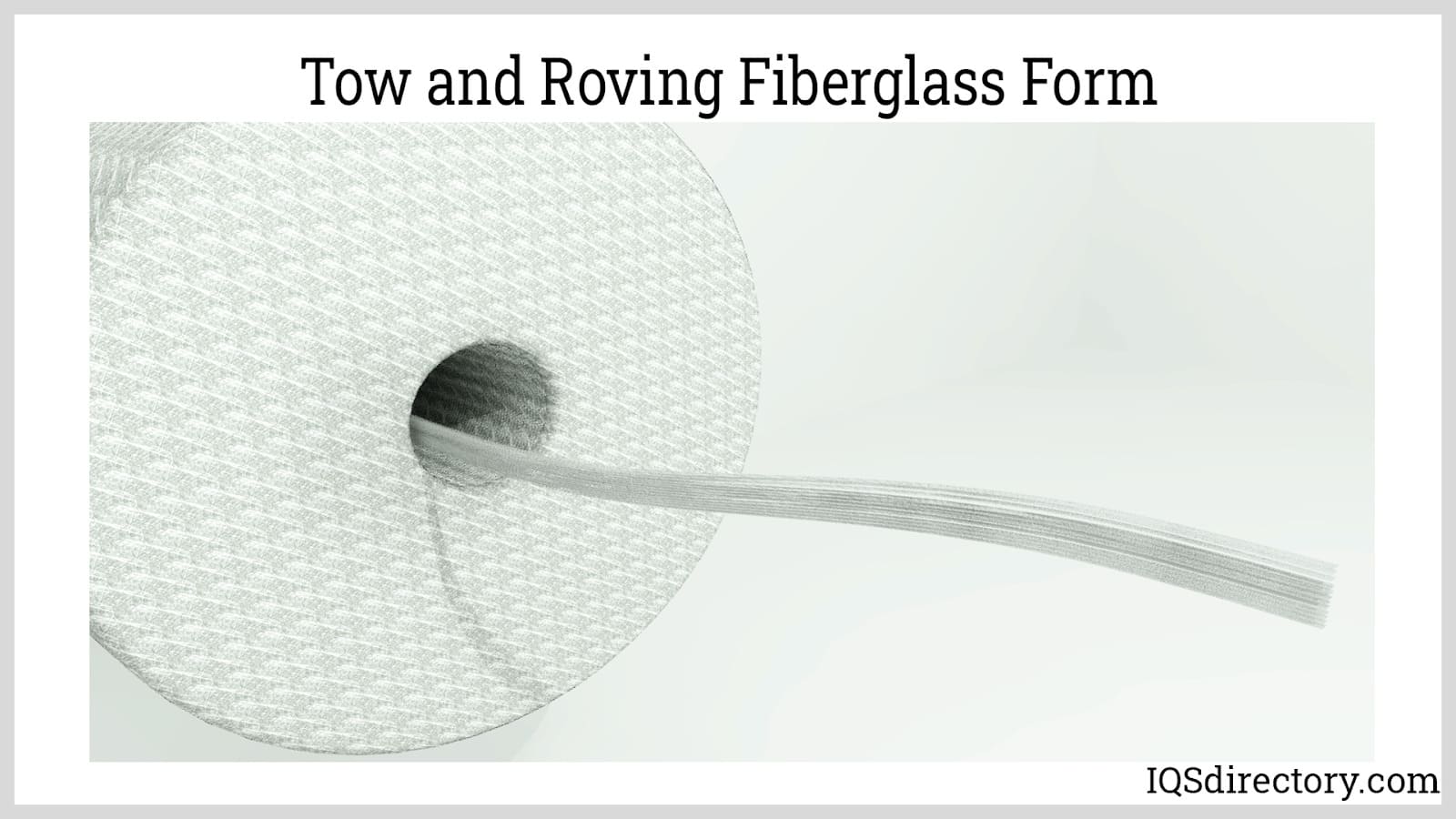 Tow and roving fiberglass, the form that has the highest properties of all fiberglass.
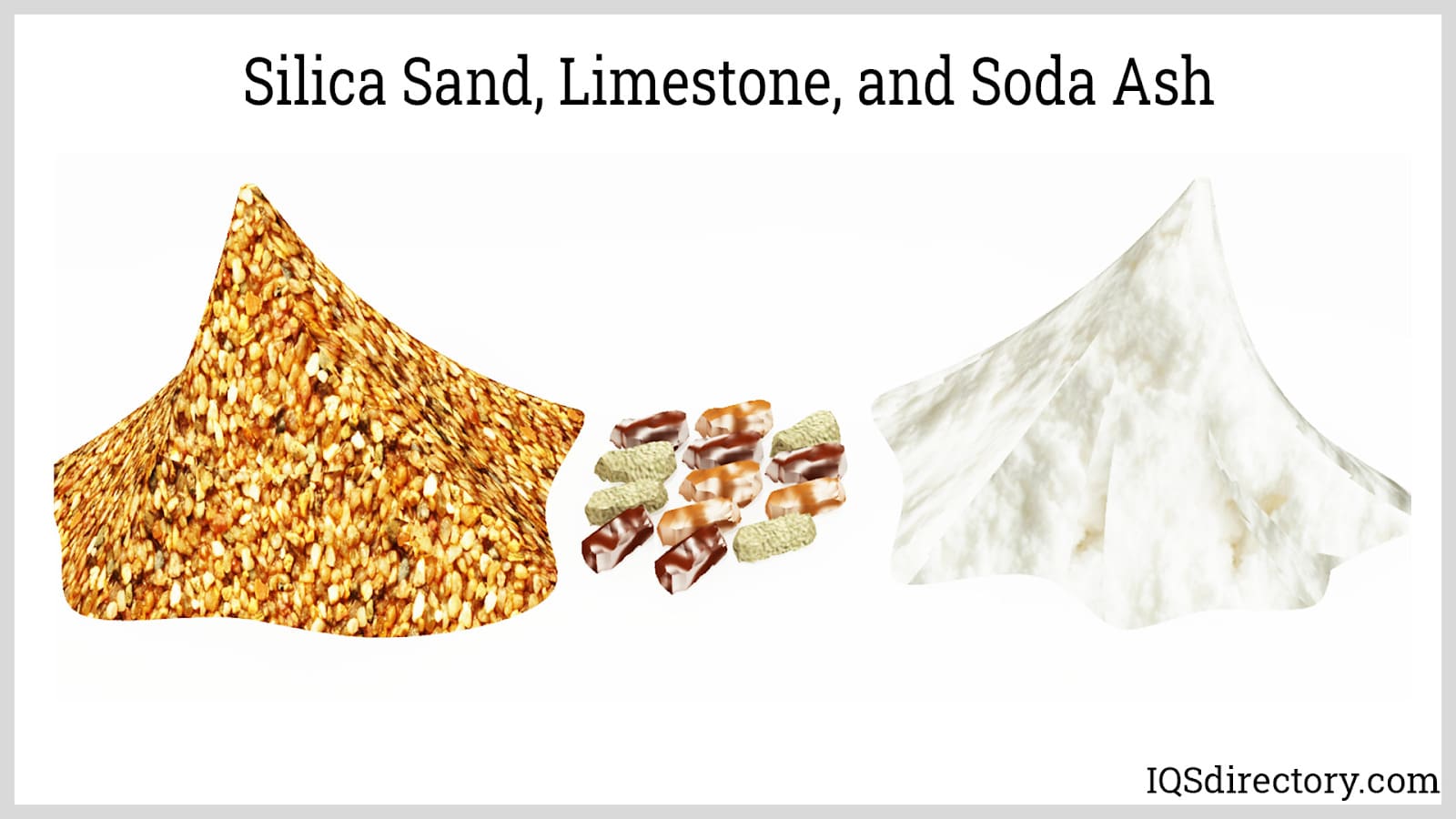 The ingredients for fiberglass include silica sand, limestone, and soda ash, which is carefully measured and mixed to form the batch.
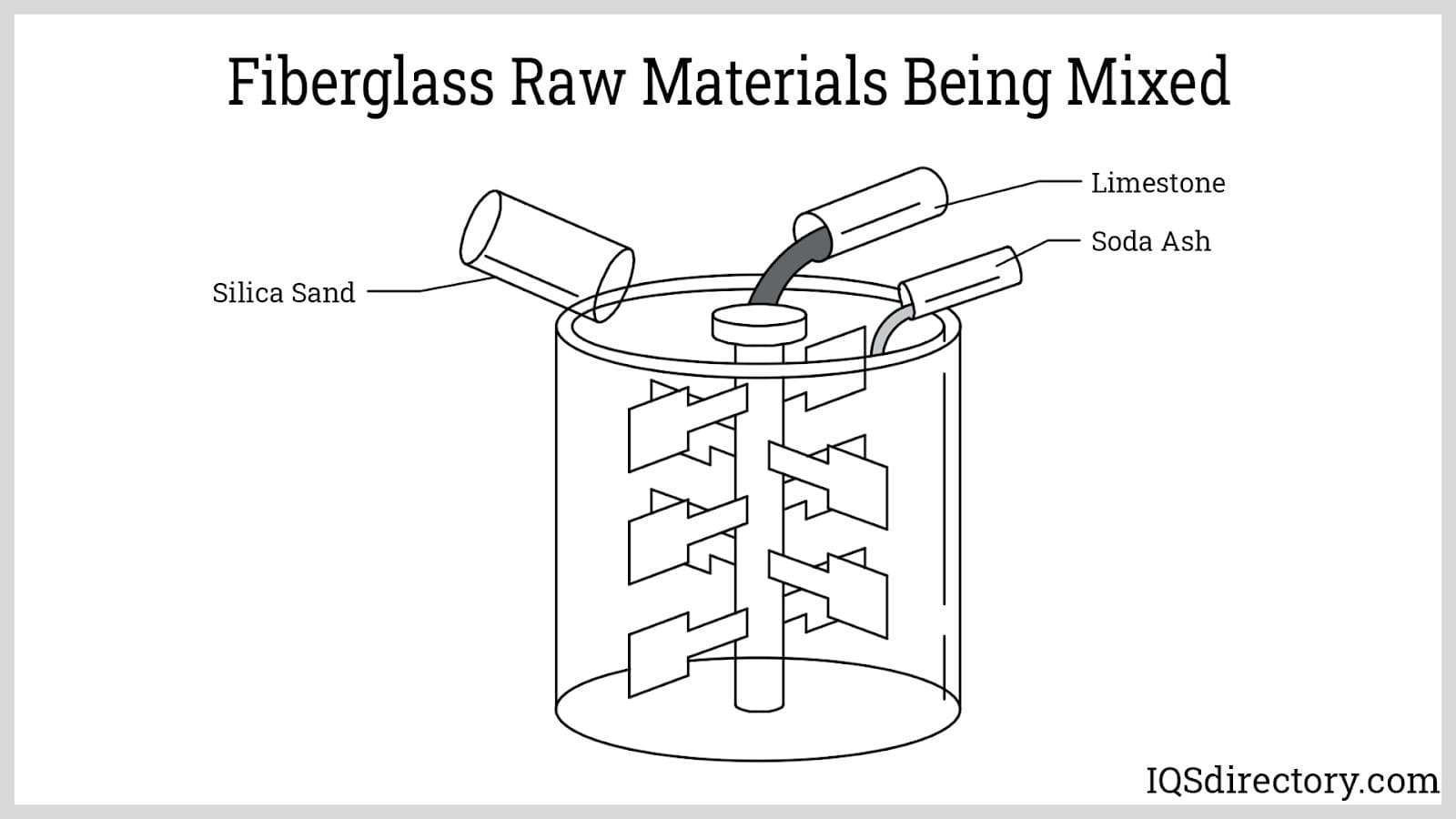 The process for melting the material to create fiberglass.
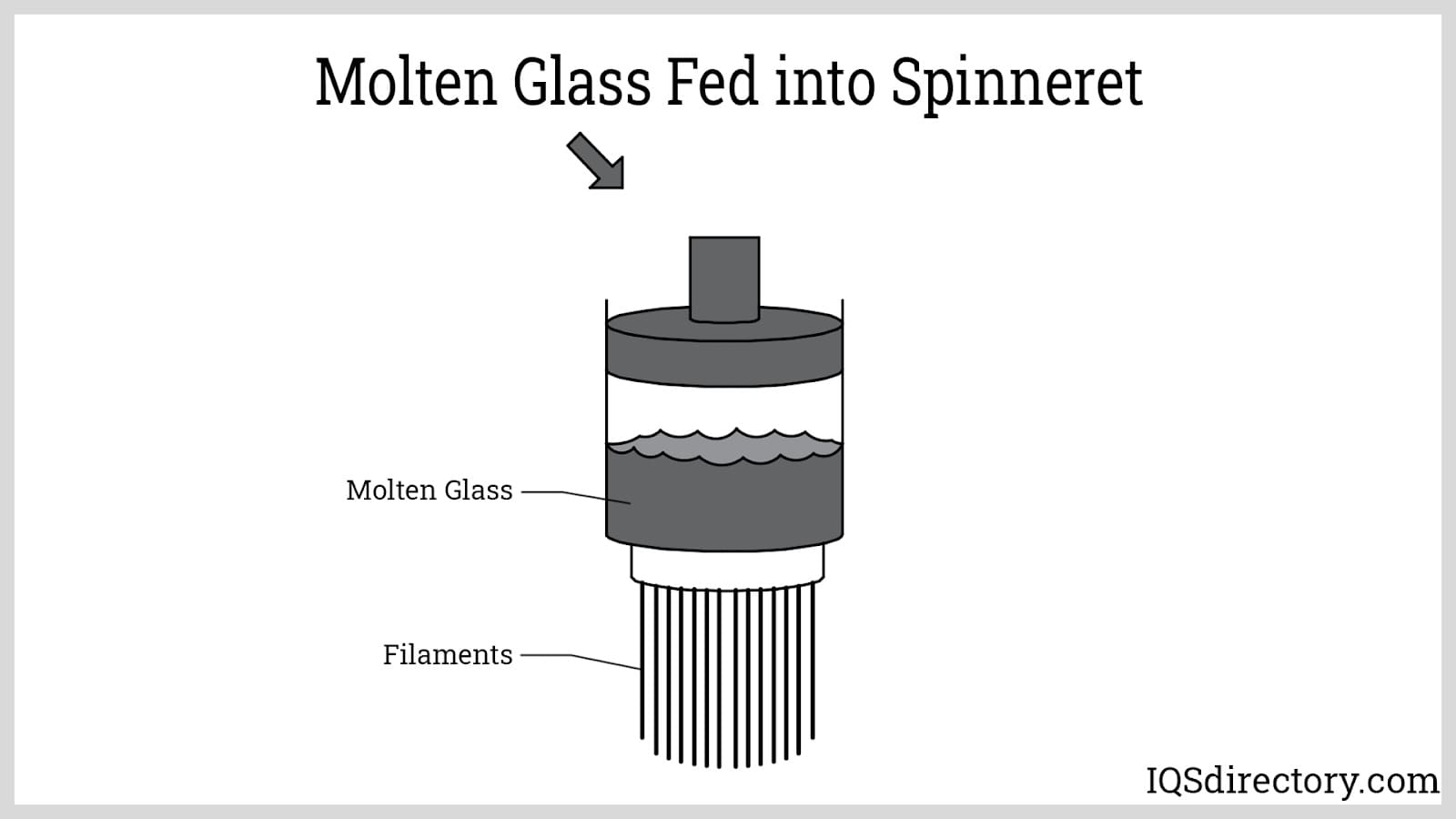 The molten glass is passed through fine filaments which creates the fiberglass.
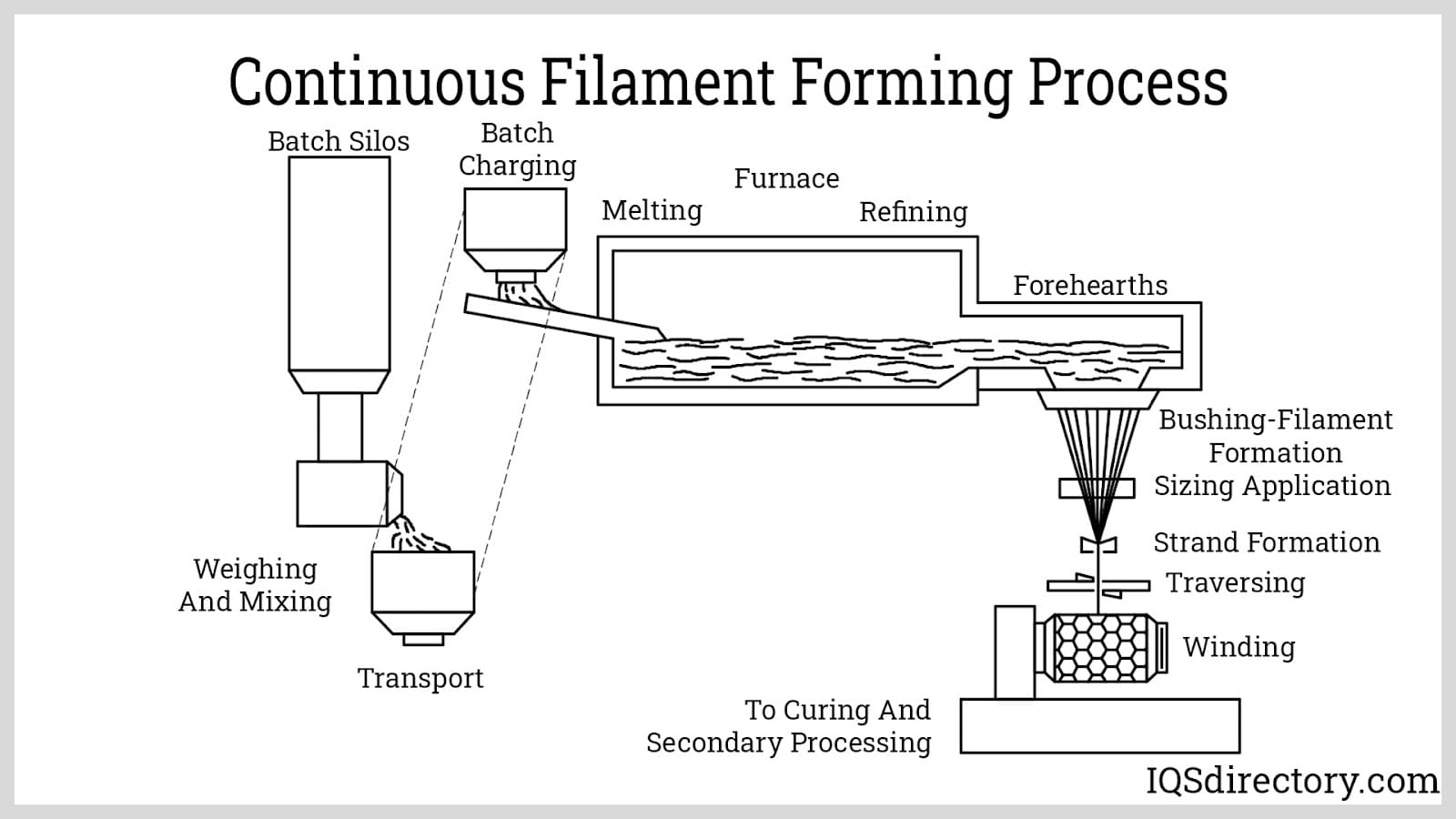 This process can yield a long and continuous fiber, fiberglass filaments are produced through this process.
Types of Fiberglass Fabrication
-
Corrugated Fiberglass Products
Fiberglass reinforced plastic sheets with a waved or ridged texture, typically consisting of two layers.
Storage and transportation containers, often square or rectangular in shape, made from fiberglass reinforced plastic.
Fiberglass Enclosures
Fiberglass-based tanks or storage units used in various industries, such as food, chemical plants, and water treatment facilities.
Companies that specialize in producing fiberglass reinforced plastic products and other fiberglass applications, including insulation.
A grid structure made up of intersecting parallel lines of fiberglass, used for various applications, particularly in flooring and walkways.
A process that shapes fiberglass products using open, closed, or centrifugal molding, where the fiberglass is formed in a hollow metal mold.
Flat sheets or planes constructed from fiberglass reinforced plastic, commonly used in construction and industrial applications.
Hollow pipes made from fiberglass reinforced plastic, used in various piping and tubing applications.
Items made from a combination of glass fibers and resins, used in a wide range of industries for their strength and durability.
Fiberglass Reinforced Plastics
Plastics that are enhanced by combining them with extruded glass fibers through thermoforming, improving the material’s strength and durability.
Long, thin, often rounded shafts made from fiberglass reinforced plastic, used in construction, support, or as structural components.
Flat sheets made by combining glass filaments and resins, used in a variety of industrial and commercial applications.
Fiberglass Storage Boxes
Durable, waterproof storage units designed for holding items like fishing tackle, pool equipment, and liquids. Larger models may also serve as seating.
Fiberglass containers, available in various sizes, used for storing gases, liquids, and sometimes solids. Commonly found in food and chemical plants.
Fiberglass Applications and Industries
Fiberglass is a highly versatile material, making it ideal for a wide range of applications across various industries. It can replace metals or pure plastics in numerous structural roles, including but not limited to:
Construction
Fiberglass is commonly used as insulation material in some applications and as a primary structural element in others.
Vehicle Manufacturing
Due to its exceptional strength-to-weight ratio, fiberglass is widely used in the production of vehicles, including boats, cars, airplanes, and many other types of transportation.
HVAC
Fiberglass is often used in the HVAC industry as a primary insulation material, both in solid panels and as seals and coatings in spray form.
Sporting Equipment
Fiberglass is favored for its strength and durability, making it a popular choice for protective gear, poles, hockey sticks, bows, and other sporting equipment.
Storage Tanks
Fiberglass is commonly used in the production of storage tanks, including those for chemicals, septic systems, and other similar uses, due to its durability and corrosion resistance.
Piping
Fiberglass pipes offer numerous advantages over traditional plastic or metal piping, making them the ideal choice for specific applications requiring strength, flexibility, and resistance to environmental factors.
Medicine
In medicine, fiberglass is used in orthopedic devices and other medical equipment due to its light weight and strength.
Telecommunications
Fiberglass is utilized in telecommunications for applications that require low RF permeability and minimal signal attenuation, such as shrouding antennas or concealing equipment when signal permeability is not desired or is irrelevant.
Fabrication Machinery
While fiberglass fabricators use a variety of industrial machines, two specific types of equipment are essential to the production of fiberglass products:
Fiberglass Molds
Each fiberglass molding process requires a specialized mold tailored to that specific technique. Depending on the scope and specialization of the operation, a fabricator may have access to different types of molds. For instance, a fabricator that focuses on pipe production may primarily use centrifugal molds.
Fiberglass Cutting Systems
Regardless of the molding process, fiberglass products often require cutting or trimming to meet final specifications. This is typically done with specialized fiberglass cutting machines, which vary in the level of automation. Advanced systems may complete the cutting process with minimal human involvement, while others may require manual adjustments and step-by-step settings.
Choosing a Custom Fiberglass Manufacturer
Choosing the right fiberglass fabricator for your project, whether it's for a one-time custom need, ongoing supply, or repair, can be challenging. Rather than focusing solely on finding the best or cheapest fabricator in your area, it's more important to find the one that best matches your specific requirements.
Specific Application
It’s beneficial to work with a fiberglass fabricator who is already familiar with the unique requirements of your project or similar applications. Getting references from businesses with similar needs can provide insight into the level of service and quality you can expect. Fabricators with experience in your specific industry can also help ensure compliance with industry standards while minimizing waste, miscommunication, and inefficiency.
Manufacturing Scheduling
Clearly communicate your scheduling needs when selecting a manufacturer to ensure they can meet your project’s timeline. If your need for fiberglass products is erratic or fluctuates, choose a manufacturer that can adapt to these changing requirements without issue.
Volume Requirements
If your project requires a large volume of fiberglass products, ensure the manufacturer has the capacity to meet these needs without disrupting their service to other clients. If you anticipate future growth, it’s wise to select a manufacturer that can handle higher volumes down the line, avoiding the need to switch fabricators later.
Product Versatility
A good fiberglass manufacturer should focus on meeting your custom fabrication needs as accurately as possible, not just offering the cheapest solutions. Versatility in terms of product offerings, shipping, and other logistical considerations should always be a top priority when choosing a fabricator.
Variations and Alternatives to Fiberglass
While there are numerous materials that could potentially replace fiberglass in specific applications, aluminum stands out as one of the most consistent alternatives due to its similar properties. Both aluminum and fiberglass-reinforced plastics share comparable densities and physical versatility, though there are key differences that may make one more suitable than the other depending on the application.
Fiberglass often proves to be superior to many other materials, especially aluminum, the primary alternative. Pultruded fiberglass shapes offer several advantages over aluminum extrusions. Fiberglass has exceptional resistance to a wide range of chemicals, while aluminum is more susceptible to corrosion. Pultruded fiberglass is approximately 70% the weight of aluminum shapes, yet maintains the same density, offering a more lightweight option without sacrificing strength. Furthermore, fiberglass is non-conductive with high dielectric capability, whereas aluminum conducts electricity. This makes fiberglass an excellent choice for insulation purposes, offering significantly lower thermal conductivity than aluminum.
Unlike aluminum, which requires prefinishing, anodic coatings, or paint for color, fiberglass can have pigment added directly to the resins, providing consistent color throughout the material. Fiberglass is also transparent to radio waves and electromagnetic interference (EMI/RFI), making it ideal for applications such as radar and antenna enclosures. Aluminum, on the other hand, is highly reflective, making it unsuitable for these purposes.
Pultruded fiberglass is easier to fabricate in the field using common carpenter tools, while aluminum often requires torches or welding for assembly. Additionally, fiberglass shapes are reinforced with a glass mat that evenly distributes the load of an impact, whereas aluminum is more prone to deformation. These advantages make fiberglass-reinforced plastic an excellent construction material for a variety of products.
Lighter Weight
Fiberglass typically weighs about 70% of aluminum, while maintaining similar strength and density. This favorable weight-to-strength ratio also compares well with other plastics, composites, and metals.
Non-Reflective Properties
Fiberglass’s non-reflective properties make it an ideal material in applications requiring minimal interference with light, radio waves, or other transmissions. This can be especially useful in industries like telecommunications and defense.
Even Distribution of Force
Fiberglass excels at evenly distributing force, a unique property that provides benefits in many applications, although it may not be ideal for all use cases.
Easy Fabrication
Fiberglass is relatively easy to fabricate compared to aluminum and other comparable materials. It can be easily customized with pigmentation, secondary coatings, and various other modifications to meet specific needs.
Superior Insulation
Fiberglass is an exceptional insulator, with unique thermal properties that make it a primary choice for insulation in construction, HVAC systems, and other industries. Its insulating capabilities are far superior to many other materials, making it an essential material in numerous applications.
Fiberglass Fabrication Terms
-
Aspect Ratio
The ratio of diameter to length; in composites, it refers to the ratio of fiber or filler within the composite matrix.
Bondable
The ability to be secured or fastened using a bond or adhesive. Fiberglass is bondable because the combination of resins and glass creates a bond-forming material.
Catenary
The process of maintaining equal tension in parallel fibers. It also refers to the characteristic of fibers under equal tension.
Chopped Strand Mat
A fiberglass reinforcement that uses short strands of continuous rovings arranged in random order, held together with a binder.
Composite
A material, such as fiberglass-reinforced plastic (FRP), composed of two or more distinct substances that combine to provide functional or structural properties not achievable with a single material.
Compression
The process of increasing the density of materials. In fiberglass laminates, compression results in the material becoming smaller and pressed together.
Continuous Roving
Sizing-coated parallel filaments drawn together into single or multiple strands, which are then wound into cylindrical packages.
Cupola
Also known as a "dome," a cupola is an upside-down-shaped cup made of fiberglass, typically used to cover the tops of buildings, churches, and other architectural structures.
Epoxy
A widely used surface coating that forms a tight, adhesive surface structure, shrinking little to none during application.
Fiber
A filamentary material whose length is at least 100 times its diameter. It also refers to the individual components of a substance that form threads to be woven.
Fiberglass Reinforcement
Common material used to enhance the strength and durability of plastic.
Filament
The smallest unit of fibrous material, formed by spinning or drawing it into a continuous, long entity.
Filament Wound Tubing
Tubing made from finely spun fibers arranged in a uniform structure.
Filler
An inorganic additive, typically in the form of particulate materials, incorporated into the composite matrix to improve performance, such as controlling shrinkage, enhancing surface smoothness, and increasing water resistance.
Glass
A large class of materials with varying optical and mechanical properties. It is typically hard, brittle, translucent or transparent, and considered a supercooled liquid, rather than a solid. Glass fibers combined with resins form the primary ingredients in fiberglass products.
Glass to Resin Ratio
The proportion of glass to resin in a fiberglass product. Generally, a higher concentration of glass leads to greater strength and durability.
Laminate
A thin sheet or plate made of fiberglass through compression. Laminates may consist of multiple thin layers.
Polymer
A synthetic or natural compound of high molecular weight, composed of repeating links, each being light and simple.
Resin
A translucent, yellow or brown to clear, semi-solid or solid substance of plant origin, like amber or copal. Resins are essential in synthetic plastics, inks, lacquers, adhesives, and other products.