Check Valves
Check valves are valves with two openings in the body to control gas or fluid flow. One hole allows fluid to enter while the other allows it to leave. Check valves are self-activating valves that react to the pressure created by the flow rate, which is generated by the mechanisms they are operating. Though small and simple, check valves are part of many regular household items. The design process of a particular stainless-steel spring valve depends on the cracking pressure at which the check valves will work. However, check valve manufacturers design valves in different sizes and prices. Materials used in making them include plastics, stainless steel metals, or polypropylenes. While the general design and function of the check valve is relatively simple, there are a number of important considerations that must be taken into account to ensure materials flow through the valve and backflow is adequately prevented.
Quick links to Check Valves Information
Applications of Check Valves
- Domestic Use
- When harvesting rainwater at home, piping systems connected to the main water supply will use check valves to help prevent continuous water flow. The valves also stop the rainwater from contaminating the main water supply and act as a backup system in case a sump pump fails to work.
- When it comes to farming, drip irrigation, and sprinkler irrigation, emitters use small check valves incorporated into the piping system to prevent the lines from draining when the system is off. Check valves also avert vertical convection in domestic heating systems, particularly when placed in solar thermal installations.
- Industrial Use
- Check valves have many applications in the industrial sector, such as in chemical and power plants. In the nuclear industry, check valves have uses in systems that supply water for cooling reactors with a controlled speed, pressure, and volume. These valves are also useful in the aerospace and aircraft industries in which there are extreme vibration temperatures and corrosive fluids. In the public safety sector, the high pressure piping systems in fire engines, which utilize check valves, contribute to the extinguishment of fires.
- Check valve functionality is applicable in aircraft hydraulic systems, propulsion propellant control, attitude control systems, and reaction control systems for the spacecraft and launch vehicle. They can be found in industries where multiple gases combine to produce one stream of gas. Additionally, the valves can work to prevent the gases from mixing in the source.
- Check valves are also useful in piston-driven and diaphragm pumps. Inlet and outlet ball check valves are common in metering and chromatography pumps. Ball check valves in a pump-like mechanism are used in the moving of large volumes of fluid to prevent reverse flow. The injectors of a steam boiler also have control valve fittings to prevent backflow.
- Ball check valves, swing check valves, wafer check valves, and lift check valves allow the continuous downstream flow of fluids while preventing upstream contamination. On the other hand, spring check valves avoid valve clapping and overflow caused by the heightened downstream flow as a result of high differential pressure across the valve.
- Double check valves use several valves in combination with one another, and they come in an iron body, plastic or stainless steel. Double check valves can reduce wear and increase protection against backflow that could otherwise lead to cross-contamination, flooding, and pressure surges. Diaphragm check valves are applicable in hospitals where they prevent free-flowing liquids from slipping into unwanted sections of the human body.
History and Evolution
Frank P. Cotter came up with a simple self-sealing check valve in 1907. It was easy to fit into the existing piping system connection without the need for specialized tools. In 1916, Nikola Tesla developed a one-way valve for fluids (known as a Tesla valve) which he then patented in 1920.
In today’s world, check valves have a wide range of applications in virtually every industry, including aerospace, motor vehicle, agriculture, water treatment sectors, and even the manufacturing industry. Innovation of check valves led to the formation of newer plastic diaphragm valves, which are in the medical sector. Check valves are constructed with various materials depending on the industry they are being used for.
Design and Engineering of Check Valves
Check valves have many uses commercially, industrially, and domestically. Their responsibility lies in the safe and consistent flow of substances, such as acids, bases, water, slurry, oxygen, fuel, as well as hazardous material. The materials of the check valve itself also impact its effectiveness. It is essential when manufacturing check valves to use material compatible with the fluid or material flow the valve will be handling. If incompatible materials are used, they will wear, erode, or contaminate the process stream. Compatibility is always attainable, no matter the gas or fluid being transferred, as a number of plastics, metals, and synthetics may be used. Common materials include PVC and brass as well as ductile iron, copper, polyethylene, polypropylene, aluminum, steel, stainless steel, and rubber. Plastic is long lasting, easy to install, and light in weight compared to stainless steel components or iron body components, which makes it the ideal material for household use. Further factors to consider include media temperature and the valve flow coefficient.
PVC check valves, also known as relief valves, are commonly used along with brass check valves since both are made with durable materials to help them withstand constant wear and chemical corrosion. Eliminating unnecessary wear is possible by choosing proper check valve configuration, which improves product durability. The versatility of the silicone diaphragm has made it possible to manufacture check valves that can be utilized in the medical field.
Check valves come in a range of sizes. The most important consideration regarding the size is the diameter of the seat and stopping device, which may be less than an inch or several feet across. Properly sized check valves are easily installed in pre-existing flow lines, using the dimensions of the pipe or tubing to determine the necessary size. The valve size will also affect the pressure rating or cracking pressure of the valve. This is the minimum pressure at which the valve will operate or open. If the valve is too large or bulky, the pressure created by the process stream will not be able to open it, even when the opposing pressure is exceeded. An undersized apparatus will allow a continuous flow and never close. Such malfunctions could result in damaged equipment, wasted materials, and potentially hazardous cross-contamination.
Some Benefits of Check Valves
- Check valves moderate the pressure flow rate of fluids in the piping systems in different industry sectors. They prevent cross-contamination of fluids like water and oil.
- Stainless steel valves are non-corrosive and durable, ensuring that any stainless steel spring has uninterrupted flow of oil, gas, and water.
- When storm surges and floods are directed into the correct drainage, they stop contamination of fresh water.
- The controlling of psi is useful in designing pressure controlled devices such as scuba tanks.
Check Valve Images, Diagrams and Visual Concepts
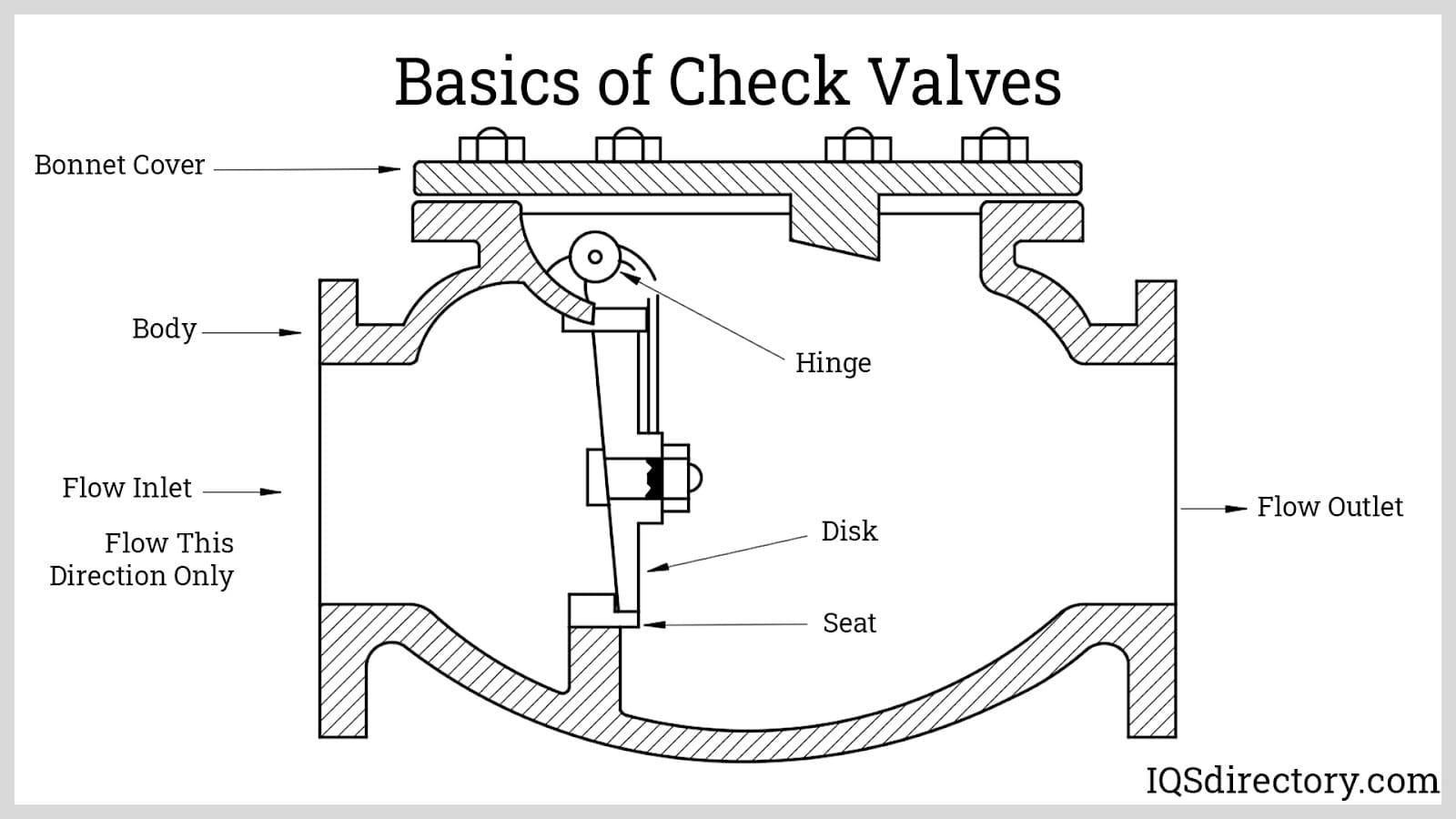 Check valves are an automatic safety device designed to allow fluids and gasses to flow in one direction to prevent reverse flow.
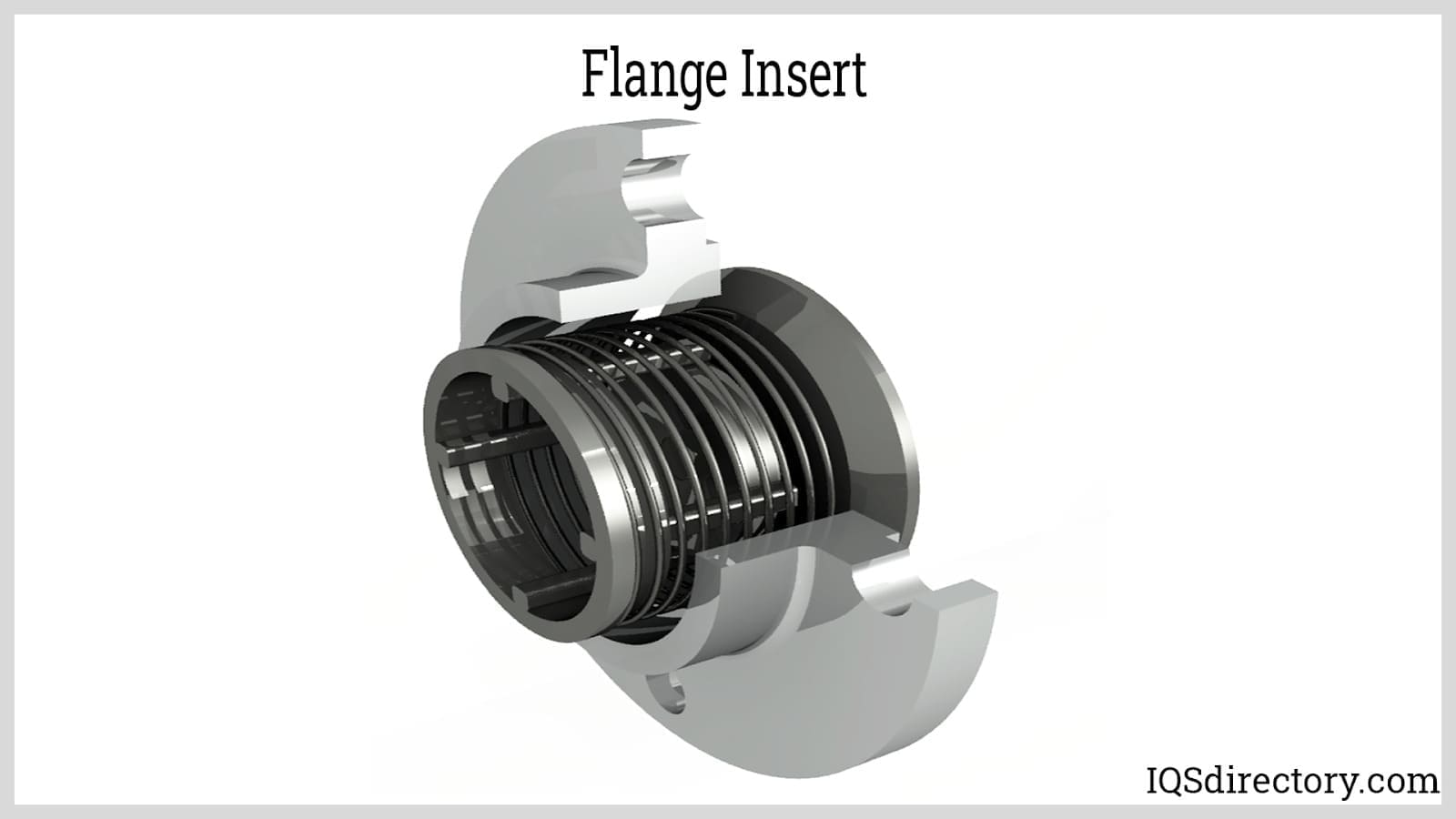 The end of the check valve which prevents the reversal of the fluids flow.
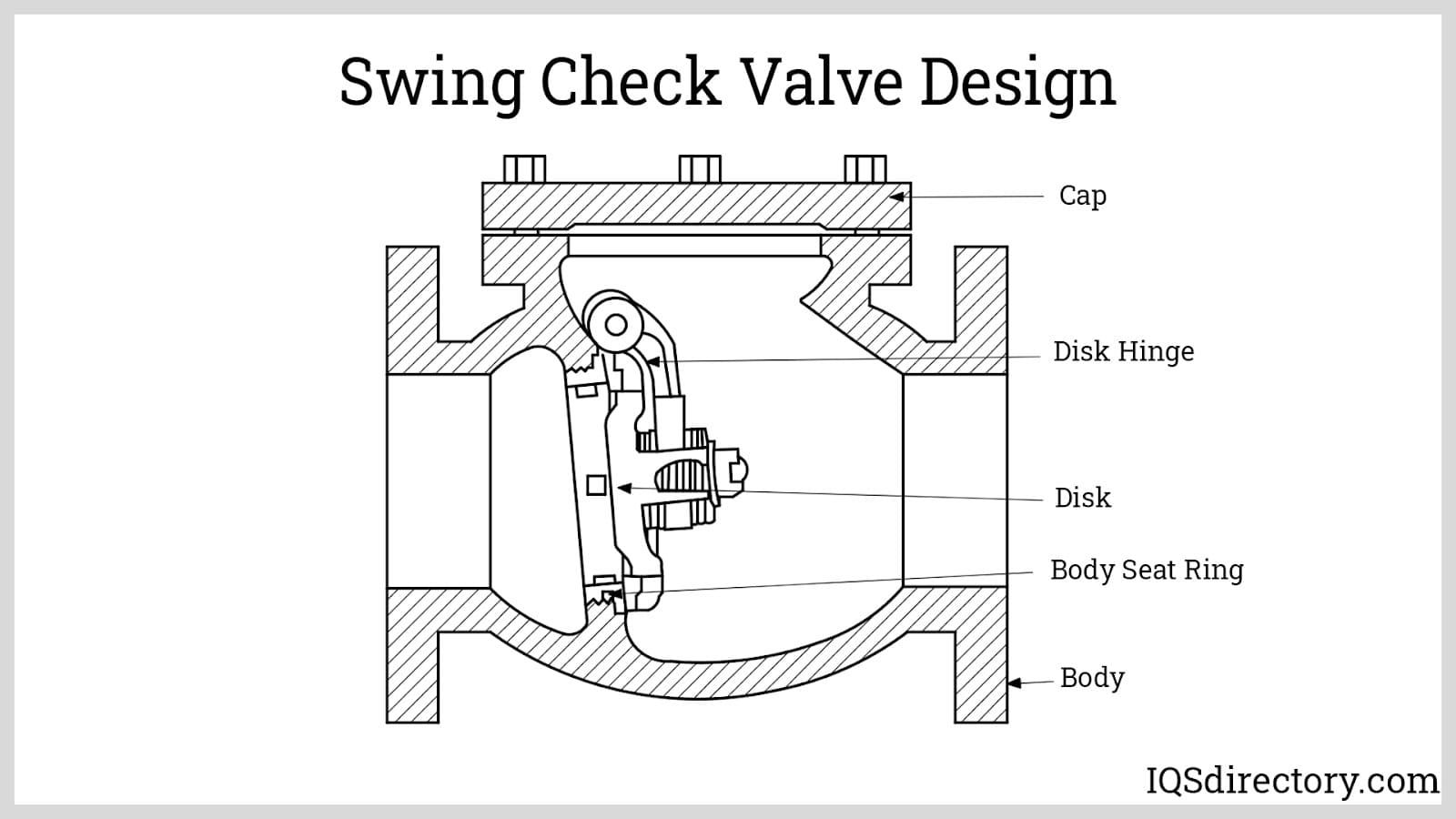 Swing check valves have an unguided disc which moves into a fully open position when flow pressure is applied.
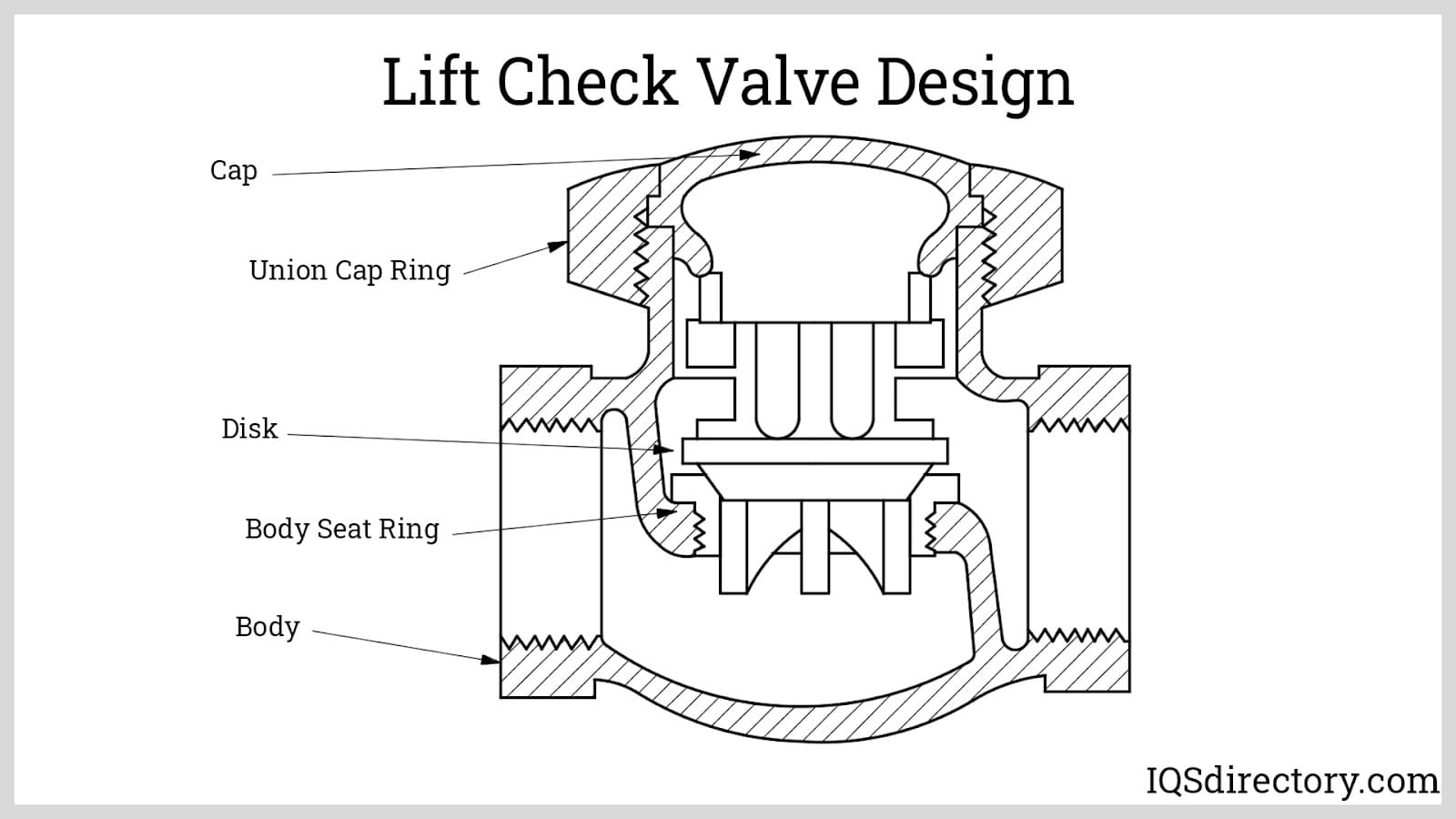 Lift check valves have a guided piston that lifts when the flow enters the check valve.
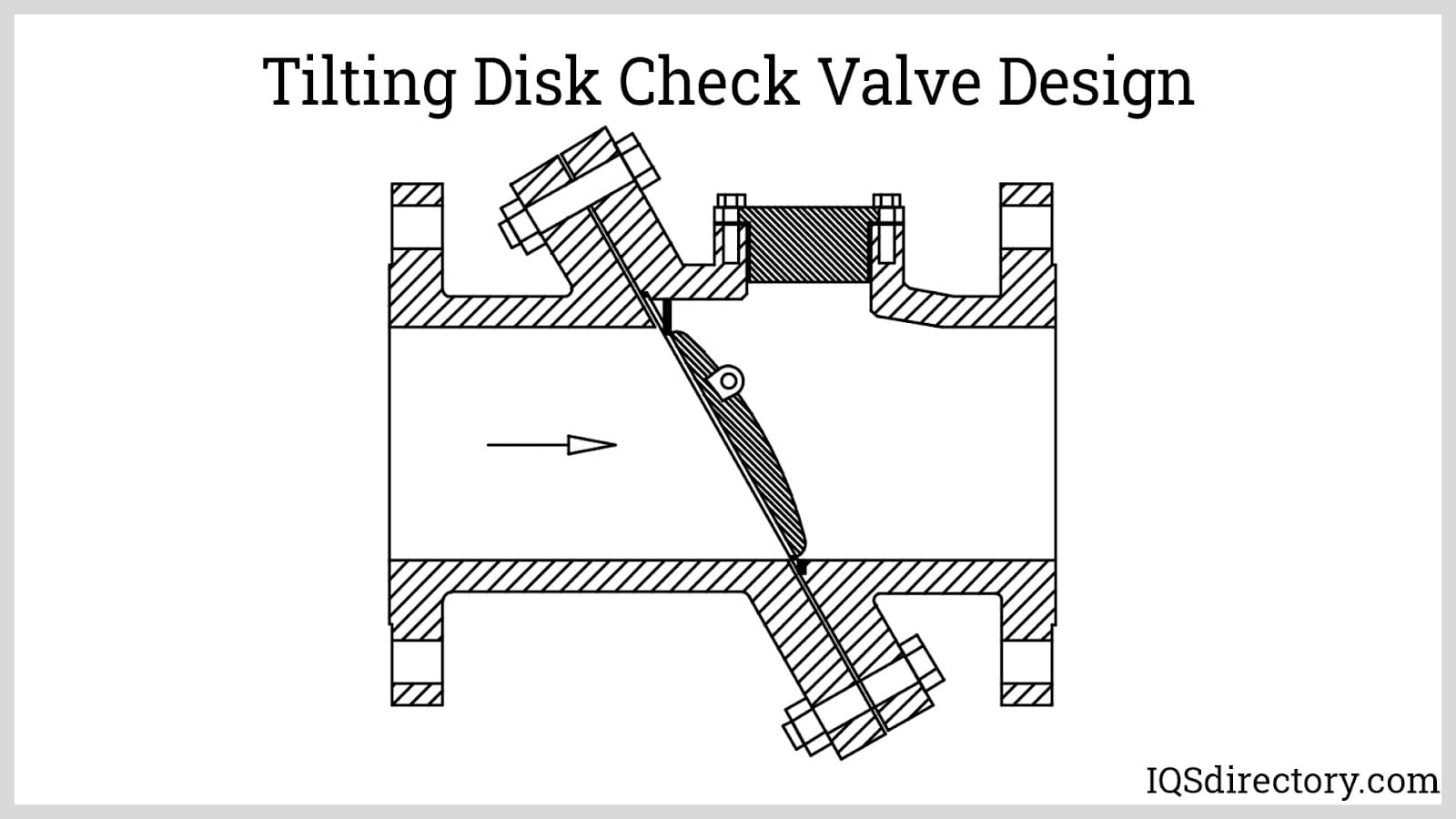 The design of tilting check valves are capable of remaining open when the flow has a low velocity and close quickly.
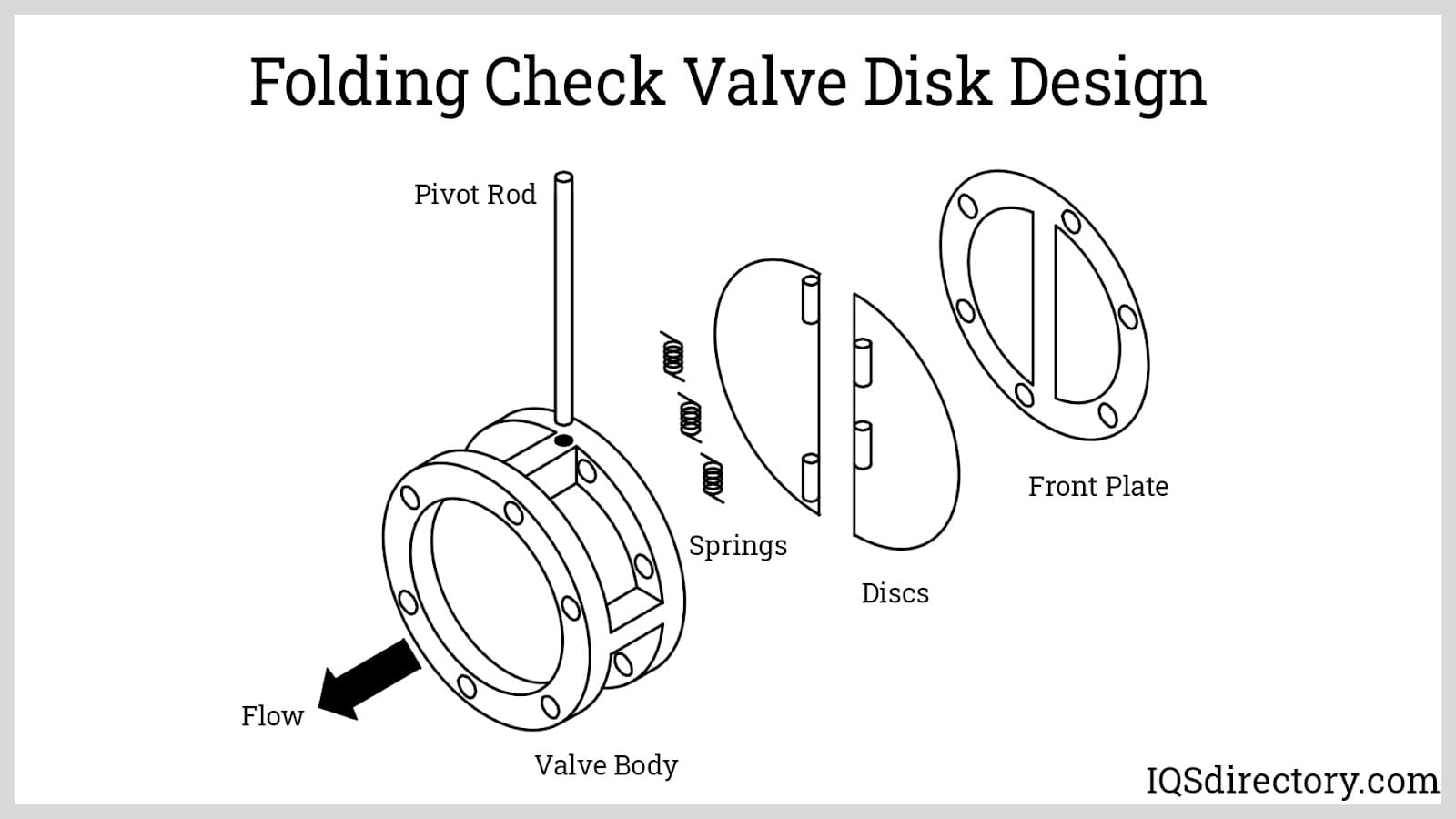 The folding disc check valve is a split disc designed to open under pressure.
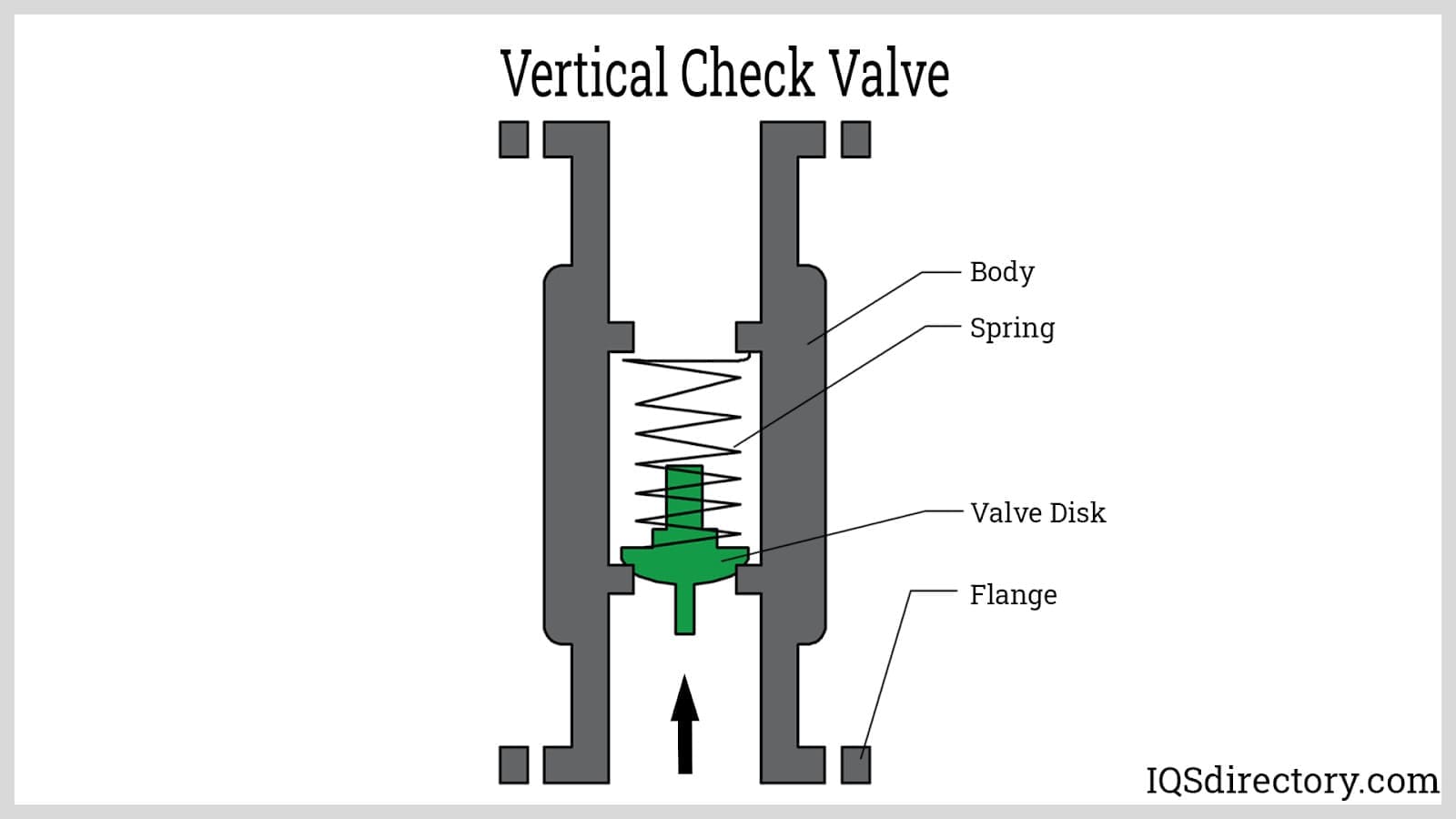 Vertical check valves are used to keep the disc against the seat, then the valve is held shut by the spring until a sufficient amount of pressure is applied to push the spring back and open the valve.
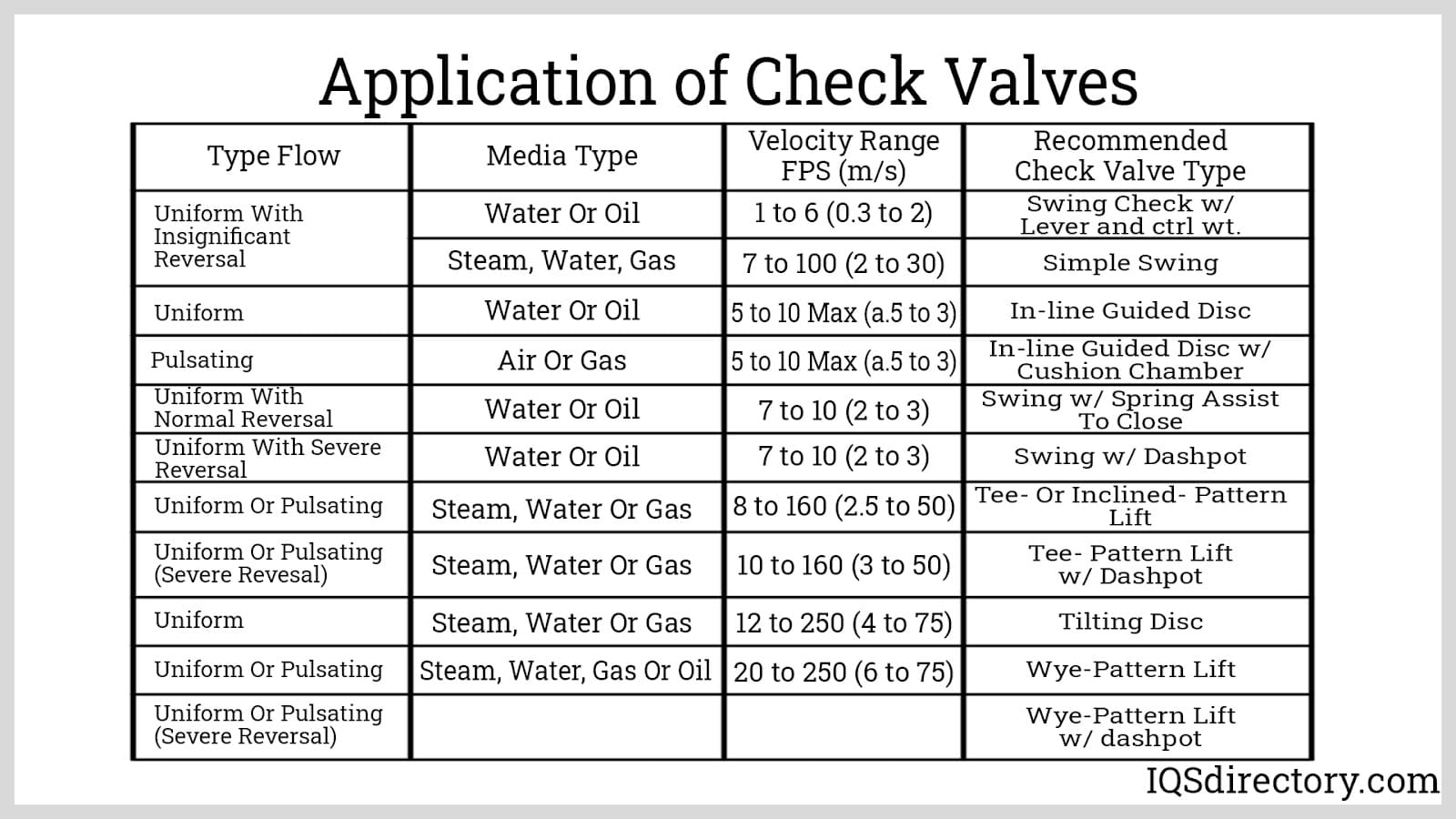 The different varieties of check valves, the type of media, and the type of flow.
Check Valve Accessories
Some of the accessories that come with a variety of check valves include ductile iron body and center-guided silent check valves with straighter vanes to eliminate water hammer. Additionally, aluminum-bronze and stainless steel discs come with the check valves. Some check valve manufacturers make globe style body valves which ensures minimal pressure loss.
Check Valve Installation and Care
When installation and servicing are needed, a professional and licensed contractor is suitable to complete the task. The expert will ensure proper installation and avoid future misfortune from a wrongly installed check valve.
Check valve manufacturers create arrow designs typically found in the tag or valve body to show the direction of the flow and allow the valve to perform its duty. Proper use of a check valve is determined by the type of flow, pressure, temperature, volume, and psi expected. Use certified check valves to avoid premature equipment failure and contamination. When doing maintenance, inspect check valve operations through a transparent cover. Thoroughly grease the O-ring with silicone lubricant and reassemble the valve when finished.
The Drinking Water Act, passed in January 2014, was an effort to reduce the amount of lead in drinking water. This act states that any object that comes in contact with drinking water should have a maximum lead content of 0.25%. To avoid lead contamination, it is recommended that those with older piper systems should switch to ones that use stainless steel or plastic components.
Types of Check Valves
- Ball Check Valve
- Use a loose, spherical ball to block the flow of fluids. In some ball valves, the ball is spring-loaded with a stainless steel spring to keep it shut. If the ball check valves are not spring-loaded, they use the reverse flow to move the ball back to its seat to create a sealing mechanism. A three-way ball valve has either a ball valve element, gate valve element, or globe valve element, typically at the center of the apparatus.
- Brass Check Valve
- Pipe fittings made of alloyed copper and zinc designed to regulate the flow of a process stream and protect against back pressure or backflow.
- Butterfly Check Valve
- Work to regulate pressure flow in large pipes in which the disc takes the form of the tube. The disc is always present within the stream. Therefore, any psi changes are induced regardless of valve position. Butterfly valves can either be iron body or stainless steel.
- Carbon Steel Check Valve
- Tend to have stainless steel internal components, as well as butterfly valves, making them suitable for utility applications and industrial processes, such as chemical, steam, petrochemical, water, and gas.
- Clapper Valve
- A type of check valve used in firefighting. These valves have a hinged gate (often with a spring pulling it shut) that will remain open only in the outflowing direction.
- Diaphragm Check Valve
- Creates a normally-closed valve through the precise positioning of a flexible rubber diaphragm in a piping system. For the valve to open and allow fluid flow, the pressure differential between the upstream must be higher than the pressure on the downstream. The moment positive pressure stops, the diaphragm will automatically flex back to the original closing position. This device is useful in low upstream pressure as it allows for small cracking pressure.
- Double Check Valve
- Consist of at least two independently acting check valves. They are typically used in liquid services.
- Duckbill Valve
- Has a shape like the mouth of a duck which prevents backflow. This valve is made using either synthetic elastomer or rubber that prevents corrosion.
- Foot Valve
- Aid in pumping water and help prevent backflow. They are often used in conjunction with a pump.
- Hydraulic Check Valve
- Prevent backflow in hydraulic systems, typically using a ball or a poppet.
- Lift Check Valve
- A type of disc check valve in which the lift can be raised from its seat by higher psi of inlet fluid allowing fluid flow to the downstream side. When the psi is no longer higher, gravity or high pressure from downstream will cause the disk to get to its seat. Hence, it acts as a safety relief valve. These systems don’t use stainless steel rings to serve as a control valve.
- Miniature Check Valves
- Designed for precision fluid or gas flow regulation in small applications where unidirectional flow is needed. These micro valves operate with the same components as larger check valves, but with each element scaled down considerably.
- Non-Return
- Another name for check valves, or valves that regulate the directionality of gas or liquid process streams. Also known as one-way directional valves, these devices are employed in virtually every industrial, commercial and even domestic application that involves the unidirectional flow of materials.
- Pilot-operated Check Valves
- Non-modular valves arranged in flanged mounting that allow the locking and feeding of hydraulic cylinders. This type of valve has an excellent sealing capability.
- Plastic
- Unidirectional flow control devices made out of organic, synthetic or processed polymers.
- Pneumatic
- Allow fluids to flow in one or two ways. When the fluid is allowed to flow more than one way it is often metered.
- PVC Check Valves
- Unidirectional flow regulators made of a particularly versatile thermoplastic resin and easily suited to the specific needs of industrial, commercial and even domestic check valve applications. An acronym for polyvinyl chloride, PVC is a highly diverse polymer that can be formulated to suit a number of check valve applications.
- Relief
- Relieve excess and potentially dangerous pressure from piping systems or closed-top vessels and are normally closed until the set pressure is reached.
- Sanitary
- Used when the fluids contained in the pipes need to remain germ free. These check valves are often used for medical, food, or dairy purposes.
- Silent Check Valves
- Designed to avoid water hammer or shock in process system by closing before fluid flow reversal. Designed for silent operations, the silent check valves will close quickly and smoothly to minimize hammer noise.
- Spring
- Implement coiled metal components in order to increase the amount of pressure needed to open the valve as well as help maintain closure even in the presence of strong reverse flow surges.
- Stainless Steel Valves
- Non-corrosive hence have a variety of uses in any stainless steel spring equipment that deals with water, oil, and gasoline pressure.
- Stop
- A type of check valve with override control to stop flow regardless of flow direction or pressure. When the valve is open, it acts as a check valve, but the valve can be deliberately shut to stop flow.
- Swing Check Valve
- Usually consist of a flat disc pivoting or swinging about a hinge pin. They swing on the seat to prevent reverse flow or swing away from the seat to allow forward flow. They don’t need stainless steel spring to perform this function since they don’t have a non-return valve.
- Traditional Swing Check Valves
- Most of the time slams in the vertical pipe installations as a result of the long stroke and inertia of the disc. Because of this reason, some swing check valves are outfitted with a lever and a weight accessory. Although check valves come in different sizes, most of the large valves tend to be the swing check valves. They can handle a mixture of liquids and solids, which makes them suitable for use in wastewater management areas such as toilets.
- Wafer Check Valves
- One-way valves that prevent back flow by allowing fluids to flow in only one direction. The psi of forwarding fluid flow opens the disc check valve, and the pressure from back flow closes it. This swing check valve come with a stainless steel body or an iron body.
Check Valve Terms and Definitions
- Actuator
- A part of a regulating check valve that converts various forms of energy (electrical, fluid, etc.) into mechanical motion to open or shut the check valve seats.
- Backflow
- A system’s reversal of normal flow resulting from an increase in the downstream pressure exceeding that of the supply pressure.
- Back Pressure
- The pressure that is the result of a restriction of the main flow, caused by gravity, pumps, or restrictions on the pipe; measured in inches H20 or PSI.
- Elastomer
- A material often used by top check valve manufacturers, in the production of custom check valves which can be stretched or distorted but will return to its original shape.
- Extended Bonnet
- Device used when the material running through a pipe or a valve is at high or low temperatures. This device helps prevent damage to the sealing materials within check valves.
- Fluid Power
- Power that is used to provide motion and force to mechanisms by applying, generating, and controlling pumped or compressed liquids or gases; this term also encompasses hydraulics and pneumatics.
- Penstock Valve
- A gate valve often found in waste water treatment plants. It is used to contain fluids within check valves and custom check valves.
- Pilot Valve
- A small valve which operates a larger check valve with very little power necessary for use; utilized when the system requires the no-return characteristics of check valves for only a portion of the cycle.
- Pneumatic
- Operated or pressurized by air or other gases.
- Pneumatic Actuator
- A device that utilizes pneumatic energy to regulate or open/close the check valve. A spring that is used solely to open many custom check valves, will normally be fitted inside a valve which allows the valve to return to the closed position.
- Poppet
- A valve that moves up to or from its seat perpendicularly within check valves.
- Positioner
- Makes certain the closing device of check valves stays in the correct position.
- Pressure Differential
- Pressure difference in check valves found between the inlet and the outlet.
- Pressure Spike
- A quick pressure rise common to many custom check valves.
- PSI (Pounds Per Square Inch)
- A unit of pressure; equivalent to the metric unit of Kilonewtons per square centimeter.
- Tank Valves
- Check valves that are able to be inserted into the bottom of tanks.
- Valve Seats
- A stationary part of custom check valves which restrict fluid or gas flow when it comes in contact with the movable portion of many custom check valves.