Car Wash Equipment
Car washing is the manufacturer-recommended process of cleaning a vehicle. It can be performed manually, with equipment as simple as a bucket and a rag, although there are many products on the market to facilitate hand washing, spraying, scrubbing, waxing, and drying. These include pressure washers, natural or chemical cleaners and waxes, sponges, brushes, nozzles, and natural or synthetic cloths.
Hand washing of cars is still done commercially, but automated car washing technology has made the manual process, or at least most of the steps involved, all but obsolete, except for the die-hard hand washing fan.
Automated car washes may be completely automatic or may have attendants who perform certain steps in the process. They may be coin or credit card operated, manned by an attendant who monitors the machinery and equipment, or manned by multiple attendants who perform such steps as interior detailing and drying.
Quick links to Car Wash Equipment Information
History of Car Washes
Working at the car wash was a staple of urban living long before the famed movie of the 1970s brought it to the public eye. In 1914, proprietors Frank McCormick and J.W. Hinkle opened the first known commercial car wash, the Automobile Laundry, in Detroit. Workers pushed cars through a tunnel as other workers applied soap, washed, rinsed, and dried them. In the 1920's, at the Auto Wash Bowl in Chicago, cars drove around in circles to clean the mud off of tires and undercarriages before driving into a stall where the car was hand washed. The first automatic conveyor wash was opened in Hollywood in 1940. The car was attached to a conveyor that pulled it through the tunnel, but the cars were still being washed by hand.
In 1946, Thomas Simpson developed an overhead sprinkler that wet the vehicle from above. The same year, Leo Rousseau started Minit-Man, Inc. which produced the first auto washing equipment. Rousseau's very first customer, Paul Maranian, opened Paul's Auto-Wash--the first in the world--in Detroit. In 1948, Joe Dahm expanded the business to Indiana and beyond. 1951 saw the first completely automated car wash system in Seattle. The Anderson brothers, Archie, Dean, and Eldon, developed a system using nozzles to apply the soap and water, automated brushes, and a 50 horsepower dryer.
Dan Hanna, sometimes known as "The Father of the Modern Car Wash", founded the Rub-a-Dub in Milwaukie, Oregon in 1955. He continued to invent and improve car wash equipment and by the mid 1960s, was the world’s largest manufacturer. Carlo Pecora of Appleton, Wisconsin started to first express car wash which provided an exterior-only cleaning, in 1962.
During the 1970s, Dan Hanna developed the 3-in-1 system which offered a gas-up, exterior wash, and interior cleaning. The system did not catch on, partly because of the time consuming process and partly because many businesses could not accommodate the 14' x 28' package. During the 1980s, Flex-serve car washes gained better favor as a system that offered either full service or express detailing, in separate cells of the wash bay. Ben Alford presented the first automated express wash with gates and a self-pay terminal in 2001.
As technology advances, machines that use water and power more effectively continue to be incorporated into car washing systems, providing faster, safer, and more efficient cleaning with regard to environmental impact. Using stainless steel or powder coated materials to manufacture equipment provides longer lasting, more durable machinery.
How a Car Wash Works
For the weekend washer without a driveway and a hose, a self-serve car wash is the answer. These systems offer an assortment of car cleaning modes and services, often starting with a coin operated industrial strength vacuum cleaner placed next to a trash can, although the vacuum station may be placed at the end of the process.
Once the debris has been cleared out, the sand and gravel sucked out of the carpets, and crumbs brushed from the seats, the vehicle is driven into a bay where the coin operated washing process begins.
A control panel allows you to choose from an assortment of washing options that may include rinsing, engine degreasing, tire cleaning, soaping, and/ or brushing. The spray nozzle, attached to a swiveling overhead manifold that supplies water and cleaning solutions, typically has low and high velocity settings that are controlled by a trigger in the spray wand.
A separate scrubbing brush, attached to a separate swiveling manifold that dispenses soap foam, can be selected from the control panel. Most often, the brush is used to scrub surfaces after an initial rinse and use of cleaning solvents.
Some self-serve wash facilities offer a "truck wash" bay that is either taller than the standard bays or open on top. These bays are equipped with one or two step-like ladders to facilitate proper washing on upper sides and roofs of trucks, buses, motorhomes, and trailers.
Once the vehicle has been thoroughly cleaned, the system can be turned to the rinse cycle for the final rinsing. In some self-service systems, a hot wax coating may also be applied by the high pressure spray nozzle. After the final wetting is complete, the car is driven out of the bay where it may be hand or air dried and detailed.
The amount of time allowed for the wash depends solely on the amount of money the driver is willing to spend. Most self-serve car washes require a minimum of two dollars to initiate the program for three to five minutes. Additional coins may be added to extend the time. Some facilities will accept credit cards for payment.
Mobile car washes are available in some areas. The mobile washer will come to the car and provide an environmentally safe, professional car cleaning upon request. This is ideal for those who do not have the opportunity to stop for a car wash due to time or location restraints, or for companies with fleets of vehicles but no on-site car wash facility.
Places to Get a Car Washed
- Commercial Car Wash
- A car wash equipment manufacturer is a company that provides the equipment and material necessary for various kinds of commercial and sometimes industrial car washes. When starting a car wash business, many businesses purchase used car wash equipment. There are many different kinds of car wash systems; some work without employees and some operate with many. Automated car washes have gained significant popularity in recent years. They are very common and come in two different varieties: touchless and cloth friction. Touchless car washes use high-powered water pressure sprayers to clean cars, which either move around the parked car or are stationary through which the car passes. Only the water and cleaning agent come in contact with the car, which prevents scratching and marking the car's finish. The alternative, cloth friction, uses soft yet powerful cloth to clean the car, which are large, rotating brushes that use soap to scrub the car exterior clean. Both forms of auto car washes use sensors called eyes that trigger a digital control system to enable the washing sequence and adjust to the car's size. Near the end of auto car washes is usually a drying station, where high-pressure compressors blow air over the surface of the vehicle, drying it before exiting the car wash.These auto car washes are often housed in car wash tunnels and use car dryers.
- Self Service Car Wash
- A do-it-yourself alternative to the automated type, and they often accept either credit cards or are coin operated car washes. Inside, a water gun with different settings is set on a timer, which is dependent upon the amount of money customers want to pay; the more money they pay, the longer they have to wash their cars. Many of these timed systems are coin operated, but newer wash stations now accept credit or debit cards. The pressure sprayer and foaming brush are joined to a boom, which is a hose connected to a large central pump. The booms are attached to the wall or ceiling of the bay, with plenty of slack so the customer may move around their car easily. Because self service and automated car washes rarely have employees on hand and are machine-run, they are often open to the public 24 hours a day. Many car wash companies offer waxing and undercarriage cleaning services.
- Hand Car Wash
- Customers can take their car to a hand car wash, a more expensive option, where workers clean and do detailed work by hand. Sometimes companies start mobile car washes, which are services that travel to their customers instead of the other way around. Hand car washes offer hand washing with wool towels or mits, car detailing and hand waxing in about 30 minutes. Some offer interior cleaning, carpet shampooing and vacuuming, and can cost as much as $100 per visit. Mobile car washes are the most convenient option for car cleaning; they bring their services to locations specified by their customers. Mobile car washes generally offer exterior cleaning, waxing, vacuuming and interior cleaning. Like the hand wash system, this is a more expensive option since customers pay for use of the equipment, manpower and sometimes for the transportation costs of the company. These services tend to be patronized most frequently by customers who are unable or unwilling to bring their cars to car wash services or to wash them themselves. Using commercial car wash systems has many benefits in comparison to at-home driveway methods. They use much less water than a hose, which is in some cases recycled and filtered for future uses. Home car washing can negatively affect the environment unless the contaminated water is collected somehow and disposed of in an appropriate way. Commercial car washes are generally better equipped to do this. Non-commercial cleaners can damage a car's finish over time, while the cleaning agents used at car washes are designed specifically for car exteriors and do not harm a car’s finish. Despite some common misconceptions, using commercial car washes is also more economical, because less water is used per wash.
Car Wash System Images, Diagrams and Visual Concepts
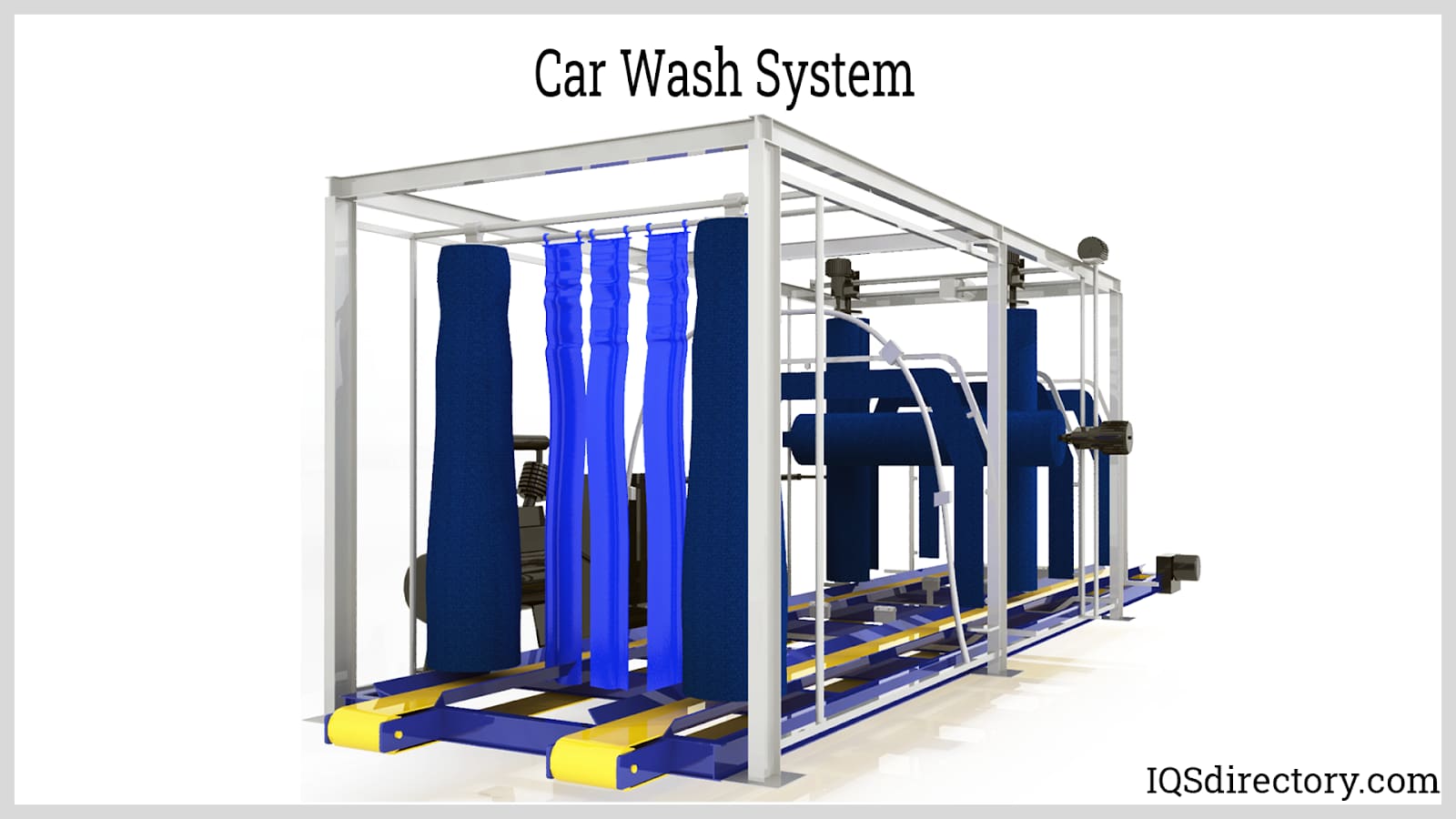 Car wash methods depend on the use of water, water reclaim systems, chemicals, various types of sprayers, brushes, and cleaning cloths.
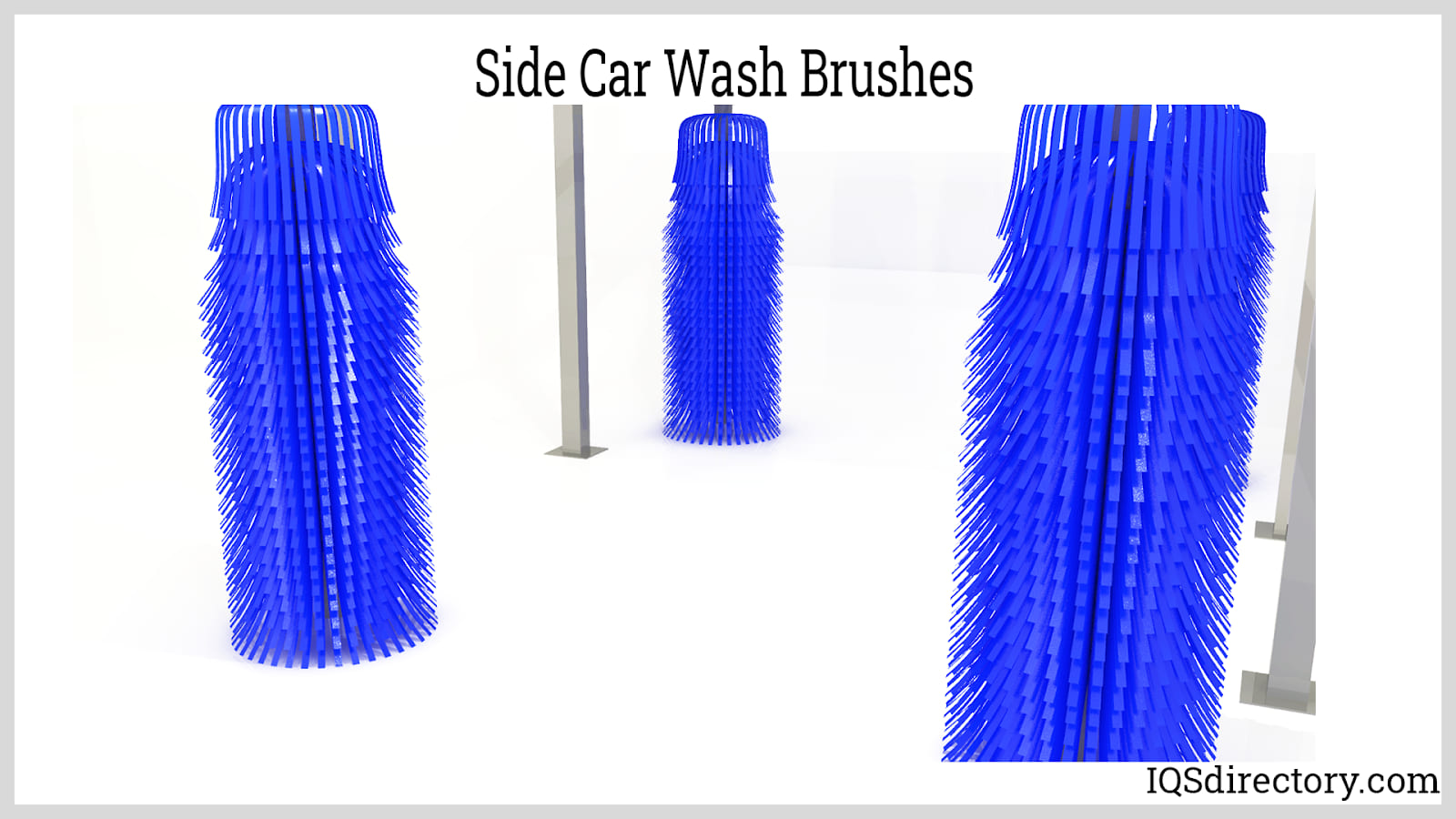 Brushes are essential components of a car wash and come in different varieties depending on the system.
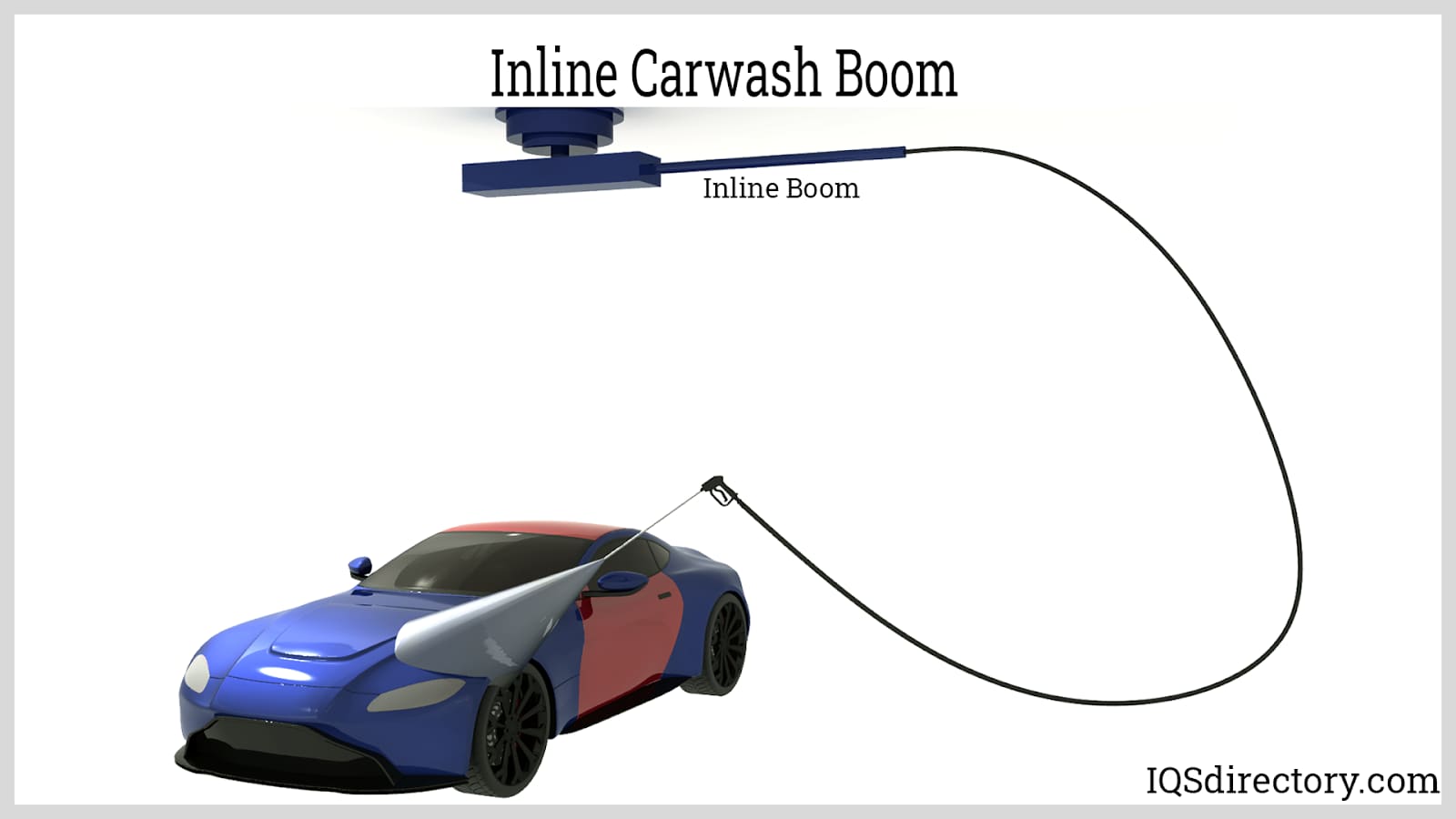 Booms are a part of self service car washes, which are rods that hold hoses from the ceiling or walls and have several varieties with inline and Z styles.
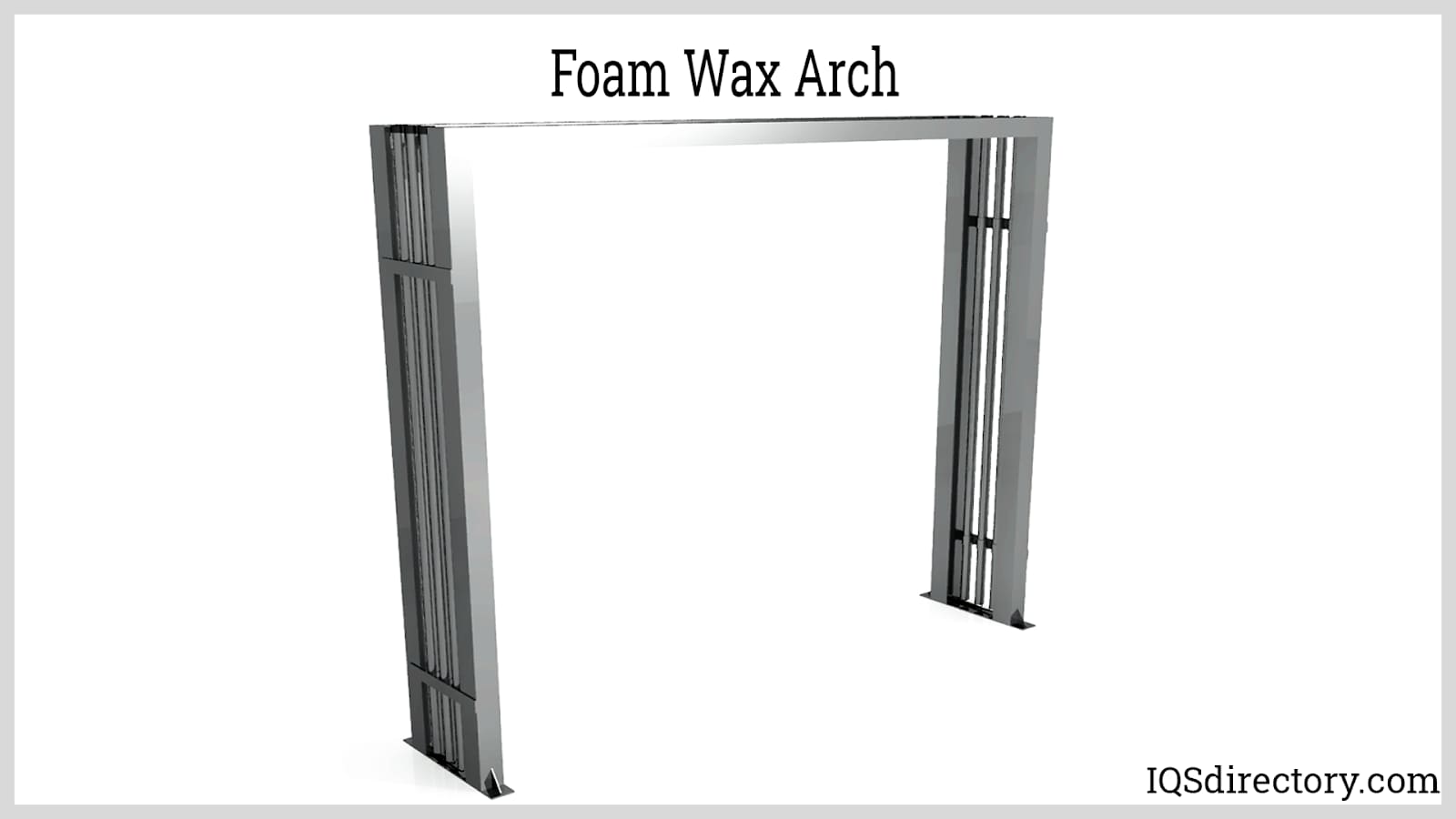 The wax arch applies a specially formulated wax designed for use on chrome, glass, and the surface of a car.
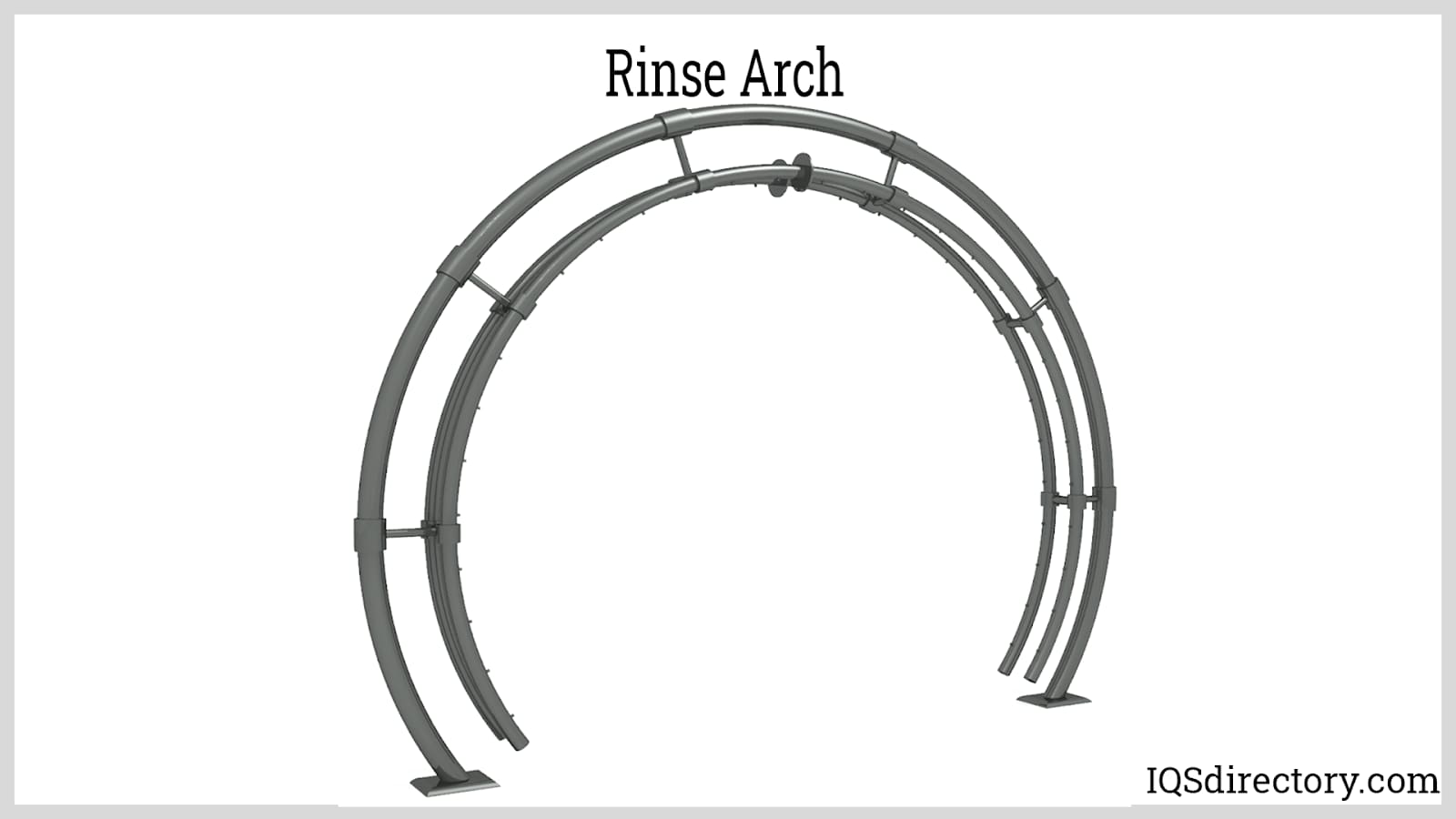 The rinse arch has a series of nozzles which sprays water to remove residue from the cleaning process.
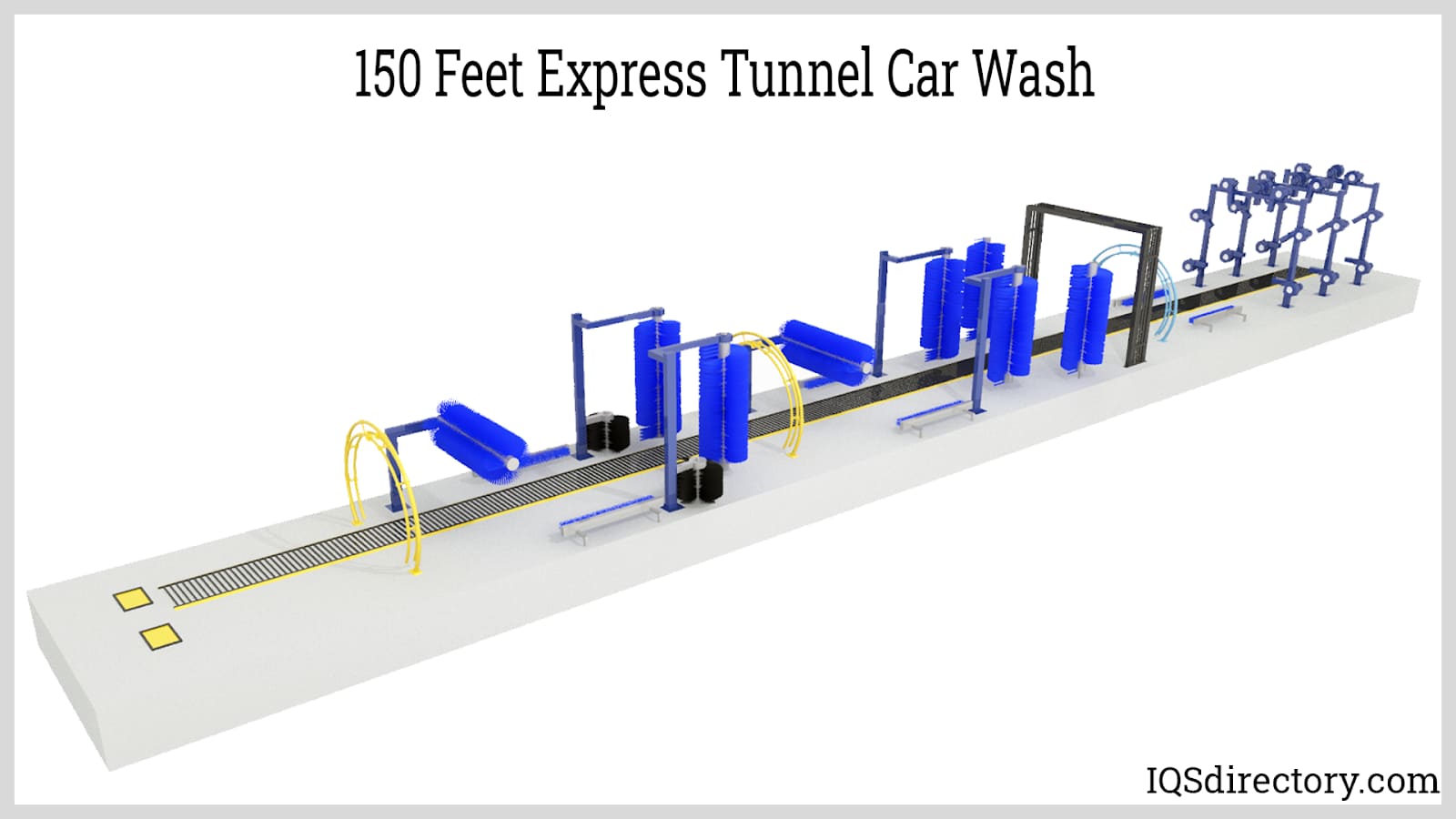 Express tunnel system can be touchless, friction, soft touch, or any combination.
Types of Car Wash Systems
The automatic car wash has come a long way. Several decades ago, many car owners feared the damage that older car washing systems were notorious for causing. Scratches in the paint caused by hard or contaminated brushes, misbehaving arms that dented doors or tore side mirrors from the car, and rollers that smashed windshields and caved in roofs have been eliminated. Today's car wash equipment provides a thorough yet gentle cleaning that adds years to the life of a paint job. Some automated car washing systems include in-bay automatic washing, tunnel washers, steam washers, waterless, and touch free systems.
- In-bay Automatic Car Washes
- A single station system. Often an unmanned system, the driver chooses and pays for a specific level of wash through the automated control box, and pulls into the queue. When it is that car's turn, the driver pulls into the bay. Lighted signs and arrows tell the driver where to stop. Once the vehicle is settled, the entrance door closes behind it, a sensor reads it's dimensions, and the process begins. A spray arm applies water and cleaning solution, at high pressures, to the car as it passes by and around the vehicle. A secondary pass rinses the cleaning products and dirt from the car. Another arm delivers high pressure air to dry the car. Upon finishing, the exit door will open and the driver may exit the bay. Some systems are equipped with multiple arms for more effective cleaning. Many are equipped with an undercarriage spraying device to clean the underside of the vehicle.
- Tunnel Car Washes
- Typically employ a conveyor to move cars through the wash process. The vehicle enters the tunnel and parks on the conveyor. It is automatically washed, scrubbed, rinsed, and dried as the conveyor feeds it through various stations in the tunnel.
- Touch Free Car Washes
- Utilize a high pressure spray of water and cleaning solution, instead of brushes, to minimize potential for surface damage. The quality, pressure, and temperature of the water, as well as the chemistry of the cleaning solution, and the amount of time it is given to work, are all factors in how well the touch free system works. With the right combination, the vehicle will come out shiny and clean without scratches or streaks.
- Waterless Car Washing
- A cleaning process that uses chemicals or wax to clean a car without water. It was developed in Australia, where water restrictions are standard procedure, and is ideal for areas where drought is prevalent or water consumption is limited.
- The cleaning solution is sprayed directly onto the vehicle and is wiped off and buffed, using a soft cloth. Microfiber towels are perfect for this task. Original cleaning solutions were silicone or petroleum based, but greener products have replaced them. Carnauba wax or coconut oil offer a shining, clean finish that is organic, non-toxic, biodegradable, and affordable.
Car Washing and Environmental Factors
Car washes present a unique environmental challenge. Water conservancy and environmental cleanliness do not naturally coincide with the industry, so steps and precautions must be taken to ensure proper management of the runoff and overspray that are inherent to the process.
Water restrictions, water reclamation, and soil contamination are at the forefront of environmental concerns for the car wash industry. The primary pollutants resulting from car washing are grease, oil, lead, and phosphates. Commercial car washes utilize an interceptor drain to remove these contaminants from the water before it is returned to storm drains or natural waterways.
Some states discourage home-washing of cars due to environmental impact. They have implemented incentive programs for people to use commercial car washes and have even created a push for charity car washes, normally held in a school, church, or municipal parking lot, to be held in commercial car wash facilities.
Things to Consider When Purchasing Car Wash Equipment
Industrial car wash packages come in a variety of configurations with a variety of options. Your car wash equipment manufacturing company will be able to help you choose which one works best for your situation.
- Facility Setting
- Consideration will be given to the type of setting the facility is going to encounter. Whether the car wash will be a single bay unit or multiple bays, attached to a gas station, vehicle maintenance facility, car dealership, or stand alone, will determine the amount of space needed and how much water and power are required to operate. The car wash manufacturing company will provide you with quality equipment and cleaning products that optimize your chosen process.
- Demographics of the Facility
- Demographics are a huge part of the decision making process. A poorly placed business will most likely fail before it even gets going. Inadequate facilities may be counterproductive to success. Finding the right balance between location and customer base can be a challenge.
- Your car wash manufacturing company should be able to help you perform studies on demographics and environmental impact, or direct you to someone who can. They will help you settle into your business, offer suggestions, provide maintenance, service equipment, and help you expand when business booms.
Car Wash Equipment Terms
- Acid
- An important chemical additive due to its capability to react with alkalis or bases in water to produce salts.
- Boom
- The arm extension holding the hose and nozzle assembly for washing vehicles in a self service car wash bay; the boom could be mounted either to a bay wall for 180° or to the bay ceiling for 360° mobility.
- Centrifugal Separator
- Apparatus that removes big particles of dirt out of the flow of reclaim water flow.
- Cloth Friction Wash
- The use of wash material on the surface of the vehicle for dirt removal.
- Correlator
- Can be found at the beginning of the conveyor in an automatic drive in car wash. It is the system of rollers that aligns the vehicle wheel with the conveyor.
- Detergency
- The capability to remove or clean soil. Typically, detergency is relative to the action of a cleaning medium like detergent, soap, alkaline salt or a mixture.
- Dissolved Solids
- Particles of dirt or other debris too fine to be visible in water.
- Digital Control System (DCS)
- Calculates information determined by eyes/sensors and activates proper stations and phases of the wash as needed.
- Exterior Wash
- A phrase that refers to a car wash service that only cleans the outside of the vehicle, typically an unattended wash without detailing services.
- Eyes
- Infrared sensors with a beam between them to activate the car-washing system when a vehicle enters and measure the length and width of the vehicle.
- Foam
- Car wash cleansing foam created by mixing chemical cleaners with water and air. Foam is usually for deep cleaning or a main wash station.
- Foam Applicator
- Applies foam detergent to the car for deep-cleaning, usually with adjustable nozzles.
- High-Pressure Washers
- A system of rotating water jets, arranged like a pinwheel, that spray concentrated streams of water onto the car. Often used on the lower portion of the vehicle to remove mud, dirt and salt.
- Mitter Curtain
- Long strips of cloth that hang from the top of the tunnel in a car wash and are usually motorized to move up and down the vehicle. They clean the hood, roof and trunk.
- Motor Control Center
- Enclosed area housing the switching, starters and overload protection equipment used in a complete car wash system to run the different motors on various machines.
- Pre-Soak
- A solution that is sprayed over the car in the initial wash stage to wet the vehicle before detergents are added and to loosen dirt and oil.
- Rinse Arch
- Nozzles arranged on an arch that use clean water to remove whatever residue is left after the wash.
- Scrubbers
- Large cylinders that rotate rapidly (anywhere from 100 to 500 rpm) to spin the hundreds of small cloth strips attached to them.
- Tire Applicators
- Nozzles, near the ground, which spray the tires with a solution designed to remove brake dust and brighten the black rubber of the tire.
- Undercarriage Wash Applicator
- Device to deliver high volumes of wash water to the underside of vehicles to remove mud and salt. Can also be used as a rust inhibitor applicator.
- Wax
- Usually applied by an arch, forms a water-resistant coating on vehicles for shine, polishing and protection. Sometimes applied in foam form or liquid.
- Wrap-Around Washers
- Type of scrubber on short booms that move around to the front and rear of the vehicle.