Aluminum Extrusions
Aluminum extrusions are linear aluminum products highly valued in a wide spectrum of structural applications due to aluminum's high strength-to-weight ratio and the cost effectiveness of the metal extrusion process. Like other types of metal extrusions, extruded aluminum is either hot extruded or cold extruded through a die, shaping aluminum stock into various types of extruded aluminum shapes, such as angles and beams, aluminum channels, aluminum profiles or aluminum extruded tubing.
Extruded aluminum products like aluminum channels, shapes and profiles are both strong and lightweight, making them perfect for structural applications such as light poles, building and window frames, lighting fixtures, car bumpers, hardware joints, trim, and many other uses in construction, industrial and automotive industries. Shapes and channels can be extruded into complex, precision tolerance shapes to interlock with other aluminum channels or structures, or they may be extruded into heat sinks for cooling electronics, refrigerators and heat engines. Because aluminum is strong, rust and temperature resistant, easily fabricated and 100% recyclable, aluminum and aluminum alloy extrusions are often the first choice in building or structural materials.
Quick links to Aluminum Extrusions Information
History of Aluminum Extrusion
Joseph Bramah, locksmith and inventor of the hydraulic press, patented the first metal extrusion process in 1797. He had spent years trying to perfect a pick-proof lock. He hired blacksmith Henry Maudslay, who would prove to be an engineering genius, and the two developed a process of smashing soft metal through a mold using a hand driven plunger to create parts for the locks. This led to the invention of other tools and items that could be applied across multiple industries. Thomas Burr began to utilize the hydraulic press with lead in 1820. In a process called "squirting", he was able to make pipes and rods. This opened up opportunities for standardized extrusion of other metals.
Aluminum was recognized as an elemental metal in 1807. It was deemed a luxury due to the high costs associated with the difficulties in processing raw material. Even though aluminum is the most abundant metallic element on Earth, and 100% recyclable, it is rarely found in pure form, and must be heavily processed to extract. Toward the end of the 1880's, Charles Martin Hall and Paul Heroult independently and simultaneously developed a smelting process involving electrolysis. Known as the Hall-Heroult process, it would bring the price of aluminum down to less than that of gold, opening up avenues for industrial design. Several years later, Karl Josef Bayer discovered a chemical process to extract aluminum from the ore. Both the Hall-Heroult and Bayer methods are still in use today.
The first actual extrusion press was built in Pennsylvania, in 1904, allowing for the rapid expansion of automotive and aircraft industries. The processes involved in making sheet aluminum for these applications led to the development of the aluminum rolling machine, patented in Switzerland by Robert Victor Neher, in 1910. The ability to create paper thin sheets made aluminum foil a household staple.
The newly established Aluminum Association held its first meeting in New York in 1935. The U.S. rose to the pinnacle of aluminum processing as WWII dawned. The metal was used in the manufacture of airplane frames, ships infrastructures, and millions of mess kits. During the war, "Aluminum for the Defense" and "Tinfoil" drives were held to support the war effort through recycling. Often, movie tickets were exchanged for balls of used foil. Between 1940 and 1945, 296,000 aircraft were produced in America, and more than half were primarily aluminum.
Sputnik I, a Soviet satellite, was launched in 1957, kicking off the International Space Race for the moon. "Sputnik", meaning "fellow traveler", was a 2 foot diameter ball made of aluminum alloys, weighing about 200 pounds. Today, 50 to 90% of all spacecraft are made with aluminum alloys.
Coors Brewing Company popularized the two-piece aluminum can with a pop top lid in 1959, revolutionizing the drink packaging industry. Several years later, they also implemented the first "cash-for-cans" recycling program.
Aluminum Extrusions Benefits and Advantages
The versatility of aluminum has made it one of the most sought after raw materials for design and construction. The metal is unique in many ways; high strength-to-weight ratio, tolerance against corroding environments, conductivity, ductility, non-magnetic properties, and recycling attributes, which makes it possible to use repeatedly without losing integrity. It is no surprise, aluminum and its alloys have applications in a wide range of industries, from aircraft to house construction to design using extrusion process.
Aluminum’s malleability allows it to be machined and casted easily, which complements the extrusion process. In the aluminum extrusion process, aluminum alloy is transformed using machines into construction and design materials with a definitive cross-sectional profile and shape, such as aluminum extruded tubing, aluminum angles, and aluminum profiles. The resulting products by the extrusion process offer strength and stability, yet being one third the density and stiffness of steel. Its strength is supplemented by alloying it with other materials.
- Machining Advantages
- Less machining and ability to be extruded in complex shapes. You can extrude aluminum to achieve any design demand. Whether it is intricate or straight shapes, extrusion reduces the need of manufacturing component parts, which cuts down on assembly time. Other metals are also used for the extrusion process; however, shapes that can be achieved by aluminum extrusion sometimes cannot be attained by any other metal.
- Lower Cost Benefits
- Aluminum is the most cost effective metal in regards to the extrusion process; other metals that complement extruding are significantly expensive to render any profit. Moreover, the cost of extruding aluminum is quite low compared to other processes such as casting, roll forming, molding and forging.
- Structural Efficiency
- Even after the extrusion process, aluminum maintains its optimum structural integrity, which makes it suitable for carving into intricate shapes. Additionally, the metal can be easily alloyed, unlike other materials, when extra strength is needed around corners and cross-sections.
- Light Weight
- Aluminum, unlike any other metal, is strong and durable while being light. The products made from aluminum can be half the weight and still have equivalent structural integrity in comparison to other heavy materials that can be readily fabricated.
- Attractive and Resistant Finishes
- Giving electrolytic coating to aluminum through the aluminum anodizing process for protective or decorative purposes is relatively easy. Designers and fabricators can render virtually any color they desire.
- Low Maintenance
- The metal is naturally resistant to corrosion, giving the finished products a long life and durability. Aluminum does not require a layer of paint to protect it, the finish provided during the fabrication process gives it all the protection it needs to last a long time.
- Easily Recycled
- Among all the characteristics, its ability to be recycled completely without any loss of strength fares it above other similar raw materials. Whether it is the consumer, fabricator, or environment agencies—all show support for aluminum as a raw material.
- In the present day complex construction process, aluminum practically subdues all structural, thermal, aesthetic and acoustic challenges that designers and fabricators throw at it. It is virtually the most adaptable metal we have on earth.
The Process of Extruding Aluminum
The process of extruding aluminum may use "hot extrusion", "warm extrusion" or "cold extrusion", each of which have their own benefits and drawbacks. In order for stock aluminum to be formed into tubing, channels, shapes or profiles, round aluminum stock called "billet", or "logs" are pressed by a ram through a die, which is a hollow profile that shapes the aluminum into a specific extruded shape as the billet is squeezed through. Direct extrusion holds the die stationary while the ram forces the aluminum alloy through the die opening, while indirect extrusion holds the die stationary as the hollow ram moves into the stationary billet from one end, forcing the metal to flow through the die. The temperature of both the billet and the die are crucial for uniform extrusions. In cold extruding, aluminum billet is pressed through the die at room temperature or near room temperature, yielding close-tolerance components with high strength and a good surface with minimal finishing required. Warm extruding, or forging, is done on billets brought to temperature ranges between 800 and 1800 degrees F, with ideal ranges being between 1,000 and 1,330 degrees; these temperatures remain below material recrystallization temperatures, enhancing billets' ductility while keeping the material solid. Warm extruded aluminum requires less ram force (and energy) and often requires no secondary heat treatment. Hot extrusions are performed on aluminum which has been fully plasticized by heat and is often performed in a vacuum to avoid oxidation. After a shape or channel has been extruded, it is straightened by a stretcher.
Although the process of extracting aluminum ore from the Earth's surface is relatively costly, aluminum has a far longer service life than most metals and may be fully recycled while retaining 100% of the material's original properties. In addition to the ability to be fully recycled, other green uses of aluminum extrusions include using aluminum extrusions in transportation often saves on carbon emissions, as aluminum is a far lighter metal than its alternatives, such as steel; aluminum combines stainless steel's beneficial properties of corrosion resistance and strength with 1/3 the weight. Aluminum is easily formed and machined and is an excellent conductor and reflector of heat, making it an ideal material for heat shielding applications such as heat sinks. As the recycling industry expands its capabilities to recycling a broader range of aluminum parts, large aluminum extruding and manufacturing companies are also beginning to invest in aluminum recycling. Recycling aluminum requires only 20% the amount of energy used by acquiring virgin materials; this energy savings is converted into a significant cost savings by aluminum extruders who use recycled aluminum materials.
Extrusion Process Types
- Direct Aluminum Extrusion Process
- Machines that extrude aluminum are typically cylindrical, horizontal presses.
- In the direct aluminum extrusion process, the billet is heated to a temperature between 750 and 925 degrees Fahrenheit. This brings the aluminum to a soft, but still solid state. The heated billet is fed into the aluminum extruder. Lubrication, called "smut" is applied to the dummy block at the end of the ram and to the billet. This keeps them from sticking together. The billet is then loaded into a steel container or feed tube. An extrusion die is secured in the open end of the tube. 100 to 15,000 tons of pressure are then applied to the ram which squeezes the soft metal through the chamber into the die, forming the desired shape of the extruded part. If more billets are needed, they are welded onto the butt end of the original billet and the extrusion process continues.
- Indirect Extrusion
- Or backwards extrusion, is similar to the direct process but the billet is stationary and the die assembly, attached to the ram, is pressed through the billet. Indirect extrusion can be used with larger billets due to a 25 to 30% reduction of friction over direct extrusion. This also increases extrusion speed and decreases possibility of defects. Depending on the alloy, size of the workpiece, and intricacies of the profile, aluminum can be extruded at a rate of 1 to 200 feet per minute. Once a significant length has been extruded, the aluminum extrusion is cut off and quenched by water bath, mist, spray, or cool air. Faster cooling time helps preserve the characteristics of the extrusion profile. The cooling process allows for surface oxidation which helps make the part naturally weather resistant.
- Cold Extrusion
- Done at room temperature. The aluminum is pressed through a simple die under extreme pressure. These extrusions are often "L" or "T" shapes, or similarly simple designs, such as soda cans. Advantages of cold extrusion are the lack of oxidation and maintenance of mechanical properties. Cold extrusion does not interfere with the crystalline structure of the aluminum, allowing for a stronger product at lower temperatures and better tolerances. The extrusion ratio is a mathematical equation dividing the cross sectional area of the billet by the cross sectional area of the extruded part profile. This can be used to calculate materials required and amount of waste. Parts with a lower extrusion ratio often need less finish machining because they do not restructure the initial grain flow of the metal.
- Finishing Aluminum Extrusions
- Once the aluminum extrusions have aged, they are precision cut into shorter lengths. Corners may be mitered, or specified bends may be made. These parts are then cooled or heat treated for further strengthening. Afterwards, they are ready for their finish coat. Parts may be painted with traditional liquid paint. Other methods of surface finishing include powder coating and anodizing. Powder coating is a process wherein the thermo-plastic or thermo-set-polymer paint powder is applied electrostatically, then heated to form an enamel-like skin. Thinner layers have an orange peel texture, thicker layers are smooth. The powder is low in volatile organic compounds (VOCs) and the overspray can be recycled, unlike liquid paints. Anodizing is a process of electrolysis that thickens the oxide layer on the surface. The extruded part acts as the anode when placed in a galvanizing solution and electricity is applied, re-crystallizing the surface finish into a smooth, corrosion resistant layer. Dye may be placed in the galvanizing solution to add color to the porous layers of the part.
Characteristics of Aluminum Extrusions
For more than a century, aluminum has established itself as the most resourceful manufacturing material. To meet newer, challenging requirements, it progressively has gone under development processing by fabrication, continual processing, and alloy innovations. Present-day aluminum extrusions are the result of those continuous developments.
Aluminum profiles have virtually opened the door to unlimited design adaptability and manufacturability. They can be easily integrated with other design features, reducing the secondary processing such as welding and machining.
- Strength in Aluminum
- Aluminum already has a natural high strength-to-weight ratio, giving extrusions the structural strength needed for most purposes. However, if the design demands higher strength, then in those cases it can be supplemented by concentrating alloys at specific points, varying wall thickness, and including internal reinforcement in the design.
- Complex Constructs for Extrusions
- Extrusions can easily be machined into complex shapes, with no mechanical joints. One-piece aluminum extruded tubing, aluminum angles, and aluminum shapes and sections are typically stronger, making them less likely to break over time under pressure.
- Aluminum Extrusion Customization
- Be it manufacturability, functional, or aesthetic objectives, extrusion meets all those demanding criteria without any compromise to its structural integrity. Its ability to be customized as per the design makes it a preferred manufacturing material in product solutions.
- Time-to-Market
- Tooling aluminum is relatively easier compared to the tooling done in steel service centers. Extrusions are relatively less expensive and generally involve shorter lead times, making it a preferred choice for faster prototype development, testing, and launch of a product.
- Weight of Aluminum
- Aluminum extrusions weigh almost one-third of iron and steel, which makes it far easier to handle, inexpensive to ship, and applicable to products where weight reduction is a big factor and priority.
- Assembly Time for Extrusions
- In manufacturing, assembling takes significant time, and newer aluminum extrusion designs are greatly cutting the assembly time by simplifying the fabrication and assembly process.
- Resistance to Corrosion
- Aluminum naturally offers effective corrosion resistance; in modern extrusions, including intricate aluminum shapes and heatsink, aluminum anodizing is done to provide another protective layer, with a great aesthetic finish.
- All these characteristics distinguish extrusions from other manufacturing materials.
Design Aspects of Aluminum Extrusion
The design of extruded parts depends on the end application. Parts are designed with consideration for weight, ease of assembly, functionality, and finishing costs. The two main classes of custom aluminum extrusions are solid profiles which use a flat die, and hollow profiles which require the use of a two part die consisting of a mandrel and a bridge. The mandrel creates cavities in the profile as the bridge supports the outer edge. Simply shaped solid profiles with uniform wall thickness are the easiest and most cost effective to make and finish.
Dies used to create the aluminum extrusions are made from tool steel (typically, sis 2242). The aperture, or open space in the die that corresponds to the cross section of the desired profile, is produced by spark erosion, or electrical discharge machining, also known as die sinking or burning. Electrical discharge machining is the process of applying rapid-fire electrical discharges between two electrodes that erode the steel of the die blank into the desired profile patterns. Keeping these designs simple helps to keep costs down, however, intricate profiles may be custom designed to suit any purpose. When designing the die, it is important to keep the end product in mind. Extrusions with intricate profiles often require additional machining to smooth out rough surfaces or to provide adequate tolerances. Allowable limits of variation in dimension, physical properties, and safety are rated on the International Tolerance grade scale, which is used to determine appropriate wall thickness of the material to be extruded.
There are many companies who manufacture standardized extruded parts. Most common extrusions are available locally or can be ordered for delivery. Some companies can manufacture dies and extruded products for custom applications. It is important to find one with engineers who understand a finished piece of work and what must be accomplished to create it. Using the correct alloys for specific end results is crucial, as is choice of finishes. The company should be able to help the client design parts that will assemble readily and function properly within the scope of affordability. A good manufacturer will consider all aspects of the piece, from its concept to finished product, and provide the best materials and processes for it.
Industries That Use Aluminum Extrusions
The number of industries which use aluminum extrusions is both extensive and diverse since a wide number of shapes are achievable through the extrusion process. For example, extruded aluminum channels make great components for automotive and transportation construction, as it is light and corrosion resistant; aluminum channels and profiles are used in vehicles such as trains, SUVs, semi trucks and cars for parts and components including panels, window panes, runners and bumpers. In addition, machinery and industrial equipment such as scaffolding, process and mining equipment use extruded aluminum tubing, shapes and profiles as lightweight, durable equipment components, while many types of office and hospital furniture use aluminum tubing and channels in their construction. The building, architectural and construction industries use aluminum profiles extensively, whether it be practical application such as for structural and ceiling beams or for aesthetic applications such as decorative trim and window paneling. Capable of being extruded through complex dies into close-tolerance shapes, small extruded aluminum shapes are frequently fabricated into medical and electronics components such as heat-absorbing and dissipating heat sinks.
Aluminum Extrusion Images and Illustrations
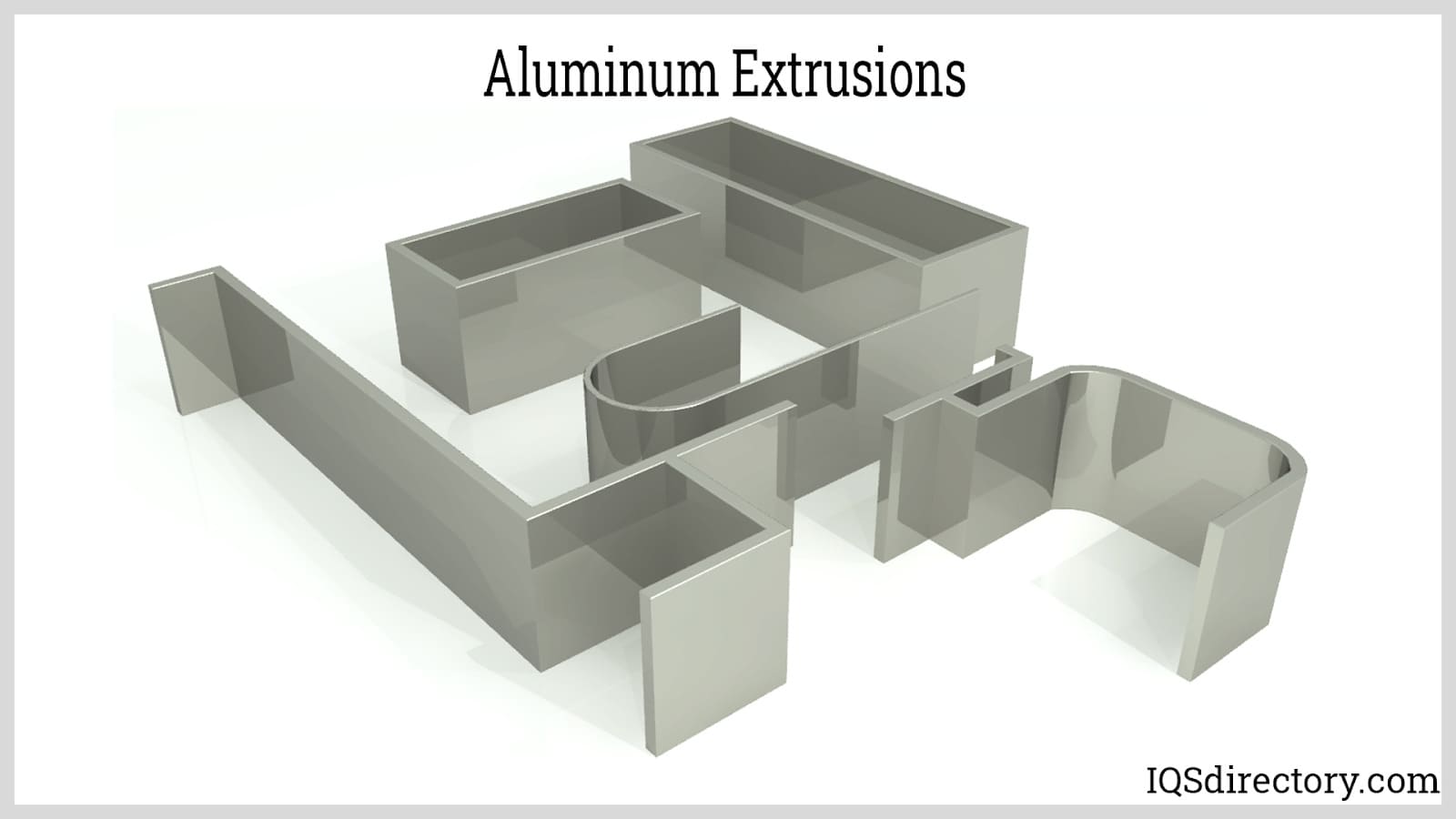 Extruded aluminum is a metal shaping process that involves forcing a preheated or cold aluminum billet through a die profile that has a cross-sectional shape.
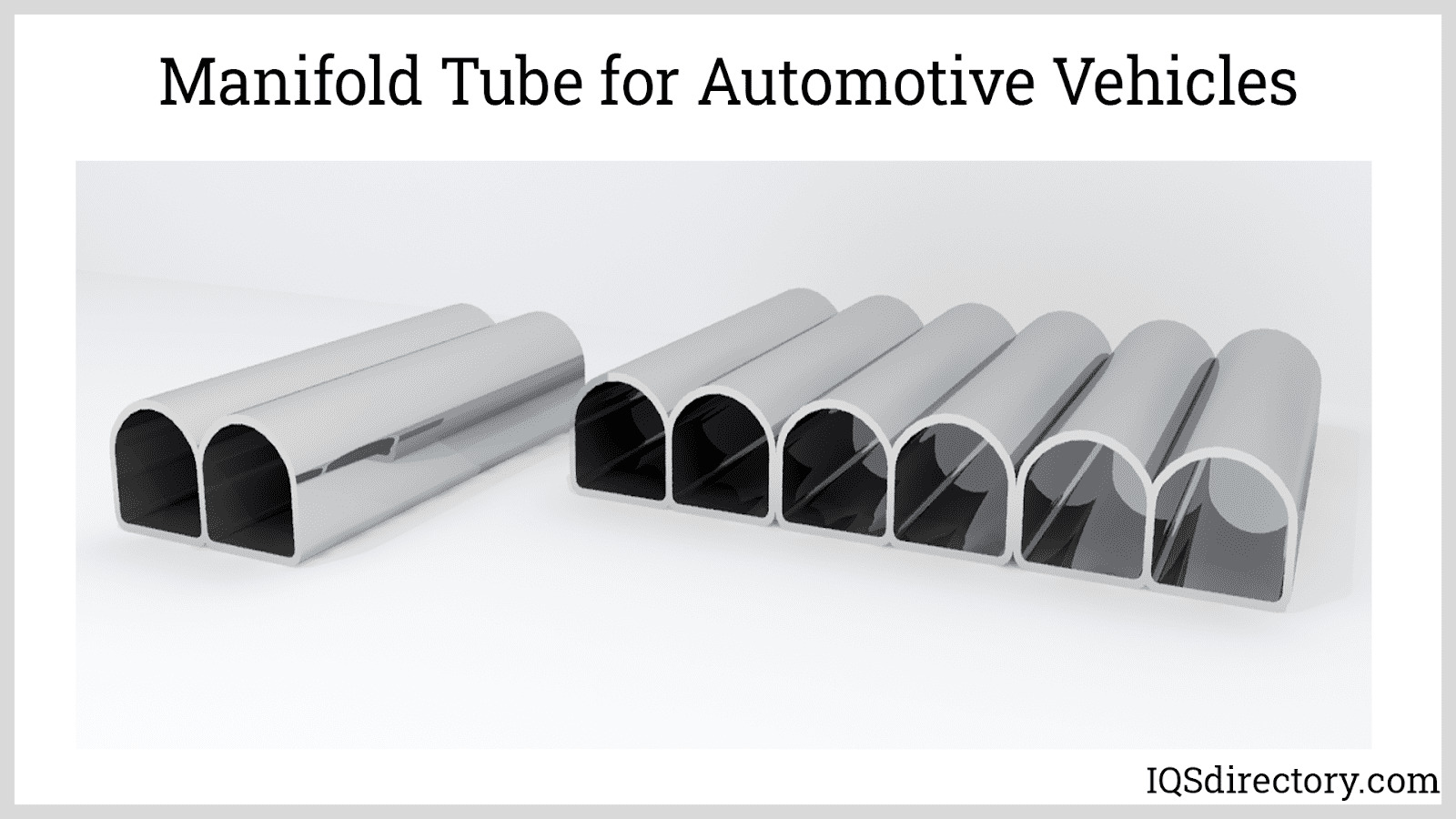 An example of the uses of extruded aluminum are the usage in the automotive industry.
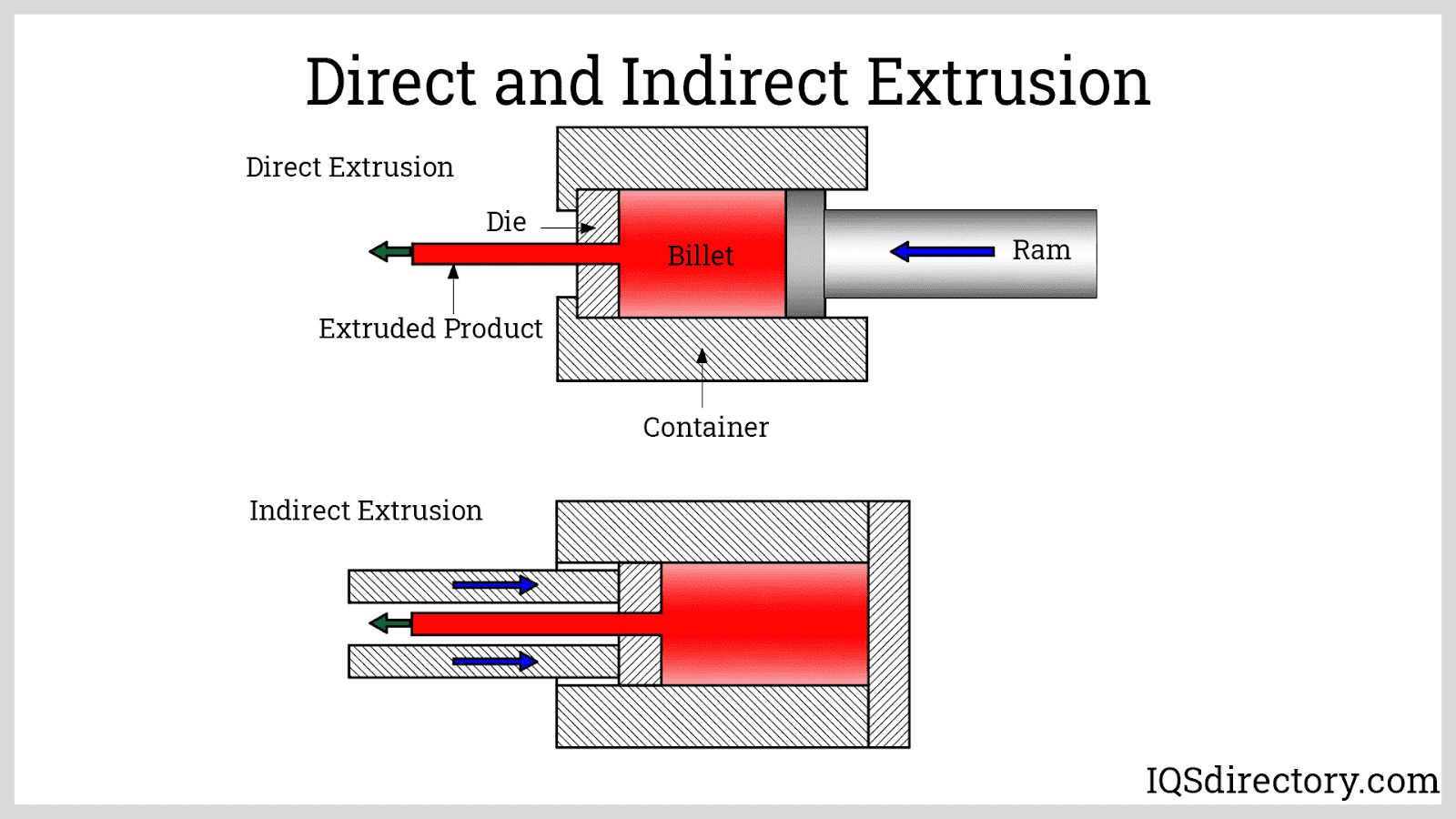 Direct extrusion is a process where the ram travel and metal flow are in the same direction, while indirect extrusion is the opposite.
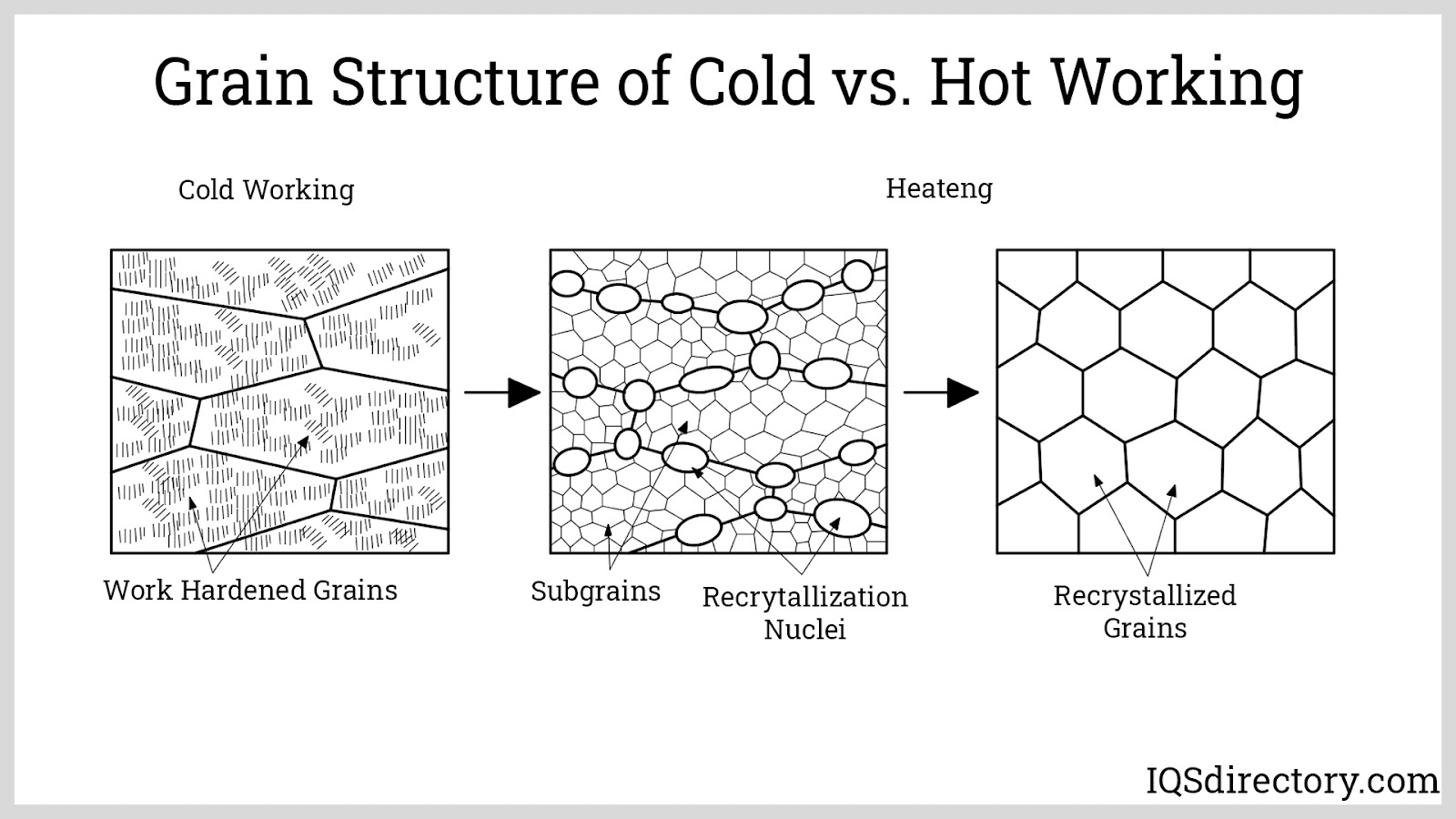 Hot extrusion is done above the aluminum‘s recrystallization temperature, where its microstructure begins to change while cold extrusion is done below recrystallization temperatures, typically at room temperatures.
Things to Consider When Purchasing Aluminum
For a long time aluminum has been used in a wide range of industries, with applications in the transportation sector, construction, solar, medical, electronic, and other industrial uses.
With the advances in aluminum-based product design and engineering, aluminum and its extrusion-friendly properties can catalyze innovation even faster and more broadly.
We have come up with four key questions, accounting for the production, design, and performance variables, for product development teams to determine whether aluminum extrusion can be applied in their industry.
- Strength-to-Weight Ratio of Aluminum
- Comparatively, the strength-to-weight ratio of aluminum is high enough for its application in a number of industries from aerospace to construction. However, designers and manufacturers’ desires, when it comes to aluminum extrusions, are now closing to a point, where the strength of standard extruded aluminum components is not good enough anymore.
- Engineers and designers are pushing the envelope on aluminum use, and suppliers are working aggressively to develop new types of alloys that are narrowing the difference between the strength properties of aluminum in comparison to other materials. The other properties that are also the center of development are formability, machinability, and wear resistance.
- The most critical developments are taking place in the automobile industry, where a number of car manufacturers are developing extruded aluminum tubing, angles, and other metal processes to match the need of high-end cars. Extruding is proving to be a critical feature, such as webbing, to reinforce aluminum tubes. Audi recently used only aluminum to make the R8, whose whole body and chassis are made from aluminum. Similarly, Ford, in its flagship vehicle, F150, used aluminum to make the pickup truck as much as 700 pounds lighter.
- It is said if properly done, aluminum extrusion has the ability to achieve challenging requirements without compromising on safety and strength.
- Corrosion and the Development Process
- Durability plays a crucial role in the functional performance of a material, and susceptibility to corrosion affects that durability along with appearance to a great degree. In such situations, for designers and developers, aluminum and extruded aluminum products are the primary choice, since they resist corrosion effectively while maintaining its appearance for a long time.
- Aluminum develops a natural oxide film over its surface when exposed to air, which creates a protection layer that negates the threat from corrosive environmental conditions or corrosive material. Moreover, anodizing and other finishing processes can enhance protection further.
- Due to its corrosion-resistive properties, heavy industries are embracing aluminum for making bridges, docks, semi trailers, and even large shipping vessels.
- Consumer centric industries, such as solar energy and medicine, are increasingly applying extruded aluminum tubing, aluminum heatsink, and other metal processes in innovative ways. Extruded aluminum is meeting fabrication challenges across the board, when corrosion protection is a greater factor.
- Manufacturing and Processing Time
- There is a permanent pressure on the development and design teams to reduce cost. They are always posed with questions on reducing cost of material and processing to optimize the manufacturing processes.
- Aluminum provides answers to some of those questions; the extrusion process can cut manufacturing and assembly time, since a number of smaller components can be reduced with application of extruded aluminum. The extrusion process can add or take out profile features to optimize weight-to-strength. The potential of the extrusion increases further when product researchers and developers collaborate with original equipment manufacturers.
- Turnaround and the Supply Chain
- It is the objective of every company to manufacture a product as fast as possible and deliver it to the market efficiently.
- Aluminum extrusion, in comparison to other alternatives, offers faster turnaround manufacturing and delivery. Product development time can be further reduced by working closely with original equipment manufacturers.
Shape Options for Aluminum Extrusions
Aluminum extrusion methods have remained the same for many decades. Common extrusion shapes provide structural support for many applications in the industrial world. However, in today’s challenging world, technology is constantly changing. New demands are placed on extrusion technology every day.
Today, it is more important than ever to come up with the right shapes for extrusion manufacturing. The right shape will cost the least amount of money, will be simple to manufacture, and will fit the structural requirements of each application. In today’s world, the best way to do this is through the functional approach.
The functional approach to extrusion design uses common sense to create the design. Rather than thinking about what shape the structure needs to be, the first thought is what the piece will need to do. After determining the use of the structure, the engineer should then consider what shapes provide that support, how the elements would relate to one another in a 3D environment, and then create the design. Thinking of the design process this way eliminates the limitations of current designs and prevents in-the-box thinking that can reduce the effectiveness of new designs. Engineers that use the functional approach are better able to serve their customers in any industry. With the functional approach, it is possible to create new extrusion designs that not only meet the function of the job at hand, but can then be used in similar situations in other applications. This benefits the industry as a whole, as well as the customer.
Aluminum Extrusion Terms
- Aluminum Angles
- Standard extruded L-shaped parts composed of 2 legs that intersect and form a 90 degree angle.
- Aluminum Beams
- Structural and support components of building construction.
- Aluminum Channels
- Smooth, linear and fairly narrow, and often provide a supportive frame for roll-formed products.
- Aluminum Extruded Tubing
- A hollow linear aluminum product that is typically cylindrical, however aluminum square tubing and aluminum rectangular tubing is also manufactured for specialty applications such as aluminum downspouts and building supplies.
- Aluminum Frames
- Components of modular framing systems that are constructed out of many different units.
- Aluminum Profiles
- Extruded stock shapes of aluminum.
- Aluminum Shapes
- Can be customized for almost any application. Standard shapes include angles, channels and tubing.
- Aluminum Trim
- Long, thin and narrow, and can be custom made to fit a specific purpose or space.
- Architectural Aluminum
- Used as decorative and structural components of building construction.
- Extruded Aluminum
- Molded with dies into specific shapes.
- Heatsink
- A metallic device that absorbs thermal energy, or heat, from another object through thermal compounds.
- Metal Extrusions
- Created using hot extrusion or cold forming, and commonly made of semi-soft metals, such as lead, tin, aluminum alloys, copper, titanium, etc., which are less expensive to extrude than high-strength alloys.
- Structural Aluminum
- An extruded aluminum alloy that goes through post-forming treatments in order to become light weight, durable and corrosion resistant metal used in many different high-strength applications.
- T-Slotted Aluminum Extrusions
- Can be used in building most anything but are commonly seen in enclosures, cabinets, shelving, machine guarding systems, industrial workstations, office partitions, computer server racks, trade show exhibits, material handling and robotics.
- c6000 Aluminum Series
- An aluminum alloy that is very simple to maintain and remains stable under a wide variety of temperature and pressure conditions.
- 6061 Aluminum Series
- The most commonly available, heat-treatable aluminum alloy that is easily cold-worked and formed in the annealed condition by stamping, bending, spinning and deep drawing. The 6061 aluminum series is typically used in the manufacturing of heavy-duty corrosive resistant structures, truck and marine components, railroad cars, furniture, tank fittings, general structural and high pressure applications, wire products and in pipelines.
- 6063 Aluminum Series
- An aluminum alloy that may be heat treated for strengthening, has average machinability and good forming ability (both hot and cold) and is readily welded by all conventional methods. The 6063 aluminum series is typically used in the manufacturing of furniture, windows, stair rails and other architectural applications.
- Aging
- Also called "precipitation heat-treating," it is a process that naturally or artificially induces changes in aluminum alloy properties. Natural aging occurs at room temperature, while artificial aging occurs in an oven at higher, controlled temperatures, quickening the pace.
- Alloy
- A compound consisting of either multiple metals or a metal and a nonmetal blended together. An aluminum alloy consists of aluminum and at least one other element, but usually consists of a combination of elements such as zinc and silicon.
- Alumina
- A compound of aluminum oxide obtained from bauxite during the production of aluminum.
- Aluminum Oxide
- A hard mineral formed from the chemical reaction between oxygen and aluminum. The creation of aluminum oxide on the surface of a metal prevents future occurrences of oxidation.
- Bauxite
- The primary ore from which aluminum originates. Four pounds of bauxite produces one pound of aluminum.
- Billet
- In aluminum extrusion, a solid- or hollow-heated aluminum material forced under pressure through a die in an extrusion press to form an aluminum extrusion. Average billet lengths range from 26 to 72 inches.
- Blister
- A raised area (bubble) on the surface of an extruded product caused by gas expansion below the surface, which occurred during extrusion or thermal treatment.
- Bright Dipping
- A chemical polishing process of aluminum that yields a mirror-shiny, highly reflective surface, typically with the use of a mixture of nitric acid and phosphoric acid. Bright dipping is commonly followed by the anodizing process in order to protect the surface and provide a choice of colors.
- Caustic
- An alkaline substance, usually consisting of sodium hydroxide, used in the removal of aluminum from an extrusion die.
- Chatter
- Uneven imperfections in an aluminum extrusion characterized by ridge and depressions, which produce a wavy appearance.
- Cold Working
- The process in which properties of an aluminum alloy, such as strength and hardening, are manipulated through the subjection of the alloy to low temperatures.
- Cryogenic
- A term referring to very low temperatures. Aluminum becomes stronger as the temperature decreases, making it an ideal material for cryogenic applications.
- Die
- The opening, formed to resemble the shape needed, in an extrusion press through which aluminum is pushed under pressure to form an extruded shape.
- Die Lines
- Lengthwise depressions or protuberances resulting from friction produced as the aluminum flows through the die bearing.
- Heat-treatable Alloy
- Aluminum alloy that obtains added strength and hardening through cycles of heating and cooling.
- Hot Tears
- Lengthwise extrusion imperfections resulting from high speed and temperature.
- Non-heat-treatable Alloy
- Aluminum alloy that obtains added strength and hardness through cold working and aging, as opposed to cycles of heating and cooling.
- Oxide
- A compound created through the chemical reaction between oxygen and another element.
- Stretch Straightening
- Pulling or stretching of aluminum extruded parts past the yield strength of the extrusion in order to make them straighter.
- Yield Strength
- The maximum amount of stress that can be applied to an object, such as an aluminum extrusion, without changing the dimensions of the object. The increase of stress past the yield strength of the object results in its permanent deformation.