Expansion Joints
Expansion joints are specifically designed to allow for movement, as their name implies. These components help absorb the movement of pipes, ducts, and other pipeline parts caused by thermal and mechanical vibrations. In industrial applications, expansion devices come in various forms. Thermal expansion and contraction cause changes in the length of piping systems as they heat up and cool down. The amount of thermal expansion that occurs depends on several factors, including the length of the piping run, the temperature difference, and the pipe's material. For example, a 100-foot (30.5 m) run of carbon steel pipe will expand by 1.82 inches (4.6 cm) when its temperature rises from 70 to 300 °F (21 to 148.9 °C). In contrast, if the same pipe were made of 300-class stainless steel, it would expand by 2.61 inches (6.6 cm). Various techniques have been developed to accommodate these thermal movements, as expansion and contraction can subject the piping system to considerable strain. Expansion joints help protect piping systems, welded connections, anchors, supports, valves, pumps, and nearby equipment by relieving stress before it turns into leakage, distortion, vibration damage, or premature component wear. Because they manage movement while maintaining system integrity, expansion joints are widely used in industrial piping, HVAC ducting, plumbing systems, power generation, processing lines, and fluid transfer networks where temperature swings, pressure changes, and vibration are part of normal operation.
Expansion Joints FAQ
What is the main purpose of an expansion joint in piping systems?
Expansion joints absorb thermal and mechanical movement in pipes, ducts, and other components. They prevent strain and damage caused by expansion, contraction, and vibration in industrial and plumbing systems.
How do metal expansion joints work?
Metal expansion joints use flexible bellows to manage thermal expansion and movement in piping systems. As temperatures rise, the bellows contract to absorb pressure and relieve stress on anchors and pipes.
What materials are used to make expansion joints?
Common materials include stainless steel, nickel alloys, and rubber. Metal joints handle high thermal expansion, while rubber joints reduce vibration and noise in equipment like pumps and compressors.
How are metal bellows formed for expansion joints?
Metal bellows are made from corrugated tubes using hydroforming or mechanical die-forming. The tubes are precision-welded, shaped, and cold worked to achieve the required flexibility and dimensional accuracy.
What is hydroforming in expansion joint manufacturing?
Hydroforming uses pressurized fluid to expand a metal tube into a mold, shaping it into corrugated bellows. This process ensures uniform wall thickness and consistent flexibility for high-performance joints.
Why is the re-rolling process important for bellows quality?
Re-rolling cold works the bellows to meet tight geometric tolerances and strengthens the material. Skipping this step can reduce durability and lead to weaker performance under pressure or vibration.
What are the benefits of using expansion joints in plumbing systems?
Expansion joints prevent strain caused by thermal expansion, protecting welds and pipe connections. They maintain flow efficiency, absorb vibration, and reduce noise in both residential and industrial systems.
How Expansion Joints Work
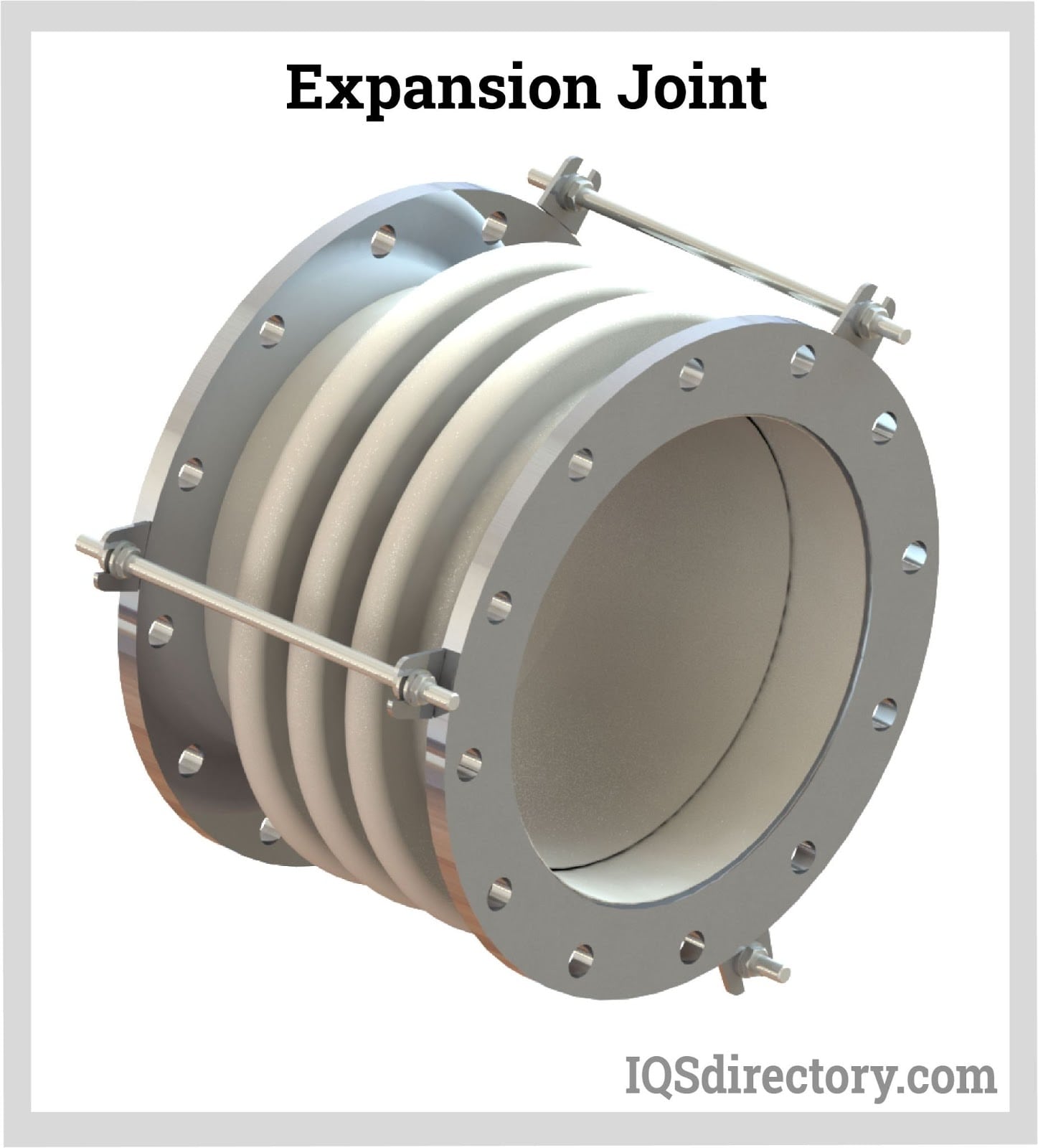
Metal expansion joints are used to accommodate thermal expansion and relative movement in pipes, containers, and machinery. Depending on the specific application, they may feature one or more metal bellows, connectors at both ends, and tie rods. Bellows are flexible components designed to reduce motion in the piping system. They are typically made from a combination of rubber and metals, which allow them to stretch during expansion and compress during contraction. As the temperature of the pipe increases, metal expansion joints contract to absorb the movement and relieve pressure on the pipe. Materials such as stainless steel and nickel alloys are commonly used to create metallic bellows. In practice, expansion joints may be engineered to handle axial movement, lateral offset, angular deflection, vibration isolation, and pressure thrust control depending on the system design. This makes them useful in facilities where operators need to keep piping aligned, protect connected equipment, and preserve steady flow despite temperature changes, startup cycles, pump pulsation, or equipment motion.
Materials Used for Expansion Joints
Metal Joints
Metal expansion joints are essential in applications with significant thermal expansion. As the temperature of the pipe increases, the metal expansion joint contracts to absorb the movement, relieving pressure on the anchors and the pipe itself. Metal joints are often selected for high-temperature, high-pressure, and chemically demanding applications because they offer good structural strength, long-term fatigue resistance, and dependable performance in steam systems, process piping, exhaust ducting, refineries, petrochemical plants, power generation equipment, and industrial manufacturing lines. Stainless steel and nickel alloy designs are especially common where corrosion resistance and durability are needed.
Rubber Joints
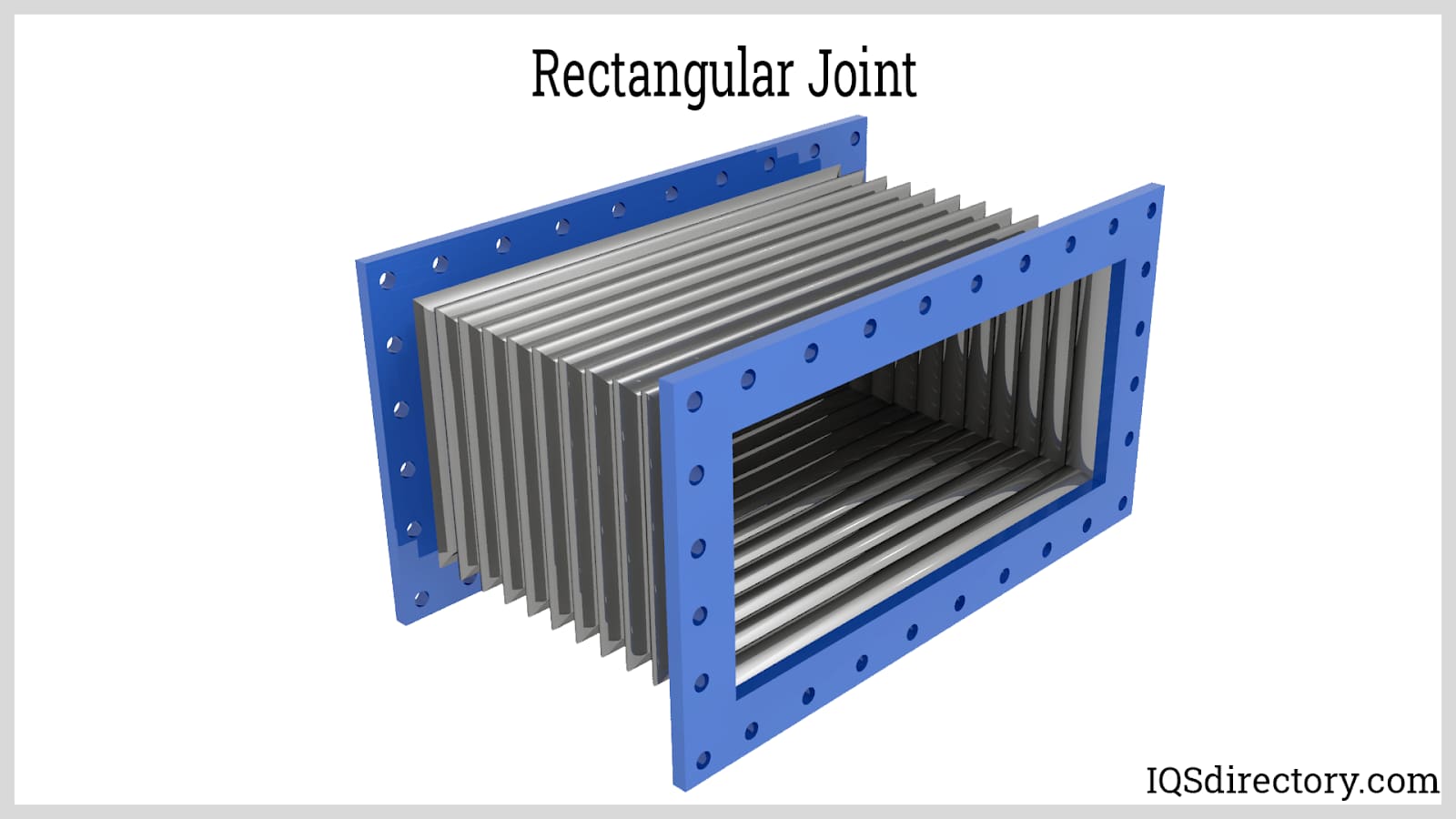
Rubber is highly effective at absorbing vibrations and shock waves, making it ideal for handling thermal expansion. These expansion joints are particularly useful for reducing the transfer of noise and vibration from other equipment, providing protection for sensitive components like pumps. Additionally, they serve as shock absorbers, mitigating damage caused by pressure surges or seismic activity. Rubber expansion joints are commonly used in HVAC systems, water treatment lines, pump connections, cooling systems, and general-purpose piping where flexibility, noise control, and vibration dampening are more important than extreme temperature capability. Their ability to cushion movement can also help reduce maintenance demands on nearby flanges, supports, and connected machinery.
Stainless Steel Braided Joints
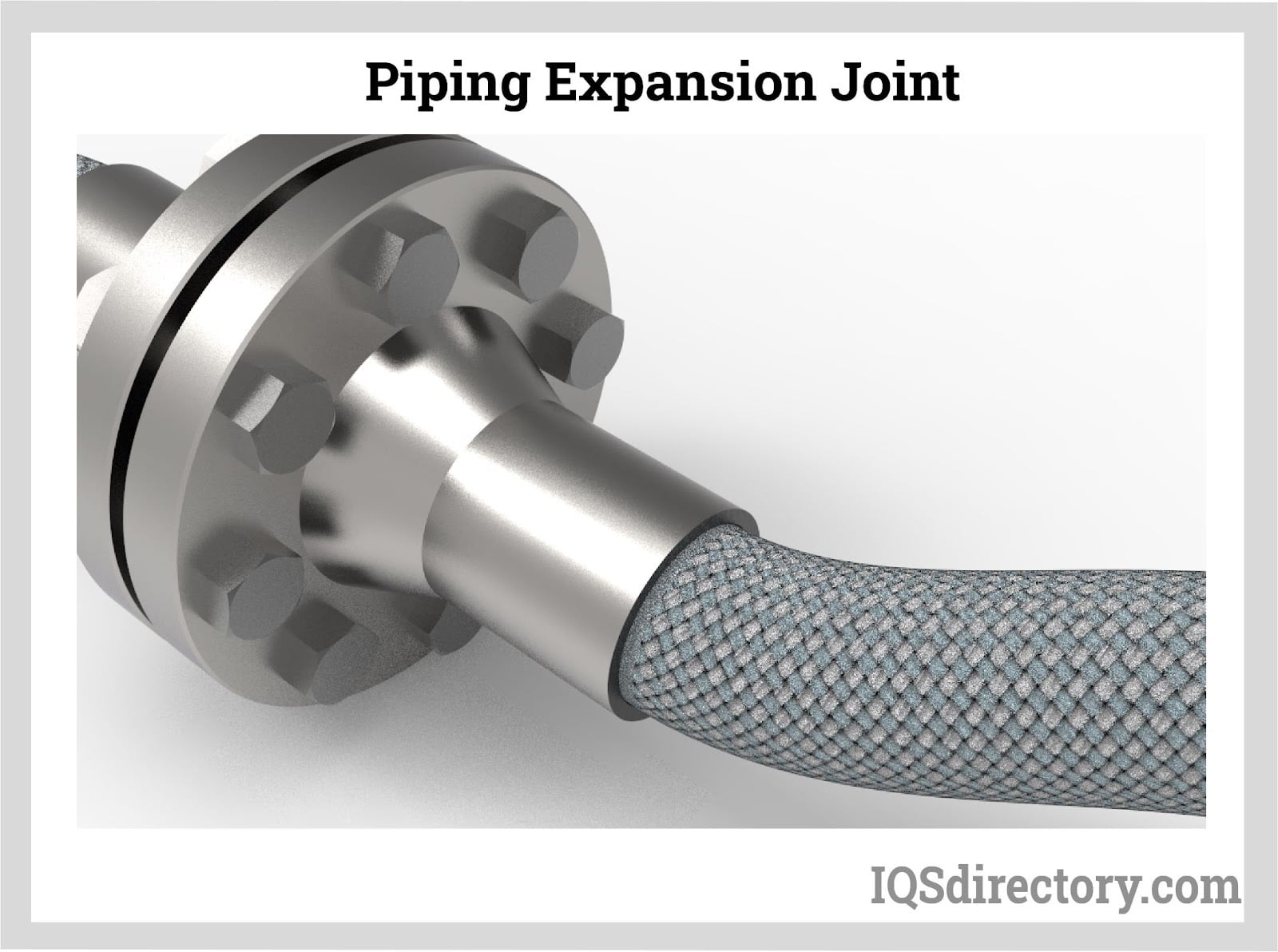
While technically more like flexible connectors than expansion joints, stainless steel braided hoses with flexible or metal liners excel in applications where pipe misalignments or vibration dampening are needed, particularly in high-pressure and high-temperature environments. These assemblies are often considered when systems need a compact connector that can handle movement, maintain flow, and provide added protection in aggressive service conditions. In many engineered systems, buyers compare braided joints with bellows-style expansion joints to determine which option is better for pressure, flexibility, available space, and lifecycle performance.
How Expansion Joints Work
Bellow to Tube Construction
The creation of metal bellows begins with the production of corrugated tubes. Precision shearing is used to cut coil or sheet stock to the required size, which is then coiled into tubes. It's essential that the tubes maintain a round shape to ensure they fit properly over the dies used in the bellows formation process. Once shaped, the tube's longitudinal seam is joined using an automatic seam welder. This technique is integral to producing the bellows. Accurate tube preparation helps determine the finished bellows geometry, dimensional consistency, and the flexibility needed for reliable expansion joint performance under changing thermal and pressure conditions.
Forming Method
The two most common methods for corrugating tubes are mechanical die-forming and hydroforming. In hydroforming, a pressurized liquid solution is used to shape tubes or sheet metal into bellows. For example, a hollow aluminum tube is placed into a negative mold designed to shape the bellows. High-pressure hydraulic pumps then force the fluid into the tube, causing it to expand and fit the mold. Once the aluminum tube is fully expanded, it is removed from the mold. The machine is calibrated to create the desired bellows corrugation diameter, and the overall joint is formed as the other components of the joint are developed. Hydroforming is often valued because it can produce consistent wall thickness, repeatable shapes, and bellows that perform well in demanding piping and ducting applications where accurate movement absorption is needed.
Re-Rolling Method
In the re-rolling secondary process, the shape of the metal bellows is finished and cold worked to meet the precise geometry defined by the design engineer. Cold working involves plastic deformation of the material below its recrystallization temperature. This strengthens the bellows and ensures tight dimensional control. However, some expansion joint manufacturers skip this crucial step and use a press to compress the bellows to size, which can ultimately reduce the performance of the bellows. Proper re-rolling can improve fatigue life, support consistent movement capability, and help the finished expansion joint meet tighter quality expectations for industrial service.
Welding Method
The tubes are joined at the neck of the bellows using a continuous series of overlapping spot welds for multi-ply bellows. This technique, known as roll seam welding, involves first constructing the bellows and then welding them to the other parts of the connection. Weld quality is especially important because it affects pressure integrity, long-term reliability, and the ability of the expansion joint assembly to perform safely under repeated thermal cycling and vibration.
Benefits of Expansion Joints
Plumbing systems rely on bellows and expansion joints, which are equipped with accessories such as tie rods, covers, and flow liners. Metal bellows function like springs, although they are designed to manage pressure within set limits. To ensure optimal flow, it is crucial for the connecting pipes to be able to move. Expansion joints can also help maintain system efficiency by reducing stress concentrations, minimizing vibration transfer, and supporting more stable operation in both commercial plumbing and industrial process piping. In many systems, they help preserve seal integrity, reduce repair frequency, and improve equipment longevity by accommodating movement instead of forcing rigid connections to absorb it.
Without expansion joints in the piping system, the thermal expansion of the pipes would lead to significant strain. This pressure could cause pipes to flex and welds to break due to the forces generated by thermal expansion. Over time, that kind of unchecked movement can also damage supports, loosen connections, contribute to leakage, and increase downtime. For that reason, expansion joints are often considered an important part of system reliability planning in applications where temperature cycling, vibration, movement, or pressure fluctuation cannot be avoided.
Choosing the Correct Expansion Joint Supplier
To achieve the best results when purchasing expansion joints, it’s essential to compare multiple suppliers using our directory of expansion joint providers. Each supplier has a dedicated business profile page that showcases their expertise, capabilities, and a contact form for direct communication to request more details or a quote. Utilize our patented website previewer to quickly explore each supplier's specialization, then easily contact several companies with our streamlined RFQ form. When evaluating suppliers, buyers often compare available materials, pressure ratings, movement capacity, manufacturing quality, custom design support, lead times, testing procedures, and experience with the intended application. Asking the right questions about temperature range, pressure demands, media compatibility, installation constraints, and service environment can make it much easier to identify an expansion joint manufacturer that matches the needs of the project.