Please fill out the following form to submit a Request for Quote to any of the following companies listed on
Get Your Company Listed on this Power Page
Introduction
An explanation of thermoforming foam with a description of its uses and forms with a list of prominent manufacturers
You will learn:
What is Thermoforming Foam?
Thermoforming Foam Methods
Uses for Thermoforming Foam
Key Characteristics of Thermoforming Foam
And much more ...
Chapter 1: What is Thermoforming of Foam?
Thermoform foam is a shaping process where sheets of spongy foam are heated until they are pliable for forming. Once the forming temperature is reached, the sheets are placed in or on a mold to be formed to a specific shape using molding, pressure, or a vacuum process. Once the molded foam cools, it is trimmed to conform with design parameters. Modern thermoform foam machines are programmed to complete the cooling and trimming process automatically, improving production speed, repeatability, and consistency for high-volume foam fabrication.
The process for thermoforming begins with a sponge material, such as ethylene vinyl acetate (EVA) foam, polyethylene foam, or polyurethane foam. The type of foam is determined by the product to be produced and its required characteristics, including density, flexibility, resilience, shock absorption, thermal insulation, and chemical resistance. This manufacturing method is designed to produce a wide range of high-quality products for packaging, protective inserts, athletic equipment, medical components, automotive parts, and custom foam inserts, making it a versatile solution for industrial foam shaping and custom fabrication.
A guiding principle for thermoform foam manufacturing is the 10-10-5 rule, which helps manufacturers achieve the best results. The essence of the rule is that the radius of the curvature of the mold should be at least 10 times the thickness of the material being formed. The draft angle of the mold should be equal to or greater than 10 degrees with a depth draw that is 5 times the thickness of the material. Following the stipulations of the 10-10-5 rule helps reduce stress whitening, tearing, thinning, and other defects, ensuring the formed foam material maintains dimensional accuracy, surface quality, and structural integrity.
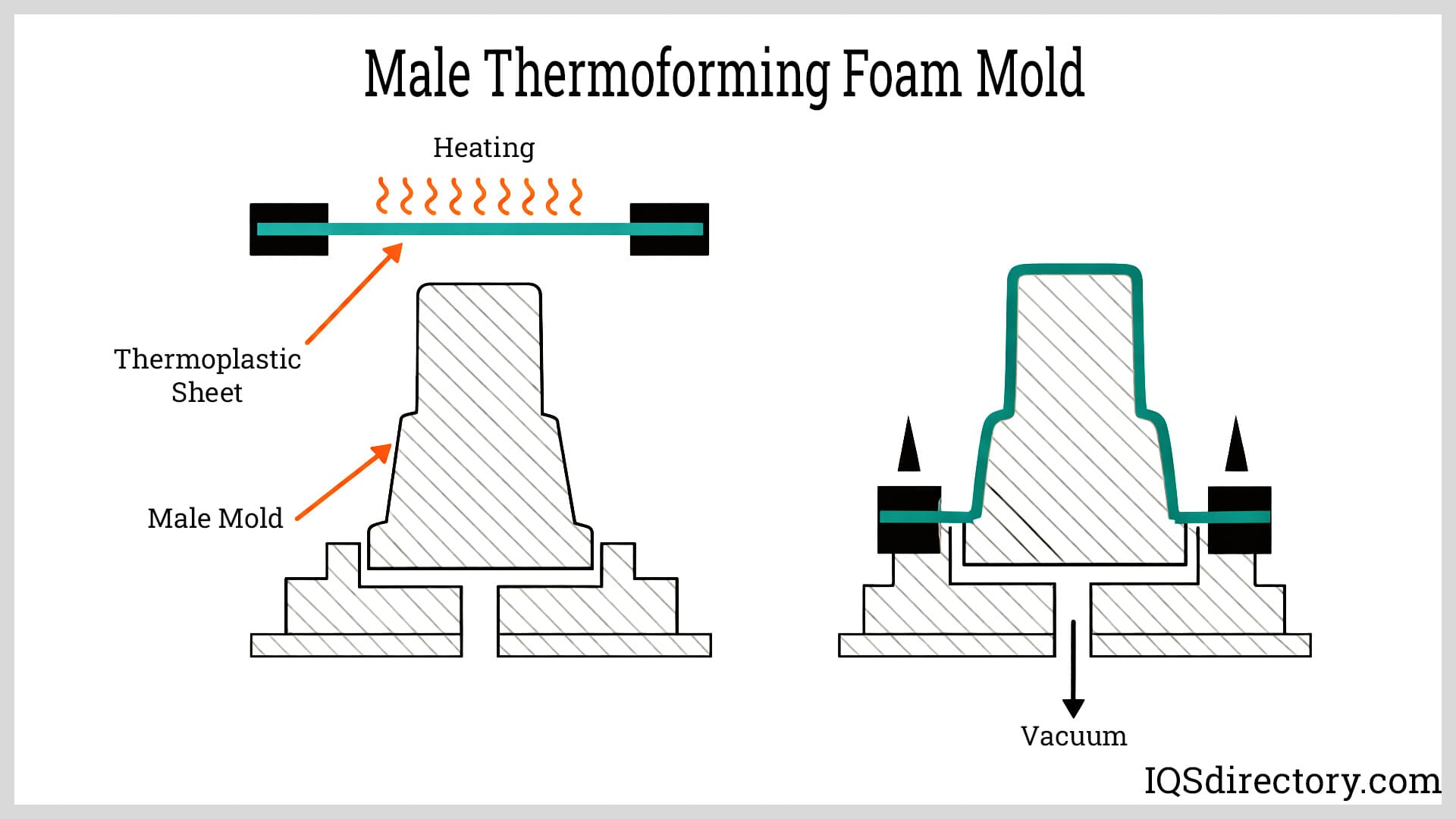
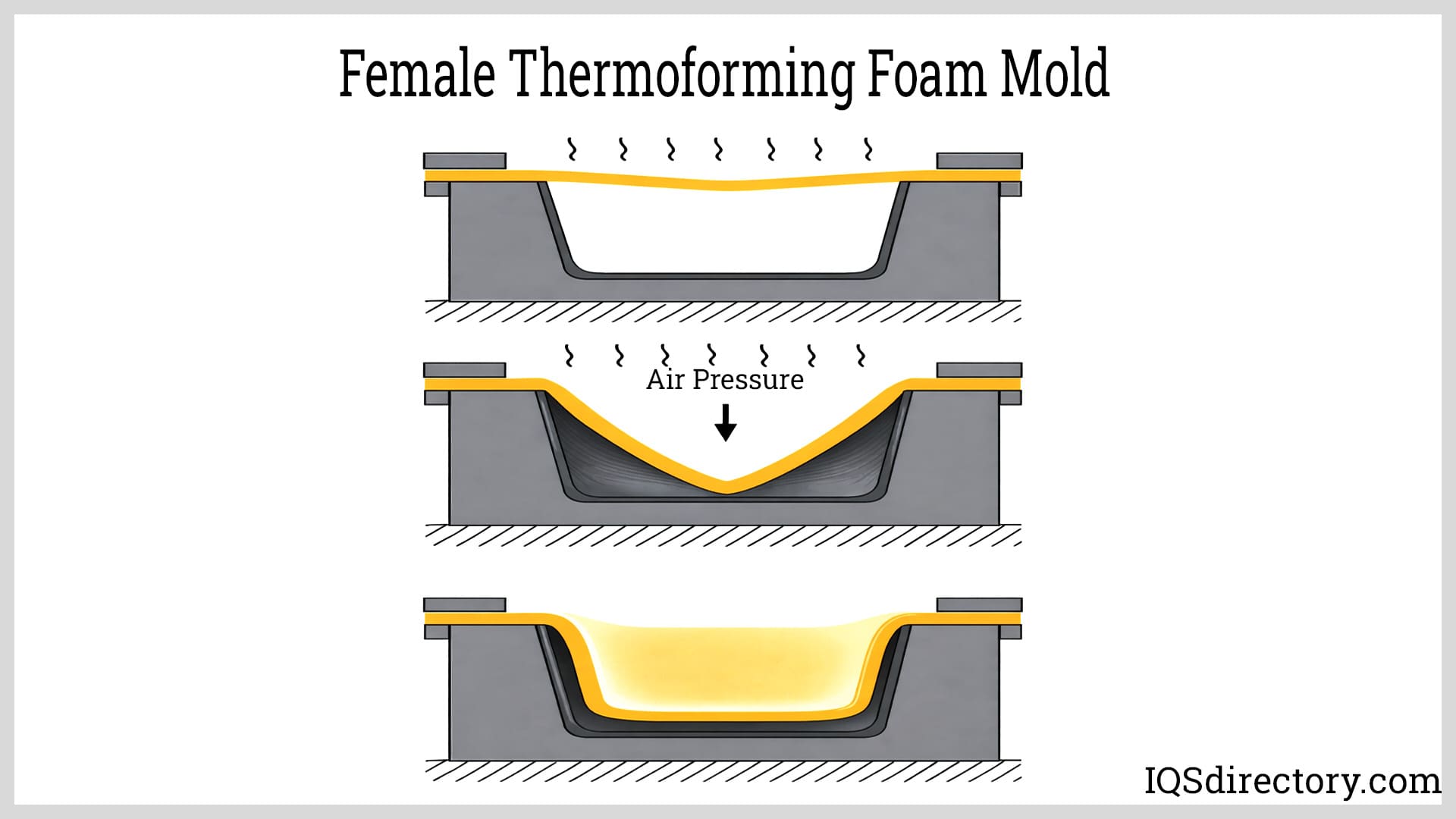
One differentiation of the various molds is in regard to the type of mold cavity, which can be positive or negative, convex or concave. In the case of a positive tooling mold, or male mold, the sheet of foam is stretched over a convex form that has the features of the mold jutting outward. The negative mold cavity, or female mold, is in the form of a traditional mold that has the shape to be achieved bent inward such that the foam sheet is forced downward into the mold cavity. These forms of molds are the generalized, generic forms of molds and encapsulate a long list of different molds, including vacuum forming molds, pressure forming molds, and custom thermoforming tools used for precision foam part production.
Chapter 2: Types of Thermoform Foam
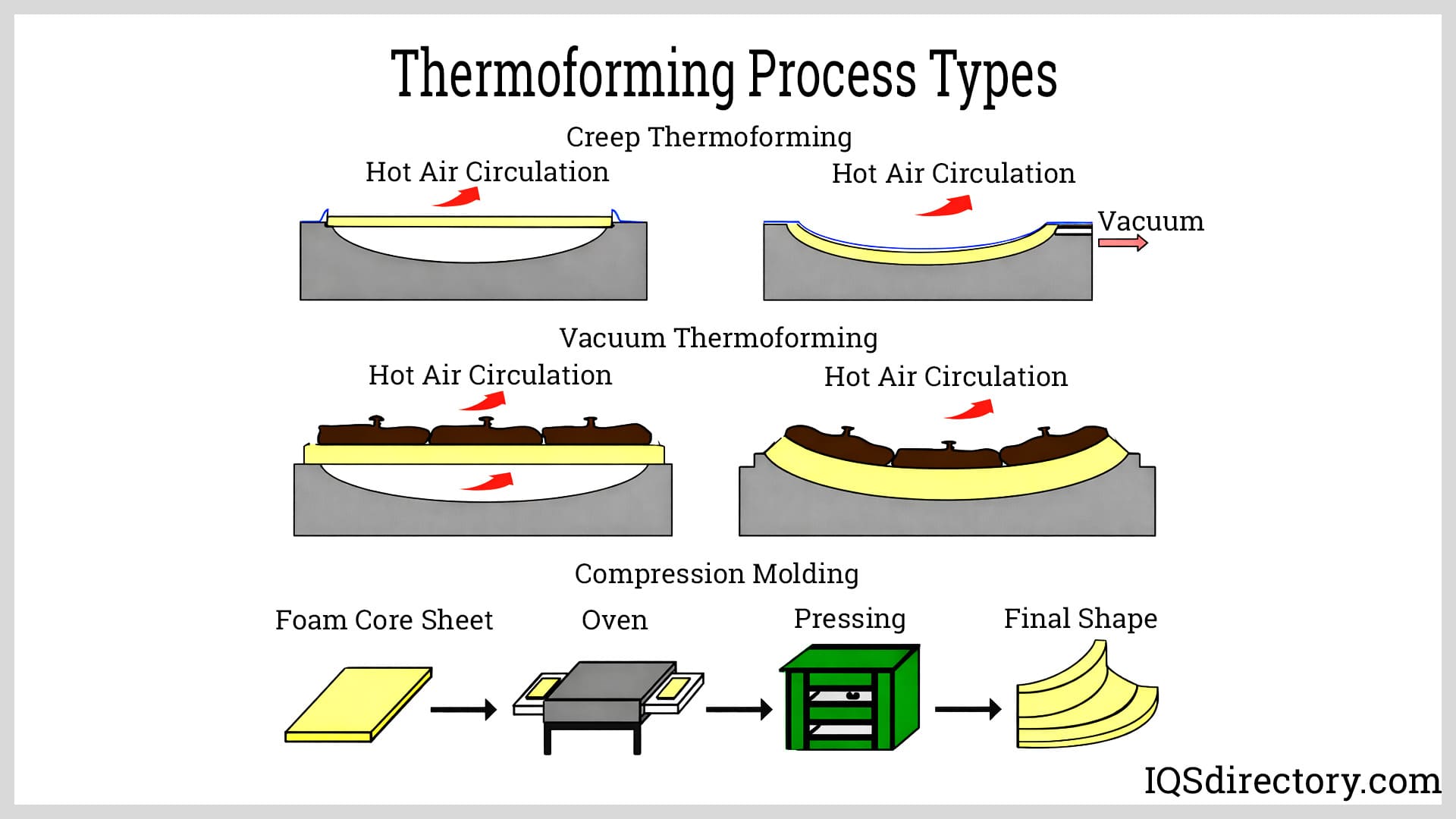
Foam thermoforming includes a collection of ways to mold and shape foam using heat and pressure. Thermoform foam molding is widely used due to its low cost and speed as well as its ability to create consistent results for large scale manufacturing. The process is a highly efficient method for producing three dimensional (3D) shapes with exacting precision. Any form of foam can be used to form parts, regardless if the foam has an open or closed cell structure.
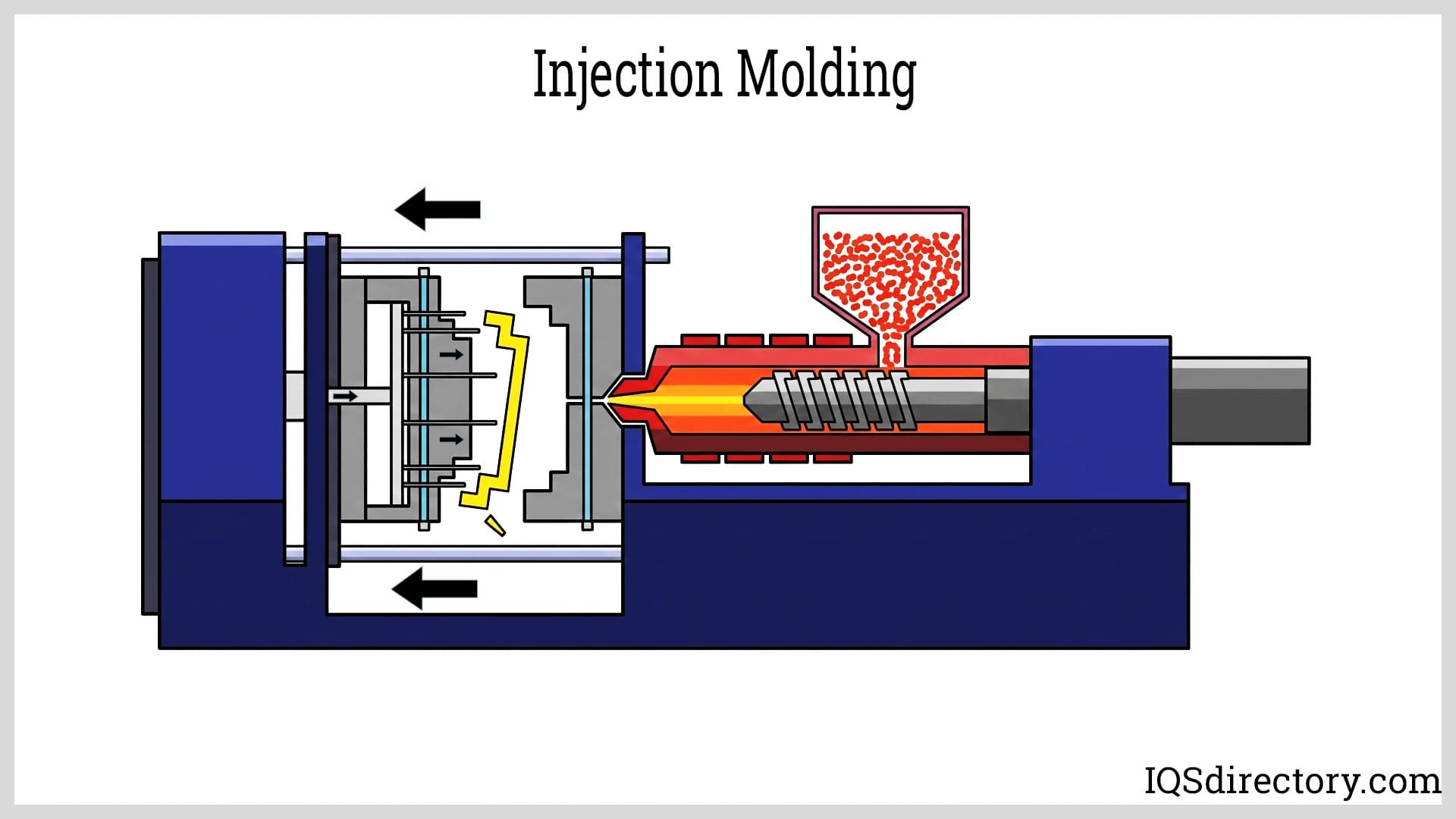
Thermoform foam, or foam thermoforming, is unlike injection molding that uses melted pellets to inject foam material into a mold. A general description of the thermoforming process begins with flat sheets or rolls of cross-linked polyethylene (PE) foam, EVA foam, and polyurethane (PU) foam sheets. The sheets are heated in an oven and quickly pressed onto or into a mold. Pressure or vacuum is used to help the foam sheets conform snuggly to the shape of the mold.
Vacuum Forming
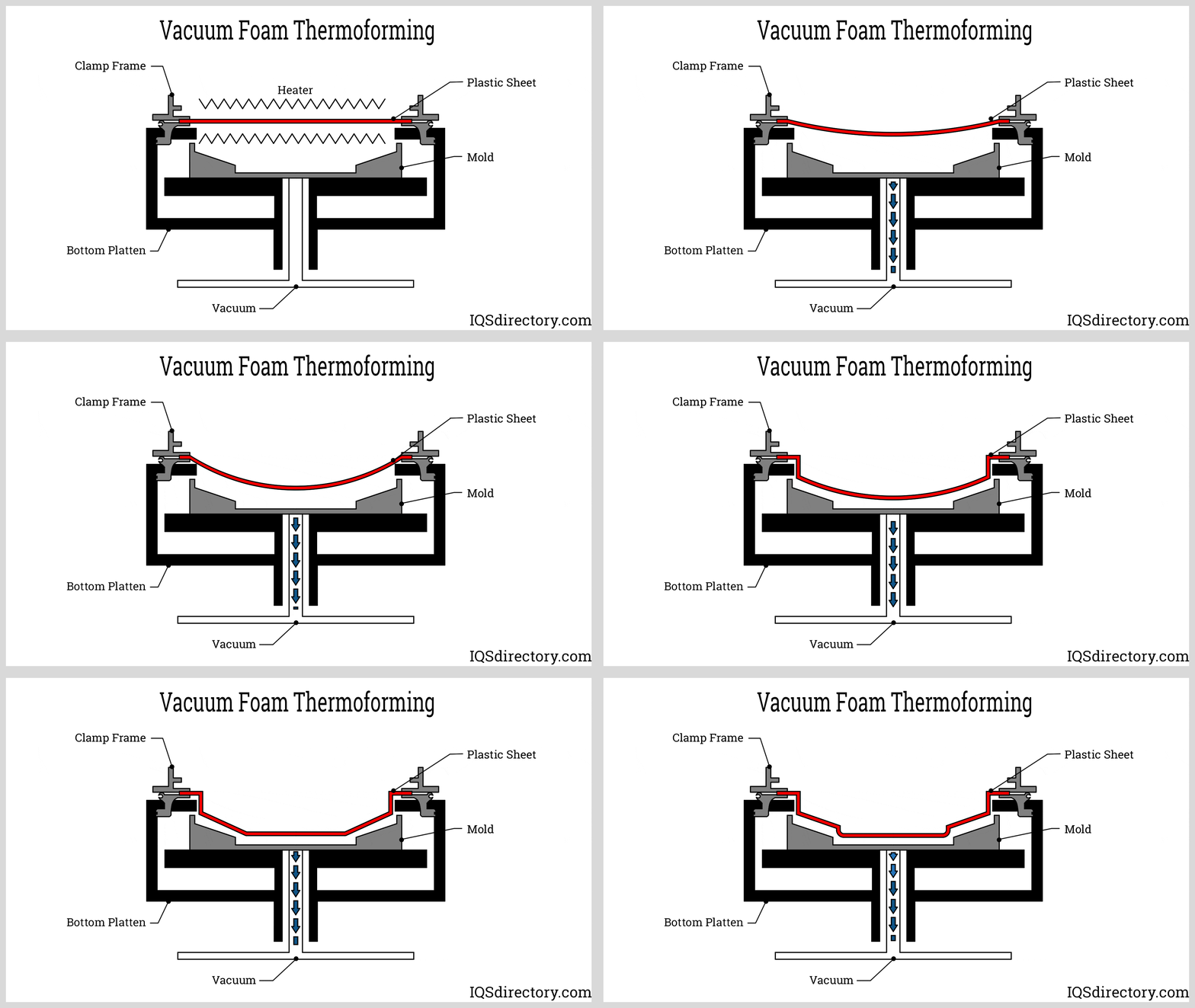
The term vacuum forming, used in regard to vacuum thermoforming, is a descriptor for the method used to place the sheet of plastic foam into a mold. As with all forms of thermoforming, a sheet of plastic foam is heated prior to being placed into the mold. To prevent the sheet from shifting during the molding process, it is tightly clamped in place in an open frame.
Vacuum thermoforming is the simplest, least expensive, and most commonly used method of thermoforming. The forced draw down pressure that pulls the sheet of foam into the mold is typically at 0.9 bar or 14 PSI. Vacuum foam thermoforming is used for components that need to be formed on one side.
Pressure Thermoforming
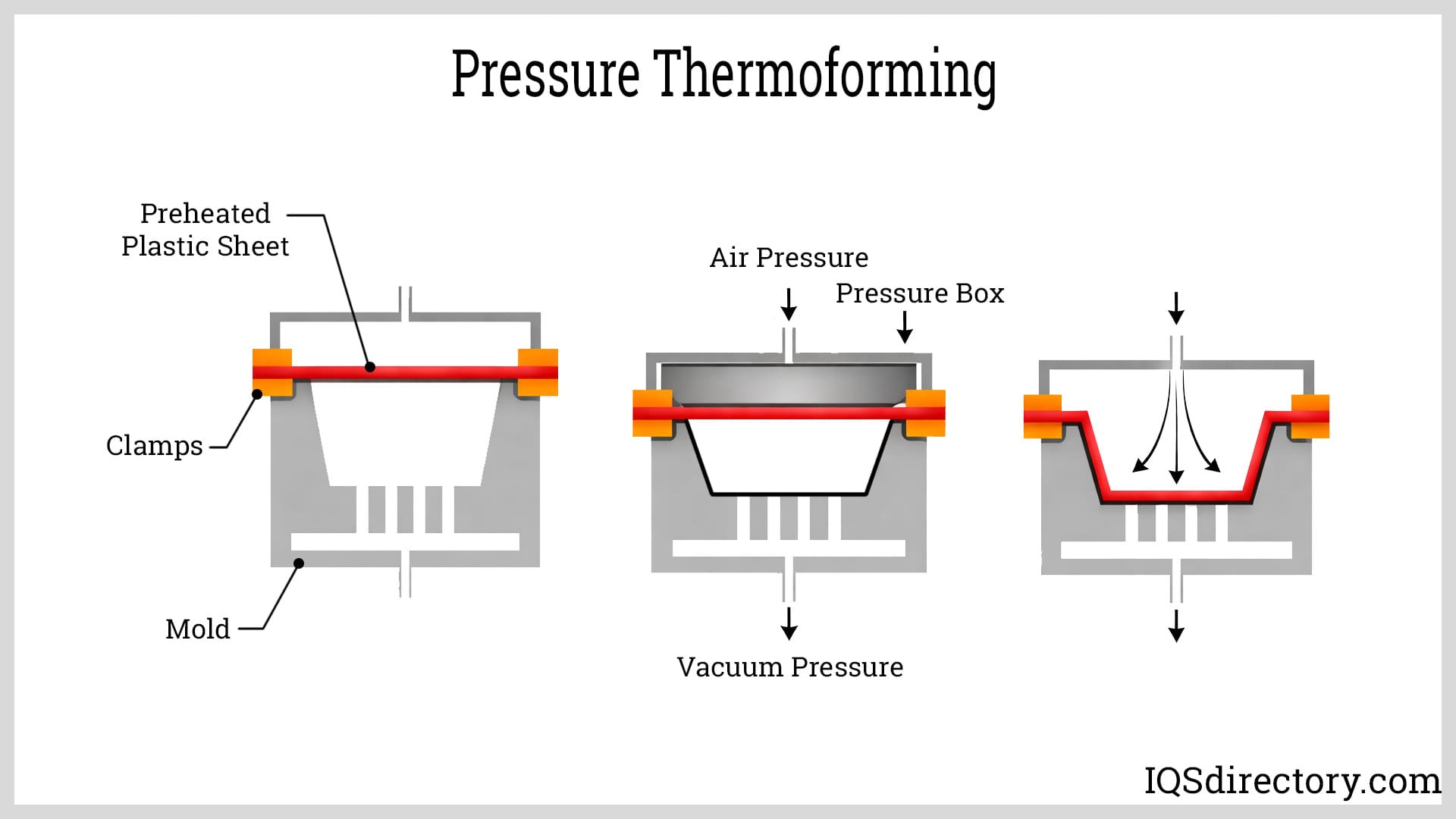
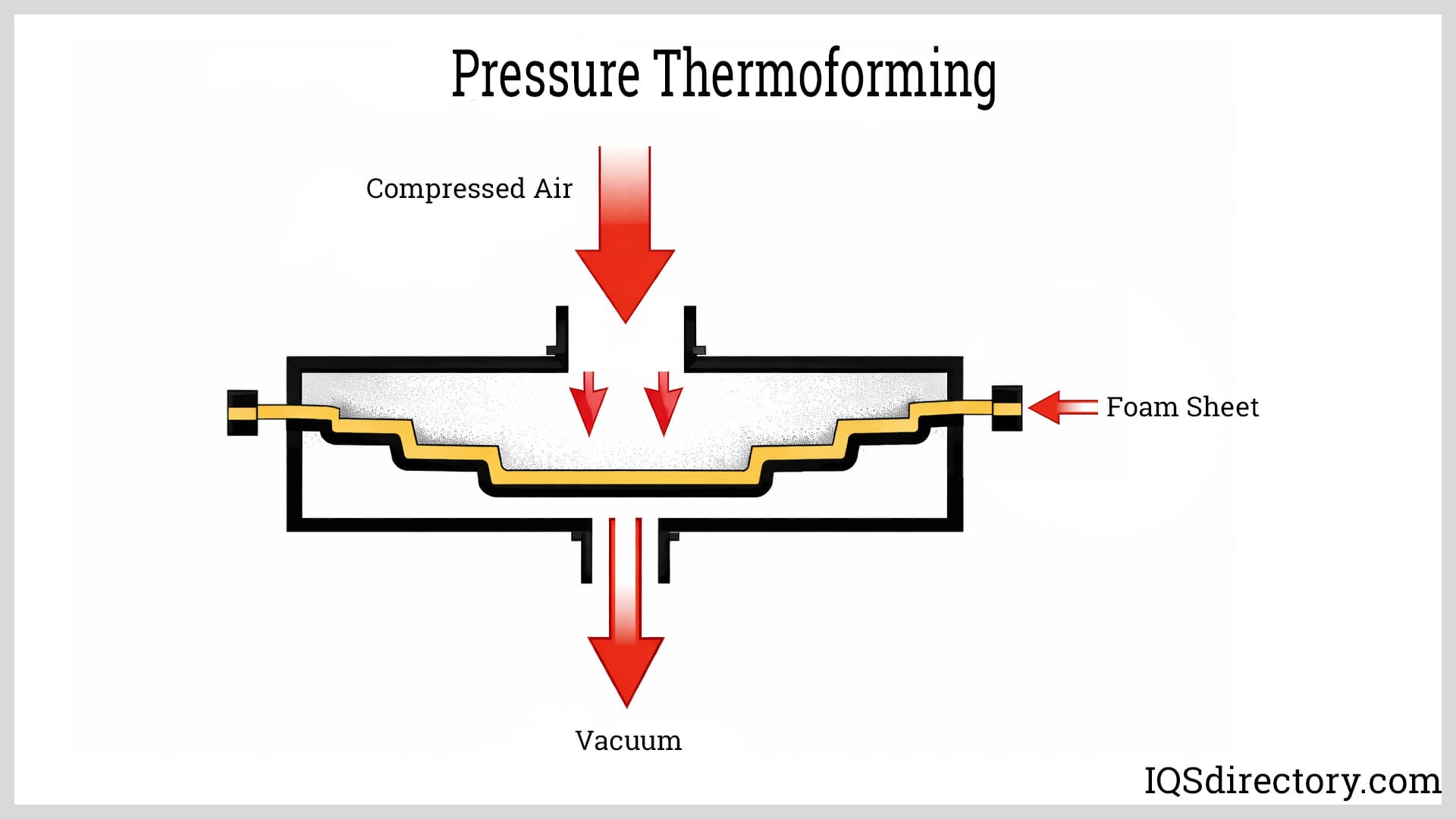
The process for pressure thermoform foam forming uses vacuum and compressed air to press heated foam against the mold. The goal is to tightly press the foam against the mold to create distinct and sharp details. Pressure thermoforming is like injection molding in regard to its surface details that are crisp, clear, and dimensionally accurate. Grains, textures, logos, and other characteristics are precision formed and easily visible in accordance with design parameters.
Items that require undercuts such as return lips or forms of recessed features on sidewalls are easily formed using pressure thermoforming. The use of the process is due to its easy setup, which requires little time to tool molds. Parts can be placed in production in far less time than other forming processes. This factor makes it easier to adjust, update, or change part parameters and makes pressure thermoforming a far more flexible molding process.
Mechanical Thermoforming
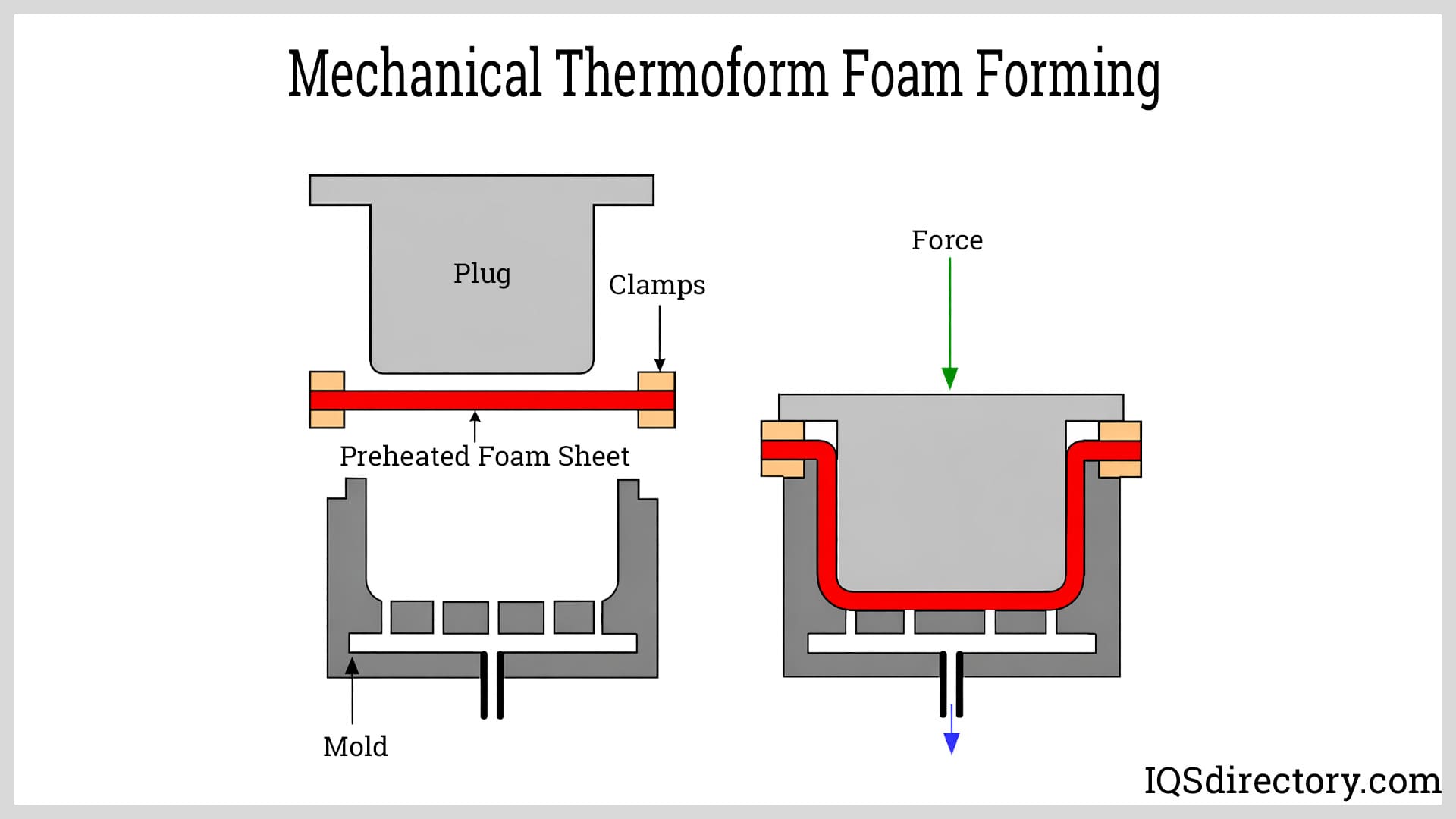
As with all forms of thermoform foam forming, mechanical thermoforming begins with a sheet of preheated foam. The key to the process is the core plug or positive mold that forces the foam sheet into a negative mold. The downward force of the plug into the negative mold presses the foam sheet such that it fills the mold.
Mechanical thermoforming foam forming is used when a piece requires detailing on both sides. The process offers exceptional dimensional accuracy and provides better thickness control compared to vacuum and pressure forming. As may be expected, mechanical thermoforming of foam is more expensive due to the use of two molds.
Twin Sheet Thermoforming
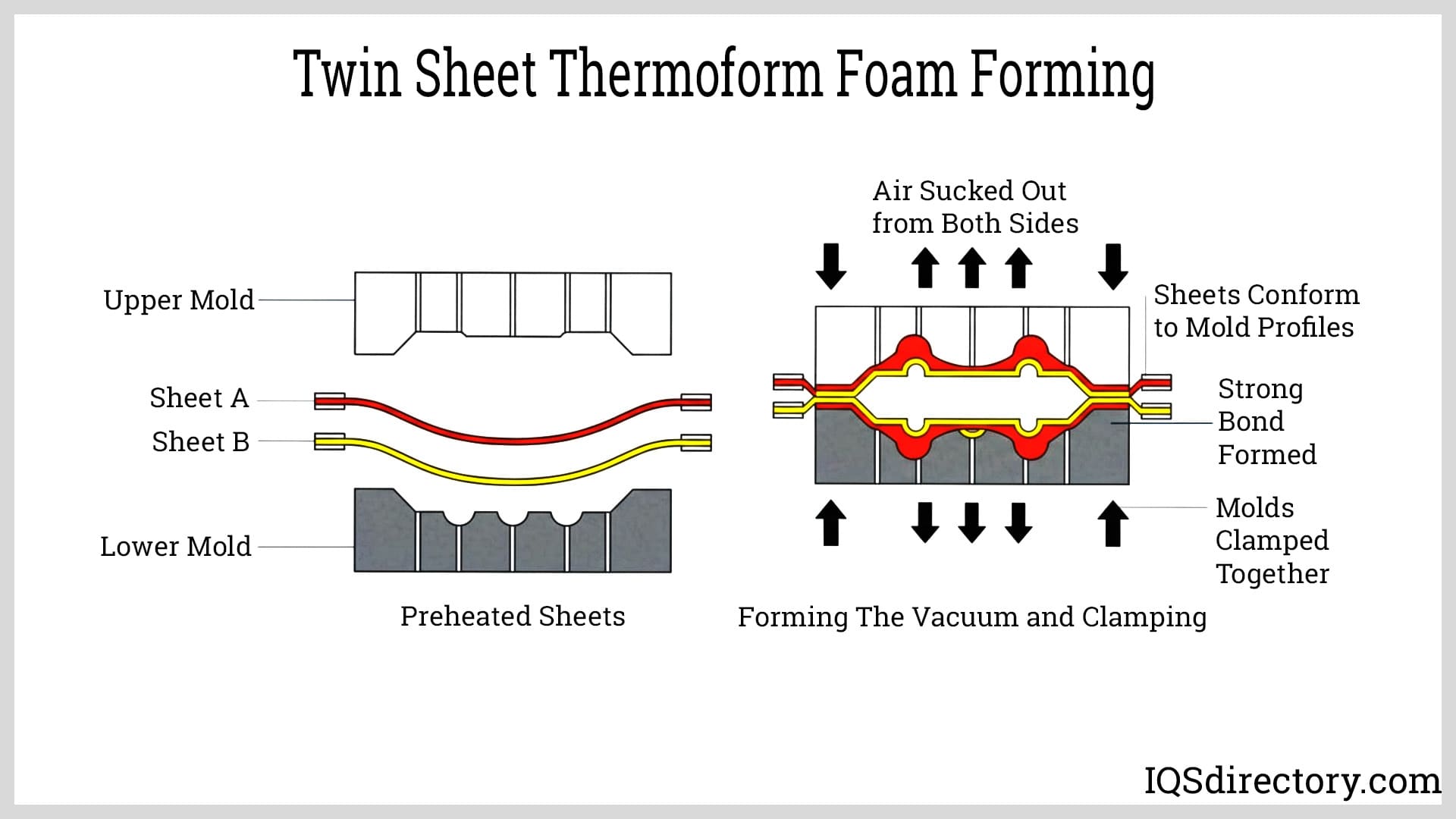
Twin sheet thermoforming of foam involves two sheets of preheated foam that form the halves of the final product. The foam sheets are placed between the two halves of the mold, which are brought together under a great deal of pressure. The pressure and connection cause the sheets to weld together. In order to ensure tight contact with the mold, air is sucked out while the mold halves are firmly clamped together.
Needles are inserted between the foam sheets in the mold cavity to assist in the cooling process. They help with pressure equalization. The key to the process is to compress the sheets at 50% of their thickness, which helps with the pressure during the welding process. The accuracy of the parting line between the mold halves ensures the proper amount of compression.
The products from twin sheet thermoforming bear similarities to items formed by blow molding or rotomolding. The process is used in place of these methods due to the variety of materials and lower cost for producing small or medium runs.
Drape Thermoforming
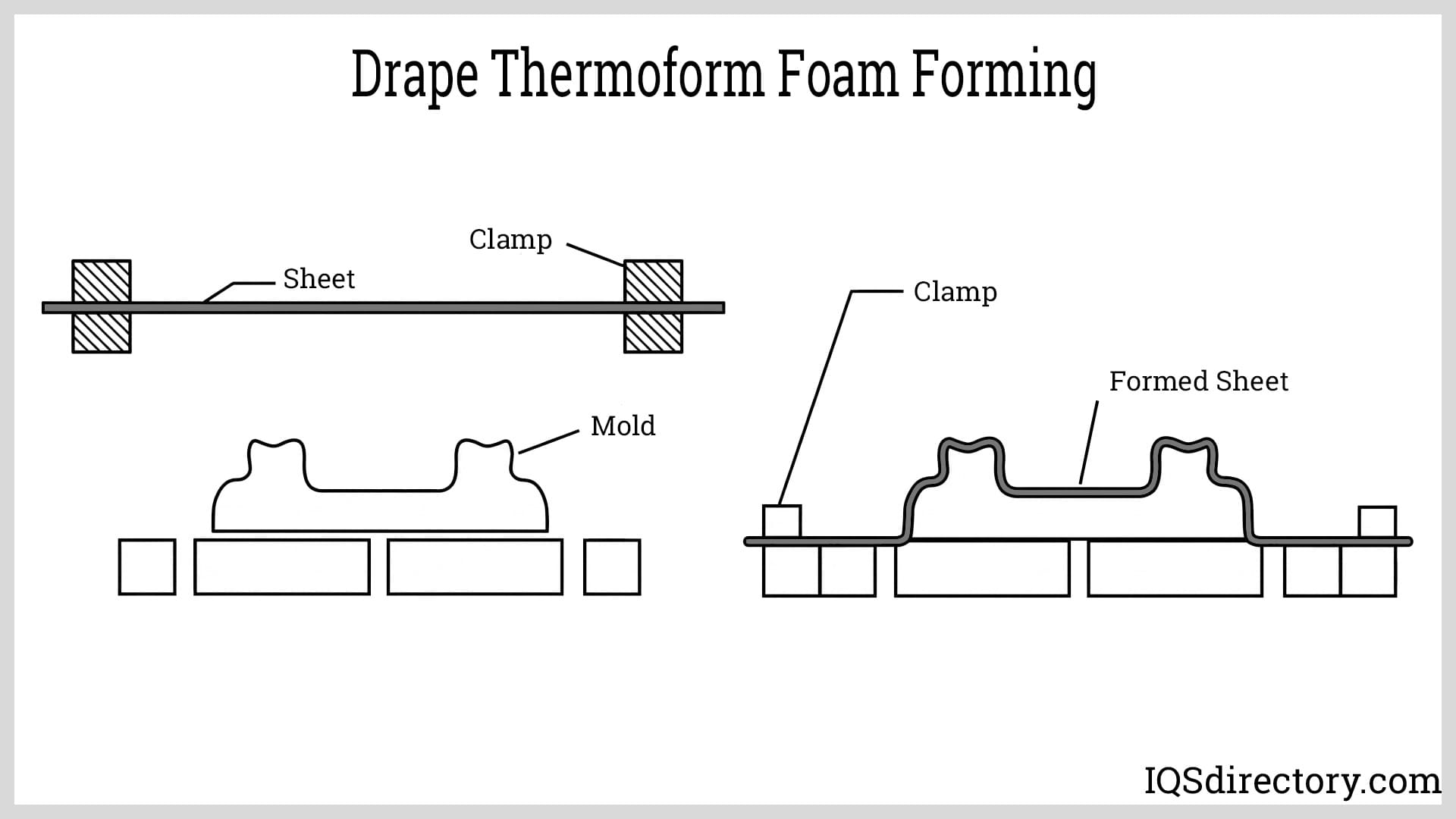
With drape thermoform foam forming, the sheet of plastic foam is heated to its forming temperature and placed over a mandrel with the desired design. It is the most affordable of the thermoforming processes due to its limited tooling. Of the long list of thermoform foam forming methods, drape thermoforming is the most rudimentary because of the simplicity of the process. Unlike pressure thermoforming, vacuum thermoforming, and twin sheet thermoforming, drape thermoforming relies on gravity to firmly place the heated foam sheet over the shape on the mandrel.
Drape forming is ideal for projects with simple designs and uniform wall thicknesses. During the forming process, the piece of foam is held in place by soft mold cloth and secured at the corners as the shape cools. The primary reason for using drape thermoforming is to create shapes with specific curve requirements.
Matched Mold Thermoforming
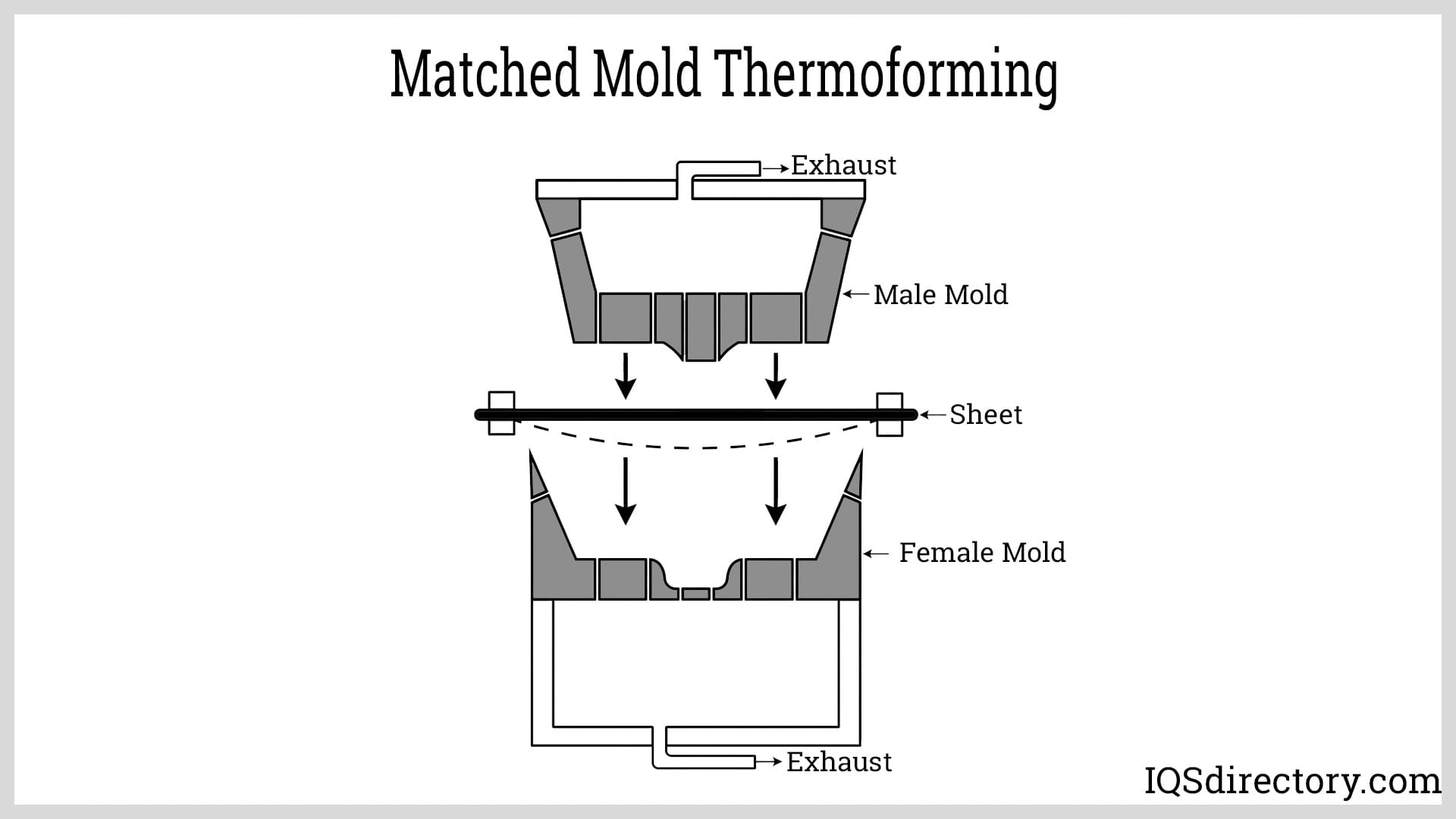
In some instances, it is best to have the plug and cavity of a mold match or be able to be mated such that they fit together snuggly leaving the space between them for the foam material. This particular form of thermoforming is referred to as matched mold or matched die thermoforming. During forming, the two molds are clamped together and have holes that allow air to escape without the use of vacuum or air pressure. The foam is mechanically pressed into the desired shape and allowed to cool.
The matched mold thermoform foam forming process is very similar to traditional mold forming in that two close fitting mold halves are used to produce the final foam piece. The method is like mechanical forming in that it involves mold halves. The difference between the processes is the types of molds that are used. Matched mold thermoforming, commonly referred to as compression thermoforming, involves placing a sheet of preheated foam into a mold cavity that is closed by a second matching mold that applies pressure causing the foam material to take on the shape and form of the closed mold.
Matching mold thermoforming bears a strong resemblance to injection molding in that it involves the use of two mold halves. The difference between the processes is the type of material that is molded. Injection molding injects molten plastic resin into the mold halves under pressure. Matching mold thermoform foam forming uses sheets of preheated plastic foam that is pressured between the mold halves. Both methods are essential industrial operations used for different purposes.
Matching mold thermoform foam forming is used for simple parts at lower tooling costs and faster lead times. It can produce perfectly formed foam parts. With injection molding, foam plastic parts are produced by mixing the plastic resin with a blowing agent prior to injecting the resin into a tightly closed mold.
Reverse Draw Thermoforming
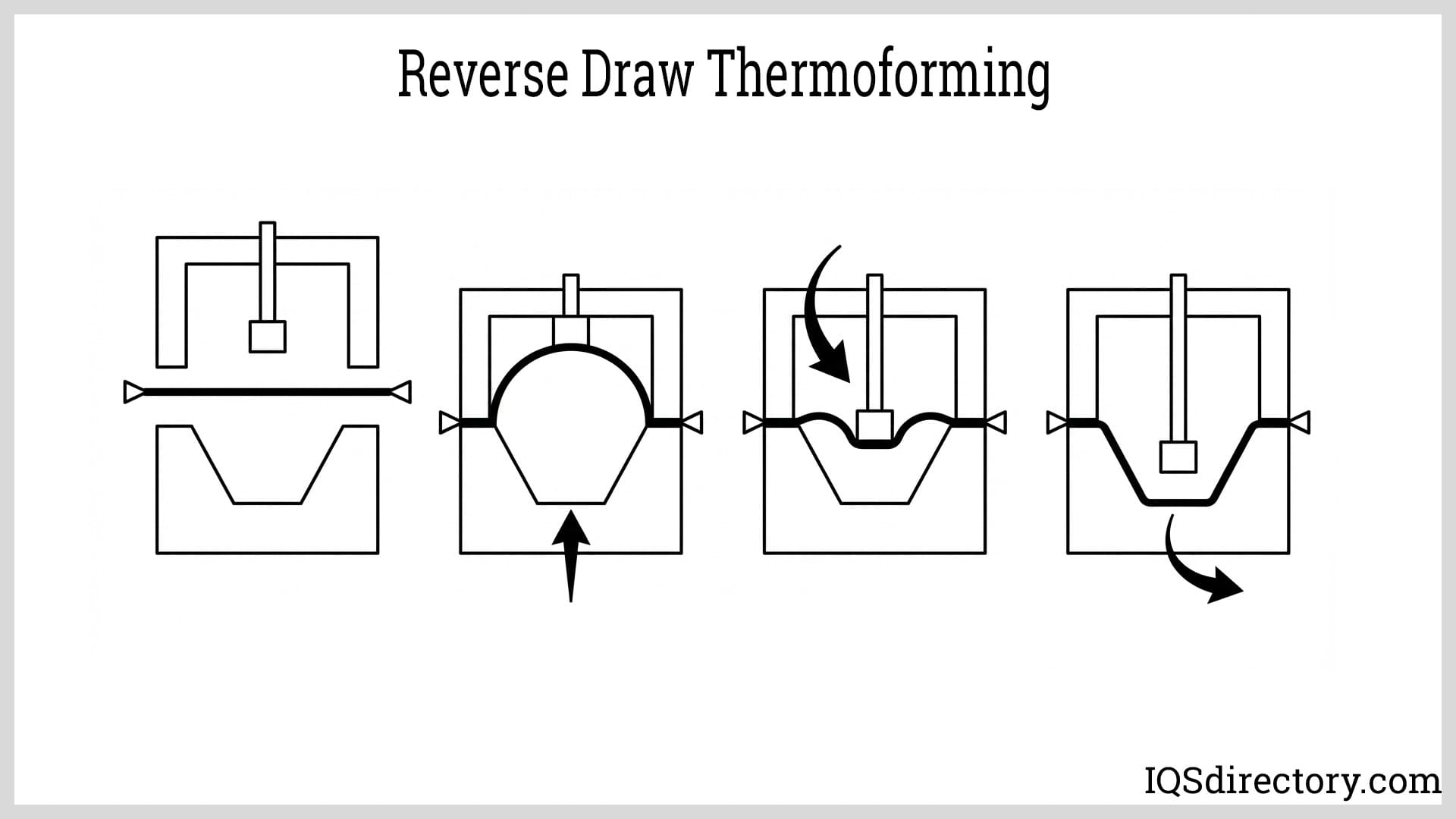
Reverse draw thermoforming has several names including invert forming, pillow forming, and billow forming, all of which refer to the deep draw used for this method of thermoforming. The purpose of reverse draw thermoforming is to produce parts that have a very deep long structure, which is the reason for blowing into the center of the heated foam sheet before pushing it into the mold. The technique is within the vacuum forming process where the heated sheet of foam is heated and blown away from the mold, the purpose of which is to thin the center of the foam sheet. The bubble that is created is meticulously monitored until it reaches the correct size.
Once the dimensions of the bubble are in accordance with the design, a plug presses down on the foam to force it into the mold. As the plug moves into the mold, the thickness of the bubble and the sides remain the same. When the plug has securely placed the foam sheet in the mold, a vacuum is activated that pulls the sheet of foam to the sides of the mold.
The design of reverse draw thermoforming is to add an extra stretching step that provides for more accurate control over the thickness of a piece. The downside of the process is longer mold cycles. Adjustments to the thickness are made by changing the temperature of the blowing, the size of the bubble, plug size, plug shape, speed of the plug, and the amount of time of the vacuum.
Free Thermoforming
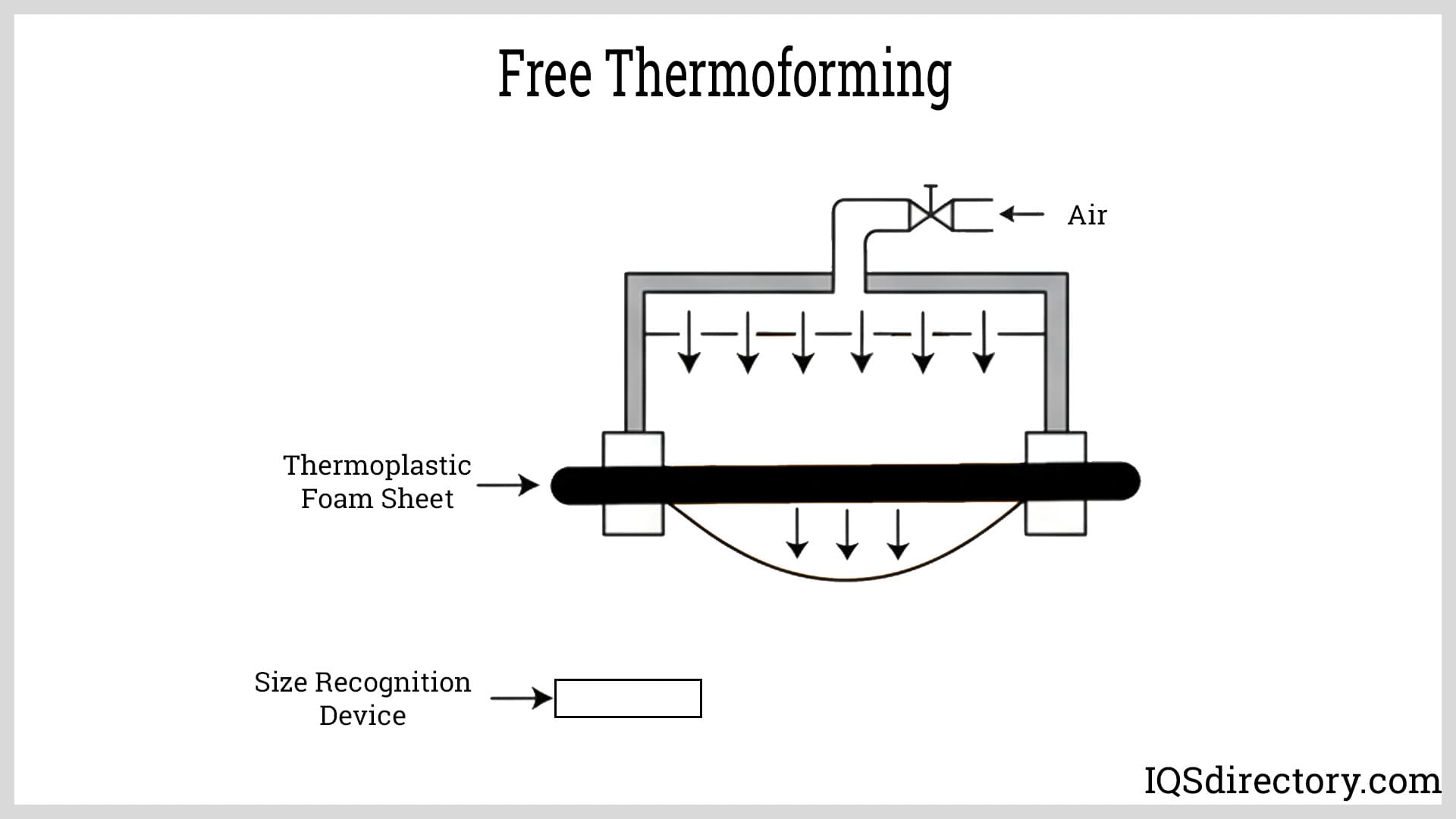
Free thermoforming does not include the use of a mold but relies on air pressure or vacuum to expand the heated foam sheet to form the desired shape, such as domes. With free thermoforming, the foam material never touches a solid surface, which eliminates any concern of tiny particles coming in contact with the final part. The forming mechanism for free thermoforming is air pressure that acts as the forming force.
The initial steps in the forming process are the same as they are for reverse draw thermoforming where a bubble is created to match the dimensions of the desired part. Although it is referred to as free thermoforming, the process is closely monitored such that the bubble exactly matches the design requirements.
Unlike other forms of thermoforming, parts created by free thermoforming are simplistic and lack complexity. Clamping is normally added to the process to control the shape of the part. A ring clamp creates circles while a teardrop shape produces elongated and streamlined shapes.
Each of the different methods of thermoforming have variations to meet the requirements of a particular part. Thermoforming foam is a vital part of a wide range of manufacturing processes and is a critical part of product engineering. The flexibility of the process allows designers and engineers to imagine an endless number of parts, products, and components.
Chapter 3: Types of Thermoforming Foam
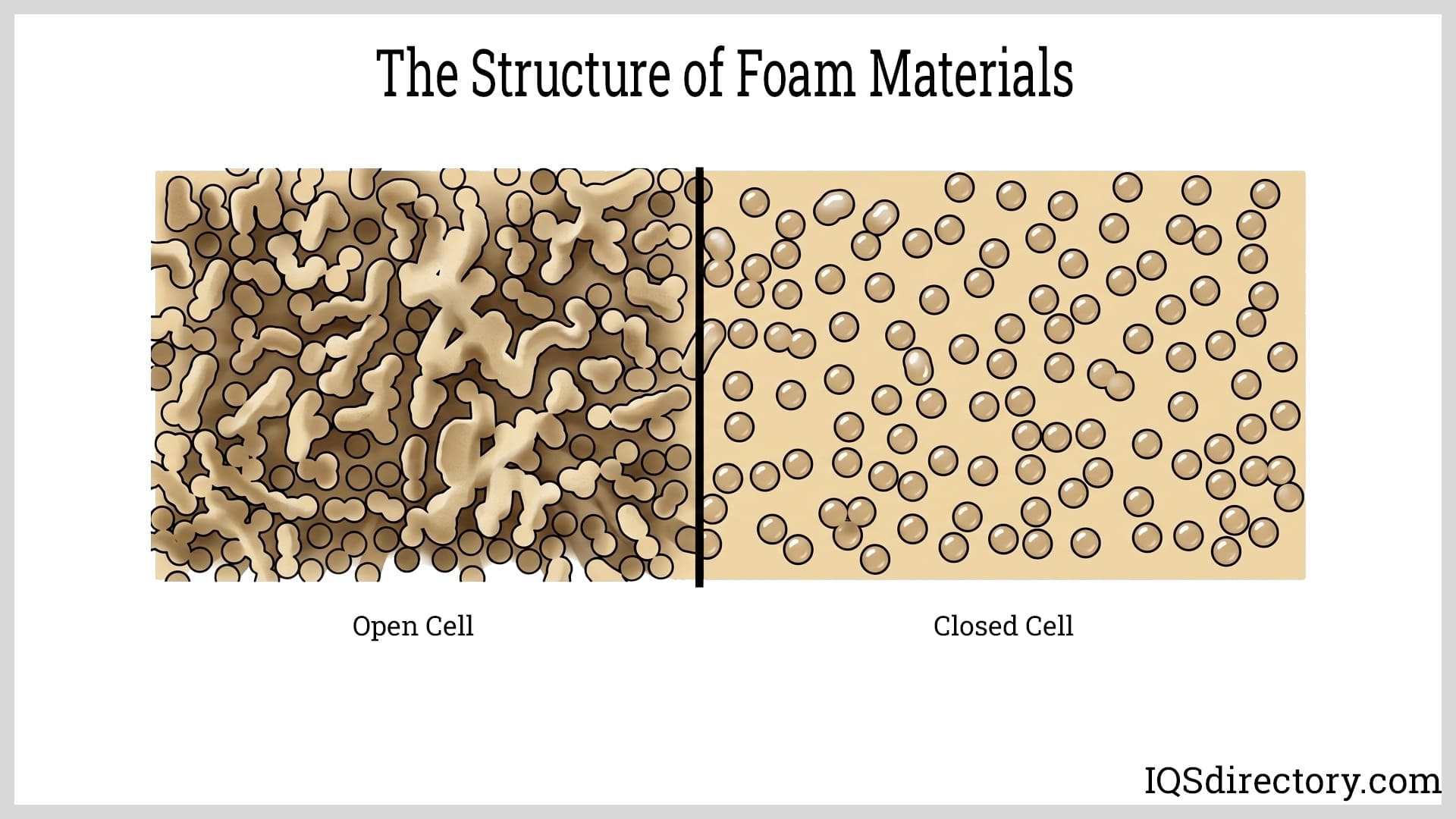
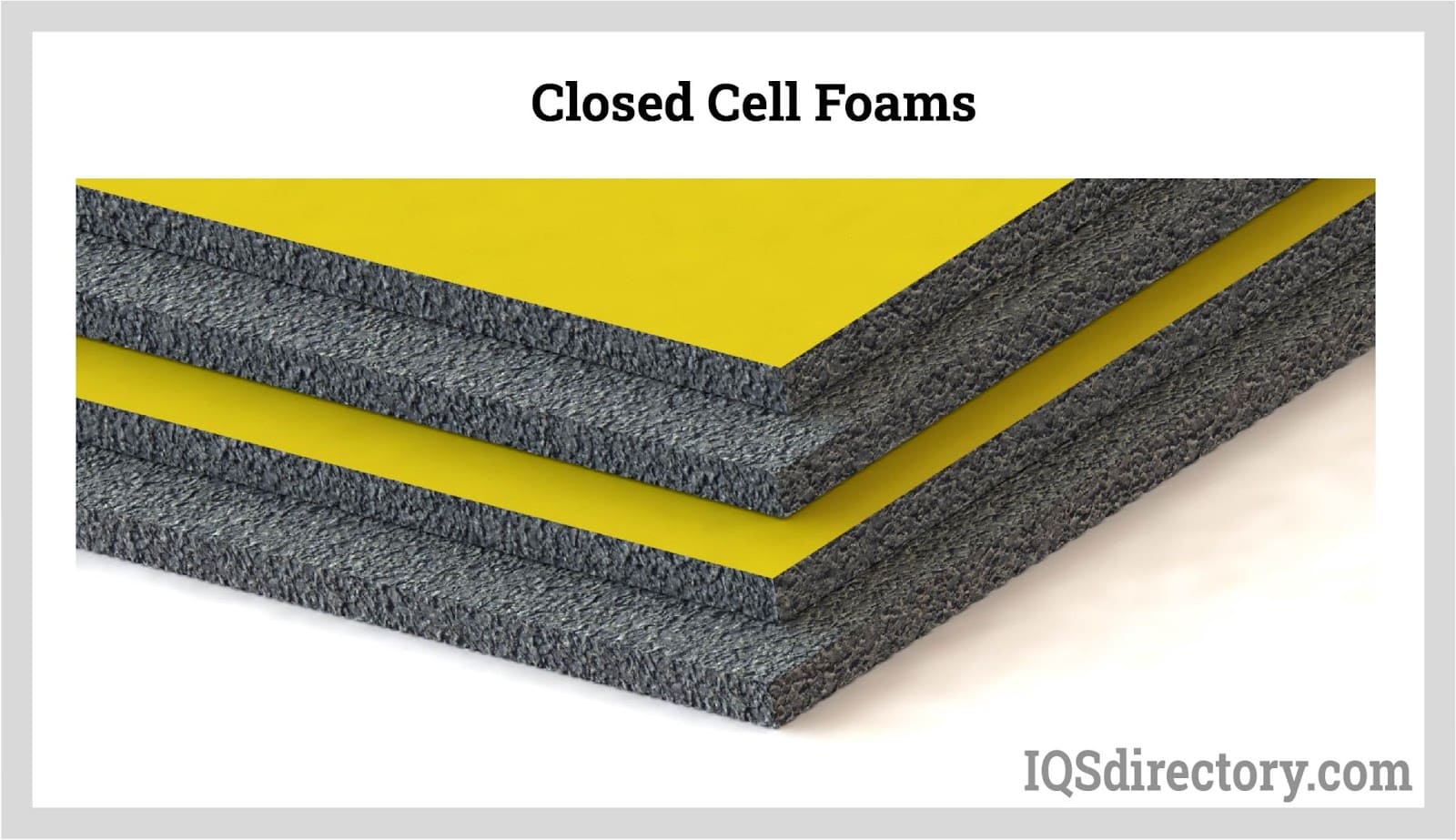
Thermoforming foam is used to create products that are lightweight, compressible, durable, and resistant to mold and bacterial growth. Most varieties of foam have low thermal conductivity with low vapor absorption. The general groups of thermoplastic foams are open cell and closed cell, which differ in regard to the cells that make up the structure of the foam. The distinction between the two types of foam is the cell structure where open cell foams have large cells with space between them while closed cell foams have tightly packed cells that are closed off.
For many people, the term foam refers to a soft spongy material that is used for furniture, car seats, and beds. Although such products are produced using foam, the many varieties of foam have a wide array of structures that include the soft, spongy varieties as well as very stiff firm foams that can be used for structural support. The differentiation between soft and rigid is in regard to the manufacturing method used to produce the foams.
In the thermoforming process, there are several types of plastics that are used to produce products and parts. All manners of plastics are used to produce stiff, rigid shapes and forms. Thermoplastic foam is an additional type of plastic that is included in the process that provides an extra set of properties that are desirable for specific products.
The choice of foam material is critical to the thermoforming process since it determines how well a workpiece will form. Factors that are considered during the selection process include heat stability, elasticity, density, thickness, and surface finish. Most manufacturers choose a material in accordance with the material’s durability and cost effectiveness.
The common types of thermoplastic foams used for thermoforming are Polyethylene (PE), Polyurethane (PU), Ethylene Vinyl Acetate (EVA), and Polystyrene (PS). The selection process regarding which foam will be used for a project involves determining the level of durability, cushioning, and heat stability required for an application, since each type of foam varies in respect to these properties and characteristics.
Thermoplastic Properties
Heat Stability – Heat stability refers to how much heat a foam can endure without melting or degrading. In addition, thermoplastic foams have to have a resilient forming temperature.
Elasticity – A characteristic that is expected by manufacturers is the ability of a foam to stretch and bend without breaking, a key factor in the quality and life of a part. In addition, elasticity determines how well a thermoplastic will fill a mold, which is critical to deep draw thermoforming methods.
Viscoelasticity – A critical characteristic of foam is its ability to return to its original form after being compressed, which is referred to as viscoelasticity or memory. Once a thermoplastic foam is shaped and formed, it should not spring back to its original sheet form.
Uniformity – Thermoplastic foams for an application are required to have uniform thickness and density to ensure the quality of a product or shape.
Polyethylene Foam
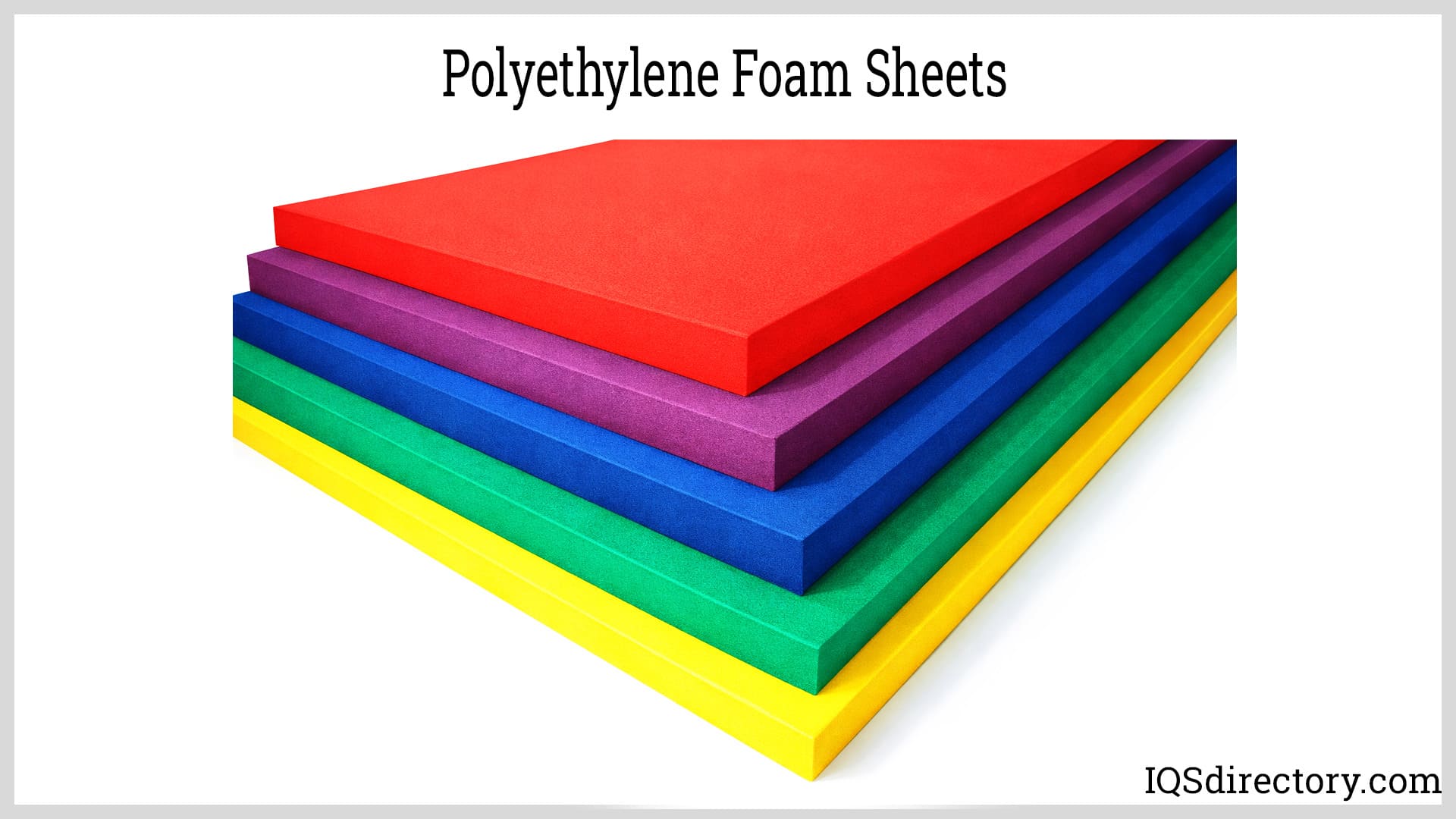
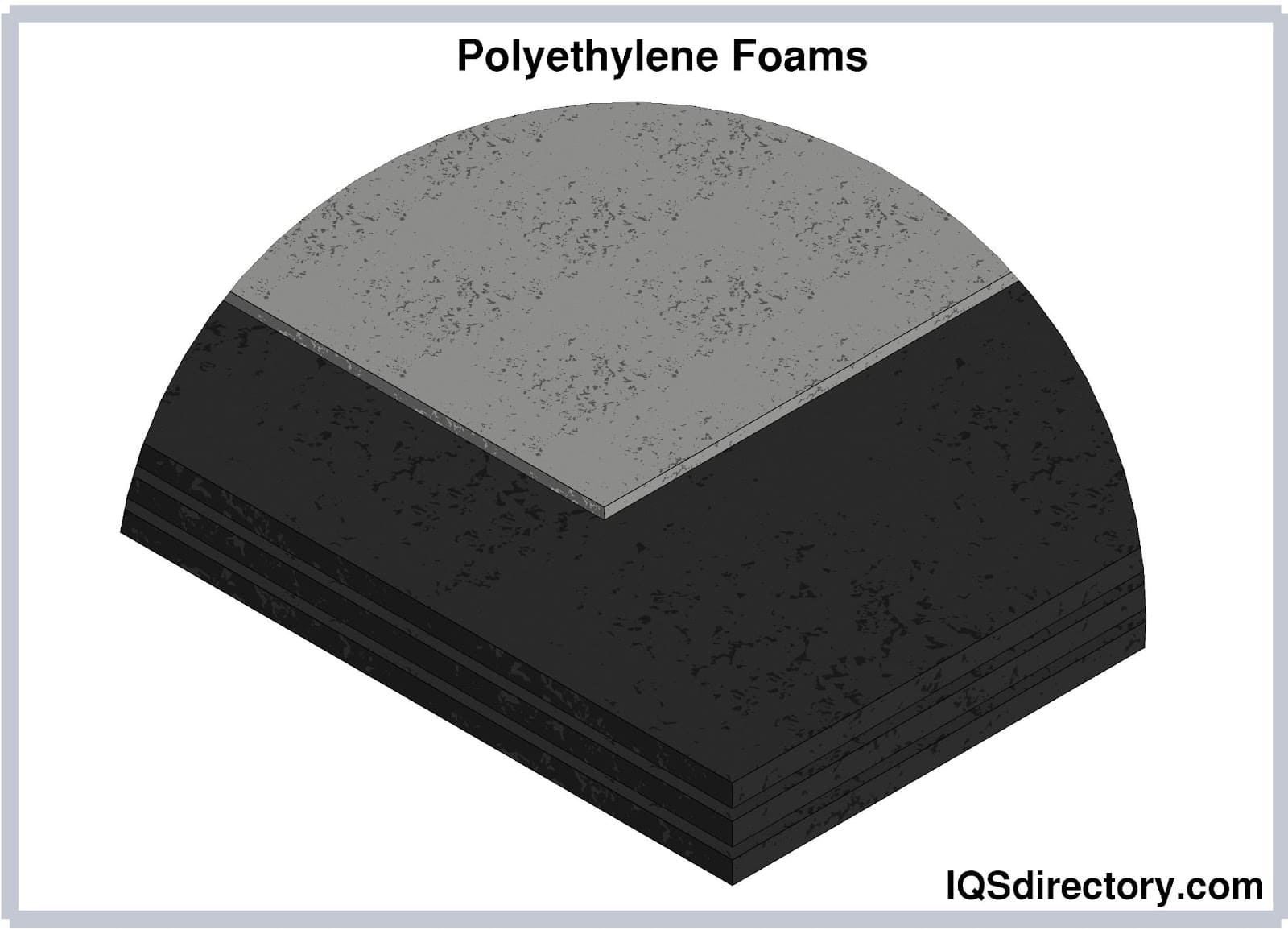
Polyethylene foam is a closed cell foam that is strong, durable, and rigid and has a resistance to water and moisture. It has high return characteristics that enables it to endure high impact and pressure, after which it rapidly returns to its original shape. As with many foams that are chosen for thermoforming, polyethylene foam is highly adaptive, such that it can be customized for a wide range of applications.
During the manufacturing process of polyethylene foam, various additives are mixed into the polymer compounds that alter the properties of the foam and give it distinct characteristics that sets it apart from other forms of foam, such as anti-static forms. As with all forms of foam, polyethylene foam is available in different densities with thicker wall cells to create a more durable and stronger material.
Polyurethane Foam
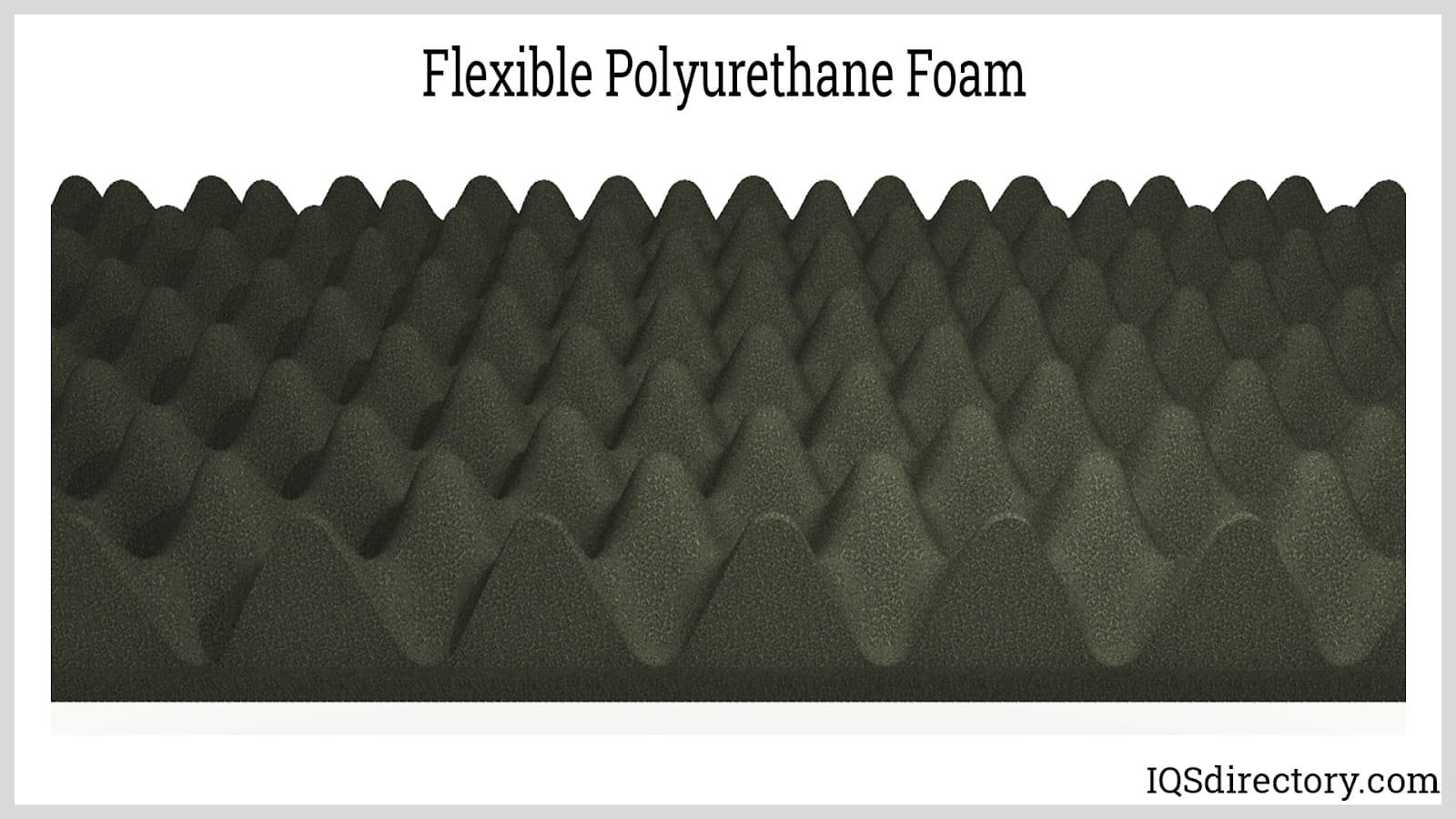
Polyurethane foam is produced from the combining of diisocyanate and a polyol, which are mixed with a catalyst, surfactant, and blowing agent that creates the foam material. It is a highly flexible synthetic polymer, which has an endless number of advantages. Polyurethane foam is one of the most popular forms of foam used for manufacturing due to its many positive properties and endless number of types. It is easily formable, a factor that makes it ideal for thermoforming.
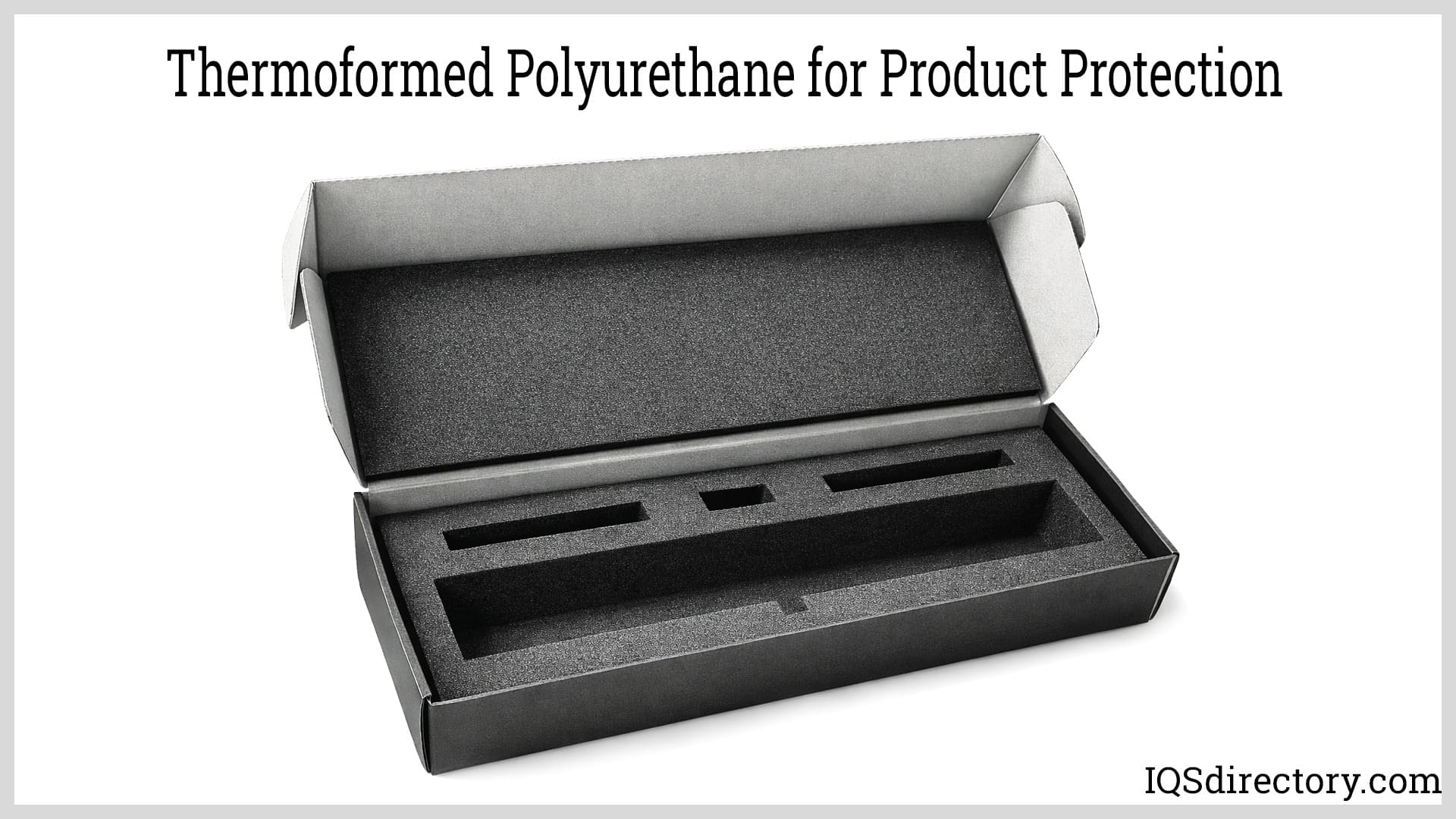
The use of polyurethane foam for thermoforming is in regard to packaging where the foam is shaped and configured to hold products and parts to protect them from vibrations and impact. The high density of the foam and compression strength make the foam the perfect choice for high stress conditions. In addition, the memory of polyurethane foam enables it to retain its thermoformed shape even after being compressed.
Ethylene Vinyl Acetate (EVA) Foam
EVA foam, referred to as foam rubber, has a closed cell structure that gives it exceptional shock absorption properties as well as moisture and chemical resistance. As with other types of foam, EVA foam comes in several varieties and is used for footwear and sports equipment. The raw material for EVA foam is ethylene vinyl acetate copolymers that are blended with blow agents and stabilizers.
The popularity of EVA foam is due to its unique properties, which include softness, flexibility, and exceptional durability. The blend of the copolymers with the other materials creates a type of foam that has the qualities of rubber and plastic. This combination gives the foam excellent cushioning while providing water resistance and exceptional support. The softness of EVA foam makes it attractive for household use and sport goods. Its flexibility enables it to be used for products that endure impacts and compression.
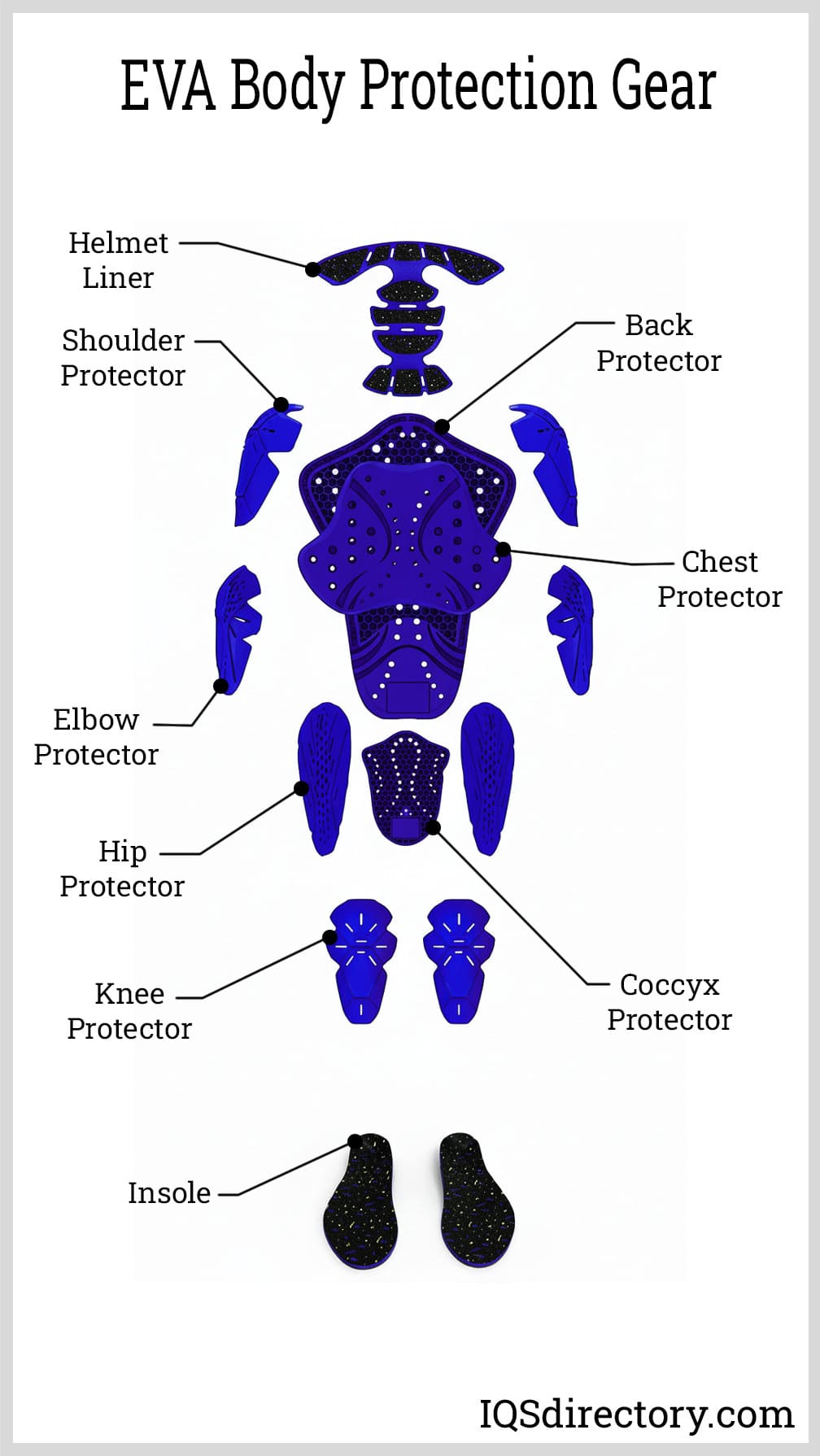
EVA foam is known for its ability to absorb high energy. When it is hit, the foam compresses as it takes the impact of an outside force. The ability of EVA foam to absorb high energy is due to the closed cell structure that traps air. This characteristic has made EVA foam a central part of the manufacture of protective gear using thermoforming. EVA foam bends easily, softens when heated, and is pliable, which makes it easy to form. Once formed, the cells of the foam are sealed and impenetrable, providing cushioning with high density that enables it to withstand high impact.
Polystyrene Foam
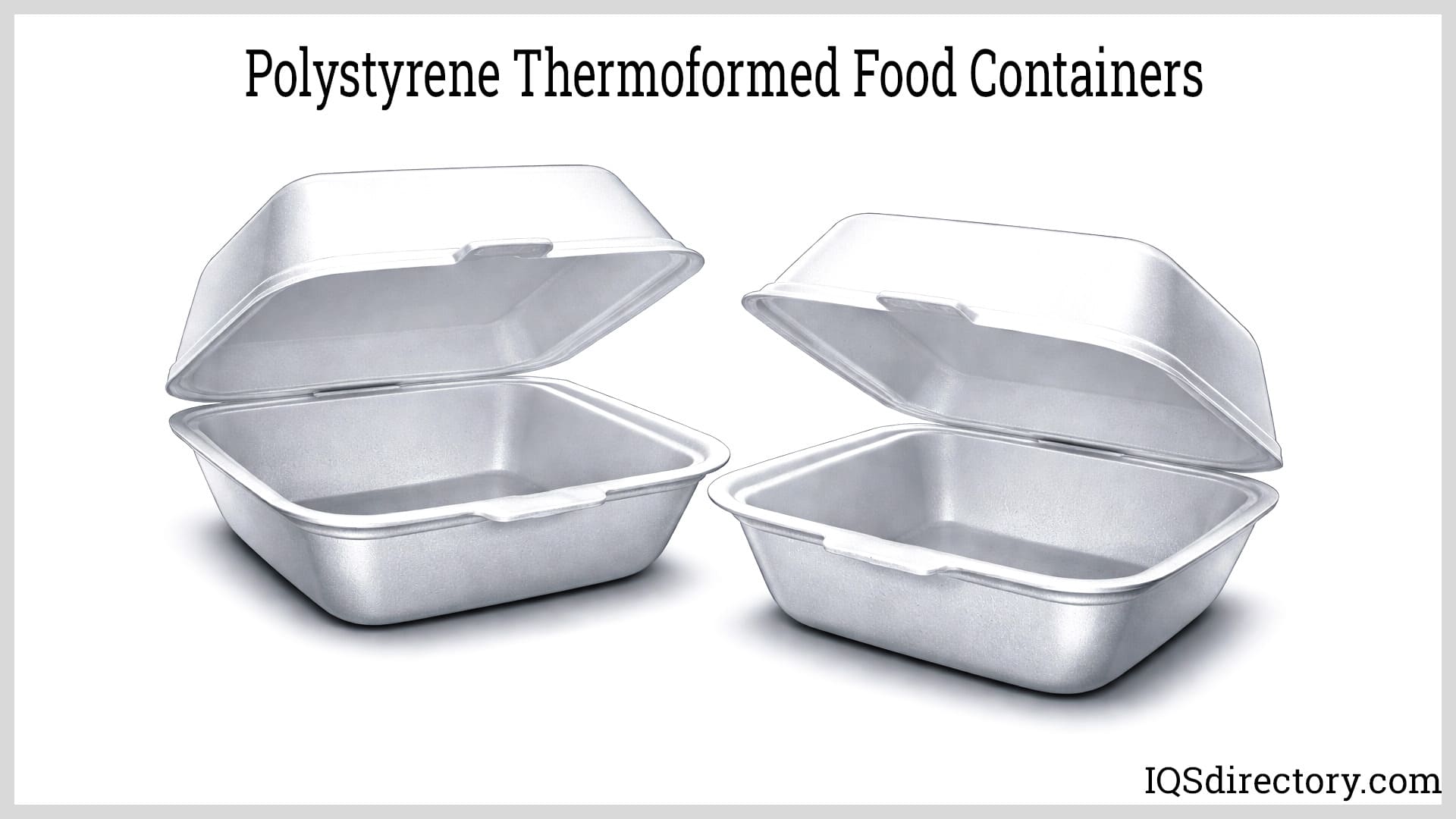
Polystyrene foam is used in thermoforming to produce packaging materials. It is easy to thermoform and comes in an assortment of colors. The use of polystyrene for the manufacture of packaging materials is due to its low cost. Although it is a popular thermoforming material, its brittleness limits its use to less stressful products compared to EVA foam and polyurethane foam.
The name of polystyrene foam, by which most people know it, is Styrofoam™. Its low melting point makes it easy to shape and has led to its use in the manufacture of packaging and disposable cutlery. When polystyrene foam is used in its expanded form, it is ideal for temperature control packaging.
The downside of polystyrene is its impact on the environment, which has led to measures regarding its use in certain products. Several initiatives are taking place designed to limit the impact of polystyrene foam’s carbon footprint. It is estimated that polystyrene can last for hundreds of years when dumped into a landfill.
There are many types of thermoplastics that are used for the thermoforming process, but only a select few are used for thermoforming foam due to the types of structure required to form the foam. The four thermoplastic foams described above are the most common and widely used due to their properties and formability.
Leading Manufacturers and Suppliers
Chapter 4: Thermoforming Foam Molds
The thermoforming foam process includes the use of molds that are used to shape and form the sheets of foam. Unlike typical molds for other processes, molds for thermoforming foam can take a wide variety of shapes including sculpted wood, CNC machining, structural foam, fiberglass, metals, 3D printed polymers, and casting plaster. These types of molds are capable of shaping thermoformed foam due to the temperature at which the foam is formed.
The selection process for thermoforming foam molds is based on part design, production volume, temperature, force, mold features, and the surface finish of the mold. Of the varieties of molds, wood, plaster, composites, and 3D printed plastic molds are cost-effective choices for custom, prototype, and low volume parts. As with other types of forming methods, metal molds are the most effective for high volume production due to their thermal conductivity, strength, part uniformity, reduced cycle times, and the durability of the produced parts.
For high volume production runs, thermoforming foam molds are made of cast or machined aluminum with cast aluminum molds being made from melted aluminum. Grades 6061, 7075, and 7050 are most commonly used with grades 2024 and 6013 used for their unique properties. Although steel is used for some molds, it is less common due to the difficulty in machining it. Alloys 6061 and 7075 are widely used due to their strength and consistency.
Composite molds are made from fiberglass or carbon fiber and offer a balance between durability and cost. They are not used for high volume runs and can provide highly detailed surface textures. Composite molds are lightweight with excellent thermal properties.
The factor that differentiates foam thermoforming molds from traditional thermoforming mold is the stiffness of the material after it has been heated to the forming temperature. This factor requires that the foam sheet be forced or pressed into the mold. Reverse thermoforming deals with this issue by blowing hot air into the middle of the foam sheet before placing it in the mold.
Basic Types of Thermoforming Foam Molds
The broad categories of thermoforming foam molds are essentially the same as all other types of molds, which are male and female, a factor that differentiates them by their form. With thermoforming molds, the two forms can work independently or together, depending on the piece to be produced. The designations for the two forms are concave and convex.
Male Molds – For thermoforming, a male mold has the features of the piece to be produced protruding away from the base of the mold. Also known as plug assists, male molds have a degree of draft on their vertical walls, which provides control of shrinkage. The outer surface of the molds has a high gloss, free from mold marks with limited sharp exterior details.
The heated foam sheet is draped over a male mold, which allows for detailed surface textures on the inside of the formed piece. Male molds are commonly used when uniform wall thickness is essential. A preforming bubble with a heated plug helps with foam sheet distribution. Of the two types of molds, male molds are the most economical and cost effective. They are used with female molds for multiple cavity applications, which enhances their cost effectiveness.
Female Molds – With female molds, also referred to as cavity molds, the features of the mold are inverted toward the base. In some instances, there will be features of a male mold included in a female mold. Unlike male molds, shrinkage is a problem for female molds due to the foam material shrinking away from the mold surface. The draft angle for female molds is normally zero or negative due to the foam material shrinking away from the mold surface.
The inner surfaces of material produced by female molds have a high gloss with visible marks on the outer surface, which allows for sharp details on the exterior of a part. As with male molds, female molds offer better forming when a preforming bubble is used that helps with foam material distribution. The precision features of female molds cause them to be more expensive than male molds but makes their use less expensive than injection molding. Female molds are used for producing detailed surface textures that are required on the exterior of a product.
10-10-5 Rule
The 10-10-5 rule plays a significant part in determining the success of thermoforming foam. It is a set of guidelines that assist manufacturers in thermoforming foam. The essence of the rules is that the radius of the curvature of the mold should be at least 10 times the thickness of the foam material. The draft angle should be equal to or greater than 10 degrees with the depth of the draw being 5 times the thickness of the foam material. Adherence to these dynamics ensures that the formed foam piece will be without defects.
Following the curvature rule helps prevent the concentration of stress and reduces material failure. A higher radius provides better material distribution and flow. The draft angle stipulation makes it easier to remove the formed piece from the mold. The depth requirement assists in preventing the excessive thinning and stretching of the material. As may be assumed, if the depth of the draw is too large, the foam material will thin out and be uneven.
Chapter 5: Designing for Thermoforming Foam
The success of thermoforming begins at the design phase where various aspects of the final product are considered and the formation of the mold begins. Thermoforming engineers follow a set of rules and requirements when preparing their designs. Adherence to the design parameters enables manufacturers to successfully produce viable thermoformed foam parts.
Undercuts
As a general rule, undercuts should be avoided since they make it difficult to remove a part from a mold. Undercuts are foam materials that take shape under the mold. In male molds, undercuts form foam material underneath the base of the mold.
Draft Angles
Draft angles are a slant on the face of a mold, which makes it easy to remove a formed piece. As the draft angle increases, the easier it is to remove a workpiece and ensure uniform part wall thickness. The minimum a draft angle can be is 5° to guarantee proper forming. Precision draft angles are achieved using CNC machining and 3D printing.
Height
There is a direct relationship between the height of a part and its width. Tall parts are difficult to form while wide parts form easily. If tall parts are necessary, generous draft angles can be used to compensate for the added height.
Air Holes
A common part of thermoforming foam molds are air holes that assist in the forming process. Proper air flow is an essential part of the success of thermoformed foam. They allow for the creation of thermoformed parts with greater detail and prevent air bubbles. Female molds can have aspects that create air pockets. The addition of air holes assists in the removal of air during the forming process. The formation of small surfaces and sharp corners is assisted by the use of air holes that help foam sheets to reach the corner sections of a design. Although air holes can be beneficial, they must be placed carefully and used sparingly.
Cavity Depth
The depth or height of a mold determines the thickness of the walls of a piece. Each thermoforming foam shape has a different sheet thinning ratio. The depth or height of a mold should be no more than two thirds the width of a mold. A mold that is any larger increases the wall thinness of a part.
Sharp Angles
Sharp angles that are less than 90° are uncommon in thermoforming foam shapes. They cause foam sheets to web and tear during forming. All thermoforming molds should have rounded corners to eliminate potential damage to the final product.
Corner Radius
Corner radii for thermoformed foam are rounded in order to maintain an even thickness of the foam sheet. Proper corner radii ensure a consistent flow of the foam sheet.
Template Placement
Since many thermoformed foam parts can have more than one shape in a mold, it is important to provide sufficient distance between the different molds. The determination of the distance is in regard to the height of each mold. The gap should be greater than the height of the tallest mold. This rule mainly applies to male molds that are more affected by the placement.
Shrinkage
As with all forms of molding, thermoforming foam has to account for shrinkage of pieces during the cooling process. To avoid the problems of shrinkage, it is important to adhere to the 10-10-5 rule.
Chapter 6: Thermoforming Foam vs Injection Molding
Thermoforming and injection molding are fundamental plastic manufacturing processes that are used to produce high tolerance plastic parts. Although the goal of both processes is to shape and produce plastic parts, the approach of the processes radically differ.
Injection molding involves the use of heavy-duty equipment that melts plastic resin and injects it into a tightly sealed mold. There are different types of injection molding with all forms using the melting of plastic resin and forcing it into a mold. In order to produce thermoplastic foam using injection molding, blowing agents are added to the resin
Thermoforming of foam consists of heating a sheet of thermoplastic foam and placing it in a mold. As with injection molding, there are several varieties of thermoforming that includes a long list of molds. Regardless of the method, all forms of thermoforming of foam include sheets of thermoplastic foam that is heated and placed over or in a mold.
Cost
There are several factors to consider when comparing thermoforming to injection molding. Cost is a major factor since it has an impact on the cost of a product and is a major manufacturing consideration.
Tooling
The tooling costs of thermoforming molds are far less than those for injection molding. Molds for thermoforming are made from less expensive materials since they do not have to endure the heat associated with injection molding. The wide variety of molds for thermoforming include ones made of wood and fiberglass and ones made of aluminum. Most molds for injection molding are made of steel and require a great deal of tooling, which adds to their expense.
Production Volume
Thermoforming of foam is cost effective for short production runs of small batches. Injection molding is a high-volume production process with faster cycle times and lower per unit costs, after the initial tooling of the die or mold.
Material Cost
The sheets of foam used for thermoforming tend to be less expensive than the thermoplastic pellets, resin, or granules used for injection molding. Although this is generally true, the types of thermoplastic foam can vary in accordance with its quality and quantity.
Labor Costs
Labor costs vary between the processes. Generally, thermoforming of foam requires less setup and operator involvement. Since injection molding includes complex equipment and machine programming, its labor costs are higher.
Lead Times
Thermoforming of foam has shorter lead times due to the simplicity of tooling, which makes it ideal for prototyping and quick turn around times. The long lead times of injection molding are due to its intricacies, such as tooling, setup, and the complexity of geometries.
In General
Thermoforming of foam has shorter lead times for tooling that is ideal for prototyping and quick turnaround times. Injection molding is a high-volume process that can produce thousands of parts in several days. Its setup time, tooling, and complexity lengthens its lead times that is balanced by the low cost per unit.
Comparison of Thermoforming Foam and Injection Molding of Foam
Thermoforming
Injection Molding
Produces large foam pieces Consolidates multiple components in a single mold
Small foam components
Does not do: Intricate designs Varying thicknesses Sharp angles or corners.
Produces components with High levels of detail Variable thicknesses Sharp or crisp angles.
Produces foam: Shipping trays Freezer liners
Foam packaging materials
Conclusion
Thermoforming of foam involves a sheet of thermoplastic foam that is preheated sufficiently to make it pliable. After which, it is placed on or in a mold for forming and shaping.
The term thermoforming is a general descriptor of a long list of thermoforming methods. The methods most commonly used for thermoforming foam are compression molding, vacuum forming, and mechanical molding.
Although several types of thermoplastics can be shaped and formed using thermoforming, the types of thermoplastic foams are polyethylene, polypropylene, polyurethane, and ethylene vinyl acetate or EVA. The distinctive characteristics of these thermoplastic foams are softness, flexibility, and open and closed cell structures.
Thermoformed foams are used for shock absorption, insulation, vibration dampening, and as protective packaging. The wide use of thermoformed foam is due to its lightweight, compressibility, durability, and resistance to mold and mildew.
Thermoforming foam allows for design flexibility, which makes it ideal for the manufacture of products with complexity and intricate details. The process has lower costs in regard to tooling, labor, and equipment.
Leading Manufacturers and Suppliers
Related Posts
Closed Cell Foam
Closed cell foam is a type of foam where the “cells” are tightly pressed together and enclosed, contrasting with the open, traditional polyurethane foam variation or interconnected cells of the open cell...
Polyethylene Foam
Polyethylene foam is a valuable closed-cell thermoplastic foam material. A closed-cell foam consists of tiny dense cells enclosed by its walls. The cells sit close to each other, but they are not interconnected. Hence, closed-cell foams like...
Polyurethane Foam
Polyurethane foam is a porous, cellular-structured, synthetic material made from the reaction of polyols and diisocyanates. Its structure is a composite of a solid phase and a gas phase. The solid phase is made from...
Die Cutting
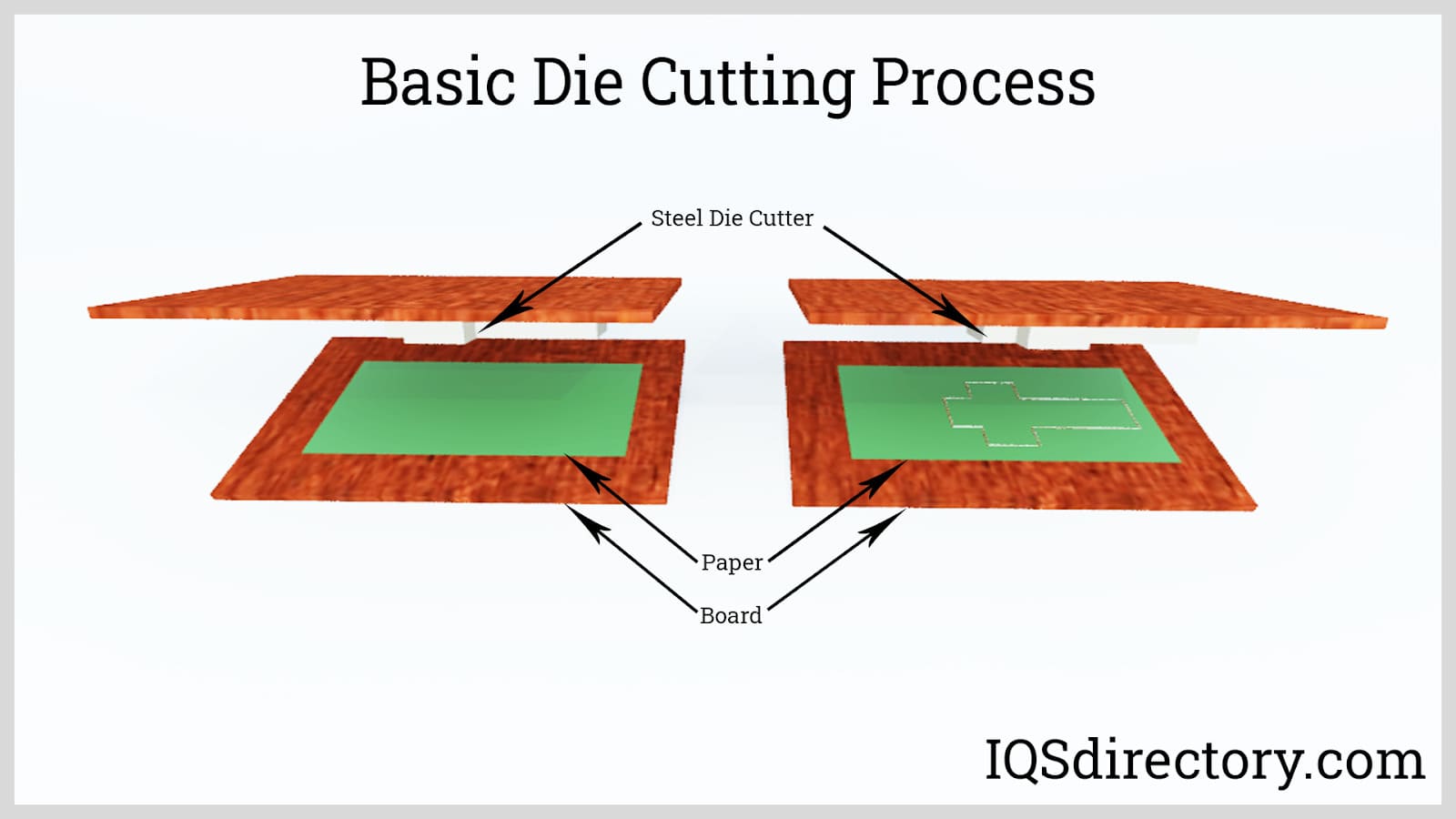
Die cutting is the mass fabrication of cut-out shapes by shearing a stock material such as paper and chipboard using tooling called a die. A die is a specialized tool used in manufacturing to cut or shape a material fitted into a press...
Kiss Cutting
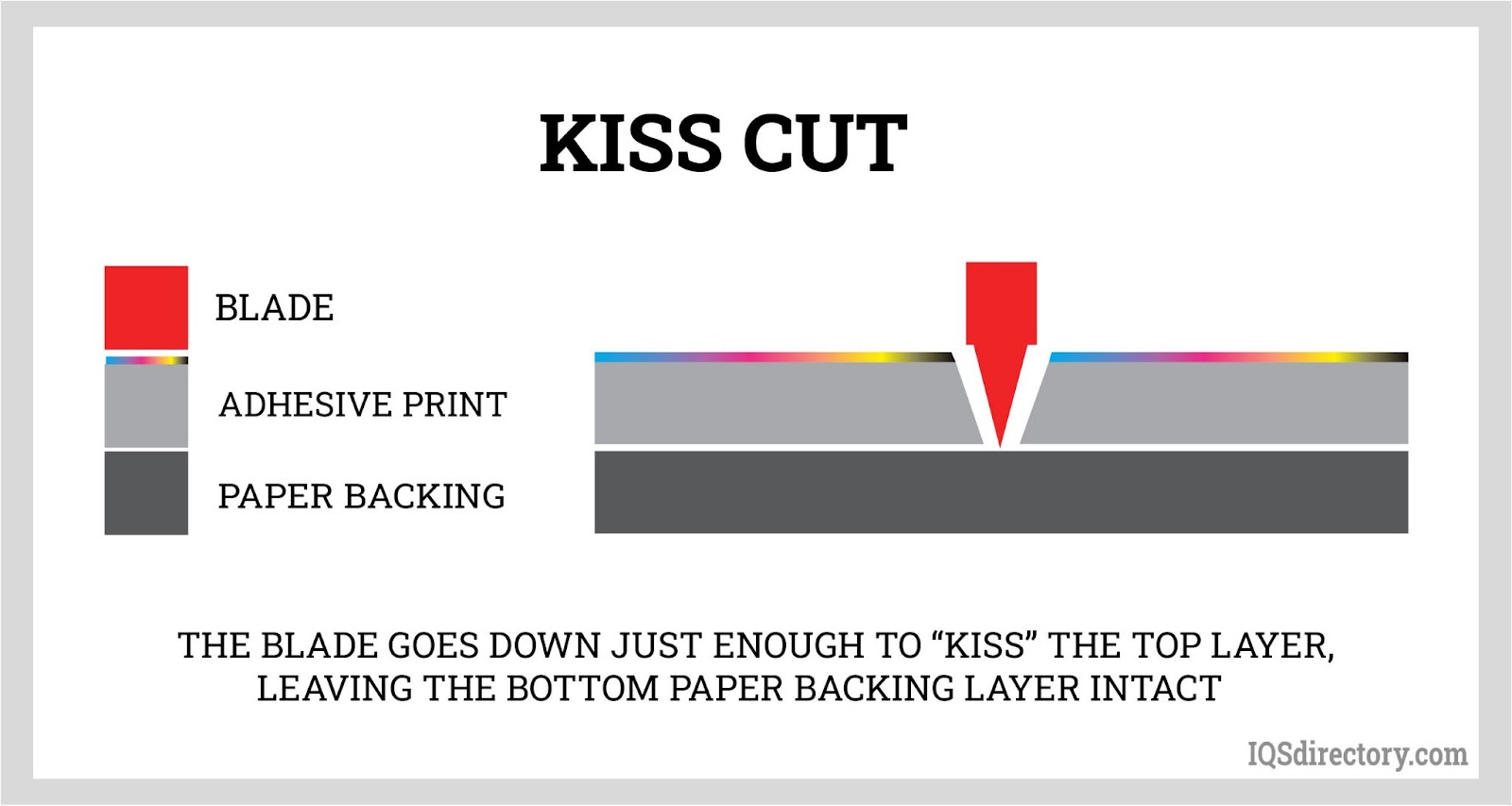
Kiss cutting is a method for cutting into a material where the upper layers are pierced, but the back layer is left intact. The term "kiss" refers to the way the blade touches the upper layers of the material and leaves a pattern or cut with a sufficient amount of force to leave an impression...
Plastic Fabrication
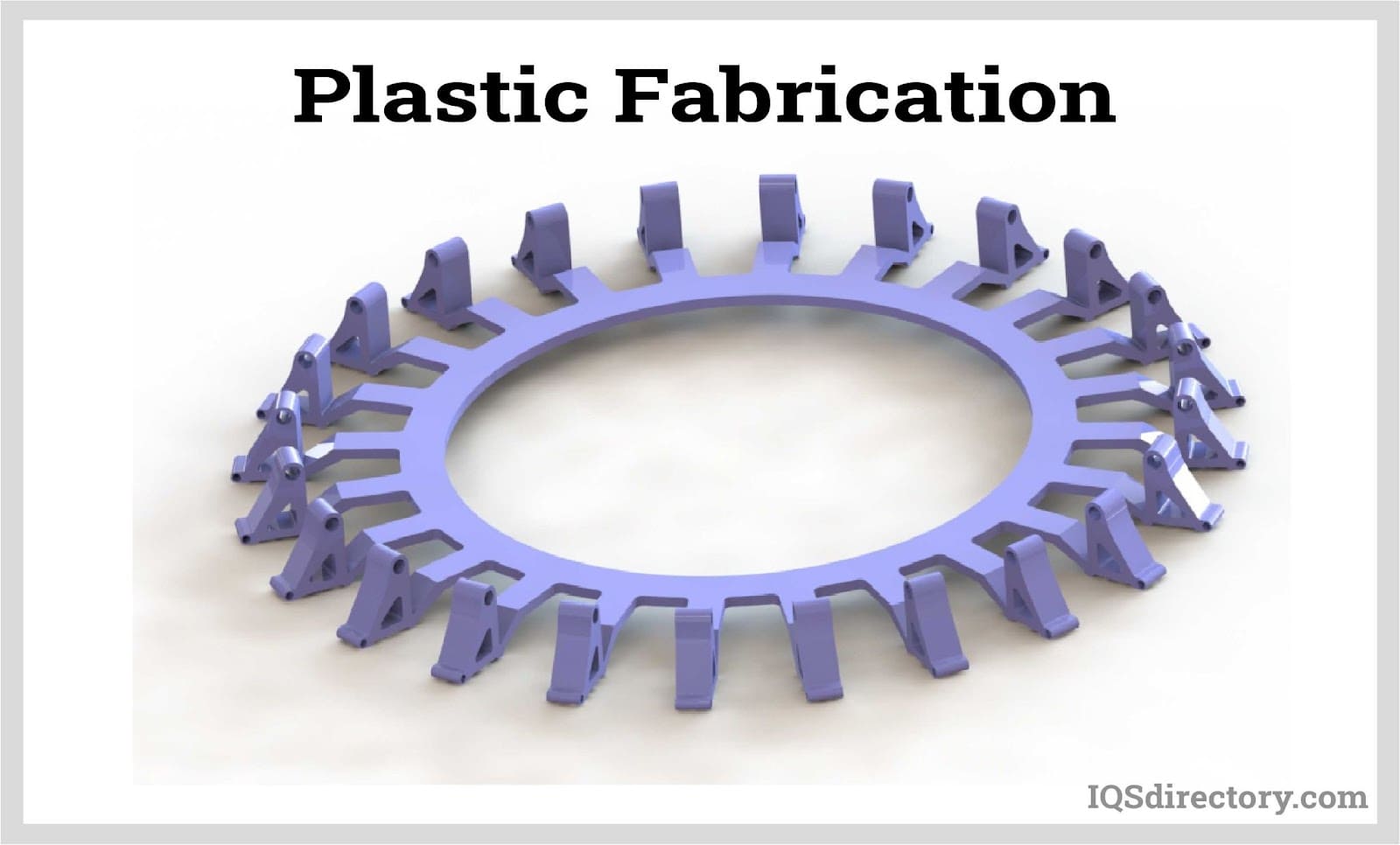
Plastic fabrication is the process of designing, manufacturing, and assembling a product made out of plastic material or composites that contain plastic. There are numerous plastic fabrication methods known today, considering the wide variety of products made out of plastic...