Aluminum Channels
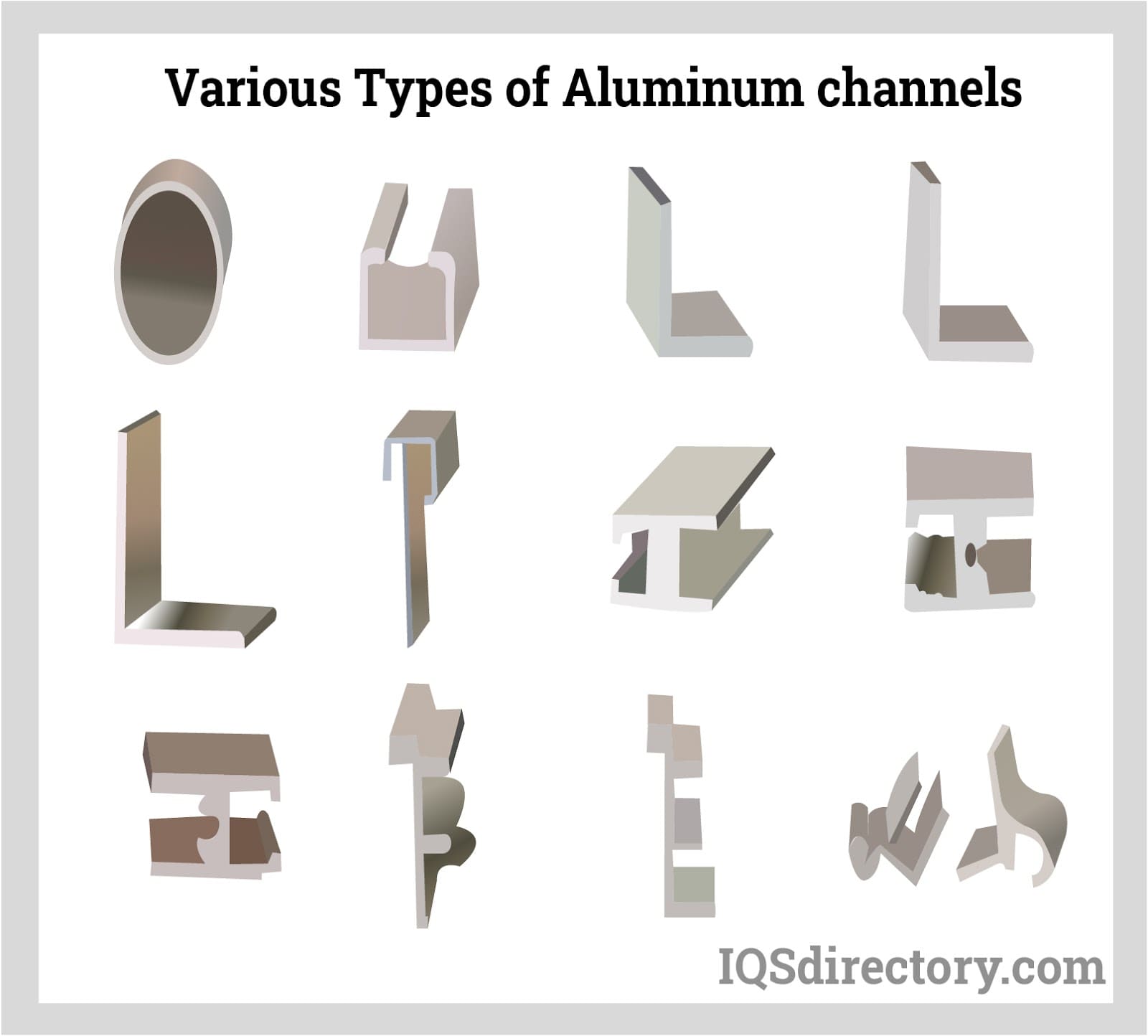
An aluminum channel is a structurally sound metal component made by extrusion...
Looking to find and compare J extrusion and aluminum profile manufacturers? See our Aluminum Extrusions Directory to request free quotes. Connect directly with vetted extruders for custom J-channels, deep nose profiles, hemmed trims, and architectural edge flashing.
This technical guide covers J channel extrusions, profile design variations, metal selection, and manufacturing methods:
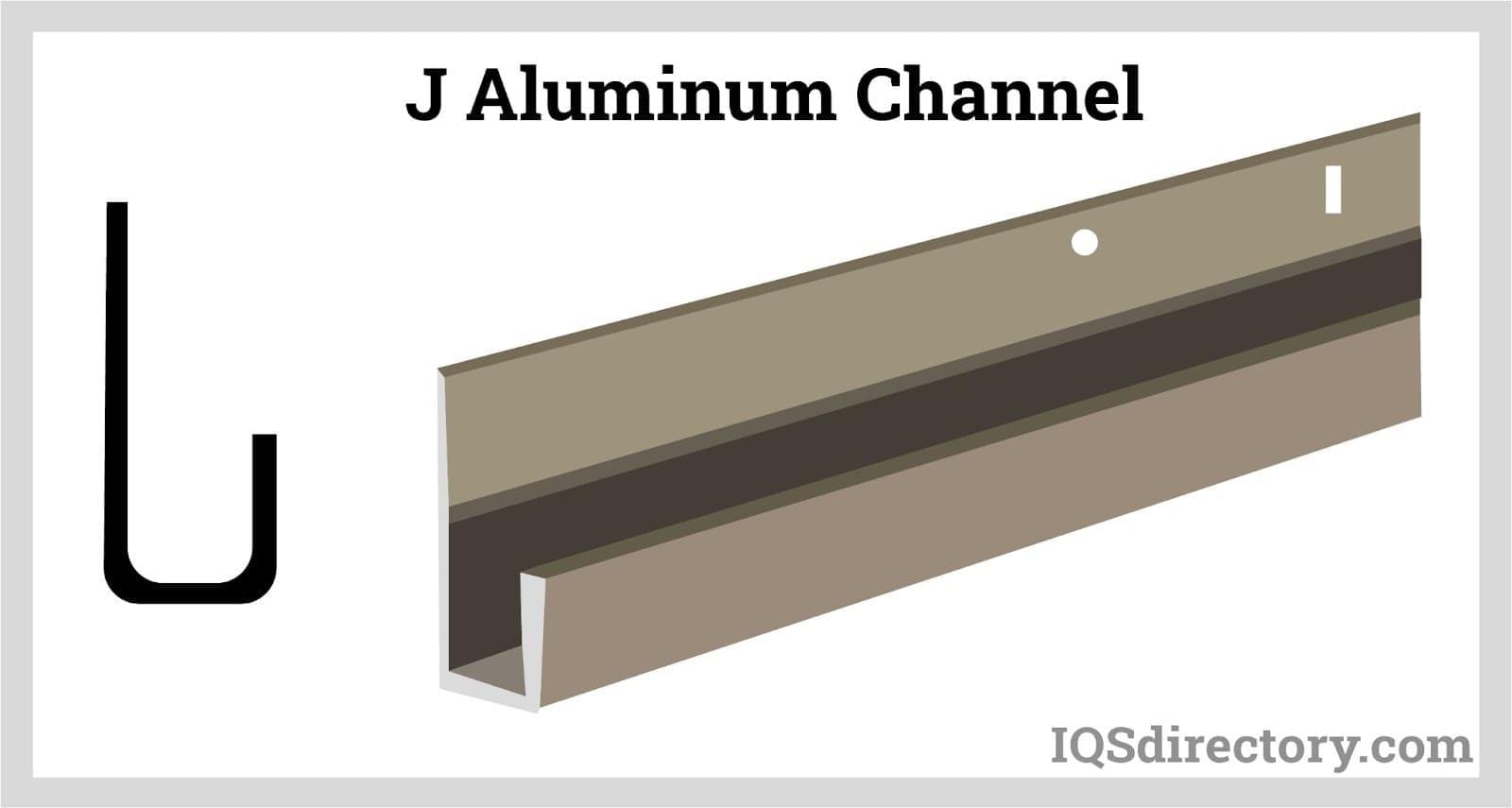
J extrusions function as specialized trim pieces resembling the letter “J”. Crafted with a flat web base and two asymmetrical legs, J channels conceal rough cut edges, direct rainwater runoff away from seams, and provide a polished finish around doors, windows, siding, and paneling.
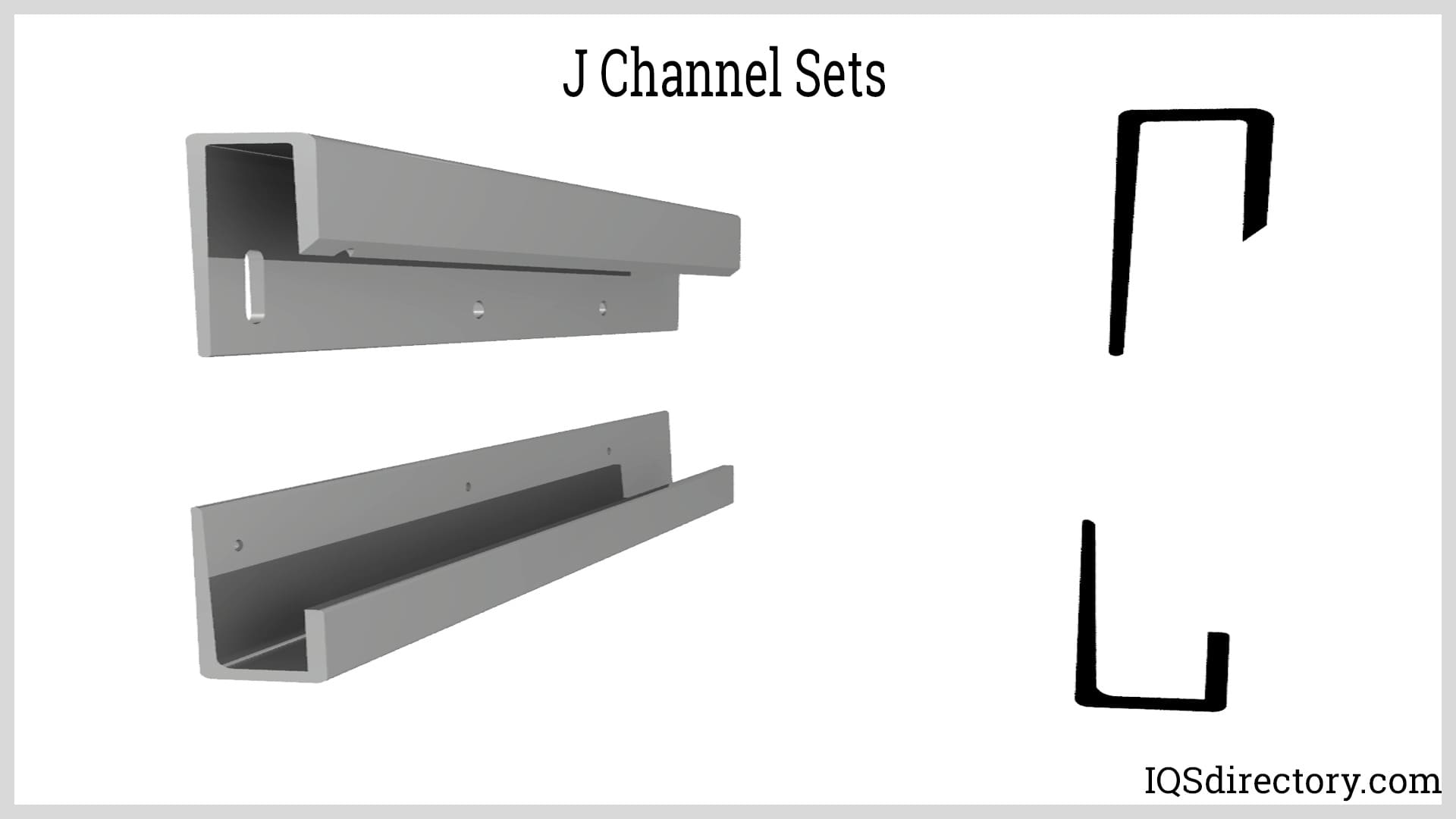
J channel extrusions are manufactured in several structural variations to support specialized paneling, glass mounting, and siding applications.
| Profile Variant | Structural Feature | Key Technical Benefit | Primary Applications |
|---|---|---|---|
| Indented J Channel | Recessed indentation along longer leg | Holds glass/panels off walls; allows airflow & reduces moisture | Commercial display cases, mirror mounting, shower enclosures |
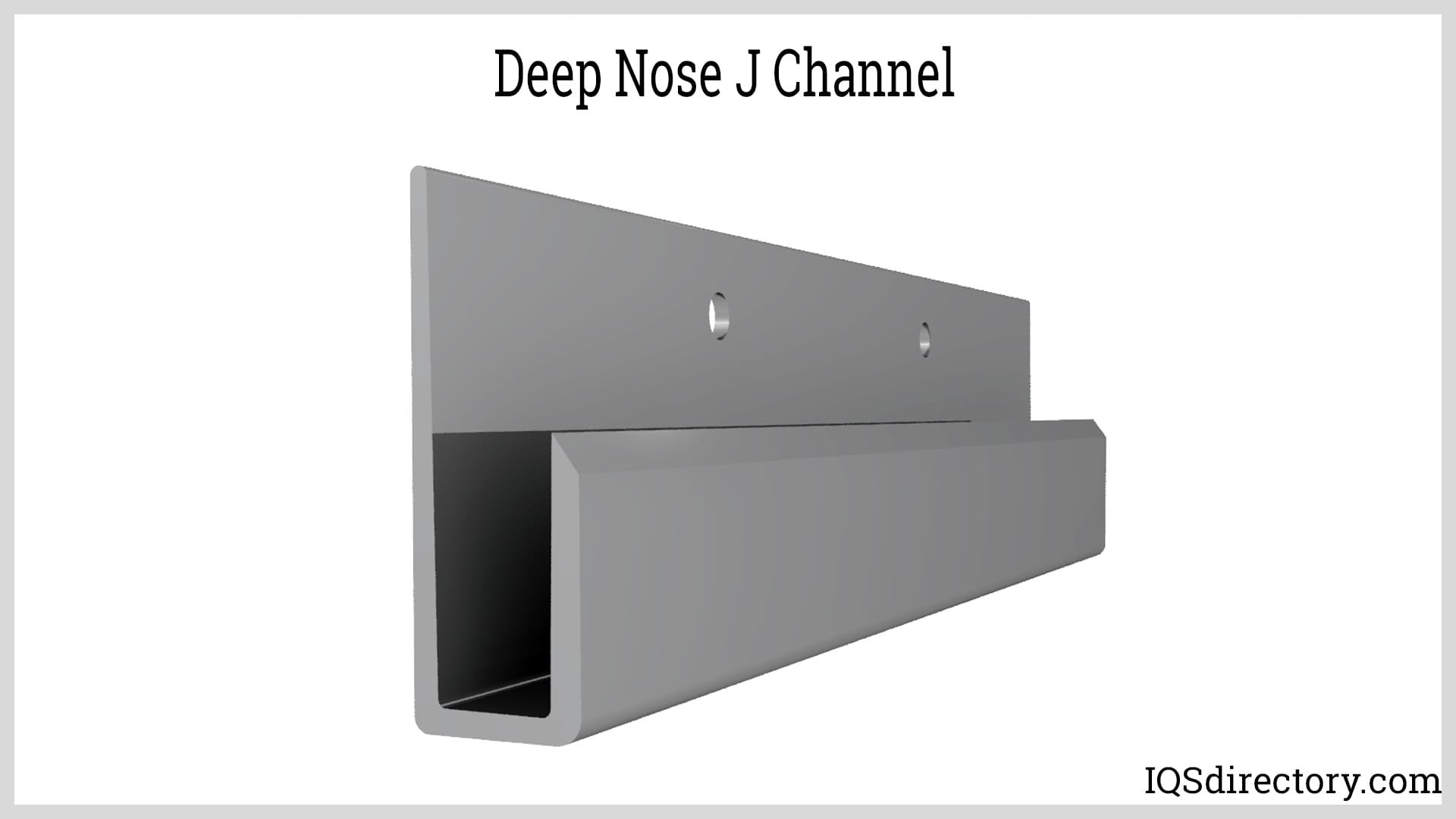
| Deep Nose J Channel | Extended front leg ("nose") depth | Accommodates irregular/uneven walls; superior mechanical grip | Heavy glass panels, signage, wall cladding, storefronts |
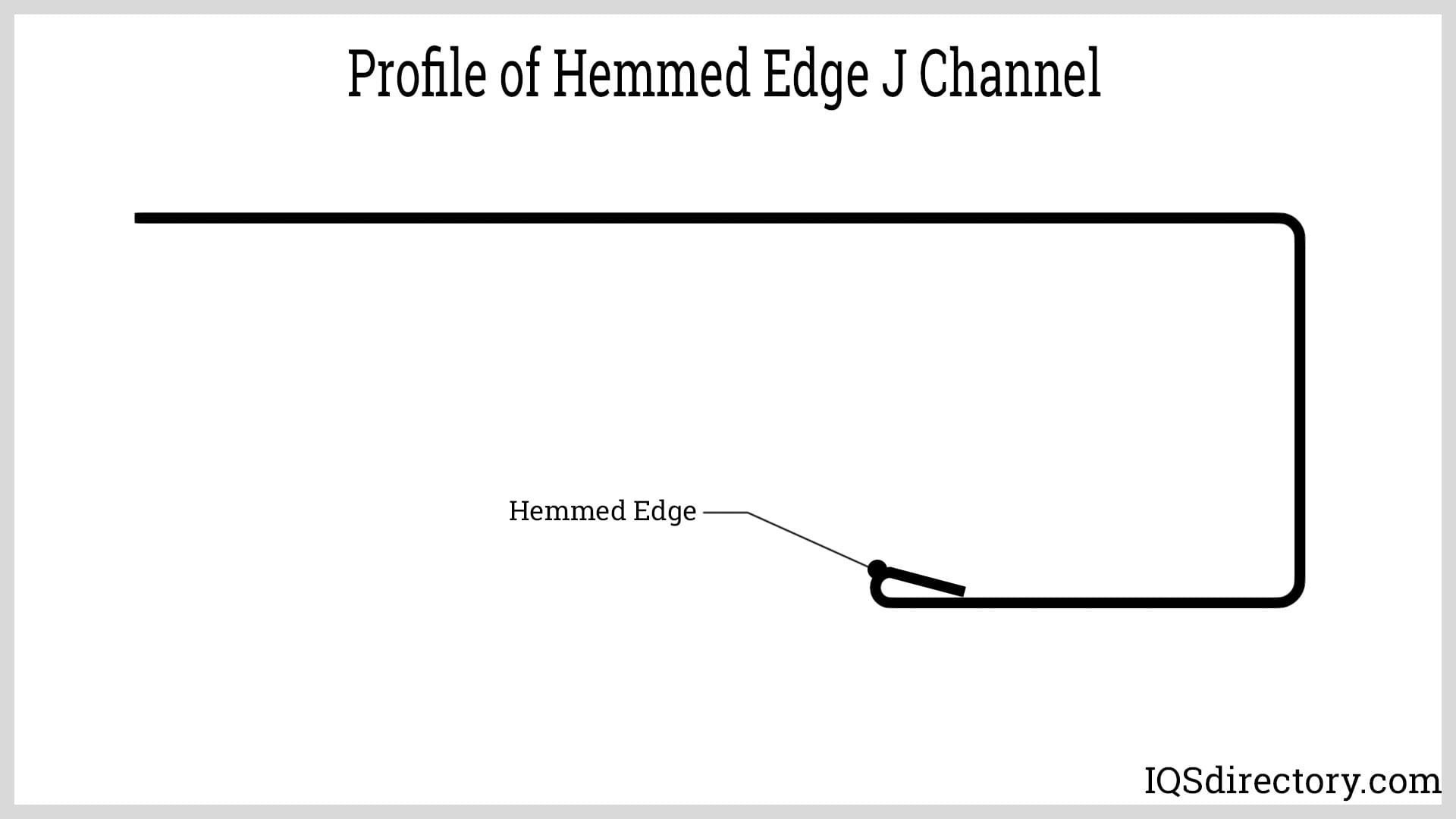
| Hemmed J Channel | Rolled/folded metal leg edge | Eliminates sharp borders; improves handling safety & rigidity | Exposed window trim, door framing, architectural cladding |
| Unhemmed J Channel | Straight, unbent leg profiles | Cost-effective general-purpose profile; easy custom cutting | Base trim, drywall stops, panel edge transitions |
| J Channel with Nailer | Extended leg with pre-punched mounting notch/tab | Fast mechanical anchoring via nails or screws; watertight seal | Metal roofing, vinyl siding, exterior wall sheathing |
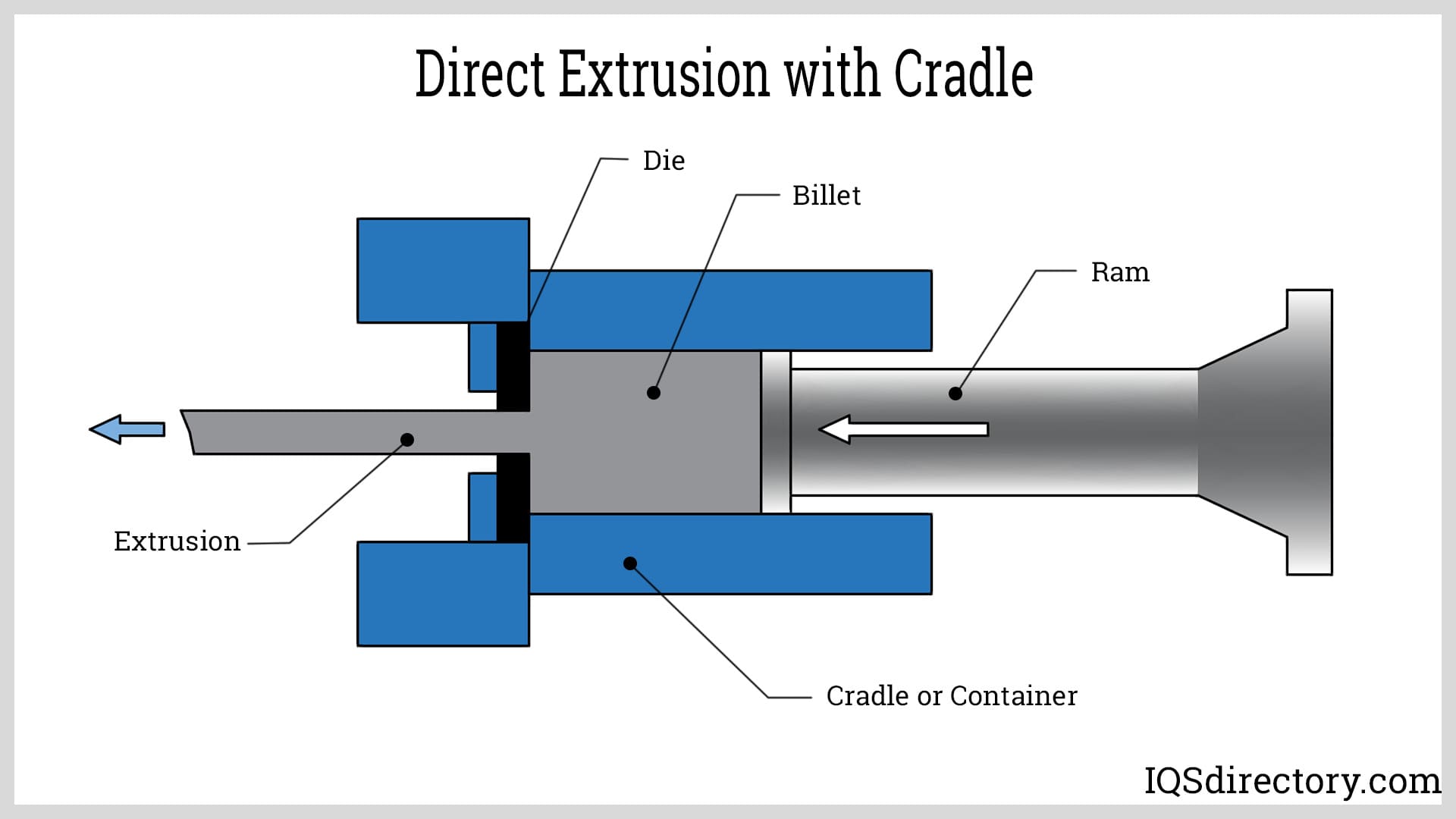
Aluminum J extrusions are produced by heating solid alloy billets above their recrystallization temperature and forcing them through precision H-13 steel dies using hydraulic rams. Post-extrusion steps include water/air quenching, mechanical stretching to ensure linearity, high-speed sawing, and heat-temper aging (T5/T6).
J extrusions, also called J channels, are trim pieces shaped like the letter “J.” They provide seamless edges, direct water away, and offer secure attachment, making installations more professional and protected.
J channels are most often produced from aluminum, steel, and plastic. Aluminum is especially popular due to its light weight, durability, corrosion resistance, and adaptability for various finishes and architectural styles.
The primary types are indented, deep nose, hemmed, unhemmed, and J channels with nailers. Each design targets specific needs, such as secure mounting, edge safety, moisture reduction, or easier mechanical fastening.
Aluminum J extrusions are produced by heating billets, pressing them through a J-shaped die, then cooling, cutting, stretching, and finishing the profiles for strength, precision, and surface protection.
Consider application requirements, exposure, load demands, material, finish, and installation method. Choosing the right profile ensures optimal durability, aesthetics, and cost-effectiveness for your specific project needs.
Yes. J extrusions, especially those made from aluminum or coated metals, are designed to withstand environmental challenges and are widely used in exterior cladding and high-moisture locations.
Material selection governs tensile strength, weatherability, and corrosion resistance.
| Metal / Alloy | Corrosion Protection | Strength & Weight Rating | Primary Applications |
|---|---|---|---|
| Aluminum Alloys (6063 / 6061) | Exceptional (Natural oxide layer; anodizable) | Lightweight with superior strength-to-weight ratio | Window/door trims, siding, curtain walls, displays |
| Stainless Steel (304 / 316) | High chemical & moisture resistance | Heavy-duty high yield strength | Medical facilities, food processing cleanrooms, backsplashes |
| Carbon Steel | Moderate (Requires paint or galvanizing) | High structural rigidity & low material cost | Heavy machinery framing, industrial structural supports |
| Brass & Copper | Good corrosion resistance; decorative patina | Ductile / Malleable; non-load bearing | Decorative mirror frames, architectural accents, electrical tracks |
J extrusions are used for trimming window/door penetrations, securing roof soffits, organizing electrical wiring, and mounting heavy displays. Key benefits include water shedding, edge protection, structural support, and easy installation.
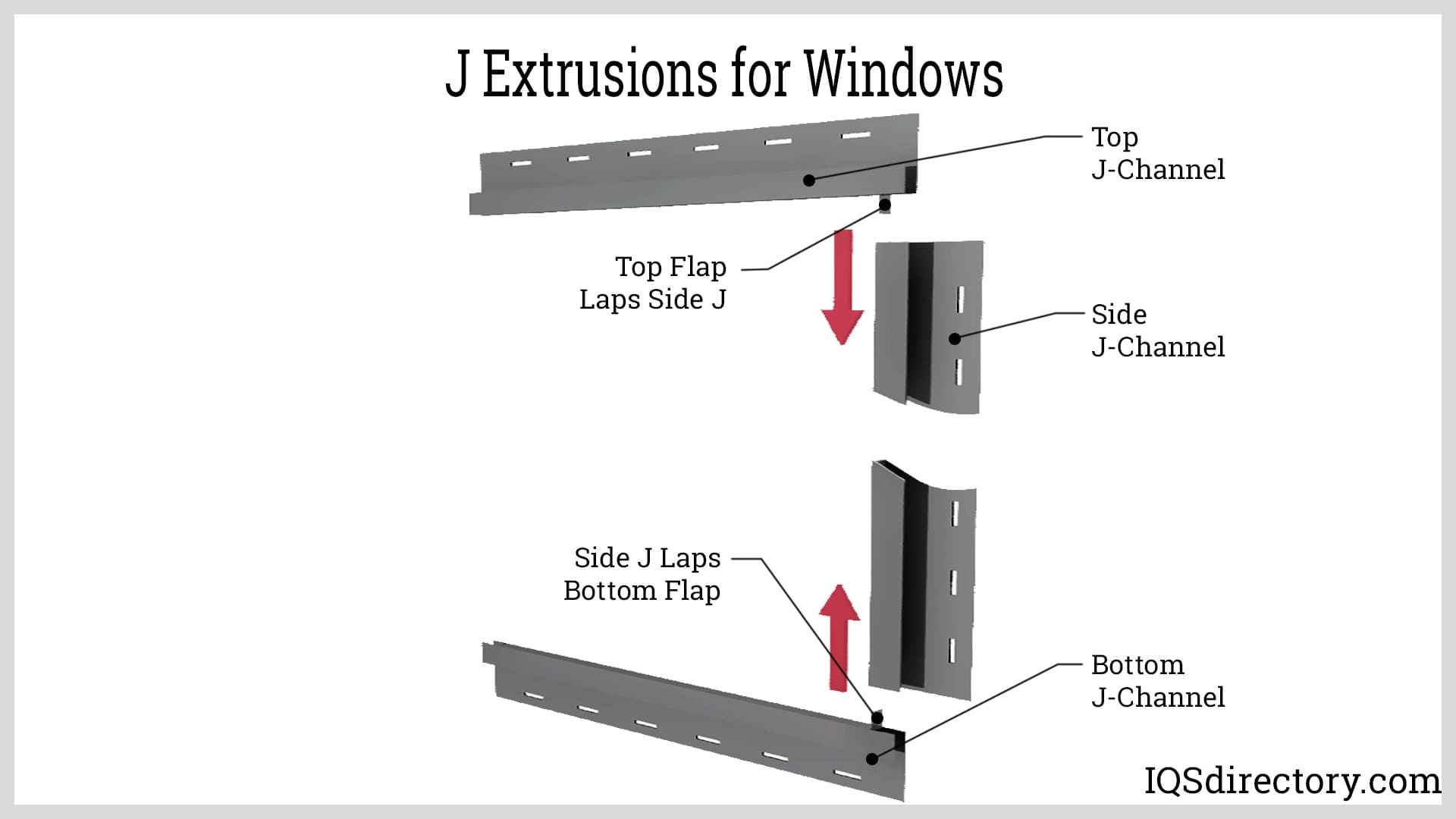
J extrusions provide robust edge protection, water drainage, and decorative finishing for architectural cladding, siding, and display systems. Selecting the appropriate profile (deep nose, hemmed), metal alloy (6063 aluminum vs. 304 SS), and surface finish ensures long-term weatherability and aesthetic integration.
An aluminum channel is a structurally sound metal component made by extrusion...
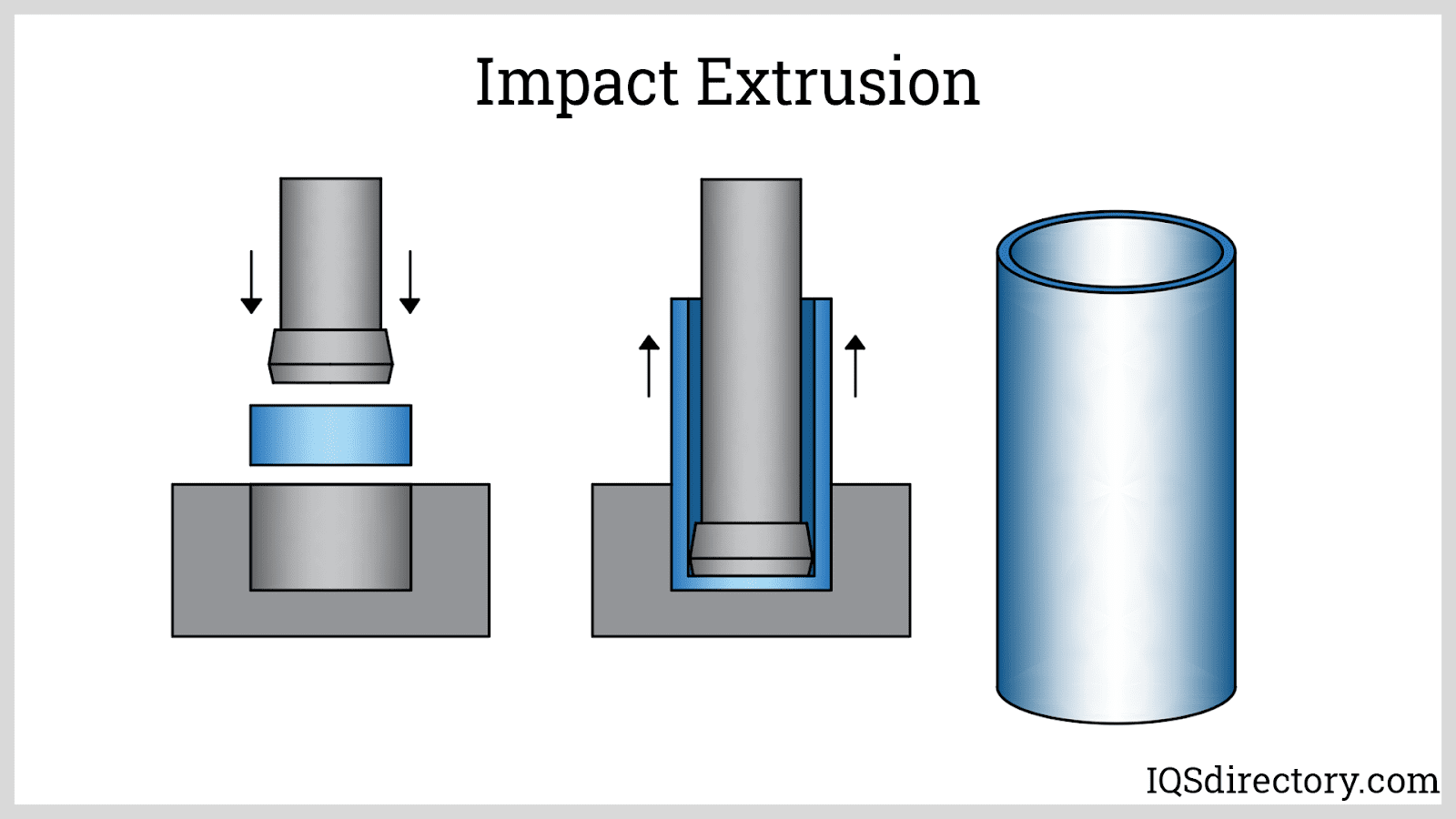
Extruded aluminum is formed by forcing a heated billet through a die opening...
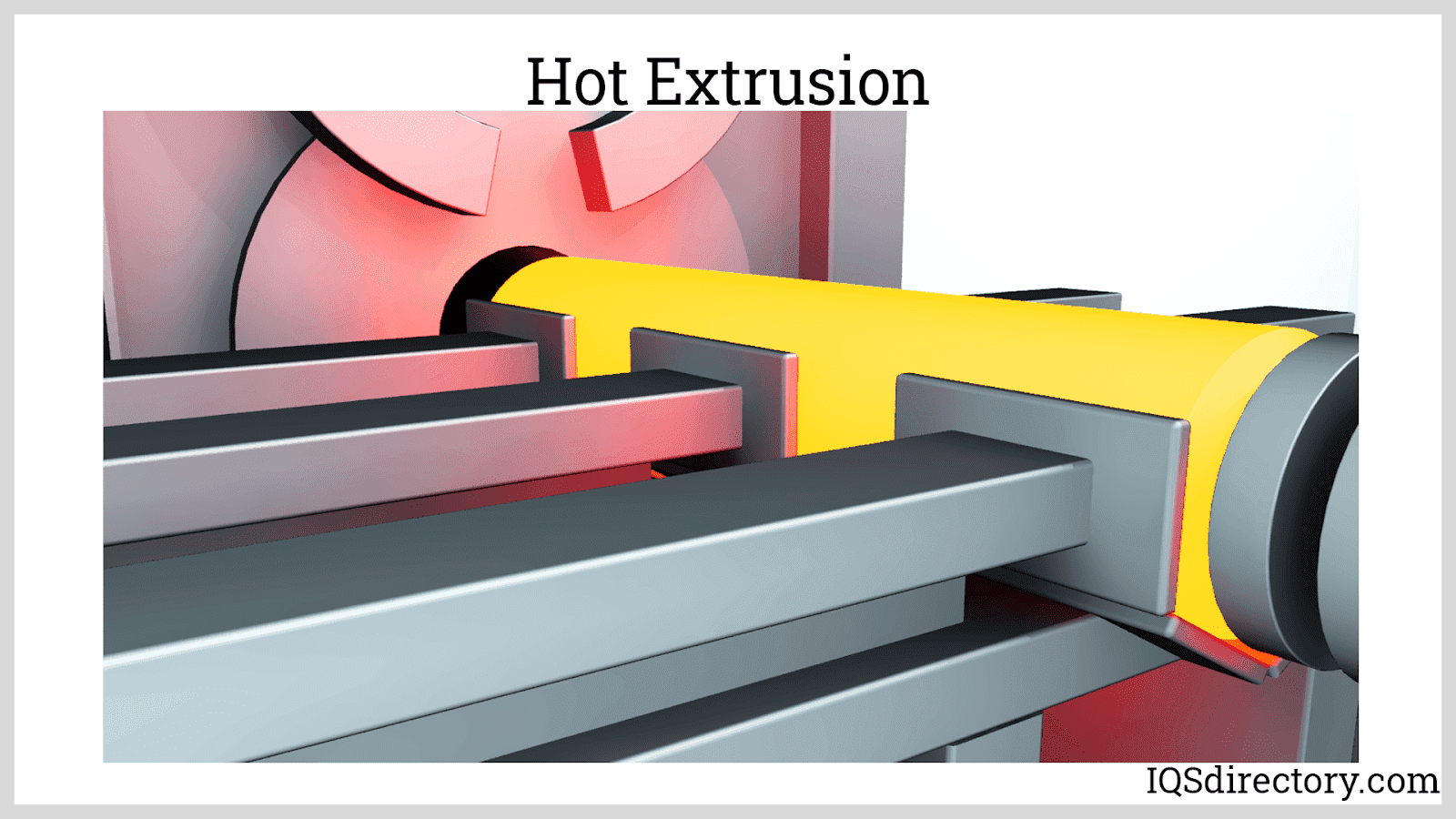
Aluminum extrusion shapes billets into customized structural, solid, and hollow profiles...