Gears
Industrial gears are precision-engineered mechanical components with toothed edges that control rotary motion in machinery and power transmission systems. They are used to start, regulate, or redirect movement while transmitting torque, adjusting rotational speed, and changing shaft direction inside industrial equipment, production lines, conveyors, pumps, compressors, mixers, gearboxes, and automated manufacturing systems. Because they deliver repeatable motion control, industrial gears are widely selected when equipment designers need dependable mechanical efficiency, load handling, and consistent performance under demanding operating conditions.
In contrast to gears used in commercial and consumer products, industrial gears are usually built for heavy-duty service with stronger construction, tighter tolerances, and durable metal or engineered plastic materials. That makes them well suited for high-load, high-cycle, and high-temperature environments where wear resistance, long service life, smooth engagement, and dependable torque transmission matter during continuous production. Buyers often compare industrial gears by material, tooth profile, gear ratio, accuracy, noise level, lubrication needs, and application fit before choosing a final design.
Industrial Gears FAQ
What are industrial gears used for?
Industrial gears transmit torque, alter speed, and change the direction of rotary motion in machinery. They are widely used in automotive systems, aerospace assemblies, conveyors, processing equipment, packaging lines, and material handling applications where precision, durability, and dependable motion control are required.
What materials are industrial gears made from?
Industrial gears are commonly made from metals such as steel, stainless steel, brass, bronze, copper alloys, and titanium for strength and wear resistance. In lighter-duty or low-noise applications, durable plastics like nylon and polycarbonate are used to reduce weight, sound, and maintenance demands.
What is gear ratio and why is it important?
Gear ratio is the relationship between two interlocking gears, determined by their number of teeth. It controls how fast one gear turns relative to another and directly affects output speed, torque multiplication, mechanical advantage, and operating efficiency in industrial machinery and gearbox systems.
How are industrial gears manufactured?
Gears are produced using methods like injection molding, powder metallurgy, forging, die casting, investment casting, sand casting, machining, and increasingly 3D printing. Additional processes like hobbing, shaping, broaching, milling, grinding, and heat treating improve accuracy, wear resistance, and long-term performance.
What industries rely most on industrial gears?
Automotive manufacturing, aerospace, oil and gas, mining, machining, food processing, packaging, textiles, robotics, and automation all rely on gears for transmitting motion and power. Gears support dependable machinery performance across these heavy-duty and high-precision sectors.
How should industrial gears be maintained?
Regular inspections, correct lubrication with gear oils, contamination control, alignment checks, and clear maintenance plans support long gear life. Preventive care helps reduce wear, overheating, vibration, noise, and downtime in demanding industrial environments.
What standards apply to industrial gears?
Industrial gears are often manufactured to ISO and AGMA standards, along with industry-specific requirements such as Mil-Specs, DIN, JIS, FDA, or EPA compliance. Meeting these standards supports safety, reliability, and repeatable performance in specialized applications.
Applications of Industrial Gears
Industrial gears serve two primary purposes: they transfer rotational motion and enable controlled changes in rotational speed, torque, and direction. In practical use, that means they help machinery start smoothly, maintain target output, and deliver the right balance of force and speed for each stage of production.
These gears are integral to a wide range of industries, including automotive manufacturing, aerospace and aviation, machining, material handling, food processing, textile manufacturing, oil and gas, packaging, power generation, and automation. They support the operation of mixers, extruders, pumps, conveyors, hoists, machine tools, robotics, agricultural equipment, and many other systems where accurate motion transfer and dependable torque delivery are needed every day.
For example, bevel gears, spur gears, helical gears, worm gears, and planetary gear sets are used in vehicles to transfer rotational motion from the engine and drivetrain to moving parts. They are common in automotive transmissions, steering systems, differentials, and axle assemblies. Outside transportation, industrial gears are relied upon in clocks, bicycles, heavy mining machinery, oil rig equipment, conveyors, packaging systems, and processing lines where motion transfer, speed reduction, torque multiplication, and compact mechanical design all matter.
History of Industrial Gears
Gears have their origins in China as early as the 4th Century B.C., with the earliest known gears in Europe emerging from Greece between 150 and 100 B.C.
The first use of differential gears is believed to be in a south-pointing chariot, created by the mechanical engineer Ma Jun in the second century A.D. Gears were also incorporated into mechanical clocks built in China around 725 A.D. Meanwhile, the worm gear was developed on the Indian subcontinent during the 13th or 14th century.
Throughout the centuries, gears have evolved, becoming more advanced and varied. Today, industrial gears are incredibly versatile and play a major role in applications ranging from precision instruments to heavy industrial equipment, showing how durable gear design remains central to modern mechanical systems.
Industrial Gear Design and Customization
The key component of industrial gears is their teeth, or cut cogs, which mesh with the teeth of another gear to transfer motion from one shaft to another. These teeth are typically part of a "gear wheel," a toothed wheel that governs how the gear engages, how smoothly it runs, and how effectively it handles load, backlash, and wear over time.
Manufacturers often create gears using net shape molding, a technique designed to produce parts that closely resemble their final form while reducing extra finishing and machining time. The processes involved in creating semi-finished parts are referred to as blanking operations. These include techniques such as injection molding, powder metallurgy, die casting, investment casting, and sand casting. Gears can also be made using forging methods and, increasingly, 3D printing for prototyping, short runs, and specialized components where design flexibility is valuable.
Once produced, the part is called a gear blank. Gear blanks are often sent for further machining, finishing, and inspection. While gears made through injection molding and die casting typically don’t need as much additional finishing, gears created using other methods often do. For example, powdered metal gears require sintering, while sand castings and investment castings usually need gear cutting and surface refinement. Gear cutting techniques include gear hobbing, shaping, broaching, and milling.
To increase durability and resist wear, manufacturers often strengthen gears through processes like heat treating, quench pressing, case hardening, and finishing operations that improve hardness, tooth contact, and fatigue resistance.
Gears can be made from various materials, including metals and hard plastics. Wear-resistant plastics such as nylon and polycarbonate are ideal for applications requiring low weight. In demanding settings like automotive transmissions, gears are typically made from hard metals, including stainless steel, steel, brass, copper, and titanium.
Two key considerations in gear design are gear speed and performance, which are influenced by gear shape, tooth geometry, pitch, face width, and size. When interlocking gears differ in size, the smaller gear turns faster than the larger one. This relationship is known as "speed ratio" or "gear ratio." For example, if one gear has 40 teeth and the other has 20, the gear ratio would be 2:1. Designers use this relationship to balance acceleration, output force, energy transfer, and mechanical efficiency for the intended application.
Another important factor in gear design is diametral pitch, which influences tooth size, engagement, and how the gear system behaves within a machine. Diametral pitch refers to the number of gear teeth per inch of its pitch diameter. To calculate this, divide the number of teeth by the pitch diameter, which is measured by the pitch circle—the imaginary circle that connects the points where interlocking gears meet. If the gear system is designed correctly, the pitch circles of the gears will be tangent to each other wherever the gears mesh, helping promote smooth operation, proper contact, and predictable power transmission.
Gear applications are versatile and customizable, offering numerous configurations to achieve specific goals, such as increasing or decreasing speed, transmitting power, improving torque output, or reducing the force needed to perform a task. Manufacturers can create customized gear assemblies, such as industrial gearboxes, speed reducers, and precision motion components, to suit complex applications. Gearboxes are especially useful for intricate tasks, and whether large or small, gears can be made to meet your exact requirements—ranging from 20-foot diameter industrial gears to small gears.
Features of Industrial Gears
A gear's number of teeth and its gear ratio play a large role in determining how the gear functions, its speed, and its role within a larger gear assembly. These factors influence durability, strength, load capacity, contact pattern, and how smoothly the gear can engage. When gears of different sizes mesh, they can either increase or decrease a shaft’s rotational speed. Interlocking gears with unequal diameters can also alter rotational speed and torque, which is why tooth count and ratio are closely reviewed during equipment design and replacement planning.
Gears work together as a system. When one gear turns, the interlocking gear turns as well because the teeth mesh in a controlled pattern. Gear motion can be initiated in several ways—most commonly by applying physical force, as in the case of riding a bike, or by mechanical force from a motor, engine, actuator, or power transmission assembly. This coordinated movement is what makes gears useful for precise timing, synchronized motion, and repeatable industrial output.
There are various gear accessories available, including handwheels, lug drives, miter boxes, stem nuts, housings, shafts, hubs, and gearbox components. To determine which accessories best suit your needs, discuss your application, duty cycle, mounting method, load conditions, and maintenance expectations with your supplier so the full assembly is matched to the job.
Advantages of Industrial Gears
One major advantage of industrial gears lies in their precise tooth ratio. This ratio allows industrial gears to operate with accurate, repeatable motion compared to some alternative drives, which helps support better control over speed, torque, and positioning in machinery.
Additionally, many gear-driven systems offer the benefit of fewer moving parts within the transmission path. Fewer parts can mean fewer opportunities for malfunction, easier cleaning, more straightforward service routines, and a longer usable life when gears are properly selected, aligned, and lubricated.
Proper Care of Industrial Gears
To ensure that your industrial gears perform well and continue meeting production demands efficiently, they must be maintained properly. Even advanced industrial gears need regular upkeep to function as intended in real-world service. Below are some practical tips to help keep your gears in strong condition, reduce premature wear, and support more dependable uptime.
- Prepare Maintenance Plan
- Every maintenance routine should be clearly outlined and followed. Work with your process engineers to develop a detailed plan for machinery care and upkeep. This plan should include cleaning schedules, lubrication intervals, inspection points, vibration or temperature checks, and a daily checklist for your team. Be sure to define the duties your engineers and maintenance staff need to perform so the gear system, bearings, shafts, and connected machinery continue operating smoothly.
- On-Site Pollution and Dust Management
- It’s smart to have effective dust and pollution control measures in place at your site. A weak contamination management program can affect machine performance and product quality. Dust, debris, and airborne pollutants can interfere with gear rotation, lubrication, and tooth contact, leading to inefficiency, wear, and added production costs. Many machines, including production equipment, power generators, and air handling systems, generate particulates that can spread throughout the facility if control measures are not maintained.
- Keep Support Tools Nearby
- Efficiency matters, so your engineers should work in a well-organized manner with the necessary tools on hand. Ensure that tool kits, testing devices, alignment tools, and safety equipment are easily accessible near the machinery. Portable tool systems can help keep inspection and service items within reach. Also verify that your engineers understand testing requirements and have a solid working knowledge of the machines’ gear systems, lubrication points, and adjustment procedures.
- Visual Inspection Before Every Production Cycle
- A quick inspection before starting each production cycle can save time and resources. Open the gearbox when appropriate and check the condition of visible components, seals, housings, fasteners, and lubricant condition. Make sure to document visible settings, or use a camera to capture them for reference. This step helps verify that machines are operating correctly and that no obvious issues are present before production begins.
- Inspect Heat Sources
- To improve the performance and longevity of your gears, use industrial gear oils or lubricants suited to the application. Proper lubrication helps protect gears against heat, vibration, friction, micropitting, and corrosion. Without it, gear systems can overheat, corrode, and wear much faster. Choose the right lubricant based on load, operating speed, temperature range, contamination exposure, and manufacturer guidance so the gear set maintains efficient operation over time.
Industrial Gear Standards and Compliance
Generally, your manufacturers should adhere to the standard guidelines established by the ISO (International Standards Organization) and AGMA (American Gear Manufacturers Association), especially when accuracy, load capacity, inspection, and long-term reliability are part of the purchasing criteria.
Additionally, they should follow any relevant standards specific to your industry, region, or country. These may include Mil-Specs, FDA standards, EPA standards, DIN standards, and JIS standards. To help ensure your gears meet the requirements of your application, discuss your specifications, operating conditions, inspection needs, traceability expectations, and material preferences thoroughly with your gear supplier before ordering.
Points to Consider When Selecting Industrial Gears
Industrial gears come in many different varieties, and they can first be divided into two main categories: internal gears and external gears. Internal gears have teeth located on the inner surface of the wheel, while external gears have teeth on the outer surface. It’s also helpful to evaluate whether the application requires parallel shafts, intersecting shafts, compact gearboxes, quiet operation, high torque, or controlled speed reduction before narrowing the type. A bevel gear is only classified as an internal gear if its pitch angle exceeds 90 degrees.
Within these two categories, there are many different types of gears, including spur, helical, bevel, worm, rack and pinion, hypoid, herringbone, and planetary designs, each suited to different shaft arrangements and performance targets.
Choosing the right gears for your needs is an important decision because they play a major role in overall machinery performance. When selecting gears, consider the operating environment, required speed, torque, load direction, intended frequency of use, lubrication method, space limitations, noise expectations, service life goals, and industry-specific standards.
To help select the right gears, it’s best to work with a reputable gear manufacturer. The right supplier is one that takes the time to understand your application and recommend a practical solution based on torque, speed, material, tolerance, mounting, and operating conditions. Not sure where to start? Compare product capabilities, ask about custom gearing, review manufacturing methods, and reach out with questions about lead times, tolerances, inspection, and replacement options to find the best fit for your project.
Gear Images, Diagrams and Visual Concepts
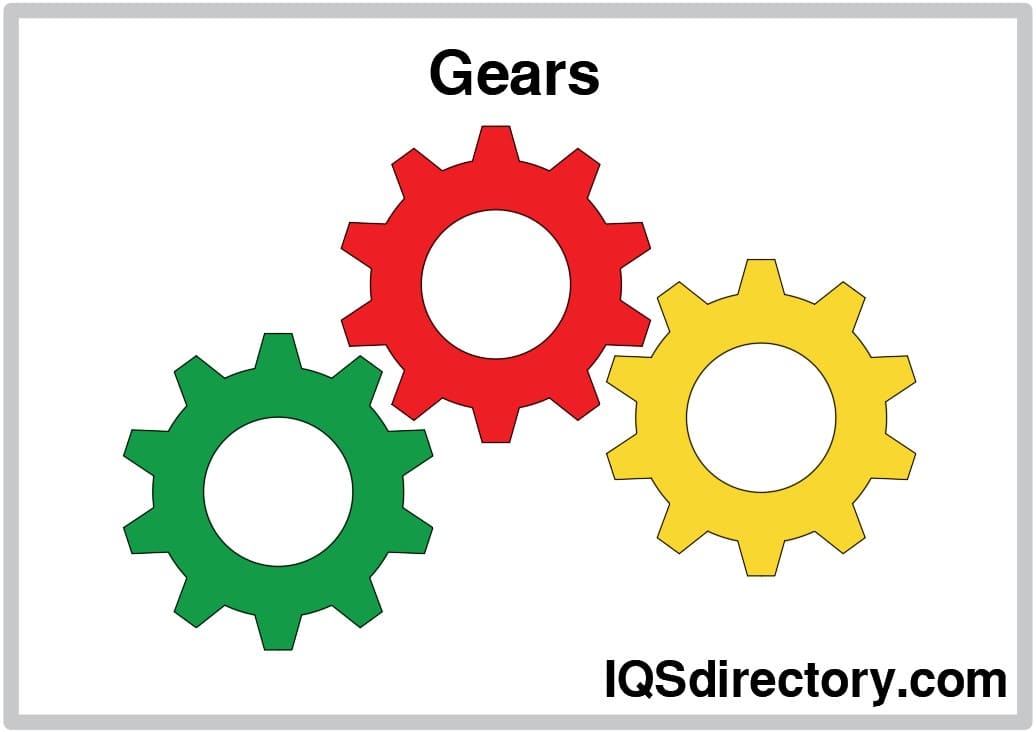 Gears allow for the change in direction, speed and torque of the power device.
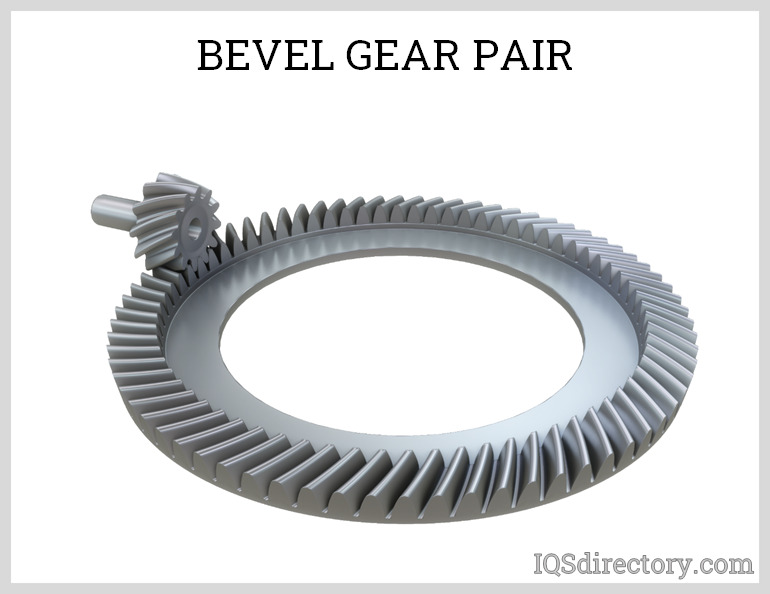 Bevel gear, a toothed rotating machine element used to transfer mechanical energy or shaft power between shafts that are intersecting, either perpendicular or an angle.
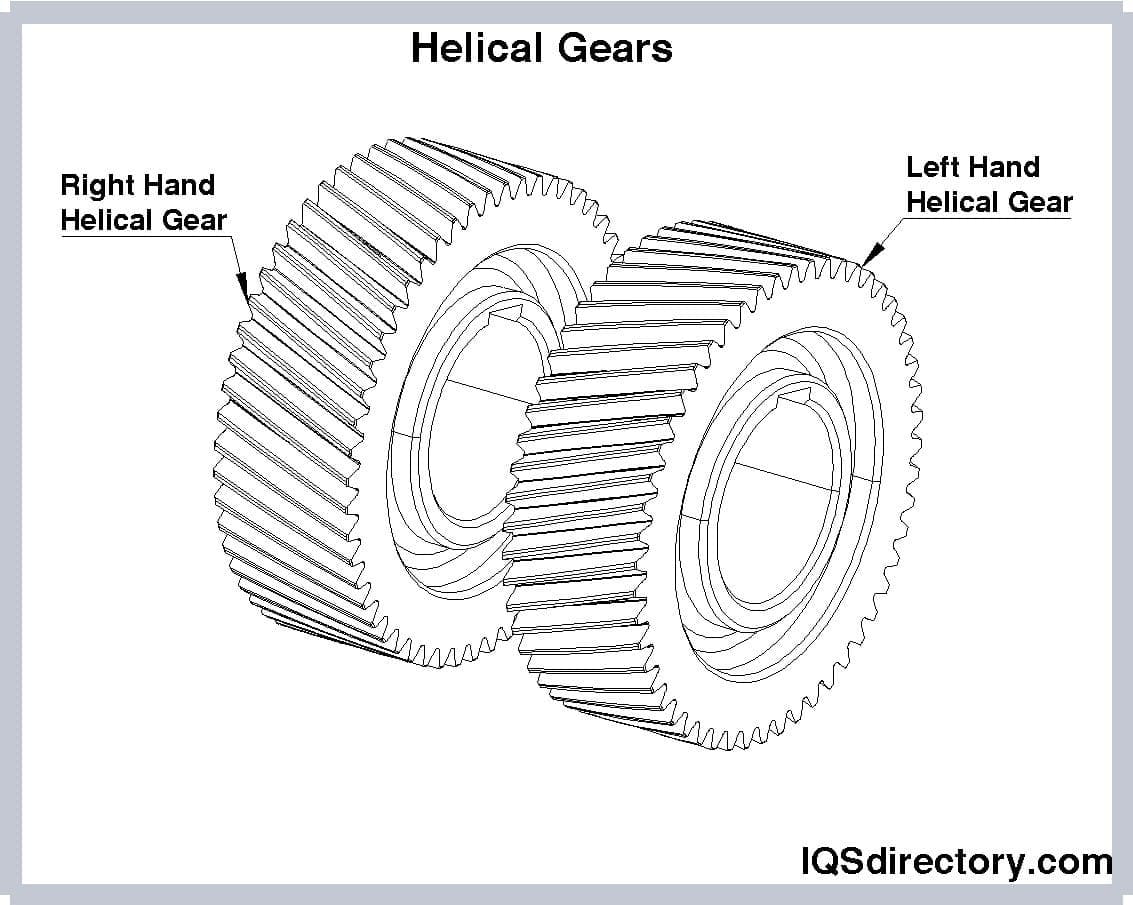 The purpose of helical gears are to provide power transmission devices is to enhance torque and decrease speed between rotating shafts.
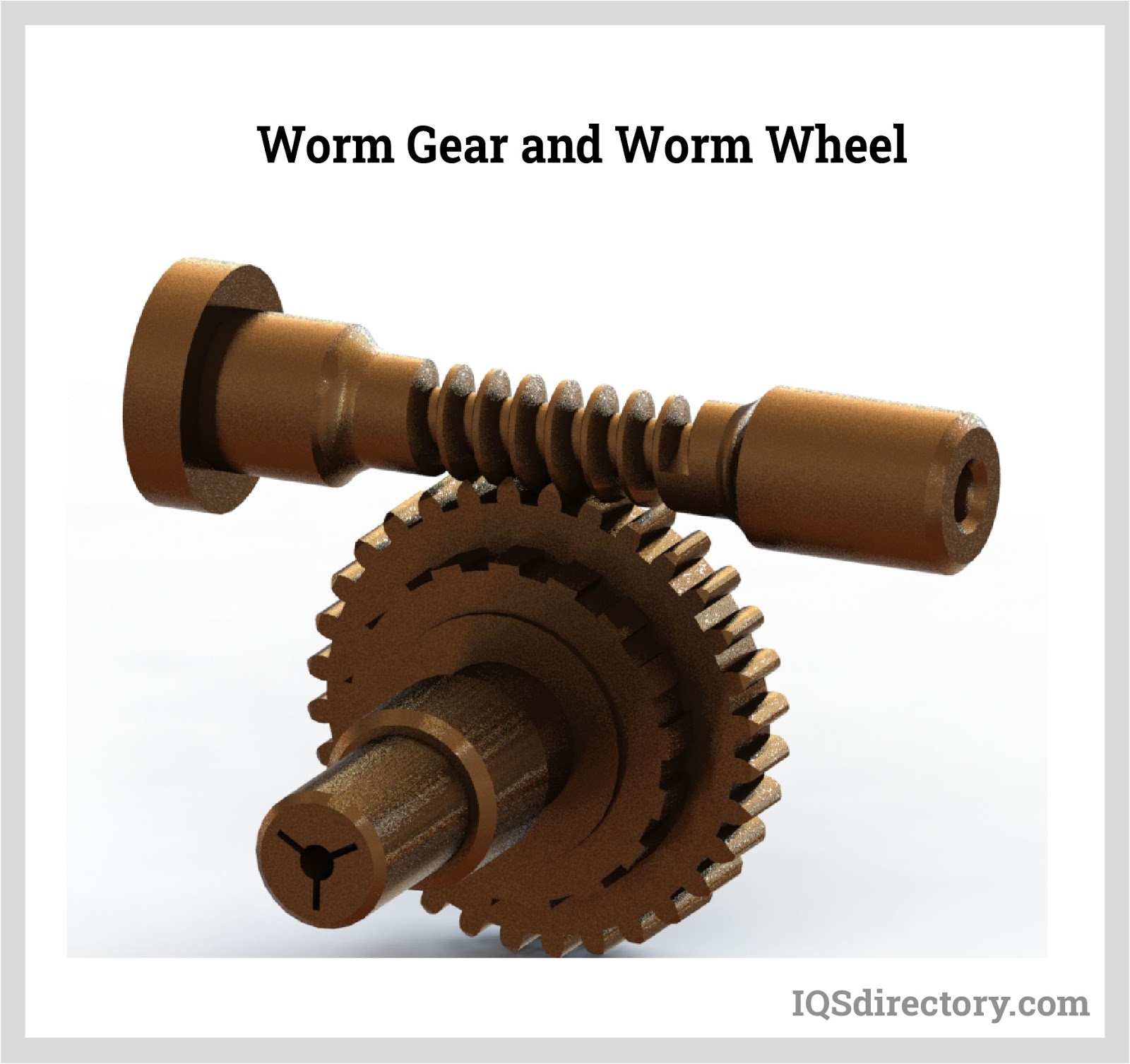 A staggered shaft gear that creates motion between shafts using threads that are cut into a cylindrical bar to provide speed reduction.
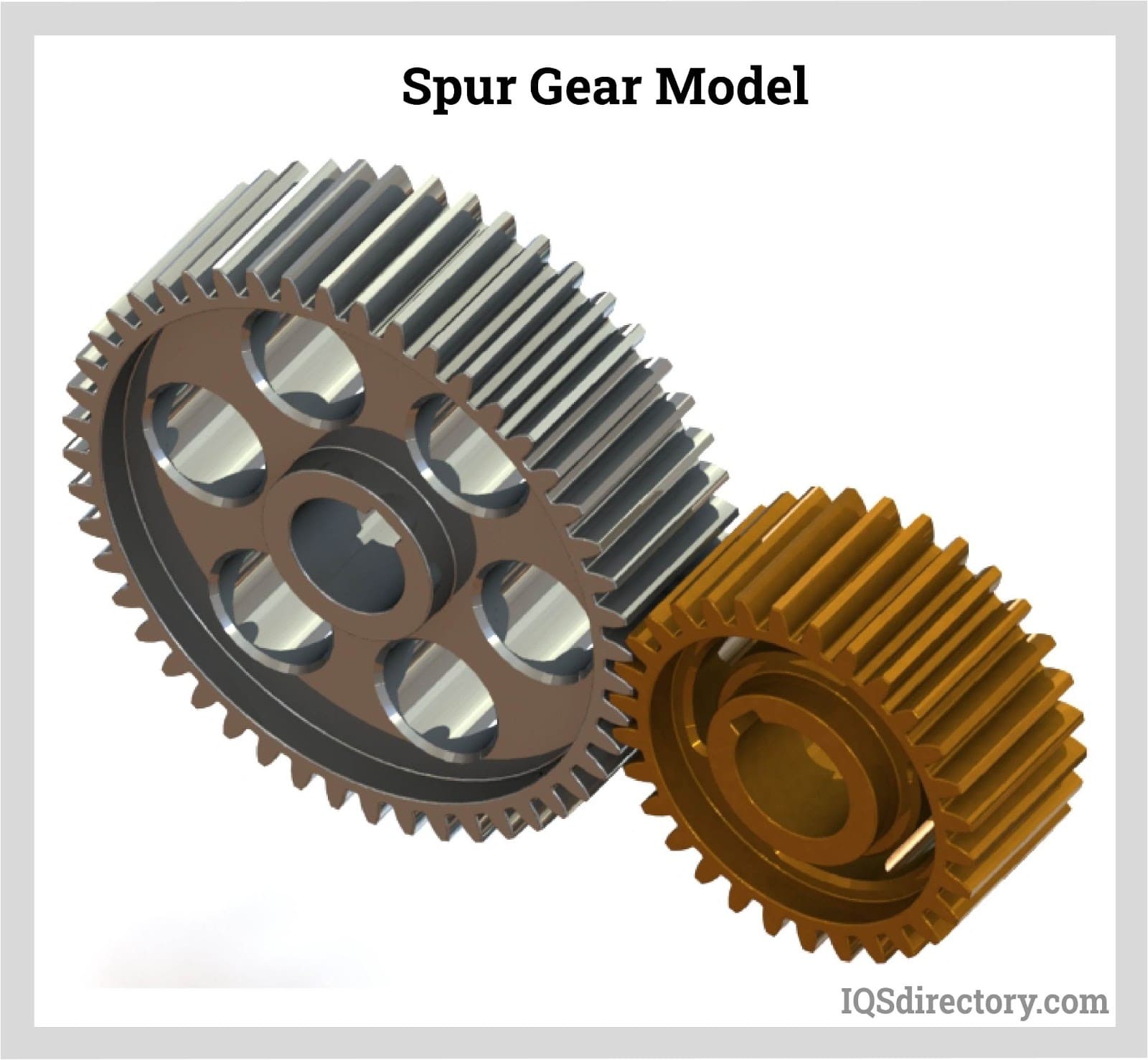 A cylindrical toothed gear with teeth that are parallel to the shaft and to transfer mechanical motion and control speed, power, and torque between the shafts.
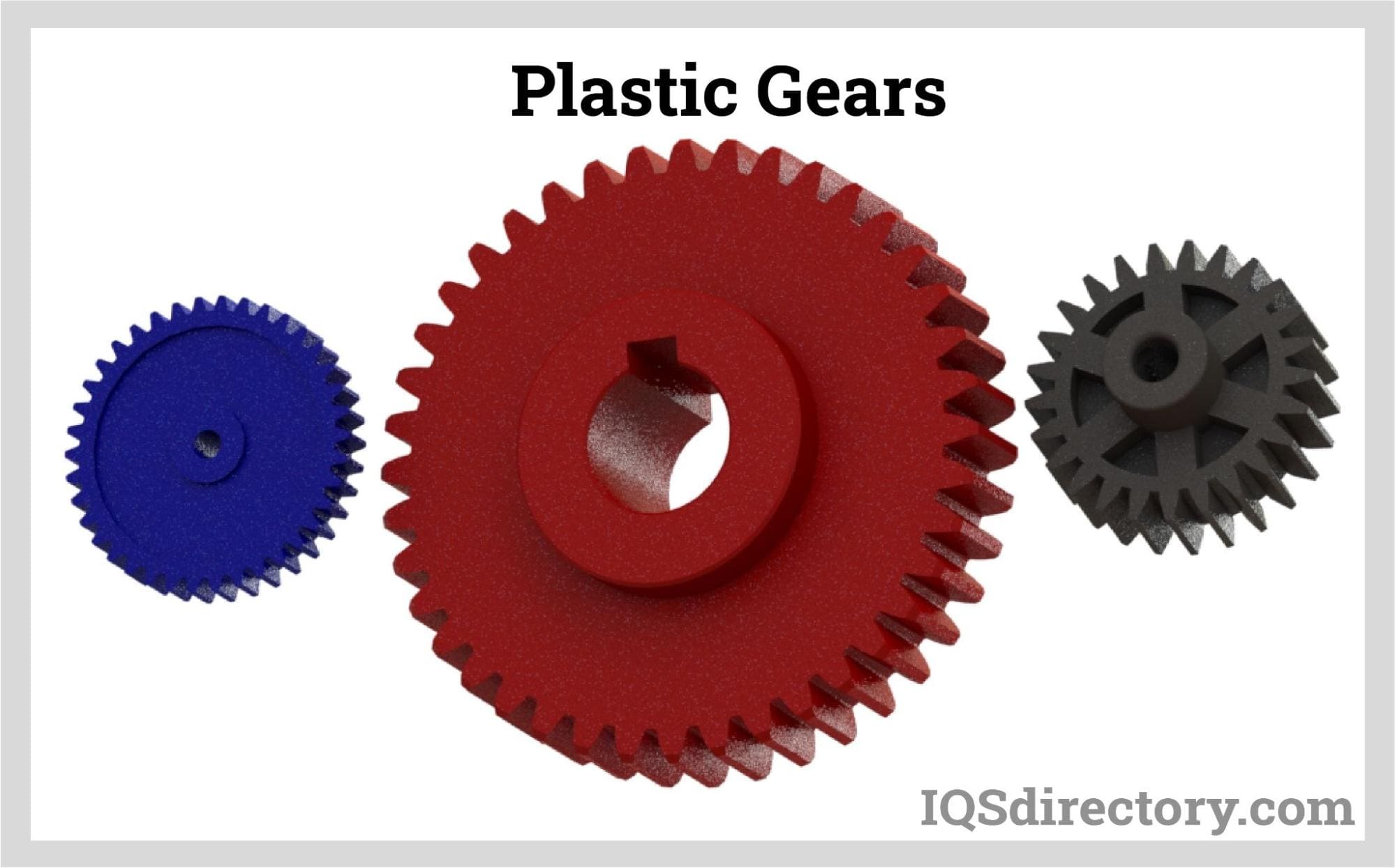 Plastic gear is a toothed wheel consisting of engineering plastic materials which works alter the relation between the speed of an engine and the speed of the driven parts.
Notable Gear Types
- Bevel Gears
- Operate on intersecting axes, typically at a 90-degree angle, to transmit motion around corners. These gears feature teeth arranged on intersecting, coplanar shafts, known as a bevel gearing system. Bevel gears are used in many motion-control and power-transmission applications, and their tooth thickness, height, material, and finish should be selected according to the load, speed, and alignment requirements of the application.
- Differential Gears
- Link two shafts through a covering, ensuring that the total rotational angle of the shafts equals the rotational angle of the covering. Differential gears are often associated with drivetrain systems that need controlled power distribution during turning and varying load conditions.
- Gear Manufacturers
- Companies that produce torque transmission equipment, specializing in the design and manufacturing of various types of gears, gear assemblies, custom gearboxes, and replacement gearing for industrial machinery.
- Helical Gears
- These gears have angled teeth that create thrust load when meshed. Common in automotive transmissions and industrial gearboxes, their teeth are inclined toward the shaft's axis and arranged in a helical pattern. Known for smooth operation, they can bear both radial and thrust loads. They are quieter than many spur gear arrangements, which makes them a popular option for applications where noise control and steady engagement are valued.
- Gear Rack
- A straight line of equally spaced teeth used in various applications to convert rotational motion into linear motion.
- Herringbone Gears
- Used to transmit power and motion between parallel, non-intersecting axes, with each tooth forming two opposite helices. These gears may or may not have a central groove.
- Hypoid Gears
- Similar to bevel gears but work on non-intersecting axes. They offer smoother and quieter operation, particularly in automotive applications.
- Industrial Gears
- Round mechanical components with teeth around the circumference, designed to interconnect with corresponding gear wheels or parts to transfer motion, increase or decrease rotational speed, and torque.
- Metric Gears
- Defined by the millimeter length of the pitch circle diameter per tooth, these gears are designed according to the metric system for international applications.
- Miter Gears
- A type of bevel gear with equal numbers of teeth and axes typically positioned at right angles. Miter gears allow for the transmission of rotational motion at a set speed.
- Planetary Gears
- Comprising a central "sun" gear surrounded by multiple "planet" gears, planetary gears operate inside a larger internal gear to create complex gear ratios. They provide a compact design for high torque applications, commonly used in drivetrains and complex machinery.
- Plastic Gears
- Primarily made of plastic materials, sometimes combined with metal components, these gears are lightweight, cost-effective, and commonly found in applications requiring non-metallic components.
- Pinion Gears
- Small round gears typically used as the driving gear in a gear set, such as in a rack and pinion mechanism.
- Rear End Gears
- Bevel gears arranged in an epicyclic configuration to transmit torque and rotation through multiple shafts, typically used in rear axle systems of vehicles.
- Spline Gears
- Gears featuring a series of ridges on a driveshaft that synchronize the rotational speed of the corresponding gear, providing smooth transmission of motion.
- Sprockets
- Gears with teeth that mesh with chains, commonly used in applications like bicycles and tank treads. They serve as pulleys for power transmission systems, providing a non-slip connection.
- Spur Gears
- Cylinder-shaped gears with straight, parallel teeth that work on parallel axes. These are the most common and simple type of industrial gear, known for their straightforward design and efficient performance.
- Straight Bevel Gears
- Bevel gears with straight teeth that radiate from a center point, used to transfer motion between intersecting shafts.
- Spiral Bevel Gears
- Similar to helical gears, spiral bevel gears have curved teeth that provide higher load capacity compared to straight bevel gears. Their design allows for smoother and quieter operation under heavy loads.
- Worm Gears
- Gears with a curved, recessed throat that meshes with the worm gear teeth. Often made from materials like bronze or steel, worm gears are used to achieve high torque, low-speed gear ratios.
- Zero Bevel Gears
- These gears resemble straight bevel gears but have curved teeth that are not angled. They serve as an intermediate type between spiral and straight bevel gears, providing a balance of performance in specific applications.
Gear Terms
- Backlash
- The gap between the width of a tooth space and the thickness of the engaging tooth on the pitch circles of industrial gears.
- Bore
- The diameter of the central hole in an industrial gear.
- Bull
- The larger gear in a set of industrial gears.
- Center Distance (CD)
- The shortest distance between the axes of non-intersecting, mating industrial gears.
- Coupling Sprockets
- Used to connect two non-continuous shaft ends of industrial gears.
- Dedendum (DED)
- The radial or perpendicular distance between the bottom of the gullet and the pitch circle on industrial gears.
- Gullet
- The space between the teeth of industrial gears.
- Hob
- A cutting tool used to create teeth in industrial gears using a hobbing machine.
- Hub
- An extension on the side of industrial gears that provides the necessary width to mount the gear onto a shaft.
- Hub Style
- The design of the hubs on industrial gears: Type 'A' indicates no hub; Type 'B' indicates a hub on one side; Type 'C' indicates a hub on both sides.
- Module (MOD)
- The ratio of the pitch diameter to the number of teeth on an industrial gear, measured in millimeters.
- Mounting Distance (MD)
- The distance from the intersection of the axes to the location surface of industrial gears.
- Pinion
- The smaller gear in a set of industrial gears.
- Pitch
- The size of the teeth on industrial gears.
- Rack
- A steel bar with teeth on one side that allows a pinion to be driven across. It is also a spur gear with an unlimited pitch diameter.
- Ratio
- The relationship between the size of one industrial gear and another, measured from the center of the gears to where their teeth or edges meet.
- Teeth
- The protrusions or indentations on the edges of industrial gears that interlock with other gear parts. The teeth prevent slippage and ensure the gears function consistently and efficiently.