Sandblast Equipment
The term sandblast equipment, or blaster machinery, refers to a wide range of tools and machines designed to use sand or other abrasive media to clean, profile, strip, or resurface industrial products and components. These systems support abrasive blasting, surface preparation, rust removal, paint removal, deburring, and finishing in production, maintenance, and restoration environments. In many shops, these systems are selected for tasks such as weld cleaning, anchor profile creation, paint stripping, corrosion removal, and pre-coating preparation on steel, aluminum, castings, and fabricated assemblies.
Sandblasting is an abrasive blasting process in which materials are propelled at high pressure and high speed to smooth rough surfaces. Although "sandblasting" is commonly used as a blanket term for all media blasting processes, it technically applies only to blasting operations that utilize sandblasters and silica blasting media. In industrial buying language, users often compare dry blasting, wet blasting, cabinet blasting, portable blasting, and automated systems when they need repeatable surface preparation before painting, plating, bonding, powder coating, or inspection.
Sandblast Equipment FAQs
What is sandblast equipment used for?
Sandblast equipment cleans, smooths, textures, or reshapes surfaces by propelling abrasive media under pressure. It is used for rust removal, paint stripping, deburring, scale removal, surface profiling, and finishing on metal, wood, glass, plastic, masonry, and composite parts in manufacturing, restoration, and maintenance operations.
How does a sandblaster work?
A sandblaster uses compressed air or pressurized water to move abrasive media through a hose and nozzle at high speed. When the media strikes the surface, it removes coatings, corrosion, scale, or contamination and can also create the surface profile needed for painting, powder coating, plating, or adhesive bonding.
What are the main types of sandblasters?
Common types include gravity-fed, siphon, pressure, wet, dry, cabinet, portable, and automated sandblasters. Each design offers a different balance of blasting speed, media control, dust containment, mobility, and finish consistency depending on the workpiece and production environment.
What materials can be used as sandblasting media?
Abrasive media options include silica sand, glass beads, aluminum oxide, steel shot, steel grit, walnut shells, corn cob, silicon carbide, and baking soda. The best media depends on substrate hardness, desired finish, material removal rate, dust concerns, and whether the process requires a gentle clean or a more aggressive cut.
What are the benefits of sandblasting?
Sandblasting is fast, versatile, and effective for surface preparation and restoration. It can shorten cleaning time, improve coating adhesion, create consistent surface texture, support media recovery, and help manufacturers or contractors prepare parts and structures for finishing, inspection, or reuse.
What safety precautions are required when sandblasting?
Operators should wear blast hoods, respirators, hearing protection, gloves, and protective clothing to reduce exposure to dust, rebound media, and noise. Enclosed cabinets, dust collectors, ventilation systems, and sound operating procedures are also used to support OSHA compliance and safer blasting conditions.
What industries commonly use sandblast equipment?
Sandblast equipment is widely used in automotive, aerospace, marine, construction, foundry, metal fabrication, infrastructure maintenance, and general manufacturing. It prepares components such as engines, weldments, fasteners, tanks, structural steel, castings, and building materials for coating, assembly, restoration, or inspection.
The History of Sandblast Equipment
The earliest abrasive blast equipment was invented in 1870 by Benjamin Tilghman, who developed the blaster to remove paint and rust from old parts before repurposing them. That invention laid the groundwork for modern blasting cabinets, portable blast pots, nozzle designs, and media handling systems that are now used across maintenance shops and production lines.
In 1893, the invention of air processors enhanced abrasive blasting, and in 1904, Thomas Pangborn revolutionized the process by incorporating compressed air and sand. Over time, concerns arose about the dangers of sandblast inhalation, which could cause the lung disease silicosis. To address this, engineers in 1918 began designing enclosures that shielded workers from abrasive blast media while allowing them to monitor the process through a viewing screen. Later advancements introduced protective components such as safety clothing, air filters, and dust collectors to further improve worker safety. Modern equipment design grew out of those safety upgrades, which is why containment, dust collection, and operator protection remain central considerations when evaluating any abrasive blasting machine.
Since 1939, manufacturers have experimented with a variety of alternative abrasive blast media, including crushed walnut shells and glass beads. To this day, they continue to seek safer and more sustainable blasting technologies. Today, the industry continues to balance productivity, finish quality, operator safety, media recovery, and environmental housekeeping when developing new sandblast equipment and blasting media options.
Advantages and Benefits of Sandblasting
Sustainability
Advancements in residual blast media collection enable the recycling and reuse of particles, reducing material costs and minimizing environmental impact. Additionally, using organic blast media such as crushed walnut shells, ground corn cobs, and baking soda helps preserve air quality, prevent pollution, and reduce water contamination in outdoor blasting projects. For facilities focused on cleaner operations, recyclable media and contained blast systems can support lower disposal volumes, better housekeeping, and steadier process control from batch to batch.
Speed and Efficiency
Sandblast equipment is both simple and powerful, allowing projects to be completed quickly and efficiently. Fast cleaning cycles also help reduce manual scraping and sanding, which is one reason abrasive blasting remains a common choice for high-throughput maintenance, remanufacturing, and finishing work.
Cost-Effectiveness
Since blast equipment is straightforward, it is relatively inexpensive. The required materials are widely available and affordable, and because blast media can often be recycled, the overall process remains cost-effective. Buyers often weigh equipment price against media consumption, compressor demand, nozzle wear, maintenance intervals, and labor savings to understand the full operating cost of a blasting process.
Versatility
Sandblast equipment is useful for a wide range of surface treatments, including coating removal, smoothing, roughening, etching, carving, degreasing, deburring, deflashing, and descaling. That flexibility makes sandblasting useful for both aggressive coating removal and more controlled finishing work where surface texture, appearance, and adhesion performance all matter.
How Sandblasting Works
Sandblasting equipment operates by combining high pressure, abrasive media, and sometimes water to clean, smooth, texture, or prepare surfaces. In practice, it functions like a controlled, accelerated erosion process that lets operators remove coatings, rust, scale, oxidation, and embedded contamination with repeatable results. By adjusting pressure, standoff distance, nozzle size, and media selection, operators can move from heavy-duty stripping to lighter cleaning and peening-style finishing with much more control than many first-time buyers expect.
The equipment creates this scrubbing effect by propelling abrasive material onto the surface. The blasting media can vary in aggressiveness, from highly abrasive materials such as aluminum oxide and steel grit to finer or gentler options such as glass bead, soda, or walnut shell. All sandblasters use either compressed air or pressurized water to deliver the media, usually through a nozzle gun, helping operators match blast pressure, media size, and nozzle design to the substrate and finish requirements. This is why process matching matters: the same blast cabinet or pressure pot can behave very differently depending on nozzle wear, air supply, media shape, and the hardness of the workpiece.
Sandblaster Images, Diagrams and Visual Concepts
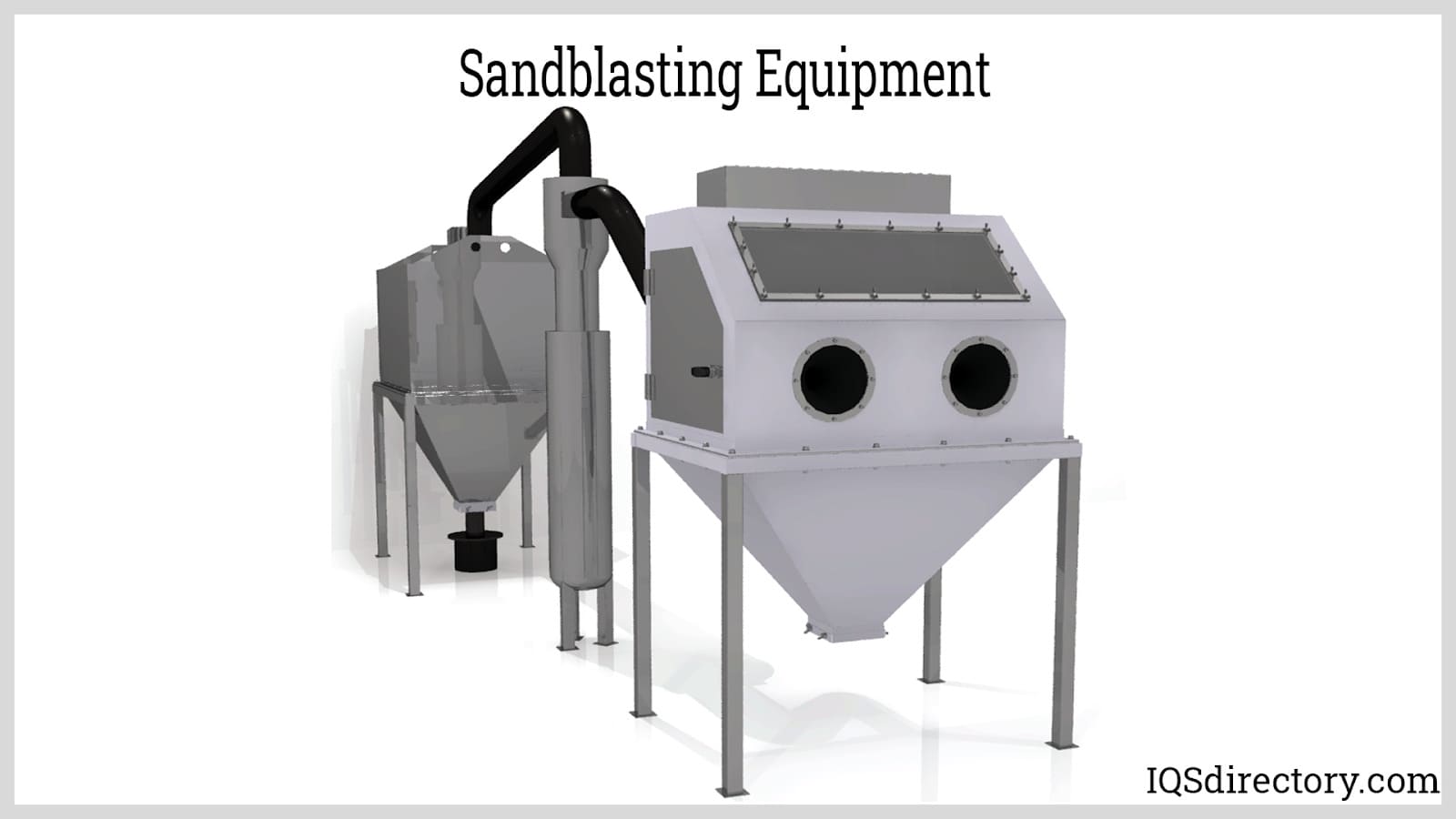 Sandblasting equipment includes systems or machinery, and components for projecting blast media against a part‘s surface to abrade, clean, or modify the surface.
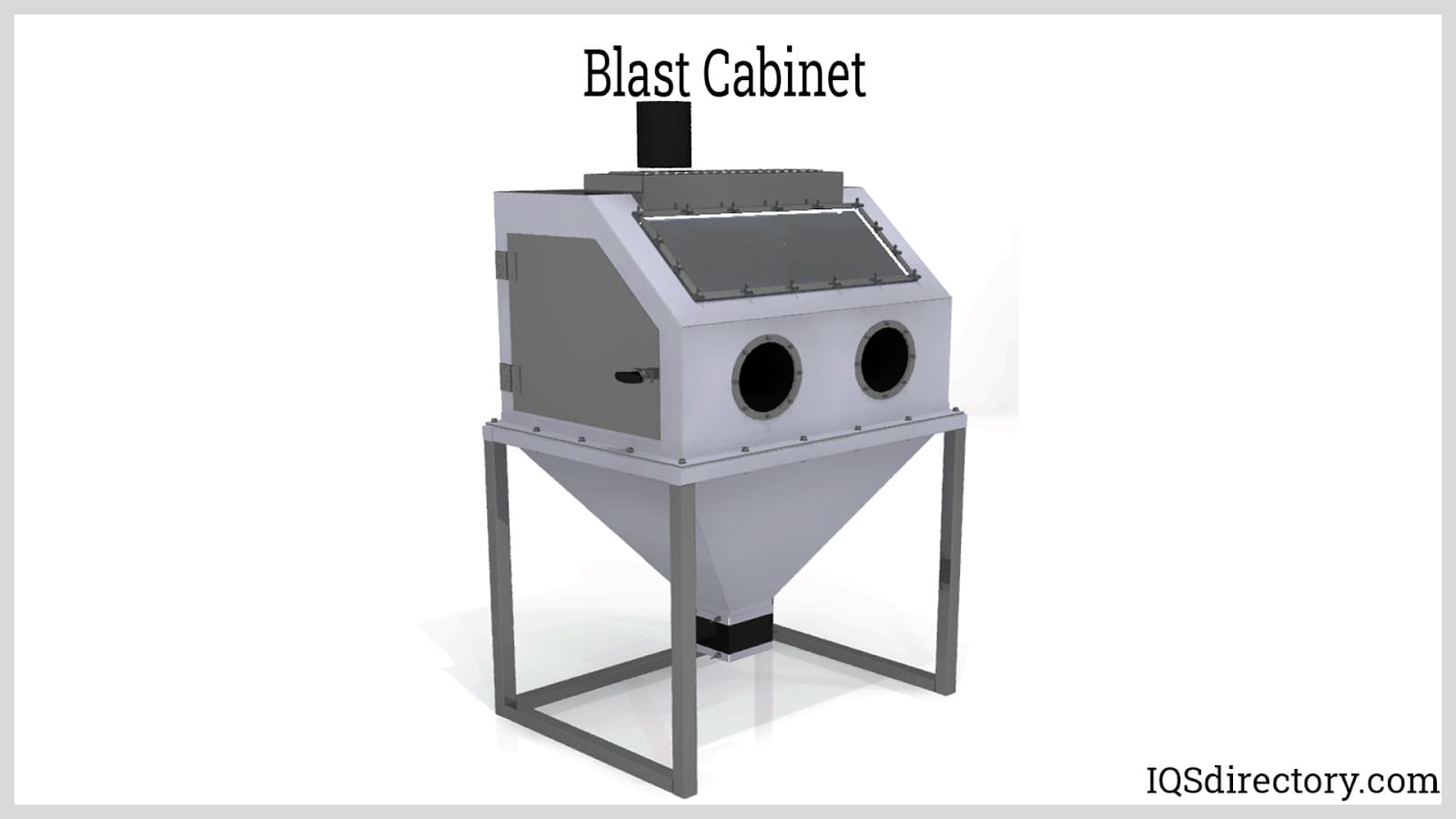 An example of manual blast cabinet.
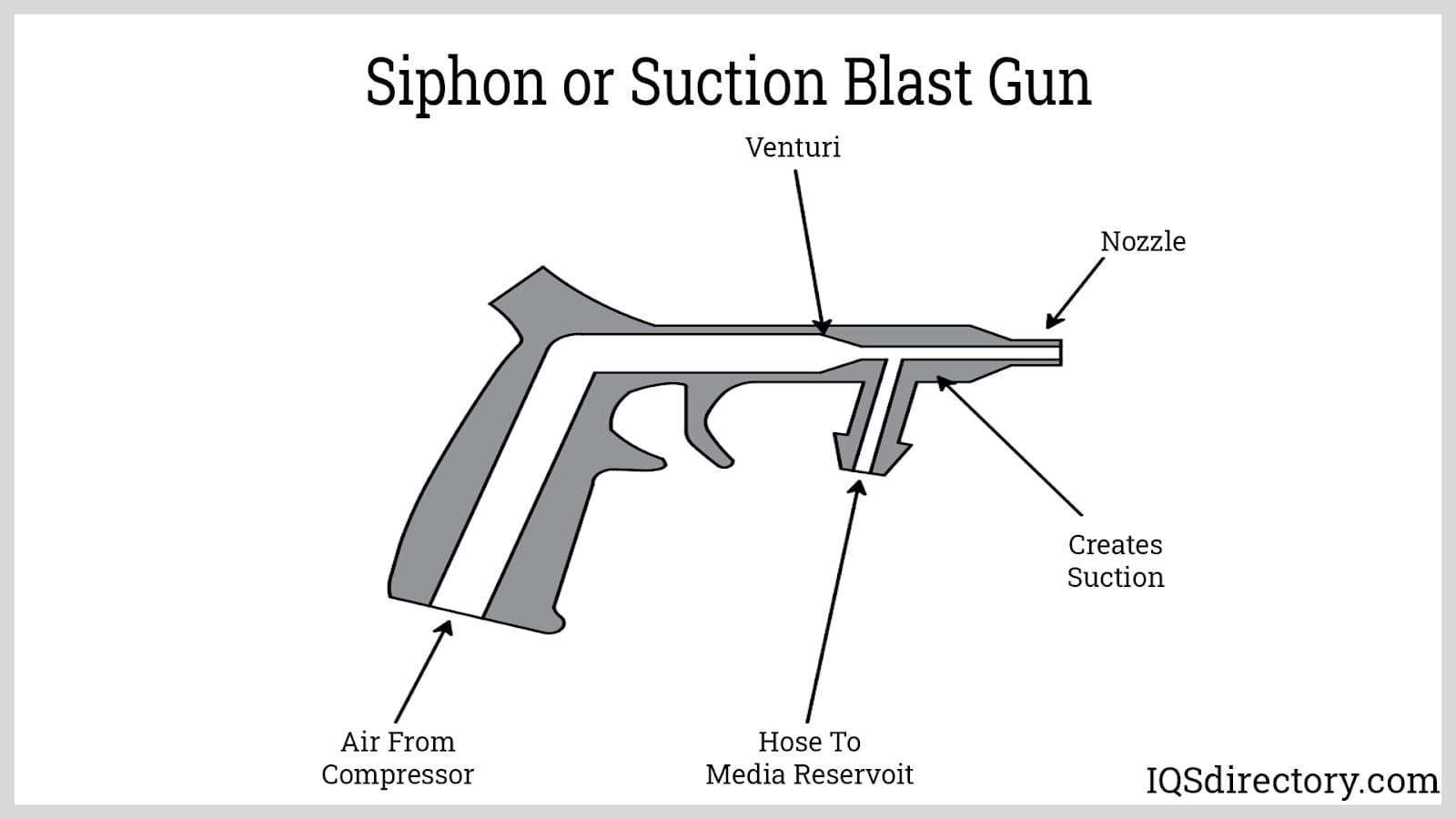 An example of a blast gun tool.
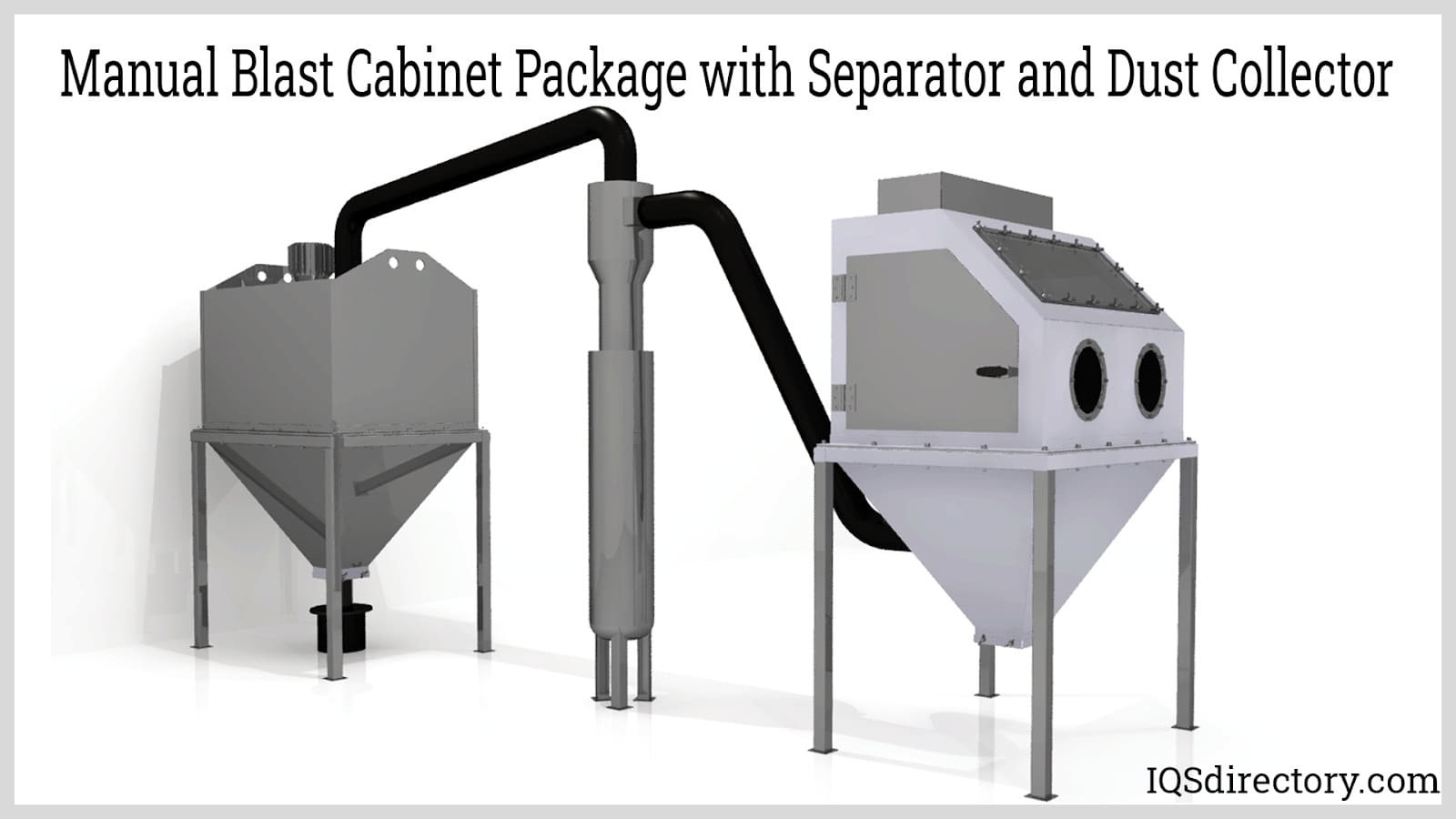 An example of manual blast cabinet package, which includes a a blast cabinet, separator, and dust collector.
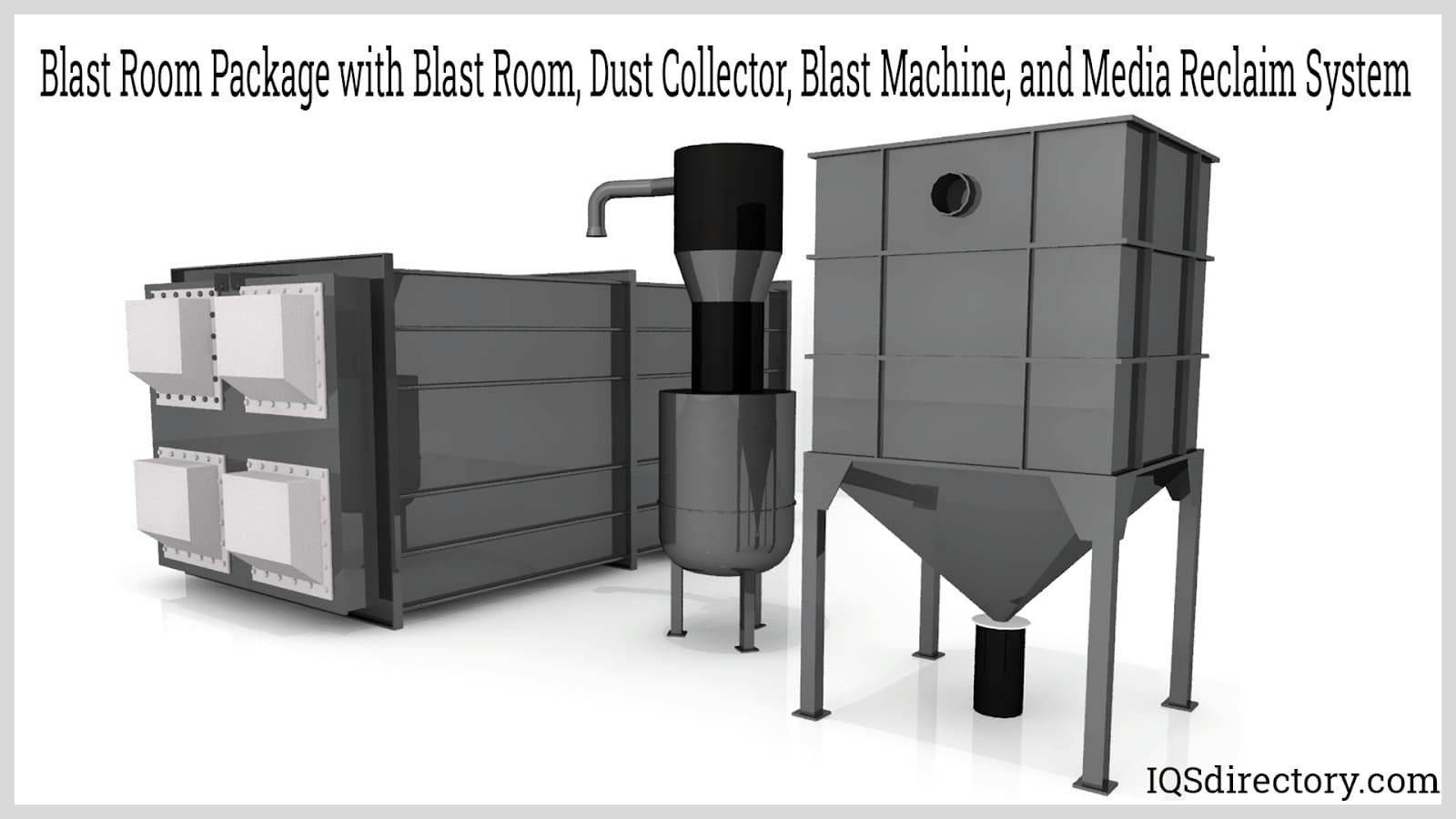 An example of a blast room equipment.
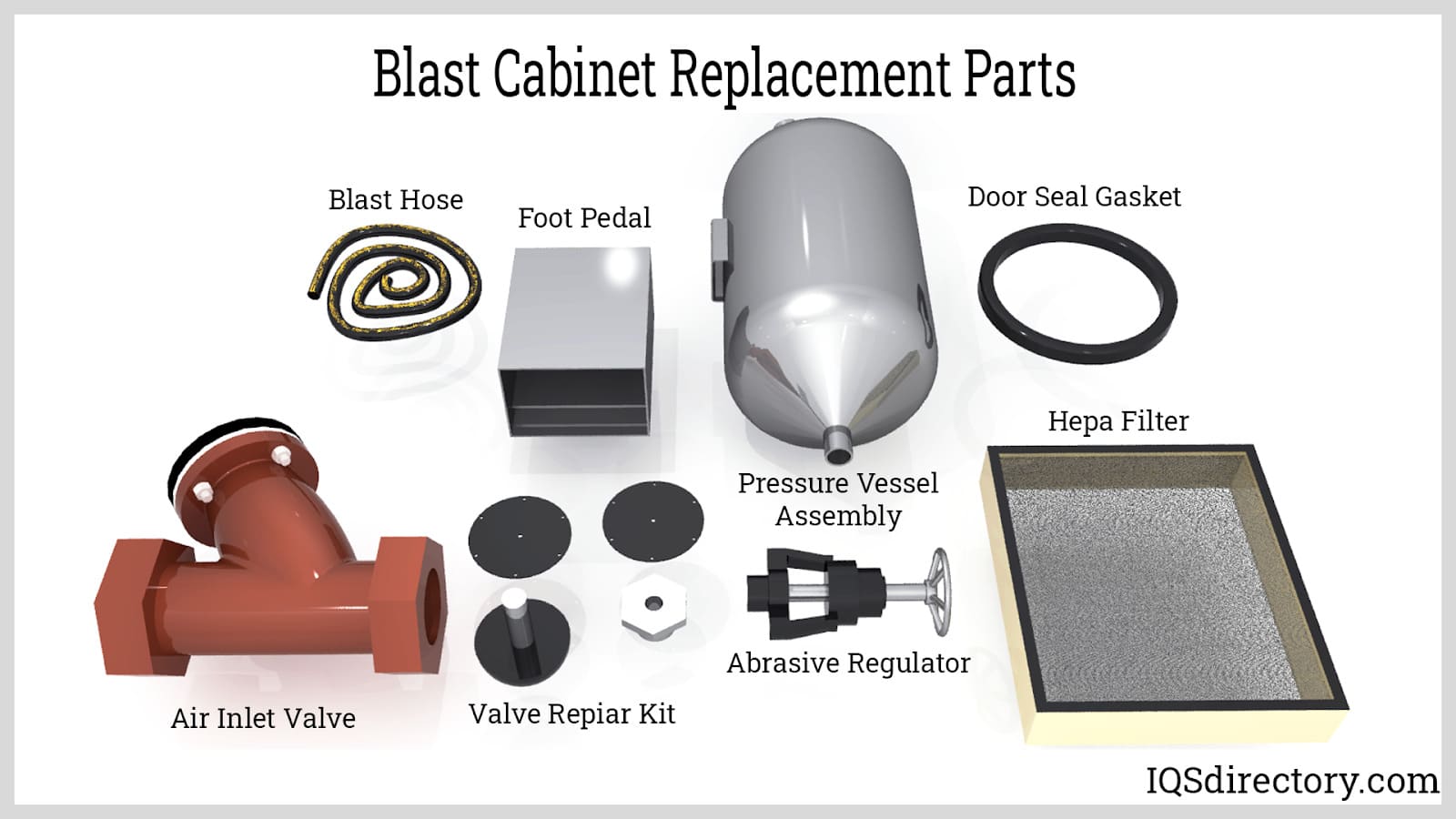 These parts are the most common parts in a blast cabinet that need to be replaced.
Types of Sandblasters
Automated Blasting Machines
Allow for the large-scale treatment of small parts and products. Consider how one of these could be used to benefit your company. Automated blasting systems remove contaminants, coatings, and debris from parts in a manner similar to batch processing or conveyor-type systems. These machines are often used when companies need higher throughput, repeatability, and lower labor involvement for small metal parts, castings, stampings, and machined components.
Bead Blasters
Utilize high-pressure streams of spherical abrasives to clean or resurface parts and components in industrial, commercial, and domestic settings.
Sandblast Cabinets
Similar to automated blasting machines, sandblast cabinets allow for large-scale treatment of small parts. These enclosures contain items to be abraded and help prevent the exposure of blasting media to surrounding workers. Because the enclosure contains rebound media and dust, cabinet systems are often chosen for benchtop finishing, maintenance departments, and production cells where cleanliness and operator visibility matter.
Portable Sand Blasters
Can be taken from one worksite to another, making single treatments of large surfaces possible. Portable sandblasters are mobile machines of varying sizes and designs that utilize high-pressure streams of abrasive materials to clean or resurface parts and components. They are often selected for field work on tanks, structural steel, heavy equipment, marine components, masonry, and other large substrates that cannot be moved into a cabinet or blast room.
Blast Rooms
Are larger versions of sandblast cabinets. A typical blast room consists of three main components: a containment structure, an abrasive blast system, and a dust collector. If additional dust cleanup is needed, you can check out IQS listings for dust collection systems. It’s quite common for a blast room to have one or more recycling systems. When buyers compare blast rooms, they usually look at reclaim systems, lighting, ventilation, floor recovery options, and how easily oversized workpieces can be loaded, rotated, and inspected.
Gravity-fed Sandblasters
Use gravity to remove discoloration or dirt from parts’ surfaces. With this type of blaster, media is directed into the barrel of the gun from the top. A hopper at the top holds the supply of media as you work. When the device is pressed, air and media blast out of the nozzle at high speed. Gravity-fed systems use gravity to direct abrasives into the compressed air stream. These units are commonly chosen for lighter duty cleaning, touch-up work, hobby use, and jobs where lower cost and direct operator control are more important than top production speed.
Siphon Sandblasters
Function similarly to gravity-fed sandblasters but differ in container design. Instead of being placed above the nozzle, the container holding the media is below it. Siphon systems use suction to draw abrasives into the compressed air stream, making them a relatively cost-effective option, as sand can be recollected into the reservoir. Because they can reuse media economically, siphon systems remain popular for cabinet blasting, maintenance work, and finishing tasks that do not require the higher cut rate of a pressure pot.
Pressure Sandblasters
Use canisters or vessels, to which a gun is hooked up. Out of this gun or hose, wet sand is blasted. The pressure pot system is identical to the siphon system, except that its abrasive store is negatively pressurized to allow for a more efficient combination of air and abrasive. Pressure blasters are easier to use compared to other types. The treatment of metallic parts requires one of two types of blasting machines: wet sandblasters or dry sandblasters. Pressure systems are widely used for faster cleaning, thicker coating removal, and more demanding surface prep jobs where higher media velocity supports greater productivity.
Wet Sandblasters
Are driven by pressurized water, while dry sandblasters use compressed air. Wet sandblasting is ideal for the surface treatment of parts that require cooling during blasting. This prevents surface deterioration and maintains the aesthetic value of the material. Wet blasting can also help suppress airborne dust in some applications while producing a softer cleaning action on heat-sensitive or appearance-sensitive surfaces.
Dry Sandblasters
Release sand at high velocity onto surfaces to smooth them. This method accounts for most surface treatments across various materials, parts, and products. Dry blasting remains popular for steel fabrication, coating removal, rust removal, and general industrial cleaning because it is versatile, relatively simple to configure, and effective across many media types.
Bead Blasters
Remove paint or surface deposits by propelling a stream of fine glass beads at high pressure. This type of blasting is not recommended for small parts but is widely used for treating automobile bodies. It is also popular for cleaning calcium deposits and embedded fungus on pool tiles or similar surfaces.
Shot Blasters
Use coarser metals as media for cleaning or polishing metal surfaces. Shot blasting releases sparks or light, called shot blasts, upon impact. The color of a shot blast depends on the selected media. Shot blasting uses two technologies: wheel blasting and air blasting. Shot blasters are machines that propel shot at high speed toward an intended surface to remove paint, debris, and buildup. For metal finishing lines, shot blasting is often selected to descale, clean, or prepare ferrous surfaces before coating, machining, or further downstream processing.
Wheel Blast Machines
Convert electrical energy into kinetic energy to propel abrasives onto coarse surfaces. This method is ideal for treating large machines or parts with expansive surface areas.
Air Blast Machines
Are powered by compressed air, which propels metals through nozzles onto a component.
Grit Blasters
Use various particles like soft walnut shells, sand, silicon carbide, alumina, or emery, depending on the application. These particles are propelled using compressed air, pressurized water, or steam. Grit blasters vary in size and design and utilize high-pressure streams of abrasive materials and slurries to clean or resurface industrial parts, products, and components. They are commonly used to remove sand and scale in castings and prepare metallic surfaces before welding. Grit blasting also improves coating adhesion and gives surfaces a smooth finish. Because grit can be matched to the substrate and desired profile, these systems are common in weld preparation, foundry cleanup, restoration work, and coating adhesion improvement.
Media Blasting
A process that removes coatings from metal, wood, fiberglass, and other substrates using pressurized streams of abrasive materials.
Micro-Blasting
Also known as micro-jet machines, these specialized machines are used for applications requiring selective surface preparation, material removal, and finishing. Micro-blasting is often used in electronics, aerospace, medical device, and precision manufacturing environments where only a small target area can be treated.
Sandblast Media
Refers to the variable abrasive materials used in sandblasting equipment to remove coatings and unwanted debris from metal, wood, plastic, and glass industrial components. Choosing the right sandblast media affects cut rate, finish texture, substrate damage risk, dust generation, and media recovery, making it one of the most important process variables.
Shot Peening Equipment
Used to mechanically and cosmetically modify the surface layer of metals.
Soda Blasters
Are a type of grit blaster that uses baking soda. A soda blast is a healthier alternative to silica blasting, which can have harmful effects when ingested. Soda blasting equipment is a specialized type of media blasting apparatus that uses pressurized streams of sodium bicarbonate to clean or resurface industrial parts, products, and components. Soda blasting is often selected for gentler cleaning on softer substrates, fire restoration, food-related equipment cleanup, and jobs where operators want less aggressive surface impact.
Sandblaster Equipment Components
Different sandblasters have different components. Below are a few of the more common ones, including blasting media, air compressors, nozzles, blast hoses, and pressurized water. The specific combination depends on whether the process is dry, wet, suction-fed, gravity-fed, or pressure-fed, as well as the size of the work area and the required production rate.
Blasting Media
In the sandblasting process, an abrasive media, such as sand, glass beads, or steel grit, is shot at high speed so that the surface of a hard material becomes smoother. Media choice influences surface profile, cleaning rate, embedment risk, and finish appearance, so buyers should match abrasive size, hardness, and shape to the substrate and final use of the part.
Silica Sand or Silicon Dioxide
Silicon dioxide is sand, which is a commonly used material for removing rust or dirt from surfaces. Sand is efficient in abrasive blasting because the particles are sharp, making the process easier.
Glass Bead
This medium is perfect for achieving a matte and satin finish. It consists of very fine particles that produce a much smoother and brighter finish on the object being sandblasted.
Aluminum Oxide
This media is much sharper than glass bead and stays sharp for a long time, making it ideal for paint removal and general cleaning. Its durability and cutting action make it a common option for tougher industrial cleaning, heavy mill scale removal, and demanding coating preparation work.
Air Compressors
Dry machines use air compressors to generate a powerful stream that propels abrasives against surfaces. Air volume and pressure stability affect blasting consistency, so compressor sizing is a routine part of system selection for any shop planning regular abrasive blasting work.
Pressurized Water
Only a small minority of blasting projects use pressurized water. It is mainly used for the treatment of surfaces that need cooling during blasting.
Nozzles
Used to direct the blasting stream. The most common type of nozzle is the ceramic nozzle. Nozzle bore size, material, and wear rate all influence blasting efficiency, media flow, and operating cost over time.
Blast Hoses
Used with a pressure blaster, the blast hose conveys media from a pressure vessel (where it is stored) into the blast nozzle. Note: The vessel and the blast hose are pressurized to the same level. Correct hose diameter and hose length help maintain media flow and pressure while reducing unnecessary restriction between the vessel and the nozzle.
Dust Collector
Many types of abrasive blast equipment include a dust collector in their system. The dust collector captures a large portion of the dust produced during sandblasting. This is especially important when working with media that is hazardous to human health, such as silica sand. It is also useful for media reusing and recycling. Dust collection also improves visibility, reduces airborne particulate in the workspace, and supports cleaner maintenance conditions around the blast area.
How to Use a Sandblaster
To use your sandblaster, begin by connecting the hose to the air tank and attaching the nozzle to the hose. Next, fill the vessel with the blasting media of your choice, ensuring that all pressure settings are properly matched and calibrated. Once everything is set, control the blast gun using your controls. In most cases, this involves pointing the gun and pulling the trigger manually. In some setups, you may need to signal for the trigger to pull via a remote control. Either way, this is the stage where the blasting process begins, smoothing the surface or creating an even finish on your product. Operators also need to confirm media compatibility, pressure settings, and personal protective equipment before starting, especially when switching between substrates or coating systems.
Applications of Sandblasting
Blast equipment is used to eliminate a wide range of imperfections from the surfaces of metal, wood, glass, plastic, composites, and masonry products. Most commonly, it is employed to remove rust, paint, oxidation, mill scale, discoloration, corrosion, dirt, and embedded residue. It is also frequently used as a surface preparation step before painting. Because the process can both clean and profile a surface, it is frequently used before painting, thermal spray, powder coating, sealing, adhesive bonding, and restoration work.
This equipment serves a broad range of industrial applications, including industrial cleaning and processing, automotive manufacturing and repair, marine maintenance, construction, agriculture, aerospace, foundry work, decorative design, woodworking, and glassworking. Buyers often compare systems based on production volume, surface profile requirements, media compatibility, containment needs, and whether the work will be performed in a cabinet, blast room, or field environment. Common markets include aerospace, transportation, fabricated metals, marine repair, infrastructure maintenance, foundries, oil and gas, and general industrial manufacturing.
Within these industries, sandblast equipment is widely used for finishing parts and products such as newly manufactured fasteners, engine components, tractors, watercraft, cars, aircraft, heat exchangers, bridges, building components, and printed circuit boards. Examples include weldments, tanks, housings, gears, valves, extrusions, tools, structural members, cast components, and surfaces that need uniform preparation before coating or assembly.
Design and Customization of Sandblasting Equipment
When manufacturers design a sandblast system, they take several performance, safety, and workflow factors into account. The right configuration depends on part size, required finish, production rate, available floor space, dust collection needs, and whether operators need a manual, automated, cabinet-based, or portable blasting setup. System designers also consider available floor space, part geometry, containment needs, target finish, dust load, reclaim options, and the experience level of the operators who will use the machine.
One important consideration is the size of the operation. Gravity-fed systems, especially when combined with portable blasters, are well-suited for small projects, offering flexibility and ease of use. Larger plants may move toward pressure systems, blast rooms, or automated equipment when throughput, part size, or shift volume exceed what a small portable setup can handle.
Another major factor is the type of media that will be paired with the sandblast machine, since media selection affects cut rate, finish quality, recyclability, dust generation, and substrate protection. For that reason, media selection is tied closely to productivity, cosmetic finish, and how much base material can be safely removed during cleaning or profiling.
Angular or Rounded Media
The choice between angular and rounded media depends on the intended application. Angular materials are used for deburring, descaling, paint and coating stripping, surface texturing, and cleaning. Rounded media can also be used for these applications, but they are particularly effective for strengthening metal surfaces through repeated, intense collisions with shot, which induces compressive stress. Rounded media is often used where peening, smoothing, or cosmetic finishing is preferred, while angular media is more often selected for coating removal and stronger surface profile development.
Traditional or Organic Media
Manufacturers also decide between organic, plant-based media and more traditional options like aluminum oxide. Plant-based media, such as nut shells or fruit kernels, offer eco-friendly advantages, cost savings, reusability, and reduced health risks for users. Organic media can be useful when a gentler cleaning action is needed, while traditional mineral or metallic abrasives are often chosen for harder substrates and faster material removal.
Equipment Customization
With these considerations in mind, manufacturers can design a custom blaster tailored to specific applications. Customizable features and accessories may include an outer case, a blast hood, a moisture separator, custom nozzle materials, remote control operation, and specialized hose configurations. Custom options may include reclaim systems, pressure pot sizing, robotic handling, conveyor integration, special nozzles, turntables, and cabinet layouts designed around specific parts or workflow goals.
Standards and Specifications of Blasters
To support worker safety while using a blaster and to reduce long-term health risks, manufacturers must comply with strict safety standards. They should operate sandblast equipment in accordance with OSHA guidelines and established shop safety procedures for ventilation, respiratory protection, containment, and housekeeping. Facilities also need procedures that address respirable dust, abrasive containment, maintenance checks, and clear operating practices for safe blasting conditions.
Manufacturers should incorporate key safety accessories, including blast hoods or helmets, hearing protection, protective clothing, and proper respiratory protection. These items help reduce operator exposure while supporting steady performance in demanding blasting environments.
Simple modifications to blaster workspaces, such as the use of enclosed blasting cabinets, protective clothing, respirators, and effective ventilation systems, significantly improve safety conditions for workers handling silica blaster equipment. Good ventilation and containment also protect nearby work areas, reduce cleanup time, and help keep blasting operations more predictable day to day.
Things to Consider When Purchasing Sandblasting Equipment
Selecting the right sandblast equipment is important for achieving the desired surface treatment, finish consistency, throughput, and operating efficiency for a given material or component. Many buyers start by asking what substrate they are blasting, what profile they need, how much material must be removed, and whether the work will happen in a cabinet, blast room, or open jobsite.
The type and thickness of the material to be removed is the primary consideration when choosing a sandblasting machine. The equipment must be capable of effectively handling the specific abrasion level of the surface. A light coating on sheet metal may require a very different media and pressure combination than scale removal on structural steel, cast iron, or concrete.
The condition and age of the concrete base or metallic surface also play a role in determining the appropriate blasting approach. Older or deteriorating surfaces may respond differently to high-velocity blasting than newer, more resilient surfaces. Surface brittleness, corrosion depth, prior repairs, and contamination levels can all influence how aggressive the blast process should be.
The nature and thickness of the surface coating or paint must be taken into account. Light profiling is suitable for applying a thin coating, while heavy texturing is required for thicker coatings. Coating system requirements often drive the target anchor profile, so buyers should consider the finish requirements of the next manufacturing or restoration step.
Other features of blasting equipment should be examined to ensure smooth operation and optimal results. Some machines come with exhaust restrictions, and waste disposal regulations must be followed. Features such as media reclaim, access doors, pressure controls, visibility, dust collection, and maintenance access can affect daily usability as much as raw blasting power.
Options for adding attachments can increase versatility. Machines that accommodate a wide range of attachments are more adaptable to different applications. Attachment compatibility can be helpful for shops that handle mixed workloads and want one machine to support multiple cleaning, stripping, or finishing tasks.
To find the best supplier, consider using an online directory to compare sandblast equipment manufacturers and suppliers. When researching suppliers, review equipment quality, service support, replacement parts availability, dust collection options, customization capabilities, and whether they can meet your application, budget, and throughput goals. Working with a supplier that understands your requirements helps improve equipment fit, operating value, and long-term performance. Comparing suppliers by application knowledge, replacement parts support, system configuration options, and service responsiveness can make the purchasing process much easier.
Sandblast Equipment Terms
-
Abrasives
Media used for blasting, grinding, or polishing. They come in loose form or are combined into wheels, files, or bricks, or adhered to cloth or paper with resin or glue. Natural abrasives include sand, baking soda, garnet, emery, flint, and corundum. Metallic shot, grit, and plastic materials are also used for cleaning castings and surface preparation.
Abrasive Grains
Tiny individual particles of an abrasive mineral used in sandblasting.
Abrasive Blasting Respirator
A continuously flowing air line respirator designed to cover the shoulders, head, and neck of the wearer, protecting against recoiling abrasives from sandblasting equipment.
Aluminum Oxide
A hard mineral formed by the chemical reaction between oxygen and aluminum. The creation of aluminum oxide on a metal surface prevents further oxidation after sandblasting.
Deburring
A procedure that uses abrasives such as coated or bonded abrasives to remove burrs, jagged edges, or protrusions from an object's surface after industrial processes.
Dwell Time
The amount of time a sandblasting nozzle remains fixed on a particular area. Extended dwell times can cause excessive heat generation and damage the product.
Emery
A naturally occurring abrasive containing aluminum oxide and iron oxide. It is used in light applications rather than industrial processes due to its low hardness.
Friability
Measures how easily abrasive grains break or split under impact or pressure. Friable abrasives fracture easily and have a shorter lifespan.
Shot Blasting
A rapid, dust-free process that cleans and dries substrates. Shot blast machines propel shots at high speed to remove debris, paint, and buildup from surfaces.
Shot Peening
A sandblasting process that strengthens a part or surface to withstand stress or fatigue breakdown.
Slurry
A pasty liquid mixture containing suspended solids.
Superabrasives
A category of extremely hard mineral abrasives, including diamond and CBN, known for their exceptional hardness.
Zirconia Alumina
A tough, synthetic abrasive used in heavy sandblasting applications involving various types of steel.