Latches
Latches are mechanical hardware components used to secure doors, gates, cabinets, access panels, windows, lids, and enclosures that open and close repeatedly. From residential door hardware to industrial latches for transportation equipment and equipment housings, they provide controlled closure, dependable retention, and convenient release. Buyers often compare latch types by material, mounting style, security needs, and environmental exposure because the right latch can improve safety, sealing performance, durability, and day-to-day usability.
Latches FAQ
What are latches used for?
Latches are mechanical devices used to secure doors, windows, cabinets, gates, enclosures, and other objects that open and close. They temporarily hold adjoining components together and may provide fastening, closure control, or locking support depending on the design, material, and application.
How have latches evolved over time?
Latches have been used for centuries, with early metal latch designs appearing in China and Europe long before modern architectural hardware standards. Traditional forms such as the Suffolk and Norfolk latch influenced later designs, while modern latches may combine mechanical and electrical features for stronger security, smoother operation, and application-specific performance.
What materials are commonly used to make latches?
Latches are commonly manufactured from stainless steel, steel, aluminum, brass, and cast iron for strength and wear resistance. Plastic latches, thermoplastics, and elastomer-based materials are also used where low weight, corrosion resistance, impact absorption, or vibration damping are important.
What are the most common types of latches?
Common latch types include bolt latches, spring latches, draw latches, compression latches, rim latches, lever latches, slam latches, cabinet latches, gate latches, paddle latches, and industrial latches. Each serves different closure, sealing, security, and access requirements.
Where are industrial latches typically used?
Industrial latches are used in demanding environments such as automotive, aerospace, railway, marine, off-highway, RV, and equipment enclosure applications. They are selected for dependable closure, repeatable performance, vibration resistance, and long service life under frequent use.
How should latches be maintained?
Most latches need simple routine care. Cleaning with mild soap and a soft cloth helps preserve the finish, while some metal finishes benefit from light protective treatment based on manufacturer guidance. Regular inspection also helps identify wear, alignment issues, and buildup that may affect operation.
What standards ensure latch quality and safety?
Many high-quality latches are manufactured to meet ANSI and BHMA performance standards for durability and reliability. Depending on the installation, some latch assemblies may also need to meet ADA accessibility requirements or other application-specific specifications.
The History of Latches
Latches have remained a foundational part of door hardware and closure systems for centuries, evolving in materials and mechanism design while preserving the same basic purpose: keeping one surface secured to another until release is intended. Some of the best-known early latch styles include the Suffolk latch and the Norfolk latch, both associated with England in the 16th century and still recognized today. Historical records and surviving iron hardware suggest latch use stretches back even farther, with metal latch examples found in China and Europe as early as the 13th century.
Traditionally, latches were designed to keep doors closed rather than fully locked, while bolts provided the added function of securing them. In many modern applications, those roles overlap. Today’s latch assemblies may deliver both fastening and locking support, and buyers often look for features such as keyed access, compression sealing, vibration resistance, or push-to-close operation when comparing latch hardware for residential, commercial, or industrial use.
Latch Design
Manufacturers produce latches using processes such as die casting, stamping, machining, forming, or forging, followed by assembly, welding, fastening, or finishing as needed. Whether a buyer needs a standard latch or a custom latch design, performance is shaped by material choice, mounting method, latching position, operating force, service cycle, corrosion exposure, and the amount of vibration or abuse the hardware will encounter over time.
- Material Design
- Latches are commonly constructed from metals such as stainless steel, steel, aluminum alloy, cast iron, and brass because these materials offer strength, service life, and wear resistance under repeated use. Among them, stainless steel latches are often chosen for outdoor, marine, washdown, and corrosive settings where strength and rust resistance matter most.
- In some cases, manufacturers opt for thermoplastics and thermoplastic elastomers as alternative materials. Plastic latches and rubber-based latches reduce weight, absorb vibration, and resist impact in ways many metal latch options cannot. They are often selected for lightweight covers, interior compartments, electronics housings, and custom latch designs where flexibility, low noise, and easier fabrication are valued.
- Mount Design
- The choice of mounting configuration depends on available space, desired appearance, service access, and the closure performance required from the latch. Common mounting methods include concealed mounting, edge mounting, face mounting, side mounting, and single-hole mounting, with each layout supporting different panel designs and installation constraints.
- Most latches use brackets, keepers, posts, hooks, bolts, or mating strike components positioned on adjacent surfaces. Once engaged, the mechanism prevents a door, gate, cabinet, access panel, or lid from opening unintentionally. Buyers evaluating latch hardware often ask whether they need hidden hardware, quick access, tamper resistance, or a tighter pull force to improve closure and alignment.
- Concealed mounting hides the latch behind the panel for a clean appearance, while edge mounting places hardware along mating panel edges. Face mounting installs the latch directly on the front surface, side mounting keeps the latch and keeper out of view behind the connecting panels, and single-hole mounting uses one face hole for compact installation. For non-single-hole mounting designs, manufacturers can adjust hole spacing to meet custom dimensional requirements.
- Latching Position
- The latching position has a direct effect on how a latch performs. A primary latching position keeps the door or panel fully closed, while a secondary position may hold it partially closed for ventilation, staging, or controlled access. Choosing the right engagement position helps improve closure consistency, user convenience, and the level of security or sealing required for the application.
Latch Images, Diagrams and Visual Concepts
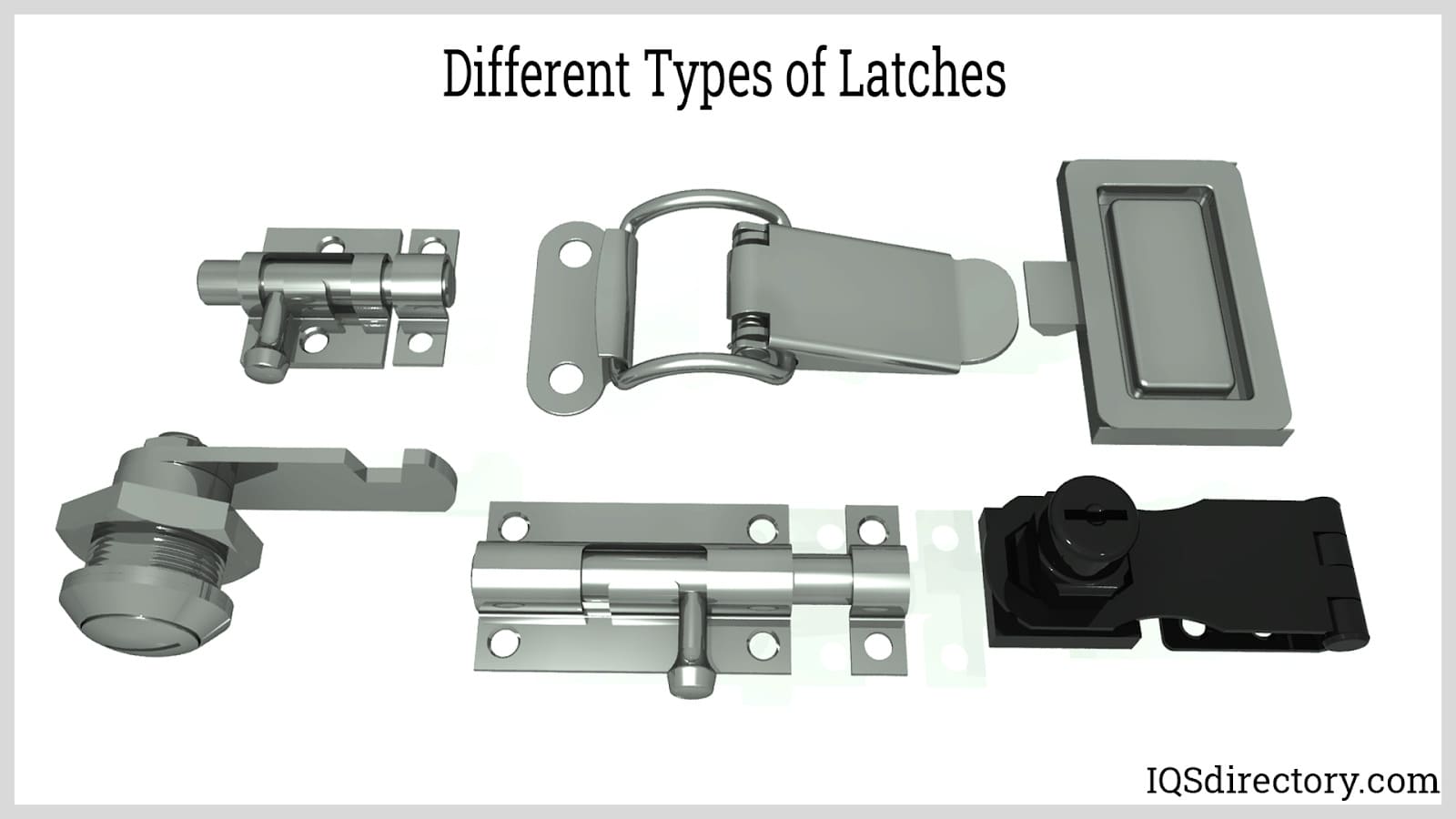 Different latch types show how mechanical closure hardware can be tailored for doors, panels, enclosures, cabinets, and equipment access points.
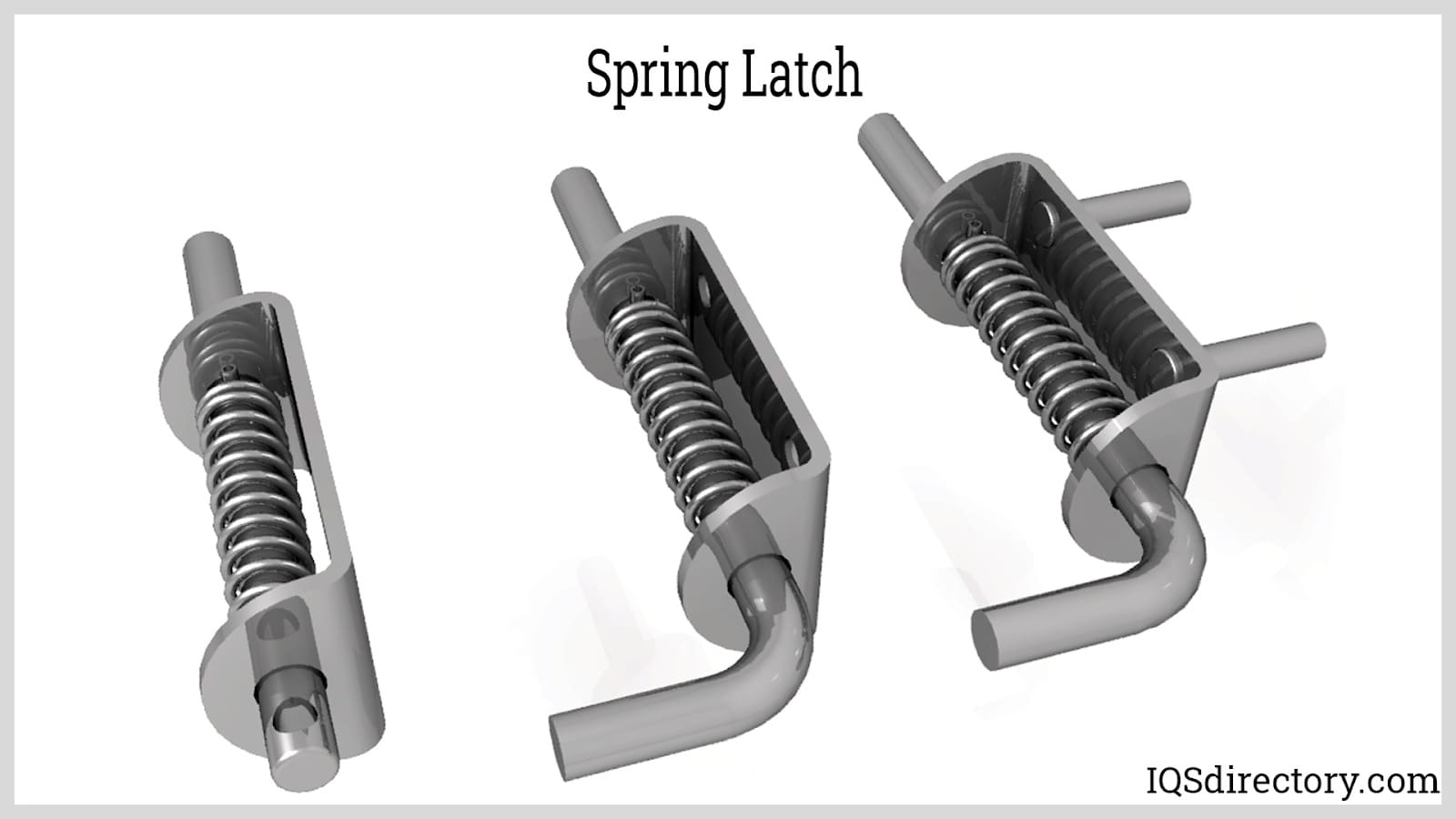 Spring latches join separate components and provide secure closure with fast, repeatable operation in residential and industrial settings.
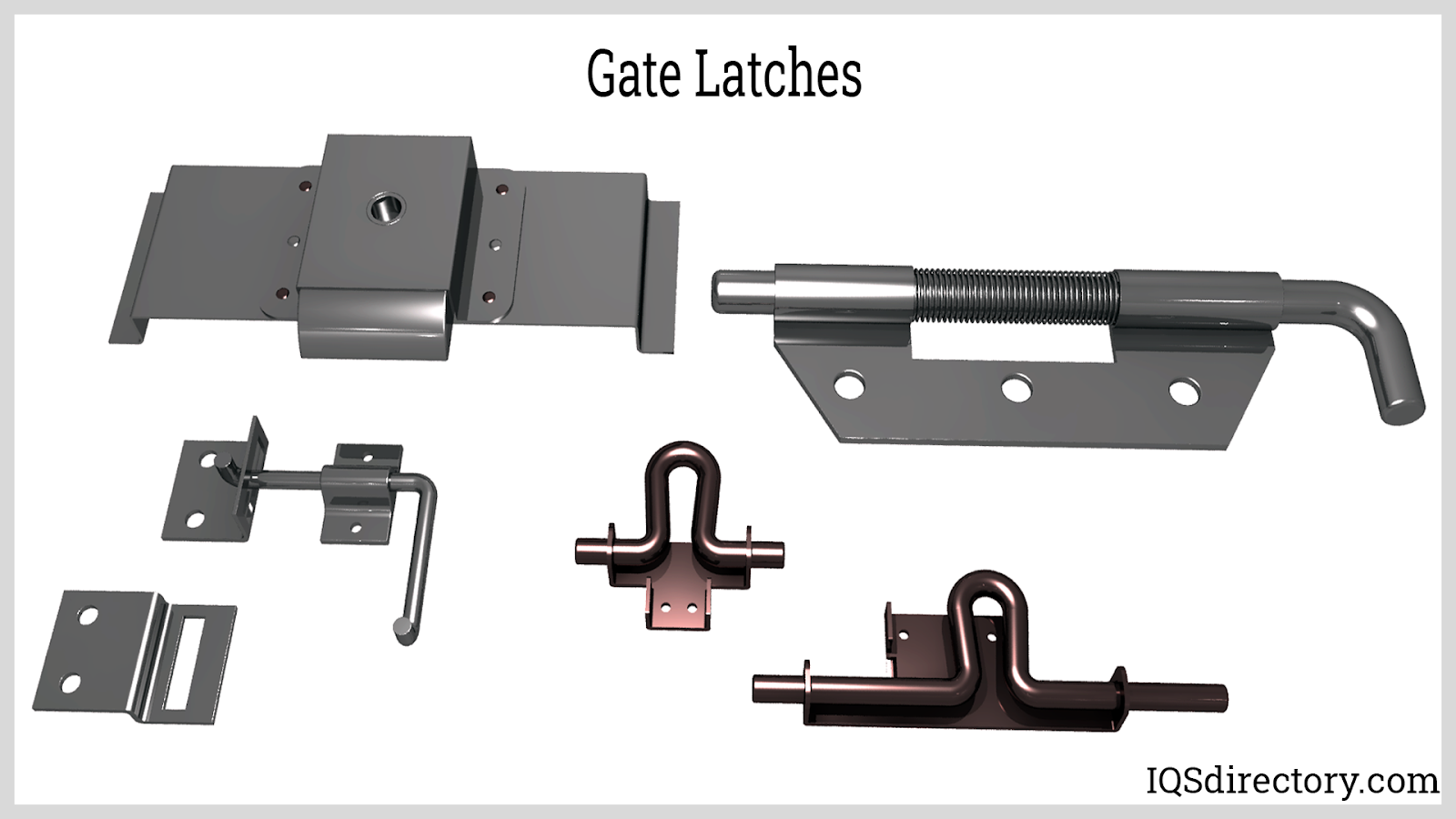 Gate latches are made from durable materials and come in multiple styles, including right-hand and left-hand configurations.
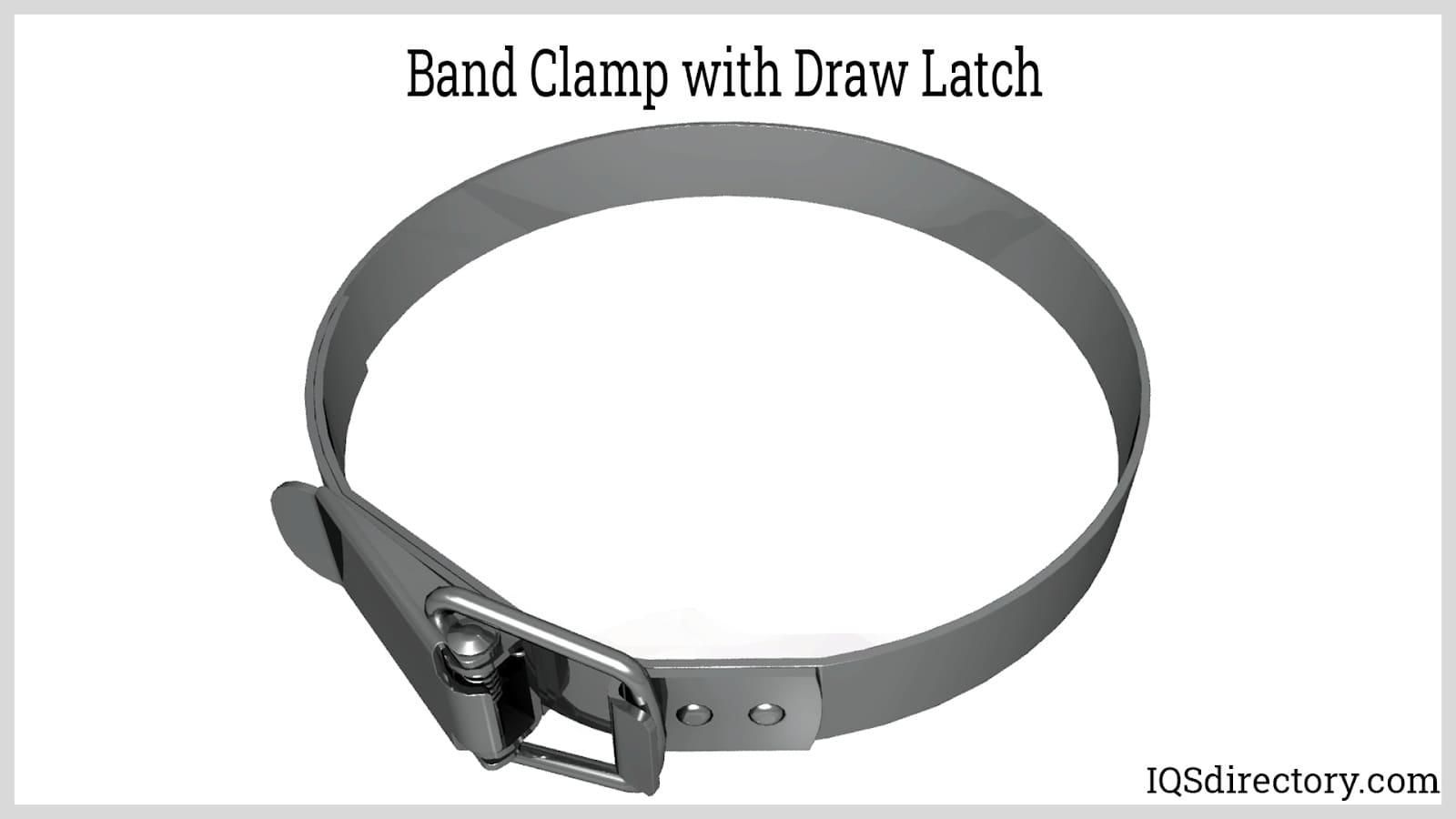 A band clamp with a draw latch demonstrates how latch design can deliver strong pull force and dependable closure.
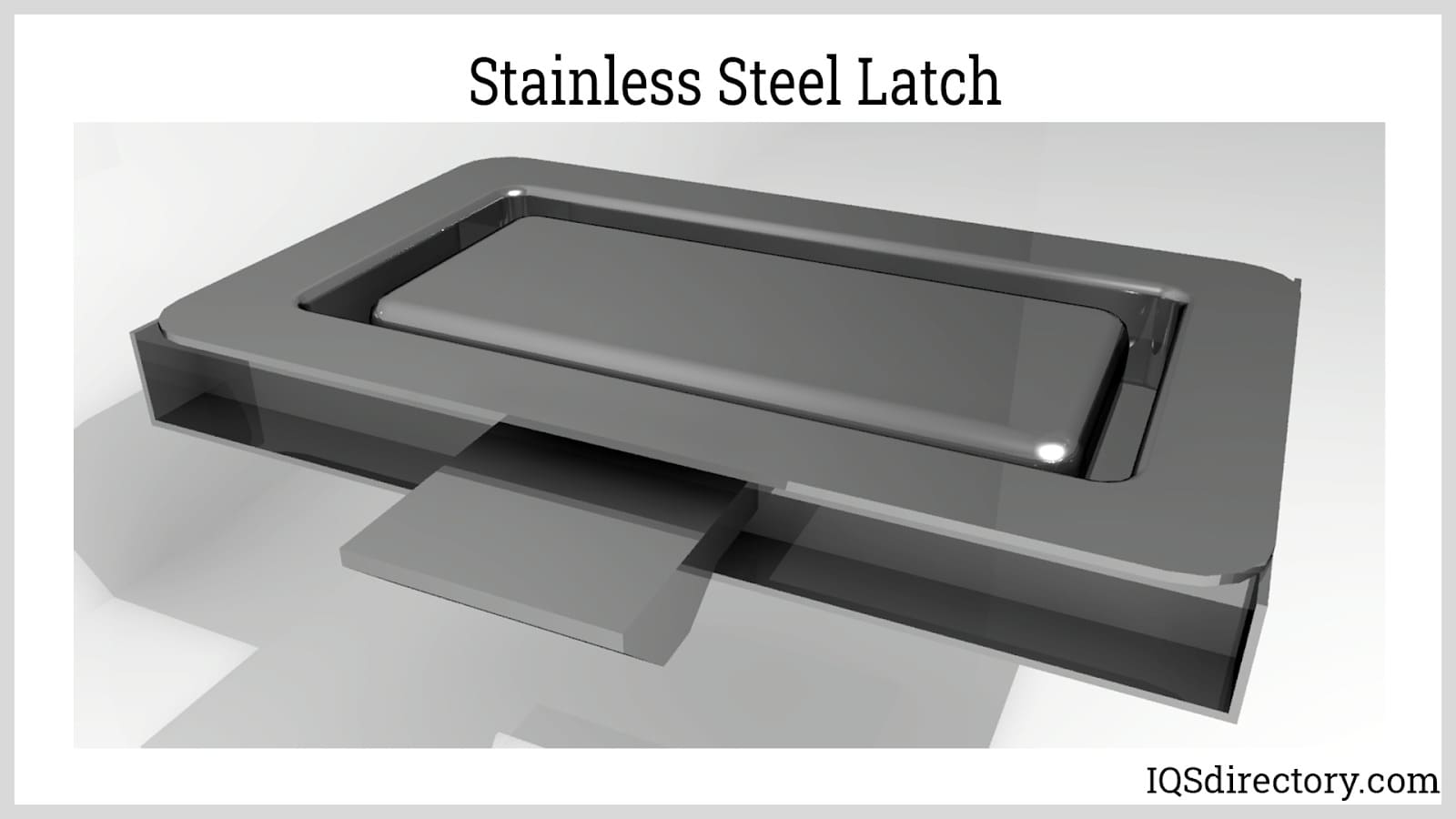 Stainless steel latch hardware is often chosen for corrosion resistance, strength, and long-term outdoor or washdown performance.
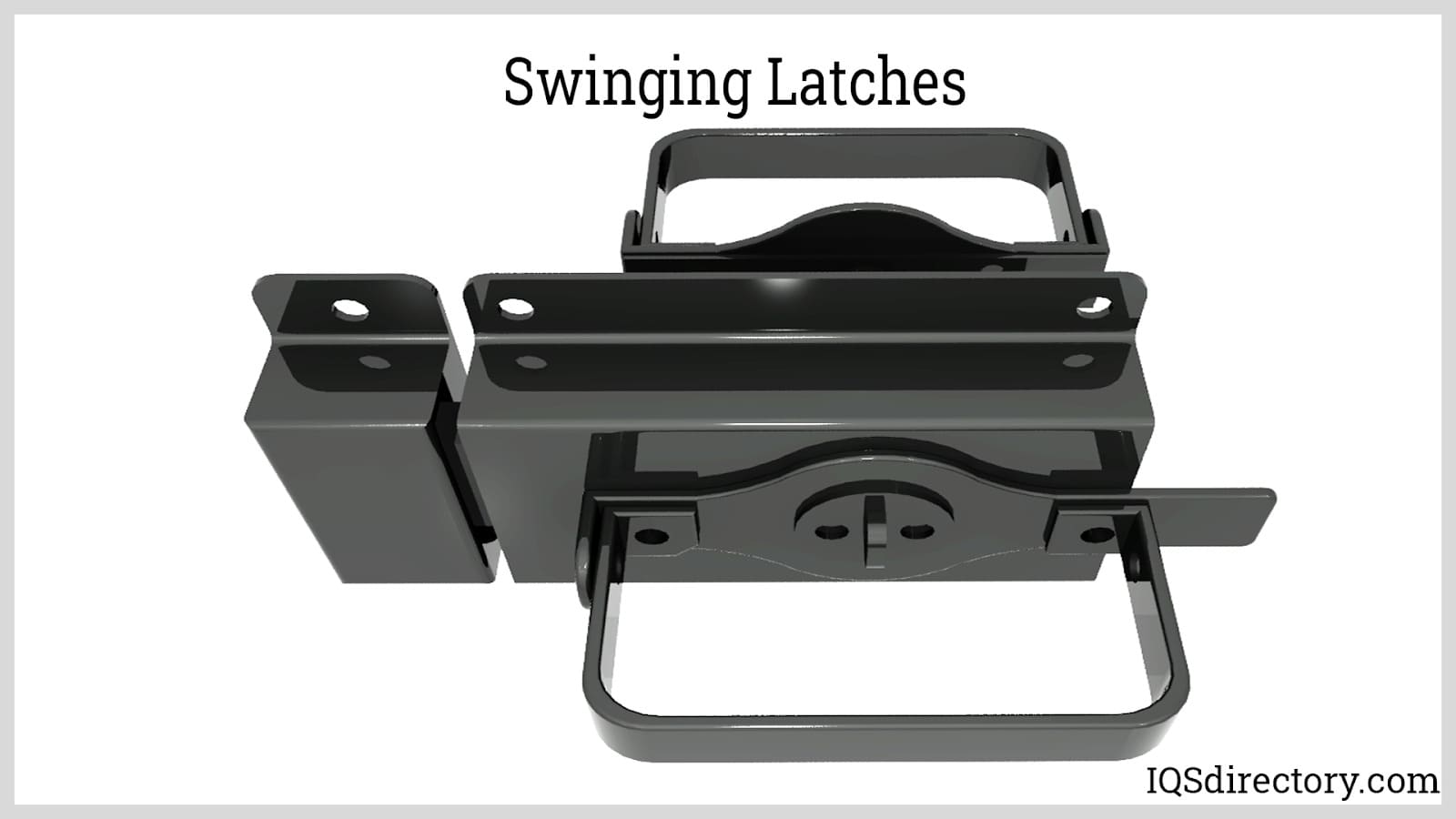 Swinging latches use push-to-close action and are well suited for doors or panels that need quick, convenient engagement.
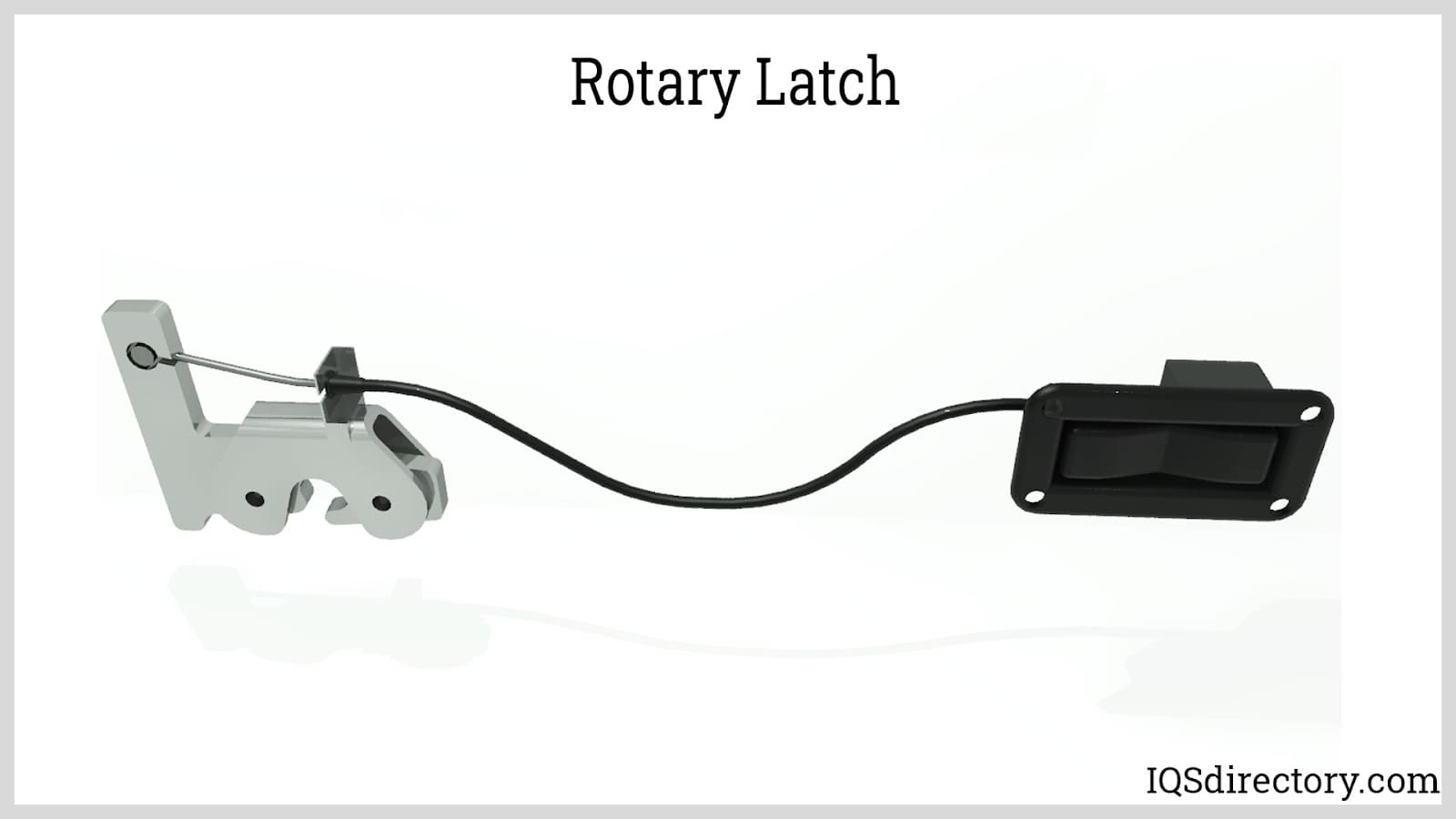 Rotary latches use a spring-loaded mechanism that supports push-to-close convenience with smooth, repeatable operation.
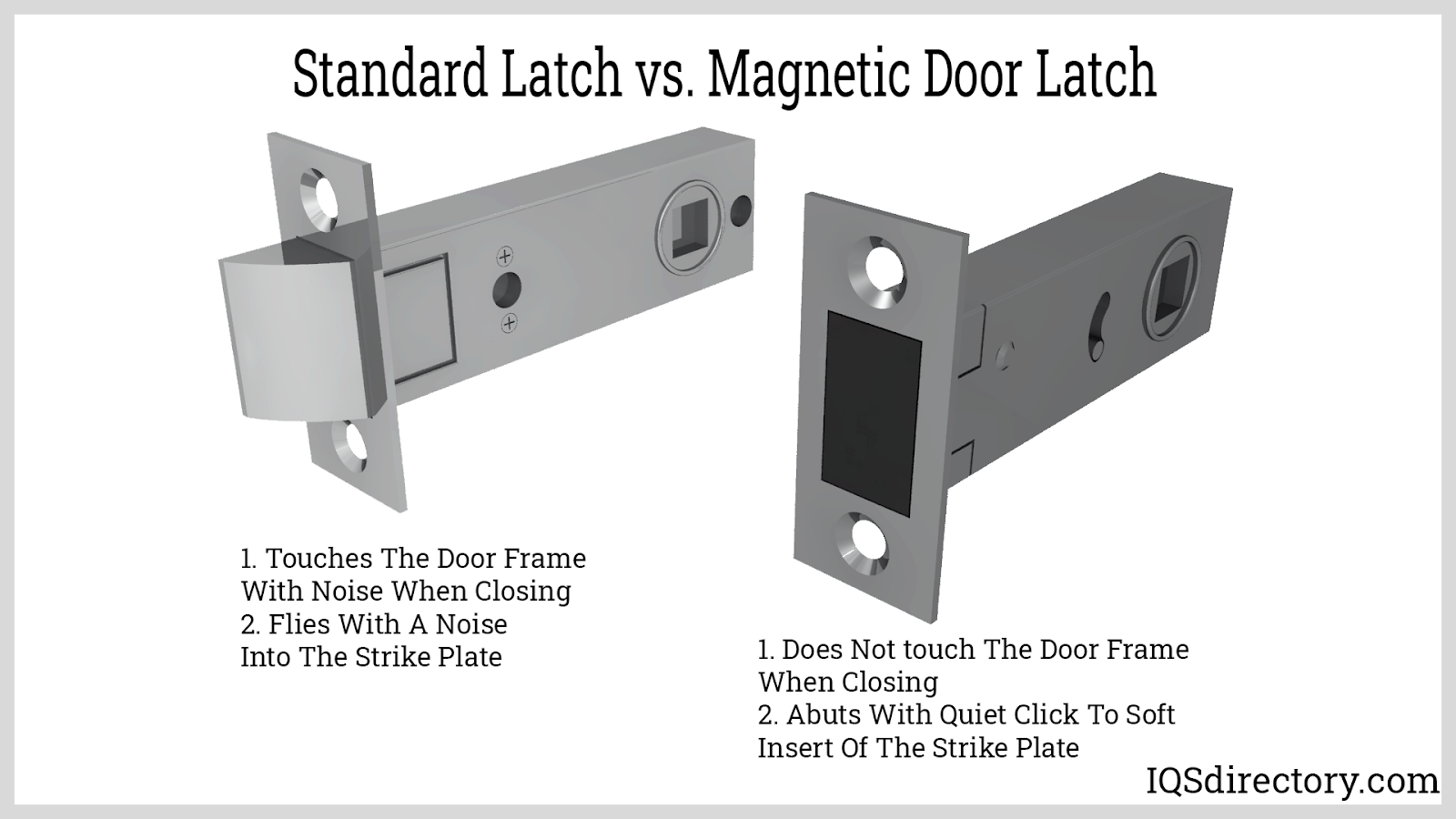 A magnetic door latch uses a striking pad and magnet, offering a different closure method than a traditional mechanical latch.
Types of Latches
- Bolt Latch
- Bolt latches are available in single-bolt and double-bolt configurations and are widely used to secure doors, gates, and utility closures. They provide a simple fastening method by sliding a bolt into a strike plate or bracket, making them a common choice when buyers want straightforward operation and dependable holding power.
- Spring Latch
- Spring latches use an angled bolt edge that compresses a spring as the door closes, then returns into position to hold the door shut. Turning a handle retracts the latch assembly for release. This design is popular for door hardware because it balances convenient use with secure closure.
- Draw Latch
- Also known as tension or toggle latches, draw latches pull two surfaces together and lock them firmly in place. They are frequently used on trunks, cases, toolboxes, access covers, and equipment panels because they provide strong clamping force and a tight, repeatable closure.
- Compression Latch
- Compression latches create a tight connection between adjoining surfaces and are often selected when the closure must also support a gasketed seal. They are commonly used on electrical enclosures, marine compartments, RV doors, and industrial cabinets where buyers need vibration resistance, reduced rattling, and weather-tight or dust-tight performance.
- Door Latch
- Door latches are designed to keep doors closed until intentional release. Most use cooperating components such as plates, bars, hooks, or pins to maintain alignment and control access, making them common across residential doors, commercial interiors, utility spaces, and equipment housings.
- Ring Latch
- Often called a ring gate latch, this style uses a large ring handle that is lifted and twisted to release the mechanism. It is common on garden gates and decorative exterior doors because it combines practical use with a traditional, rustic appearance.
- Latch Bolt
- Latch bolts use a spring-loaded bolt with an angled top edge. As the door closes, the bolt retracts against the strike plate and then extends fully into position. This familiar mechanism is valued for smooth operation and dependable door retention.
- Rim Latch
- Rim latches are a traditional surface-mounted latch style that attaches to the face of a door and engages a keeper on the frame. They provide simple closure and period-style appearance, though many installations pair them with additional locking hardware when more security is needed.
- Lever Latch
- Lever latches provide controlled access for overhead bins, transport compartments, service doors, and storage panels. They can be configured with different trigger styles, keyed access, or tool access, making them useful when buyers need a balance of convenience, retention, and tamper resistance.
- Slam Latch
- Slam latches engage automatically when a door or panel is shut, requiring no separate locking motion. They are well suited for high-use applications where speed, convenience, and one-handed closing are helpful.
- Thumb Latch
- Thumb latches use a liftable thumb-operated mechanism and are often installed on gates and residential doors. They remain popular when a classic appearance is preferred but reliable everyday function is still required.
- Cabinet Latch
- Cabinet latches are used on cabinet doors, cupboards, drawers, and storage compartments to keep contents secure and improve daily usability. Buyers often compare cabinet latch options by visibility, push-to-open function, magnetic assistance, and how cleanly the latch integrates with the furniture or millwork design.
- Gate Latch
- Gate latches secure fence entrances and exits in residential, commercial, and agricultural settings. They are available in many designs, from simple gravity-operated models to heavier-duty latch hardware suited for frequent outdoor use and changing weather conditions.
- Paddle Latch
- Paddle latches use a flip-out or recessed handle that lets the operator close and open the latch quickly. They are often used on truck bodies, utility compartments, industrial panels, and service doors where flush mounting and reliable pull action are preferred.
- SR Latch
- Also known as a set-reset latch, an SR latch is a flip-flop circuit with two stable states used to store information. In electronics, latch and flip-flop terminology often overlaps, and these components play a role in signal control and logic-based switching rather than physical door hardware.
- Touch Latch
- Touch latches operate without visible pulls or knobs, opening with a push-to-open action. They are widely used on modern cabinets and cupboards where a clean appearance is desired and may rely on spring-loaded, magnetic, or mechanical components for smooth access.
- Industrial Latch
- Industrial latches are built for heavy-duty environments and repeated service cycles. They are used in aerospace, automotive, railway, marine, RV, off-highway, and equipment enclosure applications where closure reliability, vibration resistance, security options, and long service life are major purchasing considerations.
Applications of Latches
Latches perform best in applications that require controlled closure and release between two adjoining surfaces. While many people first think of doors, gates, and cabinets, latch hardware is also used on access panels, toolboxes, electrical enclosures, inspection covers, vehicle compartments, marine storage areas, and furniture assemblies. When buyers search for a latch by application, they often focus on closure strength, cycle life, sealing ability, tamper resistance, and ease of use.
Latches are commonly used in transportation, home products, building and construction, industrial equipment, and furniture manufacturing. In transportation, they secure vehicle compartments, aircraft panels, and marine doors. In residential and commercial spaces, they support cabinet doors, entry points, service rooms, and gate hardware. In furniture and storage products, they help keep drawers, lids, and compartments aligned, secure, and easy to operate over long periods of use.
Installation of Latches
Each latch style has its own installation method, dimensions, and hardware requirements. Mortise latches, surface-mounted latches, compression latches, and cabinet latches all need proper alignment to operate smoothly and wear evenly. In most cases, installers review door thickness, panel material, keeper placement, and handle clearance before cutting or fastening any hardware.
To install a mortise latch, position the latch on the edge of the door and align it carefully with the strike plate or receiving component. Use a chisel or appropriate cutting tool to form a recess for the latch body, checking depth and fit as you go so the face sits flush with the door surface. After final alignment, fasten the latch according to the manufacturer’s dimensions and torque guidance to help ensure smooth engagement and consistent release.
For exact installation details, it is best to follow the manufacturer’s instructions for the specific latch model. Many suppliers provide installation kits, templates, and specialty components that make placement easier and help reduce alignment errors, rattling, premature wear, or sealing problems after the latch is put into service.
Proper Care for Latches
Maintaining latch performance usually requires only straightforward cleaning and periodic inspection. For clear-coated finishes, washing with a mild non-abrasive soap and a soft buffing cloth helps preserve appearance and remove dirt that could interfere with smooth movement. A non-abrasive protective wax may also help shield the surface from routine exposure.
Latches with a bronze finish need gentler care because the surface can be more delicate than other coatings. Light cleaning with a small amount of vegetable oil or mild household detergent can help maintain appearance without overworking the finish.
Chrome-finished latches usually need even less upkeep, and routine wiping with a damp cloth is often enough to keep them clean and presentable. For any latch finish or mechanism, periodic checks for loose fasteners, wear points, and alignment changes can help preserve reliable operation.
Latch Standards and Specifications
High-quality latches and locksets often conform to recognized industry standards that address durability, reliability, and safety. The American National Standards Institute (ANSI) and the Builders Hardware Manufacturers Association (BHMA) certify latch products that meet established testing criteria, giving buyers a useful benchmark when comparing hardware for demanding or code-sensitive installations.
Depending on the use case, additional compliance requirements may apply. For example, latches installed on handicap-accessible doors may need to meet Americans with Disabilities Act (ADA) accessibility guidelines. Matching latch hardware to the right specifications helps support safety, accessibility, code alignment, and dependable field performance.
Things to Consider When Purchasing Latches
When selecting a latch, consider how many units are needed, how often they will be opened and closed, and the environment in which they will operate. Indoor, outdoor, coastal, wet, dusty, high-vibration, and corrosive conditions can all affect the best material and finish choice. It is also helpful to evaluate mounting surface dimensions, available clearance, sealing needs, preferred actuation style, and whether the application calls for concealed hardware, keyed access, or push-to-close convenience.
For the best results, consult a reputable latch or hinge manufacturer before purchasing. Experienced suppliers can help identify compatibility issues, recommend the right latch type for the load and environment, and suggest custom hardware when a standard part is not the best fit. Buyers comparing manufacturers often ask: Which latch material is best for outdoor use? Do I need a compression latch for a gasketed seal? Will a paddle latch or draw latch work better for repeated service access? Questions like these can narrow the selection and lead to a better long-term match.
Latch Accessories
Latches can be paired with accessories that improve function, sealing, and ease of operation. Common accessories include handles, charge handles, anchors, springs—including gas springs—strike plates, and hinges. The best accessory package depends on the application, and working with the latch and hinge manufacturer can help ensure the latch system performs as intended.
Latches Terms
- Actuation
- The movement of the handle or latch portion that starts the latch or unlatch function.
- Alike Change
- A setup in which multiple latches or locks operate with the same key.
- Anti-Friction Latch Bolt
- A latch bolt designed to reduce friction for smoother action and less wear.
- Architectural Hardware
- Hardware used on movable building elements such as doors, cabinets, and windows.
- Axle
- A structural element that supports the rotating rotor and the latch mounting point on a rotary latch.
- Back Plate
- A protective plate mounted on the door as the attachment point for moving latch parts.
- Bevel
- The angle of a latch bolt that influences how it meets the strike.
- Cam
- A rotating tongue at the end of the latch plug that helps drive latch action.
- Case
- The housing that encloses and protects the internal latch mechanism.
- Catch
- A component that helps retain the pawl for secure latching.
- Clamping Force
- The pressure a latch applies to pull and hold two panels together.
- Coaxial Mount
- A rotary latch mount that adds support with a secondary pivot on the back plate.
- Deadlocking Latch Bolt
- A latch bolt with a plunger that helps prevent forced retraction when the door is closed.
- Direct Release Actuation
- A release method in which the latch disengages directly when the handle is moved.
- Dogging Device
- A feature that holds the crossbar depressed so the latch bolt stays retracted.
- Drop Ring
- A ring-shaped handle attached to a spindle that drops back into place when released.
- Four-Point Actuation
- An unlocking method requiring movement at multiple points for added control or security.
- Front
- The visible portion of the latch assembly through which the latch bolt extends.
- Hinged/Swinging Latch Bolt
- A latch bolt attached with a hinge that retracts by swinging.
- Hook
- A latch component that supports quick-engaging slam-action functionality.
- Latch Bolt
- A spring-loaded bolt with a beveled edge that secures or releases the latch.
- Lip
- A projecting element that contacts the latch bolt when the door closes.
- Mortise
- A recessed pocket in the door made to house a mortise latch flush with the surface.
- Plate
- The main body of the latch assembly that provides structure and support.
- Plunger
- A movable component that helps retain the latch when it meets the strike.
- Roller Strike
- A strike with a rolling element that reduces friction against the latch bolt.
- Snib
- A small switch on some nightlatches that prevents normal latch operation when engaged.
- Springbolt
- A self-retracting bolt that returns automatically after being pressed into the lock case.
- Stop
- A button or control that helps manage locking or unlocking of the latch bolt.
- Strike
- A metal plate in the doorjamb that receives the latch bolt when the door closes.
- Template Hardware
- Hardware manufactured to template dimensions for exact hole spacing and installation fit.
- Throw
- The full distance a bolt extends when fully engaged.
- Transom Catch
- A fastening device for transoms that uses a ring mechanism to retract the latch bolt.
- Universal
- A latch or hardware part designed for compatibility with many door or panel types.